
As per case facts, the Petitioner, an employee of the Opposite Party-Corporation, retired from service. Subsequent to his retirement, an order was issued directing him to deposit a significant sum ...
IN THE HIGH COURT OF ORISSA AT CUTTACK
W.P.(C) No.2886 of 2018
CNR No. ODHC010015022018
In the matter of an application under Article 226 & 227 of
the Constitution of India, 1950.
………………
Ananda Chandra Behera …. Petitioner
-versus-
Odisha State Ware
Housing Corp., MD,
Cuttack & Ors.
…. Opp. Parties
For Petitioner : Mr. A. Behera, Advocate
For Opp. Parties : Mr. S. Das,
Addl. Standing Counsel
Mr. B.K. Sahoo, Adv. for O.P.3
PRESENT:
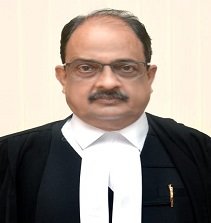
THE HONBLE JUSTICE BIRAJA PRASANNA SATAPATHY
Date of Hearing: 21.09.2026 and Date of Judgment: 21.09.2026
------------------------------------------------------------------------------
Biraja Prasanna Satapathy, J.
1. This matter is taken up through Hybrid
Arrangement (Virtual/Physical) Mode.
2. Heard learned counsel appearing for the Parties.
// 2 //
Page 2 of 11
3. Petitioner has filed the present Writ Petition inter
alia with the following prayer:-
“The petitioner, therefore, prays that your Lordships
would be graciously pleased to admit this writ petition,
call for the records and after hearing the parties allow
the issue writ/writs in the nature of certiorari/same,
mandamus and/or any other further writ/direction, and
quash the order dated 06.01.2018 passed by Managing
Director, Odisha State Warehousing Corporation
directing recovery of Rs. 23,88,921/- from the petitioner
under Annexure-1.
And for this act of kindness, the petitioner shall as in
duty bound ever pray.”
4. It is contended that Petitioner while continuing as
an employee under the Opposite Party-Corporation, he
retired from service on attaining the age of
superannuation on 30.09.2016.
4.1. It is contended that much after his retirement,
Petitioner was issued with the impugned order
dtd.06.01.2018 under Annexure-1, wherein Petitioner
was directed to pay a sum of Rs.23,88,921/-
recoverable from his retiral dues.
4.2. Learned counsel for the Petitioner while assailing
the impugned order contended that prior to issuance of
the impugned order under Annexure-1, Petitioner was
never show caused nor principle of natural justice was
followed.
// 3 //
Page 3 of 11
4.3. It is also contended that such recovery from the
retiral dues of the Petitioner, is not permissible as per
the service regulation / rule governing the field.
4.4. It is accordingly contended that since prior to
directing the Petitioner to pay a sum of Rs.23,88,921/-
toward recovery vide order under Annexure-1, principle
of natural justice was never followed, the same is not
sustainable in the eye of law.
4.5. In support of his submission, reliance was
placed to a decisions in the case of Menaka Gandhi
vs. Union of India, AIR 1978 SC-597, State of
Orissa vs. Binapani Das, AIR 1967 SC-1269,
State Bank of India And Others Vs. Rajesh
Agarwal & Ors., (2023) 6 SCC 1, Dushyant
Mainali Vs.Diwan Singh Bora & Another, SLP (C )
No.15191 of 2022 and Krishnadatt Awasthy Vs.
State of M.P & Others, Civil Appeal NO(s) 4806 of
2011 (2025 INSC 126).
4.6. In Menaka Gandhi (supra) , Hon’ble Supreme
Court in Paragraphs-57, 58 and 61 has held as
under:-
“57. The question immediately arises : does the
procedure prescribed by the Passports Act, 1967 for
impounding a passport meet the, test of this requirement
? Is it 'right or fair or just' ? The argument of the petitioner
was that it is not, because it provides for impounding of a
passport without affording reasonable opportunity to the
holder of the passport to be heard in defence. To impound
the passport of a person, said the petitioner, is a serious
// 4 //
Page 4 of 11
matter, since it prevents him from exercising his
constitutional right to go abroad and such a drastic
consequence cannot in fairness be visited without
observing the principle of audi alteram partem. Any
procedure which permits impairment of the constitutional
right to go abroad without giving reasonable opportunity
to show cause cannot but be condemned as unfair and
unjust and hence, there is in the present case clear
infringement of the requirement of Article 21. Now, it is
true that there is no express provision in the Passports
Act, 1967 which requires that the audi alteram partem
rule should be followed before impounding a passport,
but that is not conclusive of the question. If the statute
makes itself clear on this point, then no more question
arises. But even when the statute is silent, the law may
in a given case make an implication and apply the
principle stated by Byles, J., in Cooper v. Wandsworth
Maneka Gandhi vs Union Of India on 25 January, 1978
Indian Kanoon - http://indiankanoon.org/doc/1766147/
57 Board of Works(2). "A long course of decision---,
beginning with Dr. Bentley's case and ending with some
very recent cases, establish that, although there are no
positive words in the statute requiring that the party shall
be heard, yet-the justice of the common law will supply
the omission of (1) [1974]2S.C.R.348. (2)
[1863]14C.B.N.S.180. the legislature". The principle of
audi alteram partem, which mandates that no one shall
be condemned unheard, part of the rules of natural
justice. In fact, there are two main principles in which the
rules of natural justice are manifested, namely, Nemo
Judex in Sua Causa and audi alteram partem. We are not
concerned here with the former, since there is no case of
bias urged here. The question is only in regard to the right
of hearing which involves the audi alteram partem rule.
Can it be imported in the procedure for impounding a
passport ?
58. We may commence the discussion of this question
with a few general observations to emphasise the
increasing importance of natural justice in the field of
administrative law. Natural justice is a great humanising
principle intended to invest law with' fairness and to
secure justice and over the years it has grown into a
widely pervasive rule affecting large areas of
administrative action. Lord Morris of Borth- y-Gest spoke
of this rule in eloquent terms in his address before the
Bentham Club : "We can, I think, take pride in what has
been done in recent periods and particularly in the field of
administrative law by invoking and by applying these
principles which we broadly classify under the
designation of natural justice. Many testing problems as
to their application yet remain to be solved. But I affirm
// 5 //
Page 5 of 11
that the area of administrative action is but one area in
which the principles are to be deployed. Nor are they to
be invoked only when procedural failures are shown.
Does natural justice qualify to be described as a
"majestic" conception ? I believe it does. Is it just a
rhetorical but vague phrase which can be employed,
when needed, to give a gloss of assurance ? I believe that
it is very much more. If it can be summarised as being fair
play in action-who could wish that it would ever be out of
action ? It denotes that the law is not only to be guided by
reason and by logic but that its purpose %, will not be
fulfilled; it lacks more exalted inspiration." (Current Legal
Problems, 1973, Vol. 26, p. 16) And then again, in his
speech in the House of Lords in Wiseman v. Borneman(1),
the learned Law Lord said in words of inspired felicity:
"that the conception of natural justice should at all stages
guide those who discharge judicial functions is not merely
an acceptable but is an essential part of the philosophy of
the law. We often speak of the rules of natural justice. But
there is nothing rigid or mechanical about them. What
they comprehend has been analysed and described in
many authorities. But any analysis must bring into relief
rather their spirit and their inspiration than any precision
of definition or precision as to application. We do not
search for prescriptions which will lay down exactly what
must, in various divergent situations, be done. The
principles and procedures are to be applied which, in any
particular situation or set of circumstances, are right and
just and fair. Natural justice, it has been said, is only "fair
play in action." Nor do we wait for directions from
Parliament. The common law has abundant riches : there
we may find what Byles, J., called "the justice of the
common law". Thus, the soul of natural justice is fair play
in action' and that is why it has received the widest
recognition throughout the democratic world. In the United
States, the right to an administrative hearing is regarded
as essential requirement of fundamental fairness. And in
England too it has been held that 'fair play in action'
demands that before any prejudicial or adverse action is
taken against a person, he must be given an opportunity
to be heard. The rule was stated by Lord Henning, M.R. in
these terms in Schmidt v. Secretary of State for Home
Affairs(1) :-where a public officer has power to deprive a
person of his liberty or his property, the general principle
is that it has not to be done without his being given an
opportunity of being heard and of making representations
on his own behalf". The same rule also prevails in other
Commonwealth countries like Canada, Australia and New
Zealand. It has even gained access to the United Nations.
Vide American Journal of International Law, Vol. 67, page
479. Magarry, J., describes natural justice "as a distillate
of due process of law". Vide Fontaine v. Chesterton(2). It
// 6 //
Page 6 of 11
is the quintessence of the process of justice inspired and
guided by fair play in action'. If we look at the speeches of
the various law Lords in Wiseman's case, it will be seen
that each one of them asked the question "whether in the
particular circumstances of the case, the Tribunal acted
unfairly so that it could be said that their procedure did
not match with what justice demanded", ,or, was the
procedure adopted by the Tribunal 'in all the
circumstances unfair'? The test adopted by every law
Lord was whether the procedure followed was "fair in all
the circumstances" and 'fair play in action' required that
an opportunity should be given to the tax payer "to see
and reply to the counter-statement of the Commissioners"
before reaching the conclusion that "there is a prima facie
case against him." The inquiry must, therefore, always be
: does fairness in action demand that an opportunity to be
heard should be given to the person affected?.
XXX XXX XXX
61. This Court, speaking through Hegde, J., in ,I. K.
Kraipak's case quoted with approval the above passage
from the judgment of Lord Parker, C.J., and proceeded to
add : "The aim of the rules of natural justice is to secure
justice or to put it negatively to prevent miscarriage of
justice. These rules can operate only in areas not covered
by any law validly made. In other words they do not
supplant the law of the land but supplement it-Till very
recently it was the opinion of the courts that unless the
authority concerned was required by the law under which
it functioned to act judicially there was no room for the,
application of the rules of natural justice. The validity of
that limitation is now questioned. If the purpose of the
rules of natural justice is to prevent miscarriage of justice
One fails to see why those rules should be made
inapplicable, to administrative enquiries. Often times it is
not easy to draw the line that demarcates administrative
enquiries from quasi-judicial enquiries. Enquiries which
were considered administrative at one time are now being
considered as quasi-.judicial in character. Arriving at a
just decision is the aim of both quasi- judicial enquiries as
well as administrative enquiries. An unjust decision in an
administrative enquiry may have more far reaching effect
than a decision in a quasi- judicial enquiry. As observed
by this Court in Suresh Koshy George v. The University of
Kerala and Ors. (1969)1 S.C.R. 317 the rules of natural
justice are not embodied rules. What particular rule of
natural justice should apply to a given case must depend
to a great extent on the facts and circumstances of that
case the framework of the law under which the enquiry is
held and the constitution of the Tribunal or body of
persons appointed for that purpose. Whenever a
// 7 //
Page 7 of 11
complaint is made before a court that some principles of
natural justice had been contravened the court has to
decide whether the observance of that rule was
necessary for a just decision on the facts of the case."
This view was reiterated and re-affirmed in a subsequent
decision of this Court in D.F.O. South Khari v. Ram Sanehi
Singh(1). The law must, therefore, now be taken to be well
settled that even in an administrative proceeding, which
involves civil consequences, the doctrine of natural justice
must be held to be applicable.
4.7. In State of Orissa vs. Binapani Das, Hon’ble
Supreme Court in Paragraph-12 has held as under:-
“12. It is true that some preliminary enquiry was made
by Dr. S, Mitra. But the report of that Enquiry Officer
was never disclosed to the first respondent. 'The rafter
the first respondent was required to show cause why
April 16, 1907, should not be accept das the date of
birth and without recording any evidence the order was
passed. We think that such an enquiry and decision
were contrary to the basic concept of justice and cannot
have any value. It is true that the order is administrative
in character, but even an administrative order which
involves civil consequences as already stated must be
made consistently with the rules of natural justice after
informing the first respondent of the case of the State,
the evidence in support thereof and after giving an
opportunity to the first respondent of being heard and
meeting or explaining the evidence. No such steps were
admittedly taken; the High Court was, in our judgment,
right in setting aside the order of the State.”
4.8. Hon’ble Apex Court in the case of Rajesh
Agarwal in Para 41 & 42 has held as follows:-
“41. In State of Orissa v. Binapani Dei [State of
Orissa v. Binapani Dei, AIR 1967 SC 1269], a two -
Judge Bench of this Court held that every authority
which has the power to take punitive or damaging
action has a duty to give a reasonable opportunity to
be heard. This Court further held that an
administrative action which involves civil consequences
must be made consistent with the rules of natural
justice : (AIR p. 1271, para 9)
// 8 //
Page 8 of 11
“9. … The rule that a party to
whose prejudice an order is
intended to be passed is entitled to
a hearing applies alike to judicial
tribunals and bodies of persons
invested with authority to
adjudicate upon matters involving
civil consequences. It is one of the
fundamental rules of our
constitutional set-up that every
citizen is protected against exercise
of arbitrary authority by the State or
its officers. Duty to act judicially
would therefore arise from the very
nature of the function intended to be
performed : it need not be shown to
be super-added. If there is power to
decide and determine to the
prejudice of a person, duty to act
judicially is implicit in the exercise of
such power. If the essentials of
justice be ignored and an order to
the prejudice of a person is made,
the order is a nullity. That is a basic
concept of the rule of law and
importance thereof transcends the
significance of a decision in any
particular case.”
42. In Maneka Gandhi v. Union of India [Maneka
Gandhi v. Union of India, (1978) 1 SCC 248] , a seven-
Judge Bench of this Court held that any person
prejudicially affected by a decision of the authority
entailing civil consequences must be given an
opportunity of being heard. This has been reiterated in a
catena of decisions of this Court.”
// 9 //
Page 9 of 11
4.9. Hon’ble Apex Court in the case of Dushyant
Mainali, in para-5 of the said judgment held as
follows:
5. There is no necessity to reiterate that even the
Courts, including a highest court of the Country, are
bound by principle of natural justice. Nobody can be
condemned unheard.
4.10. Hon’ble Apex Court in the case of Krishnadatt
Awasthy in para-68 of the said judgment held as
follows:
68. The principle of audi alteram partem is the
cornerstone of justice, ensuring that no person is
condemned unheard. This principle transforms
justice from a mere technical formality into a
humane pursuit. It safeguards against arbitrary
decision-making, and is needed more so in cases
of unequal power dynamics.
5. Mr. B.K. Sahoo, learned counsel appearing for
Opposite Party No.3 on the other hand made his
submission basing on the stand taken in the counter
affidavit so filed. It is contended that after his
retirement, basing on the letter issued by the Orissa
State Civil Supply Corporation, wherein suggestion was
made to recover the amount, the impugned order
dtd.06.01.2018 under Annexure-1 was issued.
5.1. It is accordingly contended that since after the
retirement of the Petitioner, Orissa State Civil Supply
Corporation suggested to recover the amount because
of mis-appropriation caused by the Petitioner, the
impugned order under Annexure-1 has been issued.
// 10 //
Page 10 of 11
5.2. It is accordingly contended that no illegality or
irregularity can be found with the same.
6. Having heard learned counsel appearing for the
Parties and considering the submissions, it is found
that Petitioner while continuing under the Opposite
Party-Corporation, he retired on attaining the age of
superannuation on 30.09.2016. However, vide the
impugned order dtd.06.01.2018 under Annexure-1,
Petitioner was directed to deposit a sum of
Rs.23,88.921/- toward recovery.
6.1. Considering the submission made by the learned
counsel appearing for the Petitioner that principle of
natural justice was never followed prior to issuance of
Annexure-1 and this Court since could not find any
document enclosed to the counter affidavit, showing
issuance of any show cause prior to issuance of the
order at Annexure-1, basing on the suggestion given by
the Orissa State Supply Corporation, the impugned
order under Annexure-1 could not have been issued.
6.2. This Court on the ground of non-compliance of
the principle of natural justice and placing reliance on
the decisions as cited (supra), is inclined to quash
order dtd.06.01.2018 so passed under Annexure-1 by
Opposite Party No.3. While quashing the said order,
this Court permits Opposite Party-Corporation to re-
// 11 //
Page 11 of 11
determine the liability in accordance with law and by
following the principle of natural justice.
7. Accordingly, the Writ Petition stands disposed of.
(Biraja Prasanna Satapathy)
Judge
Orissa High Court, Cuttack
Dated the 21st September, 2026/Subrat

 Login with google
Legal Notes
Add a Note....