
As per case facts, the respondent invoked an arbitration clause in a Franchise Agreement, proposing a sole arbitrator. The appellant rejected this proposal, leading the respondent to apply to the ...
No Acts & Articles mentioned in this case
2026 INSC 1109 Page 1 of18
Civil Appeal @ SLP (C) No. 35915 of 2025
REPORTABLE
IN THE SUPREME COURT OF INDIA
CIVIL APPELLATE JURISDICTION
CIVIL APPEAL NO. OF 2026
(Arising out of SLP Civil No. 35915 of 2025)
ARCIS CLEAN ENERGY PVT. LTD. …APPELLANT(S)
VERSUS
PARSHVA INNOVATION …RESPONDENT (S)
J U D G M E N T
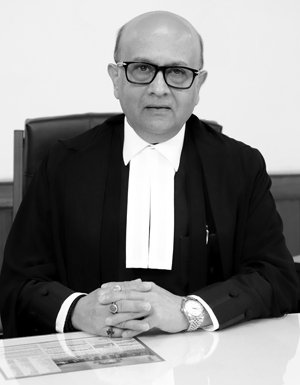
MANOJ MISRA, J.
1. Leave granted.
2. This appeal impugns the order of the Delhi High
Court
1 dated 11
th November 2025, whereby, in exercise
of its jurisdiction under Section 11(6) of the Arbitration
and Conciliation Act, 1996
2, the High Court appointed
an arbitrator to resolve disputes inter se parties arising
out of a “Franchise Agreement”
3 dated 03
rd August 2023.
1
The High Court
2
1996 Act
3
The Agreement
Page 2 of18
Civil Appeal @ SLP (C) No. 35915 of 2025
3. Clause 32 of the Agreement carries the arbitration
clause in the following terms:
“32. ARBITRATION AND DISPUTE RESOLUTION
32.1. Any dispute or difference between the Parties
arising out of or in connection with this Agreement,
including any question regarding its interpretation,
existence, performance, validity, or termination,
either during the term of the Agreement or at anytime
thereafter, will be settled between the Parties through
friendly consultations and negotiations.
32.2. If no settlement can be reached though friendly
consultations and negotiations as discussed
according to terms of this Agreement within thirty (30)
days of one Party delivering a notice of the dispute or
difference to the other Party, then such dispute will
be finally settled by arbitration.
32.3. The arbitration proceedings will be conducted in
accordance with the provisions of the Arbitration and
Conciliation Act, 1996 (“Arbitration Act”).
32.4. The dispute or difference shall be referred to a
panel of sole arbitrator to be appointed mutually by
Parties. In the event of the parties not being able to
concur on the appointment of a sole arbitrator then
such sole arbitrator to be appointed by m utual
consent of both parties as per the provisions of the
Arbitration and Conciliation Act, 1996 and as
amended from time to time. The precise location of
the arbitration shall be within Delhi and the
appointment of the sole arbitrator shall be in
accordance with the rules prescribed under
Arbitration and Conciliation Act, 1996.
32.5. The arbitration proceedings will be held in Goa
and the language to be used in the arbitral
proceedings will be English.
32.6. The prevailing Party in the arbitration
proceedings will be awarded reasonable attorney’s
fees, if any, and all other costs and expenses in
relation to the arbitration proceedings unless the
arbitrators for good cause determine otherwise.”
Page 3 of18
Civil Appeal @ SLP (C) No. 35915 of 2025
4. Invoking the aforesaid clause, the respondent
proposed name of a sole arbitrator vide notice dated 25
th
March 2025. The said proposal was rejected by the
appellant vide response letter dated 19
th April, 2025.
Consequently, the respondent applied to the High Court
for appointing an arbitrator under Section 11(6) of the
1996 Act.
5. By the impugned order, the High Court
appointed the arbitrator and left it open for him to select
venue for the hearings in consultation with the parties.
Submissions on behalf of the appellant
6. The appellant has questioned the impugned
order on the ground that the Delhi High Court lacked
jurisdiction as the juridical seat of arbitration is in Goa.
It is submitted that the agreement between the parties
clearly discloses that the parties shall submit to the
exclusive jurisdiction of the competent court in Goa,
therefore the juridical seat would be Goa. In support of
his submission, besides the arbitration clause, our
attention was invited to Clause 38 of the Agreement,
which reads as under:-
Page 4 of18
Civil Appeal @ SLP (C) No. 35915 of 2025
“38. GOVERNING LAW AND JURISDICTION
“This Agreement shall be interpreted and
construed exclusively in accordance with the laws of
India and parties shall agree to submit to the
exclusive jurisdiction of competent courts in Goa,
India.”
7. By relying on Clauses 32 and 38 of the
Agreement, the learned counsel for the appellant
submits that Clause 32.4, which provides for location of
the arbitration within Delhi, is about the venue whereas
Clauses 32.5 and 38 of the Agreement determine the
juridical seat. It is urged that the High Court mistook
venue as the juridical seat; therefore, the impugned
order is liable to be set aside. In support of his
submissions, the learned counsel for the appellant has
placed reliance on the following decisions:
(i) Arif Azim Company Limited v. Micromax
Informatics FZE
4
;
(ii) Indus Mobile Distribution Private Limited v.
Datawind Innovations Private Limited and
others
5
;
4
(2025) 9 SCC 750
5
(2017) 7 SCC 678
Page 5 of18
Civil Appeal @ SLP (C) No. 35915 of 2025
(iii) Swastik Gases (P) Ltd. v. Indian Oil Corporation
Ltd.
6
;
(iv) BGS SGS SOMA JV v. NHPC LIMITED
7
; and
(iv) Activitas Management Advisor Private Limited v.
Mind Plus Healthcare Private Limited
8
.
8. Per contra, the learned counsel for the
respondent supported the impugned order by
submitting that the arbitration agreement clause is
considered independent of other parts of the contract;
therefore, Clause 38 of the Agreement would not
determine the juridical seat for the purpose s of
arbitration. More so, when Clause 32 of the Agreement
specifically states that location of the arbitration shall be
in Delhi. Thus, for the purposes of arbitration, the
juridical seat would be Delhi and not Goa. He further
contends that Clause 32.5 would not override Clause
32.4 because Clause 32.4 comes first and would prevail
over any subsequent clause in the Agreement. He,
therefore, prays that the appeal be dismissed.
6
(2013) 9 SCC 32
7
(2020) 4 SCC 234
8
2025 SCC Online SC 3069
Page 6 of18
Civil Appeal @ SLP (C) No. 35915 of 2025
9. In support of his submissions, the learned counsel
for the respondent relied on the following decisions:
(i) Sasan Power Ltd. v. North American
Coal Corporation (India) Pvt. Ltd.
9;
(ii) M/s. Cable Corporation of India Ltd. v.
M/s. Jay Pee Sports International Ltd.
and Another
10;
(iii) Sunil Kumar Chandra v. Spire Techpark
(P) Ltd.
11;
(iv) Ramkishorelal and Another v. Kamal
Narayan
12;
(v) Shree Bhowani Cotton Mills v. Union
Textile Traders
13 ;
(vi) M/s Lyrus Life Sciences Pvt. Ltd. v. M/s
Acme Generics LLP
14
10. We have accorded due consideration to the rival
submissions and have perused the materials placed on
record.
9
(2016) 10 SCC 813, paragraphs 48 and 52
10
2018 SCC OnLine Del 10340, paragraphs 14, 15 and 19
11
2023 SCC OnLine Del 286, paragraph 17
12
1962 SCC OnLine SC 113, paragraph 12
13
1965 SCC OnLine Cal 83, paragraphs 2 and 4
14
Civil Misc. Petition No.192/2020, decided by High Court of Karnataka at Bengaluru on 23.06.2021, paragraph
7
Page 7 of18
Civil Appeal @ SLP (C) No. 35915 of 2025
Analysis
11. Before we proceed to interpret the Agreement in
question for the purposes of determining whether the
Delhi High Court had the jurisdiction to appoint the
arbitrator, it would be useful to consider a few decisions
wherein a distinction between the “seat” of arbitration
and the “venue” for arbitral proceedings has been carved
out.
12. In Indus Mobile (supra), this Court held that
seat is akin to an exclusive jurisdiction clause. It was
held that under the Law of Arbitration, unlike the Code
of Civil Procedure, which applies to suits filed in courts,
a reference to “seat” is a concept by which a neutral
venue can be chosen by the parties to an arbitration
agreement. The neutral venue may not, in the classical
sense, have jurisdiction, that is, no part of the cause of
action may have arisen at the neutral venue, and neither
would any of the provisions of Sections 16 to 21 of CPC
be attracted. However, the moment the “seat” is
determined, the courts wherein the seat is located would
Page 8 of18
Civil Appeal @ SLP (C) No. 35915 of 2025
have exclusive jurisdiction for purposes of regulating
arbitral proceedings arising out of the agreement
between the parties
15.
13. In Swastik Gases (supra), the arbitration clause
in question was clause 17 of the agreement. It was in the
following terms:
“17. Arbitration
If any dispute or difference(s) of any kind
whatsoever shall arise between the parties hereto in
connection with or arising out of this Agreement, the
parties hereto shall in good faith negotiate with a view
to arriving at an amicable resolution and settlement.
In the event no settlement is reached within a period
of 30 days from the date of arising of the
dispute(s)/difference(s), such dispute(s)/difference(s)
shall be referred to 2 (two) Arbitrators, appointed one
each by the parties and the Arbitrators, so appointed
shall be entitled to appoint a third Arbitrator who
shall act as a presiding Arbitrator and the
proceedings thereof shall be in accordance with the
Arbitration and Conciliation Act, 1996 or any
statutory modification or re-enactment thereof in
force. The existence of any dispute(s)/difference(s) or
initiation/continuation of arbitration proceedings
shall not permit the parties to postpone or delay the
performance of or to abstain from performing their
obligations pursuant to this Agreement.”
Clause 18 of the agreement conferring jurisdiction
was in the following terms:
“18. Jurisdiction
The agreement shall be subject to jurisdiction of the
courts at Kolkata.”
15
Paragraph 19 of the judgment in Indus Mobile (supra)
Page 9 of18
Civil Appeal @ SLP (C) No. 35915 of 2025
After considering various decisions, this Court held as
under:
“31. In the instant case, the appellant does not
dispute that part of cause of action has arisen in
Kolkata. What appellant says is that part of cause of
action has also arisen in Jaipur and, therefore, Chief
Justice of the Rajasthan High Court or the designate
Judge has jurisdiction to consider the application
made by the appellant for the appointment of an
arbitrator under Section 11. Having regard to Section
11(12)(b) and Section 2(e) of the 1996 Act read with
Section 20(c) of the Code, there remains no doubt that
the Chief Justice or the designate Judge of the
Rajasthan High Court has jurisdiction in the matter.
The question is, whether parties by virtue of clause
18 of the agreement have agreed to exclude the
jurisdiction of the courts at Jaipur or, in other words,
whether in view of clause 18 of the agreement, the
jurisdiction of Chief Justice of the Rajasthan High
Court has been excluded?
32. For answer to the above question, we have to see
the effect of the jurisdiction clause in the agreement
which provides that the agreement shall be subject to
jurisdiction of the courts at Kolkata. It is a fact that
whilst providing for jurisdiction clause in the
agreement the words like ‘alone’, ‘only’, ‘exclusive’ or
“exclusive jurisdiction” have not been used but this,
in our view, is not decisive and does not make any
material difference. The intention of the parties - by
having Clause 18 in the agreement – is clear and
unambiguous that the courts at Kolkata shall have
jurisdiction which means that the courts at Kolkata
alone shall have jurisdiction. It is so because for
construction of jurisdiction clause, like Clause 18 in
the agreement, the maxim expressio unius est exclusio
alterius comes into play as there is nothing to indicate
to the contrary. This legal maxim means that
expression of one is the exclusion of another. By
making a provision that the agreement is subject to
the jurisdiction of the courts at Kolkata, the parties
have impliedly excluded the jurisdiction of other
courts. Where the contract specifies the jurisdiction
of the courts at a particular place and such courts
have jurisdiction to deal with the matter, we think
that an inference may be drawn that parties intended
Page 10 of18
Civil Appeal @ SLP (C) No. 35915 of 2025
to exclude all other courts. A clause like this is not hit
by Section 23 of the Contract Act at all. Such clause
is neither forbidden by law nor it is against the public
policy. It does not offend Section 28 of the Contract
Act in any manner.”
(Emphasis supplied)
14. In Brahmani River Pellets Ltd. v. Kamachi
Industries Ltd
16
, this Court, after considering various
decisions including Swastik Gases (supra) and Indus
Mobile (supra), held:
“18. Where the contract specifies the jurisdiction of
the court at a particular place, only such court will
have the jurisdiction to deal with the matter as parties
intended to exclude all other courts. In the present
case, the parties have agreed that the “venue” of
arbitration shall be at Bhubaneswar. Considering the
agreement of the parties having Bhubaneswar as the
venue of arbitration, the intention of the parties is to
exclude all other courts. As held in Swastik, non-use
of words like “exclusive jurisdiction”, “only”,
“exclusive”, “alone” is not decisive and does not make
any material difference.”
15. Following the decision of this Court in
Brahmani River Pellets (supra), in Activitas
Management (supra), this Court set aside the order of
the High Court of Punjab and Haryana appointing an
arbitrator in exercise of its power under Section 11 of the
1996 Act upon finding that clause 10 of the agreement
relating to the Governing Law had vested exclusive
jurisdiction to the courts located in Mumbai.
16
(2020) 5 SCC 462
Page 11 of18
Civil Appeal @ SLP (C) No. 35915 of 2025
16. Clause 10 which was interpreted in Activitas
Management (supra) provided as under:
“10. Governing Law - This letter shall be governed by and
construed in accordance with the Indian Law. Client
hereby submits to the exclusive jurisdiction of the
Mumbai High Courts located in Mumbai in connection
with any dispute related to this letter or any of the
matters contemplated hereby. In case any dispute arises
between the parties with respect to the above-mentioned
agreement, parties hereby agree to appoint sole
arbitrator by consent of either party as per section 11 of
Arbitration and Conciliation Act, 1996, and can amicably
resolve the dispute as per the procedure laid down in
Arbitration and Conciliation Act, 1996 before
approaching appropriate court for the same.”
17. Interpreting the aforesaid clause, in Activitas
Management (supra) it was held:
“8. Though clause 10 does not use the expression ‘seat’
or ‘venue’, we are of the opinion that the ‘jurisdiction’ is
mentioned in the context of resolution of the disputes
through arbitration and as such the agreement between
the parties that, “client hereby submits to the exclusive
jurisdiction of the Mumbai High Courts located in Mumbai”
must be understood in the context of arbitration and
therefore the seat of the arbitration must be taken to be
Mumbai.”
18. The aforesaid decisions make it clear that
parties, by agreement, can choose their own place for
arbitration and may confer exclusive jurisdiction upon
court(s) located at a particular place for the purpose of
regulating the arbitral proceedings arising out of the
agreement between the parties regardless of any part of
cause of action arising within its territorial jurisdiction.
Page 12 of18
Civil Appeal @ SLP (C) No. 35915 of 2025
19. However, when an agreement specifies the place
of arbitration and simultaneously confers exclusive
jurisdiction on courts located at a place other than the
one specified for arbitration, a question would arise
whether the place of arbitration is just a “venue” or the
“juridical seat”.
20. In Arif Azim Company Limited (supra) ,
following an earlier three-Judge Bench judgment of this
Court in BGS SGS SOMA (supra) , a three-Judge Bench
of this Court delineated the tests as to when “venue” can
be construed as “seat” of arbitration. The relevant
paragraphs of the judgment are extracted below:
“58. Thus, this court in BGS SJS SOMA laid down a
three-condition test as to when “venue” can be construed
as “seat” of arbitration. The conditions that are required
to be fulfilled are as under:
(i) The arbitration agreement or clause in
question should designate or mention only
one place;
(ii) Such place must have anchored the arbitral
proceedings i.e. the arbitral proceedings
must have been fixed to that place alone
without any scope of change; and
(iii) There must be no other significant contrary
indicia to show that the place designated is
merely the venue and not the seat.
59. Where the aforesaid conditions are fulfilled, then the
place that has been designated as “venue” can be
construed as the “seat” of arbitration. It is clarified that,
while applying the aforesaid test, it must be borne in
mind that where a supranational body of rules has been
stipulated in an arbitration agreement or clause, such
stipulation is not to be regarded as a contrary indicium,
Page 13 of18
Civil Appeal @ SLP (C) No. 35915 of 2025
such stipulation does not mean that no seat has been
designated rather such stipulation is a positive indicia
that the place so designated is actually the “seat”.”
21. In the present case, a plain reading of the
arbitration clause would indicate that Delhi is not the
only place specified for arbitration. Both Delhi and Goa
are mentioned as places for holding arbitration. Thus,
when we apply the tests laid down in BGS SGS SOMA
(supra), which have been affirmed in Arif Azim (supra),
the place specified i.e. venue for arbitral proceeding
would not automatically be the seat of arbitration. In
such a situation, the Governing Law clause i.e., Clause
38 of the Agreement would be helpful in determining the
juridical seat. Since Clause 38 of the Agreement confers
exclusive jurisdiction to the courts at Goa and Clause
32.5 provides that arbitration proceedings will be held in
Goa, it is clear that the parties have agreed that Goa
shall be the juridical seat, Delhi is just a venue.
22. The submission on behalf of the appellant that
the arbitration agreement is independent of the main
contract and, therefore, the arbitration clause would
alone determine the juridical seat, and not the
Page 14 of18
Civil Appeal @ SLP (C) No. 35915 of 2025
Governing Law clause, cannot be countenanced for the
simple reason that the arbitration clause itself mentions
two places, namely, Delhi and Goa. Besides, in
Mankastu Impex (P) Ltd. v. Airvisual Ltd.
17
, this Court
held “that mere expression “place of arbitration” cannot
be the basis to determine the intention of the parties that
they have intended that place as the “seat” of arbitration.
The intention of the parties as to the “seat” should be
determined from other clauses in the agreement, including
the conduct of the parties.” Importantly, both Clauses
32.4 and 32.5 are part of Clause 32 of the Agreement
which deals with arbitration and dispute resolution.
According to Clause 32.4, location of the arbitration
shall be within Delhi; whereas Clause 32.5 states that
arbitration proceedings will be held in Goa. This creates
an impression of conflict between the two clauses.
However, when we construe them harmoniously, to
ensure that none becomes redundant, and read them in
conjunction with clause 38 of the Agreement, which
17
(2020) 5 SCC 399, paragraph 20
Page 15 of18
Civil Appeal @ SLP (C) No. 35915 of 2025
vests exclusive jurisdiction on courts at Goa, it is clear
that the juridical seat is at Goa, Delhi is just a venue.
23. Now we shall consider the decisions cited by the
learned counsel for the respondent. In Sasan Power
(supra), this Court held that arbitration agreement is an
independent agreement, and the arbitration clause is
not the one that governs rights and obligations arising
out of the substantive contract rather it only governs the
way of settling disputes between the parties. It was also
held that parties can agree upon the governing law but
may not have any agreement for settlement of dispute
through arbitration. There can be no quarrel with the
aforesaid proposition. Here, the arbitration clause itself
mentions two places. One of those two has been chosen
by the parties for the courts located therein to have
exclusive jurisdiction. In such a situation, to determine
the juridical seat, the Governing law clause 38 cannot
be ignored. Similarly, in the Delhi High Court decision
in M/s. Cable Corporation of India (supra) , the
arbitration clause specifies only a single place and not
two places as is there in the present case. The said
Page 16 of18
Civil Appeal @ SLP (C) No. 35915 of 2025
decision is therefore distinguishable. In the other
decision of the Delhi High Court rendered in Sunil
Kumar Chandra (supra) , which has been cited on
behalf of the respondent, the arbitration clause has not
been extracted in the judgment. However, from the
judgment, it appears that one of the clauses of the
agreement made it clear that Delhi was chosen as the
seat of arbitration, but it was not clear whether the other
place specified therein was for arbitration. This decision
too is, therefore, distinguishable. Besides, here the
arbitration clause itself specifies two places for
arbitration. The Constitution Bench decision of this
Court in Ramkishorelal (supra) is on the general
principle that to construe an instrument, an effort must
be there to ascertain the intention of the parties after
considering all words. We fail to understand as to how
this decision would be of any help to the respondent. In
Shree Bhowani Cotton Mills (supra), another decision
cited on behalf of the respondent, it was held that mere
conferment of exclusive jurisdiction on courts at
Calcutta to entertain and try suits in respect of any
Page 17 of18
Civil Appeal @ SLP (C) No. 35915 of 2025
claims or disputes would not nullify the arbitration
agreement. In the present case, there is no issue about
the existence of an arbitration agreement and, further,
there is no dispute that the arbitration agreement itself
specifies two places, namely, Delhi and Goa; in such
circumstances, in our view, the juridical seat would have
to be ascertained by reading the Agreement in its
entirety so as to decipher the true intention of the
parties. The last judgment relied on behalf of the
respondent is one rendered by the Karnataka High Court
in M/s Lyrus Life Sciences (supra). The said decision
holds that where precise location of arbitration is
specified as Bengaluru, the argument that the cause of
action had arisen in the State of Himachal Pradesh
would not be relevant for the purposes of arbitration.
This decision is of no relevance to the present case
because the arbitration clause itself specifies both Delhi
and Goa for arbitration. Therefore, whether the juridical
seat is Delhi or Goa would have to be ascertained on the
basis of intention of the parties as could be evinced from
a holistic reading of various clauses of the Agreement.
Page 18 of18
Civil Appeal @ SLP (C) No. 35915 of 2025
24. Upon reading the Agreement in its entirety, we
find that the juridical seat of arbitration was at Goa,
therefore, we are of the view that the Delhi High Court
lacked jurisdiction to entertain the application under
sub-section (6) of Section 11 of the 1996 Act.
Consequently, the appeal is allowed. The order passed
by the High Court is set aside. The parties would be at
liberty to take recourse to appropriate proceedings
before the jurisdictional High Court.
25. Pending application(s), if any, shall stand
disposed of.
.................................J.
(MANOJ MISRA)
.................................J.
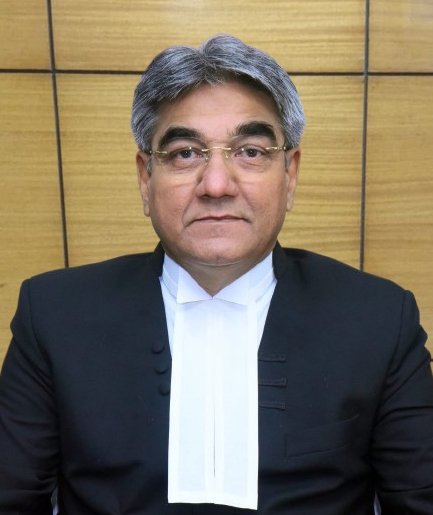
(VIJAY BISHNOI)
New Delhi;
October 12, 2026

 Login with google
Legal Notes
Add a Note....