
labour law, service dispute, public employment, Supreme Court India
0  12 Aug, 2004
Listen in 01:12 mins | Read in 6:00 mins
EN
HI

Delhi Transport Corporation Vs. Shyam Lal

  Supreme Court Of India Civil Appeal /9610/2003
Link copied!

Case Background

As per case facts, the respondent-workman, a conductor, was found to have collected money without issuing tickets, leading to departmental proceedings and his removal from service based on his admission ...
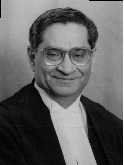

Bench

Applied Acts & Sections

No Acts & Articles mentioned in this case

Hello! How can I help you? 😊
Disclaimer: We do not store your data.
Document Text Version

http://JUDIS.NIC.IN SUPREME COURT OF INDIA Page 1 of 2

CASE NO.:

Appeal (civil) 9610 of 2003

PETITIONER:

Delhi Transport Corporation

RESPONDENT:

Shyam Lal

DATE OF JUDGMENT: 12/08/2004

BENCH:

S.N. VARIAVA & ARIJIT PASAYAT

JUDGMENT:

J U D G M E N T

ARIJIT PASAYAT, J

Delhi Transport Corporation (hereinafter referred to as the

'employer') calls in question legality of the judgment rendered by a Division

Bench of the Delhi High Court in Letters Patent Appeal No. 298/2002 filed

by the respondent (hereinafter referred to as the 'workman').

Background facts in a nutshell are as follows:

The respondent-workman was found to have committed misconduct

while working as a conductor. He had collected money but had not issued

tickets as was found during a checking done by the concerned officials.

Departmental proceedings were initiated against him and he was found

guilty. A charge sheet in this regard was issued to the workman on

22.12.1988 and he submitted his reply on 30.12.1988. Subsequently on

13.1.1989 and 24.2.1989, the workman admitted his guilt and pleaded for

leniency. Basing on his admission, he was found guilty in the departmental

proceedings and removed from service.

A reference was made to the Industrial Tribunal under Section 32 (2)

(b) of the Industrial Disputes Act, 1947 (in short the 'Act') for approval of

the order of removal. The Tribunal did not accord approval being of the

view that the admission was really of no consequence and the officer who

had conducted enquiry had no direct evidence and the statement made by the

person who had paid the amount in question before the officer conducting

the checking was in the nature of hearsay evidence and was not of any

consequence. Accordingly, the approval sought for was rejected. The

employer challenged the order of the Tribunal before the Delhi High Court

and a learned Single Judge by judgment dated 21.12.2001 in CWP.

No.6934/2000 and connected CMs. held that the Tribunal's view was not

defensible. Accordingly, the writ petition was allowed and it was directed

that approval in terms of Section 33 (2)(b) of the Act was to be granted to

the employer to dismiss the respondent-workman.

The workman assailed the judgment of the learned Single Judge by

filing Letters Patent Appeal. By the impugned judgment by which several

LPAs and writ petitions were disposed of, the view of the Tribunal was

restored and that of learned Single Judge was set aside.

Learned counsel for the employer submitted that the High Court has

fallen in grave errors by considering the present case along with other cases

which stood on different footings. They related to unauthorized absence and

http://JUDIS.NIC.IN SUPREME COURT OF INDIA Page 2 of 2

the consequence thereof. The present case stood on entirely different factual

background and, therefore, the High Court's judgment is not in order.

Per contra, learned counsel for the respondent-workman submitted

that the Tribunal has analysed the factual and the legal position in its proper

perspective and its refusal to accord approval cannot be termed to be

arbitrary.

We find that the Tribunal's conclusions are prima facie not correct.

The statement made by the passenger who had paid excess money to the

checking officer is not in the nature of hearsay evidence. Additionally, the

effect of the admission regarding guilt as contained in the letters dated

13.1.1989 and 24.2.1989 have not been considered in the proper perspective.

It is a fairly settled position in law that admission is the best piece of

evidence against the person making the admission. It is, however, open to

the person making the admission to show why the admission is not to be

acted upon.

Be that as it may, we find that the Division Bench while dealing with

Letters Patent Appeal filed by the workman based its conclusions on other

cases which related to unauthorized absence and where the factual

background was not similar to those involved in the present case. On that

short score alone, the order of the Division Bench is to be quashed. We set

aside impugned judgment of the High Court and remit the matter back to it

for consideration of the case on its own merits in accordance with law. We

make it clear that we have not expressed any opinion on the merits of the

case. The appeal is allowed to the extent indicated above with no order as to

costs.

Reference cases

Description

Supreme Court Clarifies Evidentiary Standards in Departmental Inquiries: A Look at Delhi Transport Corporation Misconduct and Service Law Appellate Review

This landmark Supreme Court ruling, *Delhi Transport Corporation v. Shyam Lal*, Appeal (civil) 9610 of 2003, dated August 12, 2004, meticulously unpacks the complexities surrounding departmental inquiries, employee misconduct, and the standards of appellate review. The judgment by Justices S.N. Variava and Arijit Pasayat critically evaluates how courts should approach admissions of guilt and the relevance of precedent. For legal professionals and students alike, this case provides invaluable insights into *Delhi Transport Corporation Misconduct* proceedings and the nuances of *Service Law Appellate Review*, both readily available for in-depth analysis on CaseOn.

Background of the Dispute

At the heart of this case was Shyam Lal, a conductor for the Delhi Transport Corporation (DTC). He faced allegations of serious misconduct: collecting fares from passengers without issuing corresponding tickets. This irregularity came to light during a surprise check by DTC officials.Following the discovery, departmental proceedings were initiated against Mr. Lal. A charge sheet was issued on December 22, 1988, to which he submitted his reply on December 30, 1988. Crucially, on two separate occasions, January 13, 1989, and February 24, 1989, Mr. Lal admitted his guilt in writing and pleaded for leniency. Based on these admissions, he was found guilty and subsequently removed from service.

The Legal Journey: From Tribunal to Supreme Court

The Industrial Tribunal's View

After Mr. Lal's removal, the DTC sought approval for its order from the Industrial Tribunal under Section 33(2)(b) of the Industrial Disputes Act, 1947. However, the Tribunal denied approval. Its reasoning was that Mr. Lal's admission of guilt was 'of no consequence,' and the checking officer lacked 'direct evidence.' Furthermore, the passenger's statement about paying the fare was dismissed as 'hearsay evidence' and therefore, also 'of no consequence.'

The High Court's Shifting Stance

The employer, DTC, challenged the Tribunal's decision before the Delhi High Court. A learned Single Judge reviewed the matter and found the Tribunal's reasoning indefensible. Consequently, the Single Judge allowed DTC's writ petition, directing that approval for Mr. Lal's dismissal should be granted.Dissatisfied with this outcome, Mr. Lal appealed the Single Judge's decision through a Letters Patent Appeal (LPA) to a Division Bench of the Delhi High Court. The Division Bench, in its impugned judgment, set aside the Single Judge's order and restored the Tribunal's initial decision to deny approval for dismissal. This is the judgment that the Delhi Transport Corporation subsequently appealed to the Supreme Court.

Unpacking the Legal Questions (Issue)

The Core Dispute

The central issues before the Supreme Court were:* Did the Delhi High Court Division Bench commit an error in setting aside the Single Judge's order and restoring the Industrial Tribunal's decision to deny approval for the workman's dismissal? Specifically, was its reliance on other, factually dissimilar cases related to unauthorized absence appropriate?* Did the Industrial Tribunal correctly disregard the workman's clear admissions of guilt and the passenger's statement, deeming them inconsequential or hearsay in the context of a departmental inquiry?

The Legal Framework and Guiding Principles (Rule)

Industrial Disputes Act and Evidentiary Standards

The legal principles guiding this case primarily revolve around:* **Section 33(2)(b) of the Industrial Disputes Act, 1947:** This section mandates employer approval from an appropriate authority (like an Industrial Tribunal) for dismissing a workman during the pendency of any industrial dispute. The Tribunal's role is to ensure that the inquiry was fair and the findings are not perverse.* **Evidentiary Value of Admissions:** A fundamental principle of law states, "Admission is the best piece of evidence against the person making the admission. It is, however, open to the person making the admission to show why the admission is not to be acted upon." This highlights the strong persuasive power of a self-incriminating statement.* **Hearsay Evidence in Departmental Inquiries:** Unlike criminal trials, departmental inquiries often operate with more relaxed rules of evidence. What might be considered 'hearsay' in a strict judicial proceeding might be admissible and given weight in an administrative inquiry, especially if corroborating circumstances exist or the person providing the information is available for clarification.* **Appellate Review Standards:** Higher courts, when reviewing lower court judgments, must ensure that the lower courts have applied the correct legal principles to the specific facts of the case and have not been swayed by irrelevant precedents.

Supreme Court's Scrutiny (Analysis)

Reconsidering Admissions of Guilt

The Supreme Court meticulously examined the reasoning of the Industrial Tribunal and the Delhi High Court Division Bench. The Court noted that the Tribunal's conclusion, particularly regarding the evidentiary value of the workman's admission of guilt, was "prima facie not correct." The Supreme Court strongly reiterated the legal position that an admission by an individual is a potent piece of evidence against them. While it's open for the individual to explain why their admission should not be taken at face value, simply dismissing it as 'inconsequential' without proper justification is legally unsound.Furthermore, the Supreme Court pointed out that the Tribunal's characterization of the passenger's statement to the checking officer as 'hearsay evidence' also seemed incorrect. In the context of a checking drive and a departmental inquiry, such a statement could be crucial direct evidence or at least a strong corroborating factor, depending on the circumstances.

Misguided Comparisons by the High Court

A significant finding by the Supreme Court was the error made by the Delhi High Court Division Bench. The Division Bench had based its conclusions on other cases that involved entirely different factual scenarios, specifically those related to 'unauthorized absence.' The Supreme Court emphasized that the present case, involving misconduct related to ticket issuance and financial impropriety, stood on a completely different factual footing. To equate it with cases of unauthorized absence constituted a "grave error" and rendered the Division Bench's judgment flawed. This misapplication of precedent was a critical reason for the Supreme Court's decision.Legal professionals can deepen their understanding of these distinctions and the broader implications for *Delhi Transport Corporation Misconduct* cases through CaseOn.in's 2-minute audio briefs, offering quick yet comprehensive summaries of complex rulings.

The Verdict and Remand (Conclusion)

A Fresh Look for the High Court

Based on its analysis, the Supreme Court concluded that the Delhi High Court Division Bench's judgment was unsustainable. The Supreme Court quashed the impugned judgment of the Division Bench, thereby setting aside its decision. However, instead of deciding the merits of the dismissal itself, the Supreme Court remitted the matter back to the Delhi High Court. The High Court was directed to reconsider the case on its own merits, in accordance with the law, without the influence of irrelevant precedents or an incorrect understanding of evidentiary standards. The Supreme Court made it explicitly clear that it was not expressing any opinion on the ultimate merits of the case, only on the procedural and legal errors committed by the lower appellate court.

Final Summary of the Case

This Supreme Court judgment acts as a crucial reminder for judicial and quasi-judicial bodies on the proper assessment of evidence in departmental inquiries, especially concerning admissions of guilt. It underscores the principle that an employee's admission is a powerful piece of evidence and cannot be lightly dismissed. Furthermore, it highlights the importance for appellate courts to meticulously examine the factual matrix of a case and avoid drawing conclusions based on dissimilar or irrelevant precedents. The case ultimately mandates a fresh review by the Delhi High Court, ensuring that the legal process is followed diligently.

Why This Judgment Matters for Legal Professionals

Key Takeaways for Lawyers

* **Strength of Admissions:** Lawyers representing employers should emphasize the evidentiary weight of an employee's written admission of guilt. For employees, it stresses the need to meticulously challenge or explain any admissions made during an inquiry.* **Distinguishing Precedents:** This case is a vital lesson in appellate practice, emphasizing the necessity of distinguishing facts when citing or relying on precedents. Misapplying a previous ruling can lead to the overturning of a judgment.* **Departmental Inquiry Standards:** It reaffirms that while departmental inquiries are not criminal trials, they still operate under certain legal principles regarding evidence, particularly the treatment of admissions and direct statements.

A Learning Point for Law Students

* **IRAC Method in Practice:** This case perfectly illustrates the application of the IRAC method, showing how issues, rules, analysis, and conclusions are developed and applied through different judicial tiers.* **Industrial Law Nuances:** Students can grasp the intricacies of Section 33(2)(b) of the Industrial Disputes Act and the role of tribunals in approving dismissal orders.* **Evidentiary Law:** It offers a practical example of how concepts like 'admission' versus 'hearsay' are interpreted and applied in different legal settings (e.g., administrative inquiries vs. court trials).*****Disclaimer:** All information provided in this article is for informational purposes only and does not constitute legal advice. While efforts are made to ensure accuracy, readers should consult with a qualified legal professional for advice regarding specific legal issues.

Legal Notes

Add a Note....

Advance Search Tool

💡 How to Get the Best Legal Answers:

1. Keep it simple: Frame your question in plain language.

2. Add scope: Tag @ a court, judge, year, or act section for accurate results.

3. Attach files: Upload a PDF only if you are using a private document.

🌍 Ask in your language: English • Hindi • Assamese • Bangla • Gujarati • Kannada • Malayalam • Marathi • Odia • Punjabi • Tamil • Telugu • Urdu


💡 New Advocate? Don’t worry! Working without senior support today? Turn on Client Advisory to get instant legal strategies, practical angles, and precedent-backed options for your client.

Add research context Type to filter