
As per case facts, the appellant was accused of harassing his wife for dowry and domestic violence, leading to FIRs and PWDV Act proceedings. He allegedly sent abusive and threatening ...

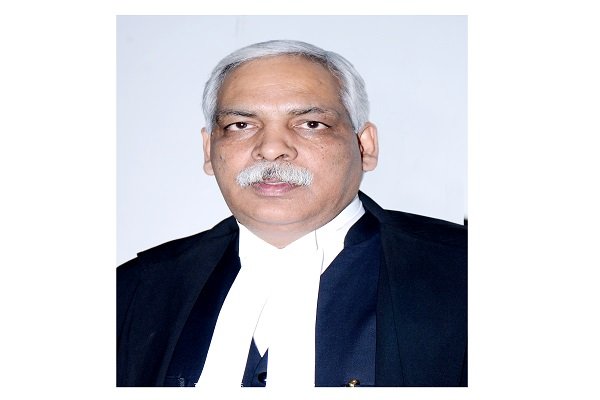
2026 INSC 1190 1
REPORTABLE
IN THE SUPREME COURT OF INDIA
CRIMINAL APPELLATE JURISDICTION
CRIMINAL APPEAL NO(S). 1394 OF 2017
GOVERDHAN ….APPELLANT(S)
VERSUS
STATE OF RAJASTHAN ….RESPONDENT(S)
J U D G M E N T
Mehta, J.
1. Heard.
2. The appellant was tried for the offence
punishable under Section 306 of the Indian Penal
Code, 1860
1 before the learned Additional Sessions
Judge, Women Atrocities Cases No.1, Jaipur
Metropolitan
2, in Sessions Case No.27 of 2011. The
trial Court, vide judgment and order dated 9
th
1
For short, “IPC”.
2
Hereinafter, referred to as the “trial Court”.
2
CRIMINAL APPEAL NO(S). 1394 OF 2017
December, 2016 convicted the appellant for the said
offence and sentenced him to undergo rigorous
imprisonment for ten years and to pay a fine of
Rs.50,000/-, and, in default of payment of fine, to
undergo further rigorous imprisonment for three
months. The appeal preferred by the appellant
against the judgment of conviction was dismissed by
the learned Single Judge of the High Court of
Judicature for Rajasthan at Jaipur
3 vide judgment
dated 11
th May, 2017. Being aggrieved thereby, the
appellant has approached this Court by way of the
instant appeal, upon grant of special leave.
Factual Background: -
3. Brief facts relevant and essential for disposal of
the appeal are noted hereinbelow.
4. The appellant was married to Smt. Anju
(deceased) on 21
st November, 1996, and a son,
namely, Hemant, was born out of the wedlock. The
prosecution alleges that the appellant and his father,
Shri Shanti Lal, used to harass Smt. Anju on account
of demands for dowry and other related matters, and
that she was ultima tely turned out of her
3
Hereinafter, referred to as the “High Court”.
3
CRIMINAL APPEAL NO(S). 1394 OF 2017
matrimonial home in February, 2009, compelling her
to reside at her parental home.
5. Being aggrieved by this maltreatment, Smt.
Anju lodged FIR No.14 of 2009 for the offences
punishable under Sections 498-A, 406 and 323 IPC
on 5
th February, 2009 against the appellant. Upon
completion of the investigation, a chargesheet came
to be filed against the appellant for the above
offences.
6. Apart from the aforesaid criminal proceedings,
Smt. Anju had also instituted proceedings against
the appellant under the provisions of the Protection
of Women from Domestic Violence Act, 2005, and
sought maintenance. The prosecution alleges that,
notwithstanding the institution of these proceedings,
the appellant continued to harass Smt. Anju. It is
further alleged that the appellant took advantage of
the fact that his elder brother, Shri Raj Kumar, was
employed in the police and tried to dissuade Smt.
Anju from taking recourse to legal remedies.
7. The prosecution further alleges that, in
culmination of his continued cruel conduct, the
appellant sent four letters to Smt. Anju, containing
abusive language and threats to kill her. The said
4
CRIMINAL APPEAL NO(S). 1394 OF 2017
letters were relied upon by the prosecution to
establish the alleged harassment meted out to the
deceased. It is alleged that, owing to the continuous
harassment meted out to her by the appellant, Smt.
Anju
4 set herself on fire at her parental home on 18
th
January, 2011, and succumbed to the burn injuries
on the same day.
8. On 2
nd February, 2011, Smt. Kamla Devi,
mother of the deceased, lodged a complaint before the
Court of the learned Judicial Magistrate No. 8, Jaipur
Metropolitan, Jaipur, setting out the aforesaid
allegations and alleging that the appellant’s conduct
had driven the deceased to take the extreme step of
ending her life. The learned Magistrate forwarded the
complaint to the Police Station, Galta Gate, Jaipur,
for investigation in exercise of powers under Section
156(3) of the Code of Criminal Procedure, 1973
5.
9. As a consequence, FIR No.45 of 2011 came to
be registered for the offence punishable under
Section 306 IPC. Upon completion of the
investigation, a chargesheet came to be filed against
the appellant for the said offence. The case was
4
Hereinafter, referred to as the “deceased”.
5
For short, “CrPC”.
5
CRIMINAL APPEAL NO(S). 1394 OF 2017
thereafter committed to the trial Court, which framed
charge against the appellant for the offence
punishable under Section 306 IPC. The appellant
denied the charge, pleaded not guilty and claimed
trial. In order to bring home the charge, the
prosecution examined 16 witnesses and produced
documentary evidence comprising the exhibits
marked as Exhibit P-1 to Exhibit P-49, as reflected
from the trial Court’s record.
10. In his statement recorded under Section 313
CrPC, the appellant denied the incriminating
circumstances appearing against him in the
prosecution evidence. He stated that his wife had
been residing at her parental home for the preceding
three years and that, during this period, he had
neither met her nor spoken to her.
11. The appellant further stated that his wife had,
in all probability, died an accidental death as a result
of a sudden fire, and that his in-laws had tried to give
it a colour of suicide with a view to falsely implicate
him, owing to the matrimonial strife prevailing
between the spouses. In defence, the appellant
examined Raj Kumar (DW-1), and also exhibited
certain documents.
6
CRIMINAL APPEAL NO(S). 1394 OF 2017
12. Upon appreciation of the submissions advanced
on behalf of the parties and evaluation of the evidence
available on record, the learned trial Court proceeded
to convict the appellant for the offence punishable
under Section 306 IPC and sentenced him as noted
above. The High Court affirmed the findings recorded
by the trial Court, holding that the appellant had
continuously harassed and humiliated the deceased
and that such conduct tantamounted to instigation
to commit suicide, thereby attracting the rigours of
Section 306 IPC. The appeal preferred by the
appellant was accordingly dismissed vide judgment
dated 11
th May, 2017, which is assailed in the
present appeal before this Court pursuant to the
grant of special leave.
Discussion and Analysis: -
13. We have heard and considered the submissions
advanced by Shri Sushil Kumar Jain, learned senior
advocate appearing on behalf of the appellant, and
Ms. Sansriti Pathak, learned Additional Advocate
General representing the State, and have also
carefully perused the impugned judgment and
examined the evidence available on record.
7
CRIMINAL APPEAL NO(S). 1394 OF 2017
14. Certain salient features emerging from the
record merit consideration. As per the admission and
discharge ticket (Exhibit D-5), the deceased was
brought to SMS Hospital, Jaipur, on 18
th January,
2011, and was admitted to the Burn Ward for
treatment at 11:30 a.m. The case history was
furnished by Smt. Indu, the elder sister of the
deceased, who stated that the deceased was all alone
at home when a sudden fire broke out, resulting in
her sustaining burn injuries.
15. As per the inquest panchnama (Exhibit P-1),
prepared by the police officers of Police Station Galta
Gate, Jaipur, under Section 174 CrPC, the
Investigating Officer made enquiries from the panch
witnesses, including Shri Hazari Lal (PW-1; father of
the deceased) and Shri Ashok Kumar (PW-2; brother
of the deceased), whose statements were recorded as
Exhibits P-3 and P-4, respectively, during the inquest
proceedings. While the panch witnesses (PW-1 and
PW-2) stated that the deceased had died due to
burning, neither Shri Hazari Lal (PW-1) nor Shri
Ashok Kumar (PW-2) divulged the circumstances
under which the fire had originated or the cause
thereof. The Inquiry statements of Shri Ashok Kumar
8
CRIMINAL APPEAL NO(S). 1394 OF 2017
and Shri Hazari Lal did not even faintly indicate that
the deceased had committed suicide in their house.
16. Subsequently, on 2
nd February, 2011, a
complaint was lodged by the mother of the deceased
15 days after the incident which formed the basis for
registration of the FIR.
17. It is also pertinent to note that the Forensic
Science Laboratory (FSL) team inspected the place of
occurrence on 18
th January, 2011, and prepared the
spot examination report (Exhibit P-33). However, the
said report does not record the presence of any smell
of kerosene oil at the place of occurrence.
18. Assistant Sub-Inspector Bhagwan Singh (PW-
16), who was among the first police officers to reach
the place of occurrence upon receiving information
regarding the incident, inspected the site and
prepared the site plan (Exhibit P-51). In his cross-
examination, he agreed to the defence suggestion
that an electric short circuit had occurred in the room
and that a gas cylinder was also present there.
19. Certain other documents relied upon by the
defence, viz., a copy of the information received by the
Police Control Room, Jaipur City (Exhibit D-2), a copy
of the wireless information record (Exhibit D-3), and
9
CRIMINAL APPEAL NO(S). 1394 OF 2017
a copy of the Duty Officer’s register (Exhibit D-4),
contain contemporaneous entries concerning the
incident. While Exhibit D-2 records information
regarding a fire at the concerned premises, Exhibit D-
3 refers to a woman having sustained burn injuries
due to an electric short circuit and being taken to the
hospital by ambulance, whereas Exhibit D-4 records
information attributing the fire to a gas cylinder.
20. The only palpable evidence relied upon by the
prosecution to establish the charge of abetment to
suicide comprised the four postcard letters (Exhibit
P-16 to Exhibit P-19) allegedly written by the
appellant to the deceased. The prosecution sought to
establish the authorship of these letters by relying
upon the handwriting expert’s report (Exhibit P-47).
It is, however, an admitted position that the
Investigating Officer did not obtain any specimen
handwriting of the appellant during the course of the
investigation. The writings used for comparison with
the disputed letters comprised the application/report
(Exhibit P-24), allegedly handed over by the appellant
to the Investigating Officer at the time of his arrest,
and the pocket diary (Exhibit P-46), purportedly
written by the appellant and produced before the
10
CRIMINAL APPEAL NO(S). 1394 OF 2017
Investigating Officer by his elder brother. The
evidentiary value of the expert opinion would,
therefore, depend not merely upon the similarities
identified by the expert between the disputed and
comparison writings, but also upon the prosecution
establishing the authenticity and authorship of the
writings used as standard of comparison. In the
absence of reliable proof that the comparison writings
were indeed authored by the appellant, the expert’s
opinion, by itself, would not conclusively establish
that the disputed letters were written by him.
21. It is well settled that the science of handwriting
identification is not infallible and that the opinion of
a handwriting expert must be approached with due
caution. In Magan Bihari Lal v. State of Punjab
6,
this Court emphasised the inherent limitations of
such opinion evidence and cautioned against
founding a conviction solely upon the opinion of a
handwriting expert without adequate corroboration.
The relevant observations in Magan Bihari Lal
(supra) are reproduced hereinbelow:-
“7. In the first place, it may be noted that the
appellant was at the material time a Guard in the
employment of the Railway Administration with his
6
(1977) 2 SCC 210
11
CRIMINAL APPEAL NO(S). 1394 OF 2017
headquarters at Agra and he had nothing to do with
the train by which wagon No. SEKG 40765 was
despatched from Munda to Bikaner nor with the
train which carried that wagon from Agra to
Ludhiana. He was not a Guard on either of these two
trains. There was also no evidence to connect the
appellant with the theft of the blank Railway Receipt
at Banmore Station. It is indeed difficult to see how
the appellant, who was a small employee in the
Railway Administration, could have possibly come
into possession of the blank Railway Receipt from
Banmore Station which was not within his
jurisdiction at any time. It is true that B. Lal, the
handwriting expert, deposed that the handwriting
on the forged Railway Receipt Ex. PW 10/A was that
of the same person who wrote the specimen
handwritings Ex. PW 27/37 to 27/57, that is the
appellant, but we think it would be extremely
hazardous to condemn the appellant merely on the
strength of opinion evidence of a handwriting expert.
It is now well settled that expert opinion must
always be received with great caution and
perhaps none so with more caution than the
opinion of a handwriting expert. There is a
profusion of precedential authority which holds
that it is unsafe to base a conviction solely on
expert opinion without substantial
corroboration. This rule has been universally
acted upon and it has almost become a rule of
law. It was held by this Court in Ram Chandra v.
State of U.P. [AIR 1957 SC 381 : 1957 Cri LJ 559]
that it is unsafe to treat expert handwriting
opinion as sufficient basis for conviction, but it
may be relied upon when supported by other
items of internal and external evidence. This
Court again pointed out in Ishwari Prasad
Mishra v. Md. Isa [AIR 1963 SC 1728 : (1963) 3
SCR 722] that expert evidence of handwriting
can never be conclusive because it is, after all,
opinion evidence, and this view was reiterated in
Shashi Kumar Banerjee v. Subodh Kumar
12
CRIMINAL APPEAL NO(S). 1394 OF 2017
Banerjee [AIR 1964 SC 529] where it was pointed
out by this Court that experts evidence as to
handwriting being opinion evidence can rarely, if
ever, take the place of substantive evidence and
before acting on such evidence, it would be
desirable to consider whether it is corroborated
either by clear direct evidence or by
circumstantial evidence. This Court had again
occasion to consider the evidentiary value of
expert opinion in regard to handwriting in
Fakhruddin v. State of M.P. [AIR 1967 SC 1326 :
(1967) 2 SCJ 885 : 1967 Cri LJ 1197] and it
uttered a note of caution pointing out that it
would be risky to found a conviction solely on
the evidence of a handwriting expert and before
acting upon such evidence, the court must
always try to see whether it is corroborated by
other evidence, direct or circumstantial. It is
interesting to note that the same view is also
echoed in the judgments of English and
American courts. Vide Gurney v. Langlands
[1822 5 B and Ald 330] and Matter of Alfred
Foster's Will [34 Mich 21] . The Supreme Court of
Michigan pointed out in the last-mentioned case:
“Every one knows how very unsafe it is to
rely upon any one's opinion concerning the
niceties of penmanship — Opinions are
necessarily received, and may be valuable,
but at best this kind of evidence is a
necessary evil.”
We need not subscribe to the extreme view
expressed by the Supreme Court of Michigan, but
there can be no doubt that this type of evidence,
being opinion evidence is by its very nature,
weak and infirm and cannot of itself from the
basis for a conviction. We must, therefore, try to
see whether, in the present case, there is, apart
from the evidence of the handwriting expert B.
13
CRIMINAL APPEAL NO(S). 1394 OF 2017
Lal, any other evidence connecting the appellant
with the offence.”
[Emphasis supplied]
22. The question whether a handwriting expert’s
report can be relied upon to establish the authorship
of a disputed document was also considered by this
Court in Patel Babubhai Manohardas v. State of
Gujarat
7. This Court emphasised the importance of
examining the handwriting expert where the
prosecution seeks to rely upon the expert’s opinion to
establish the authorship of a disputed document and
the genuineness of the report has not been admitted
by the accused. The relevant observations in
paragraphs 41 to 44 of the judgment in Patel
Babubhai Manohardas (supra) are reproduced
hereinbelow:-
“41. The suicide note was sent to the Forensic
Science Laboratory (FSL) for examination. The
Deputy Chief Handwriting Expert of FSL,
Gandhinagar opined that the handwriting was of the
deceased. However, the prosecution did not examine
the Deputy Chief Handwriting Expert as an expert
witness. The records also do not indicate that the
accused had admitted genuineness of the report of
the handwriting expert.
42. In Shashi Kumar Banerjee v. Subodh Kumar
Banerjee (since deceased)
11
, this Court observed that
expert's evidence as to handwriting is opinion
7
2025 SCC OnLine SC 503
14
CRIMINAL APPEAL NO(S). 1394 OF 2017
evidence. It can rarely, if ever, take the place of
substantive evidence. Before acting on such opinion
evidence, it is necessary to see if it is corroborated
either by clear direct evidence or by circumstantial
evidence.
43. In the case of Murari Lal v. State of M.P.
12
,
this Court opined that having due regard to the
imperfect nature of the science of identification
of hand-writing, the approach of the court should
be one of caution. Reasons for the opinion must
be carefully probed and examined. In an
appropriate case, corroboration may be sought.
Where the reasons for the opinion are convincing
and there is no reliable evidence throwing a
doubt, uncorroborated testimony of a
handwriting expert may be accepted.
44. This Court dealt with the effect of placing
reliance on the opinion of handwriting expert
without examining him in court in Keshav Dutt
v. State of Haryana
13
. One of the questions
which fell for consideration in that case was
whether the opinion of a handwriting expert can
be admitted in evidence without examination of
the handwriting expert. In this connection, this
Court took the view that when the trial cou rt
chose to rely on the report of the handwriting
expert, it ought to have examined the
handwriting expert in order to give an
opportunity to the accused to cross-examine the
said expert. In that case, it was found that there
was nothing on record to show that the accused
persons had admitted to the report of the
handwriting expert.
45. Finally, even if we take the suicide note as
correct and genuine, we do not find any act of
incitement on the part of the appellants proximate
to the date on which the deceased committed
suicide. No act is attributed to the appellants
15
CRIMINAL APPEAL NO(S). 1394 OF 2017
proximate to the time of suicide which was of such
a nature that the deceased was left with no
alternative but to commit suicide. In such
circumstances, it cannot be said that any offence of
abetment to commit suicide is made out against the
appellants.”
[Emphasis supplied]
23. Thus, if, at all, the prosecution wishes to rely
upon the report of a handwriting expert in order to
prove and attribute the handwriting on a particular
document to that of another person, it is essential to
examine the handwriting expert in evidence because
handwriting comparison is not a perfect science and
may be the subject matter of different interpretations.
Hence, testing the opinion of the handwriting expert
on the rigour of cross-examination is essential before
the report can be relied upon. Such reports are not
admissible under Section 293 CrPC (corresponding to
Section 329 of the Bharatiya Nagarik Suraksha
Sanhita, 2023) and hence, have to be proved as any
other report by examining the expert in evidence.
Admittedly, in the present case, the handwriting
expert was not examined by the prosecution.
24. The finding recorded by the trial Court and
affirmed by the High Court that the appellant had not
specifically denied, in his statement recorded under
16
CRIMINAL APPEAL NO(S). 1394 OF 2017
Section 313 CrPC, authorship of the disputed letters,
would not by itself discharge the prosecution of the
burden of proving its case. It is a settled principle of
criminal jurisprudence that the prosecution must
stand on its own legs and establish the guilt of the
accused beyond reasonable doubt. It cannot derive
strength from any perceived weakness in the defence
or treat the failure of the accused to furnish a specific
denial as a substitute for proof of an incriminating
circumstance. The statement of the accused under
Section 313 CrPC is required to be considered in its
entirety, and any omission to specifically deny a
particular circumstance cannot, by itself, establish
the authorship of a disputed document.
25. Hence, we are of the considered opinion that the
trial Court and the High Court fell into grave error in
placing reliance upon the disputed letters (Exhibits
P-16 to P-19) without the prosecution having
satisfactorily established their authorship through
legally admissible and reliable evidence.
Furthermore, the highest allegation of the
prosecution, insofar as the aforesaid letters are
concerned, is that the appellant had addressed
communications containing abusive, derogatory and
17
CRIMINAL APPEAL NO(S). 1394 OF 2017
threatening language to the deceased and that, upon
receiving the same, Smt. Anju became deeply
distressed, went into depression and ultimately
committed suicide. However, the entirety of the
evidence led by the prosecution does not inspire
confidence regarding the alleged causal connection
between the contents of these letters, the time of
delivery and the act of the deceased committing
suicide. Shri Hazari Lal (PW-1), the father of the
deceased, did not specifically state in his testimony
that Smt. Anju had become perturbed upon receiving
the letters in question. Shri Ashok Kumar (PW-2), the
brother of the deceased, tried to give a suggestion
that the deceased went under depression on receiving
the letters of the appellant and committed suicide;
however, he did not specifically refer to any of these
letters in his evidence. The complainant-Smt. Kamla
Devi (PW-3), the mother of the deceased, stated in her
evidence that deceased was in shock on receiving the
letters but the said allegation also seems to be a sheer
exaggeration. It is also significant that the deceased
expired on 18
th January, 2011, whereas the
complaint culminating in the registration of FIR
No.45 of 2011 was lodged on 2
nd February, 2011,
18
CRIMINAL APPEAL NO(S). 1394 OF 2017
after a delay of approximately fifteen days. No
satisfactory explanation for this delay is borne out
from the record of the prosecution case. Had there
been an iota of truth in the said allegation, the
complainant would not have waited for 15 days
before filing the report. If, at all, the family members
were aware of the fact that the deceased was feeling
harassed and humiliated on account of the letters
received just before her death, then there could not
have been any reason for the witnesses not to have
stated so in the inquest proceedings and incident
would definitely have been reported immediately at
the earliest opportunity.
26. It is significant to note that the prosecution did
not propose any charge under Section 498A IPC
against the accused. If, at all, the contents of the
letters were such which caused mental harassment
to the deceased Anju and which were of such gravity
that compelled her to end her life, then a charge
under Section 498A IPC was essential to be framed
against the accused.
27. In any event, even assuming, for the sake of
arguments, that the letters were authored by the
appellant, their contents, which have been shown to
19
CRIMINAL APPEAL NO(S). 1394 OF 2017
us during the course of hearing, must be assessed in
their entirety and in their proper context. The letters
undoubtedly contain abusive, derogatory and, at
places, threatening expressions directed towards the
deceased. At the same time, they also contain fervent
appeals by the appellant for reconciliation, including
requests that the deceased should withdraw the
pending Court cases and resume cohabitation with
him. Exhibit P-16, in particular, contains an appeal
to the deceased to live with the appellant cordially
and to withdraw the pending litigation, albeit
couched in language interspersed with threats and
insults. The communications thus disclose a
combination of hostility, coercive threats and an
explicit desire for reconciliation. The letters must be
considered as a whole rather than by isolating
particular expressions from their surrounding
context.
28. The letters also appear to reflect the appellant’s
apprehension that the continuation of the court
proceedings would adversely affect him and the entire
family and specifically their son, Hemant.
29. The suggestion that the deceased should
distance herself from lawyers, doctors and police
20
CRIMINAL APPEAL NO(S). 1394 OF 2017
personnel, insofar as it is borne out by the letters,
must likewise be considered in the context of the
appellant’s repeated appeals to her to withdraw the
pending proceedings. The contents of the letters, read
as a whole, indicate an attempt on the part of the
appellant, apparently aggrieved by the prolonged
separation from his wife and burdened by the
pending matrimonial litigation, to exert pressure
upon the deceased to abandon the proceedings and
resume cohabitation with him. However, even if parts
of the letters are regarded as offensive, the question
that remains is whether the prosecution has
established, beyond reasonable doubt, that the
appellant’s conduct, viewed in its entirety and in the
circumstances of the case, constituted abetment of
suicide within the meaning of Sections 306 and 107
IPC.
30. We feel that the contents of the letters, even if
admitted to be in the handwriting of the accused,
were not such which could have constituted the
necessary ingredients of abetment as defined under
Section 107 IPC. Admittedly, the deceased had left
the company of the appellant and was living at her
father’s house for the last more than 2 years of the
21
CRIMINAL APPEAL NO(S). 1394 OF 2017
incident. She had instituted litigation against the
appellant and was pursuing the same actively.
Hence, the letters by themselves cannot be construed
to be the instigating material which was the
immediate cause for the victim to have committed
suicide. As an upshot, it is our view that the
prosecution has failed to prove with any degree of
certainty that the appellant instigated or abetted the
deceased to end her life. The prosecution has failed
to establish the charge beyond all manner of doubt.
31. Consequently, we are of the considered opinion
that the judgments rendered by the trial Court and
the High Court, convicting the appellant for the
offence punishable under Section 306 IPC and
dismissing his appeal, respectively, cannot be
sustained in facts and in law. The impugned
judgments are, accordingly, set aside, and the
appellant stands acquitted of the charge under
Section 306 IPC.
32. The appeal is allowed accordingly.
33. The appellant is on bail and need not surrender.
His bail bonds are discharged.
22
CRIMINAL APPEAL NO(S). 1394 OF 2017
34. Pending application(s), if any, shall stand
disposed of.
…………………... ….……………………J.
(SANDEEP MEHTA)
…………………... ...…………………….J.
(DEVENDRA KUMAR UPADHYAYA )
NEW DELHI;
NOVEMBER 03, 2026.

 Login with google
Legal Notes
Add a Note....