
As per case facts, three bail applications arose from a single incident where a man was assaulted by ten armed persons while going to a village, leading to fatal injuries. ...
No Acts & Articles mentioned in this case
[2026:RJ-JP:36960]
HIGH COURT OF JUDICATURE FOR RAJASTHAN
BENCH AT JAIPUR
S.B. Criminal Miscellaneous Bail Application No. 9687/2026
CNR: RJHC020572002026 | URN: CRLMB / 17942U / 2026
Satveer S/o Hardam
----Petitioner
Versus
The State Of Rajasthan
----Respondent
Connected With
S.B. Criminal Miscellaneous Bail Application No. 9808/2026
CNR: RJHC020589092026 | URN: CRLMB / 18140U / 2026
Teeta S/o Shri Vijarram
----Petitioner
Versus
The State Of Rajasthan
----Respondent
S.B. Criminal Miscellaneous Bail Application No. 9809/2026
CNR: RJHC020588682026 | URN: CRLMB / 18141U / 2026
Latoor S/o Devla
----Petitioner
Versus
State Of Rajasthan
----Respondent
For Petitioner(s) : Mr. A.K. Gupta, Sr. Adv. assisted by
Mr. Sarwat Alam
Mr. Ashutosh Naruka
Mr. Rinesh Kumar Gupta
For Respondent(s) : Mr. Jitendra Singh Rathore, PP
Mr. Harendra Singh Sinsinwar
Mr. Shivam Sharma
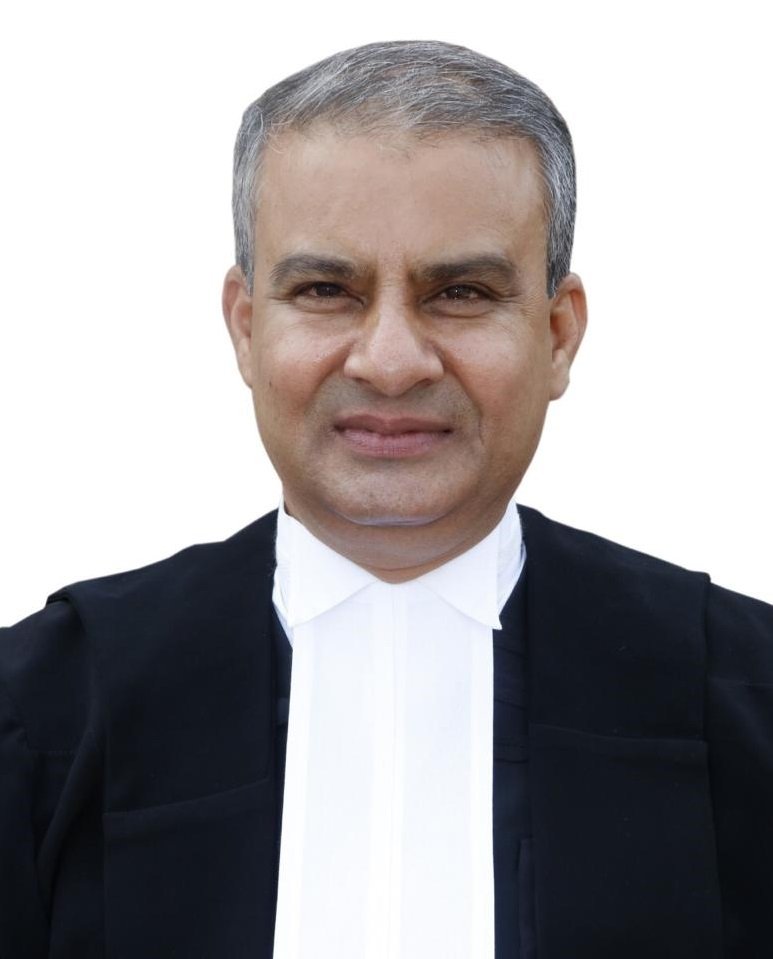
HON'BLE MR. JUSTICE FARJAND ALI
Order
15/09/2026
1.The jurisdiction of this Court has been invoked by way of
filing applications under Section 483 BNSS at the instance of
accused-petitioners. The requisite details of the matter are
tabulated herein below:
[2026:RJ-JP:36960] (2 of 20) [CRLMB-9687/2026]
S.No. Particulars of the Case
1.FIR Number 342/2021
2.Concerned Police Station Kaman
3.District Bharatpur
4.Offences alleged in the FIR Under Sections 147, 148, 149,
323, 341, 307, 302, 120-B of
IPC and 3 & 25 of Arms Act.
5.Offences added, if any Sections 326, 427, 336 of IPC.
6.Date of passing of impugned
order
11.06.2026
2.These three bail applications have arisen out of the same
incident and the lawyers representing the parties are the
same and all three cases are listed today, thus with the
consent of the parties all are being decided by this common
order.
3.It is contended on behalf of the accused-petitioners that no
case for the alleged offences is made out against them and
their incarceration is not warranted. There are no factors at
play in the case at hand that may work against grant of bail
to the accused-petitioners and they have been made accused
based on conjectures and surmises.
4.Contrary to the submissions of learned counsel for the
petitioners, learned Public Prosecutor opposes the bail
applications and submits that the present case is not fit for
enlargement of accused on bail.
5.As it was observed by this Court while considering the bail
plea of co-accused Sahab Singh i.e., S.B. Crl. Misc. 2nd Bail
Application No. 3613/2024 decided vide order dated
23.10.2024, there were two incidents separate and at distinct
places. One pertaining to murder of deceased Devi Ram @
[2026:RJ-JP:36960] (3 of 20) [CRLMB-9687/2026]
Pappa and in the second incident which took place in village
where large number of people made an assault over the
house of the victim family.
6.It would be apt to reproduce the consideration made by this
Court while granting bail to the co-accused Sahab Singh, the
relevant bail order dated 23.10.2024 is reproduced as
under:-
“1.The jurisdiction of this court has been invoked by
way of filing the second bail application under
Section 439 CrPC at the instance of accused-
petitioner. The requisite details of the matter are
tabulated herein below:
S.No. Particulars of the Case
1.FIR Number 342/2021
2.Concerned Police Station Kama
3.District Bharatpur
4.Offences alleged in the
FIR
Sections 147, 148, 149,
323, 341, 307, 302 &
120-B of the IPC &
Section 3/25 of the
Arms Act
5.Offences added, if any Sections 326, 336 &
427 of the IPC
6.Date of passing of
impugned order
24.08.2023
2. The first bail application of the petitioner was
dismissed as not pressed by this Court vide order dated
16.02.2024 passed in SBCRLMB No.1812/2024.
Hence, the instant bail application.
3.Briefly stated the facts of the case necessary for
disposal of the bail application are that a report came
to be lodged at the instance of Ramveer on 12.06.2021
alleging interalia that when his father was going to
Village Kama, in the mid-way, he was assaulted by ten
accused persons, who were armed with weapons. The
accused who inflicted injuries were Chandrabhan @
Chanua, Ramveer, Shyam Sunder, Jagat singh,
Ramavtar, Ram Prasad, Babli, Banwari, Ghanshyam
and Pritam. Accused Chandrabahn, Ramveer, Shyam
Sunder, Jagat Singh, Ramavtar were having iron rods
in their hands and rest of the accused were having
lathis in their hands. His father was brutally beaten up
[2026:RJ-JP:36960] (4 of 20) [CRLMB-9687/2026]
and the said incident was witnessed by his uncle
Ramniwas, Ajeet and his cousin Mahesh. The victim
Devi Ram @ Pappa was taken to hospital. In a second
incident, some of the accused persons reached to
Village Mullaka, where an assault was made over the
family members of the victim. It is alleged that
amongst several other persons, the petitioner was also
a member of an unlawful assembly.
4.It is contended on behalf of the accused-
petitioner that no case for the alleged offences is made
out against him and his incarceration is not warranted.
There are no factors at play in the case at hand that
may work against grant of bail to the accused-
petitioner and he has been made an accused based on
conjectures and surmises.
5. Contrary to the submissions of learned counsel
for the petitioner, learned Public Prosecutor and
counsel for the complainant opposes the bail
application and submits that the present case is not fit
for enlargement of accused on bail.
6. I have heard and considered the submissions
made by both the parties and have perused the
material available on record.
7.After careful scanning of the material available on
record, it is revealed that there were two separate
incidents out of which in one incident, Devi Lal @
Pappa, the father of the complainant was all alone on
a Motorcycle Splendor and he was going to Village
Kama from his village Mullaka. In the midway,
between the Govt. Hospital, Kama and the Dak
Bungalow, Kama, ten persons made an assault upon
him, as a consequence of which, he received several
injuries and ultimately succumbed to death wherein in
the second incident, which was taken place at Village
Mullaka, some of the accused persons allegedly made
an assault upon the other family members of the
victim. The time and place of both the incidents are
different and rather it is not disernable that at what
point of time the second incident took place. Although
the name of the petitioner is mentioned in the second
incident which took place at Village Mullaka but none of
the victim of this incident received grievous injuries or
injuries which are dangerous to life.
8.Considering the overall facts and circumstances
of the case and looking to the nature of the incident,
the previous incident and inclusion of several other
[2026:RJ-JP:36960] (5 of 20) [CRLMB-9687/2026]
persons in the second incident, it is felt that the
genuineness of the crime can only be discernible after
the entire evidence would be brought on record and
that task would be undertaken by the learned trial
Judge. As on date, what is revealing that the petitioner
was not present at the crime scene in which deceased
Devi Ram received fatal injuries. Indisputably, no
specific role has been assigned to the petitioner in
causing injuries to the deceased. His name finds place
in a separate incident in which neither any fatal
injuries is complained nor serious allegations are
levelled against him.
9.The another aspect of the matter is that the
petitioner is behind the bars since a long and there are
several prosecution witnesses out of which a very few
could have been examined till date. It is a firm view of
this Court that an under trial prisoner cannot be
incarcerated for an indefinite period. Only a reasonable
time can be granted to the prosecution to prove its
case and at the same time, the accused cannot be left
languishing in jail for want of evidence against him as
he required to be presumed innocent until the guilt is
proven.
10.Normally, trial of a sessions case is completed
within a period of one year from its commencement,
however, for some unavoidable and inevitable
circumstances, the period can be extended but keeping
the accused detained in jail for around three and half
years for the purpose of production of evidence is
detrimental to the interest of accused detained in jail.
10.This Court has made an elaborate discussion with
regard to bail of an under trial accused on the ground
of delay in culmination of the trial. This Court feels that
if the accused is under detention, it is obligatory for
the prosecution to complete the trial within a
reasonable period. Dealing with the identical issue
where the trial had been protracted for unreasonable
period, an elaborate discussion has been made by this
Court while deciding the S.B. Criminal Misc. Bail
Application No.5916/2023 in the matter of Lichhman
Ram @ Laxman Ram Vs. State the relevant part of
which would be apt to reproduce here which read as
under:-
7. This Court feels that the nature and gravity of
offence and availability of material in support thereof
are not the only factors to be taken into account while
[2026:RJ-JP:36960] (6 of 20) [CRLMB-9687/2026]
considering a bail application. The fact that trial is to
be concluded within a reasonable period of time is
imperative while considering grant of bail to an
accused. It is settled principle of criminal
jurisprudence that there is presumption of innocence
at the pre-conviction stage and the objective for
keeping a person in jail is to ensure his presence to
face the trial and to receive the sentence that may be
passed. This detention is not supposed to be punitive
or preventive in nature. An accused is considered to be
innocent until he or she or they are proven guilty in
the court of law.
8. As per the fundamental rights granted to every
citizen/person by the Constitution of India, the accused
cannot be expected to languish in custody for an
indefinite period if the trial is taking unreasonably long
time to reach the stage of conclusion. An under trial
prisoner, who is waiting for the trial to complete and
reach a conclusion about his guilt for the alleged crime,
is not only deprived of his right to a speedy trial but
his other fundamental rights like right to liberty,
freedom of movement, freedom of practising a
profession or carrying on any occupation, business or
trade and freedom to dignity are also hampered.
9. Life without liberty is like a body without soul.
Freedom is the open window through which pours the
sunlight of the human spirit and human dignity.
Personal liberty of the accused is sacrosanct and
quintessential to the very spirit and structure of a
civilisation. Jeremy Bentham, the great English jurist,
postulated that the greatest happiness of the greatest
number is the end of law. The concept of civil liberty is
embedded in individualism. This simply means that the
purpose of the state is to help every individual in
reaching their highest development and evolving into
the best personality, thereby reaching a point where
law and state are not required by the society. Thus,
when personal liberty of an individual is threatened,
his development is in peril which is a matter of great
[2026:RJ-JP:36960] (7 of 20) [CRLMB-9687/2026]
concern. Sir Wiiliam Blackstone has deftly observed on
page 134 of the first volume of his book,
‘Commentaries on the Laws of England’ that,
"Personal liberty consists in the power of locomotion,
of changing situation or moving one's person to
whatsoever place one's own inclination may direct,
without imprisonment or restraint unless by due
process of law".
Justice cannot be presumed to have been administered
merely on passing of a judgment of conviction and order of
sentence or a judgment of acquittal; rather administration
of justice shall be deemed to have been completed when
the trial is concluded within a reasonable period of time
and the accused as well as the complainant/victim are not
made to wait for years on end to know the result of the
trial.
10. One of the founding fathers and the Third President of
them United States of America, Thomas Jefferson, has
rightly said that, “Rightful liberty is unobstructed action,
according to our will, within limits drawn around us by the
equal rights of others." Though the victim/complainant
party has the right to seek justice against an accused
person but that does not mean that the right of the accused
to a fair trial can get hampered. A fair trial is one which is
concluded within a reasonable period of time.
11. It is not just a fundamental right but also a human right
of every accused as incarceration for an indefinite period
pending trial is in contravention of the universal rights that
are imperative for us all sans any kind of discrimination.
Justice P.N. Bhagwati has embodied the spirit of the afore-
mentioned observation in Maneka Gandhi Vs. Union of
India (UOI) and Ors. reported in AIR 1978 SC 597 in the
following words:
“The expression ‘personal liberty’ in Article 21 is of
the widest amplitude and it covers a variety of rights
which go to constitute the personal liberty of man and
some of them have raised to the status of distinct
fundamental rights and given additional protection
under Article 19.”
[2026:RJ-JP:36960] (8 of 20) [CRLMB-9687/2026]
12. No one is unaware of the fact that justice delayed is
justice denied. On one hand, if a victim has to wait for
years to see the perpetrator get his due and on the other
hand, if the accused is innocent and it is so decided that he
was not guilty for the crime as alleged by the prosecution,
then there is no justifiable answer that can put out the fire
that has been burning in the minds of the parties since the
very inception of the criminal proceedings.
13. A petition for issuance of a writ of habeas corpus was
filed in Hussainara Khatoon & Ors. Vs. Home
Secretary, State of Bihar, Govt. of Bihar, Patna
reported in 1979 SCR (3) 169, praying for the release of a
large number of men, women and children that were
languishing in jails in Bihar for offences which if found
guilty, were punishable by a sentence of not more than few
months. Following the creative deliverance passed in the
case of Maneka Gandhi (supra) which expanded the
scope of interpretation under Article 21 of the Constitution
of India, the right to a speedy trial was interpreted as being
implied in the broad gamut of rights that are borne out of
right to life and personal liberty enshrined under Article 21.
Justice Bhagwati further expressed his anguish over the fact
that the bail system of India works on the rusty assumption
that monetary loss will deter an accused from fleeing from
justice and thus, it operates harshly against the poor and
indigent persons of the society. The burden of the period of
detention falls on the innocent people who are the members
of the family of the accused. A set of guidelines were
issued by the Apex Court in this case to ensure that
the courts subordinate to each of the High Courts
take lesser time to reach a legitimate conclusion in a
trial and that there should be greater access to bail
along with humane living standards for the under-
trials.
14. Subsequent to Hussainara Khatoon (supra), Hon’ble
the Supreme Court held that the right to speedy trial is
available at all the stages, be it the stage of investigation or
inquiry, trial, appeal, revision and even retrial, in Abdul
[2026:RJ-JP:36960] (9 of 20) [CRLMB-9687/2026]
Rehman Antulay & Ors. Vs. R.S. Nayak & Ors. , reported
in AIR 1992 SC 1701. In addition to the above, it was also
held that a time limit cannot be set for the conclusion of
trial as there are many factors that impact the right to
speedy trial and the facts and circumstances of each case
need, to be considered separately. An order for conclusion
of trial within a fixed time is possible in specific cases where
the circumstances and nature of offence demand it but a
fixed time limit for all the trials cannot be imposed.
15. In the case of Sanjay Chandra v. CBI , reported in AIR
2012 SC 830, Hon'ble the Supreme Court had observed that
as the investigation is complete and charge sheet has
already been filed by the investigating agency, there
remains no necessity to keep the accused in custody for
further investigation. Being cognizant of the fact that the
alleged offences were such that if proved, they could cause
peril to the Indian economy, still Hon'ble the Supreme Court
upheld the right of an under-trial prisoner to be released on
bail. In S.B. Criminal Miscellaneous IV Bail Application
No.14677/2021 titled as Banwari Meena v. State of
Rajasthan, this Court has passed an elaborate order in
similar context holding that it is a well-established canon of
criminal law that there is presumption of innocence at the
pre-conviction stage and the, objective for keeping a person
in jail is to ensure his presence to face trial and to receive
the sentence that may be passed. This detention is not
supposed to be punitive or preventive in nature. In another
case titled Savanta v. State of Rajasthan (S.B. Criminal
Miscellaneous VII Bail Application No. 3701/2022), this
Court has held that over-incarceration of undertrial
prisoners, beyond reasonable period of time, is violative of
their fundamental right to a fair and speedy trial. Any trial
that is deemed fair should conclude in a reasonable period
of time.
16. While keeping an accused detained, the opportunity to
the prosecutor to lead evidence can only be given for a
reasonable period. The wider connotation of the phrase
‘reasonable period’ be understood to be one year because
the case is classified as a sessions case which would mean
[2026:RJ-JP:36960] (10 of 20) [CRLMB-9687/2026]
that the like cases should commence and conclude within a
session, that is, one year. Even if an elastic interpretation of
the expression ‘reasonable period’ is taken on the pretext of
certain unavoidable circumstances, then it can only be
doubled and even in that situation, trial has to be
completed within two years while keeping an accused in
custody. Suffice it would to say that for the purpose of
determination as to whether the accused is guilty or not,
only a reasonable period can be awarded to the prosecutor
if the accused is behind the bars. The cases which are
classified as session case are purposefully directed to be
heard by senior officer of District Judge Cadre looking to his
experience and rank/grade/post. In criminal jurisprudence
prevalent in India, there is a presumption of innocence
working in favour of the accused until he is proven guilty in
the trial. The trial is conducted for the purpose ofm
affording an opportunity to the prosecutor to prove the
charge and only for the purpose of proving guilt or adducing
evidence on record, an unreasonable period of time cannot
be granted as the same infringes the fundamental rights of
an accused which are otherwise guaranteed by the
Constitution of India. While entertaining a bail plea, the
court of law is required to take into account the above-
mentioned aspect of the matter as well besides the gravity
of offence and quantum of sentence. After pondering over
the legal provisions made in the code of Criminal Procedure,
the law enunciated by Hon’ble the Supreme Court through
plethora of judicial pronouncements and upon deliberation
of bail jurisprudence, it is understood that the only thing
which a court of law is to ascertain while entertaining a bail
plea is whether the accused should be allowed to come to
the court to attend the judicial proceeding from his home
and he may be allowed to remain with his family and within
the society on the specific condition that on the stipulated
date of the hearing of the case, he will willfully attend the
court proceeding or he is such a person that even in the
pending trial, he should be detained, should not be allowed
to visit his family and should be lodged at a specified place
of detention so that on the day of hearing, he may be
[2026:RJ-JP:36960] (11 of 20) [CRLMB-9687/2026]
brought to the court from the jail. In other words, it is to be
decided whether he may be allowed to eat, sleep and live
with his family like a man ordinarily does or he may be
allowed to eat, sleep and live in the jail. It all boils down to
this that whether the Court wishes to allow the accused to
come to the court to attend the proceedings from his home
upon furnishing his bonds and surety of independent
person(s)s or the court thinks that he cannot be allowed to
roam free and therefore, he should be detained so that he
may be brought before the court on the day fixed for the
hearing. This Court is of the considered view that this is the
only thing which is to be thought over and to be ascertained
while entertaining a bail plea. The main object of keeping a
person behind the bars pending trial is nothing more but to
ensure a smooth, unhindered, fair and speedy trial and that
he may be present to receive the sentence as may be
passed.
17. Courts should not lose sight of the fact that pre-
conviction detention has some punitive implications and the
purpose of detention before conviction is to secure their
presence at the trial and ensure their personal attendance
in cases where necessity dictates their arrest and jail is the
exception not the rule.
18. The Hon'ble Supreme Court has recently passed a
judgment in Criminal Appeal No(s). 1525 of 2021 titled as
Ashim @ Asim Kumar Haranath Bhattacharya @ Asim
Harinath Bhattacharya @ Aseem Kumar Bhattacharya
v. National Investigation Agency vide order dated
01.12.2021 wherein looking to the aspect that the
fundamental right of the undertrial prisoner to have a
timely trial was getting violated due to long and, indefinite
period of incarceration, the trial court was directed to grant
the benefit of post-arrest bail in favour of the appellant.
19. In Union of India (UOI) Vs. K.A. Najeeb , reported in
AIR 2021 SC 712, Hon’ble the Supreme Court upheld the
order of the High Court of Kerala granting bail to an
accused and observed that had it been a case at the
threshold, the Hon’ble Court would not have paid heed to
the respondent’s prayer but looking to the length of time
[2026:RJ-JP:36960] (12 of 20) [CRLMB-9687/2026]
that the accused has already spent in jail and the likelihood
of the trial taking still more time to conclude, they agreed
that the High Court was not left with any other option but to
release the accused on bail. The relevant portion of the
judgment is reproduced as below:
“An attempt has been made to strike a balance
between the Appellant's right to lead evidence
of its choice and establish the charges beyond
any doubt and simultaneously the Respondent's
rights guaranteed under Part III of our
Constitution have been well protected.”
20. In another recent case of Satender Kumar Antil Vs.
Central Bureau of Investigation & Ors. , reported in AIR
2022 SC 3386, Hon’ble the Supreme Court took cognizance
of the fact that the jails of the country are over-flowing with
prisoners and that arrest, being a draconian measure that
curtails the liberty of the arrested individual, should be used
sparingly. It was also observed that accused can be
considered for enlargement on bail on the basis of
unreasonable delay being one of the grounds. The Apex
Court classified offences into four broad categories and
prescribed guidelines with respect to following statutory law
as well as precedents laid down by the Apex Court with
regard to Sections 41 & 41A, 87 & 88, 167, 170, 309(1)
among others, with the expectation that it would help in
unclogging the prisons and result in reduction of pendency
of bail applications.
21. The inmates who have spent years on end to see what
has been decided in their case have probably resigned to
their ill fate and become used to the confines of the four
walls of the prison. It reminds this Court of the reference
made to Dr. Manette’s predicament in the Charles Dickens’
novel ‘A Tale of Two Cities’ by Hon’ble the Supreme Court
in State of Kerala Vs. Raneef, reported in AIR 2011 SC
340 while dismissing the appeal filed against grant of bail to
the accused who was a doctor and had already spent 66
days in custody. In the book, Dr. Manette had spent such a
long time of eighteen years as an inmate that he forgot his
name, profession and other details about his life that
[2026:RJ-JP:36960] (13 of 20) [CRLMB-9687/2026]
existed prior to him becoming a prisoner at La Bastille. This
Court is anxious over the fact that jails debilitate the
under-trial prisoners and if after the long wait, the accused
is ultimately acquitted, then how would the long years
spent by the under-trial in custody be restored to
him/her/them. The fact that the imprisonment of a family
member affects the whole family cannot be overlooked and
if long incarceration pending trial is considered to be harsh
on the accused, then it should also be considered to be
equally harsh on the family members of the accused. The
rule is that pre-conviction detention is not warranted by
law.
22. There have been repetitive pronouncements by this
Court as well wherein considering the fact of long
incarceration inter alia other aspects, bail has been granted
to accused persons. Indisputably, the petitioner has been in
custody since long and the protracted trial will violate his
fundamental right to a timely trial. 23. In Writ Petition
(Criminal) No 279 of 2022, titled Mohammed Zubair Vs.
State of NCT of Delhi & Ors , while granting bail to the
accused vide order dated 20.07.2022, the Apex Court
observed that the accused was trapped in a vicious cycle of
the criminal process where the process had itself become
the punishment.
24. Similarly, in cases where under-trial prisoners are made
to wait and the trial is prolonged, the procedure of criminal
proceedings itself becomes a punishment for such
detainees. If the provisions laid down in the Code of
Criminal Procedure are followed to the letter and not just in
spirit, there will be lesser room for grievance related to
speedy trial. Having noted the significance and development
of the right to speedy trial, it is also important to consider
the following factors while adjudicating a bail application
against the backdrop of the right to a speedy trial:
i) The delay should not have been a defence
tactic. Who has caused the delay is also to be
seen. Every delay does not necessarily
prejudice the accused.
[2026:RJ-JP:36960] (14 of 20) [CRLMB-9687/2026]
ii) The aim is not to interpret the right to
speedy trial in a manner so as to disregard the
nature of offence, gravity of punishment,
number of accused and witnesses, prevailing
local conditions and other systemic delays.
iii) If there is a strong reason to believe that the
accused will surely flee from justice if released
on bail and it will be a hard task for the
investigating agency to re-apprehend him, then
the benefit of bail should not be extended in his
favour.
iv) If it is shown by placing compelling material
on record that the release of the accused may
create a ruckus in the society or that he will
create such a situation wherein the prosecution
witnesses will not come forward to depose
against him or that he may otherwise hamper
the evidence of prosecution in any other
manner, then utmost caution needs to be
exercised in such cases before granting bail to
the accused.
The (iii) and (iv) points are to be considered only when
strong and cogent evidence is placed on record or a
compelling reason in support has come to light but surely
not just on the basis of a simple, blanket submission made
by the counsel appearing on behalf of the
prosecution/complainant/victim.
25. While hearing a bail plea, if there appears the slightest
possibility of acquittal of the accused based on any of the
submissions made by counsel for the parties, then
there is no harm in inclining towards extending the benefit
of bail in favour of the accused so far as it is limited to the
justifiable disposal of the bail. It is a settled principle of law
that the defence is not required to prove its case beyond
reasonable doubt and it can rely on the principle of
preponderance of probability. In juxtaposition, the burden
to prove its case beyond reasonable doubt always lies upon
the prosecution except in exceptions prescribed by law.
Thus, whenever a doubt is raised against the story of the
[2026:RJ-JP:36960] (15 of 20) [CRLMB-9687/2026]
prosecution, it needs to be considered objectively but
needless to say, it is to be considered only for the limited
purpose of deciding the bail application and should not
influence the trial court so as to adversely affect the
interests of either of the parties in any manner.
26. While adjudicating a bail plea, the Court should never
assume that the case put forth by the prosecution is
sacrosanct and true and the accused is guilty; however, the
same does not mean that the case of the prosecution
should be approached with an initial presumption of doubt.
Suffice it to say that if a substantial plea is raised at the
time of praying for bail, it can be considered tentatively for
the purpose of granting bail at that stage, without deeply
speculating the result of the trial as a dead end. In addition,
if material is placed on record, it needs to be considered.
27. Coming back to the point of protracted trial and
consequent expansion of period of incarceration, this Court
is of the firm view that the accused should be released on
bail if he has been incarcerated pending trial for more than
a reasonable period of time unless extraordinary and
overwhelming circumstances prevent the Court from doing
so.
28. The procedure of law is that the exact date of
imprisonment would commence from the judgment of
conviction and the date of order of sentence. The further
provision of law is that the period already undergone would
be set off against the period of sentence. The purpose of
keeping the accused behind bars is to ensure that the
accused would not flee from justice and to avoid the
apprehension that he may hamper the witnesses or tamper
with the prosecution evidence. True it is that the gravity of
offences and severity of punishment attached with the
crime form vital parts of consideration while adjudicating a
bail plea but the period of incarceration pending trial must
be a reasonable period. It is the duty of the prosecutor as
wells as of the Court to ensure that the prosecution
evidence is produced within a reasonable period which must
not be an unfair and unjust. In order to justify period of
incarceration pending trial, the aid of provision for setting
[2026:RJ-JP:36960] (16 of 20) [CRLMB-9687/2026]
off period of incarceration suffered pending trial with the
term of imprisonment decided by the convicting Court in the
order of sentence cannot be taken in cases where the trial
went on for a long period of time and ultimately resulted
into acquittal.
29. The right to be freed from detention and get a fast
culmination of trial are liberties that every accused should
be able to enjoy and in cases where the delay is not caused
at the hands of the accused, he bears the brunt of the
follies of the criminal justice system.
30. The right to speedy trial has developed to become an
inalienable fundamental right guaranteed under Article 21
of the Constitution of India by way of a slew of judgments
passed by Hon’ble the Supreme Court, however, it has been
prevalent since times immemorial and finds mention even
in the Magna Carta Libertatum commonly called Magna
Carta, the royal charter of rights agreed to by King John of
England in around 1215 A.D. Among other conventions and
precedents, the text of Magna Carta was one of the major
inspirations that laid the basis for English Common Law and
the pre-eminent English luminaries like Lord Macaulay and
Sir James Stephen drafted our criminal legislation and
statutes. Clause 40 of the Magna Carta which reads as "To
no one will We sell, to no one will We deny or delay, right or
justice", paved the way for right to habeas corpus as well as
the idea of adjudication by the jury or the equals of the
accused. The idea that no accused person can be detained
indefinitely during the pendency of trial also sprang up from
this clause.
31. The matter needs to be looked at from a humanitarian
lens also. The accused is spending his time as an under-trial
in prison where the living conditions are depressing and
pitiable. The bellies of prisons all across the country are
bloated due to the humongous influx of prisoners in India.
The prisons are overcrowded to an unimaginable extent.
Nelson Mandela was the torch-bearer of the movement
against apartheid in South Africa and he had the following
words to say about his fabled incarceration at the Robben
Island Prison from 1964 to 1982:
[2026:RJ-JP:36960] (17 of 20) [CRLMB-9687/2026]
“No one truly knows a nation until one has been
inside its jail. A nation should not be judged by
how it treats its highest citizens, but its lowest
ones.”
Any prison that was built with the infrastructure to
hold a certain number of prisoners would be overpopulated
and congested if it would be required to house a percentage
of prisoners which is way beyond its capacity. Prisoners in
India sleep in turns as there is no space for all of them to
sleep at the same time. They are packed like sardines in the
cells and are deprived of basic needs like balanced diet,
sanitation, sewage, hygiene etc. From food and ration to
commodities like soap, detergent, toothpaste etc.,
everything is provided by the state in measured quantities
for the number of prisoners that the prison is designated to
hold and not for the number of prisoners that it actually
holds in reality. In such cases, an under-trial prisoner
cannot be subjected to such harsh and inhuman conditions
for eons.
32. The Amnesty International India’s Report titled Justice
Undertrial: A Study of Pre-trial Detention in India reveals
that as of 2019, 69% of the prisoners in Indian prisons are
undertrials which means that the under-trial prisoners are
more than twice in number than the convicted prisoners. As
per the report, the average occupancy rate of Indian jails is
114%. There are very few prisons that are equipped and
able to decide which under-trial prisoners are eligible for
release under Section 436A of the CrPC. As per the Prison
Statistics India 2020 published by the National Crime
Records Bureau (Ministry of Home Affairs), Government of
India, 76.12% of the total prisoners across the country are
under trial prisoners. Nothing can be assumed about the life
expectancy of an accused, rather if an accused is made to
stay in prisons in such miserable conditions, it would lead to
more health problems and impair the health of the accused
person. While sharing his thoughts about his experience in
jail, Mahatma Gandhi had once said, “Men in prison are
‘civilly dead’ and have no claim to any say in policy.” Ours is
not a despotic nation rather it is a democratic nation which
[2026:RJ-JP:36960] (18 of 20) [CRLMB-9687/2026]
proudly upholds the liberties of its citizens. Despite
Supreme Court guidelines, legal and executive reforms,
there is no significant improvement in the state of the
under-trials.
33. Law and society go hand in hand. A lawless society is no
better than a jungle. Right to life is not a bare right; it
means right to a dignified life and personal liberty and
includes in its ambit all aspects that help a person lead a
life of dignity. Any law which does not accommodate or
adapt to the evolution of the society seizes to serve its
purpose. When a person is detached from the society and
put in jail, he goes through a big change of social
environment. The present petitioner has spent seven long
years in prison while he awaits the verdict of his ongoing
trial. Though he has not yet been proved to be guilty but he
has spent all the seasons of last seven years in the jail
precinct; he has not been a part of any social gathering,
major family events, festivals and like occasions for seven
years and if he is finally acquitted after culmination of trial
then no court can give him back the time and reputation
that he has lost. There is no way to recompense the
accused who has spent a prolonged period pending trial in
case there is an acquittal waiting for him at the end of a
seemingly endless journey. No concept of solatium to an
under trial prisoner in case of acquittal exists in the statutes
of our country. Moreover, it is pertinent to note that if
under trial prisoners are released looking to the facts and
circumstances of the case, then there can be more space
for the inmates and better living standards in the jails. For
instance, if a jail is built to house 100 inmates only but it is
overcrowded to the extent of housing 200 inmates, then
release of under trial prisoners post consideration of
relevant factors would result in improved living conditions
for all prison mates.
34. Considering the above observations, specially the right
to speedy trial being a fundamental right, the over-
crowdedness and a skewed prison-prisoner ratio and the
rightful object of detaining an arrestee and in light of the
guiding pronouncements of the Apex Court on this issue;
[2026:RJ-JP:36960] (19 of 20) [CRLMB-9687/2026]
this Court feels persuaded to take a liberal approach to
grant bail to the accused without deeply diving into the
niceties of the matter as well into the nature and gravity of
the offence. The long period of detention spent by the
accused in custody awaiting trial without any hope of
conclusion of trial in the near future has shaken the
conscience of this Court and thus, ends of justice would
meet in releasing him on bail. Needless to say, the above
observations are limited to the justifiable disposal of the
present bail application and shall not influence the trial
judge in any manner so as to adversely affect the rights of
either of the parties.
In view of the enunciation made regarding provisions
for bail and looking to the fact that the petitioner is behind
the bar since last around three and half years and noticing
that culmination of trial in a near future is not a seeming
fate and considering the overall facts and circumstances,
this Court is of the view that nature and gravity of offence
alone are not required to be considered at the time of
granting bail but at the same time, it has to be ensured that
the trial has to be concluded within a reasonable period if
the accused in languishing in jail therefore, without going
into the niceties of the matter it is felt that the right of the
accused to have a speedy trial should be protected. There is
high probability that the trial may still take a long time to
conclude. In light of these facts and circumstances, it is
deemed suitable to grant the benefit of bail to the
petitioners.
11.Accordingly, the instant bail application under Section
439 Cr.P.C. is allowed and it is ordered that the
accused-petitioner as named in the cause title shall be
enlarged on bail provided he furnishes a personal bond
in the sum of Rs.50,000/- with two sureties of
Rs.25,000/- each to the satisfaction of the learned trial
Judge for his appearance before the court concerned on
all the dates of hearing as and when called upon to do
so."
7.After Sahab Singh was released on bail, two other accused
persons namely Rameshwar and Harichand were also
extended the benefit of bail. The case of the present
[2026:RJ-JP:36960] (20 of 20) [CRLMB-9687/2026]
petitioners are in no manner distinguishable to the case of
the above mentioned accused persons. Thus, to maintain
judicial discipline, consistency in judicial orders and on the
ground of parity these petitioners too deserve concession of
bail.
8.I have considered the submissions made by both the parties
and have perused the material available on record. There is
high probability that the trial may take long time to conclude.
In light of these facts and circumstances, it is deemed
suitable to grant the benefit of bail to the petitioners in the
present matter.
9.Accordingly, the instant bail applications under Section 483
BNSS are allowed and it is ordered that the accused-
petitioners as named in the cause title shall be enlarged on
bail provided each of them furnishes a personal bond in the
sum of Rs.50,000/- with two sureties of Rs.25,000/- each to
the satisfaction of the learned trial Judge for their appearance
before the court concerned on all the dates of hearing as and
when called upon to do so.
10.A copy of this order be placed in each file.
(FARJAND ALI),J
3-5/ANMOL

 Login with google
Legal Notes
Add a Note....