
As per case facts, the petitioner was engaged on a daily wage basis for a long period before being disengaged, which was later declared illegal by the Labour Court, leading ...
No Acts & Articles mentioned in this case
IN THE HIGH COURT OF ORISSA AT CUTTACK
W.P.(C ) No.19538 of 2023
CNR No. ODHC010471712023
In the matter of an application under Article-226 &
227 of the Constitution of India
………………
Narayan Nayak
….
Petitioner
-versus-
State of Odisha & Another
…. Opposite Parties
For Petitioner : M/s. S.P. Jena,
Advocate
For Opp. Parties : M/s. C.K. Pradhan,
Addl. Govt. Advocate
PRESENT:
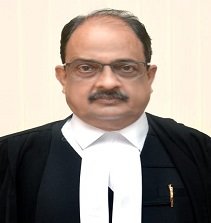
THE HONBLE MR.JUSTICE BIRAJA PRASANNA SATAPATHY
------------------------------------------------------------------------------
Date of Hearing: 23.09.2026 & Date of Judgment:23.09.2026
------------------------------------------------------------------------------ -
Biraja Prasanna Satapathy, J.
1. This matter is taken up through Hybrid
Arrangement (Virtual/Physical Mode)
// 2 //
Page 2 of 29
2. Heard learned counsel appearing for the
parties.
3. In spite of due appearance, nobody is there on
behalf of Opp. Party No.2 when the atter was called
yesterday and today also there is no appearance on
behalf of Opp. Party No.2.
4. The present Writ Petition has been filed inter
alia with the following prayer:
In the light of the facts and circumstances
stated above, it is humbly prayed that this
Hon’ble Court may be pleased to:
1. Issue a writ of Mandamus or any other
appropriate writ, quashing the order dated
12.08.2022 under Annexure-8.
2. Direct the opposite parties to regularize the
Petitioner’s services a Class-IV employee with all
consequential service benefits, including but not
limited to arrears of pay, pension and other
applicable benefits as per Government norms.
3. Grant all consequential service benefits,
including regularisation of service, seniority and
other privileges entitled to regular employees.
4. Pass any other writ, order, or direction as
this Hon’ble Court may deem fit and proper in the
facts and circumstances of the case.
And for which act of kindness, the Petitioner
shall ever pray.
5. It is contended that Petitioner though was
engaged on daily wage basis w.e.f June, 1987 in the
establishment of Opp. Party No.2, but when he was
illegally disengaged w.e.f 18.10.1995, the matter was
carried to the Labour Court in I.D. Case No.60/1997.
// 3 //
Page 3 of 29
6. Learned counsel appearing for the Petitioner
contended that the Labour Court vide its award
dtd.29.07.2005 under Annexure-1, while holding the
retrenchment of the Petitioner as illegal, directed for
his re-instatement. Learned Labour Court also
allowed a lumpsum compensation amount of
Rs.4,000/- towards back wages.
6.1. It is contended that on the face of such order
passed by this Court, Petitioner was not re-instated
on the ground of pendency of W.P.(C ) No.12870 of
2005 so filed by Opp Party No.2 before this Court.
However, the said Writ Petition when was dismissed
vide order dtd.04.05.2016 under Annexure-2,
Petitioner was re-instated in his services on daily
wage basis vide order dtd.13.06.2016 under
Annexure-3.
6.2. It is contended that taking into account the
nature of order passed by the learned Labour Court
in ID Case No.60 of 1997 and the fact that Petitioner
continued as a DLR in the establishment of Opp
party No.2 w.e.f 01.07.1987, Petitioner raised a claim
to get the benefit of regularisation. When such claim
of the Petitioner was not considered, he approached
this Court by filing W.P.(C ) No.37255 of 2021. This
Court vide order dtd.09.12.2021 under Annexure-5
when directed for consideration of the Petitioner’s
claim, the same was rejected vide the impugned
// 4 //
Page 4 of 29
order dtd.12.08.2022 under Annexure-8 on the
ground that petitioner has not been engaged as
against any sanctioned vacant post. While holding
so, Opp. Party No.1 also held the Petitioner not
covered by the decisions in the case of Uma Devi,
M.L. Keshari and so also Amarkanta Ray.
6.3. Learned counsel appearing for the Petitioner
contended that on the face of the rejection of the
Petitioner’s claim to get the benefit of regularisation,
Petitioner is continuing on daily wage basis as on date.
It is accordingly contended that in view of the recent
decision of the Hon’ble Apex Court in the case of
Jaggo vs. Union of India & Ors., 2024 SCC OnLine
SC 3826; Shripal & Anr. vs. Nagar Nigam,
Ghaziabad, 2025 SCC OnLine SC 221, as well as
Dharam Singh & Ors. vs. State of U.P. & Anr. (Civil
Appeal No(s).8558 of 2018 and another decision of
the Apex Court in the case of Bhola Nath Vs. State of
Jharkhand and Others , 2026 INSC 99 and in the
case of Sukhendu Bhattacharjee & Ors. vs. the
State of Assam & Ors. reported in 2026 INSC 523,
Petitioner has become eligible and entitled to get the
benefit of regularization.
6.4. View expressed by the Hon’ble Apex Court in the
case of Jaggo in Para-22 to 25 and 27 reads as
follows:-
// 5 //
Page 5 of 29
“22. The pervasive misuse of temporary
employment contracts, as exemplified in this
case, reflects a broader systemic issue that
adversely affects workers' rights and job
security. In the private sector, the rise of the gig
economy has led to an increase in precarious
employment arrangements, often characterized
by lack of benefits, job security, and fair
treatment. Such practices have been criticized
for exploiting workers and undermining labour
standards. Government institutions, entrusted
with upholding the principles of fairness and
justice, bear an even greater responsibility to
avoid such exploitative employment practices.
When public sector entities engage in misuse of
temporary contracts, it not only mirrors the
detrimental trends observed in the gig economy
but also sets a concerning precedent that can
erode public trust in governmental operations.
23. The International Labour Organization (ILO),
of which India is a founding member, has
consistently advocated for employment stability
and the fair treatment of workers. The ILO's
Multinational Enterprises Declaration6
encourages companies to provide stable
employment and to observe obligations
concerning employment stability and social
security. It emphasizes that enterprises should
assume a leading role in promoting employment
security, particularly in contexts where job
discontinuation could exacerbate long-term
unemployment.
24. The landmark judgement of the United State
in the case of Vizcaino v. Microsoft Corporation7
serves as a pertinent example from the private
sector, illustrating the consequences of
misclassifying employees to circumvent
providing benefits. In this case, Microsoft
classified certain workers as independent
// 6 //
Page 6 of 29
contractors, thereby denying them employee
benefits. The U.S. Court of Appeals for the Ninth
Circuit determined that these workers were, in
fact, common-law employees and were entitled
to the same benefits as regular employees. The
Court noted that large Corporations have
increasingly adopted the practice of hiring
temporary employees or independent
contractors as a means of avoiding payment of
employee benefits, thereby increasing their
profits. This judgment underscores the principle
that the nature of the work performed, rather
than the label assigned to the worker, should
determine employment status and the
corresponding rights and benefits. It highlights
the judiciary's role in rectifying such
misclassifications and ensuring that workers
receive fair treatment.
25. It is a disconcerting reality that temporary
employees, particularly in government
institutions, often face multifaceted forms of
exploitation. While the foundational purpose of
temporary contracts may have been to address
short-term or seasonal needs, they have
increasingly become a mechanism to evade
long-term obligations owed to employees. These
practices manifest in several ways:
• Misuse of "Temporary" Labels:
Employees engaged for work that is essential,
recurring, and integral to the functioning of an
institution are often labeled as "temporary" or
"contractual," even when their roles mirror those
of regular employees. Such misclassification
deprives workers of the dignity, security,
and benefits that regular employees are entitled
to, despite performing identical tasks.
// 7 //
Page 7 of 29
• Arbitrary Termination: Temporary employees
are frequently dismissed without cause or
notice, as seen in the
present case. This practice undermines the
principles of natural justice and subjects
workers to a state of constant insecurity,
regardless of the quality or duration of their
service.
• Lack of Career Progression: Temporary
employees often find themselves excluded from
opportunities for skill development, promotions,
or incremental pay raises. They remain
stagnant in their roles,
creating a systemic disparity between them and
their regular counterparts, despite their
contributions being equally significant.
• Using Outsourcing as a Shield:
Institutions increasingly resort to outsourcing
roles performed by temporary employees,
effectively replacing one set of exploited workers
with another. This practice not only perpetuates
exploitation but also demonstrates a deliberate
effort to bypass the obligation to offer regular
employment.
• Denial of Basic Rights and Benefits:
Temporary employees are often denied
fundamental benefits such as pension,
provident fund, health insurance, and paid
leave, even when their tenure spans decades.
This lack of social security subjects them and
their families to undue hardship, especially in
cases of illness, retirement, or unforeseen
circumstances.
xxxx xxxx xxxx xxxxx
// 8 //
Page 8 of 29
27. In light of these considerations, in our
opinion, it is imperative for government
departments to lead by example in providing
fair and stable employment. Engaging workers
on a temporary basis for extended periods,
especially when their roles are integral to the
organization's functioning, not only contravenes
international labour standards but also exposes
the organization to legal challenges and
undermines employee morale. By ensuring fair
employment
practices, government institutions can reduce
the burden of unnecessary litigation, promote
job security, and uphold the principles of justice
and fairness that they are meant to embody.
This approach aligns with international
standards and sets a positive precedent for the
private sector to follow, thereby contributing to
the overall betterment of labour practices in the
country.”
6.5. Hon’ble Apex Court in the case of Shripal in
Para-14, 15, 17 & 18(IV)has held as follows:-
• “14. ...... More importantly, Uma Devi
cannot serve as a shield to justify
exploitative engagements persisting for years
without the Employer undertaking legitimate
recruitment.
• 15. ……. Indian labour law strongly
disfavors perpetual daily-wage or
contractual engagements in circumstances
where the work is permanent in nature.
• xxx xxx xxx xxx
// 9 //
Page 9 of 29
• 17. Indeed, bureaucratic limitations
cannot trump the legitimate rights of
workmen who have served continuously in
de facto regular roles for an extended period.
• 18.(IV) The Respondent Employer is
directed to initiate a fair and transparent
process for regularizing the Appellant
Workmen within six months from the date of
reinstatement, duly considering the fact that
they have performed perennial municipal
duties akin to permanent posts. In assessing
regularization, the Employer shall not impose
educational or procedural criteria retroactively
if such requirements were never applied to
the Appellant Workmen or to similarly
situated regular employees in the past. To the
extent that sanctioned vacancies for such
duties exist or are required, the Respondent
Employer shall expedite all necessary
administrative processes to ensure these
longtime employees are not indefinitely
retained on daily wages contrary to statutory
and equitable norms.”
6.6. Placing reliance on the decision in the case of
Jaggo and Shripal, Hon’ble Apex Court in the case of
Dharam Singh, in Paragraph-13, 14, 15 & 17, 18, 19
& 20 has held as follows:
// 10 //
Page 10 of 29
“13. As we have observed in both Jaggo
(Supra) and Shripal (Supra) , outsourcing
cannot become a convenient shield to
perpetuate precariousness and to sidestep fair
engagement practices where the work is
inherently perennial. The Commission’s further
contention that the appellants are not “full-
time” employees but continue only by virtue of
interim orders also does not advance their
case. That interim protection was granted
precisely because of the long history of
engagement and the pendency of the challenge
to the State’s refusals. It neither creates rights
that did not exist nor erases entitlements that
may arise upon a proper adjudication of the
legality of those refusals.
14. The learned Single Judge of the High Court
also declined relief on the footing that the
petitioners had not specifically assailed the
subsequent decision dated 25.11.2003.
However, that view overlooks that the writ
petition squarely challenged the 11.11.1999
refusal as the High Court itself directed a fresh
decision during pendency, and the later
rejection was placed on record by the
respondents. In such circumstances, we
believe that the High Court was obliged to
examine the legality of the State’s stance in
refusing sanction, whether in 1999 or upon
reconsideration in 2003, rather than dispose of
the matter on a mere technicality. The Division
Bench of the High Court compounded the error
by affirming the dismissal without engaging
with the principal challenge or the intervening
material. The approach of both the Courts, in
reducing the dispute to a mechanical enquiry
about “rules” and “vacancy” while ignoring the
core question of arbitrariness in the State’s
refusal to sanction posts despite perennial
need and long service, cannot be sustained.
// 11 //
Page 11 of 29
15. Therefore, in view of the foregoing
observations, the impugned order of the High
Court cannot be sustained. The State’s refusals
dated 11.11.1999 and 25.11.2003,in so far as
they concern the Commission’s proposals for
sanction/creation of Class-III/Class-IV posts to
address perennial ministerial/attendant work,
are held unsustainable and stand quashed.
xxx xxx xxx
17. Before concluding, we think it necessary to
recall that the State (here referring to both the
Union and the State governments) is not a mere
market participant but a constitutional
employer. It cannot balance budgets on the
backs of those who perform the most basic and
recurring public functions. Where work recurs
day after day and year after year, the
establishment must reflect that reality in its
sanctioned strength and engagement practices.
The long-term extraction of regular labour
under temporary labels corrodes confidence in
public administration and offends the promise
of equal protection. Financial stringency
certainly has a place in public policy, but it is
not a talisman that overrides fairness, reason
and the duty to organise work on lawful lines.
18. Moreover, it must necessarily be noted that
“ad-hocism” thrives where administration is
opaque. The State Departments must keep and
produce accurate establishment registers,
muster rolls and outsourcing arrangements,
and they must explain, with evidence, why
they prefer precarious engagement over
sanctioned posts where the work is perennial.
If “constraint” is invoked, the record should
show what alternatives were considered, why
similarly placed workers were treated
differently, and how the chosen course aligns
with Articles 14, 16 and 21 of the Constitution
of India. Sensitivity to the human
// 12 //
Page 12 of 29
consequences of prolonged insecurity is not
sentimentality. It is an institutional discipline
that should inform every decision affecting
those who keep public offices running.
19. Having regard to the long, undisputed
service of the appellants, the admitted
perennial nature of their duties, and the
material indicating vacancies and comparator
regularisations, we issue the following
directions:
i. Regularization and creation of
Supernumerary posts: All appellants shall
stand regularized with effect from 24.04.2002,
the date on which the High Court directed a
fresh recommendation by the Commission and
a fresh decision by the State on sanctioning
posts for the appellants. For this purpose, the
State and the successor establishment (U.P.
Education Services Selection Commission) shall
create supernumerary posts in the
corresponding cadres, Class-III (Driver or
equivalent) and Class-IV
(Peon/Attendant/Guard or equivalent) without
any caveats or preconditions. On
regularization, each appellant shall be placed
at not less than the minimum of the regular
pay-scale for the post, with protection of last-
drawn wages if higher and the appellants
shall be entitled to the subsequent increments
in the pay scale as per the pay grade. For
seniority and promotion, service shall count
from the date of regularization as given above.
ii. Financial consequences and arrears: Each
appellant shall be paid as arrears the full
difference between (a) the pay and admissible
allowances at the minimum of the regular pay-
level for the post from time to time, and (b) the
amounts actually paid, for the period from
24.04.2002 until the date of regularization
/retirement/death, as the case may be.
// 13 //
Page 13 of 29
Amounts already paid under previous interim
directions shall be so adjusted. The net arrears
shall be released within three months and if in
default, the unpaid amount shall carry
compound interest at 6% per annum from the
date of default until payment.
iii. Retired appellants: Any appellant who has
already retired shall be granted regularization
with effect from 24.04.2002 until the date of
superannuation for pay fixation, arrears under
clause (ii), and recalculation of pension,
gratuity and other terminal dues. The revised
pension and terminal dues shall be paid within
three months of this Judgment.
iv. Deceased appellants: In the case of
Appellant No. 5 and any other appellant who
has died during pendency, his/her legal
representatives on record shall be paid the
arrears under clause (ii) up to the date of
death, together with all terminal/retiral dues
recalculated consistently with clause (i), within
three months of this Judgement.
v. Compliance affidavit: The Principal
Secretary, Higher Education Department,
Government of Uttar Pradesh, or the Secretary
of the U.P. Education Services Selection
Commission or the prevalent competent
authority, shall file an affidavit of compliance
before this Court within four months of this
Judgement.
20. We have framed these directions
comprehensively because, case after case,
orders of this Court in such matters have been
met with fresh technicalities, rolling
“reconsiderations,” and administrative drift
which further prolongs the insecurity for those
who have already laboured for years on daily
wages. Therefore, we have learned that Justice
in such cases cannot rest on simpliciter
// 14 //
Page 14 of 29
directions, but it demands imposition of clear
duties, fixed timelines, and verifiable
compliance .As a constitutional employer, the
State is held to a higher standard and
therefore it must organise its perennial workers
on a sanctioned footing, create a budget for
lawful engagement, and implement judicial
directions in letter and spirit. Delay to follow
these obligations is not mere negligence but
rather it is a conscious method of denial that
erodes livelihoods and dignity for these
workers. The operative scheme we have set
here comprising of creation of supernumerary
posts, full regularization, subsequent financial
benefits, and a sworn affidavit of compliance,
is therefore a pathway designed to convert
rights into outcomes and to reaffirm that
fairness in engagement and transparency in
administration are not matters of grace, but
obligations under Articles 14, 16 and 21 of the
Constitution of India.”
6.7. It is contended that in the recent decision of the
Hon’ble Apex Court in the case of Bhola Nath so cited
(supra), Hon’ble Apex Court in Para-13.5 to 14 of the
judgment has held as follows:-
“13.5. Such a decision must necessarily be a
conscious and reasoned one. An employee who
has satisfactorily discharged his duties over
several years and has been granted repeated
extensions cannot, overnight, be treated as
surplus or undesirable. We are unable to
accept the justification advanced by the
respondents as the obligation of the State, as a
model employer, extends to fair treatment of its
employees irrespective of whether their
engagement is contractual or regular.
13.6. This Court has, on several occasions,
deprecated the practice adopted by States of
// 15 //
Page 15 of 29
engaging employees under the nominal labels
of “part-time”, “contractual” or “temporary” in
perpetuity and thereby exploiting them by not
regularizing their positions. In Jaggo v. Union
of India, this Court underscored that
government departments must lead by
example in ensuring fair and stable
employment, and evolved the test of examining
whether the duties performed by such
temporary employees are integral to the day-to-
day functioning of the organization.
13.7. In Shripal v. Nagar Nigam, and Vinod
Kumar v. Union of India , this Court
cautioned against a mechanical and blind
reliance on Umadevi (supra) to deny
regularization to temporary employees in the
absence of statutory rules. It was held that
Umadevi (supra) cannot be employed as a
shield to legitimise exploitative engagements
continued for years without undertaking
regular recruitment. The Court further clarified
that Umadevi itself draws a distinction
between appointments that are “illegal” and
those that are merely “irregular”, the latter
being amenable to regularization upon
fulfilment of the prescribed conditions.
13.8. In Dharam Singh v. State of U.P., this
Court strongly deprecated the culture of “ad-
hocism” adopted by States in their capacity as
employers. The Court criticised the practice of
outsourcing or informalizing recruitment as a
means to evade regular employment
obligations, observing that such measures
perpetuate precarious working conditions while
circumventing fair and lawful engagement
practices.
13.9. The State must remain conscious that
part-time employees, such as the appellants,
constitute an integral part of the edifice upon
which the machinery of the State continues to
// 16 //
Page 16 of 29
function. They are not merely ancillary to the
system, but form essential components thereof.
The equality mandate of our Constitution,
therefore, requires that their service be
reciprocated in a manner free from
arbitrariness, ensuring that decisions of the
State affecting the careers and livelihood of
such part-time and contractual employees are
guided by fairness and reason.
13.10. In the aforesaid backdrop, we are
unable to persuade ourselves to accept the
respondent-State’s contention that the mere
contractual nomenclature of the appellants’
engagement denudes them of constitutional
protection. The State, having availed of the
appellants’ services on sanctioned posts for
over a decade pursuant to a due process of
selection and having consistently
acknowledged their satisfactory performance,
cannot, in the absence of cogent reasons or a
speaking decision, abruptly discontinue such
engagement by taking refuge behind formal
contractual clauses. Such action is manifestly
arbitrary, inconsistent with the obligation of the
State to act as a model employer, and fails to
withstand scrutiny under Article 14 of the
Constitution.
FINAL CONCLUSION:
14. In light of our discussion, in the foregoing
paragraphs, we summarize our conclusions as
follows:
I. The respondent-State was not justified in
continuing the appellants on sanctioned vacant
posts for over a decade under the
nomenclature of contractual engagement and
thereafter denying them consideration for
regularization.
II. Abrupt discontinuance of such long-standing
engagement solely on the basis of contractual
// 17 //
Page 17 of 29
nomenclature, without either recording cogent
reasons or passing a speaking order, is
manifestly arbitrary and violative of Article 14
of the Constitution.
III. Contractual stipulations purporting to bar
claims for regularization cannot override
constitutional guarantees. Acceptance of
contractual terms does not amount to waiver of
fundamental rights, and contractual
stipulations cannot immunize arbitrary State
action from constitutional scrutiny.
IV. The State, as a model employer, cannot rely
on contractual labels or mechanical application
of Umadevi (supra) to justify prolonged ad-
hocism or to discard long-serving employees in
a manner inconsistent with fairness, dignity
and constitutional governance.
V. In view of the foregoing discussion, we
direct the respondent-State to forthwith
regularize the services of all the appellants
against the sanctioned posts to which they
were initially appointed. The appellants shall
be entitled to all consequential service benefits
accruing from the date of this judgment.”
6.8. Hon’ble Apex Court in Para 73 to 79 of
the decision in the case of Sukhendu
Bhattacharjee has held as follows:-
73. As regards the contention of Shri Gupta
that after the decision in Umadevi (supra) no
regularization can be effected in respect of
employees who were not appointed against
duly sanctioned posts, we are unable to accept
such a sweeping proposition in the facts of the
present case. The submission proceeds on the
premise that Umadevi (supra) lays down an
absolute and inflexible embargo against all
forms of regularization irrespective of the
// 18 //
Page 18 of 29
surrounding circumstances. Such an
interpretation, in our considered view, does not
reflect the true scope and ratio of the decision.
74. This Court in Jaggo (supra), deprecated the
tendency of the State to take mechanical
shelter under Umadevi (supra) to deny relief to
employees who had been performing work of a
permanent and essential nature for long years.
This Court observed as follows: -
“12. Despite being labelled as “part -time
workers,” the appellants performed these
essential tasks on a daily and continuous
basis over extensive periods, ranging from over
a decade to nearly two decades. Their
engagement was not sporadic or temporary in
nature; instead, it was recurrent, regular, and
akin to the responsibilities typically associated
with sanctioned posts. Moreover, the
respondents did not engage any other
personnel for these tasks during the
appellants' tenure, underscoring the
indispensable nature of their work.
13. The claim by the respondents that these
were not regular posts lacks merit, as the
nature of the work performed by the appellants
was perennial and fundamental to the
functioning of the offices. The recurring nature
of these duties necessitates their classification
as regular posts, irrespective of how their
initial engagements were labelled. It is also
noteworthy that subsequent outsourcing of
these same tasks to private agencies after the
appellants' termination demonstrates the
inherent need for these services. This act of
outsourcing, which effectively replaced one set
of workers with another, further underscores
that the work in question was neither
temporary nor occasional.
// 19 //
Page 19 of 29
19. It is evident from the foregoing that the
appellants' roles were not only essential but
also indistinguishable from those of regular
employees. Their sustained contributions over
extended periods, coupled with absence of any
adverse record, warrant equitable treatment
and regularization of their services. Denial of
this benefit, followed by their arbitrary
termination, amounts to manifest injustice and
must be rectified.
20. It is well established that the decision in
Uma Devi (supra) does not intend to penalize
employees who have rendered long years of
service fulfilling ongoing and necessary
functions of the State or its instrumentalities.
The said judgment sought to prevent backdoor
entries and illegal appointments that
circumvent constitutional requirements.
However, where appointments were not illegal
but possibly “irregular,” and where employees
had served continuously against the backdrop
of sanctioned functions for a considerable
period, the need for a fair and humane
resolution becomes paramount. Prolonged,
continuous, and unblemished service
performing tasks inherently required on a
regular basis can, over the time, transform
what was initially ad-hoc or temporary into a
scenario demanding fair regularization. In a
recent judgment of this Court in Vinod Kumar
v. Union of India, it was held that held that
procedural formalities cannot be used to deny
regularization of service to an employee whose
appointment was termed “temporary” but has
performed the same duties as performed by
theregular employee over a considerable period
in the capacity of the regular employee.
22. The pervasive misuse of temporary
employment contracts, as exemplified in this
case, reflects a broader systemic issue that
adversely affects workers' rights and job
// 20 //
Page 20 of 29
security. In the private sector, the rise of the gig
economy has led to an increase in precarious
employment arrangements, often characterized
by lack of benefits, job security, and fair
treatment. Such practices have been criticized
for exploiting workers and undermining labour
standards. Government institutions, entrusted
with upholding the principles of fairness and
justice, bear an even greater responsibility to
avoid such exploitative employment practices.
When public sector entities engage in misuse of
temporary contracts, it not only mirrors the
detrimental trends observed in the gig economy
but also sets a concerning precedent that can
erode public trust in governmental operations.
25. It is a disconcerting reality that temporary
employees, particularly in government
institutions, often face multifaceted forms of
exploitation. While the foundational purpose of
temporary contracts may have been to address
short-term or seasonal needs, they have
increasingly become a mechanism to evade
long-term obligations owed to employees.
These practices manifest in several ways:
• Misuse of “Temporary” Labels: Employees
engaged for work that is essential, recurring,
and integral to the functioning of an institution
are often labeled as “temporary” or
“contractual,” even when their roles mirror
those of regular employees. Such
misclassification deprives workers of the
dignity, security, and benefits that
regularemployees are entitled to, despite
performing identical tasks.
• Arbitrary Termination: Temporary employees
are frequently dismissed without cause or
notice, as seen in the present case. This
practice undermines the principles of natural
justice and subjects workers to a state of
// 21 //
Page 21 of 29
constant insecurity, regardless of the quality or
duration of their service.
• Lack of Career Progression: Temporary
employees often find themselves excluded from
opportunities for skill development, promotions,
or incremental pay raises. They remain
stagnant in their roles, creating a systemic
disparity between them and their regular
counterparts, despite their contributions being
equally significant.
• Using Outsourcing as a Shield: Institutions
increasingly resort to outsourcing roles
performed by temporary employees, effectively
replacing one set of exploited workers with
another. This practice not only perpetuates
exploitation but also demonstrates a deliberate
effort to bypass the obligation to offer regular
employment.
• Denial of Basic Rights and Benefits:
Temporary employees are often denied
fundamental benefits such as pension,
provident fund, health insurance, and paid
leave, even when their tenure spans decades.
This lack of social security subjects them and
their families to undue hardship, especially in
cases of illness, retirement, or unforeseen
circumstances.
26. While the judgment in Uma Devi (supra)
sought to curtail the practice of backdoor
entries and ensure appointments adhered to
constitutional principles, it is regrettable that
its principles are often misinterpreted or
misapplied to deny legitimate claims of long-
serving employees. This judgment aimed to
distinguish between “illegal” and “irregular”
appointments. It categorically held that
employees in irregular appointments, who were
engaged in duly sanctioned posts and had
served continuously for more than ten years,
// 22 //
Page 22 of 29
should be considered for regularization as a
onetime measure. However, the laudable intent
of the judgment is being subverted when
institutions rely on its dicta to indiscriminately
reject the claims of employees, even in cases
where their appointments are not illegal, but
merely lack adherence to procedural
formalities. Government departments often cite
the judgment in Uma Devi (supra) to argue that
no vested right to regularization exists for
temporary employees, overlooking the
judgment's explicit acknowledgment of cases
where regularization is appropriate. This
selective application distorts the judgment's
spirit and purpose, effectively weaponizing it
against employees who have rendered
indispensable services over decades.
27. In light of these considerations, in our
opinion, it is imperative for government
departments to lead by example in providing
fair and stable employment. Engaging workers
on a temporary basis for extended periods,
especially when their roles are integral to the
organization's functioning, not only
contravenes international labour standards but
also exposes the organization to legal
challenges and undermines employee morale.
By ensuring fair employment practices,
government institutions can reduce the burden
of unnecessary litigation, promote job security,
and uphold theprinciples of justice and
fairness that they are meant to embody. This
approach aligns with international standards
and sets a positive precedent for the private
sector to follow, thereby contributing to the
overall betterment of labour practices in the
country.”
75. Recently, this Court in Bhola Nath (supra)
while relying on the judgment of Jaggo (supra),
Shripal (supra), and Dharam Singh (supra)
observed as follows:-
// 23 //
Page 23 of 29
“13.6. This Court has, on several occasions,
deprecated the practice adopted by States of
engaging employees under the nominal labels
of “part-time”, “contractual” or “temporary” in
perpetuity and thereby exploiting them by not
regularizing their positions. In Jaggo v. Union
of India, this Court underscored that
government departments must lead by
example in ensuring fair and stable
employment, and evolved the test of examining
whether the duties performed by such
temporary employees are integral to the day-to-
day functioning of the organization.
13.7 In Shripal v. Nagar Nigam, and Vinod
Kumar v. Union of India, this Court cautioned
against a mechanical and blind reliance on
Umadevi (supra) to deny regularization to
temporary employees in the absence of
statutory rules. It was held that Umadevi
(supra) cannot be employed as a shield to
legitimise exploitative engagements continued
for years without undertaking regular
recruitment. The Court further clarified that
Umadevi itself draws adistinction between
appointments that are “illegal” and those that
are merely “irregular”, the latter being
amenable to regularization upon fulfilment of
the prescribed conditions.
13.8. In Dharam Singh v. State of U.P., this
Court strongly deprecated the culture of
“adhocism” adopted by States in their capacity
as employers. The Court criticised the practice
of outsourcing or informalizing recruitment as a
means to evade regular employment
obligations, observing that such measures
perpetuate precarious working conditions while
circumventing fair and lawful engagement
practices.
13.9. The State must remain conscious that
part-time employees, such as the appellants,
// 24 //
Page 24 of 29
constitute an integral part of the edifice upon
which the machinery of the State continues to
function. They are not merely ancillary to the
system, but form essential components thereof.
The equality mandate of our Constitution,
therefore, requires that their service be
reciprocated in a manner free from
arbitrariness, ensuring that decisions of the
State affecting the careers and livelihood of
such part-time and contractual employees are
guided by fairness and reason.”
76. What emerges from the principles
enunciated in the aforesaid decisions is that
the State cannot rely upon the mere form of
engagement to deny fair and equitable
treatment to employees who have served it for
long years. The consistent thread
runningthrough these judgments is that
Umadevi (supra) cannot be invoked as a
blanket barrier to justify prolonged and
continued engagements of a temporary or ad
hoc nature, especially where the employees
have been discharging essential and recurring
functions of the State. The Court has
repeatedly emphasised that the distinction
between “illegal” and “irregular” appointments
must be kept in view, that long and continuous
service is a relevant consideration, and that the
State, as a model employer, is under a
constitutional obligation to act with fairness,
consistency and reasonableness. The practice
of retaining employees for decades under
deceptively titled designations, while
simultaneously extracting regular work integral
to the administration, has been disapproved
consistently.
77. Applying these principles to the present
case, it is evident that engaging workers on
muster rolls was a consistently employed
policy of the State which continued for
prolonged period of time. The appellants were
// 25 //
Page 25 of 29
not engaged for sporadic or seasonal purposes
but were taken on muster rolls and have
rendered continuous service for decades in
departments performing regular
governmentalfunctions. The State itself
acknowledged the magnitude of the issue and
framed a Cabinet policy to regularize similarly
situated workers, acting upon it in respect of
nearly 30,000 employees. In such
circumstances, to deny consideration to the
fraction of remaining eligible workers including
the appellants, by taking shelter under a rigid
reading of Umadevi (supra) would defeat the
very principles of fairness and non-
arbitrariness that this Court has consistently
upheld.
78. In the aforesaid backdrop, we are unable
to accept the contention of the State that the
appellants cannot be granted regularization on
the ground that they were not initially
appointed against duly sanctioned posts. The
State, having engaged the appellants prior to
1st April, 1993, utilised their services
continuously for decades, and having itself
framed and implemented a Cabinet policy
regularizing nearly 30,000 similarly situated
workers, cannot now exclude the appellants by
taking shelter behind a rigid or technical
reading of Umadevi (supra). In absence of any
cogent distinction or reasoned decision
justifying such exclusion, the action of the
State is manifestlyarbitrary. It is inconsistent
with its obligation to function as a model
employer and does not withstand scrutiny
under Article 14 of the Constitution.
79. In view of the discussion made
hereinabove, the impugned judgment dated 8th
June, 2017 passed by the Division Bench
cannot be sustained and is set aside and the
judgment of the learned Single Judge dated
20th December, 2013 is affirmed.
// 26 //
Page 26 of 29
Consequently, we pass the following
directions:-
I. The appellants shall be treated as
regularised in service in terms of the Cabinet
decision dated 22nd July, 2005 and from the
date on which similarly placed 30,000
employees were given benefit of the said
Cabinet decision.
II. The State of Assam shall identify and verify
the eligible appellants and, where necessary,
create supernumerary posts to facilitate their
regularization.
III. Upon regularization, the appellants shall be
entitled to all consequential benefits, including
fixation of pay in the regular scale, continuity
of service, and all applicable pensionary and
postretiral benefits in the same terms, as
wereextended to similarly situated 30,000
employees.
IV. In case of retired appellants, they shall be
granted notional regularization with
consequential monetary benefits and arrears
from the relevant date until their
superannuation for the purpose of recalculating
pension, gratuity, and terminal dues.
V. In case of deceased appellants, arrears and
other benefits shall be released to their legal
heirs in accordance with law.
VI. The entire exercise, including the calculation
and payment of all financial arrears, shall be
completed within a period of one year from the
date of this judgment.
VII. We make it clear that the benefit of the
above directions shall only be applicable to the
appellants who were working in the
departments of the State before the cut-off date
// 27 //
Page 27 of 29
prescribed in Cabinet decision dated 22nd
July, 2005 i.e. before 1st April, 1993.”
6.9. Accordingly, it is contended that Petitioner’s
claim is required to be considered afresh by Opp.
Party No.1 to get the benefit of regularisation.
7. Learned Addl. Govt. Advocate on the other hand
while supporting the impugned order contended that
since Petitioner’s initial engagement is against a non-
sanctioned post, Petitioner is not eligible and entitled
to get the benefit of regularisation. It is further
contended that since Petitioner because of his
retrenchment w.e.f 18.10.1995 remained out of
employment till he was re-engaged vide order
dtd.13.06.2016 under Annexure-3, it cannot be held
that Petitioner continued in his work without any
break in engagement. It is accordingly contended
that Petitioner’s claim has been rightly rejected by
Opp. Party No.1.
8. Even though no appearance is there on behalf
of Opp. Party No.2, but this Court went through the
counter affidavit so submitted by the learned counsel
appearing for Opp. Party No.2. It is found that Opp.
Party No.2 has taken similar ground, basing on
which Petitioner’s claim was rejected vide the
impugned order and so submitted by the learned
State Counsel.
// 28 //
Page 28 of 29
9. Having heard learned counsel appearing for the
parties and considering the submission made, this
Court finds that Petitioner was engaged on daily
wage basis in the establishment of Opp. Party No.2
w.e.f 01.07.1987. While so continuing, when
Petitioner was disengaged w.e.f 18.10.1995, the
matter was carried to the learned Labour Court in
I.D Case No.60 of 1997. Learned Labour Court vide
its award dtd.29.07.2005 under Annexure-1, while
treating the retrenchment of the Petitioner as illegal,
directed for his re-instatement and allowed lumpsum
compensation of Rs.4,000/- towards backwages.
The said award after being affirmed by this Court in
its order dtd.04.05.2016 under Annexure-2,
Petitioner was re-engaged vide order dtd.13.06.2016
under Anenxure-3.
9.1. Petitioner thereafter when raised a claim to get
the benefit of regularisation and this Court directed
accordingly in its order dtd.09.12.2021 in W.P.(C )
No.37255 of 2021, directing Opp. Party No.1 to
consider the Petitioner’s claim in the light of the
decision in the case of Uma Devi, M.L. Keshari and
Amarkanta Rai, the same was rejected vide the
impugned order on the ground that Petitioner’s
engagement is against a non-sanctioned post.
9.2. Considering the submission and the fact that
Petitioner is continuing in the establishment of Opp.
// 29 //
Page 29 of 29
Party No.2 w.e.f 01.07.1997 and his retrenchment was
declared as illegal by the Labour Court so affirmed by
this Court and even on the face of the rejection of the
Petitioner’s claim, he is continuing on daily wage basis
as on date so contended, this Court while quashing of
the impugned order dtd.12.08.2022, directs Opp. Party
No.1 to take a fresh decision on the Petitioner’s claim
in the light of the decisions in the case of
Jaggo,Shripal, Dharam Singh, Bhola Nath and
Sukhendu Bhattacharjee so cited supra, this Court
directs Opp. Party No.1 to take a fresh decision within
a period of 2(two) months from the date of receipt of
this order.
9.3. Till a decision is taken as directed, no coercive
action be taken against the Petitioner.
10. The Writ Petition accordingly stands disposed
of.
(Biraja Prasanna Satapathy)
Judge
Orissa High Court, Cuttack
Dated the 23
rd September, 2026/Sangita

 Login with google
Legal Notes
Add a Note....