
As per case facts, appellants sought partition and obtained a preliminary decree. A respondent challenged this, and a compromise was reached: appellants would receive their share, but a portion would ...
No Acts & Articles mentioned in this case
http://JUDIS.NIC.IN SUPREME COURT OF INDIA Page 1 of 7
PETITIONER:
SMT. SOVA RAY & ANR.
Vs.
RESPONDENT:
GOSTHA GOPAL DEY & ORS.
DATE OF JUDGMENT18/03/1988
BENCH:
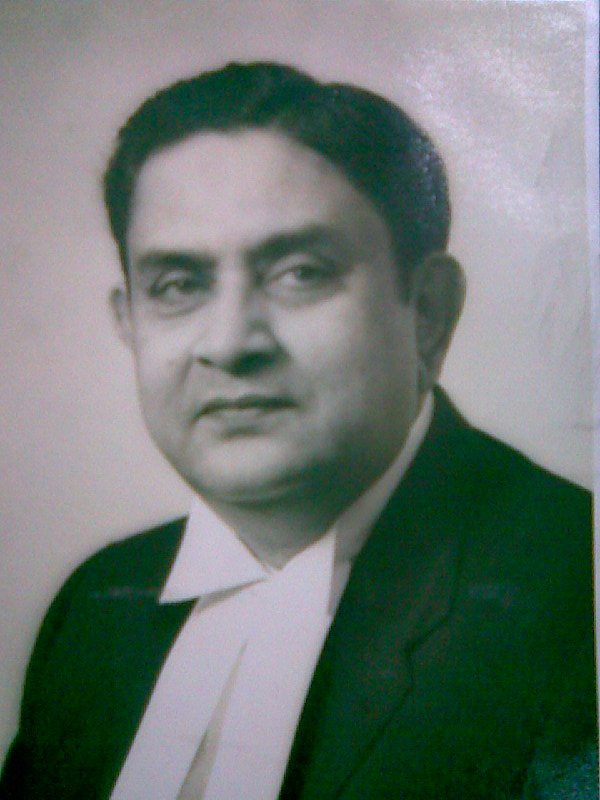
SHARMA, L.M. (J)
BENCH:
SHARMA, L.M. (J)
SEN, A.P. (J)
CITATION:
1988 AIR 981 1988 SCR (3) 287
1988 SCC (2) 134 JT 1988 (1) 583
1988 SCALE (1)534
ACT:
Agreement-Whether an order of Court based on consent of
parties can be modified by Court at the instance of one
party without further consent of other party-Whether it is
open to Court to alter terms of compromise otherwise-Whether
a default clause in agreement is penal in nature and
illegal.
HEADNOTE:
%
The appellants had filed a suit for partition of
property claiming 1/3rd share. A preliminary decree was
passed by the trial court. Respondent No. 1 (defendant No. 9
in the suit) challenged the decree before the High Court in
first appeal. The appeal was disposed of on compromise
whereby the appellants plaintiffs' claim to l/3rd share was
accepted, but it was agreed that half of the share of the
plaintiffs would go to the defendant No. 9, provided he paid
Rs.40,000 to the plaintiffs in two instalments, the first
one of Rs.10,000 by 31.7.1979 and the second of the
remaining amount, by 28.2.1980, failing which payment within
time, the decree passed by the trial court would stand
confirmed as per the terms of the compromise. The first
instalment was paid within time, but the remaining amount
was not paid. The defendant No. 9 made an application before
the High Court on 28.8.1981 for extension of time for
payment of the second instalment. The High Court by its
order dated 31.8.1981 allowed the application. The
appellants moved this Court by special leave, challenging
the said order dated 31.8.1981 of the High Court.
The appellants inter alia contended that an order based
on the consent of the parties could be modified only with
the further consent of the parties and it was not open to
the Court to alter the terms otherwise. If the High Court
had issued notice on the application for extension of time
made by the defendant No. 9 to the plaintiffs-appellants,
they would have placed before the Court the circumstances
showing that it was against the cause of justice to allow
the prayer of the defendant No. 9 and specially so after
such a long delay. There was no justification whatsoever for
the High Court to condone the delay and extend the period
http://JUDIS.NIC.IN SUPREME COURT OF INDIA Page 2 of 7
for deposit of the money, they contended.
288
The contesting respondents argued that the 6th term of
the com promise dealing with the consequence of the default
in payment of the instalments was penal in nature and
illegal, and that the clause being severable from the other
terms of the compromise should be ignored. It was further
argued that it was not correct to suggest that the Court had
no power to permit the respondent No. I to make the deposit
later.
Allowing the appeal, the Court,
^
HELD: There was no merit in the argument that the
impugned clause 6 of the agreement was illegal being penal
in nature. It had to be noted that the plaintiffs had in the
trial court obtained a decree for partition for their l/3rd
share in the suit properties and there was presumption in
favour of correctness of the decree. At the appellate stage,
one of the three branches of the parties, represented by the
heirs of Brajgopal, and uncle of the plaintiffs-appellants,
was satisfied with the share allotted to them and the
interest of defendant No. 9, second uncle of the plaintiffs,
was identical to their interest. The situation was
acceptable to the defendant No. 9 also but he wanted to
acquire half the share of the plaintiffs on payment of
consideration, fixed at Rs.40,000. The amount was to be paid
by way of price. It had not been suggested by the defendant
No. 9 or his heirs that the entire compromise should be
ignored on account of the impugned clause 6 thereof. They
had been relying upon the compromise except the default
clause which alone was sought to be ignored. That part of
the compromise was in substance an agreement for transfer by
the plaintiffs of half of their share for a sum of Rs.40,000
to be paid within stipulated time. The market price of the
property was higher, and a beneficial right was bestowed on
the defendant No. 9 to acquire the property for a
considerably low amount. In this background, the said
defendant was subjected to the condition that if he had to
take the advantage of the bargain, he was under a duty to
pay the stipulated amount within the time mentioned in the
agreement. On failure to pay within time, he was to be
deprived of that special benefit. Such a clause could not be
considered a penalty clause. The expression 'penalty' is an
elastic term with many different shades of meanings, but it
always involves an idea of punishment. The impugned clause
in this case did not involve infliction of any punishment,
it merely deprived the defendant No. 9 of a special
advantage in case of default. [293A-H: 294A]
The High Court assuming it had the power to do so, was
not justified in allowing the prayer of the defendant No. 9
to make a grossly belated payment. Even where such a power
exists, it is not to be exercised liberally. [294B-C]
289
Justice was manifestly in favour of the plaintiffs and
against the contesting respondents. The clause in question
was not a forfeiture clause. [294E]
The grievance of the plaintiffs that they were not
afforded reasonable opportunity to contest the prayer of the
defendant was also well-founded; notice of the application
for extension of time should have been directly sent to the
plaintiffs. The Court did not consider it necessary to
remand the matter to the High Court for a fresh
consideration, as it had come to a final conclusion on
merits in favour of the plaintiffs. [294G; 295B]
The order dated 31.8.1981 of the High Court was set
http://JUDIS.NIC.IN SUPREME COURT OF INDIA Page 3 of 7
aside and the application filed by respondent No.1
defendant No. 9 for extension of time was rejected. [295C-D]
Charles Hubert Kinch v. Edward Keith Walcott & Ors.,
A.I.R. 1929 P.C. 289; Banku Behari Dhur v. J.C. Galstaun &
Anr., A.I.R. 1922 P.C. 339; Jagat Singh & Ors. v. Sangat
Singh & Ors., A.I.R. 1940 P.C. 70 and Smt. Periyakkal & Ors.
v. Smt. Dakshyani, [1983] 2 SCR 467, referred to.
JUDGMENT:
CIVIL APPELLATE JURISDICTION: Civil Appeal No. 2463 of
1982.
From the Judgment and order dated 31. 8. 1981 of the
Orissa High Court in First Appeal No. 184 of 1977.
Veenu Bhagat for the Appellants.
A.P. Mohanty and A.K. Mahapatra for the Respondents.
The Judgment of the Court was delivered by
SHARMA, J. The appellants filed a suit for partition of
the properties detailed in the plaint claiming 1/3rd share.
A preliminary decree was passed by the trial court which was
challenged by the defendant No. 9 (original respondent No. 1
in the present appeal) before the Orissa High Court in First
appeal No. 184 of 1972. The appeal was disposed of on
compromise whereby the plaintiffs' claim to 1/3rd share was
accepted as correct. The terms of the compromise are set out
in paragraph 2 of the order dated 27.3.79. It was, however,
further agreed that half of the share of the plaintiffs,
i.e. 1/6th share, would go to the defendant No. 9 provided
he paid a sum of Rs.40,000
290
to the plaintiffs by a particular date, failing payment
within time, the decree passed by the trial court would
stand confirmed as per term of the compromise. The
compromise was recorded on 27.3.1979. According to the
compromise the sum of Rs.40,000 was to be paid in two
instalments; the first instalment of Rs.10,000 by 31-7-1979
and the remaining amount of Rs.30,000 by 28.2.1980. The
first instalment was paid within time but the remaining
amount was not paid. In the meantime, the decree by the High
Court was formally drawn up on 6.9.1979. In view of the
default in payment of the second instalment the plaintiffs-
appellants deposited the sum of Rs. 10,000 received by them
as the first instalment to the credit of the defendant No. 9
with the permission of the Court. The defendant No. 9,
thereafter, made an application before the High Court on
28.8.1981 for extension of the period for payment of the
second instalment of Rs.30,000. The application was allowed
by the order dated 31.8.1981 which is under challenge in the
present appeal.
2. Before proceeding to the points involved in the
present appeal it will be useful to briefly state the facts.
The parties are close relations, the defendant No. 9
(original respondent No. 1) being the uncle of the
plaintiffs-appellants. He died during the pendency of the
appeal here and his heirs and legal representatives have
been substituted as respondents. The father of the
plaintiffs Nityagopal, defendant No. 9 (original respondent
No. 1) Ghosta Gopal and Brajgopal were brothers. Nityagopal
died in 1953 leaving behind the plaintiffs and their mother
who also died in 1962. According to their case, they thus
became entitled to 1/3rd share in the properties belonging
to the family. The appellants were very young girls and
lived with Gostha Gopal for some time after the death of
their parents. But, according to their case, they had to
http://JUDIS.NIC.IN SUPREME COURT OF INDIA Page 4 of 7
leave for their maternal grandmother's place in 1964 due to
the ill-treatment by their uncle. In 1965, a collusive suit
for partition was commenced by both the uncles Gostha Gopal
and Brajgopal, in which although the plaintiffs were
impleaded as parties, their address was wrongly mentioned in
the plaint. Consequently no summons could be served on them
nor did they have any information about the suit and the
decree passed therein. No share was allotted to the
appellants at all. After they learnt about the collusive
suit and the decree, they filed the present suit being T.S.
32 of 1967, for setting aside the earlier decree and for
partition. The trial court accepted the plaintiffs case that
the earlier decree was obtained by fraud. The plaintiffs
were awarded 1/3rd share as claimed by them. Brajgopal
became reconciled to the situation but Gostha Gopal
challenged the decision in the aforementioned First Appeal
No. 184 of 1972.
291
3. The parties reached an amicable settlement and the
appeal was disposed of on 27.3.1979. Accordingly the heirs
of Brajgopal (who was dead by then) got their 1/3rd share in
accordance with the trial court's decision and the suit so
far as the other two branches, that is, the plaintiffs and
Gostha Gopal were concerned, was disposed of on the terms as
mentioned in paragraph 1 above. According to the case of the
plaintiffs-appellants they had no information of the
application dated 28.8.1981, filed by the defendant No. 9
for extension of the period for payment of the second
instalment of Rs.30,000 and when a copy of the application
was offered to their advocate he did not accept the same
making an endorsement thereon that notice should be served
directly on the plaintiffs as he did not continue to hold
any authority on their behalf. Despite this stand of their
learned counsel in the High Court, no notice was sent to the
plaintiffs and the case was listed only after two days on
31.8.1981. The plaintiffs' advocate-although he did not
represent them on that date-was present in Court when the
case was called out, and pointed out that there was no
justification for excusing the long delay. Earlier the court
by its order dated 17.8.1981, after taking into
consideration the conduct of the defendant No. 9 in not
complying with the terms of the compromise, had permitted
the plaintiffs to refund the sum of Rs.10,000 paid to them
as the first instalment. The plaintiffs' counsel pointed out
that the aforesaid order had finally closed the matter. The
court, however, allowed the prayer of the defendant and
permitted him to pay the remaining money along with an
additional sum of Rs.6,000 by way of compliance of the terms
of the compromise. The counsel who was representing the
plaintiffs earlier, refused to accept the money when
offered, and the court permitted the defendant to deposit
the amount with the Registrar of the court observing that
the same would be available to be withdrawn by the
plaintiffs. When the petitioners learnt about the order they
took a copy of the same and approached this Court under
Article 136 of the Constitution.
4. While hearing the Special Leave Petition this Court
directed the Subordinate Judge, Baripada to ascertain the
market value of the 1/6th share of the property in question.
The Subordinate Judge in his report to this Court stated
that the value of the entire properties would be
Rs.13,90,000 and the value of 1/6th share would accordingly
be Rs.2,31,716. After the parties filed a number of
affidavits, special leave was granted on 30.7.1982.
5. Mr. Bhagat, appearing in support of the appeal,
http://JUDIS.NIC.IN SUPREME COURT OF INDIA Page 5 of 7
contended that an order based on the consent of the parties
can be modified only
292
with further consent and it is not open to the court to
alter the terms otherwise. It was further argued that
assuming the court to be so empowered, the jurisdiction has
to be exercised in exceptional circumstances and only in the
ends of justice. If the High Court had directed notice to be
issued to the plaintiffs, they would have placed before the
court the circumstances showing that it was against the
cause of justice to allow the prayer of defendant No. 9 and
specially so after such a long delay. The plaintiffs were
shabbily treated by their uncle after the death of their
father when they were very young and had to take refuge at
their deceased mother's parental home. Out of the two
sisters only one could be married, and the younger one could
not be married as the sum of Rs.30,000 promised by the
respondent No. 1 to be paid by 28.2.1980 was not actually
paid. According to the affidavit filed before this Court by
way of rejoinder to the respondents' supplementary affidavit
she was not married till then. The learned counsel,
therefore, argued that there was no justification whatsoever
for the High Court to condone the delay and extend the
period for deposit of the money by the respondent after more
than 1 1/2 years of default.
6. Mr. Mohanty, the learned counsel representing the
contesting respondents, who have been substituted in place
of the original respondent No. 1 Gostha Gopal, contended
that the 6th term of the compromise dealing with the
consequence of default in payment of the instalments is
penal in nature and must, therefore, be held illegal. He
urged that the clause being severable from the other terms
of the compromise should be ignored and the other terms of
the compromise ought to be given effect to. As a result the
clause that on the nonpayment of the agreed sum by the time
indicated therein the decree of the trial court would become
final, must be rejected as illegal. Reliance was placed on
Section 74 of the Indian Contract Act. It was further argued
that the position with respect to an order of a court of law
made on the basis of consent of parties is also the same and
it is not correct to suggest that in the circumstances of
the present case the court had no power to permit the
respondent No. 1 to make the deposit later. The learned
counsel relied on the observations made in Charles Hubert
Kinch v. Edward Keith Walcott & Ors., AIR 1929 P.C. 289,
Banku Behari Dhur v. J.C. Galstaun & Anr., AIR 1922 P.C. 339
and Jagat Singh & Ors. v. Sangat Singh & Ors., AIR 1940 P.C.
70 and the decision of this Court in Smt. Periyakkal & Ors.
v. Smt. Dakshyani, [1983] 2 SCR 467. It was argued that it
is not right to assume that the decree of the trial court
was unassailable in appeal. The respondent No. 1 had a
substantial defence which he could have suc-
293
cessfully pressed if the dispute had not been amicably
settled.
7. We do not find any merit in the argument that the
impugned clause 6 of the agreement is illegal being penal in
nature and has, therefore, to be ignored. It has to be noted
that the plaintiffs had in the trial court obtained a decree
for partition for 1/3rd share in the suit properties and
there was presumption in favour of correctness of the
decree. At the appellate stage one of the three branches
represented by the heirs of Brajgopal was satisfied with the
share allotted to them and the interest of Gostha Gopal
(defendant No. 9) was identical to their interest. The
http://JUDIS.NIC.IN SUPREME COURT OF INDIA Page 6 of 7
situation was acceptable to the defendant No. 9 also but he
wanted to acquire half the share of the plaintiffs on
payment of consideration. The plaintiffs agreed and the sum
of Rs.40,000 was fixed as the price. In clause 2 of the
agreement, as mentioned below, it was expressly stated thus:
"The sum of Rs.40,000 agreed to be paid by
defendant No. 9 to the plaintiffs as compensation
for the 1/6th share shall be paid in two
instalments: .."
(Emphasis added)
The amount was to be paid by way of price was reiterated by
the use of the word "consideration" in clause 3. It is
significant to note that the defendant No. 9 in the court
below or his heirs (after his death) before us have not
suggested that the entire compromise should be ignored on
account of the impugned clause 6. They have been relying
upon the compromise except the default clause which alone is
sought to be ignored. They insist that under the compromise
the shares allotted to the different branches should be
treated as final and further half of the share of the
plaintiffs, i.e. 1/6th share in the suit properties should
have gone to the defendant No. 9 (and after him, to them,
i.e. his heirs) for Rs.40,000. This part of the compromise
is in substance an agreement for transfer by the plaintiffs
of half their share for a sum of Rs.40,000 to be paid within
the time indicated. It is true that the market price of the
property was higher, and a beneficial right was bestowed on
the defendant No. 9 to acquire the same for an amount
considerably low. In this background the defendant was
subjected to the condition that if he had to take the
advantage of the bargain he was under a duty to pay the
stipulated amount by the time mentioned in the agreement. On
failure to do so within time, he was to be deprived of this
special benefit. Such a clause cannot be considered to be a
penalty clause. The expression 'penalty' is an elastic term
with many different shades of meaning but it always involves
an idea of
294
punishment. The impugned clause in the present case does not
involve A infliction of any punishment; it merely deprives
the defendant No. 9 of a special advantage in case of
default.
8. Coming to the next question as to whether the High
Court acted rightly in extending the period for payment of
the second instalment, the learned counsel for the parties
have placed all the facts and circumstances of the case in
detail in support of their respective arguments, and we have
considered them closely and do not have any hesitation in
holding that the High Court, assuming that it had the power
to do so, was not justified in allowing the prayer of the
defendant No. 9 permitting him to make a grossly belated
payment. Even where such a power exists it is not to be
exercised liberally. In Smt. Periyakkal and Ors. v. Smt.
Dakshyani, [1983] 2 SCR 467, relied upon by the respondents,
this Court thus observed:
"Of course, time would not be extended ordinarily,
nor for the mere asking. It would be granted in
rare cases to prevent manifest injustice. True the
court would not rewrite a contract between the
parties but the court would relieve against a
forfeiture clause ...."
In the present case, justice is manifestly in favour of the
plaintiffs and against the contesting respondents and
further the clause in question was not a forfeiture clause.
Even the High Court had to observe as follows:
http://JUDIS.NIC.IN SUPREME COURT OF INDIA Page 7 of 7
"The conduct of the appellant (i.e. the defendant
No. 9) is indeed very reprehensible. Though
extensions were obtain ed from us, he did not
comply with the directions and suffered order No.
72 dated 17.8.1981 to be passed. Only when his
rights were taken away did he realise the real
effect of what he had lost."
In view of our conclusion it is not necessary to decide the
abstract question of the general power of the court in this
regard.
9. The grievance of the plaintiffs that they were not
afforded reasonable opportunity to contest the defendants'
prayer is also well founded. The appeal in the High Court
had been disposed of earlier. After the default in payment
of the second instalment occurred the present appellants
placed the circumstances before the court and prayed for
permission to refund the first instalment of Rs.10,000,
295
received by them so that they could take full advantage of
the compromise decree. The matter was fully considered and
decided by the order dated 17.8.1981 as mentioned by the
High Court in the above quoted passage. In the situation the
counsel who represented the plaintiffs in the appeal could
not have been held to have continued to represent them
specially when they informed the court that he had no
further authority and that notice should be directly sent to
the plaintiffs. However, we do not consider it necessary to
remand the matter to the High Court for fresh consideration
as we have considered all the relevant materials and have
come to a final conclusion on merits in favour of the
plaintiffs.
10. For the reasons mentioned above, the order dated
31.8.1981 passed by the Orissa High Court in First Appeal
No. 184 of 1972 is set aside and the application filed by
Gostha Gopal Dey for extension of time is rejected. The
appeal is accordingly allowed with costs payable to the
appellants by the contesting respondents.
S.L. Appeal allowed.
296

 Login with google
Legal Notes
Add a Note....