
As per case facts, Sukhjinder Singh was preventively detained under the National Security Act for activities deemed prejudicial to state security. His son, Sukhpal Singh, challenged this detention via a ...
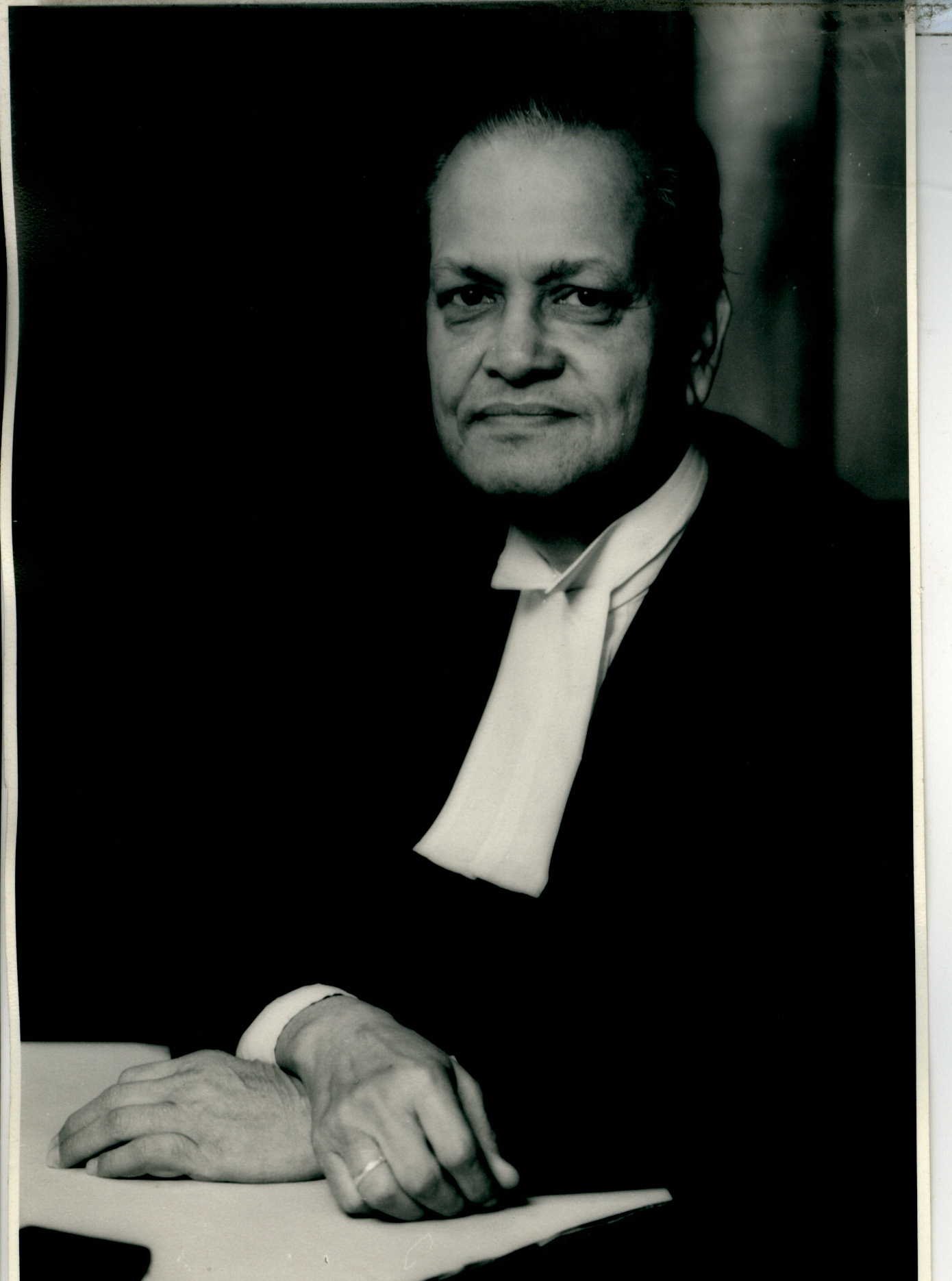

No Acts & Articles mentioned in this case
http://JUDIS.NIC.IN SUPREME COURT OF INDIA Page 1 of 20
PETITIONER:
STATE OF PUNJAB
Vs.
RESPONDENT:
SUKHPAL SINGH
DATE OF JUDGMENT06/10/1989
BENCH:
SAIKIA, K.N. (J)
BENCH:
SAIKIA, K.N. (J)
DUTT, M.M. (J)
CITATION:
1990 AIR 231 1989 SCR Supl. (1) 420
1990 SCC (1) 35 JT 1989 (4) 95
1989 SCALE (2)731
ACT:
National Security Act, 1980--Sections 3(2), 9, 10, 11
and 12--Detention Order--Advisory Board--Not a judicial
body--Charged with responsibility of advising Executive
Government--Decisions when binding on Government.
HEADNOTE:
Sri Sukhjinder Singh has been under detention pursuant
to the order dated 28.5.1988 of the Government of Punjab,
Department of Home Affairs and Justice passed in exercise of
the powers conferred by sub-section (2) of Section 3 of the
National Security Act, 1980 hereinafter referred to as "the
Act" read with section 14A as inserted by National Security
(Amendment) Act, 1987 with a view to preventing him from
indulging in activities prejudicial to the security of the
State and maintenance of public order and interference with
the efforts of the Govt. in coping with the terrorists and
disruptive activities.
The detenu's son Sukhpal Singh filed Criminal Writ
Petition No. 1393 of 1988 in the High Court praying inter-
alia for a writ of Habeas Corpus, quashing the detention
order, production of the detenu in the Court on the date of
hearing, directing the authorities to arrange for the
presence of the detenu before the Advisory Board at Chandi-
garh and also to make arrangements & pay for the expenses
required to be incurred for arranging the presence of dete-
nu's witnesses to be produced before the Board at Agartala
and also his relatives and counsel so as to effectively
assist him in regard to the presenting of his case before
the Board.
The High Court by order order 27.9.88 dismissed the Writ
Petition but ordered that the petitioner would approach the
Advisory Board at Chandigarh with the request for allowing
the detenu to produce evidence before it at Agartala and in
case his prayer was granted by the Board, the expenses for
taking those witnesses to Agartala would be borne by the
respondent-state.
Sukhpal Singh later moved Criminal Writ Petition No.
2365 of 1988 in the High Court of Punjab & Haryana for
quashing the detention
421
http://JUDIS.NIC.IN SUPREME COURT OF INDIA Page 2 of 20
order contending inter-alia that the order of detention was
passed on 28.5.88 in a cursory and routine manner without
application of mind, much less with subjective satisfaction
and there was an inordinate delay of two months in consider-
ation of detenu's representation and that the detention was
confirmed without affording the detenu any chance of appear-
ing and producing witnesses before the Advisory Board in
terms of orders of the High Court dated 27.9.88 made in Crl.
Writ Petition No. 1393 of 1988.
The High Court upheld the above contention of the peti-
tioner and accordingly quashed the order of detention and
ordered the detenu to be set at liberty for with unless
required in any other case.
Aggrieved by this order the State has come up before
this Court by way of special leave. The Court while dismiss-
ing the appeal and directing the detenu to be set at liberty
forthwith as ordered by the High Court.
HELD: A clear distinction has to be drawn between pre-
ventive detention in which anticipatory and precautionary
action is taken to prevent the recurrence of apprehended
events, and punitive detention under which the action is
taken after the event has already happened. It is true that
the ordinary criminal process of trial is not to be circum-
vented and short circuited by apparently handy and easier
resort to preventive detention. But the possibility of
launching a criminal proSecution cannot be said to be an
absolute bar to an order of preventive detention. Nor would
it be correct to say that if such possibility is not present
in the mind of the detaining authority the order of deten-
tion would necessarily be bad. [426C-E]
It is true that the Advisory Board is not a judicial
body. It is charged with the responsibility of advising the
Executive Government. But when it advises in favour of the
detenu, namely that there was no sufficient cause for deten-
tion, it would be binding upon the Govt- under section 12(2)
of the Act to release the detenu forthwith. [439F]
Expressing inability to appear once could not have been
treated as the detenu's not desiring to be heard under
section 2(2) of the Act. In fact he desired to be heard and
to produce his witnesses. [439G]
The protection of personal liberty is largely through
insistence on observance of the mandatory procedure. In
cases of preventive detention observance of procedure has
been the bastion against wanton
422
assaults on personal liberty over the years. [440E]
One of the foremost and fundamental right guaranteed in
the Constitution is personal liberty and one cannot be
deprived of it except by the procedure prescribed by law.
Libertas Inestimabilis res est. Liberty is an inestimable
thing above price. Libertus omnibus rebus favourabilier est.
Liberty is more favoured than all things (anything). It
would be ironic if, in the name of social security, we would
sanction the subversion of this liberty. [440F-G]
The increasing need for ensuring public safety and
security in the State of Punjab and the Union Territory of
Chandigarh has been reflected in the recent successive
amendments of the National Security Act. [442F]
As a result of these amendments applicable to the State
of Punjab and the Union Territory of Chandigarh it is found
on the one hand addition to the grounds of detention and on
the other, extension of period during which a person could
be detained without obtaining the opinion of the Advisory
Board. There is, however, no amendment as to the safeguards
provided under Article 22 and ss. 9, 10 and 11 of the Act.
http://JUDIS.NIC.IN SUPREME COURT OF INDIA Page 3 of 20
Indeed, there could be no such amendment. [444C-D]
Lex uno ore omnes alloguitur. Law addresses all with one
mouth or voice. Quotaiens dubia interpretatio libertatis est
secundum libertatem respondentum erit--Whenever there is a
doubt between liberty and bondage, the decision must be in
favour of liberty. [444E]
Fazal Ghosi v. State of U.P. & Ors., AIR 1987 SC
1877:1987 (3) SCR 471; Rex v. Halliday, Ex parte Zadig,
[1917] AC 260; Ujagar Singh v. State of Punjab, AIR 1952 SC
350:1952 SCR 756; Haradhan Saha v. The State of West Bengal
JUDGMENT:
Maharashtra & Ors., AIR 1982 SC 8:1982 (1) SCR 1028; Ashok
Kumar v. Delhi Administration & Ors., AIR 1982 SC 1143:
[1982] 3 SCR 707; Giani Bakshish Singh v. Government of
India & Ors., AIR 1973 SC 2667: [1974] 1 SCR 662; RajKumar-
Singh v. State of Bihar & Ors., AIR 1986 SC 2173; [1986] 4
SCC 407; Jayanarayan Sukul v. State of West Bengal, [1970] 3
SCR 225; Frances Coralie Muffin v. W.C. Khambra & Ors.,
[1980] 2 SCC 275; State of Orissa & Anr. v. Manilal Singha-
nia & Anr., AIR 1976 SC 456: [1976] 2 SCC 808; A.K. Gopalan
v. The State of Madras, AIR 1950 SC 27: [1950] SCR 88; John
Martin v. State of West Bengal, [1975] 3 SCC 836; Khudiram
Das v. The State of West Bengal & Ors., [1975] 2 SCC 81;
Saleh Mohammed
423
v. Union of India & Ors., [1980] 4 SCC 428; Kamla Kanyalal
Khushalani v. State of Maharashtra & Anr., [1981] 1 SCC 748;
Rattan Singh v. State of Punjab & Ors., [1981] 4 SCC 481;
YoussufAbbas v. Union of India & Ors., [1982] 2 SCC 380;
Asha Keshavrao Bhosale v. Union India & Anr., [1985] 4 SCC
361; Aslam Ahmed Zahire Ahmed Shaik v. Union of India &
Ors., [1989] 3 SCC 277; T.A. Abdul Rahman v. State of Kerala
& Ors., J.T. 1989 3 SC 444; Rama Dhondu Borade v. Shri V.K.
Saraf, Commissioner of Police & Ors., [1989] 1 Scale Vol. 1
22; Dr. R.K. Bhardwaj v. The State of Delhi & Ors., [1953]
SCR 708; D.S. Roy v. State of West Bengal, [1972] 2 SCR 787;
P.D. Deorah v. The District Magistrate, Kamrup & Ors.,
[1974] 2 SCR 12; N.P. Umrao v. B.B. Gujral & Ors., [1979] 2
SCR 315 at p. 321; V.C. Jawantraj Jain v. Shri Pradhan &
Ors., [1979] 3 SCR 1007; Bal Chand Choraria v. Union of
India & Ors., [1978] 2 SCR 401; Smt. Kavita v. The State of
Maharashtra & Ors., [1981] 2 Crl. L.J. 1262: AIR 1981 SC
1641; A.K. Roy v. Union of India, [1982] Vol. 88 Crl. L.J.
340; and State of Rajasthan v. Shamsher Singh, [1985] Suppl.
I SCR 83, referred to.
&
CRIMINAL APPELLATE JURISDICTION: Criminal Appeal No. 624
of 1989.
From the Judgment and Order dated 31.7. 1989 of the
Punjab and Haryana High Court in Crl. W.A. No. 2365 of 1988.
K. Parasaran, Attorney General and R.S. Suri for the
Appellant.
Kapil Sibal, H.S. Randhwa and Ms. Kamini Jaiswal for the
Respondents.
The Judgment of the Court was delivered by
K.N. SAIKIA, J. Special leave granted. Heard learned
counsel for the parties.
The State's appeal is from the Judgment of the High
Court of Punjab and Haryana dated 31.7.1989 passed in Crimi-
nal Writ Petition No. 2365 of 1988 quashing the detention
order of Sukhjinder Singh, father of the respondent, under
the National Security Act.
http://JUDIS.NIC.IN SUPREME COURT OF INDIA Page 4 of 20
Sri Sukhjinder Singh has been under detention pursuant
to the Government of Punjab, Department of Home Affairs and
Justice's Order dated 28.5.1988, passed in exercise of the
powers conferred by
424
sub-section (2) of section 3 of the National Security Act
1980 (No. 65 of 1980), hereinafter referred to as 'the Act';
read with section 14A as inserted by National Security
(Amendment) Act, 1987, with a view to preventing him from
indulging in activities prejudicial to the security of the
State and maintenance of public order and interference with
efforts of Government in coping with the terrorist with
disruptive activities. He was furnished with the grounds of
detention contained in 9 paragraphs thereof and saying that
on account of the said activities, the President of India
was satisfied that he should be detained. As no arguments
have been based on the grounds themselves, we have not
extracted them. The detenu was also informed that he had a
right to make representation in writing against the deten-
tion order and if he wished to make any such representation,
he should address it to the State Government through the
Superintendent of Jail, and that as soon as possible, his
case would be submitted to the Advisory Board within the
stipulated period from the date of his detention and if he
wished to make a representation to the Central Government,
he should address it to the Secretary, Government of India,
Ministry of Home Affairs (Department of Internal Security)
North Block, New Delhi through the Superintendent of Jail
where he was detained. It further stated that he had also a
right to appear before the Advisory Board for representing
his case, and if he wished to do so, he should inform the
State Government through the Superintendent of Jail in which
he was detained.
It appears that the detenu's son Sukhpal Singh filed
Criminal Writ Petition No. 1393 of 1988 in the High Court of
Punjab and Haryana praying, inter alia, for a writ of habeas
corpus; quashing of the detention order; for production of
the detenu in court on the date of hearing; for directing
the respondents to arrange the presence of the detenu at
Chandigarh before the Advisory Board; and for directing the
respondents to make arrangements and pay for the expenses
required to be incurred for arranging the presence of dete-
nu's witnesses to be produced before the Board at Agartala
and also of the relatives and the counsel of the detenu so
as to effectively assist him in regard to presenting his
case before the Advisory Board.
The High Court by order dated 27.9.1988 dismissed the
Criminal Writ Petition, but ordered that "the petitioner
would approach the Advisory Board stationed at Chandigarh
with the request for allowing the detenu to produce evidence
before it at Agartala and in case his prayer was granted by
the Board, the expenses for taking those witnesses to Agar-
tala would be borne by the respondent/State."
425
Sukhpal Singh later moved Criminal Writ Petition No.
2365 of 1988 in the High Court of Punjab and Haryana for
quashing the detention order contending, inter alia, that
the order of detention was passed on 28.5.1988 in a cursory
and routine manner without application of mind, much less
with subjective satisfaction inasmuch as no case at all was
registered against the detenu for his alleged public utter-
ences as stated in the grounds of detention and, therefore,
the detention order was liable to be quashed; that consider-
ation of the detenu's representation filed with the State
Government on September 1, 1988 was inordinately delayed for
http://JUDIS.NIC.IN SUPREME COURT OF INDIA Page 5 of 20
two months till October 31, 1988 and even thereafter the
State took 8 long days to convey its rejection and the
representation addressed to the detaining authority had
neither been considered nor disposed of; and that detention
was confirmed without affording the detenu any chance of
appearing and producing witnesses before the Advisory Board
in terms of the High Court's order dated 27.9.1988 in Crimi-
nal Writ Petition No. 1393 of 1988.
The High Court upheld the above contentions of the
petitioner, namely, lack of subjective satisfaction, delay
in considering representation and the denial of opportunity
to appear before the Advisory Board; and accordingly quashed
the order of detention and ordered the detenu to be set at
liberty forthwith unless required in connection with any
other case.
The learned Attorney General of India for the appellant
assailing the findings of the High Court submits that the
High Court's finding that there was no subjective satisfac-
tion of the detaining authority simply because no criminal
case was registered against the detenu for his public
speeches is erroneous both in law and facts. The allegations
were that during the period from November 19, 1987 to May
11, 1987 the detenu made 9 provocative speeches as stated in
the grounds of detention inciting communal hatred and vio-
lence between Hindus and Sikhs, inciting Sikhs to armed
violence against the Government established by law both in
the State and in the Centre and making the offer of monetary
and other assistance to the terrorists. When the detention
order was passed the detenu was already detained in Burail
Jail and the detention order itself said that he was already
in custody and was taking steps to get himself released and
there was every likelihood of his being released from custo-
dy; and that in the event of his release he was likely to
resume such prejudicial activities in future and there was
thus compelling necessity to pass the order. He submits that
the subjective satisfaction of the detaining authority was
based on pertinent materials and it had in mind the question
whether the pro-
426
secution of the detenu would be possible and sufficient. Mr.
Kapil Sibal, learned counsel for the respondents supporting
the finding of the High Court reiterates that the fact that
no criminal case was registered during the period of giving
the alleged speeches clearly showed that there was non-
application of mind preceding the detention order. We find
force in the submission of the learned Attorney General. The
detention order itself said that the detenu was already in
custody and was likely to be released wherefore it was
necessary to order for his preventive detention. It is not
denied that the above relevant materials were placed before
the detaining authority. The act nowhere provides that the
detaining authority cannot resort to preventive detention
without first criminally prosecuting the detenu. A clear
distinction has to be drawn between preventive detention in
which anticipatory and precautionary action is taken to
prevent the recurrence of apprehended events, and punitive
detention under which the action is taken after the event
has already happened. It is true that the ordinary criminal
process of trial is not to be circumvented and shortcircuit-
ed by apparently handy and easier resort to preventive
detention. But the possibility of launching a criminal
prosecution cannot be said to be an absolute bar to an order
of preventive detention. Nor would it be correct to say that
if such possibility is not present in the mind of the de-
taining authority the order of detention would necessarily
http://JUDIS.NIC.IN SUPREME COURT OF INDIA Page 6 of 20
be bad. The failure of the detaining authority to consider
the desirability of launching a criminal prosecution before
ordering preventive detention may in the circumstances of a
case lead to the conclusion that the detaining authority had
not applied its mind to the important question as to whether
it was necessary to make an order of preventive detention
but such is not the case here. In this regard one has to
bear in mind the relevant facts and circumstances of a case
including the time and place concerned. In this view we find
support from the decision in Fazal Ghosi v. State of U.P. &
Ors., AIR 1987 SC 1877: [1987] 3 SCR 471, wherein it was
pointed out that the Act provided for preventive detention
which was intended where it was apprehended that the persons
might act prejudicially to one or more considerations speci-
fied in the statute, and the preventive detention was not
intended as a punitive measure for curtailment of liberty by
way of punishment for the offence already committed. Section
3 read with Section 14A of the Act clearly indicated that
the power of detention thereunder could be exercised only
with a view to preventing a person from acting in a manner
which might prejudice any of the situations set forth in the
Section. To apply what was said in Rex v. Halliday, Ex parte
Zadig, 1917 AC 260, one of the most obvious means of taking
precautions against dangers such as are enumerated is to
427
impose some restriction on the freedom of movement of per-
sons whom there may be any reason to suspect of being dis-
posed to commit what is enumerated in s. 3 of the Act. No
crime is charged. The question is whether a particular
person is disposed to commit the prejudicial acts. The duty
of deciding this question is thrown upon the State. The
justification is suspicion or reasonable probability and not
criminal charge which can only be warranted by legal evi-
dence. It is true that in a case in which the liberty of
such person is concerned we cannot go beyond natural con-
struction of the statute. It is the duty of this Court to
see that a law depriving the person of his liberty without
the safeguards available even to a person charged with crime
is strictly complied with. We have, however, to remember
that individual liberty is allowed to be curtailed by an
anticipatory action only in interest of what is enumerated
in the statute.
In actual practice the grounds supplied operate as an
objective test for determining the question whether a nexus
reasonably exists between grounds of detention and the
detention order or whether some infirmities had crept in. A
conjoined reading of the detention order and the grounds of
detention is therefore necessary. It is, as was heldin
Ujagar Singh v. State of Punjab, AIR [1952] SC 350: [1952]
SCR 756, largely from prior events showing tendencies or
inclinations of a man that inference can be drawn whether he
is likely in future to act in a prejudicial manner. But such
conduct should be reasonably proximate and should have a
rational connection with the conclusion that the detention
of person is necessary. The question of relation of the
activities to the detention order must be carefully consid-
ered. Though the possibility of prosecution being launched
is not an irrelevant consideration, failure to consider such
possibility would not vitiate the detention order. In Harad-
han Saha v. The State of West Bengal & Ors., [1975] 3 SCC
198 the Court did not lay down that possibility of a prose-
cution being launched was an irrelevant consideration, not
to be borne in mind by detaining authority but it laid down
that the mere circumstance that a detenu was liable to be
prosecuted would not by itself be a bar to the making of an
http://JUDIS.NIC.IN SUPREME COURT OF INDIA Page 7 of 20
order of preventive detention. It did not follow therefore
that failure to consider the possibility of criminal prose-
cution being launched could ever lead to the conclusion that
a detaining authority never applied its mind and the order
of detention was therefore bad. Is it correct to say that if
such possibility was not present in the mind of the detain-
ing authority, the order of the detention is necessarily
bad? Unless it clearly appears that preventive detention is
being resorted to as the line of least resistance where
criminal prosecution would be the usual course, no fault can
be found with it.
428
What is to be seen is whether the detaining authority has
applied its mind or not to the question whether it was
necessary to make preventive detention. In the instant case
there is evidence of application of mind. The proximity
between the date of commission of an offence and of deten-
tion order cannot also be said to be absent in this case. As
we have already seen the power of preventive detention is
qualitatively different from punitive detention. The power
of preventive detention is precautionary power exercised
reasonably in anticipation and may or may not relate to an
offence. It cannot be considered to be a parallel proceed-
ing. The anticipated behaviour of a person based on his past
conduct in the light of surrounding circumstances may pro-
vide sufficient ground for detention. It cannot be said that
the satisfaction of the detaining authority on the basis of
his past activities that if the detenu were to be left at
large he would indulge in similar activities in future and
thus act in a manner prejudicial to the maintenance of
public order etc. shall not be based on adequate materials.
Public safety ordinarily means security of the public or
their freedom from danger. Public order also implied public
peace and tranquility. There is no escape from the conclu-
sion that the terrorists and disruptive activities disrupt
public peace and tranquility and affect the freedom of the
public from danger to life and property. Disruption means
the act of bursting and tearing as under. Disruptive means
producing or resulting from or attending disruption. Terror-
ism means the act of terrorising; unlawful acts of violence
committed in an organised attempt to over-throw a Government
or like purposes. Terrorist means one who adopts or supports
the policy of terrorism. The terrorist and disruptive activ-
ities are naturally disruptive of public peace, tranquillity
and development. In Hemlata Kantilal Shah v. State of Maha-
rashtra and Ors., AIR 1982 SC 8: [1982] 1 SCR 1028, it was
held that the prosecution or the absence of it is not an
absolute bar to an order of preventive detention but the
authority is to satisfy the court that it had in mind the
question of possibility of criminal prosecution while form-
ing the subjective satisfaction by the detaining authority.
It may be based on inference from the past conduct and
antecedent history of the detenu. The High Court under Art.
226 and Supreme Court under Art. 32 or 136 do not sit in
appeal from the order of preventive detention. But the Court
is only to see whether the formality as enjoined by Art.
22(5) had been complied with by the detaining authority, and
if so done, the Court cannot examine the materials before it
and, find that the detaining authority should not have been
satisfied on the materials before it and detain the detenu.
In other words, the Court cannot question the sufficiency of
the grounds of detention for the subjective satisfaction of
the authority as pointed out in Ashok Kumar v. Delhi Admin-
istration
429
http://JUDIS.NIC.IN SUPREME COURT OF INDIA Page 8 of 20
& Ors., AIR 1982 SC 1143: [1982] 3 SCR 707. Those who are
responsible for the national security or for the maintenance
of public order must be the judges of what the national
security or public order requires. Preventive detention is
devised to afford protection to society. The object is not
to punish a man for having done something but to intercept
before he does it and to prevent him from doing. The justi-
fication for such detention is suspicion or reasonable
probability and not criminal conviction which can only be
warranted by legal evidence. Thus, any preventive measures
even if they involve some restraint or hardship upon indi-
viduals, do not partake in any way of the nature of punish-
ment, but are taken by way of prosecution to prevent mis-
chief to the State. There is no reason why executive cannot
take recourse to its powers of preventive detention in those
cases where the executive is genuinely satisfied that no
prosecution can possibly succeed against the detenu because
he had influence over witnesses and against him no one is
prepared to depose. However, pusillanimity on the part of
the executive has to be deprecated and pusillanimous orders
avoided.
It is submitted that in the instance case, there were
sufficient materials to show that the detenu would act in
the future to the prejudice of the maintenance of public
order, security of the State and the Government's effort to
curb terrorism. From the nature and contents of his speeches
stated in the grounds of detention there was sufficient
justification for the inference that he would repeat such
speeches if not preventively detained. Again when grievous
crime against the community was committed it would surely be
subject to the penal law and stringent sentences, but at the
same time it could be considered unsafe to allow him the
opportunities to repeat prejudicial acts during :the period
the penal process was likely to take. The learned Attorney
General refers us to Giani Bakshish Singh v. Government:of
India & Ors., AIR 1973 SC 2667: [1974] 1 SCR 662, Smt.
Hemlata v. State of Maharashtra & Ors., (Supra) and Raj
Kumar Singh v. State of Bihar & Ors., AIR 1986 SC
2173:[1986] 4 SCC 407, submitting that the possibility of
criminal prosecution was no bar to order any preventive
detention and that the court should not substitute its
decision or opinion in place of decision of the authority
concerned on the question of necessity of preventive deten-
tion. "Possibility of a prosecution or the absence of it is
not absolute bar to an order of preventive detention; the
authority may prosecute the offender for an isolated act or
acts of an offence for violation of any criminal law, but if
it is satisfied that the offender has a tendency to go on
violating such laws, then there will be no bar for the State
to detain him under a Preventive
430
Detention Act in order to disable him to repeat such of-
fences. The detaining authority is not the sole judge of
what national security or public order requires. But neither
is the court the sole judge of the position. When power is
given to an authority to act on certain facts and if that
authority acts on relevant facts and arrives at a decision
which cannot be described as either irrational or unreasona-
ble, in the sense that no person instructed in law could
have reasonably taken that view, then the order is not bad
and the Court cannot substitute its decision or opinion in
place of the decision of the authority concerned on the
necessity of passing the order."
Following Hemlata (supra) it could be said that in this
case of prosecution it may not be possible to bring home the
http://JUDIS.NIC.IN SUPREME COURT OF INDIA Page 9 of 20
offender to book as witnesses may not come forward to depose
against him out of fear, or it may not be possible to col-
lect all necessary evidence without unreasonable delay and
expenditure to prove the guilt of the offender beyond rea-
sonable doubt.
Considering the relevant facts and circumstances includ-
ing the time and place, the contents of the detention order
and the allegations in the grounds of detention in this
case, we are of the view that nonregistration of any crimi-
nal case could not be said to have shown non-application of
mind or absence of subjective satisfaction on the part of
the detaining authority.
Assailing the finding as to delay in disposing of the
detenu's representation, the learned Attorney General sub-
mits that on 1.9.1988 the detenu filed representation
against his detention addressed to the President of India
through the Home Secretary, Government of Punjab and the
Superintendent of District Jail, Agartala (Tripura). The
State Government was not aware of pendency of any such
representation with it. On 13.9.1988 the Central Government
issued a teleprinter message which was duly received on
14.9.1988 in which the Central Government wanted to know the
date on which the grounds of detention were supplied to the
detenu and also sought parawise comments on the representa-
tion of the detenu. However, the Central Government did not
send any copy of the representation to the State Government.
Even so, it directed the police, vide letter dated
14.9.1988, to supply the required information to the Central
Government. It was intimated to the Central Government that
parawise comments on the representation could not be offered
as copy of the representation was not available with the
State of Punjab. The Central Government vide teleprinter
message dated 6.10.1988 which was
431
received on 10.10.1988 intimated that the photostat copy of
the representation had been sent along with the post copy of
the teleprinter message. The representation was duly re-
ceived on 19.10.1988 by the State of Punjab and it was
examined at various levels on 19.10.1988 (20.10.1988 was a
holiday), 21.10.1988 (22.10.1988 and 23.10.1988 were holi-
days), 24.10.1988 (25.10.1988 was again a holiday),
26.10.1988, 27.10.1988 and 28.10.1988. The representation
was duly put up before the competent authority who was
pleased to reject the representation after due deliberation
and consideration on 28.10.1988. Thus, according to the
learned Attorney General, the State of Punjab from the time
of receiving the representation and till the time of its
final disposal did not take more than 9 days, obviously
excluding the aforesaid 14 holidays. According to him this
was a miraculous job done in disposing of the detenu's
representation and the intimation of the rejection was
conveyed to the Superintendent of Jail, Agartala vide letter
dated 31.10.1988, who informed the detenu on 8.11.1988. Thus
the detenu's representation dated 1.9.1988 was disposed of
by the State Government on 28.10.1988 and the detenu was
informed only on 8.11.1988 i.e. after more than two months.
It was pointed out by Mr. R.S. Suri, learned counsel for the
appellant, that excepting the photostat copy received from
the Central Government no separate representation was at all
received by the State Government of Punjab. The Central
GOvernment also rejected the representation before them
after due consideration on December 21, 1988 and duly in-
formed the detenu.
Mr. Kapil Sibal, the learned counsel for the detenu
states that two copies, one meant for the Central Government
http://JUDIS.NIC.IN SUPREME COURT OF INDIA Page 10 of 20
and the other meant for the State Government, were sent by
the detenu on the same date. The learned Attorney General
contends that the delay was caused by the representation
having been addressed to the President of India, wherefore,
the copy went to the Central Government. Mr. Sibal, however,
assets that the detention order having said; "whereas the
President of India is satisfied", the detenu was required
under law to address the representation to the President of
India and in view of the fact that it was routed through the
Superintendent of the District Jail, Agartala (Tripura) and
the Home Secretary, Government of Punjab, there was no
reason why it should not have been delivered to the State
Government of Punjab. The learned Attorney General points
out that the detention order itself having said that if the
detenu wished to make such representation, he should address
it to the State Government through the Superintendent of
Jail as soon as possible and the grounds of detention having
also similarly stated that the
432
detenu should address the representation to the State Gov-
ernment through the Superintendent of Jail, the delay caused
up till the receipt of the photostat copy from the Central
Government must be attributed to the detenu himself and the
State Government could not be blamed and the detention order
could not be said to have been vitiated by any latches,
negligence or delay in disposing of the representation,
under the facts and circumstances stated above.
The State of Punjab having been under the President's
rule at the relevant time and the detention order itself
having stated that it was the satisfaction of the President
in passing the detention order Mr. Sibal points out that it
could not be said to have been a fatal mistake in the repre-
sentation to have been addressed to the President of India,
Rashtrapati Bhawan, New Delhi and the same being routed
through the Superintendent of the District Jail, Agartala
(TRIPURA), and the Home Secretary of the State of Punjab,
there was no reason why the same should not have been re-
ceived by the State Government of Punjab. However it appears
that the representation said to have been meant for the
State Government was not received by the State Government at
all. The detenu cannot be said to have deliberately caused
the delay. Though we feel that in view of the clear instruc-
tions in the grounds of detention that he should address the
representation to the State Government through the Superin-
tendent of the Jail where he was detained should have been
followed. May be this was due to the fact that Punjab was
under President's rule at the relevant time but Rashtrapati
Bhawan, New Delhi was not the proper destination of the
representation to the State Government,
It is a settled law that in cases of preventive deten-
tion expeditious action is required on the part of the
authorities in disposing of the detenu's representation. In
Jayanarayan Sukul v. State of West Bengal, [1970] 3 SCR 225
it was laid down that the consideration of the representa-
tion of the detenu by the appropriate authority was entirely
independent of any action by the Advisory Board including
the consideration of the representation by the Advisory
Board. There should not be any delay in the matter of con-
sideration. It is true that no hard and fast rule can be
laid down as to the measure of time taken by the appropriate
authority for consideration but it has to be remembered that
the Government has to be vigilant in the governance of the
citizens. A citizen's right imposes correlative duty on the
State. In Frances Coralie Mullin v. W.C. Khambra and Ors.,
[1980] 2 SCC 275, it was reiterated that the detaining
http://JUDIS.NIC.IN SUPREME COURT OF INDIA Page 11 of 20
authority must consider the representation as soon as possi-
ble, and this preferably, must be before the
433
representation is forwarded to the Advisory Board before the
Advisory Board makes its report and the consideration by the
detaining authority of the representation must be entirely
independent of the hearing by the Board or its report,
expedition being essential at every stage. The time impera-
tive cannot be absolute and the Court's observations are not
to be so understood, and there has to be lee-way depending
on the facts and circumstances of the case. However, no
allowance can be made for lethargic indifference or needless
procrastination but allowance has to be made for necessary
consultation where legal intricacies and factual ramifica-
tions are involved. The burden of explaining the departure
from the time imperative is always on the detaining authori-
ty. The emphasis is on the constitutional right of a detenu
to have his representation considered as expeditiously as
possible and it will depend upon the facts and circumstances
of each case whether or not the appropriate Government has
disposed of the case as expeditiously as possible. 1n F.C.
Mullin's case the representation of the detenu made on
December 22, 1979 was not communicated to the Advisory Board
as it ought to have been, when the Board met on January 4,
1980 and the detaining authority awaited the hearing before
the Advisory Board and took a decision thereafter. Under the
facts and circumstances of that case where the detenu re-
quested for copies of statements and documents collection of
which took time, it was held that if there appeared to be
any delay, it was not deemed due to any want of care but
because the representation required a thorough examination
in consultation with investigators of facts and advisors on
law and as such though the Administrator considered the
representation of the detenu after hearing by the Board, the
Administrator was not entirely influenced by the hearing
before the Board and the application for habeas corpus was,
therefore, dismissed. In State of Orissa and Anr. v. Manilal
Singhania and Anr., AIR 1976 SC 456:[1976] 2 SCC 808, it was
held that the representation made by the detenu may be
considered by the State Government as soon as possible i.e.,
with reasonable despatch and if that is not done, it would
have the effect of vitiating the order of detention, but it
is neither possible nor desirable to lay down any rigid
period of time uniformly applicable in all cases within
which the representation of the detenu must be considered by
the State Government. The Court would have to consider
judicially in each case on the available material whether
the gap between the receipt of the representation and its
consideration by the State Government is so unreasonably
long and the explanation for the delay offered by the State
Government was unsatisfactory as to render the detention
order thereafter illegal.
434
Article 21(5) of the Constitution enjoins that when any
person is detained in pursuance of an order made under any
law providing for preventive detention, the authority making
the order shall, as soon as may be, communicate to such
person the grounds on which the order has been made and
shall afford him the earliest opportunity of making a repre-
sentation against the order. Since A.K. Gopalan v. The State
of Madras, AIR 1950 SC 27: [1950] SCR 88, there has been a
catena of decisions of this Court taking the view that the
representation of the detenu must be considered promptly by
the State Government. In John Martin v. State of West Ben-
gal, [1975] 3 SCC 836 it was observed that Article 22(5)
http://JUDIS.NIC.IN SUPREME COURT OF INDIA Page 12 of 20
does not say which is the authority to which the representa-
tion shall be made or which authority shall consider it. By
s. 8(1) of the Act the authority making the order is re-
quired to communicate to the detenu his grounds of detention
and to afford him the earliest opportunity of making a
representation against the order to the appropriate Govern-
ment. In Khudiram Das v. The State of West Bengal & Ors.,
[1975] 2 SCC 81 it was explained that "the constitutional
Imperatives enacted in Article 22(5) are two fold; (1) the
detaining authority must, as soon as may be, that is, as
soon as practicable after the detention, communicate to the
detenu the grounds on which the order of detention has been
made and (2) the detaining authority -must afford the detenu
the earliest opportunity of making a representation against
the order of detention. These are the barest minimum safe-
guards which must be observed before an executive authority
can be permitted to preventively detain a person and thereby
drown his right of personal liberty in the name of public
good and social security." In State of Orissa & Anr. v.
Manilal Singhania & Anr., (supra) the representation was
made on October 21, 1974 and it was received by the District
Magistrate on the same day. The representation was processed
through the different authorities. The Chief Minister was
absent from headquarters between November 7, 1974 and Novem-
ber 12, 1974 and immediately on return to headquarters the
Chief Minister disposed of the representation and rejected
it on November 12, 1974. It was found that there was no
delay at any stage in movement of the representation from
one officer to another. Every one having dealt with it
promptly and after examining it submitted to the respective
higher officer. The Chief Minister was out of the Capital
and as soon as she returned without any delay at all dis-
posed of the representation. Accordingly this Court did not
see any gap between the receipt of the representation and
its consideration by the State Government which could be
said to be unreasonably long and the period had been satis-
factorily explained in the affidavit of the State. Accord-
ingly the order of detention could not be held to be invalid
on that ground. On
435
the other hand in Saleh Mohammed v. Union of India & Ors.,
[1980] 4 SCC 428 a delay of 22 days in considering the
representation of the detenu was held to have violated
Article 22(5) and vitiated the detention order. The repre-
sentation in that case was lying unattended in the office of
the Superintendent of Jail or the Inspector General of
prisons and accordingly it was held to have been a case of
gross negligence and chilling indifference and on that short
ground alone the detention order was quashed. In Kamla
Kanyalal Khushalani v. State of Maharashtra & Anr., [1981] 1
SCC 748 where the disposal of detenu's representation was
delayed for 25 days it was held that the continued detention
of the detenu was void and that it was of the utmost impor-
tance that all the necessary safeguards laid down by the
Constitution under Article 21 or Article 22(5) should be
complied with fully and strictly and any departure from any
of the safeguards would void the order of detention. In
Rattan Singh v. State of Punjab and Ors., [1981] 4 SCC 48 1
the representation to the State Government and the Central
Government were made by the detenu simultaneously though the
Jail Superintendent who should either have forwarded the
representation separately to the Governments concerned or
else he should have forwarded them to the State Government
with a request for the onward transmission of the other
representation to the Central Government. "Someone tripped
http://JUDIS.NIC.IN SUPREME COURT OF INDIA Page 13 of 20
somewhere and the representation addressed to the Central
Government was apparently never forwarded to it" with the
inevitable result that the detenu had been unaccountably
deprived of a valuable right to defend and assert his funda-
mental right to personal liberty. Chandrachud, C.J. speaking
for the Court observed:
"But the laws of preventive detention afford
only a modicum of safeguards to persons de-
tained under them and if freedom and liberty
are to have any meaning in our democratic
set-up, it is essential that at least those
safeguards are not denied to the detenus.
Section 11(1) of COFEPOSA confers upon the
Central Government the power to revoke an
order of detention even if it is made by the
State Government or its officer. That power,
in order to be real and effective, must imply
the right in a detenu to make a representation
to the Central Government against the order of
detention. The failure in this case on the
part either of the Jail Superintendent or the
State Government to forward the detenu's
representation to the Central Government has
deprived the detenu of the valuable right to
have his detention revoked by that Government.
The
436
continued detention of the detenu must there-
fore be held illegal and the detenu set free."
In Youssuf Abbas v. Union of India & Ors., [1982] 2 SCC
380, the detenu claimed to have made a representation
against his detention on October 1, 1981. Government stated
that an undated representation was received by it from the
District Magistrate on October 23, 1981. The Advisory Board
met on October 23, 1981. Thereafter the Government rejected
the representation of the detenu on October 29, 1981. Admit-
tedly the representation was not forwarded to the Advisory
Board. It appears that the representation was forwarded by
the Superintendent Central Jail to the District Magistrate
on October 20, 1981. Why his representation was detained
with the Superintendent, Central Jail from October 1, 1981
to October 20, 1981 was not explained. On that ground alone
the writ petition was allowed and the detenu was directed to
be set at liberty forthwith. In Asha Keshavrao Bhosale v.
Union of India & Anr., [1985] 4 SCC 361, it was found that a
representation was made by the petitioner on behalf of the
detenu which was received in the office of the Chief Minis-
ter on November 28, 1984 and orders on that representation
were passed on January 23, 1985 and the same orders were
received on January 28, 1985. In the representation made by
the petitioner himself to the Chief Minister, the order of
detention was casually impugned but lot of attention appears
to have been bestowed on the necessity of keeping the detenu
in a Bombay Jail instead of sending him to Nasik Road Prison
as directed in the Order of detention. A detailed represen-
tation was made by the Secretary of an association which
espoused his cause and that representation was received on
November 29, 1984 in the Secretariat of the Chief Minister
and was forwarded to the Home Department on December 3,.
1984 and was finally disposed of on December 12, 1984 and
the rejection thereof was communicated on December 13, 1984.
This Court held that the petitioner was not entitled to make
tenable submission on the score of delay in disposal of the
representation. In Aslam Ahmed Zahire Ahmed Shaik v. Union
of India & Ors., [1989] 3 SCC 277, the Superintendent of
http://JUDIS.NIC.IN SUPREME COURT OF INDIA Page 14 of 20
Central Prison of Bombay to whom the representation was
handed over by the detenu on June 16, 1988 for more onward
transmission to the Central Government has callously ignored
and kept it unattended for a period of seven days and as a
result of that the representation reached the Government 11
days after it was handed over to the Jail Superintendent
without any explanation despite opportunity given by this
Court. Pandian, J. speaking for the Court observed:
437
"In our view, the supine indifference, slack-
ness and callous attitude on the part of the
Jail Superintendent who had unreasonably
delayed in transmitting the representation as
an intermediary; had ultimately caused undue
delay in the disposal of the appellant's
representation by the Government which re-
ceived the representation 11 days after it was
handedover to the Jail Superintendent by the
detenu. This avoidable and unexplained delay
has resulted in rendering the continued deten-
tion of the appellant illegal and constitu-
tionally impermissible."
Similarly in T.A. Abdul Rahman v. State of Kerala & Ors.,
Jt. Today 1989 3 SC 444, the representation was submitted
originally on 25.1.1988, but was got back and resubmitted on
2.2.1988 and was received by the third respondent only on
16.2.1988 and took time upto 28.3.1988 in receiving the
comments of the Collector of Customs. Again there was a
delay of seven days in forwarding the representation to the
Minister of State for Revenue with the comments of the Joint
Secretary, COFEPOSA section. In the opinion of their Lord-
ships, the manner in which the representation had been dealt
with revealed a sorry state of affair in the matter of
consideration of the representation made by the detenu. It
was not clear why such a long delay from 16.2.1988 to
28.3.1988 had occasioned in getting the comments from the
Collector of Customs. Theft Lordships extracted what was
said in Rama Dhondu Borade v. Shri V.K. Saraf, Commissioner
of Police & Ors., [1989] 1 Scale Vol. 1 p. 22:
"The detenu has an independent constitutional
right to make his representation under Article
22(5) of the Constitution of India. Corre-
spondingly, there is constitutional mandate
commanding the concerned authority to whom the
detenu forwards his representation questioning
the correctness of the detention order clamped
upon him and requesting for his release, to
consider the said representation within rea-
sonable dispatch and to dispose the same as
expeditiously as possible. This constitutional
requirement must be satisfied with respect but
if this constitutional imperative is observed
in breach, it would amount to negation of the
constitutional obligation rendering the con-
tinued detention constitutionally impermissi-
ble and illegal, since such a breach would
defeat the very concept of liberty-the highly
cherished right which is enshrined in Article
21 of the Constitution."
438
" ..... What is reasonably dispatch depends
on the facts and circumstances of each case
and no hard and fast rule can be laid down in
that regard. However, in case the gap between
the receipt of the representation and its
http://JUDIS.NIC.IN SUPREME COURT OF INDIA Page 15 of 20
consideration by the authority is so unreason-
ably long and the explanation offered by the
authority is so unsatisfactory, such delay
could vitiate the order of detention."
Their Lordships accordingly held that the representation of
the detenu had not been given prompt and expeditious consid-
eration and was allowed to lie without being properly at-
tended to and secondly the unexplained delay in the disposal
of the representation was violative of Article 22(5) of the
Constitution of India, rendering the order of detention
invalid.
In the instant case we are satisfied that after receipt
of the Xerox copy from the Central Government, the State
Government took only 13 .days including 4 holidays in dis-
posing of the representation. Considering the situation
prevailing and the consultation needed in the matter, the
State Government could not have been unmindful of urgency in
the matter. But the facts remain that it took more than two
months from the date of submission of the representation to
the date of informing the detenu of the result of his repre-
sentation. Eight days were taken after disposal of the
representation by the State Government. The result is that
the detenu's constitutional right to prompt disposal of his
representation was denied and the legal consequences must
follow.
Assailing the finding of the High Court that opportunity
was not afforded to the detenu to appear and produce his
witnesses before the Advisory Board, the learned Attorney
General submits that the finding is not correct inasmuch as
in spite of the best endeavour on the part of the detaining
authority to produce the detenu and his witnesses before the
Board in terms of the High Court's order dated 27.9.1988,
the detenu himself on a lame excuse avoided appearing and
producing his witnesses before it and thereby left no other
alternative than to tender its opinion to the State Govern-
ment on 17.11. 1988 whereupon the State Government confirmed
the order of detention vide its order dated 22.11.1988.
It appears that it was decided to hold the sitting of
the Advisory Board at Indore on 12.11.1988 which was admit-
tedly a week before the mandatory last date for submitting
the report. On 8.11.1988 the
439
detenu at Agartala prayed for postponement of the Board
sitting. The State Government informed the Board on the
basis of Teleprinter message dated November 8, 1988 received
from Agartala that the detenu was unable to undertake the
journey from Agartala to Indore. Thereafter, the arrange-
ments made to carry the detenu and his witnesses to Indore
by plane, were also cancelled by the State Government of
Punjab and the detenu was told through the Inspector General
of Prisons, Tripura by communication dated 11.11.1988 as
follows:
"In response to this office message dated
8.11.1988, Government of Punjab has informed
me that next date of hearing as fixed by the
NSA Board, Punjab, will be intimated. This is
in connection with his prayer dated 8.11.1988
for postponement of hearing by the NSA Board,
Punjab on 12.11.1988 in the District Jail,
Indore. This may kindly be noted."
Admittedly, the detenu was arrested on 28.5.1988. The
total period for Advisory Board's report under s. 14A
(2)(d)(i) was five months and three weeks. Reference to
Advisory Board was made on 26.8.1988. So the period would
expire on or about 19.11.1988. The Board fixed 12.11.1988
http://JUDIS.NIC.IN SUPREME COURT OF INDIA Page 16 of 20
for its sitting. The detenu prayed for adjournment as be-
cause of frozen joint he was unable to perform ablution and
tie his turban. Whether that was a lame excuse or not need
not be decided. The fact remained that he was told of anoth-
er sitting of the Board. Having a week in hand it would
perhaps have been possible to hold another sitting of the
Board and give the detenu an opportunity which however, did
not come. Of course the decision was that of the Advisory
Board and not of the State Government. The High Court right-
ly observed that there was a communication gap. It is true
that the Advisory Board is not a judicial body. It is
charged with the responsibility of advising the Executive
Government. But when it advises in favour of the detenu,
namely, that there was no sufficient cause for detention, it
would be binding upon the Government under s. 12(2) of the
Act to release the detenu forthwith. The detenu in this case
did not have that opportunity to show that there was no
sufficient cause for this detention. Expressing inability to
appear once could not have been treated as the detenu's not
desiring to be heard under s. 11(2) of the Act. In fact he
desired to be heard and to produce his witnesses. The result
was that despite the State Government's communication he was
deprived of this opportunity. What then would be the result?
As was observed in Dr. R.K. Bhardwaj v. The State of Delhi &
440
Ors., [1953] SCR 708 preventive detention is a serious
invasion of personal liberty and such meagre safeguards as
the Constitution has provided against the improper exercise
of the power must be jealously watched and enforced by the
Court. Following D.S. Roy v. State of West Bengal, [1972] 2
SCR 787 it can be said that Article 22(4) provides that no
law providing for Preventive Detention shall authorise the
detention of a person for a longer period than three months
unless the Advisory Board has reported within that period
that there is in its opinion sufficient cause for such
detention. Law therefore mandates a reference to a Board and
for it to report on the sufficiency or otherwise of the
detention which should be within three months from the date
of detention. It this case it is for this reason that after
the Constitution every legislation dealing with Preventive
Detention has made specific provision for confirmation and
continuance of detention in view of the constitutional
mandate in Article 22(4). In this case, s. 11 of the Act
prescribes 5 months 3 weeks. Unless the Board has made a
report to the effect that there is a sufficient cause for
such detention within that period from the date of detention
there can be no detention of a person under any law for a
longer period than that. Relying on the observation of M.H.
Beg, J. in P.D. Deorah v. The District Magistrate, Kamrup &
Ors., [1974] 2 SCR 12 it can be said that the gravity of the
evil to the community resulting from anti-social activities
can not furnish an adequate reason for invading the personal
liberty of a citizen, except in accordance with the proce-
dure established by the Constitution and the laws. The
protection of personal liberty is largely through insistence
on observance of the mandatory procedure. In cases of pre-
ventive detention observance of procedure has been the
bastion against wanton assaults on personal liberty over the
years. Social security is no doubt the most important goal
of the State but it is not the only goal of a good society.
There are other important values in a society. One of the
foremost and fundamental right guaranteed in the Constitu-
tion is personal liberty and one cannot be deprived of it
except by the procedure prescribed by law. Libertas inesti-
mabilis res est. Liberty is an inestimable thing above
http://JUDIS.NIC.IN SUPREME COURT OF INDIA Page 17 of 20
price. Libertus omnibbus rebus favourabilier est. Liberty is
more favoured than all things (anything). It would be ironic
if, in the name of social security, we would sanction the
subversion of this liberty. When a certain procedure is
prescribed by the Constitution or the laws for depriving a
citizen of his personal liberty, we think it our duty to see
that that procedure is strictly observed. As long back as in
N.P. Umrao v. B.B. Gujral & Ors., [1979] 2 SCR 315 at page
321 it was held to be well settled that in case of preven-
tive detention of a citizen, the Constitution by Art. 22(5)
as interpreted by this Court, enjoins that the obligation of
the
441
appropriate Government is to afford the detenu the opportu-
nity to make a representation and to consider that represen-
tation and there is the Government's obligation to consti-
tute a Board and to communicate the representation, amongst
other materials, to the Board to enable it to form its
opinion and to obtain such opinion. It was also reiterated
that when liberty of the subject is involved under a preven-
tive detention law it is the bounden duty of the court to
satisfy itself that all the safeguards provided by the law
have been scrupulously observed and that the subject is not
deprived of his personal liberty otherwise than in accord-
ance with law. Two of these safeguards under Art. 22 which
relate to the observance of the principle of natural justice
and which a fortiori are intended to act as a check on the
arbitrary exercise of power, are to be found in Article
22(5) of the Constitution. These safeguards might be desig-
nated as a regulative postulate of respect, that is respect
for the intrinsic dignity of the human person. The detention
of individuals without trial for any length of time, howso-
ever short, is wholly inconsistent with the basic ideas of
our Government. As was pointed out in V.C. Jawantraj Jain v.
Shri Pradhan & Ors., [1979] 3 SCR 1007 one of the two safe-
guards provided to a detenu is that his case must be re-
ferred to an Advisory Board for its opinion if it is sought
to detain him for a longer period than three months and the
other is that he should be afforded the earliest opportunity
of making a representation against the order of detention
and such representation should be considered by the detain-
ing authority as early as possible before any order is made
confirming the detention. Neither safeguards is dependent on
the other and both have to be observed by the detaining
authority. It is no answer for the detaining authority to
say that representation of the detenu was sent by it to the
Advisory Board and that the Board has considered the repre-
sentation and then made a report expressing itself in favour
of detention. Even if the Advisory Board has made a report
stating that in its opinion there is sufficient cause for
the detention, the State Government is not bound by such
opinion and it may still on considering the representation
of the detenu or otherwise, decline to confirm the order of
detention and release the detenu. It is imperative for the
State Government to consider the representation of the
detenu before making the order confirming the detention.
Fazal Ali, J. emphasised in Bal Chand Choraria v. Union of
India and Ors., [1978] 2 SCR 401 that in matters where the
liberty of the subject is concerned and a highly cherished
right is involved, the representation made by the detenu
should be construed liberally and not technically so as to
frustrate or defeat the concept of liberty which is en-
grained in Art. 21 of the Constitution of India. In Smt.
Kavita v. The State of Maharashtra &
442
http://JUDIS.NIC.IN SUPREME COURT OF INDIA Page 18 of 20
Ors., [1981] 2 Crl. L.J. 1262 AIR 1981 SC 1641, it was
emphasised that the Advisory Board is charged with the task
of submitting the report within the prescribed period after
hearing the detenu, specifying its opinion as to whether or
not there is sufficient cause for the detention of the
person concerned.
The Advisory Board, as was held in A.K. Roy v. Union of
India, [1982] Vol. 88 Crl. L.J. 340, is to consider the
question whether there is sufficient cause for the detention
of the person concerned and not where the detenu is guilty
of any charge. The detenu may therefore present his own
evidence in rebuttal of the allegations made against him and
may offer other oral and documentary evidence before the
Advisory Board in order to rebut the allegations which are
made against him. If the detenu desires to examine any
witnesses, he shall keep them present at the appointed time
and no obligation can be cast on the Advisory Board to
summon them. The Advisory Board, like any other Tribunal, is
free to regulate its own procedure within the constraints of
the Constitution and the statute. If report is submitted by
the Advisory Board without hearing the detenu who desired to
be heard it will be violative of the safeguards provided
under Article 22 of the Constitution .and ss. 10 and 11 of
the Act. Failure to produce the detenu, unless it is for
wilful refusal of the detenu himself to appear, will be
equally violative of those provisions. In State of Rajasthan
v. Shamsher Singh, [1985] Suppl. 1 SCR 83 the importance of
the proceedings before the Advisory Board was highlighted.
In fact it is the only opportunity for the detenu of being
heard along with his representation for deciding whether
there was sufficient cause for his detention.
The increasing need for ensuring public safety and
security in the State of Punjab and the Union Territory of
Chandigarh has been reflected in the recent successive
amendments of the National Security Act (Act 65 of 1980)
with which we are concerned. The Act was amended by the
National Security (Amendment) Ordinance, 1984, which was
repealed by the National Security (Amendment) Act, 1984,
(18th May, 1984) (Act NO. 24 of 1984) which was deemed to
have come into force on the 15th day of April, 1984. Section
2 of this amendment Act provided that the National Security
Act, 1980 shall, in its application to the State of Punjab
and the Union Territory of Chandigarh, have effect subject
to the amendments specified in ss. 3 to 5. Section 3 was
amended to the extent that in sub-section (4) of s. 3 of the
Principal Act (detaining officer reporting to the State
Government) in the proviso, for the words "10 days" the
words "15 days" shall be
443
substituted and for the words "15 days" the words "20 days"
shall be substituted. Similarly in sub-section (1) of sec-
tion 8 (communicating grounds of detention to the detenu)
for the words" 10 days" the words "15 days" shall be substi-
tuted. A new section namely, section 14A was inserted after
section 14. This was followed by the National Security (2nd
Amendment) Act, 1984 and the National Security (Amendment)
Act of 1985. This was followed by the National Security
(Amendment) Ordinance of 1987 which was repealed by the
National Security Amendment Act, 1987 (Act No. 27 of 1987)
which further amended the Act in its application to the
State of Punjab and the Union Territory of Chandigarh. The
National Security (Amendment) Act, 1984, section 4 of the
National Security (2nd Amendment) Act, 1984, the National
Security (Amendment) Act, 1985 and the National Security
(Amendment) Ordinance, 1987 were thereby repealed. This was
http://JUDIS.NIC.IN SUPREME COURT OF INDIA Page 19 of 20
followed by the National Security (Amendment) Ordinance,
1988 which was repealed by the National Security (Amendment)
Act, 1988 (Act No. 43 of 1988).
In Section 14A as inserted by the Amendment Act of 1984,
the provision was "where such person had been detained with
a view to preventing him from acting in any disturbed area,
in any manner prejudicial to ....... "
It was by the National Security (Amendment) Act, 1987
(Act No. 27 of 1987) that the provision of detention without
obtaining the opinion of the Advisory Board for a period
longer than 3 months, but not exceeding 6 months, from the
date of his detention where such person had been detained
with a view to preventing him 'in any disturbed area'--(1)
"from interfering with the efforts of Government in coping
with the terrorists and disruptive activities", was insert-
ed.
We find that while sub-section (2) of section 3 of the
Act before the amendment of 1984 provided that the Central
Government and the State Government may if satisfied with
respect to any person that with a view to preventing him
from acting in any manner prejudicial to the security of the
State or from acting in any manner prejudicial to the main-
tenance of public order or from acting in any manner preju-
dicial to the maintenance of supplies and services essential
to the community it is necessary so to do, make an order
directing that such person be detained, section 14A as
inserted by the Amendment Act of 1984 provided that notwith-
standing anything contained in the foregoing provisions of
this Act any person in respect of whom an order of detention
has been made at any time before the 3rd day of April, 1986
444
may be detained without obtaining the opinion of the Adviso-
ry Board for a period longer than three months but not
exceeding six months, from the date of his detention where
such person had been detained with a view to preventing him
from acting, in any disturbed area, in any manner prejudi-
cial to (a) the defence of India; or (b) the security of
India; or (c) the security of the State; or (d) the mainte-
nance of public order; or (e) the maintenance of supplies
and services essential to the community. The amendment Act
of 1987 added of these the ground "from interfering with the
efforts of Government in coping with the terrorist and
disruptive activities."
Thus as a result of these amendments applicable to the
State of Punjab and the Union Territory of Chandigarh we
find on one hand addition to the grounds of detention and on
the other, extension of the period during which a person
could be detained without obtaining the opinion of the
Advisory Board. There is, however, no amendment as to the
safeguards provided under Article 22 and ss. 9, 10 and 11 of
the Act. Indeed, there could be no such amendment. This
reminds us of what was said, of course in a slightly differ-
ent context. "Amid the clash of arms laws are not silent.
They may be changed, but they speak the same language in war
and peace." Would laws speak in a different language in
internal disturbance? Lex uno ore omnes alloquitur. Law
addresses all with one mouth or voice. Quotiens dubia inter-
pretatio libertatis est secundum libertatem respondendum
erit Whenever there is a doubt between liberty and bondage,
the decision must be in favour of liberty. So says the
Digest.
The result in that this appeal fails and is dismissed.
As ordered by the High Court the detenu is to be set at
liberty forthwith, if he is not required to be detained in
connection with any other case.
http://JUDIS.NIC.IN SUPREME COURT OF INDIA Page 20 of 20
R.N.J. Appeal dismissed.
445

 Login with google
Legal Notes
Add a Note....