
As per case facts, an Inspector of Police was accused in a custodial death case in Andhra Pradesh. The High Court partly modified a lower court order granting police custody, ...
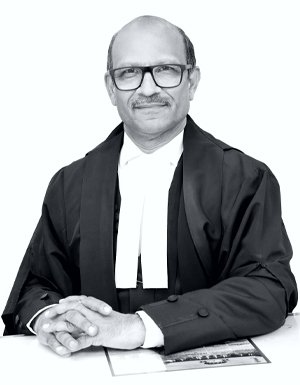

No Acts & Articles mentioned in this case
2026 INSC 744 1
REPORTABLE
IN THE SUPREME COURT OF INDIA
CRIMINAL APPELLATE JURISDICTION
CRIMINAL APPEAL NO(S). OF 2026
(Arising out of SLP(Crl.) No(s). 12344 of 2026)
THE STATE OF ANDHRA
PRADESH ….APPELLANT(S)
VERSUS
SUDA SURESH VEERA
VENKATA NAGA RAJU ….RESPONDENT(S)
J U D G M E N T
Mehta, J.
1. Heard.
2. Leave granted.
3. The instant appeal by special leave is preferred
by the State of Andhra Pradesh against the judgment
and final order dated 7
th July, 2026 passed by the
High Court of Andhra Pradesh at Amravati
1 in
1
Hereinafter, referred to as ‘the High Court’.
Criminal Appeal @ SLP(Crl.) No. 12344 of 2026 2
Criminal Petition No. 5443 of 2026, whereby the High
Court partly allowed the petition filed by the
appellant-State under Section 528 of the Bharatiya
Nagarik Suraksha Sanhita, 2023
2 and partly
modified the order dated 2
nd July, 2026 passed by the
learned II Additional Judicial Magistrate of First
Class, Vijayawada in Crl.M.P. No. 1400 of 2026 in
Crime No. 107 of 2026 of Krishna Lanka Police
Station, whereby police custody of the respondent-
accused had been granted subject to a host of
conditions.
4. The respondent-accused being an Inspector of
Police is arraigned as an accused in connection with
FIR in Crime No. 107 of 2026 lodged at Krishna
Lanka Police Station, Vijayawada relating to
allegations of custodial death of one Gade Sai
Krishna
3 on 6
th May, 2026.
5. The deceased-victim was apprehended at
Markapur at about 3:00 a.m. on 6
th May, 2026 by the
Task Force personnel. At about 7:00 a.m. the same
day, he was brought to Krishna Lanka Police Station
and formally handed over to the sentry, whereafter,
2
For short, ‘BNSS’.
3
Hereinafter, referred to as ‘the deceased-victim’.
Criminal Appeal @ SLP(Crl.) No. 12344 of 2026 3
along with his mobile phone, he came to be entrusted
to the respondent-accused. As per the prosecution,
the deceased-victim was never produced before the
learned Magistrate, and many witnesses saw him in
the police station with visible injuries.
6. The mother of the deceased-victim moved a
Habeas Corpus petition in the High Court of Andhra
Pradesh bearing Writ Petition No. 15132 of 2026 on
2
nd June, 2026. During the course of the proceedings
of the said petition, the respondent-accused being
the concerned Police Inspector suppressed the fact
that the deceased-victim had been apprehended and
kept in police custody. On 17
th June, 2026, the
respondent-accused was placed under suspension.
On 19
th June, 2026, the mother of the deceased-
victim lodged a complaint before the Commissioner of
Police, Vijayawada alleging illegal detention,
custodial torture resulting in death, and
disappearance of the body to screen the offenders
and destroy evidence. On the strength of the said
complaint, Crime No. 107 of 2026 came to be
registered at Krishna Lanka Police Station for
Criminal Appeal @ SLP(Crl.) No. 12344 of 2026 4
offences under Sections 127(4), 127(6), 103(1) and
238 of the Bharatiya Nyaya Sanhita, 2023
4.
7. The preliminary examination of the DVRs seized
from Krishna Lanka Police Station revealed that no
CCTV footage was available for the crucial period
during which the deceased-victim was stated to be in
custody.
8. On 21
st June, 2026, the Government of Andhra
Pradesh constituted a Special Investigation Team
5 to
investigate Crime No. 107 of 2026. The respondent-
accused was arrested by the SIT on 23
rd June, 2026
and was produced before the learned II Additional
Judicial Magistrate of First Class, Vijayawada on 24
th
June, 2026, whereupon he was remanded to judicial
custody and consequently lodged at the Central
Prison, Rajamahendravaram.
9. On 25
th June, 2026, the prosecution filed a
memo under Section 187 of the BNSS before the
learned Magistrate seeking twelve days police remand
of the respondent-accused, citing the imperative need
to trace the fate of the deceased-victim, identify co-
accused persons, recover material evidence, confront
4
For short, ‘BNS’.
5
Hereinafter, referred to as ‘SIT’.
Criminal Appeal @ SLP(Crl.) No. 12344 of 2026 5
the respondent-accused with falsified official records
and for reconstruction of crime scene.
10. By a detailed order dated 2
nd July, 2026 passed
in Crl.M.P. No. 1400 of 2026, the learned II Additional
Judicial Magistrate of First Class, Vijayawada,
granted police custody of the respondent-accused for
a period of eight days, i.e., from 3
rd July, 2026 to 10
th
July, 2026, to be conducted within the premises of
the Central Prison, Rajamahendravaram, on the
following terms & conditions:
“28.1. The respondent/accused shall be entitled to
nominate two advocates, namely Sri P. Baburao and
one other advocate of his choice, to be present at the
Central Prison, Rajamahendravaram, during police
custody. However, only one advocate shall be
permitted to remain present at any given point of time
during the interrogation.
28.2. The advocate accompanying the accused shall
remain within the line of sight of the interrogation,
but shall be positioned at a distance of not less than
ten (10) feet from the place of interrogation, or behind
a glass partition, so that the advocate may observe
the proceedings without being within hearing
distance.
28.3. The advocate shall not interfere with the
interrogation, communicate with, advise, prompt,
consult, or otherwise interact with the accused during
the course of interrogation.
28.4. The Investigating Officer shall ensure that the
entire interrogation is conducted within the coverage
area of the CCTV cameras or any other video
Criminal Appeal @ SLP(Crl.) No. 12344 of 2026 6
recording system installed in the jail premises, so as
to ensure transparency, fairness and accountability.
28.5. The entire period of police custody, including
every session of interrogation, shall be continuously
videographed and audio-visually recorded without
any interruption, pause or editing.
28.6. The original videographic recording shall be
preserved in its original form and produced before
this Court in a sealed cover immediately upon
completion of the police custody.
28.7. The Jail Superintendent/Jailor shall ensure
that the accused is not interrogated or interacted with
by the SIT officials except during the scheduled and
videographed interrogation sessions.
28.8. The Jail Superintendent/Jailor shall make
necessary arrangements within the jail premises,
preferably by providing a glass partition, enabling the
advocate to observe the interrogation while remaining
beyond hearing distance.
28.9. The Investigating Agency shall not subject the
accused to any threat, inducement, coercion, physical
assault, mental harassment or third-degree methods
during the course of custodial interrogation.
28.10. The Jail Superintendent/Jailor shall permit
the presence of one advocate during the interrogation
of the accused in accordance with the above
conditions and subject to the provisions of the Jail
Manual.
28.11. The Superintendent, Central Prison,
Rajamahendravaram, shall permit the Investigating
Officer, the Additional Superintendent of Police, other
authorised SIT officials, and the advocate of the
accused to enter the jail premises for the purpose of
Criminal Appeal @ SLP(Crl.) No. 12344 of 2026 7
investigation, strictly in accordance with the Jail
Manual.
28.12. Upon completion of each day’s interrogation,
the Jail Superintendent shall forthwith submit a
report to this Court indicating the time of arrival and
departure of the Investigating Officers and the
advocate present during the interrogation.
28.13. The Jail Superintendent shall ensure that the
CCTV footage recorded within the jail premises during
the period of police custody is preserved intact until
further orders of this Court and shall not permit its
deletion, overwriting or tampering.
28.14. The Investigating Officer, the Additional
Superintendent of Police, the members of the SIT, and
the Jail Superintendent shall be jointly and severally
responsible for ensuring the safety, life and physical
well-being of the accused/A.1/Suda Suresh Veera
Venkata Naga Raju, throughout the period of police
custody.
28.15. Under no circumstances shall the period of
police custody granted under this order be extended
beyond 10.07.2026.”
11. Aggrieved by the conditions aforesaid, to be
specific, Conditions 28.1, 28.4, 28.5, 28.10, 28.13,
28.14 and 28.15, the appellant-State preferred
Criminal Petition No. 5443 of 2026 before the High
Court under Section 528 of the BNSS on the ground
that confining the entire custodial interrogation to
the Central Prison, Rajamahendravaram, and
mandating an omnibus regime of continuous
Criminal Appeal @ SLP(Crl.) No. 12344 of 2026 8
videography impinged upon the autonomy of the
investigating agency rendered the very object of police
custody illusory.
12. The High Court disposed of the Criminal
Petition by modifying the order dated 2
nd July, 2026
to the following extent:
(i) The period of police custody shall commence
from 09.07.2026 and end by 16.07.2026;
(ii) The Investigation Officer of the Special
Investigation Team (SIT) is allowed to take the
Respondent/Accused to the scene of offences for
recovery of material evidence, reconstruction of
scene of offence and for such other purposes, in
accordance with the law, in the event of facts
revealed by the respondent-accused;
(iii) The Special Investigation Team (SIT) shall
take all necessary steps by considering the
ground realities to videograph the every
movement of the accused right from Central
Prison, Rajamahendravaram to Vijayawada and
vice-versa; and the Investigation Officer of the
Special Investigation Team (SIT) shall submit the
said videographic recordings in its original form
before the concerned Jurisdictional Magistrate
at Vijayawada, by 17.07.2026;
(iv) The Jail Superintendent, Central Prison,
Rajamahendravaram shall submit the entire
CCTV footage recorded in the Central Prison
during the course of police custody, in its
original form, to the concerned Jurisdictional
Magistrate at Vijayawada, by 17.07.2026;
Criminal Appeal @ SLP(Crl.) No. 12344 of 2026 9
(v) The Investigation Officer and all the
members of the SIT are directed to take all
positive steps to protect the life, limb and
personal dignity of the respondent/accused in
the light of constitutional safeguards, during the
entire period of police custody;
(vi) All the other conditions imposed by learned
II Additional Judicial Magistrate of First Class,
Vijayawada, vide Order dated 02.07.2026 in
Crl.M.P.No. 1400 of 2026, shall remain intact;
(vii) The Special Investigation Team (SIT)
shall conduct an impartial and scientific method
of investigation to unravel the truth and uphold
the integrity of ‘Satyameva Jayate’, the national
motto of India.
13. The State is now before us by way of this appeal
with special leave questioning the aforesaid
conditions imposed by the High Court which, as per
the State, directly impinge upon the rights of the
Investigating Officer to conduct unhindered
investigation without any restrictions and conditions.
14. Mr. Sidharth Luthra, learned senior counsel
representing the appellant-State vehemently and
fervently urged that the conditions imposed by the
learned Magistrate as modified but substantially
retained by the High Court tantamount to direct
intervention in the statutory right of the investigating
agency to conduct interrogation in a proper manner,
Criminal Appeal @ SLP(Crl.) No. 12344 of 2026 10
and that the very purpose of the purported
interrogation has been rendered nugatory by these
conditions. He submitted that the High Court as well
as the learned Magistrate seem to have proceeded
with a pre-conceived notion that the SIT will resort to
third-degree methods while conducting interrogation,
an apprehension which, according to him, is wholly
misconceived and unwarranted.
15. Learned senior counsel submitted that the
restrictions imposed by the High Court while
affirming many of the unjust and unrealistic
conditions imposed by the learned Magistrate
virtually make the efforts to interrogate the
respondent-accused ineffective. The direction to
videograph every movement of the accused right from
Central Prison, Rajamahandravaram to Vijayawada
and vice-versa impinges upon the freedom of the
investigating agency to reconstruct the crime scene
and frustrate the process of the disclosures which
may lead to the recovery of the dead body - an
imperative step of investigation.
16. Shri Luthra urged that the direction No. (iii)
contained in the High Court’s order effectively
translates into a situation that the interrogation of
Criminal Appeal @ SLP(Crl.) No. 12344 of 2026 11
the respondent-accused would have to be conducted
only at Central Prison, Rajamahendravaram and the
investigating agency would not be at liberty to
conduct such investigation in its own designated
interrogation centre where scientific and technical
facilities are available.
17. It was further submitted that once the High
Court, by Direction No. (v), had already bound the
investigating agency to take all positive steps to
protect the life, limb and personal dignity of the
respondent-accused in the light of constitutional
safeguards throughout the period of custody, no
further conditions were called for; and that the
retention of the remaining conditions imposed by the
learned Magistrate has created unnecessary hurdles
in the process of investigation thereby rendering the
police remand totally ineffective. Learned senior
counsel accordingly submitted that the impugned
judgment, as well as the order of the learned
Magistrate deserve to be set aside, and the SIT be
granted unfettered custody, subject only to such
constitutional safeguards as are consistent with the
law declared by this Court.
Criminal Appeal @ SLP(Crl.) No. 12344 of 2026 12
18. Per contra, Mr. L. Narasimha Reddy, learned
senior counsel appearing for the respondent-accused
vehemently and fervently opposed the submissions
advanced on behalf of the State. He urged that the
respondent-accused had arrested many criminals
who are lodged in the Prison at Vijayawada. In case
he is taken to the said prison, his life would be at
risk. He urged that the other restrictions imposed by
the learned Magistrate and the High Court are
directly in line with the judgments rendered by this
Court and just reiterate the constitutional
protections to which every accused is entitled. He
thus urged that the impugned judgment does not
warrant any interference and the appeal deserves to
be dismissed.
19. We have heard the submissions advanced at bar
and have gone through the impugned order passed
by the High Court and so also the order passed by
the learned Magistrate which has been partially
affirmed by the High Court.
20. At the outset, we are concerned solely with the
narrow question of the legality and workability of the
conditions imposed during police custody period as
allowed by the learned Magistrate and modified by
Criminal Appeal @ SLP(Crl.) No. 12344 of 2026 13
the High Court. We feel that the apprehension
expressed by the investigating agency regarding the
hurdles created in effective custodial investigation
thereby frustrating the entire process is realistic and
justified. Moreover, the apprehension expressed by
the respondent-accused regarding the threat to his
life, limb and personal dignity has been taken care of
by the High Court by commanding that the
respondent-accused shall not be subjected to any
threat, inducement, coercion, physical assault and
third-degree methods during the course of custodial
investigation. Needless to say, that the burden would
be on the SIT to ensure all these safeguards
irrespective of the impugned orders as these
conditions are inherently provided in Article 21 of the
Constitution of India. The concerned authorities
including the investigating officer, the Additional
Superintendent of Police, the members of the SIT and
the jail superintendent have been held jointly and
severally responsible for ensuring safety and physical
well-being of the accused throughout the period of
police custody.
21. In this background, confining the entirety of the
custodial interrogation to the Central Prison,
Criminal Appeal @ SLP(Crl.) No. 12344 of 2026 14
Rajamahendravaram is neither justified nor
sustainable on the facts of this case. The offence of
custodial death in which the respondent-accused is
arraigned is alleged to have been committed at, and
in the vicinity of, Krishna Lanka Police Station,
Vijayawada; the dead body of the deceased-victim
remains untraced; the original hard disks of the
CCTV system are yet to be recovered; and it is the
specific case of the prosecution that discoveries
under Section 23 of the Bharatiya Sakshya
Adhiniyam, 2023 (erstwhile Section 27 of the Indian
Evidence Act, 1872) are imminent if the respondent-
accused is properly interrogated. The efficacy of this
procedure would undoubtedly be dependent upon
the investigating officer being able to take the
accused to the actual place of discovery, and not
merely to interrogate him about it from a distance of
160 kilometers.
22. The statutory scheme under the BNSS must
also be borne in mind. Section 187(2) and (3) BNSS,
unlike the erstwhile Section 167 under the Code of
Criminal Procedure, 1973 enlarges the window
during which police custody, in the aggregate not
exceeding fifteen days, may be sought by the
Criminal Appeal @ SLP(Crl.) No. 12344 of 2026 15
investigating agency, such custody being available in
parts, during the first forty or sixty days of the total
permissible period of detention, rather than being
confined to the first fifteen days of remand alone. This
legislative change was intended precisely to meet
situations, such as the present, where fresh facts,
discoveries or leads may emerge during the course of
investigation warranting further custodial
interrogation, and an unduly rigid or premature
foreclosure of that statutory window, whether by a
Magistrate or by a court in the exercise of its
supervisory jurisdiction, would run counter to the
object of the provision. We are, therefore, unable to
sustain Condition 28.15, which places an absolute
and non-extendable outer limit on custody, since
such a limit forecloses recourse to Section 187(2)
BNSS regardless of what the investigation may yet
reveal.
23. Section 38 of the BNSS reads thus:
“38. Right of arrested person to meet an advocate of his
choice during interrogation. - When any person is
arrested and interrogated by the police, he shall be
entitled to meet an advocate of his choice during
interrogation, though not throughout interrogation.”
Criminal Appeal @ SLP(Crl.) No. 12344 of 2026 16
24. A plain reading of the provision makes it clear
that the right guaranteed thereunder is the right to
meet an advocate of choice during interrogation. It
does not, by any means, contemplate the continuous,
ongoing physical presence of an advocate for the
entirety of each interrogation session, whatever be
the visual or audible distance maintained. Therefore,
we are of the view that Conditions 28.1 to 28.3, 28.8
and 28.10, insofar as they permit the nomination of
two advocates and regulate the manner and distance
of the advocate’s presence so as to preclude
interference with, or communication during,
interrogation, are unobjectionable and, indeed,
salutary. However, the direction that such presence
should be available “at any given point of time during
the interrogation”, if construed as conferring an
unqualified entitlement to continuous presence,
would travel beyond what Section 38 BNSS itself
contemplates, and we clarify the position accordingly
in the operative directions that follow.
25. On the question of videography and CCTV
documentation, we are in agreement with the High
Court that such safeguards are salutary and ought
Criminal Appeal @ SLP(Crl.) No. 12344 of 2026 17
ordinarily to be retained so as to protect both the
accused, against any allegation of coercion, and the
investigating agency, against any unfounded
allegation of impropriety. However, the direction that
every movement of the accused, including transit of
about three hours each way over a distance of
approximately 160 kilometers between the Central
Prison, Rajamahendravaram and Vijayawada, must
be continuously videographed without interruption,
is, in our view, unworkable in practice. Interruptions
on account of movement, signal loss, battery and
storage, limitations of recording equipment, or
security considerations during transit are inherent
contingencies of road travel, and it would be
unrealistic, and self-defeating of the safeguard itself,
to visit the investigating agency with the consequence
of an inference of impropriety merely because of such
an interruption. What the safeguard requires is that
the interrogation itself, that is, the actual questioning
of, or interaction with, the respondent-accused be
continuously and contemporaneously recorded; the
requirement cannot extend to an inflexible mandate
to record every minute of transit, which is a totally
logistical exercise.
Criminal Appeal @ SLP(Crl.) No. 12344 of 2026 18
26. As regards the apprehension voiced on behalf of
the respondent-accused that his life would be at risk
if lodged for interrogation at a facility in Vijayawada
on account of his having, during his tenure, effected
the arrest of persons presently confined there, we find
that this apprehension can be adequately addressed
by requiring that interrogation outside the Central
Prison, Rajamahendravaram be conducted at the
designated interrogation centre of the SIT or an
equivalent secure facility under police or SIT control,
and by continuing to fix joint and several
responsibility on the named officers for the
respondent-accused’s safety, as under Condition
28.14. We find no material on record, beyond the bald
and unverified apprehension, to suggest that the
designated interrogation centre would be unsafe or
inadequate for this purpose.
27. Having regard to the foregoing, the terms and
conditions imposed in the order of the learned
Magistrate and the High Court are modified in the
following terms: -
(i) The period of police custody shall commence
from the date of production of the respondent-
accused before the learned Magistrate pursuant
Criminal Appeal @ SLP(Crl.) No. 12344 of 2026 19
to this judgment and shall remain in force for a
period of seven (7) days therefrom. Thus, the
total period of police remand including that
granted by the Courts below would not exceed
fifteen (15) days.
(ii) The Investigating Officer shall have unrestricted
access to the respondent-accused during the
period of police custody for the purposes of
interrogation.
(iii) The condition confining custodial interrogation
exclusively to the Central Prison,
Rajamahendravaram is set aside as unworkable
and unjustified. The Investigating Officer shall be
at liberty to interrogate the respondent-accused
at the designated interrogation centre of the SIT,
or any other equivalent facility available with the
police authorities at Vijayawada.
(iv) The requirement that the process of custodial
interrogation, wherever conducted, shall be
conducted under CCTV coverage and/or
videographic supervision is retained. It is,
however, clarified that this requirement stands
satisfied by audio-visual recording of the actual
sessions of interrogation and of any proceedings
Criminal Appeal @ SLP(Crl.) No. 12344 of 2026 20
of discovery or recovery undertaken with the
accused; it shall not be read as mandating
uninterrupted videography of the transit of the
accused between locations.
(v) The Investigating Agency shall not subject the
respondent-accused to any threat, inducement,
coercion, physical assault, mental harassment or
third-degree methods during the course of
custodial interrogation, whether at the Central
Prison or elsewhere.
(vi) The direction given by the learned Magistrate
permitting presence of the lawyer is retained with
the modification that such lawyer shall only be
allowed to remain present within the site of
interrogation where he can see the respondent-
accused. However, the lawyer shall not be
permitted to intervene in the process of
investigation at any cost.
(vii) A copy of the CCTV footage and of the
videographic recording in its original form
without deletion, overwriting, editing or
tampering shall be produced, together with a
certificate under Section 63 of the Bharatiya
Sakshya Adhiniyam, 2023 (corresponding to
Criminal Appeal @ SLP(Crl.) No. 12344 of 2026 21
Section 65B of the Indian Evidence Act, 1872),
before the learned Magistrate at Vijayawada
upon the completion of the period of police
custody.
(viii)The Investigating Officer, the Additional
Superintendent of Police, the members of the SIT,
and the Jail Superintendent/officer-in-charge of
the facility where the accused is lodged during
custody, shall be jointly and severally
responsible for ensuring the safety, life and
physical well-being of the respondent-accused
throughout the period of police custody.
(ix) The SIT shall conduct an impartial, fair and
scientific investigation strictly in accordance with
law, uninfluenced by any observation made in
this judgment or in the judgment of the High
Court, such observations having been made
solely for the disposal of the re spective
proceedings.
28. The appeal is allowed in these terms.
Criminal Appeal @ SLP(Crl.) No. 12344 of 2026 22
29. Pending application(s), if any, shall stand
disposed of.
….……………………J.
(VIKRAM NATH )
...…………………….J.
(SANDEEP MEHTA)
NEW DELHI;
JULY 27, 2026.

 Login with google
Legal Notes
Add a Note....