
As per case facts, landlord Chandmal sought to evict tenant Firm Ram Chandra and Vishwanath from his shop, claiming personal use. The tenant countered by asserting a permanent tenancy right, ...
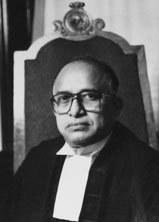
No Acts & Articles mentioned in this case
http://JUDIS.NIC.IN SUPREME COURT OF INDIA Page 1 of 7
PETITIONER:
CHANDMAL
Vs.
RESPONDENT:
FIRM RAM CHANDRA AND VISHWANATH
DATE OF JUDGMENT07/05/1991
BENCH:
RAY, B.C. (J)
BENCH:
RAY, B.C. (J)
VERMA, JAGDISH SARAN (J)
CITATION:
1991 AIR 1594 1991 SCR (2) 732
1991 SCC (3) 130 JT 1991 (2) 553
1991 SCALE (1)931
ACT:
Hyderabad House (Rent, Eviction and Lease) Control Act,
1954-Section 26-Revisionary jurisdiction of High Court-Scope
of.
Code of Civil Procedure, 1908-Section 115-Revision-
Scope of.
HEADNOTE:
The appellant-landlord filed a suit for eviction of the
respondent firm-defendant-commission agent firm, from his
shop under section 15(3)(a)(iii) of the Hyderabad House
(Rent, Eviction and Lease) Control Act, 1954 on the ground
that the appellant required the suit shop for his own
personal use as he intended to start commission agency and
other business; and that the respondent did not vacate the
premise inspite of his two notices, terminating the tenancy.
The respondent filed written statement before the
Additional Rent Controller accepting the ownership of the
appellant and tenancy of the respondent and denied the
appellant's allegation that he required the premises for his
personal use, as the appellant was a member of Hindu Joint
family comprising of his father, and his brothers, and his
brothers and appellant; the appellant as one of the partners
of registered firm runs a kirana of commission agency shop
under the name and style of M/s Rajmal Sumermal Surana and
the appellant owned many houses and shops and as such was
not entitled to an order of eviction. In the additional
written statement it was further stated that the appellant
purchased the house from one registered partnership firm and
one of the partners of the firm was occupying the house as a
permanent tenant since Samwat 2002. It was also contended
that the partners of the firm were not made parties to the
eviction proceedings and hence the suit was not tenable.
The Trial Court considering the evidence allowed the
suit holding that the appellant was entitled to evict the
respondent in view of the provisions of Section 15(2)(vi) of
the Act, though the plea of bona fide requirement was
negatived.
The tenant-respondent filed an appeal under section 25
before the
733
http://JUDIS.NIC.IN SUPREME COURT OF INDIA Page 2 of 7
District Judge, which was dismissed though it was held that
the landlord failed to prove that he required the premises
for personal use.
The tenant-respondent's revision petition under section
26 to the High Court, was allowed by a Single Judge.
Allowing the landlord's appeal, this Court
HELD: 1. The jurisdiction of the High Court in revision
against the order passed on appeal by the District Judge is
a limited one and it is almost pari materia with the
provisions of Section 115 of the Code of Civil Procedure.
The High Court while exercising the revisional jurisdiction
can interfere with the order passed on appeal by the
appellate authority only on three grounds, i.e. (i) where
the original or appellate authority exercised a jurisdiction
not vested in it by law, or (ii) where the original or
appellate authority failed to exercise a jurisdiction so
vested, or (iii) where in following the procedure or passing
the order, the original or appellate authority acted
illegally or with material irregularity. [738C-E]
2. The findings in any view of the matter whatsoever
cannot be held to be either without jurisdiction vested with
them, nor it can be held to be made by the original or
appellate authority illegally or with material irregularity.
[738G]
3. The revisional jurisdiction of the High Court under
Section 26 of the said Act is confined strictly to the
jurisdictional error or illegal exercise of jurisdiction.
The finding of the High Court to the effect that it was the
duty of the Court in the interest of justice to interfere
even with the concurrent finding of facts because on the
record, High Court found that there was not a single factor
to come to the conclusion that the claim was mala fide or
was not bona fide as required by the statute, is entirely
baseless and not in accordance with the provisions of
Section 26 of said Act which confers revisional Jurisdiction
on the High Court. [738H-739B]
4. The claim of permanent tenancy by one of the partners has
been clearly and unequivocally made in the additional
written statement filed on behalf of the respondent. In
such circumstances, the provisions of Section 15(2) (vi) of
the said Act are applicable and an order of eviction can
very well be passed on this ground alone. [739F]
734
JUDGMENT:
CIVIL APPELLATE JURISDICTION: Civil Appeal No. 2279 of
1991.
From the Judgment and Order dated 27.9.1989 of the
Bombay High Court in C.R.A. No. 500 of 1985.
S.C. Birla for the Appellant.
V.N. Ganpule, S.V. Deshpande and Ms. Priya Gupta for
the Respondent.
The Judgment of the Court was delivered by
RAY, J. We have heard learned counsel for the parties
and we grant special leave.
This appeal on special leave is directed against the
judgment and order passed in Civil Revision Application No.
500 of 1985 by the High Court of Judicature at Bombay,
Aurangabad Bench allowing the Revision, setting aside the
judgment and decree passed by the District Judge in Rent
Appeal No. 5 of 1984 confirming and allowing the judgment
and order of the Additional Rent Controller, Aurangabad in
R.C. No. ARC/71/3.
http://JUDIS.NIC.IN SUPREME COURT OF INDIA Page 3 of 7
The matrix of the case is as follows:
The appellant-landlord, Chandmal, S/o Sumermal Surana
as plaintiff filed a suit for eviction of the respondent-
defendent Firm Ram Chandra & Vishwanath, a commission agent
firm from his shop bearing Municipal No. 4-16-101 situated a
Mondha, Taluka, District Aurangabad (maharashtra) under
section 15(3)(a)(iii) of the Hyderabad House (Rent, Eviction
and Lease) Control Act, 1954 to be hereinafter to be
referred to as the said Act on the ground inter alia that
the respondent was the tenant of the said shop attached to
the said house of the appellant-landlord on the monthly rent
of Rs.50 per month and the tenancy commences from the Ist
day of every month according to the English calendar, that
the landlord-appellant required the suit shop for his own
personal use as he intended to start commission agency and
other business in the said shop, that he terminated the
tenancy of the respondency of the respondent by serving the
two notices dated 28.3.1969 and 8.12.1970 and that the
respondent did not vacate the suit premises, hence the suit
has been filed for eviction of the tenant-respondent from the
said premises. Shankarrao Marutirao Sonawane,
735
one of the partners of respondent firm filed his written
statement before the Additional Rent Controller accepting
the ownership of the appellant and tenancy of the respondent
at the rate of Rs. 50 per month. He, however, denied the
appellant's allegation that he required the suit premises
for his personal use. According to the respondent, the
appellant is a member of Hindu joint family comprising of
his father, Sumermal, his real brothers and appellant and as
one of the partners of registered firm runs a kirana of
commission agency shop under the name and style of M/s
Rajmal Sumermal Surana. It has been further submitted that
the appellant owns many houses and shops at Aurangabad and
also runs a very big shop at Bhaji Bazar, Aurangabad and is
not entitled to evict. In the additional written statement
it has been further stated that the appellant purchased the
house from Balkrishna and brothers, the firm Ramchandra and
Vishwanath is a partnership firm registered under the
Partnership Act, one of the partners of the firm Ramchandra
and Vishwanath is occupying the house as a permanent tenant
since Samwat 2002. It has also been contended that the
partners of the firm are not made parties to the eviction
proceedings and hence the suit was not tenable.
An additional issue was framed at the request of the
appellant which was to the following effect:
"Do defendant prove that he is permanent tenant and
his claim is bona fide."
The trial court considering the evidences adduced on
behalf of the defendant-respondent held that the defendant
failed to prove the claim of permanent tenancy of Ramchandra
Madhavrao since Samvat 2002 over the suit premises and that
the claim of permanent tenancy is not bona fide. This
issue was thus answered in the negative.
The Additional Rent Controller, therefore, held that
the appellant is entitled to evict the respondent from the
suit premises in view of the provisions of Section 15(2)
(vi) of the said Act and, therefore, Made an order directing
the tenant-respondent to hand over vacant and peaceful
possession of the said shop to the landlord-appellant within
a period of 30 days of the order though he negatived the
plea of bona fide requirement of suit premises for his own
occupation.
The order was made on February 14, 1984. Against this
judgment and order, the tenant-respondent filed an appeal
http://JUDIS.NIC.IN SUPREME COURT OF INDIA Page 4 of 7
being Rent Appeal No. 5 of 1984 under section 25 of the said
Act in the court of
736
District Judge at Aurangabad. The learned District Judge
confirmed the judgment and order of the Additional Rent
Controller holding that the landlord failed to prove that he
bona fide required the premises for personal use, for
starting new business. It was further held that so far as
the claim of permanent tenancy, there was no iota of
evidence to support the tenant-respondent's claim of
permanent tenancy. It also held that the tenant-respondent
has put forth the claim of permanent tenancy to defeat the
landlord-appellant's right to claim possession of the
premises and had there been any substance in the claim, the
tenant-respondent would have produced evidence in support of
it. Complete absence of evidence indicated that the claim
is fake and not put forth bona fide. The learned District
Judge, therefore, held that the tenant's claim of permanent
tenancy was not bona fide and so upheld the finding of the
Additional Rent Controller and granted three months' time to
the tenant-respondent to deliver possession of the suit
premises to the landlord-appellant.
The tenant-respondent feeling aggrieved filed an
application for Revision under Section 26 of the said Act in
the High Court at Bombay (Aurangabad Bench) being Civil
Revision Application No. 500 of 1985. The said Revision
Application was allowed by the learned Single Judge setting
aside the concurrent finding of the courts below holding
inter alia that in the reply of the tenant to the notices
sent by the landlord, there was no semblance of a claim for
permanent tenancy. It was further held that in the written
submission there was no whisper about the claim of permanent
tenancy. It is for the first time that in the additional
written statement filed on behalf of the tenant the claim of
permanent tenancy by one of the partners, Ramchandra
Madhavrao since Samwat 2002 was made. It has also been held
that during the trial, Shankarrao Marutirao Sonawane, one of
the partners of the respondent firm who has signed the
written statement has not uttered a word in his examination-
in-chief with regard to the question of permanent tenancy.
It was, therefore, held that in these circumstances "it is
the duty of the Court in the interest of justice to
interfere even with a concurrent finding of fact because on
the record, I find that there is not a single factor to come
to the conclusion that the claim was mala fide or was not
bona fide as is required by the statute."
The learned Single Judge, therefore, set aside the
judgments of the courts below and allowed the Revision
Application with costs throughout.
It is against this judgment and order, the instant
appeal on
737
special leave has been filed by the landlord. It is
convenient to set out hereinbelow the relevant provisions of
Section 15(2)(vi) of the said Act before proceeding to
consider whether the High Court was justified in setting
aside the judgment and order of the courts below:
Section 15(2)(vi):
A tenant shall not be evicted, whether in execution
of a decree or otherwise except in accordance with
the provisions of this section--
(vi) that the tenant has denied the title of the
landlord or claimed a right of permanent tenancy
and that such denial or claim was not bona fide the
Controller shall make an order directing the tenant
http://JUDIS.NIC.IN SUPREME COURT OF INDIA Page 5 of 7
to put the landlord in possession of the house, and
if the Controller is not so satisfied he shall make
an order, rejecting, rejecting the application."
It is also pertinent to set out in this connection the
provisions of Section 26 of the said Act:
Section 26:
"Notwithstanding anything contained in this Act or
any other law for the time being in force, an
application for revision shall lie to the High
Court from any final order passed on appeal by an
appellate authority on the following grounds:
(a) that the original or appellate authority
exercised a jurisdiction not vested in it by law,
or
(b) that the original or appellate authority failed
to exercise a jurisdiction so vested, or
(c) in following the procedure or passing the
order, the original or appellate authority acted
illegally or with material irregularity."
There is no dispute regarding the submission made in
para 9 of the additional written statement which is a part
of the same written statement, filed on behalf of the
respondent by one of its partners, Shankarrao Marutirao
Sonawane to the effect that one of the partners
738
of the said firm, Ramachandra Madhavrao is occupying the
house as a permanent tenant since Samvat 2002. Admittedly,
on the basis of this additional written statement, an
additional issue No. 1 was framed at the request of the
landlord-appellant whether the claim of permanent tenancy of
Ramchandra Madhavrao was bona fide. It is evident from the
provisions of Section 15(2)(vi) as set out hereinbefore that
if the tenant has claimed a right of permanent tenancy and
that such claim was not bona fide the Controller shall make
an order directing the tenant to put the landlord in
possession of the house. The Additional Rent Controller as
well as the District Judge considered carefully and minutely
the evidences adduced on behalf of the tenant-respondent and
found that claim of permanent tenancy was not bona fide.
Accordingly, the courts below held that the tenant-
respondent was liable to be evicted from the suit premises
on this ground alone and passed order for eviction from the
suit premises. The jurisdiction of the High Court in
revision against the order passed on appeal by the District
Judge is a limited one and it is almost pari materia with
the provisions of Section 115 of the Code Procedure. The
High Court while exercising the revisional jurisdiction can
interfere with the order passed on appeal by the appellate
authority only on three grounds i.e. (i) where the original
or appellate authority exercised a jurisdiction not vested
in it by law, or (ii) where the original or appellate
authority failed to exercise a jurisdiction so vested, or
(iii) where in following the procedure or passing the order,
the original or appellate authority acted illegally or with
material irregularity. It is evident from the averments
made in para 9 of the additional written statement that one
of the partners of the respondent firm, Ramchandra Madhavrao
occupied the said premises as a permanent tenant since
Samvat 2002. This claim of permanent tenancy was held to be
not bona fide by the original court as well as by the
appellate authority on a consideration and appraisement of
the evidences adduced on behalf of the tenant-respondent and
as such both the courts below passed order of eviction of
the tenant-respondent from the suit premises. These are
admittedly concurrent findings of fact arrived at by the
http://JUDIS.NIC.IN SUPREME COURT OF INDIA Page 6 of 7
original and the appellate authority. Moreover, these
findings in any view of the matter whatsoever, cannot be
held to be either without jurisdiction nor it can amount to
a failure to exercise jurisdiction vested with them, nor it
can be held to be made by the original or appellate
authority illegally or with material irregularity.
The revisional jurisdiction of the High Court under
Section 26 of the said Act is confined strictly to the
jurisdictional error or illegal exercise of jurisdiction.
The finding of the High Court to the effect
739
that it was the duty of the Court in the interest of justice
to interfere even with the concurrent finding of facts
because on the records, High Court found that there was not
a single factor to come to the conclusion that the claim was
mala fide or was not bona fide as required by the statute,
is entirely baseless and not in accordance with the
provisions of Section 26 of the said Act which confers
revisional jurisdiction on the High Court. It is pertinent
to mention in this connection the decision in J. Pandu v. R.
Narsubai, [1987] 1 SCC 573. It is a case under the A.P.
Buildings (lease, Rent and Eviction) Act, 1960. Sub-section
2(vi) of Section 10 of A.P. Buildings (Lease, Rent and
Eviction) which is similar to Section 15(2)(vi) of the
Hyderabad Houses (Rent, Eviction and Lease) Control Act,
1954 sets out two grounds of eviction viz. (1) denial of
title of the landlord without bona fides and (2) claim of
permanent tenancy rights without bona fides. It was held
that "consequently, either denial of title or claim of
permanent tenancy without bona fides will itself be enough
to attract Section 10(2)(vi). The order of eviction on this
ground, has therefore, to be sustained. By reason of this
conclusion alone the appeal can be dismissed."
In the case of Majati Subbarao v. P.V.K.Krishna Rao
(deceased) by Lrs., [1989] 4 SCC 732 it has been observed
that the denial of title of the landlord by the tenant must
be made in clear and in unequivocal terms. It was further
observed that it is well settled that the court hearing a
suit or appeal can take into account events which are
subsequent to the filing of the suit in order to give
appropriate relief or mould the relief appropriately.
As we have stated hereinbefore that the claim of
permanent tenancy by one of the partners, Ramchandra
Madhavrao has been clearly and unequivocally made in the
additional written statement filed on behalf of the
respondent. In such circumstances, the provisions of
Section 15(2)(vi) of the said Act are applicable and an
order of eviction can very well be passed on this ground
alone.
In the premises aforesaid, the judgment and order
passed in revision by the High Court is contrary to law as
the High Court in exercise of its revisional jurisdiction
interfered with the concurrent finding of fact arrived at by
the original court as well as the appellate authority. The
High Court should not have reversed the same in excise of
its revisional jurisdiction under Section 26 of the said
Act. We, therefore, set aside the judgment and order of the
High Court and uphold the orders of the court below. The
respondent is given three
740
months' time to vacate the suit premises on filing the usual
undertaking that they will not induct anybody or transfer
the same to any other person and they will go on paying the
rent of the premises at the usual rate and will deliver
vacant and peaceful possession of the suit premises on or
http://JUDIS.NIC.IN SUPREME COURT OF INDIA Page 7 of 7
before the expiry of the said period to the landlord-
appellant. In the facts and circumstances of the case, the
parties will bear their own costs.
V.P.R. Appeal allowed.
741

 Login with google
Legal Notes
Add a Note....