
As per case facts, these petitions challenge a Division Bench decision of the Punjab & Haryana High Court from 1992, concerning the criteria for compassionate appointments in public services. The ...
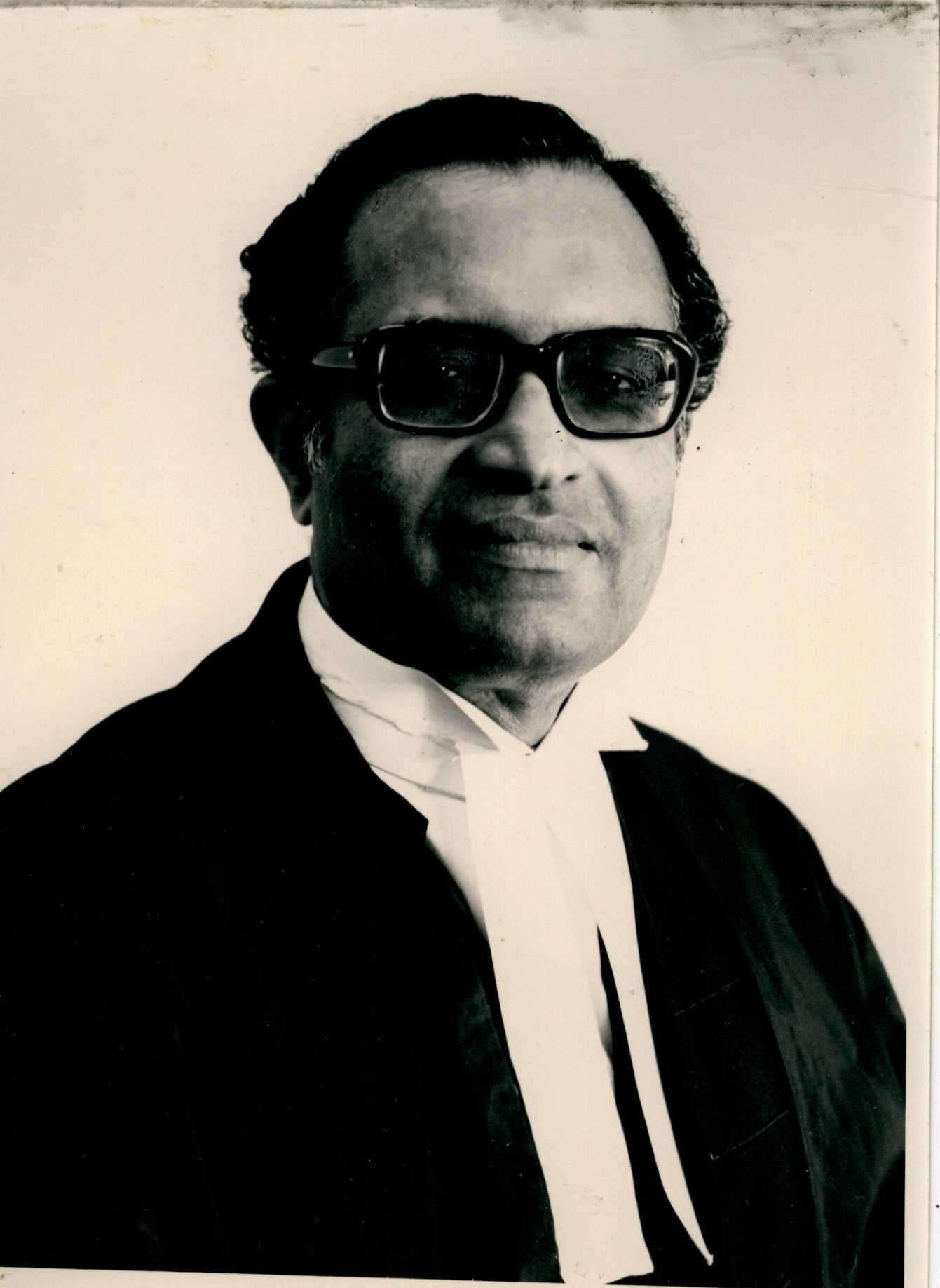
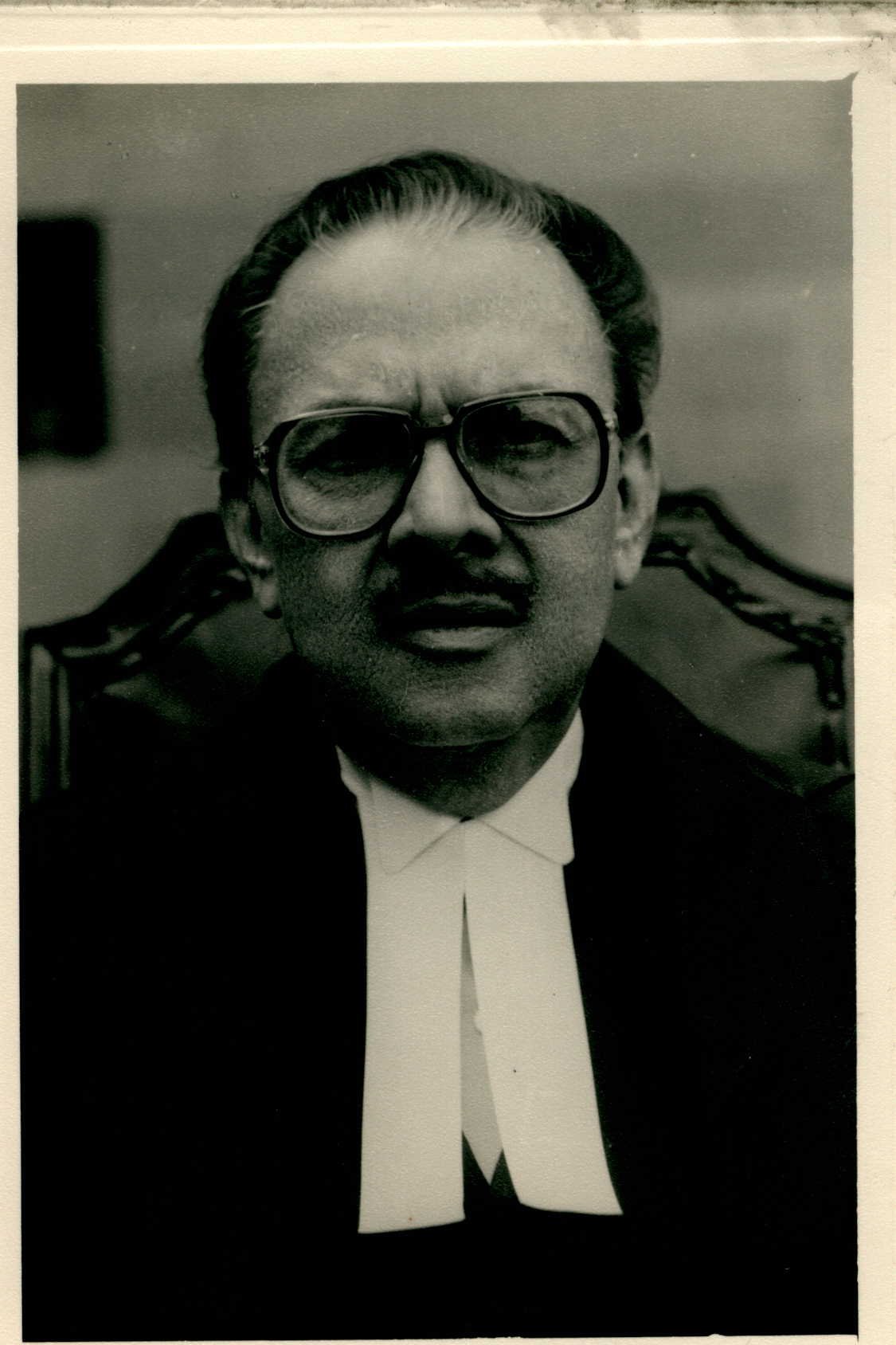
No Acts & Articles mentioned in this case
http://JUDIS.NIC.IN SUPREME COURT OF INDIA Page 1 of 3
PETITIONER:
UMESH KUMAR NAGPAL
Vs.
RESPONDENT:
STATE OF HARYANA (Sawant, J.)
DATE OF JUDGMENT04/05/1994
BENCH:
SAWANT, P.B.
BENCH:
SAWANT, P.B.
SINGH N.P. (J)
CITATION:
1994 SCC (4) 138 JT 1994 (3) 525
1994 SCALE (5)834
ACT:
HEADNOTE:
JUDGMENT:
The Judgment of the Court was delivered by
SAWANT, J.- These two petitions are directed against the
decision dated 18-12-1992 of the Division Bench of the
Punjab & Haryana High Court in Letters Patent Appeal No. 734
of 1992 and CWP No. 6357 of 1992. Since they raise a point
of considerable importance, it has become necessary to
deliver a short judgment while dismissing them at the
admission stage.
2.The question relates to the considerations which should
guide while giving appointment in public services on
compassionate ground. It appears that there has been a good
deal of obfuscation on the issue. As a rule, appointments
in the public services should be made strictly on the basis
of open invitation of applications and met-it. No other
mode of appointment nor any other consideration is Neither
the Governments nor the
140
public authorities are at liberty to follow any other
procedure or relax the qualifications laid down by the rules
for the post. However, to this general rule which is to be
followed strictly in every case, there are some exceptions
carved out in the interests of justice and to meet certain
contingencies. One such exception is in favour of the
dependants of an employee dying in harness and leaving his
family in penury and without any means of livelihood. In
such cases, out of pure humanitarian consideration taking
into consideration the fact that unless some source of
livelihood is provided, the family would not be able to make
both ends meet, a provision is made in the rules to provide
gainful employment to one of the dependants of the deceased
who may be eligible for such employment. The whole object
of granting compassionate employment is thus to enable the
family to tide over the sudden crisis. The object is not to
give a member of such family a post much less a post for
post held by the deceased. What is further, mere death of
http://JUDIS.NIC.IN SUPREME COURT OF INDIA Page 2 of 3
an employee in harness does not entitle his family to such
source of livelihood. The Government or the public
authority concerned has to examine the financial condition
of the family of the deceased, and it is only if it is
satisfied, that but for the provision of employment, the
family will not be able to meet the crisis that a job is to
be offered to the eligible member of the family. The posts
in Classes III and IV are the lowest posts in non-manual and
manual categories and hence they alone can be offered on
compassionate grounds, the object being to relieve the
family, of the financial destitution and to help it get over
the emergency. The provision of employment in such lowest
posts by making an exception to the rule is justifiable and
valid since it is not discriminatory. The favourable
treatment given to such dependent of the deceased employee
in such posts has a rational nexus with the object sought to
be achieved, viz., relief against destitution. No other
posts are expected or required to be given by the public
authorities for the purpose. It must be remembered in this
connection that as against the destitute family of the
deceased there are millions of other families which are
equally, if not more destitute. The exception to the rule
made in favour of the family of the deceased employee is in
consideration of the services rendered by him and the
legitimate expectations, and the Change in the status and
affairs, of the family engendered by the erstwhile
employment which are suddenly upturned.
3.Unmindful of this legal position, some Governments and
public authorities have been offering compassionate
employment sometimes as a matter of course irrespective of
the financial condition of the family of the deceased and
sometimes even in posts above Classes III and IV. That is
legally impermissible.
4.It is for these reasons that we have not been in a
position to appreciate judgments of some of the High Courts
which have justified and even directed compassionate
employment either as a matter of course or in posts above
Classes III and TV. We are also dismayed to find that the
decision of
141
this Court in Sushma Gosain v. Union of India' has been
misinterpreted to the point of distortion. The decision
does not justify compassionate employment either as a matter
of course or in employment in posts above Classes III and
IV. In the present case, the High Court has rightly pointed
out that the State Government's instructions in question did
not justify compassionate employment in Class 11 posts.
However, it appears from the judgment that the State
Government had made at least one exception and provided
compassionate employment in Class II post on the specious
ground that the person concerned had technical
qualifications such as M.B.B.S., B.E., B.Tech. etc. Such
exception, as pointed out above, is illegal, since it is
contrary to the object of making exception to the general
rule. The only ground which can justify compassionate
employment is the penurious condition of the deceased's
family. Neither the qualifications of his dependent nor the
post which he held is relevant. It is for this reason that
we are unable to understand the following observations of
the High Court in the impugned judgment:
"We are of the view that the extraordinary
situations require extraordinary remedies and
it is open to the Government in real hard
cases to deviate from the letter and spirit of
the instructions and to provide relief in
http://JUDIS.NIC.IN SUPREME COURT OF INDIA Page 3 of 3
cases where it is so warranted. To hold as a
matter of law that the Government cannot
deviate even minutely from the policy of
providing appointment only against Class III
and Class IV posts, would be to ignore the
reality of life these days. It would be
ridiculous to expect that a dependant of a
deceased Class I Officer, should be offered
appointment against a Class III or IV post.
While we leave it to the Government to
exercise its discretion judiciously in making
appointments to Class I or 11 posts on
compassionate grounds, yet a word of caution
needs to be struck. It is to be noted that
such appointments should be ordered in the
rarest of rare cases, and in very exceptional
circumstances. As a matter of fact, we would
recommend that the Government should frame a
policy even for such appointments."
5. It is obvious from the above observations that the High
Court endorses the policy of the State Government to make
compassionate appointment in posts equivalent to the posts
held by the deceased employees and above Classes III and IV.
It is unnecessary to reiterate that these observations are
contrary to law. If the dependant of the deceased employee
finds it below his dignity to accept the post offered, he is
free not to do so. The post is not offered to cater to his
status but to see the family through the economic calamity.
6.For these very reasons, the compassionate employment
cannot be granted after a lapse of a reasonable period which
must be specified in the rules. The consideration for such
employment is not a vested right which can be exercised at
any time in future. The object being to enable the family
to get over the financial crisis which it faces at the time
of the death of the sole
1 (1989)4SCC468:1989SCC(L&S)662:(1989)11ATC878:(1989)4SLR327
142
breadwinner, the compassionate employment cannot be claimed
and offered whatever the lapse of time and after the crisis
is over.
7.It is needless to emphasise that the provisions for
compassionate employment have necessarily to be made by the
rules or by the executive instructions issued by the
Government or the public authority concerned. The
employment cannot be offered by an individual functionary on
an ad hoc basis.
8. For the reasons given above, we dismiss the special
leave petitions.
143

 Login with google
Legal Notes
Add a Note....