
As per case facts, the appellant, Sukwant Singh, suspected the deceased, Ajmer Singh, and his brother, Gurmej Singh (PW3), of being responsible for the snapping of an engagement he had ...
http://JUDIS.NIC.IN SUPREME COURT OF INDIA Page 1 of 9
PETITIONER:
SUKHWANT SINGH
Vs.
RESPONDENT:
STATE OF PUNJAB
DATE OF JUDGMENT28/03/1995
BENCH:
MANOHAR SUJATA V. (J)
BENCH:
MANOHAR SUJATA V. (J)
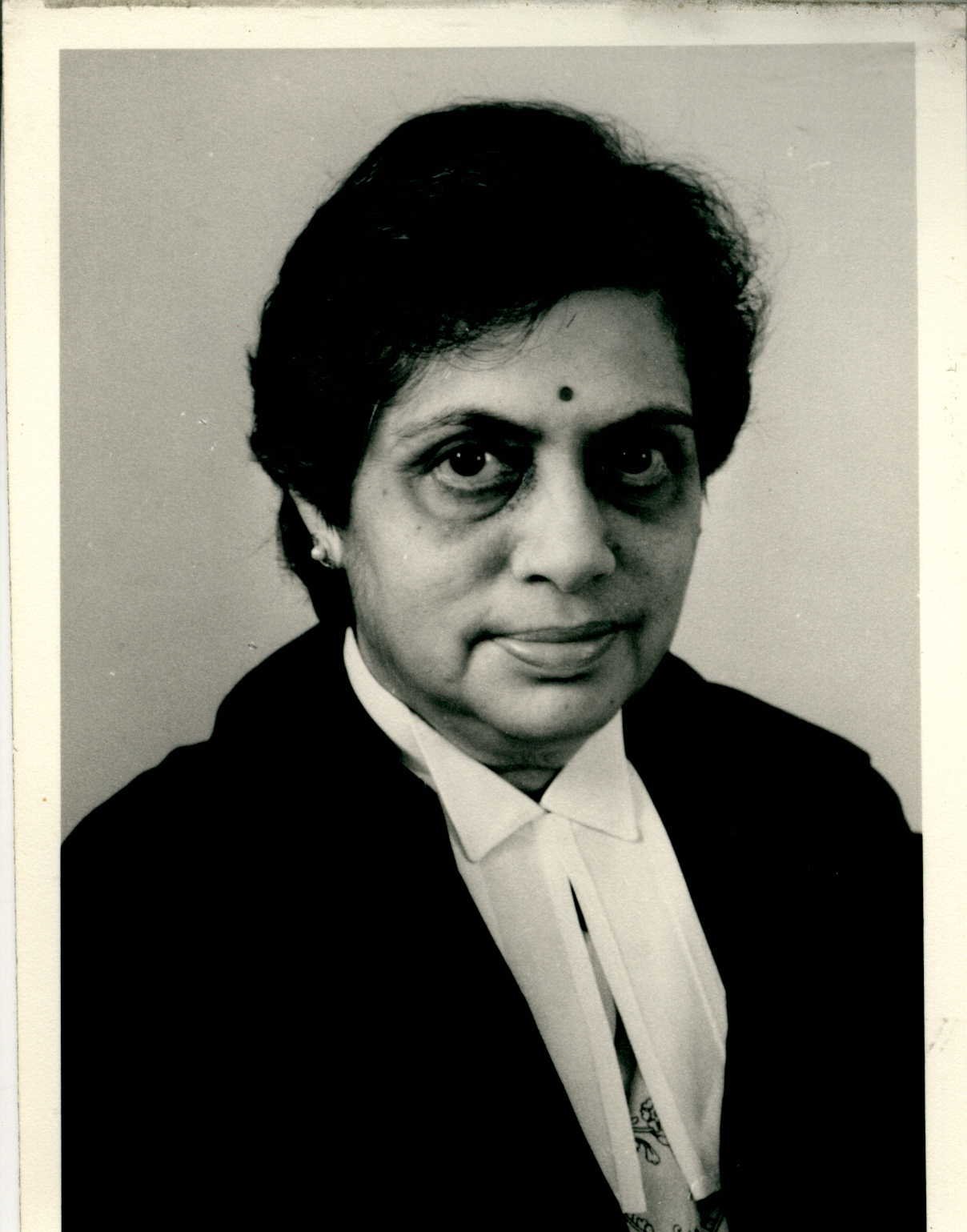
AGRAWAL, S.C. (J)
HANSARIA B.L. (J)
CITATION:
1995 AIR 1380 1995 SCC Supl. (2) 262
JT 1995 (3) 506 1995 SCALE (2)496
ACT:
HEADNOTE:
JUDGMENT:
DR. ANAND, J.:
1. The appellant was tried for an offence under Section
302 IPC in connection with the murder of one Ajmer Singh on
11.7.1984 at about 7.30 p.m. The learned Judge Special
Court, Ferozepur convicted him for the said offence and
sentenced him to suffer life imprisonment. Through this
appeal, under Section 14 of the Terrorists Affected Areas
(Special Courts) Act, 1984, the appellant has challenged his
conviction and sentence.
2. According to the prosecution case, the appellant is
married to the sister of Pal Singh. An engagement had been
brought about through the instrumentality of the appellant
between the daughter of Pal Singh and Lakhmir Singh son of
Kashmir Singh. The deceased, Ajmer Singh and his brother,
Gurmej Singh PW 3 were on friendly terms with Kashmir Singh
but for some reason or the other, that engagement was
snapped and Lakhmir Singh was married to some other girl
about 3 days prior to the occurrence. The appellant
suspected that Ajmer Singh deceased and his brother Gurmej
Singh PW were responsible for the snapping of the
engagement. On 11.7.1984 at about 7.30 p.m., Gurmej Singh,
PW 3 accompanied by Ajmer Singh, deceased and Raghbir Singh,
PW4 were going to the fields to answer the call of nature
and when they reached near the bridge on the village pond,
the appellant came from the opposite side wearing the robes
of a Nihang and exhorted that he would teach them a lesson
for getting the engagement snapped. Immediately thereafter
the appellant took out a pistol from underneath the chola
(robes) that he was wearing and fired a shot at Ajmer Singh.
On alarm being raised by Ajmer Singh, PW3 and PW4, the
appellant fled away alongwith the pistol. One Major Singh,
PW5 who was also present in the nearby field also witnessed
the occurrence. Ajmer Singh was removed to the haveli and
while he was being shifted to the Hospital at Malout, in the
http://JUDIS.NIC.IN SUPREME COURT OF INDIA Page 2 of 9
tractor trolley of Kashmir Singh, he expired. On reaching
the hospital, the doctor pronounced Ajmer Singh dead. On
information being sent by Dr. Sant Singh, Ex. P-5 about the
arrival of Ajmer Singh deceased at the hospital to the
police station, Shri Raghubir Singh, ASI PW6 proceeded to
the hospital and recorded the statement of Gurmej Singh, Ex.
P-4 at about 11.45 p.m. The statement was sent to the police
station for registration of a case and on its basis formal
FIR Ex.P-4/B was drawn up. A case under Section 302 IPC and
Section 25 Arms Act was registered at 12.10 a.m. on
12.7.1984.: A copy of the special report was sent to the
Ilaqa magistrate and was received by him on 12.7.1984 at
about 6.30
499
a.m. After preparing the inquest report Ex.P-2, the dead
body was dispatched for postmortem which was performed by
Dr. Sant Parkash Singh, Sr. Medical Officer PW1 on July 12,
1984 at about 11.00 a.m. The doctor found fire arm injuries
on the deceased and opined that the death had been caused
due to shock and haemorrhage as a result of injury No. 1,
which was found to be sufficient in the ordinary course of
nature to cause death. During the investigation by ASI
Raghubir Singh, PW6the rough site plan of the place of
occurrence was prepared. From the spot, blood stained earth
as well as an empty were collected vide memo Ex. P-8. The
same were secured in separate sealed parcels. The appellant
was arrested on 8.8.1984 and at the time of his arrest, he
was found to be carrying with him a pistol and 7 live car-
tridges which were seized by the police.
3. At the trial, the prosecution examined Dr. Sant Parkash
Singh, PW1 Draughtsman Ajit Sharma, PW2, Gurmej Singh, PW3
and Raghubir Singh, ASI PW6. Raghubir Singh PW4 and Major
Singh PW5, the two other eye witnesses were tendered for
cross examination only. The appellant denied the
prosecution allegations against him in his statement under
Section 313 Cr.P.C. The appellant was thereafter, convicted
and sentenced for the offence under Section 302 IPC. The
case under Section 25 Arms Act was separately tried.
4. Learned counsel for the appellant submitted that the
solitary eyewitness examined at the trial by the
prosecution Gurmej Singh, PW3 could not be relied upon, as
not only he being the brother of the deceased was interested
in the prosecution case but also because his evidence stood
belied by the medical evidence which showed that the stomach
and the bladder of the deceased were empty thereby sug-
gesting that the injuries had been received by the deceased
after he had answered the call of nature and not before as
suggested by Gurmej Singh, PW3. Learned counsel also
submitted that in Rukka Ex. P-5 which was sent by the
doctor to the police station, it was recorded that the dead
body had been brought to the hospital by Raghbir Singh and
Major Singh and the name of Gurmej Singh was conspicuous by
its absence which went to show that Gurmej Singh PW3 was not
present at the time of occurrence or when the deceased was
removed to the hospital. According to the learned counsel,
the non-examination of Raghbir Singh, PW 4 and Major Singh,
PW5 by the prosecution, who were only tendered for cross-
examination, is a serious infirmity in the prosecution case
and renders it unsafe to uphold the conviction of the
appellant on the basis of the uncorroborated testimony of
Gurmej Singh, PW3.
5.Gurmej Singh, PW3, is the elder brother of the deceased.
lie is the solitary eye witness examined by the prosecution.
The absence of his name from rukka Ex. P-5, sent by the
doctor to the police station immediately after the arrival
http://JUDIS.NIC.IN SUPREME COURT OF INDIA Page 3 of 9
of the dead body in the hospital creates some doubt about
the presence of Gurmej Singh at the place of occurrence at
the time when the deceased would have accompanied the in-
jured to the hospital. The identification of the deceased
by Gurmej Singh and Major Singh PWs at the time of
postmortem examination of the deceased which has been relied
upon by learned counsel for the State, can not cure the
defect of the absence of the name of PW3 from Ruqqa
500
Ex.P-5 because the postmortem examination was conducted the
next day on 12-71984 at 11.00 a.m. There is no explanation
available on the record, nor has any been offered before us
to explain the absence of the name of PW3 from Ruqqa Ex.P-5
in which it was recorded that Raghbir Singh and Major Singh
had brought the deceased to the hospital.
6. That the deceased died as a result of fire arm injuries
is not disputed but what has been challenged is whether the
occurrence took place in the manner described by Gurmej
Singh PW3 and whether Gurmej Singh PW3 is an eye witness.
The first information report was recorded by Raghubir Singh
PW6 on the basis of the statement of Gurmej Singh, Ex.P-4
which was recorded at the hospital at about 11.45 p.m. on
11.7.1984. The possibility that Gurmej Singh PW3 might have
arrived at the hospital later on after learning about the
removal of his deceased brother to the hospital by Raghbir
Singh and Major Singh cannot be ruled out. Moreover, we
find that the special report reached the Ilaqa magistrate on
the next day at 6.30 a.m. There is no explanation, available
on the record about the delay in receipt of the special
report by the Ilaqa Magistrate. When admittedly the court
of the Ilaqa Magistrate and the police station are quite
close to each other. The fact that at thetimeof postmortem
examination the stomach and the bladder were found empty,
though suggestive of the position that contrary to what
Gurmej Singh, PW3 deposed, the deceased had answered the
call of nature before he was shot at, but cannot be
conclusive of it, as the possibility that the deceased might
have defalcated and urinated after the receipt of injuries
and before his death cannot ruled out.
7.The prosecution in this case came up with a positive case
that besides Gurmej Singh, PW3, Raghbir Singh PW4 and Major
Singh PW5 had also witnessed the occurrence. The names of
these two witnesses are also mentioned in the rukka Ex. P-5
as the persons who had brought the dead body to the
hospital. Their evidence in the circumstance of the case
was essential for unfolding of the prosecution case. The
prosecution however did not examine them and tendered them
for cross-examination by the accused at the trial but they
were not cross-examined by the accused. From the record of
the trial court we find that both PW4 and PW5 had been ten-
dered for cross examination "in the light of the
observations of the Supreme Court in the case of Jaggo AIR
197 1, SC 1586. " We are at a loss to appreciate how a wit-
ness could be cross-examined, when he has not been examined
in chief that is to say, when there is nothing in relation
to which he could be cross-examined.
8.It will be pertment at this stage to refer to Section 138
of the Evidence Act which provides :
"138. Order of examinations. Witnesses shall
be first examined-chief then (if the adverse
party, so desires) crossexamined, then (if the
party calling him so desires) re-examined.
The exmination and cross-examination must
relateto relevant facts but the cross-
examination need not be confined to the facts
http://JUDIS.NIC.IN SUPREME COURT OF INDIA Page 4 of 9
to which the witness testified on his
examination-in chief.
Direction for re-examination. The re-
examination shall be directed to the ex-
planation of matters referred to in cross-
examination; and if new matter is, by per-
mission of Court, introduced in re-exami-
501
nation, the adverse part), may further cross-
examine upon that matter.
9. It would, thus be seen that Section 138 (supra) envisages
that a witness would first be examined in chief and then
subjected to cross-examination and for seeking any
clarification, the witness may be re-examined by the
prosecution. There is, in our opinion, no meaning in
tendering a witness for cross examination only. 'rendering
of a witness for cross-examination, as a matter of fact,
amounts to giving up of the witness by the prosecution as it
does not choose to examine him in chief however, the
practice of tendering witness for cross-examination in
Session Trials had been frequently resorted to since the en-
actment of the Code of Criminal Procedure, 1898. The reason
behind taking recourse to such a practice, which undoubtedly
is inconsistent with Section 138 (supra), is not for to
seek. Under that Code as it stood prior to its amendment by
Act 26 of 1955 a full-fledged magisterial enquiry was to be
held, in a case which was triable exclusively by the Court
of Sessions or the High Court, in accordance with the
procedure laid down in Chapter XVIII thereof and in that
enquiry prosecution was required to examine all its wit-
nesses. Under Section 288 of that Code the evidence of the
witnesses so recorded by the Committing Magistrate could be
treated, at the discretion of the Session Judge, as
substantive evidence at the trial. More often than not, the
prosecution tak ing advantage of the above provision, use to
asks for and obtain leave of the Sessions Court to treat the
depositions of thesr witnesses whom they did not intend to
examine afresh, recorded in the committal enquiry as its
evidence in the trial and then tender them for cross-
examination. In other words, the prosecution brought on
record of the trial court and relied upon the testimonies of
some of the witnesses recorded at its instance before the
Committing Magistrate as its evidence during the trial and
then tendered them for cross-examination by the defences.
It will be pertinent to mention here that Act 26 of 1955
which amended the Code of 1898 restricted the examination of
prosecution witnesses in the committal enquiry in respect of
cases instituted on police report only to those who were to
give an ocular version of the incident only.
10.The question as to whether such a practice was legal and
valid in view of Section 138 (supra) and, if so to what
extent and in what manner it could be adopted came up for
consideration by different High Courts.
11. In Veera Koravan and others v. Emperor [AIR 1929 Madras,
906] a Division Bench of the Madras High Court opined that
merely tendering of a prosecution witness for cross-
examination is not a practice which should be encouraged
specially in a murder case as the procedure would be unfair
to an accused.
12. In Sadeppa Cireppa Mutgi and others v. Emperor (AIR
1942 Bombay, 37) Beaumont, C.J. speaking for the Division
Bench of the Bombay High Court opined :
"'The other Kakeri witness is Shambu, (Ex.
34), and a very irregular course was adopted
with regard to him. He way tendered for
http://JUDIS.NIC.IN SUPREME COURT OF INDIA Page 5 of 9
cross-examination. The practice of tendering
witnesses for cross-examination which is no
doubt often adopted, is inconsistent with
S.138, Evidence Act, which says that witness
shall be first examined-in-chief and then, if
ad-
502
verse party so desires, cross-examined, and
if, the party calling him so desire, re-
examined. It is obvious that if a witness is
examined by the defence without having given
any evidence-in-chief, he is not being cross-
examined, by whatever name the process may be
described. The practice of tendering for
cross-examination should only be adopted in
cases of witnesses of secondary importance.
Where the prosecution have already got suffi-
cient evidence on a particular point, and do
not want to waste time by examining a witness
who was examined in the lower Court, but at
the same time do not want to deprive the
accused of the right of cross-examining such
witness, they tender him for cross-
examination. But, I think, strictly speaking,
the witness ought to be asked by the
prosecution, with the consent, of course, of
the pleader for the accused, and the leave of
the Judge, whether his evidence in the lower
Court, is true. If he gives a general answer
as to the truth of his evidence in the lower
Court, he can be cross-examined on that. But
he must in some way be examined-in-chief
before he can be cross-examined. However, the
practice of tendering a witness for cross-
examination certainly should not be employed
in the case of an important eye-witness."
Emphasis supplied)
13.A Full Bench of the Bombay High Court in Emperor v.
Kasamally Mirzalli (AIR 1942 Bombay, 71) approved the
opinion of Beaumont, C.J. (supra) and " condemned" the
practice of tendering a witness for cross-examination in no
uncertain terms.
14.A Division Bench of the Punjab High Court in Kesar Singh
and another v. the State (AIR 1954 Punjab, 286) after
analysing the provisions of Sections 137 and 138 of the
Evidence Act, followed the law laid down by the Full Bench
of the Bombay High Court in Kasamalli's case (supra) and
observed :
"The other witness of this fact is Jai Ram
P.W.21 who was tendered for cross-examination,
but he was not cross-examined. That again in
my opinion is no evidence. The law in regard
to examination of witnesses is contained in
Section 137 and 138, Evidence Act. There is
no provision in that Act for permitting a
witness to be tendered for cross-examination
without his being examined-in-chief and this
practice is opposed to S. 138 of the Act. "
(Emphasis ours)
15. In Dhirendra Nath v. State (AIR 1952 Calcutta, 621), a
Division Bench of the Calcutta High Court held:
"There is a type of case where witnesses of a
secondary importance who have been examined
before the Committing Magistrate arc not
called before the Sessions Court, because the
http://JUDIS.NIC.IN SUPREME COURT OF INDIA Page 6 of 9
prosecution considers that it has already had
a sufficient body of evidence on the poin
t
concerned and then in fairness to the defence,
it those witnesses for cross-examination. But
the fact that the witness is tendered for
cross-examination means and implies that there
has been some examination-in-chief. As far as
I can see, the only Practical way in which a
witness can be tendered for cross-
examination is by asking him generally,
may be bya single question, in the sessions
court as to whether the statements made by
him before the committing Magistrate were
true and on his answering in the affirmative,
tendering the evidence given in the committing
Magistrate's court which would then serve
as the examination-in-chief. Unless the
examination-in-chief is brought on the
record in that fashion, I cannot understand on
what the defence will cross-examine the
witness tendered for cross-ex-
503
amination. It does not appear from the record
in this case that the evidence of the witness
before the Committing Magistrate was brought
on the record at all. In these circumstances,
tendering for cross-examination seems to me to
have been almost meaningless."
16. In Chotta Singh v. State (AIR 196 Punjab, 120), the
Punjab High Court held:
"Tendering a witness for cross-examination. is
almost tantamount to giving up a witness.
There is nothing in law that justifies such a
course. The trial courts adopt this manner of
examining witnesses simply to lighten their
burden, but it is not realised that in a
serious case like the present murder case when
the learned trial Judge failed to examine
Wazira P.W.5, he was very seriously remiss in
his duty."
17. A Division Bench of the Kerala High Court in
Thazhathethil Hamsa v. State Kerala (AIR 1967 Kerala, 16)
observed:
"In this connection we wish to clarify the
mistaken impression which the teamed Judge
seems to have entertained about the propriety
of the procedure adopted by the prosecution in
tendering eye-witnesses for cross-examination.
PW10 who had given evidence in the Committing
Court as an eye-witness was tendered for
cross-examination in the Sessions Court after
he made a bald statement that he has correctly
stated all he knew about the incident in the
enquiry, Court. The learned Judge has
evidently relied on an observation made by the
Patna High Court in Manzurul Haque v. State of
Bihar, AIR 1958 Pat 422 to find that such a
procedure is proper. But it is really not.
The very decision relied on by the learned
Judge started by enunciating the principle
thus :
" The practice of tendering witnesses leads to
considerable confusion and is to be
deprecated. A material witness should not be
http://JUDIS.NIC.IN SUPREME COURT OF INDIA Page 7 of 9
merely tendered but should be sworn and asked
to give evidence by the prosecution.
Tendering if at all should be confined to
witnesses of secondary importance. "
18. Thus, it is seen that the Bombay Kerala, Calcutta,
Madras and Punjab High Courts have notwithstanding the
provisions of Sections 288 of the Code of 1898 consistently
taken the view that there is no procedure whereby the
prosecution is permitted to tender a witness for cross-ex-
amination only, without there being any examination-in-chief
in relation to which, such a witness can be cross examined.
The practice of tendering a witness for cross-examination
has been consistently discouraged and even condemned by
those High Courts and in our opinion rightly. Our attention
has not been drawn to any judgment of any other High Court
which may have taken the contrary view.
19.In the State of U.P. and another v. Jaggo alias Jagdish
and others (AIR 1971 SC, 1586) which has been referred to
and relied upon by the prosecution and the trial court for
adopting the procedure of tendering PW4 and PW5 for cross
examination only in our opinion, has not been properly
appreciated and has been misapplied. That judgment cannot
be read to lay down, as a matter of legal preposition, that
a witness can be "tendered" for cross-examination even
without there being any examination in chief If there is
some earlier statement of the witness recorded by a
competent court or an affidavit filed in the trial court and
the witness testifies to the correctness of that earlier
statement at the trial, it (in certain cases of witnesses of
a formal nature) as noticed earlier be per-
504
missible to tender him for cross-examination after he is
sworn to the correctness of the earlier statement, because
in thateventhat earlier statement is treated as the
examination-in-chief of the witness but that is not the same
thing as tendering a witness for cross-examination only,
without there being any cxamination-in-chief on the record.
In Jaggo's case (supra) a Bench of this court was
considering the question whether the mere presentation of an
application by the prosecution to the effect that a certain
witness had been "won over" was conclusive of the allegation
that he had been so "won over" and the prosecution was
therefore relieved of its obligation to examine him at the
trial. The preposition was negatived and it was in that
context, that this court observed :
"On behalf of the appellant it was said that
Ramesh Chand wa won over and therefore the
prosecution could not call Ramesh. The High
Court rightly said that the mere presentation
of an application to the effect that a witness
had been won over was not conclusive of the
question that the witness has been won over.
In.such a case Ramesh could have been produced
for cross-examination by the accused. That
would have elicited the correct facts. If
Ramesh were an eye-witness the accused were
entillwd to test his evidence particularly
when Lalu was alleged to be talking with Rames
h
at the time of the occurrence."
(Emphasis ours)
20. The Division Bench, therefore was considering a
peculiar fact situation in that case and even in that
context it was observed that the witness "could have been
produced for cross-examination by the accused" and that "the
http://JUDIS.NIC.IN SUPREME COURT OF INDIA Page 8 of 9
accused were entitled to test his evidence." The
observations of the Division Bench in Jaggo's case,
therefore, do not support the view that a material witness
can be "tendered" for cross-examination only. The
observations from a judgment of this Court cannot be read in
isolation and divorced from the context in which the same
were made and it is improper for any Court to take out a
sentence from the judgment of this Court, divorced from the
context in which it was given, and treat such an isolated
sentence as the complete enunciation of law by this Court.
The judgment in Jaggo.v (supra) has in our opinion been
misappreciated and that judgment cannot beinterprcted as a
sanction from the Supreme Court to the prosecution to adopt
the practice of tcndering a witness for cross-examination
only, without there being any examinationin-chief,
inrelation to which the witness has to be cross-examined.
All that the judgment In Jaggo's case (supra) emphasises is
that the mere ipsi dixat of the prosecutor that a particular
witness has been won over is not conclusive of that
allegation and the Court should not accept the same
mechanically and relieve the prosecutor o his obligation to
examine such a witness. It was for this reason suggested by
the Bench that where the prosecution makes such an
allegation, it must keep the witness in attendance and
produce him to enable the defence to cross examine such a
witness to test his evidence as well as the allegations of
the prosecution and bring out the truth on the record.
After the coming into force of the Criminal Procedure Code,
1973, which replaced the Code of 1998, recording of evidence
in commitment proceedings have been totally dispensed with
and section 299 of that Code has been emitted.
Consequently, the course suggested by some of the High
Courts in the earlier quoted judgments
505
regarding tendering of a witness for cross-examination who
had been examined in the committal court, is also no more
relevant or available. The Jaggo's case, which was decided
when the Code of 1898 was operating in the field could not,
therefore, be pressed into service by the trial court while
dealing with the instant case tried according to the Code of
1973. Thus, considered it is obvious that the trial court,
wrongly permitted the prosecution to tender PW4 and PW5 for
cross-examination only. Both PW4 and PW5 were, according to
the prosecution case itself, eye witnesses of the occurrence
and had removed the deceased to the hospital. Their evi-
dence was, of a material nature which was necessary for the
unfolding of the prosecution story. The effect of their
being tendered only for cross examination amounts to the
failure of the prosecution to examine them at the trial.
Their non-examination, in our opinion, seriously affects the
credibility of the prosecution case and detracts materially
from its reliability.
21. There is yet another infirmity in this case. We find
that whereas an empty had been recovered by PW6, ASI
Raghubir Singh from the spot and a pistol alongwith some
cartridges were seized from the possession of the appellant
at the time of his arrest, yet the prosecution, for reasons
best known to it, did not send the recovered empty and the
seized pistol to the ballistic expert for the examination
and expert opinion. Comparison could have provided link
evidence between the crime and the accused. This again is
an omission on the part of the prosecution for which no ex-
planation has been furnished either in the trial court or
before us. It hardly needs to be emphasised that in cases
where injuries are caused by fire arms, the opinion of the
http://JUDIS.NIC.IN SUPREME COURT OF INDIA Page 9 of 9
Ballistic Expert. is of a considerable importance where both
the fire arm and the crime cartridge are recovered during
the investigation to connect an accused with the crime.
Failure to produce the expert opinion before the trial court
in such cases affects the creditworthiness of the pros-
ecution case to a great extent.
22.From a critical analysis of the material on the record,
we find that it would not be safe to rely upon the sole
testimony of PW3 Gurmej Singh, the brother of the deceased,
without independent corroboration in view of the infirmities
pointed out by us above which render his testimony as not
wholly reliable and since in the present case no such
independent corroboration is available on the record, it
would be unsafe to rely upon the testimony of PW3 only to
uphold the conviction of the appellant. The prosecution has
not been able to establish the case against the appellant
beyond a reasonable doubt. The trial court, therefore, fell
in error in convicting and sentencing the appellant. His
conviction and sentence cannot be sustained. This appeal
consequently succeeds and is allowed. The conviction and
sentence of the appellant is set aside. The appellant is on
bail. His bail bonds shall stand discharged.
507

 Login with google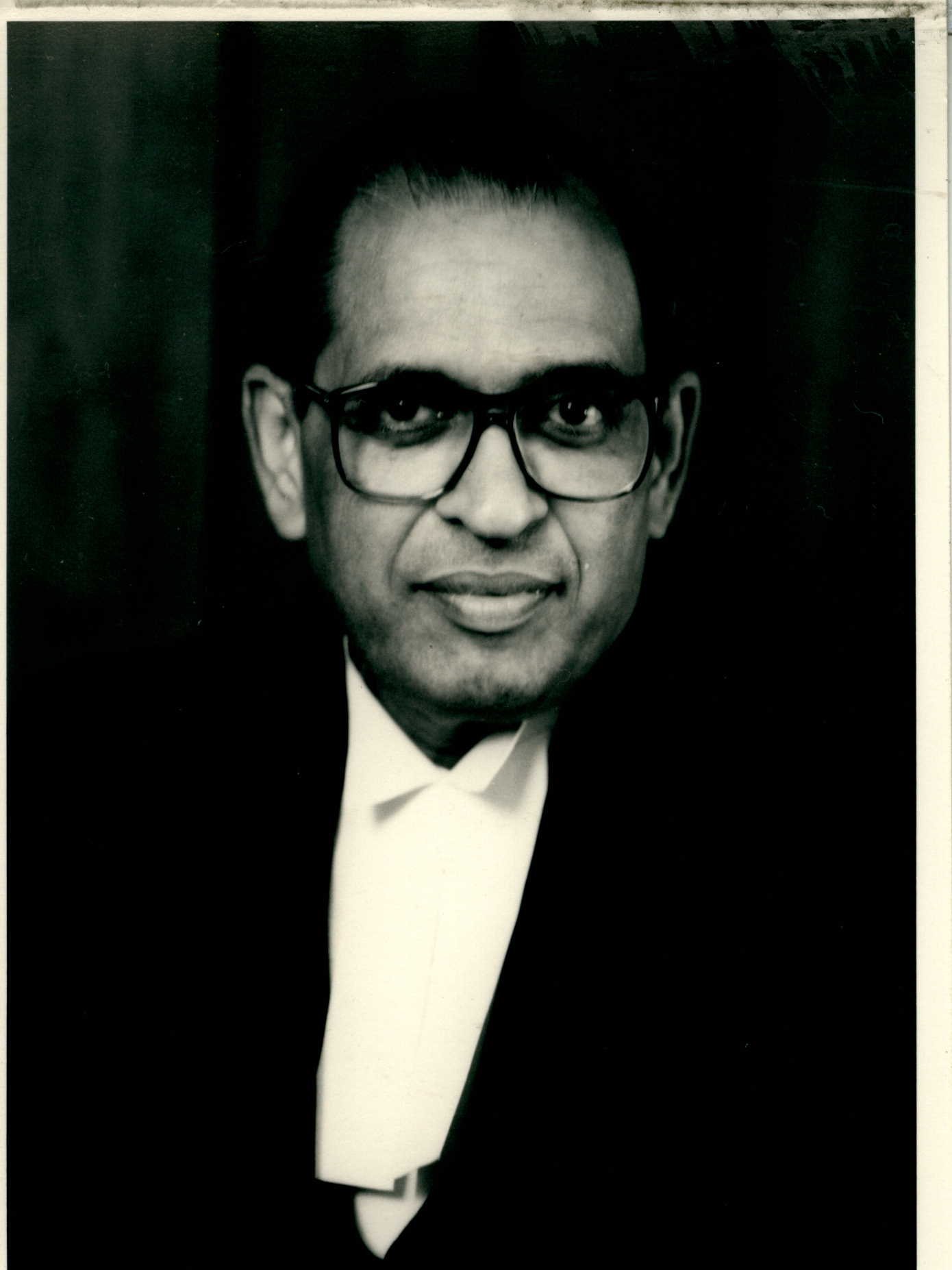
Legal Notes
Add a Note....