
No Acts & Articles mentioned in this case
* HON'BLE SRI JUSTICE D.V.S.S.SOMAYAJULU
AND
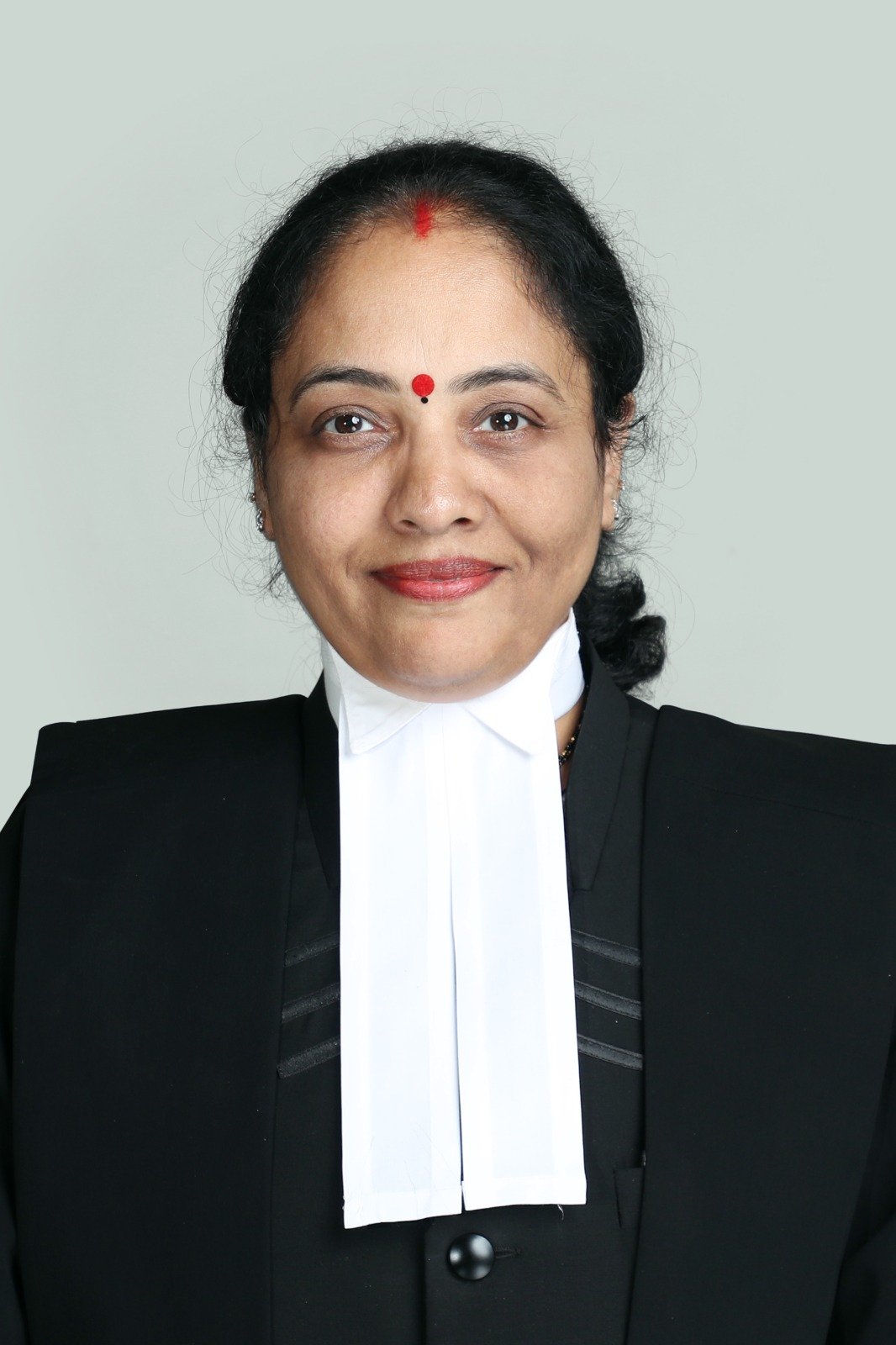
HON'BLE SMT. JUSTICE LALITHA KANNEGANTI
+ WRIT PETITION No.8185 of 2020
% 22.05.2020
# A.B. Venkateswara Rao, IPS (AP-1989)
S/o Late Balaswamy, Aged: 55 Years,
R/0 303, Krishna Meadows, LIC Colony,
Vijayawada, Andhra Pradesh.
… Petitioner.
Vs.
$ The State of Andhra Pradesh,
Rep., by its Chief Secretary to the Government,
Secretariat, Amaravthi, Vijayawada,
Andhra Pradesh and two others.
… Respondents
! Counsel for the petitioner : Sri B.Adinarayana Rao, Senior
Counsel appeared on behalf of Sri
Madhava Rao Nalluri, counsel for
petitioner.
! Counsel for the Respondent No.1&2 : Advocate General
! Counsel for the Respondent No.3 : Smt. M. Indrani
< Gist:
> Head Note:
? Cases referred:
1) (1994) 4 SCC 126
2) (2013) 16 SCC 147
3) (2015) 7 SCC 291
4) (2018) 17 SCC 677
5) 2019 SCC Online SC 1549
6) (2008) 16 SCC 14
7) (2003) 6 SCC 675
8) AIR 1966 SC 81
9) 2015 (6) ALD 694
10) 2014 (1) SCC 524
11) AIR 1964 SC 477
12) 2019 (13) SCC 558
13) AIR 1994 SC 2296
14) (1969) 3 SCC 864
15) AIR 2014 SC 2258
16) (2016) 4 ALD 666
17) (1971) 1 SCC 734
18) (1993) 2 SCC 327
19) (1980) 2 SCC 471
20) (1994) 2 SCC 617
21) (2001) 1 ALD 229
22) (2004) 3 SCC 75
23) (1961) 1 SCC 325
24) 1966 Suppl SCR 311
2
25) (1977) 1 SCC 131
26) (1978) 1 SCC 405
27) (2004) 4 SCC 714
28) 2007 (4) ALD 707
29) (2013) 4 SCC 301
3
HON'BLE SRI JUSTICE D.V.S.S.SOMAYAJULU
AND
HON'BLE SMT. JUSTICE LALITHA KANNEGANTI
WRIT PETITION No.8185 of 2020
ORDER: (per Hon’ble Sri Justice D.V.S.S.Somayajulu)
This writ petition is filed by the present petitioner seeking
the following reliefs:
“..to issue an appropriate Writ Order or
Direction more particularly one in the nature of
(i) writ of Certiorari calling for the records
relating to OA.No. 020/0149/2020 on the
file of the Central Administrative Tribunal,
Hyderabad Bench, Hyderabad and quash
the order dated 17.03.2020 made therein,
(ii) to issue a Writ of Mandamus declaring
G.O.Ms.No.18 General Administration
(SC.D) Department dated 08.02.2020
issued by the 1st respondent keeping the
petitioner under suspension under Rule 3
(1) of the India Service (D & A) Rules, 1969
as illegal arbitrary and in violation of
Articles 14 and 16 of the Constitution of
India,
and
(iii) consequently direct the 1st respondent to
reinstate the petitioner into service with
all consequential benefits”
The petitioner before this Court is an IPS Officer, who is
working in the rank of Director General of Police. He was
suspended by the first respondent on certain grounds. Before
suspension, he was relieved of his duties as Director General
of ACB. He reported to the General Administration Department
4
on 31.05.2019. Since then, he was not given any posting for a
considerable period of time. Thereafter, he was suspended
from service on 08.02.2020. He questioned the said order of
suspension by filing OA.No.020/0149/2020 before the Central
Administrative Tribunal, Hyderabad.
The same was heard on merits and dismissed vide order dated
17.03.2020. Questioning the same, the present writ petition is
filed for the reliefs mentioned above.
This Court has heard Sri B.Adinarayana Rao, learned
Senior Counsel appeared for the petitioner. The learned
Advocate General appeared for the first and second
respondents. For the third respondent/Union of India,
Smt. M.Indrani, learned standing counsel appeared and
argued the matter.
Counter affidavit of the first respondent has been filed
along with the material papers. The third respondent’s counsel
supported the arguments of the learned Advocate General.
Petitioner’s case:
Sri B.Adinarayana Rao, learned senior counsel for the
petitioner, pointed out the sequence of events that took place
between 30.05.2019 and 08.02.2020. After the new
Government for the State of Andhra Pradesh assumed Office,
the petitioner, who was serving as Director General, ACB was
transferred and not given any posting whatsoever from May,
2019 onwards. Thereafter, the learned senior counsel points
out that on 02.02.2020, the Director General of Police writes to
the Additional Director General, CID to investigate and submit
a report with regard to some alleged irregularities in a tender
5
relating to the procurement and finalization of certain
equipment. This investigation is entrusted by the Additional
Director General, CID to a Deputy Superintendent of Police,
who completed his enquiry within three days and sent a report
dated 06.02.2020. On 07.02.2020, the Director General of
Police sent the report of the enquiry to the State. On
08.02.2020, based on the report , the petitioner was
suspended. The learned senior counsel points out that the
sequence of events clearly reveal that the entire action is
vitiated with malice; was done with undue haste and is also not
according to the Rules. The petitioner is a member of All
India Services and as per the learned senior counsel, a close
reading of the All India Services (Conduct) Rules, 1968 (for
short ‘the 1968 Rules’) and the All India Services (Discipline
and Appeal) Rules, 1969 (for short ‘the 1969 Rules’) would
reveal that the action taken is not as per the Rules. The
learned senior counsel also argues that the petitioner was
working in the Intelligence Department, which is the user-
department of the equipment that was sought to be procured
by the Government of Andhra Pradesh. He points out that the
petitioner or the Intelligence Department is not the tender
approving Authority or the actual procuring agency. As per
him, the tender finalisation etc., was not done by the petitioner.
The procurement was to be done through the State Trading
Corporation, which is an independent Government of India
undertaking. He points out that at various stages, committees
comprising of Senior Officers were involved in the preparation
of the tenders and also the finalisation of the same. The
6
petitioner’s role in this was only to request for the procurement
of the equipment. He contends that as the head of the
Intelligence Department, in view of the of the acute threat
perception in the State of Andhra Pradesh from the Maoists etc,
the petitioner followed up the matter. He also contends that in
the preliminary report and in the latter suspension order etc.,
it is stated that the petitioner’s son is the local franchisee of
the successful bidder in the contract. Relying upon the
preliminary enquiry report he submits that the contract that
was given to the supplier through the STC was cancelled by the
DGP on 24.12.2018. The letter, in which the petitioner’s son
involvement was allegedly pointed out, is dated 22.03.2019,
which is long after the cancellation of the contract itself.
He argues that the petitioner’ son’s role is not at all established.
The learned senior counsel also points out that the contract
itself has been cancelled without any pecuniary loss to the
State. He contends that there was no irregularity whatsoever
and that no monetary loss was caused to the State.
Relying upon the provisions of the 1968 Rules,
the learned senior counsel argues that the definition of member
of a “family” is very clear and categorical. According to him, a
son or a daughter, who is wholly dependent on the Officer, is
alone considered as a member of the family.
He points out that there is virtually no material before the State
to come to a conclusion that the son, who was supposed to be
involved, is actually “dependent” on the petitioner. He points
out that the said individual is financially independent since a
number of years and is not at all dependent upon the
7
petitioner. Relying upon the provisions of the 1969 Rules, the
learned senior counsel points out that the suspension of a
member of All India Services in terms of Rule 3(1) of the 1968
Rules, can only be made if the “circumstances exists” and the
State is satisfied that it is “necessary and desirable” to suspend
an Officer. Therefore, the learned senior counsel argues that
an order of suspension should not be passed for the mere
asking and should be passed upon (a) the circumstances of the
case considering the gravity of the alleged offence ; (b)
satisfaction of the State; and (c) also the need or desirability to
place the Officer under suspension. None of these are present
in this case as per him. It is his contention that the Service
Rules provide for a very strict time frames/method for the
suspension and also for completing the entire enquiry etc. He
points out that till date, the charge sheet has not been served
although three months have elapsed since the petitioner was
suspended. The time bound manner, in which the suspension
is to be imposed and the enquiry is to be completed has not
been followed at all as per the learned senior counsel. He also
points out that although the Government of India, which gave
its consent for the suspension in terms of the prevalent Rules,
directed the State to serve the charge sheet by 07.04.2020, the
same is not done. The learned senior counsel relies upon the
following cases to argue that the order of suspension was not
passed in terms of Rules and after considering the material
available etc.,.
8
1. State of Orissa v. Bimal Kumar Mohanty
1,
2. Union of India (UOI) and Anr. v. Ashok Kumar
Aggarwal
2,
3. Ajay Kumar Choudhary v. Union of India (UOI) and
Ors.
3,
4. State of Tamil Nadu v. Promod Kumar, IPS and
another
4, and
5. P.Chidambaram v. Directorate of Enforcement
5
Relying upon the case law, he submits that even though
a suspension is not a punishment, still it has its own
implications and ramifications, particularly, for a high ranking
Officer. He points out that the State did not consider the facts
and circumstances of the case and on non-existent grounds it
had passed the order of suspension. The learned senior
counsel submits that neither the satisfaction that is necessary
for placing the Officer under suspension nor the necessity or
the desirability are actually spelt out or are clear from the
order. He points out from the facts that there is a clear non-
application of mind, particularly, with regard to the satisfaction
and the desirability. He also argues that there should be
“material available” with the State to come to a conclusion that
the circumstances exist to suspend an Officer. It is his
contention that the material should also be available for
recording the satisfaction and the desirability of continuing the
1
(1994) 4 SCC 126
2
(2013) 16 SCC 147
3
(2015) 7 SCC 291
4 (2018) 17 SCC 677
5
2019 SCC Online SC 1549
9
Officer under suspension. The learned senior counsel
contends that in the case on hand, there is no material to come
to any conclusion nor is the satisfaction present. Desirability
is also absent as per him. He also points that the satisfaction
that is necessary in the case of this nature is to be based upon
some objective standards and material and it cannot be purely
subjective. The learned senior counsel, in all fairness, submits
that he is not asking the Court to go into the merits and
demerits of the entire case, which he says the petitioner will
defend in the appropriate forum. According to him, because of
the
non-application of the mind, because of the failure of the State
to decide on the suspension as required under law and as the
action is vitiated, he is compelled to seek the remedy. He points
out that this Court can and must examine the issues raised
and decide whether there is materi al etc., to place the
petitioner under suspension. As per him, the Court has the
power to see the material to decide the issues raised. Coming
to the order passed by the Central Administrative Tribunal
also, the learned senior counsel points that the order suffers
from a lack of reasons. He points out that the Tribunal did not
examine whether there is a prima facie case or any material
available to come to the conclusion that it did. He also argues
that the petitioner’s role in the selection of the tenderer is not
visible from the available record. These facts, according to him,
were not considered by the Tribunal. He also draws the
attention of this Court to the order passed by the Tribunal,
more particularly, paras 28 to 30 thereof to argue that there
10
are no clear reasons, which would justify the passing of the
order. He also argues that the review committee formed to
extend the suspension also consists of Director General of
Police and the Chief Secretary who were also involved in the
order of suspension. He also contends that they have also not
applied their mind to the facts and circumstances of the case.
Relying on P.Chidambaram’s case (5 supra), learned
senior counsel submits that the attempt of the respondents to
present documents in a sealed cover should not be permitted
and that if any such documents are to be considered, he should
be given an opportunity to rebut the same. Lastly, relying on
the Bench decision of the High Court of Madras in WA.No.3161
of 2019, the learned senior counsel meets the submission of
the Advocate General that the prayers in the writ petition,
namely a Certiorari and a Mandamus are not maintainable. He
further relies upon Deepak Bajaj v. State of Maharashtra
6,
Surya Dev Rai v. Ram Chander Rai
7 and lastly, Dwarka
Nath v. Income Tax Officer, Special Circle, D -Ward,
Kanpur
8 to argue that the prayers in the writ petition are
correct.
Hence the learned Senior Counsel prays that the writ
petition should be allowed.
Case of the respondents:
In reply to this, the learned Advocate General argues with
his usual elan basing on the material available that for a case
6
(2008) 16 SCC 14
7
(2003) 6 SCC 675
8
AIR 1966 SC 81
11
of malice under law, to be established, there should be clear
and categorical pleadings of mala fides against specific named
individuals. He also points out that in the array of parties,
none of the Officers against whom allegations or mala fides are
made, are personally shown as eo nominee parties. He also
states that certiorari is not a first appeal and that this Court
cannot go into an analysis of the available material as if it is a
first appeal to come to a conclusion that the order is vitiated
etc. The sum total of the material that is available is enough
according to the learned Advocate General to justify the
findings of the Tribunal and also to justify the suspension.
The learned Advocate General submits that the norms in
the tender were tweaked, certain specifications were reduced
in order to benefit one particular firm and this was done; as
per him; at the petitioner’s behest. He also points out that this
is not a case of absolute lack of material.
The learned Advocate General argues that once there is some
material to come to a conclusion, the adequacy of the said
material should be judged in the duly constituted enquiry and
not by this Court. Even otherwise, the learned Advocate
General points out that even if the petitioner has any private
interest as per the amended Rules, he is guilty of misconduct.
The learned Advocate General also points out that even after
the cancellation of the contract, the petitioner actively pursued
the State to review the cancellation order. This by itself, as per
the learned Advocate General, is enough to show the personal
interest in the matter. He also points out that the rank and
reach of the petitioner are the factors, which justifies the
12
extension of the suspension. He argues that since the
petitioner is in a very high position in the department, he will
have the reach to influence the process of enquiry. Therefore,
he argues that keeping him out of Office and in suspension, is
a compelling need. The learned Advocate General also argues
that the Central Government/Union of India approved the
suspension and that review committee considered the need to
keep the petitioner under suspension. All of these would show
that there is application of mind and that the State took all the
stipulated legal steps. Relying upon Buddana Venkata
Murali Krishna v. State of A.P. and Ors.
9, Ratnagiri Gas
and Power Pvt. Ltd. v. RDS Projects Ltd. and Ors.
10, Syed
Yakoob v. K.S. Radhakrishnan and Ors.
11, Pratap Mehta
and Ors. v. Sunil Gupta and Ors.
12, State of Orissa v.
Bimal Kumar Mohanty
13, A.K.K.Nambiar v. Union of
India
14, Bhuvnesh Kumar Dwivedi v. Hindalco Industries
Ltd.,
15 , A.Krishan v. State of A.P.
16, Government of India,
Ministry of Home Affairs v. Taraknath Ghosh
17, S.A.Khan
v. State of Haryana
18, State of Punjab v. Gurdial Singh
19,
State of Haryana v. Hari Ram Yada v
20, Andhra Pradesh
State Forest Development Corporation Ltd., Employees
9
2015 (6) ALD 694
10
2014 (1) SCC 524
11
AIR 1964 SC 477
12
2019 (13) SCC 558
13
AIR 1994 SC 2296
14
(1969) 3 SCC 864
15
AIR 2014 SC 2258
16
(2016) 4 ALD 666
17
(1971) 1 SCC 734
18
(1993) 2 SCC 327
19
(1980) 2 SCC 471
20
(1994) 2 SCC 617
13
Union v. Government of Andhra Pradesh, Environment,
Forests, Science and Technology (Forest II) Department
21,
and Union of India v. Amrit Lal Manchanda
22, the learned
Advocate General argues that malice is not made out; that
sufficient material is available and that this Court should not
go into the merits or demerits of the matter to come to any
conclusion about the adequacy of the material. He points out
that as all the procedural safeguards were followed and the
enquiry is yet to be completed, this Court should not interfere
in the same at this stage. He points out that the Central
Administrative Tribunal applied itself to the issues on hand
and came to its own conclusions. The reasons in the order are
neither perverse nor irrational. He also points out that in the
entire writ petition, it is not averred that the order of the
Central Administrative Tribunal contains any errors, which are
apparent on the face of the record. Therefore, he submits that
the writ petition seeking a certiorari should be dismissed. He
points out that both a writ of certiorari and a writ of mandamus
as a consequent prayer does not also lie. It is his contention
that the petitioner should face the enquiry, which should be
allowed to reach its logical conclusions. In order to avoid the
comment about the sealed cover procedure , the learned
Advocate General sent his copies of the file to enable this Court
to examine the same if it wanted.
21
(2001) 1 ALD 229
22
(2004) 3 SCC 75
14
Therefore, the learned Advocate General supports the
order passed and prays that the writ petition should be
dismissed.
Rejoinder:
In the rejoinder, the learned senior counsel reiterates the
submissions and states that the writ petition is maintainable
and that if the order is passed contrary to the Rule position
and the settled law, this Court must interfere. He again
reiterates that the petitioner is entitled to an order as prayed
for.
Determination:
This Court after hearing both the learned counsel, (who
have taken great pains and put in a lot of effort) notices that
there is no strict dispute about the sequence of events as they
have occurred or about the facts. The primary caution sounded
by the learned Advocate General that this Court should not go
into the depth of the issue and decide whether the material
available is enough to impose the punishment or not is also a
submission that is weighing with this Court at this stage. The
adequacy of the material to impose a punishment or to
suspend an employee in the opinion of the learned Advocate
General is a factor that should be left to the Disciplinary
Authority alone. This Court is conscious of the fact that there
is thin line on which this Court is treading at this stage of the
hearing. The law is very well settled on the aspect of judicial
review of such actions and need not be repeated here. Equally
important to note is the case law of the manner in which such
decisions must be reviewed.
15
a) In Rohtas Industries v. S.D. Agarwal
23, while dealing
with the formation of an opinion and discussing The Barium
Chemicals Ltd. v. The Company Law Board
24, the Hon’ble
Supreme Court held as follows:
“The formation of the opinion is subjective but the
existence of the circumstances relevant to the inference is
a sine qua non”.
While approving the opinion of their Lordships Hidayatullah
and Shelat, the Supreme Court held that the existence of
circumstances in question is open to judicial review though the
opinion is not.
(b) In Narayan Govind Gavate v. State of Maharashtra
25,
the Hon’ble Supreme Court held that even a subjective opinion
must be based on some material to pass the tests Courts
impose.
(c) In Mohinder Singh Gill v. The Chief Election
Commissioner, New Delhi
26, the Supreme Court clearly held
that the order alone must be seen/examined and not the
subsequent affidavit or explanation.
(d) In State of U.P. and Ors. v. Johri Mal
27 at para 30, it
was held that evaluation of facts by the decision maker is
necessary to a limited extent to scrutinise the decision making
process.
23
(1961) 1 SCC 325
24
1966 Suppl SCR 311
25
(1977) 1 SCC 131
26
(1978) 1 SCC 405
27
(2004) 4 SCC 714
16
(e) In R. Ramachandra Rao (Died) v Syndicate Bank
28
it was held in para-37 that the Court can see if the condition
precedent for exercising jurisdiction is present or not.
(f) What is a prima facie view that is to be seen in such
cases is spelt out in Nirmala Jhala v State of Gujarat
29.
(g) Both the learned counsel have also relied upon the case
of Bimal Kumar Mohanty (1 supra). In para 11 of the said
judgment, it was mentioned as follows:
“11. It is thus settled law that normally when an
appointing authority or the disciplinary authority seeks to
suspend an employee, pending inquiry or contemplated
inquiry or pending investigation into grave charges of
misconduct or defalcation of funds or serious acts of
omission and commission, the order of suspension would
be passed after taking into consideration the gravity of the
misconduct sought to be inquired into or investigated and
the nature of the evidence placed before the appointing
authority and on application of the mind by disciplinary
authority. Appointing authority or disciplinary authority
should consider the above aspects and decide whether it
is expedient to keep an employee under suspension
pending aforesaid action. It would not be as an
administrative routine or an automatic order to suspend
an employee. It should be on consideration of the gravity
of the alleged misconduct or the nature of the allegations
inputted to the delinquent employee. The Court or the
Tribunal must consider each case on its own facts and no
general law could be laid down in that behalf. Suspension
is not a punishment but is only one of forbidding or
disabling an employee to discharge the duties of office or
post held by him. In other words it is to refrain him to avail
further opportunity to perpetrate the alleged misconduct
or to remove the impression among the members of service
that dereliction of duty would pay fruits and the offending
28
2007 (4) ALD 707
29
(2013) 4 SCC 301
17
employee could get away even pending enquiry without
any impediment or to prevent an opportunity to the
delinquent officer to scuttle the enquiry or investigation or
to win over the witnesses or the delinquent having had the
opportunity in office to impede the progress of the
investigation or enquiry etc. But as stated earlier, each
case must be considered depending on the nature of the
allegations, gravity of the situation and the indelible
impact it creates on the service for the continuance of the
delinquent employee in service pending enquiry or
contemplated enquiry or investigation. It would be another
thing if the action is actuated by mala fides, arbitrary or
for ulterior purpose. The suspension must be a step in aid
to the ultimate result of the investigation or enquiry.”
Similarly, in Ashok Kumar Aggarwal (2 supra),
at paras 21, 22, it was held as follows:
“21. The power of suspension should not be exercised in
an arbitrary manner and without any reasonable ground
or as vindictive misuse of power. Suspension should be
made only in a case where there is a strong prima facie
case against the delinquent employee and the allegations
involving moral turpitude, grave misconduct or
indiscipline or refusal to carry out the orders of superior
authority are there, or there is a strong prima facie case
against him, if proved, would ordinarily result in reduction
in rank, removal or dismissal from service. The authority
should also take into account all the available material as
to whether in a given case, it is advisable to allow the
delinquent to continue to perform his duties in the office
or his retention in office is likely to hamper or frustrate the
inquiry.
22. In view of the above, the law on the issue can be
summarised to the effect that suspension order can be
passed by the competent authority considering the gravity
of the alleged misconduct i.e. serious act of omission or
commission and the nature of evidence available. It
cannot be actuated by mala fide, arbitrariness, or for
18
ulterior purpose. Effect on public interest due to the
employee's continuation in office is also a relevant and
determining factor. The facts of each case have to be taken
into consideration as no formula of universal application
can be laid down in this regard. However, suspension
order should be passed only where there is a strong prima
facie case against the delinquent, and if the charges stand
proved, would ordinarily warrant imposition of major
punishment i.e. removal or dismissal from service, or
reduction in rank etc.”
Lastly, in the judgment reported in A.K.K.Nambiar’s case
(14 supra), which is relied upon by the learned Advocate
General, the Constitution Bench of the Hon’ble Supreme Court
of India held as follows:
“10. The appellant contended that the report of the
Central Bureau of Investigation was made mala fide. The
appellant appeared before the investigation authorities.
We are not concerned with the correctness and the
propriety of the report .We have only to examine whether
the order of suspension was warranted by the rule and
also whether it was an honest exercise of powers. The
order of suspension satisfied both the tests in the present
case.” Emphasis supplied.
Therefore, from a conspectus of the case law that is
mentioned above, it is clear that the Court must see whether
the order of suspension was warranted by the Rule and
whether it was an honest exercise of power. The subsequent
cases, which are mentioned above, state that the order should
be passed taking into consideration the gravity of the
misconduct, the nature of the evidence and ultimately,
the application of mind. The need and necessity for keeping
19
the Officer under suspension is also a factor that should be
kept in mind by the Officer who suspended the employee.
The material relied upon to come to a subjective conclusion
also can be examined by the Court. The order of suspension
and the material before the Authority can be examined to
decide whether the decision making process is an honest
exercise or not.
In the case on hand, the petitioner has come to Court
with a very specific plea in the writ petition, which is mentioned
in ground (1) of the grounds of challenge. Relying upon the
Rule, they state that the “circumstances satisfaction, necessity
or desirability” are not considered.
The gravity of the charges were also not considered. This is
spelt out in sub-para (1) of para 10 of the grounds in the writ.
Similarly, in sub-paras (2) and (3) of para 10, it is stated that
the Tribunal did not notice that the condition precedent for
keeping the Officer under suspension is also not considered.
The need for the satisfaction of the Officer being kept under
suspension is also not considered as per sub-para 10(3).
In sub-para 10(4), the sequence of events are described.
In sub-para 10 (e), it is mentioned that except one letter dated
22.03.2019, there is no tangible evidence to connect the
petitioner’s son to the tender. The definition of the member of
the family is also mentioned in this para to argue that the
petitioner’s son does not satisfy the definition. It is also
mentioned that there is no evidence to connect the petitioner
to the tender finalisation.
20
In this writ petition, a counter was filed, wherein the
stand of the State was spelt out. A rejoinder is also filed,
wherein it is reiterated by the petitioner that there is a
non-application of mind and that the law on this subject, which
prescribes the pre-conditions for placing the petitioner under
suspension were overlooked. It is also urged that the
petitioner’s son is not the CEO of the Indian franchisee and
that there is no evidence to support the case.
Order of the Central Administrative Tribunal:
At the outset this Court proposes to look in the order
passed by the Tribunal, which is impugned in the writ petition.
In the original application - OA.No.020/149/2020, which
was filed before the Tribunal, specific issues are raised as the
grounds for the relief. Paragraph 5(a) 5(i) and 5(j) of the original
application filed before the Tribunal raise specific grounds
about the suspension order that has been passed. The same
are denied in the counter filed before th e Central
Administrative Tribunal in paragraphs 10, 18 and 19.
A rejoinder is also filed, wherein in para 8, the grounds are
spelt out. It is again reiterated that the petitioner was not the
sole Officer involved, that he was merely the head of the
indenting wing and not solely responsible for the alleged
scaling down the requirements or the so-called tweaking of the
tender condition and that it is collective effort etc.
The lack of evidence about the role of son is again pointed out.
A reading of the impugned order shows that one of the
three main grounds urged is that the order of suspension
cannot be passed without the charge sheet being issued.
21
In the opinion of this Court, the Tribunal rightly went into the
Rule position and basing on the Rules came to a conclusion
that an Officer can be placed under suspension even if
disciplinary proceedings are pending or contemplated.
The other two grounds that were seriously argued are
about (a) the justification for the suspension (para 28 of the
impugned order); and (b) the satisfaction being based on
material (para 29 and 30).
After hearing the submissions of both the learned
counsel and considering the case law, this Court notices that
the Tribunal in the light of the issues raised should have
considered whether there was prima facie material available
with the respondents for coming to a conclusion about the need
for suspension. The process of decision making and the
material available should have been examined by the Tribunal.
The petitioner has gone on record stating that the investigation
that is carried out is not at all proper. He also pleaded that
there is no objective assessment of the material. He pointed
out that on the basis of the vague allegation,
he was suspended. It is also specifically averred that the
suspension should not have been ordered as there is no
possibility of the petitioner interfering with the enquiry. This
was denied in the written statement/counter that was filed.
The role of the son was also highlighted by the State which was
denied by the petitioner. In the light of those pleadings and
the documents that are filed before the Tribunal, its order has
to be examined to decide its intrinsic merit.
22
Para 28 of the impugned order deals with justification.
However, a reading of para 28 of the impugned order shows
that the Tribunal did not even discuss about the need or the
necessity for keeping the Officer under suspension was made
out. In the course of the submission, learned Advocate General
argued that as the petitioner was a senior Officer, he would
have access to the material and witnesses; that there is a
chance that he can influence the course of the enquiry.
However, a reading of the para 28, does not show that the
existence of such an apprehension was made out or noticed by
the Tribunal. Even the Tribunal did not also refer to any prima
facie averment in a document or elsewhere, which would
support the submission of the State that there is a likelihood
of the petitioner influencing the enquiry. The fact that the
petitioner is a senior IPS Officer cannot lead to an irresistible
conclusion that he would influence the future course of the
enquiry and/or hamper the same. There should be some link,
however tenuous, for this conclusion to be drawn. In the
opinion of this Court, the same is lacking in the order of the
Tribunal.
In paragraphs 29 and 30, the Tribunal also discussed
about the availability of material for placing the Officer under
suspension. The Tribunal pointed out that judicial review can
extend to verifying the existence of the material and not the
adequacy thereof. In para 30, the Tribunal said that there is
certain material pertaining the procurement of the equipment,
but whether any irregularity has taken place or not can only
be examined in the enquiry. Therefore ,
23
the Tribunal came to a conclusion that it cannot be said that
there is no material. This finding has to be examined in the
light of the case law that has been cited.
For a Court or a Tribunal to come to a conclusion that
the order of suspension is justified, there should be material
about (a) the gravity of the misconduct; (b) some evidence
placed before the Authority; and (c) an application of mind by
the Authority; and (d) necessity for placing the Officer under
suspension. Unless these factors are satisfied, in view of the
judgements of the Hon’ble Supreme Court of India cited above,
the Tribunal cannot come to a conclusion about the
correctness of the suspension order. The case law on the
subject which is mentioned above does not preclude or prohibit
a Court or Tribunal from looking into the material. Unless such
an exercise is carried out the Court or Tribunal cannot arrive
at a conclusion about the correctness of any impugned action
or order.
The Tribunal held that sufficiency of evidence is for the
Disciplinary Authority to decide, but in the opinion of this
Court, the Tribunal was bound to look into the existence of the
material and find a link; at least, prima facie between the
petitioner’s role/actions and the finalization of the tender etc.,
in favour of the “favoured” supplier which would lead to a
justification of the suspension. In fact, in para 21 of the Ashok
Kumar Aggarwal ’s (2 supra) case, it is stated that there
should be a strong prima facie case against the petitioner,
which would lead to punishment as detailed and also a
consideration of all the available material. This necessarily
24
entails some examination of the material to establish the
petitioner’s specific role. This aspect has not been discussed
by the Tribunal in paragraphs 29 and 30.
This Court also notices that the “reasons” for the
conclusion (which would enable this Court to come to a
conclusion whether there was justifiable material) are lacking
in the impugned order. Reasons would indicate the connection
between the material and the conclusion.
The thought process of the Court will be in the reasons.
The failure to give reasons in the opinion of this Court vitiates
the order of the Tribunal. The reasons would have enabled this
Court to appreciate the conclusions of the Tribunal.
Order of Suspension – G.O.Ms.No.18 dated
08.02.2020:
A prayer is also made in the writ petition to issue a writ
of Mandamus declaring the order of suspension as illegal and
arbitrary. In view of the detailed submissions made and to
come to a conclusion about the correctness of the order passed
by the Tribunal and for the purpose of the two prayers, this
Court is now proposing to go into the issue of the suspension
order dated 08.02.2020.
The impugned order dated 08.02.2020 under which the
petitioner was placed under suspension reads as follows:
“2. Now, therefore, in exercise of the powers
conferred under Rule 3 (1) of the All India Services
(Discipline and Appeal) Rules, 1969, the Government of
Andhra Pradesh hereby place the said Sri A.B.
Venkateswara Rao, IPS (A.P:1989), Director General of
Police, under suspension in public interest with immediate
effect, pending initiation of disciplinary proceedings.”
25
Prior to this, a memo dated 03.02.2020 bearing
R.C.No.237/H2/2017-20 was issued by the Director General
of Police requesting the Additional Director General, CID to
enquire into the matter thoroughly and submit a report.
The Additional Director General, CID, ordered a Deputy
Superintendent of Police to conduct the enquiry. A report of
the said preliminary enquiry dated 06.02.2020 is placed before
this Court. The submission of the learned counsel for the
petitioner is that this preliminary enquiry is just an eye wash,
issued with malice, that it does not consider the rule position,
does not record the satisfaction required or the facts and
circumstances of the case. On the other hand, the learned
Advocate General submits that since this is a preliminary
enquiry, it can only have prima facie conclusions and that after
the collection of the evidence and other material, the final
enquiry will be conducted.
While appreciating the submissions made, this Court
which is bound by the case law cited above will have to see if
the material that was available was enough for the Appointing
Authority to pass the order of suspension. In Bimal Kumar
Mohanty’s case (1 supra), the Hon’ble Supreme Court said
that the nature of the evidence placed before the Appointing
Authority, the gravity of the misconduct, application of mind
and the need or necessity to pass an order of suspension must
be clear. In Ashok Kumar Aggarwal’s case (2 supra), the
Hon’ble Supreme Court held that there should be a strong
prima facie case (against delinquent) leading to a major penalty
26
punishment. The Authority should take into consideration all
the available material and lastly, the Authority should decide
whether it is advisable to allow the delinquent to continue to
perform his duties or his retention in Office is likely to hamper
the enquiry. In A.K.K.Nambiar’s case (14 supra), the
Constitution Bench held that the suspension should be
warranted by the rules and it should be an honest exercise of
power.
A reading of the order of suspension states that the
Government has carefully examined the report of the Enquiry
Officer. Relying upon this and the subsequent confirmation of
the order of suspension by the Central Government as
warranted by the Rules, the learned Advocate General argued
that there is an application of mind. However, the submission
of the leaned Senior Counsel detailed above and the issues
raised in the writ merit a further examination of the facts and
submissions.
The preliminary report dated 06.02.2020 alone is being
considered at this stage as this is the basis for the impugned
suspension order.
Para 2 of the report shows that a process of procurement
was initiated in 2017-18 and demonstration was witnessed by
a team of Officers at the BSF Camp, New Delhi on 31.01.2017.
Thereafter, a team of Officers including the Director General of
Police and the petitioner visited Israel along with a technical
consultant in April, 2017 and came to a conclusion that the
equipment is useful. Later, in June, 2017, a proposal was
submitted to the Government to procure the equipment. The
27
Government and the Ministry of Human affairs approved the
same and the actual procurement was given to State Trading
Corporation. The Deputy General of Police constituted a
purchase committee (which according to the preliminary
report, did not consist of certain members). The tender was
floated twice, but due to lack of bidders and other reasons, the
same was cancelled. Thereafter, a third revised tender was
given for re-floating. As per this report certain remarks and
suggestions made by Senior Officers were overlooked and the
tender was pushed through hastily by altering the tender
conditions. Thereafter, four bids were received but three
bidders were disqualified.
The first conclusion reached in the enquiry report is that
three out of the four bids are merely supportive bids from
people “who do not appear to have adequate experience”. It is
also mentioned that as per the letter dated 22.03.2019, the son
of the petitioner is the local franchisee. Therefore, the first
conclusion reached is that the procurement of the finalisation
of the bid is not done properly.
In the second conclusion, bullet points are given which
are a cryptic reproduction of the paragraphs in the report. In
the ultimate conclusion, it is said that no technical person or
user was included in the purchase committee or the technical
committee. Lastly, it is concluded that the petitioner’s son was
a representative of the successful bidder. Therefore, Rule 4(3)
(a) of the 1968 Rules was flouted as per the report.
It was ultimately concluded that the irregularities were wilfully
done for pecuniary gain by making payments to purchase the
28
equipment. Based on this, the Appointing Authority
suspended the petitioner.
As pointed out by the learned counsel appearing for the
petitioner, the 1968 Rules, which are mentioned in the
preliminary report were not considered by the Appointing
Authority. Rule 4(3) (a) of the 1968 Rules is as follows:
“4(3)(a) No member of the Service shall in the discharge of
his official duties, deal with any matter relating to, or
award any contract in favour of a private undertaking NGO
or any other person, if any members of his family is
employed in that private undertaking or NGO under that
person or if he or any member of his family is interested in
such private undertaking or NGO or other person in any
other manner.”
The definition of a member of a family in Clause 2(b) is as
follows:
“2.(b) ‘member of family’, in relation to a member of the
service, includes— (i) the wife or husband as the case may
be of such member, whether residing with (such member)2
or not, but does not include a wife or husband separated
from the member of the Service by a decree or order of
competent court; (ii) the son or daughter or the step-son
or step-daughter of such member and wholly dependent
(on such member) but does not include a child or step-
child who is no longer in any way dependent (on such
member) or of whose custody the member of the Service
has been deprived by or under any law; ….”
Therefore, it is contended by the learned senior counsel
for the petitioner, that the son or daughter who was not
dependent on the petitioner cannot be considered as a member
of the family.
Apart from that, as he pointed out, the procurement
began in the year 2017, the work was entrusted to STC for
29
floating the tender, the then Director General of Police
constituted a purchase committee, the demonstrations were
witnessed on 31.01.2017; later, a team visited Israel in April,
2017 to conclude about the suitability of the equipment.
Thereafter, since the tender floated twice was not successful,
another tender was floated, scaling down the specifications etc.
However, he points out that the prima facie role of the petitioner
in tweaking/reducing or changing the conditions of the
contract/tender is not mentioned. This is apparent from the
report. Even otherwise, as can be seen from the report, he
points out it is merely said that three out of the four bidders
“do not appear” to have adequate experience and are suspected
to be involved for the purpose of the tender only. The tender
was also cancelled as per the preliminary report itself on
24.12.2018. There is no mention about the monetary loss in
the preliminary report. Ultimately, the participation of the son
is highlighted without any clarity of the exact role played by
him. The learned senior counsel submits that the reasons for
the disqualification of three bidders, for the cancellation etc.,
are also not clearly mentioned.
The ultimate conclusions of the preliminary report are
that (a) the specifications, parameters were changed to suit
some vested interest and (b) the son of the petitioner gave a
demonstration of the equipment.
This Court in line with the judgments cited above has
examined the submissions made and the documents.
The gravity of the misconduct and the nature of evidence are
matters which should weigh with the Appointing Authority to
30
decide on the suspension. Similarly, there should be a strong
prima facie case at this stage to come to a conclusion that the
delinquent is likely to be imposed major penalty. If, the
available material before the Appointing Authority for passing
the order of suspension dated 08.02.2020 is examined,
it does not lead to a conclusion that the petitioner himself was
solely responsible for reducing the specifications, parameters,
payment conditions etc.,. The preliminary report does not
specify that the petitioner alone had an important role in the
reduction of the parameters, payment conditions etc. The
exact role of the son is not mentioned particularly as the earlier
visits of the Officers to Israel etc., are mentioned. The reasons
for the disqualification of the three bidders; their bids etc., are
not mentioned. The gravity of the offence, in the opinion of the
Court, is not clearly considered and a strong prima facie case
in line with the decision in Ajay Kumar Choudhary ’s case (3
supra) is not ex facie visible in the suspension order. Therefore
this Court opines that there is no material to justify the placing
of the petitioner under suspension. This Court also holds that
the “circumstances” and the “satisfaction” as needed under the
rule in question are not present.
Next point to be seen is about the continuation of the
suspension. The petitioner was initially suspended on
08.02.2020 as required under the Rules. The same was also
approved by the Government of India. Therefore, it was argued
that there is application of mind by the State.
This Court has noticed the case law on the subject and the
same was referred to more than once in this order already. The
31
need to keep an Officer under suspension and to continue his
suspension is necessary if there is a likelihood of the Officer
impeding the progress of the investigation or the enquiry. The
Authority should consider all the available material to come to
a conclusion that it would not be desirable to keep the
delinquent in Office, since he is likely to hamper or frustrate
the enquiry.
Therefore, apart from a strong prima facie case, there
should be satisfaction based on some material to come to a
conclusion that the Officer should likely to hamper or frustrate
the enquiry. This is what is mentioned as “necessity or
desirability” in the Rule. In the case on hand, this Court does
not find any whisper anywhere in the material before the
Authority that there is every likelihood of the petitioner
hampering the investigation or the enquiry. If the judgement of
the Hon’ble Supreme Court is taken into consideration,
it clearly says that the Authority should take into account all
the available material before reaching th e conclusion.
Therefore, in the opinion of this Court, there should be some
material to justify the finding that the Officer should be
kept/continued under suspension. The records of this case do
not disclose any such reasonable apprehension or likelihood,
which is based on some material.
The other question that remains is the role of the son in
the tender finalisation. Both the learned counsel have taken
great pains to draw the attention of this Court to the definition
of a family, conflict of interest rule etc. The learned senior
counsel appearing for the petitioner has argued that the
32
purchase of the equipment was mo oted in June 2017, that
various committees were constituted and that teams of Officers
have participated in the finalisation of the tender. A
Government of India undertaking called STC floated the tender.
The tender floated was cancelled twice and that ultimately, a
final tender was floated. Even the final tender committee dated
26.06.2018 was attended by a number of Office rs and not
merely the petitioner and that the son's alleged role is only
borne out by a letter dated 22.03.2019, which is long after the
cancellation of the tender dated 24.12.2018.
The first and foremost submission of the learned Senior
Counsel is that the son is independent of the father and will
not fit into the definition of a member of the family. He states
that this is asserted in the writ petition etc.,. Therefore,
learned Senior Counsel argued that the role of the son is
inconsequential. At this stage, this Court cannot go into this
aspect in detail, particularly as no material is available to show
the financial independence of the petitioner’s son. This Court
is only assessing the available material before the first
respondent-Authority for passing the suspension order.
As pointed out earlier, the Authority is bound to sift through
the available material to come to a conclusion that there is a
strong prima facie case available against the delinquent. If the
report that is placed before the Appointing Authority is
examined (the report of the preliminary enquiry of the Deputy
Superintendent of Police), it does not talk of the presence of the
son in the initial meetings, tender finalization, visits etc. Only
after discussing the third tender, it is mentioned that the son
33
of the petitioner is the local franchisee. The basis for this is a
letter dated 22.03.2019. In view of this, this Court has to
conclude that assuming that the son was involved as a local
franchisee, the link between the tender, the reduced tender
conditions etc., and the influence of the petitioner in these
aspects to favour his son’s firm are not prima facie spelt out in
the material before the Appointing Authority. While the
amended service Rules on which the learned Advocate General
relies upon show that if there is a private interest, the petitioner
was duty bound to disclose the same, still the fact remains that
the preliminary enquiry report states that the award of the
contract in which a member of the family is involved is a
misconduct. This is the only Rule relied upon in the
preliminary enquiry. Even otherwise the existence of a “private
interest” is a matter that is not borne out of the available
record. The role of the son at the earlier stages i.e., before
22.03.2019; his presence on 23 -3-2019 in a meeting
conducted by the MHA and its impact on the issue is still to be
investigated/determined. However, the available material as
on 08.02.2020 is not conclusive for forming an opinion of a
prima facie case particularly against the petitioner.
Both the learned counsel have drawn the attention of this
Court to the letter dated 22.03.2019, which is filed as a
material paper by the petitioner. This discloses the
role/presence of the son according to the respondents. This is
referred to in the preliminary report. This Court notices its
letter dated 22.03.2019 is after the cancellation of the tender
on 24.12.2018 by the Director General of Police. The link
34
between this meeting dated 27.02.2019 which was held in MHA
Delhi and the finalisation of the tender dated 05.10.2018 is not
visible prima facie. The cancellation of the tender dated
24.12.2018 is not in dispute. This is referred to in the
preliminary enquiry report. The letter dated 22.03.2019 given
by the Director of the Ministry of Home Affairs is also referred
to in the preliminary report dated 06.02.2020. The Appointing
Authority, in the opinion of this Court, should have examined
these two records in conjunction to come to a prima facie
conclusion about the role of the son. This was unfortunately
not done. The minutes dated 26.06.2018, which are
also referred to in the preliminary investigation report, were
also filed as a material paper. They show that a team of eight
(8) Police Officers and two representatives of the company
participated in the deliberations. Presentations were also
made. Some clarifications were also sought. Thereafter, the
committee recommended to the Inspector General of Police,
Intelligence and SIB to prepare revised tender conditions.
These aspects should have also been considered by the first
respondent-State in deciding the petitioner’s role.
Therefore, this Court is of the opinion that the Authority
before whom this preliminary enquiry report dated 06.02.2020
was placed did not consid er the material in its proper
perspective to come to a conclusion that the suspension is
justified.
The case law cited by the learned counsel on both sides
includes the case of Bimal Kumar Mohanty (1 supra), which
itself clearly said the nature of the evidence placed before the
35
Appointing Authority and the application of mind should be
considered while passing an order of suspension and also for
continuation of the suspension. In the opinion of this Court,
the Appointing Authority did not actually consider the material
in the proper perspective in order to come to a conclusion that
the petitioner can be kept under suspension. This also leads to
a conclusion about non-application of mind.
Learned Advocate General also relied upon letter dated
28.03.2019, which is filed by the petitioner to contend
vehemently that even after the cancellation of the tender, the
petitioner was still pursuing with the State and the Director
General of Police to award the tender to the firm in which his
son is interested. This letter dated 28.03.2019 is a material
paper that is filed by the petitioner. In this letter the last para
reads as follows:
“It is humbly submitted that the cancellation of the
Purchase Order may kindly be reviewed or at the least,
entire process may kindly be reinitiated immediately by
the Office of the Director General of Police, Andhra
Pradesh, to urgently procure the required items mentioned
in the cancelled Purchase Order, following procedures as
deemed fit.”
While this Court is of the opinion that this letter dated
28.03.2019 is not a part of the material that is considered in
the preliminary investigation and was not a letter that was
considered by the Authority in passing the impugned order,
still, in view of the fact that the learned Advocate General relied
upon this letter (which is pleaded in the counter filed as a
ground to show the petitioner’s interest), this Court answers
36
the submission by stating that a reading of the penultimate
paragraph shows that the petitioner want ed the State to
“procure the required items mentioned in the cancelled
purchase order following procedures as deemed fit”. It does
not lead to an irresistible conclusion at this stage that the
petitioner was still pursuing the old tender only. This issue is
however left open for the Disciplinary Authority to decide.
The learned Advocate General also relied upon the
amended Service Rules to contend that a person, who has a
“private interest” is duty bound to disclose the same. This
Court does not wish to enter further into this controversy of
conflict of interest since the State/Authority did not rely upon
this amended definition to place the petitioner under
suspension. Learned Advocate General also took great pains
to argue that malice is not established and that the allegations
of malice are often made easily without being proved. He also
pointed out on the basis of settled case law that in cases of
malice, the person/officer concerned should be added as eo
nominee party. Relying upon the cause title, the learned
Advocate General pointed out that none of the Officers were
added in-person nor is there the required standard of pleading
to prove malice. This Court agrees with the said submissions,
but this Court is of the opinion that on this ground the Writ
need not be dismissed. Apart from malice there are other
issues raised like the rule position, failure to consider the
material, failure to establish the petitioner’s role in reducing
the specifications etc.,. which merit consideration.
37
The Learned Advocate General also relied on two interim
reports which were proposed to be filed in a sealed cover. They
are referred to in the counter affidavit. This Court does not
wish to rely on the same for the conclusions. Since privilege is
not claimed and as they are not furnished to the other side,
relying on them is not called for more so in view of the fact that
subsequent events cannot be used to justify the suspension
order. The material available and the examination of the same,
in the opinion of this Court, is sufficient to arrive at the
conclusions.
Conclusions:
Rule 3 of the 1969 Rules , talks of suspension.
The factors, which are necessary for placing an Officer under
suspension are (a) the circumstances of the case, (b) the nature
of the charges, and (c) satisfaction, necessity and desirability.
This Court is reiterating that for an Officer to be placed
under suspension, by virtue of a plain language interpretation
of this case, the Authority should be satisfied basing upon the
circumstances of the case, the evidence collected till then and
the nature of the charges that the Officer should be placed
under suspension. Therefore, there should be some material
for the Appointing Authority to come to a conclusion about the
nature of the charges and the circumstances of the case. The
further satisfaction for keeping the Officer under suspension
and/or continuing him should also be based on some material.
While, at this stage, there is no necessity for clear or what
is called adequate proof, still in the opinion of this Court there
should be some material available. In fact , the Hon’ble
38
Supreme Court of India has said that there should be a strong
prima facie case against the delinquent. This, therefore, implies
that the satisfaction reached by the Authority for suspending
a delinquent or keeping him under suspension should be based
on some objective material and cannot purely be subjective.
The cases cited above including Bimal Kumar Mohanty and
Ashok Kumar Aggarwal (1 and 2 supra) lend support to this.
Even the Constitution Bench decision reported in
A.K.K.Nambiar’s case (14 supra) states that the order of
suspension should be (a) warranted by the Rule (b) and must
be an honest exercise of power. The Court can only come to a
conclusion about the honest exercise of power or of the
suspension being as per the Rule, when the material examined
by the Authority before suspending the Officer is seen by the
Court and not otherwise. As mentioned above, Rule 3 warrants
examination of the circumstances of the case, nature of
charges and/or the necessity or desirability of placing an
Officer under suspension. In the opinion of this Court, the
suspension order in this case does not meet the stipulation of
the Rule itself (Rule 4(3)(a) of the Conduct Rules 1969) nor does
it meet the tests that are prescribed/laid down by the Hon’ble
Supreme Court in the decided cases, particularly Bimal
Kumar Mohanty , Ashok Kumar Aggarwal and
A.K.K.Nambiar (1, 2 and 14 supra).
Hence, this Court is of the opinion that the Appointing
Authority-first respondent did not have adequate material by
the date of the order of suspension to come to a conclusion that
39
the petitioner himself was responsible for floating the tender,
for choosing the supplier, for making the changes in the tender
and/or that the son was instrumental in awarding the work or
that he played a big role in the changes. This Court is only
commenting about the material placed before the Appointing
Authority-first respondent for the suspension only for the
purpose of disposal of this Writ Petition. The Appointing
Authority did not also call for or examine records to record the
satisfaction of a prima facie case etc.,. The preliminary enquiry
report was the only document considered.
(b) This Court has already spelt out its conclusions with
regard to the findings of the Central Administrative Tribunal in
the order impugned. The justification for placing the Officer
under Suspension and/or continuing him in suspension are
not really discussed by the Tribunal.
The link however slender and/or tenuous between the
material and the conclusions should be established.
Otherwise, the dicta of the Hon’ble Supreme Court that the
Appointing Authority should find a strong prima facie case
would become meaningless. A strong prima facie case would
imply that there is some material available linking the
delinquent solely to the charges, particularly for the grounds
urged. The sole document available (dated 06.02.2020) before
the Appointing Authority, who passed the impugned order, did
not establish the same. The Central Administrative Tribunal,
in the opinion of this Court, did not consider the issue of prima
facie case as mandated in Ashok Kumar Aggarwal ’s case (2
supra). The Tribunal did not also consider the law as laid down
40
in Bimal Kumar Mohanty ’s case (1 supra) and look into the
nature of the evidence that is placed before the Appointing
Authority. The Tribunal also did not decide whether the
material was enough for an objective satisfaction, meaning an
application of mind by the Authority. These aspects should
have been considered by the Tribunal in the O.A. The same
were not done.
(c) The order of suspension is also not warranted by the
Rule, which as mentioned earlier talks of the circumstances of
the case, nature of the charges etc., and the satisfaction to be
reached. The conclusions of the first respondent-Appointing
Authority also are not based on adequate materials. Non-
application of mind is visible from the failure to consider the
materials in line with the settled law.
Therefore, this Court holds that the petitioner is entitled
to the prayers made.
The learned Advocate General raised an issue about the
prayers of a writ of Certiorari and a Mandamus being made
together. The case law cited by the learned counsel for the
petitioner in WA.No.3161 of 2019 of the Madras High Court
(M.Rajendran v. Govt of India), Ashok Kumar Aggarwal
(2 supra) and Surya Dev Rai (7 supra) are applicable to the
facts and circumstances of the case. The distinction between
the writ of Certiorari and the supervisory jurisdiction is also
slowly being obliterated. However, under Article 226 of the
Constitution of India, a person is entitled to seek a number of
reliefs. Article 226 of the Constitution of India itself uses the
words “for any other purpose” after describing the types of writs
41
for enforcement of fundamental rights, which clearly shows
that more than one writ can be prayed for.
A combination of prayers is also necessary in the present
situation. The facts and circumstances of this case would mean
that if the order in the O.A. is set aside, the petitioner would be
driven to a further round of litigation if Certiorari alone is
granted. Any order passed by this Court should not be an
empty formality. Courts exist to do justice between the parties
and not to drive the parties to multiple rounds of litigation. In
order to do complete justice between the parties, this Court is
of the opinion that in the facts and circumstances of the case,
after setting aside the order in the O.A., the petitioner should
not be driven to another round of litigation and therefore, an
order directing him to be reinstated in to service while
continuing with the enquiry is appropriate in the facts and
circumstances of the case.
However, it is made very clear that all the opinions that
are expressed in the order are for the purpose of disposal of the
writ petition only. The material before the Authority for passing
the order of suspension is essentially considered for reaching
the conclusions. This will not preclude or otherwise come in
the way of the respondents carrying out their own further
investigation as advised into the matter for the purpose of the
enquiry. This order will not come in the way of the Enquiry
Officer coming to his/her own independent conclusion in the
matter based on the material and the law, without being
influenced by this order or the opinions expressed.
42
A note of caution and a direction is also given to the
petitioner also not to in anyway interfere or hamper the process
of enquiry, investigation etc.,. He should maintain a very strict
distance from the investigation/enquiry and should not in any
way attempt to keep in touch with any of the witnesses
proposed to be introduced or come in the way of the
investigating/enquiry Officers. It is made clear that if there is
any infraction, the State is entitled to take appropriate action.
In view of the fact that the Service Rules provide for
timely completion of the enquiry, the respondents are directed
to strictly adhere to the time schedules fixed by the relevant
Rules and complete the enquiry in all respects in a time bound
manner.
This Court records its appreciation for the efforts
undertaken by the learned Senior Counsel Sri B.Adinarayana
Rao and the learned Advocate General Sri S. Sriram.
While allowing the Writ Petition, the following order is
passed: –
1. The order dated 17.03.2020 in OA.No.020/0149/2020 is
quashed.
2. The order dated 08.02.2020 in GO.Ms.No.18 GAD
issued by the first respondent keeping the petitioner under
suspension is held to be illegal, arbitrary and is set aside.
Consequently, the first respondent is directed to reinstate the
petitioner into service with all attendant/consequential
benefits, monetary and otherwise.
43
3. The respondents shall complete the enquiry against
the petitioner strictly as per the extant Rules in a time bound
manner.
There shall no order as to costs. As a sequel, the
miscellaneous applications, if any pending, shall stand closed.
__________________________
D.V.S.S.SOMAYAJULU, J
__________________________
LALITHA KANNEGANTI,J
Date:22.05.2020.
Note: LR Copy to be marked.
B/o
KLP

Legal Notes
Add a Note....