
As per case facts, Sanjeev Kumar Sharma filed an application before the Trial Court seeking direction for police to register an FIR against accused individuals, including Abhay Bahadur Singh and ...
2026:HHC:21234
IN THE HIGH COURT OF HIMACHAL PRADESH, SHIMLA
Cr. MP(M) No. 273 of 2026 and
Cr.MMO Nos. 823 & 1136 of 2025
Reserved on: 24.4.2026
Date of Decision: 3.6.2026.
Cr.MP(M) No. 273 of 2026
Sanjeev Kumar Sharma …. Petitioner
Versus
State of HP & ors. …. Respondents
Cr. MMO No. 823 of 2025
Abhay Bahadur Singh & anr. …. Petitioners
Versus
State of HP & anr. …. Respondents
Cr. MMO No. 1136 of 2025
Sangram Singh …. Petitioner
Versus
State of HP & ors. …. Respondents
2
2026:HHC:21234
Coram
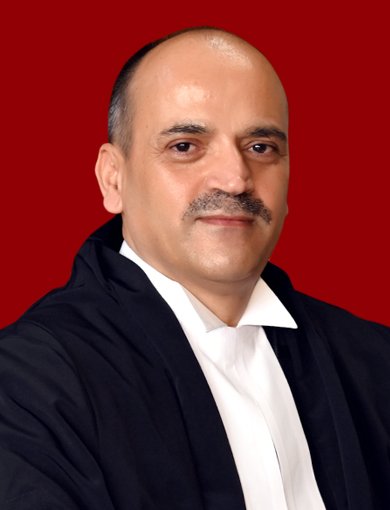
Hon’ble Mr Justice Rakesh Kainthla, Judge.
Whether approved for reporting?
1
No.
For the Petitioners :Mr Sudhir Thakur, Senior
Advocate, with Mr Karun Negi,
Advocate, in Cr.MP(M) No. 273 of
2026, Ms Ashima Mandla,
Advocate (through video
conferencing) and Ms Parul Negi,
Advocate (present in the Court) in
Cr.MMO No. 823 of 2025 and Mr
Karan Singh Kanwar, Advocate, in
Cr.MMO No. 1136 of 2025
For the Respondents/
State.
:Mr Ajit Sharma, Deputy Advocate
General, for respondent No. 1, State
in Cr.MP(M) No. 273 of 2026;
Cr.MMO No. 823 of 2025; and for
respondents No.1 to 3/State in
Cr.MMO No. 1136 of 2025
For the Respondents :Mr Sudhir Thakur, Senior
Advocate, with Mr Karun Negi,
Advocate, for respondent No.2 in
Cr.MMO No. 823 of 2025 and for
respondent No.4 in Cr.MMO No.
1136 of 2025.
Respondents No.3A, 4 and 6 proceeded against ex-parate.
[
Rakesh Kainthla, Judge
The present petitions have been filed against the
order dated 10.6.2025, passed by the learned Chief Judicial
Magistrate, Nahan, District Sirmour, H.P. (learned Trial Court) in
1
Whether reporters of Local Papers may be allowed to see the judgment? Yes.
3
2026:HHC:21234
an application filed under Section 156(3) of the Code of Criminal
Procedure (Cr.P.C.).
2. Since all the petitions have arisen out of the common
order, they are being taken up together for consideration.
3. Briefly stated, the facts giving rise to the present
petitions are that the applicant, Sanjiv Kumar Sharma, filed an
application before the learned Trial Court seeking a direction to
the Police of Police Station Kala Amb to register an FIR against
the accused. It was asserted that accused Nos. 1 and 2, along with
their mother, late Smt. Leela Kumari were the owners in
possession of the land measuring 232-14 bighas, comprised in
Khata/Khatuni No. 1min/1min, Khasra No.181/86, 182/86 and
470/85, situated at Mohal Ogli, Tehsil Nahan, District Sirmour,
H.P., as per the Jamabandi for the year 2000-2001. Accused No.2
and 3 inherited the estate of Leela Kumari based on the Will
executed by her. Accused No. 2 was acting as a General Power
Attorney of Smt. Leela Kumari and he executed various
agreements, receipts and sale deeds on her behalf. The accused
entered into an agreement to sell the land to the applicant on
29.11.2004 in the presence of Arun Kumar Singla. This agreement
4
2026:HHC:21234
was duly attested by Purshotam Singh Saini, Notary Public. The
accused handed over the possession of the entire land to the
applicant as per the agreement. The applicant also sold some
portion of the land to third parties who developed and set up the
industries. The applicant paid a total sale consideration of
₹1,49,66,250/- to the accused. The applicant also spent money
on the development of the land. He requested the accused to
execute the sale deed, and a sale deed of 126.16 bigha out of the
total land measuring 230-05 bigha was executed in favour of the
applicant. The accused promised to execute the sale deed of the
remaining portion of the land measuring 103-09 bigha. The
applicant asked the accused repeatedly to execute the sale deed,
but they put off the matter on one pretext or another. The
accused No.2 entered the land in February 2024 with many
persons and threatened the applicant and his labourers to leave
the land. The applicant thereafter requested accused Nos. 1 and 2
to execute the sale deed in his favour, but they put off the matter.
The applicant also filed a civil suit in the Court of Learned Civil
Judge, Nahan, which is pending. The accused belongs to the
ruling party. The applicant approached the Director General of
Police with the complaint, who forwarded it to Superintendent of
5
2026:HHC:21234
Police, Sirmour, H.P., for investigation. An enquiry was
conducted but no case was registered. Hence, the applicant filed
an application before the learned Chief Judicial Magistrate,
Nahan, H.P. (learned Trial Court) for taking action against the
accused as per the law.
4. Learned Trial Court held that mere pendency of the
civil suit is no ground for not initiating criminal proceedings.
Mere failure to execute the sale deed does not amount to cheating
unless there is an intention to defraud the other party from the
beginning. There is no allegation that any document was forged.
The allegations in the application disclosed the commission of
offences punishable under Section 329(3), 115(2), 351(2) and 352
of Bharatiya Nyaya Sanhita, 2023 (BNS). Hence, the application
was forwarded to the SHO for the registration of the FIR and the
proper investigation.
5. Being aggrieved by the order passed by the learned
Trial Court and the registration of the FIR, three separate
petitions have been filed.
6. I have heard Ms. Ashima Mandla, learned counsel for
the petitioners/accused Abhay Bahadur Singh and Ajay Bahadur
6
2026:HHC:21234
Singh, Mr. Karan Singh Kanwar, learned counsel for the
petitioner/accused Sangram Singh, Mr. Sudhir Thakur, learned
Senior Advocate, assisted by Mr. Karun Negi, learned counsel for
the applicant Sanjeev Kumar Sharma and Mr. Ajit Sharma,
learned Deputy Advocate General, for the respondent-State.
7. Ms Aashima Mandla, learned counsel for the
petitioners/accused Abhay Bahadur Singh and Ajay Bahadur
Singh, submitted that an FIR registered after 1.7.2024 would be
registered and investigated as per the provisions of BNSS. The
Magistrate must hear the police and conduct an enquiry before
passing an order as per Section 175(3) of Bharatiya Nagarik
Suraksha Sanhita, 2023 (BNSS). In the present case, no such
enquiry was conducted, and the learned Magistrate erred in
passing the order. An application under Section 156 (3) of the
CrPC is required to be accompanied by an affidavit that the
applicant had approached the police and the police had not taken
any action. The applicant has to approach the Station House
Officer of the area concerned, and approaching any other police
official is not a proper compliance. The application was filed after
an inordinate delay for which no explanation was provided. The
delay in reporting the matter to the police without a proper
7
2026:HHC:21234
explanation makes the prosecution's case highly suspect. The
dispute between the parties is regarding the execution of the sale
deed based on the agreement to sell, which is purely a civil
dispute. The FIR is being lodged to compel the accused to meet
the unlawful demands of the complainant. Hence, she prayed
that the petitions filed by the accused/petitioners be allowed and
the FIR be quashed. She relied upon the following judgments in
support of her submission: -
(i)Om Prakash Ambadar Vs. State of Maharashtra 2025 SCC
OnLine SC 238;
(ii)Ranjit Singh Bath Vs. Union Territory of Chandigarh, 2025
SCC OnLine 1479;
(iii)CBI Vs. R.R. Kishore (2023) 15 SCC 339;
(iv)Vijay Sharma Vs. State of Rajasthan, 2024 SCC OnLine Raj
2897;
(v)State of Andhra Pradesh Vs. M. Madhusudhan Rao (2008) 15
SCC 582;
(vi)Preeti Gupta Vs. State of Jharkhand (2010) 7 SCC 667;
(vii)Munshi Ram and Ors. Vs. Delhi Administration, 1967 SCC
OnLine SC 80;
(viii)V.Y. Jose Vs. State of Gujarat (2009) 3 SCC 78; and
(ix)State of Harayana and ors. Vs. Bhajan Lal and ors. 1992 Supp
(1) SCC 335
8
2026:HHC:21234
8. Mr. Karan Singh Kanwar, learned counsel for the
petitioner/accused Sangram Singh, adopted the submissions of
Ms. Aashima Mandala, and submitted that the FIR has been
lodged to compel the petitioners to execute the sale deed. The
Civil Court is seized of the matter, and recourse to criminal
proceedings is not justified. Hence, he prayed that the present
petition be allowed and the FIR be quashed against the
petitioners/accused.
9. Mr. Ajit Sharma, learned additional Advocate General
for the respondent/State, submitted that the police have only
registered the FIR and the investigation is continuing. The police
would submit a cancellation report in case no cognizable offence
is made out. The Court should not interfere with the
investigations. Therefore, he prayed that the present petition be
dismissed.
10. Mr Sudhir Thakur, learned Senior Advocate for the
applicant/respondent No.2, submitted that the applicant had
made a specific allegation of cheating, forgery, criminal
intimidation, intentional insult, criminal trespass and causing
hurt. These allegations are to be taken as correct at this stage. An
9
2026:HHC:21234
FIR cannot be quashed at the preliminary stage unless no case is
made out or some provision of law bars the registration of the
FIR. In the present case, no such circumstances have been
established. The Magistrate has passed a detailed order. The
Learned Magistrate had erred in holding that no offence of
cheating or forgery was made out. Mere pendency of the civil suit
is no bar to the continuation of the criminal proceedings.
Therefore, he prayed that the present petition be dismissed. He
relied upon the following judgments in support of his
submission: -
(i)Vipasa Vs. State of H.P. MANU/HP/0346/2022;
(ii)Sakiri Vasu Vs. State of U.P. & ors. MANU/SC/8179/2007;
(iii)Suresh Chand Jain Vs. State of Madhya Pradesh and ors.
MANU/SC/0014/2001;
(iv)Mohd. Yousuf Vs. Afaq Jahan & ors., MANU/SC/8888/2006;
(v)Varinder Singh Vs. Nirmala Devi & ors. MANU/HP/2891/2025;
(vi)Meenakshi Sharma Vs. State of H.P. & ors.
MANU/HP/1015/2021; and
11. I have given considerable thought to the submissions
made at the bar and have gone through the records carefully.
10
2026:HHC:21234
12. The law relating to quashing of criminal cases was
explained by the Hon’ble Supreme Court in B.N. John v. State of
U.P., 2025 SCC OnLine SC 7 as under: -
“7. As far as the quashing of criminal cases is concerned, it
is now more or less well settled as regards the principles to
be applied by the court. In this regard, one may refer to the
decision of this Court in State of Haryana v. Ch. Bhajan Lal,
1992 Supp (1) SCC 335, wherein this Court has summarised
some of the principles under which
FIR/complaints/criminal cases could be quashed in the
following words:
“102. In the backdrop of the interpretation of the
various relevant provisions of the Code under Chapter
XIV and of the principles of law enunciated by this
Court in a series of decisions relating to the exercise of
the extraordinary power under Article 226 or the
inherent powers under Section 482 of the Code which
we have extracted and reproduced above, we give the
following categories of cases by way of illustration
wherein such power could be exercised either to
prevent abuse of the process of any court or otherwise
to secure the ends of justice, though it may not be
possible to lay down any precise, clearly defined and
sufficiently channelised and inflexible guidelines or
rigid formulae and to give an exhaustive list of myriad
kinds of cases wherein such power should be exercised.
(1) Where the allegations made in the first
information report or the complaint, even if they are
taken at their face value and accepted in their
entirety, do not prima facie constitute any offence or
make out a case against the accused.
(2) Where the allegations in the first information
report and other materials, if any, accompanying
the FIR do not disclose a cognizable offence,
justifying an investigation by police officers
11
2026:HHC:21234
under Section 156(1) of the Code except under an
order of a Magistrate within the purview of
Section 155(2) of the Code.
(3) Where the uncontroverted allegations made
in the FIR or complaint and the evidence
collected in support of the same do not disclose
the commission of any offence and make out a
case against the accused.
(4) Where the allegations in the FIR do not
constitute a cognizable offence but constitute only a
non-cognizable offence, no investigation is
permitted by a police officer without an order of a
Magistrate as contemplated under Section 155(2) of
the Code.
(5) Where the allegations made in the FIR or
complaint are so absurd and inherently
improbable based on which no prudent person
can ever reach a just conclusion that there is
sufficient ground for proceeding against the
accused.
(6) Where there is an express legal bar engrafted in
any of the provisions of the Code or the concerned
Act (under which a criminal proceeding is instituted)
to the institution and continuance of the
proceedings, and/or where there is a specific
provision in the Code or the concerned Act, providing
efficacious redress for the grievance of the aggrieved
party.
(7) Where a criminal proceeding is manifestly
attended with mala fide and/or where the
proceeding is maliciously instituted with an
ulterior motive for wreaking vengeance on the
accused and with a view to spite him due to a
private and personal grudge.” (emphasis added)
8. Of the aforesaid criteria, clause no. (1), (4) and (6)
would be of relevance to us in this case.
12
2026:HHC:21234
In clause (1), it has been mentioned that where the
allegations made in the first information report or the
complaint, even if they are taken at their face value and
accepted in their entirety, do not prima facie constitute
any offence or make out a case against the accused, then
the FIR or the complaint can be quashed.
As per clause (4), where the allegations in the FIR do not
constitute a cognizable offence but constitute only a non-
cognizable offence, no investigation is permitted by a
police officer without an order dated by the Magistrate as
contemplated under Section 155 (2) of the CrPC, and in
such a situation, the FIR can be quashed.
Similarly, as provided under clause (6), if there is an
express legal bar engrafted in any of the provisions of the
CrPC or the concerned Act under which the criminal
proceedings are instituted, such proceedings can be
quashed.”
13. This position was reiterated in Ajay Malik v. State of
Uttarakhand, 2025 SCC OnLine SC 185, wherein it was observed:
“8. It is well established that a High Court, in exercising
its extraordinary powers under Section 482 of the CrPC,
may issue orders to prevent the abuse of court processes
or to secure the ends of justice. These inherent powers are
neither controlled nor limited by any other statutory
provision. However, given the broad and profound nature
of this authority, the High Court must exercise it
sparingly. The conditions for invoking such powers are
embedded within Section 482 of the CrPC itself, allowing
the High Court to act only in cases of clear abuse of
process or where intervention is essential to uphold the
ends of justice.
9. It is in this backdrop that this Court, over the course of
several decades, has laid down the principles and
guidelines that High Courts must follow before quashing
criminal proceedings at the threshold, thereby pre-
13
2026:HHC:21234
empting the Prosecution from building its case before the
Trial Court. The grounds for quashing, inter alia,
contemplate the following situations : (i) the criminal
complaint has been filed with mala fides; (ii) the FIR
represents an abuse of the legal process; (iii) no prima facie
offence is made out; (iv) the dispute is civil in nature; (v.)
the complaint contains vague and omnibus allegations;
and (vi) the parties are willing to settle and compound the
dispute amicably (State of Haryana v. Bhajan Lal, 1992 Supp
(1) SCC 335).
14. A similar view was taken in Rajendra Bihari Lal v. State
of U.P., 2025 SCC OnLine SC 2265, wherein it was observed:
“70. The aforesaid decisions of this Court make it clear
that where the High Court is satisfied that the process of
any court is being abused or likely to be abused or that the
ends of justice would not be secured, it is not only
empowered but also obligated under the law to exercise its
inherent powers. The provision does not confer any new
power on the High Court but rather saves the power which
the High Court already possesses, from before the
enactment of the legislation, by reason of its very
existence. In exercise of its power, it would be legitimate
for the High Court to quash any criminal proceedings if the
High Court finds that the initiation or continuation of it
may lead to abuse of process of court, and quashing of the
proceedings would serve the ends of justice.”
15. The present petitions are to be decided as per the
parameters laid down by the Hon’ble Supreme Court.
16. The informant/applicant/respondent No.2 specifically
asserted in para-7 of the application that the accused person
belongs to the ruling party of the State, and the applicant had an
14
2026:HHC:21234
apprehension that the accused persons would manage things in
their favour; hence, he approached the Director General of Police
and emailed the complaint to the Director General of Police. In
Ranjit Singh Bath (supra), the applicant had approached the
Inspector General of Police, Chandigarh, who marked his
complaint to the Economic Offences Wing of Chandigarh Police.
It was laid down by the Hon’ble Supreme Court that Section
154(1) requires that the information regarding the commission of
a cognizable offence has to be furnished to an officer in charge of
the Police Station. When the complaint was not made to the
officer in charge of the Police Station but to some other officer,
there is no compliance with Section 154(1), and it is not
permissible for him to approach the learned Magistrate under
Section 156(3) of the Cr.PC. It was observed:
7. The requirement of sub-Section (1) of Section 154 is that
information regarding the commission of a cognizable
offence has to be furnished to an officer Incharge of a
Police Station. In this case, obviously, the said compliance
was not made. It is stated that the Inspector General of
Police forwarded a complaint to the Economic Offences
Wing. Sub-Section (3) of Section 154 comes into picture
only when, after a complaint is submitted to the Officer
In-Charge of Police Station or information is provided to
the Officer In-Charge of Police Station regarding the
commission of a cognizable offence, the Officer In-Charge
refuses or neglects to register a First Information Report.
15
2026:HHC:21234
8. Sub-Sections (1) and (3) of Section 154 of the CrPC are
the two remedies available for setting the criminal law in
motion. Therefore, this Court held that before a
complainant chooses to adopt a remedy under Section
156(3) of the CrPC, he must exhaust his remedies under
sub-Sections (1) and (3) of Section 154 of the CrPC, and he
must make those averments in the complaint and produce
the documents in support. However, in this case, the
second respondent did not exhaust the remedies. In this
view of the matter, we find that both the learned
Magistrate and the High Court have completely ignored
the binding decision of this Court in the case of Priyanka
Srivastava (2015) 6 SCC 287.
9. We, therefore, quash and set aside both the impugned
orders and quash and set aside all the further steps taken
on the basis of the order dated 14
th
June, 2017, passed by
the learned Judicial Magistrate.
17. This judgment is binding upon this Court; therefore,
the order passed by the learned Magistrate and the FIR registered
based on the order passed by the learned Magistrate are liable to
be quashed on this short ground alone.
18. Since the order passed by the learned Magistrate and
the FIR are being quashed on the technical ground of non-
compliance with Section 154 of the Cr.PC and the applicant would
have an option of approaching the learned Magistrate again after
complying with the requirement of Section 154 of the Cr.PC as
per the judgment of Hon’ble Supreme Court in Ranjeet Singh Bath
(supra), therefore, it is not necessary to adjudge the other pleas
16
2026:HHC:21234
taken by the petitioners and urged by Ms Aashima Mandala,
learned counsel for the petitioners.
19. This Court is quashing the FIR and the order passed
by the learned Magistrate because of non-compliance with
Section 154 of the Cr.PC, therefore, the petition filed by the
applicant along with an application for condonation of delay
against the same order would become infructuous.
20. In view of the above, the Cr.MMO Nos. 823 of 2025
and 1136 of 2025 are allowed, and the order dated 10.6.2025,
passed by the learned Chief Judicial Magistrate, Nahan, District
Sirmour, H.P., in Cr.MA No. 136 of 2025 and FIR No. 97 of 2025,
dated 13.6.2025 for the commission of offences punishable under
Sections 447, 323, 504 and 506 of IPC, registered at Police
Station, Kala Amb, District Sirmour, H.P., are ordered to be
quashed. Cr.MP(M) No. 273 of 2026 filed by the applicant/
petitioner against this order has become infructuous and is
dismissed as such. The pending application(s), if any, also stand
disposed.
17
2026:HHC:21234
21. The observation made herein before shall remain
confined to the disposal of the instant petitions and will have no
bearing whatsoever on the merits of the case.
(Rakesh Kainthla)
Judge
3
rd
June, 2026
(Chander)

Legal Notes
Add a Note....