
As per case facts, the petitioners sought extension of the learned Sole Arbitrator's mandate in an arbitration case governed by the Gujarat Rules, 2021. The initial twelve-month period for the ...
No Acts & Articles mentioned in this case
C/ARBI.P/145/2025 CAV JUDGMENT DATED: 02/07/2026
Reserved On : 23/04/2026
Pronounced On : 02/07/2026
IN THE HIGH COURT OF GUJARAT AT AHMEDABAD
R/PETN. UNDER ARBITRATION ACT NO. 145 of 2025
With
CIVIL APPLICATION (FOR AMENDMENT) NO. 1 of 2025
In R/PETN. UNDER ARBITRATION ACT NO. 145 of 2025
With
R/PETN. UNDER ARBITRATION ACT NO. 304 of 2025
With
R/MISC. CIVIL APPLICATION NO. 773 of 2026
In
R/PETN. UNDER ARBITRATION ACT NO. 39 of 2025
FOR APPROVAL AND SIGNATURE:
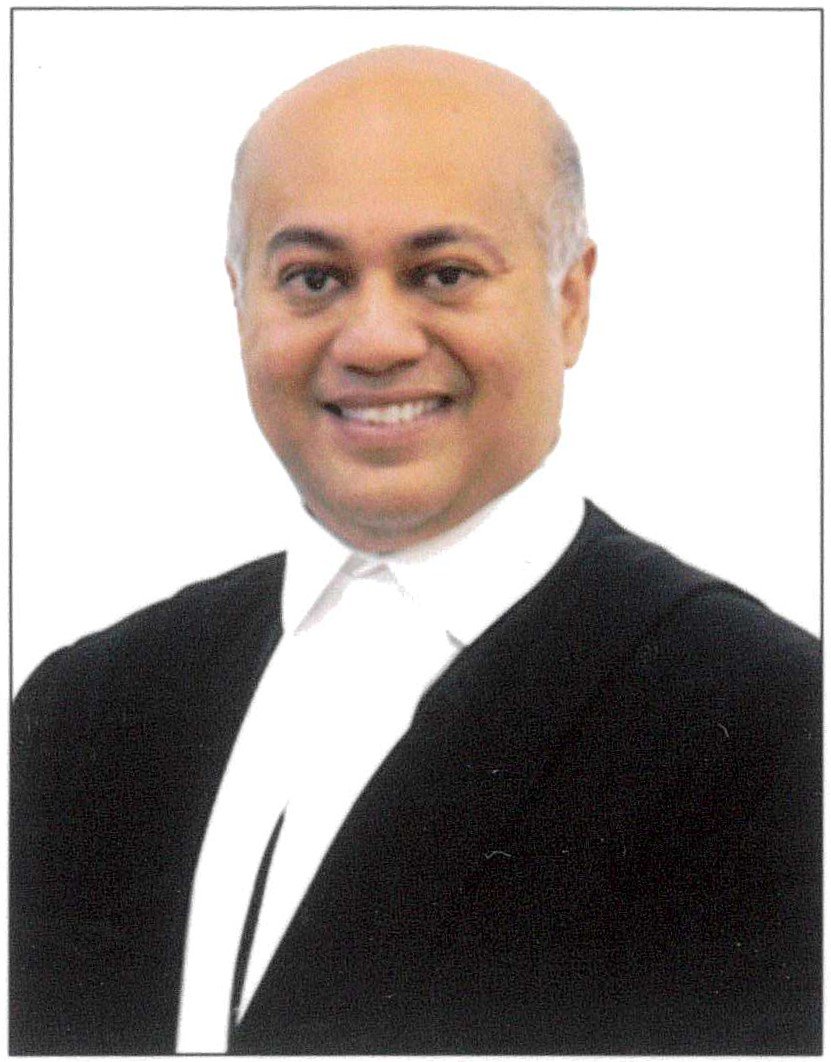
HONOURABLE MR. JUSTICE NIRAL R. MEHTA
==========================================================
Approved for Reporting Yes No
==========================================================
ABHISHEK SURESH MEHTA & ORS.
Versus
M/S PARTH DEVELOPERS & ORS.
==========================================================
Appearance:
MR RUTUL P DESAI(6498) for the Petitioner(s) No. 1,2,3
MAYANK K TRIVEDI(7906) for the Respondent(s) No. 6,7
MR KK TRIVEDI(934) for the Respondent(s) No. 6,7
MR MEHUL SHARAD SHAH(773) for the Respondent(s) No. 1,2,3,4,5
==========================================================
CORAM:HONOURABLE MR. JUSTICE NIRAL R. MEHTA
CAV JUDGMENT
1. By way of the present petitions filed
under Section 29A(4) and (5) of the Arbitration
and Conciliation Act, 1996 read with Rule 34.6 of
Page 1 of 41
C/ARBI.P/145/2025 CAV JUDGMENT DATED: 02/07/2026
the Arbitration Centre (Domestic and
International), High Court of Gujarat Rules,
2021, the petitioners have approached this Court
seeking extension of the mandate of the learned
Sole Arbitrator, Hon’ble Ms. Justice H.N. Devani
(Retd.), in Arbitration Case No. 6 of 2022. The
prayer is to extend the time for a further period
of six months from the expiry of the last
extended period, i.e. 20
th
December, 2025, and
thereafter for a further period of six months
from 20
th
June, 2026, in the interest of justice,
so as to enable the learned Sole Arbitrator to
pronounce and publish the arbitral award.
2. The brief facts necessary for deciding
the present petitions are as under:
2.1 The arbitration proceedings were
initiated pursuant to the order dated 07
th
January, 2022 passed by the High Court of Gujarat
appointing Hon’ble Ms.Justice H.N. Devani (Retd.)
as the learned Sole Arbitrator under the
Arbitration Centre (Domestic and International),
High Court of Gujarat Rules, 2021. The parties
were governed by the said Rules, and upon her
appointment, the learned Sole Arbitrator entered
upon the reference to adjudicate the disputes
between the parties.
Page 2 of 41
C/ARBI.P/145/2025 CAV JUDGMENT DATED: 02/07/2026
2.2 The claimant filed its Statement of
Claim on or about 28
th
February, 2022. Respondent
Nos.1, 2, 3 and 5 filed their Statement of
Defence along with Counter Claim on 12
th
May,
2022. Respondent No.4 filed its Statement of
Defence on 09
th
May, 2022, whereas respondent
Nos.6 and 7 filed their Statement of Defence and
Counter Claim on 13
th
May, 2022. The claimant
thereafter filed its rejoinder as well as its
Statement of Defence to the respective Counter
Claims on or about 20
th
June, 2022. Accordingly,
in terms of Rules 24 and 25 read with Rule 34.4
of the Rules, 2021, the pleadings stood completed
on 20
th
June, 2022, from which date the statutory
period of twelve months commenced.
2.3 Upon completion of pleadings and
settlement of the terms of reference, the parties
undertook the process of admission and denial of
documents and thereafter led oral evidence. In
all, nineteen witnesses were examined and cross-
examined before the learned Tribunal. The cross-
examination was extensive and ultimately
concluded on 22nd September, 2023. Since the
initial period of twelve months was due to
expire, the parties, by consent, filed a pursis
under Rule 34.5 of the Rules, 2021 extending the
mandate of the learned Tribunal by six months,
Page 3 of 41
C/ARBI.P/145/2025 CAV JUDGMENT DATED: 02/07/2026
and accordingly the period stood extended up to
20th December, 2023.
2.4 Thereafter, when the matter had reached
the stage of final hearing and the extended
period was due to expire on 20
th
December, 2023,
the applicants filed Arbitration Petition No.190
of 2023 seeking a further extension of six
months. By order dated 20th December, 2023, this
Court extended the mandate of the learned Sole
Arbitrator up to 20
th
June, 2024.
2.5 During the said extended period, the
learned Tribunal heard and concluded the oral
arguments of all the parties on 11
th
April, 2024.
Thereafter, the matter was reserved for
pronouncement of the arbitral award, while
granting one month’s time to the parties to file
their written submissions.
2.6 Having regard to the voluminous record
and the complex issues arising out of the
business transactions of the partnership firm and
the inter se disputes between the partners, the
learned Tribunal required additional time to
prepare and pronounce the arbitral award. Since
it was not likely that the award could be
pronounced before 20
th
June, 2024, the applicants
preferred IAP No.116 of 2024 seeking a further
Page 4 of 41
C/ARBI.P/145/2025 CAV JUDGMENT DATED: 02/07/2026
extension of six months.
2.7 As the extended period was thereafter to
expire on 20
th
December, 2024, the applicants
filed Arbitration Petition No.39 of 2025 seeking
a further extension of six months, i.e. upto 20
th
June, 2025. The said petition came to be allowed
by this Court by order dated 13
th
March, 2025.
2.8 Even as on the date of filing of the
present petitions, the arbitral award has not
been pronounced. It has been stated that the
learned Sole Arbitrator requires further time and
that the award is not likely to be pronounced
before 20
th
June, 2025. The applicants have,
therefore, filed the present petitions seeking
extension of the mandate for a further period of
six months from 20
th
June, 2025 to enable the
learned Sole Arbitrator to pronounce the arbitral
award.
3. Heard learned Senior Advocate Mr.Deven
Parikh with learned Advocate Mr.Rutul Desai for
the petitioners, Learned Advocate Mr.Mehul Sharad
Shah for respondent Nos.1 to 5 and Learned
Advocate Mr.K.K. Trivedi for respondent Nos.6 and
7.
4. At the outset, learned advocate Mr.
Page 5 of 41
C/ARBI.P/145/2025 CAV JUDGMENT DATED: 02/07/2026
Mehul Shah appearing for the respondent raised a
preliminary objection by placing reliance upon
the recent decision of the Apex Court in Jagdeep
Chowgule v. Sheela Chowgule reported in 2026 INSC
92. It was contended that, in view of the said
decision, the jurisdiction to extend the mandate
of an arbitral tribunal under Section 29A(4) of
the Arbitration and Conciliation Act, 1996 vests
only in the Court competent to entertain an
application under Section 34 challenging the
arbitral award.
4.1 Learned Advocate also relied on the
following judgments to buttress his submissions:
(i) Mohan Lal Fatehpuria v. M/s.Bharat
Textiles [SLP (C) No.13779 of 2025],
(ii) Budhia Swain v. Gopinath Deb [(1999)
4 SCC 396],
(iii) Rohan Builders (India) Pvt. Ltd. v.
Berger Paints India Ltd. [(2025) 10
SCC 802],
(iv) Chiranjilal Shrilal Goenka
(Deceased) through Lrs. v. Jasjit
Singh [(1993) 2 SCC 507],
(v) Nimet Resources Inc. v. Essar Steels
Ltd. [(2009) 17 SCC 313],
(vi) Chief Engineer (NH) PWD (Roads) v.
BSC & C and C JV [2024 SCC OnLine SC
1801],
Page 6 of 41
C/ARBI.P/145/2025 CAV JUDGMENT DATED: 02/07/2026
(vii) Petition under Arbitration Act
No.132 of 2024 decided by the High
Court of Gujarat vide order dated
22
nd
November, 2024,
(viii) Coimbatore Integrated Waste
Management Company Pvt. Ltd. v.
Coimbatore City Municipal
Corporation [2026 LawSuit (Mad) 83],
(ix) C B Ramkumar S/o. Late I B Menon:
Lalitha Ramkumar W/o C B Ramkumar v.
M/s.Himalaya Prime Assets Pvt. Ltd.
[2026 LawSuit (Kar) 223],
(x) Era International v. Aditya Birla
Global Trading India Pvt. Ltd. [2024
SCC OnLine Bom 835].
4.2 Learned Advocate Mr.Shah, on the basis
of the aforesaid, requested this Court not to
entertain the present petition.
5. Per contra, learned Senior Advocate
Mr.Deven Parikh appearing for the petitioner made
the following submissions:
5.1 Learned Senior Advocate submitted that
while appointing the learned Sole Arbitrator by
order dated 07
th
January, 2022 passed in
Arbitration Petition No.91 of 2020, this Court
specifically directed that the arbitration
proceedings shall be governed by the Arbitration
Centre (Domestic and International), High Court
of Gujarat Rules, 2021, and that both parties
Page 7 of 41
C/ARBI.P/145/2025 CAV JUDGMENT DATED: 02/07/2026
shall be bound by the said Rules. It was
submitted that the parties have all throughout
acted in accordance with the said Rules without
raising any objection. Therefore, it is no longer
open for the respondent to contend that the
petition for extension of the mandate under
Section 29A(4) cannot be entertained by this
Court by overlooking Rule 34.6 of the Rules,
2021. It was, therefore, urged that the
preliminary objection deserves to be rejected.
5.2 It was further submitted that all the
earlier applications seeking extension of the
mandate were filed before this Court under Rule
34.6 of the Rules, 2021 and no objection was ever
raised by the respondent. Having accepted the
applicability of Rule 34.6 on the earlier
occasions, the respondent cannot now contend that
the petitioners should approach the civil court
for extension of time.
5.3 Learned Senior Advocate submitted that
the Rules, 2021 continue to hold the field and
have not been challenged. The said Rules, having
statutory force, are binding on the parties. Rule
34.6 specifically empowers the High Court to
extend the mandate of the arbitral tribunal on an
application made by any party. Therefore, in
Page 8 of 41
C/ARBI.P/145/2025 CAV JUDGMENT DATED: 02/07/2026
terms of the statutory Rules, this Court alone
has the jurisdiction to extend the mandate and
the petitioners cannot be relegated to the civil
court under Section 29A(5) of the Act.
5.4 It was next submitted that party
autonomy is the cornerstone of arbitration law.
Parties are free to adopt, by agreement, the
rules that would govern the arbitral proceedings.
In the present case, having accepted the
applicability of the Rules, 2021 by their
conduct, the parties cannot now depart from the
said Rules.
5.5 It was submitted that by referring the
disputes to arbitration in accordance with the
Rules, 2021, this Court had referred the matter
to an institutional arbitration. In the absence
of any objection to such reference, the
respondents cannot now dispute the jurisdiction
of this Court to extend the mandate under Rule
34.6. It was further submitted that the decision
in Jagdeep Chowgule (supra) does not deal with
institutional arbitration where the governing
rules of the institution specifically confer such
power upon the High Court.
5.6 Learned Senior Advocate further
submitted that, in arbitration, parties are not
Page 9 of 41
C/ARBI.P/145/2025 CAV JUDGMENT DATED: 02/07/2026
only free to adopt the procedure governing the
proceedings but are also entitled to agree upon
the forum exercising supervisory jurisdiction.
Therefore, once the parties accepted the Rules,
2021, Rule 34.6 alone would govern the extension
of the mandate. It was contended that, in the
peculiar facts of the present case, where the
Hon’ble the Chief Justice referred the disputes
to the Arbitration Centre with a specific
direction that the Rules, 2021 would apply, any
extension of the mandate must necessarily be
sought under Rule 34.6 before this Court.
5.7 It was also submitted that the High
Court Arbitration Centre is entitled to provide,
under its Rules, that its proceedings shall be
supervised by the High Court alone and not by the
District Court. Consequently, Rule 34.6 confers
jurisdiction exclusively upon the High Court to
extend the mandate of the arbitral tribunal.
5.8 Lastly, it was submitted that the
Arbitration Centre has framed a complete set of
Rules governing institutional arbitration,
including Rule 34.6 relating to extension of the
mandate. Once the parties have chosen to be
governed by those Rules, the procedure prescribed
therein must be followed. According to the
Page 10 of 41
C/ARBI.P/145/2025 CAV JUDGMENT DATED: 02/07/2026
learned Senior Advocate, the parties having
agreed to the supervisory jurisdiction of the
High Court in matters relating to extension of
the mandate, such an arrangement is neither
inconsistent with nor contrary to the fundamental
policy of the Arbitration and Conciliation Act,
1996. It was, therefore, submitted that the
principle of party autonomy permits the parties
to adopt such procedural framework even in
matters concerning Section 29A of the Act.
5.9 By making above submissions, learned
Senior Advocate requested this Court to reject
the preliminary objection raised by the
respondents.
5.10 To substantiate the aforesaid
contentions, Learned Senior Advocate relied on
the following decisions:
(i) Reliance Industries Ltd. v. Union of
India [(2014) 7 SCC 603];
(ii) Amazon.com NV Investment Holdings
LLC v. Future Retail Ltd. [(2022) 1
SCC 209];
(iii) Hindustan Construction Company Ltd.
Through its Authorised Signatory
Yogesh Dalal v. Bihar Rajya Pul
Nirman Nigam Ltd. [2025 LawSuit (SC)
1542] and
Page 11 of 41
C/ARBI.P/145/2025 CAV JUDGMENT DATED: 02/07/2026
(iv) P.R. Shah Shares and Stock Brokers
Pvt. Ltd. v. B.H.H. Securities Pvt.
Ltd. [(2012) 1 SCC 594] .
6. Learned advocate Mr.Amit Thakkar adopted
the submissions advanced by learned Senior
Advocate Mr.Deven Parikh. However, in so far as
Miscellaneous Civil Application No.773 of 2026 in
Arbitration Petition No.39 of 2025 is concerned,
he questioned its maintainability by relying upon
the provisions of Order XLVII of the Code of
Civil Procedure, 1908.
6.1 It was submitted that the Explanation to
Order XLVII makes it abundantly clear that a
judgment cannot be reviewed merely because the
legal position on which it was based has
subsequently been reversed or modified by a
superior court in another case. According to the
learned advocate, the present Miscellaneous Civil
Application is founded entirely on the decision
of the Apex Court in Jagdeep Chowgule (supra) ,
rendered on 29th January, 2026.
6.2 It was further submitted that the orders
sought to be reviewed and recalled were passed on
13th March, 2025 and 21st March, 2025, much prior
to the pronouncement of the judgment in Jagdeep
Chowgule (supra) . Therefore, a subsequent
Page 12 of 41
C/ARBI.P/145/2025 CAV JUDGMENT DATED: 02/07/2026
declaration of law by the Apex Court cannot
furnish a ground to seek review of orders passed
before such declaration. It was, therefore,
contended that the review application is
misconceived and deserves to be dismissed.
7. In rejoinder, learned advocate Mr. Shah
made the following submissions:
7.1 It was submitted that no distinction can
be drawn between an institutional arbitration and
an ad hoc arbitration so far as the applicability
of the Arbitration and Conciliation Act, 1996 is
concerned. According to the learned advocate, the
provisions of the Act apply uniformly to both
forms of arbitration.
7.2 Learned advocate further submitted that
when Rule 34.6 of the Arbitration Centre
(Domestic and International), High Court of
Gujarat Rules, 2021 was framed, the jurisdiction
to extend the mandate under Sections 29A(4) and
29A(5) vested in the High Court, and therefore
the expression “High Court” came to be
incorporated in the said Rule. It was contended
that, in any case, the Rules of the Arbitration
Centre cannot override the provisions of the
Arbitration and Conciliation Act, 1996. According
to the learned advocate, in view of the recent
Page 13 of 41
C/ARBI.P/145/2025 CAV JUDGMENT DATED: 02/07/2026
decision of the Apex Court interpreting Section
29A(4), it has now been authoritatively held that
the expression “Court” refers to the court having
jurisdiction to entertain an application under
Section 34 of the Act. Consequently, to the
extent Rule 34.6 is inconsistent with the said
interpretation of Section 29A(4), it cannot be
given effect to.
7.3 On the aforesaid submissions, learned
advocate for the respondents prayed that the
preliminary objection be upheld.
CONTROVERSY BEFORE THE COURT AS FOLLOWS:
8. Having considered the submissions
advanced by the learned advocates for the
respective parties and upon perusal of the
material placed on record, the following
questions arise for determination:
(i) Whether, in the facts of the present
case, the jurisdiction to extend the
mandate of the learned Sole Arbitrator
is to be determined in accordance with
Section 29A(4) of the Arbitration and
Conciliation Act, 1996, as interpreted
by the Apex Court in Jagdeep Chowgule
(supra), or in accordance with Rule 34.6
Page 14 of 41
C/ARBI.P/145/2025 CAV JUDGMENT DATED: 02/07/2026
of the Arbitration Centre (Domestic and
International), High Court of Gujarat
Rules, 2021, which the parties had
agreed to be governed by?
(ii) Whether the principle of party autonomy
permits the parties, either by agreement
or by adopting institutional arbitration
rules, to confer jurisdiction upon the
High Court to entertain an application
for extension of the arbitral tribunal’s
mandate, notwithstanding the scheme of
Section 29A of the Arbitration and
Conciliation Act, 1996?
(iii) Whether Rule 34.6 of the Arbitration
Centre (Domestic and International),
High Court of Gujarat Rules, 2021 can
operate independently of, or prevail
over, the jurisdictional framework
contained in Section 29A of the
Arbitration and Conciliation Act, 1996?
9. So as to decide the aforesaid question,
in my view, provisions of Section 29A(4) deserves
consideration. For the sake of brevity, the same
is hereby reproduced hereunder:
Page 15 of 41
C/ARBI.P/145/2025 CAV JUDGMENT DATED: 02/07/2026
“29A. Time Limit for arbitral
award.-
(1)… … …
(2)… … …
(3)… … …
(4) If the award is not made within
the period specified in sub-section
(1) or the extended period specified
under sub-section (3), the mandate of
the arbitrator(s) shall terminate
unless the Court has, either prior to
or after the expiry of the period so
specified, extended the period:
Provided that while extending the
period under this sub-section, if the
Court finds that the proceedings have
been delayed for the reasons
attributable to the arbitral tribunal,
then, it may order reduction of fees
of arbitrator(s) by not exceeding five
per cent for each month of such delay:
Provided further that where an
application under sub-section (5) is
pending, the mandate of the arbitrator
shall continue till the disposal of
the said application:
Provided also that the arbitrator
shall be given an opportunity of being
heard before the fees is reduced.”
10. A plain reading of Section 29A of the
Arbitration and Conciliation Act, 1996 makes it
evident that, except in the case of an
international commercial arbitration, the
Page 16 of 41
C/ARBI.P/145/2025 CAV JUDGMENT DATED: 02/07/2026
arbitral tribunal is required to make the
arbitral award within a period of twelve months
from the date of completion of pleadings under
Section 23(4) of the Act. The time limit
prescribed by the legislature is mandatory in
nature and forms an integral part of the
statutory framework governing arbitral
proceedings.
Under Section 29A(3), the legislature
has consciously preserved the principle of party
autonomy by permitting the parties, by mutual
consent, to extend the mandate of the arbitral
tribunal for a further period not exceeding six
months. Thus, to that limited extent, the
continuation of the arbitral proceedings remains
within the control of the parties.
However, the statutory scheme undergoes
a marked change once the initial period of twelve
months and the consensual extension of six months
expire. Section 29A(4) expressly provides that,
upon expiry of the said period, the mandate of
the arbitral tribunal stands terminated unless
the Court extends the period. At that stage, the
legislature has consciously withdrawn the matter
from the domain of party autonomy and entrusted
it to judicial supervision. The continuation of
Page 17 of 41
C/ARBI.P/145/2025 CAV JUDGMENT DATED: 02/07/2026
the arbitral tribunal thereafter depends solely
upon an order of the Court passed on sufficient
cause being shown and on such terms and
conditions as it may deem fit. The Court is also
empowered, if the circumstances so warrant, to
substitute the arbitrator while granting such
extension.
The scheme of Section 29A, therefore,
reflects a careful legislative balance between
party autonomy and judicial oversight. While the
parties enjoy complete freedom to grant a one-
time extension of six months by mutual consent,
any further continuation of the arbitral tribunal
is placed exclusively under the control of the
Court. The provision is not merely procedural;
rather, it constitutes a self-contained statutory
mechanism regulating the time within which an
arbitral award is to be made and prescribing the
manner in which the mandate of the arbitral
tribunal may continue beyond the prescribed
period.
10.1 Section 29A thus imposes a statutory
obligation upon the arbitral tribunal to render
its award within a maximum period of eighteen
months, comprising the original period of twelve
months and the additional six months that may be
Page 18 of 41
C/ARBI.P/145/2025 CAV JUDGMENT DATED: 02/07/2026
granted by consent of the parties. Beyond this
period, the mandate can continue only upon an
order of the Court under Section 29A(4).
Viewed from this perspective, neither
the parties nor an arbitral institution can, by
agreement or by institutional rules, provide for
any mechanism permitting extension of the
tribunal’s mandate beyond the statutory period
without recourse to the Court. Significantly, the
Act does not carve out any exception excluding
institutional arbitrations seated in India from
the operation of Section 29A. Consequently,
irrespective of whether the arbitration is ad hoc
or institutional, any extension of the arbitral
tribunal’s mandate beyond the statutory period
must necessarily be sought from the “Court” as
understood under Section 29A read with the
definition contained in Section 2(1)(e) of the
Act.
11. At this stage, this Court cannot be
under any oblivion with regard to the recent
pronouncement of the Apex Court in the case of
Jagdeep Chowgule (supra) . It would be apt to
consider the relevant portion of the said
decision. The same is quoted as under:
“5. As we begin to examine the very
Page 19 of 41
C/ARBI.P/145/2025 CAV JUDGMENT DATED: 02/07/2026
same questions, ably canvassed before us by
Mr. Abhay Anil Anturkar and Mr. Amit Pai,
learned counsels for the appellant and the
respondents respectively, we would prefer to
reframe the question, which is as simple and
straight forward as follows:-
If an arbitral tribunal - appointed by
the High Court or by the parties
concerned – does not complete proceedings
within the required or extended time
limit, can an application to extend time
under Section 29A of the Act can be filed
before the High Court or the Civil Court?
6. We are of the opinion that there
was no need to split the questions into two,
one for a situation when the High Court
constitutes the arbitral tribunal under
Section 11(6) and the other, when the parties
themselves constitute it under Section 11(2).
Perhaps by asking the wrong questions, the
Division Bench arrived at wrong answers. It
is not just this Division Bench, in fact this
perceived duality in the appointment process
has given rise to divergent views of
different High Courts. Before we deal with
the divergent views of the High Court,
followed by our analysis, short and necessary
facts are as follows.
IV. Divergence in the opinion of the High
Courts on interpretation of “Court” under
Section 2(1)(e) of the Act
8. A large number of decisions of the High
Courts on interpretation of Section 29A of
the Act can be categorized into following two
streams.
A. Judgments taking the view that ‘Court’ in
Section 29A is Court as defined in Section
2(1)(e).
9. The first stream of High Court decisions
in Mormugao Port Trust v. Ganesh Benzoplast
Ltd. [WP No. 3 of 2020 (High Court of Bombay
at Goa)], M/s A'Xykno Capital Services
Private Ltd. V State of UP [2023 SCC OnLine
Page 20 of 41
C/ARBI.P/145/2025 CAV JUDGMENT DATED: 02/07/2026
AII 2991], and Dr. VV Subbarao v. Dr. Appa
Rao Mukkamala & Ors. [2024 SCC OnLine AP
1668], hold that the expression ‘Court’ in
Section 29A is the Court as defined under
Section 2(1)(e), irrespective of the event
that the arbitral tribunal was constituted by
the Supreme or High Courts under Section
11(6) or by consent of parties under Section
11(2) of the Act. They hold that, once an
arbitrator has been appointed through the
judicial process, the Courts become functus
officio and applications seeking extension of
mandate under Section 29A are to be filed
before Court as defined in Section 2(1)(e).
9.1 Further, as per this stream of decisions,
the text of the legislation is unambiguous.
Neither a High Court not having original
ordinary civil jurisdiction has been included
with regard to entertainability of an
application under Section 29A, nor a
Principal Civil Court has been excluded from
Section 2(1)(e) for purpose of Section 29A.
Some of these decisions clarify that, when
the legislature intended to delineate
jurisdictions, requisite provisions have duly
been made, as exemplified through Sections 47
and 57, whereby jurisdiction of Civil Courts
is expressly excluded. Further, Section 29A
stipulates no distinction between arbitrators
appointed with the consent of parties or by
Constitutional Courts under Section 11.
B. Other stream of judgments interpreting
Court in Section 29A in the ‘context’ to
disapply Section 2(1)(e).
10.The second stream of High Court
decisions in Nilesh Ramanbhai Patel v.
Bhanubhai Ramanbhai Patel [2018 SCC OnLine
Guj 5017], Cabra Instalaciones Y. Servicios
v. Maharashtra State Electricity Distribution
Co. Ltd. [2019 SCC OnLine Bom 1437], DDA v.
Tara Chand Sumit Construction Co. [2020 SCC
OnLine Del 2501], Amit Kumar Gupta v. Dipak
Prasad [2021 SCC OnLine Cal 2174], Magnus
Opus IT Consulting Pvt Ltd v. Artcad Systems
[2022 SCC OnLine Bom 2861], Indian Farmers
Fertilizers Cooperative Limited v. Manish
Page 21 of 41
C/ARBI.P/145/2025 CAV JUDGMENT DATED: 02/07/2026
Engineering Enterprises [2022 SCC OnLine All
150], Best Eastern Business House Pvt. Ltd.
v. Mina Pradhan [2025 SCC OnLine Cal 7997],
Ovington Finance Pvt Ltd. v. Bindiya Naga
[2023 SCC OnLine Del 8765], K.I.P.L.
Vistacore Infra Projects J.V. v. Municipal
Corporation of the city of Ichalkarnj [2024
SCC Online Bom 327], M/S Geo Miller Company
Private Limited v. UP Jal Nigam and Ors.
[2024 SCC OnLine All 1676], Best Eastern
Business House Pvt. Ltd. v. Mina Pradhan
[2025 SCC OnLine Cal 7997], and M/s. Premco
Rail Engineering Ltd. v. Indian Institute of
Technology, Indore [Arbitration Case No.88 of
2025 (High Court of Madhya Pradesh)] hold
that in cases where the appointment of
arbitrator is by the High Court under Section
11(6), applications for extension of time
under Section 29A cannot be made before Civil
Courts. The primary concern in these
decisions is, if the expression “Court” in
Section 2(1)(e) is interpreted to mean only
the Court as defined there, it will create a
jurisdictional anomaly, that is, the High
Court would be appointing the arbitrator and
the Civil Court, a Court inferior to it,
could be asked to extend the arbitrator’s
mandate and would also have the jurisdiction
to substitute the arbitrator appointed by the
High Court.
10.1 It is reasoned that as the
exclusive power of appointment of arbitrator
under Section 11 is of the Supreme Court or
the High Courts, the ancillary power of
extension or substitution can only be of
these Courts, or else a situation of
“conflict of power” between the Civil Court
and the High Court would arise in cases of
domestic arbitration and a similar conflict
would arise between the High Court and the
Supreme Court in cases of international
commercial arbitration.
10.2 To obviate the situation, these
lines of decisions adopt the interpretative
principle of giving “contextual” meaning to
the expression ‘Court’ in Section 29A by
Page 22 of 41
C/ARBI.P/145/2025 CAV JUDGMENT DATED: 02/07/2026
referring and relying on the phrase “in this
Part, unless the context otherwise requires”
in Section 2(1) of the Act. The High Courts,
for instance the High Court of Gujarat in
Nilesh Ramanbhai Patel (Supra) followed by
the Delhi High Court in DDA v. Tara Chand
(Supra) [2020 SCC OnLine Del 2501] were
troubled by the power of principal Civil
Court to substitute arbitrators appointed by
the High Court. To resolve this complexity,
they have taken the view that “Court” under
Section 29A for extension of the mandate of
the arbitral tribunal in the context of the
arbitral tribunal being constituted by the
High Court or the Supreme Court under Section
11(6), shall not be the “Court” as defined in
Section 2(1)(e), but the High Court or the
Supreme Court under Section 11(6).
12. The Arbitration and Conciliation
Act, 1996 is a complete code. While Chapter I
of the Act relates to definitions, limits of
judicial intervention and waiver. Chapter II
defines the scope of an arbitration
agreement, the obligation of a judicial
authority to refer the parties to the
agreement to arbitration and power of the
Court to provide interim measures. Chapter
III relates to the initiation and composition
of arbitral tribunal, as also the procedure
and remedies for challenging the
appointments. Chapter IV relates to
jurisdiction of arbitral tribunals, its
powers to examine its own competence and also
to provide interim measures. Chapter V deals
with the conduct of arbitral proceedings. The
process of making of award and termination of
arbitral proceedings is dealt with in Chapter
VI. Finally, Chapters VII, VIII and IX relate
to judicial remedies for challenging the
award, appeal, finality and enforcement.
True Text and Context of Section 29A
16. As we move away from the process of
“Appointment of Arbitrators” under Section 11
and arrive at the “Conduct of Arbitral
Proceedings” and “Making of Arbitral Award
Page 23 of 41
C/ARBI.P/145/2025 CAV JUDGMENT DATED: 02/07/2026
and Termination”, which procedures are
articulated in Chapters V and VI, we notice
the Parliament’s endeavour to introduce
principles of integrity and efficiency in
working of the alternative remedy by
prescribing time limits. This is an important
feature, introduced through Section 29A,
w.e.f. 23.10.2015. The Section in its
entirety has already been extracted for ready
reference, but a holistic reading of the
provision with other parts of the Act
mandates as follows;
(i) Sub-Section (1) of Section 29A mandates
that the award shall be made within 12
months of the completion of pleadings
before the Arbitral Tribunal. While sub-
Section (2) incentivises expeditious making
of the Award, proviso to sub-Section (4)
and sub-Section (8) authorises the Court to
impose penalty for delay in making the
award.
(ii) Sub-Section (3) enables parties, by
consent, to extend the period of 12 months
for making the award by a further period
not exceeding 6 months.
(iii) If the award is not made within the
stipulated period of 12 months or the
extended period of 6 months, the mandate of
the arbitrator(s) shall terminate.
(iv) This termination is subject to the
power of the Court to extend the period.
(v) The ‘Court’ under Section 29A shall be
the Civil Court of ordinary original
jurisdiction in a district and includes the
High Court in exercise of its original
civil jurisdiction under Section 2(1)(e),
and shall not be the High Court or the
Supreme Court under Section 11(6) of the
Act. Equally, Section 42 of the Act
relating to jurisdiction for application
will not apply to Section 11 of the Act.
(vi) There is no statutorily prescribed
time limit for the Court to exercise its
power under Section 29A(4) for extending
the period, except for its own restraint.
Page 24 of 41
C/ARBI.P/145/2025 CAV JUDGMENT DATED: 02/07/2026
The Court can exercise the power before or
after the expiry of the period under sub-
Sections 29A(1) or (3). Further, there is
no prescription of outer limit for
extending time for conclusion of arbitral
proceedings. Given this power, the Court
will exercise it with circumspection,
balancing the remedy with rights of other
stake holders.
(vii) The power of the Court to extend the
time under sub-Section (4) may be exercised
on an application by any of the parties.
Once such an application for extension of
time is pending, the mandate of the
arbitrator shall continue till the disposal
of such application under sub-Section (9).
The Court shall also endeavour to dispose
of such an application within 60 days.
(viii) Under Section 29A(6), while
exercising the power of extension, it shall
be open to the Court to substitute one or
all the arbitrators. This is a
discretionary power that the Court would
exercise in the facts and circumstances of
the case. Upon substitution, the
reconstituted tribunal shall be deemed to
be in continuation of the previously
appointed tribunal as per Section 29A(7)
and shall continue from the stage already
reached and on the basis of evidence
already on record. The newly appointed
arbitrators shall be deemed to have
received the evidence and materials.
(ix) Vesting of the power of substitution,
under Section 29A(6), is on the Court and
this Court is the Court as defined in
Section 2(1)(e). The text as well as the
context for identifying the Court in
Section 29A(6), as well as in 29A(4), is
the Court in Section 2(1)(e). The
expression ‘Court’ in other provisions must
be guided by the meaning given in Section
2(1)(e).
17. Before we examine the
interpretative choices of the Court to
decipher the true meaning of a word on the
basis of the context, it is necessary for us
to consider if perceptions such as “inferior
Page 25 of 41
C/ARBI.P/145/2025 CAV JUDGMENT DATED: 02/07/2026
Court”, “conflict of power”, “hierarchy” or
even a “jurisdictional anomaly”, can supply
“context” for deviating from a definition
supplied by the Parliament to an expression.
We have no hesitation in holding that
interpretation based on a perception of
status or hierarchy of Courts is opposed to
the fundamental conception of rule of law. It
is apt to refer to the famous statement of
Dicey that, ‘however high you may be, the law
is above you.’ Law, and law alone is the
source of power.
20. For the reasons stated above, we
are of the opinion that the conclusion on the
ground that there will be hierarchical
difficulties, conflict of power or
jurisdictional anomaly if a Civil Court
entertains application under Section 29A for
extension of time of an arbitral tribunal if
the High Court under Section 11(6) of the Act
has appointed the arbitrator(s) is untenable.
This approach is hereby rejected.
VIII. Interpretation of the expression
“Court” in Section 2(1)(e)
21. It is a settled principle of
statutory interpretation that a defined term
must ordinarily bear the meaning assigned to
it “unless the context otherwise requires”.
Further, in State of West Bengal v.
Associated Contractors [(2015) 1 SCC 32], a
three-judge bench held that no Court other
than the one defined in Section 2(1)(e) gets
qualified as ‘Court’ under Part I of the Act,
1996. It observed that,
“25. …. (a) Section 2(1)(e) contains an
exhaustive definition marking out only the
Principal Civil Court of Original
Jurisdiction in a district or a High Court
having original civil jurisdiction in the
State, and no other court as “court” for
the purpose of Part I of the Arbitration
Act, 1996.”
22. Similarly, in Nimet Resources Inc.
& Anr. v. Essar Steels Ltd. [(2009) 17 SCC
Page 26 of 41
C/ARBI.P/145/2025 CAV JUDGMENT DATED: 02/07/2026
313] where this Court considered Section 2(1)
(e) in the context of Section 14 observed as
under:
“8. Application in terms of sub-section (2) of
Section 14, thus, lies before a “court” within
the meaning of the 1996 Act.
9. It is only thus the “court”, within the
meaning of the provisions of the said Act which
can entertain such an application raised by the
parties herein and determine the dispute therein
on merit.
10. Unlike the 1940 Act, “court” has been defined
in Section 2(1)(e) to mean:
“2. (1)(e) ‘Court’ means the Principal
Civil Court of Original Jurisdiction in a
district, and includes the High Court in
exercise of its ordinary original civil
jurisdiction, having jurisdiction to decide
the questions forming the subjectmatter of
the arbitration if the same had been the
subjectmatter of a suit, but does not
include any civil court of a grade inferior
to such Principal Civil Court, or any Court
of Small Causes;”
11. As a “court” has been defined in the 1996 Act
itself, an application under Section 14(2) would
be maintainable only before the Principal Civil
Court which may include a High Court having
jurisdiction but not this Court .
12. This Court in passing its order dated 27-9-
2000, as noticed hereinbefore, did not and could
not retain any jurisdiction in itself as could be
done in suitable cases under the 1940 Act. It
even did not determine the validity or otherwise
of the arbitration agreement. It allowed the
parties to take recourse to their remedies before
the learned arbitrator. When the said order was
passed, this Court was considered to have only an
administrative power, but the same has since been
held to be a judicial power in SBP & Co. v. Patel
Engg. Ltd. [(2005) 8 SCC 618] The said
jurisdiction, however, does not extend to Section
14 of the Act.
13. The definition of “court” indisputably would
be subject to the context in which it is used. It
Page 27 of 41
C/ARBI.P/145/2025 CAV JUDGMENT DATED: 02/07/2026
may also include the appellate courts. Once the
legislature has defined a term in the
interpretation clause, it is not necessary for it
to use the same expression in other provisions of
the Act. It is well settled that meaning assigned
to a term as defined in the interpretation clause
unless the context otherwise requires should be
given the same meaning .
14. It is also well settled that in the absence
of any context indicating a contrary intention,
the same meaning would be attached to the word
used in the later as is given to them in the
earlier statute. It is trite that the words or
expression used in a statute before and after
amendment should be given the same meaning. It is
a settled law that when the legislature uses the
same words in a similar connection, it is to be
presumed that in the absence of any context
indicating a contrary intention, the same meaning
should attach to the words.
18. Jurisdiction under Section 11(6) of the 1996
Act is used for a different purpose. The Chief
Justice or his designate exercises a limited
jurisdiction. It is not as broad as sub-section
(4) of Section 20 of the 1940 Act. When an
arbitrator is nominated under the 1996 Act, the
court does not retain any jurisdiction with it.
It becomes functus officio subject of course to
exercise of jurisdiction in terms of
constitutional provisions or the Supreme Court
Rules.”
(emphasis supplied)
23. Nimet Resources (Supra) clarifies
two propositions of enduring relevance.
First, that applications concerning conduct,
continuation, termination or substitution of
an arbitral mandate, whether under Section 14
or otherwise, are matters of curial
supervision and must be instituted before the
“Court” as statutorily defined. Second, that
the jurisdiction exercised under Section 11
is limited and exhausted upon the
constitution of the arbitral tribunal,
leading to the appointing Court becoming
functus officio thereafter. These principles
apply with equal force to Section 29A. The
extension of mandate or substitution of an
arbitrator under Section 29A does not partake
Page 28 of 41
C/ARBI.P/145/2025 CAV JUDGMENT DATED: 02/07/2026
the character of “appointment” under Section
11, but is a measure designed to ensure
timely conclusion of arbitration. Absence of
any contextual indicia to the contrary, the
expression “Court” in Section 29A must,
therefore, be accorded the meaning assigned
to it under Section 2(1)(e).
X Conclusion
27. In view of the above, we allow the
appeals, set aside the reference of the
Division Bench in Writ Petition No. 88 of
2024 dated 07.08.2024 and the subsequent
judgment and order of the Single Judge of the
High Court in Writ Petition No. 88 of 2024
dated 21.08.2024 and restore the judgment of
the Commercial Court in Civil Miscellaneous
Application No. 20/2023/A dated 02.01.2024.
Parties are at liberty to move the Commercial
Court for further extension under Section
29A(5) for exercising Court’s power under
Section 29A(4). The Court shall consider the
application, hear the parties and pass
appropriate orders.”
12. Having considered the rival submissions,
this Court now proceeds to examine the
contentions advanced on behalf of the
petitioners.
12.1 The principal contention of the
petitioners is founded upon Rule 34.6 of the
Arbitration Centre (Domestic and International),
High Court of Gujarat Rules, 2021, which provides
that an application for extension of the mandate
of the arbitral tribunal shall lie before the
High Court. It is true that the reference to
Page 29 of 41
C/ARBI.P/145/2025 CAV JUDGMENT DATED: 02/07/2026
arbitration in the present case was made in
accordance with the said Rules and the parties
had agreed to be governed by them. However, that
by itself cannot conclude the issue.
Rule 34.6 was framed in the year 2021
when the legal position regarding Section 29A of
the Arbitration and Conciliation Act, 1996 had
not been authoritatively settled. Subsequently,
the Apex Court, in Jagdeep Chowgule (supra) , has
interpreted Section 29A in conjunction with
Section 2(1)(e) of the Act and has categorically
held that an application for extension of the
mandate must be presented before the Court
competent to entertain a challenge under Section
34 of the Act. Once the statutory provision has
been authoritatively interpreted by the Apex
Court, Rule 34.6 must necessarily yield to such
interpretation. The Rule, therefore, cannot be
applied in disregard of Section 29A as
interpreted by the Apex Court.
12.2 Equally untenable is the contention
that, since earlier applications for extension
were entertained by this Court under Rule 34.6
without objection, the respondents are now
precluded from raising the issue of jurisdiction.
All the earlier orders extending the mandate were
Page 30 of 41
C/ARBI.P/145/2025 CAV JUDGMENT DATED: 02/07/2026
passed prior to the pronouncement of the decision
in Jagdeep Chowgule (supra) . Once the Apex Court
has declared the law, the same becomes binding on
all courts by virtue of Article 141 of the
Constitution. Article 144 further obliges all
civil and judicial authorities to act in aid of
the Supreme Court. Consequently, the
jurisdictional issue must now be examined in the
light of the law declared by the Apex Court,
irrespective of the course adopted in the earlier
proceedings.
12.3 The further submission that Rule 34.6
continues to operate as it has not been
challenged also does not merit acceptance. It is
well settled that subordinate legislation must
conform to the parent statute. If a rule is found
to be inconsistent with the provisions of the Act
or with the law declared by the Apex Court while
interpreting the Act, such inconsistency cannot
be ignored merely because the rule has not been
specifically challenged. The duty of the Court is
to harmoniously construe the Rules with the Act.
Therefore, Rule 34.6 must operate subject to
Section 29A and cannot be construed in a manner
inconsistent with the statutory scheme.
12.4 Much emphasis was placed on the
Page 31 of 41
C/ARBI.P/145/2025 CAV JUDGMENT DATED: 02/07/2026
principle of party autonomy, which undoubtedly
constitutes one of the foundational principles of
arbitration law. The Arbitration and Conciliation
Act, 1996 accords considerable freedom to parties
in matters relating to the arbitration agreement,
the number and appointment of arbitrators, the
procedure to be followed, the place and language
of arbitration and several other procedural
aspects. The legislative intent is to minimise
judicial intervention and facilitate efficient
resolution of disputes through arbitration.
However, party autonomy under the Act is
not absolute. It operates only in those areas
where the statute expressly permits the parties
to exercise their choice. Wherever the Act
prescribes a mandatory statutory procedure, party
autonomy necessarily gives way to the legislative
mandate.
Section 29A is one such provision. While
Section 29A(3) permits the parties, by mutual
consent, to extend the mandate of the arbitral
tribunal for a further period of six months,
Section 29A(4) mandates that any extension beyond
that period can be granted only by the Court.
Thus, the statute itself draws a clear
distinction between the sphere reserved for party
Page 32 of 41
C/ARBI.P/145/2025 CAV JUDGMENT DATED: 02/07/2026
autonomy and the sphere reserved for judicial
supervision. Once the statutory period together
with the consensual extension expires, the
continuation of the arbitral tribunal ceases to
be a matter of agreement between the parties and
becomes subject exclusively to the jurisdiction
of the Court.
In that view of the matter, party
autonomy cannot be stretched to permit the
parties, either by agreement or by adopting
institutional rules, to confer jurisdiction upon
a Court which the statute does not recognise.
Jurisdiction is conferred by law and not by
consent. Once the expression “Court” occurring in
Section 29A has been interpreted by the Apex
Court with reference to Section 2(1)(e) of the
Act, the parties cannot, by agreement, substitute
another forum for the one contemplated by the
statute.
12.5 Thus, principle of party autonomy in the
arbitration law, in my considered opinion, there
cannot be any cavil with regard to the said
proposition. Arbitration law and its object is to
minimize the supervisory role of courts,
providing speedy disposal of the dispute with
amicable, swift and co-efficient settlement with
Page 33 of 41
C/ARBI.P/145/2025 CAV JUDGMENT DATED: 02/07/2026
a formal award while ensuring that arbitration
proceedings are just, fair and effective. While
making arbitration proceedings speedy and
effective, legislature has also added pinch of
friendliness by extending certain flexibilities
to the parties to the agreement/ arbitration. The
parties to the arbitration are free to adopt the
procedure. At the same time, such autonomy is not
absolute in nature. The party autonomy operates
in area where the statute is permissive, but at
the same time, it is excluded where the
provisions are mandatory such as court’s
supervision under certain provisions of the Act.
On overall consideration of the Arbitration Act,
1996, party autonomy is permissive under Section
7 where party decides whether to arbitrate, scope
of dispute, etc. Meaning thereby, parties are
left open to have an agreement to submit to
themselves to arbitration proceedings. So far as
Sections 10 and 11 are concerned, parties are
left to their autonomy to choose number of
Arbitrators and procedure for appointment
thereof. Section 19 of the Arbitration Act would
allow the parties to have their own procedure
precisely, parties can decide their own mode of
recording of evidence, procedure for conducting
the proceedings etc. In view of provisions of
Section 20, parties are also left to decide seat
Page 34 of 41
C/ARBI.P/145/2025 CAV JUDGMENT DATED: 02/07/2026
and venue of arbitration. Once the seat of
arbitration is decided, applicability of curial
law of court’s jurisdiction would be determined.
Accordingly, once the place of arbitration is
decided under Section 20 and if place of
arbitration is situated in India, Indian law
shall be applicable being a mandatory position.
At this stage, it is required to be noted that in
the present case, seat of arbitration is within
the territory of India and thereby curial law of
procedure shall be applicable. As per Section 22,
parties are also free to agree upon the language
to be used in arbitration proceedings. Likewise,
Sections 29B and 31A are also reflects eminence
to party autonomy. Now, if the provision of
Section 29A is concerned, the same being
statutorily mandated, although limited autonomy
for extension of time of six months is granted to
the party, but the moment the mandate is expired;
Section 29A(4) becomes eminent and in that event,
only court can grant further extension and not
the party as per their claimed autonomy. When the
party autonomy is restricted for extension of
mandate, it is not digestible that a party can
choose a court who can extend the mandate. Party
autonomy does not give any leverage to any of the
parties to the arbitration to have their own
choice of court upon which, by way of agreement,
Page 35 of 41
C/ARBI.P/145/2025 CAV JUDGMENT DATED: 02/07/2026
they can invest powers for extension of mandate
de hors the provisions of Section 29A(4) of the
Arbitration Act, 1996. Under the circumstances,
party autonomy recognized under the provisions of
the Arbitration Act, 1996 is not absolute in all
the provisions, but limited to the area which is
statutorily prescribed within the Act itself.
12.6 The contention that the Arbitration
Centre is entitled to provide, under its Rules,
that the High Court alone shall supervise
proceedings conducted under its aegis also cannot
be accepted. An arbitral institution is
undoubtedly competent to frame rules governing
the conduct of proceedings before it and to
regulate procedural matters for the convenience
of the parties. Nevertheless, such rules cannot
override or dilute the mandatory provisions of
the Arbitration and Conciliation Act, 1996.
Institutional rules supplement the statute; they
cannot supplant it.
Acceptance of the petitioners’
contention would, in effect, permit every
arbitral institution to determine for itself the
forum having jurisdiction under Section 29A,
thereby defeating the uniform statutory framework
enacted by Parliament. Such a consequence is
plainly impermissible.
Page 36 of 41
C/ARBI.P/145/2025 CAV JUDGMENT DATED: 02/07/2026
12.7 The submission that, once the parties
have adopted the Rules, 2021, every provision
thereof must necessarily be enforced also
deserves to be rejected. Ordinarily, parties are
bound by the procedural rules governing the
arbitration they have chosen. However, such
adherence is subject to one fundamental
limitation, namely that the institutional rules
must remain consistent with the provisions of the
Act. To the extent any provision of the Rules is
inconsistent with the Act, or with the law
declared by the Apex Court while interpreting the
Act, the statutory mandate must prevail.
Accordingly, after the decision in
Jagdeep Chowgule (supra) , Rule 34.6 cannot be
applied in a manner inconsistent with Section 29A
read with Section 2(1)(e) of the Arbitration and
Conciliation Act, 1996.
13. So far as the authorities relied upon by
the learned Senior Advocate for the petitioner
are concerned, this Court is of the view that
they turn on their own facts and the legal issues
arising therein are materially different from
those involved in the present case. The principal
submission of the petitioner is that Rule 34.6 of
the Arbitration Centre (Domestic and
Page 37 of 41
C/ARBI.P/145/2025 CAV JUDGMENT DATED: 02/07/2026
International), High Court of Gujarat Rules,
2021, being part of the curial law chosen by the
parties, must continue to govern the issue of
extension of the arbitral tribunal’s mandate.
There can be no dispute with the
proposition that parties are free to adopt the
curial law governing the conduct of the arbitral
proceedings. However, the issue that arises in
the present case is altogether different. The
question is whether a provision of the curial
law, which has subsequently become inconsistent
with the statutory scheme of the Arbitration and
Conciliation Act, 1996 as interpreted by the Apex
Court, can still be enforced merely because it
was adopted by the parties.
None of the decisions relied upon by the
learned Senior Advocate lays down that an
institutional rule or curial provision, once
adopted by the parties, would continue to prevail
even if it becomes inconsistent with the
provisions of the parent statute. In that view of
the matter, the authorities relied upon by the
petitioner are clearly distinguishable on facts
as well as on the legal issue involved and,
therefore, do not advance the petitioner’s case.
14. In view of the foregoing discussion, the
Page 38 of 41
C/ARBI.P/145/2025 CAV JUDGMENT DATED: 02/07/2026
preliminary objection raised on behalf of the
respondents deserves to be accepted and is
accordingly upheld.
15. Consequently, in view of the law
declared by the Apex Court in Jagdeep Chowgule v.
Sheela Chowgule, reported in 2026 INSC 92, this
Court lacks the jurisdiction to entertain the
present petitions under Section 29A(4) of the
Arbitration and Conciliation Act, 1996. The
petitions are, therefore, dismissed as not
maintainable, with liberty to the petitioners to
approach the competent Court having jurisdiction
under Section 29A(4) of the Act for appropriate
relief.
It is clarified that the period spent by
the petitioners in bona fide prosecuting the
present proceedings before this Court shall stand
excluded while computing limitation, if any, in
accordance with law.
16. In view of the dismissal of Arbitration
Petition No.145 of 2025, Civil Application No.1
of 2025 filed therein for amendment does not
survive for consideration and is accordingly
disposed of as having become infructuous.
17. In so far as Miscellaneous Civil
Page 39 of 41
C/ARBI.P/145/2025 CAV JUDGMENT DATED: 02/07/2026
Application No.773 of 2026 seeking review is
concerned, the same is founded upon the
subsequent decision of the Apex Court in Jagdeep
Chowgule (supra) . The orders sought to be
reviewed were admittedly passed prior to the
pronouncement of the said decision.
The Explanation to Order XLVII Rule 1 of
the Code of Civil Procedure, 1908 expressly
provides that a subsequent reversal or
modification of the legal position by a superior
Court in another case does not constitute a
ground for review of a judgment rendered earlier.
In view thereof, a subsequent declaration of law
by the Apex Court cannot furnish a ground to
review an order passed prior to such declaration.
Accordingly, Miscellaneous Civil
Application No.773 of 2026 is rejected. It is,
however, clarified that all the rights and
contentions of the respective parties are kept
open to be urged before the competent Court, if
so advised.
18. Before parting, this Court considers it
appropriate to direct the Registry to place a
copy of this judgment before the appropriate
Committee constituted for the Arbitration Centre
(Domestic and International), High Court of
Page 40 of 41
C/ARBI.P/145/2025 CAV JUDGMENT DATED: 02/07/2026
Gujarat, so that the Arbitration Centre (Domestic
and International), High Court of Gujarat Rules,
2021, particularly Rule 34.6, may be examined for
suitable modification or amendment to bring the
same in conformity with the law declared by the
Apex Court in Jagdeep Chowgule v. Sheela Chowgule
reported in 2026 INSC 92.
(NIRAL R. MEHTA,J)
FURTHER ORDER
After pronouncement of the judgment,
Learned Advocate Mr.Rutul Desai requested this
Court to stay the judgment so as to enable them
to approach the higher forum.
In view of the discussion, request
deserves no consideration. The same is rejected.
(NIRAL R. MEHTA,J)
ANUP
Page 41 of 41

 Login with google
Legal Notes
Add a Note....