
The case involves appeals arising from orders issued by the High Court of Delhi, which revoked the bail granted to several accused individuals. The first order revoked the bail granted ...

No Acts & Articles mentioned in this case
CRIMINAL APPEAL NO. ..... @ SLP (CRL.) NO. 4574/2017 ETC. ETC.
REPORTABLE
IN THE SUPREME COURT OF INDIA
CRIMINAL APPELLATE JURISDICTION
CRIMINAL APPEAL NO. 1938 OF 2017
[Arising out of SLP(Crl.) No.4574 of 2017]
ANIL KUMAR YADAV …Appellant
Versus
STATE (NCT) OF DELHI & ANR. ....Respondents
With
CRIMINAL APPEAL NO. 1940 OF 2017
[Arising out of SLP(Crl.) No.7145 of 2017]
VIKAS BALGUER …Appellant
Versus
STATE (NCT) OF DELHI ....Respondent
With
CRIMINAL APPEAL NO. 1939 OF 2017
[Arising out of SLP(Crl.) No.7131 of 2017]
ASHISH BALGUER AND ANR. …Appellants
Versus
STATE (NCT) OF DELHI ....Respondent
With
CRIMINAL APPEAL NO. 1942 OF 2017
[Arising out of SLP(Crl.) No.7251 of 2017]
VIKAS @ SHAMMI …Appellant
Versus
STATE (NCT) OF DELHI ....Respondent
With
Page No. 1 of 23
CRIMINAL APPEAL NO. ..... @ SLP (CRL.) NO. 4574/2017 ETC. ETC.
CRIMINAL APPEAL NO. 1941 OF 2017
[Arising out of SLP(Crl.) No.7213 of 2017]
TARUN @ MADDY …Appellant
Versus
STATE (NCT) OF DELHI ....Respondent
J U D G M E N T
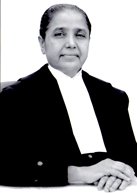
R. BANUMATHI, J.
Leave granted.
2.These appeals arise from the order of the High Court of Delhi in
and by which the High Court has cancelled the bail granted to the
respondents-accused by two separate orders dated 31.05.2017 and
08.09.2017. By virtue of the first impugned order, bail granted to Anil
Kumar Yadav (A4) was cancelled and by the second impugned order,
bail granted to other accused were cancelled.
3.The case of prosecution is that on 21.10.2015, Rohit Bansal
(injured witness) along with his friends Vineet, Sonu, Rupesh
(deceased) and Monu had gone to Shanghai Club, Hauz Khas in two
separate cars, i.e. Santro being registration No.UP-16-AM-6317 and
Honda Civic being registration No.DL-7CF-4118. At around midnight
12.00-12.15, while dancing in the club, Rohit Bansal's hand struck an
individual to whom he said "sorry". On this, the said individual abused
Page No. 2 of 23
CRIMINAL APPEAL NO. ..... @ SLP (CRL.) NO. 4574/2017 ETC. ETC.
and questioned Rohit Bansal and quarrel started between the two
groups and the said individual took a glass from one of his friends
and hit the complainant-Rohit Bansal; but the matter was pacified by
the bouncers/security personnel of the club. Thereafter, the
complainant-Rohit Bansal and his friends were sent out of the club
and after coming out of the club when they reached IIT Gate, then
Rohit Bansal realized that his mobile phone was missing which might
have fallen during the quarrel and he along with his friends Rupesh,
Sonu and Monu came back in Santro car to the club. When they
came back, they found that a Mercedes and EON car had blocked
the road and a Bolero car was parked on the road-side. When they
asked them to let them pass, one of the accused with whom an
altercation had taken place in the club, threatened to teach them a
lesson. Thereafter, all the accused/assailants started beating them;
one of the assailants brought an iron rod from the car and started
hitting Rupesh and when Rohit intervened to save Rupesh, he was
also attacked. Thereafter, another assailant lifted a cemented brick
and hit Rupesh on his head and they all ran towards different
directions to save themselves leaving Santro car at the spot. When
Rohit Bansal returned back to take his car, he saw Rupesh lying at
Page No. 3 of 23
CRIMINAL APPEAL NO. ..... @ SLP (CRL.) NO. 4574/2017 ETC. ETC.
the spot unconscious and sustained multiple injuries on his body.
Complainant Rohit along with one Sunil took Rupesh to the AIIMS
Hospital and got him admitted in the Trauma Centre.
4.On receipt of DD regarding admission of Rupesh and Rohit
Bansal (Complainant) in Trauma Centre AIIMS, ASI Dalbir Singh went
to the hospital and recorded the statement of the injured Rohit
Bansal, based on which FIR No.1187/2015 was registered under
Section 307, Section 308 read with Section 34 IPC. Rupesh
succumbed to injuries on 26.10.2015 and the FIR was altered into
Sections 302, 308 IPC and 201 IPC read with 34 IPC. Upon
completion of the investigation, charge-sheet was filed under
Sections 302 and 308 IPC read with Section 34 IPC against Tarun @
Maddy (A1), Vikas @ Shammi (A2), Ashish Balguer (A3), Anil Kumar
Yadav (A4), Vikas Balguer (A5) and Vishal Balguer (A6);
charge-sheet against Siddhant @ Goldy (A7) was filed under Section
201/212 IPC.
5.The trial court granted bail to Anil Kumar Yadav (A4) vide order
dated 27.02.2017, inter alia, on the grounds: - (i) that no other overt
act had been attributed to Anil Kumar Yadav (A4); (ii) Based on CCTV
Page No. 4 of 23
CRIMINAL APPEAL NO. ..... @ SLP (CRL.) NO. 4574/2017 ETC. ETC.
footage, in drawing an inference that no specific role had been
assigned to Anil Kumar Yadav (A4); and (iii) that Anil Kumar Yadav
(A4) had been in custody for about sixteen months.
6.The order of granting bail to Anil Kumar Yadav (A4) was
assailed by the complainant before the High Court on the very next
day. Pointing out that at the stage of granting bail, a detailed
examination of the evidence and elaborate documentation of the
minute details of the case is not warranted and placing reliance upon
Puran v. Rambilas and Another (2001) 6 SCC 338, the High Court set
aside the order passed by the trial court thereby cancelling the bail
granted to Anil Kumar Yadav (A4). Being aggrieved by cancellation
of bail, Anil Kumar Yadav (A4) preferred appeal before this Court.
Vide order dated 16.06.2017, this Court issued notice and stayed
surrender of Anil Kumar Yadav (A4).
7.While the appeal against grant of bail to Anil Kumar Yadav (A4)
was under consideration before the High Court, rest of the accused
were granted bail by the Sessions Court vide order dated 24.04.2017,
inter alia, on the ground that co-accused Anil Kumar Yadav (A4) had
Page No. 5 of 23
CRIMINAL APPEAL NO. ..... @ SLP (CRL.) NO. 4574/2017 ETC. ETC.
already been granted bail and that they were in custody for about one
and half years.
8.When the appeal of Anil Kumar Yadav (A4) came up for further
hearing before this Court, State took time to take steps to challenge
the order of grant of bail to other accused also. By order dated
08.09.2017, the High Court cancelled the bail granted to other
accused also. Being aggrieved, other accused have also filed their
respective appeals before this Court.
Contentions:-
9.Mr. Siddharth Luthra, learned Senior Counsel for the appellant
Anil Kumar Yadav (A4) contended that Rohit Bansal who claims to be
an injured eye witness, in his statement recorded on 22.10.2015 did
not name the accused Anil Kumar Yadav as the assailant nor stated
about his overt act. It was submitted that the presence of accused
Anil Kumar Yadav or use of baseball bat by him was not seen in the
CCTV footage and also taking note of the fact that the accused had
been in custody for more than sixteen months, the trial court granted
Page No. 6 of 23
CRIMINAL APPEAL NO. ..... @ SLP (CRL.) NO. 4574/2017 ETC. ETC.
bail to the appellant and the High Court erred in interfering with the
exercise of discretion by the Sessions Court.
10.Taking us through the order of the trial court dated 27.02.2017,
Mr. R. Basant, learned Senior Counsel appearing for Tarun @ Maddy
(A1) contended that on the material available, the Sessions Court
rightly observed that there was no pre-meditation and that the entire
incident was at the spur of the moment and when the trial court had
taken into consideration the relevant materials, the High Court erred
in substituting its views and setting aside the order of the Sessions
Court. It was further submitted that there was independent
consideration of the materials and while so, the High Court
misdirected itself in observing that bail was granted on the ground of
parity.
11.On behalf of the accused Vikas Balguer (A5) and Ashish
Balguer (A3), Ms. Rebecca M. John learned Senior Counsel
submitted that the Sessions Court has independently considered the
relevant materials and granted bail to the accused and while so, the
High Court erred in proceeding on the erroneous footing that the
accused persons were granted bail on parity with Anil Kumar Yadav.
Page No. 7 of 23
CRIMINAL APPEAL NO. ..... @ SLP (CRL.) NO. 4574/2017 ETC. ETC.
The learned Senior Counsel submitted that when the trial court had
properly exercised its jurisdiction, the High Court ought not to have
interfered with the exercise of discretion, more so, when the accused
were granted bail after filing of the charge-sheet.
12.Mr. Pawan K. Bahl, learned counsel appearing on behalf of
Vikas @ Shammi (A2) contended that because Shammi's name was
not mentioned in the FIR and only after the main accused were
arrested and only based on their statement recorded on 22.10.2015
and 23.10.2015, accused Vikas @ Shammi was arrested and there is
no prima facie case showing involvement of Vikas @ Shammi and
the trial court had rightly granted bail. It was contended that based on
the consideration of relevant materials, the trial court exercised its
discretion in granting bail to the accused and the High Court was not
right in setting aside the same.
13.On behalf of the prosecution, Ms. Kiran Suri, learned Senior
Counsel has submitted that the statements of injured witness Rohit
Bansal and other witnesses prima facie show involvement of the
accused in attacking the deceased Rupesh Tanwar and injured
witness Rohit Bansal. It was submitted that based on the statement
Page No. 8 of 23
CRIMINAL APPEAL NO. ..... @ SLP (CRL.) NO. 4574/2017 ETC. ETC.
recorded from the accused, the incriminating articles were also
recovered from the accused and the trial court ignored these relevant
materials prima facie indicating involvement of the accused. It was
submitted that the trial court granted bail based on the alleged
discrepancies in CCTV footage and discrepancies in statement of the
witnesses which are not relevant consideration for grant of bail and
the High Court rightly set aside the order granting bail to the accused
and the impugned orders warrant no interference. Placing reliance
upon Gobarbhai Naranbhai Singala v. State of Gujarat and Others
(2008) 3 SCC 775, it was submitted that the period inside the jail is
not a relevant consideration for grant of bail.
14.Mr. Dushyant Dave, learned Senior Counsel appearing for the
complainant submitted that perversity in the order of the trial court
flows from the fact that irrelevant materials had been taken into
consideration and when the bail order is unjustified or perverse, the
High Court rightly set aside the order. In support of his contention,
the learned Senior Counsel placed reliance upon Brij Nandan Jaiswal
v. Munna alias Munna Jaiswal and Anr. (2009) 1 SCC 678 and
Kanwar Singh Meena v. State of Rajasthan and Anr. (2012) 12 SCC
180.
Page No. 9 of 23
CRIMINAL APPEAL NO. ..... @ SLP (CRL.) NO. 4574/2017 ETC. ETC.
15.We have given our thoughtful consideration to the rival
submissions made by the counsel appearing on either side. The
point falling for consideration is whether the Sessions Court ignored
relevant materials while granting bail to the appellants accused and
whether the order of the Sessions Court suffered from serious
infirmities, justifying interference by the High Court in exercise of
judicial discretion.
16.As held in Puran case, while considering the question of grant
of bail, Court should avoid consideration of details of the evidence as
it is not a relevant consideration. While it is necessary to consider the
prima facie case, an exhaustive exploration of the merits of the case
should be avoided. We, therefore, consciously refrain from
considering the merits of the materials/evidence collected by the
prosecution.
17.At the outset, it is to be pointed out that the Sessions Court
considered both framing of charges and also grant of bail to accused
Anil Kumar Yadav by way of a common order. On 27.02.2017,
charges were framed against all the accused and bail was granted to
appellant Anil Kumar Yadav. Insofar as framing of charges, in a case
Page No. 10 of 23
CRIMINAL APPEAL NO. ..... @ SLP (CRL.) NO. 4574/2017 ETC. ETC.
before the Sessions Court, under Section 228 of the Criminal
Procedure Code, the court is required to consider "whether there is
ground for presuming that the accused has committed an offence....."
and then Court shall frame in writing a charge against the accused.
For grant of bail, the court is required to consider several other
factors. The considerations for framing of charge and grant of bail
are different. It was stated by the Bar that by and large this is the
procedure followed in Delhi. We may however indicate that it is not
desirable to frame charge and grant bail by way of a common order.
18.While granting bail, the relevant considerations are:- (i) nature
of seriousness of the offence; (ii) character of the evidence and
circumstances which are peculiar to the accused; and (iii) likelihood
of the accused fleeing from justice; (iv) the impact that his release
may make on the prosecution witnesses, its impact on the society;
and (v) likelihood of his tampering. No doubt, this list is not
exhaustive. There are no hard and fast rules regarding grant or
refusal of bail, each case has to be considered on its own merits.
The matter always calls for judicious exercise of discretion by the
Court.
Page No. 11 of 23
CRIMINAL APPEAL NO. ..... @ SLP (CRL.) NO. 4574/2017 ETC. ETC.
19.While considering the basic requirements for grant of bail, in
State of U.P. through CBI v. Amarmani Tripathi, (2005) 8 SCC 21, this
Court has held as under:-
"18. It is well settled that the matters to be considered in an
application for bail are (i) whether there is any prima facie or
reasonable ground to believe that the accused had committed the
offence; (ii) nature and gravity of the charge; (iii) severity of the
punishment in the event of conviction; (iv) danger of the accused
absconding or fleeing, if released on bail; (v) character, behaviour,
means, position and standing of the accused; (vi) likelihood of the
offence being repeated; (vii) reasonable apprehension of the
witnesses being tampered with; and (viii) danger, of course, of
justice being thwarted by grant of bail [see Prahlad Singh Bhati v.
NCT, Delhi (2001) 4 SCC 280 and Gurcharan Singh v. State (Delhi
Admn.) (1978) 1 SCC 118]. While a vague allegation that the
accused may tamper with the evidence or witnesses may not be a
ground to refuse bail, if the accused is of such character that his
mere presence at large would intimidate the witnesses or if there is
material to show that he will use his liberty to subvert justice or
tamper with the evidence, then bail will be refused. We may also
refer to the following principles relating to grant or refusal of bail
stated in Kalyan Chandra Sarkar v. Rajesh Ranjan (2004) 7 SCC
528: (SCC pp. 535-36, para 11)
“11. The law in regard to grant or refusal of bail is very
well settled. The court granting bail should exercise its
discretion in a judicious manner and not as a matter
of course. Though at the stage of granting bail a
detailed examination of evidence and elaborate
documentation of the merit of the case need not be
undertaken, there is a need to indicate in such orders
reasons for prima facie concluding why bail was being
granted particularly where the accused is charged of
having committed a serious offence. Any order devoid
of such reasons would suffer from non-application of
mind. It is also necessary for the court granting bail to
consider among other circumstances, the following
factors also before granting bail; they are:
(a) The nature of accusation and the
severity of punishment in case of conviction
and the nature of supporting evidence.
Page No. 12 of 23
CRIMINAL APPEAL NO. ..... @ SLP (CRL.) NO. 4574/2017 ETC. ETC.
(b) Reasonable apprehension of tampering
with the witness or apprehension of threat to
the complainant.
(c) Prima facie satisfaction of the court in
support of the charge. (See Ram Govind
Upadhyay v. Sudarshan Singh (2002) 3 SCC
598 and Puran v. Rambilas (2001) 6 SCC
338.)”"
20.The test to be applied for grant of bail was also considered in
Jayendra Saraswathi Swamigal v. State of T.N., (2005) 2 SCC 13,
wherein it was held as under:-
"16. ........The considerations which normally weigh with the court in
granting bail in non-bailable offences have been explained by this
Court in State v. Capt. Jagjit Singh [1962] 3 SCR 622 and
Gurcharan Singh v. State (Delhi Admn.) (1978) 1 SCC 118 and
basically they are — the nature and seriousness of the offence; the
character of the evidence; circumstances which are peculiar to the
accused; a reasonable possibility of the presence of the accused
not being secured at the trial; reasonable apprehension of
witnesses being tampered with; the larger interest of the public or
the State and other similar factors which may be relevant in the
facts and circumstances of the case..........."
21.In the present case, accused Anil Kumar Yadav was granted
bail by the Sessions Court mainly on the grounds:- (i) as per CCTV
footage deciphered by the Investigating Officer, no role could be
attributed to Anil Kumar Yadav that he inflicted injuries on Rohit
Bansal as well as to deceased Rupesh Tanwar and the photographs
do not show the presence of the accused Anil Kumar Yadav; (ii)
CCTV footage do not corroborate the statement of the witnesses that
Page No. 13 of 23
CRIMINAL APPEAL NO. ..... @ SLP (CRL.) NO. 4574/2017 ETC. ETC.
the accused along with their cars were blocking the road; and (iii)
accused Anil Kumar Yadav has been in custody since 31.10.2015.
The Sessions Court pointed out that possibly no role could be
attributed to accused Anil Kumar Yadav and observed as under:-
".......Admittedly, the crux of the CCTV footage is deciphered by the
IO in the chargesheet as mentioned above and in the said crux no
role of accused Anil Kumar Yadav is found. Furthermore, there are
other discrepancies pointed out by the counsel as discussed above
which though could not be considered for the purpose of charge but
could be considered as ground of bail........."
The Sessions Court though repeatedly observed that the court ought
not to go into the merits of the prosecution case actually the court
appears to have gone into the merits of the matter, in particular the
CCTV footage to hold that Anil Kumar Yadav could not have been
present at the place of occurrence or participated in the incident.
Further, the Sessions Court had also gone into the discrepancies of
the statement of the witnesses. The probability or improbability of the
prosecution version has to be judged based on the materials
available to the court at the time when bail is considered and not on
the basis of discrepancies.
22.While considering the correctness of the above findings, the
learned Judge of the High Court viewed the CCTV footage and
Page No. 14 of 23
CRIMINAL APPEAL NO. ..... @ SLP (CRL.) NO. 4574/2017 ETC. ETC.
observed that the camera installed at the place of occurrence was a
revolving camera moving horizontally and vertically and further
observed that the "CCTV footage possibly could not capture the
whole instance from all angles at the same time". After personally
viewing CCTV footage, the learned Judge had given graphic
description of the various slots/points and the relevant portion of the
High Court judgment reads as under:-
"I have examined/viewed the CCTV footage/CD provided by the
learned counsel for the respondent in the computer in chamber.
Seemingly, the footage recorded in the CCTV did not cover the
entire place of occurrence. It was a revolving camera moving
horizontally and vertically. Possibly, it could not capture the whole
incident from all angles at the same time. In the CCTV footage,
Mercedes car is seen to have arrived at the spot at 1:30:26. It
remained at the spot subsequent to it. At 1:39:34, the Mercedes is
seen leaving the spot by reversing it. The respondent is seen
entering into the Mercedes. It is, however, not clear as to when the
said individual (the respondent) had come out of the said
Mercedes. The petitioner has also placed on record photographs
developed from the footage recorded in the CCTV. In photographs
No.1, 2 and 4, the respondent is indicated inflicting injuries to the
victim along with others at 1:37:30; 1:37:31; and 1:37:31
respectively.
In photograph No.3, Mercedes is seen at the spot at 1:34:49.
In photo No.5 the respondent is seen entering the Mercedes at
1:38:29. It belies the respondent's contention that the Mercedes
entered for the first time in the lane of the occurrence only at
1:37:56. In photos Mark 'A' and 'B' the respondent's car is seen at
the spot at 1:30:41 and 1:31:50 too."
23.The High Court had gone into the details of CCTV footage and
noted the presence of accused Anil Kumar Yadav at the scene of
occurrence that "he was seen entering into the Mercedes". The
Page No. 15 of 23
CRIMINAL APPEAL NO. ..... @ SLP (CRL.) NO. 4574/2017 ETC. ETC.
Sessions Court was not right in raising doubts about the presence of
accused Anil Kumar Yadav and his role in inflicting injuries to
deceased Rupesh Tanwar as well as to the injured Rohit Bansal at
the present stage. Since the Sessions Court proceeded to grant bail
on erroneous footing and also going into the merits of the materials
collected, the High Court, in our view, rightly set aside the order
granting bail to the accused Anil Kumar Yadav.
24.As pointed out earlier, one of the grounds for grant of bail to the
appellant Anil Kumar Yadav by the Sessions Court was that he was in
custody for more than one year. In crimes like murder, the mere fact
that the accused was in custody for more than one year, may not be a
relevant consideration. In Gobarbhai Naranbhai case, it was
observed that the period of incarceration by itself would not entitle the
accused to be enlarged on bail. The same was reiterated in Ram
Govind Upadhyay v. Sudarshan Singh and others (2002) 3 SCC 598.
25.On behalf of the prosecution, learned senior counsel Ms. Suri
and Mr. Dave, learned senior counsel appearing for the complainant
submitted that CCTV footage is not the sole material relied upon by
the prosecution. It was submitted that apart from CCTV footage,
Page No. 16 of 23
CRIMINAL APPEAL NO. ..... @ SLP (CRL.) NO. 4574/2017 ETC. ETC.
there are eight eye witnesses who named the accused persons and
also stated the role of the accused persons. Our attention was drawn
to Section 161 Cr.P.C., statement of injured witness Rohit Bansal and
other witnesses namely Vineet, Mohinder @ Monu, Jitender, Sagar
Sharma @ Sonu and Bouncers at the Club namely Sonu, Rohit
Kumar, Praveen and Chetan Prakash who have stated about the
presence of the accused in the scene of occurrence and their overt
acts. That apart, based on the statements of the accused persons,
incriminating articles were also recovered and at this stage, it is not
necessary to elaborate upon the recoveries made and their
relevance.
26.By perusal of Post-Mortem certificate, it is seen that over twenty
one injuries were inflicted on the various parts of the body of the
deceased and he was disrobed and left unconscious on the spot.
The manner in which the deceased was allegedly attacked and the
number of injuries inflicted on him prima facie indicate pre-meditation.
Injured witness Rohit Bansal also sustained laceration injuries over
scalp.
Page No. 17 of 23
CRIMINAL APPEAL NO. ..... @ SLP (CRL.) NO. 4574/2017 ETC. ETC.
27.As rightly contended by the prosecution, apart from CCTV
footage, there are other materials on record to show the "prima facie"
case against the appellants/accused viz. (i) statement of eye
witnesses who have named the accused and also given statements
as to the overt acts of each of the accused; (ii) recoveries made from
the accused; and (iii) the incident in which deceased Rupesh Tanwar
and complainant Rohit Bansal have sustained injuries. The Sessions
Court had not taken into consideration these relevant materials; but
the Sessions Court granted bail to the appellants/accused on the
ground of discrepancies in the statement of witnesses, CCTV footage
and the period of incarceration of the accused which are not relevant
considerations for grant of bail by the Sessions Court in the facts and
stage of this case.
28.In Kanwar Singh Meena case, the High Court granted bail
ignoring the averments made against the accused thereon and
statement of witnesses recorded under Section 164 Cr.P.C. Pointing
out that the High Court did not keep in view the prima facie materials
against the accused, this Court cancelled the bail. By setting aside
the order of bail, in para (10), this Court observed as under:-
Page No. 18 of 23
CRIMINAL APPEAL NO. ..... @ SLP (CRL.) NO. 4574/2017 ETC. ETC.
"10. Thus, Section 439 of the Code confers very wide powers on
the High Court and the Court of Session regarding bail. But, while
granting bail, the High Court and the Sessions Court are guided by
the same considerations as other courts. That is to say, the gravity
of the crime, the character of the evidence, position and status of
the accused with reference to the victim and witnesses, the
likelihood of the accused fleeing from justice and repeating the
offence, the possibility of his tampering with the witnesses and
obstructing the course of justice and such other grounds are
required to be taken into consideration. Each criminal case
presents its own peculiar factual scenario and, therefore, certain
grounds peculiar to a particular case may have to be taken into
account by the court. The court has to only opine as to whether
there is prima facie case against the accused. The court must not
undertake meticulous examination of the evidence collected by the
police and comment on the same. Such assessment of evidence
and premature comments are likely to deprive the accused of a fair
trial. While cancelling the bail under Section 439(2) of the Code, the
primary considerations which weigh with the court are whether the
accused is likely to tamper with the evidence or interfere or attempt
to interfere with the due course of justice or evade the due course
of justice. But, that is not all. The High Court or the Sessions Court
can cancel the bail even in cases where the order granting bail
suffers from serious infirmities resulting in miscarriage of justice. If
the court granting bail ignores relevant materials indicating prima
facie involvement of the accused or takes into account irrelevant
material, which has no relevance to the question of grant of bail to
the accused, the High Court or the Sessions Court would be
justified in cancelling the bail. Such orders are against the
well-recognised principles underlying the power to grant bail. Such
orders are legally infirm and vulnerable leading to miscarriage of
justice and absence of supervening circumstances such as the
propensity of the accused to tamper with the evidence, to flee from
justice, etc. would not deter the court from cancelling the bail. The
High Court or the Sessions Court is bound to cancel such bail
orders particularly when they are passed releasing the accused
involved in heinous crimes because they ultimately result in
weakening the prosecution case and have adverse impact on the
society. Needless to say that though the powers of this Court are
much wider, this Court is equally guided by the above principles in
the matter of grant or cancellation of bail." [underlying added]
29.In the present case, the trial is at a very crucial stage. The trial
court is yet to record the testimony of material witnesses including the
Page No. 19 of 23
CRIMINAL APPEAL NO. ..... @ SLP (CRL.) NO. 4574/2017 ETC. ETC.
complainant as well as all the material witnesses. The trial has
commenced and the trial is said to be posted for 04.12.2017. For
ensuring the fair trial, witnesses must be in a position to freely depose
without fear. In the facts and circumstances of the case, we are
convinced that a fair trial can be ensured only if the appellants are not
enlarged on bail.
30.We are conscious of the fact that the appellants are only under
trials and their liberty is also a relevant consideration. But equally
important is to consider the impact of their release on bail on the
prosecution witnesses and also its impact on society. In order to
ensure that during trial the material witnesses depose without fear
and justice being done to the society, a balance has to be struck.
Referring to Masroor v. State of Uttar Pradesh and another (2009) 14
SCC 286 and other cases, in State of Bihar v. Rajballav Prasad alias
Rajballav Prasad Yadav alias Rajballabh Yadav (2017) 2 SCC 178,
this Court held as under:-
"26. We are conscious of the fact that the respondent is only an
undertrial and his liberty is also a relevant consideration. However,
equally important consideration is the interest of the society and fair
trial of the case. Thus, undoubtedly the courts have to adopt a
liberal approach while considering bail applications of the accused
persons. However, in a given case, if it is found that there is a
possibility of interdicting fair trial by the accused if released on bail,
this public interest of fair trial would outweigh the personal interest
Page No. 20 of 23
CRIMINAL APPEAL NO. ..... @ SLP (CRL.) NO. 4574/2017 ETC. ETC.
of the accused while undertaking the task of balancing the liberty of
the accused on the one hand and interest of the society to have a
fair trial on the other hand. When the witnesses are not able to
depose correctly in the court of law, it results in low rate of
conviction and many times even hardened criminals escape the
conviction. It shakes public confidence in the criminal
justice-delivery system. It is this need for larger public interest to
ensure that criminal justice-delivery system works efficiently,
smoothly and in a fair manner that has to be given prime
importance in such situations. After all, if there is a threat to fair trial
because of intimidation of witnesses, etc., that would happen
because of wrongdoing of the accused himself, and the
consequences thereof, he has to suffer........" [underlying added]
31.After referring to various case laws and observing that in a
criminal trial, witnesses must be able to depose without fear, freely
and truthfully, in Rajballav Prasad case, this Court cancelled the bail
granted to the accused thereon. In para (24) of the judgment, it was
held as under:-
"24. As indicated by us in the beginning, prime consideration before
us is to protect the fair trial and ensure that justice is done. This
may happen only if the witnesses are able to depose without fear,
freely and truthfully and this Court is convinced that in the present
case, that can be ensured only if the respondent is not enlarged on
bail. This importance of fair trial was emphasised in Panchanan
Mishra v. Digambar Mishra (2005) 3 SCC 143 while setting aside
the order of the High Court granting bail in the following terms:
(SCC pp. 147-48, para 13)
“13. We have given our careful consideration to the
rival submissions made by the counsel appearing on
either side. The object underlying the cancellation of
bail is to protect the fair trial and secure justice being
done to the society by preventing the accused who is
set at liberty by the bail order from tampering with the
evidence in the heinous crime and if there is delay in
such a case the underlying object of cancellation of
bail practically loses all its purpose and significance to
Page No. 21 of 23
CRIMINAL APPEAL NO. ..... @ SLP (CRL.) NO. 4574/2017 ETC. ETC.
the greatest prejudice and the interest of the
prosecution. It hardly requires to be stated that once a
person is released on bail in serious criminal cases
where the punishment is quite stringent and deterrent,
the accused in order to get away from the clutches of
the same indulge in various activities like tampering
with the prosecution witnesses, threatening the family
members of the deceased victim and also create
problems of law and order situation.”"
32.It was repeatedly urged that the High Court misdirected itself in
interfering with the discretionary order of Sessions Court granting bail
to the accused and there was absolutely nothing to show that the
appellants are likely to abuse the bail or tamper with evidence. The
court while granting bail should exercise its discretion in a judicious
manner. Of course, once discretion is exercised by the Sessions
Court to grant bail on consideration of relevant materials, the High
Court would not normally interfere with such discretion, unless the
same suffers from serious infirmities or perversity. While considering
the correctness of the order granting bail, the approach should be
whether the order granting bail to the accused is vitiated by any
serious infirmity, in which case, the High Court can certainly interfere
with the exercise of discretion. The materials available on record
prima facie indicating the involvement of the accused, possibility of
accused tampering with witnesses and the gravity of the crime were
Page No. 22 of 23
CRIMINAL APPEAL NO. ..... @ SLP (CRL.) NO. 4574/2017 ETC. ETC.
not kept in view by the Sessions Court. Since the Sessions Court
granted bail to the appellants on irrelevant considerations and the
same suffered from serious infirmity, the High Court rightly set aside
the order of grant of bail to the accused. The impugned orders do not
suffer from any infirmity warranting interference.
33.In the result, all the appeals are dismissed. All the
appellants/accused are directed to surrender before the Committal
Court within one week from the date of this order.
…….…………...………J.
[KURIAN JOSEPH]
…………….……………J.
[R. BANUMATHI]
New Delhi;
November 14, 2017
Page No. 23 of 23

Legal Notes
Add a Note....