
The case has come from the Andhra Pradesh High Court, which dismissed several writ petitions filed against the A.P. Pollution Control Board's decisions regarding the establishment of the respondent's industry. ...
No Acts & Articles mentioned in this case
http://JUDIS.NIC.IN SUPREME COURT OF INDIA Page 1 of 21
PETITIONER:
A.P. POLLUTION CONTROL BOARD
Vs.
RESPONDENT:
PROF.M.V.NAYUDU (RETD.) & OTHERS
DATE OF JUDGMENT: 27/01/1999
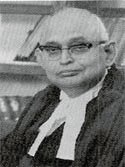
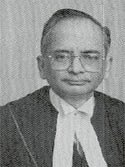
BENCH:
S.B. Majmudar. & M. Jagannadha.,
JUDGMENT:
M.JAGANNADHA RAO,J.
Leave granted in all the special leave petitions.
It is said:
"The basic insight of ecology is that all living
things exist in interrelated systems; nothing
exists in isolation. The world system is weblike;
to pluck one strand is to cause all to vibrate;
whatever happens to one part has ramifications for
all the rest. Our actions are not individual but
social; they reverberate throughout the whole
ecosystem". [Science Action Coalition by
A.Fritsch, Environmental Ethics: Choices for
Concerned Citizens 3-4 (1980)]. (1988) Vol.12
Harv.Env.L.Rev. at 313)."
Four of these appeals which arise out of SLP(C)
No.10317-10320 of 1998 were filed against the
judgment of the Andhra Pradesh High Court dated
1.5.1998 in four writ petitions, namely, W.P. No.
17832 of 1997 and three other connected writ
petitions. All the appeals were filed by the A.P.
Pollution Control Board. Three of the above writ
petitions were filed as public interest cases by
certain persons and the fourth writ petition was
filed by the Gram Panchayat, Peddaspur.
The fifth Civil Appeal which arises out of SLP(C)
No.13380 of 1998 was filed against the judgment in
W.P. No.16969 of 1997 by the Society for
Preservation of Environment & Quality of Life,
(for short `SPEQL') represented by Sri P.Janardan
Reddi, the petitioner in the said writ petition.
The High Court dismissed all these writ petitions.
The sixth Civil appeal which arises out of SLP(C)
No.10330 of 1998 was filed by A.P.Pollution
Control Board against the order dated 1.5.1998 in
Writ Petition No.11803 of 1998. The said writ
petition was filed by M/s Surana Oils and
Derivatives (India) Ltd. (hereinafter called the
`respondent company', for implementation of the
directions given by the appellate authority under
the Water (Prevention of Pollution) Act, 1974
http://JUDIS.NIC.IN SUPREME COURT OF INDIA Page 2 of 21
(hereinafter called the `Water Act, 1974') in
favour of the company.
In other words, the A.P. Pollution Board is the
appellant in five appeals and the SPEQL is
appellant in one of the appeals.
According to the Pollution Control Board, under
the notification No. J.20011/15/88-iA, Ministry
of Environment & Forests, Government of India
dated 27.9.1988, `vegetable oils including solved
extracted oils' (Item No.37) was listed in the
`RED' hazardous category. The Pollution Board
contends that Notification No. J.120012/38/86 1A,
Ministry of Environment & Forests of Government of
India dated 1.2.1989, prohibits the location of
the industry of the type proposed to be
established by the respondent company, which will
fall under categorisation at No.11 same category
of industry in Doon Valley.
On 31.3.1994, based on an Interim Report of the
Expert Committee constituted by the Hyderabad
Metropolitan Water Supply and Sewerage Board, the
Municipal Administration and Urban Development,
Government of Andhra Pradesh issued GOMs 192 dated
31.3.1994 prohibited various types of development
within 10 k.m. radius of the two lakes, Himayat
Sagar & Osman Sagar, in order to monitor the
quality of water in these reservoirs which supply
water to the twin cities of Hyderabad and
Secunderabad.
In January 1995, the respondent company was
incorporated as a public limited company with the
object of setting up an industry for production of
B.S.S. Castor oil derivatives such as
Hydrogenated Castor Oil, 12-Hydroxy Stearic Acid,
Dehydrated Castor Oil, Methylated 12-HSA, D.Co.,
Fatty Acids with by products - like Glycerine,
Spent Bleaching Earth and Carbon and Spent Nickel
Catalyst. Thereafter the industry applied to the
Ministry of Industries, Government of India for
letter of intent under the Industries (Development
Regulation) Act, 1951.
The respondent Company purchased 12 acres of land
on 26.9.1995 in Peddashpur village, Shamshabad
Mandal. The Company also applied for consent for
establishment of the industry through the single
window clearance committee of the Commissionerate
of Industries, Government of Andhra Pradesh, in
November, 1995. On 28.11.1995, the Government of
Andhra Pradesh, wrote to the Ministry of Industry,
Government of India as follows:
"The State Government recommends the aplication of
the unit for grant of letter of intent for the
manufacture of B.S.S. Grade Castor Oil in
relaxation of locational restriction subject to
NOC from A.P.Pollution Control Board, prior to
taking implementation steps."
On 9.1.1996, the Government of India issued letter
of intent for manufacture of B.S.S. grade Castor
http://JUDIS.NIC.IN SUPREME COURT OF INDIA Page 3 of 21
Oil (15,000 tons per annum) and Glycerine (600
tons per annum). The issuance of licence was
subject to various conditions, inter-alia, as
follows:
"(a) you shall obtain a confirmation from the
State Director of Industries that the site of the
project has been approved from the environmental
angle by the competent State authority.
(b) you shall obtain a certificate from the
concerned State Pollution Control Board to the
effect that the measures envisaged for pollution
control and the equipment proposed to be installed
meet their requirements."
Therefore, the respondent company had to obtain
NOC from the A.P. Pollution Control Board.
According to the A.P. Pollution Control Board
(the appellant), the respondent company could not
have commenced civil works and construction of its
factory, without obtaining the clearance of the
A.P.Pollution Control Board - as the relaxation by
government from location restriction as stated in
their letter dated 28.11.1995, was subject to such
clearance. On 8.3.1996, on receipt of the 2nd
Interim Report of the Expert Committee of the
Hyderabad Metropolitan Water Supply and Sewerage
Board, the Municipal Administration and Urban
Development Department issued GO No.111 on
8.3.1996 reiterating the 10 k.m. prohibition as
contained in the GO 192 dated 31.3.1994 but making
some concessions in favour of residential
development.
In the pre-scrutiny stage on 24.5.1996 by the
Single Window Clearance Committee, which the
company's representative attended, the application
of the industry was rejected by the A.P.
Pollution Control Board since the proposed site
fell within 10 k.m. and such a location was not
permissible as per GOMs 111 dated 8.3.96. On
31.5.1994, the Gram Panchayat approved plans for
establishing factory.
On 31.3.1996, the Commissionerate of Industries,
rejected the location and directed alternative
site to be selected. On 7.9.1996, the
Dt.Collector granted permission for conversion of
the site (i.e. within 10 k.m.) to be used for
non- agricultural purposes.
On 7.4.1997, the company applied to the A.P.
Pollution Control Board, seeking clearance to set-
up the unit under section 25 of the Water Act. It
may be noted that in the said application, the
Company listed the following as by-products of its
processes:
"Glycerine, spent bleaching earth and carbon and
spent nickel catalysts."
According to the AP Pollution Board the products
http://JUDIS.NIC.IN SUPREME COURT OF INDIA Page 4 of 21
manufactured by this industry would lead to the
following sources of pollution:
"(a) Nickel (solid waste) which is heavy- metal
and also a hazardous waste under Hazardous Waste
(Management and Handling) Rules, 1989.
(b) There is a potention of discharge or run off
from the factory combined joining oil and other
waste products.
(c) Emission of Sulpher Dioxide and oxide of
nitrogen.
It was at that juncture that the company secured
from the Government of A.P. by GOMs 153 dated
3.7.1997 exemption from the operation of GOMs 111
of 8.3.1996 which prescribed the 10 k.m. rule
from the Osman Sagar and Himayat Sagar Lakes.
In regard to grant of NOC by the A.P. Pollution
Board, the said Board by letter dated 30.7.1997
rejected the application dated 7.4.1997 for
consent, stating
"(1) The unit is a polluting industry and
falls under the red category of polluting
industry under section S.No.11 of the
classification of industries adopted by
MOEF, GOI and opined that it would not be
desirable to locate such industry in the
catchment area of Himayatsagar in view of
the GOMs No.111 dated 8.3.1996.
(2) The proposal to set up this unit was
rejected at the pre-scrutiny level during
the meeting of CDCC/DIPC held on
24.5.1996 in view of the State Government
Order No.111 dated 8.3.1996."
Aggrieved by the above letter of rejection, the
respondent company appealed under section 28 of
the Water Act. Before the appellate authority,
the industry, filed an affidavit of Prof.
M.Santappa Scientific Officer to the Tamil Nadu
Pollution Control Board in support of its
contentions. The appellate authority under
section 28 of the Water Act, 1974 (Justice M.Ranga
Reddy, (retd.)) by order dated 5.1.1998 allowed
the appeal of the Company. Before the appellate
authority, as already stated, an affidavit was
filed by Prof. M.Shantappa, a retired scientist
and technologist (at that time, Scientific Advisor
for T.N. Pollution Control Board) stating that
the respondent had adopted the latest eco-friendly
technology using all the safeguards regarding
pollution. The appellate authority stated that
Dr.Siddhu, formerly Scientific to the Government
of India and who acted as Director General,
Council of Scientific and Industrial Research
(CSIR) and who was the Chairman of the Board of
Directors of this Company also filed an affidavit.
The Managing Director of the respondent company
filed an affidavit explaining the details of the
http://JUDIS.NIC.IN SUPREME COURT OF INDIA Page 5 of 21
technology employed in the erection of the plant.
Prof. M.Shantappa in his report stated that the
company has used the technology obtained from the
Indian Institute of Chemical Technology of (IICT),
Hyderabad which is a premier institute and that he
would not think of a better institute in the
country for transfer of technology. The said
Institute has issued a certificate that this
industry will not discharge any acidic effluents
and the solid wastes which are the by -products
are saleable and they will be collected in M.S.
drums by mechanical process and sold. The report
of Dr. Shantappa also showed that none of the
by-products would fall on the ground of the
factory premises. He also stated that all the
conditions which were proposed to be imposed by
the Technical Committee on the company at its
meeting held on 16.7.97 have been complied with.
On the basis of these reports, the appellate
authority stated that this industry "is not a
polluting industry". It further held that the
notification dated 1.2.1989 of the Ministry of
Environment & Forests, Government of India,
whereby industries manufacturing Hydrogenated
Vegetable oils were categorised as "red category"
industries, did not apply to the catchment areas
of Himayat Sagar and Osman Sagar lakes and that
notification was applicable only to the Doon
Valley of UP and Dahanu in Maharashtra. The
appellate authority accordingly directed the AP
Pollution control Board to give its consent for
establishment of the factory on such conditions
the Board may deem fit as per GOMs 153 dated
3.7.1997 (as amended by GO 181 dated 7.8.1997).
Before the above order dated 5.1.98 was passed by
the appellate authority, some of these public
interest cases had already been filed. After the
5.1.98 order of the appellate authority, a
direction was sought in the public interest case
W.P.No.2215 of 1996 that the order dated 5.1.1998
passed by the appellate authority was arbitrary
and contrary to interim orders passed by the High
Court in W.P. 17832, 16969 and 16881 of 1997.
The respondent company, in its turn filed WP
No.11803 of 1998 for directing the A.P. Pollution
Control Board to give its consent, as a
consequence to the order of the appellate
authority dated 5.1.1998. As stated earlier, the
A.P. Pollution Control Board contends that the
categorisation of industries into red, green and
orange had already been made prior to the
notification of 1.2.1989 by Office Memorandum of
the Ministry of Environment & Forests, Government
of India dated 27.9.1988 and that in that
notification also "Vegetable oils including
solvent extracted oils" (Item No.7) and `Vanaspati
Hydrogenated Vegetable oils for industrial
purposes (Item 37)" were also included in the red
category. It also contends that the company could
not have started civil works unless NOC was given
by the Board. The Division Bench of the High
Court in its judgment dated 1.5.1998, held that
the writ petitioners who filed the public interest
cases could not be said to be having no locus
standi to file the writ petitions. The High Court
http://JUDIS.NIC.IN SUPREME COURT OF INDIA Page 6 of 21
observed that while the Technical Committee of the
A.P. Pollution Control Board had, some time
before its refusal, suggested certain safeguards
to be followed by the company, the Board could not
have suddenly refused the consent and that this
showed double standards. The High Court referred
to the order of the Appellate authority under
Section 28 of the Water Act dated 5.1.98 and the
report of Dr.Sidhu, to the effect that even if
hazardous waste was a by-product, the same could
be controlled if the safeguards mentioned in the
Hazardous Wastes (Management and Handling) Rules,
1989 were followed and in particular those in
Rules 5,6 and 11, were taken. The Rules made
under Manufacture, Storage and Import of Hazardous
Chemical (MSIHC) Rules 1989 also permit industrial
actively provided the safeguards mentioned therein
are taken. The Chemical Accidents (Emergency
Planning, Preparedness and Response) Rules 1991
supplement the MSIHC Rules, 1989 on accident
preparedness and envisage a 4-tier crisis
management system in the country. Therefore,
merely because an industry produced hazardous
substances, the consent could not be refused. It
was stated that as the matter was highly
technical, interference was not called for, as
"rightly" contended by the learned counsel for the
respondent company. The High Court could not sit
in appeal over the order of the appellate
authority. For the above reasons, the High Court
dismissed the three public interest cases, and the
writ petitions filed by the Gram Panchayat. The
High Court allowed the writ petition filed by the
respondent industry and directed grant of consent
by the A.P. Pollution Control Board subject to
such conditions as might be imposed by the Board.
It is against the said judgment that the A.P.
Pollution Control Board has filed the five
appeals. One appeal is filed by SPEQL. In these
appeals, we have heard the preliminary submission
of Shri R.N.Trivedi, learned Additional Solicitor
General for the A.P. Pollution Control Board,
Shri M.N.Rao, learned senior counsel for the
respondent company, and Sri P.S.Narasimha for the
appellant in the appeal arising out of SLP (C)
No.13380 of 1998 and others. It will be noticed
that various issues arise in these appeals
concerning the validity of the orders passed by
the A.P. Pollution Control Board dated 30.7.97,
the correctness of the order dated 5.1.98 of the
Appellate Authority under Section 28 of the Water
Act, the validity of GOMs No.153 dated 3.7.97 by
which Government of A.P. granted exemption for
the operation of the 10 k.m. rule in GOMs 111
dated 8.3.1996. Questions also arise regarding
the alleged breach of the provisions of the Act,
Rules or notification issued by the Central
Government and the standards prescribed under the
Water Act or rules or notifications. Question
also arises whether the "appellate" authority
could have said that as it was a highly technical
matter, no interference was called for. We are
just now not going into all these aspects but are
confining ourselves to the issues on the
technological side. In matters regarding
http://JUDIS.NIC.IN SUPREME COURT OF INDIA Page 7 of 21
industrial pollution and in particular, in
relation to the alleged breach of the provisions
of the Water (Prevention and Control of Pollution)
Act, 1974, its rules or notifications issued
thereunder, serious issues involving pollution and
related technology have been arising in appeals
under Article 136 and in writ petitions under
Article 32 of the Constitution of India filed in
this Court and also in writ petitions before High
Courts under Article 226. The cases involve the
correctness of opinions on technological aspects
expressed by the Pollution Control Boards or other
bodies whose opinions are placed before the
Courts. In such a situation, considerable
difficulty is experienced by this Court or the
High Courts in adjudicating upon the correctness
of the technological and scientific opinions
presented to the Courts or in regard to the
efficacy of the technology proposed to be adopted
by the industry or in regard to the need for
alternative technology or modifications as
suggested by the Pollution Control Board or other
bodies. The present case illustrates such
problems. It has become, therefore, necessary to
refer to certain aspects of environmental law
already decided by this Court and also to go into
the above scientific problems, at some length and
find solutions for the same. Environment
Courts/Tribunals - problems of complex technology:
The difficulty faced by environmental courts in
dealing with highly technological or scientific
data appears to be a global phenomenon.
Lord Woolf, in his Garner lecture to UKELA, on the
theme "Are the Judiciary Environmentally Myopic?"
(See 1992 J.Envtl. Law Vol.4, No.1, P1) commented
upon the problem of increasing specialisation in
environmental law and on the difficulty of the
Courts, in their present form, moving beyond their
traditional role of detached "Wednesbury" review.
He pointed out the need for a Court or Tribunal
"having a general responsibility for overseeing
and enforcing the safeguards provided for the
protection of the environment ....... The
Tribunal could be granted a wider discretion to
determine its procedure so that it was able to
bring to bear its specialist experience of
environmental issues in the most effective way"
Lord Woolf pointed out the need for
"a multi- faceted, multi-skilled body which would
combine the services provided by existing Courts,
Tribunals and Inspectors in the environmental
field. It would be a `one stop shop', which
should lead to faster, cheaper and the more
effective resolution of disputes in the
environmental area. It would avoid increasing the
load on already over burdened lay institutions by
trying to compel them to resolve issues with which
they are not designed to deal. It could be a
http://JUDIS.NIC.IN SUPREME COURT OF INDIA Page 8 of 21
forum in which the Judges could play a different
role. A role which enabled them not to examine
environmental problems with limited vision. It
could however be based on our existing experience,
combining the skills of the existing inspectorate,
the Land Tribunal and other administrative bodies.
It could be an exciting project"
According to Lord Woolf, "while environmental law
is now clearly a permanent feature of the legal
scene, it still lacks clear boundaries." It might
be `preferable that the boundaries are left to be
established by Judicial decision as the law
developed. After all, the great strength of the
English Law has been its pragmatic approach".
Further, where urgent decisions are required,
there are often no easy options for preserving the
status quo pending the resolution of the dispute.
If the project is allowed to go ahead, there may
be irreperable damage to the environment; if it
is stopped, there may be irreperable damage to an
important economic interest. (See Environment
Enforcement: The need for a specialised court -
by Robert Cranworth QC (Jour of Planning &
Environment, 1992 p.798 at 806). Robert Cranworth
advocates the constitution of a unified tribunal
with a simple procedure which looks to the need of
customers, which takes the form of a Court or an
expert panel, the allocation of a procedure
adopted to the needs of each case - which would
operate at two levels - first tier by a single
Judge or technical person and a review by a panel
of experts presided over by a High Court Judge -
and not limited to `Wednesbury' grounds. In the
USA the position is not different. It is accepted
that when the adversary process yields conflicting
testimony on complicated and unfamiliar issues and
the participants cannot fully understand the
nature of the dispute, Courts may not be competent
to make reasoned and principled decisions.
Concern over this problem led the Carnegie
Commission of Science & Technology (1993) and the
Government to undertake a study of the problems of
science and technology in Judicial decision
making. In the introduction to its final report,
the Commission concluded:
"The Courts' ability to handle complex
science-rich cases has recently been called into -
question, with widespread allegations that the
Judicial system is increasingly unable to manage
and adjudicate science and technology (S&T)
issues. Critics have objected that Judges cannot
make appropriate decisions because they lack
technical training, that the Jurors do not
comprehend the complexity of the evidence they are
supposed to analyze, and that the expert witnesses
on whom the system relies are merceneries whose
biased testimony frequently produces erroneous and
inconsistent determinations. If these claims go
unanswered, or are not dealt with, confidence in
the Judiciary will be undermined as the public
becomes convinced that the Courts as now
constituted are incapable of correctly resolving
some of the more pressing legal issues of our
http://JUDIS.NIC.IN SUPREME COURT OF INDIA Page 9 of 21
day."
The uncertain nature of scientific opinions:
In the environment field, the uncertainity of
scientific opinions has created serious problems
for the Courts. In regard to the different goals
of Science and the law in the ascertainment of
truth, the U.S. Supreme Court observed in Daubert
vs. Merrel Dow Pharmaceuticals Inc. (1993) 113
S.Ct 2786, as follows:
"......there are important differences between the
quest for truth in the Court- room and the quest
for truth in the laboratory. Scientific
conclusions are subject to perpetual revision.
Law, on the other hand, must resolve disputes
finally and quickly." It has also been stated by
Brian Wynne in `Uncertainity and Environmental
Learning, (2. Global Envtl.Change 111) (1992):
"Uncertainity, resulting from inadequate data,
ignorance and indeterminacy, is an inherent part
of science."
Uncertainity becomes a problem when scientific
knowledge is institutionalised in policy making or
used as a basis for decision-making by agencies
and courts. Scientists may refine, modify or
discard variables or models when more information
is available; however, agencies and Courts must
make choices based on existing scientific
knowledge. In addition, agency decision making
evidence is generally presented in a scientific
form that cannot be easily tested. Therefore,
inadequacies in the record due to uncertainity or
insufficient knowledge may not be properly
considered. (The Status of the Precautionary
Principle in Australia : by Charmian Barton
(Vol.22) (1998) (Harv. Envtt. Law Review p.509
at pp510-511).
The inadequacies of science result from
identification of adverse effects of a hazard and
then working backwards to find the causes.
Secondly, clinical tests are performed,
particularly where toxins are involved, on animals
and not on humans, that is to say, are based on
animals studies or short-term cell testing.
Thirdly conclusions based on epidemiological
studies are flawed by the scientist's inability to
control or even accurately assess past exposure of
the subjects. Moreover, these studies do not
permit the scientist to isolate the effects of the
substance of concern. The latency period of many
carcinogens and other toxins exacerbates problems
of later interpretation. The timing between
exposure and observable effect creates intolerable
delays before regulation occurs. (See Scientific
Uncertainity in Protective Environmental Decision
making - by Alyson C. Flournay (Vol.15) 1991
Harv. Envtt. Law Review p.327 at 333-335).
It is the above uncertainity of science in the
environmental context, that has led International
http://JUDIS.NIC.IN SUPREME COURT OF INDIA Page 10 of 21
Conferences to formulate new legal theories and
rules of evidence. We shall presently refer to
them.
The Precautionary Principle and the new Burden of
Proof - The Vellore Case:
The `uncertainity' of scientific proof and its
changing frontiers from time to time has led to
great changes in environmental concepts during the
period between the Stockholm Conference of 1972
and the Rio Conference of 1992. In Vellore
Citizens' Welfare Forum vs. Union of India and
Others [1996 (5) SCC 647], a three Judge Bench of
this Court referred to these changes, to the
`precautionary principle' and the new concept of
`burden of proof' in environmental matters.
Kuldip Singh, J. after referring to the
principles evolved in various international
Conferences and to the concept of `Sustainable
Development', stated that the Precautionary
Principle, the Polluter-Pays Principle and the
special concept of Onus of Proof have now emerged
and govern the law in our country too, as is clear
from Articles 47, 48-A and 51-A(g) of our
Constitution and that, in fact, in the various
environmental statutes, such as the Water Act,
1974 and other statutes, including the Environment
(Protection) Act, 1986, these concepts are already
implied. The learned Judge declared that these
principles have now become part of our law. The
relevant observations in the Vellore Case in this
behalf read as follows:
"In view of the above-mentioned constitutional and
statutory provisions we have no hesitation in
holding that the Precautionary Principle and the
Polluter Pays Principle are part of the
environmental law of the country."
The Court observed that even otherwise the above-
said principles are accepted as part of the
Customary International Law and hence there should
be no difficulty in accepting them as part of our
domestic law. In fact on the facts of the case
before this Court, it was directed that the
authority to be appointed under section 3(3) of
the Environment (Protection) Act, 1986
"shall implement the `Precautionary Principle' and
the `Polluter Pays Principle'."
The learned Judges also observed that the new
concept which places the Burden of Proof on the
Developer or Industralist who is proposing to
alter the status quo, has also become part of our
environmental law.
The Vellore judgment has referred to these
principles briefly but, in our view, it is
necessary to explain their meaning in more detail,
so that Courts and tribunals or environmental
authorioties can properly apply the said
principles in the matters which come before them.
http://JUDIS.NIC.IN SUPREME COURT OF INDIA Page 11 of 21
The Precautionary Principle replaces the
Assimilative Capacity Principle:
A basic shift in the approach to environmental
protection occured initially between 1972 and
1982. Earlier the Concept was based on the
`assimilative capacity' rule as revealed from
Principle 6 of the Stockholm Declaration of the
U.N.Conference on Human Environment, 1972. The
said principle assumed that science could provide
policy-makers- with the information and means
necessary to avoid encroaching upon the capacity
of the environment to assimilate impacts and it
presumed that relevant technical expertise would
be available when environmental harm was predicted
and there would be sufficient time to act in order
to avoid such harm. But in the 11th Principle of
the U.N. General Assembly Resolution on World
Charter for Nature, 1982, the emphasis shifted to
the `Precautionary Principle', and this was
reiterated in the Rio Conference of 1992 in its
Principle 15 which reads as follows:
"Principle 15: In order to protect the
environment, the precautionary approach shall be
widely applied by States according to their
capabilities. Where there are threats of serious
or irreversible damage; lack of full scientific
certainity shall not be used as a reason for
proposing cost-effective measures to prevent
environmental degradation."
In regard to the cause for the emergence of this
principle, Charmian Barton, in the article earlier
referred to in Vol.22, Harv. Envtt. L.Rev.
(1998) p.509 at (p.547) says:
"There is nothing to prevent decision makers from
assessing the record and concluding there is
inadequate information on which to reach a
determination. If it is not possible to make a
decision with "some" confidence, then it makes
sense to err on the side of caution and prevent
activities that may cause serious or irreverable
harm. An informed decision can be made at a later
stage when additional data is available or
resources permit further research. To ensure that
greater caution is taken in environmental
management, implementation of the principle
through Judicial and legislative means is
necessary."
In other words, inadequacies of science is the
real basis that has led to the Precautionary
Principle of 1982. It is based on the theory that
it is better to err on the side of caution and
prevent environmental harm which may indeed become
irreversible. The principle of precaution
involves the anticipation of environmental harm
and taking measures to avoid it or to choose the
least environmentally harmful activity. It is
http://JUDIS.NIC.IN SUPREME COURT OF INDIA Page 12 of 21
based on Scientific uncertainity. Environmental
protection should not only aim at protecting
health, property and economic interest but also
protect the environment for its own sake.
Precautionary duties must not only be triggered by
the suspicion of concrete danger but also by
(justified) concern or risk potential. The
precautionary principle was recommended by the
UNEP Governing Council (1989). The Bomako
Convention also lowered the threshold at which
scientific evidence might require action by not
referring to "serious" or "irreversible" as
adjectives qualifying harm. However, summing up
the legal status of the precautionary principle,
one commentator characterised the principle as
still "evolving" for though it is accepted as part
of the international customary law, "the
consequences of its application in any potential
situation will be influenced by the circumstances
of each case". (See * First Report of
Dr.Sreenivasa Rao Pemmaraju, Special -Rapporteur,
International Law Commission dated 3.4.1998 paras
61 to 72). The Special Burden of Proof in
Environmental cases: We shall next elaborate the
new concept of burden of proof referred to in the
Vellore case at p.658 (1996 (5) SCC 647). In that
case, Kuldip Singh, J. stated as follows:
"The `onus of proof' is on the actor or the
developer/industralist to show that his action is
environmentally benign."
---------------------------------------------------
* Joint Secretary and Legal Adviser, Ministry of
External Affairs, New Delhi. It is to be noticed
that while the inadequacies of science have led to
the `precautionary principle', the said
`precautionary principle' in its turn, has led to
the special principle of burden of proof in
environmental cases where burden as to the absence
of injurious effect of the actions proposed, - is
placed on those who want to change the status quo
(Wynne, Uncertainity and Environmental Learning, 2
Global Envtl. Change 111 (1992) at p.123). This
is often termed as a reversal of the burden of
proof, because otherwise in environmental cases,
those opposing the change would be compelled to
shoulder the evidentiary burden, a procedure which
is not fair. Therefore, it is necessary that the
party attempting to preserve the status quo by
maintaining a less- polluted state should not
carry the burden of proof and the party who wants
to alter it, must bear this burden. (See James
M.Olson, Shifting the Burden of Proof, 20 Envtl.
Law p.891 at 898 (1990)). (Quoted in Vol.22
(1998) Harv. Env.Law Review p.509 at 519, 550).
The precautionary principle suggests that where
there is an identifiable risk of serious or
irreversible harm, including, for example,
extinction of species, widespread toxic pollution
in major threats to essential ecological
processes, it may be appropriate to place the
burden of proof on the person or entity proposing
the activity that is potentially harmful to the
environment. (See Report of Dr.Sreenivasa Rao
http://JUDIS.NIC.IN SUPREME COURT OF INDIA Page 13 of 21
Pemmaraju, Special Rapporteur, International Law
Commission, dated 3.4.1998, para 61). It is also
explained that if the environmental risks being
run by regulatory inaction are in some way
"uncertain but non- negligible", then regulatory
action is justified. This will lead to the
question as to what is the `non-negligible risk'.
In such a situation, the burden of proof is to be
placed on those attempting to alter the status
quo. They are to discharge this burden by
showiung the absence of a `reasonable ecological
or medical concern'. That is the required
standard of proof. The result would be that if
insufficient evidence is presented by them to
alleviate concern about the level of uncertainity,
then the presumption should operate in favour of
environmental protection. Such a presumption has
been applied in Ashburton Acclimatisation Society
vs. Federated Farmers of New Zealand [1988 (1)
NZLR 78]. The required standard now is that the
risk of harm to the environment or to human health
is to be decided in public interest, according to
a `reasonable persons' test. (See Precautionary
Principle in Australia by Charmian Barton)
(Vol.22) (1998) Harv. Env. L.Rev. 509 at 549).
Brief Survey of Judicial and technical inputs in
environmental appellate authorities/tribunals:
We propose to briefly examine the deficiencies in
the Judicial and technical inputs in the appellate
system under some of our existing environmental
laws. Different statutes in our country relating
to environment provide appeals to appellate
authorities. But most of them still fall short of
a combination of judicial and scientific needs.
For example, the qualifications of the persons to
be appointed as appellate authorities under
section 28 of the Water (Prevention and Control of
Polloution) Act, 1974, section 31 of the Air
(Prevention and Control of Pollution) Act, 1981,
under Rule 12 of the Hazardous Wastes (Management
and Handling) Rules, 1989 are not clearly spelled
out. While the appellate authority under section
28 in Andhra Pradesh as per the notification of
the Andhra Pradesh Government is a retired High
Court Judge and there is nobody on his panel to
help him in technical matters, the same authority
as per the notification in Delhi is the Financial
Commissioner (see notification dated 18.2.1992)
resulting in there being in NCT neither a regular
judicial member nor a technical one. Again, under
the National Environmental Tribunal Act, 1995,
which has power to award compensation for death or
injury to any person (other than workmen), the
said Tribunal under section 10 no doubt consists
of a Chairman who could be a Judge or retired
Judge of the Supreme or High Court and a Technical
Member. But section 10(1)(b) read with section
10(2)(b) or (c) permits a Secretary to Government
or Additional Secretary who has been a
Vice-Chairman for 2 years to be appointed as
Chairman. We are citing the above as instances of
http://JUDIS.NIC.IN SUPREME COURT OF INDIA Page 14 of 21
the grave inadequacies.
Principle of Good Governance : Need for
modification of our statutes, rules and
notifications by including adequate Judicial &
Scientific inputs:
Good Governance is an accepted principle of
international and domestic law. It comprises of
the rule of law, effective State institutions,
transparency and accountability in public affairs,
respect for human rights and the meaningful
participation of citizens - (including scientists)
- in the political processes of their countries
and in decisions affecting their lives. (Report
of the Secretary General on the work of the
Organization,Official records of the UN General
Assembly, 52 session, Suppl. I (A/52/1) (para
22)). It includes the need for the State to take
the necessary `legislative, administrative and
other actions' to implement the duty of prevention
of environmental harm, as noted in Article 7 of
the draft approved by the Working Group of the
International Law Commission in 1996. (See Report
of Dr.Sreenivasa Rao Pemmaraju, Special Rapporteur
of the International Law Commission dated 3.4.1998
on `Prevention of transboundary damage from
hazardous activities') (paras 103, 104). Of
paramount importance, in the establishment of
environmental Courts, Authorities and Tribunals is
the need for providing adequate Judicial and
scientific inputs rather than leave complicated
disputes regarding environmental pollution to
officers drawn only from the Executive.
It appears to us from what has been stated earlier
that things are not quite satisfactory and there
is an urgent need to make appropriate amendments
so as to ensure that at all times, the appellate
authorities or tribunals consist of Judicial and
also Technical personnel well versed in
environmental laws. Such defects in the
constitution of these bodies can certainly
undermine the very purpose of those legislations.
We have already referred to the extreme complexity
of the scientific or technology issues that arise
in environmental matters. Nor, as pointed out by
Lord Woolf and Robert Cranworth should the
appellate bodies be restricted to Wednesbury
limitations.
The Land and Environment Court of New South Wales
in Australia, established in 1980, could be the
ideal. It is a superior Court of record and is
composed of four Judges and nine technical and
conciliation assessors. Its jurisdiction combines
appeal, judicial review and enforcement functions.
Such a composition in our opinion is necessary and
ideal in environmental matters.
In fact, such an environmental Court was envisaged
by this Court atleast in two judgments. As long
back as 1986, Bhagwati,CJ in M.C.Mehta vs. Union
of India and Shriram Foods & Fertilizers Case [
http://JUDIS.NIC.IN SUPREME COURT OF INDIA Page 15 of 21
1986 (2) SCC 176 (at page 202)] observed:
"We would also suggest to the Government of India
that since cases involving issues of environmental
pollution, ecological destructions and conflicts
over national resources are increasingly coming up
for adjudication and these cases involve
assessment and evolution of scientific and
technical data, it might be desirable to set up
Environmental Courts on the regional basis with
one professional Judge and two experts drawn from
the Ecological Sciences Research Group keeping in
view the nature of the case and the expertise
required for its adjudication. There would of
course be a right of appeal to this Court from the
decision of the Environment Court."
In other words, this Court not only contemplated a
combination of a Judge and Technical Experts but
also an appeal to the Supreme Court from the
Environmental Court.
Similarly, in the Vellore Case [1996 (5) SCC 647],
while criticising the inaction on the part of
Government of India in the appointment of an
authority under section 3(3) of the
Environment(Protection) Act, 1996. Kuldip Singh,
J. observed that the Central Government should
constitute an authority under section 3(3):
"headed by a retired Judge of the High
court and it may have other members -
preferably with expertise in the field of
pollution control and environmental
protection - to be appointed by the
Central Government."
We have tried to find out the result of the said
directions. We have noticed that pursuant to the
observations of this Court in Vellore Case,
certain notifications have been issued by
including a High Court Judge in the said
authority. In the notification So.671(E) dated
30.9.1996 issued by the Government of India for
the State of Tamil Nadu under section 3(3) of the
1986 Act, appointing a `Loss of Ecology
(Prevention and Payment of Compensation)
authority, it is stated that it shall be manned by
a retired High Court Judge and other technical
members who would frame a scheme or schemes in
consultation with NEERI etc. It could deal with
all industries including tanning industries. A
similar notification So. 704 E dated 9.10.1996
was issued for the `Environmental Impact
Assessment Authority' for the NCT including a High
Court Judge. Notification dated 6.2.1997 (No.88E)
under section 3(3) of the 1986 Act dealing with
shrimp industry, of course, includes a retired
High Court Judge and technical persons. As stated
earlier, the Government of India should, in our
opinion, bring about appropriate amendments in the
environmental statutes, Rules and notification to
ensure that in all environmental Courts, Tribunals
and appellate authorities there is always a Judge
of the rank of a High Court Judge or a Supreme
http://JUDIS.NIC.IN SUPREME COURT OF INDIA Page 16 of 21
Court Judge, - sitting or retired - and Scientist
or group of Scientists of high ranking and
experience so as to help a proper and fair
adjudication of disputes relating to .pl68
environment and pollution. There is also an
immediate need that in all the States and Union
Territories, the appellate authorities under
section 28 of the Water (Prevention of Pollution)
Act, 1974 and section 31 of the Air (Prevention of
Pollution) Act, 1981 or other rules there is
always a Judge of the High Court, sitting or
retired and a Scientist or group of Scientists of
high ranking and experience, to help in the
adjudication of disputes relating to environment
and pollution. An amendment to existing
notifications under these Acts can be made for the
present. There is also need for amending the
notifications issued under Rule 12 of the
Hazardous Wastes (Management & Handling) Rules,
1989. What we have said applies to all other such
Rules or notifications issued either by the
Central Government or the State Governments. We
request the Central and State Governments to take
notice of these recommendations and take
appropriate action urgently. We finally come to
the appellate authority under the National
Environment Appellate Authority Act, 1997. In our
view it comes very near to the ideals set by this
Court. Under that statute, the appellate
authority is to consist of a sitting or retired
Supreme Court Judge or a sitting or retired Chief
Justice of a High Court and a Vice-Chairman who
has been an administrator of high rank with
expertise in technical aspects of problems
relating to environment; and .pl65 Technical
Members, not exceeding three, who have
professional knowledge or practical experience in
the areas pertaining to conservation,
environmental management, land or planning and
development. Appeals to this appellate authority
are to be preferred by persons aggrieved by an
order granting environmental clearance in the
areas in which any industries, operations or
processes etc. are to be carried or carried
subject to safeguards. As stated above and we
reiterate that there is need to see that in the
appellate authority under the Water (Prevention of
Pollution) Act, 1974, the Air (Prevention of
Pollution) Act, and the appellate authority under
Rule 12 of the Hazardous Wastes (Management &
Handling) Rules, 1989, under the notification
issued under section 3(3) of the Environment
(Protection) Act, 1986 for National Capital
Territory and under section 10 of the National
Environment Tribunal Act, 1995 and other appellate
bodies, there are invariably Judicial and
Technical Members included. This Court has also
observed in M.C.Mehta vs. Union of India and
Shriram Foods & Fertilizers Case [ 1986 (2) SCC
176] (at 262) that there should be a right of
regular appeal to the Supreme Court, i.e. an
appeal incorporated in the relevent statutes.
This is a matter for the Governments concerned to
consider urgently, by appropriate legislation
whether plenary or subordinate or by amending the
http://JUDIS.NIC.IN SUPREME COURT OF INDIA Page 17 of 21
notifications.
The duty of the present generation towards
posterity : Principle of Inter-generational
Equity: Rights of the Future against the Present:
The principle of Inter-generational equity is of
recent origin. The 1972 Stockholm Declaration
refers to it in principles 1 and 2. In this
context, the environment is viewed more as a
resource basis for the survival of the present and
future generations. .lm10 .rm55
Principle 1 states:
"Man has the fundamental right to freedom,
equality and adequate conditions of life, in
an environment of quality that permits a life
of dignity and well-being, and he bears a
solemn responsibility to protect and improve
the environment for present and future
generations........"
Principle 2:
"The natural resources of the earth, including
the air, water, lands, flora and fauna and
especially representative samples of natural
ecosystems, must be safeguarded for the
benefit of present and future generations
through careful planning or management, as
appropriate."
Several international conventions and treaties
have recognised the above principles and in fact
several imaginative proposals have been submitted
including -the locus standi of individuals or
groups to take out actions as representatives of
future generations, or appointing Ombudsman to
take care of the rights of the future against the
present (proposals of Sands & Brown Weiss referred
to by Dr.Sreenivasa Rao Pemmaraju, Special
Rapporteur, paras 97, 98 of his report).
Whether the Supreme Court while dealing with
environmental matters under Article 32 or Article
136 or High Courts under Article 226 can make
reference to the National Environmental Appellate
Authority under the 1997 Act for investigation and
opinion:
In a large number of matters coming up before this
Court either under Article 32 or under Article 136
and also before the High Courts under Article 226,
complex issues relating to environment and
pollution, science and technology have been
arising and in some cases, this Court has been
finding sufficient difficulty in providing
adequate solutions to meet the requirements of
public interest, environmental protection,
http://JUDIS.NIC.IN SUPREME COURT OF INDIA Page 18 of 21
elimination of pollution and sustained
development. In some cases this Court has been
referring matters to professional or technical
bodies. The monitoring of a case as it progresses
before the professional body and the consideration
of objections raised by affected parties to the
opinion given by these professional technical
bodies have again been creating complex problems.
Further these matters sometime require day to day
hearing which, having regard to other workload of
this Court, (- a factor mentioned by Lord Woolf)
it is not always possible to give urgent
decisions. In such a situation, this Court has
been feeling the need for an alternative procedure
which can be expeditious and scientifically
adequate. Question is whether, in such a
situation, involving grave public interest, this
Court could seek the help of other statutory
bodies which have an adequate combination of both
Judicial and technical expertise in environmental
matters, like the Appellate Authority under the
National Environmental Appellate Authority Act,
1997? A similar question arose in Paramjit Kaur
vs. State of Punjab [1998 (5) SCALE 219 = 1998
(6) J.T.338], decided by this Court on 10.9.1998.
In that case, initially, W.Petitions (Crl.) No.447
and 497 of 1995 were filed under Article 32 of the
Constitution of India alleging flagrant violations
of human rights in the State of Punjab as
disclosed by a CBI report submitted to this Court.
This Court felt the need to have these allegations
investigated by an independent body. This Court
then passed an order on 12.12.1996 requesting the
National Human Rights Commission to examine the
matter. The said Commission is headed by a
retired Chief Justice of India and other expert
Members. After the matter went before the said
Commission, various objections were raised as to
its jurisdiction. It was also contended that if
these issues were to be otherwise inquired into by
the Commission upon a complaint, they would have
stood time barred. These objections were rejected
by the Commission by an elaborate order on
4.8.1997 holding that once the Supreme Court
referred the matters to the Commission, it was
acting sui Juris, that its services could be
utilised by the Supreme Court treating the
Commission as an instrumentality or agency of the
Supreme Court, that the period of limitation under
the Protection of Human Rights Act, 1993 would not
apply, that in spite of the reference to the
Commission, the Supreme Court would continue to
have seisin of the case and any determination by
the Commission, wherever necessary or appropriate,
would be subject to the approval of the Supreme
Court. Not satisfied with the above order of the
Commission, the Union of India filed clarification
application Crl.M.P. No.6674 of 1997 etc. This
Court then passed the order aforementioned in
Paramjit Kaur vs. State of Punjab [1998 (5) SCALE
219 = 1998 (6) J.T. 332 (SC)] on 12.12.1998
accepting the reasons given by the Commission in
rejecting the objections. In that context, this
Court held that (i) the Commission was an expert
body consisting of experts in the field (ii) if
http://JUDIS.NIC.IN SUPREME COURT OF INDIA Page 19 of 21
this Court could exercise certain powers under
Article 32, it could also request the expert body
to investigate or look into the allegations,
unfettered by any limitations in the Protection of
Human Rights Act, 1993, (iii) that by so referring
the matters to the Commission, this Court was not
conferring any new jurisdiction on the Commission,
and (iv) that the Commission would be acting only
in aid of this Court. In our view, the above
procedure in Paramjit Kaur vs. State of Punjab is
equally applicable in the case before us for the
following reasons. Environmental concerns arising
in this Court under Article 32 or under Article
136 or under Article 226 in the High Courts are,
in our view, of equal importance as Human Rights
concerns. In fact both are to be traced to
Article 21 which deals with fundamental right to
life and liberty. While environmental aspects
concern `life', human rights aspects concern
`liberty'. In our view, in the context of
emerging jurisprudence relating to environmental
matters, - as it is the case in matters relating
to human rights, - it is the duty of this Court to
render Justice by taking all aspects into
consideration. With a view to ensure that there
is neither danger to environment nor to ecology
and at the same time ensuring sustainable
development, this Court in our view, can refer
scientific and technical aspects for investigation
and opinion to expert bodies such as the Appellate
Authority under the National Environmental
Appellate Authority Act, 1997. The said authority
comprises of a retired Judge of the Supreme Court
and Members having technical expertise in
environmental matters whose investigation,
analysis of facts and opinion on objections raised
by parties, could give adequate help to this Court
or the High Courts and also the needed
reassurance. Any opinions rendered by the said
authority would of course be subject to the
approval of this Court. On the analogy of
Paramjit Kaur's Case, such a procedure, in our
opinion, is perfectly within the bounds of the
law. Such a procedure, in our view, can be
adopted in matters arising in this Court under
Article 32 or under Article 136 or arising before
the High Courts under Article 226 of the
Constitution of India.
The order of reference:
After the above view was expressed to counsel on
both sides, certain draft issues were prepared for
reference. There was some argument that some of
the draft issues could not be referred to the
Commission while some others required
modification. After hearing arguments, parties on
both sides agreed for reference of the following
issues to the Appellate Authority under the
National Environmental Appellate Authority Act,
1997.
We shall now set out these issues. They are: (a)
Is the respondent industry a hazardous one and
what is its pollution potentiality, taking into
http://JUDIS.NIC.IN SUPREME COURT OF INDIA Page 20 of 21
account, the nature of the product, the effluents
and its location?
(b) Whether the operation of the industry is
likely to affect the sensitive catchment area
resulting in pollution of the Himayat Sagar and
Osman Sagar lakes supplying drinking water to the
twin cities of Hyderabad and Secunderabad?
We may add that it shall be open to the authority
to inspect the premises of the factory, call for
documents from the parties or any other body or
authority or from the Government of Andhra Pradesh
or Union Government and to examine witnesses, if
need be. The Authority shall also have all powers
for obtaining data or technical advice as it may
deem necessary from any source. It shall give an
opportunity to the parties or their counsel to
file objections and lead such oral evidence or
produce such documentary evidence as they may deem
fit and shall also give a hearing to the appellant
or its counsel to make submissions.
A question has been raised by the respondent
industry that it may be permitted to make trial
runs for atleast three months so that the results
of pollution, could be monitored and analysed.
This was opposed by the appellant and the private
respondent. We have not thought it fit to go into
this question and we have informed counsel that
this issue could also be left to the said
Authority to decide because we do not know whether
any such trial runs would affect the environment
or cause pollution. On this aspect also, it shall
be open to the authority to take a decision after
hearing the parties. Parties have requested that
the authority may be required to give its opinion
as early as possible. We are of the view that the
Authority could be requested to give its opinion
within a period of three months from the date of
receipt of this order. We, therefore, refer the
above issues to the above-said Appellate Authority
for its opinion and request the Authority to give
its opinion, as far as possible, within the period
above-mentioned. If the Authority feels any
further clarifications or directions are necessary
from this Court, it will be open to it to seek
such clarifications or directions from this Court.
The Company shall make available photo copies of
the paper books filed in this Court or other
papers filed in the High Court or before the
authority under section 28 of the Water Act, 1974,
for the use of the Appellate Authority. The
Registry shall communicate a copy of this order to
the Appellate Authority under the National
Environmental Appellate Authority Act, 1997.
Matter may be listed before us after three months,
as part-heard. Ordered accordingly. In the
context of recommendations made for amendment of
the environmental laws and rules by the Central
Government and notifications issued by the Central
and State Governments, we direct copies of this
judgment to be communicated to the Secretary,
Environment & Forests (Government of India), New
Delhi, to the Secretaries of Environment & Forests
http://JUDIS.NIC.IN SUPREME COURT OF INDIA Page 21 of 21
in all State Governments and Union Territories,
and to the Central Pollution Control Board, New
Delhi. We further direct the Central Pollution
Control Board to communicate a copy of this
judgment to all State Pollution Control Boards and
other authorities dealing with environment,
pollution, ecology and forest and wildlife. The
State Governments shall also take steps to
communicate this judgment to their respective
State Pollution Control Boards and other
authorities dealing with the above subjects - so
that appropriate action can be taken expeditiously
as indicated in this judgment.
The landmark ruling in A.P. Pollution Control Board v. Prof. M.V. Nayudu (Retd.) & Others stands as a cornerstone of India's Environmental Law Jurisprudence, fundamentally shaping how courts handle scientifically complex environmental disputes. This pivotal judgment, extensively analyzed on CaseOn, established the critical role of expert bodies and solidified the application of the Precautionary Principle India by shifting the burden of proof onto potential polluters.
The case originated from a proposal by a respondent-company to establish an industry for producing BSS Castor Oil derivatives. The company secured a letter of intent from the Government of India, contingent on obtaining a No-Objection Certificate (NOC) from the Andhra Pradesh Pollution Control Board (APPCB).
The APPCB rejected the application, classifying the proposed unit as a 'red category' polluting industry. Critically, the proposed site was located within the sensitive catchment area of the Himayat Sagar and Osman Sagar lakes, which supply drinking water to the twin cities of Hyderabad and Secunderabad. However, the company appealed this decision, and the appellate authority overturned the APPCB's order, declaring the industry 'not a polluting industry.' This led to several writ petitions before the High Court, which were ultimately dismissed. Aggrieved by the High Court's decision, the APPCB and other public interest groups filed appeals before the Supreme Court of India.
The Supreme Court was faced with a classic development-versus-environment dilemma, further complicated by conflicting technical opinions from different statutory bodies.
The central issues before the Supreme Court were:
The Supreme Court's decision was anchored in a robust framework of constitutional and environmental law principles:
The Supreme Court delivered a nuanced and forward-looking analysis that addressed both the immediate case and the systemic challenges in environmental adjudication.
The Court acknowledged the inherent difficulty judges face when confronted with highly technical and scientific data, a global phenomenon that often renders traditional judicial review inadequate. It recognized that environmental cases require a different approach.
Drawing an analogy from the human rights case of Paramjit Kaur v. State of Punjab, where it had referred matters to the National Human Rights Commission, the Court established a profound procedural innovation. It held that the Supreme Court and High Courts could refer complex scientific and technical questions to specialized expert bodies for investigation and opinion. The National Environmental Appellate Authority (NEAA), with its blend of judicial and technical members, was identified as the ideal body for this purpose.
The judgment provided a detailed exposition on the Precautionary Principle. The Court explained that scientific uncertainty must not be used as an excuse to postpone measures to prevent environmental degradation. Crucially, it reaffirmed that the 'onus of proof' is on the developer or industrialist to show that their actions are environmentally benign. This reversal of the traditional burden of proof is a cornerstone of this principle.
Beyond the specifics of the case, the Court issued a powerful call for institutional reform. It lamented the inadequate composition of many environmental tribunals and appellate bodies across the country, which often lacked members with scientific expertise. The Court strongly recommended that the Central and State Governments amend the relevant statutes to ensure that all such bodies are staffed by a combination of high-ranking judicial members and experienced scientists.
Analyzing such detailed judicial reasoning requires focus. Legal professionals often turn to platforms like CaseOn.in, where concise 2-minute audio summaries help in quickly grasping the core arguments and implications of rulings like A.P. Pollution Control Board v. M.V. Nayudu, making case preparation more efficient.
The Supreme Court did not give a final verdict on the merits of the case. Instead, it adopted a precautionary and scientifically grounded approach. It framed two specific questions and referred them to the National Environmental Appellate Authority for an expert opinion to be submitted within three months:
The Court kept the appeals pending, to be decided finally after receiving the NEAA's report. It also directed that its recommendations for the systemic reform of environmental adjudication bodies be communicated to the relevant government authorities for urgent action.
In essence, the Supreme Court in A.P. Pollution Control Board v. M.V. Nayudu established a new procedural paradigm for environmental litigation in India. It empowered higher courts to leverage the expertise of specialized bodies to navigate complex scientific issues, thereby ensuring that decisions are based on sound science rather than mere legal arguments. By robustly affirming the Precautionary Principle and the reversal of the burden of proof, the judgment solidified the legal safeguards against potential environmental harm and placed a clear responsibility on industries to prove their green credentials.
This judgment is a foundational text for anyone engaged with Indian environmental law.
The information provided in this article is for educational and informational purposes only and should not be construed as legal advice. For specific legal issues, please consult with a qualified legal professional.

 Login with google
Legal Notes
Add a Note....