
As per case facts, an employee was terminated by the employer for poor performance. The Labour Court set aside the termination, ordering reinstatement with full backwages. The Industrial Court upheld ...
No Acts & Articles mentioned in this case
Renuka WP 3505-2023 and WP(ST) 5298-2023
IN THE HIGH COURT OF JUDICATURE AT BOMBAY
CIVIL APPELLATE JURISDICTION
WRIT PETITION (ST) NO. 5298 OF 2023
Apras Polymer and Engineering Co. Pvt. Ltd....Petitioner
V/s.
Rajendra Laxman Deore ...Respondent
WITH
WRIT PETITION NO. 3505 OF 2023
Rajendra Laxman Deore ...Petitioner
V/s.
1.
2.
Apras Polymer and Engineering Co. Pvt. Ltd.
Learned Member, Industrial Court, Nashik ...Respondents
WITH
INTERIM APPLICATION NO.7918 OF 2025
IN
WRIT PETITION NO. 3505 OF 2023
Rajendra Laxman Deore ...Applicant
V/s.
Apras Polymer and Engineering Co. Pvt. Ltd. and
Anr.
...Respondents
______________
Page No. 1 of 23
6 JULY 2026
Renuka WP 3505-2023 and WP(ST) 5298-2023
Mr. Avinash Jalisatgi with Mr. T. R. Yadav, Ms. Divya Wadekar and Mr.
Mulanshu Vora, for Petitioner in WP (ST) 5298/2023 and for Respondent in
3505/2023.
Mr. Rajendra Laxman Deore, Petitioner in person in WP 3505/2023 and
Respondent in person in WP (ST) 5298/2023.
______________
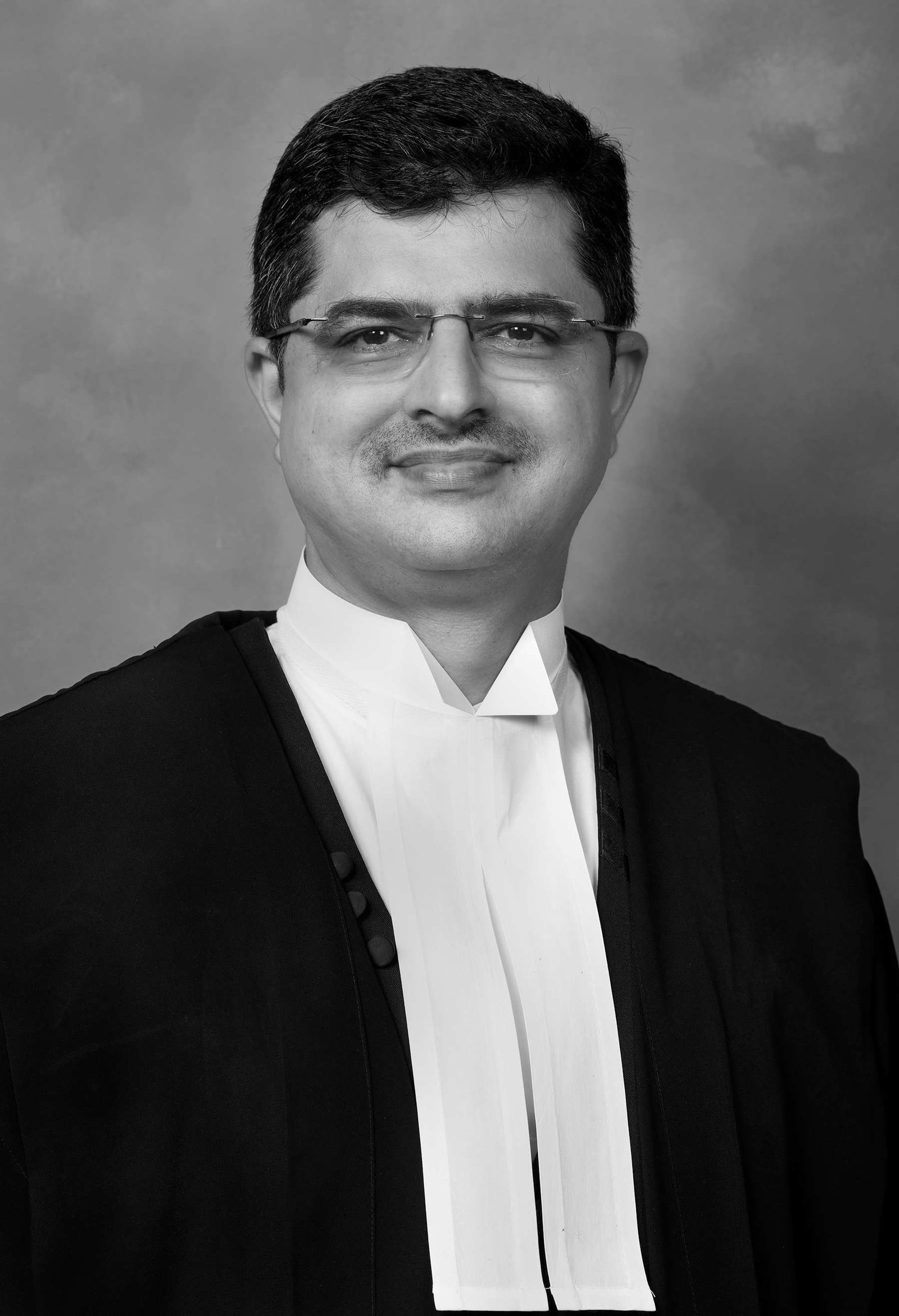
CORAM: SANDEEP V. MARNE, J.
RESERVED ON: 24 JUNE 2026
PRONOUNCED ON: 6 JULY 2026
JUDGMENT:
1) These are cross Petitions �led by the Employer and by its
Employee challenging the judgment and order dated 12 May 2022 passed
by the learned Member, Industrial Court, Nashik in Revision Application
(ULP) No. 2 of 2020, by which the Industrial Court has modi�ed the
Order of the Labour Court. By its judgment and order dated 28 January
2020, the Labour Court had allowed Complaint (ULP) No. 25 of 2017 �led
by the Employee and had set aside termination order dated 27 April 2017
with direction for reinstatement of the Employee with continuity in
service and full backwages from 27 April 2017. The Industrial Court,
though has maintained the direction for reinstatement with continuity,
has denied him the backwages.
2) The Employer is aggrieved by setting aside of the
termination order dated 27 April 2017 and direction for reinstatement
and has accordingly �led Writ Petition (ST) No. 5298 of 2023 challenging
the orders passed by the Labour and Industrial Courts. On the other
Page No. 2 of 23
6 JULY 2026
Renuka WP 3505-2023 and WP(ST) 5298-2023
hand, the Employee is aggrieved by only the order passed by the
Industrial Court to the extent of denial of backwages and has accordingly
�led Writ Petition No. 3505 of 2023.
3) Apras Polymer and Engineering Company Pvt. Ltd.
(‘Employer’) is engaged in the business of manufacturing plastic
injection molding and has a factory at MIDC, Ambad, Nashik. Mr.
Rajendra Laxman Deore (who is referred to as the ‘Employee’ for the sake
of convenience and without any reference to his status as such) was
appointed on the post of Quality Assurance Supervisor since 7 March
2011. According to Employer, Employee does not �t within de�nition of
the term ‘workman’ under Section 2(s) of the Industrial Disputes Act,
1947 (ID Act). On the grounds of poor performance and other behavioral
issues, the Employer terminated the services of Employee by letter dated
27 April 2017 by offering to pay compensation in the form of two
months’ salary. The Employee �led Complaint (ULP) No.25 of 2017
before Labour Court, Nashik challenging the termination letter dated 27
April 2017 and seeking reinstatement with full backwages. The
Complaint was resisted by the Employer by �ling Written Statement.
Based on pleadings, the Labour Court framed issues. Employee led
evidence by examining himself as a witness in addition to �ling
documentary evidence. The Employer examined Mr. Mosim Mohammed
Ali Sayyed, Assistant Manager of HDFC and Rajendra Damodhar Wagh,
Senior Quality Executive working with it and also �led documents. After
considering the pleadings, documentary and oral evidence, the Labour
Court proceeded to allow Complaint (ULP) No. 25 of 2017 declaring that
Page No. 3 of 23
6 JULY 2026
Renuka WP 3505-2023 and WP(ST) 5298-2023
the Employer had committed unfair labour practice under items 1 (a), (b),
(f) and (g) of schedule IV of the Maharashtra Recognition of Trade
Unions and Prevention of Unfair Labour Practices Act, 1971 (MRTU &
PULP Act). The Labour Court set aside the termination order dated 27
April 2017 and directed reinstatement of the Employee with continuity
of service and full backwages with effect from 27 April 2017.
4) The Employer �led Revision Application (ULP) No. 2 of
2020 before Industrial Court, Nashik challenging the judgment and order
of Labour Court. By judgment and order dated 12 May 2022, the
Industrial Court has partly allowed Revision Application �led by the
Employer and has modi�ed the judgment and order passed by the Labour
Court. The Industrial Court has partly allowed Complaint (ULP) No. 25 of
2017, upholding the �nding of Labour Court about commission of the
unfair labour practice under item 1 (a), (b), (f) and (g) of the Schedule IV
of the MRTU and PULP Act, 1971. The Industrial Court has also not
disturbed the direction for reinstatement in service with continuity.
However, the Industrial Court has set aside the direction of the Labour
Court for payment of full backwages. Thus, the Employer is directed to
reinstate the Employee with continuity of service but without backwages.
As observed above, the Employer is aggrieved by orders passed by Labour
as well as Industrial Courts and has accordingly �led Writ Petition (ST)
No. 5298 of 2023. On the other hand, Employee is aggrieved only by the
order of Industrial Court, to the limited extent of denial of backwages
and has �led Writ Petition No. 3505 of 2023.
Page No. 4 of 23
6 JULY 2026
Renuka WP 3505-2023 and WP(ST) 5298-2023
5) The Employer claims that during pendency of the Pet ition,
Employee was directed to join the services with effect from 28 May 2023.
It is claimed by the Employer that Employee indeed joined the services
and was paid wages. The Employer claims that Employee was required to
be kept in suspension vide letter dated 28 June 2024 and enquiry was
initiated against him vide chargesheet dated 29 July 2024. It is claimed
by the Employer that Employee was dismissed from service with effect
from 27 June 2025 after the charges were proved against him. Employee
has however denied reinstatement, payment of wages or dismissal from
services.
6) Writ Petition No. 3505 of 2023 was initially �led by
Employee through an Advocate. It appears that Employee has availed the
services of several Legal Aid advocates but has changed them from time
to time. Finally, Employee expressed desire to appear in person. However,
the Committee of this Court did not grant permission for personal
appearance to Employee after interacting with him. He however insisted
before the Court to present his case in person. On a condition of
extending due cooperation, this Court has heard submissions made by
the Employee in person.
7) Mr. Jalisatgi, the learned counsel appearing for the
Employer has submitted that the Labour as well as Industrial Courts have
grossly erred in holding that Employee is a ‘workman’ within the
meaning of Section 2(s) of the ID Act or an ‘employee’ within the
meaning of Section 3(5) of the MRTU & PULP Act. That he was employed
Page No. 5 of 23
6 JULY 2026
Renuka WP 3505-2023 and WP(ST) 5298-2023
with the company on the post of Quality Assurance Supervisor, receiving
salary of Rs. 20,368/- and therefore, he had independent supervisory and
managerial powers. That his engagement was in supervisory capacity.
That the Employer has established that the Employee was engaged in
supervisory activity. He was deployed to �nd defects in the products and
to direct its recti�cation through workmen under him. That he also used
to impart training to others. That he used to have interactions with the
customers of the Employer. That he used to prepare inspection reports.
That since he was overseeing the work of others, the engagement in
supervisory capacity was clearly established. That Labour Court and
Industrial Court have erroneously applied the yardsticks of absence of
disciplinary authority or absence of power of taking policy decisions for
determining status. That the said yardsticks are relevant for the purpose
of determining employment in managerial or administrative capacity.
That for proving employment in supervisory capacity, it is not necessary
to establish existence of power of taking disciplinary action or policy
decisions. In support of his contentions, Mr. Jalisatgi relies on the
judgments in Inthru Noronha V/s. Colgate Palmolive (India) Ltd. and
Ors.
1
, John Joseph Khokar V/s B. S. Bhadange and Ors.
2
and Standard
Chartered Bank V/s. Vandana Joshi and Anr.
3
Mr. Jalisatgi would
accordingly pray for setting aside the orders of the Labour and Industrial
Courts directing reinstatement.
8) Mr. Jalisatgi opposes the Petition �led by the Employee and
submits that even if order of reinstatement is upheld, denial of
1
2005 (2) Mh.L.J 884
2
1997 (3) Mh.L.J 907
3
2010 (2) Mh.L.J. 22
Page No. 6 of 23
6 JULY 2026
Renuka WP 3505-2023 and WP(ST) 5298-2023
backwages is clearly justi�ed in the present case since he was gainfully
employed after his termination. That he was in a position to pay EMIs of
HDFC Bank in respect of loan disbursed to him, showing steady source of
income and possible gainful employment.
9) Mr. Jalisatgi further submits that in any case, the liability to
pay backwages cannot exceed period after 28 May 2023 since the
Employee was reinstated on 28 May 2023. He submits that the Employer
has paid salary and subsistence allowance to Employee during the period
from 28 May 2023 to 27 June 2025. He submits that an amount of Rs.
3,88,727/- is paid to the Employee during this period. That since
Employee did not work satisfactorily even after reinstatement and
exhibited behavioral issues, even the order for reinstatement passed by
the Labour Court and upheld by the Industrial Court deserves to be set
aside. He therefore prays for dismissal of the Petition �led by Employee.
10) The Employee, appearing in person, supports the orders
passed by the Labour and Industrial Courts to the extent of upholding
the status as ‘workman’ and ‘employee’ and to the extent of direction for
reinstatement with continuity of service. He submits that he was not
engaged in supervisory capacity and that he did not have any power of
taking any policy decisions. That he did not supervise any other
employees of the company. That his job was restricted to use technical
instruments to check the quality of products. That therefore the Labour
and Industrial Courts have rightly upheld his status as ‘workman’. That
since no inquiry was conducted before terminating his services, the order
for reinstatement does not warrant any interference.
Page No. 7 of 23
6 JULY 2026
Renuka WP 3505-2023 and WP(ST) 5298-2023
11) So far as Writ Petition No. 3505 of 2023 �led by him is
concerned, the Employee submits that the Industrial Court has grossly
erred in setting aside the direction for payment of full backwages. That
there is no cogent evidence of any gainful employment by him. That he
had borrowed money for repayment of loan. That several defaults were
committed by him in repayment of the loans. That in absence of direct
evidence of gainful employment, the Industrial Court has erroneously
recorded presumptive �ndings. He relies on the judgment of the Apex
Court in Deepali Gundu Surwase v. Kranti Junior Adhyapak
Mahavidyalaya
4
in support of his contention that once termination is set
aside, payment of full backwages is a natural consequence and a normal
rule. He denies that the Employer actually reinstated him on 28 May
2023 or paid any wages. That since there is no reinstatement, there is no
question of dismissal on 27 June 2025. He prays for setting aside the
directions of the Industrial Court denying backwages.
12) Rival contentions urged on behalf of the parties now fall for
my consideration.
13) Since the Employer has challenged orders of Labour a nd
Industrial Courts holding termination as illegal and directing
reinstatement, it would be �rst necessary to consider the challenge
raised by the Employer in Writ Petition (ST) No. 5298 of 2023. Mr.
Jalisatgi has raised a singular point for challenging the �ndings of
Labour and Industrial Courts on the issue of legality of termination. He
has submitted that both Labour and Industrial Courts have erroneously
4
(2013) 10 SCC 324
Page No. 8 of 23
6 JULY 2026
Renuka WP 3505-2023 and WP(ST) 5298-2023
treated Employee as a ‘workman’ under Section 2(s) of the ID Act and as
‘employee’ under Section 3(5) the MRTU & PULP Act.
14) It must be observed at the outset that there are concurrent
�ndings of the Labour and Industrial Courts on the issue of status. The
�ndings are recorded on conduct of factual inquiry and this Court
execrcising only supervisory jurisdiction under Article 227 would have
limited powers to interfere in the same. The Employee was employed as
‘Quality Assurance Supervisor’. Mere designation cannot decide his
status and what must be taken into consideration is the nature of work
and his duties and responsibilities. Use of the word ‘Supervisor’ in his
designation would not ipso facto elevate his engagement as in
supervisory capacity. Under Section 2(s) of the ID Act, even a supervisor
can be a workman. It is only when a person is employed in supervisory
capacity that he loses status as a ‘workman’ if he draws wages in excess
of Rs. 10,000/- per month. The de�nition of term ‘workman’ under
Section 2(s) the ID Act is as under:
(s) “workman” means any person (including an apprentice) employed in any
industry to do any manual, unskilled, skilled, technical, operational, clerical or
supervisory work for hire or reward, whether the terms of employment be
express or implied, and for the purposes of any proceeding under this Act in
relation to an industrial dispute, includes any such person who has been
dismissed, discharged or retrenched in connection with, or as a consequence of,
that dispute, or whose dismissal, discharge or retrenchment has led to that
dispute, but does not include any such person—
(i) who is subject to the Air Force Act, 1950 (45 of 1950), or the Army
Act, 1950 (46 of 1950), or the Navy Act, 1957 (62 of 1957); or
(ii) who is employed in the police service or as an officer or other
employee of a prison; or
(iii) who is employed mainly in a managerial or administrative capacity;
or
(iv) who, being employed in a supervisory capacity, draws wages
exceeding ten thousand rupees per mensem or exercises, either by the
Page No. 9 of 23
6 JULY 2026
Renuka WP 3505-2023 and WP(ST) 5298-2023
nature of the duties attached to the office or by reason of the powers
vested in him, functions mainly of a managerial nature.
15) It is contended on behalf of the Employer that the
employment of the Employee was in supervisory capacity . This
contention is premised on the nature of tasks performed by him during
the course of his employment in �nding defects in the manufactured
products, directing recti�cation of defective products, getting the defects
recti�ed from other workmen, imparting training to the other workmen,
interacting directly with the consumers of the company, preparing
inspection report etc. In my view however, none of the above activities
would convert the employment into supervisory capacity. There is no
denial to the position that the Employee was working on technical
instruments for assessing the quality of the manufactured products.
These were his predominant duties. Thus, predominant duties performed
by him included skilled work to be performed on instruments. Mere
performance of work of quality control does not mean engagement in
supervisory capacity. To prove supervisory capacity, it is necessary to
prove that the employee performs predominantly the job of only
supervising the other workmen by deciding their postings, duty timings,
leaves, etc. The supervision thus needs to be on the workmen and not
merely on quality of products. In the present case, there is nothing on
record to indicate that the Employee performed supervisory powers on
other workmen. His authority to assign work was thus restricted only in
the area of quality enhancement of the product. His authority to inspect
quality of product, to prepare inspection reports and to attend to the
complaints of customers was all aimed at ensuring the quality of the
Page No. 10 of 23
6 JULY 2026
Renuka WP 3505-2023 and WP(ST) 5298-2023
product. Performance of those tasks did not give any authority to the
Employee to exercise any control over the other workmen. Similarly, the
imparting of training was again aimed at preventing the workers from
repeating the mistakes. He had no authority to punish any workman or
to decide matters such as leave, pay �xation, transfer, etc. It has also
come in evidence that Employee had no authority to take any managerial
decisions. The Industrial Court has rightly appreciated the above
position and has held in para 8 of its Order as under:
8. As far as the point that complainant is not workman is concerned, I here
state that, complainant vide his evidence Exh. U-13 by witness viz. Rajendra
Deore has categorically submitted the nature of his duties. After appreciating
the said evidence, it is established that, complainant Rajendra Deore has only
authority to report the lacuna and de�ciencies, noticed in the products. He has
not authority to initial any disciplinary action against erring employees.
Although, it is true that complainant Rajendra Deore has authority to assign
the work to his colleagues, the said assignment of work is appeared for
�nishing of the products and for its quality enhancement. After perusal of the
evidence of respondent's witness viz. Rajendra Wagh, who examined below
Exh. C-70, it is established that, the complainant Deore has authority only to
inspect the quality of the product, prepared the inspection report and to attend
and to solve the complaints of the customers. In addition to that, from his
evidence it is established that, complainant Deore has authority to give
necessary training to the workers to avoid the repeated mistakes and thereby
to enhance the quality of the products. All these facts depicted in the evidence
of the respondent witness Rajendra Wagh examined below Exh. C-70
established that, complainant Deore has no authority to take any policy
decision about the end products and also to take managerial decision like to
initiate the action etc. regarding the same. The evidence of respondent's
witness Rajendra Wagh examined below Exh. C-70 establishe d that,
complainant Deore has no authority to punish the erring employee, who is
responsible for the defect in the products. Hence, it is established that,
complainant Deore is a employee/workman falling under Sec. 2(s) I. D. Act,
1047.
16) Mr. Jalisatgi has relied on the judgment of this Cou rt in
Inthru Noronha (supra). The judgment is an authority on the issue that
designation is not conclusive in deciding whether an employee is a
Page No. 11 of 23
6 JULY 2026
Renuka WP 3505-2023 and WP(ST) 5298-2023
workman or not and the Court must essentially be guided by the
dominant nature of duties performed by the employee. Mr. Jalisatgi has
highlighted the �ndings recorded by this Court in Inthru Noronha that
the test of existence of control over subordinate may apply only in
certain factual situations but cannot be a test to be uniformly applied in
every case. He has contended that absence of power to take action
against other workman may only prove lack of managerial powers. In
support of the same contention, reliance is also placed on the judgment
of this Court in Standard Chartered Bank v. Vandana Joshi (supra).
However, in the present case, the absence of power to take disciplinary
action against other workmen is not the only factor considered by the
Labour and Industrial Courts for upholding the status of Employee as a
workman. In Inthru Noronha, claim was raised by employee of
performance of clerical work, though the case involved promotion to the
executive cadre and application of pension scheme meant for executive
staff. In the facts of that case, this Court arrived at the conclusion that
the nature of work performed by the employee was anything but clerical,
and therefore the order of the Industrial Court holding him to be not a
workman was upheld. Similarly, in Standard Chartered Bank, the Court
has essentially discussed the scope of managerial job in the light of
changing nature of businesses. The employee therein was employed as
‘Personal Financial Consultant’ and it was held that she was not
performing work of clerical nature. In my view, both the judgments are of
little assistance in the facts of the present case where the Employee was
admittedly employed to perform work in the production line and
Page No. 12 of 23
6 JULY 2026
Renuka WP 3505-2023 and WP(ST) 5298-2023
discharge his duties by use of technical instruments for assessing quality
of the products.
17) Mr. Jalisatgi has relied on judgment of this Court in John
Joseph Khokar (supra) in support of his contention that Employee was
employed in supervisory capacity and that supervisory work can be
contradistinct from managerial or administrative work. It is held by this
Court that supervisor’s predominant function is to see what work is done
by workers under him but has no power to take any disciplinary action.
Reliance on the judgment is again for highlighting the position that
mere absence of power to take disciplinary action does not exclude an
employee from being employed in supervisory capacity. However, as
observed above, absence of power to take action against other workmen
is not the only factor considered by the Labour and Industrial Courts for
upholding status of the Employee as a workman. Here the predominant
work performed by him was in production line using instruments. He
himself was putting labour in checking the quality of manufactured
products and giving directions/training to other workmen for quality
improvement was not his predominant work. The judgment, therefore,
has no application to the facts of the present case.
18) In view of the above discussion, no case is made out for
interference in concurrent �ndings recorded by the Labour and Industrial
Courts about status as ‘workman’ under Section 2(s) of the ID Act and as
‘employee’ under Section 3(5) of the MRTU & PULP Act.
Page No. 13 of 23
6 JULY 2026
Renuka WP 3505-2023 and WP(ST) 5298-2023
19) The Employer did not conduct any inquiry before
terminating the services of the Employee. Mr. Jalisatgi has not canvassed
any other point for challenging the direction of reinstatement.
Therefore, once challenge to the status as a ‘workman’ fails, the order of
reinstatement will have to be necessarily upheld.
20) Coming to the issue of backwages, Labour Court had
granted full back wages in addition to continuity in service while setting
aside the termination order and while passing the order for
reinstatement. However, the Industrial Court has set aside the direction
for payment of backwages and has upheld only the direction for
reinstatement and continuity of service. The Industrial Court has taken
into consideration the evidence of Manager of HDFC Bank, who produced
documents in respect of loan account of the Employee. The Industrial
Court has held that the Employee paid all EMIs in respect of loan
account and there was no default after termination. On this basis, the
Industrial Court has arrived at a �nding that he must have had enough
source of funds even after his termination and that therefore, there must
be some gainful employment for him. The relevant �ndings by the
Industrial Court in this regard are recorded in para 11 which read thus:
11. The issue about the back wages is concerned, I have gone through the
evidence of respondent's witness viz. Mohsin Sayyed examined below Cxh. C-
58 and the documents �led below Exh. C-60 to C-62. After appreciating the
evidence of respondent's witness vide Mohsin Sayyed, it is established that, he
is working as a Manager in the HDFC bank where-from complainant Deore has
availed the home loan facility in the year 2015. Respondent witness Mohsin
has submitted the extract of loan account for the period 01.04.2015 to
29.11.2018 vide Exh. C-60 to C-62. After appreciating the evidence of
respondent's witness Mohsin Sayyed as well as the documents at Exh. C-60 to
Page No. 14 of 23
6 JULY 2026
Renuka WP 3505-2023 and WP(ST) 5298-2023
C-62, it is established that, although complainant Deore has terminated from
service w.e.f. 27.04.2017 he has paid all the EMI towards the loan account and
there is no default. This fact clearly established that, complainant Deore has
enough source of fund after termination of his service and thereby he is in
position to pay the EMI regularly. Unless one has enough source of fund, apart
from the expenses required for the livelihood, no-one is able to pay the EMI of
the loan. As complainant Deore has no defaulter towards his loan account after
termination of his service, it is established that, he is gainfully employed and
thereby he is in a position to pay the EMI regularly. The Ld. Labour Court vide
para No. 26 in the judgment opined that, mere fact that one is paying EMI
regularly is not a incidence which constitute that, he is gainfully employed. It
is mentioned here that, if one has no source of fund, he is not in a position to
pay the EMI of the loan. It is general behaviour that, after making provision
towards the daily livelihood person will save from the earnings and from that
he will pay the EMI towards the loan. It is obvious that, �rst priority is always
given to the livelihood and not towards the repayment of loan. As complainant
Deore has no defaulter towards the loan opt by him, it is established that, he
has a enough source of fund, which could only available to him by gainful
employment. Thus, the observation to that context given by the Ld. Labour
Court is appeared to be perverse and modi�cation of the order to that effect is
necessary.
21) In my view, the Industrial Court has committed an error in
presuming gainful employment through inferential process. There is no
direct evidence of Employee’s gainful employment. The presumption of
gainful employment is raised only on account of ability to repay EMIs
after termination of service. In my view, �nding of gainful employment
cannot be recorded in absence of some proof. Mere ability to pay EMIs
cannot be a ground for presuming that the workman must have been
employed after termination. There may be variety of source from which
payment of EMIs can be arranged by a terminated workman. He may
have suf�cient savings or he may borrow funds from friends and relatives
in order to save the residential house from being auctioned. He may
liquidate other assets to repay the EMIs. In my view therefore, an
inevitable presumption of gainful employment cannot be drawn in every
Page No. 15 of 23
6 JULY 2026
Renuka WP 3505-2023 and WP(ST) 5298-2023
case where a terminated workman is in position to pay the EMIs. I am
therefore not in agreement with the �ndings recorded by the Industrial
Court about the Employee being gainfully employed after termination of
services.
22) The next issue for consideration is the nature of relief that
needs to be granted in the facts and circumstances of present case. The
Employee was terminated from service on 27 April 2017. The Labour
Court set aside his termination and directed reinstatement from 28
January 2020. The Industrial Court upheld the direction for
reinstatement but set aside the direction for backwages on 12 May 2022.
During pendency of the Petition and in deference to the observations
made by this Court, it appears that the Employer called upon Employee
to join the services with effect from 28 May 2023. It is the case of the
Employer that the Employee was reinstated on 28 May 2023, but he
declined to perform the allocated work and behaved in arrogant manner.
The Employer claims to have suspended him on 28 June 2024 and after
issuance of chargesheet dated 29 July 2024, he was dismissed from
service by order dated 27 June 2025. The Employer claims to have paid
wages and subsistence allowance to the Employee during the period from
28 May 2023 to 27 June 2025. It is claimed that a total amount of Rs.
3,88,727/- is paid to him from 7 July 2023 to 7 July 2025.
23) The Employee however stoutly denies the allegation s of
reinstatement, suspension and dismissal. He has submitted that he was
never reinstated in service, nor was he paid any wages or subsistence
Page No. 16 of 23
6 JULY 2026
Renuka WP 3505-2023 and WP(ST) 5298-2023
allowance during June 2023 to July 2025. At the time of closure of
hearing, this Court repeatedly enquired with the Employee as to whether
he had received any amounts from the Employer during June 2023 to July
2025 and he insisted that he did not receive a single farthing from the
Employer. Therefore, the Petitions were directed to be listed for
directions in order to enable the Employer to produce bank statements
for demonstrating transmission of amounts to the account of the
Employee. Accordingly, a compilation is placed on record on behalf of the
Employer on 24 June 2026. The compilation contains statement of
account of the Employer’s bank which indicates that various amounts are
transmitted in the bank account of the Employee with Union Bank of
India bearing No. 513002010002247. However, despite the Employer
demonstrating before this Court, through bank statements, transmission
of various amounts on June 2023 to July 2025, the Employee again
maintained before this Court during the course of hearing on 24 June
2026 that he did not receive a single farthing from the Employer. To
disprove the Employer’s contention, he has placed on record copies of
statements of his account with Union Bank of India and maintained that
no amount was paid by the Employer to him during the concerned
period.
24) I �nd both the denials of Employee about reinstatement /
rejoining the services and payment of various amounts to be totally
false. So far as the issue of rejoining the services is concerned, the
Employee has himself admitted in his Af�davit dated 29 July 2024 that
Page No. 17 of 23
6 JULY 2026
Renuka WP 3505-2023 and WP(ST) 5298-2023
he had rejoined the services and had started working. In this regard,
paragraphs 10, 11, 12, 13 and 14 of af�davit dated 29 July 2024 read thus:
10. I says that this Hon'ble Court passed an order dated 18th April 2023, where
it was clari�ed that no interim order was granted in the cross petition �led by
the Respondent-company. Therefore by letter dated 02.05.2023 addressed to
the Respondent-company requesting them to take me back in to the service.
The said letter was refused with mark "Refused" by postman on 04/05/2023 to
my address. After that I received the letter dated 22/05/2023 from Respondent-
company to reinstate me as per order dated 18th April 2023 which was received
on 26/05/2023.
11. I say that, on the day of reinstatement (28th May 2023) I have joined and
reported to HR. Prachi Chincholikar madam to give my work. She told me to
make entry in the register and to start my work under Mr. R.D. Wagh in Quality
Department I started my work to check product quality on machines but at
11:00am, Mr. Prakash Dhanokar Sir (Director) of the Respondent-company
came, stopped my work and told me for go home and come at 5:30pm. I
immediately informed HR. Prachi Madam on call. Also informed my Advocate
Sushan Mhatre on Message about the said incident. I was instructed by my
Advocate, not to go home and if they deny giving work then sit near watch
cabin till 5:30pm. Therefore, the Director restricted my entry in the
Respondent-company.
12. I say that on Reinstatement day. When I called H.R. Prachi Chincholikar
madam and told her about Mr. Prakash Dhanokar Sir (Director) has stopped me
from doing my quality work. She accepted and told me If Prakash Sir (Director)
told you to go at home and come only to put out time, then you can go and
come only to put out-time. She also said, Sir is the director and she also had
same directions from the Director. I crave leave and rely upon the said call
details. Hereto annexed and marked as Exhibit-F is the Copy of call log, call
recording (transcription), messages, along with 65B Certi�cate of my
Telephonic conversation with H.R. Prachi Chincholikar Madam on dated
28/05/2023 11:46 AM of my reinstatement day and several messages on several
days for permissions.
13. Once I joined company and started working I was treated extremely badly
and unfairly. I was made to sit in front of the watchman and was not allotted
work for which I was appointed. I was not allowed to sign the register, So I had
to use my cell phone to click the sel�e-photos to show I was present and my
own safety purpose as they misbehaved with me. I have saved the metadata
sent to my advocate (details of photo). I crave leave to refer and rely upon
every sel�es captured from my mobile. Some days I fell extremely unwell due
to the extreme heat. I experienced severe dehydration as I was made to sit next
Page No. 18 of 23
6 JULY 2026
Renuka WP 3505-2023 and WP(ST) 5298-2023
to the watchman without any shade on my head and no cooling system in place
at the peak of the summer when the temperature easily soared above 40
degrees Celsius. I gave Proper Application, Gate Pass, on 7th June, 8th June to
go at hospital and submitted Medical Certi�cates to watchman as madam not
allowed me to submit it in of�ce. Hereto annexed and marked Exhibit-G, is the
copy of the Gate Pass given to me by madam when I suffered giddiness and
was admitted in hospital. Details of medical certi�cate also given by me. I sent
a letter to HR. Madam on 02/06/2023 after submitting medical certi�cate as
they did not allowed me in company and sat me near gate in front of
watchman.
14. I say that, the Respondent-company did not allow me to work for a long
period. When rainy season started, I was only allowed to sit in the company
near quality Department to save myself from rains, but the Respondent-
company did not allow me to enter the company and kept on harassing me.
They harassed me through watchman to remove me from my quality
department and erased my in-out time in register through the watchman.
Hereto annexed and marked Exhibit-H is the copy of the said video and In-Out
time erased by the watchman as per the H.R. and Director's direction.
25) The Employee himself has placed on record WhatsApp
conversation and the message of 28 May 2023 states “Mi Rajendra Deore.
Aaj kamavar join zalo ahe”. The message of 24 July 2023 by him was,
“mala ushir honar as aaj thoda”. The message of 31 July 2023 was “Sir
mala udyachi leave pahije ahe highcourtat tarikh ahe”.
26) The af�davit as well as WhatsApp messages sent by the
Employee leave no manner of doubt that he had actually rejoined the
service with the Employer on 28 May 2023. During the course of oral
submissions, he has falsely denied reinstatement or rejoining of work.
27) Coming to the issue of payment of amounts by the
Employer during 28 May 2023 to 27 June 2025, the bank statements
clearly re�ect transmission of various amounts every month in the bank
Page No. 19 of 23
6 JULY 2026
Renuka WP 3505-2023 and WP(ST) 5298-2023
account of Employee. It appears that following amounts are transmitted
in the bank account of the Employee during June 2023 to July 2025:
Sr. No. Date Amount (After deductions)
1. 7th June 2023 2,743/-
2. 11th July 2023 18,313/-
3. 8th August 18,313/-
4. 12th September 2023 18,313/-
5. 9th October 2023 18,313/-
6. 6th November 2023 18,313/-
7. 7th December 2023 18,313/-
8. 5th January 2024 18,301/-
9. 7th February 2024 15,913/-
10. 6th March 2024 17,102/-
11. 5th April 2024 15,109/-
12. 7th May 2024 16,177/-
13. 7th June 2024 17,284/-
14. 8th July 2024 16,807/-
15. 6th August 2024 9,399/-
16. 5th September 2024 9,057/-
17. 7th October 2024 9,057/-
18. 25th October 2024 (Bonus) 9,965/-
19. 6th November 2024 13,684/-
20. 6th December 2024 13,684/-
21. 6th January 2025 13,659/-
22. 6th February 2025 13,684/-
23. 6th March 2025 13,684/-
24. 7th April 2025 13,684/-
25. 7th May 2025 13,684/-
26. 6th June 2025 13,684/-
27. 7th July 2025 12,591/-
Total 3,88,727/-
28) The Employee has, however, placed on record some stray
statements of his bank account. He has deliberately not placed on record
bank statement of those dates on which the transmission of amounts has
Page No. 20 of 23
6 JULY 2026
Renuka WP 3505-2023 and WP(ST) 5298-2023
occurred. To illustrate, the �rst transmission of amount of Rs. 2,743/-
occurred on 7 June 2023 and Employee has placed on record copy of his
bank his statement from 28 May 2023 to 6 June 2023. T he bank
Statement pertaining to the date 7 June 2023 is deliberately not placed
before the Court. Similarly, the next transmission occurred on 11 July
2023 of amount of Rs. 18,313/-. The Employee has, however, placed on
record statement of his bank for the period 1 July 2023 to 8 July 2023.
The last transmission occurred in respect of amount of Rs. 12,591/- on 7
July 2025, but the Employee has not placed on record copies of his bank
statement during August 2023 to July 2025 and has conveniently
produced bank statement for the period from 1 August 2025 to 18
September 2025. The Employee has thus attempted to mislead this Court
and has taken a false plea that he has not received a farthing from
employee in respect of the period 28 May 2023 to 27 June 2025. Thus,
both the denials by the Employee in respect of reinstatement as well as
in respect of receipt of amounts is dishonest.
29) From various af�davits placed on record by the rival sides,
it appears that the relationship between the duo has soured. It is not in
the interest of either of the parties that the Employee is made to work
with the Employer. The interaction between the two sides during the
period from 28 May 2023 to 27 June 2025 was not healthy. In my view
therefore, the direction for reinstatement or backwages needs to be
modi�ed and lump sum compensation needs to be awarded to the
Employee for his wrongful termination on 27 April 2017. Such course of
Page No. 21 of 23
6 JULY 2026
Renuka WP 3505-2023 and WP(ST) 5298-2023
action would also obviate further litigation between the parties relating
to challenge to the second dismissal of 27 June 2025.
30) Considering the facts and circumstances of the case, where
the last drawn wages of the Employee were Rs. 20,368/-, and the fact that
he has already received an amount of Rs.3,88,727/- in respect of the
period from 28 May 2023 to 27 June 2025, in my view, the ends of justice
would meet if a lump sum compensation of Rs. 20 lakhs is awarded to the
Employee towards full and �nal settlement. It must be clari�ed that the
Employee has not displayed honest conduct before the Court as observed
above and this Court would have been justi�ed in denying him any relief
in exercise of extraordinary jurisdiction. However, the relief of lump sum
compensation is being granted to him purely by way of indulgence
despite him making false oral statements before the Court while
appearing in person. Considering the amount already paid of Rs.
3,88,727/-, the total compensation for the Employee would be to the tune
of Rs. 23,88,727/-.
31) I accordingly proceed to pass the following order:
i) The judgment and order dated 28 January 2020
passed by Labour Court, Nashik in Complaint (ULP)
No. 25 of 2017 and judgment and order dated 12 May
2022 passed by Industrial Court in Revision
Application (ULP) No. 2 of 2020 are modi�ed.
ii) The Employer-Apras Polymers & Engineering
Company Private Limited, shall pay to the Employee-
Page No. 22 of 23
6 JULY 2026
Renuka WP 3505-2023 and WP(ST) 5298-2023
Shri. Rajendra Laxman Deore a lump sum
compensation of Rs. 20,00,000/- in lieu of re-
instatement and back wages.
iii) Over and above the lump sum compensation so
awarded, the Employee shall not be entitled to any
other bene�ts from the employer qua the services
performed by him.
iv) The awarded compensation shall be paid by the
Employer to the Employee within a period of 4 weeks,
failing which there shall be interest at the rate of 8 %
per annum on the awarded sum of compensation.
32) With the above directions, both the Writ Petitions are
disposed of. With the disposal of the Writ Petitions, nothing survives to
be adjudicated in the Interim Application and is accordingly disposed
of. There shall be no order as to costs.
[SANDEEP V. MARNE, J.]
33) After the judgment is pronounced, the learned counse l
appearing for the Employer prays for stay of the operative part of the
judgment for a period of 8 weeks. However, considering the nature of
�ndings recorded in the judgment, I am not inclined to stay the
directions. The request is accordingly rejected.
[SANDEEP V. MARNE, J.]
Page No. 23 of 23
6 JULY 2026
NEETA
SHAILESH
SAWANT
Digitally
signed by
NEETA
SHAILESH
SAWANT
Date:
2026.07.06
17:07:31
+0530

Legal Notes
Add a Note....