
As per case facts, petitioners, teachers appointed under the Sarva Shiksha Abhiyan (SSA) program by U.T. Chandigarh, have served for nearly two decades on a contract basis after a proper ...
No Acts & Articles mentioned in this case
IN THE HIGH COURT OF PUNJAB AND HARYANA
AT CHANDIGARH
****
209 (7 cases) CWP-20096-2021
Date of Decision: 14.11.2025
ARVIND RANA AND OTHERS ...Petitioners
Versus
UNION OF INDIA AND ORS. ...Respondents
And
Sr.
No.
Case No. Petitioner(s) Respondent(s)
2. CWP-11021-2023 Prabhat Kiran and
Ors.
Union of India and Ors.
3. CWP-22687-2023 Anchal Garg and
Ors.
Union of India and Ors.
4. CWP-2425-2023 Surinder Kumar and
Ors.
Union of India and Ors.
5. CWP-3561-2022 Anil Kumar Vashist
and Ors.
Union of India and Ors.
6. CWP-3812-2022 Ujagar Singh and
Ors.
Union of India and Ors.
7. CWP-8485-2023 Inderjit Kaur and
Ors.
Union of India and Ors.
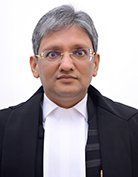
CORAM:- HON'BLE MR. JUSTICE JAGMOHAN BANSAL
Present:- Mr. Gurminder Singh, Senior Advocate with
Ms. Harpriya Khaneka, Advocate for the petitioners
(in CWP No.20096 of 2021 and CWP No.3812 of 2022)
Mr. D.S. Patwalia, Senior Advocate with
Mr. Ayush Gupta, Advocate for the petitioners
(in CWP No.3561 of 2022)
Mr. Mahipal S. Yadav, Advocate for petitioner No.69
(in CWP-20096-2021)
Mr. Kulbir Singh Sekhon, Advocate for petitioners
(in CWP-8485-2023)
Mr. Akshay Bhan, Sr. Advocate with
Mr. A.S. Rawaley, Advocate for the petitioners
(in CWP-11021-2023)
CWP-20096-2021 and connected cases -2-
Mr. Dinesh Kumar Jangra, Advocate
for the petitioners (in CWP Nos.2425 and 22687 of 2023)
Mr. Satya Pal Jain, Additional Solicitor General of India
(through video conferencing) with
Mr. Pankaj Gupta, Senior Panel Counsel
(through video conferencing)
for Union of India-respondents No.1 & 2
(in CWP No.2425 of 2023) and with
Mr. Himanshu Malik, Senior Panel Counsel
for Union of India-respondent (in CWP No.11021 of 2023)
Mr. Anil Chawla, Senior Panel Counsel
for Union of India-respondent (in CWP No.20096 of 2021,
CWP No.3561 of 2022 and CWP No.3812 of 2022)
Mr. Ashutosh Bhardwaj, Advocate for
Mr. Parvesh K. Saini, Senior Panel Counsel
for the respondent-Union of India
(in CWP No.22687 of 2023)
Mr. Lokesh Chander Aggarwal, Advocate
for U.T., Chandigarh (in CWP-8485-2023)
Mr. Amit Jhanji, Senior Standing Counsel with
Mr. Himanshu Arora, Additional Standing Counsel
with Ms. Madhu Dayal, Advocate and
Mr. Abhishek Premi, Advocate for U.T. Chandigarh
***
JAGMOHAN BANSAL, J. (ORAL)
1. As common issues are involved in the captioned petitions,
with the consent of both sides, the same are hereby disposed of by this
common order. For the sake of brevity and convenience, facts are
borrowed from CWP-20096-2021.
2. The petitioners through instant petition under Articles
226/227 of the Constitution of India are seeking setting aside of order
dated 07.05.2021 (Annexure P-45) whereby respondent has rejected their
claim for regularization of service. They are further seeking direction to
CWP-20096-2021 and connected cases -3-
respondent to integrate services of the petitioners rendered under Sarva
Shiksha Abhiyan (for short ‘SSA’) into the regular cadre of the Education
Department, U.T. Chandigarh.
3. The Ministry of Human Resource Development,
Government of India in 2004 visualized SSA as comprehensive and
integrated programme to attain universal elementary education in the
country. The said programme was launched in partnership with the State
Governments and Local Self Governments. As per approved programme,
States and U.T. were supposed to make appointment of additional
teachers to comply with pupil teacher ratio prescribed under Right to
Education Act (in short ‘RTE’). It was provided that new teachers
would be appointed for opening new schools and additional teachers for
existing schools. The maximum number of upper primary teachers would
depend on the strength of upper primary sections. There would be
minimum two teachers for new primary school and three teachers for
upper primary schools. The salary of additional teachers will normally be
allowed under SSA. States have their own norms of recruitment of
teachers and payment of salary to new recruits. The states will be free to
follow their own norms as long as these are consistent with the norms
prescribed by National Talent Search Examination (NTSE). At least 50%
new teachers should be women. Grant would be given to Government
Schools as well as Government-Aided School, Cantonment, Municipal
Corporation Schools and aided madrasas. In case of schools other than
Government Schools, additional conditions including condition of salary
shall be complied with. Salary of teachers and their service condition
CWP-20096-2021 and connected cases -4-
would be similar to Government School Teachers. Financial assistance
was contemplated as 85:15 during 9
th
Five Year Plan, 75:25 during 10
th
Five Year Plan and 50:50 sharing thereafter between the Government of
India and State Government. It is apt to notice here that as per reply of
Union of India (for short ‘UOI’), in case of U.T. without Legislature,
100% funds would be provided by UOI.
4. The matter relates to Teachers of Union Territory,
Chandigarh recruited under SSA Programme. As per page 104 of the
paper-book contents of which are not disputed by respondent, 1375 posts
of teachers were sanctioned in various meetings of Project Approval
Board in MHRD New Delhi for U.T. Chandigarh.
5. Executive Committee of National Mission for SSA in its
meeting held on 05.12.2013 amended norms for various activities under
said programme. The revised norms with respect to additional teachers
read as:-
“8
Additional
teachers
(a) Additional teachers will
be provided as per the RTE
norms to all Government
and Local Body schools;
however SSA assistance will
not be available for filling
up State sector vacancies
that have arisen on account
of attrition and retirement
vacancies.
(b) The practice of
recruiting 50% female
teachers under SSA will
continue.
The following
points are
inserted:
h) Support for
additional
teachers can be
availed by a
State/ UT
under SSA only
after teacher
vacancies in
the State sector
have been
filled first.
CWP-20096-2021 and connected cases -5-
(c) The States shall
rationalize the deployment
of existing teachers to
ensure that there is no
urban-rural imbalance in
teacher deployment.
(d) The States shall maintain
the prescribed PTR for each
School
(e) Vacancy of teachers in a
school shall not exceed 10%
of the total sanctioned
strength
(f) States shall appoint
teachers with minimum
qualifications as notified by
NCTE under section 23 of
RTE Act.
(g) In case the State does not
have trained persons in
adequate numbers, it will
seek relaxation from the
Central Government under
the relevant provisions of the
RTE Act. While seeking such
relaxation the State shall
make a commitment with a
detailed time bound
programme for training of
untrained teachers within
the time frame prescribed
under the RTE Act.
i) The States
should
maintain
unified
teaching
cadres and no
separate "S.SA
cadre' IS
permissible, as
all teachers are
ultimately to be
borne on the
State
Government.”
6. The U.T. Administration through different letters requested
Government of India to create additional posts of teachers to regularize
CWP-20096-2021 and connected cases -6-
teachers appointed under SSA. Teachers under SSA were appointed
through proper channel. There was advertisement followed by written
test and all other formalities which are followed in case of regular
appointments. Government of India, Ministry of Human Resource
Development, Department of School Education & Literacy vide
communication dated 27.03.2014 informed the U.T. Administration that
pursuant to their letter dated 08.02.2013 and 07.02.2014, Government has
approved creation of 1130 posts in Education Department, U.T.
Administration of Chandigarh. In the said letter, it was categorically
pointed out that administration may continue the present practice of
engaging 647 Masters and 728 Primary Teachers on contract basis under
SSA. Letter dated 27.03.2014 reads as-
“F.No.2-2/2011-UT.I
Government of India
Ministry of Human Resource Development
Department of School Education & Literacy
UT.I Section
*****
B-Wing, Ground Floor, Shastri Bhawan
New Delhi, the 27
th
March, 2014
To
The Director,
Public Instructions(S)
Chandigarh Administration
Sector-9, Chandigarh
Subject: Creation of posts in Education
Department, UT Administration of
Chandigarh
Sir,
I am directed to refer to your letter no.DPI-UT-AI-
5(2)04-Vol.II/182-183 dated 08
th
February, 2013
and subsequent correspondence resting with letter
dated 07.02.2014 on the subject mentioned above
and to convey the approval of the Government of
India for the creation of following 1130 posts in
Education Department, UT Administration of
Chandigarh.
CWP-20096-2021 and connected cases -7-
S.
No.
Name of the post Pay Band
+
Grade
Pay
(Rs.)
Number of
posts
sanctioned
Teaching posts
1. Master 10300-
34800 GP
5000
683
2. Master cadre
(language)
10300-
34800 GP
5000
3. JBT
(Primary Teacher)
10300-
34800 GP
5000
342
4. NTT 10300-
34800 GP
5000
83
Total 1108
Administrative Posts
5. Director
(School
Education)
15600-
39100 GP
7600
1
6. Dy. Director
(School
Education)
15600-
39100 GP
6600
1
7. Dy. Director
(Admn.)
15600-
39100 GP
6600
1
8. Dy. Controller
(F&A)
15600-
39100 GP
6600
1
9. Asstt. Controller
(F&A)
15600-
39100 GP
5400
1
10. Section Officer 10300-
34800 GP
5000
1
11. Sr. Assistant 10300-
34800 GP
4400
8
12. Clerk 10300-
34800 GP
200
8
Total 22
2. UT Administration of Chandigarh may
continue the present practice of engaging Master
(647 nos.) and Primary Teachers (728 nos.) on
contract basis under SSA.
CWP-20096-2021 and connected cases -8-
2. This issues with the approval of the Ministry
of Finance, Department of Expenditure vide their
ID No.35089/E.Coord.I/2014 dated 27
th
March,
2014.
Yours faithfully
Sd/-
27/3/2014
(Lakhmi Chand Mehra)
Under Secretary to Government of India
”
7. The Education Department of U.T. Administration vide letter
dated 30.06.2014 made a detailed representation to Government of India
highlighting history of appointment of Teachers under SSA and need of
their regularization. In the said letter, it was pointed out that as per
revised framework, additional teachers will be provided as per norms of
RTE to maintain pupil teacher ratio and no separate SSA Teachers cadre
is permissible as all teachers are ultimately to be borne on the State/U.T.
Government. Continuation of practice of engaging 647 Masters and 728
Primary teachers on contract under SSA results in creating of separate
SSA Cadre having different service condition from that of regular
teaching staff appointed against state cadre posts contrary to instructions
conveyed vide revised framework and interventions to State/U.T.
Education Secretaries and State Project Directors issued by MHRD on
01.01.2014. Reference was also made to letter dated 04.03.2013
addressed to Punjab Government. In the said letter, MHRD has pointed
out that in the State of Punjab separate cadre of SSA Teachers has been
created for whom different service condition has been spelt out and they
have been posted in only SSA schools. This is erroneous phenomena. All
schools receiving SSA funding are schools of State Government and so
CWP-20096-2021 and connected cases -9-
are all teachers. For the ready reference letter dated 30.06.2014 of U.T.
Administration is reproduced as below-
“Subject:- Creation of posts in Education
Department, UT Administration of
Chandigarh,
Sir,
I am directed to refer your office letter No.2-
2/2011-UT-I dated 8.5.2014.
The attached representation was carefully
examined and to address the grievance raised
therein, following is submitted:
1 That MHRD via letter No 2-2/2011-UT-1
dated 27.3.2014 asked the UT
Administration of Chandigarh to continue
the practice of engaging 647 Master and 728
Primary teachers on contract under SSA.
The copy of the letter is annexed as annexure
A-1.
2 That UT sent the proposal to MHRD vide
letter no. DPI-UT-A1(2)04/Vol.1/735A1
dated 17.08.2013 (copy of the letter is
annexed as Annexure-A-2) for the creation of
2483 posts of teachers including 1375 posts
of teachers already approved by SSA PAB,
The breakup of these posts is as under:
a. Masters (TGT)=1330
including 647 posts already
approved by SSA PAB
b. JBTs=1070 including 728
posts already approved by SSA
PAB
c. NTTs=83
1375 posts of teachers (Masters=647
and JBTs=728) were included in the
proposal in accordance with the
discussions held in the meeting of
CWP-20096-2021 and connected cases -10-
PAB held on 14.3.2011 where in
Secretary, MHRD has asked the UT to
appoint all teachers under SSA on
regular basis and not on contract.
The relevant part of the minutes of the
meeting is reproduced as under:
“On the issue of number of teacher
vacancies the UT officials Informed
that though the recruitment of
teachers was being undertaken
regularly, the vacancies were mainly
on account on low retention due to
the contractual natures of the posts. It
was further added that due to large
scale recruitment of teachers in the
adjacent states in regular post of
teachers there had been a large scale
retrenchment of newly recruited
teachers. The UT officials informed
that in case of regular teachers the
rate of retention was higher. The UT
officials were advised to create
regular posts for the teachers in order
to address the problem.”
3 That on 1.1.2014 MHRD has issued revised
framework and interventions to State/UT's
Education Secretaries and State Project
Directors after taking approval from
executive committee of National SSA
Mission chaired by HRD Minister. The
norms and interventions of SSA and RTE
2009 mentioned as hereunder:
a. As per norms issued by MHRD dated
1.1.2014 and decided in the meeting
of executive committee of National
SSA Mission chaired by HRD
CWP-20096-2021 and connected cases -11-
Minister instructions had been issued
to Education Secretaries of
States/UT's vide para 8, sub para-(a),
"Additional teachers will be provided
as per the RTE norms to all
Government and local body schools.”
b. That further in sub para-(i) it is stated
that, "The states should maintain
unified teaching cadres and no
separate "SSA Cadre" is permissible
as all teachers are ultimately to be
borne on the State/UT Government.
The copy of letter of MHRD and
revised norms are annexed as
annexure A-3 and A-4 respectively.
4 That as per revised framework as stated in
annexure A-4, all posts sanctioned by PAB
under SSA to UT, Chandigarh are as per
norms of RTE to maintain Pupil Teacher
ratio and no separate SSA teachers cadre is
permissible.
5. But vide letter No 2-2/2011-UT-1 dated
27.3.2014, MHRD asked the UT
Administration of Chandigarh to continue
the practice of engaging 647 Master and 728
Primary teachers on contract under
SSA(annexure A-1) which results in creating
of separate SSA cadre having different
service conditions from that of regular
teaching staff appointed against state cadre
posts contrary to the Instructions conveyed
vide revised framework and interventions to
State/UT's Education Secretaries and State
Project Directors Issued by MHRD on
1.1.2014 and so, U.T. Chandigarh will not
be able to able to comply with these, revised
CWP-20096-2021 and connected cases -12-
norms of SSA (annexure A-4).
6 That further to clear the rules, Sh. Rajender
Prashad, Under Secretary, MHRD, and
Department of School Education Literacy on
4.3.2013 issued letter No. F.No 14-1/2012-
EE.3 to Punjab Director General of School
Education in which it was mentioned as
under:
“SSA provides support for new
teachers in schools sanctioned under
SSA and also additional teachers in
existing schools based on the
enrolment. The support to States for
additional teachers and teacher's
salary is given at the same scale and
service conditions as of the teaching
cadre of the State. It is found that that
in Punjab a separate SSA cadre of
SSA Teachers has been created for
whom different service conditions has
been spelt out and they have been
posted in only SSA schools. This is
erroneous phenomenon. All schools
receiving SSA funding are schools of
the State Government and so are all
teachers. SSA is only programme
providing additional funding to the
state for Elementary Education
Development and reform.
The State is advised to kindly desist
from creating any analogous situation
on this account.” The copy of letter is
annexed as A-5.
7 That from perusal of annexure A-3, A-4 and
A-5, it is clear that all posts sanctioned
under SSA to States/UT's, herein UT,
CWP-20096-2021 and connected cases -13-
Chandigarh are as per norms of RTE Act
2009 and these posts are required to be
created in the Education Department,
Chandigarh Administration as suggested in
revised frame work of SSA
8 That already 65% of salary funds of these
posts of teachers are coming from SSA. Govt
of India and UT, Chandigarh is bearing 35%
of the salary funds.
9 That for the financial Implication, no major
burden is imposed neither on the Central
Government nor on the state (i.e. U.T
Chandigarh), since presently these teachers
are paid with Initial scale salary in
consolidated form (i.e. Initial Basic+ DA).
In view of the above, it is requested to give
approval for creation of remaining 647 posts of
Masters and 728 posts of Primary teachers under
Education Department. Chandigarh Administration
which was a part of our proposal for creation of
3472 posts (Annexure IV) against which 1108 posts
of teachers have been sanctioned by MHRD
(Annexure 1) to enable U.T. Chandigarh to merge
the Teachers appointed on contract under SSA In
the Education Department to meet with the
instructions of Secretary MHRD, norms of RTE and
latest norms and Intervention of SSA Issued on
1.1.2014 by MHRD with approval of National SSA
Mission headed by HRD Minister.
”
[Emphasis supplied]
8. The matter came up for consideration before Government of
India which vide impugned order dated 07.05.2021 rejected requests of
the U.T. Administration seeking regularization of teachers appointed
under SSA. Order dated 07.05.2021 reads as:-
CWP-20096-2021 and connected cases -14-
“Subject: Creation of posts of TGT & JBT in the
Education Department of Chandigarh-reg
Sir,
I am directed to refer to UT Administration of
Chandigarh's letter No. 2506-DSE-UT-S2-5(20)2004 dated
12.2.2021 subject. on the above mentioned
2. The UT Administration of Chandigarh vide D.O.
dated 11.12.2020 was requested to adequately address the
queries of the Department of Expenditure and also, to
clarify whether the UT Administration Chandigarh is
planning to regularize the services of the teachers engaged
on -contract basis in SSA scheme against these 1375 posts
of JBTs and TGTs as and when these posts are sanctioned.
3. In response, the UT Administration of Chandigarh
vide their letter. dated 12.2.2021 has informed that the
Department of Personnel, Chandigarh Administration has
not framed any policy for regularization of staff working
on contract basis. Further, no decision is available in the
record to regularize the services of these contractual
teachers against 1375 posts of JBTs and TGTs for which
proposal is under consideration of MoE.
4. The issue of regularization of services of
contractual teachers engaged on contractual basis under
SSA was examined in the Ministry and it is to inform that
there are no such norms/guidelines of SSA to regularize the
services of contractual leachers. Further, the Hon'ble
Supreme Court of India vide judgment dated 10.4.2006 in
Appeal (Civil) No. 3595-3612 of 1999 [Secretary, State of
Karnataka vs ...Uma Devi & Others] had instructed the
Union/State Government regarding regularization of
contractual staffs. The Department of Personnel &
Training vide O.M. No. 49011/7/2020-Estt.(C) dated
7.10.2020 (copy enclosed) have enunciated the important
aspect of the said judgement dated 10.4.2006 for the
purpose of clarity of the judgment.
5. It is clear that a per the extent of rules, norms,
CWP-20096-2021 and connected cases -15-
there are no provisions for regularization of services of
Contractual teachers engaged on contract basis in SSA
scheme, therefore, the services of the contractual teachers
engaged on contract basis can’t be regularized and the
instant proposal for ‘creation of 647 posts’ of TGT and 728
posts of JBT’ can’t be processed further. This proposal may
be treated as closed.”
9. Learned counsel for the petitioners submit that petitioners
were appointed by U.T. Chandigarh under SSA. They are working in
Government Schools run by U.T. Administration. They are either Junior
Basic Training Teacher (in short ‘JBT’) or Trained Graduate Teacher (in
short ‘TGT’). The U.T. Administration through multiple letters requested
Central Government to regularize petitioners. The Central Government
sanctioned 1130 posts of JBT and TGT in U.T. Chandigarh. The
petitioners could be regularized against sanctioned posts. The U.T.
Administration requested Central Government to grant approval to
regularize petitioners against aforesaid sanctioned posts, however, Central
Government has rejected proposal of the U.T. Administration on the
ground that petitioners cannot be regularized as per judgment of Hon’ble
Supreme Court in ‘State of Karnataka Vs. Uma Devi and Ors.’, (2006) 4
SCC 1. The petitioners are working since 2005 and discharging same
duties as are discharged by regular teachers still they are getting lump
sum payment. They were selected after following due selection process
i.e. advertisement, written test, interview, medical examination followed
by police verification. They cannot be called as appointed irregularly or
illegally. For all intent and purposes, they were appointed in accordance
with law and mandate of Article 16 of Constitution of India.
CWP-20096-2021 and connected cases -16-
10. Learned counsel for U.T. Administration and UOI submit
that petitioners were never appointed against sanctioned posts. There is
no policy of regularization of teachers appointed under SSA. Indubitably,
U.T. Administration on multiple occasions asked UOI to sanction posts
for teachers appointed under SSA, however, UOI never created or
sanctioned posts for teachers appointed under SSA. As per
communication dated 27.03.2014, 1108 posts for teachers were
sanctioned and created, however, it was made clear that 1375 teachers
appointed under SSA would continue to be engaged on contract basis.
This letter made intention of UOI clear that teachers appointed under SSA
would not be regularized. By impugned order, the Government has
rejected request of administration as well as teachers. The impugned
letter is based upon judgment of Hon’ble Supreme Court in Uma Devi
(supra). There is no infirmity in the said order. In the absence of
regularization policy, the petitioners cannot be regularized. This Court
cannot direct Government to create posts and in the absence of posts, the
petitioners cannot be regularized.
11. I have heard learned counsel for the parties and perused the
record with their able assistance.
12. The conceded position emerging from record is that the
petitioners are holding posts of teachers since 2005. Most of the teachers
are working for more than 20 years. They were appointed against an
advertisement which was floated by SSA Society under the flagship of
U.T. Administration. In the advertisement, selection criteria was
prescribed. 100 marks were bifurcated into different heads like academic
CWP-20096-2021 and connected cases -17-
qualification, written test, experience, interview etc. The petitioners
participated in the written test and were selected on the basis of their
merit. The entire selection process was as prescribed for selection of
regular teachers. The selected candidates were also subjected to medical
examination and police verification. The difference in the selection of
petitioners and regular teachers was only that in their appointment letter it
was jotted down that appointment is on ‘contract basis’.
13. The petitioners are working since 2005 without any
interruption. There is no stay in their favour. The respondent has not
framed any policy regarding regularization of its employees. The
petitioners are possessing qualification as prescribed for regular teachers.
They are not involved in any criminal activity or misconduct. No
departmental inquiry is pending against them. There was no illegality in
their appointment.
14. Different High Courts as well as Hon’ble Supreme Court
prior to 2006 in many cases directed States/Union of India to regularize
part time/work charged/adhoc/contractual/daily wage employees. The
foundation of all the judgments was length of service. In 2006, a
Constitution Bench in Uma Devi (supra), adverted to the question of
regularization of temporary/part time/adhoc/daily wage employees. The
Apex Court deprecated practice of employing temporary/part time or
contractual employees though it held that in exigency, State can make
appointment on contract basis. The Court held that regularization of
contractual or part time employees would amount to legalisation of
backdoor entrants. The regularization of part time employees is violative
CWP-20096-2021 and connected cases -18-
of Articles 14, 16 & 309 of the Constitution of India. The employees who
are working on daily wage cannot claim discrimination on the ground that
they have been paid less than regularly recruited employees. The High
Court should not ordinarily issue directions for absorption, regularization
or continuance unless the recruitment itself was made regularly and in
terms of the constitutional scheme. The High Court is not justified in
issuing interim orders in such cases. There is no fundamental or vested
right in those who have been employed on daily wages or temporary or
contract basis to claim that they have a right to be absorbed in service.
Merely because a temporary employee or a casual wage worker is
continued for a time beyond the term of his appointment, he would not be
entitled to be absorbed in regular service or made permanent merely on
the strength of such continuance, if the original appointment was not
made by following a due process of selection as envisaged by the relevant
Rules. Merely because an employee had continued under cover of an
order of the Court, he would not be entitled to any right to be absorbed or
made permanent in the service. It would not be appropriate to jettison the
constitutional scheme of appointment and to take the view that a person
who has temporarily or casually got employed should be directed to be
continued permanently. By doing so, it will be creating another mode of
public appointment which is not permissible. If the contractual
employment is declared void on the ground that the parties were not
having equal bargaining power, it too would not enable the Court to grant
any relief to that employee. The claim acquired by him in the post on
which he is temporarily employed or the interest in that post cannot be
CWP-20096-2021 and connected cases -19-
considered to be of such a magnitude so as to enable the giving up of the
procedure established for making regular appointments to available posts
in the services of the State.
15. A two Judge Bench of Apex Court in “Union of India v.
Ilmo Devi”, (2021) 20 SCC 290 considered question of regularization of
part time employees of Union of India. The Apex Court while setting
aside judgment of this Court has held that High Court in exercise of its
writ jurisdiction cannot ask State to regularize part time employees. The
Court has further held that part time employees cannot claim pay parity
with regular employees. The Court has noticed judgment of this Court in
Para 3.4 and returned findings in Para 16-19 which are reproduced as
below:
“3.4. By the impugned common judgment and
order [Union of India v. Ilmo Devi, 2015 SCC OnLine
P&H 5144], the High Court has disposed of the aforesaid
writ petitions with the following directions : (Ilmo Devi
case [Union of India v. Ilmo Devi, 2015 SCC OnLine P&H
5144] , SCC OnLine P&H paras 22-23)
“22. We, thus, direct the petitioner
authorities to revisit the whole issue in its right
perspective and complete the exercise to
reformulate their policy and take a decision to
sanction the posts in phased manner within a
specified time schedule. Let such a decision be
taken within a period of six months from the date of
receiving a certified copy of this order.
23. Till the exercise as directed above, is
undertaken, the respondents shall continue in
service with their current status but those of them
who have completed 20 years as part-time daily
CWP-20096-2021 and connected cases -20-
wagers, shall be granted “minimum” basic pay of
Group “D” post(s) w.e.f. 1-4-2015 and/or the date
of completion of 20 years contractual service,
whichever is later.”
XXXX XXXX XXXX XXXX
16. Thus, as per the law laid down by this Court
in the aforesaid decisions part-time employees are not
entitled to seek regularisation as they are not working
against any sanctioned post and there cannot be any
permanent continuance of part-time temporary employees
as held. Part-time temporary employees in a Government
run institution cannot claim parity in salary with regular
employees of the Government on the principle of equal
pay for equal work.
17. Applying the law laid down by this Court in
the aforesaid decisions, the directions issued by the High
Court in the impugned judgment and order [Union of
India v. Ilmo Devi, 2015 SCC OnLine P&H 5144], more
particularly, directions in paras 22 and 23 are
unsustainable and beyond the power of the judicial review
of the High Court in exercise of the power under Article
226 of the Constitution. Even otherwise, it is required to
be noted that in the present case, the Union of
India/Department subsequently came out with a
regularisation policy dated 30-6-2014, which is absolutely
in consonance with the law laid down by this Court
in Umadevi (3) [State of Karnataka v. Umadevi (3), (2006)
4 SCC 1], which does not apply to the part-time workers
who do not work on the sanctioned post. As per the settled
preposition of law, the regularisation can be only as per
the regularisation policy declared by the
State/Government and nobody can claim the
regularisation as a matter of right dehors the
regularisation policy. Therefore, in absence of any
sanctioned post and considering the fact that the
CWP-20096-2021 and connected cases -21-
respondents were serving as a contingent paid part-time
Safai Karamcharies, even otherwise, they were not entitled
for the benefit of regularisation under the regularisation
policy dated 30-6-2014.
18. Though, we are of the opinion that even the
direction contained in para 23 for granting minimum
basic pay of Group ‘D’ posts from a particular date to
those, who have completed 20 years of part-time daily
wage service also is unsustainable as the part-time
wagers, who are working for four to five hours a day and
cannot claim the parity with other Group ‘D’ posts.
However, in view of the order passed by this Court dated
22-7-2016 [Union of India v. Ilmo Devi, 2016 SCC OnLine
SC 1933] while issuing notice in the present appeals, we
are not quashing and setting aside the directions
contained in para 23 in the impugned judgment and order
[Union of India v. Ilmo Devi, 2015 SCC OnLine P&H
5144] so far as the respondents' employees are concerned.
19. In view of the above and for the reasons
stated above, both the appeals succeed. The impugned
judgment and order [Union of India v. Ilmo Devi, 2015
SCC OnLine P&H 5144] passed by the High Court and,
more particularly, the directions contained in paras 22
and 23 in the impugned judgment and order [Union of
India v. Ilmo Devi, 2015 SCC OnLine P&H 5144] are
hereby quashed and set aside. However, it is observed that
quashing and setting aside the directions issued in terms
of para 23 in the impugned judgment and order [Union of
India v. Ilmo Devi, 2015 SCC OnLine P&H 5144] shall
not affect the case of the respondents and they shall be
entitled to the reliefs as per para 23 of the impugned
judgment and order [Union of India v. Ilmo Devi, 2015
SCC OnLine P&H 5144] passed by the High Court.”
CWP-20096-2021 and connected cases -22-
16. A two Judge bench of Supreme Court in Nihal Singh v. State
of Punjab, (2013) 14 SCC 65 had the occasion to consider question of
regularization of Special Police Officers (SPOs) appointed under Section
17 of Police Act, 1861. A Division Bench of this Court relying upon an
earlier judgment of this court dismissed petitions of 20 SPOs and matter
travelled up to Apex Court which turned down claim of the respondent-
State of Punjab that there are no sanctioned posts to absorb appellants
despite their service of decades. The Court held that State cannot take
undue advantage of judgment of Supreme Court in Uma Devi (supra).
The said judgment cannot become licence for exploitation by the State.
After availing services for decades, it is not justified on the part of the
State to take a defence that there are no sanctioned posts to absorb the
appellants.
17. In State of Karnataka Vs. M.L. Kesari, (2010) 9 SCC 247,
the Supreme Court noticed misuse by the State and its agencies, non-
compliance of order of the Apex Court and denying benefits to the
employees. The Court noticed that the object as such was two folds.
Firstly, those persons who had put in more than 10 years of services were
to be considered for regularization in view of the long service. Secondly,
it was to ensure that departments do not perpetuate the practice of
employing persons on daily wage, adhoc or casual basis. It was held that
persons who had worked for more than 10 years on 10.04.2006 were
entitled for regularization and necessary directions were issued in the said
case and those not entitled because of lack of educational qualifications
were to be regularized on a lower post.
CWP-20096-2021 and connected cases -23-
18. Supreme Court recently in ‘Jaggo v. Union of India and
others’, 2024 SCC OnLine SC 3826, noticing judgment of Constitutional
Bench in Uma Devi (supra) has held that no employee can be kept
temporary for an indefinite period. An employee has right to be
considered for regularization. The relevant extracts of the judgment read
as:
“10. Having given careful consideration to the
submissions advanced and the material on record, we find
that the appellants’ long and uninterrupted service, for
periods extending well beyond ten years, cannot be
brushed aside merely by labelling their initial
appointments as part-time or contractual. The essence of
their employment must be considered in the light of their
sustained contribution, the integral nature of their work,
and the fact that no evidence suggests their entry was
through any illegal or surreptitious route.
XXX XXX XXX XXX XXX
16 . The appellants' consistent performance over
their long tenures further solidifies their claim for
regularization. At no point during their engagement did
the respondents raise any issues regarding their
competence or performance. On the contrary, their
services were extended repeatedly over the years, and
their remuneration, though minimal, was incrementally
increased which was an implicit acknowledgment of their
satisfactory performance. The respondents' belated plea of
alleged unsatisfactory service appears to be an
afterthought and lacks credibility.
XXX XXX XXX XXX XXX
19. It is evident from the foregoing that the
appellants' roles were not only essential but also
indistinguishable from those of regular employees. Their
sustained contributions over extended periods, coupled
with absence of any adverse record, warrant equitable
CWP-20096-2021 and connected cases -24-
treatment and regularization of their services. Denial of
this benefit, followed by their arbitrary termination,
amounts to manifest injustice and must be rectified.
20. It is well established that the decision in Uma
Devi (supra) does not intend to penalize employees who
have rendered long years of service fulfilling ongoing and
necessary functions of the State or its instrumentalities.
The said judgment sought to prevent backdoor entries and
illegal appointments that circumvent constitutional
requirements. However, where appointments were not
illegal but possibly “irregular,” and where employees had
served continuously against the backdrop of sanctioned
functions for a considerable period, the need for a fair and
humane resolution becomes paramount. Prolonged,
continuous, and unblemished service performing tasks
inherently required on a regular basis can, over the time,
transform what was initially ad-hoc or temporary into a
scenario demanding fair regularization. In a recent
judgment of this Court in Vinod Kumar and
others v. Union of India and others (2024) 1 SCR 1230, it
was held that procedural formalities cannot be used to
deny regularization of service to an employee whose
appointment was termed “temporary” but has performed
the same duties as performed by the regular employee
over a considerable period in the capacity of the regular
employee. The relevant paras of this judgment have been
reproduced below:
“6. The application of the judgment in Uma
Devi (supra) by the High Court does not fit
squarely with the facts at hand, given the specific
circumstances under which the appellants were
employed and have continued their service. The
reliance on procedural formalities at the outset
cannot be used to perpetually deny substantive
rights that have accrued over a considerable period
CWP-20096-2021 and connected cases -25-
through continuous service. Their promotion was
based on a specific notification for vacancies and a
subsequent circular, followed by a selection
process involving written tests and interviews,
which distinguishes their case from the
appointments through back door entry as discussed
in the case of Uma Devi (supra).
7. The judgment in the case Uma Devi
(supra) also distinguished between “irregular” and
“illegal” appointments underscoring the
importance of considering certain
appointments even if were not made strictly in
accordance with the prescribed Rules and
Procedure, cannot be said to have been made
illegally if they had followed the procedures of
regular appointments such as conduct of written
examinations or interviews as in the present
case…”
XXX XXX XXX XXX
22. The pervasive misuse of temporary employment
contracts, as exemplified in this case, reflects a broader
systemic issue that adversely affects workers' rights and
job security. In the private sector, the rise of the gig
economy has led to an increase in precarious employment
arrangements, often characterized by lack of benefits, job
security, and fair treatment. Such practices have been
criticized for exploiting workers and undermining labour
standards. Government institutions, entrusted with
upholding the principles of fairness and justice, bear an
even greater responsibility to avoid such exploitative
employment practices. When public sector entities engage
in misuse of temporary contracts, it not only mirrors the
detrimental trends observed in the gig economy but also
sets a concerning precedent that can erode public trust in
governmental operations.
CWP-20096-2021 and connected cases -26-
XXXXX XXXXX XXXXX
25. It is a disconcerting reality that temporary
employees, particularly in government institutions, often
face multifaceted forms of exploitation. While the
foundational purpose of temporary contracts may have
been to address short-term or seasonal needs, they have
increasingly become a mechanism to evade long-term
obligations owed to employees. These practices manifest
in several ways:
• Misuse of “Temporary” Labels : Employees
engaged for work that is essential, recurring, and
integral to the functioning of an institution are often
labelled as “temporary” or “contractual,” even
when their roles mirror those of regular employees.
Such misclassification deprives workers of the
dignity, security, and benefits that regular
employees are entitled to, despite performing
identical tasks.
• Arbitrary Termination : Temporary employees
are frequently dismissed without cause or notice, as
seen in the present case. This practice undermines
the principles of natural justice and subjects
workers to a state of constant insecurity, regardless
of the quality or duration of their service.
• Lack of Career Progression : Temporary
employees often find themselves excluded from
opportunities for skill development, promotions, or
incremental pay raises. They remain stagnant in
their roles, creating a systemic disparity between
them and their regular counterparts, despite their
contributions being equally significant.
• Using Outsourcing as a Shield : Institutions
increasingly resort to outsourcing roles performed
by temporary employees, effectively replacing one
set of exploited workers with another. This practice
CWP-20096-2021 and connected cases -27-
not only perpetuates exploitation but also
demonstrates a deliberate effort to bypass the
obligation to offer regular employment.
• Denial of Basic Rights and Benefits : Temporary
employees are often denied fundamental benefits
such as pension, provident fund, health insurance,
and paid leave, even when their tenure spans
decades. This lack of social security subjects them
and their families to undue hardship, especially in
cases of illness, retirement, or unforeseen
circumstances.
26. While the judgment in Uma Devi (supra)
sought to curtail the practice of backdoor entries
and ensure appointments adhered to constitutional
principles, it is regrettable that its principles are
often misinterpreted or misapplied to deny
legitimate claims of long-serving employees. This
judgment aimed to distinguish between “illegal”
and “irregular” appointments. It categorically held
that employees in irregular appointments, who were
engaged in duly sanctioned posts and had served
continuously for more than ten years, should be
considered for regularization as a one-time
measure. However, the laudable intent of the
judgment is being subverted when institutions rely
on its dicta to indiscriminately reject the claims of
employees, even in cases where their appointments
are not illegal, but merely lack adherence to
procedural formalities. Government departments
often cite the judgment in Uma Devi (supra) to
argue that no vested right to regularization exists
for temporary employees, overlooking the
judgment's explicit acknowledgment of cases where
regularization is appropriate. This selective
application distorts the judgment's spirit and
CWP-20096-2021 and connected cases -28-
purpose, effectively weaponizing it against
employees who have rendered indispensable
services over decades.”
[Emphasis supplied]
19. The Hon’ble Supreme Court in “Union of India Vs. K.
Velajagan And Ors.”, 2025 SCC OnLine SC 837 decided on 04.02.2025
has observed that decision in Uma Devi (supra) cannot be used as a
shield to justify exploitative engagements persisting for years without the
employer undertaking legitimate recruitment process to deny relief of
regularization.
20. A conspectus of afore-cited judgments leads to the
conclusion that Courts have rejected plea of regularization because
claimants were not recruited in accordance with procedure as
contemplated by Article 14 and 16 of the Constitution of India. The
Courts formed opinion that executive has made appointment of these
employees without following procedure prescribed for regular
appointment. On account of contractual/daily/ad hoc appointment,
meritorious candidates do not participate and mediocre come forward.
The executive in violation of procedure ensures backdoor entry of
favourite and less meritorious candidates. The regularization of these
backdoor entrants would encourage executive and jettison of rule of law
as well as mandate of Articles 14 and 16 of the Constitution. Unless the
appointment is in terms of the relevant rules and after a proper
competition among qualified persons, the same would not confer any
right on the appointee. The High Courts acting under Article 226 of the
Constitution should not ordinarily issue directions for absorption,
CWP-20096-2021 and connected cases -29-
regularization, or permanent continuance unless the recruitment itself was
made regularly and in terms of the constitutional scheme. It would not be
appropriate to jettison the constitutional scheme of appointment and to
take the view that a person who has temporarily or casually got employed
should be directed to be continued permanently. By doing so, it will be
creating another mode of public appointment which is not permissible. A
total embargo on such casual or temporary employment is not possible,
given the exigencies of administration and if imposed, would only mean
that some people who at least get employment temporarily, contractually
or casually, would not be getting even that employment when securing of
such employment brings at least some succour to them.
21. The States/U.T. have made hay from the findings of the
Constitution Bench. They have started making appointment on
contract/ad-hoc/temporary/part time basis in every department including
education which is a character and nation building department. Many
teachers appointed on contract basis are getting miniscule salary even in
comparison to regularly appointed peons. The exchequer is siphoned off
for subsidies instead of appointing regular employees and paying regular
pay scale. The Supreme Court, in case of exigencies, had permitted to
make appointment on contract basis and did not permit States and its
agencies to make it a routine practice. The Court had emphasized to make
appointments in public employment after following procedure prescribed
for regular recruitment and in accordance with mandate of Articles 14 and
16 of the Constitution of India. Intention and imprimatur of the court was
to inhibit and discourage backdoor entry. The Court did not permit to
CWP-20096-2021 and connected cases -30-
make contractual recruitment for infinity and pay minimum of pay scale.
The State being a model employer neither can exploit its citizen nor take
advantage of mass unemployment. It is expected to make recruitment in
accordance with prescribed procedure and on permanent basis. It cannot
keep hanging sword of termination.
22. The claim of the petitioners needs to be examined in the light
of aforesaid judgments. The petitioners are not backdoor entrants. Their
appointment was made after following procedure. There was
advertisement. The petitioners filed applications. They were subjected to
written test, interview, medical examination and police verification. In
the advertisements, maximum age as well as qualification was prescribed.
No candidate was selected who was not possessing prescribed
qualifications. The appointments were made against posts sanctioned by
Project Approval Board in MHRD, New Delhi under SSA, U.T.
Chandigarh. They are uninterruptedly working with University since
2012.
23. Peculiar features of the selection of the petitioners are that
they were appointed under SSA programme. Secretary, MHRD in the
meeting held on 14.03.2011 asked U.T. to appoint all teachers under SSA
on regular basis. In the revised norms, MHRD clarified that States should
maintain unified teaching cadre as all teachers are ultimately to be borne
on the State/U.T. Government. U.T. in its letters pointed out to UOI that
continuation of SSA Teachers on contract basis results in creation of
separate cadre. Under Secretary, MHRD on 04.03.2013 asked State of
CWP-20096-2021 and connected cases -31-
Punjab not to maintain separate cadre of SSA Teachers and pointed out
that all schools getting SSA funding are schools of the State Government
and so are all teachers.
Different letters of U.T. make it clear that appointment of
teachers was made as per SSA Programme launched by MHRD. Project
Approval Board sanctioned posts and appointment of petitioners was
made. U.T. was always of the opinion that petitioners should be
regularized. U.T. was asking UOI to create posts. UOI created posts but
asked U.T. to continue to engage petitioners on contract basis. UOI
rejected proposals of U.T. relying upon judgment of Supreme Court in
Uma Devi (supra). The petitioners are performing same duties which are
performed by regular teachers appointed by U.T. Administration. They
are working in Government schools along with regular teachers.
24. The case of petitioners is squarely covered by recent
judgments of Hon’ble Supreme Court in Jaggo (supra), Shripal and
Another Versus Nagar Nigam, Ghaziabad, 2025 SCC Online SC 221
and Dharam Singh and Others Versus State of U.P. and Another, 2025
SCC OnLine SC 1735. In view of those judgments, reliance placed by
respondents upon Uma Devi (supra) is misplaced. It is apt to notice that
during the course of hearing, despite being repeatedly asked, learned
counsel for the respondent could not point out any judgment where
regularization was denied in spite of appointment after following due
procedure. The petitioners are not backdoor entrants and they were
appointed against posts sanctioned by Project Approval Board. The
CWP-20096-2021 and connected cases -32-
respondent in the teeth of judgment of Supreme Court in Uma Devi
(supra) continued to engage petitioners on contract basis. Judgments
cited by respondents criticize irregular and backdoor entry. By placing
reliance upon Uma Devi (supra), the respondents have raised self-
contradictory stand. On one hand, the respondent did not make regular
appointments in the teeth of Supreme Court judgments and on the other
hand despite following due appointment procedure has kept the
petitioners contractual for almost 20 years.
25. As per judgment of this Court as well as Supreme Court,
adhoc, temporary, part time, daily wage or contractual workers cannot be
regularized if their appointment was not made as per procedure
prescribed for regular appointments. The petitioners were appointed after
following due procedure. They are fully qualified. They are working
with the U.T. Chandigarh since 2005 and that too without any protection
of this Court or any other Court. They were selected against posts
sanctioned by Project Approval Board. They cannot be denied
regularization on the basis of absence of posts or regularization policy.
26. In the wake of above discussion and findings, this Court is of
the considered opinion that the instant petitions deserve to be allowed.
27. The respondents are hereby directed to regularize the
petitioners who have been appointed under SSA and are working for more
than 10 years as on date i.e. 14.11.2025. The needful shall be done within
six weeks from today. If no order of regularization is passed within 6
weeks from today, they shall be deemed to be regularized.
CWP-20096-2021 and connected cases -33-
28. To avoid future similar petitions and save valuable time,
energy and resources of litigants as well as this Court, I find it appropriate
to direct the respondents to apply this judgment to all the similarly
situated teachers.
29. Pending application(s), if any, also stands disposed of.
(JAGMOHAN BANSAL)
JUDGE
November 14, 2025
Deepak DPA
Whether Speaking/reasoned: Yes/No
Whether Reportable: Yes/No

 Login with google
Legal Notes
Add a Note....