
While this Court has enunciated the law and put to rest the controversy arising in relation to one facet of the admission and selection process to the medical courses, Though ...
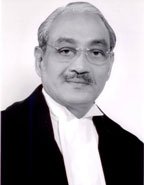

No Acts & Articles mentioned in this case
Page 1 REPORTABLE
IN THE SUPREME COURT OF INDIA
CIVIL APPELLATE JURISDICTION
CIVIL APPEAL NO. 5055 OF 2012
(Arising out of SLP (C) No. 7440 of 2012)
Asha … Appellant
Versus
Pt. B.D. Sharma University of Health
Sciences & Ors. …Respondents
J U D G M E N T
Swatanter Kumar, J .
1. Leave granted.
2. Admission to the medical courses (MBBS and BDS) has been
consistently a subject of judicial scrutiny and review for more than
three decades. While this Court has enunciated the law and put to
rest the controversy arising in relation to one facet of the admission
and selection process to the medical courses, because of ingenuity
of the authorities involved in this process, even more complex and
1
Page 2 sophisticated set of questions have come up for consideration of the
Court with the passage of time. One can hardly find any infirmities,
inaccuracies or impracticalities in the prescribed scheme and
notifications in regard to the process of selection and grant of
admission. It is the arbitrary and colourable use of power and
manipulation in implementation of the schedule as well as the
apparently perverse handling of the process by the concerned
persons or the authorities involved, in collusion with the students or
otherwise, that have rendered the entire admission process faulty
and questionable before the courts. It is the admissions granted
arbitrarily, discriminately or in a manner repugnant to the
regulations dealing with the subject that have invited judicial
catechism. With the passage of time, the quantum of this litigation
has increased manifold.
3. Thus, it is both the need of the hour and the demand of
justice that this Court clarifies its decision and states the principles
with greater precision so as to ensure elimination of colourable
abuse and arbitrary exercise of power in the process of selection and
admission to these professional courses by all concerned.
2
Page 3 4. Therefore, in our view, though the present appeal arises from
very simple facts, yet it raises questions of considerable importance
and application. These questions are bound to arise repeatedly not
only before this Court, but even before the High Courts. Therefore,
it is imperative for us to formulate the questions and answer them
in accordance with law.
5. The questions are :-
a)Is there any exception to the principle of strict adherence to
the Rule of Merit for preference of courses and colleges
regarding admission to such courses?
b)Whether the cut-off date of 30
th
September of the relevant
academic year is a date which admits any exception?
c)What relief the courts can grant and to what extent they can
mould it while ensuring adherence to the rule of merit,
fairness and transparency in admission in terms of rules
and regulations?
d)What issues need to be dealt with and finding returned by
the court before passing orders which may be more
equitable, but still in strict compliance with the framework
3
Page 4 of regulations and judgments of this court governing the
subject?
6. The appellant cleared her Secondary examination (medical
stream) with 75% marks and was eligible for taking medical
entrance examination as she fulfilled the requisite criteria to take
that exam. Pt. B.D. Sharma University (for short ‘the University’)
issued a notification/advertisement for the entrance examination for
MBBS, BDS and BAMS to be held in the first week of May, 2011.
The appellant applied for the same in the Backward Class ‘B’ (for
short ‘BCB’) and dependent of Ex-Serviceman (ESM) category. Her
application was accepted and roll number was issued to her. The
date of the examination was fixed for 12
th
June, 2011 by the
University. The appellant was declared successful in the entrance
examination having secured 832 marks. The appellant was at serial
number 13 of the ESM category. All concerned were informed that
the first counseling for allotment of seats was to be held on 14
th
-15
th
July, 2011. In this counseling, the appellant was not admitted
to MBBS Course as she was lower in merit. Consequently, she took
admission in the BDS Course on that very day. Thereafter, a
declaration was made by the respondents that the second
counseling for allotment of seats in the MBBS course would be held
4
Page 5 on 20
th
September, 2011. The appellant again participated in the
counseling but her name and roll number was not declared by the
respondents for the said admissions. However, when the list of
allocation of seats was displayed, it came to light that though the
appellant had not been admitted to the MBBS Course, candidates
who ranked below her in the merit list, including the respondent
no.3, Vineeta Yadav, who had obtained 821 marks and was at serial
number 14 of the ESM Category, had been given admission to the
MBBS Course.
5
Page 6 7.On the above facts, the learned Single Judge of the High Court of
Punjab and Haryana at Chandigarh, observed that according to
the respondents, the ‘appellant left the counseling place’ without
appearing before the Counseling Board. Resultantly, her
candidature was not considered for admission to the MBBS
course under the ESM category and the candidate next in merit
was given the admission. It was the opinion of the Court that it
would be too far fetched to accept that the appellant, though was
physically present at the time of taking of attendance, thumb
impressions and photography, did not respond to the call for
counseling at the relevant time. Further, the Court observed
that no reason whatsoever could be seen for absence of the
appellant at the relevant moment from the record before the
Court. In view of the fact that the appellant had filed the writ
petition within a week of the second counseling, the Court
accepted the facts averred in the writ petition and directed the
respondents to admit the appellant to the MBBS course while
further directing that it would be open for the respondents to see
that admission of other students lower in merit is not cancelled,
if so permissible and possible under the relevant Rules.
6
Page 7 8. Upon appeal, the Division Bench of that Court upset the
judgment of the learned Single Judge and held as under:-
“We find that such directions could not have been
issued on the basis of possibilities. In view the
process of counseling, we find that the writ
petitioner herself has failed to appear before the
counseling board at the relevant time. It is not
that she has not got admission. She is pursuing
BDS course at Rohtak whereas, the other two
candidates are pursuing their courses at PGI
Rohtak and Medical College Agroha. At this
stage, to disturb the entire admission process
would not in the interest of academics when there
is no substantive allegation in respect of
admission process.”
7
Page 8 9. The Division Bench also noticed the contention of the
respondents that the appellant was a student of the same college
and other candidates were even outstation, thus it was possible that
the appellant was not present when the call for her name was made,
may be due to her negligence or carelessness.
10.The Court also observed that since there was no allegation of
mala fides against any member of the Counseling Board and
there also being no allegations of misconduct and favouritism,
the conclusion arrived at by the learned Single Judge was not
sustainable in law.
11.The moot question which falls for consideration of this Court in
view of the divergent views taken by the Single Judge and the
Division Bench of the High Court is whether the decision of the
learned Single Judge is based on inferences or assumptions or
whether it was a reasonable conclusion which the Court could
arrive at in view of the pleadings of the parties and the relevant
rules in force.
8
Page 9 12.Notification for the second counseling was issued on 26
th
August, 2011. The second counseling was to be held for
admission to MBBS and BDS courses in Government Aided
Medical Dental Colleges in the State of Haryana on 20
th
September, 2011 in the Office of the Director, Pandit B.D.
Sharma University of Health Sciences, PGI, Rohtak, as per the
schedule given therein.
13.The notification inter alia also stated:-
9
Page 10 Date Reporting Time Category Rank
20.09.2011 8.00 A.M. General
(Common
Merit List)
01 to 704
SC 01 to 65
BCA 01 to 144
BCB 01 to 150
PH 01
ESM 01 to 30
FF 01
14.In furtherance to this notification, there is no dispute to the
fact that the appellant, who was at Sr. No. 13 of ESM category,
had appeared before the authorities and marked her attendance
in the attendance sheet on 20
th
September, 2011. It is
interesting to note that the same sheet had been signed by the
candidates to mark their presence even on 15
th
July, 2011, when
the first counseling was held. The appellant had also signed on
15
th
July, 2011 and, as already noticed, was given admission to
the BDS course.
10
Page 11 15.Another important aspect which needs to be noticed at this
stage is the original merit list which has been produced before
us. This merit list relates to the date of first counseling, i.e.,
15
th
July, 2011. According to the respondents, the appellant
had been given admission to the BDS course but in this merit list
the column for signature in front of her name is empty. This
document does not have any of the members of the Board or any
candidate specifying the date of this counseling. Therefore, we
would take it that this document is dated and relates to the
proceedings of 15
th
July, 2011. If that be so, it is difficult to
understand as to how the appellant was given admission to the
BDS course on 15
th
July, 2011 when nothing is noted in front of
her name. It does not even say, whether she was given
admission to MBBS or BDS course. Interestingly, in the remark
column, the members of the Board have noted the candidates
who have already been given admission to a college or who were
not interested in BDS course or who had vacated the seat of
BDS. The merit list for admission dated 20
th
September, 2011
has not been placed on record. There is no explanation available
from the records produced before us, as to why this has not been
done. It has also not been clarified in the affidavit filed on
11
Page 12 behalf of respondent Nos. 1 and 2.
16.We may notice that in the writ petition before the High Court
the appellant had specifically averred that she was present in
the second counseling at the time of attendance and even
subsequent thereto. However, despite such presence, her name
and roll number were not declared by the respondents for the
purpose of admission to the MBBS course. However, the list of
successful candidates revealed that candidates of merit lower to
her had been admitted to the MBBS course. According to her,
she instantly raised her claim and even submitted a
representation upon the respondents but to no avail.
Paragraphs 7 to 9 of the writ petition read as follows :
“7.That the respondents have decided to take
second counseling and the date for second
counseling was fixed for 20.09.2011. The
petitioner again participated in the second
counseling but her name and roll number was
again not declared by the respondents for the
said admission in the MBBS course.
8. That after the date of second counseling, the
petitioner was shocked to know that one Vinita
Yadav daughter of Sh. Arvind Kumar Yadav Roll
No. 126038 having the same category i.e. BCB-
ESM and having 821 marks which is lower then
the marks secured by the petitioner got
admission in MBBS Course conducted by the
12
Page 13 respondents. The petitioner has visited the office
of the respondent just after getting the
information that a candidate who is lower in
merit/marks got admission in MBBS Course and
requested the respondents that this is totally
illegal and discriminatory on the part of them
that they are giving admission to a candidate who
is having lesser marks than the petitioner but the
respondents have not considered her genuine
claim and legal rights and willfully ignored the
request of the petitioner.
9.That the petitioner has not continuously
visited the office of the respondents and raised
her voice for her genuine claim for the admission
in MBBS Course and she has specifically
mentioned that a candidate having lesser marks
as compared to the petitioner has got admission
in MBBS course but in vain. The petitioner
submitted a representation before the
respondents mentioning everything about the
incident but the respondents have not considered
her request. A true typed copy of the
representation is attached herewith as
ANNEXURE P-3.”
17.In the reply filed on merits by the respondents, these
paragraphs were dealt with in a most casual manner and no
specific denial was made. Paragraphs 7 to 9 of the reply read as
under:-
“7.That in reply to Para No. 7 of the petition
averments made in Para No. 3 and 4 of the
preliminary submissions are reiterated here.
8.That in reply to Para No. 8 of the petition it is
13
Page 14 submitted that since the Petitioner left the
counseling place without appearing before the
counseling board her candidature was not
considered for admission to MBBS course under
ESM category and the Respondent No. 3 who
was next in merit than the Petitioner got the
admission in MBBS course under ESM category.
Averments made in Para No. 3 and 4 of the
preliminary submissions are also reiterated
here.
9.That Para No. 9 of the writ petition is wrong
and denied. The Petitioner has never
approached to the answering Respondents with
regard to her admission in MBBS course after
2nd counseling as claimed in this para.
However, in any case she is not entitled for
admission to MBBS Course under ESM category
in present circumstances in view of facts
mentioned in Para No. 2, 3 & 4 of the
preliminary submissions.”
18.From a bare reading of the reply filed by the respondents, it is
clear that there is no specific denial of the above-noted averments
made by the appellant. It is a settled principle of the law of
pleadings that an averment made by the appellant is expected to be
specifically denied by the replying party. If there is no specific
denial, then such averment is deemed to have been admitted by the
respondent. In the present case, it is evident that the above-noted
averments in the writ petition were relevant and material to the
case. In fact, the entire case of the appellant hinged on these three
14
Page 15 paragraphs of the writ petition. It was thus, expected of the
respondents to reply these averments specifically, in fact to make a
proper reference to the records relevant to these paragraphs. In
view of the omission on part of the respondents to refer to any
relevant records and failure to specifically deny the averments made
by the appellant, we are of the considered view that the appellant
has been able to make out a case for interference.
19. Not only this, if the averments made in paragraph 9 are
correct and the appellant had instantaneously raised her claim
before the respondents, followed by making of the representation,
we see no reason why the claim of the appellant could not be settled
at that time or in any case in the subsequent counseling held on
30th September, 2011, where the appellant was admittedly present.
The attendance sheet produced before us shows that the appellant
was present on all the three days. Even the records produced by
the respondents before the Court support the case of the appellant.
20. The appellant filed the writ petition before the High Court
without any undue delay and on 4
th
November, 2011, the judgment
by the court was passed in her favour. The cumulative effect of the
above factual matrix, the pleadings of the parties and the
15
Page 16 expeditious manner in which the appellant had taken action before
the authorities and then before the court and pursued her remedies,
persuade the Court to believe that the case of the appellant is
truthful. The cases of the present kind are not required to be
tested by us on the touchstone of stringent principles of burden of
proof applicable to criminal jurisprudence. As already mentioned,
it was the obligation of the respondents to specifically deny the
averments made by the appellant and to produce the relevant
records to show that the stand taken by them is worthy of credence.
Having failed to do so, they cannot shift the burden upon the
appellant and expect this Court to believe that a student of the
same college, would disappear at the relevant time of counseling
after having marked her presence at the counseling.
16
Page 17 21. It is not necessary for the appellant to plead and prove mala
fides, misconduct or favouritism and nepotism on the part of the
parties concerned. Failure to do the same could be an error,
intentional or otherwise, but in either event, we see no reason
why the appellant should be made to suffer despite being a
candidate of higher merit.
17
Page 18 22.At this stage, we may refer to certain judgments of the Court
where it has clearly spelt out that the criteria for selection has to
be merit alone. In fact, merit, fairness and transparency are the
ethos of the process for admission to such courses. It will be
travesty of the scheme formulated by this Court and duly notified
by the states, if the Rule of Merit is defeated by inefficiency,
inaccuracy or improper methods of admission. There cannot be
any circumstance where the Rule of merit can be compromised.
From the facts of the present case, it is evident that merit has
been a casuality. It will be useful to refer to the view
consistently taken by this Court that merit alone is the criteria
for such admissions and circumvention of merit is not only
impermissible but is also abuse of the process of law. Ref. Priya
Gupta Vs. State of Chhatisgarh & Anr. [CA @ SLP(C) No. 27089 of
2011, decided on 8
th
May, 2012], Harshali v. State of
Maharashtra and Others [(2005) 13 SCC 464], Pradeep Jain v.
UOI [1984 (3) SCC 654], Sharwan Kumar and Others v. Director of
Health Services and Another [1993 Supp (1) SCC 632], Preeti
Srivastava v. State of MP [(1999) 7 SCC 120], Guru Nanak Dev
University v. Saumil Garg and Others [2005 (13) SCC 749], AIIMS
Students’ Union v. AIIMS and Others [(2002) 1 SCC 428].
18
Page 19 23.It is true that the notification dated 26
th
August, 2011 had
clearly stated that the candidate should appear before the second
Counseling Board well in time along with all the original documents
and that the photograph and thumb impression of the candidate
would be taken at the time of the counseling. The notification
stated the reporting time as 8.00 a.m. The exact time when the
candidates of each category i.e. General, SC, PH (MS), EMS and FF
were to be present was nowhere stated. In other words all
candidates were required to be present at 8.00 a.m.. It cannot be
disputed that the appellant was present at that time and
undisputedly she had marked her presence in the attendance
register. She admittedly participated in the photography and
taking of thumb impressions held by the concerned authority.
However, her absence at the crucial time of counseling is the
essence of dispute in the present case.
19
Page 20 24.Adherence to the schedule is the obligation of the authorities
and the students both. The prescribed schedule is to be
maintained stricto sensu by all the stakeholders because if one party
adheres to the schedule and others do not or there is some kind of
lack of communication or omission to make proper announcements
and maintain proper records for such counseling, disastrous results
can follow, of which the present case is an apt example.
20
Page 21 25. The Court cannot ignore the fact that these admissions relate
to professional courses and the entire life of a student depends upon
his admission to a particular course. Every candidate of higher
merit would always aspire admission to the course which is more
promising. Undoubtedly, any candidate would prefer course of
MBBS over BDS given the high-competitiveness in the present
times, where on a fraction of a mark, the admission to course could
vary. Higher the competition, greater is the duty on the part of the
concerned authorities to act with utmost caution to ensure
transparency and fairness. It is one of their primary obligations to
see that a candidate of higher merit is not denied seat to the
appropriate course and college, as per his preference. We are not
oblivious of the fact that the process of admissions is a cumbersome
task for the authorities but that per se cannot be a ground for
compromising merit. The concerned authorities are expected to
perform certain functions, which must be performed in a fair and
proper manner i.e. strictly in consonance with the relevant rules
and regulations.
21
Page 22 26. Strict adherence to the time schedule has again been a matter
of controversy before the courts. The courts have consistently
taken the view that the schedule is sacrosanct like the rule of
merit and all the stakeholders including the concerned
authorities should adhere to it and should in no circumstances
permit its violation. This, in our opinion, gives rise to dual
problem. Firstly, it jeopardizes the interest and future of the
students. Secondly, which is more serious, is that such action
would be ex- facie in violation of the orders of the court, and
therefore, would invite wrath of the courts under the provisions
of the Contempt of Courts Act, 1971. In this regard, we may
appropriately refer to the judgments of this Court in the cases of
Priya Gupta (supra), State of Bihar v. Sanjay Kumar Sinha & Ors.
[(1990) 4 SCC 624], Medical Council of India v. Madhu Singh &
Ors. [(2002) 7 SCC 258], GSF Medical and Paramedical
Association v. Association of Management of Self Financing
Technical Institutes and Anr. [2003 (12) SCC 414], Christian
Medical College v. State of Punjab and Others [(2010) 12 SCC
167].
22
Page 23 27. The judgments of this Court constitute the law of the land in
terms of Article 141 of the Constitution and the regulations
framed by the Medical Council of India are statutorily having the
force of law and are binding on all the concerned parties.
Various aspects of the admission process as of now are covered
either by the respective notifications issued by the State
Governments, prospectus issued by the colleges and, in any
case, by the regulations framed by the Medical Council of India.
There is no reason why every act of the authorities be not done
as per the procedure prescribed under the Rules and why due
records thereof be not maintained.
28.This proposition of law or this issue is no more res integra and
has been firmly stated by this Court in its various judgments
which may usefully be referred at this stage. Ref. State of M.P. v.
Gopal D. Tirthani and Others [(2003) 7 SCC 83], State of Punjab v.
Dayanand Medical College & Hospital and Ors. [AIR 2001 SC
3006], Bharati Vidyapeeth v. State of Maharashtra and Another
[(2004) 11 SCC 755], Chowdhury Navin Hemabhai and Others v.
State of Gujarat and Others [(2011) 3 SCC 617], Harish Verma and
Others v. Ajay Srivastava and Another [(2003) 8 SCC 69].
23
Page 24 29.In the prospectus issued by the respondents, Chapter 9 dealt
with the method of selection and admission. Clause 3.1 stated
that it was mandatory for the qualified candidates to appear
before the Counseling Board in person. No relaxation was to be
given to the candidates who were unable to appear before the
Counseling Board on the fixed dates. Further, it was stated in
the prospectus that at the time of the counseling, the candidates
would be required to exercise their choice for the institution and
the course. The allotment of the seats would be made according
to the merit and preference exercised by the candidates at the
time of counseling. During the subsequent counseling the
Course/Institution would be allotted as per the merit of the
candidates depending on the availability of seats.
24
Page 25 30. All these clauses are in accordance with the regulations
framed by the Medical Council of India or the notifications issued
by the concerned State Government. Relaxation of the Rule of
Merit for reason of non-appearance is not permissible. In the
present case, there is no dispute that the appellant was present
at the place and on the date of the second counseling but the
dispute relates to her absence at the particular time when her
name was called out for the purpose of counseling. As far as
this issue is concerned, we have already expressed the opinion
that there is no substance in the defence taken by the
respondents and the appellant should be entitled to the relief
prayed for. However, the question that immediately follows is
whether any mid-term admission can be granted after 30
th
September of the concerned academic year, that being the last
date for admissions. The respondents before us have argued
with some vehemence that it will amount to a mid-term
admission which is impermissible, will result in indiscipline and
will cause prejudice to other candidates. Reliance has been
placed upon the judgments of this Court in Medical Council of
India v. Madhu Singh and Others [(2002) 7 SCC 258], Ms. Neelu
Arora and Another v. Union of India and Others [(2003) 3 SCC
25
Page 26 366], Aman Deep Jaswal v. State of Punjab and Others [(2006) 9
SCC 597], Medical Council of India v. Naina Verma and Others
[(2005) 12 SCC 626], Mridul Dhar and Another v Union of India
and Others [(2005) 2 SCC 65], Medical Council of India v Madhu
Singh and Others [(2002) 7 SCC 258].
26
Page 27 31.There is no doubt that 30
th
September is the cut-off date.
The authorities cannot grant admission beyond the cut-off date
which is specifically postulated. But where no fault is
attributable to a candidate and she is denied admission for
arbitrary reasons, should the cut-off date be permitted to operate
as a bar to admission to such students particularly when it
would result in complete ruining of the professional career of a
meritorious candidate, is the question we have to answer.
Having recorded that the appellant is not at fault and she
pursued her rights and remedies as expeditiously as possible, we
are of the considered view that the cut-off date cannot be used as
a technical instrument or tool to deny admission to a meritorious
students. The rule of merit stands completely defeated in the
facts of the present case. The appellant was a candidate placed
higher in the merit list. It cannot be disputed that candidates
having merit much lower to her have already been given
admission in the MBBS course. The appellant had attained 832
marks while the students who had attained 821, 792, 752, 740
and 731 marks have already been given admission in the ESM
category in the MBBS course. It is not only unfortunate but
apparently unfair that the appellant be denied admission.
27
Page 28 Though there can be rarest of rare cases or exceptional
circumstances where the courts may have to mould the relief and
make exception to the cut-off date of 30
th
September, but in
those cases, the Court must first return a finding that no fault is
attributable to the candidate, the candidate has pursued her
rights and legal remedies expeditiously without any delay and
that there is fault on the part of the authorities and apparent
breach of some rules, regulations and principles in the process of
selection and grant of admission. Where denial of admission
violates the right to equality and equal treatment of the
candidate, it would be completely unjust and unfair to deny such
exceptional relief to the candidate. [Refer Arti Sapru and Others
v. State of J & K and Others [(1981) 2 SCC 484]; Chavi Mehrotra
v. Director General Health Services [(1994) 2 SCC 370]; and
Aravind Kumar Kankane v. State of UP and Others [(2001) 8 SCC
355].
32.We must hasten to add at this stage that even if these
conditions are satisfied, still, the court would be called upon to
decide whether the relief should or should not be granted and, if
granted, should it be with or without compensation.
28
Page 29 33.This brings us to the last phase of this case as to what relief,
if any, the appellant is entitled to. Having returned a finding on
merits in favour of the appellant, the Court has to grant relief to
the appellant even, if necessary, by moulding the relief
appropriately and in accordance with law. This Court must do
complete justice between the parties, particularly, where the
legitimate right of the appellant stands frustrated because of
inaction or inappropriate action on the part of the concerned
respondents. In fact, normally keeping in view the factual matrix
of this case, we would have directed the admission of the
appellant to the MBBS course in the academic year 2011-2012
and would further have directed the respondents to pay
compensation to the appellant towards the mental agony and
expense of litigation and the valuable period of her life that
stands wasted for failure on the part of the respondents to
adhere to the proper procedure of selection and admission
process. May be the Court would have granted this relief subject
to some further conditions. However, we are unable to grant this
relief to the appellant in its totality for reason of her own doing.
She has completely faulted in pursuing her academic course in
accordance with the Rules and like a diligent student should do.
29
Page 30 In the reply filed on behalf of respondent Nos.1 and 2, it has
been stated that as per the Dental Council of India Norms,
minimum required attendance is 75 per cent in Theory as well as
in Practical of each subject individually for issuance of roll
numbers in the BDS course. Undoubtedly, the appellant was
admitted to the BDS course and she was expected to complete
her academic course in terms of the Norms of Dental Council of
India. It is also not disputed before us and, in fact, was
confirmed to us on behalf of the Medical Council of India and the
respondent University that the course for the first year of both,
BDS and MBBS, is more or less the same. Except one paper of
Anatomy, rest of the subjects and papers are more or less similar
particularly for the first six months. If the appellant had
pursued the BDS course to which she was admitted diligently
and had attended all the lectures, she might have been eligible to
pursue her MBBS course in continuation thereto. We are not
recording any finding in this behalf as, in our opinion, the
appellant is not entitled to this particular relief, as already
indicated, and for the same she has to blame none else but
herself.
34.In the reply, the respondents have specifically explained by
30
Page 31 the figures on record that the appellant had attended only 28 per
cent to 42 per cent lectures (minimum being 28% and maximum
42%) instead of the required 75 per cent and as such she has not
even pursued her BDS course properly. The table given in the reply
reads as under :
S.No.Name of Deptt. Practical Theory
Lect.
Deliv.
Lec.
Attnd.
%ageLect.
Deliv.
Lec.
Attnd.
%age
1. Prosthodontics 95 22 23% Nil Nil Nil
2. Dental Anatomy 93 31 33% 95 28 29%
3. Dental Material Nil Nil Nil 35 13 37%
4. Anatomy 125 39 31% 86 25 29%
5. Physiology 30 09 30% 94 27 28%
6. Biochemistry 32 12 37% 59 25 42%
35.From the above data, it is clear that the appellant has
miserably failed to pursue her BDS course in accordance with Rules
and, thus, she has not fulfilled even the pre-requisites for MBBS
course, assuming that the BDS and MBBS courses are similar for
the first six months. In these circumstances and finding that the
appellant is at fault to this limited extent, we are of the considered
view that the only relief the appellant can be granted in the present
appeal is a direction to the respondents to give the appellant
admission to the MBBS course not in the academic year 2011-12
31
Page 32 but in the current academic year i.e. 2012-2013, that too, subject to
the condition that she will pursue her MBBS course right from the
beginning without any advantage of her course in the BDS. If any
examinations have been held in the meanwhile, it shall be deemed
that she had not appeared in those examinations and be treated as
such for all intent and purpose. While giving her admission to the
MBBS course, preferably and if it is permissible, admission of none
of the other candidates to the MBBS course may be disturbed. If for
whatever reasons, it is not possible to do so, in that event, the
candidate last in the merit who has been granted admission to the
MBBS course shall be transferred to the BDS course and appellant
shall be admitted to the MBBS course. We also direct that such
candidate would not be required to commence her/his BDS course
from the beginning provided the candidate has satisfied the
attendance requirements of the Dental Council of India.
36.Now, we shall proceed to answer the questions posed by us in
the opening part of this judgment.
ANSWERS
a) The rule of merit for preference of courses and colleges admits
no exception. It is an absolute rule and all stakeholders and
32
Page 33 concerned authorities are required to follow this rule strictly
and without demur.
b) 30
th
September is undoubtedly the last date by which the
admitted students should report to their respective colleges
without fail. In the normal course, the admissions must close
by holding of second counseling by 15
th
September of the
relevant academic year [in terms of the decision of this Court
in Priya Gupta (supra)]. Thereafter, only in very rare and
exceptional cases of unequivocal discrimination or
arbitrariness or pressing emergency, admission may be
permissible but such power may preferably be exercised by
the courts. Further, it will be in the rarest of rare cases and
where the ends of justice would be subverted or the process of
law would stand frustrated that the courts would exercise
their extra-ordinary jurisdiction of admitting candidates to the
courses after the deadline of 30
th
September of the current
academic year. This, however, can only be done if the
conditions stated by this Court in the case of Priya Gupta
(supra) and this judgment are found to be unexceptionally
satisfied and the reasons therefor are recorded by the court of
competent jurisdiction.
33
Page 34 c) & d) Wherever the court finds that action of the authorities has
been arbitrary, contrary to the judgments of this Court and
violative of the Rules, regulations and conditions of the
prospectus, causing prejudice to the rights of the students,
the Court shall award compensation to such students as well
as direct initiation of disciplinary action against the erring
officers/officials. The court shall also ensure that the
proceedings under the Contempt of Courts Act, 1971 are
initiated against the erring authorities irrespective of their
stature and empowerment.
Where the admissions given by the concerned authorities are
found by the courts to be legally unsustainable and where
there is no reason to permit the students to continue with the
course, the mere fact that such students have put in a year or
so into the academic course is not by itself a ground to permit
them to continue with the course.
37.With all humility, we reiterate the request that we have made
to all the High Courts in Priya Gupta’s case (supra) that the courts
should avoid giving interim orders where admissions are the matter
of dispute before the Court. Even in case where the candidates are
permitted to continue with the courses, they should normally be not
34
Page 35 permitted to take further examinations of the professional courses.
The students who pursue the courses under the orders of the Court
would not be entitled to claim any equity at the final decision of the
case nor should it weigh with the courts of competent jurisdiction.
38.Besides providing the above answers to the questions, we also
issue the following directions to put the matters to rest beyond
ambiguity and to ensure that the authorities act in accordance with
law :
(a)From the records of this case, it is clear that two different
records are being maintained at the time of counseling.
Firstly, the attendance register and thereafter photography
and thumb impressions are taken and, secondly, the
Committee maintains a record of the counseling where the
students are actually given a specific college/course of
his/her preference. We direct that the second set of records
shall be maintained more accurately. It shall not only contain
the signatures of the candidate and the Committee members
but also the date and time when the candidate is given a seat
and it shall also be signed by the candidate with the course
clearly written by the Committee and signed by the candidate
35
Page 36 in the remarks column.
(b)The essence of all the judgments dealing with this issue is to
nurture discipline, fairness and transparency in the selection
and admission process and avoid prejudice to any of the
stake-holders. Thus, while we expect the authorities to be
perfect, fair and transparent in the discharge of their duties,
we make it clear that the students who adopt malpractices in
collusion with the authorities or otherwise for seeking
admissions and if their admissions are found to be irregular
or faulty in law by the courts, they shall normally be held
responsible for paying compensation to such other candidates
who have been denied admission as a result of admission of
the wrong candidates.
(c)The law requires adherence to a settled protocol in the
process of selection and grant of admission. None should be
able to circumvene or trounce this process, with or without an
ulterior motive. The courts are duty bound to ensure that
litigation relating to academic courses, particularly,
professional courses should not be generated for want of will
on the part of the stake holders to follow the process of
36
Page 37 selection and admission fairly, transparently and without
exploitation.
(d)Keeping in mind the hard reality that there are number of
petitions filed in each High Court of the country, on the one
hand challenging the admissions on varied grounds while, on
the other, praying for grant of admission on merit to the
respective professional courses of MBBS/BDS, the Court
cannot lose sight of the fact that the career of the meritorious
youth is at stake. These are matters relating to adherence to
the rule of merit and when its breach is complained of, the
judiciary may be expected to deal with the said grievances
preferentially and effectively. The diversity of our country and
the fact that the larger population lives in rural areas and
there being demand for consistent increase in the strength of
qualified medical practitioners, we are of the considered view
that such cases, at least as of now and particularly for a
specific period of the year require higher priority in the heavy
business of court cases. We are not oblivious of the fact that
the Hon’ble Judges of the High Court are working under great
pressure and with some limitations. However, we would still
37
Page 38 make a request to the Hon’ble Chief Justices of the respective
High Courts to direct listing of all medical admission cases
before one Bench of the Court as far as possible and in
accordance with the Rules of that Court. It would further be
highly appreciable if the said Bench is requested to deal with
such cases within a definite period, particularly during the
period from July to October of a particular year. We express
a pious hope that our request would weigh with the Hon’ble
Chief Justices of the respective High Courts as it would
greatly help in serving the ends of justice as well as the
national interest.
39.For the reasons afore-recorded and with the directions as
mentioned above, we direct the respondents to grant admission to
the appellant to the MBBS course in the current academic year
subject to the condition that she will pursue her MBBS course right
from its beginning and to the conditions afore-noticed. However, in
the facts and circumstances of the case, we award no costs.
Appeal is disposed of accordingly.
.…................................J.
[Swatanter Kumar]
38
Page 39 .…................................J.
[Ranjan Gogoi]
New Delhi;
July 10, 2012
39

 Login with google
Legal Notes
Add a Note....