
As per case facts, petitioner Ashok sought regular bail, claiming false implication and no recovery from him directly. The police, however, opposed, stating they apprehended Ashok driving a motorcycle with ...
2026:HHC:10485
IN THE HIGH COURT OF HIMACHAL PRADESH, SHIMLA
Cr. MP(M) No. 254 of 2026
Reserved on: 1.4.2026
Date of Decision: 7.4.2026.
Ashok …. Petitioner
Versus
State of HP …. Respondent
Coram
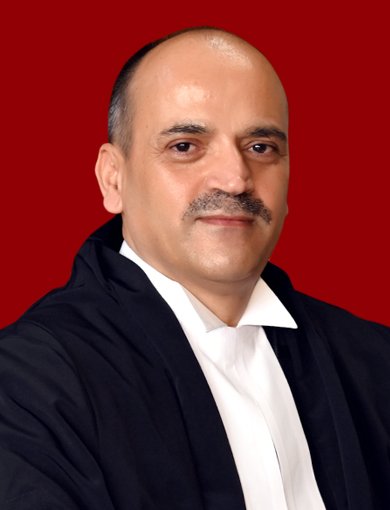
Hon’ble Mr Justice Rakesh Kainthla, Judge.
Whether approved for reporting?
1
No.
For the Petitioner : Mr Deepak Kaushal, Senior
Advocate, with Mr Abhishek
Verma, Advocate.
For the Respondent/State : Mr Ajit Sharma, Deputy
Advocate General.
Rakesh Kainthla, Judge
The petitioner has filed the present petition for
seeking regular bail in FIR No. 234 of 2025, dated 14.10.2025,
registered at Police Station Paonta Sahib, District Sirmour, H.P.,
for the commission of offences punishable under Sections 22 and
29 of the Narcotic Drugs and Psychotropic Substances Act (NDPS
Act).
1
Whether reporters of Local Papers may be allowed to see the judgment? Yes.
2
2026:HHC:10485
2. It has been asserted that the petitioner was falsely
implicated in the present case based on suspicion. No recovery
was effected from the petitioner. The police have filed the charge
sheet, and no fruitful purpose would be served by detaining the
petitioner in custody. The petitioner would abide by the terms
and conditions that the Court may impose. Hence, it was prayed
that the present petition be allowed and the petitioner be
released on bail.
3. The petition is opposed by filing a status report
asserting that the police were on patrolling duty on 14.10.2025.
They received a secret information at about 6.45 PM that Ashok
(the present petitioner) and Sunny were carrying intoxicating
capsules in the motorcycle bearing registration No. UP-11CR-
4563. The information was credible, and the delay in procuring
the search warrant would have led to the destruction of the case
property. Hence, the information was reduced to writing and was
sent to the Sub Divisional Police Officer (SDPO), Sirmour. The
police joined Up-Pradhan Dilbag Singh and Saravjeet Singh and
waited for the motorcycle. The motorcycle reached the spot at
around 7:20 PM. The police signalled the motorcyclist to stop.
The driver, Ashok (the present petitioner), and the pillion rider,
3
2026:HHC:10485
Sunny, identified themselves. The police checked the backpack
being carried by Sunny and found 3120 capsules of Spasmore
containing Tramadol Hydrochloride. The police seized the
capsules, and the motorcycle and arrested the motorcyclists.
Sunny identified the shop from where the capsules were
purchased. One accused, Ahbab, is yet to be arrested. No other
FIR was registered against the petitioner. As per the result of the
analysis, the capsules of Spasmore contained Tramadol
Hydrochloride. Hence, the status report.
4. I have heard Mr Deepak Kaushal, learned Senior
Counsel, assisted by Mr Abhishek Verma, learned counsel for the
petitioner and Mr Ajit Sharma, learned Deputy Advocate General
for the respondent/State.
5. Mr Deepak Kaushal, learned Senior Counsel for the
petitioner, submitted that the petitioner is innocent and he was
falsely implicated based on the statement made by the co-
accused Sunny, which is legally inadmissible. The police have
filed the charge sheet, and no fruitful purpose would be served by
detaining the petitioner in custody. Hence, he prayed that the
present petition be allowed and the petitioner be released on bail.
4
2026:HHC:10485
6. Mr Ajit Sharma, learned Deputy Advocate General for
the respondent/State, submitted that the petitioner was found in
possession of a commercial quantity of Tramadol, and the
rigours of Section 37 of the NDPS Act apply to the present case.
The petitioner has failed to satisfy the twin conditions laid down
under Section 37 of the NDPS Act, and he is not entitled to bail.
Therefore, he prayed that the present petition be dismissed.
7. I have given considerable thought to the submissions
made at the bar and have gone through the records carefully.
8. The parameters for granting bail were considered by
the Hon’ble Supreme Court in Pinki v. State of U.P., (2025) 7 SCC
314: 2025 SCC OnLine SC 781, wherein it was observed at page 380:
(i) Broad principles for the grant of bail
56. In Gudikanti Narasimhulu v. High Court of A.P., (1978) 1
SCC 240: 1978 SCC (Cri) 115 , Krishna Iyer, J., while
elaborating on the content of Article 21 of the Constitution
of India in the context of personal liberty of a person
under trial, has laid down the key factors that should be
considered while granting bail, which are extracted as
under: (SCC p. 244, paras 7-9)
“7. It is thus obvious that the nature of the charge is the
vital factor, and the nature of the evidence is also
pertinent. The punishment to which the party may be
5
2026:HHC:10485
liable, if convicted or a conviction is confirmed, also
bears upon the issue.
8. Another relevant factor is whether the course of justice
would be thwarted by him who seeks the benignant
jurisdiction of the Court to be freed for the time being.
[Patrick Devlin, “The Criminal Prosecution in England”
(Oxford University Press, London 1960) p. 75 —
Modern Law Review, Vol. 81, Jan. 1968, p. 54.]
9. Thus, the legal principles and practice validate the Court
considering the likelihood of the applicant interfering with
witnesses for the prosecution or otherwise polluting the
process of justice. It is not only traditional but rational, in
this context, to enquire into the antecedents of a man who
is applying for bail to find whether he has a bad record,
particularly a record which suggests that he is likely to
commit serious offences while on bail. In regard to
habituals, it is part of criminological history that a
thoughtless bail order has enabled the bailee to exploit the
opportunity to inflict further crimes on the members of
society. Bail discretion, on the basis of evidence about the
criminal record of a defendant, is therefore not an exercise
in irrelevance.” (emphasis supplied)
57. In Prahlad Singh Bhati v. State (NCT of Delhi), (2001) 4
SCC 280: 2001 SCC (Cri) 674, this Court highlighted various
aspects that the courts should keep in mind while dealing
with an application seeking bail. The same may be
extracted as follows: (SCC pp. 284-85, para 8)
“8. The jurisdiction to grant bail has to be exercised on the
basis of well-settled principles, having regard to the
circumstances of each case and not in an arbitrary manner.
While granting the bail, the court has to keep in mind the
nature of accusations, the nature of evidence in support
thereof, the severity of the punishment which conviction
will entail, the character, behaviour, means and standing
of the accused, circumstances which are peculiar to the
accused, reasonable possibility of securing the presence of
the accused at the trial, reasonable apprehension of the
6
2026:HHC:10485
witnesses being tampered with, the larger interests of the
public or State and similar other considerations. It has also
to be kept in mind that for the purposes of granting the bail
the legislature has used the words “reasonable grounds for
believing” instead of “the evidence” which means the
court dealing with the grant of bail can only satisfy it (sic
itself) as to whether there is a genuine case against the
accused and that the prosecution will be able to produce
prima facie evidence in support of the charge.” (emphasis
supplied)
58. This Court in Ram Govind Upadhyay v. Sudarshan Singh,
(2002) 3 SCC 598: 2002 SCC (Cri) 688, speaking through
Banerjee, J., emphasised that a court exercising discretion
in matters of bail has to undertake the same judiciously. In
highlighting that bail should not be granted as a matter of
course, bereft of cogent reasoning, this Court observed as
follows: (SCC p. 602, para 3)
“3. Grant of bail, though being a discretionary order, but,
however, calls for the exercise of such a discretion in a
judicious manner and not as a matter of course. An order
for bail bereft of any cogent reason cannot be sustained.
Needless to record, however, that the grant of bail is
dependent upon the contextual facts of the matter being
dealt with by the court and facts do always vary from case
to case. While the placement of the accused in society,
though it may be considered by itself, cannot be a guiding
factor in the matter of grant of bail, the same should
always be coupled with other circumstances warranting
the grant of bail. The nature of the offence is one of the
basic considerations for the grant of bail — the more
heinous is the crime, the greater is the chance of rejection
of the bail, though, however, dependent on the factual
matrix of the matter.” (emphasis supplied)
59. In Kalyan Chandra Sarkar v. Rajesh Ranjan, (2004) 7 SCC
528: 2004 SCC (Cri) 1977, this Court held that although it is
established that a court considering a bail application
cannot undertake a detailed examination of evidence and
an elaborate discussion on the merits of the case, yet the
7
2026:HHC:10485
court is required to indicate the prima facie reasons
justifying the grant of bail.
60. In Prasanta Kumar Sarkar v. Ashis Chatterjee, (2010) 14
SCC 496: (2011) 3 SCC (Cri) 765, this Court observed that
where a High Court has granted bail mechanically, the said
order would suffer from the vice of non-application of
mind, rendering it illegal. This Court held as under with
regard to the circumstances under which an order
granting bail may be set aside. In doing so, the factors
which ought to have guided the Court's decision to grant
bail have also been detailed as under: (SCC p. 499, para 9)
“9. … It is trite that this Court does not, normally, interfere
with an order passed by the High Court granting or
rejecting bail to the accused. However, it is equally
incumbent upon the High Court to exercise its discretion
judiciously, cautiously and strictly in compliance with the
basic principles laid down in a plethora of decisions of this
Court on the point. It is well settled that, among other
circumstances, the factors to be borne in mind while
considering an application for bail are:
(i) whether there is any prima facie or reasonable
ground to believe that the accused had committed the
offence;
(ii) nature and gravity of the accusation;
(iii) severity of the punishment in the event of
conviction;
(iv) danger of the accused absconding or fleeing, if
released on bail;
(v) character, behaviour, means, position and standing
of the accused;
(vi) likelihood of the offence being repeated;
(vii) reasonable apprehension of the witnesses being
influenced; and
(viii) danger, of course, of justice being thwarted by
grant of bail.” (emphasis supplied)
8
2026:HHC:10485
xxxxxxx
62. One of the judgments of this Court on the aspect of
application of mind and requirement of judicious exercise
of discretion in arriving at an order granting bail to the
accused is Brijmani Devi v. Pappu Kumar, (2022) 4 SCC 497 :
(2022) 2 SCC (Cri) 170, wherein a three-Judge Bench of this
Court, while setting aside an unreasoned and casual order
(Pappu Kumar v. State of Bihar, 2021 SCC OnLine Pat 2856
and Pappu Singh v. State of Bihar, 2021 SCC OnLine Pat
2857) of the High Court granting bail to the accused,
observed as follows: (Brijmani Devi v. Pappu Kumar, (2022)
4 SCC 497 : (2022) 2 SCC (Cri) 170]), SCC p. 511, para 35)
“35. While we are conscious of the fact that liberty of an
individual is an invaluable right, at the same time while
considering an application for bail courts cannot lose sight
of the serious nature of the accusations against an accused
and the facts that have a bearing in the case, particularly,
when the accusations may not be false, frivolous or
vexatious in nature but are supported by adequate material
brought on record to enable a court to arrive at a prima
facie conclusion. While considering an application for the
grant of bail, a prima facie conclusion must be supported
by reasons and must be arrived at after having regard to
the vital facts of the case brought on record. Due
consideration must be given to facts suggestive of the
nature of crime, the criminal antecedents of the accused, if
any, and the nature of punishment that would follow a
conviction vis-à-vis the offence(s) alleged against an
accused.” (emphasis supplied)
9. Hon’ble Supreme Court held in State of Rajasthan v.
Balchand, (1977) 4 SCC 308: 1977 SCC (Cri) 594: 1977 SCC OnLine SC
261 that the normal rule is bail and not jail, except where the
gravity of the crime or the heinousness of the offence suggests
otherwise. It was observed at page 308:
9
2026:HHC:10485
2. The basic rule may perhaps be tersely put as bail, not
jail, except where there are circumstances suggestive of
fleeing from justice or thwarting the course of justice or
creating other troubles in the shape of repeating offences
or intimidating witnesses and the like, by the petitioner
who seeks enlargement on bail from the Court. We do not
intend to be exhaustive but only illustrative.
3. It is true that the gravity of the offence involved is likely
to induce the petitioner to avoid the course of justice and
must weigh with us when considering the question of jail.
So also, the heinousness of the crime….”
10. The present petition has to be decided as per the
parameters laid down by the Hon’ble Supreme Court.
11. The status report mentions that the petitioner was
driving a motorcycle bearing registration No UP-11CR-4563, and
Sunny was travelling as a pillion rider. The police recovered 3120
capsules of Spasmore, which, as per the analysis report,
contained Tramadol Hydrochloride. The petitioner and Sunny
belonged to the same village, and they were apprehended at a
distance far from their native village. In Madan Lal versus State of
H.P. (2003) 7 SCC 465: 2003 SCC (Cri) 1664: 2003 SCC OnLineSC 874,
the contraband was recovered from a vehicle, and it was held that
all the occupants of the vehicle would be in conscious possession
of the contraband. It was observed:
“19. Whether there was conscious possession has to be
determined with reference to the factual backdrop. The
10
2026:HHC:10485
facts which can be culled out from the evidence on record
are that all the accused persons were travelling in a
vehicle, and as noted by the trial court, they were known
to each other, and it has not been explained or shown as to
how they travelled together from the same destination in a
vehicle which was not a public vehicle.
20. Section 20(b) makes possession of contraband articles
an offence. Section 20 appears in Chapter IV of the Act,
which relates to offences for possession of such articles. It
is submitted that to make the possession illicit, there must
be conscious possession.
21. It is highlighted that unless the possession was coupled
with the requisite mental element, i.e., conscious
possession and not mere custody without awareness of the
nature of such possession, Section 20 is not attracted.
22. The expression “possession” is a polymorphous term
that assumes different colours in different contexts. It
may carry different meanings in contextually different
backgrounds. It is impossible, as was observed in the
Supdt. & Remembrancer of Legal Affairs, W.B. v. Anil Kumar
Bhunja [(1979) 4 SCC 274: 1979 SCC (Cri) 1038: AIR 1980 SC
52] to work out a completely logical and precise definition
of “possession” uniformly applicable to all situations in
the context of all statutes.
23. The word “conscious” means awareness of a particular
fact. It is a state of mind which is deliberate or intended.
24. As noted in Gunwantlal v. State of M.P. [(1972) 2 SCC
194: 1972 SCC (Cri) 678: AIR 1972 SC 1756], possession in a
given case need not be physical possession but can be
constructive, having power and control over the article in
the case in question, while the person to whom physical
possession is given holds it subject to that power or
control.
25. The word “possession” means the legal right to
possession (see Heath v. Drown [(1972) 2 All ER 561: 1973 AC
498: (1972) 2 WLR 1306 (HL)]). In an interesting case, it
was observed that where a person keeps his firearm in his
11
2026:HHC:10485
mother's flat, which is safer than his own home, he must
be considered to be in possession of the same.
(See Sullivan v. Earl of Caithness [(1976) 1 All ER 844: 1976
QB 966: (1976) 2 WLR 361 (QBD)].)
26. Once possession is established, the person who claims
that it was not a conscious possession has to establish it
because how he came to be in possession is within his
special knowledge. Section 35 of the Act gives a statutory
recognition of this position because of the presumption
available in law. Similar is the position in terms of Section
54, where a presumption is also available to be drawn
from possession of illicit articles.
27. In the factual scenario of the present case, not only
possession but conscious possession has been established.
It has not been shown by the accused-appellants that the
possession was not conscious in the logical background of
Sections 35 and 54 of the Act.”
12. Therefore, the petitioner was prima facie found in
possession of 3120 capsules of Spasmore containing Tramadol
Hydrochloride.
13. Mr. Ajit Sharma, learned Deputy Advocate General for
the respondent-State, submitted that the quantity of Tramadol
found in possession of the petitioner is commercial in nature and
the rigours of Section 37 of the NDPS Act apply to the present
case. This submission is not supported by any material on record.
The FIR and the status report are conspicuously silent regarding
the weight of the capsules, and there is nothing to show that the
quantity of Tramadol Hydrochloride recovered by the police was
12
2026:HHC:10485
commercial. Hence, the submission that the petitioner was found
in possession of a commercial quantity of Tramadol
Hydrochloride cannot be accepted.
14. The status report mentions that 3120 capsules of
Spasmore were recovered. It is a huge quantity. No prescription
slip was produced by any person; therefore, there is nothing on
record to show that the capsules were meant for self-
consumption. This huge quantity of the capsules would disentitle
the petitioner from the concession of the bail, even though it is
not proved that this quantity was commercial. It was laid down
by this Court in Khushi Ram Gupta v. State of H.P., 2022 SCC OnLine
HP 3779, that the menace of drug addiction has seriously eroded
into the fabric of society, and the release of an accused on bail in
NDPS Act cases will send a negative signal to society. It was
observed:
“8. The menace of drug addiction, especially in
adolescents and students, has seriously eroded into the
fabric of society, putting the future generation as well as
the prospects of future nation-building into serious peril.
9. It is not a case where the investigating agency is
clueless in respect of evidence against the petitioner.
Though allegations against the petitioner are yet to be
proved in accordance with the law, it cannot be taken
singly as a factor to grant bail to the petitioner. Nothing
13
2026:HHC:10485
has been placed on record on behalf of the petitioner to
divulge as to how and in what manner he came in contact
with the persons who were residents of the State of
Himachal Pradesh. Thus, there is sufficient prima facie
material to infer the implication of the petitioner in the
crime. In such circumstances, the release of the petitioner
on bail will send a negative signal in society, which will
definitely be detrimental to its interests.
10. The prima facie involvement of the petitioner in the
dangerous trade of contraband cannot be ignored merely
on account of the fact that he has no past criminal history.
It cannot be guaranteed that there will be re-indulgence
by the petitioner in similar activities, in case he is released
on bail.”
15. Similarly, it was held in Bunty Yadav v. State of H.P.,
2022 SCC OnLine HP 4996, that the bail cannot be claimed as a
matter of right even though the rigours of Section 37 of the NDPS
Act do not apply to a case. Each case has to be adjudged on its
own facts. It was observed:
“6. The quantity involved in the case is 89.89 grams of
heroin and 3.90 grams of MDMA. Such quantity may not
technically fall under the category of commercial quantity;
nevertheless, such quantity cannot be termed to be less by
any stretch of the imagination. The evident nature of
commercial transactions and dealing with the contraband
aggravates the situation for the petitioner. In a case where
Section 37 of the NDPS Act is not applicable, the bail
cannot be claimed as a matter of right. The fate depends
on the facts of each and every case.
7. The menace of drug addiction, especially in adolescents
and students, has seriously eroded into the fabric of
society, putting the future generation as well as the
prospects of future nation-building into serious peril.”
14
2026:HHC:10485
16. It was laid down by the Hon’ble Supreme Court in
Union of India v Namdeo Ashruba Nakade SLP (Crl.) 9792/2025,
decided on 07.11.2025, that there is a concerning increase in drug
abuse amongst the youth. It was observed: -
8. This Court is of the view that the issue of substance
abuse has emerged as a global public health crisis in the
twenty-first century, affecting every country worldwide,
as drug trafficking and addiction have become pervasive.
The United Nations Office on Drugs and Crime (UNODC)
reported in its 2025 World Drug Report that “As at 2023,
some 316 million people worldwide had used drugs in the
past year, representing an increase over the past decade
that outpaces population growth, which indicates a higher
prevalence of drug use.”
9. In India, there has been a concerning increase in drug
abuse among the youth. Substance abuse not only affects
individuals, families, and communities but also
undermines various aspects of health, including physical,
social, political, and cultural foundations, and mental
well-being. (See: “Bhattacharya S, Menon GS, Garg S,
Grover A, Saleem SM, Kushwaha P. The lingering menace
of drug abuse among the Indian youth–it’s time for
action. Indian J Community Med 2025;50: S9-12,
published on 17th April, 2025”)
10. According to many news reports, India faces a clear
dilemma between tackling the narcotics crisis
systematically or sacrificing its most valuable resource,
i.e. its young people. The extent of menace of drug abuse
has also been highlighted by this Court in the case of
Ankush Vipan Kapoor v. National Investigation Agency,
(2025) 5 SCC 155, wherein this Court has observed as
under:
“9.1 The ills of drug abuse seem to be shadowing the
length and breadth of our country, with the Central
15
2026:HHC:10485
and every State Government fighting against the
menace of substance abuse. The debilitating impact
of the drug trade and drug abuse is an immediate
and serious concern for India. As the globe grapples
with the menace of escalating substance use
disorders (“SUD”) and an ever-accessible drug
market, the consequences leave a generational Page
75 of 84 imprint on public health and even national
security. Article 47 of the Constitution makes it a
duty of the State to regard the raising of the level of
nutrition and the standard of living of its people and
the improvement of public health as among its
primary duties and in particular the State shall
endeavour to bring about prohibition of the
consumption except for medicinal purposes of
intoxicating drinks and of drugs which are injurious
to health. The State has a responsibility to address
the root causes of this predicament and develop
effective intervention strategies to ensure that
India’s younger population, which is particularly
vulnerable to substance abuse, is protected and
saved from such a menace. This is particularly
because substance abuse is linked to social problems
and can contribute to child maltreatment, spousal
violence, and even property crime in a family.”
17. Hence, the petitioner cannot be released on bail
merely because the rigours of Section 37 of the NDPS Act do not
apply to the present case.
18. In view of the above, the petitioner is not entitled to
bail. Hence, the present petition fails, and it is dismissed.
16
2026:HHC:10485
19. The observation made herein before shall remain
confined to the disposal of the instant petition and will have no
bearing, whatsoever, on the merits of the case.
(Rakesh Kainthla)
Judge
7
th
April, 2026
(Chander)

 Login with google
Legal Notes
Add a Note....