
A criminal appeal is been filed against the judgement and order passed by the Highcourt of Judicature Bombay and bench in Aurangabad since they upheld the decision passed by the ...
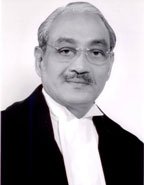

No Acts & Articles mentioned in this case
Page 1 Reportable
IN THE SUPREME COURT OF INDIA
CRIMINAL APPELLATE JURISDICTION
CRIMINAL APPEAL NO. 1091/2010
ATTAR SINGH ..Appellant
Versus
STATE OF MAHARASHTRA ..Respondent
J U D G M E N T
GYAN SUDHA MISRA, J.
This appeal has been preferred against the
judgment and order dated 26.6.2008 passed by the
High Court of Judicature at Bombay, Bench at
Aurangabad in Criminal Appeal No. 7/2007 whereby
the High Court upheld the judgment and order
passed by the Sessions Judge, Dhule in Sessions Case
No. 90/2005 by which the appellant had been
convicted for an offence under Section 302, Indian
Penal Code (I.P.C. for short) and was sentenced to
undergo life imprisonment along with a fine of
Rs.1,000/-. In default of payment of fine, he was
Page 2 ordered to undergo simple imprisonment for three
months.
2. The appellant was initially charged and
tried for an offence under Section 302 and 498-A of
the I.P.C. for killing his wife by hitting her on her head
with a woodenlog as he was suspecting her loyalty
and character.
3. The specific case of the prosecution which
was registered under Section 302 and 498-A of the
I.P.C. is that the appellant-Attarsingh Barakya Pawara
was residing along with his wife and 9 children at
village Majanipada in Shirpur Taluk. On 22.6.2005,
the complainant-Khandu Kalu Ahire who is also the
village Kotwal received an information from one
Ramesh Pawara, resident of Majanipada and Appa
Shahada Pawara, resident of Fattepur village that
the appellant Attarsing has committed murder of his
wife by hitting her with a woodenlog on her head. On
receipt of this information, the village Kotwal along
with the Sarpanch Bhatu Ditya and one Rattan
Lalsing went to the appellant’s house and found the
2
Page 3 dead body of Nagibai (deceased wife of the appellant)
lying on the floor of the house which indicated that the
deceased had sustained head injury and had bleeded
profusely. The woodenlog was found near her
dead body and the appellant was also found sitting in
the house. The village Kotwal enquired about the
incident and questioned the appellant as to how his
wife had died. The appellant replied that his wife was
of a loose character and, therefore, he had killed her
by hitting woodenlog on her head. He narrated the
incident to other persons accompanying the village
Kotwal.
4. The village Kotwal thereafter came to the
police station at Shirpur and lodged the report of the
incident (Exh.15) on the basis of which the offence
was registered vide crime No. 161/2005 under Section
302 of the I.P.C. The police thereafter completed
the usual legal formality by reaching on the spot and
as the body was found there, inquest was also
conducted and spot panchnama was also prepared
whereby the clothes of the accused containing blood
3
Page 4 stains were seized. Woodenlog (Article No.3) which
was found lying on the spot was also seized at the
time of preparation of spot panchnama. The body of
the deceased was then sent to the Government
Hospital, Shirpur where post-mortem was conducted.
5. The accused-appellant was subsequently
arrested and taken to the police station. Investigation
thereafter followed in course of which it transpired
that it was the appellant who had killed his wife
Nagibai as he was suspecting her character. Charges
were then framed against the appellant under
Section 498-A and 302 of the I.P.C. to which the
appellant pleaded not guilty and claimed to be tried.
6. In course of trial, the prosecution examined
12 witnesses on the question as to whether the
appellant had subjected his wife to cruelty by giving
her beating and abuses from time to time suspecting
her character. The trial court further examined the
question as to whether the accused had committed
the murder of his wife Nagibai in his house at village
4
Page 5 Majanipada and thirdly as to what other offence he
has committed.
7. The defence story set up on behalf of the
appellant is that his wife had fallen down on the floor
of the house due to which she sustained severe head
injury which resulted in her death.
8. The trial court on a scrutiny of the
evidence and other materials on record rejected the
defence story on the basis of the post-mortem report
as Dr. Gohil who had conducted post-mortem
categorically expressed that the head injury which the
deceased Nagibai has sustained were not possible
due to fall on the ground.
9. Insofar as the charge under Section 498-A
of Indian Penal Code was concerned, the trial court
held that none of the prosecution witnesses deposed
that the accused-appellant was subjecting his wife
Nagibai to cruelty by giving her beating and abuses
from time to time as alleged by the prosecution. The
learned Sessions Judge recorded that the evidence on
record indicates that it was only a single incident in
5
Page 6 which accused-appellant had assaulted his wife
Nagibai suspecting her fidelity and character as the
evidence is missing that the accused-appellant was
subjecting his wife to cruelty by abusing and
assaulting her from time to time. The learned
Sessions Judge thus was pleased to hold that the
prosecution had failed to prove the charge under
Section 498-A of the I.P.C. against the accused-
appellant and hence acquitted him of this charge.
10. Insofar as the second charge is concerned
as to whether the accused-appellant is the author of
the head injury of the deceased, the testimony of the
daughter of accused-appellant Mangibai was held to
be significant for even though Mangibai had turned
hostile, her testimony revealed that on the day of the
incident, her father was running behind her mother
with a woodenlog for beating her. On witnessing this
incident, she started weeping and came out.
Thereafter, her father closed the door and only her
father and mother were inside the house.
Immediately thereafter, her mother Nagibai was found
6
Page 7 lying injured in a pool of blood inside the house and
the accused also was there. It was, therefore, held
that this circumstance indicated that it is the accused-
appellant who had assaulted his wife and caused her
death. It was further held, that though the panch
witness Mangibai is a hostile witness, such portion of
the hostile witness which is worth believing and
which is supported by other circumstances can be
used and relied upon by the prosecution in view of
well-settled legal position. The Sessions Court thus
on a scrutiny and analysis of the evidence accepted
the prosecution version based on the evidence on
record that the accused-appellant had committed the
murder of his wife by hitting her with a woodenlog in
his house and recorded a finding in the affirmative to
the effect that it is the accused-appellant who
committed the murder of his wife-Nagibai in his house
at village Majanipada. Thus, the appellant succeeded
in securing an order of acquittal in his favour in so far
as the charge under Section 498-A of the Indian
Penal Code is concerned, but suffered conviction and
7
Page 8 sentence of imprisonment for life for offence under
Section 302 of the I.P.C. for the charge of murder of
his wife.
11. The appellant feeling aggrieved with the
conviction and sentence preferred an appeal before
the High Court of Bombay Bench at Aurangabad, but
the High Court confirmed the view taken by the trial
court on all aspects including the charge under
Section 302 of the I.P.C.
12. Assailing the judgment and order passed
by the Sessions Court as also the High Court which
concurrently upheld the conviction of the appellant
under Section 302 I.P.C., the counsel for the appellant
first of all attempted to demolish the case of the
prosecution in its entirety by submitting that the
conviction and sentence imposed on the appellant was
not fit to be sustained on the testimony of the
daughter Mangibai as she had not supported the
prosecution version totally due to which she had
been declared hostile. Hence, it was first of all
contended that the testimony of the hostile witness
8
Page 9 could not have been relied upon for recording
conviction of the appellant.
13. We have meticulously considered the
arguments advanced on this vital aspect of the
matter on which the conviction and sentence
imposed on the appellant is based. This compels us
to consider as to whether the conviction and sentence
recorded on the basis of the testimony of the witness
who has been declared hostile could be relied upon for
recording conviction of the accused-appellant. But it
was difficult to overlook the relevance and value of the
evidence of even a hostile witness while considering
as to what extent their evidence could be allowed to
be relied upon and used by the prosecution. It could
not be ignored that when a witness is declared
hostile and when his testimony is not shaken on
material points in the cross-examination, there is no
ground to reject his testimony in toto as it is well-
settled by a catena of decisions that the Court is
not precluded from taking into account the statement
of a hostile witness altogether and it is not necessary
9
Page 10 to discard the same in toto and can be relied upon
partly. If some portion of the statement of the hostile
witness inspires confidence, it can be relied upon. He
cannot be thrown out as wholly unreliable. This was
the view expressed by this court in the case of Syed
Akbar vs. State of Karnataka reported in AIR 1979
SC 1848 whereby the learned Judges of the Supreme
Court reversed the judgment of the Karnataka High
Court which had discarded the evidence of a hostile
witness in its entirety. Similarly, other High Courts in
the matter of Gulshan Kumar vs. State (1993) Crl.L.J.
1525 as also Kunwar vs. State of U.P. (1993) Crl.L.J.
3421 as also Haneefa vs. State (1993) Crl.L.J. 2125
have held that it is not necessary to discard the
evidence of the hostile witness in toto and can be
relied upon partly. So also, in the matter of State of
U.P. vs. Chet Ram reported in AIR 1989 SC 1543 =
(1989) Crl.L.J. 1785; it was held that if some portion
of the statement of the hostile witness inspires
confidence it can be relied upon and the witness
cannot be termed as wholly unreliable. It was
1
Page 11 further categorically held in the case of Shatrughan
vs. State of M.P. (1993) Crl.L.J. 3120 that hostile
witness is not necessarily a false witness. Granting of
a permission by the Court to cross-examine his own
witness does not amount to adjudication by the Court
as to the veracity of a witness. It only means a
declaration that the witness is adverse or unfriendly to
the party calling him and not that the witness is
untruthful. This was the view expressed by this Court
in the matter of Sat Paul vs. Delhi Administration
AIR 1976 SC 294. Thus, merely because a witness
becomes hostile it would not result in throwing out the
prosecution case, but the Court must see the relative
effect of his testimony. If the evidence of a hostile
witness is corroborated by other evidence, there is no
legal bar to convict the accused. Thus testimony of a
hostile witness is acceptable to the extent it is
corroborated by that of a reliable witness. It is,
therefore, open to the Court to consider the evidence
and there is no objection to a part of that evidence
1
Page 12 being made use of in support of the prosecution or in
support of the accused.
14. While examining the instant matter on the
anvil of the aforesaid legal position laid down by this
Court in several pronouncements, we have noticed
that the support rendered by the daughter Mangibai
approving the incident should be accepted as reliable
part of evidence in spite of she being a hostile witness.
The witness Mangibai’s evidence pushes the accused
with his bag to the wall and the accused is obliged to
explain because her evidence shows that the accused
was the only person in the company of the deceased
soon before the death. The defence of the accused
that Nagibai’s injury was a result of fall is ruled out by
medical evidence and the details available of the
location in the panchnama of offence. The courts
below thus have rightly drawn some support from the
reports of the chemical analysis since all the articles
of the victims and clothes of the accused are found
having blood stains of human blood group A. This was
in view of the fact that the results of the analysis for
1
Page 13 determination of the blood group of the victim and
accused were conclusive when blood sent to phial
was analysed. Thus, the evidence of the daughter of
the deceased coupled with other material as also
evidence of other witnesses i.e. Ramesh, Khandu,
Bhatu and Makhan, provided a complete chain and
the prosecution successfully proved that the incident
occurred in the manner and the place which was
alleged. In fact, the accused in answer to questions
under Section 313 Cr.P.C. has admitted his presence
at the place of occurrence where his wife Nagibai was
lying injured and dead on the floor. However, we do
not wish to be understood that the failure of the
defence could be treated as success of the
prosecution since the conviction cannot be based only
on the replies given by the accused, but these replies
may be considered as support to the special
knowledge of the accused and this lends sufficient
weight to the evidence of the daughter of the
deceased and other attending circumstances. The
trial Judge, in our view, has rightly placed reliance
1
Page 14 upon the evidence of Mangibai, the daughter of the
victim and the accused when she candidly supported
the prosecution story when she stated as follows:-
“When my mother had sustained head
injury, my father was there only i.e. near
my mother. He was near the oven. He
was talking loudly.
It is true that my father hit her with a
wooden log and therefore she ran to the
kitchen. It is true that my father
immediately ran after her. I started
weeping. It is true that thereafter my
father closed the door from
inside.”…………………
15. Thus, we are of the view that the
evidence of Mangibai who was declared hostile
supported the prosecution case in her cross-
examination and, therefore, the courts below do
not appear to have fallen into any error in
accepting part of the evidence of Mangibai and the
retracted confession of the witness Mangibai cannot
be accepted to the extent that her evidence in
support of the prosecution version was fit to be ruled
out. The retracted statement of Mangibai stands fully
supported by the evidence of other witnesses. Thus,
1
Page 15 the material on record along with the evidence of the
prosecution witnesses leads to only one inference
that the accused-appellant was the author of the
injury suffered by the victim and we have rightly been
convinced that the accused and the accused alone
inflicted fatal injuries upon the person of victim
Nagibai. We are, therefore, clearly of the view that
in so far as the incident of killing of the deceased
Nagibai is concerned, the courts below have rightly
held that she was killed by her husband-appellant in
the manner which has been alleged by the
prosecution.
16. However, learned counsel for the appellant
next submitted that the offence alleged to have been
committed by the accused-appellant ought to be
brought down within the ambit of Section 304 Part II of
the I.P.C. as there was only a single blow inflicted by
the accused-appellant which is clear from the
narration of incident by the daughter of the accused
and deceased-Nagibai which shows that the accused
was alone with the victim within the house and the
1
Page 16 accused did not kill his wife with a pre-meditated
mind but the incident took place in a fit of anger due
to the fact that he was suspecting his wife. It was,
therefore, submitted that the accused in fact had no
intention to kill his wife as the death had occurred
on account of a single blow which was not the result
of a pre-plan or pre-meditation. In support of the
submission, he relied upon the judgment and order
of this Court in the case of State of Punjab vs.
Bakhshish Singh & Ors. (2008) 17 SCC 411 which
also had relied on the judgment in the case of Anil
Sharma & Ors . vs. State of Jharkhand, (2004) 5
SCC 679, Harbans Kaur vs. State of Haryana ,
(2005) 9 SCC 195, Amitsingh Bhikamsingh Thakur
vs. State of Maharashtra , (2007) 2 SCC 310 and this
Court had been pleased to hold that :
“In all cases, it cannot be stated that
when only a single blow is given, Section
302, IPC is made out, yet it would depend
upon the factual scenario of each case,
more particularly the nature of the
offence, the background facts, the part of
the body where injuries were inflicted and
the circumstances in which the assault is
1
Page 17 made” that the offence under Section
302 IPC is not made out.”
In view of the aforesaid observation, learned counsel
submitted that offence under Section 302 I.P.C. in the
instant matter also cannot be held to have been
made out as the deceased had sustained a single
blow alleged to have been inflicted by the appellant.
Learned counsel for the appellant taking further
assistance from the observation of the Supreme Court
in the matter of State of Punjab vs. Bakhshish
Singh (supra) submitted further that the past
history about the relations between the appellant and
the deceased goes to prove that they did not have
any strained relations. In fact, they had absolutely
normal relations and had nine children out of the
wedlock and it was only on the spur of the moment
when the appellant abused suspecting the character
of deceased Nagibai and beat her with a stick
unintentionally that the incident happened. In support
of his argument, he relied on the case of Pannayar
vs. State of Tamil Nadu by Inspector of Police
1
Page 18 (2009) 9 SCC 152 wherein this Hon’ble Court held that
absence of motive in case of circumstantial evidence
is more favourable to defence.
17. The arguments advanced by learned
counsel for the appellant-accused when tested in the
light of the evidence led by the prosecution while
considering whether the charge under Section 302
could be scaled down to Section 304 Part-II, we have
already examined the circumstances in which the
deceased had been killed and hence it could be
noticed that the deceased Nagibai and accused-
appellant although had been leading a so-called
normal family life along with their nine children, the
fact remains that the appellant-husband had been
suspecting his wife’s character and nurturing deep
rooted grudge over a period of time. However, the
evidence does further indicate that on the date and
time of incident, the appellant had not indulged in
pre-planning the incident in any manner so as to
eliminate his wife by killing her. The evidence of
other witnesses also indicated that the incident of
1
Page 19 beating had not happened in the past and the
daughter of the accused and deceased-Mangibai
also deposed that there were heated exchange of
words between the couple on the date of incident
and the appellant-accused heaped abuses on his wife
and then picked up a woodenlog in a fit of anger by
which he hit the deceased as a result of which she
sustained head injury and bleeded profusely which
lead to her death.
18. Thus the appellant although do not appear
to have killed his wife by planning out the whole
incident in a methodical manner, yet the evidence
disclosed that he was nurturing a grudge against the
wife over a long period of time and on the date of the
incident when the husband started to abuse his
deceased wife alleging her of loose moral and
character, the accused-husband gave vent to his
deep seated grudge by hitting her with such
intensity that he did not bother about the
consequence of his action. But it cannot be
overlooked or ignored that the intensity with which
1
Page 20 he hit his wife after abusing her is indicative of the
fact that he was not oblivious of the consequence
which would have resulted from his violent act of
beating his wife with a log of wood. Thus, it will have
to be inferred that he had sufficient knowledge
about the consequence of his heinous act at least to
the extent that it was sufficient in the ordinary
course of nature to cause death of his wife. He was
thus fully aware of the consequence that this would
result in a serious consequence and in fact it did
result in the said manner since the wife died as a
result of the injury inflicted on her. In fact, when the
village Kotwal reached the incident, the deceased did
not even expressed any remorse for what he had
done to his wife nor he appeared to be repentant of
the incident. This clearly reflects his state of mind
that he committed the crime with full knowledge to kill
his wife Nagibai on account of his deep seated grudge
which he was carrying since long. Therefore, the
submission of the counsel for the appellant that the
charge under Section 302 I.P.C. should be converted
2
Page 21 into one under Section 304 Part-II I.P.C. is fit to be
rejected and accordingly we do so.
19. The matter, however, do not set at rest at
this stage as the evidence on record and the
surrounding circumstances compels us to consider
further, whether the offence would be made out
under Section 302 I.P.C. or the same would fall under
Section 304 Part-I of the I.P.C. since the appellant-
accused and his wife-Nagibai had been married for a
long time and were having nine children as also the
manner of occurrence and the circumstance under
which the incident happened does indicate that the
incident of hot exchange of words between the
accused-appellant and his deceased-wife got
precipitated and as the appellant was already
aggrieved of his wife suspecting her character, he hit
his wife severely with whatever was available without
caring for the consequence. Thus, the intention to kill
his wife and the knowledge that she would be killed
due to the hard hit blow by the log of wood surely
cannot be ruled out. We take assistance from the
2
Page 22 observations of this Court quoted hereinabove that in
all cases it cannot be said that when only a single
blow is given, Section 302 I.P.C. is made out. Yet it
would depend upon the factual scenario of each case
more particularly nature of the offence, background
facts and the part of the body where injury is inflicted
and the circumstances in which the assault is made.
20. Taking assistance from these apt and
relevant considerations when we examined the case of
the appellant, we have noticed that the appellant was
living with his deceased wife day in and day out, but
none of the witness has deposed that she was
abused and beaten earlier. Thus, there is lack of
evidence that on the fateful day the appellant-
husband had the pre-meditated intention to kill the
deceased with a log of wood due to which he inflicted
the fatal blow on the deceased. The anger and
frustration no doubt was acute in the mind of the
appellant on account of his suspicion which
aggravated due to hot exchange of words and
abuses resulting into loss of mental balance as a
2
Page 23 consequence of which he hit his wife with such
intensity that she died on the spot itself. In view of
this the appellant will have to be attributed with the
knowledge that his act was sufficient in the ordinary
course of nature to kill the victim-wife.
21. Thus, in our view, the accused-appellant
although might not be attributed with the intention
to kill his wife, sufficient knowledge that his act
would result into killing her was definitely there in
the appellant’s mind and he in fact gave vent to his
feeling by finally killing her when he hit her with a
woodenlog to take revenge for her alleged infidelity
without realising that suspicion of her fidelity was
not proved and even if it did, that gave no right to
him to kill his wife in a brutal manner by hitting her
hard enough with a log of wood with such intensity
which was sufficient in the ordinary course of nature
to kill the victim.
22. There are no dearth of incidents referred in
the case laws where the husband has gone to the
extent of shooting his wife and many a times a
2
Page 24 paramour shoots the husband or the husband shoots
the paramour on account of suspicion founded or
unfounded. But if the evidence discloses that the
accused killed the victim in a pre-meditated manner
as for instance by using a firearm, the same might
be a clear case under Section 302 of the I.P.C. But
the facts and circumstances of the incident in which
the appellant has been convicted, indicate that the
accused-appellant was not armed with any weapon or
a firearm. As already noticed the evidence do not
disclose in any manner that the appellant had come
with a pre-meditated mind to kill his wife, but it was
only in course of hot exchange of words and abuses
which mindlessly drove him to take the extreme step
of beating his wife with a log of wood with such force
and intensity that she sustained head injury,
profusely bled and finally died on the spot.
23. We are, therefore, of the considered view
that although the conviction and sentence of the
appellant might not be sustainable under Section 302
I.P.C., it cannot also be scaled down to Section 304
2
Page 25 Part-II I.P.C. But we are surely of the view that the
appellant is fit to be convicted and sentenced under
Section 304 Part-I of the I.P.C. in view of the evidence
on record, the surrounding circumstance and the
factual scenario in which the incident occurred. We,
therefore, set aside the conviction and sentence of the
appellant recorded under Section 302 I.P.C. but
convert the same under Section 304 Part-I I.P.C.
Thus, we deem it fit and appropriate to substitute the
sentence of life imprisonment with a sentence of 10
years imprisonment. The appeal thus, is partly
allowed. We order accordingly.
…………………………… .J
(Swatanter Kumar)
…………………………… .J
(Gyan Sudha Misra)
New Delhi,
December 14, 2012
2

 Login with google
Legal Notes
Add a Note....