
As per case facts, the Appellant was accused in an FIR under the GCTOC Act and IPC sections for involvement in an organized crime syndicate, intimidation, land-grabbing, and extortion. It ...
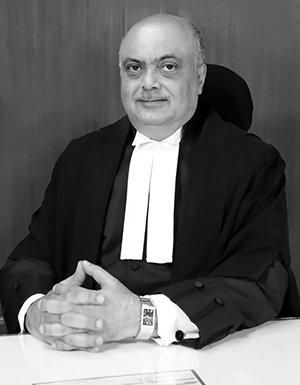
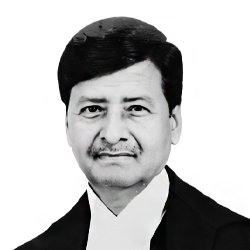
ITEM NO.1502 COURT NO.2 SECTION II-B
(FOR JUDGMENT)
S U P R E M E C O U R T O F I N D I A
RECORD OF PROCEEDINGS
Petition(s) for Special Leave to Appeal (Crl.) No(s). 10051/2022
ATULBHAI VITHALBHAI BHANDERI Petitioner(s)
VERSUS
STATE OF GUJARAT Respondent(s)
([HEARD BY: HON. AJAY RASTOGI AND HON. AHSANUDDIN AMANULLAH, JJ.]
IA No. 160204/2022 - EXEMPTION FROM FILING C/C OF THE IMPUGNED
JUDGMENT
IA No. 160205/2022 - EXEMPTION FROM FILING O.T.)
WITH
SLP(Crl) No. 331/2023 (II-B)
(IA No. 4409/2023 - EXEMPTION FROM FILING C/C OF THE IMPUGNED
JUDGMENT
IA No. 4411/2023 - EXEMPTION FROM FILING O.T.)
Date : 04-05-2023 These petitions were called on for hearing today.
For Petitioner(s) Mr. E. C. Agrawala, AOR
Mr. Sunil Murarka, Adv.
Mr. Ankur Saigal, Adv.
Mr. Gunnam Venkantewara Rao, Adv.
Ms. S. Lakshmi Iyer, Adv.
Ms. Anwesha Padhi, Adv.
Ms. Nitya Ramakrishnan, Sr. Adv.
Mr. Pradhuman Gohil, Adv.
Mrs. Taruna Singh Gohil, AOR
Ms. Ranu Purohit, Adv.
Mr. Alapati Sahithya Krishna, Adv.
Ms. Nidhi Mittal, Adv.
1 2023 INSC 496
For Respondent(s) Mr. S. V. Raju, A.S.G.
Mr. Ankit Bhatia, Adv.
Ms. Madhumitha Kesavan, Adv.
Mr. Hitaith Raja, Adv.
Mr. Harsh Paul, Adv.
Ms. Swati Ghildiyal, AOR
Ms. Sairica Raju, Adv.
Mr. Annam Venkatesh, Adv.
Ms. Devyani Bhatt, Adv.
Mr. Praveen Kumar Singh, Adv.
Hon’ble Mr. Justice Ahsanuddin Amanullah pronounced the
judgment of the Bench comprising Hon’ble Mr. Justice Ajay Rastogi
and His Lordship.
Special Leave Petition (Crl.) No(s). 10051/2022
Leave granted.
The appeal stands disposed of in terms of the signed
reportable judgment.
Pending applications stand disposed of.
Special Leave Petition (Crl) No. 331/2023
Leave granted.
The appeal is allowed in terms of the signed reportable
judgment.
The appellant be released on bail on such terms and conditions
as found appropriate by the learned Trial Court.
Pending applications stand disposed of.
(RASHMI DHYANI PANT) (RENU BALA GAMBHIR)
COURT MASTER COURT MASTER
(Two separate signed reportable judgments are placed on the file)
2
1
REPORTABLE
IN THE SUPREME COURT OF INDIA
CRIMINAL APPELLATE JURISDICTION
CRIMINAL APPEAL NO.1390 OF 2023
( @ SPECIAL LEAVE PETITION (CRL.) NO.10051 OF 2022 )
ATULBHAI VITHALBHAI BHANDERI … APPELLANT
VERSUS
STATE OF GUJARAT … RESPONDENT
J U D G M E N T
AHSANUDDIN AMANULLAH,J.
Leave granted.
2. The present Appeal is directed against the Final
Judgment and Order dated 07.09.2022 (hereinafter re -
ferred to as the “Impugned Judgment”) passed by the
2
High Court of Gujarat at Ahmedabad (hereinafter re -
ferred to as the “High Court”) in Criminal Miscel -
laneous Application No. 22475 of 2021, by which the
prayer for release of the Appellant on bail has been
dismissed.
THE FACTUAL PRISM:
3. The Appellant, along with others, is accused in
FIR Cr No.I-11202008202186 of 2020 registered with the
“A” Division Police Station, Jamnagar in the State of
Gujarat for offences punishable under Sections 3(1),
3(2), 3(3), 3(4) and 3(5) and 4 of the Gujarat Control
of Terrorism and Organised Crime Act, 2015 (hereinafter
referred to as the “GCTOC Act”) read with Sections 384,
385, 386, 387, 506(1), 506(2), 507, 201, 120B of the
Indian Penal Code, 1860 (hereinafter referred to as the
“IPC”). The Appellant is arrayed as accused No.4 in the
said FIR and is said to be involved in intimidating and
threatening the victim in connivance with the main ac -
cused no.1 Jaysukh @ Jayesh Muljibhai Ranpara (Patel),
3
running an organised crime syndicate for the purpose,
with the intention to extort money and in land-grabbing
by threatening people at large. As per the FIR details,
59 cases are registered against the said accused no.1.
It is alleged that the Appellant threatened the victim
and concerned witnesses to cancel the land deal per -
taining to survey No.961 or to pay a sum of
Rs.1,00,00,000/- (Rupees One Crore) to the Appellant,
which they refused. The allegation against the accused
no.1 is of threatening the victim. The role of the ap -
pellant is that he was involved in intimidating and
threatening the victim on behalf of the accused no.1
for ensuring the victim’s compliance with the extortion
demands. It is alleged that the appellant owns proper -
ties derived from funds of organised crimes. Further,
it is alleged that from the enquiry, it is revealed
that the Appellant was directly involved in collecting
the sum(s) extorted from the victim in the city, and
that he has also been found to be involved in passing
on information which is likely to assist the crime syn -
4
dicate in its activities, thereby abetting the actions
of the gang.
SUBMISSIONS BY THE APPELLANT :
4. Learned counsel for the Appellant submitted that
there are eight other First Information Reports in
which he has been charge-sheeted, out of the which
seven are prior to the year 2015 and one is of the year
2019. It was contended that the section(s), under which
the FIR in question has been lodged, do not indicate
his involvement in any organised crime. And thus,
without any basis, he has been made an accused in the
present case.
5. Learned counsel further submitted that as per the
allegations made in the FIR, the Appellant had arranged
a telephonic talk between the accused no.1, the com -
plainant as well as one Bhagwanjibhai Kanjariya; that
upon the complainant neither cancelling the deed of the
plot nor paying the purported extortion amount of Rs.
5
1,00,00,000/- (Rupees One Crore), the Appellant along
with the accused no.1 hatched a conspiracy and sent six
persons to the residence of the complainant and they
fired three rounds of bullets. This, according to
learned counsel, is false. As per the submission, the
four persons who gave the complaint before the police,
on the very next day of the FIR being lodged, had
stated that the Appellant did not make any telephonic
call to the accused no.1. Learned counsel drew the at -
tention of this Court to the Judgment in State of Gu-
jarat v Sandip Omprakash Gupta , 2022 SCC OnLine SC 1727
dated 15.12.2022, the relevant portions being Para -
graphs No. 49, 56 and 57, which has reiterated the
dictum laid down by this Court in State of Maharashtra
v Shiva alias Shivaji Ramaji Sonawane , (2015) 14 SCC
272, which stipulates that the offence of “organised
crime” could be said to have been constituted by at
least one incident of continuation apart from continu -
ing unlawful activity evidenced by more than one
chargesheets in the preceding ten years.
6
6. Thus, it was submitted that the last case, prior
to the present one, was registered against the Appel -
lant on 14.11.2019, i.e., before the GCTOC Act came
into force in the State of Gujarat (as the GCTOC Act
came into force in the State of Gujarat w.e.f.
01.12.2019). Learned counsel further submitted that out
of sixteen accused, four accused are absconding and, in
total, twelve accused are charge-sheeted, out of which
six accused are on bail. Thus, even on the ground of
parity, it is submitted that the Appellant be also en -
larged on bail.
SUBMISSIONS OF THE RESPONDENT-STATE:
7. Mr S V Raju, the learned Additional Solicitor Gen -
eral of India, appearing for the State, submits that
the Appellant-accused was well-acquainted with accused
no.1 Jaysukh @ Jayesh Muljibhai Ranpara (Patel). Mr
Raju submitted that the Appellant became close to ac -
cused no.1 Jaysukh @ Jayesh Muljibhai Ranpara (Patel)
7
during the 2015 Municipal Election and was an accused
in the Patel Reservation Movement riots. It was conten -
ded that apart from the present case, eight other cases
have been registered against the Appellant and he is
trying to pressurize the authorities by spreading false
news with regard to land deal relating to survey No.961
being cancelled; but when his efforts failed, witnesses
were threatened and intimidated to cancel the land
deal(s). It was further submitted that the Appellant
facilitated the first meeting on 01.11.2019 between the
accused no.1 and PWs No. 5 and 6 and others and when
the extortion money was not paid, another meeting was
conducted in which Rs. 2,19,00,000/- (Rupees Two Crores
and Nineteen Lakhs) was paid to the members of the or -
ganised crime syndicate. Again, on 20.02.2022 after the
arrest of the Appellant, his son is accused of facilit -
ating a call between PW 5 and accused no.1 and extort -
ing Rs. 25,00,000/- (Rupees Twenty Five Lakhs). It was
submitted that the Court may consider the prayer for
bail only after the examination of protected witnesses,
8
whose statements directly prove the involvement of the
Appellant in the crime(s). Moreover, it was submitted
that out of the six co-accused released on bail, five
are out on default bail, and only one accused had se -
cured regular bail.
ANALYSIS, REASONING AND CONCLUSION:
8. Having examined the rival contentions, the Court
does not consider it necessary to go into the legal as -
pect pertaining to the applicability of the GCTOC Act
in praesenti, as the current Appeal has been filed only
for the purpose of seeking bail during the pendency of
the trial.
9. Had there been no other case against the Appellant
and no material, at least prima facie, to indicate his
regular participation in any crime, the Court could
have considered his prayer, but keeping in view his al -
leged role, we are not inclined to exercise discretion
in his favour, for now. When we speak of discretion, we
9
have in mind “ judicial discretion ” as explained in
Gudikanti Narasimhulu v Public Prosecutor , (1978) 1 SCC
240:
“3. What, then, is “judicial discretion” in
this bail context? In the elegant words of Ben -
jamin Cardozo [ The Nature of the Judicial
Process — Yale University Press (1921)]:
“The Judge, even when he is free, is still not
wholly free. He is not to innovate at pleasure.
He is not a knight-errant roaming at will in
pursuit of his own ideal of beauty or of good -
ness. He is to draw his inspiration from conse -
crated principles. He is not to yield to spas -
modic sentiment, to vague and unregulated
benevolence. He is to exercise a discretion in -
formed by tradition, methodized by analogy,
disciplined by system, and subordinated to “the
primordial necessity of order in the social
life”. Wide enough in all conscience is the
field of discretion that remains. ”
Even so it is useful to notice the tart terms
of Lord Camden that [ 1 Bovu, Law Dict.,
Rawles' III Revision p. 885 — quoted in Judi -
cial Discretion — National College of the State
Judiciary, Rano, Nevada p. 14] “the discretion
of a Judge is the law of tyrants: it is always
unknown, it is different in different men; it
is casual, and depends upon constitution, tem -
per and passion. In the best, it is oftentimes
caprice; in the worst, it is every vice, folly
and passion to which human nature is
liable....”
4. Some jurists have regarded the term “judi -
cial discretion” as a misnomer. Nevertheless,
the vesting of discretion is the unspoken but
inescapable, silent command of our judicial
10
system, and those who exercise it will remember
that discretion, when applied to a Court of
Justice, means sound discretion guided by law.
It must be governed by rule, not by humour; it
must not be arbitrary, vague and fanciful, but
legal and regular.
An appeal to a Judge's discretion is an appeal
to his judicial conscience. The discretion must
be exercised, not in opposition to, but in ac -
cordance with, established principles of law .
[Judicial discretion, (ibid) p. 33] ”
(emphasis supplied)
10. The fact, that out of the twelve charge-sheeted ac -
cused, six co-accused have not been granted bail, five
have availed the benefit of default bail and only one
is on regular bail, have also persuaded this Court not
to interfere. We have also considered the allegations
levelled and perused carefully the statements of the
witnesses shown to the Court. In Niranjan Singh v Prab -
hakar Rajaram Kharote , (1980) 2 SCC 559 , this Court
opined:
“3… Detailed examination of the evidence and
elaborate documentation of the merits should be
avoided while passing orders on bail applica -
tions. No party should have the impression that
his case has been prejudiced. To be satisfied
about a prima facie case is needed but it is
11
not the same as an exhaustive exploration of
the merits in the order itself .”
(emphasis supplied)
11. In Vilas Pandurang Pawar v State of Maharashtra ,
(2012) 8 SCC 795, this Court observed “…Moreover, while
considering the application for bail, scope for appre -
ciation of evidence and other material on record is
limited. The court is not expected to indulge in criti -
cal analysis of the evidence on record… ”. We are in re-
spectful agreement with the law exposited in these
cases. We consciously refrain from detailing our views
on the merits of the matter.
12. Insofar as parity is concerned, we need only re -
produce the apt observations from Ramesh Bhavan Rathod
v Vishanbhai Hirabhai Makwana (Koli) , (2021) 6 SCC 230 ,
of which we take note:
“26.… Parity while granting bail must focus
upon the role of the accused . Merely observing
that another accused who was granted bail was
armed with a similar weapon is not sufficient
to determine whether a case for the grant of
bail on the basis of parity has been estab -
lished. In deciding the aspect of parity, the
role attached to the accused, their position in
12
relation to the incident and to the victims is
of utmost importance . The High Court has pro -
ceeded on the basis of parity on a simplistic
assessment as noted above, which again cannot
pass muster under the law. ”
(emphasis supplied)
13. In the facts and circumstances, at the pre sent junc-
ture, this Court is not inclined to allow the prayer
for enlarging the Appellant on bail. Accordingly, the
prayer for bail is hereby rejected.
14.However, the stand taken on behalf of the State of
Gujarat is that the prayer for bail of the Appellant
may be considered only after the protected witnesses
are examined. In this context, learned Additional Soli -
citor General has indicated that six months’ time be
granted for recording statements of the protected wit -
nesses.
15. In such light, it is observed that upon the com -
pletion of recording of statements of the said protec -
ted witnesses, the Appellant i s at liberty to renew his
plea for bail,if so advised.
13
16.The Appeal stands disposed of accordingly, with
liberty afore granted. Pending application(s), if any,
stand consigned to records.
.......................J.
[AJAY RASTOGI]
........................J.
[AHSANUDDIN AMANULLAH ]
NEW DELHI
MAY 4, 2023
1
REPORTABLE
IN THE SUPREME COURT OF INDIA
CRIMINAL APPELLATE JURISDICTION
CRIMINAL APPEAL NO.1391 OF 2023
( @ SPECIAL LEAVE PETITION (CRL.) NO.331 OF 2023 )
MUKESHBHAI VALLABHBHAI ABHANGI … APPELLANT
VERSUS
STATE OF GUJARAT … RESPONDENT
J U D G M E N T
AHSANUDDIN AMANULLAH,J.
Leave granted.
2. The present Appeal is directed against the
Final Judgment and Order dated 28.11.2022 (herein -
after referred to as the “Impugned Judgment”)
passed by the High Court of Gujarat at Ahmedabad
(hereinafter referred to as the “High Court”) in
Criminal Miscellaneous Application No.13783 of
2
2021, whereby the Appellant’s prayer for release
on bail has been dismissed.
THE FACTUAL PRISM:
3. The Appellant is accused along with others in
FIR Cr No.I-11202008202186 of 2020 registered with
the “A” Division Police Station, Jamnagar, Gujarat
for offences punishable under Sections 3(1), 3(2),
3(3), 3(4) and 3(5) and 4 of the Gujarat Control
of Terrorism and Organised Crime Act, 2015 (here -
inafter referred to as the “GCTOC Act”) read with
Sections 386, 387, 506(1) and 506(2) of the Indian
Penal Code, 1860 (hereinafter referred to as the
“IPC”). The present Appellant is arrayed as ac -
cused no.8 in the said FIR.
4. The case was registered on the basis of
secret information received that accused no.1
Jaysukh Muljibhai Ranpariay @ Jayesh Patel was op -
erating an organised crime syndicate in the city
of Jamnagar in the State of Gujarat, involving,
3
inter alia, extortion, land grabbing, contract
killing, money-laundering etc.
5. It was revealed that for such purpose, to de -
rive monetary benefits, he threatened land-owners
and realtors/developers by intimidating and
threatening them with physical injury and threats
to their lives. It was also unearthed that various
WhatsApp calls were intercepted, revealing the
names of other persons, who stand arrayed as co-
accused. The Appellant is associated with Shivd-
hara Buildcon, a construction company involved in
several land development projects in Jamnagar. It
was alleged by Secret Witness 11 (hereinafter re -
ferred to as “SW11”) that in order to pay
Rs.16,00,00,000/- (Rupees Sixteen Crores) debt
with regard to J.J. Jasodanath Scheme, the Appel -
lant had offered a property near his office. When
SW 11 refused the offer, the very next day, the
Appellant involved accused no.1 in order to pres -
surize SW11. Thereafter, SW11 was threatened and
pressurised by the organised crime syndicate to
4
explore the proposal, under which approximately
50,000 square feet, comprising of 26,000 square
feet from the appellant’s J.J. Jasodanath Scheme
and 24,000 square feet from one Ashvin Virani
(PW85) who was running the scheme Jay Hari-3
(Khodal Villa) were to be shown to be returned to
SW11. But it is alleged that SW 11 was later on
threatened to execute around 18 seperate sale
deeds with either creditors of the leader of the
organised crime syndicate (accused no.1), or cred -
itors of the Appellant-accused no.8, or persons
known to the present Appellant. In effect, it was
alleged that the Appellant had extorted 50,000
square feet of land from the afore-described per -
sons.
SUBMISSION BY THE APPELLANT :
6. It was submitted that the High Court erro -
neously relied on the First Information Report
filed against the Appellant in the year 2014, des -
pite the factum that it stood quashed by the High
5
Court vide order dated 24.12.2014. Moreover, it
was contended that the incident, for which the
2014 FIR was lodged, was of a personal nature and
there was no allegation of the Appellant whatso -
ever being, in any way, concerned with any organ -
ised crime syndicate. It was pointed out that no
charge-sheet had been filed against him.
7. Learned counsel drew the Court’s attention to
State of Gujarat v Sandip Omprakash Gupta , 2022
SCC OnLine SC 1727, dated 15.12.2022, the relevant
being at Paragraphs No. 49, 56 and 57, which af -
firms State of Maharashtra v Shiva alias Shivaji
Ramaji Sonawane, (2015) 14 SCC 272 , which stipu-
lates that the defence of “organised crime” could
be said to have been constituted by at least one
incident of continuation apart from continuing un -
lawful activity evidenced by more than one
chargesheets in the preceding ten years.
8. Learned counsel also referred to the decision
dated 30.05.2022 passed by this Court in SLP
6
(Crl.) No. 1815 of 2022 titled ‘ Mohammed Iliyas
Mohammed Bilal Kapadiya v State of Gujarat’, since
reported as 2022 SCC OnLine SC 713 , wherein also
Section 2(c) of the GCTOC Act was involved and
bail was granted on the ground that “ only one
charge sheet was filed in respect of an activity
which can be said to have been undertaken by the
appellant/applicant as a member of an organised
crime syndicate on behalf of such syndicate ” as
opposed to the requirement of “ more than one
chargesheet” under Section 2(c) of the GCTOC Act.
SUBMISSIONS OF THE RESPONDENT STATE :
9. Mr S V Raju, learned Additional Solicitor
General of India appearing for the State submits
that the appellant was in close contact with ac -
cused no.1 Jaysukh @ Jayesh Muljibhai Ranpara (Pa -
tel) and during interrogation, the co-accused have
stated that the Appellant used to supply informa -
tion to Jaysukh @ Jayesh Muljibhai Ranpara (Patel)
relating to projects of the developers and thus,
7
facilitated the whole exercise of extortion. It
was further submitted that the mobile phone(s)
seized from the Appellant during the investigation
revealed that he was in touch with the organised
crime syndicate. It was submitted that the Im -
pugned Judgment did not warrant any interference
by this Court.
ANALYSIS, REASONING AND CONCLUSION:
10. Our discretion must be exercised judiciously.
Guidance is forthcoming from Gudikanti Narasimhulu
v Public Prosecutor, (1978) 1 SCC 240:
“3. What, then, is “judicial discretion”
in this bail context? In the elegant
words of Benjamin Cardozo [ The Nature of
the Judicial Process — Yale University
Press (1921)]:
“The Judge, even when he is free, is
still not wholly free. He is not to inno -
vate at pleasure. He is not a knight-er -
rant roaming at will in pursuit of his
own ideal of beauty or of goodness. He is
to draw his inspiration from consecrated
principles. He is not to yield to spas -
modic sentiment, to vague and unregulated
benevolence. He is to exercise a discre -
tion informed by tradition, methodized by
analogy, disciplined by system, and sub -
ordinated to “the primordial necessity of
order in the social life”. Wide enough in
8
all conscience is the field of discretion
that remains.”
Even so it is useful to notice the tart
terms of Lord Camden that [ 1 Bovu, Law
Dict., Rawles' III Revision p. 885 —
quoted in Judicial Discretion — National
College of the State Judiciary, Rano,
Nevada p. 14] “the discretion of a Judge
is the law of tyrants: it is always un -
known, it is different in different men;
it is casual, and depends upon constitu -
tion, temper and passion. In the best, it
is oftentimes caprice; in the worst, it
is every vice, folly and passion to which
human nature is liable....”
4. Some jurists have regarded the term
“judicial discretion” as a misnomer. Nev-
ertheless, the vesting of discretion is
the unspoken but inescapable, silent com -
mand of our judicial system, and those
who exercise it will remember that dis -
cretion, when applied to a Court of Jus -
tice, means sound discretion guided by
law. It must be governed by rule, not by
humour; it must not be arbitrary, vague
and fanciful, but legal and regular.
An appeal to a Judge's discretion is an
appeal to his judicial conscience. The
discretion must be exercised, not in op -
position to, but in accordance with, es -
tablished principles of law . [Judicial
discretion, (ibid) p. 33] ”
(emphasis supplied)
11. In order not to prejudice either side, we are
eschewing copious reference to the evidentiary ma -
terial available on the record. In Niranjan Singh
9
v Prabhakar Rajaram Kharote , (1980) 2 SCC 559 ,
this Court observed:
“3… Detailed examination of the evidence
and elaborate documentation of the merits
should be avoided while passing orders on
bail applications. No party should have
the impression that his case has been
prejudiced. To be satisfied about a prima
facie case is needed but it is not the
same as an exhaustive exploration of the
merits in the order itself .”
(emphasis supplied)
12.In Vilas Pandurang Pawar v State of Maharash -
tra, (2012) 8 SCC 795 , this Court opined “…More-
over, while considering the application for bail,
scope for appreciation of evidence and other mate -
rial on record is limited. The court is not ex -
pected to indulge in critical analysis of the evi -
dence on record…”.
13.Being in respectful agreement with the law
exposited in these cases, we refrain from detail -
ing our views on the merits.
14.Having considered the matter, the Court finds
that for the purposes of considering grant of bail
to the Appellant, at this stage, the fact that
10
there was only one case prior to the present case,
that too of the year 2014 and the FIR thereof hav -
ing been quashed by the High Court, even prior to
the filing of the charge-sheet, even for the sake
of argument, if accepted, helps the Appellant and
tilt the balance in his favour. The Appellant has
succeeded in making out a prima facie case for the
grant of bail.
15. The Appellant is in jail since 16.10.2020
viz. for over 2½ years. Admittedly, it is the
first time, he is accused of such nature of
crimes.
16. Accordingly, let the Appellant be released
on bail on such terms and conditions as found ap -
propriate by the learned Trial Court.
17. With a view to protect the State’s interests,
we impose the following conditions in addition:
I.The Appellant shall report to the In -
vestigating Officer on every Monday
between 10AM to 1PM.
II.The Appellant would give an undertak -
ing to the Trial Court with regard to his
good behaviour.
11
III. The Appellant shall in no way at -
tempt to influence the witnesses or
tamper with the record.
IV. The Appellant’s passport, if not
already surrendered, shall be surrendered
to the Trial Court.
18. Any violation of the terms and conditions of
the bonds or the undertaking would entitle the re -
spondent to move swiftly for cancellation of the
bail to the Appellant.
19.The Appeal is allowed accordingly. Any
pending application(s) is/are closed in this
light.
...................,J.
[AJAY RASTOGI]
....................,J.
[AHSANUDDIN AMANULLAH ]
NEW DELHI
MAY 4, 2023

Legal Notes
Add a Note....