
No Acts & Articles mentioned in this case
1
Reserved.
Chief Justice's Court
Case :- CRIMINAL APPEAL No. - 925 of 1983
Appellant :- Bansh Raj
Respondent :- State Of U.P.
Counsel for Appellant :- C.S. Saran,K.K. Sharma,Kamal Krishna
Counsel for Respondent :- D.G.A.,A.G.A.,N.D.Shukla
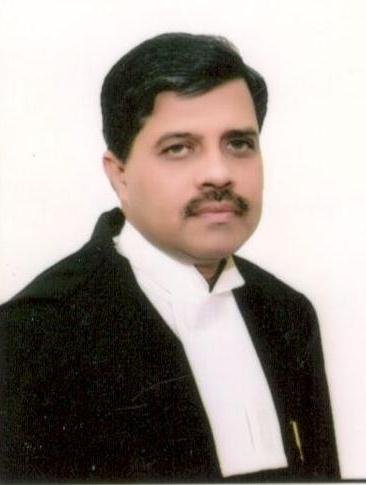
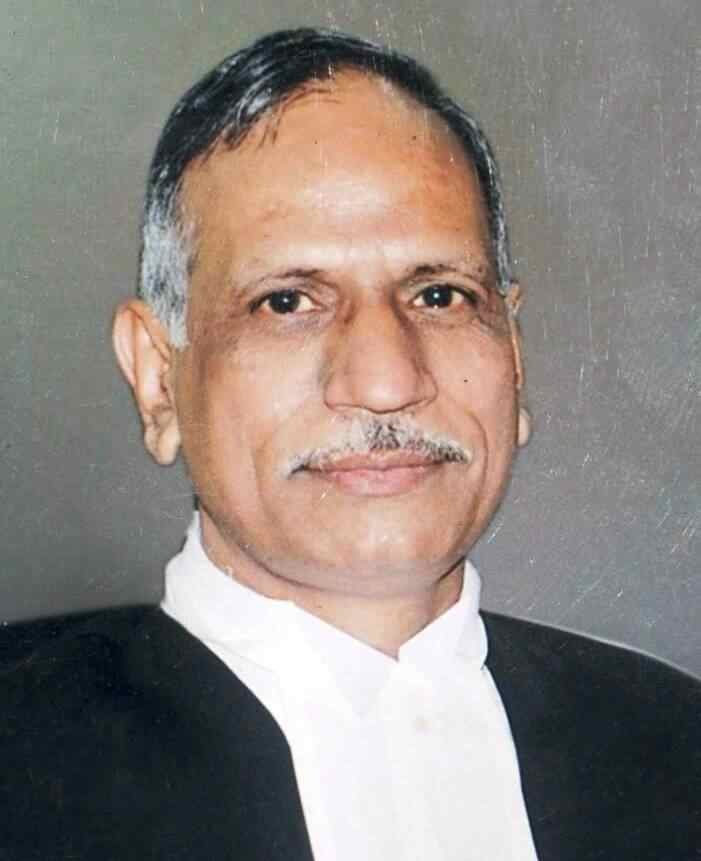
Hon'ble Govind Mathur,Chief Justice
Hon'ble Vivek Varma,J.
1.This appeal arises out of the judgment and order dated
26.03.1983 passed by the Additional Sessions Judge, Gyanpur,
Varanasi in S.T. No. 46 of 1981 by which he convicted the
appellant Bansh Raj @ Lalley under Section 302 IPC and
sentenced him to undergo imprisonment for life.
2.In brief, facts of the case are that on 5.1.1981, a written
report (Ex-ka-1) was submitted by Sri Bihari Lal Pandey
(Informant/P.W.-1) at Police Station Aurai, District Varanasi
alleging therein that his uncle Sharda Prasad Pandey was
issue-less, he owned 1.5 Bigha of land. Bansh Raj @ Lalley
(accused/appellant) wanted Sharda Prasad Pandey to transfer
that land to him. However, he refused on the advice of
Informant's brother Sridhar Pandey. It antagonized the accused
appellant who entertained ill will against Sridhar Pandey. About
8 to 10 days, prior to the incident, Bansh Raj Pandey @ Lalley
abused and threatened the informant. The villagers intervened
and saved the situation. On account of this animosity, on
5.1.1981, at about 8 p.m. in the night when the informant, his
brother Sridhar Pandey, Rajpati Pandey and nephew Dinesh
Kumar Pandey were sitting around a fire ('Kaura'), in front of the
house of Sridhar, and a lantern was lit up, Banshraj Pandey @
Lalley suddenly turned up armed with a gun. He fired at
informant's brother Sridhar Pandey. The shot hit Sridhar
2
Pandey in the stomach and he fell down. Hearing the noise of
gun fire and uproar, the villagers came and saw the incident.
3.On the basis of the written report (Ex-ka-1), the First
Information Report was lodged on 05.01.81 at 9.05 p.m, under
Section 307 IPC against the accused appellant at P.S. Aurai,
District Varanasi by P.W.-3 Sri Nath Ojha, Head Moharrir. An
entry was made in General Diary (Ex-Ka-4), the investigation
was entrusted to Ram Singh (P.W.-5).
4.The injured Sridhar Pandey was taken by the informant to
the police station Aurai. The Investigating Officer recorded the
statement of injured and informant. Thereafter the Injured was
taken by a constable to Aurai Hospital. The doctor at Aurai
Hospital referred him to Shiv Sundar Prasad Gupta Hospital,
Varanasi.
5.The injured, Sridhar Pandey succumbed to his injuries at
Shiv Shankar Prasad Gupta Hospital, Varanasi on 5.1.1981 at
10.35 p.m. The case was thereafter converted from Section 307
IPC to Section 302 IPC. Extract of this G. D. entry is available
on record as Ex-ka-5.
6.During the course of investigation, inquest was prepared.
The corpus of the deceased was subjected to autopsy. As per
Dr A. K. Garg, (P.W.-7), following ante-mortem injuries were
found:-
1. Wound of entrance 5 cm X 5 cm with irregular margins,
contused charring present throughout. This wound was
towards the left at the outer side of abdomen. A loop of
intestine was protruding.
2. Rupture of large intestine and small intestine.
3. Rupture of spleen
4. Rupture of left kidney
5. Blood present in the abdominal cavity about 1-1/4 litres.
6. Two pellets were recovered from the posterior wall of the
abdomen on right side. In the opinion of the doctor the
3
injuries on the body of the deceased were sufficient to
cause his death.
7.P.W.-9 Sub Inspector Rajendra Prasad Rai, after
concluding the investigation submitted a charge sheet (Ex-Ka-
7) against the appellant Bansh Raj @ Lalley under Section 302
IPC. The then Addl. Sessions Judge indicted the appellant
under Section 302 IPC on 5.2.1982. Accused denied the charge
and claimed to be tried.
8.During the course of trial, the prosecution adduced nine
witnesses in support of its case, namely, P.W.-1 Bihari Lal
(informant/witness of fact/eye witness), P.W.-2 Dinesh Kumar
(witness of fact/eye witness), P.W.-3 Srinath Ojha (who
transcribed the chick report), P.W.-4 Sharda Prasad (motive
witness), P.W.-5 Sri Ram Singh (SI), P.W.-6 Sri Ram Sajiwan
Mishra (SO/Subsequent Investigating Officer), P.W.-8 Sri
Mahendra Nath Ram, constable and P.W.-9 Rajendra Prasad
Rai (SI) and exhibited several documents (Ex-Ka-1 to Ka-12).
9.The statement of appellant was recorded under Section
313 Cr.P.C., he denied the allegations and claimed false
implication due to previous enmity. He has taken plea of alibi
that he was admitted in Government Hospital at Jangiganj from
4.1.1981 to 8.1.1981 and to prove his defence, he adduced
three defence witness namely D.W.-1 Janardan Pandey, the
then pharmacist, D.W.-2 Dr M. P. Srivastava, and D.W.-3
Vishambhar Nath Pandey, the relative of accused appellant as
also Ex-Kha-1 (Bed Head Ticket) and Ex-Kha-2 (Discharge
Ticket).
10.The trial Court held that the prosecution was able to prove
guilt of the appellant beyond reasonable doubt and accordingly
convicted him for his having committed offence under Section
302 IPC and sentenced him to life imprisonment.
4
11.Sri Kamal Krishna, learned senior counsel for the
appellant submitted that prosecution has failed to prove the
manner and place of occurrence. He contests the place of
occurrence, since neither empty cartridge or pellets were found
at the incident site, nor the blood stained soil was found by the
Investigating Officer. He further submitted that the witnesses
who have claimed to be eye witness of the occurrence are
partisan and related witnesses and as such no reliance can be
placed on their testimony. He further submitted that the medical
evidence is at variance with ocular version of the witnesses,
because, the fire was said to be made from a distance of 5-6
steps yet charring was found present around the wound of the
deceased, which is not possible. All these factors, according to
the learned counsel for the appellant, are clearly suggestive of
the fact that the prosecution has failed to establish its case
beyond all reasonable doubts and the appellant was falsely
framed.
12.On the other hand learned A.G.A. opposing the said
arguments submitted that the ocular testimony of the
prosecution witnesses is not in any manner inconsistent with
the medical evidence and reliability of the eye witnesses of the
incident cannot be doubted as their presence at the place of
occurrence, which is just in front of their house, is quite natural
and there was no reason to spare the real culprit and falsely
implicate the appellant, therefore, the trial court has rightly held
that the prosecution has proved its case beyond all reasonable
doubts against the appellant and has rightly convicted him.
13.Heard learned counsel for the parties and perused the
material on record.
14.The prosecution case rests on the evidence of PW-1 and
P.W.-2, who are the witnesses of fact and the eye witnesses.
5
P.W-1 -Bihari Lal is the author of first information report. He is
brother of the deceased. This witness deposed that Sharda
Prasad was his real uncle. On the advice of his brother Sridhar
(deceased), Sharda Prasad refused to execute/transfer his land
in favour of accused appellant. As a result, the latter harboured
animosity against Sridhar Pandey. He asserted that on the
fateful day at about 8.00 p.m. when the informant along with
Sridhar, Rajpat and his nephew (P.W-2) were sitting around a
fire, the accused-appellant came with a gun and fired at
Sridhar. The shot hit him in the abdomen. This witness along
with other persons wrapped the wound of the injured with a
"Gamacha" (towel) and covered him with a "rajai " (blanket).
Thereafter, the injured was taken to Police Station Aurai and
First Information Report was lodged.
15.P.W-2 Dinesh Kumar, is son of the deceased. His
statement was recorded on 1.12.1982. His age as recorded on
the date of his deposition is 14 years. On the date of
occurrence this witness was aged about 12 or 13 years. The
trial Judge, however, before recording his evidence, tested his
ability to depose and after being satisfied that he was in a
position to depose, he recorded his evidence. His evidence,
therefore, cannot be doubted on the ground that he was a
minor at the time of occurrence. He had given a very consistent
statement about the occurrence. He stated that he along with
his uncle Bihari lal (informant), Rajpati and his father Sridhar
Pandey (deceased) were sitting around a fire when the
accused-appellant came with a gun in his hand and fired at his
father. His father fell down and the accused appellant, fled from
the spot towards west.
16.We have examined the testimony of P.W-2 Dinesh Kumar
very closely, we do not find any inconsistency in his deposition.
6
17.P.W.-4 Sharda Prasad has been examined as motive
witness. He deposed that he earned his livelihood as a cloth
vendor in Calcutta. He owned 1.5 bigha of land. The accused
appellant wanted Sharda Prasad to transfer that land to him.
However, he refused on the advice of Sridhar Pandey. It
antagonized the accused appellant who threatened Sridhar
Pandey of dire consequences. During cross examination, this
witness remained firm and there was no inconsistency.
18.The prosecution case from the very inception, i.e. from
the registration of the First Information report, states that at the
time when the appellant had fired a shot, the deceased was
sitting in front of his house along with his brother Bihari and his
son Dinesh and one Rajpati and all of them were warming
themselves sitting around a fire. Their testimony remained
unshaken at the trial. The two eye witnesses Bihari (PW-1) and
Dinesh (PW-2) have also supported their depositions before the
trial court. The fact that the deceased and witnesses were
sitting around a fire has a ring of truth. It is a very common sight
in the villages that during winters, villagers, in the evening and
early morning sit around fire out-side their houses in the sahan
(court yard) to warm themselves. Thus the presence of the two
eye witnesses, PW-1 and PW-2 at the place and time is natural
and cannot be doubted. The presence of these two witnesses
at the scene of occurrence is established. Their testimony
cannot be discarded on the ground of their being partisan as
they are related to the deceased. Both these witness were
extensively cross examined regarding the manner of assault,
on the point of sufficiency of light at the time and place of
incident. Nothing adverse could be elicited from them during
such cross examination. The trial court has rightly relied on the
testimony of these two eye witnesses and we have no reason
7
to hold other-wise
19.There is no rule of law, which requires rejection of
testimony of related witnesses. Once it is found by the court,
subsequent to analysis of such evidence that there is no reason
to disbelieve such witnesses then the mere fact that the
witnesses are interested, is not enough to reject the
prosecution case on this ground alone.
20.The Hon'ble Apex court in the case of State of Punjab v.
Karnail Singh reported in 2004 SCC (Cri) 135 has held as
under.
" 8. We may also observe that the ground that the witnesses
being close relatives and consequently, being partisan
witnesses, should not be relied upon, has no substance. This
theory was repelled by this Court as early as in Dalip Singh
v. State of Punjab [AIR 1953 SC 364 : 1953 Cri LJ 1465] in
which surprise was expressed over the impression which
prevailed in the minds of the Members of the Bar that
relatives were not independent witnesses. Speaking through
Vivian Bose, J., it was observed: (AIR p. 366, para 25)
"25. We are unable to agree with the learned Judges of the
High Court that the testimony of the two eyewitnesses
requires corroboration. If the foundation for such an
observation is based on the fact that the witnesses are
women and that the fate of seven men hangs on their
testimony, we know of no such rule. If it is grounded on the
reason that they are closely related to the deceased we are
unable to concur. This is a fallacy common to many criminal
cases and one which another Bench of this Court
endeavoured to dispel in — 'Rameshwar v. State of
Rajasthan [AIR 1952 SC 54 : 1952 Cri LJ 547] ' (AIR at p.
59). We find, however, that it unfortunately still persists, if not
in the judgments of the courts, at any rate in the arguments
of counsel."
9. Again in Masalti v. State of U.P. [AIR 1965 SC 202 : (1965)
1 Cri LJ 226] this Court observed: (AIR pp. 209-10, para 14)
"But it would, we think, be unreasonable to contend that
evidence given by witnesses should be discarded only on the
ground that it is evidence of partisan or interested witnesses.
… The mechanical rejection of such evidence on the sole
ground that it is partisan would invariably lead to failure of
justice. No hard and fast rule can be laid down as to how
much evidence should be appreciated. Judicial approach has
to be cautious in dealing with such evidence; but the plea
that such evidence should be rejected because it is partisan
cannot be accepted as correct."
8
21.On the reliability of testimony of a child witness, the
Hon'ble Apex Court in Nivrutti Pandurang Kokate v. State of
Maharashtra, (2008) 12 SCC 565 has held as under:
10. "6. … The Evidence Act, 1872 (in short 'the Evidence
Act') does not prescribe any particular age as a
determinative factor to treat a witness to be a competent
one. On the contrary, Section 118 of the Evidence Act
envisages that all persons shall be competent to testify,
unless the court considers that they are prevented from
understanding the questions put to them or from giving
rational answers to these questions, because of tender
years, extreme old age, disease—whether of mind, or any
other cause of the same kind. A child of tender age can be
allowed to testify if he has intellectual capacity to understand
questions and give rational answers thereto. This position
was concisely stated by Brewer, J. in Wheeler v. United
States [40 L Ed 244 : 159 US 523 (1895)] . The evidence of
a child witness is not required to be rejected per se, but the
court as a rule of prudence considers such evidence with
close scrutiny and only on being convinced about the quality
thereof and reliability can record conviction, based thereon.
(See Suryanarayana v. State of Karnataka [(2001) 9 SCC
129 : 2002 SCC (Cri) 413] .)
7. In Dattu Ramrao Sakhare v. State of Maharashtra [(1997)
5 SCC 341 : 1997 SCC (Cri) 685] it was held as follows:
(SCC p. 343, para 5)
'5. … A child witness if found competent to depose to the
facts and reliable one such evidence could be the basis of
conviction. In other words even in the absence of oath the
evidence of a child witness can be considered under Section
118 of the Evidence Act provided that such witness is able to
understand the questions and able to give rational answers
thereof. The evidence of a child witness and credibility
thereof would depend upon the circumstances of each case.
The only precaution which the court should bear in mind
while assessing the evidence of a child witness is that the
witness must be a reliable one and his/her demeanour must
be like any other competent witness and there is no
likelihood of being tutored.'
The decision on the question whether the child witness has
sufficient intelligence primarily rests with the trial Judge who
notices his manners, his apparent possession or lack of
intelligence, and the said Judge may resort to any
examination which will tend to disclose his capacity and
intelligence as well as his understanding of the obligation of
an oath. The decision of the trial court may, however, be
disturbed by the higher court if from what is preserved in the
records, it is clear that his conclusion was erroneous. This
precaution is necessary because child witnesses are
amenable to tutoring and often live in a world of make-
believe. Though it is an established principle that child
9
witnesses are dangerous witnesses as they are pliable and
liable to be influenced easily, shaped and moulded, but it is
also an accepted norm that if after careful scrutiny of their
evidence the court comes to the conclusion that there is an
impress of truth in it, there is no obstacle in the way of
accepting the evidence of a child witness."
The above position was highlighted in Ratansinh
Dalsukhbhai Nayak v. State of Gujarat 4 , SCC pp. 67-68,
paras 6-7. Looked at from any angle the judgments of the
trial court and the High Court do not suffer from any infirmity
to warrant interference.
22.It is worthwhile to mention here, that during the trial the
defence made an effort to challenge the place of occurrence
itself. Firstly, on the ground that the Investigating Officer did not
find blood stains at the place of occurrence, and secondly, that
empty cartridge and pellets were also not found at the place of
occurrence.
23.The first submission that blood was not found at the
scene of occurrence and the incident had not taken place, at
the place where prosecution has alleged, cannot be accepted.
In this regard it would be relevant to refer to the testimony of
PW-1 and PW-2. They both deposed that as soon as the
deceased received gun shot wound, he pressed the wound by
his hand and just thereafter 'Gamachha' (cloth towel) was tied
around the wound in order to stop the blood from oozing and
spilling. Further, the injured was, thereafter, also wrapped in a
blanket (razai). Thus, the possibility of blood falling on the
ground becomes remote. It is also evident from the statement
of the Doctor (PW-7) that he found huge collection of blood, i.e.,
1-1/4 ltrs. of blood in the abdominal cavity of the deceased.
Thus, it appears that the blood spill on the ground was
prevented by promptly binding the wound with the "Gamachha".
Consequently the blood got accumulated inside the deceased's
body. There is nothing to doubt the correctness of the testimony
of these witnesses.
10
24.The Supreme Court Court in Nirmal Singh and another
Vs. State of Bihar reported in (2005) 9 SCC 725 dealing with
such a situation has held as-
"……….. in view of the explanation offered by the
prosecution witnesses it appears probable that no blood
had fallen on the ground at the place of occurrence and in
any event, if some blood had fallen at the place of
occurrence which the Investigating Officer failed to notice
that by itself would not be fatal to the prosecution case."
25.The aforesaid decision of the Supreme Court helps the
prosecution and as such the absence of blood at the place of
occurrence would be of no help to the defence and the
submission of the learned counsel for the appellant that the
place of incident is not proved, cannot be accepted.
26.However, even if it be assumed for the sake of argument
that some blood had fallen at the place occurrence the
possibility of blood stains on the ground being withered away by
the foot steps of the persons assembled there at, cannot be
ruled out, particularly when the evidence on record shows that
just after the incident large number of persons had assembled
at the place of occurrence. This could also be the reason that
the Investigating officer did not find blood stains at the place of
occurrence.
27.The next submission that empty cartridge and pellets
were not found at the place occurrence and thus again the
place of occurrence appears doubtful, also cannot be accepted,
inasmuch as, in the present case only one shot was fired and it
is not the case of the prosecution that the appellant after firing
from his gun again loaded another cartridge. The evidence on
record suggests that after making a single shot at the
deceased, the appellant fled from the place of occurrence. So
far as the absence of pellets at the place of occurrence is
11
concerned in that regard we may say observe that the shot was
fired was from a close range, as charring is present around the
wound and the pellets had entered the body of the deceased.
Moreover, there is no exit wound on the body of the deceased.
The possibility of the pellets being found at the place of
occurrence is also ruled out by melee and the rush of people at
the site of the incident after the crime. Even other-wise, nothing
could be elicited from the cross-examination of the eye
witnesses, PW-1 and PW-2 which may create doubt about the
place and manner of occurrence.
28.In the case of Lakhan Sao Vs. State of Bihar & anor
2002 Crl. L.J. 2959 (SC), it has been propounded that non-
recovery of fire arm or cartridge does not detract from the case
of the prosecution, where the direct evidence is acceptable
29.An effort has also been made by the counsel for the
appellant to suggest that since medical evidence is at variance
with ocular version, the medical evidence be believed and
ocular evidence be disbelieved and it be inferred that the
prosecution witnesses had not seen the incident. In this regard
according to the ocular testimony the shot was fired at the
deceased from a distance of 5-6 steps and if this ocular
testimony is to be believed then charring around the wound of
the deceased would not occur, as for charring to occur the fire
would have been made from a distance of 3-4 feet. In our
considered opinion, the variance in distance in the present case
is so minor that it would hardly affect ocular testimony. Even
otherwise if we take into consideration the length of the gun,
which is generally about 3 feet long, there would be no variance
in the distance, as then the distance would be 3-4 feet.
30.Now, coming to the plea of alibi as set up by the accused-
appellant, his version in this regard is that he was not present in
12
the village on the date and time of the occurrence, as he
remained admitted in Government Hospital at Jangiganj from
4.1.1981 to 8.1.1981. To prove his defence version the
appellant had produced three defence witness, namely,
Janardan Pandey (DW-1), the then pharmacist of the hospital,
Dr M. P. Srivastava (DW-2) who gave treatment to the appellant
and Vishambhar Nath Pandey (DW-3), a relative of accused
appellant, who is alleged to have got the appellant admitted in
the hospital. The appellant in his statement under section 313
Cr.P.C had stated that on 3.1.1981 he had gone to village
Sunaicha where his sister was married. There he fell ill in the
night of 3.1.1981 and in the morning of 4.1.1981 his relative
Vishambhar Nath Pandey (DW-3) took him to hospital at
Jangiganj where he remained admitted until he was discharged
there from on 8.11.1981. The trial Court has discarded that plea
stating that accused can very easily go the place of occurrence
on the date of incident and after committing the crime can
return to the hospital within an hour. We have also examined
the statement of DW-3. He deposed that village Sahsepur
where the incident had taken place is 14-15 kms. away from the
hospital where appellant was admitted and the two places are
connected by a pitch road (pukka road). He has also asserted
that the said distance of 14-15 kms. would be shortened by 2-3
kms if one takes the journey via Jagarnathpur. On the basis of
such an evidence on record the trial court rightly held that the
appellant can very easily go to the place of occurrence on the
date of incident and after committing the crime can return to the
hospital within an hour. Besides the above the register on which
the plea of alibi is based, on the face of it, does not inspire
confidence. Though at Government Hospital, Katra, Varanasi
the accused appellant claims to have been admitted on 4.1.81,
13
neither prior to that date nor subsequent to that date there is
any entry of any other patient being admitted in the month of
January. The defence also did not produce any other evidence
to establish the existence of any earlier register/record of
patient admission. Also the appellant did not adduce any
evidence of any medicine having been actually issued to him by
the hospital, though D.W.-2 Dr. M.P. Srivastava had stated so.
On the plea of alibi the settled legal position is that such a plea
can succeed only if it is shown that the accused was so far
away at the relevant time that he could not be present at the
place where the crime was committed.
31.In the case of State of Haryana Vs. Sher Singh 1981
Cr.L.J. 230 (SC) has observed that if an accused takes the plea
of alibi, he must establish it.
32.In the case of Dudh NathPandey Vs. State of Uttar
Pradesh AIR 1981 SC-911, it was held that plea of alibi can
succeed only if it is shown that the accused was so far away at
the relevant time that he could not be present at the place
where the crime was committed.
33.The said proposition of law has been reiterated in the
case of Binay Kumar Singh Vs. State of Bihar (1997) 1 SCC-
283. The apex court observed that the burden of proving an
alibi is entirely on the accused and strict proof is required for
establishing an alibi. In this context, we may reproduce a few
paragraphs of the said judgment.
"22. We must bear in mind that an alibi is not an exception
(special or general) envisaged in the Penal Code, 1860 or
any other law. It is only a rule of evidence recognised in
Section 11 of the Evidence Act that facts which are
inconsistent with the fact in issue are relevant. Illustration (a)
given under the provision is worth reproducing in this
context:
'(a) The question is whether A committed a crime at Calcutta
on a certain day. The fact that, on that date, A was at Lahore
14
is relevant.'
23. The Latin word alibi means 'elsewhere' and that word is
used for convenience when an accused takes recourse to a
defence line that when the occurrence took place he was so
far away from the place of occurrence that it is extremely
improbable that he would have participated in the crime. It is
a basic law that in a criminal case, in which the accused is
alleged to have inflicted physical injury to another person,
the burden is on the prosecution to prove that the accused
was present at the scene and has participated in the crime.
The burden would not be lessened by the mere fact that the
accused has adopted the defence of alibi. The plea of the
accused in such cases need be considered only when the
burden has been discharged by the prosecution
satisfactorily. But once the prosecution succeeds in
discharging the burden it is incumbent on the accused, who
adopts the plea of alibi, to prove it with absolute certainty so
as to exclude the possibility of his presence at the place of
occurrence. When the presence of the accused at the scene
of occurrence has been established satisfactorily by the
prosecution through reliable evidence, normally the court
would be slow to believe any counter-evidence to the effect
that he was elsewhere when the occurrence happened. But
if the evidence adduced by the accused is of such a quality
and of such a standard that the court may entertain some
reasonable doubt regarding his presence at the scene when
the occurrence took place, the accused would, no doubt, be
entitled to the benefit of that reasonable doubt. For that
purpose, it would be a sound proposition to be laid down
that, in such circumstances, the burden on the accused is
rather heavy. It follows, therefore, that strict proof is required
for establishing the plea of alibi."
(emphasis supplied)
34.We thus endorse the said finding of the trial Court and it
has committed no error in rejecting the plea of alibi of the
appellant. Even otherwise, the ailment of the appellant for
which he was admitted in the said hospital is fever and pain in
chest and stomach. DW-3 has stated that no one of the family
of the appellant had visited hospital to attend him, which shows
that the ailment of the appellant was not serious enough. In fact
the story of alibi as set up by the appellant does not inspire
confidence and we disbelieve the same. Here we may also say
that once the prosecution, through reliable evidence, has
satisfactorily established presence of accused at the scene of
15
occurrence we would not believe any counter evidence that the
accused-appellant was elsewhere when the occurrence
happened.
35.In view of our above discussion we hold that the guilt of
the appellant stood fully proved and his appeal lacks merit and
deserves to be dismissed. It is accordingly dismissed and
impugned judgment and order dated 26.03.1983 of the trial
court is hereby affirmed. Appellant, who is on bail, is directed to
surrender immediately. His bail is cancelled and sureties are
discharged. Trial court is also directed to get the appellant
arrested and send him to jail to serve out the sentence awarded
by it as affirmed by this judgment.
36.Office will certify this order to the court concerned within
15 days. Trial court shall thereafter communicate compliance of
this judgment within a month thereafter.
Order Date :- 17.10.2019
RavindraKSingh
(Vivek Varma,J.) (Govind Mathur, C.J.)

 Login with google
Legal Notes
Add a Note....