
The contention pertains to the recruitment procedures of the 6th Combined Civil Services Examination, 2016, administered by the Jharkhand Public Service Commission (JPSC), which, as per Advertisement No. 23/2016, faced ...

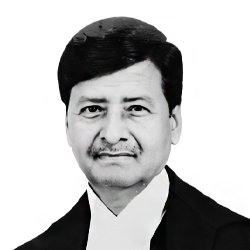
No Acts & Articles mentioned in this case
REPORTABLE
IN THE SUPREME COURT OF INDIA
CIVIL APPELLATE JURISDICTION
CIVIL APPEAL NO(S). 5812 OF 2022
(ARISING OUT OF SLP (C) NO(S).4310 OF 2022)
BARUN KUMAR & ORS. ….APPELLANT(S)
VERSUS
STATE OF JHARKHAND & ORS. ….RESPONDENT(S)
WITH
CIVIL APPEAL NO(S). 5813 OF 2022
(ARISING OUT OF SLP (C) NO(S).4443 OF 2022)
CIVIL APPEAL NO(S).58145817 OF 2022
(ARISING OUT OF SLP (C) NO(S).53385341 OF 2022)
CIVIL APPEAL NO(S).5818 OF 2022
(ARISING OUT OF SLP (C) NO(S).5409 OF 2022)
TRANSFER PETITION (C) NO(S).1100 OF 2022
J U D G M E N T
Ajay Rastogi, J.
Civil Appeal @ SLP (C) No(s).4310 OF 2022
Civil Appeal @ SLP (C) No(s).4443 OF 2022
1
Civil Appeals @ SLP (C) No(s).53385341 OF 2022
Civil Appeal @ SLP (C) No(s).5409 OF 2022
1.Leave granted.
2.The present batch of appeals has been preferred by the
candidates who on qualifying the 6
th
Combined Civil Services
Examination, 2016, conducted by respondent no.3, Jharkhand
Public Service Commission (hereinafter referred to as “the
Commission”) and having been appointed on the recommendations
made by the Commission, completed their period of probation and
got regular postings, their appointments have been cancelled
initially by the learned Single Judge by its judgment dated 7
th
June,
2021, which came to be affirmed by the Division Bench of the High
Court on dismissal of the Letters Patent Appeal filed at the instance
of the present appellants by judgment and order impugned dated
23
rd
February, 2022.
3.The facts in brief which may be relevant for the purpose, with
the consent of parties have been noticed from Civil Appeal @ Special
Leave Petition (Civil) No.4310 of 2022 (Barun Kumar & Ors. Versus
State of Jharkhand & Ors.).
2
4.That in terms of the Bihar ReOrganisation Act, 2000, Bihar
Civil Services (Executive Branch) and Bihar Junior Civil Services
(Recruitment) Rules, 1951(hereinafter referred to as the “Rules
1951”) was adopted by the State of Jharkhand vide notification
no.6184 dated 9
th
November, 2002 and accordingly, the State of
Jharkhand held its Combined Civil Service Examination in terms of
the Rules 1951.
5.That prior to the present selection process which came to be
initiated by the Commission pursuant to Advertisement no.1/2015,
the respondents held 5
th
Combined Civil Services Examination
conducted by the Commission pursuant to Advertisement
no.6/2013 dated 7
th
July, 2013, there was a specific note in the
advertisement that preliminary examination had two papers of 100
marks each and there shall be subject papers in the main
examination and that the marks obtained in General Hindi will not
be added in the marks obtained in the written examination and
personality test, but the candidates who failed to secure 30 marks
in compulsory General Hindi, will not be considered eligible for the
written examination and accordingly PaperI (General Hindi) was
3
considered to be a qualifying test and before the 6
th
Combined Civil
Services Examination, 2016 came to be notified, there was a series
of meetings held by the Expert Committee for revision of the
examination pattern for Combined Civil Services Examination
chaired by Mr. V.S. Dubey, IAS (Retd.) and the Expert Committee,
after examining the Pattern of Examination, made the
recommendations
1
.
1
“65.Briefly speaking, the Expert Committee has the following recommendations to
make :
(a) All the optional papers, both at the level of the preliminary and main
examinations of the Civil Services, be done away and replaced by common, compulsory
papers.
(b) The Preliminary Examination should be conducted in two papers only, each of
200 marks, compulsory for all candidates. The broad syllabus of these two papers could
be the same as that of the Civil Services Aptitude Test (CSAT) of the Union Public Service
Commission, with minor modifications to accommodate local interests. These two papers
could be called: (i) the Civil Services Aptitude Test (CSAT) Paper I, and (ii) the Civil
Services Aptitude Test (CSAT) Paper II. Questions to be asked in these two papers must
be multiple choice, objective type, with no negative marking. Based on the result of the
Preliminary Examination, the number of the candidates to be called for the written (Main)
Examination should be around ten times of the vacancies to be filled. The cut off marks
of the Main Examination should be decided accordingly by the Commission.
(c) The Main Examination should be conducted for a maximum of 1000
marks, divided into six papers, compulsory for all candidates. Of the six papers,
two should be drawn from the languages group and remaining four should be
subject papers, as per details given below :
(i) Paper I should be a composite paper of General Hindi and General English of
Matric standard of 100 marks. This paper should have two separate segments,
one on Hindi and the other one on English, each of equal weightage or 50 marks.
(ii) Paper II should be a paper on Language & Literature of 100 marks of graduate
standard. This paper will be set separately for each one of the following 15
languages, namely, (i) Hindi, (ii) Urdu, (iii) Bengali, (iv) Oriya, (v) English, (vi)
Sanskrit, (vii) Santhali, (viii) Mundari, (ix) Khadia, (x) Ho, (xi) Kuruk, (xii)
Nagpuria, (xiii) Kurumali, (xiv) Khorta, and (xv) Panch Pargania, of which every
candidate will have to opt for one.
(iii)Paper III should be a paper on Social Sciences of 200 marks, comprising of two
distinct sections, each of equal weightage, one on History and the other one on
Geography.
4
6. The report of the Dubey Committee was considered by the
Commission in the first instance and recommended the same to
Respondent No.1 for acceptance, inter alia, with the stipulations
2
.
(iv) Paper IV should be a paper on Indian Constitution & Polity, Public
Administration & Good Governance.
(v) Paper V should be a paper on Indian Economy, Globalization, and Sustainable
Development, and
(vi) Paper VI should be a paper on General Sciences, Environment & Technology
Development.
(d) Marks obtained in all the six compulsory papers of the written Main
Examination should be counted and clubbed together to prepare the gradationlist.
The candidates should be called for the Personality Test based on their position in
the gradation list of the Main Examination. The number of candidates to be called
for the Personality Test could be around two to three times of the vacancies to be
filled. The cutoff marks for the candidates to be called for the Personality Test
(Interview) should be determined accordingly by the Commission.
(e ) Marks to be kept earmarked for the Personality Test (Interview) should not
exceed 10% of the total marks of the written (Main) Examination. This will, thus, work
out to 100 marks, which, in the opinion of the Commission, is more than enough for this
segment of the examination. It is to be remembered that maximum complaints of
favouritism and arbitrariness are received only in this section of the examination. Hence,
it is necessary to keep a cap on the marks allotted for the Personality Test.
(f) The traineeofficers should be evaluated at the end of the institutionalcum
field training through a formal system of examination and the marks obtained in this
examination be added to the marks obtained by the candidates in the Civil Services
(Main) Examination to determine their final interse service seniority. A maximum of 100
marks could be kept earmarked for this purpose. The details of the areas in which the
institutional examination is to be conducted should be left to the concerned parent
departments to work out in consultation with their training institutions and the
Jharkhand Public Service Commission.”
2
(1) 100 marks Language paper of mains be of qualifying nature only in which a
candidate shall secure minimum 30 marks out of the Combined Hindi & English
(10
th
standard paper of 100 marks).
(2) The Revised Examination Pattern Syllabus shall be effective from the 6
th
Combined Civil Services Examination only so that candidates get clear 15 months to
prepare as per the revised pattern and syllabus. The next 5
th
Combined Civil
Services Examination will be on the existing (Mains) syllabus.
(3) Before issuing the notification of revised syllabus Jharkhand Public Service
Commission shall get the syllabus of 9 Regional Languages and Hindi, Urdu,
Sanskrit, Oriya, Bangla and English Language & Literature finalized by Expert
5
7. Respondent No.1 approved the methodology and course of
the Combined Civil Services Examination as advised by the Dubey
Committee with modifications as suggested by the Commission and
made it applicable to the 6
th
Combined Civil Services Examination
by its notification dated 25
th
September, 2013. However, later
pursuant to the recommendations of the HighLevel Committee
headed by the Minister incharge, respondent no.1 further amended
the curriculum and methodology of the Combined Civil Services
Examination being conducted by respondent no.3 (Commission)
with change of pattern of examination vide notification dated 21
st
April 2016.
8.Accordingly, the Commission published Advertisement
No.23/2016 holding 6
th
Combined Civil Services Examination, 2016
dated 6
th
October, 2016. Clause 12 and 13 of the advertisement
which are the cause of dispute, with which we are concerned in the
present batch of appeals, are reproduced as under:
Committee in its final meeting in which the Expert Committee Report was adopted.
The Committee thus resolves this day i.e. 2
nd
April, 2013 to forward the V.S.
Dubey Expert Committee Report to the Chief Secretary, Government of Jharkhand
along with the Commission’s above recommendations for acceptance as early as
possible with a view to ensure that the Revised Pattern can be enforced from the 6
th
Combined Civil Services Examination to be held in 2014 giving candidates at least 15
months to prepare on the basis of revised pattern.”
6
““12. Formation of exam: Preliminary test and main exam (written & interview) will be
organized for selection.
(A)Preliminary test: Candidates 15 times of the number of categorywise vacancies will
be shortlisted for main exam on the basis of preliminary test. Preliminary test will
comprise two papers having total marks of 200200 (total Four Hundred). Their marks
obtained will not be added with marks of main exam or interview. Exam of both papers
will be O.M.R. based. It will be necessary to fill OMR in Preliminary Test properly
otherwise, candidature will be cancelled. It will be compulsory to include candidates in all
subjects/papers of Preliminary Test. Course of Preliminary Test is as under:
SYLLABUS FOR THE PRELIMINARY TEST OF COMBINED CIVIL SERVICES EXAMINATION
2016
The Preliminary Examination shall consist of two compulsory papers, each of 200 marks
namely,
(i) General Studies Paper I
(ii) General Studies Paper – II
Both the question papers shall be of multiple choices, objective type. The question papers will
be set both in Hindi and English. However, questions set to test the comprehensive skill and
knowledge of language and grammar shall be only in the concerned language, without
providing Hindi or English translation thereof.
xxxx xxxx xxxx
(B)Main Exam: According to vacancies three times candidates will be invited for interview on
the basis of main exam. Main exam will comprise 06 papers, total marks of which would be
1050. It would be mandatory for candidates to appear in all the subjects/papers of Main
Exam. Course of Main Exam is as follows:
MAIN EXAMINATION
[No optional subjects. All are common compulsory papers)
Subject Duration Full Marks Remarks
PaperI: General Hindi & General
English, having two separate sections
on (i) General Hindi and (ii) General
English, each of 50 marks
3 hours 100 Descriptive Type
This paper is
qualifying in which
minimum 30 marks
is mandatory
PaperII: Language and Literature:
Under this paper, every candidate will
have to opt for one language and
literature out of fifteen listed by the
commission
3 hours 150 Descriptive Type
PaperIII: Social Science, having two
distinct sections of (i) History (ii)
Geography, each of equal weightage.
3 hours 200 Descriptive Type
PaperIV: Indian Constitution & Policy,
Public Administration & Good
Governance.
3 hours 200 Descriptive Type
PaperV: Indian Economy, Globalization
and Sustainable Development.
3 hours 200 Descriptive Type
PaperVI: General Sciences,
Environment & Technology
Development.
3 hours 200 Descriptive Type
These papers are common to all candidates.
(c) xxxx xxxx xxxx
7
“13. Minimum qualifying marks of Preliminary & Main Exam:
Unreserved 40 percent
Backward ClassI 34 percent
Backward ClassII 36.5 percent
Scheduled Castes/Tribes & female category 32 per cent
The minimum qualifying marks determined as above will be applicable equally on all the written
tests (Objective/Subjective) for various reserved categories for competitive exams of all the
services/cadres. It would be mandatory for candidates of all the categories to obtain 30 marks in
PaperI of Main Exam. (General Hindi & General English).
Note: In the light of Resolution No.8315 dated 16.09.2015 of the Department of Personnel
Administrative Reforms & Official Language, compulsion of obtaining minimum qualifying marks
for interview in Civil Service competitive Test has been discontinued.”
9.Pursuant to the advertisement of 6
th
Combined Civil Services
Examination, all the applicants, including the appellants and the
private respondents, appeared in the first instance in preliminary
examination and the result of the preliminary examination was
published on 23
rd
February 2017, which was further updated on 2
nd
March, 2017 by declaring the candidates 15 times of the number of
vacancies to appear in the main examination. On 13
th
April 2017,
the result of the preliminary examination was further declared and
thereafter there was a series of litigation questioning the pattern or
result of the preliminary examination declared by the Commission
and one of the issues of preliminary examination travelled to this
Court which came to be decided in Civil Appeal no.9217 of 2018 by
this Court by order dated 10
th
September, 2018
3
.
3
8
10.This Court has expressed that there appears to be an
ambiguity in the terms of advertisement disclosed to the candidates
who had intended to participate in the selection process and that
stipulation of 40% marks in the preliminary examination as
opposed to two separate papers in the examination, this Court
expressed its opinion that the candidate has to get 40% marks in
the aggregate insofar as the two papers are concerned. Although it
was later indicated that what is being expressed by this Court may
not be treated as a precedent.
“O R D E R
Leave granted.
The controversy in the present appeal arose because certain answers that were given
to questions were considered to be incorrect in the preliminary examination that was taken
up by the candidates, which consisted of two general papers.
The minimum marks, as stated in the advertisement, were said to be 40 per cent for
the unreserved category to be eligible, once the preliminary examination had been taken,
thereafter to proceed with the main examination.
Since it is clear on a reading of the advertisement dated October, 2016 that 40 per
cent is the marks of the preliminary examination as opposed to marks of two separate papers
in that examination, we are of the opinion that this candidate was told that she has to get 40
percent in the aggregate insofar as the two papers are concerned.
We have also been informed by the State Government that owning to the supposed
ambiguity in the advertisement, a Committee has gone into the same and has since opined
what was meant by “preliminary examination” is that 40 per cent minimum marks should be
obtained in each paper.
We are of the view that the ambiguity, if any, in the advertisement must fall in
favour of the candidate who goes by the advertisement as it originally stood.
Since it is clear that even without looking into the correctness of the answers, so far
as six questions are concerned, that the petitioner has in fact obtained 40 per cent in both
the papers taken together, the appellant shall be allowed to appear for the main examination.
The appeal is disposed of accordingly.
Since the appellant alone is before us, we make it clear that anything said in the
order will not be treated as a precedent.”
9
11.So far as the preliminary examination is concerned, even what
was expressed by this Court was not taken to be a final conclusion
on the issue, the learned Single Judge of the High Court revisited
the scheme of the selection process of preliminary examination
decided the controversy in the case of Joy Guria Vs. State of
Jharkhand and others [W.P.(S) No. 4188 of 2018] under its
judgment dated 20
th
December, 2018 holding that in the
preliminary examination, the candidate has to obtain qualifying
marks in both the papers and after the list of successful candidates
was published, the main written examination was conducted from
28
th
January, 2019 to 1
st
February, 2019 and the result of the main
examination was declared on 15
th
February, 2020 and all the
successful candidates in the written examination who fell in the
zone of consideration were called for viva voce and the result of the
candidates who qualified and successfully cleared all the stages, the
final merit list was published of the selected candidates by the
Commission on 21
st
April, 2020 and after the recommendations
were approved by the Government of Jharkhand, the successful
candidates of the 6
th
Combined Civil Services Examination, 2016
10
against 326 posts were appointed on various dates from June, 2020
to July, 2020 and so far as the appellants in the instant batch of
appeals are concerned, including other selected candidates, were
appointed by the Government vide notification dated 29
th
July
2020.
12.Several writ petitions later on came to be filed before the
learned Single Judge of the High Court assailing the result of the
main examination dated 21
st
April, 2020 of the 6
th
Combined Civil
Services Examination, 2016 and since there are contentious issues,
as alleged, came to be raised in the batch of writ petitions, the
learned Single Judge of the High Court bifurcated the issues into
four groups.
13.Insofar as the present appellants are concerned, they belong to
the fourth group. The learned Single Judge of the High Court, after
interpreting clause 12 and 13 of the advertisement read with Rule
16 of the scheme of Rules 1951, arrived to a conclusion that so far
as the main examination is concerned, PaperI of General
Hindi/General English, was a qualifying paper for which the
candidate has to secure 30 marks, and the merit of the candidate is
11
to be assessed on the basis of remaining 5 papers in which the
candidate has to secure minimum qualifying marks in each of the
paper and since this procedure has not been followed by the
respondents, accordingly, by a common judgment dated 7
th
June,
2021, set aside the merit list prepared by the Commission with a
direction to prepare a fresh merit list with reference to the marks
obtained in the written test (5 papers) and vivavoce, without adding
the marks of PaperI and thereafter the final select list may be
drawn in accordance with law.
14.It may be relevant to note that during the course of pendency
of the LPAs, interim applications were disposed of by the Division
Bench by an order dated 10
th
August 2021, wherein it was directed
that the parties shall maintain statusquo and it was further
recorded that the appellants have undertaken that they will not
plead equity in case any adverse decision is passed by the High
Court on the ground that the appeal remained pending and during
that period they remained in employment.
15.The issues which were framed for consideration by the
Division Bench of the High Court and held as under:
12
“Issue no.(i)
Whether the marks obtained in PaperI were to be added in total
marks?
Issue no.(i) is answered by the High Court as under:
that the marks obtained in PaperI (Mains Examination) were not
to be added in total marks while preparing merit list for declaration
of the candidature of one or the other candidate.
Issue no.(ii)
Whether the merit list prepared by the JPSC based upon the
‘aggregate qualifying marks’ of all subjects or ‘minimum qualifying
marks’ in each of the subjects, is considered to be correct?
Issue no.(iii)
Whether the stand which has been taken by the JPSC as also the
State before the Court of law based upon which the order has been
passed in Joy Guria (supra) or the contrary view taken while
preparing the merit list of the successful candidate in 6
th
Combined Civil Service Competitive Examination conducted by
JPSC is considered to be correct?
Issue nos.(ii) and (iii) are answered by the High Court as
under:
(ii) ‘Minimum qualifying marks’ in each subject (Main Examination)
is correct interpretation; and
(iii) the stand which has been taken by the JPSC as also the State
before the Court of law based upon which the order has been
passed in Joy Guria (supra) is correct approach.
16.The Division Bench of the High Court held that the marks
obtained in Paper I of Written Examination were not to be added in
the total marks and in terms of clause 13 of the advertisement,
qualifying marks have to be secured by the candidates in each
subject paper (5 papers) which, according to the Division Bench,
13
was in conformity with Rule 16 of the Rules, 1951 under the
judgment and order impugned dated 23
rd
February 2022, which is
the subject matter of challenge in appeals before us.
17.Learned counsel for the appellants jointly submits that there
is no ambiguity or any later amendment in Rule 16 of the Rules,
1951 and so far as the proviso appended to Rule 16 is concerned, it
has to be read with clause (a) and (b) to Rule 16. Clause (a) gives
discretion to the Commission to fix the qualifying marks in any or
all the subjects at the written examination. At the same time,
clause (b) provides for qualifying marks which can be fixed by the
Commission in its discretion for the candidates of Scheduled
Castes/Scheduled Tribes but shall not be higher than 35% for the
Bihar Civil Service (Executive Branch). If clause (a) and (b) are read
in conjunction, it makes it explicitly clear that clause (a) is general
in nature and emphasizes on the discretion of the Commission to
fix the qualifying marks in any or all subjects in reference to the
candidate appearing in the examination. However, clause (b) carves
out an exception and only emphasizes for the Scheduled Castes and
Scheduled Tribes candidates. So far as the proviso added to Rule
14
16 is concerned, it postulates that only after crossing the threshold,
the total marks secured by the candidate would be taken into
consideration for determining the suitability of the candidate for
appointment.
18.That apart, proviso to Rule 17 categorically empowers to relax
the norms for Scheduled Castes and Scheduled Tribes despite not
having secured the minimum qualifying marks as fixed by the
Commission under Rule 16(a) and (b) with the prior approval of the
Government. Thus, what is being observed by the Division Bench
in interpreting proviso to Rule 16 being confined to clause (b) alone
and not to clause(a) and clause (b) is a complete misreading of the
Rule 16 of the Rules 1951.
19.So far as the qualifying Paper I and determination of merit
based on the other 5 subject papers in the written examination is
concerned, learned counsel submits that clause 12(b) of the
advertisement clearly postulates that total number of marks would
be 1050 and it will be mandatory for the candidates to appear in all
the subjects/papers of the main examination. Although the
remarkscolumn in PaperI indicates that it is a qualifying paper in
15
which minimum 30 marks are mandatory and in the remaining
subject papers, one has to secure 40% marks but there is no
indication whether it has to be in individual paper or the total
marks obtained in the written examination for adjudging the
suitability for appointment.
20.Thus, in the given circumstances, what is being construed by
the Commission in preparing the merit list of the candidates based
on the marks secured by the candidate out of 1050 marks for
determining merit in the written examination to be called for
interview is a reasonable interpretation which ordinarily was not
open for the High Court to interfere with within the limited scope of
judicial review under Article 226 of the Constitution.
21.Learned counsel further submits that the interpretation which
has been afforded by the High Court after deliberation may also be
one of the plausible interpretations in reference to clause 12 and 13
of the advertisement but what is being interpreted by the
Commission while preparing the merit list of the written
examination cannot be completely ruled out. In this state of affairs,
the selection process which once has attained finality and the
16
appellants have been appointed after the recommendations were
approved by the State Government and have completed the period
of probation, merely because there was an interim order passed by
the High Court where an equity may not be claimed but for all
practical purposes, they are working for almost two years by this
time, this fact cannot be ruled out and submits that in the given
facts and circumstances, the judgment passed by the High Court is
not sustainable in law.
22.Learned counsel further submits that if the respondents have
consistently followed the practice in the past of preparing the merit
list on the basis of total marks secured by the candidate in the
main examination held earlier and that can be reasonably
construed from clause 12 and 13 of the advertisement and there is
no amendment to Rule 16 of the scheme of Rules, 1951 and that
being so, it was an apparent error committed by the High Court in
overruling the settled practice which was being followed
consistently by the Commission for sufficiently long time, in the
given circumstances, there was no justification for the High Court
to unsettle the settled past practice followed by the Commission in
17
exercise of its limited power of judicial review under Article 226 of
the Constitution.
23.Per contra, learned counsel for the respondents submits that
the procedure for selection for preliminary and main examination is
to be regulated in terms of clause 12 and 13 of the advertisement
and it only refers to the qualifying marks to be secured by the
candidates, and if Clause 12 and 13 are to be read in conjunction,
the only irresistible conclusion and the interpretation coming
forward would be that PaperI of the written examination although
is a part of the scheme of the examination but one has to secure
only 30% marks to qualify and the merit list has to be determined
on the basis of the written examination of remaining subject papers
(5 papers) in which the candidate has to secure qualifying marks in
each paper and that being the manifest error which the
Commission has committed in preparing the merit list and that has
been rectified by the High Court in the impugned judgment and the
respondents are equally qualified and they would have been placed
in the order of merit provided the Commission would have
published the list of selected candidates in conformity with clause
18
12 and 13 of the advertisement read with Rule 16 of the Rules
1951.
24. Learned counsel further submits that there is no delay on the
part of the respondents in approaching the Court for redressal of
their grievances and at least latches, in no manner, be attributed to
them. Once their right has been safeguarded by the interim order
of which a reference has been made, at least their right of fair
consideration in revising the merit list of the written examination in
terms of the order of the Division Bench may not be interfered with
by this Court.
25.Learned counsel further submits that so far as Rule 16 of the
scheme of the Rules, 1951 is concerned, if the punctuation mark is
noticed after Rule 16(a), the Legislature in its wisdom has put a
little full stop(.) and after clause (b), there is colon(:), and thereafter,
the proviso has been added which clearly indicates that proviso is
only related to clause (b) to Rule 16 and this being the only
irresistible interpretation of the scheme of Rule 16 of Rules, 1951
which has been confirmed by the High Court after a detailed
discussion in the impugned judgment, binds the authority to take
19
further action in publishing the merit list of the main written
examination in terms of the conditions of advertisement needs no
further interference of this Court.
26.We have heard learned counsel for the parties and with their
assistance perused the material available on record.
27.Before we proceed to examine the questions raised in the
instant appeals, let us take the bird’s eye view of the scheme of
Rules 1951. Rules 15, 16 and 17 of the Rules 1951 relevant for the
purpose are reproduced hereinbelow:
“15. The examination shall be held according to the syllabus specified in
Appendix D to these rules which are liable to alteration from time to time by
the Commission with the prior approval of the State Government.
16. (a) The Commission shall have discretion to fix the qualifying marks in
any or all the subjects at the written examination.
(b) The minimum qualifying marks for candidates belonging to the
Scheduled Castes and the Scheduled Tribes shall not be higher than 35%
for the Bihar Civil Service (Executive Branch), and 30% for the Bihar Junior
Civil Service unless the number of such candidates qualifying at the written
test according to the standards applied for other candidates is considerably
in excess of the number of candidates required to fill all the vacancies
reserved for the Scheduled Castes and Scheduled Tribes:
Provided that in determining the suitability of a particular candidate for
appointment, the total marks obtained at the written examination and not
the marks obtained in any particular subject shall be taken into
consideration.
(c) There shall be no qualifying marks for the viva voce test.
17. On the basis of the marks obtained at the written examination, the
Commission shall arrange for a viva voce test of the candidates who have
qualified at the written examination according to Rule 16 (a) or (b):
20
Provided that in exceptional circumstances and with the prior
approval of Government, the Commission may, at their discretion, admit
candidates of the Scheduled Castes and Scheduled Tribes to the viva
voce test even though they may not have obtained the minimum
qualifying marks at the written test prescribed in Clause (a) or (b) of Rule
16.”
28.The undisputed facts which may be noticed for completion of
facts referred to supra clearly manifest that the 6
th
Combined Civil
Services Examination was notified by the Commission on 6
th
October, 2016 for filling up of 326 posts of different services under
the State of Jharkhand and recruitment is to be made in terms of
the Bihar Civil Service (Executive Branch) and Rules, 1951 which
were adopted by the State of Jharkhand by notification dated 9
th
November 2002.
29.Before the 6
th
Combined Civil Services Examination came to be
initiated, there was lot of discussion prior thereto, and after the
acceptance of Dubey Committee’s report with certain modifications
by the Commission, finally came to be approved by the State
Government vide its notification dated 25
th
September, 2013 and
after going through the process of selection followed with the
recommendations made by the Commission, appointments are
21
made by order dated 29
th
July, 2020 and after completing field
training, they have been posted to their respective places of posting.
30.It may be apposite to note that the State of Jharkhand has
now notified the rules framed in exercise of power conferred under
proviso to the Article 309 of the Constitution, namely, the
Jharkhand Combined Civil Services Examination Rules,
2021(hereinafter being referred to as the “Rules 2021”) and apart
from the other provisions of the scheme of Rules, Rule 17 lays down
the criteria of prescribing the minimum qualifying/aggregate marks
to be obtained by the candidate in the main examination for
preparing the merit list for the purpose of interview and in
furtherance to the Rules 2021, selection process has been initiated
by respondent no. 3 holding 7
th
Combined Civil Services
Examination, 2016 vide advertisement no. 1/2021 dated 8
th
February 2021.
31.Thus, what is being decided by the Division Bench of the High
Court under the impugned judgment may remain confined to the 6
th
Combined Civil Services Examination alone since all future
22
selections shall be held by the State of Jharkhand under the
scheme of Rules 2021.
32.If we look into the element of the examination pattern, the
candidates who entered into participation of the selection process
have to first qualify the preliminary examination and marks
obtained in the examination shall not be added in the main
examination as being referred to in clause 12(a) but there were
series of litigations before the preliminary examination could be
finalized and the result, in the first instance, was published on 23
rd
February, 2017 which came to be further revised on 13
th
April,
2017 and thereafter, because of litigation, it was again revised on
11
th
August, 2017 followed by 6
th
August, 2018 and finally, the
second revised result of preliminary examination was published on
6
th
August, 2018 declaring 34,634 candidates successful for
appearing in the mains examination.
33.One of the candidates who was not satisfied by the orders
passed by the High Court came to this Court in Civil Appeal
no.9217 of 2018 and this Court by Order dated 10
th
September,
2018 disposed of the same with the observation that there is an
23
ambiguity in the conditions of advertisement and minimum
qualifying marks of 40% are for the aggregate and not for each
subject.
34.This was not rested at this stage. The High Court, in the case
of Joy Guria and others(supra), which relates to Preliminary
Examination, again examined the result of the preliminary
examination and by judgment dated 20
th
December, 2018 held that
such of the persons who did not secure minimum qualifying marks
in both the papers of preliminary examination are not qualified to
participate in the main examination as Clause 13 of the
advertisement applies to each subject separately.
35. After a long battle, the Commission proceeded further and
conducted the main examination during the period 28
th
January,
2019 and 1
st
February, 2019 and the result was finally declared on
15
th
February, 2020 and the recommendations were made by the
Commission to the State Government including allocation of service
on 29
th
June, 2020 and after approval of the recommendations
made, the appointments were made by the State Government by
Order dated 29
th
July 2020. At this stage, all the candidates had
24
completed their full training and have been given their respective
postings.
36.We have examined the submissions and the counter
submissions made by learned counsel for the parties.
37.So far as Rule 16 of Rules, 1951 is concerned, it is true that if
we go through the bare punctuation marks which have been
highlighted by the counsel for the respondents, it certainly makes a
distinction between clause (a) and clause (b) but for proper
interpretation and to make the scheme of rules workable,
sometimes punctuation marks may give a different impression and
that cannot be taken in isolation for the interpretation of the
scheme of rules. If we read clause (a) and (b) of Rule 16 conjointly,
it clearly manifests that clause (a) is general and precise for the
candidates who are participating in the written examination
whereas clause (b) refers to the candidates who belong to Scheduled
Castes and Scheduled Tribes leaving the discretion of the
Commission to fix qualifying marks for Scheduled
Castes/Scheduled Tribes but with restriction that shall not be
higher than 35% in Bihar Civil Services(Executive Branch).
25
38.The proviso added thereto relates to the stage for determining
the suitability of the candidate, total marks obtained in the written
examination has to be counted and not the marks obtained in any
particular subject for preparing the list of candidates who qualify
the written examination and this can be made further clear by
taking note of Rule 17 of the Rules which casts an obligation upon
the Commission to collate the marks obtained by the candidate in
the written examination and the Commission shall arrange for viva
voce the candidates who have qualified the written examination
according to Rule 16(a) or 16(b), as the case may be, and at this
stage the Commission keeps a discretion and in exceptional
circumstances may admit a member from the Scheduled Castes or
Scheduled Tribes to the viva voce test, even if they have failed to
qualify the minimum qualifying marks with the prior approval of the
Government and this being the scheme of Rules, proviso to Rule 16
has to be read for both the clause (a) and (b) to Rule 16 and cannot
be read in reference to clause (b) alone as held by the High Court
under the impugned judgment.
26
39.So far as the two questions which have been answered by the
High Court in reference to whether the marks obtained in PaperI
would be added in total marks or whether the merit list is to be
prepared based on the total marks at the written examination or
minimum qualifying marks in each of the subject papers of written
examination are concerned, after examining clause 12 and 13 of the
advertisement in particular, read with Rule 16 of Rules 1951, we
are of the view that there is certainly an ambiguity in the
advertisement itself.
40.If we examine clause 12(a) in reference to the preliminary
examination, it may indicate that according to vacancies, fifteen
times candidates will be shortlisted for main examination and as
per clause 12(b), the main examination will comprise of 06 papers,
total marks of which would be 1050 and it would be mandatory for
the candidate to appear in all the subjects/papers of Main
Examination. But for PaperI, minimum 30 marks as qualifying
marks has been prescribed and all the 6 papers are common and
candidate has to appear in all the papers with the minimum
qualifying marks for the respective category as indicated in clause
27
13 of the advertisement but whether it is the total marks obtained
at the written examination or qualifying marks obtained in all the
papers separately is not clear under the terms of advertisement.
41.It is true that it can be construed in both ways. The main
examination is comprising of 6 papers, total marks would be 1050
and candidate has to appear in all the papers of the main
examination. This could be one construction that qualifying marks
in paperI is 30% but in other subject papers, it may be 40% or as
fixed for the respective category and whether it has to be aggregate
or qualifying marks in each paper is indeed not clear and ambiguity
is there in the conditions of advertisement, of which a detailed
reference has been made. At this stage, we take assistance of Rule
16 of the scheme of Rules, 1951 read with the proviso which gives a
different indication.
42.This Court in N. Suresh Nathan and Another vs. Union of
India and Others
4
while examining the recruitment rules for
Assistant Engineers in the Public Works Department and taking
into consideration the procedure which has been followed by the
4
1992 Supp (1) SCC 584
28
department for sufficiently long time observed that the construction
of the scheme of rules which is in consonance with long standing
practice prevailing in the concerned department is untenable to
require upsetting it and if the past practice is based on one of the
possible constructions which can be made of the rules upsetting the
same could not be appropriate and in para 4 this Court held as
under:
“4. In our opinion, this appeal has to be allowed. There is sufficient
material including the admission of respondents diplomaholders that the
practice followed in the department for a long time was that in the case of
diplomaholder Junior Engineers who obtained the degree during service,
the period of three years' service in the grade for eligibility for promotion as
degreeholders commenced from the date of obtaining the degree and the
earlier period of service as diplomaholders was not counted for this
purpose. This earlier practice was clearly admitted by the respondents
diplomaholders in para 5 of their application made to the Tribunal at page
115 of the paper book. This also appears to be the view of the Union Public
Service Commission contained in their letter dated December 6, 1968
extracted at pages 99100 of the paper book in the counteraffidavit of
respondents 1 to 3. The real question, therefore, is whether the
construction made of this provision in the rules on which the past
practice extending over a long period is based is untenable to require
upsetting it. If the past practice is based on one of the possible
constructions which can be made of the rules then upsetting the
same now would not be appropriate. It is in this perspective that the
question raised has to be determined”.
(emphasis supplied)
43.In the instant case, the view which has been adopted by the
Commission and that has been considered and held by the High
Court in the impugned judgment may be better circumscribed but
29
both are equally possible views and either of the one could not be
ruled out or outrightly negated.
44.In the given situation, when one possible view has been acted
upon by the Commission and pursuant to which the
recommendations were made and after approval of the State
Government, candidates have been appointed and are working for
almost 2 years by this time, it will be unjust for this Court to now
permit the Government to take a UTurn in compliance of the
impugned judgment, and nonsuit the candidates who are working
for sufficiently long time.
45.Though it has been observed by the High Court that equity
may not be claimed by the candidates but this Court cannot be
oblivious of the fact that such of the candidates who are working for
sufficiently two years by this time and have completed their period
of probation were not at fault at any point of time but because the
interpretation acted upon by the Commission was not acceptable to
the High Court, they became a victim and that apart, we are also of
the view that what is being observed by the High Court may only be
confined to 6
th
Combined Civil Services Examination, 2016 for the
30
reason that the State has now introduced the scheme of Rules,
2021 and fresh process has been initiated under 7
th
Combined Civil
Services Examination 2016. In the given circumstances, what has
been observed by the High Court may be one of the propositions in
interpreting clause 12 and 13 of the advertisement but what is
being considered by the Commission in its right earnest also cannot
be ruled out.
46.It is well known that punctuation marks by themselves do not
control the meaning of the statute when its meaning is otherwise
obvious. The ordinary rule is that punctuation mark is a minor
element in the interpretation of statute, more so, when it is a case
of subordinate legislation. If we go through the scheme of the Rules
1951, we are clear that proviso to Rule 16 has to be read in
conjunction to both Clause (a) and (b) and not to clause (b) in
particular as being observed by the High Court in the impugned
judgment.
47.It may be noticed that the judgment in Joy Guria and
others(supra) referred to by the High Court is in reference to the
preliminary examination and the Division Bench under the
31
impugned judgment was influenced by those observations while
examining the scheme of the main examination held by the
Commission pursuant to 6
th
Combined Civil Services Examination,
2016. To the contrary, it was to be interpreted independently on
the basis of the scheme of Rules 1951 read with Clause 12 and 13
of the advertisement.
48.Consequently, the appeals deserve to succeed and accordingly
allowed. The impugned judgment of the High Court dated 23
rd
February, 2022 is hereby quashed and set aside. No costs.
49.Pending application(s), if any, shall stand disposed of.
TRANSFER PETITION (C) NO(S).1100 OF 2022
50.Having heard learned counsel for the petitioner, we find no
reason to entertain the transfer petition and the same is accordingly
dismissed.
51.Pending application(s), if any, shall stand disposed of.
……………………….J.
(AJAY
RASTOGI)
32
……………………….J.
(C.T. RAVIKUMAR)
NEW DELHI
AUGUST 25, 2022.
33

 Login with google
Legal Notes
Add a Note....