
As per case facts, petitioners were ad hoc employees under the DHWC Scheme whose services were not regularized, leading to salary and regularization disputes over decades. After multiple High Court ...
No Acts & Articles mentioned in this case
HIGH COURT OF PUNJAB AND HARYANA AT CHANDIGARH
****
CWP-27165-2023 (O&M)
Decided on 17.10.2025
****
Bhagat Singh & Ors. ... Petitioners
VS.
State of Haryana & Ors. ... Respondents
****
CWP-9778-2016 (O&M)
****
Balwant Singh ... Petitioner
VS.
State of Haryana & Ors. ... Respondents
****
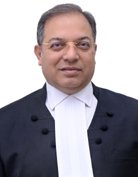
CORAM: HON’BLE MR.JUSTICE SANDEEP MOUDGIL
****
Present: Ms. Sangita Dhanda, Advocate for the petitioners
Mr. Sushil Bhardwaj, Addl. AG Haryana
Mr. Ankur Goyat, Advocate for respondent No.3
Mr. Deepak Balyan, Advocate
for respondents No.4&5 (CWP-27165-2023)
Mr. Dinesh Arora, Advocate
for respondent No.4 ( CWP-9778-2016)
****
Sandeep Moudgil, J.
(1). The jurisdiction of this Court has been invoked under Article 226
of the Constitution of India, inter alia, for issuing a writ of certiorari for
quashing for order dated 15.08.2023 (Annexure P27) rejecting the claim of
regularization of services of the petitioners in contravention of the judgment
dated 22.11.2022 (Annexure P26) passed by this Court in CWP-10482-2016
(Saroj Kumari & Ors. vs. State of Haryana & Ors.) and to direct the
respondents to regularize their services in terms of the letter dated 26.10.1987
(Annexure P1) and under the policy dated 09.12.1996 (Annexure P9) along
with arrears from the due date with interest @ 9% p.a.
(2). The petitioners were initially appointed on ad hoc basis on various
posts viz. Braceman, Tailor, OT Attendant, Peon and Opthalmic Assistant, in
the Medical College, Rohtak under the District Handicapped Welfare Centre
CWP-27165-2023 - 2 -
Scheme established by the District Handicapped Welfare Centre (DHWC) by
one of the Committees constituted for implementation, management of the
Scheme and appointment of the staff. The DHWC is run through grant funded
by respondent No.2 – Director, Social Justice & Empowerment Department for
the purpose of salary of its employees. The respondent No.1 vide memo dated
31.03.1993 decided to regularize the services of all the work charged/casual/
daily rated employees who had completed 5 or more years in continuous
service as on 31.03.1993 followed by another circular dated 18.03.1996
modifying the instructions dated 31.03.1993 in terms whereof, the employees
to be considered for regularization should have 3 years’ service instead of 5
years as on 31.01.1996.
(3). In the year 1997, the supervision of DHWC, Rohtak was
transferred from PGI, Rohtak to District Red Cross Society, Rohtak by
respondent No.2 as a result of which the salaries of petitioners were drastically
reduced from regular pay scale to a consolidated salary and as such, they were
compelled to file CWP No. 17197 of 1997 titled Saroj Kumari and others
versus State of Haryana and others challenging payment of their salaries on
consolidated basis instead of regular pay scale. The said writ petition was
allowed vide order dated 05.05.1999 (Annexure P13) and the respondents were
directed to pay all the allowances sanctioned by the Govt. from time to time.
Despite their commitment to continue providing grant in aid by respondent
No.2 vide 04.07.1997 (Annexure P10), respondent No.1 started releasing only
10% grant in aid only on matching basis resulting into delayed and lesser salary
of the petitioners. The petitioner again filed CWP-16721-2011 and this Court
vide order dated 08.11.2012 (Annexure P19) directed release of salaries of the
CWP-27165-2023 - 3 -
petitioner. The petitioners made various representations requesting the
respondents to regularize their services and other service benefits. Even vide
letter dated 23.06.2014 (Annexure P21), respondent No.2 requested for
absorption of the DHWC in the Social Justice & Empowerment Department in
compliance of the directions of this court dated 08.11.2012. Facing the
difficulty at the hands of respondent No.2 in not releasing the salaries of the
petitioner, the Red Cross Society moved an application and consequently, the
order dated 08.11.2012 (Annexure P19) passed by this Court was modified vide
order dated 25.08.2024 (Annexure P22) and it was directed respondents No.1 &
2 are primarily liable for payment of petitioners’ salaries. The said order was
also not complied with resulting to initiation of contempt proceedings by the
petitioners.
(4). Thereafter a legal notice was served upon the respondent No.2 and
vide order dated 05.05.2016, the claim for regularization of the petitioner was
rejected. The petitioners again approached CWP-10482-2016 challenging the
order dated 05.05.2016. In the meanwhile, the petitioners retired from service
during the period from 31.04.2016 to 30.11.2022 without payment of any
retiral benefits/pension etc.
(5). A Coordinate Bench of this Court quashed the impugned order
dated 05.05.2016 vide order dated 22.11.2022 (Annexure P26) and held that the
petitioners were employees of respondent No.2 at all times and remanded back
the matter to consider their case in terms of applicable regularization policies.
The petitioners was constrained to file contempt petition i.e. COCP No.1125 of
2023 and resultantly, vide order dated 15.08.2023 (Annexure P27) respondent
No.2 rejected the claim of all the petitioners and the said contempt petition was
CWP-27165-2023 - 4 -
disposed of on 07.11.2023 with liberty to challenge the order dated 15.08.2023.
Hence this writ petition has been filed.
(6). Learned counsel for the respondents No.1 & 2 averred that the
petitioners were initially appointed in the Medical College Rohtak – respondent
No.3 on adhoc/temporary basis, under the DHWC Scheme on the
recommendation of the Employment Exchange and the salary was during from
the grant in aid funded by respondent No.2 and it was clearly mentioned in
their appointment letters that they are not entitled for pension and other retiral
benefits. He further submits that the DHWC was transferred to respondent No.4
with all assets and liabilities including its employees in 1997.
(7). It is then urged that there existed no employer-employee
relationship between the petitioners and the respondents No.1&2 particularly in
view of the fact that the appointment letters were issued by respondent No.3
and not by respondent No.2. He submits that the petitioners have since
superannuated and the DHWC has now been closed.
(8). Learned State counsel along with Mr. Ankur Goyat, Advocate and
Mr. Deepak Balyan, Advocate appearing for the respondents No.3, 4 & 5
jointly argued that in compliance of the order dated 22.11.2022 (Annexure P26)
passed by this Court in CWP-10482-2016, the claim of the petitioners
regarding regularization of their services under the Haryana Govt. Policies
dated 27.05.1993 and 11.05.1994 was considered and rejected on the ground
that under the said policies, only work charged employee/ casual/daily wage
employees were to be regularized against a sanctioned post whereas
appointments of the petitioners were made on ad hoc/temporary basis under a
particular Scheme and that the DHWC is not a Govt. organization and rather
CWP-27165-2023 - 5 -
runs on the grant in aid of the Govt. Reliance has been placed on Union of
India vs. Ilmo Devi, 2021 SCC OnLine SC 899, regularization can only be as
per the policy declared by the State Govt. and the said benefit cannot be
claimed as a matter of right de hors the regularization policy and in the absence
of sanctioned post.
(9). At this stage, learned counsel for the petitioners vehemently
contended that once the petitioners had been working for the last more than
three decades with the respondent No.3, it is nothing but sheer highhandedness
of the respondents to say that the petitioners were not appointed on a
sanctioned post or there are no posts on which their services could be
regularized more particularly in view of the fact that the employer-employee
relationship has been established by dint of judgment passed by this Court in
CWP-10482-2016 (Saroj Kumari & Ors. vs. State of Haryana & Ors.) decided
on 22.11.2022.
(10). Ms. Sangeeta Dhanda, learned counsel for the petitioners then
exhorted that the respondents are in complete defiance of the well reasoned
judgment dated 22.11.2022 passed by a Coordinate Bench in CWP-10482-2016
inasmuch as the respondent No.2 has neither gone through the records of the
case nor the order dated 22.11.2022 and have acted in a careless manner. She
placed reliance on letter dated 26.10.1987 (Annexure P1) which clearly shows
that there were 27 sanctioned posts and the petitioners were appointed against 5
posts out of these sanctioned posts itself and thus it is conspicuous that the
respondents are hell-bent to deny petitioners the relief to which they are legally
entitled to.
(11). Heard learned counsel for the parties.
CWP-27165-2023 - 6 -
(12). It appears that the petitioners had earlier approached this Court in
CWP-10482-2016 (Saroj Kumari & Ors. vs. State of Haryana & Ors.)
with the
identical prayer seeking regularization of their services. The said writ petition
was allowed vide judgment dated 22.11.2022 with the following observations:-
“15. First and foremost, let us see if there is any substance in the
stand taken by the respondent-State that the petitioners are
employees of Medical College, Rohtak, since appointment letters
have been issued by the Director of the College. On the first flush,
it does seem that since the issuing authority for the appointment of
the petitioners is Principal, Medical College, Rohtak, therefore,
the College cannot wash its hands of its responsibility being the
appointing authority. However, a deeper scrutiny of the entirety of
the record reflects otherwise. As already noted 13 of 15 in the
factual narrative, appointment letters were issued pursuant to the
selection made by the Committee constituted vide notification
Annexure P-1 of which Additional Director, Social Welfare,
Haryana, was an equal constituent. The notification clearly states
that the Committee has been constituted to make recruitments for
implementation and management of the Scheme called District
Handicapped Welfare Centre, to be set up at the Medical College,
Rohtak. It was in this background that the petitioners were though
employed for the Scheme, but since they were to be physically
located and deputed in the Centres, which were to be set up in the
Medical College that the Director, Medical College, Rohtak was
delegated the administrative authority of issuing appointment
letters being the constituent of the Selection Committee itself.
Furthermore, the stand taken by the State flies in the face of order
dated 04.07.1997 (Annexure P-9), which has been issued by the
respondent No.2 asking the Principal of Medical College to shift
the entire centre from Medical College to District Red Cross
Society. If it were to be believed, as has been canvassed and
CWP-27165-2023 - 7 -
pleaded that the petitioners were not employees of the Medical
College, then how it was within the administrative domain of
Director of Social Justice and Empowerment Department-
respondent No.2 to issue a command to the Director, Medical
College, to transfer entire centre along with its employees. The
Director of Medical College was naturally too willing to abide by
the said office letter since he was conscious that the petitioners are
not employees of the Medical College and they were merely
deputed in the Centre which had been set up in the College.
Accordingly, I find no fault with the stand taken by the Medical
College in the pleadings as well as in the course of arguments that
petitioners are not their employees.
16. As regards claim of the petitioners, I do find merit in the
contentions of learned counsel for the petitioners that their case
could not have been rejected on the ground that they are back
door entrants. The appointment letter itself is self-explanatory and
a bare perusal of the same reflects that their services were
engaged through proper channel.
17. In the premise, the impugned order dated 05.05.2016
(Annexure P-24) is hereby set-aside. The case is remanded back to
respondent No.2/Director, Social Justice and Empowerment
Department, Chandigarh, to pass fresh orders in the light of
findings given by this Court herein above that the petitioners at all
time were employees of respondent No.2/Director. Needless to say
that in case the petitioners are found eligible in terms of the
applicable regularization policies, they shall be accorded benefit
in terms thereof.
18. On a Court query, learned counsel for the petitioners has been
very fair and has candidly made a statement at bar that in case the
benefit of regularization is given, they are willing to forego their
claim for ACP. As regards pay-scale, since the salaries have been
paid as per the admissible pay-scales from time to time under
CWP-27165-2023 - 8 -
orders of this Court, there are unlikely to be any arrears to be
paid.
19. The needful exercise be carried out within a period of three
months from the date of receipt of certified copy of this order.”
(13). A perusal of the above judgment would show that the Coordinate
Bench found that the petitioners were employees of the Department of Social
Justice and Empowerment, Haryana, and not of the Medical College, Rohtak.
Their appointments were made through a selection committee constituted under
the Department’s notification for the District Handicapped Welfare Centre
scheme, and the Director of the Medical College issued appointment letters
only as an administrative formality. It was further noted that the Department’s
own order directing the Principal to shift the Centre with its staff to the District
Red Cross Society confirmed that administrative control rested with the
Department. Rejecting the State’s plea, it was held that the petitioners were
validly appointed and not backdoor entrants. The impugned order dated
05.05.2016 was set aside, and the matter was remanded to the Director of the
Department for reconsideration of regularization in light of the findings, to be
completed within three months.
(14). Once there was a clear direction by this Court directing the
respondent No.2 to consider the case of the petitioners for regularization in
view of the detailed judgment, it was incumbent upon the respondents to
analyze the reasons assigned by this Court and thereafter to pass orders in
compliance. It was only upon the institution of the contempt petition (COCP
No.1125 of 2023) that respondent No.2 proceeded to mechanically reject the
petitioners’ claim vide order dated 15.08.2023, citing reasons that were not
only superficial but patently contrary to the factual record and earlier judicial
CWP-27165-2023 - 9 -
findings. The relevant observation made by the Director General, Social Justice
and Empower Scheduled Castes and Backward Class Welfare and Anthodia
(Services) Department, Haryana in the impugned order dated 15.08.2023 is as
under:-
“As per the condition of the above regularization policy ad-hoc
title, the employees will be regularized on the post against the
posts or vacancies of the relevant categories. Whereas the posts to
which the plaintiffs were appointed in the Center on ad-
hoc/temporary basis, these posts were created only for running the
work of the Centre. The posts related to which the plaintiffs were
appointed on ad-hoc/temporary basis are not sanctioned posts in
the department. In any government department or board
corporation, only those employees are regularized in government
service who is working against the sanctioned posts or the
sanctioned posts are vacant. District Handicapped Welfare Center
is also not a government center and it is being run only on the
basis of grant-in-aid from the government. Apart from this, this
center is also not a part of the department and the District
Disabled Welfare Center is being operated on the basis of grant-
in-aid given by the department and this center is not a part of the
department. Therefore, the plaintiffs are not required to be
regularized by the Haryana Government as per the said
regularization policy dated 11.05.1994.”
(15). The above-reproduced reasoning provided by the Department that
the posts in question were not sanctioned but created solely for the Centre, and
that the Centre was neither a government entity nor part of the Department, is
expressly self-contradictory inasmuch as their own record clearly revealed that
27 sanctioned posts at DHWC, Rohtak were made available as early as 1987 as
per letter dated 26.07.1987 (Annexure P1) followed by a Government
CWP-27165-2023 - 10 -
Notification dated 21.07.1988 constituting a committee for a fully State-
financed and permanent scheme. It is thus reiterated that the petitioners’
appointments were against sanctioned and duly recognized posts.
(16). It is noteworthy that the petitioners were appointed on
adhoc/temporary basis only after coming into force of the notification dated
26.10.1987 and 08.07.1988 which constituted the Committee for
selection/appointment of staff against sanctioned post and it was only thereafter
that the petitioners were engaged initially though on ad hoc/temporary basis
against sanctioned post.
(17). That apart, this Court in Ram Rattan & Ors. vs. State of Haryana
& Ors. (CWP-34585-2019) decided on 19.10.2023 while relying upon various
case laws of the Supreme Court, accepted the claim of the writ petitioners for
regularization of their services observing that public employment is a facet of
right to equality envisaged under Article 16 of the Constitution and that State is
although a model employer, its right to create posts and recruit people,
therefore, emanates from the statutes or statutory rules and that non-
regularization into service of such part-time employees who have put in their
whole life in the service of the respondent-Nigam, would tantamount to
violation of fundamental rights of equality before law and equality of
opportunity in matters relating to employment under the State, as enshrined
under Article 14 & 16(1) of the Constitution. Following directions were issued
by this Court:-
(32). In addition to the above, even principle of natural justice,
too demand that the petitioners cannot be denied the benefit of
CWP-27165-2023 - 11 -
regularization of services when their similarly placed employees
have been granted the said benefit.
(33). Accordingly, the respondents are directed to consider the
case of the petitioners for regularization of service in view of the
policy dated 01.10.2003 as amended on 10.02.2004 issued by the
Government of Haryana and to pass necessary orders regularizing
their services, within a period of one month from the date of
receipt of certified copy of this order. The petitioners shall also be
entitled to all the benefits of regularization and consequential
relief to which they are eligible including the arrears of salary.
(34). This case is also being peculiar wherein Class-IV employees
are forced to undergo multiple round of litigation for their claim
to which they became eligible in the year 2003 and are fighting for
their legal rights for two decades, this Court cannot close its eyes
to the pain and sufferings and the harassment with which this
strata of society has been dealt with, needs to be compensated,
though cannot be done so by any means after such a long number
of years, the respondent No.3 shall pay 6 % interest per annum on
the arrears from the date it became due till the date of its
realization to which the petitioners are found entitled on
regularization into service.
(18). In Dharam Singh & Ors. vs. State of UP & Anr., the question
before the Supreme Court was whether the High Court erred in failing to
adjudicate Appellants’ principal challenge to the State’s refusals to sanction
posts and treating the matter as a mere plea for regularization and if so, given
the Appellants’ long and undisputed service, what appropriate relief ought to
follow from the Supreme Court. The Supreme Court had an occasion to
consider whether years of ad hoc engagement, defended by shifting excuses
and pleas of financial strain can be used to deny the rights of those who have
kept public institutions running. The Supreme Court further delved into its
CWP-27165-2023 - 12 -
recent decisions rendered in Jaggo v. Union of India 2024 SCC Online SC
3826 and in Shripal & Another v. Nagar Nigam, Ghaziabad, 2025 SCC
Online SC 221 and laid emphasis that the decision rendered by it in Secretary,
State of Karnataka & Others Vs. Umadevi & Others, 2006(3) SLR 1 cannot be
deployed as a shield to justify exploitation through long-term “ad hocism”. The
detailed but relevant principles articulated in Shripal’s (case), as reproduced in
Dharam Singh’s, case read as under:-
15. It is manifest that the Appellant Workmen continuously
rendered their services over several years, sometimes spanning
more than a decade. Even if certain muster rolls were not
produced in full, the Employer's failure to furnish such records-
despite directions to do so-allows an adverse inference under well-
established labour jurisprudence. Indian labour law strongly
disfavors perpetual daily-wage or contractual engagements in
circumstances where the work is permanent in nature. Morally
and legally, workers who fulfil ongoing municipal requirements
year after year cannot be dismissed summarily as dispensable,
particularly in the absence of a genuine contractor agreement. At
this juncture, it would be appropriate to recall the broader
critique of indefinite “temporary” employment practices as done
by a recent judgment of this Court in Jaggo v. Union of India in
the following paragraphs:
“22. The pervasive misuse of temporary employment
contracts, as exemplified in this case, reflects a broader
systemic issue that adversely affects workers' rights and job
security. In the private sector, the rise of the gig economy
has led to an increase in precarious employment
arrangements, often characterized by lack of benefits, job
security, and fair treatment. Such practices have been
criticized for exploiting workers and undermining labour
CWP-27165-2023 - 13 -
standards. Government institutions, entrusted with
upholding the principles of fairness and justice, bear an
even greater responsibility to avoid such exploitative
employment practices. When public sector entities engage in
misuse of temporary contracts, it not only mirrors the
detrimental trends observed in the gig economy but also sets
a concerning precedent that can erode public trust in
governmental operations. ………
25. It is a disconcerting reality that temporary employees,
particularly in government institutions, often face
multifaceted forms of exploitation. While the foundational
purpose of temporary contracts may have been to address
short-term or seasonal needs, they have increasingly
become a mechanism to evade longterm obligations owed to
employees. These practices manifest in several ways:
• Misuse of “Temporary” Labels: Employees engaged
for work that is essential, recurring, and integral to the
functioning of an institution are often labelled as
“temporary” or “contractual,” even when their roles
mirror those of regular employees. Such misclassification
deprives workers of the dignity, security, and benefits that
regular employees are entitled to, despite performing
identical tasks. • Arbitrary Termination: Temporary
employees are frequently dismissed without cause or notice,
as seen in the present case. This practice undermines the
principles of natural justice and subjects workers to a state
of constant insecurity, regardless of the quality or duration
of their service.
• Lack of Career Progression: Temporary employees
often find themselves excluded from opportunities for skill
development, promotions, or incremental pay raises. They
remain stagnant in their roles, creating a systemic disparity
CWP-27165-2023 - 14 -
between them and their regular counterparts, despite their
contributions being equally significant.
• Using Outsourcing as a Shield: Institutions
increasingly resort to outsourcing roles performed by
temporary employees, effectively replacing one set of
exploited workers with another. This practice not only
perpetuates exploitation but also demonstrates a deliberate
effort to bypass the obligation to offer regular employment.
• Denial of Basic Rights and Benefits: Temporary
employees are often denied fundamental benefits such as
pension, provident fund, health insurance, and paid leave,
even when their tenure decades. This lack of spans social
security subjects them and their families to undue hardship,
especially in cases of illness, retirement, or unforeseen
circumstances.””
(19). The Supreme Court took note of the fact that repeated
technicalities, rolling “reconsiderations” and administrative drifts prolong
delays and administrative indecision undermine justice for long-serving daily
wage/ad hoc workers and to prevent further injustice, it mandated clear
responsibilities, strict timelines, and verifiable compliance, insisting that the
State must organize, budget for, and regularize these workers as constitutional
obligations and not discretionary acts. The Supreme Court concluded as under:-
“20. We have framed these directions comprehensively because,
case after case, orders of this Court in such matters have been met
with fresh technicalities, rolling “reconsiderations,” and
administrative drift which further prolongs the insecurity for those
who have already laboured for years on daily wages. Therefore,
we have learned that Justice in such cases cannot rest on
simpliciter directions, but it demands imposition of clear duties,
fixed timelines, and verifiable compliance. As a constitutional
CWP-27165-2023 - 15 -
employer, the State is held to a higher standard and therefore it
must organise its perennial workers on a sanctioned footing,
create a budget for lawful engagement, and implement judicial
directions in letter and spirit. Delay to follow these obligations is
not mere negligence but rather it is a conscious method of denial
that erodes livelihoods and dignity for these workers. The
operative scheme we have set here comprising of creation of
supernumerary posts, full regularization, subsequent financial
benefits, and a sworn affidavit of compliance, is therefore a
pathway designed to convert rights into outcomes and to reaffirm
that fairness in engagement and transparency in administration
are not matters of grace, but obligations under Articles 14, 16 and
21 of the Constitution of India.”
(20). Accordingly this writ petition is allowed and the impugned order
dated 15.08.2023 (Annexure P27) is quashed. The petitioners shall stand
regularized in terms of the regularization policy dated 27.05.1993 and
11.05.1994 and on regularization, the petitioners shall be placed at not less than
the minimum of the regular pay scale for the post, with protection of last drawn
wages if higher with subsequent increments in the pay scale as per the pay
grade and consequential seniority and promotion shall be based on the date of
regularization. The petitioner shall be entitled for all necessary and
consequential service/retiral benefits including pension/pensionary benefits and
other terminal dues along with arrears with interest @ 9% p.a. from the due
date till its realization, as early as possible not last than 4 months from the date
of receipt of certified copy of this order.
(21). Equally important is to point out that this Court found the stance
of respondent No.2 not only untenable but also evasive and in willful defiance
of the Court’s judgment and the Department’s own official records. The refusal
CWP-27165-2023 - 16 -
by the then Director General – respondent No.2 to regularize the petitioners
under the pretext of a non-existent or unsanctioned post, and denial of the
governmental character of DHWC, is a gross abuse of administrative authority
and a deliberate attempt to frustrate the judicial process. Ordinarily, this Court
would have imposed exemplary cost on the errant officer, however, it is left for
the Additional Chief Secretary of Directorate of Social Justice &
Empowerment, Haryana to consider and take appropriate action against the
then concerned officer for his act of willful defiance and persistently
misleading both the Court and the petitioners through erroneous and
unsustainable orders, despite settled judicial findings.
(22). Let a copy of this order be served upon the Additional Chief
Secretary of Directorate of Social Justice & Empowerment, Haryana for further
necessary action and compliance. This Court shall also be apprised of the
action taken within a period of four (4) weeks.
(23). Ordered accordingly.
17.10.2025
V.Vishal
(Sandeep Moudgil)
Judge
1. Whether speaking/reasoned? : Yes/No
2. Whether reportable? : Yes/No

 Login with google
Legal Notes
Add a Note....