
The appeal aims to contest the ruling of the Patna High Court that overturned the verdict of the Second Additional Subordinate Judge.

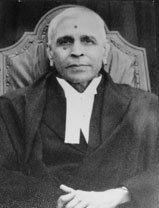
No Acts & Articles mentioned in this case
http://JUDIS.NIC.IN SUPREME COURT OF INDIA Page 1 of 12
PETITIONER:
BHAGWATI PRASAD SAH AND OTHERS
Vs.
RESPONDENT:
DULHIN RAMESHWARI JUERAND ANOTHER.
DATE OF JUDGMENT:
07/05/1951
BENCH:
MUKHERJEA, B.K.
BENCH:
MUKHERJEA, B.K.
FAZAL ALI, SAIYID
AIYAR, N. CHANDRASEKHARA
CITATION:
1952 AIR 72 1952 SCR 603
CITATOR INFO :
R 1964 SC 136 (22)
RF 1980 SC1173 (23)
ACT:
Hindu Law--Joint family--Presumption of
jointness--Separation of one member--Effect of--Burden of
proof of subsequent state of family----Evidence of separa-
tion--Statement of deceased member-- Evidence Act (I of
1872), s. 32 (3).
HEADNOTE:
Though the general principle is that a Hindu family is
presumed to be joint unless the contrary is proved, yet
where it is admitted that one of the coparceners did sepa-
rate himself from the other members of the joint family and
had his share in the joint property partitioned off for him,
there is no presumption that the rest of the coparceners
continued to be joint. There is no presumption on the other
side too that because one member of the family separated
himself, there has been separation with regard to all. It
would be a question of fact to be determined in each case
upon the evidence relating to the intention of the parties
whether there was a separation amongst the other coparceners
or they remained united and the burden would undoubtedly lie
on the party who asserts the existence of a particular state
of things on the basis of which he claims relief.
Except in the case of re-union, the mere fact that sepa-
rated coparceners chose to live together or act jointly for
purposes of business or trade or in their dealings with
properties would not give them the status of coparceners
under the Mitakshara law.
The statements of a particular person that he is sepa-
rated from a joint family of which he was a coparcener, and
that he has no further interest in the joint property or
claim to any assets left by his father, would be statements
made against the interest of such person, and, after such
person is dead, they would be relevant under s. 32(3) of the
Evidence Act. The assertion that there was separation not
only in respect of himself but between all the coparceners
would be admissible as a connected matter and ,an integral
part of the same statement. It is not merely the precise
http://JUDIS.NIC.IN SUPREME COURT OF INDIA Page 2 of 12
fact which is against interest that is admissible but all
matters that are "involved in it and knit up with the state-
ment."
The expression "joint family" is used in legal as well
as in a loose sense. The fact that the said expression is
used in
604
describing a family in a document does not therefore neces-
sarily lead to the inference that the family is a joint
Hindu family with all its legal incidents.
JUDGMENT:
CIVIL APPELLATE JURIDICTION. Civil Appeal No. 83 of 1950
appeal from the Judgment and Decree dated the 2nd March,
1948, of the High Court of Judicature at Patna (Manohar Lal
and Ray, JJ.) in Appeal from Original Decree No. 60 of 1944
arising out of the Judgment and Decree dated the 22nd Decem-
ber, 1943, of the Court of the First Sub-Judge of Saran,
Chapra, in Title Suit No. 24 of 1941.
Bakshi Tek Chand (Ramanugrah Prasad, with him) for the
appellants.
Gopinath Kunzru (D. K. Saran, with him) for Respondent
No. 1.
1951. May 7. The judgment of the Court was delivered by
MUKHERJEA J.--This appeal is directed against a judgment
and decree of a Division Bench of the Patna High Court dated
2nd March, 1949, by which the learned judges reversed, on
appeal, a decision of the Second Additional Subordinate
Judge of Saran in Title Suit No. 24 of 1941.
The controversy between the parties to the suit centres
round only one question of fact, viz., whether the plain-
tiff's father, who died in 1926, was joint with or separate
from his nephew, the defendant No. 1, at the time of his
death. If he died separate, it is not disputed that his
properties would devolve by inheritance upon his widow
and after the death of the widow would vest in his daughter,
who is the plaintiff in the suit. If, on the other hand, he
died joint, his interest in the joint properties would pass
by survivorship to defendant No. 1, who together with his
male descendant constitute a joint Hindu family governed by
the Mitakshara law.
It may be convenient at the outset to give a brief
resume of the material facts as they appear in the
605
pleadings of the parties. One Sheo Narain Sah, who was the
grandfather of the plaintiff as well as of defendant No. 1
had three sons: (1) Imrit, (2) Janki and (3) Ram Narain.
Imrit's branch is represented by defendants 11 and 12 in the
suit, and they are his son and grandson respectively.
Janki's only son is Ram Saran, the defendant No. 1. Defend-
ants 2 to 4 are the sons of defendant No. 1 and defendants
to 10 are his minor grandsons. Ram Narain died in 1926
leaving behind him his widow Sumitra and a daughter Ramsa-
wari who is the plaintiff in the suit. Sumitra died in 1933
and the plaintiff claims to be the sole heir of Ram Narain
after the death of her mother. According to the plaintiff,
there was a complete separation between the three sons of
Sheo Narain in food, estate and business nearly 65 years
prior to the institution of the suit. After separation, Ram
Narain and Ram Saran, the defendant No. 1, did carry on a
cloth shop jointly and dealt with the profits of this busi-
ness together, as well as acquired properties in their joint
names. But these properties and interests they could and
http://JUDIS.NIC.IN SUPREME COURT OF INDIA Page 3 of 12
did hold as tenants in common. Sumitra was a woman of weak
intellect and after the death of Ram Narain, she was com-
pletely under the influence of defendant No. 1 and his sons.
It is stated in the plaint that in the year 1928 the defend-
ant No. 11, who is the son of Imrit, instituted a suit at
the institution of defendant No. 1 and his sons in which he
denied the separation of Imrit from the joint family and
claimed the properties in possession of defendant No. 1 and
his sons as the joint properties. of the family. That suit,
it is said, ended in a collusive compromise and Sumitra was
made to file a collusive written statement in that suit as
well as to depose falsely on commission to the effect that
her husband died joint with defendant No. 1. The plaintiff
herself brought an earlier suit on much the same allegations
as she has made now but that suit she had to withdraw be-
cause of some formal defects. The present suit was insti-
tuted on 20th of December, 1940, and the plaintiff prayed
for recovery of possession of the properties specified in
Schedules I
78
606
to IV in the plaint together with mesne profits both past
and future.
Defendants 11 and 12 did not appear or contest the
;suit. The suit was contested by defendants 1 to 4 who
filed one joint written statement. Another written state-
ment and that of a formal character was filed on behalf of
the minor defendants by their pleader guardian appointed by
the Court. The material thing stated in this written state-
ment was that the natural guardians of the minors in spite
of notices being given to them did not properly instruct the
pleader guardian.
The defence of defendants 1 to 4 in substance was that
there was no separation between Ram Narain and defendant No.
1 as alleged in the plaint, but that after the death of
Janki, the father of defendant No. 1, Imrit alone separated
himself from Ram Narain and the defendant No. 1 when the
latter was only five years old. Ram Narain and defendant No.
1 continued to remain joint as before and as Ram Narain died
joint, the defendant No. 1 got all the properties by right
of survivorship. It was denied that Sumitra was influenced
in any way by defendant No. 1 or his sons or that she was
made to file a collusive written statement in the suit
instituted by defendant No. 11 or make a false statement in
her deposition while giving evidence therein. Several other
pleas were taken with which we are not concerned for our
present purpose.
The material issue framed in the suit was issue No. 6
and this was worded as follows:--
"" Was there any separation between Ram Narain Sah, plain-
tiff's father, and defendant No. 1 as alleged?"
The trial Court on a consideration of the evidence
adduced in this case decided this issue against the
plaintiff and in that view dismissed the suit. There
was an appeal taken to the Patna High Court against this
decision by the plaintiff and the learned Judges of the High
Court reversed the decision of the trial Judge and gave the
plaintiff
607
a decree in terms of the prayers made in the plaint. The
defendant No. 1 died after the decision of the trial Judge,
and his sons and grandsons have now come up on appeal to
this Court. The substantial. contention raised by Mr.
Bakhshi Tek Chand, who appeared in support of the appeal, is
that the decision arrived at by the High Court on the ques-
http://JUDIS.NIC.IN SUPREME COURT OF INDIA Page 4 of 12
tion of separation is not warranted by the evidence on the
record.
Before we discuss the evidence on the record, we desire
to point out that on the admitted facts of this case nei-
ther party has any presumption on his side either as
regards jointness or separation of the family. The general
principle undoubtedly is that a Hindu family is presumed to
be joint unless the contrary is proved, but where it is
admitted that one of the coparceners did separate himself
from the other members of the joint family and had his
share in the joint property partitioned off for him, there
is no presumption that the rest of the coparceners contin-
ued to be joint. There is no presumption on the other side
too that because one member of the family separated himself,
there has been separation with regard to all. It would be a
question of fact to be determined in each case upon the
evidence relating to the intention of the parties whether
there was a separation amongst the other coparceners or that
they remained united. The burden would undoubtedly. lie on
the party who asserts the existence of a particular state of
things on the basis of which he claims relief. These prin-
ciples which have been laid down in several pronouncements
of the Judicial Committee seem to us to be perfectly sound:
(vide Bal Krishna v. Ram Krishna(1) and Palaniammal v.
Muthuvenkatachala(2) and Balabux Ladhuram v. Rukhmabai(3).
Another thing to be noted in this connection is that it is
not the case of the defendants made either in the pleadings
or in the evidence that even if there was a separation
between Ram Narain and Ram
(1) L.R. 58 I.A. 220. (3) L.R. 30 I.A. 130.
(2) L.R. 52 I.A 83.
608
Saran at any anterior time they subsequently reunited. The
controversy, therefore, narrows down to the short point as
to whether at any time before the death of Ram Narain there
was a separation between him and Ram Saran. If, as the
plaintiff avers, there was a disruption of the joint status
in regard to all the three brothers, it would really be
immaterial if, subsequent to separation, Ram Narain and Ram
Saran lived together in commensality or dealt with their
properties in such manner as is ordinarily done by members
of a joint Hindu family which is not set up in the present
case. Except in the case of reunion, the mere fact that
separated coparceners chose to live together or act jointly
for purposes of business or trade or in their dealings with
properties, would not give them the status of coparceners
under the Mitakshara law. It in the light of these princi-
ples that we propose to examine the evidence before us.
Both the Courts below have discarded the oral evidence
adduced by the parties as wholly unreliable and the learned
counsel appearing for neither side has invited us to place
any reliance on the same. We do not, therefore, think it
necessary to refer to the oral evidence at all.
As regards documentary evidence, it must be admitted
that there is no deed of partition in the present case, nor
is there in existence any document to which all the members
of the family were parties and which proceeds on the basis
of any admitted partition. Imrit's separation from the
family is of course an admitted fact but there is no evi-
dence even on the side of the defendants to show when this
separation took place. The defendant No. 1 in his deposi-
tion in a Money Suit, to which he was a party, stated in the
year 1942 that his age was 81 at that time. If this is a
correct statement, Ram Saran must have been born some time
in 1861 and Imrit's separation may be dated near about the
http://JUDIS.NIC.IN SUPREME COURT OF INDIA Page 5 of 12
year 1866.
The earliest document that we have on the record is
Ex. 2 dated the 30th of September, 1879. This is a
609
mortgage bond executed by Imrit in favour of Ram Narain.
There is no recital of separation in the document itself,
but the statement of boundaries of the mortgaged properties
shows clearly that Ram Narain's share was separated from
that of Imrit. The mortgaged properties were two houses, one
of which was situated at Dahiawan and the northern boundary
of this house is stated to be "house of Ram Narain Sahu,
puttidar of me, the executant, partitioned''. This shows
that there was a partition between Imrit and Ram Narain and
Ram Narain had a separate house of his own. It is not stated
in this document that this house was the joint property of
Ram Narain and Ram Saran. Exhibit 2 (a) is another mortgage
bond between Imrit and Ram Narain and is dated the 21st of
March, 1885, and here the northern boundary of the mortgaged
property is stated to be the "Bakasht land of Ram Saran
Sahu, puttidar of me, the executant." This is a strong
piece of evidence in favour of the plaintiff and taking
Exhibits 2 and 2 (a) together, it can legitimately be in-
ferred that Ram Saran was also separate and he had certain
bakasht lands allotted to him in his share. The matter is
practically clinched by the recital of another document
which is Exhibit 2 (b) and which is also a registered mort-
gage bond executed by Imrit in favour of Ram Narain. The
date of the instrument is 8th of November, 1898. There is a
recital in the document to the following effect :--
"I, the executant, have been living separately and have
been separate in mess from Ram Narain Sahu and Ram Saran
Sahu my own nephew for a long time and at the time of sepa-
ration all the movable and immovable properties were parti-
tioned among all the three parties. Since separation, all
business is carried on separately."
The document further recites that Sheo Narain Sahu, the
father, was a party to this partition and he was given a
house for his residence and Rs. 1,100 in cash for trade and
maintenance and that after his death these properties were
also divided amongst the three sons. It is stated that
Imrit received a sum of
610
Rs. 334-7-9 as his share of the cash money left by his
father and this money he paid to Ram Narain in part satis-
faction of his debt. Then again, in the description of the
mortgaged property given in the schedule, the northern
boundary is stated to be "House of Ram Saran Sahu nephew of
me, the executant."
There is no reason to doubt the truth of these state-
ments which were made in an old document long before any
dispute arose between the parties in regard to these mat-
ters. A question was raised, however, as to whether this
statement of Imrit could be legally admissible as evidence.
Imrit is undoubtedly dead and Mr. Kunzru, appearing for the
respondents, contended that this statement could be admitted
in evidence under section 32 (7) of the Indian Evidence Act.
We are not sure that section 32 (7) is really of assistance
to the respondents. The particular right, which is the
subject-matter of dispute before us, was certainly asserted
in this transaction but not by it within the meaning of
section 13 (a) of the Evidence Act. We think, however, that
the statements could be admitted under section 32 (3)of the
Evidence Act. The statements of a particular person that he
is separated from a joint family, of which he was a copar-
cener, and that he has no further interest in the joint
http://JUDIS.NIC.IN SUPREME COURT OF INDIA Page 6 of 12
property or claim to any assets left by his father, would
be statements made against the interest of such per-
son, and, after such person is dead, they would be relevant
under section 32(3) of the Evidence Act. The assertion that
there was separation not only in respect of himself but
between all the coparceners would be admissible as a con-
nected matter and an integral part of the same statement
(Vide Blackburn J. in Smith v. Blakey(1). It is not merely
the precise fact which is against interest that is admissi-
ble but all matters that are "involved in it and knit up
with the statement." See Wigmore on Evidence, Art. 1465.
We agree with the learned Judges of the High Court
that Exhibits 2, 2(a) and 2(b) taken together afford most
satisfactory evidence of there being a separation
(1) L.R. 2 Q.B. 326.
611
amongst all the sons of Sheo Narain and that they show
further that the separation took place during Sheo Narain's
lifetime. This conclusion is fortified by the recitals in
several other documents which were executed during this
period. In fact, prior to 1905 there is no evidence of any
transaction in which both Ram Narain and Ram Saran took
part, or of any acquisition of property in their joint
names.
It seems that on the very day that Exhibit 2 (b) was
executed there was another mortgage bond executed by Imrit
in favour of Ram Saran and though that document has not been
produced, the transaction is recited in a later document,
namely, Exhibit C (9), where it is expressly stated that the
money was taken by Imrit on the strength of the mortgage
bond from out of the funds of Ram Saran. Exhibit C (5) is a
deed of sale dated 14th of February, 1880, and by this
instrument one Welayat Mian sold a house to Ram Narain and
the document stands in the name of Ram Narain alone. On
behalf of the appellants, it is contended that this house
was treated as the joint property of both Ram Narain and Ram
Saran as would be evident from a Kobala Exhibit C(7) execut-
ed on 23rd of May, 1925, by both of them together in favour
of one Dulhin Ram Kuer. It is said that this identical
property was the subject-matter of the subsequent sale deed.
We have compared the boundaries and description of the
properties given in the two documents and we are unable to
hold that they relate to the same property. The property
dealt by Exhibit C(7) is situated in Mahalla Karim Chak,
while that sold by Welayat Mian was situated in Dahiawan.
The boundaries on the three sides are also quite different.
Exhibit C(8) is another sale deed executed during this
period. It is dated 13th of December, 1898, and in this
document also Ram Narain figures as the sole purchaser of
certain property from Ram Singari Singh. Here again, it is
the appellants case that this property was shown to be the
joint property of Ram Narain and Ram Saran in the Survey
Khatian. We do not think that this contention can be ac-
cepted as correct.
612
The property that is recorded in Khatian No. 233 in the
joint names of Ram Narain and Ram Saran is situated in mouza
Putbari Telpa, while the property that is dealt with by
Exhibit C(8) is in Telpa Buzurg. Moreover, the area of the
property in Exhibit C(8) is only 6 cottas 8 dhoors, while
that in the settlement record is more than one bigha. Thus,
all the earlier documents support the inference which may be
drawn from Exhibits 2, 2(a) and 2(b) that all the three sons
of Sheo Natgin separated from each other, though it is not
possible to fix the precise time at which such separation
http://JUDIS.NIC.IN SUPREME COURT OF INDIA Page 7 of 12
took place.
From 1905 onwards we come to another series of documents
upon which considerable stress was laid by the Subordinate
Judge in support of his decision that Ram Narain and Ram
Saran remained joint throughout. It is perfectly true that
for a period of nearly 20 years from this date, we find
quite a number of transactions in which Ram Narain and Ram
Saran jointly took part and in some of which they were
described as members of a joint Hindu family. In our opin-
ion, the High Court is right in holding that during this
period the cloth and money-lending business that was carried
on jointly by Ram Narain and Ram Saran probably became a
flourishing concern. Ram Narain had no son of his own and
Ram Saran being an orphan, the uncle and the nephew were
drawn very much closer to each other and to all outward
appearances they conducted themselves like members of a
joint family, of which the uncle would naturally be the
head. It was natural also that properties, which were ac-
quired out of the profits of the joint business, would be
acquired in the names of both and in suits and other legal
proceedings they would figure as joint parties. The ques-
tion however is whether from these documents it is possible
to infer that Ram Natgin and Ram Saran were joint all along
and are they sufficient to destroy the inference of separa-
tion that can legitimately be drawn from the earlier docu-
ments referred to above ? Exhibit E is a Zarpeshgi deed
executed by the sons of Imrit favour of Ram Narain and Ram
Saran
613
jointly. The consideration for this lease was the money due
to them under the mortgages executed separately in their
favour on 8th of November, 1895. One of these mortgages, as
we have pointed out already, is Exhibit 2 (b), while the
existence of the other is recited in Exhibit C(9). Although
in Exhibit 2(b) it was stated that all the three brothers
were separated, it was stated in Exhibit E that Ram Narain
and Ram Saran were living jointly and that their business
was joint. We do not think that the statement in Exhibit E
contradicts the recital of Exhibit 2(b). There might have
been complete separation between the two brothers and yet it
is quite possible that afterwards, when Ram Narain and Ram
Saran began to carry on business together, they lived like
members of a joint Hindu family. Exhibit C(3) is a sale deed
dated 9th of July, 1909, executed by Bibi Bechan in favour
of Ram Narain and Ram Saran. It is somewhat surprising that
the vendor, who was a complete stranger, recites in this
document that the purchasers are related to each other as
uncle and nephew and form members of a joint family. Exhib-
it C(4) is another sale deed dated the 7th of May, 1913,
executed by one Kishun Chand and Gopi Chand in favour of Ram
Narain alone. Ram Saran does not figure as a purchaser in
this document. It is argued by the learned counsel for the
appellants that this land was recorded in the joint names of
both Ram Narain and Ram Saran in the Survey Khatian, but the
description of the land as given in the sale deed is totally
different from what appears in the Khatian. There is marked
difference both as regards the area as well as the Touzi
number. In Exhibit C(2), which is a sale deed executed by
Mustafa Hussain on 20th April, 1922, in favour of Ram
Narain and Ram Saran, the purchasers are mentioned as joint
Zarpeshgidars of the executant of the deed, but there is no
description of them as members of a joint family. Similarly,
in Exhibit C(h), which is the sale deed dated the 24th of
July, 1922, Ram Narain and Ram Saran were described as joint
creditors of the vendor The only other sale deed executed
http://JUDIS.NIC.IN SUPREME COURT OF INDIA Page 8 of 12
during the
79
614
lifetime of Ram Narain is Ex. C (1). This was also a deed of
sale in favour of both Ram Narain and Ram Saran, though they
are not described as members of a joint family.
In our opinion, a proper consideration of all these sale
deeds does not necessarily lead to the conclusion that there
was no original separation between Ram Narain and Ram Saran,
as alleged by the plaintiff and proved by the earlier docu-
ments. There is no doubt that Ram Narain and Ram Saran did
carry on a cloth and money-lending business jointly. The
vendors in the above sale deeds had borrowed money from this
jointmoneylending concern and the consideration for the
sales in the majority of instances were unsatisfied debts
due by these persons. It was quite natural, therefore, that
these properties should be purchased in the names of both
Ram Narain and Ram Saran jointly. Except in Ex. C (3), there
is no recital in any of these documents that they were
members of a joint Hindu family and even if there was any
such recital, there would have been nothing unusual in it,
having regard to the way in which they conducted their
affairs, both in and outside the family.
The learned counsel for the appellants laid considerable
emphasis however upon the statements of Ram Narain and also
of Sumitra after the death of Ram Narain in a number of
plaints and depositions where it was expressly stated that
Ram Narain and Ram Saran constituted a joint Hindu family,
of which Ram Narain was the karta. In Ex. K (2), which is a
plaint in a mortgage suit filed in the year 1917, there is a
statement in paragraph (y) of the plaint as follows:-
" The bond in suit, is executed in favour of plaintiff
No. 1 alone, who is the head and managing member of the
joint family, but the plaintiff No. 2, who is the brother's
son of plaintiff No. 1, has got a claim to one-half share
in the amount claimed. Therefore, he joins as a plaintiff."
It may be noted that plaintiff No. 1 in the suit was Ram
Narain and plaintiff No. 2 was Ram Saran. In
615
Ex. K (1), which is another plaint in a mortgage suit of
1924 and in which both Ram Narain and Ram Saran figured as
plaintiffs, it was stated in paragraph 6 of the plaint that
plaintiff No. 2 (Ram Saran) was the member of a joint family
with plaintiff No. 1 (Ram Narain) and, therefore, he was
also joined in the suit. Lastly, we have got the following
statement in a plaint in another mortgage suit (Ex. K),
which was filed by Ram Narain and Ram Saran in the year
1923:--
"That the plaintiffs are members of a joint family and
carry on money-lending business jointly. Mortgage bonds are
executed in favour of any member of the family. Accordingly,
the mortgage bond sued upon was executed in favour of plain-
tiff No. 1 alone. But both of the plaintiffs have got claim
thereto."
It may be pointed out, first of all, that these state-
ments occur in plaints filed in mortgage suits arising out
of the money-lending business which was carried on by Ram
Narain and Ram Saran jointly. The business being a joint
business, even if the bonds were taken in the name of one of
the creditors, it was necessary, to avoid all risks, that
both of them should join as plaintiffs. It was for the
purpose of explaining as to why the bond sued upon did not
stand in the name of both the plaintiffs, that this explana-
tion was added to each one of these plaints. In the second
place, it may be noted that it was expressly stated in these
http://JUDIS.NIC.IN SUPREME COURT OF INDIA Page 9 of 12
plaints that Ram Saran had also an equal share in the mort-
gage money. It would be unusual in, and quite inappropriate
to, a transaction relating to a Mitakshara joint family, of
which the karta or manager can by himself file suits and
conduct transactions, to specify that another coparcener has
got so much share in the claim or property. Thirdly, the
expression "joint family" can certainly be used in a legal
as well as in a loose sense, and it would not be improper in
the circumstances of the present case to hold that it was in
fact used in a loose sense. The deposition of Ram Narain
given in a mortgage suit (Ex. N) does not really improve
the position. In his deposition Ram Narain states as follows
:--
616
"Ram Saran Sahu is my nephew and we live jointly. I am
karta of my family."
Here again the deposition being given in a mortgage suit
only for the purpose of justifying the inclusion of the name
of Ram Saran as a co-plaintiff, no undue stress could be
laid upon the words used. Mr. Bakhshi Tek Chand tried to
make much also of the statements made by Sumitra, the mother
of the plaintiff, both in the written statement which she
filed in the suit brought against the defendants by Imrit's
son and also in the deposition on commission which was given
by her in that suit. It is to be noticed that the plaintiff
was a party to this suit but later on Ram Saran and his sons
had her name expunged from the suit altogether in order
that there may be a petition of compromise between them and
the plaintiff in that suit in her absence. It would appear
from the deposition given on commission by the lady in that
suit that she was completely under the influence of defend-
ant No. 1 and her sons. The High Court, in our opinion, has
rightly laid stress on some portions of her deposition where
she made certain admissions even against her will. One thing
said in her deposition was that there were really three
houses and not two and this fits in with the story of a
complete partition. In the second place, she admitted that
the separation of Imrit took place during the lifetime of
Sheo Narain. That the stock of knowledge of this lady was
very small and she could be made to say anything as the
defendants liked is apparent from the fact that she herself
did not know what was north, south, east or west. She did
not know how to count money and did not know even how her
husband conducted his business. In such circumstances, we
feel unable to attach much importance to the evidence of
this lady, though it is somewhat surprising that she should
have made any statement against the interests of her own
daughter.
The two other classes of documents which are relevant
for our present purpose and to which reference was made by
the learned counsel for the appellants are the settlement
records and the account books. The
617
settlement records Exs. 4 and R are not, in our opinion,
decisive of the point in issue. The records show that some
lands were recorded in the name of Ram Narain alone and
others were recorded in the names of both Ram Narain and Ram
Saran with a further remark that they have equal shares in
the properties. If really the family was joint from the very
beginning and Ram Narain was the karta, then all the lands
would have been recorded in the name of Ram Narain alone.
The fact that some lands were recorded in the name of Ram
Narain alone, while others were recorded in their joint
names, clearly indicates that it was not a joint Mitak-
shara family in the proper sense of the word. In this
http://JUDIS.NIC.IN SUPREME COURT OF INDIA Page 10 of 12
connection reference may be made to two important documents
to which just importance has been attached by the learned
Judges of the High Court. These are Exhibits G and 1. The
first is a deed of relinquishment of claim by Ram Narain to
Shri Thakur Lachhmi Narayan Swamiji Maharaj. The document is
dated 9th of November, 1899, and by this instrument Ram
Narain relinquished his interest, in certain properties
which he purchased in his own name, but for the benefit of
the deity. It is stated in this document that Ram Narain
would remain manager of the temple during his lifetime and
shall make settlement and management of the properties in
such a way as he thought proper and after his death Ram
Saran Sah, son of his full brother, and after him the heir
and representative of Ram Saran Sah would be the managers.
Ram Saran was an attesting witness to this document. This
clearly shows that Ram Natgin had property of his own which
he was disposing of in any way he liked to the knowledge of
his nephew who is alleged to be his joint coparcener. If it
was an endowment created by the family itself, there was no
necessity of laying down that, after the death of Ram Na-
rain, his nephew would become the manager as the managership
would descend in the line of Ram Saran as a matter of
course. By the subsequent document (Exhibit 1), which was
executed shortly before the death of
618
Ram Narain, this arrangement was changed and a certain
Mahant, namely, Mahant Goswami Hirdaya Saran Deoji, was
appointed manager of this endowed property. This proves
that Ram Narain did purport to exercise absolute and unre-
stricted power of disposition over his properties in any way
he liked, and that the properties except those which were
jointly acquired by himself and his nephew out of the prof-
its of the joint business, belonged to him absolutely.
As regards the account books that have been produced in
this case, the learned Judges of the High Court, it appears,
are not quite correct in saying that there were two sets of
accounts kept side by side, one in the name of Ram Narain
and other in the name of Ram Saran. At least the learned
counsel appearing for the respondents could not satisfy us
that this was in fact the true position, We think, however,
that the entries in the account books to which our attention
was drawn by the learned counsel for the appellants do not
really improve the defendants' case. We agree with the
learned Judges of the High Court in holding that the entries
are inconclusive and at the best equivocal. Thus, for exam-
ple, certain expenses were debited to Ram Narain on account
of the costs incurred by Ram Saran and others in going to
Puri. It is not known who were the persons who actually
accompanied Ram Saran to Puri and whether or not they were
the wife and daughter of Ram Narain himself. Then again
certain amounts were debited on account of Sataisa ceremony
but nothing is elicited as to whose Sataisa ceremony it was.
Certain-expenses in connection with the marriage of Ram
Satan's daughter undoubtedly find place in these account
books and they are debited against Ram Narain. We have
looked into the entries ourselves. They relate to very small
sums of money consisting mostly of expenses incurred in
connection with invitation of guests and presents received
from them. They are not marriage expenses proper and in the
absence of better evidence we are unable to say that they
support the defendants' story of there being a joint family
in the true sense of the expression.
619
The result is that on the whole we are of.the opinion
that the view taken by the learned Judges of the High Court
http://JUDIS.NIC.IN SUPREME COURT OF INDIA Page 11 of 12
is correct and that there was in fact a separation of all
the members of the family and not of Imrit alone during the
lifetime of Sheo Narain himself. As no case of re-union has
been attempted to be made on behalf of the defendants, the
facts that Ram Narain and Ram Saran lived in commensality,
carried on business together and acquired properties in
their joint names, or that their names were recorded as
joint holders of properties in the settlement records might
at least create a tenancy in common between them, but not a
joint tenancy under the Mitakshara law which would attract
the law of survivorship. Defendant No. 1, therefore, did
not acquire any right by survivorship to the properties
which were owned by Ram Narain and the plaintiff is entitled
to succeed on this ground.
We are unable, however, to affirm the decree in the form
in which it has been made by the High Court in favour of the
plaintiff. The plaintiff laid claim to the properties which
are specified in schedules I to IV of the plaint. In para-
graph 21 of the written statement, it was expressly averred
by the defendants that the list of properties and the valua-
tion given at the foot of the plaint were incorrect. Some of
the properties, it was said, were non-existent. Some debts
had become time-barred and claims with regard to certain
others had been dismissed. Then, there were properties
owned jointly by Ram Narain and Ram Saran to the entirety of
which no claim could be laid by the plaintiff. Upon this
defence, issue No. 7 was raised in the trial Court and it
involved a consideration of the question as to what proper-
ties the plaintiff could claim to recover possession of even
if she succeeded in establishing that her father died sepa-
rate. The trial Court did not think it necessary to decide
this issue, as it dismissed the plaintiff's suit altogether.
The High Court, it is to be seen, has given a decree to the
plaintiff in terms of her prayers in the plaint without
considering this matter at all. It may be further pointed
out that the plaintiff in her plaint claimed
620
Rs. 6,600 as past mesne profits and there was a prayer for
recovery of future mesne profits as well. What amount, if
any, the plaintiff would be entitled to recover as mesne
profits and on what basis mesne profits should be calculated
formed the subject-matter of issue No. 8 and that issue has
also been left undecided by the High Court. In these cir-
cumstances, although we agree with the decision of the High
Court that the plaintiff's father did die separate from
defendant No. 1 and consequently the latter was not entitled
to claim any property by right of survivorship, still for
the determination of the properties with regard to which a
decree for possession could be made and also for ascertain-
ment of mesne profits, the case must be sent back to the
High Court.
The result is that we affirm the findings of the High
Court and remand the case in order that it may be disposed
of in accordance with law after determination of issues Nos.
7 and 8. It would be open to the learned Judges to remit
the issues to the trial Court for findings on the points to
be arrived at on the evidence on the record or on such
further evidence, as the parties might be allowed to adduce.
The plaintiff respondent will be entitled to costs of the
appeal. Further costs would abide the result.
Case remanded.
Agent for the appellants: Tarachand Brijmohanlal.
Agent for respondent No. I:R. C. Prasad.
621
http://JUDIS.NIC.IN SUPREME COURT OF INDIA Page 12 of 12
The Supreme Court's ruling in Bhagwati Prasad Sah & Others vs. Dulhin Rameshwari Juerand Another is a landmark judgment in Hindu Law, pivotal for its clarification on the Presumption of Jointness after a partial partition. As a frequently cited authority on CaseOn, this case meticulously dissects the legal principles surrounding Hindu Joint Family Separation, establishing that when one member separates, the traditional presumption of jointness among the remaining members is extinguished, shifting the burden of proof to the party asserting continued unity.
The central question before the Supreme Court was twofold:
The Court's decision was anchored in established principles of Hindu Law and the Indian Evidence Act, 1872.
The foundational principle is that every Hindu family is presumed to be joint unless proven otherwise. However, the Supreme Court strongly affirmed the exception to this rule. It held that once evidence confirms the separation of one coparcener, the general presumption of jointness for the remaining family members ceases to exist. The situation then becomes a matter of fact to be decided based on evidence. The burden of proving that the remaining members stayed united falls squarely on the person who claims they did.
The Court relied on Section 32(3) of the Evidence Act, which makes a statement made by a deceased person admissible if it was against their own proprietary or pecuniary interest. A declaration by a coparcener that he has separated from the joint family is considered a statement against his interest, as he thereby gives up his claim over the larger family estate. Such a statement, especially when made long before any dispute arose, carries significant evidentiary weight.
The Supreme Court conducted a meticulous examination of the documentary evidence to determine the true intention and status of the family members over several decades.
The Court was presented with two distinct sets of evidence:
Analyzing such nuanced judicial interpretations is crucial for legal professionals. For those short on time, services like CaseOn.in's 2-minute audio briefs can provide a quick yet comprehensive understanding of key rulings like this one.
Once the plaintiff established strong evidence of an initial, complete partition through the 1898 document, the legal burden shifted. It was now up to the defendants to prove that the plaintiff's father and the defendant had remained joint. The Supreme Court held that the later documents showing joint business dealings were insufficient to discharge this heavy burden, especially when contrasted with the clear and unambiguous early evidence of a total partition.
The Supreme Court concurred with the High Court’s primary finding: Ram Narain (the plaintiff's father) had died as a separated member of the family. Consequently, his interest in the property would pass to his legal heirs through succession (first to his widow and then to his daughter, the plaintiff) and not by survivorship to his nephew (the defendant).
However, the Court identified a procedural flaw in the High Court's decree. The High Court had granted the plaintiff possession of all properties listed in the plaint without first determining which properties actually belonged to the deceased and the quantum of mesne profits. These issues had been framed by the trial court but never decided. Therefore, the Supreme Court remanded the case back to the High Court for a final determination on these specific points, ensuring that the plaintiff would receive only what she was legally entitled to.
In this inheritance dispute, the core issue was whether two branches of a Hindu family remained joint after a third branch had separated. The Supreme Court held that the separation of one member invalidates the general presumption of jointness for the rest of the family. Relying on an old document containing a declaration against interest by a deceased family member, the Court concluded that a complete partition had occurred. Subsequent joint living and business activities were not sufficient to prove a reunion in the Mitakshara sense. While affirming the finding of separation, the Court remanded the case for the specific determination of properties and profits due to the rightful heir.
Disclaimer: The information provided in this article is for informational purposes only and does not constitute legal advice. Please consult with a qualified legal professional for advice tailored to your specific situation.

 Login with google
Legal Notes
Add a Note....