
The present appeals arise out of a judgment dated24.04.2014 and a review dismissal from the aforesaidjudgment dated 11.09.2014, by which the High Court ofUttarakhand has dismissed a writ petition against ...

No Acts & Articles mentioned in this case
‘REPORTABLE’
IN THE SUPREME COURT OF INDIA
CIVIL APPELLATE JURISDICTION
CIVIL APPEAL NOS. 1799-1800 OF 2019
(Arising out of SLP (C) Nos. 33747-33748 of 2014)
BHARAT HEAVY ELECTRICALS LTD. Appellant(s)
VERSUS
MAHENDRA PRASAD JAKHMOLA & ORS. Respondent(s)
WITH
CIVIL APPEAL NOS. 1837-1838 OF 2019
SLP(C) Nos. 33749-33750 of 2014
CIVIL APPEAL NOS. 1915-1916 OF 2019
SLP(C) Nos. 36689-36690 of 2014
CIVIL APPEAL NOS. 1919-1920 OF 2019
SLP(C) Nos. 597-598 of 2015
CIVIL APPEAL NOS. 1885-1886 OF 2019
SLP(C) Nos. 36679-36680 of 2014
CIVIL APPEAL NOS. 1883-1884 OF 2019
SLP(C) Nos. 36672-36673 of 2014
CIVIL APPEAL NOS. 1887-1888 OF 2019
SLP(C) Nos. 36683-36684 of 2014
CIVIL APPEAL NOS. 1913-1914 OF 2019
SLP(C) Nos. 36692-36693 of 2014
CIVIL APPEAL NOS. 1917-1918 OF 2019
SLP(C) Nos. 595-596 of 2015
CIVIL APPEAL NOS. 1921-1922 OF 2019
SLP(C) Nos. 471-472 of 2015
CIVIL APPEAL NOS. 1893-1894 OF 2019
SLP(C) Nos. 36676-36677 of 2014
1
C.A. NOS. 1799-1800/ 2019 etc.
(@SLP (C) Nos. 33747-33748/ 2014 etc.)
CIVIL APPEAL NOS. 1865-1866 OF 2019
SLP(C) Nos. 35317-35318 of 2014
CIVIL APPEAL NOS. 1897-1898 OF 2019
SLP(C) Nos. 36674-36675/2014
CIVIL APPEAL NOS. 1899-1900 OF 2019
SLP(C) Nos. 36660-36661 of 2014
CIVIL APPEAL NOS. 1867-1868 OF 2019
SLP(C) Nos. 35278-35279 of 2014
CIVIL APPEAL NOS. 1909-1910 OF 2019
SLP(C) Nos. 36487-36488 of 2014
CIVIL APPEAL NOS. 1803-1804 OF 2019
SLP(C) Nos. 33796-33797 of 2014
CIVIL APPEAL NOS. 1805-1806 OF 2019
SLP(C) Nos. 33773-33774 of 2014
CIVIL APPEAL NOS. 1807-1808 OF 2019
SLP(C) Nos. 33775-33776 of 2014
CIVIL APPEAL NOS. 1809-1810 OF 2019
SLP(C) Nos. 33781-33782 of 2014
CIVIL APPEAL NOS. 1907-1908 OF 2019
SLP(C) Nos. 36662-36663 of 2014
CIVIL APPEAL NOS. 1869-1870 OF 2019
SLP(C) Nos. 35296-35297 of 2014
CIVIL APPEAL NOS. 1871-1872 OF 2019
SLP(C) Nos. 35298-35299 of 2014
CIVIL APPEAL NOS. 1873-1874 OF 2019
SLP(C) Nos. 35280-35281 of 2014
CIVIL APPEAL NOS. 1905-1906 OF 2019
SLP(C) Nos. 36490-36491 of 2014
CIVIL APPEAL NOS. 1877-1878 OF 2019
SLP(C) Nos. 35309-35310 of 2014
CIVIL APPEAL NOS. 1817-1818 OF 2019
SLP(C) Nos. 33783-33784 of 2014
CIVIL APPEAL NOS. 1819-1820 OF 2019
SLP(C) Nos. 33755-33756 of 2014
2
C.A. NOS. 1799-1800/ 2019 etc.
(@SLP (C) Nos. 33747-33748/ 2014 etc.)
CIVIL APPEAL NOS. 1903-1904 OF 2019
SLP(C) Nos. 36670-36671 of 2014
CIVIL APPEAL NOS. 1821-1822 OF 2019
SLP(C) Nos. 33794-33795 of 2014
CIVIL APPEAL NOS. 1879-1880 OF 2019
SLP(C) Nos. 35292-35293 of 2014
CIVIL APPEAL NOS. 1891-1892 OF 2019
SLP(C) Nos. 36495-36496 of 2014
CIVIL APPEAL NOS. 1895-1896 OF 2019
SLP(C) Nos. 36664-36665 of 2014
CIVIL APPEAL NOS. 1825-1826 OF 2019
SLP(C) Nos. 33779-33780 of 2014
CIVIL APPEAL NOS. 1901-1902 OF 2019
SLP(C) Nos. 36666-36667 of 2014
CIVIL APPEAL NOS. 1843-1844 OF 2019
SLP(C) Nos. 35315-35316 of 2014
CIVIL APPEAL NOS. 1841-1842 OF 2019
SLP(C) Nos. 35321-35322 of 2014
CIVIL APPEAL NOS. 1845-1846 OF 2019
SLP(C) Nos. 35284-35285 of 2014
CIVIL APPEAL NOS. 1875-1876 OF 2019
SLP(C) Nos. 35301-35302 of 2014
CIVIL APPEAL NOS. 1815-1816 OF 2019
SLP(C) Nos. 33753-33754 of 2014
CIVIL APPEAL NOS. 1813-1814 OF 2019
SLP(C) Nos. 33768-33769 of 2014
CIVIL APPEAL NOS. 1847-1848 OF 2019
SLP(C) Nos. 35276-35277 of 2014
CIVIL APPEAL NOS. 1811-1812 OF 2019
SLP(C) Nos. 33777-33778 of 2014
CIVIL APPEAL NOS. 1849-1850 OF 2019
SLP(C) Nos. 35305-35306 of 2014
3
C.A. NOS. 1799-1800/ 2019 etc.
(@SLP (C) Nos. 33747-33748/ 2014 etc.)
CIVIL APPEAL NOS. 1851-1852 OF 2019
SLP(C) Nos. 35307-35308 of 2014
CIVIL APPEAL NOS. 1801-1802 OF 2019
SLP(C) Nos. 33763-33764 of 2014
CIVIL APPEAL NOS. 1911-1912 OF 2019
SLP(C) Nos. 36668-36669 of 2014
CIVIL APPEAL NOS. 1839-1840 OF 2019
SLP(C) Nos. 35282-35283 of 2014
CIVIL APPEAL NOS. 1863-1864 OF 2019
SLP(C) Nos. 35303-35304 of 2014
CIVIL APPEAL NOS. 1861-1862 OF 2019
SLP(C) Nos. 35290-35291 of 2014
CIVIL APPEAL NOS. 1859-1860 OF 2019
SLP(C) Nos. 35319-35320 of 2014
CIVIL APPEAL NOS. 1857-1858 OF 2019
SLP(C) Nos. 35286-35287 of 2014
CIVIL APPEAL NOS. 1835-1836 OF 2019
SLP(C) Nos. 33790-33791 of 2014
CIVIL APPEAL NOS. 1855-1856 OF 2019
SLP(C) Nos. 35323-35324 of 2014
CIVIL APPEAL NOS. 1881-1882 OF 2019
SLP(C) Nos. 35288-35289 of 2014
CIVIL APPEAL NOS. 1853-1854 OF 2019
SLP(C) Nos. 35311-35312 of 2014
CIVIL APPEAL NOS. 1827-1828 OF 2019
SLP(C) Nos. 33761-33762 of 2014
CIVIL APPEAL NOS. 1833-1834 OF 2019
SLP(C) Nos. 33757-33758 of 2014
CIVIL APPEAL NOS. 1829-1830 OF 2019
SLP(C) Nos. 33771-33772 of 2014
CIVIL APPEAL NOS. 1889-1890 OF 2019
SLP(C) Nos. 36687-36688 of 2014
CIVIL APPEAL NOS. 1831-1832 OF 2019
SLP(C) Nos. 33766-33767 of 2014
4
C.A. NOS. 1799-1800/ 2019 etc.
(@SLP (C) Nos. 33747-33748/ 2014 etc.)
CIVIL APPEAL NOS. 1823-1824 OF 2019
SLP(C) Nos. 33798-33799 of 2014
J U D G M E N T
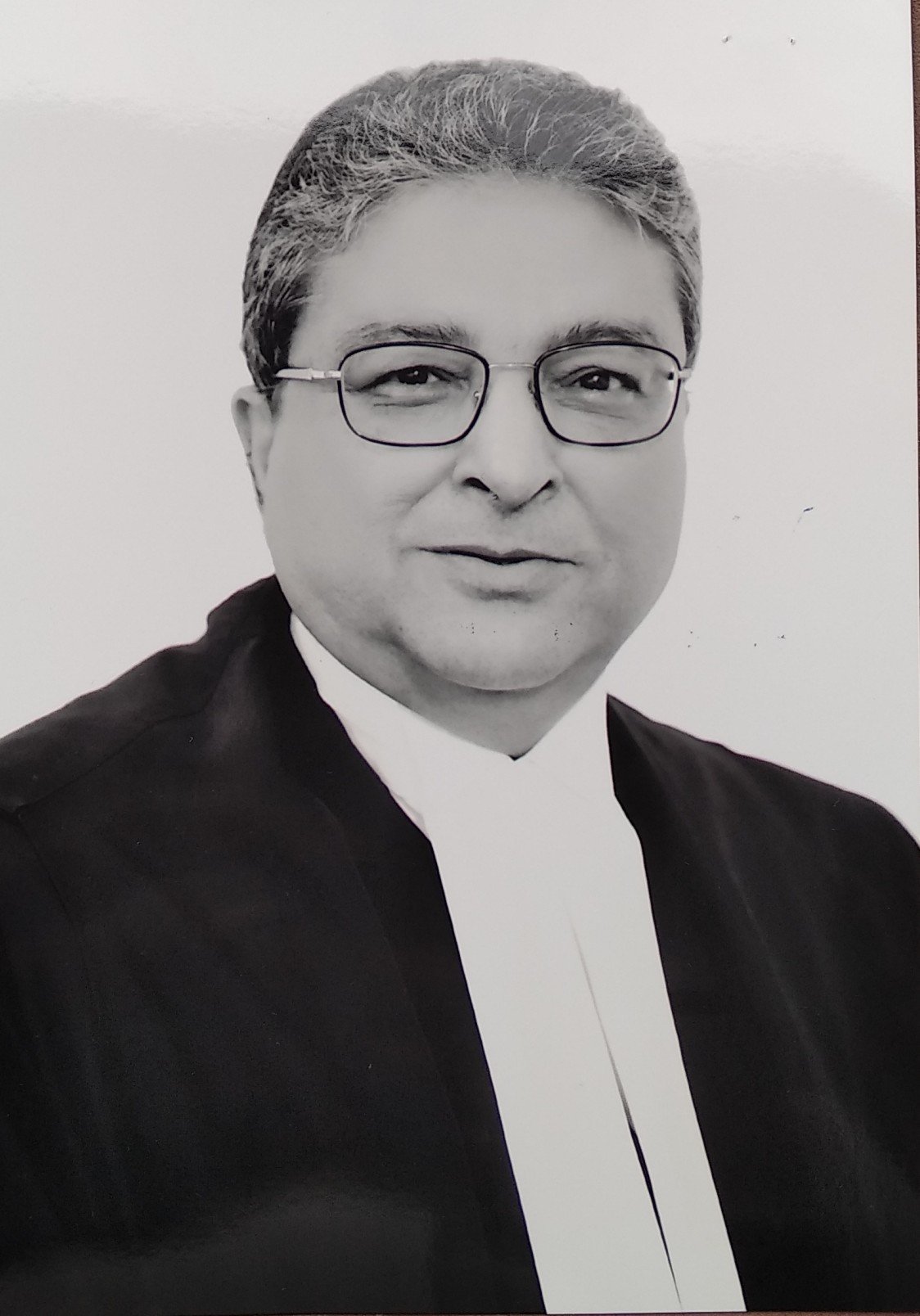
R. F. NARIMAN, J.
The present appeals arise out of a judgment dated
24.04.2014 and a review dismissal from the aforesaid
judgment dated 11.09.2014, by which the High Court of
Uttarakhand has dismissed a writ petition against a Labour
Court’s Award.
The brief facts necessary to decide these appeals are
as follows:
By Reference Order dated 09.11.2004 under Section 4(k)
of the Uttar Pradesh Industrial Disputes Act, 1947, the
following dispute was referred to the Labour Court:
“Whether termination of services of workman Shri
Mahendra Prasad Jakhmola, s/o Late Shri Vachaspati
Jakhmola, Helper by the employer, w.e.f. 13.11.2001,
is justified and/or as per law? If not, what
benefit/relief the concerned workman is entitled for
and with what other details?”
Similar Reference Orders were made in 63 other cases.
Pleadings were filed before the Labour Court at
Haridwar and evidence was led on behalf of the appellant as
well as by the workmen. By an Award dated 01.11.2009, the
Labour Court held, referring to a notification, which is,
5
C.A. NOS. 1799-1800/ 2019 etc.
(@SLP (C) Nos. 33747-33748/ 2014 etc.)
notification dated 24.04.1990 under the Contract Labour
(Regulation and Abolition) Act, 1970 (hereinafter referred
to as ‘1970 Act’), that the said notification, on
application to the appellant, would show that the workmen
were not deployed to do the work mentioned in the
notification. It was further held that based on documentary
evidence in the form of gate passes, the workmen, who were
otherwise employed by a contractor, were directly employed
by the appellant. It was also held to have been fairly
conceded by the employer’s representative that supervision,
superintendence and administrative control of all these
workmen were with the appellant. It was also held that
under the extended definition of “employer” in the Uttar
Pradesh Industrial Disputes Act, 1947, even if the workmen
are regarded as workmen of a contractor, they would yet be
workmen of the appellant as the appellant was within the
extended definition of “employer” under the Act. This being
the case, it was held that all such workers, being 64 in
number, were entitled to be reinstated with immediate effect
but without backwages. From this Labour Award, a review
petition was filed by the appellant, in which it was clearly
stated that no such concession, as recorded by the Labour
Court, was made before it. Further, notification dated
24.04.1990 had no application as Bharat Heavy Electricals
Ltd. (BHEL) was exempted therefrom and, therefore, to apply
6
C.A. NOS. 1799-1800/ 2019 etc.
(@SLP (C) Nos. 33747-33748/ 2014 etc.)
this notification to the facts of this case was also wrong.
On 18.05.2011, this review was dismissed by the Labour Court
holding:
“Considering the above noted discussion, as made in
award dated 01.11.2009, I find force in the argument
of opposite part-2 that as far as notification dated
24.04.1990 is concerned, this court has already
considered and has given its verdict on this
notification and now on review application no
contrary inference can be drawn by this court as
prayed by the applicant. As far as Notification
dated 23.07.2010 (supra) is concerned, this
notification was not issued by Government when award
was passed. As such, this notification cannot be
said applicable at that time and no benefit of later
issued notification dated 23.07.2010 can be given to
applicant. Moreover, if applicant was exempted vide
notification on dated 24.04.1990, in such a case what
was the necessity to issue the second notification
dated 23.07.2010 (supra) for exemption of contract
labour.
On perusal of all the documents and legal
preposition of law laid down by Apex Court in Uttar
Pradesh State Roadway Transport Corporation versus
Imtiaz Hussain (supra). I am in agreement with the
Opposite Party-2 that except arithmetical or clerical
errors, the order which was passed by the court on
merit, cannot be changed, amended or altered. As far
as case in hand is concerned no clerical or
arithmetical mistake is involved. As such,
application A-2 is liable to be rejected.”
A writ petition was filed, being W.P. No. 1021/2011,
against the aforesaid orders. This writ petition was
dismissed by the first impugned order dated 24.04.2014 in
which the High Court recorded that “undisputedly” all
petitioners, i.e., workmen, were performing the duties which
were identical with those of regular employees. Therefore,
it can be said that they were under the command, control,
7
C.A. NOS. 1799-1800/ 2019 etc.
(@SLP (C) Nos. 33747-33748/ 2014 etc.)
management of the BHEL and, concomitantly, the contractor
has absolutely no control over the workmen in performing
such duties. It was, therefore, held that the alleged
contract with the contractor was “sham” and, consequently,
the Labour Court Award was correct in law and was upheld.
Against this order, a special leave petition was filed which
was disposed of as follows: -
“…….
In the impugned order the High Court records,
“Undisputedly, all the petitioners, herein, were
performing the skilled/unskilled duties with the
regularly appionted staff of BHEL in BHEL Factory
Premises and were reporting on duties along with
regular employees to perform identical duties and had
been working for fixed hours along with regular
employees of BHEL.”
Mr. Sudhir Chandra, learned senior counsel for
the petitioner submits that the above position was
seriously disputed and the High Court has wrongly
recorded “Undisputedly”.
If that be so, the course open to the
petitioner is to approach the High Court seeking
review of the impugned order. The submission cannot
be entertained for the first time by this Court having
regard to the statement of fact recorded in the
impugned order.
We observe that if review applications are
filed within two weeks, the same will not be dismissed
on the ground of delay.
Since special leave petitions are not being
entertained on the above ground, liberty is granted to
the petitioner to challenge the impugned order, in
case, review applications are dismissed by the High
Court.
Special leave petitions are disposed of.”
The appellant, then filed a review petition before the
High Court, which disposed of the review stating:
“BHEL has submitted written statement before
the learned Labour Court. Paragraph 3 thereof reads
8
C.A. NOS. 1799-1800/ 2019 etc.
(@SLP (C) Nos. 33747-33748/ 2014 etc.)
as under:
“3.The workman concerned in the dispute Sri
Mahendra Prasad Jakhmola was never engaged by
BHEL Haridwar and he was not their employee
and they were not his employers. It appears
that he might have been engaged and employed
by the contractor Sri Madan Lal who also has
been made party as employer in the Industrial
Dispute under reference.”
Plain reading of paragraph 3 of the written
statement would go to suggest that even BHEL is not
sure as to whether workmen were supplied by the
contractor or were engaged by the BHEL. That being
so, even if there was any Contract Labour Agreement
between the BHEL and Madan Lal, alleged contractor,
same seems to be sham transaction and camouflage.
Not only this, the BHEL/employer-I has not
placed on record any material to demonstrate that
under the alleged Labour Contract Agreement payment
was ever made in favour of Madan Lal/alleged
contractor for supplying labourers/workmen in
question; no material is available on the record to
say what was the period of supplying the labourers
under the contract.
In view of the above discussion, I do not find
any good or valid reason to review the judgment
under review. Consequently, all the review
applications fail and are hereby dismissed.”
Shri Sudhir Chandra, learned senior counsel appearing
on behalf of the appellant, has argued before us that the
Labour Court Award was perverse. Accordingly to him, it
could not have applied the notification dated 24.04.1990 as
his client was excluded from such notification, and being
excluded from such notification, there was, consequently, no
prohibition on employment of contract labour. Further, if
the evidence is to be read as a whole, it is clear that the
representative of BHEL made it clear that, in point of fact,
9
C.A. NOS. 1799-1800/ 2019 etc.
(@SLP (C) Nos. 33747-33748/ 2014 etc.)
there were agreements with contractors and that it is
workers of such contractors , who were paid by them, that are
involved in the present dispute. He also added that no
concession was made before the Labour Court, as was pointed
out in the review petition, but, unfortunately, this plea
was also turned down by the Labour Court, dismissing the
review petition. Merely to state that because gate passes
were given, does not lead to inference that there was any
direct relationship between the appellant and the
respondent-workmen. He also argued that the High Court, in
the first round, not only missed the fact that the Labour
Court Award was perverse, but committed the same error by
stating that the admitted position before the High Court was
also that the labour was directly employed by the appellant.
This is why, according to him, the Supreme Court sent his
client back in review, but the review order, after setting
down a paragraph of the written statement filed by the so-
called employer, then arrived at an opposite conclusion from
what is stated therein. For all these reasons, therefore,
according to him, the judgments of the High Court and the
Labour Court Award ought to be set aside. He also cited
certain judgments before us to buttress his argument that
there was no manner of direct employment between his client
and the workmen.
Ms.Asha Jain, on the other hand, has pointed out to us
10
C.A. NOS. 1799-1800/ 2019 etc.
(@SLP (C) Nos. 33747-33748/ 2014 etc.)
that we should not exercise our discretionary jurisdiction
under Article 136 of the Constitution, inasmuch as the
Labour Court Award is a fair Award, as only reinstatement
was ordered without backwages. She also argued that, at no
stage, had BHEL, which is a Government Company, reinstated
her clients despite the fact that there is no stay granted
in their favour. She went on to add that the concession
that was made was rightly made before the Labour Court, and
that the review petition did not contain any statement by
any authorised representative, who made such concession,
that he had not done so. She countered the argument that
gate passes were not the only basis of the Labour Court,
concluding that a direct relationship exists between the
appellant and her clients. She argued that despite the
change of contractors four times over, the same workers
continued showing, therefore, that there was a direct
relationship between these workmen and the employer. She
also pointed out from certain documents that the contractor
got a 10 per cent profit and otherwise he had nothing to do
with the labour that was provided by him. She then relied
upon certain judgments which state that the power of
judicial review of the High Court ought to be exercised with
circumspection, and that mere errors of law or fact cannot
be interfered with. She also strongly relied upon the
judgment in ‘Basti Sugar Mills Ltd. v. Ram Ujagar and Ors.’
11
C.A. NOS. 1799-1800/ 2019 etc.
(@SLP (C) Nos. 33747-33748/ 2014 etc.)
[(1964) (2) SCR 838) to state that, in any event, even if
these employees were employees of the contractor, yet by the
extended definition of ‘employer’ in the Uttar Pradesh
Industrial Disputes Act, a relationship of employer and
workmen would exist under the said Act. She went on to cite
certain passages in the ‘ Steel Authority of India Ltd. And
Ors. v. National Union Waterfront Workers and Ors.’ [(2001)
7 SCC 1] to buttress her contention that even if there were
agreements with the contractor, they were only ‘sham’ or
nominal on the facts of this case.
Having heard learned counsel for both the sides, it is
important, first, to advert to the Award of the Labour
Court. The said Award sets down the notification dated
24.04.1990 that was issued under the 1970 Act. A reading of
the aforesaid notification makes it clear that the
appellant, insofar as their UP operations are concerned, in
Haridwar, in particular, are exempted from the aforesaid
notification. Despite this, however, the Labour Court went
on to apply the said notification, which would clearly be
perverse. In addition, though Ms. Jain stated that
documentary evidence was filed, yet the Labour Court based
its finding on direct relationship between the parties only
on the gate passes being issued by the appellant, and on a
concession made by the appellant’s representative.
What is clear from the evidence that was led by the
12
C.A. NOS. 1799-1800/ 2019 etc.
(@SLP (C) Nos. 33747-33748/ 2014 etc.)
parties is that the aforesaid gate passes were issued, as
has been stated by the appellant’s witness, only at the
request of the contractor for the sake of safety and also
from the administrative point of view. The idea was
security, as otherwise any person could enter the precincts
of the factory. This evidence was missed by the Labour
Court when it arrived at a conclusion that a direct
relationship ought to be inferred from this fact alone.
Further, as has been correctly pointed out by Shri Sudhir
Chandra, the appellant has, not only in the first review,
but also in the writ petition filed, taken the plea that no
such concession was ever made. Moreover, quite apart from
this plea and the counter plea of Ms. Jain that the person
who has made such concession should have stated that he did
not do so, concessions on mixed questions of fact and law
cannot decide cases as the evidence as a whole has to be
weighed and inferences drawn therefrom.
Even a concession on facts disputed by a respondent in
its written statement cannot bind the respondent. Thus, in
Swami Krishnanand Govindananad v. Managing Director, Oswal
Hosiery (Regd.) [(2002) 3 SCC 39, this Court held:
“2. ……. It appears that when the case was posted for
trial, the learned counsel appearing for the
respondent conceded the facts disputed by the
respondent in his written statement before the Court.
That statement of the advocate was recorded by the
Additional Rent Controller thus: “The respondent’s
learned counsel has admitted the ground of eviction
and also the fact that the applicant is a public
13
C.A. NOS. 1799-1800/ 2019 etc.
(@SLP (C) Nos. 33747-33748/ 2014 etc.)
charitable institution and for that purpose it
required the premises.” ……….
3. ………. Whether the appellant is an institution
within the meaning of Section 22 of the Act and
whether it required bona fide the premises for
furtherance of its activities, are questions touching
the jurisdiction of the Additional Rent Controller.
He can record his satisfaction only when he holds on
these questions in favour of the appellant. For so
holding there must be material on record to support
his satisfaction otherwise the satisfaction not based
on any material or based on irrelevant material,
would be vitiated and any order passed on such a
satisfaction will be without jurisdiction. There can
be no doubt that admission of a party is a relevant
material. But can the statement made by the learned
counsel of a party across the Bar be treated as
admission of the party? Having regard to the
requirements of Section 18 of the Evidence Act, on
the facts of this case, in our view, the
aforementioned statement of the counsel for the
respondent cannot be accepted as an admission so as
to bind the respondent. Excluding that statement
from consideration, there was thus no material before
the Additional Rent Controller to record his
satisfaction within the meaning of clause (d) of
Section 22 of the Act. It follows that the order of
eviction was without jurisdiction.”
Equally, where a question is a mixed question of fact
and law, a concession made by a lawyer or his authorised
representative at the stage of arguments cannot preclude the
party for whom such person appears from re-agitating the
point in appeal. In ‘ C.M. Arumugam v. S. Rajgopal’ [(1976)
1 SCC 863], this Court held:
“8. ………. That question is a mixed question of law and
fact and we do not think that a concession made by
the first respondent on such a question at the stage
of argument before the High Court, can preclude him
from reagitating it in the appeal before this Court,
when it formed the subject-matter of an issue before
the High Court and full and complete evidence in
14
C.A. NOS. 1799-1800/ 2019 etc.
(@SLP (C) Nos. 33747-33748/ 2014 etc.)
regard to such issue was led by both parties……….”
It would be perverse to decide based only on a
concession, without more, that a direct relationship exists
between the employer and the workmen. Equally perverse is
finding that the extended definition of ‘employer’ contained
in the Act would automatically apply. The extended
definition contained in section 2(i)(iv) of the Uttar
Pradesh Industrial Disputes Act reads as follows:
“2. Definitions.
…………………………………………………………………………………………………………….
…………………………………………………………………………………………………………….
(i)’Employer’ includes-
…………………………………………………………………………………………………………….
…………………………………………………………………………………………………………….
(iv) where the owner of any industry in the course of
or for the purpose of conducting the industry
contracts with any person for the execution by or
under such person of the whole or any part of any
work which is ordinarily part of the industry, the
owner of such industry;”
A look at this provision together with the judgment in
‘Basti Sugar Mills Ltd. v. Ram Ujagar and Ors.’ [(1964) (2)
SCR 838) relied upon by Ms. Jain, would show that in order
that section 2(i)(iv) apply, evidence must be led to show
that the work performed by contract labour is a work which
is ordinarily part of the industry of BHEL. We find, on the
facts of the present case, that no such evidence has, in
fact, been led. Consequently, this finding is also a
15
C.A. NOS. 1799-1800/ 2019 etc.
(@SLP (C) Nos. 33747-33748/ 2014 etc.)
finding directly applying a provision of law without any
factual foundation for the same.
This being the case, it is clear that the Labour Court
has arrived at a conclusion which no reasonable person could
possibly arrive at and ought, therefore, to have been set
aside. Apart from the Labour Court dismissing a review from
its own order, we find that the High Court, in the first
impugned judgment dated 24.04.2014, has also arrived at
findings which are contrary to the evidence taken on record.
First and foremost, it could not have said that
“undisputedly”, the labour that was employed through
contractors were performing identical duties as regular
employees and that, therefore, without any evidence, it can
be said that they were under the control, management and
guidance of BHEL. Secondly, when it said that alleged
contracts that were awarded in favour of contractors and how
many labourers, in what type of work etc. were asked for,
were not furnished, is also directly contrary to the
evidence led on behalf of the BHEL, in which such documents
were specifically provided. Thus, Shri Naveen Luniyal, in
his evidence-in-chief, had pointed out:
“…………………………………………………………………………………………………………………..
Thus, we entered into contract of workers with the
contractors which are document No. 8 and 9 of the
above list and the same are marked Exhibit E-6 and E-
7 respectively. The period of contract used to be
extended for the completion of assignment in case the
work was not completing in time or the same was being
extended. The concerned workman filed writs before
16
C.A. NOS. 1799-1800/ 2019 etc.
(@SLP (C) Nos. 33747-33748/ 2014 etc.)
Hon’ble Delhi High Court seeking their regularization
while impleading BHEL as a party and it was ordered
by the court that you may prefer your suit for
regularization before C.G.I.T.
………………………………………………………………………………………………………………………..
………………………………………………………………………………………………………………………..
There is no master employer and servant
relationship of the workers with BHEL and BHEL was
also not making any payment of salary to them as the
workers were in the service of the contractor. Thus,
there does not arise any question of giving them
employment.
The workers were being issued gate passes at
the request of the contractor, for the sake of safety
and also from administrative point of view, it was
specifically bearing the mention that they are the
workers of the contractors. Any worker cannot enter
in the workplace if such gate passes are not issued.
CISF takes care of the safety in our organisation.”
Equally, the review judgment apart from being cryptic,
draws an unsustainable conclusion after setting out
paragraph 3 of the written statement of BHEL in the Labour
Court. What was stated by BHEL in paragraph 3 was that the
workmen were only engaged by the contractor and were not
their employees. The written statement then goes on to be
speculative in stating that it appears that a workman might
have been engaged as an employee by a particular contractor.
A plain reading of this written statement would certainly
not suggest that BHEL is not sure as to whether workmen were
or were not supplied by a contractor, or engaged by BHEL.
What is clear from the written statement is that BHEL has
17
C.A. NOS. 1799-1800/ 2019 etc.
(@SLP (C) Nos. 33747-33748/ 2014 etc.)
denied that the workmen were engaged by BHEL or that the
workmen were BHEL’s workmen. From this to conclude that the
transaction seems to be ‘sham’, is again wholly incorrect.
Apart from this, it is also incorrect to state that BHEL has
not placed on record any material to demonstrate that under
the alleged labour contract, payment was ever made in favour
of Madan Lal, the alleged contractor. It has been correctly
pointed out by learned counsel appearing on behalf of BHEL
that in the very first sentence of the cross examination of
the workmen, before the labour court, the workmen admitted
that payments of their wages were made by four contractors
including Shri Madan Lal. Also, the fact that Madan Lal was
paid under the agreement with BHEL was never disputed.
Indeed, Ms. Jain’s argument that Madan Lal only derived a 10
per cent profit from the agreement with him presupposes
payment to Madan Lal by BHEL under the agreement with him.
This finding again is wholly incorrect.
We, now come to some of the judgments cited by Shri
Sudhir Chandra and Ms. Asha Jain. In ‘ General Manager,
(OSD), Bengal Nagpur Cotton Mills, Rajnandgaon v. Bharat
Lala and Another’ [2011 (1) SCC 635], it was held that the
well recognised tests to find out whether contract labourers
are direct employees are as follows:
“10. It is now well settled that if the industrial
adjudicator finds that the contract between the
principal employer and the contractor to be a sham,
nominal or merely a camouflage to deny employment
18
C.A. NOS. 1799-1800/ 2019 etc.
(@SLP (C) Nos. 33747-33748/ 2014 etc.)
benefits to the employee and that there was in fact
a direct employment, it can grant relief to the
employee by holding that the workman is the direct
employee of the principal employer. Two of the
well-recognized tests to find out whether the
contract labourers are the direct employees of the
principal employer are: (i) whether the principal
employer pays the salary instead of the contractor;
and (ii) whether the principal employer controls and
supervises the work of the employee. In this case,
the Industrial Court answered both questions in the
affirmative and as a consequence held that the first
respondent is a direct employee of the appellant”
The expression ‘control and supervision’ were further
explained with reference to an earlier judgment of this
Court as follows:
“12. The expression “control and supervision” in the
context of contract labour was explained by this Court
in International Airport Authority of India v.
International Air Cargo Workers’ Union thus: (SCC
p.388, paras 38-39)
“38…. if the contract is for supply of labour,
necessarily, the labour supplied by the
contractor will work under the directions,
supervision and control of the principal employer
but that would not make the worker a direct
employee of the principal employer, if the salary
is paid by a contractor, if the right to regulate
the employment is with the contractor, and the
ultimate supervision and control lies with the
contractor.
39. The principal employer only controls and
directs the work to be done by a contract labour,
when such labour is assigned/allotted/sent to him.
But it is the contractor as employer, who chooses
whether the worker is to be assigned/allotted to
the principal employer or used otherwise. In
short, worker being the employee of the
contractor, the ultimate supervision and control
lies with the contractor as he decides where the
employee will work and how long he will work and
subject to what conditions. Only when the
contractor assigns/sends the worker to work under
the principal employer, the worker works under the
supervision and control of the principal employer
19
C.A. NOS. 1799-1800/ 2019 etc.
(@SLP (C) Nos. 33747-33748/ 2014 etc.)
but that is secondary control. The primary
control is with the contractor.”
From this judgment, it is clear that test No. 1 is not
met on the facts of this case as the contractor pays the
workmen their wages. Secondly, the principal employer
cannot be said to control and supervise the work of the
employee merely because he directs the workmen of the
contractor ‘what to do’ after the contractor assigns/ allots
the employee to the principal employer. This is precisely
what paragraph 12 explains as being supervision and control
of the principal employer that is secondary in nature, as
such control is exercised only after such workman has been
assigned to the principal employer to do a particular work.
We may hasten to add that this view of the law has
been reiterated in ‘ Balwant Rai Saluja and Another v. Air
India Limited and Others’ [2014(9) SCC 407], as follows:
“65. Thus, it can be concluded that the relevant
factors to be taken into consideration to establish
an employer-employee relationship would include,
inter alia:
(i)who appoints the workers;
(ii)who pays the salary/remuneration;
(iii)who has the authority to dismiss;
(iv)who can take disciplinary action;
(v)whether there is continuity of service; and
(vi)extent of control and supervision i.e.
whether there exists complete control and
supervision.
As regards extent of control and supervision, we
have already taken note of the observations in
Bengal Nagpur Cotton Mills case [(2011) 1 SCC 635] ,
International Airport Authority of India case [2009
13 SCC 374] and Nalco case [(2014) 6 SCC 756].”
20
C.A. NOS. 1799-1800/ 2019 etc.
(@SLP (C) Nos. 33747-33748/ 2014 etc.)
However, Ms. Jain has pointed out that contractors
were frequently changed, as a result of which, it can be
inferred that the workmen are direct employees of BHEL.
There is no such finding of the Labour Court or any
reference to the same by the High Court. Consequently, this
argument made for the first time in this Court together with
judgments that support the same, is of no consequence.
Ms. Jain also pointed out three judgments of this
Court in ‘Calcutta Port Shramik Union v. Calcutta River
Transport Association and Others [1988 (Supp) SCC 768],
Pepsico India Holding Private Limited v. Grocery Market and
Shops Board and Others [2016 4 SCC 493] and ‘Harjinder Singh
v. Punjab State Warehousing Corporation ’ [(2010) 3 SCC 192]
for the proposition that judicial review by the High Court
under Article 226, particularly when it is asked to give
relief of a writ of certiorari, is within well recognised
limits, and that mere errors of law or fact are not
sufficient to attract the jurisdicton of the High Court
under Article 226. There is no doubt that the law laid down
by these judgments is unexceptionable. We may only state
that these judgments have no application to the facts of the
present case. The Labour Court’s Award being perverse ought
to have been set aside in exercise of jurisdiction under
Article 226.
Ms. Jain then argued that since no backwages were
21
C.A. NOS. 1799-1800/ 2019 etc.
(@SLP (C) Nos. 33747-33748/ 2014 etc.)
granted but only reinstatement was ordered, we should not
exercise our jurisdiction under Article 136 to set aside the
said Award. When it is found that the findings of the
Labour Court are perverse, it is difficult to accede to this
argument. Equally, the argument that the so-called employer
has not complied with the Labour Court’s Award, despite
there being no stay, is an argument that must be rejected.
In that a contempt petition could always have been moved on
behalf of the workmen for implementation. No such thing has
been done in the present case.
The argument that the contractor, in the facts of the
present case, gets only a 10 per cent profit and nothing
more, is again an argument that needs to be rejected in view
of the clear and unequivocal evidence that has been led in
this case. The workmen have themselves admitted that there
is no appointment letter, provident fund number or wage slip
from BHEL insofar as they are concerned. Apart from this,
it is also clear from the evidence led on behalf of BHEL,
that no wages were ever been paid to them by BHEL as they
were in the service of the contractor. Further, it was also
specifically pointed out that the names of 29 workers were
on the basis of a List provided by the contractor in a bid
that was made consequent to a tender notice by BHEL.
Ms. Asha Jain’s reliance upon the judgment in ‘ Steel
Authority of India Ltd. And Others’ [(2001) 7 SCC 1] is also
22
C.A. NOS. 1799-1800/ 2019 etc.
(@SLP (C) Nos. 33747-33748/ 2014 etc.)
misplaced. There is nothing on facts to show that the
contract labour that is engaged, even de hors a prohibition
notification, is in the facts of this case ‘sham’.
Given this, we set aside the impugned judgments of the
High Court and the Labour Court’s Award.
The appeals are allowed in the aforesaid terms.
………………………………………………………………………., J.
[ ROHINTON FALI NARIMAN ]
………………………………………………………………………., J.
[ VINEET SARAN ]
New Delhi;
February 20, 2019.
23

 Login with google
Legal Notes
Add a Note....