
This is a criminal appeal filed before the Supreme Court of India against the order of the High Court of Delhi in which the appellant had been convicted.

No Acts & Articles mentioned in this case
Page 1 REPORTABLE
IN THE SUPREME COURT OF INDIA
CRIMINAL APPELATE JURISDICTION
CRIMINAL APPEAL Nos. 824 -825 of 2011
Brijesh Mavi … Appellant
Versus
State of NCT of Delhi … Respondent
J U D G M E N T
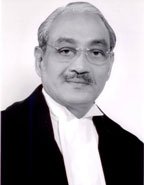
RANJAN GOGOI, J
These appeals are directed against the common judgment and
order dated 10.08.2009 passed by the High Court of Delhi whereby
the conviction of the appellant under Sections 302 and 460 read with
Section 34 of the IPC as well as under Section 25 of the Arms Act
has been affirmed. The appellant has been sentenced to undergo
Page 2 rigorous imprisonment for life for the offence under Section 302 read
with Section 34 IPC whereas for the offence under Section 460 read
with Section 34 IPC sentence of seven years rigorous imprisonment
has been imposed. Insofar as the offence under the Arms Act is
concerned, the accused-appellant has been sentenced to undergo
rigorous imprisonment for one year. All the sentences have been
directed to run concurrently.
2.The short case of the prosecution is that on 06.06.2001, H.C.
Brij Pal (PW 11), who was posted in the PCR, received an
information at about 10.35 PM that firing is taking place at Savitri
Nagar near a sweet shop. Accordingly, PW 11 alongwith other
police personnel reached the said place and saw that a crowd had
gathered near a STD booth where blood was splattered and some
articles were lying scattered in broken condition. The STD booth
belonged to one Omiyo Das Of Malik Communications, who having
been injured in the firing had already been removed to the hospital.
The said information was passed on to the local police station
which was duly recorded in the Daily Diary of the Police Station and
marked to SI – Sudhir Sharma, PW 24, who along with Constable-
Bajrang Bahadur reached the place of occurrence. On reaching the
2
Page 3 said place the police party could come to know that the injured Omiyo
Das had already been declared brought dead to the hospital.
Further more, according to the prosecution, one Vicky Malik
(PW 1) was an eye witness to the occurrence. Accordingly, his
statement (Ex.PW-1/A) was recorded where he had stated that on
06.06.2001 at about 10.20 P.M. when he was sitting outside his STD
booth and sweet shop at J-196, Savitri Nagar, he had noticed a white
Maruti Car stopping on the other side of the road. In the statement
recorded by the police, PW 1 has stated that two men alighted from
the vehicle and entered the STD booth whereafter they started firing
at his maternal uncle, Omiyo Das. According to PW 1 he tried to
intervene and in fact had brought a palta from his nearby sweet shop
but his uncle told him to run away from the place and save his life.
PW 1 had further stated that blood was oozing out from the injuries
suffered by his uncle and he ran towards his house No.86B shouting
for help. According to PW 1, thereafter, the assailants fled away and
he had along with his younger brother –Raj Kumar Malik –PW 3 and
another maternal uncle – Ravi Kumar Dass – PW 4 had removed the
injured to the hospital. In his statement, PW 1 had categorically
stated that one Satish Kumar who had killed his father and who had
3
Page 4 been acquitted about a month ago in the case arising from the said
incident was one of the assailants whereas the other/second
assailant was about 25-26 years of age and was a well built person.
On the basis of the aforesaid statement made by PW 1 – Vicky Malik,
the FIR –Ex.PW-6/A was lodged and FIR Case No. 438/2006, Police
Station Malviya Nagar (hereinafter referred to as the present case)
was registered. Three live cartridges cage of 0.380 bore; one empty
cartridge of 0.380 bore and four lead pieces of fired bullets were
seized from the place of occurrence by PW 24 – Sudhir Sharma. The
blood stained baniyan of PW 3; blood stained earth etc. were also
seized from the place of occurrence by the Investigating Team.
3.The further case of the prosecution is that on the next day, i.e.
on 07.06.2001, PW 9 –Dr. T.Milo had conducted the post mortem on
the body of the deceased in the course of which nine ante-mortem
bullet injuries were noted and four bullets had been extracted from
the body which along with one cotton underwear; one cotton
baniyan, one long pant was handed over to the Investigating Officer,
PW 24- SI- Sudhir Sharma. The cause of death was stated to be
coma due to head injuries caused by a firearm.
4
Page 5 4.According to the prosecution on 16.11.2001, the IO- PW 24- SI
–Sudhir Sharma arrested accused Satish Kumar who was already
arrested by the Faridabad police in connection with FIR No.339/2004
of Police Station GRP, Faridabad under Section 25 of the Arms Act.
The prosecution has alleged that Satish Kumar made a disclosure
statement (Ex.PW-24/D) in the instant case and had also disclosed
about the involvement of two other persons in the offence, i.e. one
Med Singh and the present appellant – Brijesh. On the basis of the
said disclosure statement made by accused Satish, a .30” pistol
along with 3(three) .30” calibre live cartridges was recovered.
Thereafter, on 09.01.2002, PW 25 – SI – Sanjeev Sharma arrested
Med Singh who was already arrested on 05.01.2002 in a separate
case under the Arms Act. Three sealed parcels containing the .30”
calibre pistol with three 7.62mm/.30” live cartridges recovered at the
instance of accused Satish, the three .380” live cartridges; one .380”
cartridge cage, two bullets and two defused bullets recovered from
the place of occurrence and the four bullets recovered from the dead
body in the course of post-mortem examination were all sent to the
Forensic Science Laboratory, Rohini, Delhi on 03.12.2001.
Thereafter, the report of one Shri KC Varshney, Senior Scientific
5
Page 6 Officer, FSL, Rohini, Delhi (Ex.PW-21/A) was received which was to
the effect that the bullets marked as EB-1, EB-3 to EB-8 (seven in
number) had been discharged through a standard .380” calibre
firearm. On these facts, the two apprehended accused Satish and
Med Singh were sent for trial. As the two accused persons denied
the charges levelled against them the trial proceeded. The third
accused was neither identified nor traced out at that stage.
5.While the trial of the case was in progress the present
appellant, Brijesh, was arrested on 12.8.2003 in connection with
another case, i.e., FIR No.575/2003 Police Station, Malviya Nagar.
According to the prosecution, on interrogation, the accused appellant
disclosed/admitted his involvement in the present case and made a
statement on the basis of which a .380” calibre revolver was
recovered from the second floor of an Apartment bearing No.F-4/64,
Sector 16, Rohini, Delhi alongwith 3 live .380” calibre cartridges. In
respect of the said incident a separate FIR No.456 of 2003 under
Section 25 of the Arms Act of Prashant Vihar Police Station was
registered. It may be noticed, at this stage, that the aforesaid
recovery of the weapon was in the presence of SI- Satish Kumar, ASI
– Ravinder and Head Constable – Rajiv Mohan who had been
6
Page 7 examined as PWs. 1, 2 and 3 in the case arising out of FIR No.
456/2003. It may also be noticed that Head Constable - Rajiv who
was examined as PW 3 in connection with FIR No.456/2003 was
again examined in the present case as PW 19. Both the cases, i.e.
the present as well FIR No. 456/2003 were clubbed together by order
of the learned Additional District and Sessions Judge dated
10.03.2005 and charges under Sections 302 and 460 of the IPC read
with Section 34 were framed against the accused-appellant in the
present case. A separate charge under Section 25 of the Arms Act
was also framed against the appellant in FIR Case No. 456/2003.
PW 1 – Vicky Malik who was already examined was recalled for
further examination after charges were framed against the present
appellant. While the trial of the two cases was in progress, accused
Satish died and the proceedings stood abated against him. As many
as 25 witnesses were examined by the prosecution in the present
case and a large number of documents were also exhibited. Two
witnesses were examined by the defence. DW-1 –Vijay Gupta
claimed to be owner of the Apartment No.F-4/64, Sector 16, Rohini.
This witness has stated that while he had occupied the ground floor
of the apartment the first floor was vacant for repairs. The second
7
Page 8 floor was under the occupation of a tenant, one Rajiv Chauhan.
According to DW-1, no recovery was made as claimed by the police
on 12.08.2003. DW-2- Rajiv Chauhan, the tenant, had fully
corroborated the above version of DW 1. Both the accused persons
– Med Singh and appellant Brijesh were examined under Section 313
Cr.P.C. At the conclusion of the trial both Med Singh and the present
appellant Brijesh were convicted for the offences for which they were
charged. Separate appeals were filed by both the accused before
the High Court. By the impugned judgment dated 10.08.2009 while
the accused Med Singh was acquitted, the present appellant has
been convicted of the charges framed in both the cases and
sentenced as aforesaid giving rise to the present appeal.
6.Before proceeding to notice and examine the arguments
advanced on behalf of the appellant, the bare facts proved and
established by the evidence on record which would be required to be
considered may be set out hereinbelow.
7.In the initial deposition tendered in court by PW 1 – Vicky Malik,
the witness had categorically stated that the second assailant who
was accompanying accused Satish was not known to him. After the
arrest of the present accused-appellant on 11.08.2003 PW 1 was
8
Page 9 recalled and examined once again on 21.10.2005. On this occasion
PW 1 had clearly denied that in his statement to the police that he
had named the accused-appellant-Brijesh or that he had identified the
present accused-appellant before the police. In fact, in his further
examination PW 1 had categorically stated that “the accused-
appellant Brijesh Mavi present in court was not there on the date of
incident” and further that “accused present in the court Brijesh Mavi is
not the person who had killed my uncle. I have seen Brijesh Mavi first
time”. PW 1 was not declared hostile.
8.PW 24 – Sudhir Kumar, the IO of the case, in his deposition, as
already noted, had deposed about the recovery of three live
cartridges, one empty cartridge and 4 bullets ( all of 0.380 calibre)
from the place of occurrence. He has also deposed about the receipt
of four bullets which were extracted from the body of the deceased at
the time of post-mortem. According to PW 24 the cartridges and
bullets recovered from the spot were sealed with the initial SK
whereas the bullets recovered from the dead body were sealed with
the seal of Forensic Medicine AIIMS Hospital. PW 24 has also
deposed with regard to the arrest of accused Satish; the disclosure
statement made by him and the recovery of one pistol of .30” calibre
9
Page 10 alongwith three live cartridges. In his cross-examination, he has
stated that in the course of interrogation it was revealed that the .380
calibre revolver was with the accused Satish and the .30” calibre
pistol was with accused Brijesh.
9. From the evidence of PW 21 – Shri KC Varshney, Sr. Scientific
Officer and his report Ex.PW-21/A it is evident that along with the .
30” calibre pistol and the three .30” calibre live cartridges, the .380
cartridges(3 in No.), one .380 cartidge cage and the four bullets
recovered from the spot along with the four bullets recovered from the
body of the deceased were sent for the examination and the report
thereof is that 7 bullets marked as EB-1, EB-3 to EB-8 had been fired
from a .380 calibre fire arm.
10.From the evidence of PW 25, SI-Sanjiv Sharma, it also appears
that after the recovery of the .380 calibre revolver from Apartment No.
F-4/64, Sector 16, Rohini, Delhi, the said revolver and the empty and
live .380 calibre cartridges and the four bullets recovered from the
place of occurrence were sent to the CFSL, Chandigarh for
examination and “matching” report, namely, whether the cartridges
and bullets bore any relation to the fire arm recovered . The report of
examination (Ex. PW -20/B) submitted by Dr. P. Siddambary Junior
1
Page 11 Scientific Officer (Ballastics), CFSL, Chandigarh (PW 20) is to the
effect that the .380 revolver (bearing No. 25502) was in working
condition and the crime fired bullets marked B/1, B/3 and B/4 had
been fired through the said .38” revolver bearing No.25502 and
further that the said bullets could not have been fired through any
other firearm. Insofar as the live cartridges are concerned, the report
of PW 20 is silent where as in regard to the cartridge cage marked as
EC.1 by the Ballistic Expert the opinion was inconclusive. From the
above, it will be clear that the four bullets sent to the CFSL,
Chanidgarh and examined by PW 20 were the bullets recovered from
the place of occurrence. The bullets recovered from the dead body
though sent to the FSL, Rohini and were examined by PW 21 were
however not sent by the prosecution to the CFSL, Chandigarh and
are not a part of the report submitted by PW 20 in his report (Ex.
PW-20/B)
11.Another significant fact that has to be noticed is that in the
report of CFSL, Chandigarh Ex. PW- 20/B it is not mentioned that
one of the bullets recovered from the place of occurrence and marked
as B.2 by the Ballistic Expert had been fired from the revolver
1
Page 12 bearing No.25502 though according to both the reports, i.e. Ex.PW-
21/A and Ex.PW-20/B the said bullet is also a .380 calibre bullet.
12.Shri A. Sharan, learned senior counsel for the appellant, has
argued that from the evidence of the sole eye witness, PW 1 Vicky
Malik, it is clear and evident that he had not identified the accused-
appellant Brijesh to be the person accompanying the accused Satish
to the STD booth where the firing took place. In fact, according to
the learned counsel, PW 1 has categorically stated in Court that the
accused-appellant Brijesh was not present at the place of occurrence
and that he had seen the accused appellant for the first time in court.
Learned counsel therefore has contended that there is no direct
evidence to link the accused-appellant with the offence for which he
has been charged. In the absence of identification of the accused-
appellant, the conviction, it is contended, is wholly without any basis.
Shri Sharan has further contended that the recovery of the revolver
from Apartment No.F-4/64, Sector 16, Rohini, Delhi, as claimed by
the prosecution, has not been proved in any manner inasmuch as no
independent witness has been examined to prove the same.
Furthermore, DW 1 and DW 2 had clearly deposed that no police
party has come to the apartment on 12.08.2003 and no recovery had
1
Page 13 taken place on the said date. Shri Sharan has also contended that
the scrutiny of the evidence tendered by the defence witnesses
would go to show that there is no basis for not accepting the same.
Continuing, Shri Sharan has argued that the bullets extracted
from the body of the deceased, admittedly, had not been sent for
examination to the ballastic expert to prove that the same were fired
from revolver No. 25502 allegedly recovered from Apartment No.F-
4/64, Sector 16, Rohini, Delhi. Therefore, according to learned
counsel, even if the recovery of the revolver is to be assumed there is
no proof that the same was fired to cause the injuries resulting in the
death of the deceased. In sofar as the three bullets proved by Ex.PW
-20/B to have been fired from the recovered weapon is concerned,
Shri Sharan has argued that the same had not been sent for
serological examination to prove the presence of human blood so
as to establish that the said bullets had entered and exited the body
of the deceased. It is also argued that the report of the CFSL
Chandigarh (Ex.PW-20/B) read with the report of the FSL, Rohini
(Ex.PW-21/A) would go to show that the bullet marked as Ex.B2 in
the report of CFSL, Chandigarh (Ex.PW-20/B) was not fired from the
recovered weapon. Yet, according to the prosecution, the same was
1
Page 14 a .380 calibre bullet recovered from the place of occurrence which
facts open up the possibility of the use of another .380 revolver in the
incident. No Evidence to the aforesaid effect is forthcoming. In these
circumstances Shri Sharan has argued that the conviction of the
accused –appellant cannot be approved. In support, reliance has
been placed on the judgment of this court in Abdulwahab Abdulmajid
Baloch vs. State of Gujarat
1
. Placing the said judgment before the
court Shri Sharan has contended that in the present case even if it is
assumed that recovery of the offending weapon has been proved by
the prosecution the said fact is only one adverse circumstance
against the appellant. The same by itself, would not give rise to a
complete chain of events and circumstances from which the only
inference that can be drawn is one of culpability of the accused. Shri
Sharan has also sought to draw the attention of the court to a recent
judgment in Musheer Khan Alias Badshah Khan and anr . Versus
State of Madhya Pradesh
2
to contend that the
recovery of the alleged weapon, even if assumed, cannot reasonably
lead to a conclusion which would justify the conviction of the
accused-appellant.
1
( 2009) 11 SCC 625
2
(2010) 2 SCC 748
1
Page 15 13.In reply Shri J.S. Attri, learned senior counsel for the State has
contended that the failure of PW 1 to identify the accused-appellant
as being present at the place of occurrence would not be fatal to the
prosecution case, inasmuch as in the present case the prosecution
has succeeded in proving, beyond all reasonable doubt, that the
weapon recovered at the instance of the accused-appellant from
Apartment No. F-4/64, Sector 16, Rohini, Delhi was used to fire upon
the deceased. It is contended that the three bullets recovered from
the spot have been fired from the said weapon (Ex. PW 20/B). The
said circumstance, according to the learned State counsel, clinches
the issue beyond all reasonable doubt. It is argued that a firm
conclusion with regard to the culpability of the accused can be
reasonably drawn from the aforesaid circumstance proved in the
present case.
14.The brief conspectus of facts set out above demonstrates that
there is no direct evidence to connect the accused-appellant with the
firing incident involving the deceased. The only eye-witness
examined by the prosecution, namely, PW 1 has categorically
deposed that the accused-appellant Brijesh was not present at the
place of the crime on the date of occurrence and, in fact, he had seen
1
Page 16 the accused-appellant for the first time in court. The second person
accompanying the deceased accused Satish to the STD booth along
with the firearm therefore remained unidentified. The prosecution, in
the absence of any direct evidence, has sought to build up its case on
the basis of circumstantial evidence.
15.The principles of law governing proof of a criminal charge by
circumstantial evidence need hardly any reiteration. From the several
decisions of this court available on the issue the said principles can
be summed up by stating that not only the prosecution must prove
and establish the incriminating circumstance(s) against the accused
beyond all reasonable doubt but the said circumstance(s) must give
rise to only one conclusion to the exclusion of all others, namely, that
it is accused and nobody else who had committed the crime. The
above principle is deducible from the five propositions laid down by
this Court in Sharad Birdhichand Sarda vs. State of Maharashtra
3
which principles have been consistenly followed in Tanviben
Pankajkumar Divetia vs. State of Gujarat
4
, Vikram Singh vs. State of
3
(1984) 4 SCC 116 (para 153)
4
(1997) 7 SCC 156
1
Page 17 Punjab
5
, Aftab Ahmad Anasari vs. State of Uttaranchal
6
, Sanatan
Naskar and anr . vs. State of West Bengal
7
and Mohd. Arif alias
ASshfaq vs. State (NCT of Delhi)
8
.
16.The next question that has to engage the attention of the court
is what are the circumstances that the prosecution has succeeded in
proving in the present case and if so proved what is the conclusion
that can be reached on the proved circumstances in the light of the
principles of law indicated above.
17.The prosecution has asserted that on 12.08.2003 the accused-
appellant, after being arrested in connection with another case
admitted his involvement in the present case. On the basis of
statement made by him before SI – Satish Kumar (PW 1); ASI –
Ravinder (PW 2) and Constable – Rajiv (PW 3) a .380 Calibre
revolver was recovered from the second floor of Apartment No. F-
4/64, Rohini,Delhi. The evidence of PWs 1, 2 and 3 examined in
connection with FIR Case No. 456/03 as well as the evidence of
Head Constable Rajiv (PW 3 ) in FIR Case No.456 who was
5
(2010) 3 SCC 56
6
(2010) 2 SCC 583
7
(2010) 8 SCC 249
8
(2011) 13 SCC 621
1
Page 18 examined as PW 19 in the present case indicates without doubt or
ambiguity the detailed facts in which the recovery was effected. The
cross-examination of three witnesses has not revealed any fact which
would go in favour of the accused. The defence witnesses, DW 1
and DW 2, examined, in our considered view, have not succeeded in
demolishing the prosecution version inasmuch as DW 1 – Vijay
Gupta admittedly was being interrogated in the police station on the
date when the recovery was made. On the other hand, DW 2 –Rajiv
Chauhan has failed to prove that he was a tenant under DW 1, in
respect of the second floor of the Apartment in question at the
relevant time. In such circumstances the court will have to proceed
on the basis that the recovery, as claimed by the prosecution, has
been proved by the evidence on record.
18.Our above finding would render the conviction of the accused-
appellant under Section 25 of the Arms Act wholly justified. However,
insofar as the charges under Section 302 and Section 460 read with
Section 34 of the IPC is concerned, there are certain other connected
facts and circumstances proved by the evidence on record which will
have to be weighed by us in order to determine the consequence(s)
that can be attributed to the accused from the recovery of the weapon
1
Page 19 in question. The recovery was affected after more than two years.
The incident had occurred on 06.06.2001 and the recovery was made
on 12.08.2003. The prosecution has not proved that during the
intervening period the weapon had not changed hands and the same
was consistently possessed by the accused appellant Brijesh. The
live and fired cartridges alongwith the bullets recovered from the
place of occurrence and also the bullets recovered from the dead
body in the course of post mortem were sent to the FSL Rohini. The
report has been exhibited as Ex.PW-21/A. The said report is dated
28.02.2002, i.e. before the recovery of the .380 calibre revolver. After
the recovery of the weapon said was made, the weapon itself along
with the cartridges (live and empty) as well as the four bullets
recovered from the place of occurrence was sent to the CFSL
Chandigarh and is covered by the report of PW 20 dated 28.11.2003
(Ex.PW-20/B). However, surprisingly, the bullets recovered from the
dead body at the time of post mortem were not sent to the CFSL,
Chandigarh. This is evident from the evidence of PW 25 – SI- Sanjiv
Sharma. No explanation for what appears to us to be a serious lapse
on the part of the prosecution is forthcoming. That apart, in Ex.PW-
20/B it is recorded that three out of the four bullets (recovered from
1
Page 20 the place of occurrence) were fired from the recovered weapon. The
said bullets were not sent for serological examination to establish that
the three bullets fired from the recovered weapon had entered and
exited from the body of the deceased. In such a situation a lingering
doubt remains as to whether the prosecution in the present case has
succeeded in proving the charge against the accused-appellant
beyond all reasonable doubt. Furthermore, from Ex.PW-20/B it is
evident that one bullet (marked as B.2 by the Expert) was not fired
from the .380 calibre firearm recovered at the instance of the
appellant. The first report of the FSL, Rohini, Delhi – EX.PW21/A
also indicates that one bullet of .380 calibre did not have any
striations of riffling marks. The prosecution has remained silent on
the aforesaid aspect of the matter, though, from the two reports, the
possibility of use of another fire arm of .380 calibres cannot be ruled
out.
19.In the above context the decision of this court in Abdulwahab
Abdulmajid Baloch vs. State of Gujarat (supra) would be a particular
significance. Though the observations contained in Paragraphs 37
and 38 of the judgment have to be understood to have been rendered
in the context of the facts of the case we find that the said
2
Page 21 observations would squarely apply to the present case.
Consequently the aforesaid two paragraphs may be usefully
extracted hereinbelow :
“ 37. Be that as it may, we feel that only because the
recovery of a weapon was made and the expert opined that
the bullet found in the body of the deceased was fired from
one of the weapons seized, by itself cannot be the sole
premise on which a judgment of conviction under Section 302
could be recorded. There was no direct evidence. The
accused, as noticed hereinbefore, was charged not only under
Section 302 read with Section 34 of the Penal Code but also
under Section 302 read with Section 120-B thereof. The
murder of the deceased was said to have been committed by
all the accused persons upon hatching a conspiracy. This
charge has not been proved.
38. The learned trial Judge himself opined that the recovery
having been made after nine months, the weapon might have
changed in many hands. In absence of any other evidence,
connecting the accused with commission of crime of murder
of the deceased, in our opinion, it is not possible to hold that
the appellant on the basis of such slander evidence could
have been found guilty for commission of offence punishable
under Section 302 of the Penal Code.”
20.Though the above discussions would lead us to the conclusion
that the prosecution, in the present case, has succeeded in proving a
highly incriminating circumstance against the accused –appellant,
yet, we do not consider that it would be wholly safe to hold that the
only conclusion that can follow from the aforesaid proved
circumstance is that the accused Brijesh is responsible for the death
2
Page 22 of the deceased that had occurred on 06.06.2001. We have also
noticed that the High Court has convicted the accused-appellant
under Section 302 as well as Section 460 IPC with the aid of Section
34. In a situation where co-accused Satish had died during the trial
and the other co-accused Med Singh had been acquitted by the High
Court, the culpability of the present accused-appellant with the aid of
Section 34 will be open to serious doubt. Such culpability will have to
be determined on the basis of individual overt acts on the part of the
accused appellant for which we do not find any cogent and reliable
material on record.
21.Consequently, we hold that while the conviction of accused-
appellant under Section 25 of the Arms Act and the sentence
imposed is justified, the accused-appellant is entitled to the benefit of
our doubts with regard to the offences under Section 302 and Section
460 read with Section 34 of the IPC. We, therefore, set aside the
judgment of the High Court insofar as the offence under Section 302
and Section 460 read with Section 34 of the IPC is concerned. The
conviction of the accused-appellant under Section 25 of the Arms Act
and the sentence imposed is upheld. If the appellant is presently in
custody and he has undergone the sentence imposed under Section
2
Page 23 25 of the Arms Act he be released forthwith unless wanted in any
other case.
The appeals are disposed of in the aforesaid terms.
…………………………… ..J.
[SWATANTER KUMAR]
…………………………… ..j.
[RANJAN GOGOI]
New Delhi,
July 3, 2012
2
Page 24
2

Legal Notes
Add a Note....