
No Acts & Articles mentioned in this case
APHC010552232024
IN THE HIGH COURT OF ANDHRA PRADESH
(Special Original Jurisdiction)
TUESDAY, THE SIXTH
TWO THOUSAND AND TWENTY FIVE
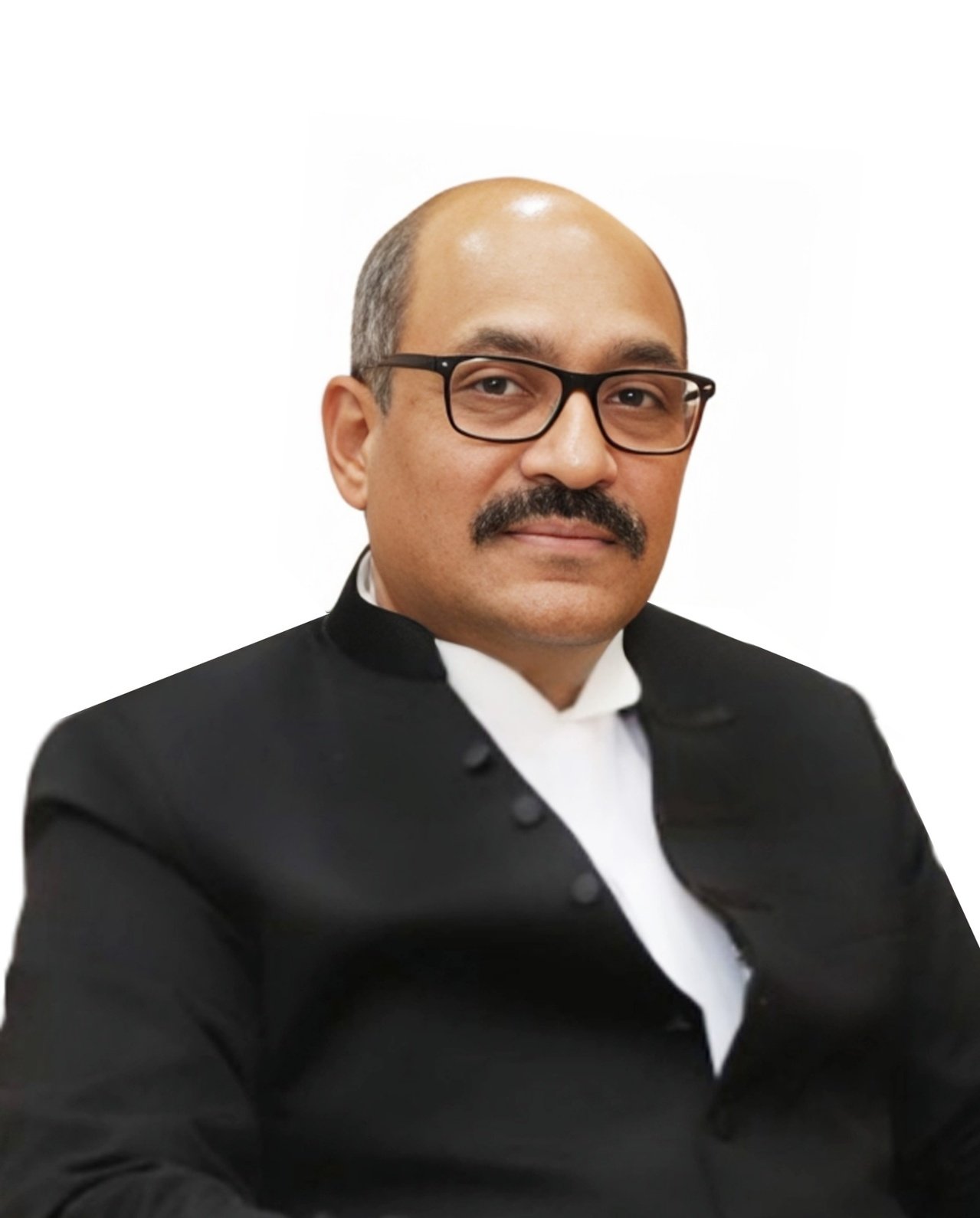
THE HONOURABLE SRI JUSTICE GANNAMANENI RAMAKRISHNA
WRIT PETITION NO
W.P.No.28673 of 2024
Between:
1. B.V.K KOUSHIK, S/O B
YEARS, R/O. FLAT NO. 4/3
COLONY, SRIKAKULAM
PRADESH.
(Amended as per the Order dated 06.05.2025 in
1. THE STATE OF ANDHRA PRADESH, REP. BY ITS PRINCIPAL
SECRETARY DEPARTMENT OF TECHNICAL EDUCATION,
SECRETARIAT BUILDINGS, VELAGAPUDI, AMARAVATHI, GUNTUR
DISTRICT.
2. THE JAWAHAR LAI NEHRU TECHNICAL UNIVERSITY JNTU, REP.
BY ITS VICE CHANCELLOR
DISTRICT.
3. THE CONTROLLER OF EXAMINATION, JAWAHAR LAI NEHRU
TECHNICAL UNIVERSITY (JNTU)
DISTRICT.
4. GMR INSTITUTE OF TECHNOLOGY, REP.
NAGAR, RAJAM -
IN THE HIGH COURT OF ANDHRA PRADESH
AT AMARAVATI
(Special Original Jurisdiction)
TUESDAY, THE SIXTH DAY OF MAY
TWO THOUSAND AND TWENTY FIVE
PRESENT
THE HONOURABLE SRI JUSTICE GANNAMANENI RAMAKRISHNA
PRASAD
WRIT PETITION NOs: 28673 of 2024 & 424 of 2025
K KOUSHIK, S/O B.VENKATESWARA RAO, AGED ABOUT 20
, R/O. FLAT NO. 4/3, SRINIVASAM - 1, MADHURA NAGAR
, SRIKAKULAM TOWN AND DISTRICT - 532001. ANDHRA
the Order dated 06.05.2025 in I.A.No.01 of 2025
...PETITIONER
AND
THE STATE OF ANDHRA PRADESH, REP. BY ITS PRINCIPAL
SECRETARY DEPARTMENT OF TECHNICAL EDUCATION,
SECRETARIAT BUILDINGS, VELAGAPUDI, AMARAVATHI, GUNTUR
LAI NEHRU TECHNICAL UNIVERSITY JNTU, REP.
BY ITS VICE CHANCELLOR , KAKINADA, EAST GODAVARI
THE CONTROLLER OF EXAMINATION, JAWAHAR LAI NEHRU
TECHNICAL UNIVERSITY (JNTU) , KAKINADA, EAST GODAVARI
GMR INSTITUTE OF TECHNOLOGY, REP. BY ITS PRINCIPAL. GMR
532127, SRIKAKULAM DISTRICT, ANDHRA
IN THE HIGH COURT OF ANDHRA PRADESH
[3328]
THE HONOURABLE SRI JUSTICE GANNAMANENI RAMAKRISHNA
ESWARA RAO, AGED ABOUT 20
1, MADHURA NAGAR
532001. ANDHRA
I.A.No.01 of 2025)
...PETITIONER
THE STATE OF ANDHRA PRADESH, REP. BY ITS PRINCIPAL
SECRETARY DEPARTMENT OF TECHNICAL EDUCATION,
SECRETARIAT BUILDINGS, VELAGAPUDI, AMARAVATHI, GUNTUR
LAI NEHRU TECHNICAL UNIVERSITY JNTU, REP.
, EAST GODAVARI
THE CONTROLLER OF EXAMINATION, JAWAHAR LAI NEHRU
, EAST GODAVARI
BY ITS PRINCIPAL. GMR
DISTRICT, ANDHRA
2
PRADESH.
...RESPONDENT(S):
Counsel for the Petitioner:
1. RIZWAN ALI SHAIK
Counsel for the Respondent(S):
1. D.S. SIVADARSHAN
2. GP FOR TECHNICAL EDUCATION
W.P.No. 424 of 2025
Between:
1. B.V.K KOUSHIK, S/O B.VENKAT ESWARA RAO, AGED ABOUT 20
YEARS, R/O. FLAT NO. 4/3, SRINIVASAM - 1, MADHURA NAGAR
COLONY, SRIKAKULAM TOWN AND DISTRICT - 532001. ANDHRA
PRADESH
(Amended as per the Order dated 06.05.2025 in I.A.No.02 of 2025)
...PETITIONER
AND
1. THE STATE OF AP, REP. BY ITS PRINCIPAL SECRETARY
DEPARTMENT OF TECHNICAL EDUCATION SECRETARIAT
BUILDINGS, VELAGAPUDI, AMARAVATHI, GUNTUR DISTRICT.
2. THE JAWAHAR LAI NEHRU TECHNICAL UNIVERSITY JNTU, REP.
BY ITS VICE CHANCELLOR, VIZIANAGARAM.
3. THE CONTROLLER OF EXAMINATION, JAWAHAR LAI NEHRU
TECHNICAL UNIVERSITY (JNTU), VIZIANAGARAM.
4. GMR INSTITUTE OF TECHNOLOGY, REP. BY ITS PRINCIPAL. GMR
NAGAR, RAJAM - 532127, SRIKAKULAM DISTRICT, ANDHRA
PRADESH.
...RESPONDENT(S):
3
Counsel for the Petitioner:
1. RIZWAN ALI SHAIK
Counsel for the Respondent(S):
1. D.S. SIVADARSHAN
2. GP FOR TECHNICAL EDUCATION
The Court made the following:
COMMON ORAL ORDER:
Heard Sri Shaik Rizwan Ali, learned Counsel for the Writ Petitioner and
Sri D.S. Sivadarshan, learned Counsel for the Respondent No.4.
2. These two Writ Petitions raise similar questions and are related to each
other.
3. The Writ Petition No.28673 of 2024 is filed seeking the following relief:
“…pleased to issue a writ order or direction more
particularly one in the nature of writ of mandamus, declaring
the action of the 4th respondent in not allowing the petitioner's
son by name B.V.K. Koushik to pay condonation fee as well as
the Examination fee on the ground that the petitioner's son is
having less percentage i.e., 7.5 percent of attendance to the
required percentage of 65 percent for attending the
examinations without considering the medical ground of the
petitioner's son as well as the application made by the
petitioner dated 10.11.2024 is illegal, arbitrary, unconstitutional
and against the principles of natural justice and consequently
direct the Respondents to receive the examination fee and
allow the petitioner's son to appear the 3
rd
semester (2
nd
year
1
st
semester) exams by duly considering medical grounds as
well as the application of the petitioner dated 30.11.2024 and to
pass…”
4. The Writ Petition No.424 of 2025 is also filed by the same person
seeking following relief:
“…pleased to issue a writ order or direction more
particularly one in the nature of writ of mandamus, declaring
4
the action of the 4
th
respondent in not allowing the petitioners
son by name B.V.K. Koushik to continue further semesters
(after completion of 3rd semester) to complete the course i.e.,
Al and DS of Bachelor of Technology (B.Tech) in 4
th
respondent College without any valid reasons and also not
considering the future of the students (petitioners son) as well
as the application made by the petitioner for continuation and
to completion of further course i.e., Al and DS of Bachelor of
Technology (B.Tech) by the petitioners son is as illegal,
arbitrary, unconstitutional and against the principles of natural
justice and consequently direct the Respondents to allow the
petitioners son to attend the further classes and to write the
examinations to complete the course i.e., Al and DS of
Bachelor of Technology (B.Tech) from the 4
th
respondent
college by duly considering petitioners son education/future of
the student as well as the application of the petitioner dated
30.01.2025 and to pass
5. Admittedly, Sri B.V.K. Koushik is a student studying B.tech Course in
Respondent No.4 - College. He is aged about 20 years. On the last hearing,
this Court has indicated that the father of the student is not entitled to file the
Writ Petitions, inasmuch as the aggrieved student himself is a major.
6. In this view of the matter, learned Counsel for the Petitioner has filed
I.A.No.1 of 2025 in W.P.No.28673 of 2024 and I.A.No.2 of 2025 in 424 of
2025 seeking amendment of the Cause tile and the Affidavit filed in support of
the Writ Petitions. Both the Interlocutory Applications are allowed today, vide
separate Proceedings. Registry is directed to make necessary changes in the
Cause Title in both the Writ Petitions by deleting the name of Sri
B.Venkateswara Rao (the father) and incorporating the name of the student-
Sri B.V.K. Koushik.
7. Henceforth, reference to the Writ Petitioner would mean the aggrieved
student by name Sri B.V.K. Koushik.
8. The Writ Petitioner is pursuing B.Tech Course in Respondent No.4 -
College. While he was pursuing the 3
rd
Semester, the Writ Petitioner fell ill in
two different spells. The Writ Petitioner could not attend the College between
5
19.08.2024 and 30.08.2024. He has submitted a Medical Certificate issued by
the Medical Officer, Primary Health Centre, Boddam (Rajam), Vizianagaram
District, dated 30.08.2024, indicating that the Petitioner is suffering from Acute
Gastroenteritis and Widal Fever. The Medical Officer has certified his fitness
from 30.08.2024 onwards.
9. The Writ Petitioner has again fallen ill and could not attend classes. The
Medical Certificate issued by the Medical Officer of Primary Health Center
would indicate that the Writ Petitioner had suffered from Typhoid Fever and
was absent and could not attend classes from 21.10.2024 to 31.10.2024. The
Doctor had certified the fitness of the Writ Petitioner from 30.10.2024
onwards. Both the Medical Certificates are placed on record in W.P.No.28673
of 2024 (Ex.P.2). Vide Order dated 06.12.2024, a learned Single Judge of this
Court, while following the identical directions passed in W.A.No.1001 of 2024
(arising out of W.P.No.27638 of 2024 and batch), had directed the
Respondents to receive the Examination Fee pending disposal of the Writ
Petition. The Respondents have received the Examination Fee and permitted
the Petitioner to appear in the Examination. After the declaration of result,
when the Petitioner has noticed that his result has not been declared on the
ground that there is no specific direction of this Court in W.P.No.28673 of
2024, the Writ Petitioner was constrained to file W.P.No.424 of 2025.
10. It is also stated by the learned Counsel for the Writ Petitioner that not
only the result has not been declared, but the Petitioner was also not
permitted to attend the classes for the 4
th
Semester.
11. My Predecessor, vide Order dated 07.01.2025, had directed to allow the
Writ Petitioner to attend the classes for the course of Artificial Intelligence and
Data Science (AI & DS) of Bachelor of Technology. The Writ Petitioner, as
such, is now attending the classes in compliance with the Interim Order
passed on 07.01.2025 (in W.P.No.424 of 2025).
6
12. Coming to the merits of this case, the facts relating to the Writ Petitioner
are already narrated hereinabove.
13. Learned Counsel appearing for Respondent No.4 - College has drawn
the attention of this Court to the Regulations filed along with Counter-Affidavit
in W.P.No.28673 of 2024. He has drawn the attention of this Court to the
Academic Regulation No.9 dealing with the attendance requirement. The
relevant portion of the Academic Regulation No.9 is usefully extracted
hereunder:
“ 9. Attendance Requirements:
If his/her academic progress and conduct have been satisfactory...
a. It is desirable for a candidate to put on 100% attendance in
all the subjects. However, a candidate shall be permitted to
appear for the semester end examination by maintaining at
least 75% of attendance on an average in all the courses in
that semester put together.
b. The shortage of attendance on medical grounds can be
condoned to an extent of 10% provided a medical certificate
is submitted to the Head of the Department when the
candidate reports back to the classes immediately after the
leave. Certificates submitted afterwards shall not be
entertained. Upon the payment of the Condonation fee as
fixed by the college, students who put on attendance
between ≥ 65% and <75% shall be permitted to appear for
the semester end examinations. Attendance may also be
condoned as per the State Government rules for those who
participate in sports, co-curricular and extra-curricular
activities provided their attendance is in the minimum
prescribed limits for the purpose and recommended by the
concerned authority.
c. In case of the students having overall attendance less than
65% after condonation shall be declared detained and has
to repeat semester again.”
14. Learned Counsel appearing for Respondent No.4 - College has drawn
the attention of this Court to Academic Regulation 9 (b) of the said Regulation
and would submit that even on the medical grounds, absence of the candidate
can be condoned only to the extent of 10% for the attendance. He would
submit that in view of this Regulation, the absence of the Petitioner on medical
7
ground would exceed the 10% mark of attendance and therefore the case of
the Writ Petitioner cannot be considered.
15. The Court has bestowed its consideration on the facts of the case as
well as the Academic Regulations, particularly Regulations 9(a), 9(b) & 9(c).
These are the regulations fixed by a Private Institution.
16. It is an admitted fact that the Petitioner had illness in two spells. Ones
between 19.08.2024 to 30.08.2024 on account of Acute Gastroenteritis and
Widal Fever (Typhoid Fever/Paratyphoid Fever). The second spell was
between 21.10.2024 to 31.10.2024 on account of Typhoid Fever. The cause
of illness is supported by the Medical Certificates issued by the Medical
Officer, Primary Health Centre, Boddam (Rajam), Vizianagaram District, dated
30.08.2024 (Both Certificates are marked as Ex.P.2). Along with the Medical
Certificates, the Petitioner has also placed on record the Diagnostic Reports
which indicate very clearly that there is no falsehood with regard to the claim
of illness made by the Writ Petitioner.
17. The Regulation 9 (b) would indicate that even on medical grounds, lack
of attendance can only be condoned to an extent of 10 % and not more than
that. Therefore, this Court is required to examine whether such Regulation
would stand to the test of Article 14 of the Constitution of India.
18. It is a matter of common knowledge that sickness is beyond the human
control. A variety of sicknesses can impair the functioning of the human being,
thereby disabling the human being from attending to the normal duties. With
respect to the things which are beyond the control of a human being, no
specific Regulation can be issued, prescribing a limit for condonation of
absence beyond a particular percentage of attendance.
19. The present Regulation is not a Regulation which is prescribed by a
Public Institution, but it is a Regulation prescribed by the Private College,
which is Respondent No.4 - College, in the form of Academic Regulations.
8
20. On the face of it, the Regulation No.9 (b) is not only irrational but highly
arbitrary, inasmuch as no hard and fast rule can be laid with regard to the
absence of a student on medical ground.
21. It is admitted that instead of the prescribed 70% of the attendance, the
Petitioner has 51% as per the Counter-Affidavit filed by the Respondent No.4 -
College.
22. Learned Counsel for the Writ Petitioner, at this stage, has drawn the
attention of this Court to a Representation made by the father of the Writ
Petitioner (Ex.P.1) (in W.P.No.28673 of 2024) indicating that the College has
informed the father of the Writ Petitioner that the Writ Petitioner has 57.5%
attendance and the shortage is only 7.5% if 65% is taken as the minimum
attendance requirement.
23. The Division Bench of the Hon’ble High Court of Patna, in All India
Students Federation vs. The State of Bihar & Others, reported in 2016
SCC OnLine Pat 7383, held that a Student cannot be mechanically made to
suffer penal consequences on the mere shortage of attendance below 75%.
The relevant portion of the Judgement is usefully extracted hereunder:
31. Thus, just because the attendance of a student has fallen
below the prescribed attendance of 75%, the penal consequences,
as mentioned in Regulation 5, will not automatically follow in the
event of a prayer made by the student citing the grounds for his
absence. The Principal or the Vice Chancellor, as the case may,
are duty bound to consider whether the lack of attendance was
deliberate and was in conscious disregard of norms of College. In
a case, when the absence from classes was not in defiance of the
Authority or a deliberate conduct on the part of the student, the
discretion to condone the attendance has to be, ordinarily,
exercised in favour of the student in view of the severe
consequences likely to follow if such discretion is not exercised.
32. A Teacher, let us bear in mind, faces the challenge of
shaping the career of students so that they can become useful
citizens of the Nation and, thus, contribute towards its
development. In view of the responsibility cast upon the Teacher,
whenever circumstances arises for taking punitive measures
against a student, he has to be very cautious in his approach,
because the punitive measures may ruin the career of his
9
students. It is in this backdrop that we propose to deal with this
case.
36. Though a dispute has been raised as to actual number of
students, who have been debarred from taking their examinations,
yet, irrespective of the stand taken by the respondents, as to the
actual number of students, who were prohibited from taking the
examinations, it would appear from the pleas taken by the Vice
Chancellor and the Principal that the reasons assigned by them
are omnibus in nature, for instance, inter alia, “in order to ensure
academic discipline, to complete curriculum within stipulated time
frame, for those students who fail to attend the minimum required
75% classes it necessarily implies that they are not seriously
undertaking his/her studies”. The grounds, so taken, particularly,
by the Vice Chancellor and the Principal are basically the objective
behind Regulation 4. It is with a view to achieve higher standards
of academic career that Regulation 4 provides for a minimum of
75% attendance. However, in no circumstances, it would mean
that those students, who fail to attend the minimum required 75%
classes, a necessary inference can or most be drawn that they are
not seriously undertaking their studies. Such an inference would
render the provisions of Regulation 5 otiose.
56. At the same time, we must also note the evolution of the
law on the writ of mandamus In the form of pronouncement of
Supreme Court, in Comptroller and Auditor General of
India v. K.S. Jagannathan ((1986) 2 SCC 679 : AIR 1987 SC 537),
wherein the Supreme Court, with respect to exercise of
discretionary powers by the authorities, held that though the High
Courts in India, exercising their Jurisdiction under Article 226 of
the Constitution of India, have the power to issue a writ
of mandamus or a writ in the nature of mandamus or to pass
orders and give necessary directions where the Government or a
public authority has failed to exercise or has wrongly exercised the
discretion conferred upon it by a statute or a rule or a policy
decision of the Government or has exercised such discretion mala
fide or on irrelevant considerations or by ignoring the relevant
considerations and materials or, in such a manner as to frustrate
the object of conferring such discretion or the policy for
implementing which such discretion has been conferred. In all
such cases and in any other fit and proper case, a High Court can,
In the exercise of its jurisdiction, under Article 226 of the
Constitution of India, issue a writ of mandamus or a writ in the
nature of mandamus or pass orders and give directions to compel
the performance in a proper and lawful manner of the discretion
conferred upon the Government or a public authority, and, in a
proper case, in order to prevent injustice resulting to the
concerned parties, the Court may itself pass an order or give
directions, which the Government or the public authority should
10
have passed or given, had it properly and lawfully exercised its
discretion.
57. It is, therefore, not only permissible, but may become
necessary, in a given case, for the High Court to issue, by invoking
its extraordinary Jurisdiction under Article 226 of the Constitution
of India, a direction to the authority concerned how to exercise its
discretion and/or the manner in which the discretion ought to have
been exercised. The relevant paragraph of Comptroller and
Auditor General of India (supra) is being reproduced as follows:
“19. There is thus no doubt that the High Courts in India exercising
their Jurisdiction under Article 226 have the power to issue a writ
of mandamus or a writ in the nature of mandamus or to pass
orders and give necessary directions where the Government or a
public authority has failed to exercise or has wrongly exercised the
discretion conferred upon it by a statute or a rule or a policy
decision of the Government or has exercised such discretion mala
fide or on irrelevant considerations or by ignoring the relevant
considerations and materials or in such a manner as to frustrate
the object of conferring such discretion or the policy for
implementing which such discretion has been conferred. In all
such cases and in any other fit and proper case a High Court
can, In the exercise of its Jurisdiction under Article 226 issue
a writ of mandamus or a writ in the nature of mandamus or
pass orders and give directions to compel the performance in
a proper and lawful manner of the discretion conferred upon
the Government or a public authority, and in a proper case, in
order to prevent injustice resulting to the concerned parties,
the Court may itself pass an order or give directions which
the Government or the public authority should have passed
or given had it properly and lawfully exercised its discretion.”
58. The present case reveals an extremely sad approach of
educationists. In such an emergent case, as the one At hand -
when every moment is painful to pass - if the Court delays or
hesitates to step in and issue appropriate directions, the
consequences would be too disastrous inasmuch as it may
severely shake the confidence of the people in the ability of the
Courts to maintain rule of law and do justice. Hence, in view of the
fact that the announcement or publication of the result of the
examinees, who have already appeared in their respective
examination, has been stayed by this Court, any further delay may
cause immeasurable harm to the candidates, who have already
appeared as examinees in their respective examinations. We,
therefore, direct that the Principal, Patna Women's College, to
condone the attendance of all those students, who have
inadequate attendance to the extent of 70%. We also direct the
Vice Chancellor, Patna University, to condone the attendance of
those students, who have inadequate attendance up to 60%. All
these students be allowed to appear in their respective
11
examinations within a period of 15 days from today. The results of
the examination of the students, who have already appeared in
their respective examinations, be published and declared along
with the results of examinations of those students, whose
inadequate attendances have been directed to be condoned by
us. The entire result shall be declared within the scheduled date
so that the students do not suffer any further. Upon publication of
the results, the Vice-Chancellor of the Patna University and the
Principal, Patna Women's College, shall lay before this Court a
comprehensive report so as enable this Court to give such further
direction(s) as may be warranted by the facts and attending
circumstances of the present case.
24. In the light of the above decision, this Court is of the opinion that the
Writ Petitioner deserves indulgence from this Court.
25. There shall be a direction to Respondent No.4 - College to publish the
result of the 3
rd
Semester and also to permit the Writ Petitioner to continue to
attend the classes for the 4
th
Semester.
26. Needless to state that the Official Respondent Nos.1 to 3 as well as
the Respondent No.4 - College shall permit the Writ Petitioner to continue with
the course without any interruption, subject to compliance of the other
Regulations in the future.
27. Accordingly, both Writ Petitions stand allowed. No order as to costs.
28. Interlocutory Applications, if any, stand closed in terms of this order.
______________________________________
GANNAMANENI RAMAKRISHNA PRASAD, J
Dt: 06.05.2025
Note: Issue C.C. by 08.05.2025
B/o
DSV

 Login with google
Legal Notes
Add a Note....