
As per case facts, the appellant applied to revise an existing lay-out plan to include a cinema, but the Municipal Corporation rejected it, citing non-compliance with the Master Plan and ...
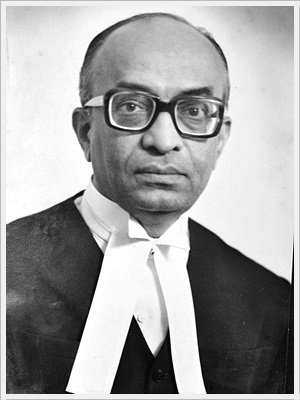
No Acts & Articles mentioned in this case
).-.•
CHET RAM VASHIST
v.
MUNICIPAL CORPORATION OF DELHI & ANR.
November 5, 1980
[R.S. PATHAK AND 0. CHINNAPPA REDDY, JJ.J
Delhi Municipal Corporation Act !957 S. 313(1) (3) and (Si-Sancrion to
a lay-o«t plan-application for-Failure of Standing Committee to accord
sanction within period specified
in
S. 313(3}-app/fcant whether can regard
lay-out plan as sanctioned.
The Delhi Municipal Corporation Act, 1957 by sub-section (1) of section
313 obliges the owner of the land. before utilising, selling or otherwise deal·
ing with the land under section 312 to apply to the Commissioner with a lay
out plan of the land for sanction to the lay-out plan. Sub-section (3) of
the said section requires the Standing Commitee, within sixty days after receipt
of the application, either to accord sanction to the lay-out plan or to disallow
it or ask for further information in respect of it. If further information is
asked for, the ban on the owner utilising, selling or otherwise de~Iing with the
land continues to operate until orders have been passed by the, Standing
Committee on receipt of the information.
The appellant's father who owned a large parcel of land situated within
the Municipal limits, decided on developing the land as a residential colony
and submitted a lay-out plan for sanction under section 313, which was sanc·
tioned by the Standing Committee on 10th December, 1958. After the death
of the appellant's father, the appellant thought it desirable that the lay-out
plan should include provision for the construction
of a cinema and he submitted
an application dated
20th April, 1967 accompanied by a copy of the sanction
ed lay-out plan indicating the proposed changes, and prayed for an early
sanction in terms of the provisions of section 313. The Town Planner of
the Corporation informed by letter, dated 14th June, 1967 that as the application
did
not fal! within the purview of section 313, and that
as the Master Plan
did
not envisage a cinema within a residential area, the request could not
be
considered. Some correspondence followed and ultimately by letter, dated 29th
September,
1969 the appellant was informed that his proposal could not be accepted.
Feeling aggrieved, the appellant filed a Writ Petition in the High Court
alleging that the application had not been considered by the Standing Commit·
tee and as the period prescribed by the statute for doing so had expired th11
revised lay-out plan must be treated as having been sanctioned. The Singh>
Judge of the High Court allowed the Writ Petition and directed the Corpora
tion to treat the revised lay-out plan as having been approved but observed
that it was open to the Standing Committee under sub-section (5) of section
313 to prohibit the construction of the cinema. The respondent-Corporation
preferred a Letters Patent Appeal and the Division Bench of the High Court
allowed the appeal, holding that the appellant was not entitled to invoke
sub-section (3) of section 313.
In the appeal to this Court, on the question, whether the failure ·of the
Standing Committee of the Municipal Corporation to consider under mb·lieCtion
A
B
c
D
p
G
'1:074 SUPREME.COURT REPORTS [1981] 1 S.C.R.
A (3) of section 313 of the. Act, an application for sanclion to a lay-out plan
within the period specified in the sub-section can result in a deemed grant of
the sanction :
HELD:
I. Merely because the Standing Committee does not consider the grant of
sanction on the application made under sub-section (]) of section 313 within
the specified period, does not entitle the applicant to regard the Jay-out plan
B; as having been sanctioned. [1080F]
c
D
E
F
G
H
2. The Municipal Corporation is obliged to refer the application dated
20th April, 1967 alongwith the lay-out plan accompanying it, to its Standing
Committee !Ci dispos
0e of the application expeditiously in accordance with law.
[1082B]
3. Sub-sections (3) and (5) of section 313 prescribe a period within which
the Standing Committee is expected to deal with the application made under
sub-section
(1). But neither sub-section declares that if the
Standing Committee
does not deal with the application within the prescribed period of sixty days
it will be deemed that sanction has been accorded. The statute merely
requires the Standing Committee to consider the application within sixty days.
It stops short of indicating what will be the result if the Standing Committee
fails to do
so.
[1070CJ
4. If the Act intended that the failure of the Standing Committee to deal
with the matter within the Prescribed period should imply
a deemed 53nction
it would have said
so.
[10700]
5. When sub-section (3) declares that the Standing Committee shall within
sixty days of receipt of the application deal with it, and when the proviso
to sub-se.ction
(5)
dcclarns that the Standing Committee shall not in any case
delay the passing of orders for more than sixty days the statute merely
prescribes a standard of time within which it expects the Standing Committee,
to dispose
of the matter. It
is a standard which the statute considers to be
reasonable. But non-compliance does not result in a deemed sanction to
the Jay-out plan. [1070E·F]
6. Parliament did not apparently view the matter of sanctioning a lay-out
plan as possessing the immediacy associated with the actual erection of a
building or the execution of a work, where
on the failure of the Commissioner
to refuse sanction
or to communicate such refusal within a specified period
the applicant
is entitled to commence and proceed with the
building or work.
[1070G]
7. There is nothing in section 313 which· has the contextual character of
sections
336 and 337. A perusal of sections 336 and 337 confirms that
the
cases covered there are controlled by a tightly woven time-bound programme
strongly indicating Parliament's intent to regard the erection cf a building
and the execution
o:E a work as matters of the utmost expedition and urgency.
This network of provisions demonstrate the urgency attached by Parliament
to the case where
a. building has to be erected or a work executed. [1079H·
1080A, El
8. Sanction io the lay-out plan is also a preliminary step in the process
of utilising the land for the construction of buildings thereon.
It is necessary
to obtain that sanction because it
is a pre-requisite to the grant of sanction
for the erection of the building or the execution of the work. [1081B]
9. The appellant was right in making the application under section 313
in regard to the amalgamation of the three plots for the proposed construction
~··
CHET RAM VASHIST v. M.C.D. (Pathak, J.) 10 7 5
of a cinema building. The Standing Committee has to determine whether A
the lay-out plan now proposed can be sanctioned. It may refuse the sanction
by reason of sub-section
(4) of section 313 on any of the grounds specified
therein.
That will be a matter for the Standing Committee to consider.
[1081C·DJ
JO. It is open to the owner of the land, after obtaining sanction to the
original lay-out plan to apply afresh for sanction to a revised lay-out plan.
Circumstances may arise, after the original sanction was granted, requiring
the owner to incorporate changes
in the original lay-out
pla'.l. In that event,
when an application is made for the grant of sanction to a revised lay-out
plan it is,
as it were, an application for
the· grant of a fresh sanction. There
is a fresh lay-out plan for which sanction is applied. It is different1y
constituted from the original lay-out plan. SuGh an application would tan·
under section 313. [1081F-G]
In the instant case the application made by the appellant fo~ sanction
to the lay-out plan must be regarded
as pending before the Standing Committee
which must be disposed of without any further delay.
[1080G]
Municipal Corporation of Delhi & Ors. versus Smt. Kam/a Bhandari
& Ors. I.L.R. (1970) 1, Delhi 66 disapproved.
CIVIL APPELLATE JURISDICTION : Civil Appeal No. 147 of 1974.
Appeal by special leave from the Judgment and Order dated
16-10-1973 of the Delhi High Court in LPA No. 238/72.
Dr. L. M. Singhvi and Mahinder Narain for the Appellant.
Lal Narain Sinha Att. Genl. of India, B. P. Maheshwari, Sureslz
Sethi
and S. K. Bhattacharyya for Respondent No. 1.
Sardar Bahadur Saharya and Vishnu Bahadur Saharya for
B
c
D
E
~ Respondent No. 2.
The Judgment of the Court was delivered by
PATHAK, J.-Does the failure of the Standing Committee of
the Delhi Municipal Corporation to consider under sub-s. (3) of s.
313, Delh! Municipal Corporation Act, 1957, an application for
sanction to a lay-out plan within the period specified in the sub
section result in a "deemed" grant of the sanction ? That is the
principal question raised in
this' appeal by special leave
which is
directed against the judgment and order of the Delhi High Court
allowing a Letters Patent Appeal and dismissing a writ petition filed
by the api;iellant.
The appellant's father, Amin Chand, owned a large parcel of
land in village Chowkhandi near Tilak Nagar, Najafgarh Road, New
Delhi. The land was situated within tl!.e municipal limits of Delhi.
Amin Chand decided on developing the land
as a residential colony
named, after his father, the
"Gangaram Vatika Colony". He submit
ted a lay-out plan for sanction under s. 313 of the Delhi Municipal
F
G
H
1076
A
B
c
D
E
F
G
SUPREME COURT REPORTS [1981] 1 S.C.R.
Corporation Act, 1957. The plan was sanctioned by the Standing
Committee of the Delhi Municipal Corporation by Resolution No. 17
passed on 10th December, 1958. A revised lay-out plan was approv
ed by the Standing Committee by Resolution No.
871 dated 12th
November, 1964. Meanwhile,
Amin Chand died, and the appellant,
his son, thought it desirable that the lay-out plan should include pro
vision for the construction of a cinema. Plots Nos. 33, 34 and 35
approved
as separate units for the construction of residential
house&
in the lay-out plan were selected as an amalgamated unit for the
cinema. An applicati:on dated 20th April, 1967, accompanied by
a copy of the sanctioned lay-out plan indicating the proposed changes,
was
filed by the appellant and he prayed for
"an early sanction in
terms of the provisions of
s.
313" of the Act. The Town Planner
of the Corporation informed him by letter dated 14th June, 1967 that
his application did not fall within the purview of s. 313 and that,
moreover, the Master Plan did not envisage a cinema within a resi
dential area, and therefore the request could not be considered.
Some correspondence followed between the appellant and the Corpo
ration and concluded with a letter of 29th September, 1969 by the
Corporation informing the appellant tbat his proposal could not be
accepted because it would contravene the Master Plan of Delhi.
The Appellant
filed a writ petition in the High Court of Delhi
alleging that
the
0 application had not been considered by the Standing
Committee, and as the period prescribed by the statute for doing so
had expired the revised lay-out plan must be treated as having been
sanctioned. Accordingly, he prayed that the respondents be rest
rained from interfering with his right to raise the construction
including the cinema burlding in accordance with the revised lay-out
plan. A learned Single Judge of the High Court while disposing of
the writ petition directed the Corporation to treat the revised lay-out
plan
as having been approved, but observed that the appellant would
not be entitled to construct a cinema on the land unless due
compli
ance had been effected with other provisions of the law and that it
was open to the Standing Committee under sub-s. (5) of s. 313 to
prohibit the construction of the cinema. The Corporation preferred
a Letters Patent Appeal, and a Division Bench of tl1e High Court by
its judgment and order dated 16th October, 1973 allowed the appeal,
set aside the judgment and order of the learned Single Judge and dis
missed the writ petition.
Section 313 of the Corporation Act consists of the following
H provisions :
"313. (1) Before utilising, selling or otherwi:se dealing with
any land under section 312, the owner thereof shall send to the
', ' CHET RAM VASHIST v. M.C.D. (Pathak,/.)
Commissioner a written application with a lay-out plan of the
land showing the following particulars, namely
:-
(a) the plots into which the land is' proposed to be
divided for the erection of buildings thereon and the
purpose or purposes for which such buildings are to be
used;
(b) the reservatmn or allotment of any site for any
street, open space, park, recreation ground, school, market
or any other public purpose;
(c) the intended
level. direction and width of street or
streets;
(
d) the regular line of street or streets:
( e) the arrangements to
be made for levelling, paving,
metalling,
flagging, channelling, sewering, draining, conserv
ing and lighting street or streets.
(2) The provisions of
this Act and the bye-laws made there
under
as to width of the public streets and the height of build-
' .
ings abutting thereon, shall apply in the case of streets, referred
to in sub-section
(1) and all the particulars referred to in that
sub-section shall be subject to the sanction of the
Standin!! Com
mittee.
1077
A
B
c
D
(3) Within sixty days after the receipt of any application E
under sub-section
(1) the Standing Committee shall either accord
sanction to the lay-out plan on such
conditions· as it may think
fit or disallow it or ask for further information with respect to it.
(
4)
Such sanction shall be refused-
(a) if the particulars shown in the lay-out plan would
conflict with any arrangements which have been made or
which are in the opinion of the Standing Committee likely
to be made for carrying out any general scheme of develop-.
ment of Delhi whether contained in the master plan or a
zonal development plan prepared for Delhi or not; or
(b) if the said lay-out plan does not conform to the
provisions of this Act and bye-laws made therennder; or
(
c) if any street proposed in the plan is not designed
so as to connect at one end with a street
which is already
open.
F
G
(5) No .person shall utilise,
sel! or otherwise deal with any H
land or lay-out or make any new street without or otherwise
than in conformity with
1he orders of the
Standing Committee
8---{) S. C. India/81
1078
A
B
c
D
E
F
G
H
SUPREME COURT REPORTS [1981] 1 S.C.R. ·
and if further information is asked for, no step shall be taken
to utilise, sell or otherwise deal with the land or to lay-out or
make the street until orders have been passed upon receipt of
such information :
. Provided that the passing of such orders shall not be in
any case delayed for more than sixty days after the Standing
Committee has received the information which it considers neces
sary to enable it to deal with the said apQlication.
( 6) The lay-out plan referred to earlier. in this section shall,
if so required
by the Standing Committee, be prepared by a J
licensed town
planner." ._.
The principal contention of the appellant before us is that on a
true construction
of s. 313
i! must be regarded that 'there is no
restriction on his utilising, selling or otherwise dealing with the land
in accordance with the lay-out plan because the time prescribed by
sub-s. (3) for the Standing Committee to take action on the applica
tion had expired', and reliance
is place on Municipal Corporation
of Delhi &
Ors. v. Smt. Kamala Bhandari & Ors. (
1
). It is necess~.ry
to examine for the purpose of this case what Parliament intended
when enacting
s. 313. Among the obligations vested in the Corpora
tion under the Act are the construction, maintenance and improve
ment of streets. Public streets vest in the Corporation and the
Commissioner
is enjoined to ensure their maintenance and repair.
Sections 313 to 316 related to private streets.
Section 312 provides
that if the owner of any land utilises, sells, leases out or otherwise
disposes of such land for the construction of buildings thereon, he
must lay-out and make a street or streets giving access to the plot~
in which the land is to be divided and connecting with an existing
public or private street. Sub-s. (1) of
s. 313 obliges the owner of
the land, before utilising, selling or otherwise dealing with the land
under
s. 312 to apply to the Commissioner with a lay-out plan of
the land for sanction to the lay-out plan. The particulars
detailed
in sub-s. (1) required in a lay-out plan bear on the provisions of
s. 312. The lay-out plan will indicate in what manner the. plots are
proposed to be divided and the use to which they
will be applied as
well as the condition and direction of the streets, which provide
access to them, so that
it can be determined whether the private
streets proposed in the lay-out plan
will adequately and sufficiently
serve the buildings raised
iwn the plots. Sub-s. (3) requires the
Standing Committee, within sixty days after receipt of the applica
tion, either to accord sanction to the lay-out plan or to disallow it
ii
{
(1) I.LR. (1970) 1 Delhi 66.
-"'---
CHET RAM VASHIST v. M.C.D. (Pathak, J.)
'or ask for further information in respect of it. If further information
is asked for, the ban on the owner utilising, selling or otherwise
dealing with the land continues to operate until orders have been
passed
by the Standing
Committee on receipt of the information.
That is-sub-s. (5). Its proviso lays down that the passing of such
orders shall not he in any case delayed for more than sixty days
after the Standing Committee has received the information which
it
considers necessary.
Sub-ss. (3) and
(5) of s. 313 prescribe a period within which the
Standing Committee is expected to deal with the application made
under sub-s. (1). But neither sub-section declares' that if the Standing
Committee
does not deal with the application
within the prescribed
period-of sixty days it will be deemed that sanction has been accorded.
The statute merely requires the Standing Committee to consider the
application within
si:xty days. It stops short of indicating what will
be the result
if the
Standing Committee fails' to do so. If it intended
that the failure of the Standing Committee to deal with the matter
within the prescribed
peri:od should imply a deemed sanction it would
have said
so. They are two distinct things, the failure of the
Standing
Committee to deal with the application within sixty days and that the
failure should give rise to a right in the applicant to claim that
sanction has been accorded. The second
does not
necessarily follow
from the first. A right created
by legal fiction is'
ordinarily the
product of express legislation.
It seems to us that when sub-s. (3)
declares that the Standing Committee shall within sixty days of
receipt of the
applicatron deal with it, and when the proviso to
sub-s. (5) declares that the Standing Committee shall not in any case
delay the passing of orders for more than sixty days the statute merely
prescribes a standard of time within which it expects the Standing
Committee to dispose of the matter. It is a standard whi:ch the
statute considers to be reasonable. But non-compliance does not
result in a deemed sanction to the lay-out plan.
Besides the absence of
express' language creating the legal conse
quence claimed
by the appellant, there is nothing in the context to
persuade
us to accept the claim. Parliament did not apparently view
the matter of
sanctroning a lay-out plan as possessing the immediacy
associated with the actual erection of a building or the execution of
a work, where on the failure of the Commissioner to refuse sanction
or to communicate such refusal within a specified period the applicant
is entitled to commence and proceed with the
building or work.
There
is nothing in s. 313 which has the contextual character of
ss. 336 and 337.
A perusal of ss. 336 and 337 confirms that the
cases covered there are controlled by a tiihtly woven time-bound
107-9
A
B
c
D
E
F
G
H
B
c
D
E
p
G
SUPREME COURT REPORTS [1981] 1 S.C.R.
programme strongly indicating Parliament's intent to regard the
direction of a building and the execution of a work
as matters of the
utmost
expedition and urgency. Sub-s. (3) of s. 336 requires the
Commissioner to communicate the sanction to the applicant and,
where sanction
is refused, to communicate the refusal with a statement
of his reasons for such
refusal. If ithe period specified in sub-s. ( 1)
of S'. 337 has expired without the Commissioner refusing to sanction
or,
if refusing, without communicating the refusal, the applicant can
commence and proceed with the projected building or
~ork. If it
appears to the Commissioner that the site of the proposed bui-lding
or work is likely to be affected by any scheme of acquisit!on of land
for a public purpose or by any
of the other public works mentioned
in the proviso to sub-s.
(1) of s. 337, he may withhold sanction of
the proposed building
or work, but even therefor not more than three
months and the period specified in the sub-section
is computed as
commencing from the expiry of such period. That is not all.
On
the sanction or deemed sanction, the applicant must under sub-s. (3)
of s. 337 commence the erection of the building or execution of the
work within one year. Failure to
do so will reduce him to the need
for taking fresh steps for obtarning the sanction. Then, before
commencing the erection of the building or execution of the work
with the period specified in sub-s. (3), he
is obliged, by virtue of
sub-~. ( 4) to give notice to the Commissioner of the proposed date
of such commencement; and rf the commencement does not take
place within seven days fresh notice is necessary. This network of
provisions demonstrates the urgency attached by Parliament to the
case where a building has to be erected or a work executed. It is
conspicuous by its· absence in s. 313. We are, therefore, of opinion
that if the Standing Committee
does not consider th.e grant of sanction
on the application made under sub-s.
(1) of s. 313 within the specified
period, it
is not open to the applicant to regard the lay-out plan as
having been sanctioned.
We are unable
to endorse the contrary view taken by the High
Court in
Municipal Corporation of Delhi's case (supra) and overrule
that decision.
The
application made by the appellant for sanction to the
Jay-out plan must be regarded
as pending before the
Standing Com
mittee and must now be: disposed of without ar(Y further delay.
The appellate Bench of the High Court has taken the
view that
H
the application does not lie under s. 313. As we ha·ve already
observed, the purpose of filing a lay-out plan under sub-s. ( 1) of
s. 313 is related immediately to determining whether the access pro-
•
CHET RAM VASHIST v. M.C.D. (Patnak; J.)
vided by the proposed priva1'e streets sufficiently and adequately serves
the purpose enacted in
s. 312, and
that is why the lay-out plan must
show the particulars specified in sub-s.
(1) of s. 313. Sanction to
the lay-out plan is also a preliminary step in the process of utilising
the land for the construction of buildings thereon.
It is necessary to
obtain that sanction because it is a pre-requisite to the grant of
sanc
tion for the erection of the building or the execution of the work.
Under sub-s. ( 1) of s. 336, it is openl to the Commissioner to refuse
sanction of a building
or work, in cases falling under s. 312, if the.
lay-out plans have not been sanctioned in accordance with
s. 313.
In our view, the appellant was right in making the application under
s. 313 regard to the amalgamation of the three plots for the proposed
construction of a cinema building. The Standing Committee
has to
determine whether the lay-out plan now proposed can be sanctioned.
It may refuse the sanction by reason of sub-s. ( 4) of s. 313 on any
of the ground specified therein. That
will
be a matter for the Stand
ing Committee to consider.
The Appellate Bench or the High Court has held that the appel
lant is not entitled to invoke sub-s. (3) of s. 313 for the grant of
sanction to the revised lay-out plan. The High Court was apparently
of the view that
s. 313 is attracted only when the owner
of the land
has not yet utilised
or otherwise dealt with the land and the
applica
tion for sanction envisaged under s. 313 is the first application made
for the purpose. The High Court has referred
to the circumstances
that the owner had already commenced to act on the sanction granted
to the original lay-out plan. We think that the limited view taken by the High Court is not justified. It is open to the owner of land,
after obtaining sarftion to the original lay-out plan, to apply afresh
for sanction to a revised lay-out plan. Circumstances may arise, after
the original sanction was granted, requiring the owner to incorporate
changes in the original lay-out plan. In ·that event, when anj appli
cation is made f'or the grant of sanction to a revised lay-out plan it
is, as it were, an application for the grant of a fresh sanction. There
is a fresh lay-out plan for which sanction is applied. It is differen~ly
constituted from the original lay-out plan. Such an application will
fall under s. 313. It is no bar to making such an application and
entertaining it that the owner has commenced to utilise the land or
otherwise dealt with it. Section 312 implies that the land must be
utilised in accordance with the lay-out plan. If the land has been
utilised to any degree by the appellant before 20th April, 1967, the
ntilisation must conform to the original sanctioned lay-out plan. No
utilisation
by the appellant in the manner subsequently proposed is
1081
A
B
c
D
E
F
G
H
10112
A
B
c
SUPllBMB COURT REPORTS [1981] 1 S.C.R.
permissible unless and until sanction is accorded to the revised lay
out plan.
If such sanction is refused, it is the original sanction which
will
continue to operate, and the lay out plan to which such sanction
was granted is the one that matters.
In the circumstanc1~s, we direct the first respondent, ;he Munici
pal Corporation of Delhl, to refer the application dated 20th April,
1967 along with the lay-out plan accompanying it to its Standing
Committee and the Standing Committee will dispose of the applica
tion expeditiously in accordance with
law. The
appdlant is not
entitfed to any further :relief at this stage. In the circumstances, the
parties
will bear their costs.
N.
V.K.-

 Login with google
Legal Notes
Add a Note....