
The case was originally filed in the VI Additional District and Sessions Court, Sompeta, which convicted the accused. The High Court upheld the conviction, leading them to appeal to the ...
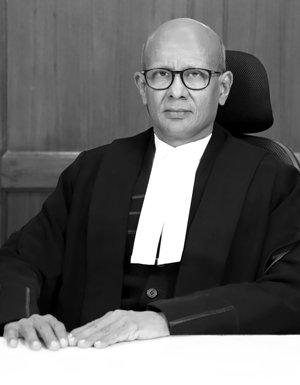
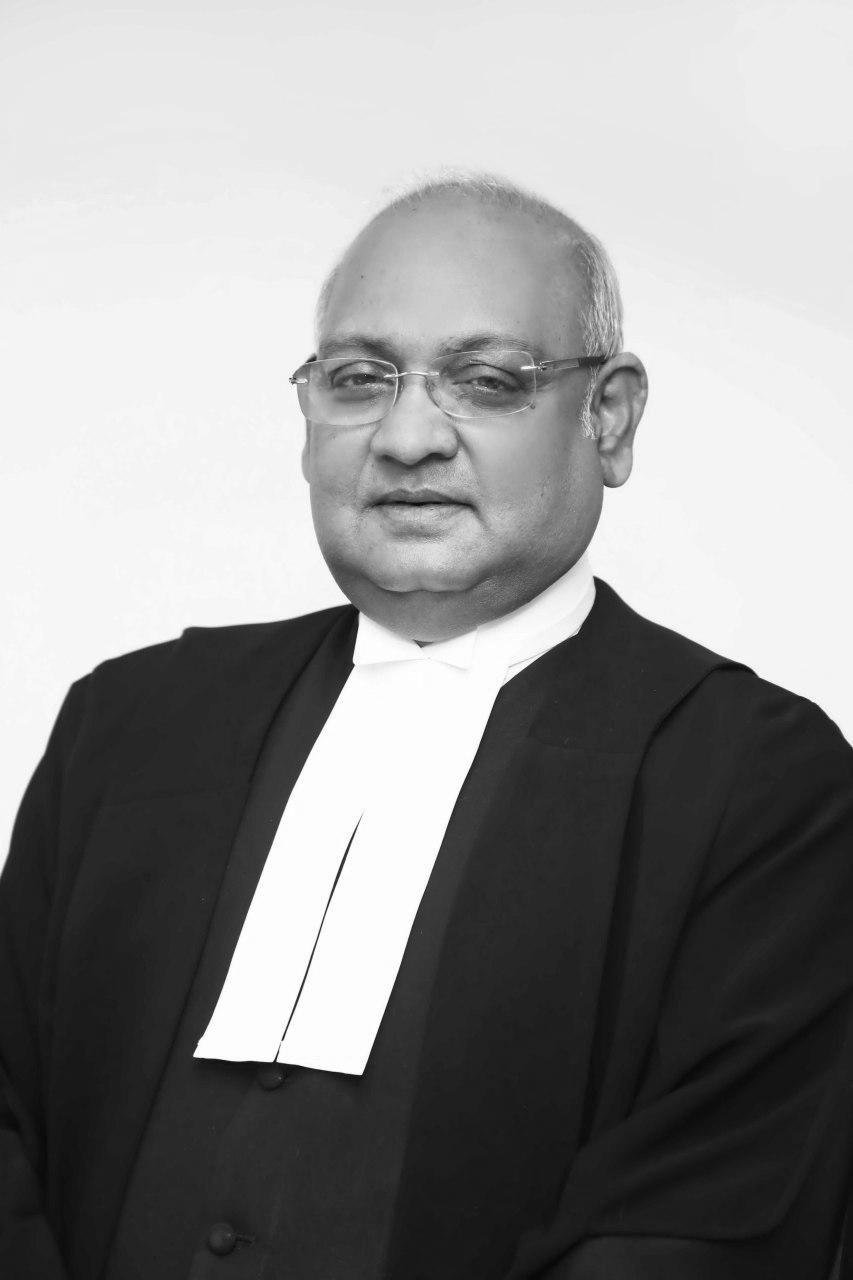
Reportable
IN THE SUPREME COURT OF INDIA
CRIMINAL APPELLATE JURISDICTION
CRIMINAL APPEAL NO. 1295 OF 2019
Dakkata Balaram Reddy & Anr. ...Appellant(s)
Versus
State of Andhra Pradesh & Anr. ...Respondent(s)
J U D G M E N T
Sanjay Kumar, J
1. By judgment dated 30.08.2016 passed in Sessions Case No.
81 of 2012, the learned VI Additional District and Sessions Judge,
Sompeta, held the accused therein, viz., Dakkata Balaram Reddy (A1)
and Chinapana Gopi (A2), guilty of offences punishable under Sections
302, 397 and 450 IPC and sentenced them accordingly. Their conviction
and sentence stood confirmed when the High Court for the State of
Telangana and the State of Andhra Pradesh dismissed Criminal Appeal
1
No. 915 of 2016 filed by the two accused, vide judgment dated
03.10.2018. Aggrieved thereby, both the accused are before this Court.
2. Heard Shri R. Basant, learned senior counsel, appearing for
the appellants/accused; Shri Mahfooz Ahsan Nazki, learned counsel,
appearing for the State of Andhra Pradesh; and Shri Y. Raja Gopala Rao,
learned counsel for the second respondent, viz., the complainant.
3. The case of the prosecution: The complainant, Vetcha Kesava
Rao (PW-1), is a resident of Ichapuram and his house is situated on
Chinnamedaraveedhi, wherein he also did his gold and silver business.
A1 is a civil contractor while A2, his brother-in-law, is an ex-serviceman.
On 21.08.2008 at about 9.00 pm, in PW-1’s absence, A1 and A2
trespassed into his house concealing iron rods under their shirts and
brutally killed his son, Vetcha Kiran Kumar (deceased No.1), and his wife,
Vetcha Venkatagopala Lakshmi (deceased No.2); robbed gold ornaments,
weighing about 3.543 Kgs., and cash of 18,340/-. At about 11.00 pm on
₹
the same night, PW-1 lodged a written report against them at Ichapuram
Town Police Station. Thereupon, Crime No. 61 of 2008 was registered by
the Sub-Inspector of Police, Ichapuram Rural P.S. (PW-23), and he
informed the Inspector of Police who was holding additional charge of
Ichapuram Circle (PW-26). PW-26 immediately took up investigation. He
2
visited the scene of offence and held an inquest over the dead bodies in
the presence of mediators. Upon receiving information, he arrested A2 at
01.15 am on 22.08.2008 at Radhamveedhi, Jagannadhaswamy Temple,
Ichapuram, in the presence of mediators and recovered from his
possession part of the stolen property, i.e., gold ornaments weighing 1748
grams 750 milligrams and cash of 18,340/-. He then arrested A1 at
₹
04.00 am on 22.08.2008 from Gollaveedhi, Ichapuram, and recovered
gold ornaments weighing 1794 grams 370 milligrams from his possession
in the presence of mediators. Thus, PW-26 recovered the gold ornaments
weighing 3.543 Kgs. from the accused along with the cash. He also
examined several witnesses. He went to the scene of the offence and
prepared a Rough Sketch. At his request, the Inspector of Police, FPB
Unit, Srikakulam (PW-24), went to the scene of the offence along with the
Clues Team and developed four chance fingerprints. Thereafter, the
Inspector of Police, Ichapuram Circle (PW-27), took up further
investigation. He visited the scene of offence, examined witnesses and
recorded their statements. After completion of the investigation, he filed a
charge sheet against the accused. Charges were framed against them
under Sections 302, 379, 394 r/w 397, 411 and 450 IPC. They pleaded not
guilty and claimed to be tried.
3
4. During the trial, the prosecution examined 27 witnesses and
marked Exs.P-1 to P-21 in evidence, apart from producing Material
Objects (MOs) 1 to 99. The accused did not adduce evidence but were
examined under Section 313 Cr.P.C. Upon considering the evidence and
the MOs, the learned VI Additional District and Sessions Judge, Sompeta,
held the accused guilty of the offences punishable under Sections 302,
397 and 450 IPC. They were sentenced to undergo imprisonment for life
under Section 302 IPC and to pay fine of 2,000/- each; imprisonment for
₹
a period of 10 years under Section 450 IPC and to pay a fine of 2,000/-
₹
each; and imprisonment for 7 years under Section 397 IPC. Further
imprisonment was directed for default in payment of fines.
5. Aggrieved thereby, the accused filed Criminal Appeal No. 915
of 2016 before the High Court. By judgment dated 03.10.2018, a Division
Bench of the High Court opined that the circumstantial evidence, in
corroboration with the medical evidence, the weapons used and the
manner in which the attack was made, established that the accused
intended to cause the death of the inmates of the house of PW-1, fulfilling
the essential ingredients of the offence under Section 300 IPC, punishable
under Section 302 IPC. The High Court, therefore, concluded that there
4
was no merit in the case and dismissed the same. Hence, this appeal by
special leave under Article 136 of the Constitution.
6. At the outset, it would be apposite to note the scope of
jurisdiction under Article 136 of the Constitution in a case of this nature,
where the Trial Court and the High Court have concurrently returned
findings of guilt against the accused. In Pappu Vs. The State of Uttar
Pradesh [(2022) 10 SCC 321], this Court pointed out that, in an appeal by
special leave under Article 136 of the Constitution against concurrent
findings of fact by the Trial Court and the High Court after appreciation of
evidence, each and every finding of fact cannot be contested and such an
appeal cannot be dealt with as if this Court is another forum for
reappreciation of evidence. It was observed that it is only if the
assessment by the Trial Court and the High Court can be said to be
vitiated by any error of law or procedure or misreading of evidence or in
disregard to the norms of judicial process, leading to serious prejudice or
injustice, that this Court may, and in appropriate cases would, interfere in
order to prevent grave or serious miscarriage of justice, but such a course
is to be adopted only in rare and exceptional cases of manifest illegality. It
was further observed that such an appeal is not a regular appeal and this
Court would not interfere with concurrent findings of fact based on pure
5
appreciation of evidence and it is not the scope of such appeal that this
Court would enter into reappreciation of evidence so as to take a view
different from that taken by the Trial Court and approved by the High
Court.
7. Earlier, in Sambhu Das alias Bijoy Das and another Vs.
State of Assam [(2010) 10 SCC 374], this Court affirmed that Article 136
of the Constitution does not confer a right of appeal on a party and only
confers discretionary power on this Court to be exercised sparingly to
interfere in suitable cases where grave miscarriage of justice has resulted
from illegality or misapprehension or mistake in reading evidence or from
ignoring, excluding or illegally admitting material evidence.
8. This being the settled legal position, the case on hand may
now be examined. There are no eye-witnesses to the actual commission
of the offence and the case is built on circumstantial evidence. Trite to
state, in such a situation, the chain of evidence must be so complete as to
not leave any reasonable grounds for a conclusion consistent with the
innocence of the accused; the accused ‘must be’ and not merely ‘may be’
guilty, before the Court can convict, and the facts established should be
consistent only with the hypothesis of the guilt of the accused [See
Hanumant Govind Nargundkar Vs. State of M.P. (AIR 1952 SC 343)].
6
9. In this context, the following facts may be noted: Vetcha
Kesava Rao (PW-1) stated that, on 21.08.2008 at about 05.00 pm, he
went to Sompeta for business purposes and received a call from
PW-7/LW-8 at about 09.30 pm that the accused went to his house at about
09.00 pm and that they heard loud cries and shouts coming from the
house. PW-7 then told him that after some time A1 ran away with small
bundles of gold while he and LWs 6 & 7 (PW-4 and PW-6) were watching
and A2 fled from upstairs towards the backside portion. PW-1 stated that
he returned from Sompeta and reached his house at about 10.00 or 10.30
pm and by that time, people had gathered outside his house and all the
doors of his house were open. His son was lying in a pool of blood near
the sofa in the shop room and there was an iron rod on the floor, and in
the southern side room, his wife was lying in a pool of blood and he found
another iron rod near her. All the gold ornaments were missing from the
shop almirah and the show case. He then went to the police station and
lodged a report (Ex.P-1). PW-1 stated that he told the police that his wife
and son were killed by the accused. He also informed the police that he
had lost gold ornaments and cash of 18,340/-. In his cross-examination,
₹
he stated that the accused were his customers and used to purchase gold
7
or take money from him. He denied knowledge of A1 being a contractor
and his financial position.
10. The Civil Assistant Surgeon, Community Health Centre,
Ichapuram (PW-19), conducted the post-mortem examination of the body
of deceased No. 1. He issued a post-mortem certificate (Ex.P-14) stating
that the cause of his death was shock due to brain injury and hemorrhage
following a head injury. Another Civil Assistant Surgeon at the Community
Health Centre, Ichapuram (PW-20), conducted the autopsy over the body
of deceased No. 2 and issued a post-mortem certificate (Ex.P-15) stating
to the same effect as to the cause of her death. Both PW-19 and PW-20
denied the suggestion that the injuries on the bodies of the deceased
could have been caused by falling from the first floor. In effect, it can
safely be said that their deaths were homicidal in nature. More so, as
blood-stained iron rods (MOs1 and 2) were found near the bodies.
11. Though there were no eye-witnesses to the actual killings,
there were three separate witnesses who spoke of seeing one or both of
the accused ‘running away’ from the house of PW-1 at that late hour on
the fateful night. PWs 4, 6, and 10 are those witnesses. PW-4 stated that
he was also doing gold and silver business and knew PW-1 as well as the
accused. He stated that, on 21.08.2008 at about 09.00 pm, he and PW-6
8
were going to his sister’s house at Dabburi Street via Medaraveedhi and
at that time, they heard loud voices coming from PW-1’s house. They
shouted as to what was happening inside the house. A number of people
gathered at the house. Then, A1 came out from the house of PW-1 and
ran away. After that, the police came to the house of PW-1. Along with
them, they all went inside the house of PW-1 and found that the wife and
son of PW-1 were lying dead. PW-1’s son was lying in the shop room and
the body of PW-1’s wife was at the bath room which was after the shop
room. PW-1 then returned from camp. During the investigation, on
11.12.2008, his statement was recorded under Section 164 Cr.P.C. by the
Judicial First Class Magistrate, Sompeta (Ex.P2). At this stage, PW-4 was
declared hostile and was cross-examined by the prosecution. He denied
having stated before the police that the accused had entered the house of
PW-1 and had stolen gold ornaments and cash. In his cross-examination
by the defence, PW-4 stated that PW-1’s house was in the centre of
Chinnamedaraveedhi and on both sides, houses were situated. He stated
that he did not know whether PW-1 used to advance loans on pledging of
gold ornaments.
12. PW-6 stated that, on 21.08.2008 at about 09.00 pm, he and
PW-4 were going towards his house and PW-4 was then going to his
9
sister’s house via Chinnamedaraveedhi. By the time they reached PW-1’s
house, they heard cries and shouted as to what happened. In the
meanwhile, 10 to 15 people gathered there. Then, A1 came outside from
PW-1’s house and ran away on a bike with a bag on his shoulder. After 5
or 10 minutes, A2 jumped from the upstairs of PW-1’s house to the
neighbouring house and from there, he jumped down. At that time, A2 was
also holding a bag. After one hour, PW-1 returned to his house and the
police also came there. In the first room, i.e., the gold shop, PW-1’s son
was found in a pool of blood and his wife’s body was found near the
bathroom towards the backside of the shop. Iron rods were found near the
bodies. In his cross-examination, PW-6 stated that about 3 or 4 people
were present at PW-1’s house by the time they were passing there. He
further stated that A1 was a contractor and possessed 8 lorries. He
however disclaimed knowledge of A1 doing gold business or having
constructed a temple. He could not say the colour of the wearing apparel
and the colour of the bags carried by the accused.
13. PW-7 stated that, on 21.08.2008 at about 09.00 pm, he closed
his kirana shop and was returning home and by the time he reached
PW-1’s house, he heard loud sounds coming from PW-1’s house and
some people had gathered there. He stated that he called PW-1 and
10
informed him that loud sounds were coming from his house and PW-1
said that he would return home. At about 10.30 pm, PW-1 returned to the
house and a police report was given. After the police came, they went
inside the house and on the left side near the sofa in the shop room,
PW-1’s son was lying in a pool of blood. His wife was lying in a pool of
blood by the bathroom and iron rods were present near the bodies. He
further stated that all the things were shattered in the house of PW-1 and
around 4 Kgs. of gold and cash was stolen/lost. In his cross-examination,
he stated that, by the time the police came there, he was present outside
PW-1’s house. Significantly, PW-7 did not say anything about the
presence of the accused or about informing PW-1 of their entering and
leaving his house.
14. PW-10 resided in the 2
nd
house opposite the house of PW-1.
He stated that, on 21.08.2008 at about 09.30 pm, while he was taking
dinner, he heard sounds from outside. When he came out, he saw around
10 people gathered in the street. Meanwhile, A1 ran away from PW-1’s
house and then A2 ran away from PW-1’s house. Both of them were
holding bags. Later, he came to know that the accused had murdered
PW-1’s wife and son and ran away with gold. He stated that PW-1 came
to the house within half an hour or one hour. Police also came to the
11
house. He went to the house and saw the bodies of deceased. In his
cross-examination, he admitted that he did not state before the police that
A1 and A 2 were holding bags and left PW-1’s house in a hurry.
15. Now, coming to the apprehension and arrest of the accused.
PW-17 stated that he was the Village Revenue Officer of Koligam Village
and on 22.08.2008, at around 01.00 am, he was called to Ichapuram Town
Police Station by the Inspector of Police. LW-27 was already there by
then. He stated that both of them and the police went to Radham Street
near Jagannadhaswamy Temple. At that time, one person was seen
running away from that place and the police chased and caught hold of
him. He was holding a bag in his hand. He stated that his name was
Chinapana Gopi (A2) and he allegedly confessed to commission of the
crime. The bag was seized and opened in their presence. They found gold
ornaments and cash of 18,340/- inside. At about 04.00 or 04.30 am on
₹
the same day, he went to Ichapuram Town Police Station and both the
accused were present there. The police then seized the blood-stained
clothes of both the accused in his presence. In his cross-examination, he
stated that he did not remember the colour of the bag seized from A2 or
the number of ornaments seized.
12
16. PW-16, the Village Revenue Officer, Purushottapuram,
Ichapuram Mandal, stated that, on 22.08.2008 at about 02.30 am, the
Inspector of Police, Ichapuram, called him and LW-25 and both of them,
along with the Inspector of Police and other police staff, went to
Gollaveedhi in a police jeep. On seeing the police jeep, one person started
running but the police chased and caught hold of him. He was brought
before the Inspector of Police and on questioning as to why he was
running, he identified himself as Dakkata Balaram Reddy (A1). He
allegedly confessed to having killed PW-1’s wife and son and taking gold
ornaments. Upon being questioned about the ornaments, he brought the
ornaments in a bag from his room, i.e., about 30 items. PW-16 further
stated that, at about 04.40 am on the same day, the Inspector of Police
called him to the Police Station and he along with LW-26 went there. The
police seized the yellow T-shirt (MO 97) and light cement-coloured jeans
pant (MO 98) of A1 along with the blood-stained jeans of cement color
(MO 99) of A2.
17. PW-26 worked as the Inspector of Police at Sompeta from
13.10.2006 to 19.09.2008. He stated that, on 21.08.2008, while he was
holding additional charge of Ichapuram Circle, he received information
from the Sub-Inspector of Police, Ichapuram Rural Police Station (PW-23)
13
about the subject crime. He immediately rushed there and also flashed
radio messages for conducting vehicle checking to apprehend the
accused. He visited the scene of offence at 11.45 pm and noted the dead
bodies. In the meanwhile, he received information about the movement of
the culprits and left the scene of the offence. He secured two mediators
and along with his staff, he went to Radhamveedhi, Jagannadhaswamy
Temple, at about 01.15 am and noticed one person, carrying a hand bag,
trying to escape upon seeing the police. He apprehended the person (A2)
and questioned him about the contents of the bag. He interrogated him
and he confessed to the commission of the offence. The bag carried by
him was verified and gold ornaments along with cash of 18,340/- were
₹
found therein. Then, PW-26, along with the accused, his staff and
mediators, rushed to the house of the other accused, Dakkata Balaram
Reddy, situated on Gollaveedhi of Ichapuram Municipality, and upon
seeing the police, one person (A1) tried to escape. He was apprehended
and interrogated in the presence of mediators. He also confessed to
commission of the offence and corroborated the version given by the other
accused. PW-26 stated that he then questioned him about the stolen
property and he fetched a bag from the side room of the house along with
blood-stained clothes and handed over the same to him. The bag
14
contained gold ornaments. PW-26 then arrested A1 at about 04.00 am
and brought both the accused to the police station along with the seized
property. Upon further questioning as to their clothes at the time of the
offence, they disclosed that they were wearing the same clothes at the
time of offence. He then secured some other clothes and seized their
blood-stained clothes.
18. PW-27 stated that he worked as the Inspector of Police,
Ichapuram, from 09.02.2008 to 09.05.2010. He stated that he took up
further investigation in the case on hand on 31.08.2008 and that PW-26
had conducted investigation till then. He spoke of the Test Identification
Parade of the seized gold ornaments conducted in the presence of
mediators.
19. The Inspector of Police, FPB Unit, Srikakulam, was examined
as PW-24. He stated that, on receipt of a telephone message from the
Police Station, Ichapuram, he visited the scene of offence along with a
Clues Team on 22.08.2008 at about 06.00 am and developed four chance
fingerprints on a glass show case and one chance fingerprint on a
cream-coloured plastic box. He stated that he found photocopies of two of
the chance prints unfit for comparison but the chance prints marked as A,
D and E were fit for comparison. The fingerprints marked as A and E
15
tallied with the fingerprints of the two accused. In his cross-examination,
he stated that he did not receive the specimen fingerprints of the accused
through the Court but from the Investigating Officer.
Insofar as this fingerprint evidence is concerned, we find that the
same was liable to be eschewed from consideration as the accused were
already in custody by the time the so-called chance fingerprints were lifted
from the scene of the offence. More importantly, the prescribed procedure
was not followed in gathering this so-called evidence. No report was
drawn up at the time of lifting of these chance prints in the presence of
credible witnesses. Similarly, no report was prepared even at the time the
specimen fingerprints of the accused were taken. Therefore, PW-24’s
evidence that two of the chance prints tallied with the fingerprints of the
accused cannot be given any weightage. Failure in following the due
procedure rendered the findings of PW-24 wholly unreliable.
20. Shri R. Basant, learned senior counsel, would contend that
there is no evidence of any light being available outside the house of
PW-1, whereby the witnesses could have seen the accused running away
with bags. We are of the opinion that it would not be open to the accused
to raise this factual aspect at this late stage. It was never put in issue that
the area in question did not have adequate street lights, whereby the
16
evidentiary value of the statements of witnesses as to what they had seen
could be attacked. More so, as it has come on record that apart from the
jewellery shop of PW-1, there were other jewellery shops in the vicinity
and the police station itself was just half a kilometer away. If that was so,
it is difficult to believe that there would be no street lighting in such an
area. In any event, this Court does not propose to initiate an inquiry into
this factual aspect, which was not raised either before the Trial Court or
before the High Court.
21. Undeniably, there are some discrepancies and contradictions
in the prosecution’s case. There is no clarity as to the sequence of events
at the scene of offence on the fateful night. Witnesses gave differing
versions of the time of the arrival of the police and as to what they saw
and said. There is no corroboration of PW-1’s statement that it was PW-7
who informed him of the accused entering and exiting his house, as PW-7
said nothing to that effect. Further, recovery of the clothes worn by the
accused at that time is also shrouded in doubt. One version is that they
were still wearing them at the police station and they were seized there by
the police, after providing them other clothes, while the other is that A1
handed over blood-stained clothes to PW-26 along with the bag of
ornaments at his house. However, some differences in the testimonies of
17
witnesses as to what they saw and said are to expected given the
passage of time. Be it noted that the subject incident occurred on the night
of 21.08.2008 and the depositions of the witnesses were recorded by the
Trial Court in the later part of 2015. In any event, as already noted
hereinbefore, this Court would not undertake a roving inquiry on factual
issues or reappreciate the evidence, unless it is brought out that there is
some perversity in appreciation of evidence by the Trial Court or the High
Court, leading to manifest miscarriage of justice. Trivial defects in
investigation or process are not enough, in themselves, to disbelieve the
prosecution’s case. To acquit solely on the ground of defective
investigation would be adding insult to injury [See Karnel Singh Vs. State
of M.P. {(1995) 5 SCC 518}]
22. Similarly, identification of the gold ornaments by PW-1 during
the TIP does not raise any red flags. Order 474 of the Andhra Pradesh
Police Investigation Manual, Part I, Vol. IIA, provides that identification of
properties has to be done in the Court premises, under the order of the
Magistrate, either by the Magistrate or through independent witnesses, if
the properties are already sent to Court, and in other cases, independent
witnesses should conduct the process of identification of the property in
the absence of the police, under a Panchnama. The properties to be
18
identified should be mixed with similar articles and the witnesses should
be asked to identify them. This being the procedure that was followed in
the case on hand, there is no reason to doubt PW-1’s identification of the
seized gold ornaments as those taken from his shop.
23. In this regard, it may also be noted that A2 was found in
possession of a bag carrying some of the stolen ornaments and, therefore,
such possession itself speaks against him, in terms of Section 114 (a) of
the Indian Evidence Act, 1872. Being a fact especially within his
knowledge, it was for A2 to explain as to how he came to be in possession
of those stolen ornaments, under Section 106 of the Indian Evidence Act,
1872. However, no explanation was offered by him. As regards A1, it is the
prosecution’s case that he confessed to commission of the crime and
upon being questioned as to the stolen gold ornaments, he himself went
into the other room in his house and brought out a bag containing the gold
ornaments. This part of his confession would, therefore, be admissible
under Section 27 of the Indian Evidence Act, 1872, as it led to the
recovery of the stolen gold ornaments.
24. No doubt, recovery of this stolen property from the accused
would not be sufficient in itself to convict them for murder. However, the
weight of the evidence on record, taken cumulatively, unerringly points to
19
the guilt of the accused, leaving no room for second thoughts. The
inescapable fact remains that PWs 4, 6, and 10, who were witnesses
independent of each other and who had no animosity or enmity with the
accused, spoke in unison about seeing them running away from the house
of PW-1 of the fateful night with bags in their possession. No explanation
is forthcoming as to why three separate witnesses would choose to
implicate the accused falsely.
25. Given the totality of the case, which demonstrates that the
sequence of events unfolded in quick succession during the intervening
night of 21.08.2008 and 22.08.2008, leading to not only identification of
the accused by the witnesses present but also their apprehension and
arrest, apart from seizure of the stolen gold ornaments and cash from their
possession, it is amply clear that there was no time or possibility for the
police to hoist a false case upon them. Minor discrepancies and
shortcomings in the statements made by witnesses after passage of a few
years would necessarily have to be discounted in such a scenario.
27. Viewed thus, we find no patent illegality or manifest injustice
having been committed by the Trial Court and the High Court, warranting
exercise of discretionary jurisdiction under Article 136 of the Constitution.
20
The Criminal Appeal is, therefore, found to be bereft of merit and it is
dismissed accordingly.
…………………………………….,J
(Dinesh Maheshwari)
.……………………………………,J
(Sanjay Kumar)
April 21, 2023
New Delhi.
21

 Login with google
Legal Notes
Add a Note....