
As per case facts, the petitioner, Dheeraj Kumar, sought regular bail after 1212 grams of charas were recovered from his home, leading to charges under the NDPS Act. His initial ...
No Acts & Articles mentioned in this case
2026:HHC:10814
IN THE HIGH COURT OF HIMACHAL PRADESH, SHIMLA
Cr. MP(M) No. 2418 of 2025
Reserved on: 24.3.2026
Date of Decision: 08.4.2026.
Dheeraj Kumar …. Petitioner
Versus
State of HP …. Respondent
Coram
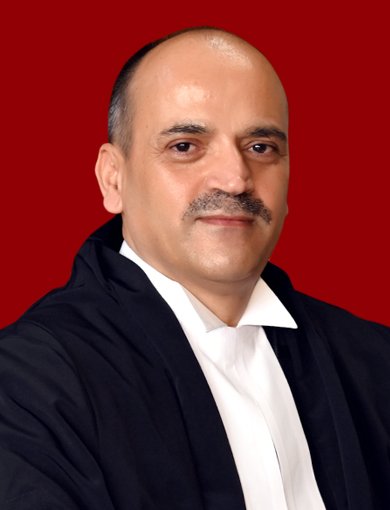
Hon’ble Mr Justice Rakesh Kainthla, Judge.
Whether approved for reporting?
1
No.
For the Petitioner : Mr Mukesh Sharma, Advocate.
For the Respondent/State : Mr Lokender Kutlehria,
Additional Advocate General.
Rakesh Kainthla, Judge
The petitioner has filed the present petition for
seeking regular bail in FIR No. 257 of 2024, dated 26.12.2024,
registered at Police Station Sadar, District Solan, H.P., for the
commission of an offence punishable under section 20 of the
Narcotics Drugs and Psychotropic Substances (NDPS) Act.
2. It has been asserted that, as per the prosecution, the
police received secret information on 26.12.2024, that one
Neeraj, resident of Kleen, District Solan, HP, had contraband in
1
Whether reporters of Local Papers may be allowed to see the judgment? Yes.
2
2026:HHC:10814
his home. The police searched the house and recovered 1212
grams of charas from one of the rooms. The petitioner was found
at the spot, and he was apprehended with the allegations of being
in conscious possession of the charas. The investigation is
complete, and the charge sheet has been filed before the Court.
No fruitful purpose would be served by the continued
incarceration of the petitioner. The trial is likely to take some
time, and pre-trial detention of the petitioner would amount to
punishment before conviction, which is impermissible under the
law. The petitioner had filed a bail petition before the learned
Additional Sessions Judge-II, Solan, HP (Camp at Arki), which
was dismissed on 21.02.2025. The petitioner would abide by the
terms and conditions that the Court may impose; hence, it was
prayed that the present petition be allowed and the petitioner be
released on bail.
3. The petition is opposed by filing a status report
asserting that police received secret information on 26.12.2024 at
about 6 PM during patrolling that Dheeraj Kumar (the
petitioner), a resident of Kleen, was selling/purchasing charas.
The information was credible, and the delay in procuring a
search warrant would have destroyed the charas. Hence, it was
3
2026:HHC:10814
reduced to writing and was sent to the Supervisory officer. The
police joined Neeraj Kumar and Anshul Minhas and went to the
petitioner’s room. The petitioner was present in the room. The
police searched the room after completing the formalities and
recovered a backpack containing 1.212 kilograms of charas from
the bed. The police seized the charas and arrested the petitioner.
The charas was sent to the FSL. The chargesheet was filed before
the learned Trial Court, and the matter was listed before the
learned Trial Court for recording the statements of the
prosecution’s witnesses on 17.11.2025. Hence, the status report.
4. I have heard Mr Mukesh Sharma, learned counsel for
the petitioner and Mr Lokender Kutlehria, learned Additional
Advocate General for the respondent/State.
5. Mr Mukesh Sharama, learned counsel for the
petitioner, submitted that the petitioner is innocent and he was
falsely implicated. The petitioner was not found in conscious
possession of the charas. The police have filed the charge-sheet,
and no fruitful purpose would be served by detaining him in
custody. The petitioner would abide by the terms and conditions
that the Court may impose. There is a delay in the progress of the
4
2026:HHC:10814
trial, and the petitioner’s right to a speedy trial is being violated.
Hence, he prayed that the present petition be allowed and the
petitioner be released on bail.
6. Mr Lokender Kutlehria, learned Additional Advocate
General for the respondent State, submitted that the petitioner
was found in possession of a commercial quantity of charas and
the rigours of section 37 of the NDPS Act apply to the present
case. The petitioner has failed to satisfy the twin conditions laid
down under Section 37 of the NDPS Act, and he is not entitled to
bail. Hence, he prayed that the present petition be dismissed.
7. I have given considerable thought to the submissions
made at the bar and have gone through the records carefully.
8. The parameters for granting bail were considered by
the Hon’ble Supreme Court in Pinki v. State of U.P., (2025) 7 SCC
314: 2025 SCC OnLine SC 781, wherein it was observed at page 380:
(i) Broad principles for the grant of bail
56. In Gudikanti Narasimhulu v. High Court of A.P., (1978) 1
SCC 240: 1978 SCC (Cri) 115 , Krishna Iyer, J., while
elaborating on the content of Article 21 of the Constitution
of India in the context of personal liberty of a person
under trial, has laid down the key factors that should be
considered while granting bail, which are extracted as
under: (SCC p. 244, paras 7-9)
5
2026:HHC:10814
“7. It is thus obvious that the nature of the charge is the
vital factor, and the nature of the evidence is also
pertinent. The punishment to which the party may be
liable, if convicted or a conviction is confirmed, also
bears upon the issue.
8. Another relevant factor is whether the course of justice
would be thwarted by him who seeks the benignant
jurisdiction of the Court to be freed for the time being.
[Patrick Devlin, “The Criminal Prosecution in England”
(Oxford University Press, London 1960) p. 75 —
Modern Law Review, Vol. 81, Jan. 1968, p. 54.]
9. Thus, the legal principles and practice validate the Court
considering the likelihood of the applicant interfering with
witnesses for the prosecution or otherwise polluting the
process of justice. It is not only traditional but rational, in
this context, to enquire into the antecedents of a man who
is applying for bail to find whether he has a bad record,
particularly a record which suggests that he is likely to
commit serious offences while on bail. In regard to
habituals, it is part of criminological history that a
thoughtless bail order has enabled the bailee to exploit the
opportunity to inflict further crimes on the members of
society. Bail discretion, on the basis of evidence about the
criminal record of a defendant, is therefore not an exercise
in irrelevance.” (emphasis supplied)
57. In Prahlad Singh Bhati v. State (NCT of Delhi), (2001) 4
SCC 280: 2001 SCC (Cri) 674, this Court highlighted various
aspects that the courts should keep in mind while dealing
with an application seeking bail. The same may be
extracted as follows: (SCC pp. 284-85, para 8)
“8. The jurisdiction to grant bail has to be exercised on the
basis of well-settled principles, having regard to the
circumstances of each case and not in an arbitrary manner.
While granting the bail, the court has to keep in mind the
nature of accusations, the nature of evidence in support
thereof, the severity of the punishment which conviction
will entail, the character, behaviour, means and standing
6
2026:HHC:10814
of the accused, circumstances which are peculiar to the
accused, reasonable possibility of securing the presence of
the accused at the trial, reasonable apprehension of the
witnesses being tampered with, the larger interests of the
public or State and similar other considerations. It has also
to be kept in mind that for the purposes of granting the bail
the legislature has used the words “reasonable grounds for
believing” instead of “the evidence” which means the
court dealing with the grant of bail can only satisfy it (sic
itself) as to whether there is a genuine case against the
accused and that the prosecution will be able to produce
prima facie evidence in support of the charge.” (emphasis
supplied)
58. This Court in Ram Govind Upadhyay v. Sudarshan Singh,
(2002) 3 SCC 598: 2002 SCC (Cri) 688, speaking through
Banerjee, J., emphasised that a court exercising discretion
in matters of bail has to undertake the same judiciously. In
highlighting that bail should not be granted as a matter of
course, bereft of cogent reasoning, this Court observed as
follows: (SCC p. 602, para 3)
“3. Grant of bail, though being a discretionary order, but,
however, calls for the exercise of such a discretion in a
judicious manner and not as a matter of course. An order
for bail bereft of any cogent reason cannot be sustained.
Needless to record, however, that the grant of bail is
dependent upon the contextual facts of the matter being
dealt with by the court and facts do always vary from case
to case. While the placement of the accused in society,
though it may be considered by itself, cannot be a guiding
factor in the matter of grant of bail, the same should
always be coupled with other circumstances warranting
the grant of bail. The nature of the offence is one of the
basic considerations for the grant of bail — the more
heinous is the crime, the greater is the chance of rejection
of the bail, though, however, dependent on the factual
matrix of the matter.” (emphasis supplied)
59. In Kalyan Chandra Sarkar v. Rajesh Ranjan, (2004) 7 SCC
528: 2004 SCC (Cri) 1977, this Court held that although it is
7
2026:HHC:10814
established that a court considering a bail application
cannot undertake a detailed examination of evidence and
an elaborate discussion on the merits of the case, yet the
court is required to indicate the prima facie reasons
justifying the grant of bail.
60. In Prasanta Kumar Sarkar v. Ashis Chatterjee, (2010) 14
SCC 496: (2011) 3 SCC (Cri) 765, this Court observed that
where a High Court has granted bail mechanically, the said
order would suffer from the vice of non-application of
mind, rendering it illegal. This Court held as under with
regard to the circumstances under which an order
granting bail may be set aside. In doing so, the factors
which ought to have guided the Court's decision to grant
bail have also been detailed as under: (SCC p. 499, para 9)
“9. … It is trite that this Court does not, normally, interfere
with an order passed by the High Court granting or
rejecting bail to the accused. However, it is equally
incumbent upon the High Court to exercise its discretion
judiciously, cautiously and strictly in compliance with the
basic principles laid down in a plethora of decisions of this
Court on the point. It is well settled that, among other
circumstances, the factors to be borne in mind while
considering an application for bail are:
(i) whether there is any prima facie or reasonable
ground to believe that the accused had committed the
offence;
(ii) nature and gravity of the accusation;
(iii) severity of the punishment in the event of
conviction;
(iv) danger of the accused absconding or fleeing, if
released on bail;
(v) character, behaviour, means, position and standing
of the accused;
(vi) likelihood of the offence being repeated;
(vii) reasonable apprehension of the witnesses being
influenced; and
8
2026:HHC:10814
(viii) danger, of course, of justice being thwarted by
grant of bail.” (emphasis supplied)
xxxxxxx
62. One of the judgments of this Court on the aspect of
application of mind and requirement of judicious exercise
of discretion in arriving at an order granting bail to the
accused is Brijmani Devi v. Pappu Kumar, (2022) 4 SCC 497 :
(2022) 2 SCC (Cri) 170, wherein a three-Judge Bench of this
Court, while setting aside an unreasoned and casual order
(Pappu Kumar v. State of Bihar, 2021 SCC OnLine Pat 2856
and Pappu Singh v. State of Bihar, 2021 SCC OnLine Pat
2857) of the High Court granting bail to the accused,
observed as follows: (Brijmani Devi v. Pappu Kumar, (2022)
4 SCC 497 : (2022) 2 SCC (Cri) 170]), SCC p. 511, para 35)
“35. While we are conscious of the fact that liberty of an
individual is an invaluable right, at the same time while
considering an application for bail courts cannot lose sight
of the serious nature of the accusations against an accused
and the facts that have a bearing in the case, particularly,
when the accusations may not be false, frivolous or
vexatious in nature but are supported by adequate material
brought on record to enable a court to arrive at a prima
facie conclusion. While considering an application for the
grant of bail, a prima facie conclusion must be supported
by reasons and must be arrived at after having regard to
the vital facts of the case brought on record. Due
consideration must be given to facts suggestive of the
nature of crime, the criminal antecedents of the accused, if
any, and the nature of punishment that would follow a
conviction vis-à-vis the offence(s) alleged against an
accused.” (emphasis supplied)
9. Hon’ble Supreme Court held in State of Rajasthan v.
Balchand, (1977) 4 SCC 308: 1977 SCC (Cri) 594: 1977 SCC OnLine SC
261 that the normal rule is bail and not jail, except where the
9
2026:HHC:10814
gravity of the crime or the heinousness of the offence suggests
otherwise. It was observed at page 308:
2. The basic rule may perhaps be tersely put as bail, not
jail, except where there are circumstances suggestive of
fleeing from justice or thwarting the course of justice or
creating other troubles in the shape of repeating offences
or intimidating witnesses and the like, by the petitioner
who seeks enlargement on bail from the Court. We do not
intend to be exhaustive but only illustrative.
3. It is true that the gravity of the offence involved is likely
to induce the petitioner to avoid the course of justice and
must weigh with us when considering the question of jail.
So also, the heinousness of the crime….”
10. The present petition has to be decided as per the
parameters laid down by the Hon’ble Supreme Court.
11. The status report clearly mentions that the petitioner
was present in the house when the police reached with the
independent witnesses. The police recovered the carry bag
containing 1212 grams of charas from the room. The petitioner
was the only person present in the house and had to be treated as
in possession. Therefore, the plea taken by him that he was not in
possession of the charas cannot be accepted.
12. The Central Government has notified that one
kilogram of charas is the commercial quantity; therefore, the
petitioner was found in possession of the commercial quantity of
10
2026:HHC:10814
charas, and the rigours of section 37 of the NDPS Act apply to the
present case.
13. Section 37 of the ND&PS Act provides that in an
offence involving a commercial quantity, the court should be
satisfied that the accused is not guilty of the commission of an
offence and is not likely to commit any offence while on bail.
Section 37 of the NDPS Act reads as follows:
“37. Offences to be cognisable and non-bailable. – (1)
Notwithstanding anything contained in the Code of
Criminal Procedure, 1973 (2 of 1974)—
(a) every offence punishable under this Act shall be
cognisable;
(b) no person accused of an offence punishable for
offences under section 19, section 24, or section
27A and also for offences involving commercial
quantity, shall be released on bail or his own bond
unless–
(i) the Public Prosecutor has been given an
opportunity to oppose the application for
such release, and
(ii) where the Public Prosecutor opposes the
application, the court is satisfied that there
are reasonable grounds for believing that he
is not guilty of such an offence and that he is
not likely to commit any offence while on
bail.
(2) The limitations on granting of bail specified in
clause (b) of sub-section (1) are in addition to the
limitations under the Code of Criminal Procedure,
11
2026:HHC:10814
1973 (2 of 1974) or any other law for the time being
in force, on granting of bail.”
14. This section was interpreted by the Hon'ble Supreme
Court in Union of India Versus Niyazuddin & Another (2018) 13 SCC
738, and it was held that in the absence of the satisfaction that
the accused is not guilty of an offence and he is not likely to
commit an offence while on bail, he cannot be released on bail. It
was observed:
“7. Section 37 of the NDPS Act contains special provisions
with regard to the grant of bail in respect of certain
offences enumerated under the said Section. They are:
(1) In the case of a person accused of an offence
punishable under Section 19,
(2) Under Section 24,
(3) Under Section 27A and
(4) offences involving commercial quantity.
8. The accusation in the present case is with regard to the
fourth factor, namely, commercial quantity. Be that as it
may, once the Public Prosecutor opposes the application
for bail to a person accused of the enumerated offences
under Section 37 of the NDPS Act, in case the court
proposes to grant bail to such a person, two conditions are
to be mandatorily satisfied in addition to the normal
requirements under the provisions of the Cr.P.C. or any
other enactment.
(1) The court must be satisfied that there are
reasonable grounds for believing that the person is
not guilty of such an offence;
(2) that person is not likely to commit any offence
while on bail.”
12
2026:HHC:10814
15. This position was reiterated in State of Kerala Versus
Rajesh, AIR 2020 SC 721, wherein it was held:
“19. This Court has laid down broad parameters to be
followed while considering the application for bail moved
by the accused involved in offences under the NDPS Act. In
Union of India vs Ram Samujh and Ors., (1999) 9 SCC 429, it
has been elaborated as under: -
"7. It is to be borne in mind that the aforesaid
legislative mandate is required to be adhered to and
followed. It should be borne in mind that in a murder
case, the accused commits the murder of one or two
persons, while those persons who are dealing in
narcotic drugs are instrumental in causing death or
in inflicting death-blow to a number of innocent
young victims, who are vulnerable; it causes
deleterious effects and a deadly impact on the
society; they are a hazard to the society; even if they
are released temporarily, in all probability, they
would continue their nefarious activities of
trafficking and/or dealing in intoxicants
clandestinely. The reason may be the large stake and
illegal profit involved. This Court, dealing with the
contention with regard to punishment under the
NDPS Act, has succinctly observed about the adverse
effect of such activities in Durand Didier vs Chief Secy.
Union Territory of Goa, (1990) 1 SCC 95) as under:
24. With deep concern, we may point out that
the organised activities of the underworld and
the clandestine smuggling of narcotic drugs
and psychotropic substances into this country
and illegal trafficking in such drugs and
substances have led to drug addiction among a
sizeable section of the public, particularly the
adolescents and students of both sexes and the
menace has assumed serious and alarming
proportions in the recent years. Therefore, in
13
2026:HHC:10814
order to effectively control and eradicate this
proliferating and booming devastating
menace, causing deleterious effects and a
deadly impact on society as a whole,
Parliament, in its wisdom, has made effective
provisions by introducing Act 81 of 1985
specifying mandatory minimum
imprisonment and fine.
8. To check the menace of dangerous drugs flooding
the market, Parliament has provided that the person
accused of offences under the NDPS Act should not
be released on bail during trial unless the mandatory
conditions provided in Section 37, namely,
(i) there are reasonable grounds for believing
that the accused is not guilty of such offence;
and
(ii) that he is not likely to commit any offence
while on bail are satisfied. The High Court has
not given any justifiable reason for not
abiding by the aforesaid mandate while
ordering the release of the respondent
accused on bail. Instead of attempting to take
a holistic view of the harmful socio-
economic consequences and health hazards
which would accompany trafficking illegally
in dangerous drugs, the court should
implement the law in the spirit with which
Parliament, after due deliberation, has
amended."
20. The scheme of Section 37 reveals that the exercise of
power to grant bail is not only subject to the limitations
contained under Section 439 of the CrPC but is also subject
to the limitation placed by Section 37, which commences
with the non-obstante clause. The operative part of the
said section is in the negative form prescribing the
enlargement of bail to any person accused of the
commission of an offence under the Act unless twin
14
2026:HHC:10814
conditions are satisfied. The first condition is that the
prosecution must be given an opportunity to oppose the
application, and the second is that the Court must be
satisfied that there are reasonable grounds for believing
that he is not guilty of such an offence. If either of these
two conditions is not satisfied, the ban for granting bail
operates.
21. The expression "reasonable grounds" means
something more than prima facie grounds. It
contemplates substantial probable causes for believing
that the accused is not guilty of the alleged offence. The
reasonable belief contemplated in the provision requires
the existence of such facts and circumstances as are
sufficient in themselves to justify satisfaction that the
accused is not guilty of the alleged offence. In the case on
hand, the High Court seems to have completely overlooked
the underlying object of Section 37 that, in addition to the
limitations provided under the CrPC, or any other law for
the time being in force, regulating the grant of bail, its
liberal approach in the matter of bail under the NDPS Act is
indeed uncalled for.”
16. A similar view was taken in Union of India v. Mohd.
Nawaz Khan, (2021) 10 SCC 100: (2021) 3 SCC (Cri) 721: 2021 SCC
OnLine SC 1237, wherein it was observed at page 110:
“21. Under Section 37(1)(b)(ii), the limitations on the
grant of bail for offences punishable under Sections 19, 24
or 27-A and also for offences involving a commercial
quantity are:
(i) The Prosecutor must be given an opportunity to
oppose the application for bail; and
(ii) There must exist “reasonable grounds to
believe” that (a) the person is not guilty of such an
offence, and (b) he is not likely to commit any
offence while on bail.
15
2026:HHC:10814
22. The standard prescribed for the grant of bail is
“reasonable ground to believe” that the person is not
guilty of the offence. Interpreting the standard of
“reasonable grounds to believe”, a two-judge Bench of
this Court in Shiv Shanker Kesari [Union of India v. Shiv
Shanker Kesari, (2007) 7 SCC 798: (2007) 3 SCC (Cri) 505],
held that : (SCC pp. 801-02, paras 7-8 & 10-11)
“7. The expression used in Section 37(1)(b)(ii) is
“reasonable grounds”. The expression means
something more than prima facie grounds. It connotes
substantial probable causes for believing that the
accused is not guilty of the offence charged, and this
reasonable belief contemplated, in turn, points to the
existence of such facts and circumstances as are
sufficient in themselves to justify the recording of
satisfaction that the accused is not guilty of the offence
charged.
8. The word “reasonable” has in law the prima facie
meaning of reasonable in regard to those
circumstances of which the actor, called on to act
reasonably, knows or ought to know. It is difficult to
give an exact definition of the word “reasonable”.
‘7. … Stroud's Judicial Dictionary, 4th Edn., p. 2258
states that it would be unreasonable to expect an
exact definition of the word “reasonable”. Reason
varies in its conclusions according to the
idiosyncrasies of the individual and the times and
circumstances in which he thinks. The reasoning
which built up the old scholastic logic sounds now
like the jingling of a child's toy.’
[See MCD v. Jagan Nath Ashok Kumar [MCD v. Jagan
Nath Ashok Kumar, (1987) 4 SCC 497], SCC p. 504, para
7 and Gujarat Water Supply & Sewerage Board v.
Unique Erectors (Gujarat) (P) Ltd. [Gujarat Water
Supply & Sewerage Board v. Unique Erectors (Gujarat)
(P) Ltd., (1989) 1 SCC 532] ]
***
16
2026:HHC:10814
10. The word “reasonable” signifies “in accordance
with reason”. In the ultimate analysis, it is a
question of fact whether a particular act is
reasonable or not depends on the circumstances in a
given situation. (See Municipal Corpn. of Greater
Mumbai v. Kamla Mills Ltd. [Municipal Corpn. of
Greater Mumbai v. Kamla Mills Ltd. (2003) 6 SCC 315]
11. The court, while considering the application for
bail with reference to Section 37 of the Act, is not
called upon to record a finding of not guilty. It is for
the limited purpose essentially confined to the
question of releasing the accused on bail that the
court is called upon to see if there are reasonable
grounds for believing that the accused is not guilty
and records its satisfaction about the existence of
such grounds. But the court has not to consider the
matter as if it is pronouncing a judgment of
acquittal and recording a finding of not guilty.”
(emphasis supplied)
23. Based on the above precedent, the test which the High
Court and this Court are required to apply while granting
bail is whether there are reasonable grounds to believe
that the accused has not committed an offence and
whether he is likely to commit any offence while on bail.
Given the seriousness of offences punishable under the
NDPS Act and in order to curb the menace of drug
trafficking in the country, stringent parameters for the
grant of bail under the NDPS Act have been prescribed.”
17. It was held in Union of India v. Ajay Kumar Singh, 2023
SCC OnLine SC 346 that bail cannot be granted without complying
with the requirement of Section 37 of the NDPS Act. It was
observed:
4. This apart, it is noticed that the High Court, in passing
the impugned order of bail, had lost sight of Section 37 of
17
2026:HHC:10814
the NDPS Act, which, inter alia, provides that no person
accused of an offence involving commercial quantity shall
be released on bail unless the twin conditions laid down
therein are satisfied, namely, (i) the public prosecutor has
been given an opportunity to oppose the bail application;
and (ii) the court is satisfied that there are reasonable
grounds for believing that he is not guilty of such an
offence and that he is not likely to commit any such
offence while on bail.
15. For the sake of convenience Section 37(1) is reproduced
hereinbelow: —
“37. Offences to be cognisable and non-bailable.-
(1) Notwithstanding anything contained in the
Criminal Procedure Code, 1973 (2 of 1974)-
(a) every offence punishable under this Act shall
be cognisable;
(b) no person accused of an offence punishable
for 2[offences under section 19 or section 24 or
section 27A and also for offences involving
commercial quantity] shall be released on bail or
on his own bond unless-
(i) the Public Prosecutor has been given an
opportunity to oppose the application for such
release, and
(ii) where the Public Prosecutor opposes the
application, the court is satisfied that there
are reasonable grounds for believing that he is
not guilty of such offence and that he is not
likely to commit any offence while on bail.”
16. In view of the above provisions, it is implicit that no
person accused of an offence involving trade in a
commercial quantity of narcotics is liable to be released on
bail unless the court is satisfied that there are reasonable
grounds for believing that he is not guilty of such an
offence and that he is not likely to commit any offence
while on bail.
18
2026:HHC:10814
18. It was held in State of Meghalaya v. Lalrintluanga Sailo,
2024 SCC OnLine SC 1751, that the grant of bail without
considering Section 37 of the NDPS Act is impermissible. It was
observed:
“5. There cannot be any doubt with respect to the position
that, in cases involving the commercial quantity of
narcotic drugs or psychotropic substances, while
considering the application of bail, the Court is bound to
ensure the satisfaction of conditions under Section 37(1)
(b)(ii) of the NDPS Act. The said provision reads thus: —
“37(1)(b)(ii)- where the Public Prosecutor opposes the
application, the court is satisfied that there are reasonable
grounds for believing that he is not guilty of such offence
and that he is not likely to commit any offence while on
bail.”
6. While considering the cases under the NDPS Act, one
cannot be oblivious of the objects and reasons for bringing
the said enactment after repealing the then existing laws
relating to Narcotic drugs. The object and reasons given in
the acts itself reads thus:—
“An act to consolidate and amend the law relating to
narcotic drugs, to make stringent provisions for the control
and regulation of operations relating to narcotic drugs and
psychotropic substances, to provide for the forfeiture of
property derived from, or used in, illicit traffic in narcotic
drugs and psychotropic substances, to implement the
provisions of the International Convention on Narcotic
Drugs and Psychotropic Substances and for matters
connected therewith.”
In the decision in Collector of Customs, New Delhi v.
Ahmadalieva Nodira (2004) 3 SCC 549 , the three-judge
bench of this Court considered the provisions under
Section 37(1)(b) as also 37(1)(b)(ii) of the NDPS Act, with
regard to the expression “reasonable grounds” used
19
2026:HHC:10814
therein. This Court held that it means something more
than the prima facie grounds and that it contemplates
substantial and probable causes for believing that the
accused is not guilty of the alleged offence. Furthermore,
it was held that the reasonable belief contemplated in the
provision would require the existence of such facts and
circumstances as are sufficient in themselves to justify
satisfaction that the accused is not guilty of the alleged
offence.
As relates to the twin conditions under Section 37(1)(b)(ii)
of the NDPS Act, viz., that, firstly, there are reasonable
grounds for believing that the accused is not guilty of such
offence and, secondly, he is not likely to commit any
offence while on bail it was held therein that they are
cumulative and not alternative. Satisfaction of the
existence of those twin conditions had to be based on the
‘reasonable grounds’, as referred to above.
7. In the decision in State of Kerala v. Rajesh (2020) 12 SCC
122, after reiterating the broad parameters laid down by
this Court to be followed while considering an application
for bail moved by an accused involved in offences under
the NDPS Act, in paragraph 18 thereof this Court held that
the scheme of Section 37 of the NDPS Act would reveal that
the exercise of power to grant bail in such cases is not only
subject to the limitations contained under Section 439 of
the Code of Criminal Procedure, but also subject to the
limitation placed by Section 37(1)(b)(ii), NDPS Act.
Further, it was held that in case one of the two conditions
thereunder is not satisfied, the ban for granting bail would
operate.
8. Thus, the provisions under Section 37(1)(b)(ii) of the
NDPS Act and the decisions referred supra reveal the
consistent view of this Court that while considering the
application for bail made by an accused involved in an
offence under the NDPS Act, a liberal approach ignoring
the mandate under Section 37 of the NDPS Act is
impermissible. Recording a finding mandated under
Section 37 of the NDPS Act, which is a sine qua non for
20
2026:HHC:10814
granting bail to an accused under the NDPS Act, cannot be
avoided while passing orders on such applications.”
19. In the present case, the prosecution has collected
sufficient material to connect the petitioner with the
commission of a crime. Hence, it cannot be said that there is no
reasonable ground to connect him with the commission of a
crime. There is nothing to show that the petitioner is not likely
to commit the offence in case of release on bail. Therefore, he
has failed to satisfy the twin conditions laid down under Section
37 of the ND&PS Act, and he cannot be held entitled to bail.
20. It was submitted that there is a delay in the progress
of the trial, and the petitioner is entitled to bail. This submission
cannot be accepted. The petitioner has not filed the copies of the
order sheet to demonstrate the delay. The petitioner was prima
facie found in possession of a commercial quantity of charas,
and he is not entitled to bail without satisfying the twin
conditions laid down under Section 37 of the NDPS Act. It was
laid down by the Hon’ble Supreme Court in Union of India vs.
Vijin K. Varghese 2025:INSC:1316 that bail cannot be granted on
the ground of prolonged incarceration without satisfying the
21
2026:HHC:10814
twin conditions laid down under Section 37 of the NDPS Act. It
was observed: -
“17. The High Court then, on the strength of those
premises, recorded a finding that there exist reasonable
grounds to believe that the applicant is not guilty of the
alleged offence, treating prolonged incarceration and
likely delay as the justification for bail. Such a finding is
not a casual observation. It is the statutory threshold
under Section 37(1)(b)(ii), which would disentitle the
discretionary relief and grant of bail must necessarily rest
on careful appraisal of the material available. A conclusion
of this nature, if returned without addressing the
prosecution’s assertions of operative control and
antecedent involvement, risks trenching upon the
appreciation of evidence which would be in the domain of
the trial court at first instance.
18. This Court ordinarily shows deference to the discretion
exercised by the High Court while considering the grant of
bail. However, offences involving a commercial quantity
of narcotic drugs stand on a distinct statutory footing.
Section 37 enacts a specific embargo on the grant of bail
and obligates the Court to record satisfaction on the twin
requirements noticed above, in addition to the ordinary
tests under the Code of Criminal Procedure.
19. In the present case, the High Court has not undertaken
the analysis of those twin requirements with reference to
the material placed by the prosecution. The orders dated
22.01.2025 and 12.03.2025 do not advert to the allegation
regarding the respondent’s prior involvement in a seizure
of narcotic drugs and psychotropic substances only days
prior to the seizure forming the subject matter of the
present complaint, nor do they engage with the
prosecution’s assertion as to the respondent’s role in
arranging, importing, clearing and supervising the
consignments. The omission to consider these factors
22
2026:HHC:10814
bears directly upon the statutory satisfaction required by
Section 37(1)(b).”
21. A similar view was taken in Union of India v Namdeo
Ashruba Nakade SLP (Crl.) 9792/2025, decided on 07.11.2025,
wherein it was observed:
“11. In the present case, this Court finds that though the
Respondent-accused was in custody for one year, four
months, and charges have not been framed, yet the
allegations are serious inasmuch as not only is the
recovery much in excess of the commercial quantity, but
the Respondent-accused allegedly got the cavities
ingeniously fabricated below the trailer to conceal the
contraband.
12. Prima facie, this Court is of the opinion that the
Respondent-accused is involved in drug trafficking in an
organised manner. Consequently, no case for dispensing
with the mandatory requirement of Section 37 of the NDPS
Act is made out in the present matter.”
22. Therefore, it is impermissible to grant bail on the
ground of delay alone when the petitioner has not satisfied the
requirement of Section 37 of the NDPS Act.
23. It was submitted that the independent witnesses have
not supported the prosecution's case, and there are various
contradictions in the statements of the witnesses; hence, the
petitioner is entitled to bail. This submission will not help the
petitioner. It was laid down by the Delhi High Court in Dineet v.
State (NCT of Delhi), 2025 SCC OnLine Del 8603, that the accused
23
2026:HHC:10814
cannot be released on bail because independent witnesses have
turned hostile. It was observed:
“17. Addressing Mr Mahajan's submissions, it is pertinent
to note that nearly the entirety of the petitioner's case
rests upon the assumption that this Court may enter into
witness testimonies and evidence to determine
contradictions and the hostility of witnesses at the stage
of bail.
18. However, it is trite that the same is not within the
power of this Court at the stage of bail, as laid down
in Satish Jaggi v. State of Chhattisgarh (2007) 11 SCC
195 : (2008) 1 SCC (Cri) 660, paragraphs 11 and 12 of which
merit reproduction:
“11. On the aforesaid reasoning, the learned Chief
Justice thought it fit to grant bail. Mr. A.K. Ganguli,
learned Senior Counsel appearing on behalf of the
appellant complainant, Mr. Amarendra Sharan, learned
ASG appearing on behalf of CBI and Mr. Rajiv Dutta,
learned Senior Counsel appearing on behalf of the State
of Chhattisgarh strenuously contended that having
regard to the observations and findings of the learned
Chief Justice as recorded above, it clearly shows that
the learned Chief Justice while granting bail to the
accused virtually decided the case on merit which
amounts to acquitting the accused of the criminal
charge levelled against him without trial. Per contra,
Mr Vivek Tankha, learned Senior Counsel, contended
that now the evidence is closed, so there is no question
of the accused tampering with the prosecution
witnesses or fleeing from justice. He further contended
that now the arguments in the case have finally started,
and the arguments of the prosecution are over, and
only the defence is to give its reply. He, accordingly,
contended that the bail granted by the learned Chief
Justice need not be disturbed.
24
2026:HHC:10814
12. Normally, if the offence is non-bailable, bail can
also be granted if the facts and circumstances so
demand. We have already observed that in granting bail
in a non-bailable offence, the primary consideration is
the gravity and the nature of the offence. A reading of
the order of the learned Chief Justice shows that the
nature and the gravity of the offence and its impact on
the democratic fabric of the society were not at all
considered. We are more concerned with the
observations and findings recorded by the learned
Chief Justice on the credibility and the evidential value
of the witnesses at the stage of granting bail. By
making such observations and findings, the learned
Chief Justice has virtually acquitted the accused of all
the criminal charges levelled against him even before
the trial. The trial is in progress, and if such findings
are allowed to stand, it would seriously prejudice the
prosecution's case. At the stage of granting bail, the
court can only go into the question of the prima facie
case established for granting bail. It cannot go into the
question of the credibility and reliability of the
witnesses put up by the prosecution. The question of
credibility and reliability of prosecution witnesses can
only be tested during the trial.”
19. By virtue of the aforementioned paragraphs from the
Hon'ble Supreme Court's decision in Satish Jaggi, it is
evinced that this Court, at the stage of Bail, cannot look
into the allegations of PW2 being a witness who has
turned hostile, nor apply its mind to alleged
contradictions in his statement under Section 161 of
the CrPC when compared with his testimony in Court, as
the same would amount to appreciation of the evidentiary
value of his statement and testimony, and this is an
exercise that is only to be conducted during the course of
trial.
20. The same has been relied upon by the Hon'ble
Supreme Court in the judgment of State of Karnataka v. Sri
Darshan 2025 SCC OnLine SC 1702, with the following
25
2026:HHC:10814
paragraphs of this decision reproduced for ready
reference:
“20.2.5. Further, such an approach of the High Court is
contrary to the judicial precedents of this court,
including Satish Jaggi v. State of Chhattisgarh (supra),
Kanwar Singh Meena v. State of Rajasthan
4
, wherein, it
was held that courts, while considering bail, should not
assess the credibility of witnesses, as this function squarely
lies within the domain of the trial Court. Thus, the
impugned order of the High Court violates this principle by
commenting on the delay in the witness statements and
imputing a lack of credibility at this stage” (emphasis
supplied)
*****
“20.3.6. In the present case, the High Court also
proceeded to analyse and discount the credibility of
certain prosecution witnesses and forensic material. It
observed contradictions in the eyewitness statements
concerning the overt acts of the accused (para 26). It
expressed doubts about the prosecution's explanation
for the delay in recording the statements of CW. 76 and
CW. 91 (para 27). It questioned the timing of the
doctor's supplementary opinion and weighed its
evidentiary worth (para 31). As already pointed out, the
credibility or reliability of witnesses is a matter for the trial
Court to determine after full-fledged cross-examination. It
is a trite law that statements recorded under section 161 Cr.
P.C. are not substantive, and their evidentiary value can
only be determined after cross-examination during trial.
Any opinion rendered at the bail stage risks prejudging the
outcome of the trial and must be avoided. Thus, the court's
assessment of these aspects amounts to a premature
appreciation of the probative value of prosecution
evidence.” (emphasis supplied)
*****
“24. On a cumulative analysis, it is evident that the
order of the High Court suffers from serious legal
26
2026:HHC:10814
infirmities. The order fails to record any special or
cogent reasons for granting bail in a case involving
charges under Sections 302, 120B, and 34 IPC. Instead,
it reflects a mechanical exercise of discretion, marked
by significant omissions of legally relevant
facts. Moreover, the High Court undertook an extensive
examination of witness statements at the pre-trial stage,
highlighting alleged contradictions and delays - issues
that are inherently matters for the trial Court to assess
through cross-examination. The trial Court alone is the
appropriate forum to evaluate the credibility and reliability
of witnesses. Granting bail in such a serious case,
without adequate consideration of the nature and
gravity of the offence, the accused's role, and the
tangible risk of interference with the trial, amounts to a
perverse and wholly unwarranted exercise of
discretion. The well-founded allegations of witness
intimidation, coupled with compelling forensic and
circumstantial evidence, further reinforce the necessity
for cancellation of bail. Consequently, the liberty
granted under the impugned order poses a real and
imminent threat to the fair administration of justice
and risks derailing the trial process. In light of these
circumstances, this Court is satisfied that the present
case calls for the exercise of its extraordinary
jurisdiction under Section 439(2) Cr. P.C.” (emphasis
supplied)
21. Drawing inspiration from the judgment in Darshan, the
hostility of a witness cannot be interpreted as an
automatic declaration of the prosecution's case as
unconvincing, and thereby, in essence, result in the
conduction of a mini-trial at the stage of bail and return
findings upon the ex-facie merit of the accused's
innocence/guilt.
24. It was laid down by the Hon’ble Supreme Court in X
Vs. State of Rajasthan MANU/SC/1267/2024 that ordinarily, in
27
2026:HHC:10814
serious offences Trial Court or the High Court should not
entertain the bail application of the accused after the
commencement of the trial and grant bail because of some
discrepancy in the testimony. It was observed: -
“14. Ordinarily, in serious offences like rape, murder,
dacoity, etc., once the trial commences and the
prosecution starts examining its witnesses, the Court, be
it the Trial Court or the High Court, should be loath to
entertain the bail application of the Accused.
15. Over a period of time, we have noticed two things, i.e.,
(i) either bail is granted after the charge is framed and just
before the victim is to be examined by the prosecution
before the trial court, or (ii) bail is granted once the
recording of the oral evidence of the victim is complete by
looking into some discrepancies here or there in the
deposition and thereby testing the credibility of the
victim.
16. We are of the view that the aforesaid is not a correct
practice that the Courts below should adopt. Once the trial
commences, it should be allowed to reach its conclusion,
which may either result in the conviction of the Accused or
the acquittal of the Accused. The moment the High Court
exercises its discretion in favour of the Accused and orders
the release of the Accused on bail by looking into the
deposition of the victim, it will have its own impact on the
pending trial when it comes to appreciating the oral
evidence of the victim. It is only if the trial gets unduly
delayed and that, too, for no fault on the part of the
Accused, the Court may be justified in ordering his release
on bail on the ground that the right of the Accused to have
a speedy trial has been infringed.”
25. Similarly, it was held by this Court in Suraj Singh v.
State of H.P., 2022 SCC OnLine HP 268 that the Court exercising
28
2026:HHC:10814
bail jurisdiction cannot appreciate the contradictions in the
evidence. It was observed:
10. Petitioner has placed reliance on the statements of
witnesses already recorded by the learned Special Judge, in
support of his argument to the effect that, from perusal of
these statements, reasonable grounds can be entertained
for concluding prima facie innocence of the petitioner.
The arguments raised on behalf of the petitioner deserve
to be rejected for the reason that this Court, while dealing
with the bail application, will not appreciate the evidence
being recorded during the trial. Undisputedly, only some
of the witnesses out of the entire list of witnesses relied
upon by the prosecution have been examined. In these
circumstances, it is not prudent to form any opinion as to
the innocence or guilt of the petitioner on the basis of such
partial evidence.
26. It was laid down by the Hon’ble Supreme Court in
Vilas Pandurang Pawar v. State of Maharashtra, (2012) 8 SCC 795:
(2012) 3 SCC (Cri) 1062: 2012 SCC OnLine SC 704 that the scope of
the bail application is limited and the Court cannot appreciate
the evidence while deciding the bail application. It was observed
at page 799:
“10…. Moreover, while considering the bail application,
the scope for the appreciation of evidence and other
material on record is limited. The court is not expected to
indulge in critical analysis of the evidence on record…”
29
2026:HHC:10814
27. Therefore, the petitioner cannot be released on bail
because independent witnesses have not supported the
prosecution’s case.
28. No other point was urged.
29. In view of the above, the petitioner is not entitled to
bail. Hence, the present petition fails, and it is dismissed.
30. The observation made herein before shall remain
confined to the disposal of the instant petition and will have no
bearing whatsoever on the merits of the case.
(Rakesh Kainthla)
Judge
8
th
April, 2026
(Chander)

Legal Notes
Add a Note....