
As per case facts, the dispute concerns agricultural land owned by Bhara. His daughters, Smt. Parbati and Smt. Dhupli, claimed ownership by natural succession and a Will, challenging a 1978 ...
No Acts & Articles mentioned in this case
IN THE HIGH COURT OF PUNJAB AND HARYANA
AT CHANDIGARH
I. RSA-1908-1993 (O&M)
Smt. Parba$ (since deceased)
Through
LRs and Another . . . . Appellants
Vs.
Satbir Singh and Another . . . . Respondent s
II. RSA-1909-1993 (O&M)
Dhupli @ Dhupali (since deceased)
Through
LRs and Another . . . . Appellants
Vs.
Satbir Singh and Another . . . . Respondent s
Reserved on: 17.11.2025
Pronounced on: 27.11.2025
Uploaded on: 27.11.2025
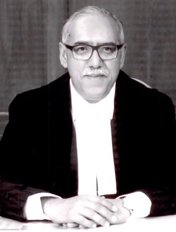
CORAM: HON’BLE MR. JUSTICE DEEPAK GUPTA
Argued by:- Mr. Rajinder Goyal, Advocate
for the appellants.
Mr. Adarsh Jain, Senior Advocate with
Mr. Johan Kumar, Advocate for
the respondent.
****
DEEPAK GUPTA, J.
Both these appeals arise out of a common judgment dated
16.01.1985 delivered by the learned Trial Court of Sub Judge, 1
st
Class Panipat,
whereby two civil suits—one ins/tuted by Smt. Parba/ and another (appellants
herein), and the other by Satbir Singh and another (respondents herein), were
decided together. The appeals preferred by respondents – Satbir Singh and an-
other were therea1er disposed of by the learned First Appellate Court of Addi-
/onal District Judge, Panipat on 21.08.1993.
2. Background Facts: The dispute concerns agricultural land measur-
RSA-1908-1993 (O&M)
RSA-1909-1993 (O&M)
ing 70 Kanal 19 Marla situated in the revenue estate of village Lahori, Tehsil Pa-
nipat. It is not in dispute that the said land belonged to Bhara son of Shadi.
3. Appellants’ case: Smt. Parba/ and Smt. Dhupli, asser/ng
themselves to be the daughters of Bhara, filed Civil Suit No. 670 of 1980 seeking
a declara/on that they were the righ<ul owners of the suit land. Their claim was
based both on natural succession as well as on a registered Will dated
18.05.1979, purportedly executed by Bhara in their favour. Alongside this claim,
they challenged a prior judgment and decree dated 25.10.1978 passed in Civil
Suit No. 483 of 1978 by the Court of the then Sub-Judge 1
st
Class, Panipat,
whereby Bhara was purported to have suffered a decree in favour of defendants
Satbir & Shamsher. According to Parba/ and Dhupli, this earlier decree had been
procured by fraud, misrepresenta/on, and undue influence, and was in any case
void for want of registra/on. Alleging that they were already in possession of
the land and that the defendants were aCemp/ng to interfere, they sought a
declara/on of ownership, and consequen/al decree of permanent injunc/on.
4. Respondents’ stand : On the other hand, respondents - Satbir &
Shamsher filed Civil Suit No. 637 of 1980 against Parba/ and Dhupli, asser/ng
that they were the owners in possession of the same parcel of land. They too
complained of interference at the hands of the opposite party and prayed for a
decree of permanent injunc/on for protec/ng their possession.
5. In their wriCen statement to the suit filed by Parba/ and Dhupli,
Satbir and Shamsher took a categorical stand that the plain/ffs were not the
daughters of Bhara and that Bhara had died issueless. They defended the decree
dated 25.10.1978 as lawful and valid, asser/ng that it reflected a family
seClement arrived at in June 1977, pursuant to which muta/on No. 1006 dated
28.11.1978 had been sanc/oned in their favour. Their stand was that once
Bhara had transferred his rights through the decree and muta/on, he was le1
with no /tle in the land, and therefore, he could not have executed the Will
dated 18.05.1979 in favour of Parba/ and Dhupli.
Page 2 of 21
RSA-1908-1993 (O&M)
RSA-1909-1993 (O&M)
6. Parba/ and Dhupli contested the suit of Satbir and Shamsher taking
similar stand, as in the plaint of their suit.
7. With consent of counsel on both sides, the Trial Court consolidated
the two suits. Consolidated issues were framed, and common evidence was
recorded in the suit filed by Parba/ and Dhupli.
8.1 Trial Court Findings: Upon a detailed appraisal of the evidence, oral
and documentary, the learned Trial Court held unequivocally that Parba/ and
Dhupli were in fact the daughters of Bhara. The Court further found that the
registered Will dated 18.05.1979 (Ex. PW1/A) had been duly proved in
accordance with law. It also held that Parba/ and Dhupli were in possession of
the suit land.
On the crucial ques/on concerning the earlier decree dated
25.10.1978, the Trial Court recorded that although allega/ons of fraud,
misrepresenta/on, and undue influence had not ul/mately been pressed by
counsel for the plain/ffs, the decree nevertheless suffered from a fundamental
legal defect, as it was compulsorily registrable under the law, and since it had
not been registered, it was invalid and non-binding upon the rights of Parba/
and Dhupli. The Court also observed that Satbir and Shamsher were strangers to
Bhara; whereas they had projected themselves as his grandsons without any
proof merely to obtain the decree on the strength of an alleged family
seClement.
8.2 In view of these findings, the Trial Court, vide a common judgment
dated 16.01.1985, decreed Civil Suit No. 670 of 1980 filed by Parba/ and Dhupli,
declaring them to be owners in possession of the suit land, and holding the
judgment and decree dated 25.10.1978 in Civil Suit No. 483 of 1978 to be null,
void, and inopera/ve against their rights. A decree of permanent injunc/on was
also granted in their favour restraining Satbir and Shamsher from interfering in
their possession. Consequently, Civil Suit No. 637 of 1980 filed by Satbir and
Shamsher was dismissed.
Page 3 of 21
RSA-1908-1993 (O&M)
RSA-1909-1993 (O&M)
9.1 Appellate Court Findings: Aggrieved by the above judgment of the
Trial Court, Satbir and another, who were the defendants in Civil Suit No. 670 of
1980, and plain/ffs in Civil Suit No. 637 of 1980, filed two separate appeals
before the First Appellate Court. Both the appeal were disposed of vide
judgment dated 21.08.1993 by the first appellate court.
9.2 While re-appraising the evidence, the First Appellate Court affirmed
the Trial Court’s finding that Parba/ and Dhupli were indeed the daughters of
Bhara. It therea1er examined the pleadings of Civil Suit No. 483 of 1978. In that
earlier suit, Satbir and Shamsher had asserted that Bhara was their grandfather,
and the learned First Appellate Court observed that since Bhara had not
disputed this asser/on in the earlier proceedings, the correctness of that
rela/onship could not be reopened in the subsequent li/ga/on. Significantly,
the First Appellate Court did not return any independent or categorical finding
as to whether Satbir and Shamsher were in fact the grandsons of Bhara.
Instead, relying solely on the pleadings of the earlier suit, it invoked the
principle laid down by a Division Bench of this Court in Gurudev Kaur and
another v. Mehar Singh and others, 1989 (2) RLR 338, as well as the judgment
in Harpal and others v. Ram Pyari and others, 1981 PLJ 492, to hold that a
Court trying a later suit cannot go behind an earlier decree and re-examine
whether that earlier decree had been passed on correct or incorrect facts.
Proceeding on this premise, the First Appellate Court treated the decree dated
25.10.1978 as binding, without adjudica/ng the founda/onal ques/on of
rela/onship between the par/es.
9.3 The Appellate Court further held that since the decree dated
25.10.1978 in the previous suit, was based upon a family seClement, therefore,
it did not require compulsory registra/on, as per Sec/on 17 of the Registra/on
Act. The Appellate Court also no/ced that before the trial Court, the counsel for
plain/ffs - Parva/ and Dhupli had not pressed the allega/ons of fraud,
misrepresenta/on or undue influence. Therefore, it was held that Parva/ and
Page 4 of 21
RSA-1908-1993 (O&M)
RSA-1909-1993 (O&M)
Dhupli were bound by the consent decree suffered by their father in favour of
Shamsher and Satbir.
9.4 Consequent to these findings, the First Appellate Court reversed
the judgments passed by the trial Court and dismissed the suit filed by Parva/ &
Dhupli; whereas the suit filed by Satbir & Shamsher, was decreed.
10. The above-said judgment dated 21.08.1993 of lear ned Addl.
District Judge, Panipat has given rise to these two appeals, both filed by Parva/
& Dhupli, i.e. plain/ffs of one suit, and the defendants of the other suit.
11.1 Conten/ons of Appellants: Assailing the judgment of first appellate
court, Learned counsel for the appellants submits that the rela/onship of
Parba/ & Dhupli with Bhara is beyond dispute, inasmuch as both Courts below
have concurrently held them to be the daughters and thus, the only natural
heirs of Bhara. Referring to the evidence on record, Ld. counsel argues that
Satbir & Shamsher are not even remotely related to Bhara. On the contrary, it
has come in evidence that one Pyara Singh, the father of one respondent, and
grandfather of the other, was engaged in li/ga/on with Bhara. In such
circumstances, Ld. counsel contends, it is inconceivable that Bhara would enter
into any seClement with the son & grandson of Pyara Singh. When members of
that family are strangers to Bhara, the very founda/on of the alleged family
seClement collapses, and no rights could possibly flow from such a claim.
11.2 It is argued further that even assuming for the sake of argument
that Bhara had, out of his free will, suffered the decree dated 25.10.1978 in fa-
vour of Satbir & Shamsher, such decree did not bind the rights of the appel-
lants. The decree, according to him, created rights in immovable property for
the first /me in favour of Satbir and Shamsher, and therefore required compuls-
ory registra/on. In support of this submission, reliance is placed on the judg-
ment of the Hon’ble Supreme Court in Bhoop Singh v. Ram Singh Major, 1995
(3) RRR 541, wherein it was held that if a compromise decree is not a bona fide
seClement of pre-exis/ng rights but is instead a device to avoid payment of
Page 5 of 21
RSA-1908-1993 (O&M)
RSA-1909-1993 (O&M)
stamp duty or to circumvent the law of registra/on, such a decree must neces-
sarily be registered to have legal effect.
11.3 Learned counsel further argues that the First Appellate Court erred
in placing reliance on the Division Bench judgment in Gurudev Kaur v. Mehar
Singh, 1989 (2) RLR 338, which, according to him, is wholly inapplicable to the
present facts. It is submiCed that the earlier decree could not have been
treated as conclusive or binding, when the very existence of any family rela/on-
ship, the founda/on of the earlier decree, stood disproved on the record.
11.4 On these premises, prayer is made for seOng aside the judgment
and decree of the First Appellate Court and restoring the well-reasoned findings
of the Trial Court.
12.1 Conten/ons of Respondents : Per contra, learned senior counsel
for the respondents–Satbir & Shamsher submits that the findings of the First
Appellate Court call for no interference. According to him, the decree dated
25.10.1978 has been found not to be the result of fraud, misrepresenta/on or
undue influence, and once that is so, the Court in the subsequent proceedings
cannot go behind the earlier decree, or the admissions made therein. He argues
that in the earlier suit, Bhara had admiCed Satbir and Shamsher to be his grand-
sons, and such admission, once acted upon by the Court, cannot be re-ex-
amined in a later suit.
12.2 However, when queried specifically by this Court, learned senior
counsel for the respondents candidly conceded that, in fact, no family
rela/onship existed between Bhara on the one hand and Satbir & Shamsher on
the other as per evidence on record, and that they were complete strangers to
him. Nonetheless, his conten/on is that because the decree was based on
consent and was not vi/ated on grounds of fraud or coercion, the correctness
of the admissions made by Bhara therein cannot be ques/oned in a later suit.
On this basis, he supports the conclusion of the First Appellate Court that
registra/on of the decree was not necessary, and that the dismissal of the suit
Page 6 of 21
RSA-1908-1993 (O&M)
RSA-1909-1993 (O&M)
filed by Parba/ & Dhupli, as well as the decree of injunc/on in favour of Satbir
and Shamsher, was jus/fied. To support this conten/on, learned senior counsel
for the respondents, has referred to Khushi Ram and others vs Nawal Singh
and others 2021 AIR (SC) 1117;
Gurcharan Singh and others v Angrez Kaur and
another (2020) AIR (SC) 2912; Mohammade Yusuf and others vs Rajkumar and
others (2020) AIR (SC) 796;
Pushpa Devi Bhagat (D) thr LR Smt. Sadhna Rai v
Rajinder Singh and others 2006 (5) SCC 566; and Sakina Sultanali Sunesara
(momin) v. Shia Imani Ismaili Momin Jamat Samaj and others (2025) INSC 570.
12.3 Learned senior counsel for the respondents further argues that the
suit filed by Parba/ & Dhupli was itself not maintainable. According to him, the
decree dated 25.10.1978 being a compromise decree under Order XXIII Rule 3
CPC, could only be challenged by way of an applica/on in the same suit, in
terms of Order XXIII Rule 3-A CPC, and therefore, an independent suit would be
barred.
12.4 With the above submissions, learned counsel prayed for dismissal
of the present appeals.
13. In reply to above conten/on, learned counsel for the appellants
submits that the decree of 1978 was not a compromise decree under Order
XXIII Rule 3 CPC at all, but rather a consent decree / decree based on admission,
passed under Order XII Rule 6 CPC. Consequently, the bar under Order XXIII
Rule 3-A CPC would not apply, and the appellants were fully en/tled to bring an
independent suit challenging the legal efficacy and binding nature of that de-
cree
.
Court’s Analysis and Findings:
14. Having considered the rival submissions and examined the record,
this Court proceeds to determine the substan/ve legal issues arising in the
maCer.
Page 7 of 21
RSA-1908-1993 (O&M)
RSA-1909-1993 (O&M)
15. Before proceeding further, some admiCed facts may be noted.
SSuit property was owned by Bhara.
SBhara had two sons, but both of them had pre-deceased him. When
Bhara expired, he le1 behind only two natural legal heirs - his daughters,
i.e., appellants Parba/ and Dhupli. Though, the respondents herein had
denied the rela/onship of Parba/ & Dhupli with Bhara to be his
daughters, but there is concurrent finding of fact in this regard by both
the Courts below that they are the daughters of Bhara. This finding has
not been refuted by Ld. Senior advocate for the respondents even before
this Court.
SThe First appellate Court has not held the finding of fact of the trial court
to the effect that Satbir and Shamsher are not related to Bhara as his
grandsons, as wrong. In fact, First Appellate Court did not return any
independent or categorical finding as to whether Satbir and Shamsher
were in fact the grandsons of Bhara. Instead, relying solely on the
pleadings of the earlier suit, it held that a Court trying a later suit cannot
go behind an earlier decree and re-examine whether that earlier decree
had been passed on correct or incorrect facts.
SAs a maCer of fact, the evidence on file clearly establish that Bhara was
not related even remotely to Shamsher and Satbir; and as has been noted
earlier, Ld. Senior advocate for the respondents candidly admiCed this
fact on specific query by this Court
SMost importantly, the judgment and decree dated 25.10.1978 passed in
civil suit No.483 of 1978 as suffered by Bhara in favour of Satbir and
Shamsher, has been found to be not based upon fraud, misrepresenta/on
or undue influence and rather, it has been found that it was suffered with
the consent of Bhara.
16. Having no/ced the undisputed factual posi/on on record, it
Page 8 of 21
RSA-1908-1993 (O&M)
RSA-1909-1993 (O&M)
becomes evident that the controversy ul/mately narrows down to a single
determina/ve ques/on as to - Whether the decree dated 25.10.1978 required
compulsory registra/on under law. If the said decree is found to be one, which
mandatorily required registra/on, then its non-registra/on would render it
ineffec/ve to convey or create any right, /tle, or interest in favour of Satbir &
Shamsher. In that event, the /tle to the property would unques/onably devolve
upon Parba/ and Dhupli, the admiCed natural heirs and daughters of Bhara,
who alone would succeed to his estate.
17. In order to consider the effect of non-registra/on of a consent
decree, Sec/ons 17(1) and 17(2)(vi) of the Registra/on Act are relevant which
are as follows:-
“17. Documents of which registra/on is compulsory.—(l) The following docu-
ments shall be registered, if the property to which they relate is situate in a dis-
trict in which, and if they have been executed on or a1er the date on which,
Act No. XVI of 1864, or the
Indian Registra/on Act, 1866, or the Indian Registra-
/on Act, 1871, or the Indian Registra/on Act, 1877, or this Act came or comes
into force, namely:—
(a) instruments of gi1 of immovable property;
(b) other non-testamentary instruments which purport or operate to
create, declare, assign, limit or ex/nguish, whether in present or in fu-
ture, any right, /tle or interest, whether vested or con/ngent, of the
value of one hundred rupees and upwards, to or in immovable property;
(c) non-testamentary instruments which acknowledge the receipt or
payment of any considera/on on account of the crea/on, declara/on,
assignment, limita/on or ex/nc/on of any such right, /tle or interest;
and
(d) leases of immovable property from year to year, or for any term ex-
ceeding one year, or reserving a yearly rent;
(e) non-testamentary instruments transferring or assigning any decree
or order of a Court or any award when such decree or order or award
purports or operates to create, declare, assign, limit or ex/nguish,
Page 9 of 21
RSA-1908-1993 (O&M)
RSA-1909-1993 (O&M)
whether in present or in future, any right, /tle or interest, whether ves-
ted or con/ngent, of the value of one hundred rupees and upwards, to
or in immovable property:
Provided that the State Government may, by order published in the Offi-
cial GazeCe, exempt from the opera/on of this sub-sec/on any lease executed
in any district, or part of a district, the terms granted by which do not exceed
five years and the annual rents reserved by which do not exceed fi1y rupees.
XXXXXXXXXXXXXXXXXX
(2) Nothing in clauses (b) and (c) of sub- sec/on (1) applies to—
(vi) any decree or order of a Court except a decree or order expressed to be
made on a compromise and comprising immovable property other than that
which is the subject-maCer of the suit or proceeding; or
XXXXXXXXXXXXXXXX”
18. The above provisions came to be considered by Hon’ble Supreme
Court in Bhoop Singh Vs. Ram Singh Major (supra), and it was held as under:
16. We have to view the reach of clause (vi), which is an excep/on to sub-
sec/on (1), bearing all the aforesaid in mind. We would think that the excep/on
engra1ed is meant to cover that decree or order of a court, including a decree
or order expressed to be made on a compromise, which declares the pre-
exis/ng right and does not by itself create new right, /tle or interest in
thabnbry in immovable property of the value of Rs.100/- or upwards. Any other
view would find the mischief of avoidance of registra/on, which requires
payment of stamp duty, embedded in the decree or order.
17. It would, therefore, be the duty of the court to examine in each case
whether the par/es have pre-exis/ng right to the immovable property, or
whether under the order or decree of the court one party having right, /tle or
interest therein agreed or suffered to ex/nguish the same and created right,
/tle or interest in preasen/ in immovable property of the value of Rs.100/- or
upwards in favour of other party for the first /me, either by compromise or
presented consent. If laCer be the posi/on, the document is compulsorily
Page 10 of 21
RSA-1908-1993 (O&M)
RSA-1909-1993 (O&M)
registerable.
18. The legal posi/on qua clause (vi) can, on the basis of the aforesaid
discussion, be summarised as below :
(1) Compromise decree if bona fide, in the sense that the compromise is not a
device to obviate payment of stamp duty and frustrate the law rela/ng to
registra/on, would not require registra/on. In a converse situa/on, it would
require registra/on.
(2) If the compromise decree were to create for the first /me right, /tle or
interest in immovable property of the value of Rs.100/- or upwards in favour of
any party to the suit, the decree or order would require registra/on.
(3) If the decree were not to aCract any of the clauses of sub-sec/on (1) of
sec/on 17, as was the posi/on in the aforesaid Privy Council and this Court's
cases, it is apparent that the decree would not require registra/on.
(4) If the decree were not to embody the terms of compromise, as was the
posi/on in Lahore case, benefit from the terms of compromise cannot be
derived, even if a suit were to be disposed of because of the compromise in
ques/on.
(5) If the property dealt with by the decree be not the "subject maCer of the
suit or proceeding", clause (vi) of sub-sec/on (2) would not operate, because of
the amendment of this clause by Act 21 of 1929, which has its origin in the
aforesaid decision of the Privy Council, according to which the original clause
would have been aCracted, even if it were to encompass property not
li/gated.“
19. In
Mohammade Yusuf and others Vs. Rajkumar and others
(supra), Hon’ble Supreme Court again had the occasion to interpret Sec/on 17,
wherein Bhoop Singh’s case was also referred. It was held as under:
“6. A compromise decree passed by a Court would ordinarily be covered
by
Sec/on 17(1)(b) but sub-sec/on (2) of Sec/on 17 provides for an excep/on
for any decree or order of a court except a decree or order expressed to be
Page 11 of 21
RSA-1908-1993 (O&M)
RSA-1909-1993 (O&M)
made on a compromise and comprising immovable property other than that
which is the subject-maCer of the suit or proceeding. Thus, by virtue of sub-
sec/on (2)(vi) of
Sec/on 17 any decree or order of a court does not require re-
gistra/on. In sub-clause (vi) of sub-sec/on (2), one category is excepted from
sub-clause (vi), i.e., a decree or order expressed to be made on a compromise
and comprising immovable property other than that which is the subject-mat-
ter of the suit or proceeding. Thus, by conjointly reading Sec/on 17(1) (b)
and Sec/on 17(2)(vi), it is clear that a compromise decree comprising immov-
able property other than which is the subject-maCer of the suit or proceeding
requires registra/on, although any decree or order of a court is exempted from
registra/on by virtue of Sec/on 17(2) (vi)……….”
20. Similar views have been expressed by Hon’ble Supreme Court in
Khushi Ram vs Nawal Singh (supra); and Gurbachan Singh’s case (supra).
21. A careful reading of Sec/ons 17(1) and 17(2)(vi) of the Registra/on
Act makes it apparent that, as a general rule, every non-testamentary instru-
ment which purports to create, declare, assign, limit, or ex/nguish a right or in-
terest in immovable property of the value of one hundred rupees or above re-
quires compulsory registra/on. At the same /me, the statute carves out a lim-
ited excep/on by providing that a decree or order of a Court ordinarily does not
require registra/on, unless it is a decree made on a compromise and comprises
immovable property, which was not the subject-maCer of the suit. This is the
statutory backdrop against which the Supreme Court has repeatedly examined
the effect of compromise and consent decrees.
22. In Bhoop Singh v. Ram Singh Major, the Supreme Court undertook
a detailed analysis of this excep/on and held that the exemp/on from registra-
/on is not absolute. The Court explained that the excep/on contained in Sec-
/on 17(2)(vi) is intended to apply only to those decrees which merely recognise
or record a pre-exis/ng right. If, however, the so-called compromise or consent
decree were to create, for the first /me, a new right, /tle, or interest in immov-
able property in favour of a party who previously had no such right, the docu-
Page 12 of 21
RSA-1908-1993 (O&M)
RSA-1909-1993 (O&M)
ment would fall squarely within Sec/on 17(1)(b) and must be compulsorily re-
gistered. The Supreme Court warned that any contrary view would encourage
par/es to use compromise decrees as a device to avoid payment of stamp duty
and defeat the law of registra/on. The Court thus held that it is the duty of
every court to examine in each case whether the decree merely records an ex-
is/ng right, in which case registra/on is not required, or whether it ex/nguishes
one party’s right and creates a new right in another, in which case registra/on
becomes mandatory.
23. This principle was further elaborated in Mohammad Yusuf v. Ra-
jkumar, where the Supreme Court reaffirmed Bhoop Singh and clarified the
scope of the statutory excep/on. The Court held that, generally, decrees,
whether on compromise or otherwise, do not require registra/on provided they
relate to the subject-maCer of the suit. However, if a compromise decree deals
with immovable property that is not the subject of the suit, or if the decree cre-
ates new substan/ve rights in property for the first /me, then the protec/on of
Sec/on 17(2)(vi) is not available, and such a decree must be registered. The Su-
preme Court reiterated that the exemp/on under Sec/on 17(2)(vi) cannot be
interpreted so broadly as to permit the crea/on of /tle through an unregistered
decree where the statute mandates registra/on.
24. Thus, the pivotal inquiry is whether the decree acknowledges an
exis/ng right or creates a fresh right. Where it is the laCer, registra/on is indis-
pensable; and a decree that ought to have been registered but is not, is legally
ineffectual to transfer or create /tle. In short, a compromise or consent decree
can avoid registra/on only when it reflects a genuine adjustment of pre-exis/ng
rights between the par/es. Where the decree cons/tutes a fresh grant of /tle
or is used to circumvent the statutory requirements of stamp duty and registra-
/on, the law insists upon compulsory registra/on, failing which the decree con-
fers no enforceable rights.
25. Applying the above legal posi/on to facts of present case, it is
Page 13 of 21
RSA-1908-1993 (O&M)
RSA-1909-1993 (O&M)
undisputed that decree dated 25.10.1978 is with regard to same immovable
property, which is the subject maCer of suit; and not any other property, as
referred to in Sec/on 17 (2) (vi) of the Registra/on Act.
However, in the factual
matrix of the present case, this Court is of the firm view that the decree dated
25.10.1978, on which the en/re claim of Satbir & Shamsher rests, was
compulsorily registrable. It is for the reason that no pre-exis/ng right in their
favour existed, as they were uCer strangers to Bhara and so, there could be no
ques/on of any family seClement between them. The decree did not merely
record a seClement of antecedent rights and rather, it was a clear device to
create rights in immovable property for the first /me by avoiding stamp duty
and registra/on, in favour of persons having no lawful claim prior thereto. In
such circumstances, the ra/o of Bhoop Singh v. Ram Singh Major, 1995 (3) RRR
541 squarely applies, rendering the unregistered decree incompetent to divest
Bhara of his ownership.
26. The law is well-seCled that where a compromise or consent decree
creates rights in immovable property in favour of a person, who did not
previously possess them, such decree must be compulsorily registered. The
authorita/ve pronouncement of the Hon’ble Supreme Court in Bhoop Singh v.
Ram Singh Major, supra reiterates that where the compromise decree is not
merely declaratory of pre-exis/ng rights but travels beyond and creates fresh
rights for the first /me, it aCracts Sec/on 17 of the Registra/on Act. The
Supreme Court further cau/oned that Courts must look beyond the label of
“compromise decree” to ensure that decrees are not used as a device to avoid
stamp duty and registra/on.
27. This Court has carefully considered the judgments relied upon by
learned senior counsel for the respondents, namely Khushi Ram v. Nawal
Singh; Gurcharan Singh v. Angrej Kaur; Mohammad Yusuf v. Rajkumar;
Pushpa Devi Bhagat v. Rajinder Singh; and Sakina Sultan Ali Sunesara v. Shia
Imani Ismaili Memmi Jamat Samaj. However, all of them are dis/ngishable
Page 14 of 21
RSA-1908-1993 (O&M)
RSA-1909-1993 (O&M)
from the facts of present case.
28.1 In Khushi Ram (supra), Smt. Jagno, the widow of Sher Singh was
the owner of ½ share in the property dispute. She suffered a consent decree in
favour of her nephews, i.e. brother's sons in 1991. That decree was challenged
by the nephews of her husband to be null, illegal and void on the ground that no
family seClement could take place and further, the decree required registra/on
and in the absence of registra/on, the decree did not create any right in favour
of nephews of Smt. Jagno. The trial Court, the First Appellate Court as well as
the High Court dismissed the suit. Hon’ble Supreme Court also dismissed the
appeal. Thus, the Supreme Court dealt with a genuine family seClement among
members of a joint family concerning pre-exis/ng rights in ancestral property.
The decree passed on the basis of such a seClement merely recorded
recogni/on of exis/ng claims and did not create new rights in strangers.
28.2 On the issue of rela/onship, Hon’ble Supreme Court held that heirs
of father of female are included as person, who can possibly succeed, and
therefore, it cannot be said that they were strangers and not members of the
family qua the female. As such, nephews of Smt. Jagno were held to be not the
strangers to the family and as such, it was held that decree did not require
registra/on. For holding so, Hon’ble Supreme Court also referred to Ram
Charan Das v. Girjanandini Devi and others, 1965(3) SCR 841, besides Kale and
ors. v. Deputy Director of Consolida/on and ors. (1976) 3 SCC 119.
28.3 However, in the present case, Satbir & Shamsher are admiCedly
strangers to Bhara. There was no pre-exis/ng right, no family rela/onship, and
so, there could be no family seClement of any kind. The decree of 1978 did not
acknowledge antecedent rights but purported to create /tle in favour of non-
family members for the first /me, thereby aCrac/ng compulsory registra/on
under Bhoop Singh. Thus, Khushi Ram has no applica/on.
Page 15 of 21
RSA-1908-1993 (O&M)
RSA-1909-1993 (O&M)
29. Similarly, the issue in Gurcharan Singh (supra) concerned the effect
of a valid family arrangement recorded through a compromise decree. The
Supreme Court emphasized the sanc/ty and binding effect of genuine family
seClements amongst related members designed to maintain peace and
harmony. However, here in the present case, there is no family arrangement at
all. The very asser/on of family rela/onship between Bhara and the
respondents stands disproved and even conceded as false before this Court. A
decree based on a fic//ous family rela/onship cannot be placed on the same
pedestal as a bona fide compromise among family members. Therefore, the
ra/o of Gurcharan Singh is wholly inapplicable.
30. In Mohammade Yusuf’s case, the Supreme Court dealt with the
circumstances under which a consent decree can be challenged and the limited
scope of a collateral aCack on such decrees, par/cularly where the compromise
is lawful and the consent is unequivocal. However, in present case, decree of
1978 is not a mere consent decree but one that creates new rights in
immovable property in favour of strangers. Such a decree aCracts mandatory
registra/on under Sec/on 17 of the Registra/on Act. A decree that is void for
want of registra/on is a nullity, and its invalidity can be declared even
collaterally. The bar on collateral aCack does not apply to void decrees. Hence,
Mohammad Yusuf offers no assistance.
31. In Sakina Sultan’s case, the Supreme Court examined the doctrine
that a consent decree is binding where the consent is free and the decree does
not violate any statutory provision. The case reaffirmed that courts must respect
compromise arrangements that reflect lawful seClements. However, the present
decree violates Sec/on 17 of the Registra/on Act, which mandates registra/on
of instruments crea/ng rights in immovable property. The decree also proceeds
on the false premise that the respondents were grandsons of Bhara. A decree
obtained on the basis of false founda/onal facts and crea/ng fresh rights in
strangers cannot be equated with a lawful compromise upheld in Sakina Sultan.
Page 16 of 21
RSA-1908-1993 (O&M)
RSA-1909-1993 (O&M)
Moreover, a decree contrary to mandatory statutory requirements is a nullity,
and consent cannot breathe life into it.
32. The First Appellate Court placed strong reliance upon the Division
Bench judgment in Gurudev Kaur and another v. Mehar Singh and others, 1989
(2) RLR 338, to hold that a subsequent Court cannot look behind an earlier
decree to determine whether it was passed on right or wrong facts. This
reliance, however, was wholly misplaced. In Gurudev Kaur’s case, the par/es
were closely related, and the earlier decree was a bona fide arrangement
recognising pre-exis/ng family rights. The principle that a later Court cannot go
behind an earlier consent decree assumes that the founda/onal facts in the
earlier decree are true, lawful, and not suspect. However, in the present case,
Satbir and Shamsher are strangers to Bhara, a fact now unequivocally admiCed;
there could be no family seClement amongst strangers; the decree conferred
ownership for the first /me; and the decree itself was void for want of
registra/on.
33. Once the very founda/on of the earlier decree is shown to be false,
the later Court is not bound to treat it as sacrosanct. The First Appellate Court,
therefore, erred in invoking Gurudev Kaur (supra) and in reversing the well-
reasoned findings of the Trial Court.
34. A plea has been raised by the respondents that the suit filed by
Parba/ & Dhupli was barred by Order XXIII Rule 3-A CPC, which prohibits a
separate suit to set aside a compromise decree. This submission fails on a
fundamental premise.
35. The decree of 1978 was not a compromise decree under Order
XXIII Rule 3 CPC. It was passed on the basis of admission by Bhara in his wriCen
statement, and the decree itself was drawn under Order XII Rule 6 CPC, which
provides for a judgment on admissions. A consent decree based on admissions
Page 17 of 21
RSA-1908-1993 (O&M)
RSA-1909-1993 (O&M)
is dis/nct from a compromise decree founded on a lawful agreement between
par/es.
36. The case of Pushpa Devi Bhagat v. Rajinder Singh (supra) is the
leading authority on the effect of Order XXIII Rule 3-A CPC, holding that a
compromise decree cannot be challenged through a separate suit and that the
proper remedy is to approach the same court which recorded the compromise.
37. The said decision in Pushpa Devi v. Rajinder Singh (supra) was
rendered on an en/rely different factual matrix. In that case, the landlord had
ins/tuted a suit for evic/on of the tenant. During the proceedings, the par/es
arrived at a compromise, whereby the tenant agreed to vacate the premises by
a specified date. The compromise was not reduced into a wriCen instrument;
instead, the statements of counsel for both par/es were recorded on oath, and
on the basis of those statements, a consent decree came to be passed. The
Hon’ble Supreme Court held that such a decree cons/tuted a valid compromise
decree under Order XXIII Rule 3 CPC, and the mere fact that the compromise
was not embodied in a formal wriCen instrument did not detract from its valid-
ity. The Court further held that, in view of the bar contained in Rule 3-A of Or-
der XXIII, no independent suit would lie to set aside such a compromise decree
on the ground that the compromise was unlawful. A consent decree, the Su-
preme Court observed, operates as an estoppel and remains binding on the
par/es unless and un/l it is set aside by the very Court that passed it, upon an
applica/on filed under the proviso to Order XXIII Rule 3 CPC. Thus, the only
remedy available to a party seeking to avoid a consent decree is to approach
the Court which recorded the compromise and to establish before that Court
that no lawful compromise had, in fact, been arrived at. It is that Court alone,
which is competent to examine and decide whether the compromise was validly
entered into or not.
38. The facts of present case are compeletly dis/nguishable. Here, the
decree dated 25.10.1978 in the present case was not a compromise decree
Page 18 of 21
RSA-1908-1993 (O&M)
RSA-1909-1993 (O&M)
under Order XXIII Rule 3 CPC. It was passed under Order XII Rule 6 CPC based on
admissions. Consequently, the bar of Order XXIII Rule 3-A does not apply.
Further, the decree is void for want of registra/on; and a void decree can always
be ques/oned in an independent suit. Therefore, Pushpa Devi Bhagat is of no
help to advance the plea of respondents Satbir & Shamsher.
39. Once the nature of the decree is correctly iden/fied, the bar under
Order XXIII Rule 3-A has no applica/on. A decree passed on admissions may be
challenged in an independent suit, par/cularly where it is a nullity for want of
registra/on, as in the present case. The maintainability of the suit filed by the
appellants thus stands affirmed.
40. Applying the principle of Bhoop Singh to the facts before this Court
leaves no manner of doubt that the 1978 decree was compulsorily registrable. It
was not the recogni/on of an antecedent right but a conferral of ownership
upon complete strangers to the family. Not being registered, it could not legally
divest Bhara of his /tle, nor could it prevent him from execu/ng the subsequent
Will in favour of Parba/ and Dhupli. The Trial Court was, therefore, en/rely
correct in holding that the decree dated 25.10.1978 was null and void for want
of registra/on.
41. Once the decree of 1978 is held to be a nullity for want of registra-
/on, it necessarily follows that Bhara con/nued to remain the owner of the suit
land /ll his death. The registered Will dated 18.05.1979, duly proved on record,
validly conferred the property upon his daughters Parba/ and Dhupli. The Trial
Court rightly upheld their rights and found them to be owners in possession.
42. Despite repe//on, it may be noted that in the present case, it is in-
deed correct that the decree dated 25.10.1978 could not be proved to have
been obtained through fraud, misrepresenta/on, or undue influence. On the
contrary, the evidence demonstrates that Bhara voluntarily suffered the decree
in favour of Satbir and Shamsher. However, what stands equally established
Page 19 of 21
RSA-1908-1993 (O&M)
RSA-1909-1993 (O&M)
and has been fairly conceded by learned senior counsel for the respondents is
that Satbir and Shamsher bore no rela/onship whatsoever with Bhara. They
were not his heirs, not his descendants, nor even remotely connected to his
family. In such circumstances, the very founda/on of any alleged seClement
between Bhara on the one hand, and Satbir & Shamsher on the other simply
does not exist.
43. Once it is accepted that there was no familial rela/onship between
the par/es, the conclusion becomes inescapable that the decree dated
25.10.1978 was not a bona fide family arrangement, but a device employed to
confer fresh rights in immovable property upon strangers without adhering to
the mandatory requirements of the Registra/on Act. As held by the Hon’ble Su-
preme Court in Bhoop Singh v. Ram Singh Major, a decree which, under the
guise of a compromise, creates new rights in immovable property in favour of
persons having no antecedent /tle or lawful claim, must be compulsorily re-
gistered. Its non-registra/on renders it legally ineffec/ve.
44. Support for this principle is also found in the celebrated judgment
of the three-Judge Bench of the Hon’ble Supreme Court in Kale & Ors. v.
Deputy Director of Consolida/on & Ors. (1976) 3 SCC 119, wherein the Court
emphasised that a family seClement must be a bona fide arrangement intended
to resolve genuine family disputes among members who possess some ante-
cedent /tle, claim, or even a possible claim to the property. Only then can such
arrangements be upheld. In the present case, since Satbir and Shamsher had no
antecedent claim, no /tle, and no rela/onship with Bhara, the very concept of a
family seClement is wholly alien. No bona fide family arrangement, even no-
/onally, could come into existence.
45. Conclusion: In view of these circumstances, this Court has no hesit-
a/on in holding that the First Appellate Court commiCed a grave error in con-
cluding that the decree dated 25.10.1978 did not require registra/on. The Trial
Court, on the other hand, correctly appreciated the legal posi/on and rightly
Page 20 of 21
RSA-1908-1993 (O&M)
RSA-1909-1993 (O&M)
held that the said decree required compulsory registra/on and, in its absence,
could not confer any right upon Satbir and Shamsher.
46. Consequently, the findings and decree of the First Appellate Court
cannot be sustained and are accordingly set aside. The judgment and decree
passed by the Trial Court are hereby restored. As a result, both the appeals
stand allowed. The civil suit ins/tuted by appellants Parba/ and Dhupli is de-
creed, while the suit for permanent injunc/on filed by Satbir and Shamsher is
dismissed. Both the appeals are disposed of in these terms.
Photocopy of this order be placed on the connected case file.
(DEEPAK GUPTA)
JUDGE
27.11.2025
:bby-aRMj bGa
Whether speaking/reasoned? Yes
Whether reportable? Yes
Page 21 of 21

 Login with google
Legal Notes
Add a Note....