
As per case facts, the petitioner challenged the validity of the first proviso to Section 38 of the Travancore-Cochin Medical Practitioners Act, 1953, and associated notifications. This proviso allowed the ...
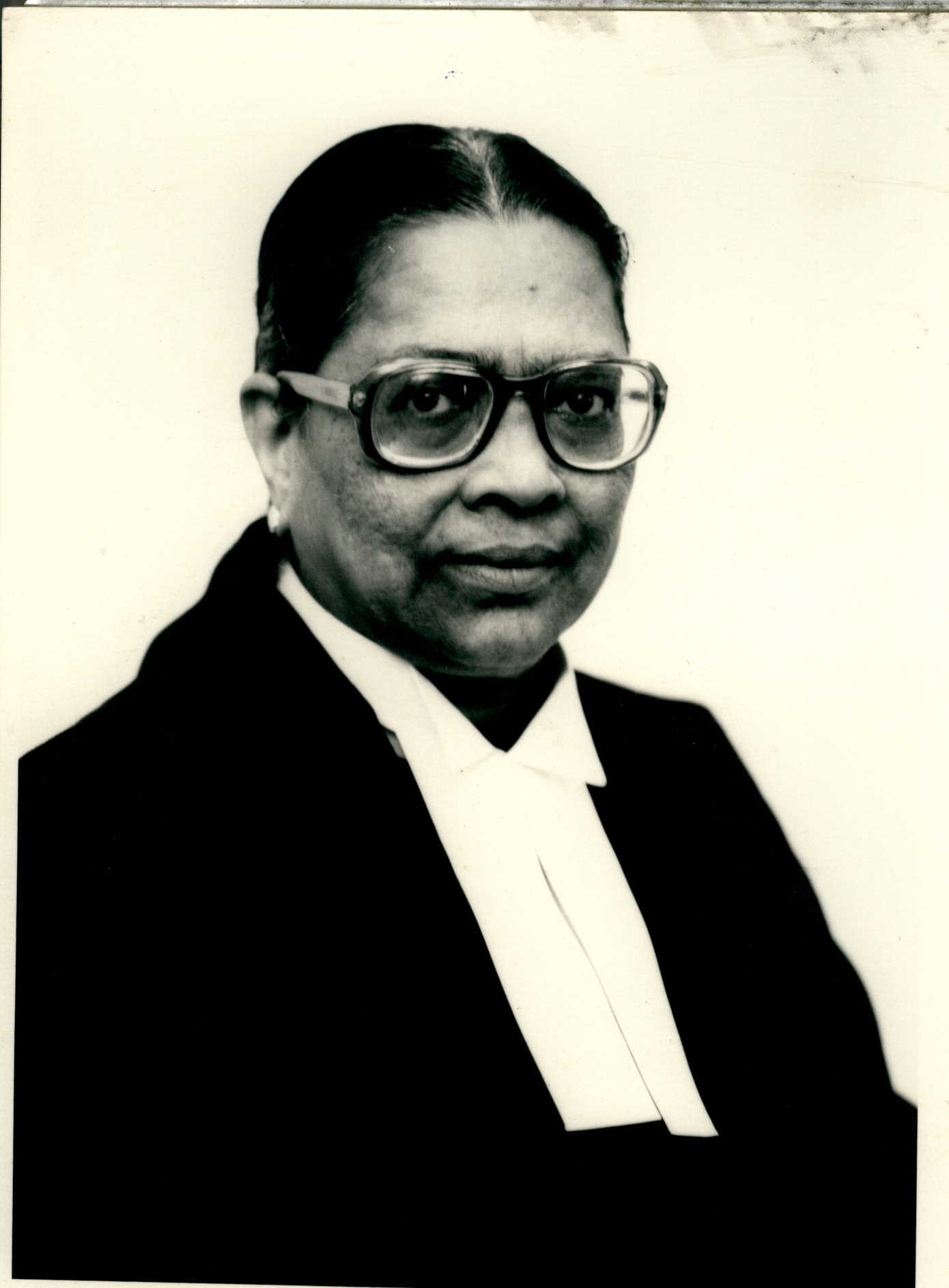
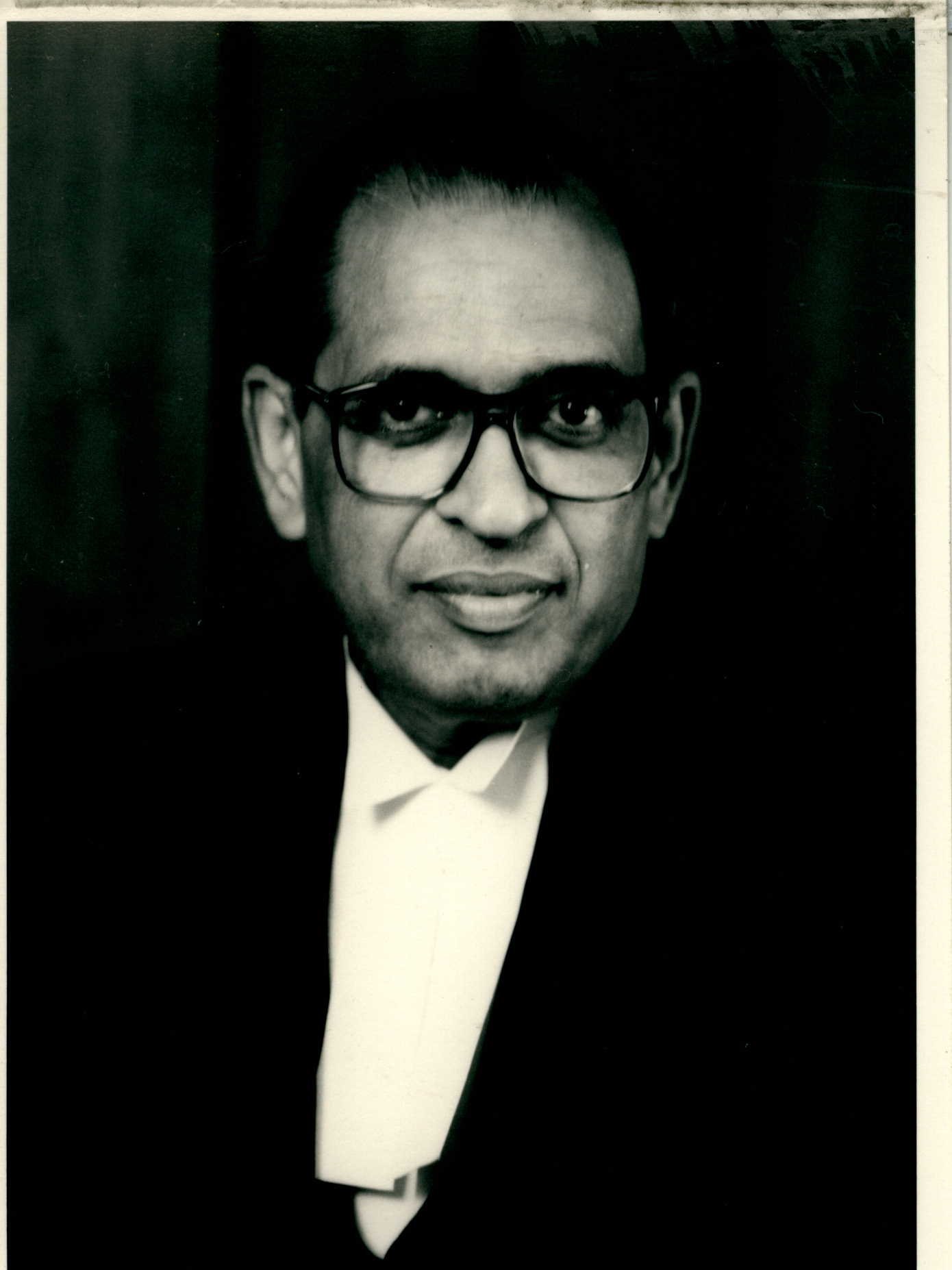
No Acts & Articles mentioned in this case
http://JUDIS.NIC.IN SUPREME COURT OF INDIA Page 1 of 12
PETITIONER:
DR. A.K. SABHAPATHY
Vs.
RESPONDENT:
STATE OF KERALA AND ORS.
DATE OF JUDGMENT22/04/1992
BENCH:
AGRAWAL, S.C. (J)
BENCH:
AGRAWAL, S.C. (J)
FATHIMA BEEVI, M. (J)
CITATION:
1992 AIR 1310 1992 SCR (2) 653
1992 SCC Supl. (3) 147 JT 1992 (3) 66
1992 SCALE (1)843
ACT:
Constitution of India, 1950: Article 254-Seventh
Schedule-List-III-Entry 26-Medical Profession-Central Law-
State law-Test for determination of Repugnancy-What is-
Conditions necessary for applicability of Article 254 dis-
cussed.
Doctrine of occupied filed.
Travancore-Cochin Medical Practitioners Act, 1953:
Section 38-First proviso-Medical Practitioner-Practice in
allopathic system of medicine-Qualifications and conditions
for registration-Power of Government to grant exemption
from-First proviso, to the extent it relates to allopathic
system of medicine, held inconsistent with and repugnant to
sections 15 and 21 of the Indian Medical Council Act, 1956.
Indian Medical Council Act, 1956: Section 2 (f)-
Expression "Modern scientific medicine" refers to allopathic
system of medicine-Object of the Act explained.
HEADNOTE:
Section 38 of the Travancore-Cochin Medical
Practitioners' Act, 1953 provides that no person other than
a registered medical practitioner or a practitioner whose
name is entered in the list published under section 30 or in
the list published under Section 25 shall practise modern
medicine, homoepathic medicine, ayurvedic medicine, siddha
medicine or unani tibbi medicine. It further provides that
no person who is not a registered practitioner of any such
medicine shall practise any other medicine unless he is also
registered practitioner of that medicine. First proviso to
the said section empowers the State Government to grant
exemption from the application of the section by publishing
a Notification in the official gazette. In exercise of the
power conferred by the said proviso the Government of Kerala
issued a notification dated May 4, 1977 directing that
Section 38 shall not aply to persons holding degree and
diploma from Kerala University in Integrated Medicine (DAM)
for practising
654
modern medicine in the State. By an order dated September
28, 1978 Government of Kerala also ordered that the Diploma
in Medicine and Surgery (DMS) awarded by Government of Bihar
http://JUDIS.NIC.IN SUPREME COURT OF INDIA Page 2 of 12
will be held at par with the integrated DAM of Kerala Uni-
versity and by its notification dated April 13, 1981 the
Government directed that section 38 shall not apply to
holders of DMS awarded by Government of Bihar.
The appellant challenged the validity of first proviso
to section 38 and the Notifications dated May 4, 1977 and
April 13, 1981 issued there-under as well as the order dated
28th September 1978 on the ground that the first proviso to
Section 38 of the Travancore-Cochin Medical Practitioners'
Act, 1953, a State Act, was void under Article 254 of the
Constitution because it was repugnant to and inconsistent
with section 15 of the Indian Medical Council Act, 1956, a
Central Act.
The High Court of Kerala did not go into the validity
of notification dated May 4, 1977 but it upheld the validity
of the first rpoviso and the order dated September 28, 1978
as well as the notification dated April 13, 1981 by holding
(a) that the Central Act does not lay down any qualification
for registration and all that section 15 says is that a
person whose name is not seen in the State register shall
not practise medicine; (b) the proviso to section 38 does
not in terms say that a person whose name is not on the
rolls of the State register in one system can practise
another system and it only exempts practitioners who want to
practise one system without being in the concerned list from
the operation of section 38; (c) that neither the Central
Act nor the State Act contains any provision which prohibits
a person possessing the requisite qualification to practise
two systems from getting enrolled on two State rolls and a
practitioner can be a registered practitioner in two regis-
ters and the Central Act does not place an embargo on a
State from recognising qualifications for the purpose of two
systems; (d) that the definition of medicine contained in
section 2(f) of the Central Act would not involve both
Homoepathic and indigenous system of medicine and that the
Central ACt concern itself only with the allopathic medicine
and the modern system contemplated by it is the allopathic
medicine. Against the judgment of the Kerala High Court
appeal was filed in this court.
Allowing the appeal in part, this court,
655
HELD: 1. In order that Article 254(1) of the Constitution
may apply, two conditions must be fulfilled. Firstly,
provisions of the Provincial law and those of the Central
legislation must both be in respect of a matter which is
enumerated in the Concurrent List, and secondly, they must
be repugnant to each other. It is only when both these
reguirements are satisfied that the Provincial law will, to
the extent of the repugnancy, become void. [661 B-C]
A. S. Krishna v. State of Madras, [1957] SCR 399,
Hoechst Pharmaceuticals Ltd. and Anr. etc. v. State of Bihar
and Ors., [1983] 3 SCR 130, referred to.
2. In the instant case the Central Act as well as the
State Act are both laws made in respect of the medical
profession which is a matter relating to Entry 26 of the
Concurrent List. The field of operation of the State Act
covers all the systems of medicine, namely, allopathic,
ayurvedic, siddha, unani and homoepathic systems of
medicine. Moreover it deals with recognition of
qualifications required for registration of a person as a
medical practitioner in these systems, conditions for
registration of medical practitioners and maintenance of
register of practitioners for each system and constitution
of separate councils for modern medicine homeopathic
medicine and indigenous medicine. [661 E, 665 C-D]
http://JUDIS.NIC.IN SUPREME COURT OF INDIA Page 3 of 12
As compared to the State ACt, the field of operation of
the Central Act is restricted and it is confined in its
application to modern scientific medicine, namely, the
allopathic system of medicine only, wherein also it deals
with recognition of medical qualifications which may entitle
a person to be registered as a medical practitioner, consti-
tution of the Medical Council of India to advise the Central
Government in the matter of recognition or withdrawal of
recognition of medical qualifications, to prescribe the
minimum standards of medical education required for granting
recognised medical qualifications by Universities or medical
institutions in India and to appoint inspectors and visitors
for inspection of any medical institution, college or hospi-
tal. But the Central Act does not deal with the registra-
tion of medical practitioners in the States and it proceeds
on the basis that the said registration and the maintenance
of State Medical Register is to be governed by the law made
by the State. It cannot, therefore, be said that the Central
Act lays down an exhaustive code in respect of the subject
matter dealt with by the State ACt. [665 E-H]
656
2.1 However it can be said that the Central Act and the
State Act, to a limited extent occupy the same field, viz,
recognition of medical qualifications which are required for
a person to be registered as a medical practitioner in the
allopathic system of medicine. Both the enactments make
provision for recognition of such qualifications granted by
the Universities or medical institutions. [665 H, 666 A]
Deep Chand v. State of Uttar Pradesh and Ors., [1959]
suppl. 2 SCR 8, relied on.
M. Karunanidhi v. Union of India, [1979] 3SCR 254,
referred to.
3. The High Court erred in holding that the Central ACt
does not lay down the qualifications for registration of a
medical practitioner. The provisions of the Central Act
contemplate that a person can practise in allopathic system
of medicine in a state or in the country only if he
possesses a recognised medical qualification. Permitting a
person who does not possess the recognised medical
qualification in the allopathic system of medicine would be
in direct conflict with the provisions of the Central Act.
[668 A, 668 C]
4. The first proviso to Section 38 of the Travancore-
Cochin Medical Practitioners' Act, 1953 in so far as it
empowers the State Government to permit a person to practise
allopathic system of medicine even though he does not pos-
sess the recognised medical qualifications for that system
of medicine is inconsistent with the provisions of Sections
15 and 21 read with Sections 11-14 of the Central Act. The
said proviso suffers from the vice of repugnancy in so far
as it covers persons who want to practise the Allopathic
system of medicine and is void to the extent of such repug-
nancy. Practitioners in allopathic system of medicine must,
therefore, be excluded from the scope of the first proviso
and it must be confined in its application to systems of
medicines other than the Allopathic system of medicine.
[668 C-E]
4.1. The notification dated April 13, 1981, issued
under the first proviso to Section 38, which enables holders
of DMS diploma to practise modern medicine cannot be upheld
and is set aside. However the order dated September 20,
1978 treating the DMS diploma awarded by Government of Bihar
at par with Integrated DAM of the University of Kerala for
the purpose of continuing in profession only has not been
issued under the
http://JUDIS.NIC.IN SUPREME COURT OF INDIA Page 4 of 12
657
first proviso to Section 38 of the State Act and it does not
entitle the holders of DMS diploma to get themselves regis-
tered as medical practitioner in modern medicine and prac-
tise modern medicine. Consequently, it does not suffer from
the same infirmity as the notification dated April 13, 1981.
[668 G-H, 669 A-B]
JUDGMENT:
CIVIL APPELLATE JURISDICTION : Civil Appeal No. 3847 of
1983.
From the Judgment dated 14.10.1982 of the Kerala High
court in O.P. No.3064 of 1981 C.
M.A. Firoz for the Appellant.
J. Ramamurthy, T.T. Kunhikannan, R. Mohan, M.K.
Namboodry and K.R. Nambiar [N.P.] for the Respondents.
The Judgment of the Court was delivered by
S. C. AGRAWAL, J. This appeal by special leave is
directed against the judgment of the High Court of Kerala
dated October 14, 1982. It raises the question relating to
the validity of the first proviso to Section 38 of the
Tranvancore-Cochin Medical Practitioners' Act, 1953
(hereinafter referred to as 'the State Act') and the order
dated September 28, 1978 and notification dated April 13,
1981 issued by the Government of Kerala.
Section 38 of the State Act reads as under:
"38. Persons not registered under this Act etc.
not to practise:- No person other than (i) a
registered practitioner or (ii) a practitioner
whose name is entered in the list of practitioners
published under Section 30 or (iii) a practitioner
whose name is entered in the list mentioned in
Section 25 shall practise or hold himself out,
whether directly or by implication as practising
modern medicine, homoepathic medicine, or
ayurvedic medicine, siddha medicine or such
medicine shall practise any other medicine unless
he is also a registered practitioner of that
medicine:
Provided that the Government may, by notification
in the Gazette direct that this section shall not
apply to any person
658
or class of persons or to any specified area in the
State where none of the three classes of
practitioners mentioned above carries on medical
practice;
Provided further that this section shall not
apply to practitioner eligible for registration
under this Act who, after having filed the appli-
cation for registration, is awaiting the decision
of the appropriate council or of the Government in
case of appeal.
Provided also that this section shall not apply
to a practitioner eligible for registration under
this Act until the period prescribed for
applications under Section 23 expires".
The University of Kerala awards a degree as well as a
diploma in Integrated Medicine known as DAM. By notification
dated May 4, 1977 issued by the Government of Kerala under
the first proviso to Section 38, it was directed that
Section 38 of the Act shall not apply to the degree holders
of DAM and diploma holders of DAM in practising modern
http://JUDIS.NIC.IN SUPREME COURT OF INDIA Page 5 of 12
medicine in the State. The Government of Bihar through the
Bihar State Board of Homoepathic Medicine awards a Diploma
in Medicine and Surgery called DMS. By order dated September
28, 1978, the Government of Kerala ordered that the said
diploma (DMS) awarded by the Government of Bihar will be
held in par with the integrated DAM of Kerala University for
purpose of continuing in the profession only. The holders of
DMS approached the Government with a request to issue of
notification similar to notification dated May 4, 1977 to
enable them to practise Modern Medicine. The said request
was earlier rejected by the Government but ultimately it was
acceded and a notification dated April 13, 1981 was issued
by the Government of Kerala in exercise of the power con-
ferred by the first proviso to Section 38 of the State ACt
whereby it was directed that Section 38 shall not apply to
holders of the DMS awarded by the Government of Bihar. The
aforesaid notifications dated May 4, 1977 and April 13, 1981
and order dated September 28, 1978 were challenged by the
appellant before the High Court of Kerala by filing a Writ
Petition under Article 226 of the Constitution. In the said
Writ Petition it was submitted by the appellant that after
the enactment of the Indian Medical Council Act, 1956
(hereinafter referred to as `the Central Act'), by Parlia-
ment the first proviso to Section 38 of the State Act, being
repugnant and inconsistent with the provisions of Section 15
of the Central Act, has been rendered
659
void and ineffective and the impugned notifications having
been issued in exercise of the power conferred by the said
proviso are also void and ineffective. The validity of the
first proviso to Section 38 of the State Act was also
challenged by the appellant on the ground that it does not
contain any guidelines for exercise of the power conferred
on the State Government and since it confers arbitrary power
on the State Government it is violative of the provisions of
Article 14 of the Constitution.
The said Writ Petition was contested by the State
Government. On behalf of the State Government it was
submitted that since DAM of Kerala University had been
permitted practice of modern medicine, the Government did
not see any reason why the holders of DMS of Bihar Govern-
ment should not practice and that the order dated September
28, 1978 was passed by the Government after consultation
with the University of Kerala and the Director of Indigenous
Systems of Medicine and that due consideration was given by
the Government to the allopathic subjects taught in the
Bihar DMS course. As regards the notification dated May 4,
1977 relating to DAM diploma holders and DAM diploma holders
of Kerala University, it was submitted that the challenge
was highly belated.
The High Court did not go into the validity of
notification dated May 4, 1977 relating to DAM degree hold-
ers and DAM diploma holders for the reason that no one who
would be affected by the invalidation of the said notifica-
tion was before the Court and in absence of any such person
being impleaded as a party to the Writ Petition, it was
neither permissible nor lawful for the Court to adjudicate
upon the said question. While considering the validity of
the other two notifications relating to DMS Diploma holders
of Bihar, the High Court examined the provisions of the
first proviso to Section 38 in the light of the provisions
contained in Section 15 of the Central Act. The High Court
rejected the contention urged on behalf of the State Govern-
ment that the definition of medicine contained in Section
2(f) of the Central Act would take in both Homoepathic and
http://JUDIS.NIC.IN SUPREME COURT OF INDIA Page 6 of 12
indigenous systems of medicine and held that the Central Act
concerns itself with the allopathic medicine and the modern
system that is contemplated by it is the allopathic medi-
cine. After examining the enactments the High Court has
observed that the State Act and the Central Act are both
covered by Entry 26 in List III of the schedule VII to the
Constitution. The High Court, therefore, considered the
question whether the first proviso to Section 38 of the
State Act was repugnant to Section 15 of the
660
Central Act in the light of the provisions contained in
Article 254 of the Constitution. The High Court has held
that the Central Act does not lay down any qualification for
registration and all that Section 15 says is that a person
whose name is not seen in the State register shall not
practise medicine. The High Court has also pointed out that
the proviso to Section 38 does not in terms say that a
person whose name is not on the rolls of the State register
in one system can practise another system. According to the
High Court the proviso only exempts practitioners who want
to practice one system without being in the concerned list
from the operation of Section 38. The High Court was of the
view that neither the Central Act nor the State Act contains
any provision which prohibits a person who satisfies the
authorities that he possesses the requisite qualification to
practise two systems from getting enrolled on two State
rolls and a practitioner can be a registered practitioner in
two registers and the Central Act does not place an embargo
on a State from recognising qualifications for the purpose
of two systems, due regard being given to the course of
study and subjects taught, for such qualification and if
that is possible, nothing prevents a State Government from
permitting a practitioner to be on two rolls. Although the
High Court found some repugnancy between the Central Act and
the State Act, it was of the view that the repugnancy was
not one that was absolutely irreconcilable. The High Court
negatived the challenge to the validity of the first proviso
to Section 38 of the State Act on the ground to violation of
Article 14 on the view that the power conferred by the
proviso vests in the State Government which is a sufficient
safeguard against arbitrary exercise of power. Since the
validity of the first proviso, Section 38 of the State Act
was upheld the notification dated April 13, 1981 issued
under the said proviso was also upheld as valid by the High
Court.
The appellant is assailing the validity of the first
proviso to Section 38 of the State Act on the ground of
repugnancy under Article 254 (1) of the Constitution which
provides as under:
"254. Inconsistency between laws made by
Parliament and laws made by the Legislatures of
States -(1) if any provision of a law made by the
Legislature of a state is repugnant to any provi-
sion of a law made by Parliament which Parliament
is competent to enact, or to any provision of an
existing law with respect of one of the matters
enumerated in the Concurrent
661
List, then, subject to the provisions of clause
(2), the law made by Parliament, ,whether passed
before or after the law made by the Legislature of
such State, or, as the case may be, the existing
law, shall prevail and the law made by the
Legislature of the State shall, to the extent of
the repugnancy, be void".
http://JUDIS.NIC.IN SUPREME COURT OF INDIA Page 7 of 12
In order that Article 254(1) may apply, two conditions
must be fulfilled:
"(1) The provisions of the Provincial law and
those of the Central legislation must both be in
respect of a matter which is enumerated in the
Concurrent List, and (2) they must be repugnant
to each other. It is only when both these
requirements are satisfied that the Provincial law
will, to the extent of the repugnancy, become
void".
A.S. Krishna v. State of Madras, [1957] SCR 399
Hoechst Pharmaceuticals Ltd. & Another etc. v.
State of Bihar & Others, [1983] 3 SCR 130.
In the instant case the Central Act as well as the
State Act are both laws made in respect of the medical
profession which is a matter relating to Entry 26 of the
Concurrent List. The question is : Are the provisions of the
first proviso to Section 38 of the State Act repugnant to
any provision of the Central Act? This question will have to
be answered by applying the tests of repugnancy laid down by
this Court. In Deep Chand v. The State of Uttar Pradesh and
Ors., [1959] Suppl. 2 SCR 8, this Court has laid down that
repugnancy between two statutes may be ascertained on the
bases of the following principles:
(1) Whether there is direct conflict between the
two provisions;
(2) Whether Parliament intended to lay down an
exhaustive code in respect of the subject matter
replacing the Act of the State Legislature; and
(3) Whether the law made by Parliament and the law
made by the State Legislature occupy the same
field". (P.43)
662
After considering the various decisions construing the
provisions of Article 254 this Court in M. Karunanidhi v.
Union of India, [1979] 3 SCR 254, the Court laid down
following propositions:
"1. That in order to decide the question of
repugnancy it must be shown that the two
enactments contain inconsistent and irreconcilable
provisions, so that they cannot stand together or
operate in the same field.
2. That there can be no repeal by implication
unless the inconsistency appears on the fact of
the two statutes.
3. That where the two statutes occupy a particular
field, there is room or possibility of both the
statutes operating in the same field without
coming into collision with each other, no
repugnancy results.
4. That where there is no inconsistency but a
statute occupying the same field seeks to create
distinct and separate offences, no question of
repugnancy arises and both the statutes continue
to operate in the same field". [P.278]
Keeping in view these principles, we will examine the
provisions of the State Act and the Central Act to ascertain
the field of operation of the two enactments.
As indicated in the Preamble the State Act is a law
relating to medical practitioners generally in the State of
Travancore-Cochin (now Kerala) and it has been enacted to
regulate the qualifications and to provide for the
registration of the practitioners of modern medicine, homoe-
pathic medicine and indigenous medicine with a view to
encourage the spread of such medicines. In Clause (f) the
http://JUDIS.NIC.IN SUPREME COURT OF INDIA Page 8 of 12
expression "modern medicine" is defined to mean the allo-
pathic system of medicine. Clause (g) of Section 2 defines
"practitioner" to mean any person ordinarily engaged in the
practice of modern medicine or homoeopathic medicine or
indigenous medicine as the case may be. The expression
"qualified practitioner" has been defined in clause (i) to
mean a qualification enumerated in the Schedule. The expres-
sion "registered practitioner" has been defined in Clause
(i) of Section 2 to mean a practitioner whose name is for
the time being entered in a register. Under Clause (k),
"register" means the
663
Register of practitioners maintained under this Act. Section
3 makes provisions for establishment, incorporation and
constitution of Council of Modern Medicine, the Council of
Homoeopathic Medicine and the Counsel of Indigenous Medi-
cine. Section 19 provides for appointment of a Registrar for
each council and under Section 20(1) it is the duty of the
Registrar to keep the registers. Section 20(2) lays down
that there shall be separate registers for modern medicine,
homoeopathic medicine, ayurvedic medicine, siddha medicine
and unani-tibbi medicine. Section 23 lays down the condi-
tions of eligibility for registration of a practitioner and
every holder of a recognised qualification is eligible.
Sections 28 and 29 make provision for removal of the name of
a person from the register of practitioners. Section 31(1)
imposes a prohibition that no registered practitioner, other
than a qualified registered practitioner who has not under-
gone a course of practical training in surgery or obstetrics
under modern medicine to the satisfaction of that appropri-
ate council, shall practise surgery or obstetrics. Section
47 empowers the State Government to alter the list of recog-
nised qualifications mentioned in the Schedule to the Act on
the basis of the report of the appropriate Council. It would
thus be seen that the State Act governs the practitioners in
the various systems of medicine prevalent in the State by
establishing separate councils for each system to regulate
the registration of such practitioners and also by prescrib-
ing the qualifications which shall be recognised for such
registration.
The Central Act has been enacted to provide for the
reconstitution of the Medical Council of India and the
maintenance of medical register for India and for matters
connected therewith. The expression "medicine" is defined in
Clause (f) of Section 2 to mean modern scientific medicine
in all its branches including surgery and obstetrics but
excluding veterinary medicine and surgery. In Clause (h) the
expression "recognised medical qualification" has been
defined to mean any of the medical qualifications included
in the Schedules. "State Medical Council" has been defined
in Clause (j) to mean a medical council constituted under
any law for the time being in force in any state regulating
the registration of practitioners of medicine. Clause (k)
defines "State Medical Register" to mean a register
maintained under any law for the time being in force in any
State regulating registration of practitioners of medicine.
Section 3 provides for the constitution of the Medical
Council of India Sections 11 to 14 deal with recognition of
medical qualifications granted by universities or medical
664
institutions in India as well as by medical institutions
outside India. Section 15 enables a person possessing the
medical qualifications included in the Schedule to be
enrolled on any State Medical Register and it prohibits a
person other than a medical practitioner enrolled on a
http://JUDIS.NIC.IN SUPREME COURT OF INDIA Page 9 of 12
State Medical Register to practise medicine in any State.
Section 16 prescribes that every university or medical
institution in India which grants recognised medical
qualification shall furnish such information as the Indian
Medical Council may from time to time require as to the
course of study and examinations to be undergone in order to
obtain such qualification, as to the ages at which such
course of study and examinations are required to be
undergone and such qualification is conferred and generally
as to the requisites for obtaining such qualification.
Section 17 provides for the appointment of medical
inspectors for inspection of any medical institution,
college, hospital or other institution where medical
education is given. Under Section 18 the Medical Council of
India has been empowered to appoint visitors to inspect any
medical institution, college hospital or other institution
where medical education is given or attend any examination
held by any university or medical institution for the
purpose of granting recognised medical qualification.
Section 19 provides for withdrawal of recognition of a
medical qualification by the Central Government on the basis
of the representation by the Medical Council. Section 19-A
empowers the Medical Council of India to prescribe the
minimum standards for medical education required for
granting recognised medical qualifications by the
universities or medical institutions in India. Section 20-A
empowers the Medical Council of India to prescribe the
standards of professional conduct and etiquette and a code
of ethics for medical practitioners. Section 21 makes
provision for maintaining a register of medical practition-
ers known as the Indian Medical Register, which shall con-
tain the names of all persons who are for the time being
enrolled on any State Medical Register and who possess any
of the recognised medical qualifications. Section 34(1)
provides for removal of the name of a person from the India
Medical Register if his name has been removed from the State
Medical Register in pursuance of any power conferred by or
under any law relating to registration of medical practi-
tioners for the time being in force in any state. Section 27
provides that every person whose name is for the time being
borne on the Indian Medical Register shall be entitled
according to his qualification to practise as a medical
practitioner in any part of India.
665
The High Court, in our opinion, has rightly held that
the expression 'modern scientific medicine' in Section 2(f)
of the Central Act refers to the Allopathic system of medi-
cine and that the provisions of the Central Act have been
made in relation to medical practitioners practising the
said system. This view finds support from the fact that
after the enactment of the Central Act, Parliament has
enacted the Indian Medicine Central Council Act, 1970 in
relation to the system of Indian medicine commonly known as
Ayurveda, Siddha and Unani and the Homeopathy Central Coun-
cil Act, 1973 in relation to homoepathic system of medicine
wherin provisions similar to those contained in the Central
Act have been made in relation to the said systems of medi-
cine.
From the provisions of the State Act, noticed earlier,
it is evident that the field of operation of the State Act
covers all the systems of medicine, namely, allopathic,
ayurvedic, siddha, unani and homoepathic system of medicine.
Moreover the State Act deals with recognition of
qualifications required for registration of a person as a
medical practitioner in these systems, conditions for
http://JUDIS.NIC.IN SUPREME COURT OF INDIA Page 10 of 12
registration of medical practitioners and maintenance of
register of practitioners for each system and the
constitution of separate councils for modern medicine,
homoepathic medicine and indigenous medicine. As compared to
the State Act, the field of operation of the Central Act is
restricted and it is confined in its application to modern
scientific medicine, namely, the allopathic system of
medicine only, wherein also it deals with recognition of
medical qualifications which may entitle a person to be
registered as a medical practitioner, constitution of the
Medical Council of India to advise the Central Government in
the matter of recognition or withdrawal of recognition of
medical qualifications, to prescribe the minimum standards
of medical education required for granting recognised medi-
cal qualifications by universities or medical institutions
in India and to appoint inspectors and visitors for inspec-
tion of any medical institution, college or hospital. It
also provides for maintaining the Indian Medical Register
and for enrolment of a person possessing recognised medical
qualification in the said register and for removal of a
person from the said register. The Central Act does not deal
with the registration of medical practitioners in the States
and it proceeds on the basis that the said registration and
the maintenance of State Medical Register is to be governed
by the law made by the State. It cannot, therefore, be said
that the Central Act lays down an exhaustive code in respect
of the subject matter dealt with by the State Act. It can,
however,
666
be said that the Central Act and the State Act, to a limited
extent occupy the same field, viz., recognition of medical
qualifications which are required for a person to be
registered as a medical practitioner in the allopathic
system of medicine. Both the enactments make provision for
recognition of such qualifications granted by the
universities or medical institutions. The third test of
repugnancy laid down in Deep Chand's case (supra) is,
therefore, satisfied. Since the grievance of the appellant
is confined to the first proviso to section 38 of the State
Act, we would examine whether the provisions of the First
Proviso to Section 38 of the state Act, are inconsistent
with any of the provisions of the central Act and whether it
is possible to reconcile the provisions of the First Proviso
to Section 38 of the State Act with the provisions of the
Central Act. The main part of Section 38 prohibits a person
other than those mentioned in the three categories specified
therein, namely, (i) a registered practitioner or (ii) a
practitioner whose name is entered in the list published
under Section 30 or (iii) a practitioner whose name is
entered in the list published under Section 25 to practise
or to hold himself out, Whether by directly or by implica-
tion, as practising modern medicine, homoepathic medicine,
ayurvedic medicine, siddha medicine or unani-tibbi medicine
and it further lays down that no person who is not a regis-
tered practitioner of such medicine shall practice any other
medicine unless he is also a registered practitioner in that
medicine. In other words, the main part of Section 38 in-
sists upon compliance with the requirements of the provi-
sions of the State Act prescribing the conditions for regis-
tration as a medical practitioner which includes holding a
recognised qualification, i.e., a qualification enumerated
in the schedule to the State Act, in respect of a particular
system of medicine in which he wishes to practise. The first
proviso to Section 38 enables the State Government to dis-
pense with the requirements of the main part of Section 38
http://JUDIS.NIC.IN SUPREME COURT OF INDIA Page 11 of 12
in relation to any person or class of persons or in relation
to any specified area in the State where none of the three
classes of practitioners mentioned above carries on medical
practice. As a result a person can be permitted to practise
as a medical practitioner even though he does not possess
the recognised qualifications which are necessary for a
person to be registered as a medical practitioner in a
particular system of medicine. This provision in so far as
it relates to the allopathic system of medicine, runs con-
trary to the provisions of the Central Act. Under S.11(1) of
the Central Act Medical qualifications granted by any uni-
versity or medical institution in India which are included
in the First
667
Schedule of the said Act alone are the recognised medical
qualifications and under Section 11(2) a medical qualifica-
tion granted by any university or medical institution in
India which is not included in the First Schedule can be
included in the said Schedule by the Central Government by a
notification in the Official Gazette after consulting the
Medical Council of India. Similar provisions are contained
in Section 12 in relation to medical qualifications granted
by medical institutions outside India in connection with
which there is a scheme of reciprocity which qualifications
are included in the Second Schedule and Section 13 relating
to medical qualifications granted by medical institutions in
India or outside India which are included in Part I and II
of the Third Schedule. Section 14 contains a special provi-
sion empowering the Central Government after consultation
with the Medical Council of India to give recognition to
medical qualifications granted by medical institutions in
any country outside India in respect of which a scheme of
reciprocity for the recognition of such medical qualifica-
tion is not in force. Section 15(1) entitles a person having
recognised medical qualification under the Act to be en-
rolled in any state medical register. Under sub-s.(2) of
section 15 no person other than a medical practitioner
enrolled on a State medical register shall practise medicine
in any State. The object underlying these provisions in the
Central Act is that a person possessing a recognised medical
qualification alone is entitled to be registered as a medi-
cal practitioner and it is the Central Government alone
which can declare a particular medical qualification as a
recognised medical qualification in accordance with the
provisions contained in Section 11 to 14 of the Act. More-
over the Central Act, in Section 19-A, empowers the Medical
Council of India to prescribe the minimum standards of
medical education required for granting recognised medical
qualifications by universities or medical institutions in
India. Section 16, 17 and 18 confer powers on the Medical
Council of India to keep an eye on the imparting of medical
education by the universities and medical institutions in
India and to appoint inspectors and visitors for that pur-
pose. Section 19 enables the Central Government to withdraw
the recognition to a medical qualification on the basis of
the representation by the Medical Council of India. These
provisions indicate that in enacting the Central Act the
intention of Parliament was to ensure that only persons
having adequate knowledge of the allopathic system of medi-
cine are able to practise medical profession.
668
We are, therefore, unable to agree with the view of the
High Court that the Central Act does not lay down the
qualifications for registration of a medical practitioner.
We may in this context refer to sub-s.(1) of Section 15
http://JUDIS.NIC.IN SUPREME COURT OF INDIA Page 12 of 12
which postulates the holding of a recognised medical quali-
fication by a person for being registered in the State
Medical Register so as to entitle to practise modern scien-
tific medicine in the state and sub-s.(1) of Section 21
which provides that the Indian Medical Register that is
required to be maintained by the Medical Council of India
shall contain the name of persons who are for the time being
enrolled in the State Medical Register and who possess any
of the recognised medical qualifications. These provisions
contemplate that a person can practise in allopathic system
of medicine in a state or in the country only if he possess-
es a recognised medical qualification. Permitting a person
who does not possess the recognised medical qualification in
the allopathic system of medicine would be in direct con-
flict with the provisions of the Central Act. We are, there-
fore, of the view that the first proviso to Section 38 of
the State Act in so far as it empowers the State Government
to permit a person to practise allopathic system of medicine
even though he does not possess the recognised medical
qualifications for that system of medicine is inconsistent
with the provisions of Section 15 & 21 read with Sections
11- 14 of the Central Act. The said proviso suffers from the
vice of repugnancy in so far as it covers persons who want
to practice the Allopathic system of medicine and is void
to the extent of such repugnancy. Practitioners in allopath-
ic system of medicine must, therefore, be excluded from the
scope of the first proviso and it must be confined in its
application to systems of medicines other than the Allopath-
ic system of medicine. We, however, wish to make it clear
that we have not considered the impact of the provisions
contained in the Indian medicine Central Council Act, 1970
and the Homoeopathy Central Council Act, 1973 on the provi-
sions of the said proviso to Section 38 of the State Act.
The notification dated April 13, 1981 has been issued
under the first proviso to Section 38 and in express terms
it enables holders of DMS diploma of Government of Bihar to
practise modern medicine in the State of Kerala and makes
them eligible for registration as practitioners in modern
medicine. Since the scope of the first proviso has been
restricted to exclude the system of modern medicine, the
said notification cannot be
669
upheld and must be set aside. The same, however, cannot be
said with regard to Order dated September 20, 1978 whereby
the DMS diploma awarded by Government of Bihar is to be
treated at par with Integrated DAM of the University of
Kerala for the purpose of continuing in profession only. The
said order has not been issued under the first proviso to
Section 38 of the State Act and it cannot be said that it
entitles the holders of DMS diploma to get themselves
registered as medical practitioners in modern medicine and
practise modern medicine. The said order dated September 20,
1978, does not suffer from the same infirmity as the notifi-
cation dated April 13, 1981.
In the result, the appeal is partly allowed. The
judgment and order of the High Court of Kerala dated October
14, 1982 is set aside and the Writ Petition filed by the
appellant is allowed to the extent that the notification
(Ex.P8) dated April 13, 1981 is quashed. No order as to
costs.
T.N.A Appeal partly allowed
The landmark Supreme Court judgment in Dr. A.K. Sabhapathy vs. State of Kerala addresses critical questions surrounding Medical Council Act Repugnancy and State Medical Practitioner Laws. This significant ruling, available on CaseOn, provides essential clarity on the interplay between central and state legislation governing medical practice in India, particularly regarding qualification recognition and the right to practice various systems of medicine.
This appeal challenged a judgment from the High Court of Kerala concerning the validity of a proviso in the Travancore-Cochin Medical Practitioners' Act, 1953 (the State Act), and associated notifications. The core contention revolved around whether the State Act's provisions allowing certain practitioners to practice 'modern medicine' were inconsistent with the Indian Medical Council Act, 1956 (the Central Act).
The primary issue before the Supreme Court was:
The Court relied on several key legal principles and statutory provisions:
Article 254(1) of the Constitution dictates that if a state law is repugnant to a central law concerning a matter in the Concurrent List, the central law shall prevail, and the state law shall be void to the extent of the repugnancy. For this to apply, two conditions must be met:
The Supreme Court reiterated tests established in previous judgments like Deep Chand v. State of Uttar Pradesh and M. Karunanidhi v. Union of India:
The Supreme Court meticulously analyzed the provisions of both the Central and State Acts in light of the repugnancy tests:
Both the Central Act and the State Act relate to the 'medical profession,' which falls under Entry 26 of the Concurrent List in the Seventh Schedule of the Constitution. Thus, the first condition for Article 254(1) applicability was met.
The Court disagreed with the High Court's finding that there was no irreconcilable repugnancy. The High Court had erroneously held that the Central Act did not lay down qualifications for registration or that it allowed for practice in multiple systems. The Supreme Court clarified:
While discussing such complex legal intersections, CaseOn.in's 2-minute audio briefs prove invaluable. Legal professionals often leverage these concise summaries to quickly grasp the nuances of specific rulings and how they impact the evolving legal landscape, especially in areas like medical regulations.
The Supreme Court partly allowed the appeal, overturning the High Court's judgment on the validity of the first proviso to Section 38 of the Travancore-Cochin Medical Practitioners' Act, 1953, in part. The Court held that:
The original judgment delves into the constitutional doctrine of repugnancy under Article 254, specifically examining how the Travancore-Cochin Medical Practitioners' Act, 1953, conflicts with the Indian Medical Council Act, 1956. It scrutinizes Section 38 of the State Act, which allows the state government to grant exemptions for practicing various medical systems, including modern medicine. The Supreme Court meticulously compares the scope and intent of both central and state legislations, concluding that the state's power to permit the practice of allopathic medicine without centrally recognized qualifications is unconstitutional. The decision differentiates between notifications allowing new practice and orders facilitating continuation of existing practice.
This judgment is a crucial read for legal professionals and students for several reasons:
All information provided in this article is for informational purposes only and does not constitute legal advice. While efforts have been made to ensure accuracy, readers are advised to consult with a qualified legal professional for advice on specific legal issues.

 Login with google
Legal Notes
Add a Note....