
As per case facts, multiple petitioners and appellants challenged various service rules in Rajasthan regarding the cut-off date for determining the maximum age of candidates for direct recruitment. Specifically, the ...

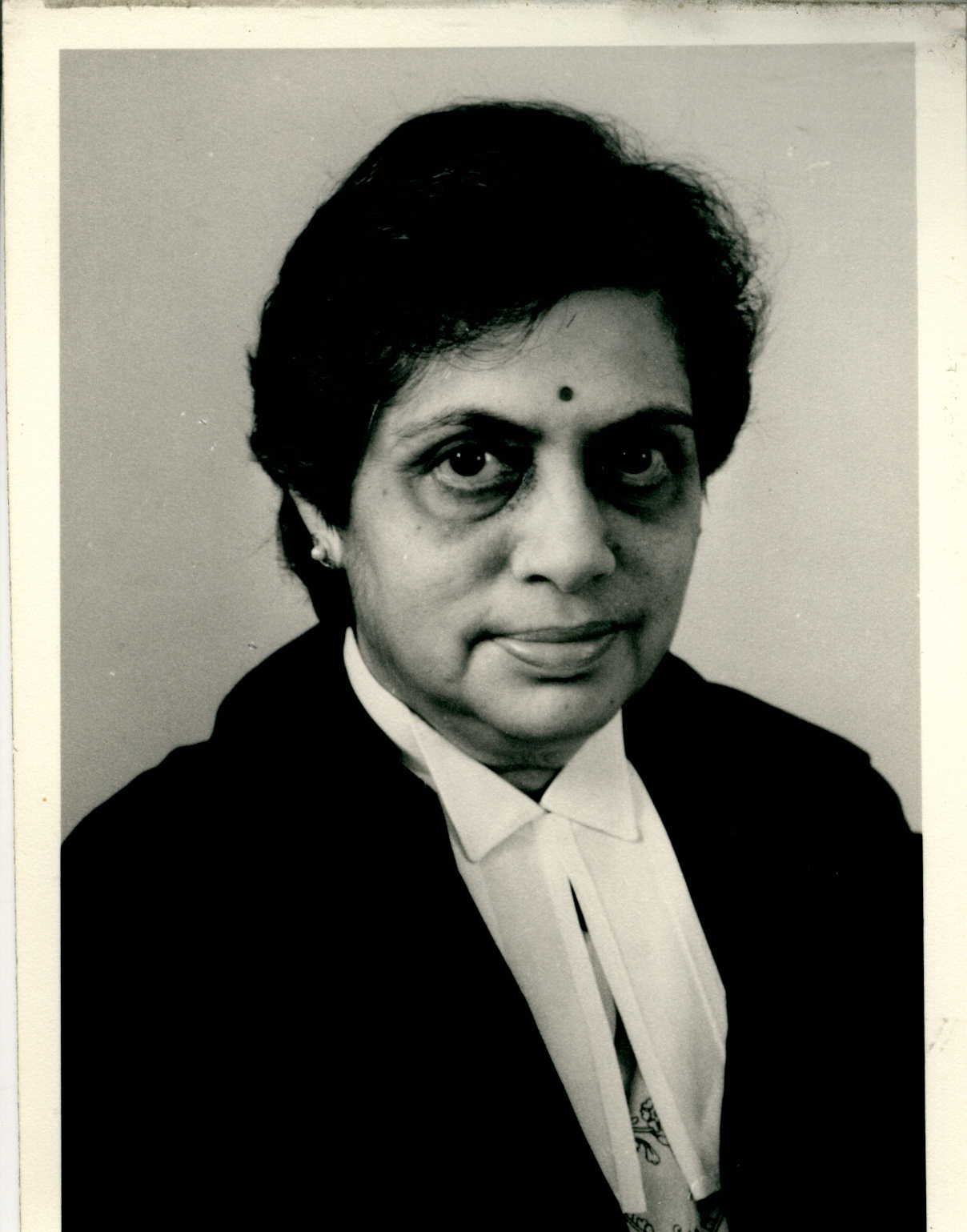
No Acts & Articles mentioned in this case
http://JUDIS.NIC.IN SUPREME COURT OF INDIA Page 1 of 7
PETITIONER:
DR. AMI LAL BHAT
Vs.
RESPONDENT:
STATE OF RAJASTHAN & ORS.
DATE OF JUDGMENT: 08/07/1997
BENCH:
SUJATA V. MANOHAR, V. N. KHARE
ACT:
HEADNOTE:
JUDGMENT:
(With C.A.Nos. 3920-22/1992, 6129/1994, 3423-25/1995,
C.A.Nos 4298 to 4301 of 1997 (Arising out of SLP (C)
Nos.8730/95, 10659/95, 10251/95) and C.A.Nos. 6297/95,
93/95)
J U D G M E N T
MRS. SUJATA V. MANOHAR, J.
Leave granted.
In all these appeals the common question which arises
for consideration is whether a Rule-making Authority can fix
a cut off date with reference to the calender year for
determining the maximum age of a candidate who is to be
considered for direct recruitment to a service under the
State. The petitions and appeals before us deal with
different Rules of service in the State to Rajasthan
pertaining to various services under the State. Some of the
Rules which are under challenge before us are the Rajasthan
Medical Services (Collegiate Branch) Rules. 1962. Rajasthan
Panchayat Samiti and Zila parisad Service Rules Rajasthan
Class IV Services (Recruitment and other service conditions,
Rules, 1963, and Rajasthan Educational Subordinate Service
Rules. 1971. All these Rules provide that the cut off date
for deciding the maximum age prescribed for a candidate for
appointment will be the 1st day of January following the
date of application. The affected candidates who are before
us contend that such a cut off date which is uniformly fixed
under all the Service Rules of the State of Rajasthan, is
arbitrary or unreasonable and must be struck down.
For the sake of convenience we are citing Rule 11(1) of
the Rajasthan Medical Services (Collegiate Branch) Rules,
1962 which came up for consideration in a writ petition
filed by Dr. Rajeev Mathur before the Rajasthan High Court.
The Rajasthan High Court held that the portion of Rule 11
which prescribes determination of the maximum age with
reference to 1st of January following the last date fixed
for receipt of applications, was arbitrary and unreasonable
and struck it down. The appeal before us from this judgment
and order is Civil appeal No. 2691/91 which is filed by the
candidate who was 2nd in the order of merit for that
particular selection. Rule 11(1) provides as follows:-
"11(1):- A candidate for direct
http://JUDIS.NIC.IN SUPREME COURT OF INDIA Page 2 of 7
recruitment to a junior post
enumerated in Part C of the
Schedule must not have attained the
age of 35 years on the first day of
January following the last date
fixed for receipt of applications.
Provided:
(1) That the upper age limit
mentioned in sub-rule (1) and (2)
above, may be relaxed by 5 years in
exceptional cases by Government in
consultation with the Commission."
The High Court held that the words "the first day of
January following" in Rule 11(1) must be deleted.
Is such a cut off date fixed by the Rules applicable to
the relevant service, arbitrary? It has been urged before
us by the petitioners and/or appellants that the cut off
date of 1st of January following the last date fixed for
receipt of applications is arbitrary. The cut off date
should only be fixed with reference to the last date of
making the application in question. It is submitted before
us that the date of 1st of January has no nexus with the
application in question and, therefore, must be struck down.
This contention, in our view, is not sustainable. In
the first place the fixing of a cut off date for determining
the maximum of minimum of minimum age prescribed for a post
of not, per se, arbitrary. Basically, the fixing of a cut
off date for determining the maximum or minimum age required
for a post, is in the discretion of the Rule-making
Authority or the employer as the case may be. One must
accept that such a cut off date cannot be fixed with an
mathematical precision and in such a manner as would avoid
hardship in all conceivable cases. As soon as a cut off date
is fixed there will be some persons who fall on the right
side of the cut off date and some persons who will fall on
the wrong side of the cut off date. That cannot make the
cut off date, per se, arbitrary unless the cut off date is
so wide off the mark as to make it wholly unreasonable.
This view was expressed by this court i n Union of India and
another etc. V. M/s. Parameswaran Match Works etc. (AIR 1974
S.C. 2349) and has been reiterated in subsequent cases. In
the cases of A.P. Public Service Commission, Hyderabad and
another v. . Sharat Chandra and Ors. (1990 2 SCC 669) the
relevant service rule stipulated that the candidate should
not have completed the age of 26 years on the 1st day of
July of the year in which the selection is made. Such a cut
off date was challenged. This Court considered the various
steps required in the process of selection and said, "when
such are the different steps in the process of selection the
minimum age of suitability of a candidate for appointment
cannot be allowed to depend upon any fluctuating or
uncertain date. If the final stage of selection is delayed
and more often it happens for various reasons, the
candidates who are eligible on the date of application may
find themselves eliminated at the final stage for no fault
of theirs. The date to attain the minimum or maximum age
must, therefore, be specific and determinate as on a
particular date for candidates to appl and for the
recruiting agency to scrutinise the applications". This
Court, therefore, held that in order to avoid uncertainly in
respect of minimum or maximum age of a candidate. Which may
arise if such an age is linked to the process of selection
which may taken an uncertain time, it is desirable that such
a cut off date should be with reference to a fixed date.
Therefore, fixing in independent cut off date, far from
http://JUDIS.NIC.IN SUPREME COURT OF INDIA Page 3 of 7
being arbitrary, makes for certainty in determining the
maximum age.
In the case of Union of India and Anr. v. Sudhir Kumar
Jaiswal (1994 4 SCC 212) the date for determining the age of
eligibility was fixed at 1st of August of the year in which
the examination was to be held. At the time when this cut
off date was fixed, here used to be only one examination for
recruitment. Later on, a preliminary examination was also
introduced. Yet the cut off date was not modified. The
Tribunal held that after the introduction of the preliminary
examination the cut off date had become arbitrary.
Negativing this view of the Tribunal and allowing the
appeal. This Court Cited with approval the decision of this
Court in Parmeshwar Match Works case (supra) and said that
fixing of the cut off date can be considered as arbitrary
only if it can be looked upon as so capricious or whimsical
as to invite judicial interference. Unless the date is
grossly unreasonable, the court wold be reluctant to strike
down such a cut off date.
In the present case, the cut off date has been fixed by
the State of Rajasthan under its Rules relating to various
services with reference to the 1st of January following the
year in which the applications are invited. All service
Rules are uniform on this point. Looking to the various
dates on which different departments and different heads of
administration may issue their advertisements for
recruitment, a uniform cut off date has been fixed in
respect of all such advertisements as 1st January of the
year following. This is to make for certainty. Such a
uniform date prescribed under all service Rules and
Regulations makes it easier for the prospective candidates
to understand their eligibility for applying for the post in
question. Such a date is not so wide off the mark as to be
construed as grossly unreasonable or arbitrary. The time
gap between the advertisement and the cut off date is less
than a year. It takes into account the fact that after the
advertisement, time has to be allowed for receipt of
applications, for their scrutiny, for calling candidates for
interview, for preparing a panel of selected candidates and
for actual appointment. The cut off date, therefore, cannot
be considered as unreasonable. It was, however, strenuously
urged before us that the only acceptable cut off date is the
last date for receipt of applications under a given
advertisement. Undoubtedly, this can be a possible cut off
date. But there is no basis for urging that this is the
only reasonable cut off date. Even such a date is liable to
question in given circumstances. In the first place, making
a cut off date dependent on the last date for receiving
applications, makes it more subject to vagaries of the
department concerned, making it dependant on the date when
each department issues an advertisement, and the date which
each department concerned fixes as the last date for
receiving applications. A person who may fail on the wrong
side of such a cut off date may well contend that the cut
off date is unfair, since the advertisement could have been
issued earlier: Or in the alternative that the cut off date
could have been fixed later at the point of selection or
appointment. Such an argument is always open, irrespective
of the cut off date fixed and the manner in which it is
fixed. That is by this court has said in the case of
Parameshwaran Match Works(supra) and later cases that the
cut off date is valid unless it is so capricious or
whimsical as to be wholly unreasonable. To say that the only
cut off date can be the last date for receiving
applications, appears to be without any basis. In our view
http://JUDIS.NIC.IN SUPREME COURT OF INDIA Page 4 of 7
the cut off date which is fixed in the present case with
reference to the beginning of the Calendar year following
the date of application, cannot be considered as capricious
or unreasonable. On the contrary, it is less prone to
vagaries and is less uncertain.
Learned advocate for Dr. Rajeev Mathur in Civil Appeal
NO. 2691/91 drew our attention to Rule 8(A) of the Rajasthan
Medical (Collegiate Branch) Rules, 1962. Under Rule 8(A) as
originally framed the appointing authority was required to
determine each year the number of vacancies anticipated
during the following 12 months and the number of persons
likely to be recruited by each method. This rule was
amended at the material time under a notification dated 21st
of February, 1981. Under the amended rule 8(A) the
appointing authority shall determine on 1st April every year
the actual number of vacancies occurring during the
financial year. He contended that in the light of this rule
all vacancies must be advertised soon after they are
determined. In the case in question, the vacancy had
occurred in September, 1987. It was, however, advertised
only in January, 1988. Dr. Rajeev Mathur became over aged on
1st of January of the following year. It was submitted that
had the vacancy been advertised in 1987, the cut off date
would have been the 1st of January 1988, and Dr. Rajeev
Mathur would have been eligible.
In the first place. While construing the validity of
any given Rule, we cannot decide the reasonableness or
unreasonableness of that rule by looking at borderline
cases. There is no allegation that the advertisement was
deliberately postponed to eliminate Dr. Rajeev Mathur or
that there was any deliberate delay in advertising the post.
The delay between September and the following January cannot
be considered as unreasonable. Rule 8(a) is merely for the
purpose of determining the actual number of vacancies
occurring during the financial year. It does not cast any
obligation on the appointing authority to issue an
advertisement within any specific time for recruitment to
such a vacancy. so long as such an advertisement is issued
within a reasonable time, and there is no mala fide delay,
the action of the appointing authority in issuing the
advertisement cannot be challenged simply because the
maximum age qualification is fixed with reference to a fixed
date.
It is next contended on behalf of the
appellants/petitioners that under all the concerned service
rules there is a provision for age relaxation. In Rule 11(A)
of the Rajasthan Medical Services (Collegiate Branch) Rule,
there is a provision for age relaxation by 5 years by the
Government in consultation with the commission. There is
also Rule 35 in the said Rules which gaves a general power
to relax rules in exceptional cases where the Government is
satisfied that it is necessary, inter alia, to relax any
provision of these Rules with respect to age or experience
of any person and this can be done with the concurrence of
the Department of Personnel and Administrative Reforms and
in consultation with the Rajasthan Public Service
Commission. It is urged that in the case of all those
persons who are adversely affected because the advertisement
for recruitment is issued later than the occurrence of the
vacancy. Corresponding age relaxation should be given to
all candidates. In other words, what is contended is that
if on the date when the vacancy occurred, the candidates
were within the maximum age prescribed by reference to the
cut off date, the if the advertisement is delayed, their age
should be considered with reference to the cut off date of
http://JUDIS.NIC.IN SUPREME COURT OF INDIA Page 5 of 7
1st January following the date of occurrence of vacancy.
For example, if the vacancy has occurred on 1st of April of
a given year, and the applicant would be within the maximum
age on the 1st of January of the following year, then such a
candidate will be considered as eligible even if the
advertisement is issued not n April of that year but say
February of the following year. All the candidates will get
age relaxation of one year.
In our view this kind of an interpretation cannot be
given to a rule for relaxation of age. The power of
relaxation is required to be exercised in public interest in
a given case; as for example, if other suitable candidates
are not available for the post, and the only candidate who
is suitable has crossed the maximum age limit; or to
mitigate hardship in a given case. Such a relaxation in
special circumstances of a given case is to be exercised by
the administration after referring that case to the
Rajasthan Public Service Commission. There cannot be any
wholesale relaxation because the advertisement is delayed or
because the vacancy occurred earlier especially when there
is no allegation of any mala fides in connection with any
delay in issuing an advertisement. This kind of power of
wholesale relaxation would make for total uncertainty in
determining the maximum age of a candidate. It might be
unfair to be large number of candidates who might be
similarly situated, but who may not apply, thinking that
they are age barred. We fail to see how the power of
relaxation can be exercised in the manner contended.
In the premises we do not see any reason to set aside
the cut off date fixed by the relevant rules. The judgments
of the Division Benches of the Rajasthan High Court in so
far as they strike down 1st of January of the following year
as the cut off date for determining the maximum age of a
candidate for selection, require to beset aside.
Of the various judgments of the Rajasthan High Court
which are before us, it is necessary to note that a Division
Bench of the Rajasthan High Court, differing from the view
taken by the earlier Division Benches referred this question
to a Full Bench of the Rajasthan High Court in the case of
Surinder Singh v. The State of Rajasthan (1995 1 WLR 197).
The Full Bench of the Rajasthan High Court overruled the
earlier judgments of the two Division Benches of the
Rajasthan High Court and upheld the relevant service Rules.
We agree with the reasoning and conclusion of the Full Bench
of the Rajasthan High Court.
It was, however, pointed out to us by the third
respondent (Dr. Rajeev Mathur) in C.A. No. 2691/1991 that
from the decision of the Division Bench of the Rajasthan
High Court in his own case (Dr. Rajeev Mathur v. The State
of Rajasthan) the Rajasthan Public Service Commission filed
a Special leave petition before this Court being Special
Leave Petition No. 6931 of 1991. In the Special Leave
Petition, on 30th of April, 1991 this Court passed the
following order :-
"We express on view on the
question of law raised but on facts
found we decline to interfere. The
Special Leave Petition is
dismissed."
It is contended by Dr. Mathur that in view of the
dismissal of the Special Leave Petition filed by the
Rajasthan Public Service Commission, the decision of the
Division Bench of the Rajasthan High Court in the case of
Dr. Rajeev Mathur v. The State of Rajasthan has become final
and cannot be set aside. Hence the appointment of Dr. Rajeev
http://JUDIS.NIC.IN SUPREME COURT OF INDIA Page 6 of 7
Mathur cannot now be challenged. Dr. Rajeev Mathur was over
age on the 1st of January of the year following the dated of
application. And his application was rejected by the
Rajasthan Public Service Commission on the ground that he
was over age. Immediately he preferred a writ petition
before the Rajasthan High Court. In the writ petition he
averred that his case was being considered by the Government
of Rajasthan for age relaxation. The High Court, under an
interim order, directed the Rajasthan Public Commission to
consider his application and interview Dr. Rajeev Mathur.
Accordingly he was interviewed. His application for age
relaxation has been rejected by the Rajasthan Public Service
Commission as well as by the State. But in view of his being
interviewed, his case was considered and he was selected.
His position was 1st in the merit list. The High Court has
directed that he should be appointed. Does the dismissal of
special leave petition filed by the Rajasthan Public Service
Commission against this decision make this decision final as
far as Dr. Mathur is concerned ? In order dismissing the
special leave petition this Court has left the question of
law open. But what is more relevant, the candidate who was
second in the merit list in that case also thereafter filed
a special leave petition before this Court from the same
judgment. He was granted leave and his appeal in numbered as
C.A. 2691/1991. This appeal, which before us, directly
challenges the appointment of Dr. Rajeev Mathur and the High
Court judgment under which he is appointed. If Dr. Rajeev
Mathur is not eligible, then the appellant in this appeal is
entitled to be appointed to that post. Therefore, at the
instance of the Rajasthan Public Service Commission this
Court was not inclined to examine the merits of the
individual case before it; though it left the question of
law open. But when the affected candidate came up before
this Court asking for special leave to appeal against the
same judgment of the Division Bench, leave was granted and
the appeal has been entertained. It is, therefore, not
possible to hold that the decision of the Division Bench of
the Rajasthan High Court in the case of Dr. Rajeev Mathur v.
The State of Rajasthan is final on the facts of the case and
the appointment of Dr. Rajeev Mathur cannot be challenged.
This appointment is directly under challenge in C.A. No.
2691/1991 which require to be considered and decided on
merit. Therefore, we do not see any reason to make any
exception in the case of Dr. Rajeev Mathur.
Lastly, in the appeal arising from Special Leave
Petition No. 10659 of 1995, the respondent contended that he
was in fact not over age on the cut off date which was, in
that case 1st of January, 1992. The contention was raised on
a wrong reading of the date of birth. It is now accepted by
the parties that the correct date of birth of the petitioner
in that case was 1st of January, 1959 and not 19th January
1959 as originally urged. The petitioner would, therefore,
complete 33 years of age which was the maximum age
prescribed in the concerned advertisement, on 1st of January
1992, the cut off date. His case, therefore, is not
different from the case of other aggrieved candidates before
us who are age barred on the cut off date.
In the premises the appeals of the candidates who have
challenged the cut off date under the relevant Rules are
dismissed while the appeal filed by the State of Rajasthan
are allowed. The validity of the concerned Rules relating to
the cut off date being fixed with reference to 1st January
of the year following the application is upheld. There will
be no order as to costs.
http://JUDIS.NIC.IN SUPREME COURT OF INDIA Page 7 of 7

 Login with google
Legal Notes
Add a Note....