
As per the case facts, the husband of the appellant passed away due to long illness, leading the appellant to believe his death was due to post-operative medical negligence. The ...

No Acts & Articles mentioned in this case
1
REPORTABLE
IN THE SUPREME COURT OF INDIA
CIVIL APPELLATE JURISDICTION
CIVIL APPEAL NO(s).6507 OF 2009
DR. (MRS.) CHANDA RANI AKHOURI
& ORS. APPELLANT(S)
VERSUS
DR. M.A. METHUSETHUPATHI
& ORS. RESPONDENT(S)
JUDGMENT
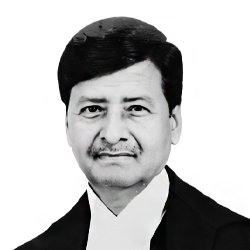
Rastogi, J.
1. The sad demise of husband of appellant no.1 after his long
illness on 3
rd February, 1996 has resulted in initiation of the legal
proceedings at the instance of appellant no.1 along with her children
on a bona fide belief that the cause of death of her late husband was
post operative medical negligence and follow-up care.
2
2. The National Consumer Disputes Redressal Commission
(hereinafter “the Commission”), after appreciating the material on
record, including the evidence led by the parties, arrived to a
conclusion that it was not a case of post operative medical negligence
as being alleged by the appellants and dismissed the complaint by
the judgment impugned dated 21
st July, 2009 which is the subject
matter of appeal filed at the instance of the appellants under Section
23 of the Consumer Protection Act, 1986.
3. In order to appreciate the issue involved in the instant appeal,
it may be necessary to cull out the facts relevant for the purpose.
Complainant no.1, the widow and complainant nos.2 and 3, the
minor children of deceased Naveen Kant, jointly filed a complaint,
inter alia, alleging that in the first instance in April, 1990, Naveen
Kant developed hypertension and was under the treatment of Dr.P.D.
Gulati, Nephrologist, but when no positive changes had co me
forward, Dr. Gulati advised him for renal transplantation and since
then, Naveen Kant was under regular dialysis at the hospital in Delhi
under the supervision of Dr. Gulati. When some of his well-wishers
informed him about a reputed Nephrologist, Dr. M.A.
3
Muthusethupathi, OP No.1 who is performing kidney transplant
surgery at Madras and after going through the entire medical record
and seeking opinion of OP No.1 and after completion of all legal
formalities as being contemplated under the provisions of the
Transplantation of Human Organs and Tissues Act, 1994 (hereinafter
“the Act 1994”) and taking into consideration the fact that dialysis
twice a week may not have been possible for longevity and for better
life span of the patient Naveen Kant, the family took a decision to
undergo for kidney transplantation and on the advice of OP No.1, the
patient Naveen Kant was admitted to OP No.6 (Aswini Soundra
Nursing Home), which is registered under the Act 1994 and a kidney
transplant surgery was successfully performed on 12
th November,
1995 by a team of 12 experts headed by OP Nos.1, 2 and 5, who are
admittedly well qualified and experts with wide knowledge and
experience in their respective fields and after the medical condition
of Naveen Kant was reviewed by OP No.1, he was discharged from OP
No.6 hospital on 24
th November, 1995. It may be relevant to note
that the doctors who had conducted kidney transplant of the patient
have conducted more than 900-1000 renal transplants with good
results, but there are cases where patient died even after successful
4
kidney transplant for various reasons which cannot be even under
the control of the doctors.
4. It reveals from the record that despite all post operative medical
treatment and follow up care of the patient under the supervision of
medical experts, still the destiny could not save him and he finally
died on 3
rd February, 1996.
5. The complaint of the appellants was that while Naveen Kant was
discharged from OP No.6 hospital on 24
th November, 1995, he was
asked to attend as an outdoor patient for dressing of the wound at
the place of incision, but his complaint throughout was that while he
was in ICU, he had a pain in his left forearm where intravenous drugs
were injected and at the given time, he was assured that the pain
would subside in due course of time and as and when OP No.1 came
for review, it was the consistent complaint of Naveen Kant of pain in
the left forearm since he was operated and the day he was discharged
on 24
th November, 1995 and within a short period of 7 days on 30
th
November, 1995, OP No.1 noticed the onset of cellulitis in Naveen
Kant’s left forearm and there was a recurrence of abscess at other
points, but still the doctors did not take it seriously and conducted
5
investigations into the cause of pain and later on 16
th December,
1995, Naveen Kant developed severe headache coupled with loss of
proper vision in the right eye and also started vomiting. OP No.1
pointed out these problems to the doctor dialysis in-charge of OP
No.6 hospital, who used to administer necessary I.V. injections and
do the dressing.
6. However, on 21
st December, 1995, on the advice of OP No.1,
Naveen Kant was again admitted to OP No.4 hospital and he was
administered anti convulsion injection. Although attended by OP
Nos.1, 3 and 5, headache, fever and pus in his left forearm still
persisted. OP No.5 made a long incision in the left forearm to drain
off the pus, but because OP No.1 was unavailable on 30
th December,
1995, OP No.2 was called upon to take care of the patient.
7. Later, more complications crept in and because of
complications, there developed abscess in pancreas and liver and the
X-ray showed some abnormal developments in the lung and that later
converted into Septicemia. Ultimately, the required potency of
antibiotics administered or the quality of these antibiotics also failed
to respond. He was later moved to ICU on instructions of OP No.3
6
and in the morning of 31
st January, 1996, OP No.1 also visited
Naveen Kant, who was at that time in unconscious stage, even after
that, his condition continuously deteriorated and the fact is that no
one attended to the complaint made by Naveen Kant and finally he
could not be saved and left for heavenly abode on 3
rd February, 1996.
This, according to the appellants was the cause of post-operative
negligence and follow up care on the part of the doctors and the
nursing staff of the hospital who had not provided proper medical
care to Naveen Kant and attributed negligence on the part of the
treating doctors and the hospital and claimed special damages/
general damages for a total sum of Rs.95,16,174.33/-.
8. The respondents contested the complaint by filing reply
affidavits, wherein it was stated that respondent No.1 who was a
treating doctor(OP No.1) is a Senior Nephrologist who did M.D.
(General Medicines) at Stanley Medical College in 1968 and after
doing his D.M. in 1977 from PGI Chandigarh, he exclusively worked
and performed kidney transplantation in Government hospitals and
also disclosed his professional skill which he has developed,
particularly in the field of kidney transplantation and so also, the
7
other doctors, OP No.2 Dr. S. Shivakumar and OP No.5 Dr. P.S.
Venkateswaran were also the expert doctors in performing kidney
transplantation and have a rich professional experience and as
regards OP No.6 hospital, where kidney transplantation was
performed, it was duly registered hospital under the Act,1994 and is
a fully equipped hospital for transplantation and patient Naveen Kant
after successful surgery of the kidney transplantation and after 12
days in ICU with all medical protocols followed and taking into
consideration his overall health, discharged on 24
th November, 1995.
9. It is further stated that the hospital records for the period 10
th
November to 24
th November, 1995, the sequence of events relating to
the immediate post Transplantation Surgery period revealed that the
surgery was successfully performed on 12
th November, 1995 and
later on 13
th November, 1995, the patient developed low grade fever
for a few hours in the morning and there was no other evidence of
any bacterial infection and Injection Reflin was administered to him
and after all tests were undertaken on 14
th November, 1995, and
taking into consideration the positive response of the patient, he was
discharged on 24
th November, 1995 and till the date of discharge, the
8
patient was subjected to periodical and routine visits by the
Specialist Surgeons, Nephrologists and was under a constant
medical observation. The medical observation of the patient as seen
from the case sheet is extracted hereunder:
“Afebre – No Fever.
Lungs clear
CVS S1 S2 – Normal Sound (Cardio Vascular System)
Abdomen – Soft-Mild distention.
NAD – Nothing abnormal detected.
No Oedema – No swelling throughout the body.”
10. On 17
th November 1995, the Urinary catherer tip grew klebsiella
on culture for which Ciprofloracin was started. On 24
th November,
1995, the patient was discharged after remaining under post
operative care for 12 days. Although complaints are made by the
patient of its own kind, but he was always attended and taken care
of and when the patient was called upon to continue to attend as an
outdoor patient, all medical assistance possible at the command of
the respondents was extended to him. It is unfortunate that the
patient could not be saved despite the best medical assistance being
extended to him by the experts of the field.
9
11. On behalf of the complainant, evidence was led by Mrs. Vimla
Akhori, relative of appellant no.1, Dr.(Mrs.) Minii Rani Datta, sister
of appellant no.1, Col. Dr. Ashok Chopra, MBBS General Surgery and
Dr.(Mrs.) Sophia Ahmed, as medical experts who are undisputedly
not the Nephrologists. So far as the first two witnesses (relatives of
appellant no.1) are concerned, they have just narrated the statement
of fact which was narrated to them by the appellants being their
relative and both the witnesses Dr. Ashok Chopra and Dr. Sophia
Ahmed was neither expert of kidney transplantation nor a qualified
Nephrologist.
12. So far as the so-called expert evidence adduced by the
appellants before the Commission is concerned, Dr. Ashok Chopra,
who was a Consultant Surgeon in the BSES Global Hospital at
Andheri (West), Mumbai, admittedly passed out his MBBS
examination in the year 1974 and only performed general surgery
during his tenure in the Army and later left the Army and served as
Surgeon in Bareilly and later became a Surgeon in BSES Hospital,
Andheri (West), Mumbai, although stated in his affidavit obviously
based on the case sheet of the patient that the respondents have not
10
taken post operative care of the patient and have failed to control and
treat infection that has manifested itself in the form of persistent pain
in the left forearm of the patient at the place where a needle had been
inserted for injection of drugs in the OCU of OP No.6. Timely and
adequate medical intervention was absent in post operative medical
treatment to the patient and also opinion was expressed by him
regarding the drugs administered to the patient and also stated about
the time the patient was discharged after 12 days of his surgery and
rehospitalization of the patient in OP No.4 hospital on 21
st December,
1995 which was not a registered hospital under the Act, 1994 and
the patient should have been admitted in OP No.6 hospital which was
registered where the kidney transplantation was performed and on
this account, OP No.1 has failed to perform his duty towards the
patient by allowing him to be lodged in an unregistered hospital i.e.
OP No.4. Although it has been admitted by him that the operation
was successful, but because of the lackadaisical attitude and post
operative care not being properly administered to the patient, it
created abscess and went into septicemia, which could easily have
been retrieved out of the dangerous infection leading to multi organ
11
failure and in this way has expressed his opinion that there was a
post operative negligence on the part of the respondents.
13. The second expert witness appeared on behalf of the appellants
was Dr. Sophia Ahmed. She took MBBS from Patna Medical College
and later did internship in Internal Medicines at Queens Hospital,
Central New York and remained as a resident in Neurology at
University Hospitals and Clinics at USA for almost three years and
has a Fellowship in Clinical Neurophysiology and Epilepsy. With no
expert knowledge of the subject based on the medical reports made
a statement of a medical negligence being performed by the
respondents and expressed her opinion that in the post transplant
phase, patient manifested clear symptoms of infection while in the
ICU and the patient was not recovered adequately for nosocomial
infection and his manifest problems and indicators were not
addressed by the attending doctors with seriousness and urgency
and at critical junctures, the retained nephrologist displayed
complete lack of professional concern for the patient and this
according to her was a post operative medical negligence being
12
committed by the res pondents and only because of their
lackadaisical attitude, they lost their patient.
14. On the other hand, the respondents who indeed were
themselves qualified Nephrologists and experts in the field of kidney
transplant operations and this fact is not disputed by the appellants
as well in support thereof have produced two expert witnesses, Dr.
S. Sundar and Dr. Arun Kumar, who are qualified Nephrologists.
15. Dr. S. Sundar, Director and Chief Nephrologist of Karnataka
Nephrology and Transplant Institute, Bangalore stated that out of his
long experience in having performed more than thousand kidney
transplantation surgeries in the past 22 years and based on the
evidence of literature relating to kidney transplantation, increase in
total count (leucocytes) is a common phenomenon in most of the
renal transplant recipients, who ha ve been administrated
Corticosteroids. Sometimes, rise in total counts does not per se mean
infection but there is no reason to conclude that the patient ought
not to have been discharged after 12
th day of surgery. It is also stated
that leucocyte count will not rise in the post transplant period in
absence of any infection that only proves lack of experience and
13
medical knowledge of renal transplant. The witness has further
stated that on 30
th November 1995, when the patient was diagnosed
cellulitis/abscess, injection Reflin was administered by OP No.1
which was the best medicine for cellulitis and it is a common practice
to use this drug in such a situation. It was further stated by him
that medical science is not an exact science like mathematics and in
medical science experience of doctor treating the patient is
important. It has been further averred by him that most transplant
patients having fever are treated with drugs like Amikacin and
Ciprofloxacin to cover a broader spectrum of organisms in the
absence of definitive evidence of organism causing fever. It has been
further stated by him that in the field of kidney transplantation and
Nephrology, it is very difficult to diagnose and manage any infection
in a Kidney Transplant patient and the reasons are many. These
are:
(a) Cultures of body fluids (blood, urine, pus, etc.) are often
negative.
(b) Even if an organism is isolated, it is not always possible to be
certain that the particular organism is the actual cause of fever.
(c) Many of the antibiotics have deleterious effects on the
transplanted kidney, thereby necessitating great care in drug
selection and dosage.
14
(d) Un-related donor transplantation need more immune -
suppression for the kidney to survive and therefore is more prone to
infection.
16. Dr. Arun Kumar, who was also produced on behalf of the
respondents, was also a Professor of Surgery, Head of the
Department of Surgery, Coimbatore Medical College, Tamil Nadu also
stated in his affidavit that he has been a kidney transplant surgeon
since 1986 and has performed over 1140 renal transplantations. In
clinical practice, positive findings, if any, are always noted in the case
records and after going through the record history of the patient, it
was stated by him that he did not find any evidence of infection at
the time of discharge of the patient from OP No.6.
17. The Commission, after taking into consideration the pleadings
so also the evidence on record arrived to a conclusion that the patient
Naveen Kant was under the hands of the expert team of doctors and
possible medical care at the command of the doctors was fully
administered to him and after being discharged from the hospital on
24
th November, 1995, still thereafter he was continued to be under
treatment and merely because the expert team of doctors could not
15
save him after his prolonged illness and he died on 3
rd February,
1996 that in itself could not be considered to be a case of post
operative medical negligence and in consequence thereto dismissed
the complaint filed at the instance of the appellants under judgment
impugned dated 21
st July, 2009.
18. It is not disputed by counsel for the appellants that the kidney
transplantation of the patient on 12
th November, 1995 was successful
and they had complained but the complaint is only in reference to
post operational medical negligence as the respondents have failed to
discharge their statutory duty of care and medical protocols
subsumed thereunder, including follow up care and that according
to the appellants is a medical negligence on the part of the
respondents in extending treatment to the patient Naveen Kant and
being the case of post operative negligence, they have lost their
patient on 3
rd February, 1996.
19. Counsel for the appellants further submitted that the patient
was consistently complaining after he being successfully operated on
12
th November, 1995 and shifted to the ICU for pain in the left
forearm where intravenous drugs were injected to him and when the
16
patient was attended by OP No.1 for review, he reiterated his
complaint of pain in the left forearm and still he was discharged from
the hospital on 24
th November, 1995. Later, the patient noticed the
onset of cellulitis and recurrence of abscess being at other points,
still the doctors have not taken his complaint seriously and
conducted investigations into the cause of pain and later he
developed severe headache, coupled with loss of proper vision in the
right eye and started vomiting. These facts can be supported by the
prescription chart of the patient and that was the reason for which
the patient was again admitted in the hospital of OP No.4 on 21
st
December, 1995 and fever and pus in his left forearm still persisted.
At that stage, OP No.5 made a long incision in the left forearm to
drain out the pus, but since OP No.1 was not available, his condition
deteriorated and finally left for heavenly abode on 3
rd February, 1996
and this fact has been established from the evidence placed on record
of the complainant and other witnesses including the two doctors,
who as an expert appeared and recorded a deposition in support of
kind of post operative medical negligence committed by the
respondents. The Commission, according to the counsel, although
noticed these facts but has not at all appreciated the evidence on
17
record and thus, after reproduction of the facts adduced by the
parties, dismissed the complaint in a cavalier manner under the
impugned judgment dated 21
st July, 2009, which needs to be
revisited by this Court at least to examine as to whether it was a case
of post operative medical negligence, the reason for which appellant
no.1 has lost her husband.
20. Per contra, counsel for the respondents, while supporting the
findings recorded by the Commission under the impugned judgment,
submits that it is not the case of the appellants that there was any
slackness on the part of the team of the doctors while the patient was
being operated/underwent kidney transplant on 12
th November,
1995 which was admittedly successfully performed by the qualified
team of doctors headed by OP No.1 and OP No.5 and thereafter the
patient was shifted to ICU for post operative treatment and even
thereafter he was completely under medical supervision and got
discharged on 24
th November, 1995 with further instructions that he
should remain as an outdoor patient until the doctors advise him to
leave the city and the reason was that as an outdoor patient, dressing
of wounds at the place of incision is always to be taken proper care.
18
So far as the complaint of pain in the left forearm is concerned, these
are some complaints which the patients normally make but it is
always taken care of and the time heals complaints of the patient,
but still all medical assistance which was possible under the
command of the qualified doctors was extended to him. It is true
that unfortunately, appellant no.1 has lost her husband but this all
is destiny.
21. The doctors can provide their best medical assistance available
at their command but merely because they could not save the
patient, that could not be considered to be a case of post operative
medical negligence despite the fact that medical protocol
administered by them was duly supported by the two medical experts
of the field who appeared on behalf of the respondents, Dr. S. Sundar
and Dr. Arun Kumar, and nothing elicits from the cross-examination
made by the appellants. In the given circumstances, the findings
which has been returned by the Commission needs no further
interference by this Court.
22. We have heard learned counsel for both the parties and with
their assistance perused the material placed on record. In order to
19
appreciate the opinion of the Commission, it will be apposite to take
note of the legal principles which would apply in the case of medical
negligence.
23. In the case of medical negligence, this Court in Jacob Mathew
v. State of Punjab and Another
1 dealt with the law of medical
negligence in respect of professionals professing some special skills.
Thus, any individual approaching such a skilled person would have
a reasonable expectation under the duty of care and caution but
there could be no assurance of the result. No doctor would assure
a full recovery in every case. At the relevant time, only assurance
given by implication is that he possessed the requisite skills in the
branch of the profession and while undertaking the performance of
his task, he would exercise his skills to the best of his ability and
with reasonable competence. Thus, the liability would only come if
(a) either a person (doctor) did not possess the requisite skills which
he professed to have possessed; or (b) he did not exercise with
reasonable competence in given case the skill which he did possess.
It was held to be necessary for every professional to possess the
1
(2005) 6 SCC 1
20
highest level of expertise in that branch in which he practices. It
was held that simple lack of care, an error of judgment or an accident,
is not proof of negligence on the part of the medical professional. This
Court held as under:
“48. We sum up our conclusions as under:
(1) Negligence is the breach of a duty caused by omission to do
something which a reasonable man guided by those considerations
which ordinarily regulate the conduct of human affairs would do, or
doing something which a prudent and reasonable man would not
do. The definition of negligence as given in Law of Torts, Ratanlal &
Dhirajlal (edited by Justice G.P. Singh), referred to hereinabove,
holds good. Negligence becomes actionable on account of injury
resulting from the act or omission amounting to negligence
attributable to the person sued. The essential components of
negligence are three: “duty”, “breach” and “resulting damage”.
(2) Negligence in the context of the medical profession necessarily
calls for a treatment with a difference. To infer rashness or
negligence on the part of a professional, in particular a doctor,
additional considerations apply. A case of occupational negligence
is different from one of professional negligence. A simple lack of care,
an error of judgment or an accident, is not proof of negligence on the
part of a medical professional. So long as a doctor follows a practice
acceptable to the medical profession of that day, he cannot be held
liable for negligence merely because a better alternative course or
method of treatment was also available or simply because a more
skilled doctor would not have chosen to follow or resort to that
practice or procedure which the accused followed. When it comes to
the failure of taking precautions, what has to be seen is whether
those precautions were taken which the ordinary experience of men
has found to be sufficient; a failure to use special or extraordinary
precautions which might have prevented the particular happening
cannot be the standard for judging the alleged negligence. So also,
the standard of care, while assessing the practice as adopted, is
judged in the light of knowledge available at the time of the incident,
and not at the date of trial. Similarly, when the charge of negligence
arises out of failure to use some particular equipment, the charge
would fail if the equipment was not generally available at that
21
particular time (that is, the time of the incident) at which it is
suggested it should have been used.
xxx xxx xxx
(4) The test for determining medical negligence as laid down
in Bolam case [(1957) 2 All ER 118 (QBD), WLR at p. 586] holds good
in its applicability in India.
xxx xxx xxx
(8) Res ipsa loquitur is only a rule of evidence and operates in the
domain of civil law, specially in cases of torts and helps in
determining the onus of proof in actions relating to negligence. It
cannot be pressed in service for determining per se the liability for
negligence within the domain of criminal law. Res ipsa loquitur has,
if at all, a limited application in trial on a charge of criminal
negligence.”
24. The term “negligence” has been defined in Halsbury Laws of
England (Fourth Edition) para 34 and as settled in Kusum Sharma
and Others v. Batra Hospital and Medical Research Centre and
Others
2 as under:
“45. According to Halsbury's Laws of England, 4th Edn., Vol. 26 pp.
17-18, the definition of negligence is as under:
“22. Negligence.—Duties owed to patient. A person who holds
himself out as ready to give medical advice or treatment
impliedly undertakes that he is possessed of skill and
knowledge for the purpose. Such a person, whether he is a
registered medical practitioner or not, who is consulted by a
patient, owes him certain duties, namely, a duty of care in
deciding whether to undertake the case; a duty of care in
deciding what treatment to give; and a duty of care in his
administration of that treatment. A breach of any of these
duties will support an action for negligence by the patient.”
2
(2010) 3 SCC 480
22
25. In para 89 of the judgment in Kusum Sharma (supra), the tests
of medical negligence while deciding whether the medical
professional is guilty of medical negligence, varied tested principles
have to be kept in view, this Court held as under:
“89. On scrutiny of the leading cases of medical negligence both in
our country and other countries specially the United Kingdom, some
basic principles emerge in dealing with the cases of medical
negligence. While deciding whether the medical professional is guilty
of medical negligence following well-known principles must be kept
in view:
I. Negligence is the breach of a duty exercised by omission to do
something which a reasonable man, guided by those considerations
which ordinarily regulate the conduct of human affairs, would do, or
doing something which a prudent and reasonable man would not do.
II. Negligence is an essential ingredient of the offence. The
negligence to be established by the prosecution must be culpable or
gross and not the negligence merely based upon an error of
judgment.
III. The medical professional is expected to bring a reasonable
degree of skill and knowledge and must exercise a reasonable degree
of care. Neither the very highest nor a very low degree of care and
competence judged in the light of the particular circumstances of
each case is what the law requires.
IV. A medical practitioner would be liable only where his conduct
fell below that of the standards of a reasonably competent
practitioner in his field.
V. In the realm of diagnosis and treatment there is scope for
genuine difference of opinion and one professional doctor is clearly
not negligent merely because his conclusion differs from that of other
professional doctor.
VI. The medical professional is often called upon to adopt a
procedure which involves higher element of risk, but which he
honestly believes as providing greater chances of success for the
patient rather than a procedure involving lesser risk but higher
chances of failure. Just because a professional looking to the gravity
of illness has taken higher element of risk to redeem the patient out
of his/her suffering which did not yield the desired result may not
amount to negligence.
23
VII. Negligence cannot be attributed to a doctor so long as he
performs his duties with reasonable skill and competence. Merely
because the doctor chooses one course of action in preference to the
other one available, he would not be liable if the course of action
chosen by him was acceptable to the medical profession.
VIII. It would not be conducive to the efficiency of the medical
profession if no doctor could administer medicine without a halter
round his neck.
IX. It is our bounden duty and obligation of the civil society to
ensure that the medical professionals are not unnecessarily harassed
or humiliated so that they can perform their professional duties
without fear and apprehension.
X. The medical practitioners at times also have to be saved from
such a class of complainants who use criminal process as a tool for
pressurising the medical professionals/hospitals, particularly
private hospitals or clinics for extracting uncalled for compensation.
Such malicious proceedings deserve to be discarded against the
medical practitioners.
XI. The medical professionals are entitled to get protection so long
as they perform their duties with reasonable skill and competence
and in the interest of the patients. The interest and welfare of the
patients have to be paramount for the medical professionals.”
26. In a recent judgment in Dr. Harish Kumar Khurana v.
Joginder Singh and Others
3 , this Court held that the hospital and
doctors are required to exercise sufficient care in treating the
patients in all circumstances. However, in an unfortunate case
death may occur. It will be necessary that sufficient material on
medical evidence should be available before the adjudicating
authority to arrive at a conclusion that the death is due to medical
3
(2021) 10 SCC 291
24
negligence. Even death of a patient cannot, on the face of it, be
considered to be medical negligence.
27. It clearly emerges from the exposition of law that a medical
practitioner is not to be held liable simply because things went
wrong from mischance or misadventure or through an error of
judgment in choosing one reasonable course of treatment in
preference to another. In the practice of medicine, there could be
varying approaches of treatment. There could be a genuine
difference of opinion. However, while adopting a course of treatment,
the duty cast upon the medical practitioner is that he must ensure
that the medical protocol being followed by him is to the best of his
skill and with competence at his command. At the given time,
medical practitioner would be liable only where his conduct fell
below that of the standards of a reasonably competent practitioner
in his field.
28. The term “negligence” has no defined boundaries and if any
medical negligence is there, whether it is pre or post-operative
medical care or in the follow-up care, at any point of time by the
25
treating doctors or anyone else, it is always open to be considered by
the Courts/Commission taking note of the exposition of law laid
down by this Court of which a detailed reference has been made and
each case has to be examined on its own merits in accordance with
law.
29. Adverting to the facts of the instant case, the treating doctors,
OP Nos.1, 2 and 5 all are academically sound and experts in the field
of kidney transplantation. Respondent nos.1, 2 and 5 had disclosed
their qualifications of which a detailed discussion is not required and
their medical expertise in the field of nephrology and surgery in
kidney transplantation has not been doubted by the appellants. It
is also not the case of the appellants that the patient was not
medically treated by the well-qualified doctors at the time when
kidney transplant surgery was undertaken on 12
th November, 1995
by the team of doctors including OP Nos.1, 2 and 5 in the OP No.6
hospital which is a registered hospital under the Act 1994.
30. Complaints have been made with regard to the post-operative
assistance / follow up care, but from the deposition of two witnesses
which has come on record, there was a complaint made by the patient
26
of pain in his left forearm while he was being discharged on 24
th
November, 1995 after remaining in ICU for 12 days, but he was called
upon to continue as outdoor patient and on all the later occasions,
even as per the case sheet of the patient, doctors have treated the
patient to the best of their medical knowledge and administered the
best medical care which was possible. Although the complaint of the
patient which remained persistent could not be ruled out despite
medically approved drugs being administered to him and if the
patient could not be finally saved, that in itself could not be
considered to be a case of post operative medical negligence, as is
being tried to be projected by the appellants on the basis of the
material placed on record.
31. The doctors are expected to take reasonable care, but no
professional can assure that the patient will come back home after
overcoming the crisis. At the same time, no evidence has come on
record at the behest of the appellants which, in any manner, could
demonstrate that it was a case of post-operative medical negligence
or follow up care on the part of treating doctors and both the doctors
who have recorded their statements on behalf of the appellants, Dr.
27
Ashok Chopra and Dr. Sophia Ahmed, are not expert doctors in the
field of kidney transplantation. Merely because they are doctors by
profession, what is being expressed by both of them in the affidavits
filed before the Commission would not be considered to be an opinion
of experts.
32. On the contrary, the two experts who have deposed on behalf of
the respondents, Dr. S. Sundar and Dr. Arun Kumar are admittedly
experts of the field. At the same time, the respondents – OP Nos.1,
2 and 5 are indeed expert doctors and qualified Nephrologists and
this fact has been admitted by the appellants that the patient was
under treatment of the best medical professionals and qualified
Nephrologists, but those treating doctors could not save the patient
Naveen Kant, that in itself could not be considered to be a case of
post operative medical negligence which was the main grievance of
the appellants before the Commission.
33. After going through the findings which have been returned by
the Commission in the order impugned, we see no reason to differ
with the view expressed by the Commission keeping in mind the tests
enunciated above. Taking note of the fact that treating doctors, OP
28
Nos.1, 2 and 5 are medical experts in the field of nephrology and so
far as OP No.6 hospital where the patient was admitted for
transplantation was duly registered under the Act, 1994 and all post
operative medical care protocol available at the command of the
respondents was administered to the patient, still his physical
condition deteriorated and finally he could not be saved, which is
really unfortunate, but there cannot be a legal recourse to what is
being acceptable to the destiny.
34. In our opinion, the Commission has not committed any
manifest error in arriving to a conclusion that in post operative
medical negligence or follow up care, there was no negligence being
committed by the respondents which may be a foundation for
entertaining the complaint filed by the appellants. In consequence
thereof, the judgment of the Commission does not call for any
interference by this Court.
35. Counsel for the appellants submitted that the nursing
home/hospital where the patient was admitted for post -operative
care, was not registered under the provisions of the Act 1994. With
the assistance of the counsel for the parties, we have gone through
29
the Scheme of the Act 1994 and the Rules made thereunder. The
hospitals where the procedure of transplantation is undertaken are
to be registered in terms of Section 14 of the Act 1994, but for post-
operative care, particularly after the patient being discharged from
the hospital where the procedure of transplantation has taken place,
we have not come across any provision under the Act, 1994 where
such hospitals are required to be registered under the Act 1994.
36. Before parting, we would like to observe that when the matter
was finally heard and concluded, appellant no.1 was present in Court
and we made a request as to whether she is still interested to get the
final judicial verdict on the issue which has been raised at her
instance at one stage by instituting a complaint before the
Commission. The appellant made a very candid statement before the
Court that she wants now to sum up the matter and what she has
lost is, in no manner, recoverable and compensation even if awarded
by this Court is not going to be of any solace to her at this point of
time. We realize the pain of losing her husband and the trauma she
has suffered, but that cannot translate into a legal remedy.
30
37. Accordingly, we do not find any fault in the reasoning of the
Commission, as a result, the appeal is without substance and
deserves to be dismissed.
38. The appeal is accordingly dismissed. No costs.
39. All pending application(s) shall stand disposed of.
…………………… ……….. J.
(AJAY RASTOGI)
…………………………….. J.
(ABHAY S. OKA)
New Delhi.
April 20, 2022.

 Login with google
Legal Notes
Add a Note....