
The case was brought before the Supreme Court of India as a Writ Petition (Civil) against the High Court Jugdement.
No Acts & Articles mentioned in this case
http://JUDIS.NIC.IN SUPREME COURT OF INDIA Page 1 of 63
CASE NO.:
Writ Petition (civil) 290 of 1997
PETITIONER:
PREETI SRIVASTAVA (DR.)& ANR.
RESPONDENT:
STATE OF MADHYA PRADESH & ORS.
DATE OF JUDGMENT: 10/08/1999
BENCH:
A.S.ANAND CJI & S.B.MAJMUDAR & SUJATA V.MANOHAR & K.VENKATASWAMI & V.N.KHARE
JUDGMENT:
JUDGMENT
DELIVERED BY
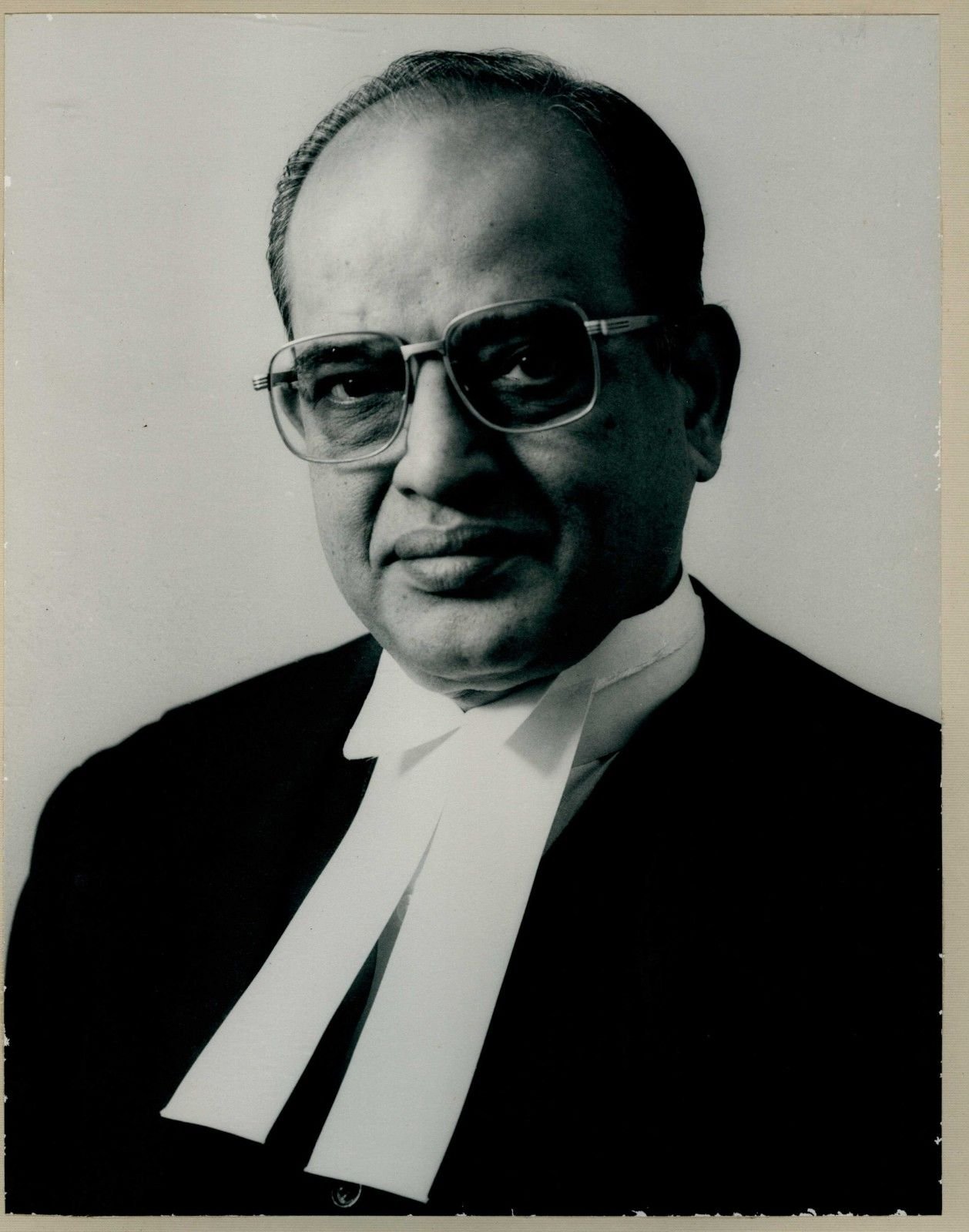
S.B.MAJMUDAR, J.
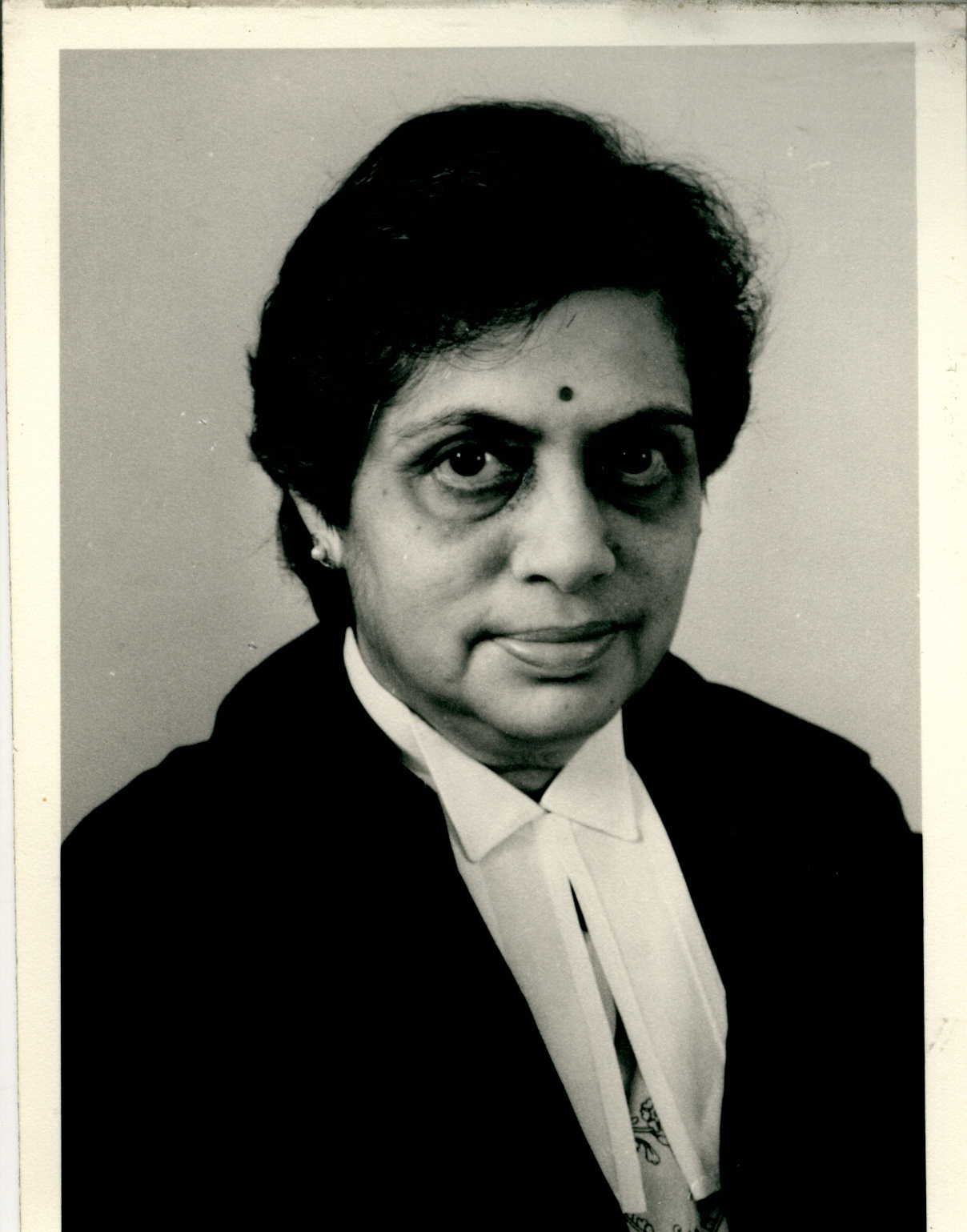
SUJATA V.MANOHAR, J.
S.B.Majmudar, J.
Leave granted.
I have carefully gone through the draft judgment
prepared by our esteemed colleague Justice Sujata V.
Manohar. I respectfully agree with some of the conclusions
arrived at therein at pages 61 and 62, namely, conclusion
nos. 1 and 4. However, so far as conclusion nos. 2 and 3
are concerned, I respectfully record my reservations and
partially dissent as noted hereinafter. In my view, the
common entrance examination envisaged under the regulations
framed by the Medical Council of India for Postgraduate
Medical Education does not curtail the power of the State
Authorities, legislative as well as executive, from fixing
suitable minimum qualifying marks differently for general
category candidates and for SCs/STs and OBC candidates as
highlighted in my present judgment.
So far as conclusion no.3 is concerned, with respect,
it is not possible for me to agree with the reasoning and
the final conclusion to which our esteemed colleague Justice
Sujata V. Manohar has reached, namely, that fixing minimum
qualifying marks for passing the entrance test for admission
to postgraduate courses is concerned with the standard of
Postgraduate Medical Education.
I, however, respectfully agree to that part of
conclusion no.3 which states that there cannot be a wide
disparity between the minimum qualifying marks for reserved
category candidates and the minimum qualifying marks for
general category candidates at this level. I also
respectfully agree that there cannot be dilution of minimum
qualifying marks for such reserved category candidates up to
http://JUDIS.NIC.IN SUPREME COURT OF INDIA Page 2 of 63
almost a vanishing point. The dilution can be only up to a
reasonable extent with a rock bottom, below which such
dilution would not be permissible as demonstrated
hereinafter in this judgment. In my view, maximum dilution
can be up to 50% of the minimum qualifying marks prescribed
for general category candidates. On that basis if 45%
passing marks are prescribed for general category,
permissible dilution can then go up to 22 and 1/2 % (50% of
45%). Any dilution below this rock bottom would not be
permissible under Article 15(4) of the Constitution of
India.
For reaching the aforesaid conclusions, I have
independently considered the scheme of the relevant
provisions of the Constitution in the light of the various
judgments of this Court as detailed hereinafter :
Entry 66 of List I, Old Entry 11(2) of List II and
Entry 25 of List III:
Entry 66 of List I of the Seventh Schedule reads as
under : Co-ordination and determination of standards in
institutions for higher education or research and scientific
and technical institutions.
Old Entry 11 of List II, as earlier existing in the
Constitution of India, read as under :
Education including universities, subject to the
provisions of entries 63, 64, 65 and 66 of List I and entry
25 of List III.
While Entry 25 of List III as now existing in the
Seventh Schedule of the Constitution reads as under :
Education, including technical education, medical education
and universities, subject to the provisions of entries 63,
64, 65 and 66 of List I; vocational and technical training
of labour.
A conjoint reading of these entries makes it clear
that as per Entry 11 of List II which then existed on the
statute book, all aspects of education, including university
education, were within the exclusive legislative competence
of the State Legislatures subject to Entries 63 to 66 of
List I and the then existing Entry 25 of List III. The then
existing Entry 25 of the Concurrent List conferred power on
the Union Parliament and State Legislature to enact
legislation with respect to vocational and technical
training of labour. Thus, the said Entry 25 of List III had
nothing to do with Medical Education. Any provision
regarding Medical Education, therefore, was thus covered by
Entry 11 of List II subject of course to the exercise of
legislative powers by the Union Legislature as per entries
63 to 66 of List I. In the light of the aforesaid relevant
entries, as they stood then, a Constitution Bench of this
court in The Gujarat University, Ahmedabad vs. Krishna
Ranganath Mudholkar & Ors., 1963 Suppl.(1) SCR 112, speaking
through J.C.Shah, J., for the majority, had to consider
whether the State Legislature could impose an exclusive
medium of instruction Gujarati for the students who had to
study and take examination conducted by the Gujarat
University. It was held that If a legislation imposing a
regional language or Hindi as the exclusive medium of
http://JUDIS.NIC.IN SUPREME COURT OF INDIA Page 3 of 63
instruction is likely to result in lowering of standards, it
must necessarily fall within Item 66 of List I and be
excluded to that extent from Item 11 of List II as it then
stood in the Constitution. Medium of instruction was held
to have an important bearing on the effectiveness of
instruction and resultant standards achieved thereby. In
this connection, pertinent observations were made at pages
142 and 143 of the aforesaid Report: If adequate
text-books are not available or competent instructors in the
medium, through which instruction is directed to be
imparted, are not available, or the students are not able to
receive or imbibe instructions through the medium in which
it is imparted, standards must of necessity fall, and
legislation for co-ordination of standards in such matters
would include legislation relating to medium of instruction.
If legislation relating to imposition of an exclusive medium
of instruction in a regional language or in Hindi, having
regard to the absence of text-books and journals, competent
teachers and incapacity of the students to understand the
subjects, is likely to result in the lowering of standards,
that legislation would, in our judgment, necessarily fall
within item 66 of List I and would be deemed to be excluded
to that extent from the amplitude of the power conferred by
item No.11 of List II.
However, after the deletion of Entry 11 from List II
and re-drafting of Entry 25 in the Concurrent List as in the
present form, it becomes clear that all aspects of
education, including admission of students to any
educational course, would be covered by the general entry
regarding education including technical and medical
education etc. as found in the Concurrent List but that
would be subject to the provisions of Entries 63 to 66 of
List I. Therefore, on a conjoint reading of Entry 66 of
List I and Entry 25 of List III, it has to be held that so
long as the Parliament does not occupy the field earmarked
for it under Entry 66 of List I or for that matter by
invoking its concurrent powers as per Entry 25 in the
Concurrent List, the question of admission of students to
any medical course would not remain outside the domain of
the State Legislature. It is not in dispute that up till
now the Parliament, by any legislative exercise either by
separate legislation or by amending the Indian Medical
Council Act, 1956 has not legislated about the controlling
of admissions of students to higher medical education
courses in the country. Therefore, the only question
remains whether the Indian Medical Council Act enacted as
per Entry 66 of List I covers this aspect. If it covers the
topic then obviously by the express language of Entry 25 of
List III, the said topic would get excluded from the
legislative field available to the State Legislature even
under Entry 25 of Concurrent List. For answering this
question, we have therefore, to see the width of Entry 66 of
List I. It deals with Co-ordination and determination of
standards in institutions for higher education... A mere
reading of this Entry shows that the legislation which can
be covered by this entry has to deal basically with
Co-ordination and determination of standards in
institutions for higher education. Meaning thereby, the
standards of education at the institutions of higher
education where students are taking education after
admission are to be monitored by such a legislation or in
other words after their enrolment for studying at such
institutions for higher education such students have to
http://JUDIS.NIC.IN SUPREME COURT OF INDIA Page 4 of 63
undertake the prescribed course of education evolved with a
view to having uniform and well laid down standards of
higher medical education. It cannot be disputed that
postgraduate teaching in medical education is being imparted
by institutions for higher medical education. But the
question is whether the topic of admission of eligible
candidates/students for taking education in such
institutions has anything to do with co-ordination and
determination of standards in these institutions. Now
standards in the institutions have been prefixed by two
words, namely, co-ordination and determination of such
standards as per Entry 66 of List I. So far as
co-ordination is concerned, it is a topic dealing with
provision of uniform standards of education in different
institutions so that there may not be any hiatus or
dissimilarity regarding imparting of education by these
institutions to the students taking up identical courses of
study for higher medical education in these institutions.
That necessarily has a nexus with the regulations of
standards of education to be imparted to already admitted
students to the concerned courses of higher education. But
so far as the phrase determination of standards in
institutions for higher education is concerned, it
necessarily has to take in its sweep the requirements of
having a proper curriculum of studies and the requisite
intensity of practical training to be imparted to students
attaining such courses. But in order to maintain the fixed
standard of such higher medical education in the
institutions, basic qualification or eligibility for
admission of students for being imparted such education also
would assume importance. Thus, the phrase determination of
standards in institutions for higher education would also
take in its sweep the basic qualifications or eligibility
criteria for admitting students to such courses of
education. It can, therefore, be held that the Indian
Medical Council Act, 1956 enacted under Entry 66 of List I
could legitimately authorise Medical Council of India which
is the apex technical body in the field of medical education
and which is enjoined to provide appropriately qualified
medical practitioners for serving the suffering humanity to
prescribe basic standards of eligibility and qualification
for medical graduates who aspire to join postgraduate
courses for obtaining higher medical degrees by studying in
the institutions imparting such education.
But the next question survives as to whether after
laying down the basic qualifications or eligibility criteria
for admission of graduate medical students to the higher
medical education courses which may uniformly apply all over
India as directed by the Medical Council of India, it can
have further power and authority to control the intake
capacity of these eligible students in a given course
conducted by the institutions for higher postgraduate
medical education. In other words, whether it can control
the admissions of eligible candidates to such higher medical
education courses or lay down any criteria for short-listing
of such eligible candidates when the available seats for
admission to such higher postgraduate medical education
courses are limited and the eligible claimants seeking
admission to such courses are far greater in number? So far
as this question is concerned, it immediately projects the
problem of short- listing of available eligible candidates
competing for admission to the given medical education
course and how such admissions could be controlled by
short-listing a number of eligible candidates out of the
http://JUDIS.NIC.IN SUPREME COURT OF INDIA Page 5 of 63
larger number of claimants who are also eligible for
admission. In other words, there can be too many eligible
candidates chasing too few available seats. So far as this
question is concerned, it clearly gets covered by Entry 25
of Concurrent List III rather than Entry 66 of List I as the
latter entry would enable, as seen above, the Medical
Council of India only to lay down the standards of
eligibility and basic qualification of graduate medical
students for being admitted to any higher postgraduate
medical course. Having provided for the queue of basically
eligible qualified graduate medical students for admission
to postgraduate medical courses for a given academic year,
the role of Medical Council of India would end at that
stage. Beyond this stage the field is covered by Entry 25
of List III dealing with education which may also cover the
question of controlling admissions and short-listing of the
eligible candidates standing in the queue for being admitted
to a given course of study in institutions depending upon
the limited number of seats available in a given discipline
of study, the number of eligible claimants for it and also
would cover the further question whether any seats should be
reserved for SC,ST and OBCs as permissible to the State
authorities under Article 15(4) of the Constitution of
India. So far as these questions are concerned, it is no
doubt true that Entry 25 of Concurrent List read with
Article 15(4) of the Constitution of India may
simultaneously authorise both the Parliament as well as the
State Legislatures to make necessary provisions in that
behalf. The State can make adequate provisions on the topic
by resorting to its legislative power under Entry 25 of List
III as well as by exercising executive power under Article
162 of the Constitution of India read with entry 25 of List
III. Similarly, the Union Government, through Parliament,
may make adequate provisions regarding the same in exercise
of its legislative powers under Entry 25 of List III. But
so long as the Union Parliament does not exercise its
legislative powers under Entry 25 of List III covering the
topic of short-listing of eligible candidates for admission
to courses of postgraduate medical education, the field
remains wide open for the State authorities to pass suitable
legislations or executive orders in this connection as seen
above. As we have noted earlier, the Union Parliament has
not invoked its power under Entry 25 of List III for
legislating on this topic. Therefore, the field is wide
open for the State Governments to make adequate provisions
regarding controlling admissions to postgraduate colleges
within their territories imparting medical education for
ultimately getting postgraduate degrees. However, I may
mention at this stage that reliance placed by Shri
Chaudhary, learned senior counsel for the State of Madhya
Pradesh on a Constitution bench judgment of this Court in
Tej Kiran Jain & Ors. vs. N.Sanjiva Reddy & Ors., 1970(2)
SCC 272, interpreting the word in in the phrase in
Parliament to mean during the sitting of Parliament and in
the course of the business of Parliament cannot be of any
avail to him while interpreting the phrase determination of
standards in institutions for higher education as found in
Entry 66 of List I. His submission, relying on the
aforesaid decision that directions regarding standards in
institutions mean only those directions of the Medical
Council of India which regulate the actual courses of study
after the students are admitted into the institutions and
cannot cover the situation prior to their admission, meaning
thereby, pre-admission stage for students seeking entry to
the institution of higher education cannot be countenanced.
http://JUDIS.NIC.IN SUPREME COURT OF INDIA Page 6 of 63
The reason is obvious. Once it is held that the Medical
Council of India exercising its statutory functions and
powers under the Indian Medical Council Act, 1956 which
squarely falls within Entry 66 of List I can lay down the
eligibility and basic qualifications of students entitled to
be admitted to such postgraduate courses of study, their
eligibility qualification would naturally project a
consideration which is prior to their actual entry in the
institutions as students for being imparted higher
education. That would obviously be a pre-admission stage.
Therefore, the phrase determination of standards in
institutions does not necessarily mean controlling
standards of education only after the stage of entry of
students in these institutions and necessarily not prior to
the entry point. However, as seen earlier, the real
question is whether determination of standards in
institutions would go beyond the stage of controlling the
eligibility and basic qualification of students for taking
up such courses and would also cover the further question of
short-listing of such eligible students by those running the
institutions in the States. For every academic year, there
will be limited number of seats in postgraduate medical
courses vis-a-vis a larger number of eligible candidates as
per guidelines laid down by the Medical Council of India.
Short-listing of such candidates, therefore, has to be
resorted to. This exercise will depend upon various
imponderables like i) limited number of seats for admission
in a given course vis-a-vis larger number of eligible
candidates seeking admissions and the question of fixation
of their inter se merits so as to lay down rational criteria
for selecting better candidates as compared to candidates
with lesser degree of competence for entry in such courses;
ii) Whether at a given point of time there are adequate
chances and scope for SC,ST and OBC candidates who can
equally be eligible for pursuing of such courses but who on
account of their social or economic backwardness may lag
behind in competition with other general category candidates
who are equally eligible for staking their claims for such
limited number of seats for higher educational studies, iii)
availability of limited infrastructural facilities for
training in institutions for higher medical education in the
State or in the colleges concerned. All these exigencies of
the situations may require State authorities, either
legislatively or by exercise of executive powers, to adopt
rational standards or methods for short-listing eligible
candidates for being admitted to such medical courses from
year to year also keeping in view the requirement of Article
15(4) of the Constitution of India. While dealing with
Entry 25 of List III it has also to be kept in view that the
word education is of wide import. It would necessarily
have in its fold (i) the taught, (ii) the teacher, (iii) the
text and also (iv) training as practical training is
required to be imparted to students pursuing the course of
postgraduate medical education. Who is to be the taught is
determined by Medical Council of India by prescribing the
basic qualifications for admission of the students.
Adequate number of teachers keeping in view teacher taught
ratio is also relevant. Prescribing appropriate courses for
study i.e. curricula is also covered by the term
education. Training to be imparted to the students has a
direct nexus with infrastructural facilities like number of
beds of patients to be attended to by postgraduate medical
students, providing appropriate infrastructure for surgical
training etc. also would form part of education. Role of
Medical Council of India is exclusive in the field of laying
http://JUDIS.NIC.IN SUPREME COURT OF INDIA Page 7 of 63
down of basic qualifications of the taught and also the
requirement of qualified teachers, their numbers and
qualifications, prescribing text and requisite training to
be imparted to students undertaking postgraduate medical
courses. All these provisions quite clearly fall within the
domain of Medical Council of Indias jurisdiction. However,
the only field left open by the Parliament while enacting
the Indian Medical Council Act, 1956 under Entry 66 of List
III of Schedule VII is the solitary exercise of short-
listing of eligible taught for being admitted to such
courses. That field can validly be operated upon by the
State authorities so long as Parliament, in its wisdom, does
not step in to block even that solitary field otherwise
remaining open for State authorities to function in that
limited sphere. Infrastructure facilities, therefore, for
giving such practical training to the taught also would be
an important part of medical education. It is of course
true that not only the eligibility of students for admission
to medical courses but also the quality of students seeking
to get medical education especially postgraduate medical
education with a view to turning out efficient medical
practitioners for serving the suffering humanity would all
be covered by the term education. So far as the quality
of admitting students to the courses of higher medical
education i.e. postgraduate medical courses is concerned,
the admission of students may get sub-divided into two
parts; i) basic eligibility or qualification for being
permitted to enter the arena of contest for occupying the
limited number of seats available for pursuing such
education; and ii) the quality of such eligible candidates
for being admitted to such courses. As we have seen
earlier, the first part of exercise for admission can be
covered by the sweep of the parliamentary legislation i.e.
the Indian Medical Council Act, 1956 enabling the delegate
of the Parliament namely, Medical Council of India to lay
down proper criteria for that purpose as per regulations
framed by it under Section 33 of the Indian Medical Council
Act. This aspect is clearly covered by Entry 66 of List I
but so far as the second part of admissions of eligible
students is concerned, it clearly remains in the domain of
Entry 25 of List III and it has nothing to do with Entry 66
of List I and as this field is wide open till the Parliament
covers it by any legislation under Entry 25 of List III, the
State can certainly issue executive orders and instructions
or even pass appropriate legislations for controlling and
short-listing the admissions of eligible candidates to such
higher postgraduate medical courses in their institutions or
other institutions imparting such medical education in the
States concerned. A three Judge bench of this Court in Ajay
Kumar Singh & Ors. vs. State of Bihar & Ors., 1994(4) SCC
401, has taken the same view on these entries which commands
acceptance. Jeevan Reddy, J., speaking for the three Judge
bench placing reliance on an earlier three Judge bench
judgment of this Court in State of M.P. vs. Nivedita Jain,
1981(4) SCC 296, and agreeing with the view expressed
therein observed in para 22 of the Report as under : The
power to regulate admission to the courses of study in
medicine is traceable to Entry 25 in List III. (Entry 11 in
List II, it may be remembered, was deleted by the 42nd
Amendment to the Constitution and Entry 25 of List III
substituted). The States, which establish and maintain
these institutions have the power to regulate all aspects
and affairs of the institutions except to the extent
provided for by Entries 63 to 66 of List I. Shri Salve
contended that the determination and coordination of
http://JUDIS.NIC.IN SUPREME COURT OF INDIA Page 8 of 63
standards of higher education in Entry 66 of List I takes in
all incidental or ancillary matters, that Regulation of
admission to courses of higher education is a matter
incidental to the determination of standards and if so, the
said subject- matter falls outside the field reserved to the
States. He submits that by virtue of Entry 66 List I, which
overrides Entry 25 of List III, the States are denuded of
all and every power to determine and coordinate the
standards of higher education, which must necessarily take
in regulating the admission to these courses. Even if the
Act made by parliament does not regulate the admission to
these courses, the States have no power to provide for the
same for the reason that the said subject-matter falls
outside their purview. Accordingly, it must be held, says
Shri Salve, that the provision made by the State Government
reserving certain percentage of seats under Article 15(4) is
wholly incompetent and outside the purview of the field
reserved to the States under the Constitution. We cannot
agree. While Regulation of admission to these medical
courses may be incidental to the power under Entry 66 List
I, it is integral to the power contained in Entry 25 List
III. The State which has established and is maintaining
these institutions out of public funds must be held to
possess the power to regulate the admission policy
consistent with Article 14. Such power is an integral
component of the power to maintain and administer these
institutions. Be that as it may, since we have held,
agreeing with the holding in Nivedita Jain that Entry 66 in
List I does not take in the selection of candidates or
regulation of admission to institutions of higher education,
the argument of Shri Salve becomes out of place. The States
must be held perfectly competent to provide for such
reservations.
It is also pertinent to note that decision of this
Court in Kumari Nivedita Jain (supra) is approved by a
Constitution bench of nine Judges of this court in Indra
Sawhney vs. Union of India, 1992 Supp. 3 SCC 217 at page
751, to which I will make a detailed reference later on.
II. Role of the Medical Council of India: As noted
earlier, the Indian Medical Council Act, 1956 was enacted by
the Union Parliament in exercise of its powers under Entry
66 of List I of the Seventh Schedule of the Constitution.
The statement of objects and reasons of the said Act read as
under : The objects of this Bill are to amend the Indian
Medical Council Act, 1933 (Act XXVII of 1933) - (a) to give
representation to licentiate members of the medical
profession, a large number of whom are still practising in
the country; (b) to provide for the registration of the
names of citizens of India who have obtained foreign medical
qualifications which are not at present recognised under the
existing Act; (c) to provide for the temporary recognition
of medical qualifications granted by medical institutions in
countries outside India with which no scheme of reciprocity
exists in cases where the medical practitioners concerned
are attached for the time being to any medical institution
in India for the purpose of teaching or research or for any
charitable object; (d) to provide for the formation of a
Committee of Postgraduate Medical Education for the purpose
of assisting the Medical Council of India to prescribe
standards of postgraduate medical education for the guidance
of Universities and to advise Universities in the matter of
securing uniform standards for postgraduate medical
education throughout India; (e) to provide for the
http://JUDIS.NIC.IN SUPREME COURT OF INDIA Page 9 of 63
maintenance of an all-India register by the Medical Council
of India, which will contain the names of all the medical
practitioners possessing recognised medical qualifications.
Amongst others, the object and reason no.(d) clearly
indicated that the Act was to provide for the formation of a
Committee of Postgraduate Medical Education for the purpose
of assisting the Medical Council of India to prescribe
standards of postgraduate medical education for the guidance
of Universities. This necessarily meant conferring power on
Medical Council of India to be the approving body for the
universities for enabling them to prescribe standards of
postgraduate medical education. Naturally that referred to
the courses of study to be prescribed and the types of
practical training to be imparted to the admitted students
for such courses. We may now refer to the relevant
statutory provisions of the Act. Section 10-A empowers the
Central Government to give clearance for establishing
medical colleges at given centres and the statutory
requirements for establishing such colleges. It is the
Medical Council of India which has to recommend in
connection with such proposed scheme for establishing
medical colleges. Sub-section (7) of Section 10-A lays down
the relevant considerations to be kept in view by the
Medical Council of India while making such recommendations
in connection with any scheme proposing to establish a
medical college. They obviously refer to the types of
education to be imparted to admitted students and the basic
requirement of infrastructure for imparting such education
which only would enable the proposed college to be
established. None of these requirements has anything to do
with the controlling of admissions out of qualified and
eligible students who can take such education. Section 11
deals with medical qualifications granted by any University
or medical institution which can be recognised as medical
qualifications for the purpose of the Act. Meaning thereby,
only such qualified persons can be registered as medical
practitioners under the Act. None of the other provisions
of the Act deal with the topic of short-listing of eligible
and otherwise qualified candidates for being admitted to
medical courses either at MBBS level or even at post-
graduate level. As we are concerned with minimum standards
for medical education at postgraduate level, Section 20 of
the Act becomes relevant. It reads as under : 20.
Postgraduate Medical Education Committee for assisting
Council in matters relating to postgraduate medical
education - (1) The Council may prescribe standards of
postgraduate medical education for the guidance of
Universities, and may advise Universities in the matter of
securing uniform standards for postgraduate medical
education throughout India, and for this purpose the Central
Government may constitute from among the members of the
Council a Postgraduate Medical Education Committee
(hereinafter referred to as the Postgraduate Committee).
(2) The Postgraduate Committee shall consist of nine members
all of whom shall be, persons possessing postgraduate
medical qualifications and experience of teaching or
examining postgraduate students of medicine. (3) Six of the
members of the Postgraduate Committee shall be nominated by
the Central Government and the remaining three members shall
be elected by the Council from amongst its members. (4) For
the purpose of considering Postgraduate studies in a
subject, the Postgraduate Committee may co-opt, as and when
necessary, one or more members qualified to assist it in
http://JUDIS.NIC.IN SUPREME COURT OF INDIA Page 10 of 63
that subject. (5) The views and recommendations of the
Postgraduate Committee on all matters shall be placed before
the Council; and if the Council does not agree with the
views expressed or the recommendations made by the
Postgraduate Committee on any matter, the Council shall
forward them together with its observations to the Central
Government for decision.
Sub-section (1) of Section 20 while dealing with
prescription of standards of postgraduate medical education
by the Council for the guidance of Universities does not by
itself touch upon the topic of controlling of admission of
eligible medical graduates or short-listing them according
to the exigencies of the situations at a given point of time
by those running medical institutions imparting postgraduate
medical courses in the colleges. Standards of postgraduate
medical education as mentioned in sub-section (1) of Section
20 therefore, would include guidance regarding the minimum
qualifications or eligibility criteria for such students for
admission and after they are admitted having undergone the
process of short-listing at the hands of the State
authorities or authorities running the institutions, how
they are to be trained and educated in such courses, how
practical training has to be given to them and what would be
the course of study, the syllabi and the types of
examination which they have to undertake before they can be
said to have successfully completed postgraduate medical
education in the concerned States. But having seen all
these it has to be kept in view that all that Sub-section
(1) of Section 20 enables the Medical Council of India is to
merely give guidance to the Universities. What is stated to
be guidance can never refer to the quality of a candidate
who is otherwise eligible for admission. None of the
remaining provisions up to Section 32 deal with the question
of controlling of admission by process of short-listing from
amongst eligible and duly qualified candidates seeking
admission to postgraduate medical courses. We then go to
Section 33 which confers power on the Medical Council of
India to make regulations. It provides that the Council
may, with the previous sanction of the Central Government,
make regulations generally to carry out the purposes of this
Act. Therefore, this general power to make regulations has
to be with reference to any of the statutory purposes
indicated in any other provisions of the Act. As none of
the provisions in the Act enables the Medical Council of
India to regulate the admission of eligible candidates to
the available seats for pursuing higher medical studies in
institutions, the general power to make regulations cannot
cover such a topic. So far as the express topics enumerated
in Section 33 on which regulations can be framed are
concerned, the relevant topics for our purpose are found in
clauses (fc) and (j). So far as clause (fc) is concerned,
it deals with the criteria for identifying a student who
has been granted a medical qualification referred to in the
Explanation to sub-section (3) of Section 10B. When we
turn to Section 10B, we find that it deals with those
students who are admitted on the basis of the increase in
its admission capacity without previous permission of the
Central Government. Any medical qualification obtained by
such student will not enable him or her to be treated as
duly medically qualified. The medical qualification is
obviously obtained by the student who has successfully
completed his course of study and obtained the requisite
degree. It is the obtaining of such requisite medical
http://JUDIS.NIC.IN SUPREME COURT OF INDIA Page 11 of 63
degree and qualification that entitles him to get enrolled
as per Section 15 on any State Medical Register so that he
can act as a Registered Medical Practitioner. That
obviously has nothing to do with the admission of students
desirous of obtaining medical degrees after undergoing
requisite educational training at the institutions.
Therefore, no regulation framed under Section 33(fc) can
cover the topic of short-listing of eligible candidates for
admission. Then remains in the filed clause (j) which
provides as under : [(j)the courses and period of study
and of practical training to be undertaken, the subjects of
examination and the standards of proficiency therein to be
obtained, in Universities or medical institutions for grant
of recognised medical qualifications; A mere look at the
said provision shows that regulations under this provision
can be framed by the Medical Council of India for laying
down the courses and period of study and of practical
training to be undertaken, the subjects of examination and
the standard of proficiency therein to be obtained by the
admitted students for obtaining recognised medical
qualifications. They all deal with post- admission
requirements of eligible students in the medical courses
concerned. That has nothing to do with pre-entry stage of
such students eligible for admission. Consequently, any
regulation framed by the Medical Council of India under
Section 33 which seeks to give any guidelines in connection
with the method of admission of such eligible students to
medical courses would obviously remain in the realm of a
mere advise or guidance and can obviously therefore, not
have any binding force qua admitting authorities. It,
therefore, must be held that once the Medical Council of
India has laid down basic requirements of qualifications or
eligibility criteria for a student who has passed his MBBS
examination for being admitted to postgraduate courses for
higher medical education in institutions and once these
basic minimum requirements are complied with by eligible
students seeking such admissions the role of Medical Council
of India comes to an end. As seen earlier, the question of
short-listing falls squarely in the domain of State
authorities as per entry 25 of List III till Parliament
steps in to cover this field. We may now briefly deal with
decisions of this Court rendered from time to time in
connection with this question. A three Judge bench of this
Court in D.N. Chanchala vs. State of Mysore & Ors.etc.,
1971 Supp. SCR 608, speaking through Shelat, J., emphasised
the necessity for a screening test and short-listing of
eligible candidates for being admitted to medical courses in
view of the fact that claimants are many and seats are less.
Dealing with three universities set up in the territories of
the then State of Mysore catering to medical education, the
following relevant observations were made at page 619 of the
Report : The three universities were set up in three
different places presumably for the purpose of catering to
the educational and academic needs of those areas.
Obviously one university for the whole of the State could
neither have been adequate nor feasible to satisfy those
needs. Since it would not be possible to admit all
candidates in the medical colleges run by the Government,
some basis for screening the candidates had to be set up.
There can be no manner of doubt, and it is now fairly well
settled, that the Government, as also other private
agencies, who found such centres for medical training, have
the right to frame rules for admission so long as those
rules are not inconsistent with the university statutes and
regulations and do not suffer from infirmities,
http://JUDIS.NIC.IN SUPREME COURT OF INDIA Page 12 of 63
constitutional or otherwise. Similar observations were
made at page 628 of the Report :
On account of paucity of institutions imparting
training in technical studies and the increasing number of
candidates seeking admission therein, there is obviously the
need for classification to enable fair and equitable
distribution of available seats. The very decisions relied
on by counsel for the petitioner implicitly recognise the
need for classification and the power of those who run such
institutions to lay down classification.
A three Judge bench of this Court in State of Madhya
Pradesh & Anr. vs. Kumari Nivedita Jain & Ors., (supra)
had to consider the legality of order passed by the State of
Madhya Pradesh completely relaxing the conditions relating
to the minimum qualifying marks for SC,ST candidates for
admission to medical courses of study on non- availability
of qualified candidates from these categories. Such an
exercise was held permissible under Articles 14 and 15 of
the Constitution of India. A.N. Sen, J., speaking for the
Court in this connection referred to Entry 25 of the
Concurrent List and also the constitutional scheme of Entry
66 of List I and held that: By virtue of the authority
conferred by the Medical Council Act, the Medical Council
may prescribe the eligibility of a candidate who may seek to
get admitted into a Medical College for obtaining recognised
medical qualifications. But as to how the selection has to
be made out of the eligible candidates for admission into
the Medical College necessarily depends on circumstances and
conditions prevailing in particular States and does not come
within the purview of the Council. Regulation I which lays
down the conditions or qualifications for admission into
medical course comes within the competence of the Council
under Section 33 of the Act and is mandatory, whereas
Regulation II which deals with the process or procedure for
selection from amongst eligible candidates for admission is
outside the authority of the Council under Section 33 of the
Act, and is merely in the nature of a recommendation and is
directory in nature. (paras 19 and 21) Entry 25 in List II
is wide enough to include within its ambit the question of
selection of candidates to Medical Colleges and there is
nothing in the Entries 63, 64 and 65 of List I to suggest to
the contrary. (para 22) As there is no legislation covering
the field of selection of candidates for admission to
Medical Colleges, the State Government would, undoubtedly,
be competent to pass executive orders in this regard under
Article 162. (para 24) Thus Regulation II of the Council
which is merely directory and in the nature of a
recommendation has no such statutory force as to render the
Order in question which contravenes the said Regulation
illegal, invalid and unconstitutional. The Order can
therefore be supported under Article 15(4). (paras 22 and
25) The State is entitled to make reservations for the
Scheduled Castes and Scheduled Tribes in the matter of
admission to medical and other technical institutions. In
the absence of any law to the contrary, it must also be open
to the Government to impose such conditions as would make
the reservation effective and would benefit the candidates
belonging to these categories for whose benefit and welfare
the reservations have been made. In any particular
situation, taking into consideration the realities and
circumstances prevailing in the State it will be open to the
State to vary and modify the conditions regarding selection
for admission, if such modification or variation becomes
http://JUDIS.NIC.IN SUPREME COURT OF INDIA Page 13 of 63
necessary for achieving the purpose for which reservation
has been made and if there be no law to the contrary. Note
(ii) of Rule 20 of the Rules for admission framed by the
State Government specifically empowers the Government to
grant such relaxation in the minimum qualifying marks to the
extent considered necessary. Such relaxation neither can be
said to be unreasonable, nor constitutes violation of
Article 15(1) and (2) or Article 14 of the Constitution.
The impugned order does not affect any relaxation in the
standard of medical education or curriculum of studies in
Medical Colleges for those candidates after their admission
to the College and the standard of examination and the
curriculum remains the same for all. (paras 26 and 27)
(Emphasis supplied)
The aforesaid observations of the court are well
sustained on the scheme of the relevant entries in VIIth
Schedule to which we have made a reference earlier. As
noticed herein before, this judgment of three member bench
is approved by the Constitution bench in its judgment in
Indra Sawhneys case (supra). It is of course true that
these observations are made with reference to admission to
MBBS course and not to postgraduate medical courses. But on
the constitutional scheme of the relevant entries, the very
same result can follow while regulating admissions to
postgraduate medical courses also. Before parting with
discussion on the topic regarding role of Medical Council of
India, we may also usefully refer to the observations of
Jeevan Reddy, J., in the case of Ajay Kumar Singh & Ors.
vs. State of Bihar & Ors., (supra). Jeevan Reddy, J.,
speaking for the three Judge Bench in para 18 of the Report
on the review and relevant provisions of the Indian Medical
Council Act has made the following pertinent observations in
the said para of the Report at page 415 : A review of the
provisions of the Act clearly shows that among other things,
the Act is concerned with the determination and coordination
of standards of education and training in medical
institutions. Sections 16, 17, 18 and 19 all speak of the
courses of study and examinations to be undergone to obtain
the recognised medical qualification. They do not speak of
admission to such courses. Section 19-A expressly empowers
the council to prescribe the minimum standards of medical
education required for granting undergraduate medical
qualification. So does Section 20 empower the council to
prescribe standards of postgraduate medical education but
for the guidance of universities only. It further says
that the council may also advise universities in the matter
of securing uniform standards for postgraduate medical
education throughout India. (The distinction between the
language of Section 19-A and Section 20 is also a relevant
factor, as would be explained later.) Clause (j) of Section
33 particularises the subjects with respect to which
Regulations can be made by the council. It speaks of the
courses and period of study and the practical training to be
undergone by the students, the subjects of examination which
they must pass and the standards of proficiency they must
attain to obtain the recognised medical qualifications but
it does not speak of admission to such courses of study.
Indeed, none of the sections aforementioned empower the
council to regulate or prescribe qualifications or
conditions for admission to such courses of study. No other
provision in the Act does. It is thus clear that the Act
does not purport to deal with, regulate or provide for
http://JUDIS.NIC.IN SUPREME COURT OF INDIA Page 14 of 63
admission to graduate or postgraduate medical courses.
Indeed, insofar as postgraduate courses are concerned, the
power of the Indian Medical Council to prescribe the
minimum standards of medical education is only advisory in
nature and not of a binding character. In such a situation,
it would be rather curious to say that the Regulations made
under the Act are binding upon them. The Regulations made
under the Act cannot also provide for or regulate admission
to postgraduate courses in any event.
In our view, these observations are clearly borne out
from the statutory scheme of the Indian Medical Council Act,
as seen earlier.
III. Role of States for short-listing of admissions
to postgraduate courses:
As seen earlier, so far as the field consisting of the
short- listing of admission out of eligible and duly
qualified medical graduates for being admitted to
postgraduate medical courses in institutions is concerned,
as the Union Parliament has not said anything about the
same, the field is wide open for the State authorities to
regulate such admissions by short-listing the available
candidates keeping in view the concept of reservation of
seats as permitted by Article 15(4) of the Constitution. In
the case of R. Chitralekha & Anr. vs. State of Mysore &
Ors., 1964 (6) SCR 368, a Constitution bench of this Court
while dealing with Entry 66 of List I and Article 15(4) of
the Constitution of India had to consider the question
whether the State Government could prescribe the criteria
for selection of students having minimum qualifications laid
down by the university for admission to medical courses and
whether it would affect the central legislation enacted
under Entry 66 of List I of the Constitution? Answering
this question in favour of the State authorities, it was
observed at page 379 of the Report by Subba Rao, J.,
speaking on behalf of the Constitution bench as under :
If the impact of the State law providing for such
standards on entry 66 of List I is so heavy or devastating
as to wipe out or appreciably abridge the central field, it
may be struck down. But that is a question of fact to be
ascertained in each case. It is not possible to hold that
if a State legislature made a law prescribing a higher
percentage of marks for extra-curricular activities in the
matter of admission to colleges, it would be directly
encroaching on the field covered by entry 66 of List I of
the Seventh Schedule to the Constitution. If so, it is not
disputed that the State Government would be within its
rights to prescribe qualifications for admission to colleges
so long as its action does not contravene any other law. It
is then said that the Mysore University Act conferred power
to prescribe rules for admission to Colleges on the
University and the Government cannot exercise that power.
It is true that under s.23 of the Mysore University Act,
1956, the Academic Council shall have the power to prescribe
the conditions for admission of students to the University
and, in exercise of its power, it has prescribed the
percentage of marks which a student shall obtain for getting
admission in medical or engineering colleges. The orders of
the Government do not contravene the minimum qualifications
prescribed by the University; what the Government did was
to appoint a selection committee and prescribe rules for
selection of students who have the minimum qualifications
http://JUDIS.NIC.IN SUPREME COURT OF INDIA Page 15 of 63
prescribed by the University. The Government runs most of
the medical and engineering colleges. Excluding the State
aided colleges for a moment, the position is as follows :
The Colleges run by the Government, having regard to
financial commitments and other relevant considerations, can
only admit a specific number of students to the said
Colleges. They cannot obviously admit all the applicants
who have secured the marks prescribed by the University. It
has necessarily to screen the applicants on some reasonable
basis. The aforesaid orders of the Government only
prescribed criteria for making admissions to Colleges from
among students who secured the minimum qualifying marks
prescribed by the University. Once it is conceded, and it
is not disputed before us, that the State Government can run
medical and engineering colleges, it cannot be denied the
power to admit such qualified students as pass the
reasonable tests laid down by it. This is a power which
every private owner of a College will have, and the
Government which runs its own Colleges cannot be denied that
power.
At page 381 of the same Report, the following
observations are made by the Constitution Bench, speaking
through Subba Rao, J. :
We, therefore, hold that the Government has power to
prescribe a machinery and also the criteria for admission of
qualified students to medical and engineering colleges run
by the Government and, with the consent of the management of
the Government aided colleges, to the said colleges also.
Another decision of the Constitution bench of this
Court was rendered in the case of Chitra Ghosh & Anr. vs.
Union of India & Ors., 1970 (1) SCR 413. Grover, J.,
speaking for the Constitution bench observed at page 418 as
under : It is the Central Government which bears the
financial burden of running the medical college. It is for
it to lay down the criteria for eligibility. From the very
nature of things it is not possible to throw the admission
open to students from all over the country. The Government
cannot be denied the right to decide from what sources the
admission will be made. That essentially is a question of
policy and depends inter-alia on an overall assessment and
survey of the requirements of residents of particular
territories and other categories of persons for whom it is
essential to provide facilities for medical education. If
the sources are properly classified whether on territorial,
geographical or other reasonable basis it is not for the
courts to interfere with the manner and method of making the
classification.
At page 419 of the Report it has been further stated
as under : The next question that has to be determined is
whether the differentia on which classification has been
made has rational relation with the object to be achieved.
The main purpose of admission to a medical college is to
impart education in the theory and practice of medicine. As
noticed before the sources from which students have to be
drawn are primarily determined by the authorities who
maintain and run the institution, e.g., the Central
Government in the present case. In Minor P.Rajendran v.
State of Madras it has been stated that the object of
selection for admission is to secure the best possible
http://JUDIS.NIC.IN SUPREME COURT OF INDIA Page 16 of 63
material. This can surely be achieved by making proper
rules in the matter of selection but there can be no doubt
that such selection has to be confined to the sources that
are intended to supply the material. If the sources have
been classified in the manner done in the present case it is
difficult to see how that classification has no rational
nexus with the object of imparting medical education and
also of selection for the purpose.
In the case of State of Andhra Pradesh & Anr. vs.
Lavu Narendranath & Ors.etc., 1971(1) SCC 607, a four Judge
bench of this Court had to consider whether the entrance
test prescribed by the Government for short-listing eligible
candidates for being admitted to medical courses in colleges
was legally permissible or not. Upholding the power of the
State Government on the anvil of the Constitution, Mitter,
J., speaking on behalf of the four Judge bench held that :
Merely because the University had made regulations
regarding the admission of students to its degree courses,
it did not mean that any one who had passed the qualifying
examination such as the P.U.C. or H.S.C. was ipso facto to
be entitled to admission to such courses of study. If the
number of candidates applying for such admission far exceeds
the number of seats available the University can have to
make its choice out of the applicants to find out who should
be admitted and if instead of judging the candidates by the
number of marks obtained by them in the qualifying
examination the University thinks fit to prescribe another
test for admission no objection can be taken thereto. What
the University can do in the matter of admissions to the
degree courses can certainly be done by the Government in
the matter of admission to the M.B.B.S. course. 9. In our
view the test prescribed by the Government in no way
militates against the power of Parliament under Entry 66 of
List I of the Seventh Schedule to the Constitution. The
said entry provides :
Co-ordination and determination of standards in
institutions for higher education or research and scientific
and technical institutions.
The above entry gives Parliament power to make laws
for laying down how standards in an institution for higher
education are to be determined and how they can be co-
ordinated. It has no relation to a test prescribed by a
Government or by a University for selection of a number of
students from out of a large number applying for admission
to a particular course of study even if it be for higher
education in any particular subject.
Similar observations were found in para 15 of the
Report, wherein it was observed that : .The University
Act, as pointed out, merely prescribed a minimum
qualification for entry into the higher courses of study.
There was no regulation to the effect that admission to
higher course of study was guaranteed by the securing of
eligibility. The Executive have a power to make any
regulation which would have the effect of a law so long as
it does not contravene any legislation already covering the
field and the Government order in this case in no way
affected the rights of candidates with regard to eligibility
for admission : the test prescribed was a further hurdle by
way of competition when mere eligibility could not be made
the determining factor.
http://JUDIS.NIC.IN SUPREME COURT OF INDIA Page 17 of 63
The aforesaid observations of the four Judge bench, in
our view, correctly bring out the permissible scheme of
short-listing of eligible candidates in the light of the
relevant provisions with which we are concerned. In the
case of Dr. Ambesh Kumar vs. Principal, L.L.R.M.Medical
College, Meerut & Ors., 1986 (Supp) SCC 543, a two Judge
bench of this court had to consider the question whether out
of the eligible candidates qualified for being considered
for admission to medical education imparted in medical
colleges of the State, looking to the limited number of
seats available, the State could resort to the process of
weeding out by laying down further criteria for
short-listing such candidates. Upholding such an exercise
undertaken by the State in the light of the relevant
provisions of the Constitution, B.C.Ray, J., speaking for
the court, made the following observations at pages 544 and
545 of the Report as under : The State Government can in
exercise of its executive power under Article 162 make an
order relating to matters referred to in Entry 25 of the
Concurrent List in the absence of any law made by the State
Legislature. The impugned order made by the State
Government pursuant to its executive powers was valid and it
cannot be assailed on the ground that it is beyond the
competence of the State Government to make such order
provided it does not encroach upon or infringe the power of
the Central Government as well as the Parliament provided in
Entry 66 of List I. The order in question merely specified
a further eligibility qualification for being considered for
selection for admission to the postgraduate courses (degree
and diploma) in the Medical Colleges in the State in
accordance with the criteria laid down by Indian Medical
Council. The number of seats for admission to various
postgraduate courses both degree and diploma in Medical
Colleges is limited and a large number of candidates apply
for admission to these courses of study. In such
circumstances the impugned order cannot be said to be in
conflict with or repugnant to or encroach upon the
Regulations framed under the provisions of Section 33 of the
Indian Medical Council Act. On the other hand by laying
down a further qualification of eligibility it promotes and
furthers the determination of standards in institutions for
higher education.
In this connection, we may also refer to a later
Constitution bench Judgment of this Court in Indra Sawhney &
Ors. vs. Union of India & Ors., (supra). As noted
earlier, judgment of this Court in Kumari Nivedita Jains
case (supra) was approved therein. Jeevan Reddy, J.,
speaking on behalf of the Constitution bench, at page 751 of
the Report in para 837 has referred to, with approval, the
observations of this Court in State of Madhya Pradesh vs.
Kumari Nivedita Jain, (Supra) to the effect that admission
to medical courses was regulated by an entrance test for
general candidates, the minimum qualifying marks were 50% in
the aggregate and 33% in each subject. For SC/ST
candidates, however, it was 40% and 30% respectively. The
said deviation was upheld in Kumari Nivedita Jains case
(supra) and the same was also approved by the Constitution
Bench in the aforesaid decision. In this connection, we may
also usefully refer to the relevant observations in the case
of State of Madhya Pradesh & Anr. vs. Kumari Nivedita Jain
& Ors. (supra) which got imprimatur of the Constitution
bench of this court in Indra Sawhneys case (supra). At
http://JUDIS.NIC.IN SUPREME COURT OF INDIA Page 18 of 63
page 751 of the Report in Indra Sawhneys case (supra), the
following pertinent observations are found in the majority
judgment wherein Jeevan Reddy, J., in paragraph 837 of the
Report observed as under :
Having said this, we must append a note of
clarification. In some cases arising under Article 15, this
Court has upheld the removal of minimum qualifying marks, in
the case of Scheduled Caste/Scheduled Tribe candidates, in
the matter of admission to medical courses. For example, in
State of M.P. v. Nivedita Jain admission to medical course
was regulated by an entrance test (called Pre-Medical Test).
For general candidates, the minimum qualifying marks were
50% in the aggregate and 33% in each subject. For Scheduled
Caste/Scheduled Tribe candidates, however, it was 40% and
30% respectively. On finding that Scheduled Caste/Scheduled
Tribe candidates equal to the number of the seats reserved
for them did not qualify on the above standard, the
Government did away with the said minimum standard
altogether. The Governments action was challenged in this
Court but was upheld. Since it was a case under Article 15,
Article 335 had no relevance and was not applied. But in
the case of Article 16, Article 335 would be relevant and
any order on the lines of the order of the Government of
Madhya Pradesh (in Nivedita Jain) would not be permissible,
being inconsistent with the efficiency of administration.
To wit, in the matter of appointment of Medical Officers,
the Government or the Public Service Commission cannot say
that there shall be no minimum qualifying marks for
Scheduled Caste/Scheduled Tribe candidates, while
prescribing a minimum for others. It may be permissible for
the Government to prescribe a reasonably lower standard for
Scheduled Castes/Scheduled Tribes/Backward Classes -
consistent with the requirements of efficiency of
administration - it would not be permissible not to
prescribe any such minimum standard at all. While
prescribing the lower minimum standard for reserved
category, the nature of duties attached to the post and the
interest of the general public should also be kept in mind.
In para 20 of the Report in the case of State of
Madhya Pradesh & Anr. vs. Kumari Nivedita Jain & Ors.
(supra) the following pertinent observations are found :
Undoubtedly, under Section 33 of the Act, the Council is
empowered to make regulations with the previous sanction of
the Central Government generally to carry out the purposes
of the Act and such regulations may also provide for any of
the matters mentioned in Section 33 of the Act. We have
earlier indicated what are the purposes of this Act.
Sub-sections (j), (k), (l) and (m) of the Act which we have
earlier set out clearly indicate that they have no
application to the process of selection of a student out of
the eligible candidates for admission into the medical
course. Sub- sections (j), (k) and (l) relate to
post-admission stages and the period of study after
admission in Medical Colleges. Sub-section (m) of Section
33 relates to a post-degree stage. Sub-section (n) of
Section 33 which has also been quoted earlier is also of no
assistance as the Act is not concerned with the question of
selection of students out of the eligible candidates for
admission into Medical Colleges. It appears to us that the
observations of this Court in the case of Arti Sapru v.
State of Jammu & Kashmir which we have earlier quoted and
which were relied on by Mr. Phadke, were made on such
consideration, though the question was not very properly
http://JUDIS.NIC.IN SUPREME COURT OF INDIA Page 19 of 63
finally decided in the absence of the Council.
The aforesaid observations are also well borne out
from the scheme of the Indian Medical Council Act to which
we have made a detailed reference earlier. But even apart
from that, once these observations have been approved by a
Constitution Bench of nine learned Judges of this Court,
there is no scope for any further debate on this aspect in
the present proceedings.
We may now refer to a two Judge Bench decision of this
Court in Dr. Sadhna Devi & Ors. vs. State o f U.P. &
Ors., 1997(3) SCC 90. The court was concerned with the
short-listing of eligible candidates who have got basic
qualification for admission to postgraduate medical courses.
Reservation of seats for SC and ST candidates in
postgraduate courses was not challenged but providing zero
percent marks for them for passing the entrance examination
for admission to postgraduate course was questioned before
the Bench. It was held that once minimum qualifying marks
for passing the entrance examination for admission to
postgraduate courses was a pre- requisite, in the absence of
prescription of any minimum qualifying marks for reserved
category of candidates, admitting such students who did not
get any marks at the entrance test amounted to sacrificing
merit and could not be countenanced. In para 21 of the
Report, the following observations are made: In our view,
the Government having laid down a system for holding
admission tests, is not entitled to do away with the
requirement of obtaining the minimum qualifying marks for
the special category candidates. It is open to the
Government to admit candidates belonging to the special
categories even in a case where they obtain lesser marks
than the general candidates provided they have got the
minimum qualifying marks to fill up the reserved quota of
seats for them.
A cursory reading of these observations seems to
indicate that once the minimum qualifying marks are
prescribed for otherwise eligible candidates for
short-listing them for admission to postgraduate courses,
minimum qualifying marks prescribed for general category
candidates and reserved category candidates must be uniform.
But then follows para 22 which relies on the decision of
this court in State of Madhya Pradesh vs. Kumari Nivedita
Jain (supra) wherein prescription of lesser minimum
qualifying marks in the entrance test for SC,ST and Other
Backward Class candidates as compared to the minimum
qualifying marks for general category candidates was
approved. Even in earlier para 18 it is observed that if in
the entrance test special category candidates obtain lesser
marks than general category candidates even then they will
be eligible for admission within their reserved quota.
These observations indicate that for reserved category of
candidates there can be separate minimum qualifying marks.
Thus, on a conjoint reading of observations in paras 18, 21
and 22 of the Report it has to be held that the ratio of the
decision in Sadhna Devis case (supra) is that even for
reserved category candidates there should be some minimum
qualifying marks if not the same as prescribed as bench
marks for general category candidates. Thus, there cannot
be any zero qualifying marks for reserved category
candidates in the entrance test for admission to
postgraduate courses. Hence, this judgment cannot be taken
to have laid down that there cannot be lesser qualifying
http://JUDIS.NIC.IN SUPREME COURT OF INDIA Page 20 of 63
marks for reserved category candidates as compared to the
general category candidates who are otherwise eligible and
qualified for being considered for admission to postgraduate
medical courses. That takes us to the consideration of a
three Judge Bench decision of this Court in Postgraduate
Institute of Medical Education & Research, Chandigarh &
Ors., vs. K.L. Narasimhan & Anr., 1997 (6) SCC 283.
Ramaswamy, J., speaking for the Bench had mainly to consider
two questions; 1) whether there can be reservation under
Articles 15(4) and 16(4) of the Constitution in connection
with only one post in a discipline; and 2) whether
reservation of seats in postgraduate courses was permissible
as per Articles 14, 15 and 16 of the Constitution. Both the
aforesaid questions were answered in the affirmative in
favour of the schemes of reservations. So far as the
question of reservation of seats when there is only one post
in the discipline is concerned, decision rendered thereon by
the three Judge Bench is expressly overruled by a
Constitution Bench judgment of this Court in Postgraduate
Institute of Medical Education & Research, Chandigarh vs.
Faculty Association & Ors., 1998(4) SCC 1. However, so far
as the second question is concerned, in the aforesaid
judgment it was held that there can be reservation of seats
in postgraduate courses as per the mandate of Articles 15(4)
and 16(4). In the present proceedings, there is no dispute
on this score. Hence the said judgment on the second point
is not required to be reconsidered. However, certain
observations are found in para 21 of the report wherein
Ramaswamy, J., has observed that diluting of minimum
qualifying marks in an entrance test for entry into
postgraduate courses for reserved category of candidates
cannot be said to be unauthorised or illegal. It has been
observed that: Equally, a student, admitted on
reservation, is required to pass the same standard
prescribed for speciality or a superspeciality in a subject
or medical science or technology. In that behalf, no
relaxation is given nor sought by the candidates belonging
to reserved categories. What is sought is a facility or
opportunity for admission to the courses, Ph.D., speciality
or superspeciality or high technology by relaxation of a
lesser percentage of marks for initial admission than the
general candidates. For instance, if the general candidate
is required to get 80% as qualifying marks for admission
into speciality or superspeciality, the relaxation for
admission to the reserved candidates is of 10 marks less,
i.e., qualifying marks in his case would be 70%. A doctor
or a technologist has to pass the postgraduation or the
graduation with the same standard as had by general
candidate and has also to possess the same degree of
standard. However, with the facility of possessing even
lesser marks the reserved candidate gets admission.
Now, so far as these observations are concerned, as
the court was not called upon to consider the question
whether prescription of lesser qualifying marks for SC,ST
and other reserved category candidates for admission to
postgraduate or super speciality courses in medicine was
permissible, they are clearly obiter. So far as admission
to super speciality courses are concerned, in the present
reference we are not concerned with the said question,
hence, we need not say anything about the same. However, so
far as admission to postgraduate courses is concerned the
question of providing of lesser qualifying marks for
reserved category candidates for admission to these courses
directly arises for our consideration. Hence, the obiter
http://JUDIS.NIC.IN SUPREME COURT OF INDIA Page 21 of 63
observations in the aforesaid case on this aspect do require
consideration for their acceptance or otherwise. As per the
scheme of Entry 66 of List I and Entry 25 of List III of the
Seventh Schedule of the Constitution of India, as discussed
earlier goes, it is not possible to countenance the
submission of Shri Salve, learned senior counsel for the
Medical Council of India and other counsel canvassing the
same view that the question of short-listing of eligible
candidates who were otherwise duly qualified for being
admitted to postgraduate courses in Medicine is not within
the domain of State authorities especially in view of the
fact that the Parliament, in exercise of its legislative
powers under Entry 25 of List III, has still not spoken on
the point nor does the Indian Medical Council Act, 1956
enacted under Entry 66 of List I covers this question.
Hence, while providing for entrance test as an additional
requirement for eligible candidates for being short-listed
in connection with admission to smaller number of seats
available in postgraduate courses, it cannot be said that
the State authorities in exercise of their constitutional
right under Article 15(4) cannot give additional facilities
to reserved category of candidates vis-a-vis their
requirement of getting minimum qualifying marks at such
entrance tests so that seats reserved for them may not
remain unfilled and the reserved category of candidates do
get adequate opportunity to fill them up and get
postgraduate education on the seats reserved for them which
in their turn would not detract from the availability of
remaining seats for general category candidates. Thus, the
observations in para 21 of the aforesaid judgment that there
can be lesser qualifying marks for admission to postgraduate
courses for reserved category of candidates cannot be found
fault with. It is made clear that similar observations for
admission to super speciality courses and the relaxation of
minimum qualifying marks for candidates appearing at the
entrance test for such courses are not being approved by us
as we are not required to consider that aspect of the
matter, as noted earlier. As it will be presently shown,
once reservation of seats in postgraduate courses under
Article 15(4) is accepted then even lesser bench marks being
prescribed for reserved category of candidates in the common
entrance examination which they undertake along with general
category of candidates would in substance make no difference
so far as the un-reserved seats available to general
category of candidates are concerned. In a later three
Judge Bench Judgment of this Court in Medical Council of
India vs. State of Karnataka & Ors., 1998(6) SCC 131, it
was held that in the light of Sections 10-A, 10-B, 10-C,
19-A and 33(fa), (fb), (fc), (j), (k) and (l) of the Indian
Medical Council Act, 1956 fixation of admission capacity in
medical colleges/institutions is the exclusive function of
Medical Council of India and increase in number of
admissions can only be directed by the Central Govt. on the
recommendation of the Medical Council of India. This
function of the Medical Council of India was upheld in the
light of Entries 66 List I and 25 of List III thereof. Now
it becomes at once obvious that providing for number of
seats to be filled up by eligible candidates in any medical
course imparted by medical colleges or medical institutions
will have a direct nexus with coordination and
determination of standards in medical education, as larger
the seats in medical colleges wherein students can be
admitted to MBBS or even higher courses in medicine, larger
infrastructure would be required by way of beds and eligible
and efficient teachers and all other infrastructure for
http://JUDIS.NIC.IN SUPREME COURT OF INDIA Page 22 of 63
imparting proper training to the admitted students. Once
this exercise is clearly within the domain of the Medical
Council of India in the light of the aforesaid statutory
provisions it becomes obvious that Entry 66 of List I of the
Seventh Schedule would hold the field and consequently
States will not be empowered under entry 25 of List III to
legislate on this topic as such an exercise would be subject
to legislation under Entry 66 of List I which would wholly
occupy the field. However, a moot question remains whether
given the permissible intake capacity for admitting students
in any medical college as laid down by the Medical Council
of India can the available intake capacity of students be
regulated at the admission stage when the number of eligible
candidates aspiring to be admitted is larger than the
available intake capacity? This question will remain
outside the domain of the Medical Council of India under the
aforesaid Act. As we have discussed earlier, there being no
parliamentary legislation on this aspect even under entry 25
of List III of the Seventh Schedule, the short-listing of
eligible candidates for being admitted to the available
permitted intake capacity in medical colleges will obviously
remain in the domain of State legislature and State
executive on the combined reading of entry 25 of List III as
well as Article 162 of the Constitution of India. In view
of the aforesaid discussion, it therefore, becomes clear
that once seats in postgraduate medical courses are reserved
for SC, ST and OBC candidates as per Article 15(4) of the
Constitution the question as to how admission to limited
number of general seats and reserved seats are to be
regulated will remain in the domain of the State authorities
running these institutions. They can, therefore,
legitimately resort to the procedure of short-listing of
otherwise eligible candidates. While undertaking this
exercise of short-listing, the state authorities have to see
how best in a given academic year the reserved seats and
general category seats can be filled in by available and
eligible candidates. The question is while undertaking the
task of short-listing of available eligible candidates
vis-a-vis limited number of seats that may be available for
being filled in in a given academic year, uniform qualifying
bench marks for passing the entrance test should be
prescribed for both the general category candidates as well
as reserved category candidates or there can be lesser bench
marks for the latter category of students. If due to
non-availability of reserved category candidates who could
obtain minimum qualifying marks prescribed for all the
examinees whether there can be any legitimate dilution of
minimum qualifying marks for these reserved category of
question. candidates and if so, to what extent is the moot
In the case of M.R. Balaji & Ors. vs. State of Mysore,
IIIIIIIIIIIIIIIIIIIIIIIIIIIIIIIIIIIIIIIIIIIIIIIIIIIIIIIIIIII
1963 Supp.(1) SCR 439, a Constitution bench of this court
was concerned with the extent of reservation which could be
legally permissible under Article 15(4) of the Constitution
of India. Gajendragadkar, J., speaking for the Constitution
bench held that reservation of 68% seats in educational
institutions was inconsistent with the concept of special
provision authorised by Article 15(4). It was then observed
as under : Reservation should and must be adopted to
advance the prospects of weaker sections of society, but
while doing so, care should be taken not to exclude
admission to higher educational centres of deserving and
qualified candidates of other communities. Reservations
under Arts.15(4) and 16(4) must be within reasonable limits.
The interests of weaker sections of society, which are a
http://JUDIS.NIC.IN SUPREME COURT OF INDIA Page 23 of 63
first charge on the States and the Centre, have to be
adjusted with the interests of the community as a whole.
Speaking generally and in a broad way, a special provision
should be less than 50%. The actual percentage must depend
upon the relevant prevailing circumstances in each case.
The object of Art.15(4) is to advance the interests of the
society as a whole by looking after the interests of the
weaker elements in society. If a provision under Art.15(4)
ignores the interests of society, that is clearly outside
the scope of Art.15(4). It is extremely unreasonable to
assume that in enacting Art.15(4), Parliament intended to
provide that where the advancement of the backward classes
or the Scheduled Castes and Tribes were concerned, the
fundamental rights of the citizens constituting the rest of
the society were to be completely and absolutely ignored.
Considerations of national interest and the interests of the
community and the society as a whole have already to be kept
in mind.
Thus, even accepting that when seats are reserved for
SC and ST and Other Backward Classes for admission to be
given to such reserved category of eligible candidates in
postgraduate medical courses, the concession or facility
given to them cannot exceed 50% of the facility otherwise
available to members of the general public. Keeping the
aforesaid ratio of the Constitution Bench in view,
therefore, even proceeding on the assumption that 50% of the
available seats in postgraduate medical courses in a given
year may be reserved for SC,ST and OBCs, further concession
that may be given to them by State authorities by diluting
the minimum qualifying marks at the entrance test so that
seats reserved for them may not remain unfilled by the
reserved categories of persons for whom they are meant, the
dilution of such marks cannot exceed 50% of the general
standards of qualifying bench marks laid down for the
general categories of candidates. Otherwise even the said
dilution would become unreasonable and would be hit by
Articles 14 and 15(1) of the Constitution of India. In the
case of Minor P. Rajendran vs. State of Madras & Ors.,
1968 (2) SCR 786, another Constitution bench of this court
had to consider whether district-wise distribution of
reserved seats in medical courses for granting admission to
reserved category of candidates was violative of Article 15
(1) read with Article 14 of the Constitution of India.
Answering the question in the affirmative it was observed by
Wanchoo, J., speaking for the Constitution bench at pages
792 and 793 of the Report as under : The object of
selection can only be to secure the best possible material
for admission to colleges subject to the provision for
socially and educationally backward classes. Further
whether selection is from the socially and educationally
backward classes or from the general pool, the object of
selection must be to secure the best possible talent from
the two sources. If that is the object, it must necessarily
follow that that object would be defeated if seats are
allocated district by district. It cannot be and has not
been denied that the object of selection is to secure the
best possible talent from the two sources so that the
country may have the best possible doctors.
Relying on these observations of the Constitution
bench Shri P.P. Rao and Shri Chaudhary, learned senior
counsel appearing for the State of Madhya Pradesh, submitted
that when there is a pool of eligible candidates who have
all passed MBBS examination and are duly qualified and
http://JUDIS.NIC.IN SUPREME COURT OF INDIA Page 24 of 63
eligible to pursue postgraduate medical courses of study,
and if in a given institution there are seats reserved for
them then the selection out of the reserved category
candidates for filling up of these reserved posts can be
done in a selective manner and that would permit reasonable
dilution of the uniform qualifying marks at the entrance
test as required to be obtained by the examinees concerned.
This submission is amply borne out from the aforesaid
observations of the Constitution bench decision of this
court. However, a further question survives as to whether
in diluting the minimum qualifying marks for reserved
category of candidates who are otherwise eligible for being
admitted to postgraduate courses on the seats reserved for
them, whether Article 335 can get attracted. It is of
course true that candidates appointed or admitted to
postgraduate medical course have to work as registrars, some
posts of the registrars are fully paid posts while others
may be stipendary residents posts. However, it is not
possible to accept the contention of learned counsel for the
Special Leave Petitioners that admission to postgraduate
courses would amount to recruitment to any posts. Concept
of recruitment to posts is entirely different from the
concept of admission to the course of study which in its
turn may require the students concerned to take practical
training by functioning as registrars attached to wards
where patients are treated. Even though such students work
as registrars during the course of study as postgraduate
students, they essentially remain students and their working
as registrars would be a part of practical training. They
would all the same remain trainee registrars and not as
directly recruited registrars through any recruitment
process held by the Public Service Commission for filling up
full-fledged medical officers posts. They work as
registrars as a part of postgraduate educational training
only because they are admitted to the course of study as
postgraduate students in concerned disciplines. It is easy
to visualise that calling for applications from open market
by advertisement for appointment of full-fledged medical
officers to be recruited through the process of selection to
be undertaken by Public Service Commission or other
departmental selection committees will stand entirely on a
different footing as compared to the process of admitting
eligible students to postgraduate medical courses of
studies. Thus, keeping in view the nature of working as
trainee registrars by admitted students to postgraduate
medical courses it cannot be said that such admitted
students are recruited to any posts of registrars.
Consequently, Article 335 of the Constitution of India which
has relevance while considering reservation of posts under
Article 16(4) cannot have any direct impact on reservation
of seats in educational institutions as permitted under
Article 15(4). Learned counsel for the petitioners had
invited our attention to a decision of two Judge bench of
this Court in S. Vinod Kumar & Anr. vs. Union of India &
Ors., 1996(6) SCC 580, wherein it was held that while
providing for reservations to posts in the hierarchy by
invoking powers under Article 16(4), making a provision for
lower qualifying marks or lesser level of evaluation for
members of reserved category was impermissible on account of
Article 335 of the Constitution of India. The aforesaid
decision obviously cannot be pressed in service while
considering the question of giving facilities to reserved
category of candidates for being admitted to the seats
reserved for them in educational institutions wherein they
can undertake courses of studies for ultimately obtaining
http://JUDIS.NIC.IN SUPREME COURT OF INDIA Page 25 of 63
postgraduate degrees in medicine. In the case of Ajay Kumar
Singh & Ors. vs. State of Bihar & Ors.(supra), this aspect
of the matter has been correctly highlighted by Jeevan
Reddy, J., speaking for the court in para 14 of the Report.
It has been held therein that : We see absolutely no
substance in the third submission of Shri Singh. The
argument taxes ones credulity. We are totally unable to
appreciate how can it be said that admission to postgraduate
medical course is a promotional post just because such
candidate must necessarily pass MBBS examination before
becoming eligible for admission to postgraduate medical
course or for the reason that some stipend - it is
immaterial whether Rs.1000 or Rs.3000 p.m. - is paid to
postgraduate students. Admission to such course cannot be
equated to appointment to a post and certainly not to an
appointment by promotion. The argument is accordingly
rejected.
(Emphasis supplied)
It is obvious that only because a person who has
passed MBBS examination and is made eligible for admission
to postgraduate course is paid stipend during the course of
his studies at postgraduate level, he cannot be said to have
been appointed to the post of a registrar. It may be that
he has to work as a trainee registrar during the course of
his study to obtain practical training but that is a part of
the curriculum of studies and not because he is appointed to
the post of the registrar after undergoing selection process
whereunder a person from open market is recruited as a
medical officer and whose recruitment as medical officer
would be subject to rules and regulations and would not
terminate only because his training period is over. In fact
such a full-fledged medical officer has no training period.
He has if at all probation period. In case of a trainee
registrar who has to work as such during the course of his
studies as a postgraduate student on the other hand, his
work as registrar would be co-terminus with his passing the
postgraduate examination as M.D. or M.S./M.D.S. as the
case may be. He is also not liable to be transferred as a
full-fledged registrar, duly appointed as such, is liable to
be transferred due to exigencies of service. Thus, the
working of such students during the course of study as
residents whether on full payment or on stipendary payment
would make no difference and they cannot be said to be
holding any civil post in any hospital as full- fledged
medical officers. Consequently, Article 335 of the
Constitution of India cannot by itself be applied for
regulating the admission of eligible reserved category
students to postgraduate medical courses in the seats
reserved for them under Article 15(4) of the Constitution of
India. The next question that falls for consideration that
even assuming that Article 335 cannot be pressed in service
while considering the question of admission of eligible and
qualified candidates for enabling them to pursue courses of
postgraduate medical studies the guidelines laid down by the
Medical Council of India pursuant to the regulations made
under Section 33 of the Indian Medical Council Act, even
though persuasive in nature and not mandatory, can be
totally by-passed or ignored by the State authorities
concerned with short-listing of candidates for admission to
limited seats available in medical institutions imparting
postgraduate medical education? The answer obviously would
be in the negative. The guidelines laid down by the Medical
Council of India though persuasive have to be kept in view
http://JUDIS.NIC.IN SUPREME COURT OF INDIA Page 26 of 63
while deciding as to whether the concession or facility to
be given to such reserved category of candidates should
remain within the permissible limits so as not to amount to
arbitrary and unreasonable grant of concessions wiping out
the concept of merit in its entirety. Consequently, it
cannot be said that even though short-listing of eligible
candidates is permissible to the State authorities, while
doing so, the State authorities can completely give a go-by
to the concept of merit and can go to the extent of totally
dispensing with qualifying marks for SC,ST and OBC
candidates and can short-list them for being considered for
admission to reserved categories of seats for them in
postgraduate studies by reducing the qualifying marks to
even zero. That was rightly frowned upon by this court in
Sadhana Devis case (supra) as that would not amount to
short-listing but on the contrary would amount to completely
long listing of such reserved category candidates for the
vacancies which are reserved for them and on which they
would not be entitled to be admitted if they did not qualify
according to even reduced bench marks or qualifying marks
fixed for them. As seen earlier, keeping in view the ratio
of the Constitution bench of this court in M.R. Balajis
case (supra) it must be held that along with the permissible
reservation of 50% of seats for reserved category of
candidates in institutions imparting postgraduate studies,
simultaneously if further concessions by way of facilities
are to be given for such reserved category of candidates so
as to enable them to effectively occupy the seats reserved
for them, such concessions by way of dilution of qualifying
marks to be obtained at the entrance test for the purpose of
short-listing, can also not go beyond the permissible limits
of 50% of the qualifying marks uniformly fixed for other
candidates belonging to general category and who appear at
the same competitive test along with the reserved category
of candidates. It is found from the records of these cases
that qualifying marks at the entrance test for general
category of candidates are fixed at 50%. In fact such is
the general standard of qualifying marks suggested by the
Medical Council of India even at the stage of entrance
examination to MBBS course which is at the gross-root level
of medical education after a student has completed his
secondary education. Thus it would be proper to proceed on
the basis that minimum qualifying marks for clearing the
entrance test by way of short-listing for getting admitted
to postgraduate medical courses uniformly for all candidates
who appear at such examination should be 50% but so far as
reserved category of candidates are concerned who are
otherwise eligible for competing for seats in the
postgraduate medical courses, 50% reduction at the highest
of the general bench marks by way of permissible concession
would enable the State authorities to reduce the qualifying
marks for passing such entrance examination up to 50% of 50%
i.e. 25%. In other words, if qualifying marks for passing
the entrance examination for being admitted to postgraduate
medical courses is 50% for a general category candidate,
then such qualifying marks by way of concession can be
reduced for reserved category candidates to 25% which would
be the maximum permissible limit of reduction or deviation
from the general bench marks. Meaning thereby, that a
reserved category candidate even if gets 25% of the marks at
such a common entrance test he can be considered for being
admitted to the reserved vacancy for which he is otherwise
eligible. But below 25% of bench marks for reserved
category of candidates, no further dilution can be
permitted. In other words, concession or facility for
http://JUDIS.NIC.IN SUPREME COURT OF INDIA Page 27 of 63
reserved category of candidates can remain permissible under
Article 15(4) up to only 50% of bench marks prescribed for
general category candidates. The State cannot reduce the
qualifying marks for a reserved category of candidate below
25% nor can it go up to zero as tried to be suggested by
Shri P.P.Rao, learned senior counsel for the State of Madhya
Pradesh as that would not amount to the process of
short-listing but would in fact amount to long listing or
comprehensive listing of such reserved category of
candidates as seen earlier. Any such attempt to further
dilute the qualifying marks or bench marks for reserved
category of candidates below 25% of the general passing
marks would be violative of the provisions of Article 15(4)
as laid down by the Constitution Bench in M.R.Balajis case
(supra) and would also remain unreasonable and would be hit
by Article 14 of the Constitution of India. Within this
sliding scale of percentages between 25% and 50% passing
marks appropriate bench marks for passing the entrance test
examination can be suitably fixed for SC/ST and OBC
candidates as exigencies of the situation may require. But
in no case the qualifying marks for any of these reserved
categories of students can go below 25% of the general
passing marks. Any reserved category candidate who gets
less than 25% of marks at the entrance examination or less
than prescribed reduced percentage of marks for the
concerned category between 50% and 25% of passing marks
cannot be called for counselling and has to be ruled out of
consideration and in that process if any seats reserved for
reserved categories concerned remains unfilled by candidates
belonging to that category it must go to the general
category and can be filled in by the general category
candidate who has already obtained 50% or more marks at the
entrance examination but who could not be accommodated
because of lesser percentage of marks obtained by him qua
other general category candidates in the limited number of
seats available to them in a given institution in
postgraduate studies. As we will presently show even if
minimum passing marks in the entrance test for admission to
postgraduate courses is either reduced to 25% uniformly for
all the candidates or is reduced and diluted only for
reserved category of candidates, the net result would remain
substantially the same. This aspect can be highlighted by
taking an illustration. Suppose there are six seats in a
given postgraduate medical course. Then applying the ratio
of 50% permissible reservation of seats for reserved
category of candidates like SC/ST and OBCs three seats get
reserved, one each for SC,ST and OBC while three seats will
remain available to general category of candidates passing
the common entrance test. On the basis of this illustration
let us take a hypothetical case of 13 eligible candidates
who have passed basic MBBS examination and are duly
qualified to compete for the six seats in a given course of
postgraduate study. These 13 candidates undertake the same
entrance test and all of them as a result of the said test
obtained marks as under : A 75 out of 100, B 70, C(SC) 65,
D 60, E(SC) 55, F51, G50, H(OBC) 48, I 42, J(ST) 40, K35,
L30, M25, N (SC) 21. In the aforesaid illustration C, E and
N are SC candidates, H is OBC and J is a ST candidate. Now
if 50% passing marks are uniformly applied to all of them as
tried to be suggested by learned counsel for the
petitioners, the following picture will emerge : Situation
No.1: Seat numbers 1,2, and 3 are general seats, 4 reserved
for SC, 5 reserved for ST and 6 reserved for OBC. If 50%
passing marks are uniformly applied to seat nos.1,2,3,4,5 &
6 : Seat no.1 will go to A, 2 to B, 3 to C (SC), 4 to E
http://JUDIS.NIC.IN SUPREME COURT OF INDIA Page 28 of 63
(SC), seat nos.5&6 will not get filled in by the reserved
category candidates as there are no ST or OBC candidates who
have obtained 50% and more marks. These two seats which
remain unfilled will go to D and F general category
candidates who have obtained more than 50% marks, but who
could not be accommodated in the seats available to general
category of candidates as the last candidate in the general
category who got admission though SC, was having 65% marks.
Thus the situation would be the two seats i.e. seat nos. 5
and 6 which are reserved for ST and OBC and were otherwise
not available to general category of candidates would not go
to eligible and qualified ST and OBC candidates namely, H
and J even though they had obtained MBBS degrees and had the
basic qualification and eligibility for being admitted to
the seats reserved for them. That may affect the real
purpose underlying reservation under Article 15(4).
Situation No.2: We may now take the alternative situation
for consideration : If the minimum qualifying marks are
reduced to 25% for all categories of candidates to the
rock-bottom permissible limit including SC/ST and other
reserved category candidates, then the following picture
would emerge : Seat no.1 will go to A, seat no.2 will go to
B, seat no.3 will go to C(SC), seat no.4 which is reserved
for SC candidate will go to E, seat no.5 which is reserved
for ST will go to J, seat no.6 which is reserved for OBC
will go to H. All six seats will be filled up by A,B, C,E,J
& H. Thus even if the minimum passing marks are uniformly
reduced to 25% which is the permissible rock- bottom as seen
earlier the general category candidates will get the same
seats which would have been available to them even if the
minimum qualifying marks for admission would have been
uniformly kept at 50% for all candidates at the entrance
test. But what will happen is, that by reduction of these
qualifying marks to 25% all the reserved category seats 4 to
6 will get filled in by otherwise eligible and qualified
reserved category candidates E,J and H and there will remain
no occasion for making any of such seats available to left
out general category candidates like D and F for whom they
were not meant even otherwise and reservation of seats under
Article 15(4) would get fully fructified.
Situation no.3: Now let us assume that for general
category candidates minimum passing marks at the entrance
test are kept at 50% but for reserved category candidates
the passing marks are reduced to the permissible rock-bottom
limit of 25%. If that happens, the result would remain the
same, namely, as found in situation no.2, i.e. A will be
admitted to seat no.1, B will be admitted to seat no.2, C
(SC) will be admitted to seat no.3, E will be admitted to
seat no.4 reserved for SC, J will be admitted to seat no.5
reserved for ST and H will be admitted to seat no.6 reserved
for OBC. Then the net result would be that because of the
limited deviation of minimum qualifying marks only for
reserved category candidates, E, J & H who would have
otherwise been admitted to reserved category seats even if
there was universal and uniform reduction of qualifying
marks at 25%, will get the same benefit without affecting
the admission of general category candidates. Situation
No.4: As minimum qualifying marks for reserved category of
candidates are kept at 25% and are not reduced below the
same, candidate N who is a SC candidate and who has obtained
only 21% passing marks at the entrance test will be totally
ruled out of consideration, but even if the qualifying marks
are reduced to below the permissible limit of 25%, N will
not get any seat as the seat reserved for such candidates is
http://JUDIS.NIC.IN SUPREME COURT OF INDIA Page 29 of 63
only one being no. 4 in the said course of study and is
already occupied by E who is a more meritorious SC candidate
qua N. Situation No.5: Now let us consider a situation
wherein E a SC candidate, who is entitled to reserved
category seat no.4 and has excluded D who is a general
category candidate who has obtained more marks than him
because of such permissible reservation of a seat for him,
for any reason does not join the course of study and his
seat becomes vacant, then in such a situation, the following
picture may emerge in different categories of cases where
minimum passing marks are fixed differently : i) In case E
is not available and 50% minimum passing marks are fixed for
all categories of candidates then seat no.1 will go to A,
seat no.2 will go to B., seat no.3 will go to C, seat no.4
would not go to N who is the next eligible SC candidate who
has qualified for being admitted but has got less than
passing marks at the entrance test. That seat will remain
unoccupied and will go to the general category candidate D.
Seat no.5 which is reserved for ST person also cannot go to
J as he has got less than the passing marks. Seat no.5 will
therefore, go to F. Seat no.6 reserved for OBC also will
not go to H as he has got only 48% marks, less than the
minimum passing marks. His seat will go to general category
candidates who are in the waiting list and will be offered
to G who has just got the passing marks. Thus in the
absence of availability of E the six seats will go as under
: A,B,C,D,F & G. Thus all the reserved category seats will
remain unfilled by reserved category candidates and will be
added to general category seats. Result will be reservation
under Article 15(4) will totally fail. ii) Now let us take
another category of situation where minimum passing marks
are fixed at 25% for all candidates. In that case even if E
is not available then the first three general category seats
will go to A,B,C and the 4th seat reserved for SC candidate
will remain unfilled as the next available eligible SC
candidate is N who has got less than 25% minimum marks. So
his seat will go to the general category candidate who is in
the waiting list namely, D. While seat no.4 reserved for ST
candidate will go to J and seat no.6 reserved for OBC
candidate will go to H. Therefore, the net result will be
as under : 1 to 6 seats will go to A,B,C,D,J & H. iii) The
same result would follow for general category candidates
even if the minimum passing marks are fixed at 50% and for
the reserved category candidates the minimum qualifying
marks are reduced to 25%. Then the first three seats will
go to A,B,C, and seat no.4 not occupied by E a SC candidate
cannot go to N the next SC candidate who has got less than
25% marks. It will be occupied by D from the general
category candidates. While seat no.5 will go to J a ST
candidate who has more than 25% marks and seat no.6 will go
to H who is a OBC candidate having got 48% marks. Thus the
six seats will go to A,B,C,D,J & H. Thus it is clear that
where the minimum passing marks are uniformly reduced for
all candidates or they are reduced only for backward class
candidates but to the same extent, the result regarding
occupation of these seats by general category candidates and
reserved candidates would remain the same if E does not
occupy the seat available to him as an SC candidate. iv) If
for any reason the minimum qualifying marks for reserved
category candidates are still further reduced to 20% then in
the absence of availability of a SC candidate E, the next SC
candidate N having 21% may get it and occupy the seat
reserved for a SC candidate. In such a situation the
following picture will emerge : 1 to 3 will go to A,B,C;
seat no.4 reserved for SC candidate will go to N and seat
http://JUDIS.NIC.IN SUPREME COURT OF INDIA Page 30 of 63
no.5 will go to ST candidate J and seat no.6 reserved for
OBC candidate will go to H. Resultantly no seat will be
left for being made available to general category candidate
D and he will get excluded. But as we have seen earlier, if
concession or dilution of minimum qualifying marks at the
entrance test for admission to postgraduate medical courses
is kept within the permissible limit of 50% dilution and can
go down only up to 25% minimum qualifying marks for reserved
category candidates then N in no case would get in to
displace D who is a general category candidate and who had
an opportunity to get in vis-a-vis the seat reserved for SC
candidate as E the eligible SC candidate is not available at
a given point of time. The aforesaid illustration shows
that as C (SC candidate) has got the seat in general
category on his own merit his occupancy is not to be
considered while granting admission to the seat reserved for
SC candidate as held by a Constitution bench decision of
this Court in R.K. Sabharwal & Ors. vs. State of Punjab &
Ors., 1995(2) SCC 745. We may at this stage refer to
decision of a three Judge bench of this court in Dr.
Pradeep Jain & Ors. vs. Union of India & Ors., 1984(3) SCC
654, wherein in the context of reservation in medical
education courses on the basis of territorial or
institutional preference, Bhagwati, J., speaking for the
court in para 22 of the Report observed as under : But as
far as admissions to postgraduate courses, such as MS, MD
and the like are concerned, it would be eminently desirable
not to provide for any reservation based on residence
requirement within the State or on institutional preference.
There the excellence cannot be compromised by any other
considerations because that would be detrimental to the
interest of the nation. It is of course true that the
aforesaid observations were made not with reference to any
reservations as per Article 15(4). However, while
considering the extent of dilution of minimum passing marks
in the entrance examination for admission of reserved
category candidates to postgraduate medical courses, the
permissible limit below which the concessions available to
reserved category of candidates cannot be permitted to go,
would require serious consideration, otherwise merit would
be totally by-passed and jeopardised. It is also pertinent
to note that in the aforesaid decision the permissible limit
of reservation by way of institutional preference was held
to be only up to 50% of the total available seats. While
dealing with the scope and ambit of reservation under
Article 15(4) in postgraduate courses, which of course is
not in challenge before us, we have also to keep in view,
the observations of the nine Judge bench of this Court in
Indra Sawhneys case (supra). In para 146 of the Report at
page 401 Pandian, J., concurring with the main majority
decision rendered by Jeevan Reddy, J., observed that : The
basic policy of reservation is to off-set the inequality and
remove the manifest imbalance, the victims of which for
bygone generations lag far behind and demand equality by
special preferences and their strategies. Therefore, a
comprehensive methodological approach encompassing
jurisprudential, comparative, historical and anthropological
conditions is necessary. Such considerations raise
controversial issues transcending the routine legal exercise
because certain social groups who are inherently unequal and
who have fallen victims of societal discrimination require
compensatory treatment. Needless to emphasise that equality
in fact or substantive equality involves the necessity of
beneficial treatment in order to attain the result which
establishes an equilibrium between two sections placed
http://JUDIS.NIC.IN SUPREME COURT OF INDIA Page 31 of 63
unequally.
Same learned Judge at pages 402-403 of the Report
considered a passage by Allan P. Sindler in his book Bakke,
Defunis and Minority Admissions (The Quest for Equal
Opportunity) which dealt with a running race between two
persons i.e. one who has his legs shackled and another not.
In such a race between unequals it was found necessary to
remove the inequality between the two runners by giving
compensatory edge to the shackled runner. The learned Judge
also noted the submission of learned counsel for the
petitioners who demonstrably explained that as unwatered
seeds do not germinate, unprotected backward class citizens
will whither away. In the earlier Constitution bench
judgment in M.R.Balaji vs. State of Mysore (supra),
Gajendragadkar, J., at page 467 of the Report, this Court
made the following pertinent observations with reference to
Article 15(4) : When Art.15(4) refers to the special
provision for the advancement of certain classes or
scheduled castes or scheduled tribes, it must not be ignored
that the provision which is authorised to be made is a
special provision; it is not a provision which is exclusive
in character, so that in looking after the advancement of
those classes, the State would be justified in ignoring
altogether the advancement of the rest of the society. It
is because the interests of the society at large would be
served by promoting the advancement of the weaker elements
in the society that Art.15(4) authorises special provision
to be made.
We may also refer to the contention of learned senior
counsel Shri Rajendra Sachar, placing reliance on page 474
of the Report in M.R.Balajis case (supra) to the effect
that the efficiency of administration is of such paramount
importance that it would be unwise and impermissible to make
any reservation at the cost of efficiency of administration
and that it was undoubtedly the effect of Article 335.
Therefore, what is true in regard to Art.15(4) is equally
true in regard to Art.16(4). These observations, strongly
relied upon by Shri Sachar for importing the impact of
Article 335 on the reservations under Article 15(4) cannot
be treated to be of any real assistance to him. The
aforesaid observations were made by the Constitution bench
while considering the reasonableness of reservation of seats
in educational institutions and for highlighting the point
that such reservation of seats should not be more than 50%
and reservation of 68% of seats was not within the
permissible limit of special provision under Article 15(4).
From these observations, it cannot necessarily follow that
admission to such reserved seats can tantamount to
appointments to any posts to which Article 335 would get
directly attracted. While considering the permissible
limits of dilution of minimum passing marks for reserved
category candidates appearing at the entrance test for being
called for counselling for admissions to postgraduate
medical courses, we have to keep in view the salient fact
that different universities examining students for obtaining
MBBS degrees on the basis of the same syllabus may have
different yardsticks and standards of assessment of papers
and, therefore, students passing their MBBS examinations
from different universities cannot ipso facto be treated to
be equally meritorious and consequently the common entrance
test for admission to postgraduate courses cannot be said to
be totally uncalled for. However, because reservation of
seats at postgraduate educational level is countenanced, as
http://JUDIS.NIC.IN SUPREME COURT OF INDIA Page 32 of 63
a logical corollary, to make effective the reservations and
with a view to seeing that the reserved category students do
not get excluded from getting admitted as far as possible,
provision for lesser qualifying marks for reserved category
candidates at the common entrance test cannot be said to be
totally illegal. However, with a view to seeing that
crutches provided to such weaker sections of society do not
cripple them for ever, the dilution of passing marks at the
common entrance test at which such reserved category
candidates appear after obtaining their MBBS degrees from
different universities cannot be totally arbitrary and must
have a permissible rock-bottom limit below which it cannot
go and that is why it is reasonable to hold that when
reservation of seats under Article 15(4) in postgraduate
medical courses cannot exceed 50% as held by the
Constitution bench in M.R. Balajis case (supra) then on
the same line of reasoning additional facilities to be given
to such reserved category candidates for being admitted to
the seats reserved for them in the postgraduate medical
courses also should not exceed the permissible limit of 50%
dilution from the general cut-off marks provided uniformly
for general category of candidates competing for admission
to such limited number of seats at postgraduate level.
While dealing with the question of dilution of minimum
passing marks for reserved category of candidates appearing
at the entrance tests for admission to postgraduate courses
it has to be kept in view that general category students
form a separate class as compared to reserved category
candidates for whom seats are reserved under Article 15(4).
Once that is kept in view, as a logical corollary, it must
follow that to make such reservations effective appropriate
dilution of the minimum cut-off marks for students belonging
to the reserved category would become permissible subject to
the rider that such dilution should not be so unreasonable
as to go out of the beneficial protective umbrella of
Article 15(4) as seen earlier. If that happens it would
squarely get hit by Article 15(1) read with Article 14 of
the Constitution of India. However, within such permissible
limits such dilution for different reserved categories of
candidates who may be given benefit of sliding scales of
reduced passing marks as required by exigencies of situation
would remain legal and valid. In this connection,
observations in the Constitution bench judgment of this
court in Chitra Ghosh & Anr. vs. Union of India & Ors.
(supra), wherein Grover, J., spoke for the Constitution
bench as to which we have made a detailed reference earlier
are required to be kept in view. To recapitulate, it has
been held that selection of eligible candidates for
admission to medical courses can be made by classifying such
candidates category-wise keeping in view the services from
which they are drawn. The aforesaid decision of the
Constitution bench was directly concerned with the
admissions in medical colleges. It would squarely get
attracted while deciding the present controversy. It is
obvious that if for admission to a medical education course
at gross-root level of MBBS, different rules for selecting
candidates from different sources from which they are to be
drawn are countenanced, then even at the stage of admission
at postgraduate level, the ratio of the aforesaid decision
of the Constitution bench would squarely get attracted and
would permit separate treatment for students drawn from
different sources. It is of course true that in the said
case, the Constitution bench was concerned with the
nominations made by the Central Government on seats reserved
for such nominees. However, that would not whittle down the
http://JUDIS.NIC.IN SUPREME COURT OF INDIA Page 33 of 63
decision of the Constitution bench to the effect that while
imparting education in theory and practice in medical
courses of study, the source from which candidates are drawn
can be a relevant classificatory criterion and there can be
different rules in the matter of selection of candidates
drawn from different sources. It is axiomatic that reserved
category candidates competing for being selected to the
seats reserved for them in postgraduate medical courses as
per the mandate of Article 15(4) of the Constitution have to
compete inter se with their own colleagues from the same
categories and not necessarily have to compete with general
category candidates who form entirely a different class.
Once such classification is countenanced, as a necessary
concomitant, separate provision for reserved category of
candidates forming a separate class for which reservation of
seats in postgraduate medical courses is permitted cannot be
faulted and hence the dilution of minimum qualifying marks
for reserved category of candidates cannot by itself be
treated to be unauthorised or illegal from any view point.
Otherwise the very purpose of reserving seats for such class
of candidates at postgraduate level of medical education
would be denuded on its real content and the purpose of
reservation would fail. The seats reserved for such
category of persons would go unfilled and will swell the
admission of general category of candidates for whom these
seats are not at all meant to be made available, once the
scheme of reservation of seats under Article 15(4) is held
applicable. In the light of the aforesaid discussion, the
following conclusions emerge : 1) It is permissible to the
JJJJJJJJJJJJJJJJJJJJ
State authorities which are running and/or controlling the
medical institutions in the States concerned to short-list
the eligible and qualified MBBS doctors for being considered
for admission to postgraduate medical courses in these
institutions. For the purpose of such short-listing full
play is available to the State authorities to exercise
legislative or executive power as the field is not occupied
till date by any legislation of the Parliament on this
aspect in exercise of its legislative powers under Entry 25
of List III of the Constitution of India and this topic is
also not covered by any legislation under Entry 66 of List I
of the Constitution. 2) The Indian Medical Council Act and
the regulations framed thereunder do not cover the question
of short-listing of admission of eligible and duly qualified
MBBS doctors who seek admission to different medical
institutions imparting postgraduate education run or
controlled by the States concerned. 3) The regulations and
guidelines given by the Medical Council of India in this
connection, though persuasive and not having any binding
force, cannot be totally ignored by the State authorities
but must be broadly kept in view while undertaking the
exercise of short-listing of eligible candidates for being
admitted to postgraduate medical courses. 4) While
short-listing candidates having basic qualifications of MBBS
for being considered for admission to limited number of
vacancies in postgraduate courses available at the medical
institutions in the Sates, it is permissible for the State
authorities to have common entrance tests and to prescribe
minimum qualifying marks for passing such tests to enable
the examinees who pass such test to be called for
counselling. That would be in addition to the basic
qualification by way of MBBS degree. The performance of the
candidate concerned during the time he or she undertook the
study at MBBS level for ultimately getting the MBBS degree
also would be a relevant consideration for the State
http://JUDIS.NIC.IN SUPREME COURT OF INDIA Page 34 of 63
authorities to be kept in view. 5) It is equally
permissible for the State authorities while undertaking the
aforesaid exercise of short-listing to fix 50% minimum
qualifying marks at the entrance test for general category
of candidates and to dilute and prescribe lesser percentage
of passing marks for reserved category of candidates as
exigencies of situation may require in a given year but in
no case the minimum qualifying marks as reduced for reserved
category of candidates can go below 25% of passing marks for
such reserved category of candidates. In other words, a
play is available to the State authorities to prescribe
different minimum passing marks for SC/ST and OBC eligible
candidates between 50% and 25% as the prevailing situation
at a given point of time may require. In such categories
for SC, ST & OBC candidates different diluted passing marks
can be prescribed, but this exercise has to be within the
permissible limits of less than 50% & up to minimum 25%
passing marks for each of such reserved categories. No
eligible candidate belonging to reserved category who does
not obtain minimum percent of passing marks as diluted for
such category of candidates by the State authorities can be
considered to be eligible for undertaking postgraduate
medical courses in a given year for which he has offered his
candidature and if any seat reserved for such categories of
candidates remain unfilled due to non-availability of such
eligible reserved category candidate to fill up such seat,
then the said seat would go to general category candidates
and will be available in the order of merit in the light of
marks obtained by such wait-listed general category
candidates having obtained requisite passing marks who
otherwise could not get admitted due to non-availability of
general category seats earlier. The ratio of various
decisions of this court considered herein above will have to
be implemented in the light of the aforesaid conclusions to
which we have reached. The aforesaid practice has to be
followed and should hold the field from year to year so long
as the Parliament does not pass any legislation for
regulating admission to postgraduate medical courses either
by separate legislation or by appropriately amending Indian
Medical Council Act by empowering the Medical Council of
India to prescribe such regulations. The writ petitions and
the civil appeal arising out of the special leave petition
as well as the review petitions would stand disposed of
accordingly in the aforesaid terms and the judgments
rendered by the High Courts will stand modified and the
impugned orders passed by the State authorities will also
stand set aside accordingly. However, the present judgment
will operate purely prospectively and will not affect the
admissions already granted by the concerned authorities in
the postgraduate medical courses prior to the date of this
judgment. In other words, the State authorities will have
to comply with the directions contained in this judgment and
put their house in order for regulating the admissions to
postgraduate medical courses starting hereinafter in the
medical institutions concerned.
____________________________________________________________
Mrs. Sujata V.Manohar, J.
Leave granted in SLP(C) No.12231 of 1997.
http://JUDIS.NIC.IN SUPREME COURT OF INDIA Page 35 of 63
The following issue formulated by this Court at the
commencement of hearing, requires consideration: "The
question is whether apart from providing reservation for
admission to the Post Graduate Courses in Engineering and
Medicine for special category candidates, it is open to the
State to prescribe different admission criteria, in the
sense of prescribing different minimum qualifying marks, for
special category candidates seeking admission under the
reserved category."
"This question certainly requires consideration of the
Constitution Bench as it arises and is likely to arise in a
number of cases in different institutions of the country and
needs to be decided authoritatively keeping in view the
observations made in three different two or three-Judge
Bench judgments". These judgments are Ajay Kumar Singh &
Ors. v. State of Bihar & Ors. ([1994] 4 SCC 401), Dr.
Sadhna Devi & Ors. v. State of U.P. & Ors. ([1997] 3 SCC
90) and Post Graduate Institute of Medical Education &
Research, Chandigarh & Ors. v. K.L. Narasimhan & Anr.
([1997] 6 SCC 283)
Facts:
The State of Uttar Pradesh has prescribed a Post
Graduate Medical Entrance Examination for admission to Post
Graduate Degree/Diploma courses in medicine. This is in
conformity with the relevant Regulations of the Medical
Council of India. By G.O. dated 11.10.1994, the State
Government fixed a cut-off percentage of 45% marks in the
Post Graduate Medical Entrance Examination (PGMEE) for
admission of the general category candidates to the Post
Graduate Courses in Medicine. The cutoff percentage of
marks for the reserved category candidates viz. Scheduled
Castes, Scheduled Tribes etc. was fixed at 35%.
Thereafter, by another G.O. dated 31.8.1995 the State of
Uttar Pradesh completely did away with a cut-off percentage
of marks in respect of the reserved category candidates so
that there were no minimum qualifying marks in the Post
Graduate Medical Entrance Examination prescribed for the
reserved category candidates who were seeking admission to
the Post Graduate Courses.
This G.O. of 31.8.1995 was challenged before this
Court in Writ Petition (C) No.679 of 1995 Dr. Sadhna Devi &
Ors. v. State of U.P. & Ors. [1997] 3 SCC 90). This
Court, by its judgment dated 19.2.1997, held that while
laying down minimum qualifying marks for admission to the
Post Graduate Courses, it was not open to the Government to
say that there will be no minimum qualifying marks for the
reserved category of candidates. If this is done, merit
will be sacrificed altogether. This Court struck down G.O.
dated 31.8.1995.
After the said decision, the State of U.P. issued
another G.O. dated 2.4.1997 under which the cut-off
percentage of marks for the reserved category candidates was
restored at 35%. However, the State of U.P. moved an
application before this Court, being I.A. No.2 of 1997 Dr.
Sadhna Devi (Supra) in which the State of U.P. (inter alia)
prayed that it should be given the liberty to reduce the
cut-off percentage from 35% to 20% for the reserved category
candidates who appear in the PGMEE for 1997. Without
http://JUDIS.NIC.IN SUPREME COURT OF INDIA Page 36 of 63
waiting for a decision, by an Ordinance dated 15.6.1997, the
State of U.P. reduced the minimum qualifying marks for the
reserved category candidates appearing in the PGMEE 1997
from 35% to 20%. This Ordinance is challenged in the
present Writ Petition (C) No.300 of 1997. The Ordinance has
now been replaced by the Uttar Pradesh Post Graduate Medical
Education (Reservation for Scheduled Castes, Scheduled
Tribes and Other Backward Classes) Act, 1997. The
petitioners have now amended the said writ petition to
challenge this Act.
For admissions effected in 1998, the State of U.P.
again prescribed a cut-off percentage of 20% marks for the
reserved category candidates. Learned counsel for the State
of U.P. has further stated that for the current year's
admission, i.e. for admission to the P.G.M.E.E. 1999, the
State has introduced a Bill in the Legislative Assembly
prescribing the same cut-off percentage of 20% marks for the
reserved category candidates.
The lower percentage of qualifying marks prescribed
for the scheduled caste, scheduled tribe and backward class
candidates are in conjunction with the following reservation
of seats at the PGMEE:
Scheduled Castes : 21%, Scheduled Tribes : 2%,
Backward Classes : 27% In the State of Madhya Pradesh also
a common entrance examination is held for admission to the
Post Graduate Courses in Medicine. Under the Madhya Pradesh
Medical and Dental Post Graduate Entrance Examination Rules,
1997, certain seats were reserved for the Scheduled Caste,
Scheduled Tribe, BC and in-service candidates. The Rules,
however, did not lay down any minimum qualifying marks for
admission to the Post Graduate Courses either for the
general category or for the reserved category of candidates.
These Rules were challenged by a writ petition before the
Madhya Pradesh High Court. By its judgment which is under
challenge in these proceedings, the Madhya Pradesh High
Court directed the State Government to stipulate minimum
qualifying marks in the PGMEE for all categories of
candidates, including the general category candidates, in
view of the decision of this Court in Dr. Sadhna Devi's
case (supra).
By G.O. dated 7.6.1997 the State of Madhya Pradesh
prescribed the following minimum percentage of qualifying
marks for the reserved category candidates to make them
eligible for counselling and admission to the Post Graduate
Medical Courses:
Scheduled Castes : 20% Scheduled Tribes : 15% Other
Backward Classes : 40%
This Government Order of the State of Madhya Pradesh
is under challenge before us.
We have, therefore, to consider whether for admission
to the Post Graduate Medical Courses, it is permissible to
prescribe a lower minimum percentage of qualifying marks for
the reserved category candidates as compared to the general
category candidates. We do not propose to examine whether
reservations are permissible at the Post Graduate level in
medicine. That issue was not debated before us, and we
express no opinion on it. We need to examine only whether
any special provision in the form of lower qualifying marks
http://JUDIS.NIC.IN SUPREME COURT OF INDIA Page 37 of 63
in the PGMEE can be prescribed for the reserved category.
The Constitutional Imperative:
The constitutional protection of equality before the
law under Article 14 of the Constitution is one of the basic
tenets of the Constitution. It is a cardinal value which
will govern our policies and actions, particularly policies
for employment and education. Article 15(1) prohibits State
discrimination on the ground (among others) of religion,
race or caste. Article 16(1) prescribes equality of
opportunity for all in matters relating to employment or
appointment to any office under the State. Article 16(2)
prohibits discrimination on the ground (among others) of
religion, race, caste or descent. At the same time, the
Constitution permits preferential treatment for historically
disadvantaged groups in the context of entrenched and
clearly perceived social inequalities. That is why Article
16(4) permits reservation of appointments or posts in favour
of any backward class which is not adequately represented in
the services under the State. Reservation is linked with
adequate representation in the services. Reservation is
thus a dynamic and flexible concept. The departure from the
principle of equality of opportunity has to be constantly
watched. So long as the backward group is not adequately
represented in the services under the State, reservations
should be made. Clearly, reservations have been considered
as a transitory measure that will enable the backward to
enter and be adequately represented in the State services
against the backdrop of prejudice and social discrimination.
But finally, as the social backdrop changes ? and a change
in the social backdrop is one of the constitutional
imperatives, as the backward are able to secure adequate
representation in the services, the reservations will not be
required. Article 335 enters a further caveat. While
considering the claims of Scheduled Castes and Scheduled
Tribes for appointments, the maintenance of efficiency of
administration shall be kept in sight.
Article 15(4), which was added by the Constitution
First Amendment of 1951, enables the State to make special
provisions for the advancement, inter alia, of Scheduled
Castes and Scheduled Tribes, notwithstanding Articles 15(1)
and 29(2). The wording of Article 15(4) is similar to that
of Article 15(3). Article 15(3) was there from inception.
It enables special provisions being made for women and
children notwithstanding Article 15(1) which imposes the
mandate of non- discrimination on the ground (among others)
of sex. This was envisaged as a method of protective
discrimination. This same protective discrimination was
extended by Article 15(4) to (among others) Scheduled Castes
and Scheduled Tribes. As a result of the combined operation
of these Articles, an array of programmes of compensatory or
protective discrimination have been pursued by the various
States and the Union Government. Marc Galanter, in his
book, "Competing Equalities" has described the
constitutional scheme of compensatory discrimination thus:
"These compensatory discrimination policies entail
systematic departures from norms of equality (such as merit,
evenhandedness, and indifferences of ascriptive
characteristics). These departures are justified in several
ways: First, preferential treatment may be viewed as needed
assurance of personal fairness, a guarantee against the
persistence of discrimination in subtle and indirect forms.
Second, such policies are justified in terms of beneficial
http://JUDIS.NIC.IN SUPREME COURT OF INDIA Page 38 of 63
results that they will presumably promote: integration, use
of neglected talent, more equitable distribution, etc. With
these two - the anti-discrimination theme and the general
welfare theme - is entwined a notion of historical
restitution or reparation to offset the systematic and
cumulative deprivations suffered by lower castes in the
past. These multiple justifications point to the
complexities of pursuing such a policy and of assessing its
performance." Since every such policy makes a departure from
the equality norm, though in a permissible manner, for the
benefit of the backward, it has to be designed and worked in
a manner conducive to the ultimate building up of an
egalitarian non-discriminating society. That is its final
constitutional justification. Therefore, programmes and
policies of compensatory discrimination under Article 15(4)
have to be designed and pursued to achieve this ultimate
national interest. At the same time, the programmes and
policies cannot be unreasonable or arbitrary, nor can they
be executed in a manner which undermines other vital public
interests or the general good of all. All public polices,
therefore, in this area have to be tested on the anvil of
reasonableness and ultimate public good. In the case of
Article 16(4) the Constitution makers explicitly spelt out
in Article 335 one such public good which cannot be
sacrificed, namely, the necessity of maintaining efficiency
in administration. Article 15(4) also must be used, and
policies under it framed, in a reasonable manner
consistently with the ultimate public interests.
In the case of M.R. Balaji & Ors. v. State of
Mysore ([1963] Suppl. 1 SCR 439 at pages 466-467), a
Constitution Bench of this Court considered this very
question relating to the extent of special provisions which
it would be competent for the State to make, under Article
15(4). This Court accepted the submission that Article
15(4) must be read in the light of Article 46 and that under
it, the educational and economic interests of the weaker
sections of the people can be promoted properly and
liberally, to establish social and economic equality. The
Court said, "No one can dispute the proposition that
political freedom and even fundamental rights can have very
little meaning or significance for the backward classes and
the Scheduled Castes and Scheduled Tribes unless the
backwardness and inequality from which they suffer are
immediately redressed".
The Court, however, rejected the argument that the
absence of any limitation on the State's power to make an
adequate special provision under Article 15(4) indicates
that if the problem of backward classes of citizens and
Scheduled Castes and Scheduled Tribes in any given State is
of such a magnitude that it requires the reservation of all
seats in the higher educational institutions, it would be
open to the State to take that course. This Court said:
"When Article 15(4) refers to the special provisions for the
advancement of certain classes or Scheduled Castes or
Scheduled Tribes, it must not be ignored that the provision
which is authorised to be made is a special provision; it
is not a provision which is exclusive in character so that,
in looking after the advancement of those classes the State
would be justified in ignoring altogether the advancement of
the rest of the society. It is because the interests of the
society at large would be served by promoting the
advancement of the weaker elements in the society that
Article 15(4) authorises special provision to be made. But
http://JUDIS.NIC.IN SUPREME COURT OF INDIA Page 39 of 63
if a provision which is in the nature of an exception
completely excludes the rest of the society, that clearly is
outside the scope of Article 15(4). It would be extremely
unreasonable to assume that in enacting Article 15(4) the
Parliament intended to provide that where the advancement of
the Backward Classes or the Scheduled Castes and Tribes was
concerned, the fundamental rights of the citizens
constituting the rest of the society were to be completely
and absolutely ignored." This Court struck down a
reservation of 68% made for backward classes for admission
to Medical and Engineering Courses in the university. This
Court further observed, (at page 407) "A special provision
contemplated by Article 15(4), like reservation of posts and
appointments contemplated by Article 16(4), must be within
reasonable limits. The interest of weaker sections of
society which are a first charge on the States and the
Centre have to be adjusted with the interest of the
community as a whole". The Court also said that while
considering the reasonableness of the extent of reservation
one could not lose sight of the fact that the admissions
were to institutes of higher learning and involved
professional and technical colleges. "The demand for
technicians, scientists, doctors, economists, engineers and
experts for the further economic advancement of the country
is so great that it would cause grave prejudice to national
interests if considerations of merit are completely excluded
by wholesale reservation of seats in all technical, medical
or engineering colleges or institutions of that kind." (Page
468) Therefore, consideration of national interest and the
interests of the community or society as a whole cannot be
ignored in determining the reasonableness of a special
provision under Article 15(4).
In the case of Dr. Jagdish Saran & Ors. v. Union of
India ([1980] 2 SCC 768), reservation of 70% of seats for
the local candidates in admissions to the Post Graduate
Medical Courses by the Delhi University was struck down by
this Court. While doing so, Krishna Iyer J. speaking for
the Court spelt out the ambits of Articles 14 and 15. He
said, (at page 778) "But it must be remembered that
exceptions cannot overrule the rule itself by running riot
or by making reservations as a matter of course in every
university and every course. For instance, you cannot
wholly exclude meritorious candidates as that will promote
sub-standard candidates and bring about a fall in medical
competence injurious in the long run to the very
region..........Nor can the very best be rejected from
admission because that will be a national loss and the
interests of no region can be higher than those of the
nation. So, within these limitations without going into
excesses there is room for play of the State's policy
choices." He further observed, "The first caution is that
reservation must be kept in check by the demands of
competence. You cannot extend the shelter of reservation
where minimum qualifications are absent. Similarly, all the
best talent cannot be completely excluded by wholesale
reservation......A fair preference, a reasonable
reservation, a just adjustment of the prior needs and real
potentials of the weak with the partial recognition of the
presence of competitive merit - such is the dynamic of
social justice which animates the three egalitarian articles
of the Constitution."
"Flowing from the same stream of equalism is another
limitation. The basic medical needs of a region or the
http://JUDIS.NIC.IN SUPREME COURT OF INDIA Page 40 of 63
preferential push justified for a handicapped group cannot
prevail in the same measure at the highest scales of
speciality where the best scale or talent must be handpicked
by selecting according to capability. At the level of
P.H.D., M.D. or levels of higher proficiency where
international measure of talent is made, where losing one
great scientist or technologist in the making is a national
loss, the considerations we have expended upon as important,
lose their potency, where equality measured by matching
excellence has more meaning and cannot be diluted much
without grave risk."
The same reasoning runs through Dr. Pradeep Jain &
Ors. v. Union of India & Ors. ([1984] 3 SCC 654). It
dealt with reservation of seats for the residents of the
State or the students of the same university for admission
to the medical colleges. The Court said, (at page 676)
"Now, the concept of equality under the Constitution is a
dynamic concept. It takes within its sweep every process of
equalisation and protective discrimination. Equality must
not remain mere ideal indentation but it must become a
living reality for the large masses of people............
It is, therefore, necessary to take into account de facto
inequalities which exist in the society and to take
affirmative action by way of giving preference to the
socially and economically disadvantaged persons or
inflicting handicaps on those more advantageously placed in
order to bring about real equality." The Court after
considering institutional and residential preferences for
admission to the M.B.S.S. course, said that different
considerations would prevail in considering such
reservations for admission to the Post Graduate Courses such
as M.D., M.S. and the like. It said, (at page 691) "There
we cannot allow excellence to be compromised by any other
considerations because that would be detrimental to the
interest of the nation." Quoting the observation of Justice
Krishna Iyer in Dr. Jagdish Saran case (supra) the Court
said, "This proposition has far greater importance when we
reach the higher levels of education like Post Graduate
Courses. After all, top technological expertise in any
vital field like medicine is a nation's human asset without
which its advance and development will be stunted. The role
of high grade skill or special talent may be less at the
lesser levels of education, jobs and disciplines of social
inconsequence, but more at the higher levels of
sophisticated skills and strategic employment. To devalue
merit at the summit is to temporise with the country's
development in the vital areas of professional expertise."
(underlining ours)
A similar strand of thought runs through Indra Sawhney
& Ors. v. Union of India & Ors. ([1992] Supp.(3) SCC
217), where a Bench of nine Judges of this Court considered
the nature, amplitude and scope of the constitutional
provisions relating to reservations in the services of the
State. Jeevan Reddy J. speaking for the majority (in
paragraph 836) stated that the very idea of reservation
implies selection of a less meritorious person. At the same
time, we recognise that this much cost has to be paid if the
constitutional promise of social justice is to be redeemed.
We also formally believe that given an opportunity, members
of these classes are bound to overcome their initial
disadvantages and would compete with ? and may in some
cases excel ? members on open competition. Having said
this, the Court went on to add, (in paragraph 838) "We are
http://JUDIS.NIC.IN SUPREME COURT OF INDIA Page 41 of 63
of the opinion that there are certain services and positions
where either on account of nature of duties attached to them
or the level (in the hierarchy) at which they obtain, merit
as explained herein above alone counts. In such situations
it may not be advisable to provide for reservations. For
example, technical posts in research and development
organisations/departments/institutions, in specialities and
super-specialities in medicine, engineering and other such
courses in physical science and mathematics, in defence
services and in the establishments connected therewith."
(underlining ours)
A similar view has been taken in Mohan Bir Singh
Chawla v. Punjab University, Chandigarh & Anr. ([1997] 2
SCC 171) where this Court said that at higher levels of
education it would be dangerous to depreciate merit and
excellence. The higher you go in the ladder of education,
the lesser should be the reservation. In Dr. Sadhna Devi's
case (supra) also this Court has expressed a doubt as to
whether there can be reservations at the Post Graduate level
in Medicine.
We are, however, not directly concerned with the
question of reservations at the Post Graduate level in
Medicine. We are concerned with another special provision
under Article 15(4) made at the stage of admission to the
Post Graduate Medical Courses, namely, providing for lesser
qualifying marks or no qualifying marks for the members of
the Scheduled Castes and Scheduled Tribes for admission to
the Post Graduate Medical Courses. Any special provision
under Article 15(4) has to balance the importance of having,
at the higher levels of education, students who are
meritorious and who have secured admission on their merit,
as against the social equity of giving compensatory benefit
of admission to the Scheduled Caste and Scheduled Tribe
candidates who are in a disadvantaged position. The same
reasoning which propelled this Court to underline
reasonableness of a special provision, and the national
interest in giving at the highest level of education, the
few seats at the top of the educational pyramid only on the
basis of merit and excellence, applies equally to a special
provision in the form of lower qualifying marks for the
backward at the highest levels of education.
It is of course, important to provide adequate
educational opportunities for all since it is education
which ultimately shapes life. It is the source of that thin
stream of reason which alone can nurture a nation's full
potential. Moreover, in a democratic society, it is
extremely important that the population is literate and is
able to acquire information that shapes its decisions.
The spread of primary education has to be wide enough
to cover all sections of the society whether forward or
backward. A large percentage of reservations for the
backward would be justified at this level. These are
required in individual as well as national interest. A
university level education upto graduation, also enables the
individual concerned to secure better employment. It is
permissible and necessary at this level to have reasonable
reservations for the backward so that they may also be able
to avail of these opportunities for betterment through
education, to which they may not have access if the college
admissions are entirely by merit as judged by the marks
obtained in the qualifying examination. At the level of
http://JUDIS.NIC.IN SUPREME COURT OF INDIA Page 42 of 63
higher post-graduate university education, however, apart
from the individual self interest of the candidate, or the
national interest in promoting equality, a more important
national interest comes into play. The facilities for
training or education at this level, by their very nature,
are not available in abundance. It is essential in the
national interest that these special facilities are made
available to persons of high calibre possessing the highest
degree of merit so that the nation can shape their
exceptional talent that is capable of contributing to the
progress of human knowledge, creation and utilisation of new
medical, technical or other techniques, extending the
frontiers of knowledge through research work - in fact
everything that gives to a nation excellence and ability to
compete internationally in professional, technical and
research fields.
This Court has repeatedly said that at the level of
superspecialisation there cannot be any reservation because
any dilution of merit at this level would adversely affect
the national goal of having the best possible people at the
highest levels of professional and educational training. At
the level of a super speciality, something more than a mere
professional competence as a doctor is required. A
super-specialist acquires expert knowledge in his speciality
and is expected to possess exceptional competence and skill
in his chosen field, where he may even make an original
contribution in the form of new innovative techniques or new
knowledge to fight diseases. It is in public interest that
we promote these skills. Such high degrees of skill and
expert knowledge in highly specialised areas, however,
cannot be acquired by anyone or everyone. For example,
specialised sophisticated knowledge and skill and ability to
make right choices of treatment in critical medical
conditions and even ability to innovate and device new lines
of treatment in critical situations, requires high levels of
intelligent understanding of medial knowledge or skill and a
high ability to learn from technical literature and from
experience. These high abilities are also required for
absorbing highly specialised knowledge which is being
imparted at this level. It is for this reason that it would
be detrimental to the national interest to have reservations
at this stage. Opportunities for such training are few and
it is in the national interest that these are made available
to those who can profit from them the most viz. the best
brains in the country, irrespective of the class to which
they belong.
At the next below stage of post-graduate education in
medical specialities, similar considerations also prevail
though perhaps to a slightly lesser extent than in the super
specialities. But the element of public interest in having
the most meritorious students at this level of education is
present even at the stage of post-graduate teaching. Those
who have specialised medical knowledge in their chosen
branch are able to treat better and more effectively,
patients who are sent to them for expert diagnosis and
treatment in their specialised field. For a student who
enrols for such speciality courses, an ability to assimilate
and acquire special knowledge is required. Not everyone has
this ability. Of course intelligence and abilities do not
know any frontiers of caste or class or race or sex. They
can be found anywhere, but not in everyone. Therefore,
selection of the right calibre of students is essential in
public interest at the level of specialised post-graduate
http://JUDIS.NIC.IN SUPREME COURT OF INDIA Page 43 of 63
education. In view of this supervening public interest
which has to be balanced against the social equity of
providing some opportunities to the backward who are not
able to qualify on the basis of marks obtained by them for
post-graduate learning, it is for an expert body such as the
Medical Council of India, to lay down the extent of
reservations, if any, and the lowering of qualifying marks,
if any, consistent with the broader public interest in
having the most competent people for specialised training,
and the competing public interest in securing social justice
and equality. The decision may perhaps, depend upon the
expert body's assessment of the potential of the reserved
category candidates at a certain level of minimum qualifying
marks and whether those who secure admission on the basis of
such marks to post-graduate courses, can be expected to be
trained in two or three years to come up to the standards
expected of those with post-graduate qualifications.
The speciality and super speciality courses in
medicine also entail on-hand experience of treating or
operating on patients in the attached teaching hospitals.
Those undergoing these programmes are expected to occupy
posts in the teaching hospitals or discharge duties attached
to such posts. The elements of Article 335, therefore,
colour the selection of candidates for these courses and the
Rules framed for this purpose.
In the premises the special provisions for SC/ST
candidates whether reservations or lower qualifying marks -
at the speciality level have to be minimal. There cannot,
however, be any such special provisions at the level of
super specialities.
Entrance Examination for post-graduate courses and
qualifying marks:
When a common entrance examination is held for
admission to postgraduate medical courses, it is important
that passing marks or minimum qualifying marks are
prescribed for the examination. It was, however, contended
before us by learned counsel appearing for the State of
Madhya Pradesh that there is no need to prescribe any
minimum qualifying marks in the common entrance examination.
Because all the candidates who appear for the common
entrance examination have passed the M.B.B.S. examination
which is an essential pre-requisite for admission to
postgraduate medical courses. The PGMEE is merely for
screening the eligible candidates.
This argument ignores the reasons underlying the need
for a common entrance examination for post-graduate medical
courses in a State. There may be several universities in a
State which conduct M.B.B.S. courses. The courses of study
may not be uniform. The quality of teaching may not be
uniform. The standard of assessment at the M.B.B.S.
examination also may not be uniform in the different
universities. With the result that in some of the better
universities which apply more strict tests for evaluating
the performance of students, a higher standard of
performance is required for getting the passing marks in the
M.B.B.S. examination. Similarly, a higher standard of
performance may be required for getting higher marks than in
other universities. Some universities may assess the
students liberally with the result that the candidates with
lesser knowledge may be able to secure passing marks in the
http://JUDIS.NIC.IN SUPREME COURT OF INDIA Page 44 of 63
M.B.B.S. examination; while it may also be easier for
candidates to secure marks at the higher level. A common
entrance examination, therefore, provides a uniform
criterion for judging the merit of all candidates who come
from different universities. Obviously, as soon as one
concedes that there can be differing standards of teaching
and evaluation in different universities, one cannot rule
out the possibility that the candidates who have passed the
M.B.B.S. examination from a university which is liberal in
evaluating its students, would not, necessarily, have
passed, had they appeared in an examination where a more
strict evaluation is made. Similarly, candidates who have
obtained very high marks in the M.B.B.S. examination where
evaluation is liberal, would have got lesser marks had they
appeared for the examination of a university where stricter
standards were applied. Therefore, the purpose of such a
common entrance examination is not merely to grade
candidates for selection. The purpose is also to evaluate
all candidates by a common yardstick. One must, therefore,
also take into account the possibility that some of the
candidates who may have passed the M.B.B.S. examination
from more "generous" universities, may not qualify at the
entrance examination where a better and uniform standard for
judging all the candidates from different universities is
applied. In the interest of selecting suitable candidates
for specialised education, it is necessary that the common
entrance examination is of a certain standard and qualifying
marks are prescribed for passing that examination. This
alone will balance the competing equities of having
competent students for specialised education and the need to
provide for some room for the backward even at the stage of
specialised post-graduate education which is one step below
the super specialities.
The submission, therefore, that there need not be any
qualifying marks prescribed for the common entrance
examination has to be rejected. We have, however, to
consider whether different qualifying marks can be
prescribed for the open merit category of candidates and the
reserved category of candidates. Normally passing marks for
any examination have to be uniform for all categories of
candidates. We are, however, informed that at the stage of
admission to the M.B.B.S. course, that is to say, the
initial course in medicine, the Medical Council of India has
permitted the reserved category candidates to be admitted if
they have obtained the qualifying marks of 35% as against
the qualifying marks of 45% for the general category
candidates. It is, therefore, basically for an expert body
like the Medical Council of India to determine whether in
the common entrance examination viz. PGMEE, lower
qualifying marks can be prescribed for the reserved category
of candidates as against the general category of candidates;
and if so, how much lower. There cannot, however, be a big
disparity in the qualifying marks for the reserved category
of candidates and the general category of candidates at the
post-graduate level. This level is only one step below the
apex level of medical training and education where no
reservations are permissible and selections are entirely on
merit. At only one step below this level the disparity in
qualifying marks, if the expert body permits it, must be
minimal. It must be kept at a level where it is possible
for the reserved category candidates to come up to a certain
level of excellence when they qualify in the speciality of
their choice. It is in public interest that they have this
level of excellence.
http://JUDIS.NIC.IN SUPREME COURT OF INDIA Page 45 of 63
In the present case, the disparity of qualifying marks
being 20% for the reserved category and 45% for the general
category is too great a disparity to sustain public interest
at the level of post-graduate medical training and
education. Even for the M.B.B.S. course, the difference in
the qualifying marks between the reserved category and the
general category is smaller, 35% for the reserved category
and 45% for the general category. We see no logic or
rationale for the difference to be larger at the
post-graduate level.
Standard of Education:
A large differentiation in the qualifying marks
between the two groups of students would make it very
difficult to maintain the requisite standard of teaching and
training at the post-graduate level. Any good teaching
institution has to take into account the calibre of its
students and their existing level of knowledge and skills if
it is to teach effectively any higher courses. If there are
a number of students who have noticeably lower skills and
knowledge, standard of education will have to be either
lowered to reach these students, or these students will not
be able to benefit from or assimilate higher levels of
teaching, resulting in frustration and failures. It would
also result in a wastage of opportunities for specialised
training and knowledge which are by their very nature,
limited.
It is, therefore, wrong to say that the standard of
education is not affected by admitting students with low
qualifying marks, or that the standard of education is
affected only by those factors which come into play after
the students are admitted. Nor will passing a common final
examination guarantee a good standard of knowledge. There
is a great deal of difference in the knowledge and skills of
those passing with a high percentage of marks and those
passing with a low percentage of marks. The reserved
category of students who are chosen for higher levels of
university education must be in a position to benefit and
improve their skills and knowledge and bring it to a level
comparable with the general group, so that when they emerge
with specialised knowledge and qualifications, they are able
to function efficiently in public interest. Providing for
20% marks as qualifying marks for the reserved category of
candidates and 45% marks for the general category of
candidates, therefore, is contrary to the mandate of Article
15(4). It is for the Medical Council of India to prescribe
any special qualifying marks for the admission of the
reserved category candidates to the post-graduate medical
courses. However, the difference in the qualifying marks
should be at least the same as for admission to the
under-graduate medical courses, if not less.
Learned senior counsel Mr. Bhaskar P. Gupta for the
intervenors drew our attention to an interesting study done
by R.C. Davidson in relation to the affirmative action and
other special consideration admissions at the University of
California, Davis, School of Medicine. The study graded the
students who were admitted on a scale (MCAC) with a range
from 1 to 15. On this scale, the students who received
special consideration admission had an average score of nine
while the students who were admitted on open merit had an
average of 11. However, when both these groups graduated
http://JUDIS.NIC.IN SUPREME COURT OF INDIA Page 46 of 63
from medical school both the groups had a high rate of
successful graduation though the general group had a
statistically significant higher rate. The special group
had a graduation rate of 94% while the general group had a
graduation rate of 98%. The study also found that the
differences in the abilities of special consideration
students were more evident in the first and second years of
the curriculum. In the third year also the differences were
visible. However, the two groups had begun to merge in
their achievements; and ultimately by the time the groups
qualified in the final examination, there was a convergence
of academic progress between the special consideration
admission students and the regularly admitted students as
the process of training lengthened. A similar study does
not appear to have been made in our country relating to the
progress of the reserved category candidates in the course
of their studies. But two things are evident even from the
study made by Davidson. The longer the period of training,
the greater the chances of convergence of the two groups.
Secondly, both the groups had an initial high score - more
than halfway up the scale. Also, the initial difference in
their scores was not very large. It was nine as compared to
eleven on a scale of fifteen. Therefore, at a high level of
scoring, the narrower the difference, the greater the
chances of convergence. This study, therefore, will not
help the respondents in the present case because of the
substantial difference in the qualifying marks for admission
prescribed for the reserved category candidates as against
the general category candidates; and the very low level of
qualifying marks prescribed. Thirdly, at the post-graduate
level the course of studies is relatively shorter and the
course is designed to give high quality speciality education
to the qualified doctors to enable them to excel in their
chosen field of speciality. Therefore, unless there is a
proper control at the stage of admission, on the different
categories of the students who are admitted, and unless the
differences are kept to a minimum, such differences will not
disappear in the course of time if the course of study is a
specialised course such as a post-graduate course.
Who should decide the qualifying marks and will it
affect the standard of education:
Learned counsel for the States of Uttar Pradesh and
Madhya Pradesh contend that it is for the States to decide
the qualifying marks which should be prescribed for the
reserved category candidates at the PGMEE. It is a matter
of state policy. The Medical Council of India cannot have
any say in prescribing the qualifying marks for the PGMEE.
The two States have contended that it is the State which
controls admissions to the post-graduate courses in
medicine. It is for the State to decide whether to provide
a common entrance examination or not. This examination may
or may not have any minimum qualifying marks or it may have
different qualifying marks for different categories of
candidates. It is, therefore, not open to any other
authority to interfere with the rules for admission to the
post-graduate medical courses in each State. They have also
contended that a common entrance examination is merely for
the purpose of screening candidates and since all the
candidates have passed the M.B.B.S. examination the
standard is not affected even if no minimum marks are
prescribed for passing the common entrance examination. The
latter argument we have already examined and negatived. The
other contention, however, relating to the power of the
http://JUDIS.NIC.IN SUPREME COURT OF INDIA Page 47 of 63
State to control admissions to the post-graduate courses in
medicine requires to be examined.
The legislative competence of the Parliament and the
legislatures of the States to make laws under Article 246 is
regulated by the VIIth Schedule to the Constitution. In the
VIIth Schedule as originally in force, Entry 11 of List-II
gave to the States an exclusive power to legislate on
"Education including universities subject to the provisions
of Entries 63, 64, 65 and 66 of List-I and Entry 25 of
List-III." Entry 11 of List-II was deleted and Entry 25 of
List-III was amended with effect from 3.1.1976 as a result
of the Constitution 42nd Amendment Act of 1976. The present
Entry 25 in the Concurrent List is as follows:
"Entry 25, List III: Education, including technical
education, medical education and universities, subject to
the provisions of entries 63, 64, 65 and 66 of List I:
vocational and technical training of labour."
Entry 25 is subject, inter alia, to Entry 66 of
List-I. Entry 66 of List-I is as follows:-
"Entry 66, List I: Co-ordination and determination of
standards in institutions for higher education or research
and scientific and technical institutions."
Both the Union as well as the States have the power to
legislate on education including medical education, subject,
inter alia, to Entry 66 of List-I which deals with laying
down standards in institutions for higher education or
research and scientific and technical institutions as also
co-ordination of such standards. A State has, therefore,
the right to control education including medical education
so long as the field is not occupied by any Union
Legislation. Secondly, the State cannot, while controlling
education in the State, impinge on standards in institutions
for higher education. Because this is exclusively within
the purview of the Union Government. Therefore, while
prescribing the criteria for admission to the institutions
for higher education including higher medical education, the
State cannot adversely affect the standards laid down by the
Union of India under Entry 66 of List-I. Secondly, while
considering the cases on the subject it is also necessary to
remember that from 1977 education including, inter alia,
medical and university education, is now in the Concurrent
List so that the Union can legislate on admission criteria
also. If it does so, the State will not be able to
legislate in this field, except as provided in Article 254.
It would not be correct to say that the norms for
admission have no connection with the standard of education,
or that the rules for admission are covered only by Entry 25
of List III. Norms of admission can have a direct impact on
the standards of education. Of course, there can be rules
for admission which are consistent with or do not affect
adversely the standards of education prescribed by the Union
in exercise of powers under Entry 66 of List-I. For
example, a State may, for admission to the post-graduate
medical courses, lay down qualifications in addition to
those prescribed under Entry 66 of List-I. This would be
consistent with promoting higher standards for admission to
the higher educational courses. But any lowering of the
http://JUDIS.NIC.IN SUPREME COURT OF INDIA Page 48 of 63
norms laid down can, and do have an adverse effect on the
standards of education in the institutes of higher
education. Standards of education in an institution or
college depend on various factors. Some of these are:
(1) The calibre of the teaching staff; (2) A proper
syllabus designed to achieve a high level of education in
the given span of time; (3) The student-teacher ratio; (4)
The ratio between the students and the hospital beds
available to each student; (5) The calibre of the students
admitted to the institution; (6) Equipment and laboratory
facilities, or hospital facilities for training in the case
of medical colleges; (7) Adequate accommodation for the
college and the attached hospital; and (8) The standard of
examinations held including the manner in which the papers
are set and examined and the clinical performance is judged.
While considering the standards of education in any
college or institution, the calibre of students who are
admitted to that institution or college cannot be ignored.
If the students are of a high calibre, training programmes
can be suitably moulded so that they can receive the maximum
benefit out of a high level of teaching. If the calibre of
the students is poor or they are unable to follow the
instructions being imparted, the standard of teaching
necessarily has to be lowered to make them understand the
course which they have undertaken; and it may not be
possible to reach the levels of education and training which
can be attained with a bright group. Education involves a
continuous interaction between the teachers and the
students. The pace of teaching, the level to which teaching
can rise and the benefit which the students ultimately
receive, depend as much on the calibre of the students as on
the calibre of the teachers and the availability of adequate
infrastructural facilities. That is why a lower
student-teacher ratio has been considered essential at the
levels of higher university education, particularly when the
training to be imparted is highly professional training
requiring individual attention and on-hand training to the
pupils who are already doctors and who are expected to treat
patients in the course of doing their post-graduate courses.
The respondents rely upon some observations in some of
the judgments of this Court in support of their stand that
it is for the State to lay down the rules and norms for
admission; and that these do not have any bearing on the
standard of education. In P. Rajendran v. State of Madras
& Ors. ([1968] 2 SCR 786), a Constitution Bench of this
Court considered the validity under Articles 14 and 15(1),
of district- wise reservations made for seats in the medical
colleges. In that case, the Act in question prescribed
eligibility and qualifications of candidates for admission
to the medical colleges. The Court observed, "So far as
admission is concerned, it has to be made by those who are
in control of the colleges - in this case, the Government.
Because the medical colleges are Government colleges
affiliated to the university. In these circumstances, the
Government was entitled to frame rules for admission to
medical colleges controlled by it, subject to the rules of
the university as to eligibility and qualifications. This
was what was done in these cases and, therefore, the
selection cannot be challenged on the ground that it was not
in accordance with the University Act and the rules framed
thereunder." This Court, therefore, upheld the additional
criteria framed by the State for admission which were not
http://JUDIS.NIC.IN SUPREME COURT OF INDIA Page 49 of 63
inconsistent with the norms for admission laid down by the
University Act. Since these additional qualifications did
not diminish the eligibility norms under the University Act,
this Court upheld the additional criteria laid down by the
state as not affecting the standards laid down by the
University Act. The question of diluting the standards laid
down, did not arise.
The respondents have emphasised the observation that
admission has to be made by those who are in control of the
colleges. But, the question is, on what basis? Admissions
must be made on a basis which is consistent with the
standards laid down by a statute or regulation framed by the
Central Government in the exercise of its powers under Entry
66, List I. At times, in some of the judgments, the words
"eligibility" and "qualification" have been used
interchangeably, and in some cases a distinction has been
made between the two words ? "eligibility" connoting the
minimum criteria for selection that may be laid down by the
University Act or any Central Statute, while
"qualifications" connoting the additional norms laid down by
the colleges or by the State. In every case the minimum
standards as laid down by the Central Statute or under it,
have to be complied with by the State while making
admissions. It may, in addition, lay down other additional
norms for admission or regulate admissions in the exercise
of its powers under Entry 25 List III in a manner not
inconsistent with or in a manner which does not dilute the
criteria so laid down.
In Chitra Ghosh & Anr. v. Union of India & Ors.
([1970] 1 SCR 413), the Constitution Bench of this Court
considered, inter alia, reservation of nine seats for the
nominees of the Government of India in a Government Medical
College under Article 14 of the Constitution. This Court
upheld the reservation as a reasonable classification under
Article 14 on the ground that the candidates for these seats
had to be drawn from different sources and it would be
difficult to have uniformity in the matter of selection from
amongst them. The background and the course of studies
undertaken by these candidates would be different and
divergent and, therefore, the Central Government was the
appropriate authority which could make a proper selection
out of these categories. The questions before us, did not
arise in that case.
In the State of Andhra Pradesh & Ors. v. Lavu
Narendranath & Ors. etc. ([1971] 3 SCR 699), this Court
considered the validity of a test held by the State
Government for admission to medical colleges in the State of
Andhra Pradesh. The Andhra University Act, 1926 prescribed
the minimum qualification of passing HSC, PUC, I.S.C. etc.
examinations for entry into a higher course of study. The
Act, however, did not make it incumbent upon the Government
to make their selection on the basis of the marks obtained
by the candidates at these qualifying examinations. Since
the seats for the MBBS course were limited, the Government,
which ran the medical colleges, had a right to make a
selection out of the large number of candidates who had
passed the HSC, PUC or other prescribed examinations. For
this purpose the State Government prescribed an entrance
test of its own and also prescribed a minimum 50% of marks
at the qualifying examination of HSC, ISC, PUC etc. for
eligibility to appear at the entrance test. The Court said
that merely because the Government supplemented the
http://JUDIS.NIC.IN SUPREME COURT OF INDIA Page 50 of 63
eligibility rules by a written test in the subjects with
which the candidates were already familiar, there was
nothing unfair in the test prescribed. Nor did the test
militate against the powers of Parliament under Entry 66 of
List-I. Entry 66 List-I is not relatable to a screening
test prescribed by the Government or by a university for
selection of students from out of a large number applying
for admission to a particular course of study.
Therefore, this Court considered the entrance test
held by the State in that case as not violating Entry 66 of
List-I because the statutory provisions of the Andhra
University Act were also complied with and the test was not
inconsistent with those provisions. Secondly, in that case
the Court viewed the test as not in substitution of the HSC,
PUC, ISC or other such examination, but in addition to it,
for the purpose of proper selection from out of a large
number of students who had applied.
This latter observation is relied upon by the State of
Madhya Pradesh in support of its contention that the
additional test which the State may prescribe is only for
better selection. Therefore, it is not necessary to lay
down minimum qualifying marks in the additional test. Lavu
Narendranath (supra), however, does not lay down that it is
permissible not to have minimum qualifying marks in the
entrance test prescribed by the State; nor does it lay down
that every test prescribed by the State must necessarily be
viewed as only for the screening of candidates. On the
facts before it, the Court viewed the test as only a
screening test for proper selection from amongst a large
number of candidates.
On the facts before us, the PGMEE is not just a
screening test. Candidates who have qualified from
different universities and in courses which are not
necessarily identical, have to be assessed on the basis of
their relative merit for the purpose of admission to a
post-graduate course. It is for proper assessment of
relative merit of candidates who have taken different
examinations from different universities in the State that a
uniform entrance test is prescribed. Such a test
necessarily partakes of the character of an eligibility test
as also a screening test. In such a situation, minimum
qualifying marks are necessary. The question of minimum
qualifying marks is not addressed at all in Levu
Narendranath (supra) since it did not arise in that case.
In Dr. Ambesh Kumar v. Principal, L.L.R.M. Medical
College, Meerut and Ors. ([1986] Supp. SCC 543), a State
order prescribed 55% as minimum marks for admission to
post-graduate medical courses. The Court considered the
question whether the State can impose qualifications in
addition to those laid down by the Medical Council of India
and the Regulations framed by the Central Government. The
Court said that any additional or further qualifications
which the State may lay down would not be contrary to Entry
66 of List-I since additional qualifications are not in
conflict with the Central Regulations but are designed to
further the objective of the Central Regulation which is to
promote proper standards. The Court said, (at page 552)
"The State Government by laying down the eligibility
qualification, namely, the obtaining of certain minimum
marks in the M.B.B.S. examination by the candidates has not
in any way encroached upon the Regulations made under the
http://JUDIS.NIC.IN SUPREME COURT OF INDIA Page 51 of 63
Indian Medical Council Act nor does it infringe the central
power provided in the Entry 66 of List-I of the Seventh
Schedule to the Constitution. The order merely provides an
additional eligibility qualification." None of these
judgments lays down that any reduction in the eligibility
criteria would not impinge on the standards covered by Entry
66 of List-I. All these judgments dealt with additional
qualifications ? qualifications in addition to what was
prescribed by the Central Regulations or Statutes.
There are, however, two cases where there are
observations to the contrary. One is the case of the State
of Madhya Pradesh & Anr. v. Kumari Nivedita Jain & Ors.
([1981] 4 SCC 296), a judgment of a Bench of three judges.
In this case the Court dealt with admission to the M.B.B.S.
course in the medical colleges of the State of Madhya
Pradesh. The Rules framed by the State provided for a
minimum of 50% as qualifying marks for the general category
students for admission to the medical colleges of the State.
But for the Scheduled Castes and the Scheduled Tribes the
minimum qualifying marks were prescribed as 40%. Later on,
the minimum qualifying marks for the Scheduled Castes and
the Scheduled Tribes were reduced to 0. The Court observed,
(paragraph 17) "That it was not in dispute and it could not
be disputed that the order in question was in conflict with
the provisions contained in Regulation 2 of the Regulations
framed by the Indian Medical Council." But it held that
Entry 66 of List-I would not apply to the selection of
candidates for admission to the medical colleges because
standards would come in after the students were admitted.
The Court also held that Regulation 2 of the Regulations for
admission to MBBS courses framed by the Indian Medical
Council, was only recommendatory. Hence any relaxation in
the rules of selection made by the State Government was
permissible. We will examine the character of the
Regulations framed by the Medical Council of India a little
later. But we cannot agree with the observations made in
that judgment to the effect that the process of selection of
candidates for admission to a medical college has no real
impact on the standard of medical education; or that the
standard of medical education really comes into the picture
only in the course of studies in the medical colleges or
institutions after the selection and admission of
candidates. For reasons which we have explained earlier,
the criteria for the selection of candidates have an
important bearing on the standard of education which can be
effectively imparted in the medical colleges. We cannot
agree with the proposition that prescribing no minimum
qualifying marks for admission for the Scheduled Castes and
the Scheduled Tribes would not have an impact on the
standard of education in the medical colleges. Of course,
once the minimum standards are laid down by the authority
having the power to do so, any further qualifications laid
down by the State which will lead to the selection of better
students cannot be challenged on the ground that it is
contrary to what has been laid down by the authority
concerned. But the action of the State is valid because it
does not adversely impinge on the standards prescribed by
the appropriate authority. Although this judgment is
referred to in the Constitution Bench judgment of Indra
Sawhney & Ors. v. Union of India & Ors. (supra) the
question of standards being lowered at the stage of
post-graduate medical admissions was not before the court
for consideration. The court merely said that since Article
16 was not applicable to the facts in Kumari Nivedita Jain's
http://JUDIS.NIC.IN SUPREME COURT OF INDIA Page 52 of 63
case (supra), Article 335 was not considered there. Fort
post- graduate medical education, where the "students" are
required to discharge duties as doctors in hospitals, some
of the considerations underlying Articles 16 and 335 would
be relevant as hereinafter set out. But that apart, it
cannot be said that the judgment in Nivedita Jain is
approved in all its aspects by Indra Sawhney v. Union of
India.
The other case where a contrary view has been taken is
Ajay Kumar Singh & Ors. v. State of Bihar & Ors. ([1994]
4 SCC 401) decided by a Bench of three Judges. It also
held, following Kumari Nivedita Jain & Ors.(supra) (at page
417) that "Entry 66 in List-I does not take in the selection
of candidates or regulation of admission to institutes of
higher education. Because standards come into the picture
after admissions are made." For reasons stated above we
disagree with these findings.
In this connection, our attention is also drawn to the
emphasis placed in some of the judgments on the fact that
since all the candidates finally appear and pass in the same
examination, standards are maintained. Therefore, rules for
admission do not have any bearing on standards. In Ajay
Kumar Singh & Ors. v. State of Bihar & Ors. (supra) this
Court, relying on Kumari Nivedita Jain (supra), said that
everybody has to take the same post-graduate examination to
qualify for a post-graduate degree. Therefore, the
guarantee of quality lies in everybody passing the same
final examination. The quality is guaranteed at the exit
stage. Therefore, at the admission stage, even if students
of lower merit are admitted, this will not cause any
detriment to the standards. There are similar observations
in Post Graduate Institute of Medical Education & Research,
Chandigarh & Ors. v. K.L. Narasimhan & Anr. (supra).
This reasoning cannot be accepted. The final pass marks in
an examination indicate that the candidate possesses the
minimum requisite knowledge for passing the examination. A
pass mark is not a guarantee of excellence. There is a
great deal of difference between a person who qualifies with
the minimum passing marks and a person who qualifies with
high marks. If excellence is to be promoted at post-
graduate levels, the candidates qualifying should be able to
secure good marks while qualifying. It may be that if the
final examination standard itself is high, even a candidate
with pass marks would have a reasonable standard.
Basically, there is no single test for determining
standards. It is the result of a sum total of all the
inputs - calibre of students, calibre of teachers, teaching
facilities, hospital facilities, standard of examinations
etc. that will guarantee proper standards at the stage of
exit. We, therefore, disagree with the reasoning and
conclusion in Ajay Kumar Singh & Ors. v. Stage of Bihar &
Ors. (supra) and Post Graduate Institute of Medical
Education & Research, Chandigarh & Ors. v. K.L.
Narasimhan & Anr. (supra).
The Indian Medical Council Act, 1956 and standards:
Has the Union Government, by Statute or Regulations
laid down the standards at the post-graduate level in
medicine in the exercise of its legislative powers under
Entry 66, List I? the appellants/petitioners rely upon the
Indian Medical Council Act, 1956 and the Regulations framed
under it. The respondents contend that, in fact, no
http://JUDIS.NIC.IN SUPREME COURT OF INDIA Page 53 of 63
standards have been laid down by the Medical Council of
India. Also the standards laid down are only directory and
not mandatory.
Now, one of the objects and reasons contained in the
Statement of Objects and Reasons accompanying the Indian
Medical Council Act of 1956 is:".................(d) to
provide for the formation of a Committee of Post-Graduate
Medical Education for the purpose of assisting the Medical
Council of India in prescribing standards of post-graduate
medical education for the guidance of universities and to
advice universities in the matter of securing uniform
standards of post-graduate medical education throughout
India." Section 20 of the Indian Medical Council Act, 1956
deals with post-graduate medical education. The relevant
provisions under Section 20 are as follows:-
"20. Postgraduate medical education committee for
assisting council in matters relating to postgraduate
medical education:-
(1) The Council may prescribe standards of
postgraduate medical education for the guidance of
universities, and advise universities in the matter of
securing uniform standards for postgraduate medical
education throughout India, and for this purpose the Central
government may constitute from among the members of the
council a postgraduate medical education committee
(hereinafter referred to as the postgraduate medical
education committee).
(2).............
(3).............
(4).............
(5) The views and recommendations of the postgraduate
committee on all matters shall be placed before the Council;
and if the Council does not agree with the views expressed
or the recommendations made by the postgraduate committee on
any matter, the Council shall forward them together with its
observations to the Central government for decision."
Section 33 of the Act gives to the Council the power
to make regulations generally to carry out the purposes of
the Act with the previous sanction of the Central
Government. It provides that without prejudice to the
generality of this power such Regulations may provide, under
Section 33(j) for the courses and period of study and of
practical training to be undertaken, the subjects of
examination and the standards of proficiency therein to be
obtained in universities or medical institutions, for grant
of recognised medical qualifications, and under Section
33(l) for the conduct of professional examinations,
qualifications of examiners and the conditions of admission
to such examinations.
Pursuant to its power to frame Regulations the Medical
Council of India has framed Regulations on Post-Graduate
Medical Education which have been approved by the Government
of India under Section 33 of the Indian Medical Council Act,
1956. These regulations which have been framed on the
http://JUDIS.NIC.IN SUPREME COURT OF INDIA Page 54 of 63
recommendations of the Post-Graduate Medical Education
Committee prescribe in extenso the courses for post-graduate
medical education, the facilities to be provided and the
standards to be maintained. After setting out the various
courses, both degree and diploma, available for
post-graduate medical education, the Regulations contain
certain general provisions/conditions some of which need to
be noted. Condition 4 deals with the student-teacher ratio.
It says:
"The student-teacher ratio should be such that the
number of post-graduate teachers to the number of
post-graduate students admitted per year, be maintained at
one to one.
For the proper training of the post- graduate students
there should be a limit to the number of students admitted
per year. For this purpose every unit should consist of at
least three full time post-graduate teachers and can admit
not more than three students for post- graduate training per
year. If the number of post-graduate teachers in the unit
is more than three then the number of students can be
increased proportionately. For this purpose, one student
should associate with one post- graduate teacher".
Condition 5 says:
"The selection of post-graduates both for degree and
diploma courses should be strictly on the basis of academic
merit."
Condition 6 is as follows:-
"Condition 6: The training of post-graduates for
degree should be of the residency pattern with patient care.
Both the in-service candidates and the stipendaries should
be given similar clinical responsibility .............".
Under the heading "facilities for post-graduate
students" clause (1) provides as follows:-
"Clause (1): There would be two types of post-
graduate students:
(a) Those holding posts in the same Department like
Resident, Registrar, Demonstrator etc. Adequate number of
paid posts should be created for this purpose.
(b) Those receiving stipends. The stipends should
normally be Rupees 300/- per month payable for the duration
of the course."
Under the heading "criteria for the selection of
candidates" Clause (a) is as follows:-
"(a) Students for post-graduate training should be
selected strictly on merit judged on the basis of academic
record in the under-graduate course. All selection for
post-graduate studies should be conducted by the
Universities."
http://JUDIS.NIC.IN SUPREME COURT OF INDIA Page 55 of 63
Under the heading "Evaluation of merit" it is provided
as follows:-
"The Post-graduate Committee was of the opinion that
in order to determine the merit of a candidate for admission
to post-graduate medical courses, (i) his performance at the
M.B.B.S. examinations, (ii) his performance during the
course of internship and housemanship for which a daily
assessment chart be maintained and (iii) the report of the
teachers which is to be submitted periodically may be
considered.
Alternatively the authorities concerned may conduct
competitive entrance examination to determine the merit of a
candidate for admission to post-graduate medical courses."
Under the heading "Methods of training" it is, inter
alia, provided:
".............The in-service training requires the
candidate to be a resident in the campus and should be given
graded responsibility in the management and treatment of
patients entrusted to his care. Adequate number of post of
clinical residents or tutors should be created for this
purpose."
Mr. Salve, learned counsel appearing for the Medical
Council of India has, therefore, rightly submitted that
under the Indian Medical Council Act of 1956 the Indian
Medical Council is empowered to prescribe, inter alia,
standards of post-graduate medical education. In the
exercise of its powers under Section 20 read with Section 33
the Indian Medical Council has framed Regulations which
govern post-graduate medical education. These Regulations,
therefore, are binding and the States cannot, in the
exercise of power under Entry 25 of List-III, make rules and
regulations which are in conflict with or adversely impinge
upon the Regulations framed by the Medical Council of India
for post- graduate medical education. Since the standards
laid down are in the exercise of the power conferred under
Entry 66 of List-I, the exercise of that power is
exclusively within the domain of the Union Government. The
power of the States under Entry 25 of List-III is subject to
Entry 66 of List-I.
Secondly, it is not the exclusive power of the State
to frame rules and regulations pertaining to education since
the subject is in the Concurrent List. Therefore, any power
exercised by the State in the area of education under Entry
25 of List-III will also be subject to any existing relevant
provisions made in that connection by the Union Government
subject, of course, to Article 254.
In Ajay Kumar Singh & Ors. v. State of Bihar & Ors.
(supra), this Court examined the powers of the Indian
Medical Council under Section 20 of the Indian Medical
Council Act, 1956 and held that the power of the Council to
prescribe standards of post-graduate medical education under
Section 20 are only for the guidance of the universities.
http://JUDIS.NIC.IN SUPREME COURT OF INDIA Page 56 of 63
Since Section 20 also refers to the power of the Council to
advice universities in the matter of securing uniform
standards for post-graduate medical education throughout
India, the Court said that the entire power under Section 20
was purely advisory. Therefore, the power of the Indian
Medical Council to prescribe the minimum standards of
medical education at the post- graduate level was only
advisory in nature and not of a binding character (page
415).
We do not agree with this interpretation put on
Section 20 of the Indian Medical Council Act, 1956. Section
20(1) (set out earlier) is in three parts. The first part
provides that the Council may prescribe standards of
post-graduate medical education for the guidance of
universities. The second part of sub-section(1) says that
the Council may advise universities in the matter of
securing uniform standards for post-graduate medical
education throughout. The last part of sub- section (1)
enables the Central Government to constitute from amongst
the members of the Council, a post-graduate medical
education committee. The first part of sub-section(1)
empowers the Council to prescribe standards of post-graduate
medical education for the guidance of universities.
Therefore, the universities have to be guided by the
standards prescribed by the Medical Council and must shape
their programmes accordingly. The scheme of the Indian
Medical Council Act, 1956 does not give an option to the
universities to follow or not to follow the standards laid
down by the Indian Medical Council. For example, the
medical qualifications granted by a university or a medical
institution have to be recognised under the Indian Medical
Council Act, 1956. Unless the qualifications are so
recognised, the students who qualify will be not be able to
practice. Before granting such recognition, a power is
given to the Medical Council under Section 16 to ask for
information as to the courses of study and examinations.
The universities are bound to furnish the information so
required by the Council. The post-graduate medical
committee is also under Section 17, entitled to appoint
medical inspectors to inspect any medical institution,
college, hospital or other institution where medical
education is given or to attend any examination held by any
university or medical institution before recommending the
medical qualification granted by that university or medical
institution. Under Section 19, if a report of the Committee
is unsatisfactory the Medical Council may withdraw
recognition granted to a medical qualification of any
medical institution or university concerned in the manner
provided in Section 19. Section 19A enables the Council to
prescribe minimum standards of medical education required
for granting recognised medical qualifications other than
post-graduate medical qualifications by the universities or
medical institutions, while Section 20 gives a power to the
Council to prescribe minimum standards of post-graduate
medical education. The universities must necessarily be
guided by the standards prescribed under Section 20(1) if
their degrees or diplomas are to be recognised under the
Medical Council of India Act. We, therefore, disagree with
and overrule the finding given in Ajay Kumar Singh & Ors.
v. State of Bihar & Ors. (supra), to the effect that the
standards of post-graduate medical education prescribed by
the Medical Council of India are merely directory and the
universities are not bound to comply with the standards so
prescribed.
http://JUDIS.NIC.IN SUPREME COURT OF INDIA Page 57 of 63
In State of Madhya Pradesh & Anr. v. Kumari Nivedita
Jain & Ors. (supra), the provisions of Indian Medical
Council Act and the regulations framed for under-graduate
medical courses were considered by the Court. The Court
said that while regulation 1 was mandatory, regulation 2 was
only recommendatory and need not be followed. We do not
agree with this line of reasoning for the reasons which we
have set out above.
In the case of Medical Council of India v. State of
Karnataka & Ors. ([1998] 6 SCC 131) a bench of three judges
of this Court has distinguished the observations made in
Kumari Nivedita Jain (supra). It has also disagreed with
Ajay Kumar Singh & Ors. v. State of Bihar & Ors (supra)
and has come to the conclusion that the Medical Council
Regulations have a statutory force and are mandatory. The
Court was concerned with admissions to the M.B.B.S. course
and the Regulations framed by the Indian Medical Council
relating to admission to the M.B.B.S. course. The Court
took note of the observations in State of Kerala v. Kumari
T.P. Roshana & Anr. ([1979] 1 SCC 572 at page 580) to the
effect that under the Indian Medical Council Act, 1956, the
Medical Council of India has been set up as an expert body
to control the minimum standards of medical education and to
regulate their observance. It has implicit power to
supervise the qualifications or eligibility standards for
admission into medical institutions. There is, under the
Act an overall vigilance by the Medical Council to prevent
sub-standard entrance qualifications for medical courses.
These observations would apply equally to post-graduate
medical courses. We are in respectful agreement with this
reasoning.
The Regulations governing post-graduate medical
education already referred to earlier, provide for admission
on the basis of merit. The Regulations, however, have not
clearly spelt out whether there can or cannot be, any
reservations for Scheduled Castes, Scheduled Tribes and/or
backward class candidates at the stage of post-graduate
medical admissions. Whether such a reservation would
impinge on the standards or not would depend upon the manner
in which such reservation is made, and whether the minimum
qualifying marks for the reserved categories are properly
fixed or not. It is for the Medical Council of India to lay
down proper norms in this area and to prescribe whether the
minimum qualifying marks for the admission of students in
the reserved category can be less than the minimum
qualifying marks for the general category students at the
post-graduate level; and if so, to what extent. Even if we
accept the contention of the respondents that for the
reserved category candidates also, their inter se merit is
the criterion for selection, although for the reserved
category of candidates lower minimum qualifying marks are
prescribed, the merit which is envisaged under the Indian
Medical Council Act or its Regulations is comparative merit
for all categories of candidates. For admission to a
post-graduate course in medicine, the merit criterion cannot
be so diluted by the State as to affect the standards of
post-graduate medical education as prescribed under the
Regulations framed by the Indian Medical Council. It is for
the Indian Medical Council to consider whether lower minimum
qualifying marks can be prescribed at the post-graduate
level for the reserved category candidates. We have already
http://JUDIS.NIC.IN SUPREME COURT OF INDIA Page 58 of 63
opined that the minimum qualifying marks of 20% as compared
to 45% for the general category candidates appear to be too
low. This would make it difficult for the reserved category
candidates to bring their performance on a par with general
category candidates in the course of post-graduate studies
and before they qualify in the post-graduate examination.
It is also necessary in public interest to ensure that the
candidates at the post- graduate level have not just passed
the examination, but they have profited from their studies
in a manner which makes them capable of making their own
contribution, that they are capable of diagnosing difficult
medical conditions with a certain degree of expertise, and
are capable of rendering to the ill, specialised services of
a certain acceptable standard expected of doctors with
specialised training.
The States of U.P. and Madhya Pradesh have contended
that if the minimum qualifying marks are raised in the case
of the reserved category candidates, they will not be able
to fill all the seats which are reserved for them. The
purpose, however, of higher medical education is not to fill
the seats which are available by lowering standards; nor is
the purpose of reservation at the stage of post-graduate
medical education merely to fill the seats with the reserved
category candidates. The purpose of reservation, if
permissible at this level, is to ensure that the reserved
category candidates having the requisite training and
calibre to benefit from post-graduate medical education and
rise to the standards which are expected of persons
possessing post- graduate medical qualification, are not
denied this opportunity by competing with general category
candidates. The general category candidates do not have any
social disabilities which prevent them from giving of their
best. The special opportunity which is provided by
reservation cannot, however, be made available to those who
are substantially below the levels prescribed for the
general category candidates. It will not be possible for
such candidates to fully benefit from the very limited and
specialised post-graduate training opportunities which are
designed to produce high calibre well trained professionals
for the benefit of the public. Article 15(4) and the spirit
of reason which permeates it, do not permit lowering of
minimum qualifying marks at the post-graduate level to 20%
for the reserved category as against 45% for the general
category candidates. It will be for the Medical Council of
India to decide whether such lowering is permissible and if
so to what extent. But in the meanwhile at least the norms
which are prescribed for admission to the M.B.B.S. courses
ought not to be lowered at the post-graduate level. The
lowering of minimum qualifying marks for admission to the
M.B.B.S. courses has been permitted by the Indian Medical
Council upto 35% for the reserved category as against 45%
for the general category. The marks cannot be lowered
further for admission to the post-graduate medical courses,
especially when at the super speciality level it is the
unanimous view of all the judgments of this Court that there
should be no reservations. This would also imply that there
can be no lowering of minimum qualifying marks for any
category of candidates at the level of admission to the
super-specialities courses.
In Mohan Bir Singh Chawla v. Punjab University,
Chandigarh & Anr. (supra) also this Court has taken the
view that the higher you go the less should be the extent of
reservation or weightage and it would be dangerous to
http://JUDIS.NIC.IN SUPREME COURT OF INDIA Page 59 of 63
depreciate merit and excellence at the highest levels. In
S. Vinod Kumar & Anr. v. Union of India & Ors. ([1996] 6
SCC 580) this Court while considering Articles 16(4) and 335
held that for the purpose of promotion lower qualifying
marks for the reserved category candidates were not
permissible. Dr. Sadhna Devi & Ors. v. State of U.P. &
Ors. (supra) has rightly prescribed minimum qualifying
marks for the common entrance examination for post-graduate
medical courses. The Court left open the question whether
there could be any reservation at the post- graduation level
and to what extent lesser qualifying marks could be
prescribed, assuming the reservations can be made. As we
have said earlier, these are matters essentially of laying
down appropriate standards and hence to be decided by the
Medical Council of India. However, the disparity in the
minimum qualifying marks cannot be substantial.
In Post Graduate Institute of Medical Education &
Research, Chandigarh and Ors. v. K.L. Narasimhan & Anr.
([1997] 6 SCC 283) there are observations to the effect that
the reservation of seats at the post-graduate and doctoral
courses in medicine would not lead to loss of efficiency and
would be permissible under Article 15(4). There are also
observations to the effect that since all appear for the
same final examination, there is no downgrading of
excellence. These observations, in our view, cannot be
accepted for reasons set out earlier. The judgment of the
Court in Post Graduate Institute of Medical Education &
Research, Chandigarh and Ors. v. K.L. Narasimhan & Anr.
(supra) in so far as it lays down these propositions is
overruled.
In the premises, we agree with the reasoning and
conclusion in Dr. Sadhna Devi & Ors. v. State of U.P. &
Ors. (supra) and we overrule the reasoning and conclusions
in Ajay Kumar Singh & Ors. v. State of Bihar & Ors.
(supra) and Post Graduate Institute of Medical Education &
Research, Chandigarh and Ors. v. K.L. Narasimhan & Anr.
(supra). To conclude:
1. We have not examined the question whether
reservations are permissible at the post-graduate level of
medical education;
2. A common entrance examination envisaged under the
Regulations framed by the Medical Council of India for
post-graduate medical education requires fixing of minimum
qualifying marks for passing the examination since it is not
a mere screening test.
3. Whether lower minimum qualifying marks for the
reserved category candidates can be prescribed at the
post-graduate level of medical education is a question which
must be decided by the Medical Council of India since it
affects standards of post-graduate medical education. Even
if minimum qualifying marks can be lowered for the reserved
category candidates, there cannot be a wide disparity
between the minimum qualifying marks for the reserved
category candidates and the minimum qualifying marks for the
general category candidates at this level. The percentage
of 20% for the reserved category and 45% for the general
category is not permissible under Article 15(4), the same
being unreasonable at the post-graduate level and contrary
to public interest.
http://JUDIS.NIC.IN SUPREME COURT OF INDIA Page 60 of 63
4. At the level of admission to the super speciality
courses, no special provisions are permissible, they being
contrary to national interest. Merit alone can be the basis
of selection.
In the premises, the impugned Uttar Pradesh Post
Graduate Medical Education (Reservation for Scheduled
Castes, Scheduled Tribes and other Backward Classes) Act,
1997 and G.O. dated 7.6.1997 of the State of Madhya Pradesh
are set aside. However, students who have already taken
admission and are pursuing courses of post-graduate medical
study under the impugned Act/G.O. will not be affected.
Our judgment will have prospective application. Further,
pending consideration of this question by the Medical
Council of India, the two States may follow the norms laid
down by the Medical Council of India for lowering of marks
for admission to the under-graduate M.B.B.S. medical
courses, at the post-graduate level also as a temporary
measure until the norms are laid down. This, however, will
not be treated as our having held that such lowering of
marks will not lead to a lowering of standards at the post-
graduate level of medical education. Standards cannot be
lowered at this level in public interest. This is a matter
to be decided by an expert body such as the Medical Council
of India assisted by its Post- Graduate Medical Education
Committee in accordance with law.
I.A. No.2 in WP(C) No.679 of 1995, Writ Petition
Nos.290 of 1997, 300 of 1997, C.A. No........of 1999
(Arising out of SLP(C) No.12231 of 1997) and Writ Petition
(C) No.350 of 1998 are disposed of accordingly.
Review Petition Nos.2371-72 of 1997 in CA
Nos.3176-77/97
Normally the power to review is used by us sparingly
to correct errors apparent on the face of the record. In
the judgment sought to be reviewed, however, there are
observations which are so widely worded that they may create
mischief or national detriment. We would, therefore, like
to clarify the position regarding admissions to the super
specialities in medicine. In Post Graduate Institute of
Medical Education & Research, Chandigarh and Ors. v. K.L.
Narasimhan & Anr. ([1997] 6 SCC 283), which is the judgment
in question, it was, inter alia, held that there could be
reservation of seats for the Scheduled Castes and Scheduled
Tribes at post-graduate levels or doctoral levels in
medicine and that such reservations would not lead to a loss
of efficiency and are permissible under Article 15(4).
In the group of civil appeals decided by Post Graduate
Institute of Medical Education & Research, Chandigarh and
Ors. v. K.L. Narasimhan & Anr. (supra), the appeal of
the present petitioners had challenged an Admission Notice
No.15/90 issued in the Indian Express of 25.11.1990, under
which six seats for the super speciality courses of
D.M./M.C.H. were kept reserved for the Scheduled Caste and
the Scheduled Tribe candidates. The petitioners rightly
contend that at the super speciality level there cannot be
any relaxation in favour of any category of candidates.
Admissions should be entirely on the basis of open merit.
The ambit of special provisions under Article 15(4)
has already been considered by us. While the object of
http://JUDIS.NIC.IN SUPREME COURT OF INDIA Page 61 of 63
Article 15(4) is to advance the equality principle by
providing for protective discrimination in favour of the
weaker sections so that they may become stronger and be able
to compete equally with others more fortunate, one cannot
also ignore the wider interests of society while devising
such special provisions. Undoubtedly, protective
discrimination in favour of the backward, including
scheduled castes and scheduled tribes is as much in the
interest of society as the protected groups. At the same
time, there may be other national interests, such as
promoting excellence at the highest level and providing the
best talent in the country with the maximum available
facilities to excel and contribute to society, which have
also to be borne in mind. Special provisions must strike a
reasonable balance between these diverse national interests.
In the case of Dr. Jagdish Saran & Ors. v. Union of
India (supra) this Court observed that at the highest scales
of speciality, the best skill or talent must be hand-picked
by selection according to capability. Losing a potential
great scientist or technologist would be a national loss.
That is why the Court observed that the higher the level of
education the lesser should be the reservation. There are
similar observations in Dr. Pradeep Jain & Ors. v. Union
of India & Ors. (supra). Undoubtedly, Dr. Pradeep Jain &
Ors. v. Union of India & Ors. (supra) did not deal with
reservation in favour of the Scheduled Castes and the
Scheduled Tribes. It dealt with reservation in favour of
residents and students of the same university. Nevertheless
it correctly extended the principle laid down in Dr.
Jagdish Saran & Ors. v. Union of India (supra) to these
kinds of reservation also, holding that at the highest
levels of medical education excellence cannot be compromised
to the detriment of the nation. Admissions to the highest
available medical courses in the country at the
super-speciality levels, where even the facilities for
training are limited, must be given only on the basis of
competitive merit. There can be no relaxation at this
level.
Indra Sawhney & Ors. v. Union of India & Ors.
(supra) has also observed that in certain positions at the
highest level merit alone counts. In specialities and
super-specialities in medicine, merit alone must prevail and
there should not be any reservation of posts. The
observations in Indra Sawhney & Ors. v. Union of India &
Ors.(supra) were in respect of posts in the specialities and
super-specialities in medicine. Nevertheless, the same
principle applies to seats in the specialities and
super-specialities in medicine. Moreover, study and
training at the level of specialities and super-specialities
in medicine involve discharging the duties attached to
certain specified medical posts in the hospitals attached to
the medical institutions giving education in specialities
and super-specialities. Even where no specific posts are
created or kept for the doctors studying for the
super-specialities or specialities, the work which they are
required to do in the hospitals attached to these
institutions is equivalent to the work done by the occupants
of such posts in that hospital. In this sense also, some of
the considerations under Article 16(4) read with Article 335
rub off on admissions of candidates who are given seats for
speciality and super-speciality courses in medicine. Even
otherwise under Article 15(4) the special provisions which
are made at this level of education have to be consistent
http://JUDIS.NIC.IN SUPREME COURT OF INDIA Page 62 of 63
with the national interest in promoting the highest levels
of efficiency, skill and knowledge amongst the best in the
country so that they can contribute to national progress and
enhance the prestige of the nation. The same view has been
upheld in Dr. Fazal Ghafoor v. Union of India & Ors.
([1988] Supp. SCC 794) and Mohan Bir Singh Chawla v.
Punjab University, Chandigarh, & Anr. ([1997] 2 SCC 171).
The Post-graduate Institute of Medical Education and
Research, Chandigarh, has been set up as an institution of
national importance. The Post-graduate Institute of Medical
Education and Research, Chandigarh Act, 1966, under Section
2 provides that the object of the said institution is to
make the institution one of national importance. Section 12
sets out the objects of the Institute. These are as
follows:-
"Objects of Institute:
The objects of the Institute shall be -
(a) to develop patterns of teaching in under- graduate
and post-graduate medical education in all its branches so
as to demonstrate a high standard of medical education;
(b) to bring together, as far as may be, in one place
educational facilities of the highest order for the training
of personnel in all important branches of health activity;
and
(c) to attain self-sufficiency in post- graduate
medical education to meet the country's needs for
specialists and medical teachers."
Under Section 13 the functions of the Institute
include providing both under-graduate and post-graduate
teaching, inter alia, in medicine as also facilities for
research, conducting experiments in new methods of medical
education both under-graduate and post-graduate, in order to
arrive at satisfactory standards of such education,
prescribe courses and curricula for both under-graduate and
post-graduate study and to establish and maintain one or
more medical colleges equipped to undertake not only
under-graduate but also post-graduate medical education in
the subject.
Under Section 32 of the said Act, the Post-graduate
Institute of Medical Education and Research, Chandigarh
Regulations, 1967 have been framed. Regulation 27 provides
for 20% of the seats in every course of study in the
Institute to be reserved for candidates belonging to the
Scheduled Castes, Scheduled Tribes or other categories of
persons in accordance with the general orders issued by the
Central Government from time to time. Regulation 27,
however, cannot have any application at the highest level of
super-specialities as this would defeat the very object of
imparting the best possible training to select meritorious
candidates who can contribute to the advancement of
knowledge in the fields of medical research and its
http://JUDIS.NIC.IN SUPREME COURT OF INDIA Page 63 of 63
applications. Since no relaxation is permissible at the
highest levels in the medical institutions, the petitioners
are right when they contend that the reservations made for
the Scheduled Caste and the Scheduled Tribe candidates for
admission to D.M. and M.C.H. courses which are
super-speciality courses, is not consistent with the
constitutional mandate under Articles 15(4) and 16(4).
Regulation 27 would not apply at the level of admissions to
D.M. and M.C.H. courses.
We, therefore, hold that the judgment of this Court in
Post Graduate Institute of Medical Education & Research,
Chandigarh and Ors. v. K.L. Narasimhan & Anr. (supra)
cannot be read as holding that any type of relaxation is
permissible at the super-specialities level. The review
petitions are disposed of accordingly.
All the interlocutory applications also stand disposed
of.

 Login with google
Legal Notes
Add a Note....