
As per case facts, a patient suffering from Haemophilia, injured in a road accident, died after medical treatment. The appellant, a doctor on call, attended to the patient, noted to ...

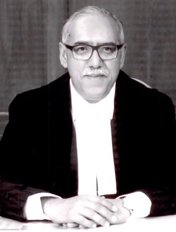
Page 1 1
REPORTABLE
IN THE SUPREME COURT OF INDIA
CRIMINAL APPELLATE JURISDICTION
CRIMINAL APPEAL NO. 636 OF 2017
[Arising out of SLP (Crl.) No. 7186 of 2014]
Dr. Sou Jayshree Ujwal Ingole . . . . Appellant(s)
Versus
State of Maharashtra & Anr. . . . Respondent(s)
J U D G M E N T
Deepak Gupta, J.
Leave granted.
2.The appellant herein is a doctor and has challenged the
Order dated 18.06.2014 passed by the High Court of Judicature
of Bombay, Nagpur Bench in Criminal Application (APL) No. 354
of 2012, whereby the petition filed by the appellant under Section
482 CrPC for quashing the criminal proceedings initiated against
her under Section 304-A IPC was dismissed.
Page 2 2
3.Briefly stated the facts of the case are that one Shrikrishna
Gawai (hereinafter referred to as the ‘deceased’) was admitted on
account of injuries suffered in a road accident, in the Irvin
Hospital, Amravati on 29.08.1997 for medical treatment. It is the
admitted case of the parties that the deceased was suffering from
Haemophilia, a disease in which there is impairment of blood
clotting. Therefore, special attention was required to be paid
during the treatment of the patient. It is not disputed that one
Dr. Manohar Mohod was on duty as an Emergency Medical
Officer. On 29.08.1997 the patient was treated both by the
appellant and Dr. Mohod. On 30 & 31.08.1997, the deceased
was attended upon by Dr. Dhirendra Wagh. Thereafter also, the
deceased remained in the Hospital under the treatment of the
appellant and Dr. Mohod.
4.Dr. Mohod, the Emergency Medical Officer attended upon
the deceased on 05.09.1997 at 9.00 p.m. and found that he was
suffering from abdominal pain and, thereafter, a call was sent to
the appellant, who was Surgeon on Call. It is not disputed that
the appellant went to the Hospital on being called. She attended
upon the deceased and made a note that a Physician be called.
Page 3 3
Thereafter, she left the Hospital. In the morning on 06.09.1997,
the condition of the deceased worsened and he died.
5.The main allegation against the appellant is that after
having called for a Physician, she did not wait in the hospital and
did not attend upon the patient, especially when the patient was
suffering from Haemophilia. The Physician, Dr. Avinash
Choudhary, who is accused No. 1, did not turn up in the
hospital. Even next morning on 06.09.1997, when Dr. Mohod
again attended upon the deceased, the Physician Dr. Choudhary
was not present and, unfortunately, the patient died.
Thereafter, a complaint was lodged in the police station, wherein
it was alleged by the brother of the deceased that the deceased
died as a result of negligence of the three doctors. The
complaint was investigated as Crime No. 317 of 1997 which was
initially filed against Dr. Avinash Choudhary only but, later on,
the names of the appellant Dr. Jayshree Ujwal Ingole and Dr.
Manohar Mohod were also included.
6.A separate Departmental Enquiry was also carried out and,
in that enquiry, all the three doctors were held negligent in
performing their duties. Dr. Mohod was debarred from an
Page 4 4
annual increment as penalty; the appellant Dr. Jayshree Ingole
was permanently prohibited from entering Irvin Hospital,
Amravati, and Dr. Avinash Choudhary was transferred. It would
be pertinent to mention that Dr. Mohod was discharged in the
criminal case on the ground that no case of negligence was made
out against him.
7.The appellant herein filed a petition for quashing the charge
against her, but this petition was rejected by the learned Single
Judge of the High Court of Bombay at Nagpur mainly on the
ground that the question whether inaction of the appellant in
leaving the deceased at about 11.00 p.m. and not waiting for the
Physician to turn up, amounted to a rash and negligent act on
her behalf, would be decided during trial.
8.We have heard learned counsel for the parties. Learned
counsel for the appellant has placed reliance on the judgment of
this Court in Jacob Mathew v. State of Punjab & Anr.
1
,
wherein this Court held that the court should be circumspect
before instituting criminal proceedings against a medical
professional. This Court has held that negligence comprises of (i)
1
(2005) 6 SCC 1,
Page 5 5
a legal duty to exercise due care on the part of the party
complained of; (ii) breach of the said duty ; and (iii) consequential
damage. It was held that in cases where negligence is alleged
against professionals like doctors the court should be careful
before instituting criminal proceedings. It is not possible for any
doctor to assure or guarantee that the result of treatment would
invariably be positive. The only assurance which a professional
can give is that he is professionally competent, has requisite skill
and has undertaken the task entrusted to him with reasonable
care. It would be pertinent to quote the following relevant
observations made in Jacob Mathew’s case (supra):
26. No sensible professional would intentionally
commit an act or omission which would result in loss or
injury to the patient as the professional reputation of the
person is at stake. A single failure may cost him dear in
his career. Even in civil jurisdiction, the rule of res ipsa
loquitur is not of universal application and has to be
applied with extreme care and caution to the cases of
professional negligence and in particular that of the
doctors. Else it would be counter-productive. Simply
because a patient has not favourably responded to a
treatment given by a physician or a surgery has failed,
the doctor cannot be held liable per se by applying the
doctrine of res ipsa loquitur.
xxx xxx xxx
28. A medical practitioner faced with an emergency
ordinarily tries his best to redeem the patient out of his
suffering. He does not gain anything by acting with
negligence or by omitting to do an act. Obviously,
therefore, it will be for the complainant to clearly make
out a case of negligence before a medical practitioner is
Page 6 6
charged with or proceeded against criminally. A surgeon
with shaky hands under fear of legal action cannot
perform a successful operation and a quivering physician
cannot administer the end-dose of medicine to his
patient.
29. If the hands be trembling with the dangling fear
of facing a criminal prosecution in the event of failure for
whatever reason — whether attributable to himself or
not, neither can a surgeon successfully wield his
life-saving scalpel to perform an essential surgery, nor
can a physician successfully administer the life-saving
dose of medicine. Discretion being the better part of
valour, a medical professional would feel better advised to
leave a terminal patient to his own fate in the case of
emergency where the chance of success may be 10% (or
so), rather than taking the risk of making a last ditch
effort towards saving the subject and facing a criminal
prosecution if his effort fails. Such timidity forced upon a
doctor would be a disservice to society.
30. The purpose of holding a professional liable for
his act or omission, if negligent, is to make life safer and
to eliminate the possibility of recurrence of negligence in
future. The human body and medical science, both are
too complex to be easily understood. To hold in favour of
existence of negligence, associated with the action or
inaction of a medical professional, requires an in-depth
understanding of the working of a professional as also
the nature of the job and of errors committed by chance,
which do not necessarily involve the element of
culpability.
After discussing the entire law on the subject, this Court
concluded as follows:
“48. We sum up our conclusions as under:
(1) Negligence is the breach of a duty caused by
omission to do something which a reasonable man
guided by those considerations which ordinarily regulate
the conduct of human affairs would do, or doing
something which a prudent and reasonable man would
not do. The definition of negligence as given in Law of
Torts, Ratanlal & Dhirajlal (edited by Justice G.P. Singh),
referred to hereinabove, holds good. Negligence becomes
actionable on account of injury resulting from the act or
Page 7 7
omission amounting to negligence attributable to the
person sued. The essential components of negligence are
three: “duty”, “breach” and “resulting damage”.
(2) Negligence in the context of the medical
profession necessarily calls for a treatment with a
difference. To infer rashness or negligence on the part of
a professional, in particular a doctor, additional
considerations apply. A case of occupational negligence is
different from one of professional negligence. A simple
lack of care, an error of judgment or an accident, is not
proof of negligence on the part of a medical professional.
So long as a doctor follows a practice acceptable to the
medical profession of that day, he cannot be held liable
for negligence merely because a better alternative course
or method of treatment was also available or simply
because a more skilled doctor would not have chosen to
follow or resort to that practice or procedure which the
accused followed. When it comes to the failure of taking
precautions, what has to be seen is whether those
precautions were taken which the ordinary experience of
men has found to be sufficient; a failure to use special or
extraordinary precautions which might have prevented
the particular happening cannot be the standard for
judging the alleged negligence. So also, the standard of
care, while assessing the practice as adopted, is judged in
the light of knowledge available at the time of the
incident, and not at the date of trial. Similarly, when the
charge of negligence arises out of failure to use some
particular equipment, the charge would fail if the
equipment was not generally available at that particular
time (that is, the time of the incident) at which it is
suggested it should have been used.
(3) A professional may be held liable for negligence
on one of the two findings: either he was not possessed of
the requisite skill which he professed to have possessed,
or, he did not exercise, with reasonable competence in
the given case, the skill which he did possess. The
standard to be applied for judging, whether the person
charged has been negligent or not, would be that of an
ordinary competent person exercising ordinary skill in
that profession. It is not possible for every professional to
possess the highest level of expertise or skills in that
branch which he practices. A highly skilled professional
may be possessed of better qualities, but that cannot be
made the basis or the yardstick for judging the
performance of the professional proceeded against on
indictment of negligence.
(4) The test for determining medical negligence as
laid down in Bolam vs. Friern Hospital Management
Page 8 8
Committee (1957) 1 WLR 582 at p. 586 holds good in its
applicability in India.
(5) The jurisprudential concept of negligence differs
in civil and criminal law. What may be negligence in civil
law may not necessarily be negligence in criminal law.
For negligence to amount to an offence, the element of
mens rea must be shown to exist. For an act to amount
to criminal negligence, the degree of negligence should be
much higher i.e. gross or of a very high degree.
Negligence which is neither gross nor of a higher degree
may provide a ground for action in civil law but cannot
form the basis for prosecution.
(6) The word “gross” has not been used in Section
304-A IPC, yet it is settled that in criminal law negligence
or recklessness, to be so held, must be of such a high
degree as to be “gross”. The expression “rash or negligent
act” as occurring in Section 304-A IPC has to be read as
qualified by the word “grossly”.
(7) To prosecute a medical professional for
negligence under criminal law it must be shown that the
accused did something or failed to do something which in
the given facts and circumstances no medical
professional in his ordinary senses and prudence would
have done or failed to do. The hazard taken by the
accused doctor should be of such a nature that the injury
which resulted was most likely imminent.
(8) Res ipsa loquitur is only a rule of evidence and
operates in the domain of civil law, specially in cases of
torts and helps in determining the onus of proof in
actions relating to negligence. It cannot be pressed in
service for determining per se the liability for negligence
within the domain of criminal law. Res ipsa loquitur has,
if at all, a limited application in trial on a charge of
criminal negligence.”
9.Applying the law laid down in Jacob Mathew’s case (supra),
we are of the view that this is not a case where the appellant
should face trial especially when 20 years have already elapsed.
The only allegation against the appellant is that she left the
patient. We must remember that the appellant was a Surgeon on
Page 9 9
Call. She came to the hospital when she was called and
examined the patient. As per her judgment, she could find no
evidence of bleeding or injury and, therefore, she had noted that
a Physician be called. Thereafter, she left the hospital at about
11.00 p.m. True it is that she did not wait for the Physician to
come, but it can be assumed that she would have expected that
the Physician would come soon. This may be an error in
judgment but is definitely not a rash and negligent act
contemplated under Section 304-A IPC. It is nobody’s case that
she was called again by the Nursing staff on duty. If the
condition of the patient had worsened between 11.00 p.m. and
5.00 a.m., the next morning, the Nursing staff could have again
called for the appellant, but they did not do so. Next morning,
the doctor on Emergency Duty, Dr. Mohod attended upon the
patient but, unfortunately, he died.
10.In the facts and circumstance of this case, it cannot be said
that the appellant is guilty of criminal negligence. At best it is an
error of judgment.
11.In view of the above discussion, we are of the view that no
case of committing a rash and negligent act contemplated under
Page 10 10
Section 304-A IPC is made out against the appellant. Her case is
similar to that of Dr. Mohod who has been discharged. We,
accordingly, allow the appeal, set aside the judgment dated
18.06.2014, passed by the learned Single Judge of the High
Court of Bombay, Nagpur Bench in Criminal Application (APL)
No.354 of 2012 and quash the criminal proceedings initiated
against the appellant vide order dated 28.02.2001, passed by the
Judicial Magistrate, First Class, Court No.6, Amravati in Regular
Criminal Case No. 310 of 1999 in FIR Crime No.317 of 1997.
Pending application(s), if any, stand(s) disposed of.
................................J.
(MADAN. B. LOKUR)
................................J.
(DEEPAK GUPTA)
New Delhi,
April 06, 2017.
Page 11 11
ITEM NO.1A COURT NO.5 SECTION IIA
(For judgment)
S U P R E M E C O U R T O F I N D I A
RECORD OF PROCEEDINGS
Petition(s) for Special Leave to Appeal (Crl.) No(s).
7186/2014
(Arising out of impugned final judgment and order dated
18/06/2014 in CRA No. 354/2012 passed by the High Court of
Bombay at Nagpur)
DR. Sou JAYSHREE UJWAL INGOLE Petitioner(s)
VERSUS
STATE OF MAHARASHTRA & ANR. Respondent(s)
Date : 06/04/2017 This petition was called on for
pronouncement of judgment today.
For Petitioner(s) Mr. Shirish K. Deshpande, AOR
Mr. Mohit Gautam, Adv.
For Respondent(s) Mr.Gagan Sanghi, Adv.
Mr. Rameshwar Prasad Goyal, AOR
Mr. Nishant Ramakantrao Katneshwarkar, AOR
Hon'ble Mr. Justice Deepak Gupta pronounced the
reportable judgment of the Bench comprising Hon'ble Mr.
Justice Madan B. Lokur and His Lordship.
The appeal is allowed in terms of the signed reportable
judgment.
(Meenakshi Kohli) (Sharda Kapoor)
Court Master (SH) Court Master (NS)
[Signed reportable judgment is placed on the file]

 Login with google
Legal Notes
Add a Note....