
As per the case facts, a scientist from the Indian Space Research Organisation (ISRO) was dismissed from service without an inquiry, citing the interest of State security due to unauthorized ...


Reportable
IN THE SUPREME COURT OF INDIA
CIVIL APPELLATE JURISDICTION
Civil Appeal No(s). 6301 of 2013
Dr. V.R. Sanal Kumar
…. Appellant(s)
Versus
Union Of India & Ors.
…Respondent(s)
J U D G M E N T
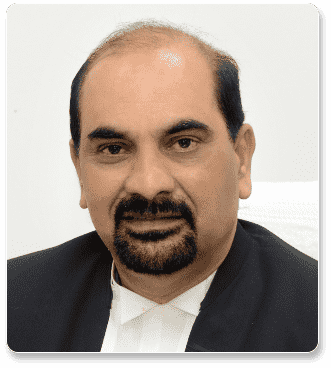
C.T. RAVIKUMAR, J.
1.The petitioner in W.P. (C) No.33421 of 2008,
who is unsuccessful in his challenge against the
order of his dismissal from service without inquiry
in the interest of the security of the State, filed this
appeal by Special Leave against the judgment
dated 16.01.2012 passed thereon, by the High
Court of Kerala. As per the impugned judgment
the High Court dismissed the challenge against the
order dated 30.09.2008 of the Central
Administrative Tribunal, Ernakulam Bench in O.A.
No. 653 of 2007.
Civil Appeal No. 6301 of 2013 Page 1 of 46
2.Compendiously stated, the case that
culminated in the impugned judgment is as
follows:
The appellant was initially appointed as
Scientist/Engineer ‘SC’ in Group-A in Vikram
Sarabhai Space Centre (‘VSSC’ for brevity),
Thiruvananthapuram of the Indian Space Research
Organisation (‘ISRO’ for brevity), on 15.01.1992.
On 01.07.1999, he was promoted as
Scientist/Engineer ‘SD’. While so, on 28.08.2002,
the appellant was invited by Prof. H.D. Kim, Head
of School of Mechanical Engineering, Andong
National University, South Korea, to join as a post-
doctoral trainee and to assist him for one year,
recognizing the appellant as a well-known expert
on the starting and transient flows in the Solid
Rocket Motors. On 18.07.2003, the appellant
applied for sabbatical leave for one year. The
competent Authority decided not to recommend
the leave in the exigency of service and in public
interest. The appellant applied for 9 days Earned
Leave from 21.08.2003 to 29.08.2003 on personal
grounds and soon went to South Korea. Through
e-mail dated 01.09.2003, he intimated his
Divisional Head in VSSC that due to the delay in
Civil Appeal No. 6301 of 2013 Page 2 of 46
processing his request for leave, he reached South
Korea to carry out his post-doctoral research at
Andong National University in South Korea. The
appellant sent another leave application, through
e-mail, for 89 days from 01.09.2003 to 28.11.2003.
As per e-mail dated 05.09.2003, the appellant was
informed that his leave was not sanctioned and he
was required to report for duty not later than
11.09.2003. Meanwhile, the respondent
organization came to know that the appellant had
published a technical paper as first author with a
foreigner as one of the co-authors in the 39
th
American Institute of Aeronautics and Astronautics
(AIAA) Joint Propulsion Conference, USA held
during July, 2003, without obtaining specific
approval of the Competent Authority. Thereupon,
disciplinary action was initiated against the
appellant and he was charge-sheeted on
19.12.2003 for unauthorized absence and
publication of papers without following due
procedure or obtaining approval of the Competent
Authority.
3.The appellant re-joined duty on 23.01.2004
and again left for South Korea in March, 2004
Civil Appeal No. 6301 of 2013 Page 3 of 46
without any information to the Organization or its
permission. Though he attended the preliminary
hearing in the departmental inquiry, he had
chosen not to take part in further proceedings.
Ergo, the inquiry was conducted ex-parte and the
copy of the Inquiry Report holding the charges as
proved submitted by the Inquiry Officer, was sent
to him.
4.Meanwhile, the appellant unsuccessfully
preferred two Original Applications before the
Central Administrative Tribunal viz., O.A. Nos.
150/2004 and 529/2004. Later, he came back to
India and re-joined duty on 18.05.2004. Again, the
appellant went back to South Korea on 28.05.2004
without obtaining permission from the authorities.
Consequently, as per Order dated 13.07.2004 he
was suspended from service pending disciplinary
action. Ultimately, as per Order dated 11.08.2007,
the appellant was dismissed from service with
effect from 01.09.2003 under clause (iii) of Rule 16
of Department of Space Employees’ (Classification,
Control and Appeal) Rules, 1976, hereinafter
referred for short ‘the CCA Rules’. Vide Order
dated 13.08.2007, the appellant was asked to
Civil Appeal No. 6301 of 2013 Page 4 of 46
refund the subsistence allowance drawn after
01.09.2003, as he was dismissed w.e.f.
01.09.2003. The appellant filed O.A. No. 653 of
2007 seeking quashment of the order of dismissal
from service and also order directing refund of
subsistence allowance drawn after 01.09.2003
besides seeking order for re-instating him in
service. As per Order dated 30.09.2008, the
Tribunal partly allowed the O.A. Though the order
of dismissal of the appellant was sustained, the
Tribunal annulled the grant of retrospectivity to it
from 01.09.2003. In other words, its effect was
ordered to take only from the date of the order
viz., 11.08.2007. As a necessary sequel to the
annulment of retrospectivity, it was ordered that
there should be no recovery of subsistence
allowance and hence, the order dated 13.08.2007
for recovery of subsistence allowance was
quashed. Naturally, the prayer or reinstatement in
service was rejected.
5.Both the appellant and the respondent
Organization assailed the order of the Tribunal in
O.A. No. 653 of 2007 before the High Court. The
respondent Organization filed W.P. (C) No.
Civil Appeal No. 6301 of 2013 Page 5 of 46
4918/2008, essentially challenging the order in
O.A. No.653 of 2007 to the extent of effacing the
retrospective effect of the order of dismissal of the
appellant herein from 01.09.2003 and restricting
its effect only from the date of the order viz.,
11.08.2007 and restraining recovery of
subsistence allowance. The appellant herein filed
W.P. (C) No.33421 of 2008 aggrieved by the
disinclination to quash the order of dismissal and
to order for his reinstatement in service. The High
Court dismissed W.P. (C) No.33421 of 2008 as per
the impugned judgment and hence, this appeal by
special leave. It is required to be noted that
subsequently, as per judgment dated 16.02.2009
the High Court dismissed W.P. (C) No.4918 of 2008
filed by the respondent Organisation and
consequently, the order dated 31.05.2010 was
issued giving effect to the order of the Tribunal in
O.A. No.653 of 2007 and modifying the date of
effect of the order of dismissal from the very date
of the same.
6.Heard, Shri Gopal Sankaranarayanan, learned
Senior Advocate appearing for the appellant and
Shri Shailesh Madiyal, learned counsel for
Civil Appeal No. 6301 of 2013 Page 6 of 46
respondent Nos.1 to 4.
7.Indisputably, the appellant was dismissed
form service without any inquiry in the manner
provided in ‘the CCA Rules’ invoking the power
under clause (iii) of Rule 16 of CCA Rules, which
reads thus: -
“16. Special Procedure in certain
cases
Notwithstanding anything contained in
Rules 11 to 15 –
(i)where any penalty is imposed on an
employee on the ground of conduct
which has led to his conviction on a
criminal charge; or
(ii)where the Disciplinary Authority is
satisfied for reasons to be recorded by it
in writing that it is not reasonably
practicable to hold an inquiry in the
manner provided in these Rules; or
(iii)where the President is satisfied that in
the interest of the security of the State, it
is not expedient to hold any inquiry in the
manner provided in these Rules,
the Disciplinary Authority may consider
the circumstances of the case and make
Civil Appeal No. 6301 of 2013 Page 7 of 46
such orders thereon as it deems fit:
Provided that the employee may be given
an opportunity of making representation
on the penalty proposed to be imposed
before any order is made in a case under
Clause (i):
Provided further that the Commission
shall be consulted, where such
consultation is necessary, before any
orders are made in any case under this
Rule.”
8. A bare perusal of the afore-quoted provision
and the second proviso to Article 311 (2) of the
Constitution of India would undoubtedly go to
show that the former is virtually a service rule
reproducing the second proviso almost in whole
though the language used is not identical. It is to
be noted that even according to the appellant,
Rule 16 (iii) of the CCA Rules is in pari materia to
clause (c) of the second proviso to Article 311 (2)
of the Constitution of India. As noticed
hereinbefore, the dismissal of the appellant from
service invoking the aforesaid power was upheld
by the Central Administrative Tribunal and it also
got the seal of approval from the High Court.
Civil Appeal No. 6301 of 2013 Page 8 of 46
Therefore, the question is whether it requires a
further judicial review at the hands of this Court in
exercise of power under Article 136 of the
Constitution of India based on the various
contentions raised by the appellant. The position
with respect to the non-requirement of adherence
to the principles of natural justice by complying
with the mandate under Article 311(2) viz., holding
an inquiry in which a person holding a civil post as
referred to in Article 311(1) is informed of the
charges against him and given an opportunity of
being heard in respect of those charges when the
second proviso to Article 311 (2) of the
Constitution of India comes into play in the matter
of dismissal, removal or reduction in rank and
other facets in such eventuality have been
considered by a Constitution Bench of this Court in
Union of India and Anr. v. Tulsiram Patel and
Ors.
1
. The exposition of laws on such aspects
thereunder have been reiterated many a times
thereafter by this Court. The decision in Tulsiram
Patel’s case (supra) would reveal the position that
compliance with the mandate under Article 311 (2)
and in that regard, issuance of charge sheet and
1 (1985) 3 SCC 398
Civil Appeal No. 6301 of 2013 Page 9 of 46
hearing on the charges to be given to a
Government servant, with respect to any of the
aforesaid three major penalties proposed to be
imposed upon him, would not arise when clause
(c) of the second proviso to Article 311 (2) comes
into play and the same would be the position in
the case of service rules reproducing the second
proviso in whole or in part and whether the
language used is identical with that used in the
second proviso or not.
9.It was also held in Tulsiram Patel’s case
(supra) that clause (c) of second proviso to Article
311 (2) is based on public policy and is in public
interest and for the public good and the
Constitution makers who inserted Article 311 (2)
were the best persons to decide whether such an
exclusionary provision should be there and the
situations in which this provision should apply.
Furthermore, it was held therein that the law laid
down in the decision in Divisional Personnel
Officer, Southern Rly. & Anr. v. T.R.
Chellappan
2
that having regard to the meaning of
the word used in the context of the phrase “the
Disciplinary Authority may consider the
2 1976 3 SCC 190
Civil Appeal No. 6301 of 2013 Page 10 of 46
circumstances of the case and make such orders
thereon as it deems fit” under Rule 14(1) of the
Railway Servants (Discipline and Appeal) Rules,
1968, that an objective consideration is possible
“only if the delinquent employee is heard and is
given a chance to satisfy the authority regarding
the final orders that may be passed by the said
authority” is not acceptable. With reference to the
phrase “this clause shall not apply” in second
proviso to Article 311 (2) was held to be containing
the key words in the second proviso and they
would govern each and every clause thereof and
ultimately held that this phrase would leave no
scope for any kind of opportunity to be given to a
Government servant. It was also held that it would
take away both the rights to have an inquiry held
in which the Government servant would be entitled
to a charge sheet and also the right to make a
representation on the proposed penalty. In
Tulsiram Patel and Ors. (supra), this Court
further held that “interest of security of the State”
might be affected by actual acts or even the
likelihood of such acts taking place. The
satisfaction of the President or Governor, as the
case may be, must be with respect to the
Civil Appeal No. 6301 of 2013 Page 11 of 46
expediency or inexpediency of holding an inquiry
in the interest of the security of the State and an
inquiry in which such an act would lead to
disclosure of sensitive information and also the use
of information and hence such an inquiry into the
acts would be prejudicial to the interest of the
security of the State as much as those acts would,
it was held.
10.The relevant recitals where the Constitution
Bench observed and laid down the aforementioned
positions of law in Tulsiram Patel’s case (supra)
are as hereunder: -
“59. The position, therefore, is that the
pleasure of the President or the Governor is
not required to be exercised by either of them
personally, and that is indeed obvious from the
language of Article 311. Under clause (1) of
that article a government servant cannot be
dismissed or removed by an authority
subordinate to that by which he was
appointed. The question of an authority equal
or superior in rank to the appointing authority
cannot arise if the power to dismiss or remove
is to be exercised by the President or the
Governor personally. Clause (b) of the second
Civil Appeal No. 6301 of 2013 Page 12 of 46
proviso to Article 311 equally makes this clear
when the power to dispense with an inquiry is
conferred by it upon the authority empowered
to dismiss, remove or reduce in rank a
government servant in a case where such
authority is satisfied that for some reason, to
be recorded by that authority in writing, it is
not reasonably practicable to hold such inquiry,
because if it was the personal satisfaction of
the President or the Governor, the question of
the satisfaction of any authority empowered to
dismiss or remove or reduce in rank a
government servant would not arise. Thus,
though under Article 310 (1) the tenure of a
government servant is at the pleasure of the
President or the Governor, the exercise of such
pleasure can be either by the President or the
Governor acting with the aid and on the advice
of the Council of Ministers or by the authority
specified in Acts made under Article 309 or in
rules made under such Acts or made under the
proviso of Article 309; and in the case of clause
(c) of the second proviso to Article 311 (2), the
inquiry is to be dispensed with not on the
personal satisfaction of the President or the
Governor but on his satisfaction arrived at with
Civil Appeal No. 6301 of 2013 Page 13 of 46
the aid and on the advice of the Council of
Ministers.”
“101... As pointed out above, clause (2) of
Article 311 embodies in express words the audi
alteram partem rule. This principle of natural
justice having been expressly excluded by a
constitutional provision, namely, the second
proviso to clause (2) of Article 311, there is no
scope for reintroducing it by a side-door to
provide once again the same inquiry which the
constitutional provision has expressly
prohibited. Where a clause of the second
proviso is applied on an extraneous ground or
a ground having no relation to the situation
envisaged in that clause, the action in so
applying it would be mala fide, and, therefore,
void. In such a case the invalidating factor
may be referable to Article 14. This is,
however, the only scope which Article 14 can
have in relation to the second proviso, but to
hold that once the second proviso is properly
applied and clause (2) of Article 311 excluded,
Article 14 will step in to take the place of
clause (2) would be to nullify the effect of the
opening words of the second proviso and thus
frustrate the intention of the makers of the
Constitution…”
Civil Appeal No. 6301 of 2013 Page 14 of 46
“114. So far as Challappan case is concerned,
it is not possible to find any fault either with
the view that neither clause (a) of the second
proviso to Article 311 (2) nor clause (i) of Rule
14 of the Railway Servants Rules is mandatory
or with the considerations which have been set
out in the judgment as being the
considerations to be taken into account by the
disciplinary authority before imposing a
penalty upon a delinquent government
servant. Where a situation envisaged in one of
the three clauses of the second proviso to
Article 311 (2) or of an analogous service rule
arises, it is not mandatory that the major
penalty of dismissal, removal or reduction in
rank should be imposed upon the concerned
government servant. The penalty which can
be imposed may be some other major penalty
or even a minor penalty depending upon the
facts and circumstances of the case. In order
to arrive at a decision as to which penalty
should be imposed, the disciplinary authority
will have to take into consideration the various
factors set out in Challappan case
.
It is,
however, not possible to agree with the
approach adopted in Challappan case in
Civil Appeal No. 6301 of 2013 Page 15 of 46
considering Rule 14 of the Railway Servants
Rules in isolation and apart from the second
proviso to Article 311 (2), nor with the
interpretation placed by it upon the word
‘consider’ in the last part of Rule 14. Neither
Rule 14 of the Railway Servant Rules nor a
similar rule in other service rules can be looked
at apart from the second proviso to Article 311
(2). The authority of a particular officer to act
as a disciplinary authority and to impose a
penalty upon a government servant is derived
from rules made under the proviso to Article
309 or under an Act referable to that article.
As pointed out earlier, these rules cannot
impinge upon the pleasure of the President or
the Governor of a State, as the case may be,
because they are subject to Article 310(1).
Equally, they cannot restrict the safeguards
provided by clauses (1) and (2) of Article 311
as such a restriction would be in violation of
the provisions of those clauses. In the same
way, they cannot restrict the exclusionary
impact of the second proviso to Article 311 (2)
because that would be to impose a restriction
upon the exercise of pleasure under Article
310 (1) which has become free of the
restrictions placed upon it by clause (2) of
Civil Appeal No. 6301 of 2013 Page 16 of 46
Article 311 by reason of the operation of the
second proviso to that clause. The only cases
in which a government servant can be
dismissed, removed or reduced in rank by way
of punishment without holding an inquiry
contemplated by clause (2) of Article 311 are
the three cases mentioned in the second
proviso to that clause…”
“…It is thus obvious that the word ‘consider’ in
its ordinary and natural sense is not capable of
the meaning assigned to it in Challappan case.
The consideration under Rule 14 of what
penalty should be imposed upon a delinquent
railway servant must, therefore, be ex parte
and where the disciplinary authority comes to
the conclusion that the penalty which the facts
and circumstances of the case warrant is either
of dismissal or removal of reduction in rank, no
opportunity of showing cause against such
penalty proposed to be imposed upon him can
be afforded to the delinquent government
servant. Undoubtedly, the disciplinary
authority must have regard to all the facts and
circumstances of the case as set out in
Challappan case. As pointed out earlier,
considerations of fair play and justice requiring
Civil Appeal No. 6301 of 2013 Page 17 of 46
a hearing to be given to a government servant
with respect to the penalty proposed to be
imposed upon him do not enter into the picture
when the second proviso to Article 311 (2)
comes into play and the same would be the
position in the case of a service rule
reproducing the second proviso in whole or in
part and whether the language used is
identical with that used in the second proviso
or not. There are a number of orders which
are of necessity passed without hearing the
party who may be affected by them. For
instance, courts of law can and often do pass
ex parte ad interim orders on the application of
a plaintiff, petitioner or appellant without
issuing any notice to the other side or hearing
him. Can it, therefore, be contended that the
judge or judges, as the case may be, did not
apply his or their mind while passing such an
order?
“115. The decision in Challappan case is,
therefore, not correct with respect to the
interpretation placed by it upon Rule 14 of the
Railway Servants Rules and particularly upon
the word ‘consider’ occurring in the last part of
that rule and in interpreting Rule 14 by itself
Civil Appeal No. 6301 of 2013 Page 18 of 46
and not in conjunction with the second proviso
to Article 311 (2). Before parting with
Challappan case, we may, also point out that
case never held the field. The judgment in
that case was delivered on September, 15,
1975, and it was reported in (1976) 1 SCR at
pages 783 ff*. Hardly was that case reported
then in the next group of appeals in which the
same question was raised, namely, the three
civil appeals mentioned earlier, an order of
reference to a larger Bench was made on
November 18, 1976. The correctness of
Challappan case was, therefore, doubted from
the very beginning.”
“126. As pointed out earlier, the source of
authority of a particular officer to act as a
disciplinary authority and to dispense with the
inquiry is derived from the service rules while
the source of his power to dispense with the
disciplinary inquiry is derived from the second
proviso to Article 311 (2). There cannot be an
exercise of a power unless such power exists in
law. If such power does not exist in law, the
purported exercise of it would be an exercise
of a non-existent power and would be void.
The exercise of a power is, therefore, always
Civil Appeal No. 6301 of 2013 Page 19 of 46
referable to the source of such power and must
be considered in conjunction with it. The
Court’s attention in Challappan case was not
drawn to this settled position in law and hence
the error committed by it in considering Rule
14 of the Railway Servants Rules by itself and
without taking into account the second proviso
to Article 311 (2). It is also well settled that
where a source of power exists, the exercise of
such power is referable only to that source and
not to some other source under which were
that power exercised, the exercise of such
power would be invalid and without
jurisdiction. Similarly, if a source of power
exists by reading together two provisions,
whether statutory or constitutional, and the
order refers to only one of them, the validity of
the order should be upheld by construing it as
an order passed under both those provisions.
Further, even the mention of a wrong provision
or the omission to mention the provision which
contains the source of power will not invalidate
an order where the source of such power
exists. (See Dr. Ram Manohar Lohia v. State of
Bihar and Municipal Corporation of the City of
Ahmedabad v. Ben Hiraben Manilal) The
omission to mention in the impugned orders
Civil Appeal No. 6301 of 2013 Page 20 of 46
the relevant clause of the second proviso or
the relevant service rule will not, therefore,
have the effect of invalidating the orders and
the orders must be read as having been made
under the applicable clause of the second
proviso to Article 311 (2) read with the
relevant service rule.”
11. In paragraph 144 therein it was held as
under: -
“144. It was further submitted that what is
required by clause (c) is that the holding of the
inquiry should not be expedient in the interest
of the security of the State and not the actual
conduct of a government servant which would
be the subject-matter of the inquiry. This
submission is correct so far as it goes but what
it overlooks is that in an inquiry into acts
affecting the interest of the security of the
State, several matters not fit or proper to be
made public, including the source of
information involving a government servant in.
such acts, would be disclosed and thus in
cases such as these an inquiry into acts
prejudicial to the interest of the security of the
State would prejudice the interest of the
Civil Appeal No. 6301 of 2013 Page 21 of 46
security of the State as much as those acts
would.”
12.In the decision in Union of India v. Balbir
Singh
3
, this Court referred to the earlier decision
in A.K. Kaul v. Union of India
4
, in paragraph 7
as under: -
“7. In the case of A.K. Kaul v. Union of
India [(1995) 4 SCC 73 : 1995 SCC (L&S) 922 :
(1995) 30 ATC 174] this Court has examined
the extent of judicial review permissible in
respect of an order of dismissal passed under
second proviso clause (c) of Article 311(2) of
the Constitution. This Court has held that the
satisfaction of the President can be examined
within the limits laid down in S.R.
Bommai v. Union of India [(1994) 3 SCC 1]. The
order of the President can be examined to
ascertain whether it is vitiated either by mala
fides or is based on wholly extraneous and/or
irrelevant grounds. The court, however, cannot
sit in appeal over the order, or substitute its
own satisfaction for the satisfaction of the
President. So long as there is material before
the President which is relevant for arriving at
his satisfaction as to action being taken under
3 (1998) 5 SCC 216
4 (1995) 4 SCC 73
Civil Appeal No. 6301 of 2013 Page 22 of 46
clause (c) to the second proviso to Article
311(2), the court would be bound by the order
so passed. This Court has enumerated the
scope of judicial review of the President's
satisfaction for passing an order under clause
(c) of the second proviso to Article 311(2). The
Court has said, (1) that the order would be
open to challenge on the ground of mala fides
or being based wholly on extraneous and/or
irrelevant grounds; (2) even if some of the
material on which the action is taken is found
to be irrelevant the court would still not
interfere so long as there is some relevant
material sustaining the action; (3) the truth or
correctness of the material cannot be
questioned by the court nor will it go into the
adequacy of the material and it will also not
substitute its opinion for that of the President;
(4) the ground of mala fides takes in, inter alia,
situations where the proclamation is found to
be a clear case of abuse of power or what is
sometimes called fraud on power; (5) the court
will not lightly presume abuse or misuse of
power and will make allowance for the fact
that the President and the Council of Ministers
are the best judge of the situation and that
they are also in possession of information and
Civil Appeal No. 6301 of 2013 Page 23 of 46
material and the Constitution has trusted their
judgment in the matter; (6) this does not mean
that the President and the Council of Ministers
are the final arbiters in the matter or that their
opinion is conclusive. (cf. also Union Territory,
Chandigarh v. Mohinder Singh [(1997) 3 SCC
68: 1997 SCC (L&S) 633].)”
13.In paragraph 8 thereof, it was further held
thus: -
“8. If an order passed under Article 311(2)
proviso (c) is assailed before a court of law on
the ground that the satisfaction of the
President or the Governor is not based on
circumstances which have a bearing on the
security of the State, the court can examine
the circumstances on which the satisfaction of
the President or the Governor is based; and if it
finds that the said circumstances have no
bearing whatsoever on the security of the
State, the court can hold that the satisfaction
of the President or the Governor which is
required for passing such an order has been
vitiated by wholly extraneous or irrelevant
considerations.”
Civil Appeal No. 6301 of 2013 Page 24 of 46
14. In the decision in Union of India v. M.M.
Sharma
5
, this Court held that dismissal without an
inquiry in the interest of national security under
clause (c) of the second proviso to Article 311 (2)
of the Constitution did not require recording of
reasons for dispensing with the inquiry. At the
same time, it was held that there were records to
indicate that there are sufficient and cogent
reasons for dispensing with the inquiry in the
interest of the security of the State. In paragraph
28 thereof, it was held that, the power to be
exercised under sub-clauses (a), (b) and (c) being
special and extraordinary powers conferred by the
Constitution, there was no obligation on the part of
the disciplinary authority to communicate the
reasons for imposing the penalty of dismissal and
not any other penalty.
15.In paragraph 30, it was held thus: -
“30. If in terms of the mandate of the
Constitution, the communication of the charge
and holding of an enquiry could be dispensed
with, in view of the interest involving security
of the State, there is equally for the same
reasons no necessity of communicating the
5 (2011) 11 SCC 293
Civil Appeal No. 6301 of 2013 Page 25 of 46
reasons for arriving at the satisfaction as to
why the extreme penalty of dismissal is
imposed on the delinquent officer. The High
Court was, therefore, not justified in passing
the impugned order.”
16.After carefully going through the provisions
under Clause (iii) of Rule 16 of the CCA Rules, we
have already found, as concurrently found by the
Central Administrative Tribunal and the High Court,
that the said provision is a service rule virtually
reproducing clause (c) of the second proviso to
Article 311 (2) of the Constitution of India though
the language used is not identical. We have also
noted that the appellant did not dispute that Rule
16 (iii) is in pari materia with clause (c) of the
second proviso to Article 311 (2). When once it is
so found, there cannot be any doubt with respect
to the position, as settled in Tulsiram Patel and
Ors. (supra) and reiterated in subsequent
decisions, that adherence to principles of natural
justice i.e., conducting inquiry after issuing charge
sheet and providing hearing to a government
servant on those charges, in case of proposal to
impose any of the aforesaid three major penalties
would not arise when the power under Rule 16 (iii)
Civil Appeal No. 6301 of 2013 Page 26 of 46
of the CCA Rules is invoked. Bearing in mind the
position of law thus revealed from the
aforementioned decisions, we will consider
whether judicial review is called for or not in
respect of the challenge of the appellant against
his removal from service without holding an
inquiry in invocation of the power under Clause (iii)
of Rule 16 of the CCA Rules, with reference to the
factual backdrop of this case.
17.Manifold contentions have been raised by
Shri Gopal Sankaranarayanan, learned Senior
Advocate appearing for the appellant to contend
that both the Tribunal and the High Court had
fallen in error in upholding the order of dismissal
passed without conducting an inquiry in invocation
Clause (iii) of Rule 16 of the CCA Rules. It is the
contention of the learned Senior Advocate that
indisputably in this case on 19.12.2003, the Under
Secretary to the Government of India served a
Memorandum along with article of charges and
statement of imputation under Article 11 of the
CCA Rules to the appellant for the purpose of
conducting departmental inquiry, alleging
commission of two charges, namely (i)
Civil Appeal No. 6301 of 2013 Page 27 of 46
unauthorized absence from 01.09.2003 to leave
the country for taking post-doctoral research
without permission and (ii) publication of a
technical paper during July, 2003 in AIAA
Propulsion Conference, USA as first author with a
foreigner as one of the co-authors, without prior
permission or approval from the competent
authority. The contention is that the appellant
participated in the preliminary hearing and
thereafter, the matter was proceeded ex-parte and
that the inquiry report was thereafter served on
him and a copy of the same was also forwarded to
the Union Public Service Commission for its
remarks, but the said proceedings had not reached
its logical end. In other words, it is submitted that
without finalizing the same and if at all necessary
to issue a further charge on additional imputation
a short cut was adopted abruptly, by invoking the
powers under clause (iii) of Rule 16 of the CCA
Rules to dismiss the appellant from service without
holding inquiry. This, according to the appellant, is
impermissible in law and, therefore, the non-
interference with the order of dismissal by the
Tribunal and then by the High Court could not be
sustained. It is also the contention that there is
Civil Appeal No. 6301 of 2013 Page 28 of 46
no justification in holding that it is not expedient to
conduct an inquiry in terms of Rule 16 (iii) of CCA
Rules after deciding to conduct an inquiry and in
fact, actually conducting an inquiry. It is also the
contention that the order of dismissal dated
11.08.2007 on the face of it did not reflect the
satisfaction of the President that in the interest of
the security of the State, it is not expedient to hold
an inquiry. It is the further contention that though
the records of the cases were placed before the
Tribunal, it had not exercised its jurisdiction to
conduct a judicial review of the substantive
satisfaction required to pass an order under Rule
16 (iii) of the CCA Rules. It is submitted that the
High Court too, had failed in examining that
aspect, though the said point was argued before
the High Court.
18.Per contra, Shri Shailesh Madiyal, learned
counsel for respondent Nos.1 to 4 would submit
that the Central Administrative Tribunal as also the
High Court had correctly appreciated the
circumstances that led to the invocation of the
power under Rule 16 (iii) of the CCA Rules for
dismissing the appellant from service without
Civil Appeal No. 6301 of 2013 Page 29 of 46
conducting an inquiry. It is submitted that the
contentions of the appellant that having initiated
disciplinary proceedings under Rule 11 of the CCA
Rules vide Memorandum dated 19.12.2003 for the
twin specific charges,(referred hereinbefore)
inexpediency to hold an inquiry could not have
been and should not have been assigned as a
reason to invoke the power under Rule 16 (iii) of
the CCA Rules to dismiss him from service as per
Order dated 11.08.2007 and that it is a short cut
move, are absolutely unsustainable in view of the
indisputable facts and circumstances obtained in
this case. It is submitted that the proceedings
initiated by Memorandum dated 19.12.2003 under
Rule 11 of the CCA Rules and the proceedings
which culminated in the dismissal of the appellant
under Rule 16 (iii) of the CCA Rules are distinct. In
the proceedings initiated under Rule 11, inquiry
was conducted and the appellant was also
afforded with reasonable opportunity, adhering to
the principles of natural justice. However, other
violations of serious nature came to light
subsequently, causing serious doubt about the
appellant’s integrity, honesty, reliability,
dependability and trustworthiness, which are
Civil Appeal No. 6301 of 2013 Page 30 of 46
quintessential qualities expected in all
Scientists/Engineers of ISRO, which is a
strategically important organisation. Going by the
counter affidavit filed before this Court on behalf of
respondent Nos.1 to 4, inter alia, the following
relevant facts were taken into account to invoke
the power under Rule 16 (iii) of the CCA Rules
instead of proceeding to file a supplementary
charge sheet under Rule 11 of the CCA Rules, such
as:-
(i)the way the Korean authorities had
harboured him for almost two years,
(ii)his continued contacts and
interactions with them in spite of
orders to the contrary,
(iii)the manner in which he managed to
leave the country in spite of the Look
Out Notices issued by the Immigration
Authorities to the Police and
International Airport authorities,
(iv)his further exposure to the ISRO'S
critical rocket technologies would have
serious complications, and
Civil Appeal No. 6301 of 2013 Page 31 of 46
19.It is the further contention that ISRO, being a
strategically important organization having
sensitivity, especially from the angle of the
security of the State, its employees are not
allowed to go abroad and to take up
assignments/research there, without permission.
Being a responsible scientist/engineer of
VSSC/ISRO, the appellant was duty bound to abide
by the conduct Rules and when the violation is
serious and likely to affect the security of the
State, it is not only befitting but also inevitably
inviting action in terms of the provision under Rule
16 (iii) of the CCA Rules. The appellant had
unauthorized association with foreign institution on
a subject, which is a strategic research and
development subject in the respondent
organization and based on which the nation’s
rocketry and ambitious launch vehicle programs
were advancing and a doubtful circumstance of
disclosure of vital data to unauthorized foreign
agencies is created it is a matter of concern for the
security of the State. Taking up all such
contentions, it was submitted by the learned
counsel appearing for respondent Nos.1 to 4 that
the invocation of the power under Rule 16 (iii) of
Civil Appeal No. 6301 of 2013 Page 32 of 46
the CCA Rules in dismissing the appellant from
service was subjected to judicial review, initially by
the Tribunal and then by the High Court and,
therefore, no case, whatsoever was made out by
the appellant so as to compel invocation of the
power under Article 136 of the Constitution of India
to conduct a further judicial review. It is therefore,
submitted that the appeal is liable to be dismissed.
20.Before delving into the matter further, it is
only apposite to refer to the appellant’s own
estimation about himself. According to the
appellant, he is a high-profile scientist with
specialisation in rocket propulsion with proven
credentials at par with NASA scientist. He would
further state that he is second to none in space
program and is having all potential to become the
Chairman of ISRO and is the best suitable
candidate for the post of Chairman ISRO with
immediate effect.
21.Thus, it is obvious that the appellant himself
knew that he is a high-profile scientist in ISRO,
which is a highly sensitive and strategic research
and development organisation under the
Department of Space, Government of India. We are
Civil Appeal No. 6301 of 2013 Page 33 of 46
of the considered view that the Court cannot be an
island and feign oblivion of the pivotal role of a
scientist/engineer attached to ISRO and also the
role of ISRO as the space agency of India.
Obviously, it is involved in science, engineering
and technology to harvest the benefits of outer
space for India. Now, we will cull out the relevant
indisputable and undisputed facts, obtained in this
case. The appellant is a scientist/engineer in the
VSSC, Thiruvananthapuram of ISRO. After applying
for sabbatical leave for one year and when the
competent authority decided not to recommend
the leave in exigency of service, he applied for
nine days’ earned leave from 21.08.2003 to
29.08.2003 on personal grounds and then went to
South Korea. On reaching South Korea, through e-
mail dated 01.09.2003, the appellant intimated his
Divisional Head in VSSC regarding his arrival in
South Korea to carry out his post-doctoral research
and to assist Prof. H.D. Kim, Head of School of
Mechanical Engineering, Andong National
University, South Korea. Though his application
dated 18.07.2003 was not sanctioned, through
another e-mail, he applied for 89 days’ leave from
01.09.2003 to 28.11.2003 and continued to stay in
Civil Appeal No. 6301 of 2013 Page 34 of 46
South Korea despite being informed that his leave
was not sanctioned and was required to report for
duty not later than 11.09.2003. It is also to be
noted that before going to South Korea to join the
aforesaid University, he had published a technical
paper as first author with a foreigner as one of the
co-authors in the 39
th
American Institute of
Aeronautics and Astronautics (AIAA) Joint
Propulsion Conference, USA, without obtaining
approval of the competent authority. Though he
rejoined duty on 27.03.2004 with full knowledge
that his application for sabbatical leave was not
sanctioned he left for South Korea in March, 2004
without giving information to and obtaining
permission from the organization. He re-joined
duty on 18.05.2004 and then, went back to South
Korea on 28.05.2004 without permission from the
authorities. The aforesaid factual aspects would
reveal that without permission from the competent
authority the appellant went to South Korea, joined
Andong National University, South Korea and
assisted Prof. H.D. Kim, Head of School of
Mechanical Engineering and kept on his
association with the said foreign institution
involved in the research on rocketry, which is a
Civil Appeal No. 6301 of 2013 Page 35 of 46
strategic research and development subject in
ISRO. In the contextual situation, it is relevant to
refer to Annexures P1 and P4. Annexure-P1 letter
dated 28.08.2002 from Prof. H.D. Kim to himself,
produced by the appellant, would reveal the
nature of the research project in the laboratory of
Prof. H.D. Kim and Annexure P4 would reveal the
repeated advice to the appellant not to have any
contact in future with any external agency, such as
Andong National University, South Korea, without
permission from appropriate authorities in ISRO.
The further indisputable facts would reveal his
persistent dealings with that University ignoring
such instructions. In such circumstances, his
continued association with a foreign
agency/university, ignoring the fact that he is a
responsible scientist in the ISRO, which is a highly
sensitive and strategic research and development
organization under the Department of Space,
Government of India, if viewed suspiciously and
thought that his further exposure to ISRO’s critical
rocket technologies would create serious
complications, it cannot be said to be bereft of
substance and not a matter of concern in regard to
the security of the State. As noticed hereinbefore,
Civil Appeal No. 6301 of 2013 Page 36 of 46
taking into account the expertise of the appellant
in the particular branch and that he has been
working under ISRO since 1992, there cannot be
any doubt with respect to the experience which he
gathered in the subject from ISRO and in such
circumstances leaving to a foreign country without
prior permission and continuing there for a
considerable long period despite advice and
instructions to come back and continuing to
associate with such a foreign
organisation/university researching on rocketry,
the respondent organisation cannot be said to
have committed a flaw or fault in entertaining
suspicion on his honesty, integrity, reliability,
dependability and trustworthiness and above all to
treat such acts as a matter of concern in relation
to the security of the State.
22.Rule 16 (iii) of the CCA Rules requires no
analytical approach to understand that it contains
two limbs. Firstly, to attract it requires the
satisfaction of the President that “in the interest of
the security of the State” it is not expedient to
hold any inquiry in the manner provided in the CCA
Rules. The second limb enables the disciplinary
Civil Appeal No. 6301 of 2013 Page 37 of 46
authority to consider, having regard to the
circumstances of the case to consider and make
such orders thereon, as it deems fit. In the case
on hand in invocation of the provision of Rule 16
(iii) of the CCA Rules, order dated 11.08.2007 was
passed dismissing the appellant from service with
effect from 01.09.2003 without conducting inquiry
upon the satisfaction of the President that it is not
expedient to hold any inquiry in the manner
provided in the CCA Rules “in the interest of the
security of the State”. Therefore, the first question
is whether the dispensation with the inquiry based
on satisfaction that “in the interest of the security
of the State” it is not expedient to hold any
inquiry, invites interference. Subject to its answer
the question whether the order of dismissal invites
interference, has to be looked into.
23.Paragraph 126 of the decision of the
Constitution Bench in Tulsiram Patel’s case
(supra) would reveal that the Constitution Bench,
while considering a provision pari materia to Rule
16 (iii) of the CCA Rules viz., Rule 14 of the Railway
Servants Rules, found error inasmuch as the issue
was considered by confining to Rule 14 itself,
Civil Appeal No. 6301 of 2013 Page 38 of 46
without taking into account the second proviso of
Article 311 (2) of the Constitution of India. After
observing that exercise of power is always
referrable to the source of such power and must be
considered in conjunction with it and held that the
source of power to dispense with an inquiry, in
such circumstances, is derived from the second
proviso to Article 311 (2). Bearing in mind the said
observation and holding we have carefully
considered the order passed by the Administrative
Tribunal which was subjected to further judicial
review by the High Court. We have no hesitation
to hold that a bare perusal of the order of the
Tribunal would reveal that the tribunal had
considered the question not confining its
consideration only to Rule 16 (iii) of the CCA Rules
but also taking into consideration the source of
power derived from the second proviso to Article
311 (ii) of the Constitution of India. Obviously, the
question whether it is expedient to hold an inquiry
as provided under the CCA Rules has to be
considered and the satisfaction as to its
expediency or inexpediency has to be reached
based on “interest of the security of the State”.
The meaning and scope of the expression ‘security
Civil Appeal No. 6301 of 2013 Page 39 of 46
of the State’ has been considered by the
Constitution Bench in Tulsiram Patel’s case
(supra). It was observed that the expressions
“Law and Order”, “Public Order” and “security of
the State” have been used in different Acts.
Situations which affect “Public Order” are graver
than those which affect “law and order” and
situations which affect “security of the State” are
graver than those which affect “Public Order”. It
was therefore, observed and held that of all these
situations those which affect “security of the
State” are the gravest. The expression “security of
the State” does not mean security of the entire
country or a whole State and it includes security of
the part of the State. Furthermore, it was held that
there are various ways in which “security of the
State” could be affected such as, by State secrets
or information relating to defence production or
similar matters being passed on to other countries,
whether inimical or not to our country, or by secret
links with terrorists. It was also held that it would
be difficult to enumerate the various ways in which
the “security of the State” could be affected and
the way in which “security of the State” would be
affected might be either open or clandestine. In
Civil Appeal No. 6301 of 2013 Page 40 of 46
paragraph 142 of Tulsiram Patel’s case (supra) it
was further held:
“142. The question under clause (c),
however, is not whether the security
of the State has been affected or not,
for the expression used in clause (c)
is “in the interest of the security of
the State.” The interest of the
security of the State may be affected
by actual acts or even the likelihood
of such acts taking place. Further,
what is required under clause (c) is
not the satisfaction of the President
or the Governor, as the case may be,
that the interest of the security of the
State is or will be affected but his
satisfaction that in the interest of the
security of the State, it is not
expedient to hold an inquiry as
contemplated by Article 311 (2). The
satisfaction of the President or the
Governor must, therefore, be with
respect to the expediency or
inexpediency of holding an inquiry in
Civil Appeal No. 6301 of 2013 Page 41 of 46
the interest of the security of the
State.
(emphasis added)
24.We have already taken note of the
indisputable and undisputed facts obtained in this
case which are relevant for the purpose of
consideration of the question with respect to the
expediency or inexpediency of holding an inquiry
“in the interest of the security of the State.” In
view of the situations deducible from the materials
on record, we find absolutely no reason to hold
that the satisfaction that it is not expedient to hold
an inquiry “in the interest of security of the State”
was arrived at without any material. When once it
is obvious that circumstances based on materials
capable of arriving at a satisfaction that it is not
expedient to hold an inquiry “in the interest of the
security of the State” are available the decision in
holding that it is inexpedient “in the interest of the
security of the State” to hold an inquiry warrants
no further scrutiny, rather, it is not fit to be
subjected to further judicial review. In other
words, the Court cannot, in such circumstances,
judge on the expediency or inexpediency to
dispense with the inquiry as it was arrived at
Civil Appeal No. 6301 of 2013 Page 42 of 46
based on the subjective satisfaction of the
President based on materials. In the above
circumstances, we do not find any reason to
interfere with the disinclination on the part of the
Tribunal and then the High Court, on the aforesaid
issue.
25.The aforesaid conclusion would take us to the
next question as to whether the non-interference
with the order of dismissal warrants any
interference. In this context, it is required to be
noted that the retrospectivity given to the order of
dismissal from 01.09.2003 was interfered with, by
the Tribunal. It has become final and it was given
effect to by the respondent organization by
modifying the date of its effect from the date of
the order of dismissal. While considering the
above question, it is relevant to refer again to the
decision of the Constitution Bench in Tulsiram
Patel’s case (supra). Though it was held that
such an order would be open to challenge on the
ground of mala fides or being based wholly on
extraneous grounds, it is relevant to note that in
the case on hand, the order of dismissal is not put
to challenge on any of such grounds. Going by the
Civil Appeal No. 6301 of 2013 Page 43 of 46
decision in Tulsiram Patel’s case (supra), when
once such a power is invoked to dispense with
inquiry the consideration as to what penalty should
be imposed upon a delinquent employee must be
ex-parte. In other words, on that question no
opportunity of being heard is to be given. Even-
after holding so, in paragraph 114 of Tulsiram
Patel’s case (supra), it was held that in order to
arrive at a decision as to which penalty should be
imposed, the disciplinary authority has to take into
consideration the various factors set out in T.R.
Chellappan’s case (supra). Then, the question is
what are such factors to be taken into account in
that regard in terms of T.R. Chellappan’s case
(supra). A scanning of the decision in T.R.
Chellappan’s case (supra), would go to show that
it was held therein that the disciplinary authority
while deciding the question as to what penalty
should be imposed on the delinquent employee in
the facts and circumstances of a particular case
would have to take into account the entire conduct
of the delinquent employee, a gravity of the
misconduct committed by him, the impact which
his misconduct is likely to have on the
administration and other extenuating
Civil Appeal No. 6301 of 2013 Page 44 of 46
circumstances or redeeming features if any
present in the case and so on and so forth. Such
aspects were looked into by the Tribunal. We have
also referred hereinbefore the acts and omissions
on the part of the appellant having regard to his
role as a scientist/engineer in ISRO and the role of
ISRO as the space agency of India. It is not the
mere unauthorized absence of the appellant that
actually weighed with the authority and evidently,
the organization is perfectly justified in casting
suspicion on the honesty, integrity, reliability,
dependability and trustworthiness in view of the
factual situation obtained in this case, as explained
in the counter affidavit, besides entertaining the
stand that his unauthorized association with
foreign institution, especially in the area of
propulsion, which is a strategic research and
development subject in the organization and
based on which the nation’s rocketry and
ambitious launch vehicle programs are/were
advancing, was a matter of concern for the
security of the State. When such acts/conduct
occur/occurs from a scientist in a sensitive and
strategic organization, the decision to impose
dismissal from service cannot be said to be illegal
Civil Appeal No. 6301 of 2013 Page 45 of 46
or absolutely unwarranted. In other words, we do
not find any reason to hold that the judgment of
the High Court, dismissing the challenge against
the order of the Tribunal warrants any kind of
interference in exercise of the power under Article
136 of the Constitution of India. The appeal,
therefore, must fail and accordingly it is dismissed,
however, without any cost.
……………………, J.
(M.R. Shah)
……………………, J.
(C.T. Ravikumar)
New Delhi;
May 12, 2023
Civil Appeal No. 6301 of 2013 Page 46 of 46

 Login with google
Legal Notes
Add a Note....