
No Acts & Articles mentioned in this case
1
A.F.R.
Reserved
Chief Justice's Court
Case : WRIT C No. 12468 of 2002
Petitioner : Duncans Industries Ltd.
Respondent : State Of U.P.And Others
Counsel for Petitioner : S. Chatterjee,J.N. Tiwari,Sudeep
Harkauli,Yashwant Varma
Counsel for Respondent : C.S.C.,Bushra Mariyam,K.P.
Agrawal,Ms.Bushra Maryam,R.P. Agarwal,S. Sirohi
with
Case : WRIT C No. 37147 of 1996
Petitioner : S.D. Gupta
Respondent : Labour Court Iv And Others
Counsel for Petitioner : Km. Mahima Maurya,K.P. Agarwal,Ms.Bushra
Maryam
Counsel for Respondent : C.S.C.,Rohan Gupta,S.
Chaterjee,S.Chatterji,Sudeep Harkauli,Yashwant Varma
with
Case : WRIT C No. 39403 of 1999
Petitioner : I.E.L.Supervisors Association
Respondent : State Of U.P And Others
Counsel for Petitioner : Hina Rizvi,Anuradha Sunderam,Bushra
Maryam,K.P. Agarwal,Ms.Bushra Maryam
Counsel for Respondent : S.C.,J.N. Tiwari,Rohan Gupta,S.
Chatterji,Sudeep Harkauli,Yashwant Varma
with
Case : WRIT C No. 32788 of 2000
Petitioner : I.E.L.Supervisior Association
Respondent : State Of U.P. And Others
Counsel for Petitioner : Bushra Maryam,K.P.Agarwal
Counsel for Respondent : C.S.C.,J.N. Tiwari,P.K. Mukherjee,P.K.
Sinha,Rohan Gupta,S. Chatterjee,Sudeep Harkauli,Yashwant Varma
with
Case : WRIT C No. 44848 of 2000
Petitioner : Duncans Industries Ltd.
Respondent : State Of U.P.And Others
Counsel for Petitioner : S. Chatterjee,J.N. Tewari,Rohan
Gupta,Sudeep Harkauli,Yashwant Varma
Counsel for Respondent : C.S.C.,Bhushra Maryam,K.P. Agarwal,M.K.
Mishra,Miss. S. Jhingan,Ms.Bushra Maryam
WRIT C No. 12468 of 2002
Neutral Citation No. - 2019:AHC:138371-DB
2
with
Case : WRIT C No. 53016 of 2000
Petitioner : I.E.L. Supervisors Association And Others
Respondent : Industrial Tribunal And Others
Counsel for Petitioner : M.K.Misra,Bhushra Mariyam,K.P.
Agarwal,Ms.Bushra Maryam,Sarita Jhingan
Counsel for Respondent : C.S.C.,J.N. Tiwari,Rohan Gupta,S.
Chatterji,Sudeep Harkauli,Yashwant Varma
with
Case : WRIT C No. 16447 of 2006
Petitioner : Duncans Industries Limited
Respondent : State Of U.P. And Others
Counsel for Petitioner : S. Chatterji,V.R. Agarwal
Counsel for Respondent : C.S.C.,Kailash Kumar
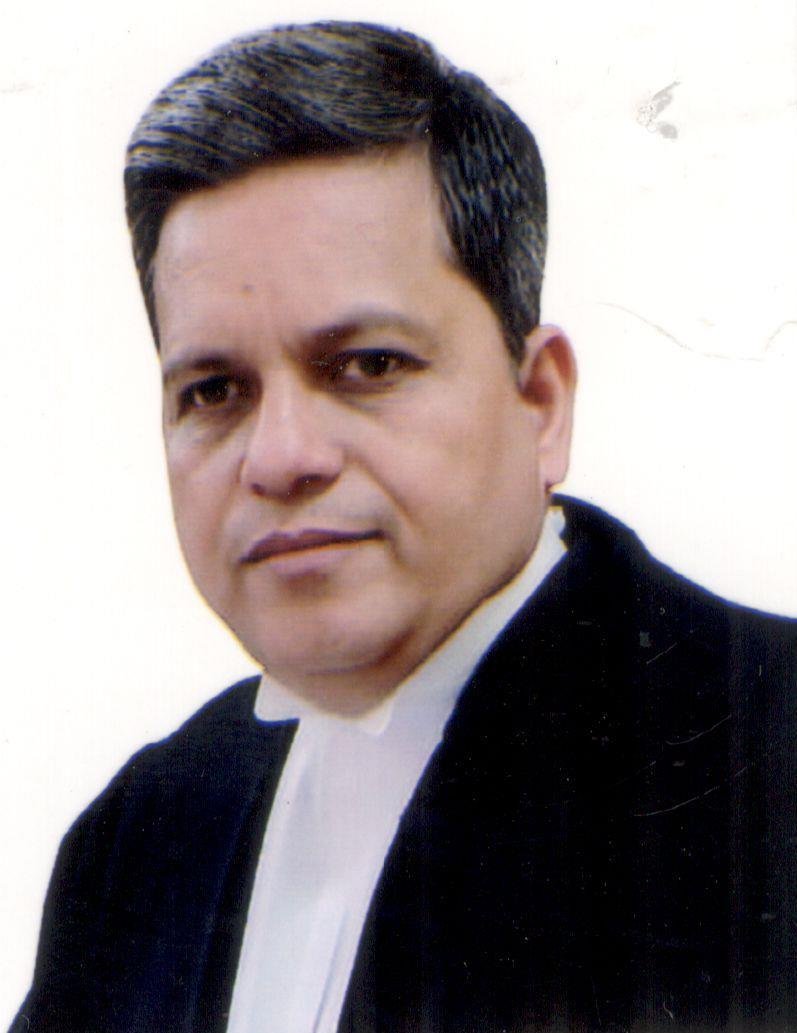
Hon'ble Govind Mathur,Chief Justice
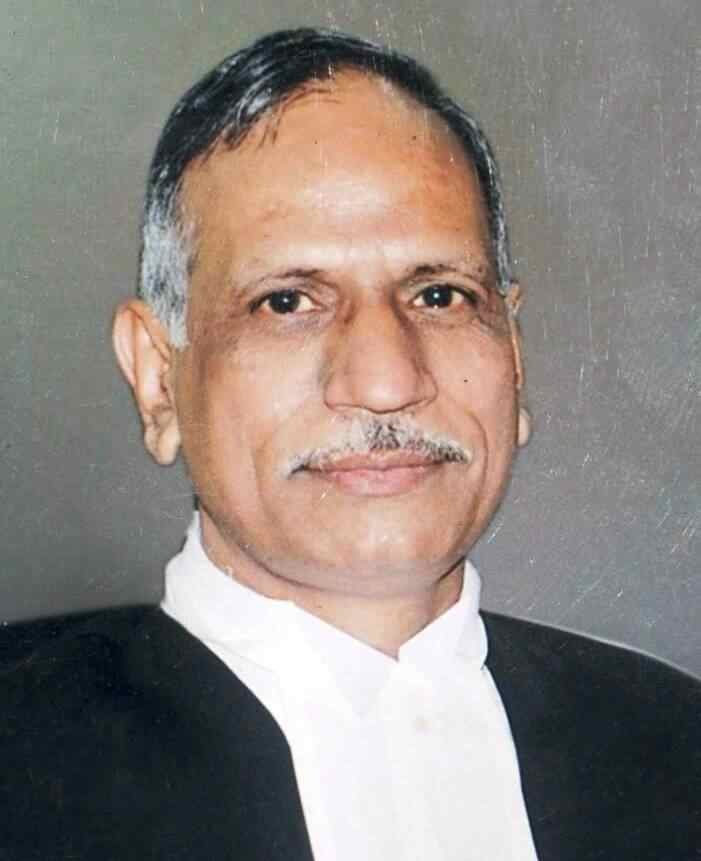
Hon'ble Saurabh Shyam Shamshery,J.
(Delivered by Hon'ble Saurabh Shyam Shamshery, J.)
1. These writ petitions were earlier decided by a common
judgment and order dated 24.2.2016 passed by the Division Bench
of this Court whereby the matters were remanded back to
Industrial Tribunal for fresh adjudication.
2. Being aggrieved, the Supervisors Association preferred
Special Leave Petition No.12061208 of 2017 (Civil Appeal No(s)
93829384 of 2017) before the Hon'ble Supereme Court which
were decided on 23.2.2018 with the request to the High Court to
heard the writ petitions on merit. The relevant part of the order is
reproduced hereinafter : .
“The only dispute remaining to be decided is
whether the Supervisors/Deputy Superintendents would
be workmen or not. There are already two conflicting
views of the Labour Courts. In the above circumstances,
we do not find any justification for the High Court
remitting the matter again to the Labour Court on the
issue. Accordingly, these appeals are allowed. The
impugned judgment is set aside. We direct the High
Court to decide the issue finally in the true spirit of the
order dated 14.9.2010, as explained by us above on the
basis of the materials available on record.
WRIT C No. 12468 of 2002
3
3. The facts in brief which are necessary to decide the issue
involved in all these writ petitions are as follows :
(a) The petitioner Duncan Industries Ltd. is a company
registered under the Companies Act, having its factory at Kanpur,
which manufactures fertilizers commonly known as UREA. The
company has different categories of employees comprising of
Management staff, Deputy Superintendents/Supervisors and
workman. In the year 1978, the age of retirement of workman of
the petitionercompany was raised to 60 years subject to their
being medically fit, in pursuance of settlement/agreement dated
7.2.1978 entered between the Management and the Union of
Workman. As per the case of the petitionercompany, the said
settlement/agreement was not made applicable to
Supervisors/Deputy Superintendents of the company on the
ground that they were not workman.
(b) The Management of the company took decisions on
various issues after meeting with the representatives of IEL
Supervisors Association, Kanpur on 28.5.1985 including the
decision regarding the retirement age of the Supervisor which
remained unaltered at 58 years.
(c) The IEL, Supervisors' Association claimed that their age
of superannuation should be fixed as 60 years as done in the case
of workman and raised a industrial dispute which finally referred
under Section 4K of the U.P. Industrial Disputes Act, 1947
(hereinafter referred as 'the Act of 1947') to the Industrial Tribunal
(III) U.P. Kanpur and was registered as Adjudication Case no.11 of
1988. The term of the reference of the said industrial dispute was
as follows :
“Kya Sevajojakon Dwara Apne Pratishthan Ke Sabhi
Deputy Superintendents Evam Supervisors Ki Seva
WRIT C No. 12468 of 2002
4
Nivriti Aayu 58 Varsha Ke Sthan Par Shramikon Ki
Bhanti 60 Varsha Na Karna Uchit Tatha Vaidhanik Hai
? Yadi Nahin to Sambhandhit Shramik Kya
Laabh/Anutosh Relief Pane Ke Adhikari Hai Tatha
Anya Kis Vivran Sahit ?”
(d) The industrial dispute was contested by the rival parties
and written statements, rejoinder affidavits were also exchanged.
Statements of witnesses of both side were recorded and they were
crossexamined also. The Industrial Tribunal after considering the
material and submissions, passed an award dated 29.4.1999,
whereby it was held that the Deputy Superintendents/Supervisors
are also entitled for increase of their retirement age from 58 years
to 60 years as done in the case of workman.
(e) The Industrial Tribunal (III) sent the award for the
publication on 30.7.1999 to the State, however the same was
recalled by the Tribunal before publication and the matter was
posted for rehearing.
(f) Being aggrieved, the IEL Supervisory has filed Writ
Petition No.39403 of 1999 with the prayer for publication of the
award dated 23.4.1999 passed by the Industrial Tribunal.
Apparently, no interim order was passed by this Court in the said
writ petition.
(g) The Industrial Tribunal again heard the parties and
passed the fresh award and sent the same for publication on
16.6.2000 to the State Government.
(h) The IEL Supervisor Association again approached this
Court by way of filing Writ Petition No.32788 of 2000 with the
prayer for restraining the State Government from publishing the
fresh award dated 16.6.2000. Apparently, no interim order was
granted by this Court in the said writ petition also.
WRIT C No. 12468 of 2002
5
(i) The State Government instead of publishing the award
sent for publication on 16.6.2000, referred the same dispute which
was earlier registered as Adjudication No.11 of 1988 in Industrial
Tribunal (VIII) Lucknow, vide order dated 30.9.2000.
(j) The Duncan Industries Ltd. being aggrieved by the order
dated 30.9.2000 preferred Writ Petition No.44848 of 2000 before
this Court wherein the following order was passed on 18.10.2000.
“Heard Sri J.N. Tewari, Senior Advocate assisted by Sri
S.Chatterjee learned counsel for the petitioner.
The grievance of the petitioner is that the State
Government has made a second reference in the Industrial
Disputes Act. The Original reference was made on 14
th
March, 1998 which gave rise to I.D. case No.11 of 1998.
In this case the evidence of the parties was recorded and the
award was prepared. The award was not a convenient
approach and made a second reference on the same term
and condition on 30.9.2000. The learned counsel for the
petitioner urged that the State Government was not
empowered to make second reference and to withdraw the
award made earlier. The matter requires scrutiny.
Issue notice to respondent no.4 who may file counter
affidavit within six weeks. The learned standing counsel
may also file counter affidavit on behalf of respondent
no.1, 2 and 3 within the same period.
List thereafter.
In the meantime further proceedings pursuant to the
reference dated 30.9.2000 shall remain stayed.”
(k) I.E.L. Supervisor also challenged the reference order
dated 30.9.2000 by way of filing Writ Petition No.53016 of 2000.
(l) Meanwhile, the State Government published the award
dated 29.4.1999 passed in Adjudication Case No.11/1988 which
was sent for publication on 30.7.1999 on 7.1.2002 whereby
Supervisors were also held to be workmen. The Duncan industries
then approached this Court by way of filing another Writ Petition
No.12468 of 2002. During the pendency of abovementioned writ
WRIT C No. 12468 of 2002
6
petitions, the Industrial Tribunal (I) U.P. at Allahabad in another
Adjudication Case No.32 of 2001 wherein the industrial dispute
'whether the concerned employee of the Duncan Industries who
was employed in the capacity of a Supervisor, was a workman or
not, and if so then, whether denial of increment of Rs.10,000/ to
him was justified and legal and if not, then whether the workman
was entitled to the said relief'? was referred, held that the
employee was a workman and he was not discharging managerial
functions and held that Supervisor was entitled to receive
increment. The said award dated 21.5.2005 is under challenge in
Writ Petition No.16447 of 2006 by the Duncans Industries.
(m) Earlier the Labour Court (IV), U.P. Kanpur in
Industrial Dispute No.146/1991 between the Management and IEL
Supervisor Associations has passed award dated 26.9.1996
wherein it was held that Deputy Superintendent working in the
Duncan Industries are not liable for increment as they are not
workmen. The said award was also challenged by individuals in
Writ C No.37147 of 1996.
(n) A Single Bench of this Court decided the Writ Petition
No.39403 of 1999, 32788 of 2000, 4484 of 2000 and 53016 of
2000, vide order dated 7.9.2004, wherein it was held that
employer could not placed on record any fact which might
authorize the Supervisor to do managerial and supervisory
functions. In the other writ petition bearing Writ Petition
No.37147 of 1996 wherein the petitioners therein have challenged
the finding that they were not declared workmen was however
dismissed.
(o) The abovementioned orders dated 7.9.2004 and
22.7.2010 were challenged before the Hon'ble Supreme Court by
WRIT C No. 12468 of 2002
7
way of filing Civil Appeal Nos.351355 of 2006 and Civil Appeal
No.8023 of 2010, which were allowed by the Hon'ble Supreme
Court vide order dated 14.9.2000 and the matter was remanded
back to High Court for fresh consideration. The relevant part of the
order is quoted hereinbelow :
“In the circumstances, therefore, and keeping in view the
fact that the Labour Court has taken two different views
in the two references made to it as regards the status of
Supervisors and Deputy Superintendents, we are of the
view that the matters need to be remanded back to the
High Court to enable both the sides to argue the matter
afresh and also the High Court to examine the issues that
arise for determination.
We, accordingly, allow these appeals, set aside both the
impugned orders and remit the matters back to the High
Court for a fresh disposal in accordance with law.”
(p) After remand, abovementioned writ petitions were
finally decided by this Court vide order dated 24.2.2016 whereby
the adjudication cases were remanded back to the Tribunal to
decide afresh two different views were taken regarding the
working of Supervisor and Deputy Superintendent. One being
declaring Supervisor/Deputy Superintendent as workman and
other being not a workmen by the Labour Tribunal. The operative
part of the order dated 24.2.2016 is quoted hereinafter :
“Writ Petition No.44848 of 2000 was dismissed earlier by
judgment and order dated 17 September 2004. Learned
Counsel for the parties have not made any submissions. Thus,
for all the reasons stated in the judgment and order dated 17
September 2004, Writ Petition No.44848 of 2000 is liable to
be dismissed and is, accordingly, dismissed.
Writ Petition No.12468 of 2002, Writ Petition No.37147
of 1996 and Writ Petition No.16447 of 2006 are disposed
of. The Tribunal concerned shall now proceed to hear the
adjudication cases bearing Adjudication Case No.11 of 1998,
Adjudication Case No.146 of 1991 and Adjudication Case
No.32 of 2001 afresh. It shall, however, be open to the parties
to bring on record the subsequent facts that may have taken
WRIT C No. 12468 of 2002
8
place. This should be done within one month. The Tribunal
concerned shall proceed to make the award(s) expeditiously
and within a period of four months from the date a certified
copy of the order is produced before the Tribunal by either of
the parties.
Writ Petition No.39403 of 1999 and Writ Petition 32788
of 2000 are dismissed as having become infructuous.
Learned counsel for the parties also did not make submissions
in Writ Petition No.53016 of 2000. The said writ petition
was earlier allowed by judgment and order dated 17
September 2004 and the reference order dated 30 September
2000 was quashed. This petition, therefore, stands allowed for
the reasons contained in the judgment and order dated 17
September 2004.”
4. As mentioned earlier, the order passed by this Court on
24.2.2016 was challenged by way of filing Civil Appeal No.9382
9384 of 2017 arising out of S.L.P. (Civil) Nos.12061208 of 2017
titled as I.E.L. Supervisors' Association Etc. Etc. vs. Duncan Industries
Ltd. & Another, whereby the Apex Court vide order dated
23.2.2018 has remanded the matter back to this Court to decide
afresh on the basis of the material available on record.
5. In this background, this Court has heard learned counsel
for the parties at length and perused the record and considered the
various judgments placed before this Court by the parties.
6. The issue before this Court is “Whether the Deputy
Superintendents/Supervisors working in company would fall
under the definition of workmen as contemplated under Section
2(Z) of the U.P. Industrial Disputes Act, 1947 on the basis of
evidence produced before the Labour Tribunal to show that they
were functioning in a managerial or administered capacity or
not”?
7. We have scanned the entire records and the materials
placed before the Labour Tribunal by the parties, which are as
WRIT C No. 12468 of 2002
9
follows :
(i) Written statement on behalf of M/s. I.E.L. Ltd.
(Fertilizers Division),Panki, Kanpur) By way of this written
statement, the company has submitted that there is no industrial
dispute as contemplated in the Act of 1947. The age of retirement
of Supervisor/Deputy Superintendent fixed as 58 years which is
specifically incorporated in their appointment letters, duly
accepted by them, and as such, they are bound by the same.
The note prepared after the discussion between the
Company and the Supervisor Association on 24.5.1985 which is on
record, the demand of Association regarding the change of age of
retirement from 58 to 60 years has already been rejected.Some of
the Deputy Superintendent have already moved to civil court for
the similar relief, and therefore, the reference is bad in eye of law.
(ii) Written statement on behalf of workmen The
workmen were initially started working under designations of
Foreman and General Staff Grade A, however, in or around 1974
they were redesignated as Technical Supervisors/Office
Supervisors. However, the basic nature of their job remain
unchanged and they remained working as workmen. It was further
mentioned that there are only three categories of employees in the
company namely managerial cadre, lady secretaries and non
managerial cadre and the employees concerned in the present
dispute are put under the category of nonmanagerial cadre as
reflected in the medical claim policy of the Company. The
employees are undertaking their duties in different shifts and
doing general duties like any other workmen.
In the rejoinder affidavit, the employees reiterated that they
are born on the musterroller of the company just as other
WRIT C No. 12468 of 2002
10
categories of workmen, whereas in the case of managerial staff,
they are not born on the musterrolls. No definite or distinct job
assignment for the workmen concerned in the present dispute.
(iii) Rejoinder statement on behalf of the company In the
rejoinder affidavit, it has been mentioned that time to time certain
general staff have been promoted to the post of Deputy
Superintendent and some have been upgraded also and their jobs
and responsibilities have been enlarged. It was denied that
drawing of similar pay or drawing more salary by the workman
then Supervisor does not mean that Deputy
Superintendent/Supervisor are workmen as grade and scale of pay
of workers were decided by way of bipartite negotiations.
Additional rejoinder affidavit was also filed on behalf of the
workmen to which company has also filed reply.
(iv) Witnesses produced on behalf of the employees :
(a) Mr. N.K. Nigam (EW1) mentioned that subsequent to his
redesignation as Supervisor in the year 1975 and subsequently as
Deputy Superintendent in the year 1983, he continued to perform
same or similar duties has been performed by him with the
designation of general staff which were essentially of clerical in
nature such as maintaining personal files, preparing annual
increment letters, promotion letters etc. It was also mentioned by
him that he does not have power to sanction leaves to any
employee and similarly did not have power to suspend or charge
sheet any employee and he does not exercise any supervisory
functions. He was crossexamined by the Employer side wherein
he has stated that the pay scale of Office Assistant and Deputy
Superintendent are different and they are members of different
Union. He has also denied that he had signed NonManagerial
WRIT C No. 12468 of 2002
11
Staff Assessment Form as an Assessor.
(b) Kailash Kumar (EW2), the second witness examined on
behalf of the employees' Association submitted that normally he
worked as Clerk, however, sometimes he has also worked under
the supervisory capacity. He stated that he was appointed as
Technical Supervisor and not as a Superintendent. He has also
stated that he look after security of the entire department.
(v) Witness on behalf of the employe :
(a) Shri V.C. Srivastava, who was working as Work Shop
Manager stated that Deputy Superintendents/Supervisors are
sanctioning leaves, authorizing material requisition and signing
material requisition as authorized signatures. Superintendents are
performing supervisory administrative and managerial nature of
duties which includes sanction of leave of workmen working under
them, to appraise performance of workmen and even they are
authorized to issue gate pass to the workmen. He was cross
examined by the employees side wherein he has stated that the
work of the general staff was neither managerial nor
administrative nor supervisory in nature.
(b) P.C. Jha, who was working as Manager Security
Transport, appeared as E.W.2 has stated in his evidence that the
cadre of Deputy Superintendents/Superintendents workmen are
separate and distinct. He also relied upon certain documents to
show that the nature of the duties undertaken by the
Supervisor/Deputy Superintendent are supervisory and
administrative in nature. He was also crossexamined.
8. The terms and conditions of the employment and nature
of work of Workmen visavis Supervisors/Deputy Superintendents
WRIT C No. 12468 of 2002
12
and Workmen placed on record, in the form of a Superintendents
chart, which is as follows :
Terms and conditions of employment of Superintendents Vs. Workmen :
Items Supervisors Workmen
Basic Pay Rs.800/ to Rs.5000/ (Increments based
on actual performance Appraisal System.)
Grade A1
2252537530555351395
Grade A
2002032024
464291160
Grade B
1711626720
38724915
Grade C
140132181631419
675
Grade D
1101218214
26616586
Dearness Allowance25% OF BASIC + VDA + Fixed DA of
Rs.700/ p.m. As per neutralization
formula agreed with the DS
ASSOCIATION through Record Note of
Discussion.
As per provisions of
settlement.
House Rent 15% Basic + DA Rs.400/ per month w.e.f.
1/10/91
Special allowanceRs.375/ –
Additional Special
Allowance
Rs.1520/ –
Factory AllowanceRs.200/ –
Leave Travel
Allowance per year
Medical Entitlement
Basic upto Rs.2000/p.m.….Rs.4000/
p.a.
Basic > Rs.2000/p.m.….Rs.4500/ p.a.
Self – Unlimited based on Actuals
Family Medical
Basic upto Rs.2000/p.m.….Rs.5000/
p.a.
Basic > Rs.2000/p.m.….Rs.5500/ p.a.
Rs.2000/p.a (w.e.f. 5/11/93)
Self – 2 months
Basic + DA/Year
Family ….. Rs.750/ per year
Additional
1.For chronic case 3 months
(Basic + DA) 3 times in
service career).
2. For Extensive treatment
Claim minus one month
Basic+DA but, subject to
maximum 3 months.
(Basic+DA)
WRIT C No. 12468 of 2002
13
Loans Housing ….............. Rs.50,000/
Hardship.................. Rs.8,000/
Car........................... Rs.35,000/
Car Repair Loan........Rs.5,000/
Scooter..................... Rs.10,000/
Furniture...................Rs.10,000/
Housing...............Rs.40,000/
Hardship..............Rs.10,000/
Scooter.................Rs.10,000/
Standing Orders Not Covered under certified standing
orders.
Covered under certified
standing orders.
Nature of Work Supervisors
(Superintendents)
Workmen
Nature of work Supdt. Primarily Supervise
the work of the workmen.
Perform skilled &
semi skilled manual
work as directed by
supervisory staff.
Leave Approve leave of workmen
working under them.
Not applicable.
Performance AppraisalAppraises the performance
of workmen working under
them.
Not applicable.
Allocation of work Allocates work of the
Workmen under them.
Not applicable.
Intending AuthorityHave authority to indent
material inspect and draw
material.
Not applicable.
Work Permits Are authorised to issue and
receive work permits as per
Factories Act, Section 36,
subsection 2A.
Not applicable.
Attendance Decides attendance, wage
deductions if any of workmen
authorises overtime work of
Workmen.
Not authorised.
Gate Pass Authorised to issue gate
passes of workmen.
Not applicable.
WRIT C No. 12468 of 2002
14
Disciplinary ActionInitiates disciplinary action
against delinquent workmen.
does not apply
Shift timings 7 am to 3 pm
3 pm to 11 pm
11 pm to 7 am
6 am to 2 pm
2 pm to 10 pm
10 pm to 6 am
Transportation Are picked up by special
vehicles from their residence
to work and back.
Comes to Factory
and back by the bus
Service that piles
throughout the city.
Canteen Facility Authorised to avail food items
from the canteen on free
vouchers.
Have to pay at
subsidised rate to
avail foot Items
from the canteen.
9. Certain documents such as investigation report
investigated regarding theft by some workmen submitted by
Deputy Superintendent, recommendation made on the issue of
apprehension of miscreant to be a contractor, NonManagement
Staff Assessment Forms wherein assessment has been conducted
by the Supervisor, application for car loan etc. have been placed
on record in order to show that the Supervisor/Deputy
Superintendent were not workmen and are working under
Supervisory capacity.
10. The labour Tribunal on the basis of the material on
record passed award dated 29.4.1999 and come to the conclusion
that :
^^lsok;kstdks i{k ds xokgks ds c;kuksa ,oa nkf[ky vfHkys[kkas ls ;g
lkfcr ugh gksrk gS fd oknhx.k izfr"Bku esa dksbZ iz'kklfud ;k
izcU/kdh;] ifjos{k.k lEcU/kh dk;Z djrs gS ;k ,ls dk;Z djus ds
fy, mUgsa vf/kdkj iznRr fd;s x;s gSA bl lEcU/k esa lsok;kstdksa
ds xokg bZ@ Mcyw@ 2 us Lo;a ekuk gS fd os vius foHkkx ds
lqifjUVsUMsUV dsVsxjh ds deZpkfj;ksa dk dkMZ ns[krs gS vkSj
vko';drk iMus ij lqifjUVsUMsUV dSVsxjh ds yksxks dks dk;Z ds
funsZ'k nsrs gS vkSj muls dk;Z djkrs gS vkSj tks os funsZ'k nsrs gS
vkSj muls dk;Z djkrs gS vkSj tks os funsZ'k nsrs gS mlh ds
vuqlkj dk;Z gksrk gS blls ;gh izekf.kr gksrk gS fd oknhx.kksa ds
WRIT C No. 12468 of 2002
15
mij Hkh vusd mPp vf/kdkjh izfr"Bku eas dk;Zjr gS ftuds
v/khu vkSj muds funsZ'kkuqlkj gh fMIVh lqifjUVsUMsUV@
lqifjVsUMsUVl dk;Z lEikfnr djrs gS vkSj buds dk;Z dk
ifjos{k.k Hkh muds }kjk fd;k tkrk gSA
Thereafter, finally held that the employees are entitled for
increase in their retirement age from 58 to 60 years. The Award
was published on 7.1.2002.
11. In another industrial disputes (Industrial Dispute
No.146/ decided on 26.9.1996), the Labour Tribunal IV U.P.,
Kanpur on the basis of the material produced before it come to the
conclusion that the Deputy Superintendents and Supervisors are
not workmen. The Labour Tribunal specifically come to the
conclusion that
^^ Li"V gS fd Jh ,l0 ds0 feJk ds LoSfPNd lsokfuo`fRr ls yssus rFkk
Jh HkV~Vkpk;Z }kjk fookn ij cy u fn;s tkus dh fLFkfr es ,d ek=
lanHkkZns'k es fufgr fcUnq Jh ,l0 Mh0 xqIrk ds lEcU/k esa fuLrkfjr
fd;k tkuk 'ks"k jg tkrk gSA iz'u ;g gS fd D;k Mh0 ,l0 dk inuke
ifjofrZr inuke gS ftlesa iwoZ ukfer inksa ds dk;Z dykiksa ls dksbZ
fHkUurk ugh vkbZ gS vFkok ;g in izksUufr dk gSA oknh ;g izekf.kr
ugh dj lds gS fd th0 ,l0 xzsM & ,@ QksjeSu] Vh0 ,l0@
vks0 ,l0 ds dk;Z dh izd`fr Mh0 ,l0 ds dk;Z dh izd`fr ds le#i
jgh gSA blds foijhr izn'kZ bZ & 1 ds 29-2-84 ds i= ls Li"V gS fd
oknh Jh xqIrk dks Mh0 ,l0 ds in gsrq p;fur ,oa izksUur fd;k x;k
FkkA vr% ;g dguk fd ;g izdj.k inuke ifjorZu dk gS] lgh ugh
gSA i= es mYys[k gS fd izksscs'ku dh vof/k esa vlarks"ktud dk;Z gksus
ij mUgsa ewy in ij izR;kofrZr fd;k tk ldrk gSA ;g 'kCnkoyh Hkh
izekf.kr djrh gS fd mUgsa Mh0 ,l0 ds in in izksUur fd;k x;kA i=
esa Li"V mYys[k gS fd Mh0 ,l0 dk Ikn lqijokbtjh Js.kh dk gS rFkk
lkewfgd lkSnsckth dh ifjf/k ds ckgj lEk>k tk;sxkA fu;qfDr@ izksUur
i= es ewy osru] egaxkbZ HkRrs o vU; lsok 'krkZsa dk fo'kn foospu gS
ftls oknh us Lohdkj dj vius gLrk{kj fd;s gSA
12. Learned counsel for the rival parties have relied upon
following judgments in order to substantiate their rival
submissions :
(a) In the matter of Anand Regional Coop. Oil Seedgrowers'
Union Ltd. vs Shaileshkumar Harshadbhai Shah reported at
WRIT C No. 12468 of 2002
16
2006 SCC (L & S) 1486; 2006 (6) SCC 548, the Hon'ble Supreme
Court has held that :
“13. The ingredients of the definition of 'workman' must be
considered having regard to the following factors:
(i) Any person employed to do any skilled or unskilled
work, but does not include any such person employed in
any industry for hire or reward.
(ii) There must exist a relationship of employer and
employee.
(iii) The persons inter alia excluded are those who are
employed mainly in a managerial or administrative
capacity.
14. For determining the question as to whether a person
employed in an industry is a workman or not; not only the
nature of work performed by him but also terms of the
appointment in the job performed are relevant
considerations.
15. Supervision contemplates direction and control. While
determining the nature of the work performed by an
employee, the essence of the matter should call for
consideration. An undue importance need not be given for
the designation of an employee, or the name assigned to,
the class to which he belongs. What is needed to be asked is
as to what are the primary duties he performs. For the said
purpose, it is necessary to prove that there were some
persons working under him whose work is required to be
supervised. Being incharge of the section alone and that too
it being a small one and relating to quality control would
not answer the test.”
(b) In the matter of S.K. Maini vs M/s Carona Sahu
Company Ltd. and Others reported at (1994) 3 SCC 510 the
Hon'ble Supreme Court has held that :
“11. It may be noted in this connection that in view of the
amendment of Section2(s) enlarging the ambit of the
classification of various types of workmen except managerial
force, entire labour force has been included within the
definition of workman under Section 2(s) as has been
indicated by this Court in S.K. Verma v. Mahesh Chandra8.
But if the principal function is of supervisory nature, the
employee concerned will not be workman only if he draws a
particular quantum of salary at the relevant time as indicated
in Section 2(s). In the instant case, it, however, appears to us
that Shri Maini as Manager/Incharge of the shop was made
WRIT C No. 12468 of 2002
17
responsible and liable to make good such amount of credit
whether such sale on credit had been made by him or by any
other member of the staff in employment under him with or
without his knowledge. Under the terms and conditions of
service, he was asked to take charge of the shop to which his
service was transferred. Mr Maini, under the terms and
conditions of service, was required to be held responsible and
liable for any loss suffered by the Company due to
deterioration of the quality of the stock or any part thereof
and loss of any of the other articles lying in the shop caused by
reason of any act of negligence and/or omission to take any
precaution by the employees. Mr Maini was also required to
notify the Company by trunk call and/or telegram not later
than three hours after the discovery in the said shop of any
fire, theft, burglary, loot or arson. He was required to
investigate into the matter immediately and get the cause and
amount of loss established by local authorities. Mr Maini as
in charge of the shop was required to keep and maintain
proper accounts as approved by the Company indicating the
exact amount to be paid from the receipts from the respective
staff. Under Clause XIII of the terms and conditions of the
service, Mr Maini would remain fully responsible to the
Company for damages or loss caused by acts or commission of
the loss of 8 (1983) 4 SCC 214: 1983 SCC (L&S) 510:
(1983) 3 SCR 799 the employees of the shop. Under Clause
XV of the terms and conditions of service, the shop incharge
was required to keep himself fully conversant with all the
regulations in force which may come into force from time to
time with regard to Octroi, Sales Tax and Shops and
Commercial Establishments Act and/or any other local
regulation applicable to the shop. Clause XXI indicates that
non compliance with any of the local or State Acts or Central
Acts would be viewed seriously and Manager would be held
responsible for any fine/penalty imposed and/or prosecution
launched against the Company. It also appears that in the
event of a salesman being absent, the shop incharge is
empowered to appoint temporary helper for the said period to
work as acting salesman. Similarly, in the event of helper
being absent, the shop manager is also empowered to appoint
parttime sweeper and to entrust the work of a helper to a
sweeper. Such functions, in our view, appear to be
administrative and managerial. By virtue of his being in
charge of the shop, he was the principal officerincharge of
the management of the shop. We therefore find justification in
the finding of the High Court that the principal function of the
appellant was of administrative and managerial nature. It is
true that he himself was also required to do some works of
clerical nature but it appears to us that by and large Shri
Maini being incharge of the management of the shop had been
principally discharging the administrative and managerial
work. A manager or an administrative officer is generally
WRIT C No. 12468 of 2002
18
invested with the power of supervision in contradistinction to
the stereotype work of a clerk. This Court in Lloyds Bank Ltd.
v. Panna Lal Gupta has indicated that a manager or
administrator generally occupies a position of command or
decision and is authorised to act in certain matters within the
limits of his authority without the sanction of his superior. In
the instant case within the authority indicated in the terms
and conditions of his service, Shri Maini was authorised to
take decisions in the matter of temporary appointments and in
taking all reasonable steps incidental to the proper running of
the shop. Precisely for the said reason, Shri Maini had signed
the statutory forms as an employer. It should be home in mind
that an employee discharging managerial duties and functions
may not, as a matter of course, be invested with the power of
appointment and discharge of other employees. It is not
unlikely that in a big setup such power is not invested to a
local manager but such power is given to some superior
officers also in the management cadre at divisional or regional
level. The unit in a local shop may not be large but
management of such small unit may fulfil the requirements
and incidences of managerial functions. On a close scrutiny of
the nature of duties and functions of the Shop Manager with
reference to the admitted terms and conditions of service of
Shri Maini, it appears to us that the High Court was justified
in holding that the appellant was not a workman under
Section 2(s) of the Industrial Disputes Act. In the aforesaid
facts, it is not necessary to go into the question as to whether
or not domestic enquiry had been properly conducted or the
Enquiring Officer had acted with bias. It is also not necessary
to decide for the purpose of the disposal of the appeal (1961)
1 LLJ 18 : AIR 1967 SC 428 as to whether or not the
Company was entitled to lead fresh evidence in support of the
domestic enquiry before the Labour Court. The appeal is,
therefore, dismissed without, however, any order as to cost.”
(c) In the matter of Management of M/s Sonepat Co
operative Sugar Mills Ltd. vs. Ajit Singh reported at 2005 LLR
309; 2005 (3) SCC 232, the Hon'ble Supreme Court has held
that :
“21. It is now trite that the issue as to whether an employee
answers the description of a workman or not has to be
determined on the basis of a conclusive evidence. The said
question, thus, would require full consideration of all
aspects of the matter.
22. The jurisdiction of the Industrial Court to make an
award in the dispute would depend upon a finding as to
whether the concerned employee is a workman or not.
WRIT C No. 12468 of 2002
19
When such an issue is raised, the same being a
jurisdictional one, the findings of the Labour Court in that
behalf would be subject to judicial review.
23. The High Court furthermore applied wrong legal tests
in following S.K. Verma (supra) in upholding the views of
the Labour Court which itself approached the matter from a
wrong angle. The Labour Court as also the High Court also
posed a wrong question unto themselves and, thus,
misdirected themselves in law.
24. In Cholan Roadways Limited Vs. G.
Thirugnanasambandam [2004 (10) SCALE 578], this
Court held:
"34.... In the instant case the Presiding Officer, Industrial
Tribunal as also the learned Single Judge and the Division
Bench of the High Court misdirected themselves in law
insofar as they failed to pose unto themselves correct
questions. It is now wellsettled that a quasijudicial
authority must pose unto itself a correct question so as to
arrive at a correct finding of fact. A wrong question posed
leads to a wrong answer. In this case, furthermore, the
misdirection in law committed by the Industrial Tribunal
was apparent insofar as it did not apply the principle of Res
ipsa loquitur which was relevant for the purpose of this case
and, thus, failed to take into consideration a relevant factor
and furthermore took into consideration an irrelevant fact
not garmane for determining the issue, namely, the
passengers of the bus were mandatorily required to be
examined. The Industrial Tribunal further failed to apply
the correct standard of proof in relation to a domestic
enquiry, which in "preponderance of probability" and
applied the standard of proof required for a criminal trial.
A case for judicial review was, thus, clearly made out."
(d) In the matter of Bennett Coleman and Co. Limited
(M/s) vs. Shri Yadeshwar Kumar reported at 2007 LLR 62, the
Delhi High Court has held that :
“9. A perusal of the Award and evidence shows that duties
of the respondent were to supervise chowkidar and
sweepers. He used to mark attendance of the chowkidars
and security staff working under him. He used to forward
leave and overtime slips to the security officer although he
was not sanctioning authority but he was recommending
authority. Documents with his recommendations were
placed on record. It was his duty to report to administrative
manager or security officer about any untoward incident.
WRIT C No. 12468 of 2002
20
On the other hand the workman relied upon certificate
issued by the management that he was a skilled printer.
This certificate was of the period when he was working as a
printer. Respondent produced another certificate issued by
the Labour Officer of the management wherein it is
mentioned that workman is a good workman. He alleged
that he was doing 8 hours duty being a workman whereas
the administrative and officers category persons were
working six and a half hours in a day. Because of some
supervisory work, apart from doing his main work of a
manual/ clerical or technical in nature, he does not become
a supervisor.
10. The Tribunal on the basis of the fact that one Chander
Kant was a senior officer to the respondent and the work of
respondent was being over seen by Chander Kant concluded
that respondent was not a supervisor. The Tribunal further
observed that management had placed on record the leave
applications of persons working under respondent and
handled by him, but these were not proved as per rule of
evidence. The same could not be relied upon. The Tribunal
thereafter concluded that " in the light if the evidence led by
the workman is analysed, it is clear that he was simply
supervising the work of other persons and his functions
were not of managerial or administrative in nature. No
doubt certain applications have been sanctioned by Sh.
Yadeshwar Kumar as departmental head but there were
two persons who were working above him and so he cannot
be said to be working in a supervisory capacity.
11. Obviously, the approach of the Labour Court has been
contrary to the law laid down by the Supreme court in a
series of judgments. In order to decide whether a person is a
workman or not, the dominant and main functions are to
be considered. A person can be called a supervisor if he is
entrusted with the job of supervising other workmen who
work under him. There is no dispute that the respondent
was not only designated as Night Supervisor but he was
having job of supervision over security guards, chowkidars
and sweepers. He used to forward over time claims of the
persons working under him after verifying the same. He
used to recommend leave of the persons working under him.
He was in charge of the security of the property of petitioner
and used to supervise the work of security guards etc. It is
not necessary that a supervisor has to be top cadre
management person. A supervisor may occupy a lower
position in the organisation chart of the company where in
the descending order may be CMD, MD, General Managers,
Deputy Managers, Managers, Administrative Officer and
supervisor etc. It has been laid down by the Supreme Court
WRIT C No. 12468 of 2002
21
that in order to be a workman a person must be performing
one of the functions as specified in Section 2(s) of the Act
and it was not sufficient that he was not performing
administrative or managerial function. Tribunal also went
in wrong in law by observing that strict principles of rules
of evidence are required to be followed by the Tribunal.
While weighing the material placed before the Tribunal, a
Tribunal is not to follow the strict rules of evidence and
neither has to arrive at a conclusion by considering the
proof beyond reasonable doubt. A Tribunal has to weigh the
material placed before it by both sides. All materials which
are logically probative for a prudent mind are liable to be
considered. There is no allergy to hearsay evidence provided
it has reasonable nexus and credibility.”
(e) In the matter of Vijay Dattatraya Kale vs. Peico
Electronics and Electricals Ltd. reported at 2009 (121) FLR 577,
the High Court of Bombay has held that :
“Coming to the observation of the Labour Court in the
present case, it appears that the Labour Court has rightly
referred to the main attributes of the petitioner's function
which were supervisory in nature. The work of appraisal
of C4 category staff and recommendation of their leave
have been taken into account by the Labour Court.
Moreover, the Labour Court has rightly pointed out that
the power to recommend, assess and verify the work done
by the subordinate staff was supervisory work and not
clerical. In fact, interestingly, the petitioner has not
stated anywhere that the nature of his work was clerical.
On the other hand, the petitioner admitted that he
belongs to M1 category, which is meant for Manager,
and was not covered by any settlement or agreement
entered into between the Union and the management. In
making these observations, the Labour Court has referred
to oral and documentary evidence in the matter. The
tasks mentioned earlier in paragraph 5 supra, referred to
by the learned Counsel for the respondent No. 1 are also
supervisory in nature since they involve the overseeing of
actions. In any case, they are not tasks which are
performed by the labour force. In this view of the matter,
I find no error of law apparent on the face of the record.”
(f) In the matter of H.R. Adyanthaya and Others vs.
WRIT C No. 12468 of 2002
22
Sandoz (INDIA) Ltd. and Others reported at (1994) 5 SCC 737,
the Hon'ble Supreme Court has held that :
“18. The legal position that arises from the statutory
provisions and from the aforesaid survey of the decisions
may now be summarised as follows.
19. Till 2981956 the definition of workman under the ID
Act was confined to skilled and unskilled manual or clerical
work and did not include the categories of persons who
were employed to do 'supervisory' and 'technical' work. The
said categories came to be included in the definition 9
(1992) 1 SCC 281: 1992 SCC (L&S) 263 w.e.f. 2981956
by virtue of the Amending Act 36 of 1956. It is, further, for
the first time that by virtue of the Amending Act 46 of
1982, the categories of workmen employed to do
'operational' work came to be included in the definition.
What is more, it is by virtue of this amendment that for the
first time those doing nonmanual unskilled and skilled
work also came to be included in the definition with the
result that the persons doing skilled and unskilled work
whether manual or otherwise, qualified to become workmen
under the ID Act.
20. The decision in May & Baker case was delivered when
the definition did not include either 'technical' or
'supervisory' or 'operational' categories of workmen. That is
why the contention on behalf of the workmen had to be
based on the manual and clerical nature of the work done
by the sales representatives in that case. The Court had
also, therefore, to decide the category of the sales
representative with reference to whether the work done by
him was of a clerical or manual nature. The Court's finding
was that the canvassing for sale was neither clerical nor
manual, and the clerical work done by him formed a small
fraction of his work. Hence, the sales representative was not
a workman.
21. In WIMCO case, the dispute had arisen on 1881961
under the U.P. Industrial Disputes Act and at the relevant
time the definition of the workman in that Act was the
same as under the Central Act, i.e., the ID Act which had by
virtue of the Amending Act 36 of 1956 added to the
categories of workmen, those doing supervisory and
technical work. However, the argument advanced before the
Court was not on the basis of the supervisory or technical
nature of the work done by the employees concerned, viz.,
inspectors, salesmen and retail salesmen. The argument
instead, both before the Industrial Tribunal and this Court
was based on the clerical work put in by them, which was
WRIT C No. 12468 of 2002
23
found to be 75 per cent of their work. This Court confirmed
the finding of the Tribunal that the employees concerned
were workmen because 75 per cent of their time was
devoted to the writing work. The incidental question was
whether the salesoffice and the factory and the factory
office formed part of one and the same industrial
establishment or were independent of each other. The Court
observed that it would be unreasonable to say that those
who were producing matches were workmen and those who
sold them were not. In other words, the Court did hold that
the work of selling matches was as much an operational
part of the industrial establishment as was that of
manufacturing.
22. In Burmah Shell case the workmen involved were Sales
Engineering Representatives and District Sales
Representatives. The dispute had arisen on 28101967
when the categories of workmen doing supervisory and
technical work stood included in the definition of workman.
The Court found that the work done by the Sales
Engineering Representatives as well as District Sales
Representatives was neither clerical nor supervisory nor
technical. An effort was made on behalf of the workmen to
contend that the work of Sales Engineering Representatives
was technical. The Court repelled that contention by
pointing out that the amount of technical work that they
did was ancillary to the chief work of promoting sales and
the mere fact that they possessed technical knowledge for
such purpose, did not make their work technical. The Court
also found that advising and removing complaints so as to
promote sales remained outside the scope of the technical
work. As regards the District Sales Representatives, the
argument was that their work was mainly of clerical nature
which was negatived by the Court by pointing out that the
clerical work involved was incidental to their main work of
promoting sales. What is necessary further to remember in
this case is that the Court relied upon its earlier decision in
May & Baker case1 and pointed out that in order to qualify
to be a workman under the ID Act a person concerned had
to satisfy that he fell in any of the four categories of
manual, clerical, supervisory or technical workman.
23. However, the decisions in the later cases, viz., S.K.
Verma, Delton Cable, and Ciba Geigy cases did not notice
the earlier decisions in May & Baker, WIMC0 and Burmah
Shell cases and the very same contention, viz., if a person
did not fall within any of the categories of manual, clerical,
supervisory or technical, he would qualify to be workman
merely because he is not covered by either of the four
exceptions to the definition, was canvassed and though
WRIT C No. 12468 of 2002
24
negatived in earlier decisions, was accepted. Further, in
those cases the Development Officer of the LIC, the Security
Inspector at the gate of the factory and Stenographercum
Accountant respectively, were held to be workmen on the
facts of those cases. It is the decision of this Court in A.
Sundarambal case which pointed out that the law laid
down in May and Baker case was still good and was not in
terms disowned.
24. We thus have three threeJudge Bench decisions which
have taken the view that a person to be qualified to be a
workman must be doing the work which falls in any of the
four categories, viz., manual, clerical, supervisory or
technical and two twoJudge Bench decisions which have by
referring to one or the other of the said three decisions have
reiterated the said law. As against this, we have three three
Judge Bench decisions which have without referring to the
decisions in May & Baker, WIMCO and Burmah SheIl cases
have taken the other view which was expressly negatived,
viz., if a person does not fall within the four exceptions to
the said definition he is a workman within the meaning of
the ID Act. These decisions are also based on the facts found
in those cases. They have, therefore, to be confined to those
facts. Hence the position in law as it obtains today is that a
person to be a workman under the ID Act must be employed
to do the work of any of the categories, viz., manual,
unskilled, skilled, technical, operational, clerical or
supervisory. It is not enough that he is not covered by either
of the four exceptions to the definition. We reiterate the said
interpretation.”
(g) In the matter of Ashok Kumar And Ors. vs Managing
Director, U.P. Leather Development and Marketing Corporation
and Another reported at 1998 ILLJ All, the Allahabad High Court
has held that :
24. It may be noticed that as provided under the
Industrial Disputes Act the term 'workman' does not
include any such person who being employed in a
supervisory capacity, exercises either by the nature of the
duties attached to the officer or by reason of the powers
vested in him functions mainly of a managerial nature.
25. The word 'supervise' and its derivatives have to be
construed in the light of the context. What determines
the question as to whether a person is doing supervisory
work mainly of a managerial nature or not depends
WRIT C No. 12468 of 2002
25
much on the nature of the duties and functions assigned
to him. The absence of supervisory work is the
supervision by one person over the work of others and it
embraces within its fold the authority to control and give
directions occupying a position of command or authority
to take a decision and act within the limit of his
authority in an independent manner. Having regard to
the various categories of the services the use of different
words like 'supervisory', 'managerial' and 'administrative'
it is not necessary to import the motions of one into the
interpretation of others. Dealing with the disputes with
respect to the nature of the work performed by an
employee as to whether it was of supervisory nature or
otherwise the industrial adjudication generally considers
the essence of the matter and does not attach undue
importance to the designation of the employee. It is
always a matter of determining what the primary duties
of an employee were and the emphasis is not on the
injunctions incidental to his main duties.
(h) In the matter of Arkal Govind Raj Rao vs Ciba Geigy Of
India Ltd. Bombay reported at 1985 AIR SC 985; 1985 (3) SCC
371, the Hon'ble Supreme Court has held that :
“16. The test that one must employ in such a case is what
was the primary, basic or dominant nature of duties for
which the person whose status is under enquiry was
employed. A few extra duties would hardly be relevant to
determine his status. The words like managerial or
supervisory have to be understood in their proper
connotation and their mere use should not detract from the
truth.”
(i) In the matter of Ananda Bazar Patrika Private Ltd. vs
The Workmen reported at 1970 SCC 3 248, the Hon'ble Supreme
Court has held that :
“3. The question, whether a person is employed in a
supervisory capacity or on clerical work, in our opinion,
depends upon whether the main and principal duties
carried out by him are those of a supervisory character, or
of a nature carried oat by a clerk. If a person is mainly
doing supervisory work, but, incidentally or for a fraction
of the time, also does some clerical work, it would have to
WRIT C No. 12468 of 2002
26
be held that he is employed in supervisory capacity; and,
conversely, if the main work done is of clerical nature, the
more fact that some supervisory duties are also carried out,
incidentally or as a small fraction of the work done by him
wil1 not convert his employment as a clerk into one in
supervisory capacity. This principle finds support from the
decisions of this Court in South Indian Bank, Ltd. v. A.R.
Chacko 1964I.L.L. J. 19 and May & Baker (India), Ltd. v.
their workmen 1961II L.L J. 94. In the present case, we
have, therefore, to examine the evidence to see whether the
labour court is right, in holding that, because of the main
work of Guptas being clerical in nature, ho was not
employed in supervisory capacity.
6. On these facts, we are unable to hold that the labour
court committed any error is arriving at the decision that
Gupta was employed on clerical work and not in
supervisory capacity. The principal work that Gupta was
doing was that of maintaining and writing the cash book
and of preparing various returns. Being the senior most
clerk, he was put in charge of the provident fund section
and was given a small amount of control over the other
clerks working in his section. The only powers he could
exercise over them was to allocate work between them to
permit them to leave during office hours, and to
recommend their leave applications. These few minor
duties of a supervisory nature cannot, in our opinion,
convert his office of senior clerk in charge into that of a
supervisor.”
(emphasis supplied)
13. On the basis of abovementioned submissions and
judgments, in order to determine 'whether an employee is a
workman or Supervisor', following factors are relevant for
consideration :
(i) According to Section 2(z) of the U.P. Industrial Disputes
Act, 1947 which is para materia to Section 2(s) of the Industrial
Disputes Act, workman means any person (including an
apprentice) employed in any industry to do any manual, unskilled,
skilled, technical, operational, clerical or supervisory work for hire
or reward, whether the terms of employment be express or
implied, and for the purposes of any proceeding under this Act in
WRIT C No. 12468 of 2002
27
relation to an industrial dispute, includes any such person who has
been dismissed, discharged or retrenched in connection with, or as
a consequence of, that dispute, or whose dismissal, discharge, or
retrenchment has led to that dispute, but does not include any
such person ––
(a) who is subject to the Air Force Act, 1950 (45 of 1950), or
the Army Act, 1950 (46 of 1950), or the Navy Act, 1957 (62 of
1957); or
(b) who is employed in the police service or as an officer or
other employee of a prison; or
(c) who is employed mainly in a managerial or
administrative capacity, or
(d) who, being employed in a supervisory capacity, draws
wages exceeding one thousand six hundred rupees per mensem or
exercises, either by the nature of the duties attached to the office
or by reason of the powers vested in him, functions mainly of a
managerial nature.
(ii) Mere designation of the post is not decisive of nature of
the employment.
(iii) An employee employed mainly in a capacity of a
Supervisor discharging the duties of allocation of jobs, assessment
of work, recommendation of leave, carried out promotional
appraisals but incidentally discharging other technical work would
not fall within the definition of workman.
(iv) Whether an employee is working on any particular
capacity as workman or as a Supervisor is a mixed question of fact
and law, which has to be decided on the basis of conclusive
evidence only, which includes oral as well as documentary.
WRIT C No. 12468 of 2002
28
(v) Whether a person is doing supervisory work mainly of a
managerial nature or not will depend much on the nature of the
duties and the functions assigned to him.
(vi) If a person is merely doing supervisory work but incidentally
or for a fraction of time also does some clerical work, it would
have to be held that he is employed in supervisory capacity and in
case, if the main work is done of clerical nature and some
supervisory duties are also carried out incidentally the work done
by the employee will not convert his employment as a workman
into one in supervisory capacity.
14. We have considered the oral as well as documentary
evidence, submissions made by the parties, judgments cited and
the material available on record.
15.It is well settled principle of law that he who asserts
must prove. Burden of proof is the obligation to adduce evidence
in support of the claim asserted. The obligation to lead evidence to
establish an fact is on the party making the said fact or is relying
upon the said fact. In the present case, the initial burden is on
employees to place evidence that they are 'Workmen', however,
they have failed to produce such evidence, which is sufficient to
discharge their initial burden. The employees have failed to prove
their nature of duties being of Workmen, therefore, we are unable
to hold on the basis of evidence brought on record that they are
undertaking work of a workman.
16. In the matter of Workmen of Nilgiri Cooperative
Marketing Society Ltd. vs. State of U.P. and others reported at
(2004) 3 SCC 514, the Hon'ble Supreme Court has held in para
47, 48 , 49 and 50 that :
“BURDEN OF PROOF :
WRIT C No. 12468 of 2002
29
47. It is a wellsettled principle of law that the person who
sets up a plea of existence of relationship of employer and
employee, the burden would be upon him.
48. In N.C. John Vs. Secretary Thodupuzha Taluk Shop
and Commercial Establishment Workers' Union and Others
[1973 Lab. I.C. 398], the Kerala High Court held:
"The burden of proof being on the workmen to establish the
employeremployee relationship an adverse inference
cannot be drawn against the employer that if he were to
produce books of accounts they would have proved
employeremployee relationship."
49. In Swapan das Gupta and Others Vs. The First Labour
Court of West Bengal and Others [1975 Lab. I.C. 202] it
has been held:
"Where a person asserts that he was a workmen of the
Company, and it is denied by the Company, it is for him to
prove the fact. It is not for the Company to prove that he
was not an employee of the Company but of some other
person."
50. The question whether the relationship between the
parties is one of the employer and employee is a pure
question of fact and ordinarily the High Court while
exercising its power of judicial review shall not interfere
therewith unless the finding is manifestly or obviously
erroneous or perverse.”
17. In view of above discussion, we are of considered view
that the employees have failed to bring on record conclusive
evidence that they are employed mainly as a 'Workmen'. As the
employees have failed to discharge their initial burden, we have
not considered the evidence brought on the record by the
employer to contradict the stand of the employees.
18. Accordingly, these writ petitions are finally decided in
the following terms :
(i) WRIT C No.12468 of 2002 (Duncans Industries Ltd. vs.
State Of U.P.And Others) – Impugned award dated 29.4.1999
(published on 7.1.2002) whereby Supervisors/Assistant
Supervisors were held to be Workmen, passed by the Industrial
WRIT C No. 12468 of 2002
30
Tribunal – III, U.P. Kanpur in Adjudication Case No.11 of 1998 is
set aside and the writ petition is allowed.
(ii) WRIT C No.37147 of 1996 (S.D. Gupta vs. Labour
Court IV and Others) – Impugned award dated 26.9.1996 passed
by Labour Court IV Kanpur in Industrial Dispute No.146/1991
wherein it has been held that Supervisors/Superintendents are not
Wokmen is upheld. Accordingly, this writ petition is dismissed.
(iii) WRIT C No.39403 of 1999 (I.E.L.Supervisors
Association vs. State Of U.P And Others) This writ petition has
been filed with the prayer for publication of award dated
23.4.1999 which was subsequently published on 7.1.2002 and has
been challenged in Writ Petition No.12468 of 2002. Therefore, this
writ petition is dismissed as rendered infructuous.
(iv) WRIT C No.32788 of 2000 (I.E.L.Supervisior
Association vs. State Of U.P. And Others) – This writ petition has
been filed for restraining the State Government from publishing
the fresh award dated 16.6.2000. This petition is rendered
infructuous as subsequently, award passed earlier was published
on 7.1.2002 and has been challenged in Writ Petition No.12468 of
2002. Therefore, this writ petition is dismissed as rendered
infructuous.
(v) WRIT C No.44848 of 2000 (Duncans Industries Ltd. vs.
State Of U.P.And Others) – This writ petition has been filed
against the order dated 30.9.2000 whereby the State Government
has referred the Adjudication No.11 of 1988 again for
adjudication. This writ petition is rendered infructuous as award
has been passed and published on 7.1.2002 which is under
challenge in Writ Petition No.12468 of 2002. Therefore, this writ
petition is dismissed as rendered infructuous.
WRIT C No. 12468 of 2002
31
(vi) WRIT C No.53016 of 2000 (I.E.L. Supervisors
Association and Others vs. Industrial Tribunal And Others) –
This writ petition has been filed challenging the reference order
dated 30.9.2000. This writ petition is also dismissed as
infructuous, as subsequently, the award has been passed and
published on 7.1.2002 which is under challenge in Writ Petition
No.12468 of 2002.
(vii) WRIT C No. 16447 of 2006 (Duncans Industries
Limited vs. State Of U.P. And Others) – This writ petition has
been filed challenging the award dated 21.5.2005 whereby
Supervisors were held to be Workmen. The award dated
21.5.2005 is hereby set aside and the writ petition is allowed
accordingly.
Order Date : 16.08.2019
Rishabh
(Saurabh Shyam Shamshery, J.) (Govind Mathur, C.J.)
WRIT C No. 12468 of 2002

 Login with google
Legal Notes
Add a Note....