
As per case facts, DWARIKESH SUGAR INDUSTRIES LTD (appellant) and PREM HEAVY ENGINEEING WORK (respondent) had an agreement for equipment supply, with bank guarantees securing timely delivery and advance payments. ...

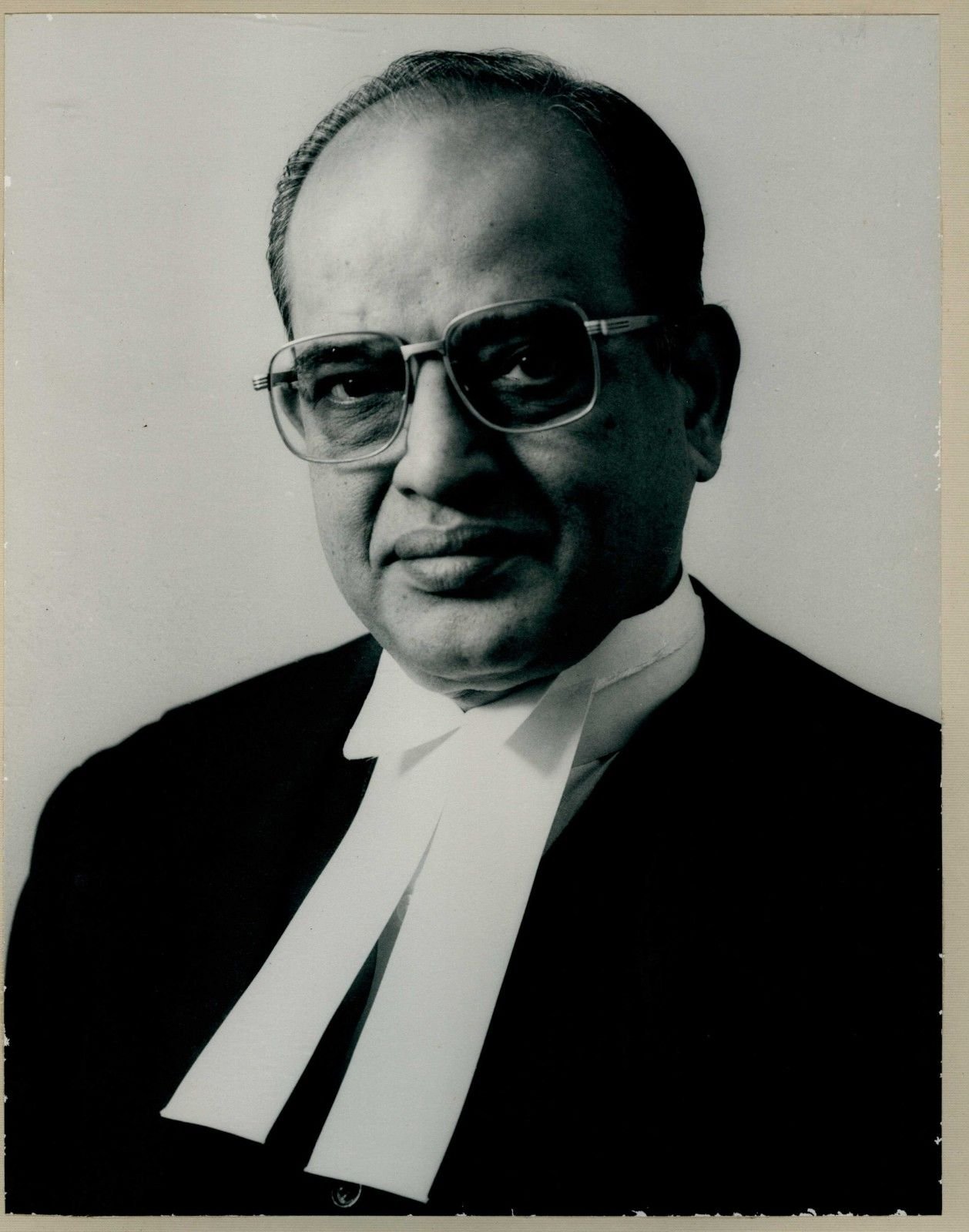
No Acts & Articles mentioned in this case
http://JUDIS.NIC.IN SUPREME COURT OF INDIA Page 1 of 11
PETITIONER:
DWARIKESH SUGAR INDUSTRIES LTD.
Vs.
RESPONDENT:
PREM HEAVY ENGINEEING WORK
DATE OF JUDGMENT: 07/05/1997
BENCH:
K.S. PARIPOORNAN, K. VENKATASWAMI, B.N. KIRPAL
ACT:
HEADNOTE:
JUDGMENT:
J U D G M E N T
THE 7TH DAY OF MAY, 1997
Present:
Hon'ble Mr.Justice K.S.Paripoornan
Hon'ble Mr Justice K.Venkataswami
Hon'ble Mr Justice B.N.Kirpal
Harish N.Salve, Sr.Adv., Krishan Mahajan, P.H.Parekh, Ms.
Indu Varma, Advs. with him for the appellant
Sudhir Chandra, Sr.Adv., Manmohan, Sanjay Raghuvanshi, R.
Sasiprabhu, Advs. with him for the Respondents.
J U D G M E N T
The following Judgment of the Court was delivered:
KIRPAL. J.
Special leave granted.
Having been thrawted by orders of the court below in it
attempt to get encashment of the bank guarantees, issued by
the State Bank of India, Meerut Cantt. Branch (respondent
no.2) respondent no.l has led to the filing of this appeal
by aggrieved beneficiaries.
The appellant and respondent no.1 had entered into an
agreement on 27th July, 1994 whereby respondent no.1 was to
supply boiling house equipment the cost of which was Rs.
5.23 crores. The supply of equipment and material was to
start from 15 September, 1994 and the same was to be
completed by 10th August, 1995, as per the schedule of the
supply agreed to by the parties.
According to one of the clauses of the aforesaid
agreement respondent no.l had agreed to furnish bank
guarantees in favour of the appellant. Out of the above six,
only four bank guarantees were furnished including bank
guarantee no. 40/51 dated 1st December, 1994 for a sum of
Rs.26,15,000/- and bank guarantee no.40/47 dated 24th
November, 1994 for a sum of Rs.35 lacs. These are the bank
guarantees with which we are concerned in the present case.
Bank guarantee no.40/51 was issued to ensure timely delivery
of equipment and supply by respondent no. 1. The relevant
clauses of the said bank guarantee no.40/51 are as follows:
"In consideration of the premises
the Guarantor hereby
unconditionally and irrevocably
http://JUDIS.NIC.IN SUPREME COURT OF INDIA Page 2 of 11
undertake to pay to the Purchaser
on their first written demand and
without demur such a sum not
exceeding Rs.26,15,000/- (Twenty
six lacs fifteen thousand only) as
the purchasers may demand
representing 5% (five per cent) of
the contract price, and if the
guarantor fails to pay the sum on
demand the guarantor shall also pay
on the sum demanded interest at the
bank lending rates then prevailing
reckoned from the date of demand
till the date of payment.
2.The guarantor shall pay to the
purchaser on demand the sum under
clause 1 above without demur and
requiring the purchasers to invoke
any legal remedy that may be
available to them, it being
understood and agreed firstly that
the purchasers shall be the sole
judge of and as to whether the
sellers have committed breach(es)
of any of the terms and conditions
of the said agreement and secondly
that the right of the purchasers to
recover from the guarantor any
amount due to the purchasers shall
not be affected or suspended by
reasons of the fact that any
dispute or disputes have been
raised by the sellers with regard
to their Lability or that
proceedings are pending before any
Tribunal arbitrator(s) or Court
with regard to or in connection
therewith, and thirdly that the
guarantor shall immediately pay the
aforesaid guaranteed amount on
demand and it shall not be open to
the guarantor to know the reasons
of or to investigate or to go into
the merit of the demand or to
question or to challenge the demand
or to know any fact affecting the
demand, and lastly that it shall
not be open to the guarantor to
require the proof of the liability
of the seller to pay the amount
before paying the aforesaid
guaranteed amount to the purchasers
The other bank guarantee no.40/47 was originally issued
for a sum of Rs.51,70,000/- for securing advance payment.
The agreement contemplated the liability being gradually
reduced and on 28th August, 1995 this bank guarantee was
reduced for a diminished amount of Rs.33 lacs. The relevant
clause of this bank guarantee is as follows:
"In consideration of the premises
the guarantor hereby
unconditionally and irrevocably
undertakes to pay to the purchaser
on their first written demand and
without demur such a sum not
exceeding Rs.51,70,000/- (Rupees
http://JUDIS.NIC.IN SUPREME COURT OF INDIA Page 3 of 11
fifty one lacs seventy thousand
only) as the purchasers may demand
representing 10% (Ten per cent) of
the contract price, and if the
guarantor fails to pay the sum on
demand the guarantor shall also pay
on the sum demanded interest at the
bank lending rates then prevailing
reckoned from the date of demand
till the date of payment. Provided
that liability of the guarantor
hereunder shall reduce to the
extent of the advance adjusted
under clause 13 of the said
agreement.
The guarantor shall pay to the
purchaser on demand the sum under
clause 1 above without demur and
requiring the purchasers to invoke
any legal remedy that may be
available to the them, it being
understood and agreed firstly that
the purchaser shall be the sole
judge of and as to whether the
sellers have committed any
breach(es) of any of the terms and
conditions of the said agreement
and secondly that the right of the
purchasers to recover from the
guarantor any amount due to the
purchasers shall not be affected or
suspended by reasons of the fact
that any dispute or disputes have
been raised by the seller with
regard to their Liability or that
proceedings are pending before any
Tribunal, arbitrator(s) or court
with regard thereto or in
connection therewith, and thirdly
that the guarantor shall
immediately pay the aforesaid
guaranteed amount on demand and it
shall not be open to the guarantor
to know the reasons of or to the
investigate or to go into the
merits of the demand or to question
or to challenge the demand or to
know any facts affecting the
demand, and lastly that it shall
not be open to the guarantor to
require the proof of the liability
of the seller to pay the amount
before paying the aforesaid
guaranteed amount to the
purchasers".
According to the appellant respondent no.l did not
supply the equipment at site, within the time allowed, nor
replaced any of the defective items which, according to the
appellant, had resulted in the ate commencement of the trial
crushing in the mill. It is further the case of the
appellant that it had to make direct purchases of many
parts from other sources as the respondent no.1 had failed
to supply the equipment Ultimately by letter dated 21st
November, 1995 written to respondent no.2, the appellant
invoked the bank guarantee. The material portion of this
http://JUDIS.NIC.IN SUPREME COURT OF INDIA Page 4 of 11
letter was as follows:
"We wish to inform you that M/S
Prem Heavy Engineering Works (P)
Ltd. Ram Mill, Delhi Road, Meerut
have failed to fulfill the
condition of our agreement dated
27.7.1994 in so far as timely
supply of the machinery and
equipment under order with them .
"As per clause 14 of the supply
agreement M/s Prem - Heavy
Engineering Works (P) Ltd., Meerut
has failed to deliver the
equipments and its commissioning
within the scheduled time frame.
Now we hereby invoke the aforesaid
guarantee for Rs.26,l5,000/-(Rupees
twenty six lacs fifteen thousand
only) 5% of the contract value and
enclose here with the original
guarantee for your record. Kindly
hand over the Demand Draft in our
favour payable at Najibabad, Distt.
Bijnor, Uttar Pradesh towards the
invocation amount."
As on 28th November 1995 respondent no.1 had already
obtained and ex parte injunction restraining the encashment
of bank guaranteee, no payment was made to the appellant by
the bank.
Respondent no.1 then filed another injunction
application dated 12th January, 1996 with regard to the
second bank guarantee dated 24th November, 1994 which was
for a sum of Rs.33 lacs. It obtained an Ex parte injunction
in respect thereto on the same day. Being ignorant of this
the appellant wrote a letter dated 16th January, 1996 to
the respondent bank invokeing the said bank guarantee no.
40/47. In the said letter it was stated that respondent no.1
had failed to deliver the equipment as per the terms of
the agreement and that the appellant had bought equipment
from various markets due to which the advance amount which
had been paid to respondent no.1 in respect of which this
bank guarantee had been issued, remained unadjusted. The
bank was accordingly required to pay the said amount of
Rs.33 lacs.
According to the appellant it is only after 16th
January, 1996 that it became aware of the filing of the
aforesaid suit and the injunction application and it
entered appearance in Court on 18th January, 1996 even
though no notice had been served on it. As per the
appellant, there was delay in the disposal of the injunction
application, consequently it approached the High Court for
appropriate directions and the Allahabad High Court vide
order dated 10th may, 1996 directed the civil Judge,
Meerut Cantt, to dispose of the suit within the time fixed
by it .
By a detailed order dated 20th August 1996, the Second
Civil Judge (Sr. Division) Meerut vacated the ex parte
injunctions which had been granted and dismissed the
injunction applications. In arriving at this conclusion it
observed that respondent no.1 had not stated that the work
had been completed and nor was there any allegation of
cheating or fraud contained in the plaint which had been
filed. The trial court referred to a number of decisions
of this Court and came to the conclusion that there was no
basis, in law, for the grant of any interim prohibitory
http://JUDIS.NIC.IN SUPREME COURT OF INDIA Page 5 of 11
order.
The appellant on 22th August, 1996 again approached
the respondent bank for the encashment of the bank
guarantees, but without success.
Respondent no.1 then filed revision petition on. 257
of 1996 on 10th September. 1996 before the Allahabad High
Court challenging the order dated 20th August, 1996 of the
trial court. single judge of the Allahabad High Court took
up the revision petition and disposed it of on the same day
and after setting aside the order dated 20th August, 1996
it remanded the matter back to the trial court for a fresh
decision but, at the same time, directed that till the
disposal of injunction application the bank guarantees
in question shall not be invoked or encashed. The trial
court was directed to hear the parties within fifteen days
of the receipt of the order and to dispose of the injunction
application within fifteen days thereafter. Needless to
date, due to dilatory tactics adopted by respondent no1
which is evident from the documents available on the record
of this
"As per clause 14 of the supply
agreement M/s Prem - Heavy
Engineering Works (P) Ltd., Meerut
has failed to deliver the
equipments and its commissioning
within the scheduledtime frame.
Now we hereby invoke the aforesaid
guarantee for Rs.26,l5,000/-(Rupees
twenty six lacs fifteen thousand
only) 5% of the contract value and
enclose here with the original
guarantee for your record. Kindly
hand over the Demand Draft in our
favour payable at Najibabad, Distt.
Bijnor, Uttar Pradesh towards the
invocation amount."
As on 28th November 1995 respondent no.1 had already
obtained and ex parte injunction restraining the encashment
of bank guarantee, no payment was made to the appellant by
the bank.
Respondent no.1 then filed another injunction
application dated 12th January, 1996 with regard to the
second bank guarantee dated 24th November, 1994 which was
for a sum of Rs.33 lacs. It obtained an Ex parte injunction
in respect thereto on the same day. Being ignorant of this
the appellant wrote a letter dated 16th January, 1996 to
the respondent bank invoking the said bank guarantee no.
40/47. In the said letter it was stated that respondent no.1
had failed to deliver the equipment as per the terms of
the agreement and that the appellant had bought equipment
from various markets due to which the advance amount which
had been paid to respondent no.1 in respect of which this
bank guarantee had been issued, remained unadjusted. The
bank was accordingly required to pay the said amount of
Rs.33 lacs.
According to the appellant it is only after 16th
January, 1996 that it became aware of the filing of the
aforesaid suit and the injunction application and it
entered appearance in Court on 18th January, 1996 even
though no notice had been served on it. As per the
appellant, there was delay in the disposal of the injunction
application, consequently it approached the High Court for
appropriate directions and the Allahabad High Cour tvide
order dated 10th may, 1996 directed the civil Judge,
Meerut Cantt, to dispose of the suit within the time fixed
http://JUDIS.NIC.IN SUPREME COURT OF INDIA Page 6 of 11
by it .
By a detailed order dated 20th August 1996, the Second
Civil Judge (Sr. Division) Meerut vacated the ex parte
injunctions which had been granted and dismissed the
injunction applications. In arriving at this conclusion it
observed that respondnent no.1 had not stated that the work
had been completed and nor was there any allicgation of
cheating or fraud contained in the palaint which had been
filed. The rtial court referred to a number of decisions
of this Court and came to the conclusion that there was no
basis, in law, for the grant of any interim prohibitory
order.
The appellant on 22th August, 1996 again approached
the respondent bank for the encashment of the bank
guarantees, but without success.
Respondent no.1 then filed revision petition on. 257
of 1996 on 10th September. 1996 before the Allahabad High
Court challenging the order dated 20th August, 1996 of kthe
tial court. single judge of the Allahabad High Cout took
up the revision petition and disposed it of on the same day
and after setting aside the order dated 20th August, 1996
it remanded thre matter back to the trial court for a fresh
decision but, at the same time, directed that till the
disposal of injunction application the bank guarantees
in question shall not be invoked or cencashed. The trial
court was directec to hear the prties within fifteen days of
the receipt of the order and to dispose of the injunction
application lwithin fifteen days thereafter. Needless to
dtate, due to rdilatory tactics adopted by fespondent no1
which is evident from the documents available on the record
of this case, the said injunction application have not been
disposed of the till with the result that the injunction
granted by the single judge of the High court vide order
dated 10th September, 1996 still continues.
While allowing the civil revision the single judge
in his judgment did not think it necessary to refer to the
judicial diecisions which were cited before him. The
court observed that reference to the same was not
becessary because the trial court, who had observed that the
plaint did no contain any allegation with regard to fraud,
had not noticed that allegation of fraud was cantained in
the injuction application. The learned judge noticed that
the liability of bank under the guarantee was absolute
and that it was not supposed to question the authority of
the benificiary to encash the bank guarantee but observed
that the same " could not be the guideline for allowing the
defendant to encash the bank guarantee unless there was a
finding that the defendant was having undue enrichment
thereby".
The aforesaid decision of the High Court has been
assailed by Sh. Harish N. Salve, learned senior counsel for
the appellant, who has contended that the High Court fell
in serious error in ignoring and not in even feferrin g to
the decisions of this Court where the principles regarding
the grant of injunction in matters relating to encashment
of bank guarantees have been clearly spell out. Had this
been done, the learned counsel submits, the High Court could
not, in law, have continued with the temporary injunction.
Numerous decisions this Court rendered over a span
of nearly two decades have laid down and reiterated the
principles which the Courts must apply which considering
the question whether to grant an injunction which has the
effect of restraining the encashment of a bank guarantee. We
do not think iot necessary to burden this judgment by
referring to all of them. Some of the more recent
http://JUDIS.NIC.IN SUPREME COURT OF INDIA Page 7 of 11
pronouncements on this point where the earlier decisions
have been considered and reiterated are Svenska
Handelsbanken Vs. Toubro Ltd. Vs. Maharashtra State
Electricty Board and ors. [(1995) 6 SCC 68], Hindustan
Steel Works Construction Ltd. Vs. G.S. Atwal & co.
(Engineers) Pvt. Ltd. [(1995) 6SCC 76] and U.P. State Sugar
Corporation Vs. Sumac International Ltd. [(1997)1 SCC
568]. The gemeral principle which has been laid down by
this court has been summarised in the case of U.P. state
sugar Corporation's case as follows:
"The law relating to invocation of
such bank guarantees in by now well
ssettled. When in the course of
commercial dealings an
unconditional bank guarantee is
given or accepted, the beneficial
is entitled to realize suchj a bank
guarantee in terms thereof
ireespective of any pending
disputes. The bank giving such a
guarantee is bound to honlur, ir
as per its terms irrespective of
any dispute raised by its costomer.
The very purpose of giving such a
bank a bank guarantee would
othrwise be defeated. The courts
should, therefore, be slow in
granting an injunction to restrian
the realization of such a bank
guarantee. The courts have carvede
out only two exceptions. A fraud
in connection with such a bank
guarantee would vitiate the very
foundation with such a bank
guarantee would vitiate the very
foundation of such a bank
guarantee. Hence if thre is such a
fraud of which the beneficiary
seeks to take the advantage, he
can be restrained from doing so.
The second exception relates to
case where allowing the
encashment of an unconditional
bank guarantee would result in
irretrievable harm or injustice to
one of the parties concerned.
Since in most cases payment of
money under such a bank guarantee
would adversely affect the bank
and its customer at whose instance
the guarantee is given, the harm
or injustice contemplanted under
this head must be of such an
exceptional and irretrievable
nature as would override the terms
of the guarantee and the adverse
effect of such an injunction of the
guarantee and the adverse effect
of such an injunction on
commercial dealings in the
country."
Dealing with the queation of franud it has been held
that fraud has to be an established fraud. The following
observation of sir John Donaldson, M.R. in Bolivinter oil
SA V. Chase Manhattan Bank (1984) 1 All ER 351, are
http://JUDIS.NIC.IN SUPREME COURT OF INDIA Page 8 of 11
apposite:
"The wholly exceptional case where
an injunction may be granted is
where it is proved that the bank
knows that any demand for payment
already made or which may
threafter be made will clearly be
fraudulent. But the evidence must
be clear both as to the fact of
fraud and as to the bank's
knowledge .It would certainly not
normally be wufficient that rests
on the ujncorroborated statement of
the customer, for irreparable
damage can be done to a bank's
credit in the relatively brief time
which must clapse between the
granting of such an injunction
and an application by the bank to
have it charged."
(emphasis supplied)
The aforesaid passage was approved and followed by
this court in U.P. coooperative Federation Ltd. Vs. Singh
consultants and Engineers (P) Ltd. [(1988) 1 SCC 174].
The secondly exception to the rule of granting
injunction, i.e., the resulting of irretrievable injury,
has to be such a circumstance which would make it
impossible for the guarantor to reimburse himself, if he
ultimately succeeds. This will have to be decisively
established and it must be proved to the satisfaction of due
Court that there would be no possbility whatsoever of the
recoverv of the amount from the beneficiaIy. by way of
restitution.
In the instant case, as has been already noticed there
were two types of bank guarantees which were issued. Bank
Guarantee No. 40/51 for Rs.26,15,000/- was issued to issues
timely y performance of the agreement by respondent No. 1.
the relevant terms of this guarantee firstly makes it clear
that the that has unconditional and irrevocably undertaken
to pay to pay to the appellant, on written demand and
without demand, the amount demanded it. Secondly, Clause II
of the said guarantee clarifies that the payment shall be
made without demand and on the undertaking that the
appellant is to be sole judge whether the seller has
committed any breach. Consequently the right of the
appellant to recover the guaranteed amount is not to be
effected or suspended by reason of any dispute which can be
raised or pending before the courts tribunals or arbitrator
Thirdly the guarantor had no right to know the reasons of
or to investigate the merits of the demand or to question
or to challenge the demand or to know any fact affecting
the demand and lastly it was not open to the bank to
require the proof of the liability of respondent No.1 to pay
the amount before paying the aforesaid guaranteed amount
to the appellant.
The letter of invocation issued by the appellant
demanding the payment ot Rs.26,15000/- was in accordance
with the terms of bank guarantee No. 40/51 and the bank
was, threfore, under an obligation to honour its
undertaking and to make the payment . It, however, chose
not to fulfil its obligation. If the bank could not in law
avoid the payment, as the demand had bneen made in terms of
the banjk guarantee, as has been done in the present case,
then the court ought not to have issued an injunction
which had the effect of restraining the bank from
http://JUDIS.NIC.IN SUPREME COURT OF INDIA Page 9 of 11
fulfilling its contractual obligation in terms of the bank
guarantee. An injunction of the court ought not to be an
instrument which is used in nullifying the terms of a
contrant, agreement or undertaking which is used in
nullifying the terms of contract, agreement or undertaking
which is lawfully enforceable. In its aforesaid letter
dated 24th November, 1995 respondent no.1 had clearly
admitted that entire supply had not been made. In view
of this also the High court was not justified in
granting an injunction.
Bank guarantee No.40/97 dated 24th November, 1994,
which had been issued to secure the advance of Rs. 129.24
lacs which had been given by the appellant, was also
similar in terms to the earlier bank guarantee No. 40/51.
The main contract between the parties contemplated that the
amount of bank guarantee shall stand reduced on adjustment
being made. It is contended by Shri Sudhier Chandra,
learned counsel for the respondents that the full amount was
ginen adjusted and no amount remained outstanting and,
therefore, the bank guarantee No.40/47 could no longer be
regarded as alive . In support of this contention, the
learned counsel relied on the observations of this Court in
Larson & Turbo Ltd. Vs. Maharashtrata state Electricity
Board and ors. (1995) 6 SCC 68 where an injunction was
granted wheree the bank guarantee which was issued was to be
kept alive till the successful completion of trial
operations. our opinion, this decision can be of no
assistance to respondent no. 1 because in Larson & Turbo~s
case (supra) this Court found that the guarantee which had
been given by the bank was to ensure only till the
successful completion of the trail operations and the taking
over of the plant. The documents revealed that the
contractual terms in this regard has been complied with
and after successful completion of the trial operation,
the plant had admittedly been taken over. In view of this
Court that the terms of the bank gurantee did not permit
its invocation once the trial operation have been
successfully completed.
In the present case clause 3 of bank guarantee No.
40/47 relating to adjustment of the advance stipulated as
follows:
"The guarantee shall come into
force from the date thereof and
shall remain valid till the full
advance amount is adjusted under
Clause 13 of the said agreement
which according to the terms and
conditions of the said Agreement is
stipulated to be adjusted
proportionately from each bill of
the Sells against actual deliveries
of the machinery and equipment at
site but if the deliveries as
aforesaid have not been completed
by the Sellers within the said
period for any reason what soever
the Guarantor hereby undertakes
that the Sellers shall furnish a
fresh or renewed guarantee on the
Purchaser's proforma for such
further period as the purchaser's
may intirmate failing which the
guarantor hall pay to the
purchaser's a sum not execeeding
Rs. 51,70,000/-(Rupees Fifty one
http://JUDIS.NIC.IN SUPREME COURT OF INDIA Page 10 of 11
lacs seventy thousand only) or
the residual amount of balance
unadjusted advance left after
proprotionae adjustment in
acccordance with clause 1 above as
the purchaser may demand."
No plea was taken before the courts below and no
document has bcen shown to us by the respondents, which can
prima ficie indicate that the full amount to us by the
respondents, which can prima facie indicate that the full
amount of advance had been adjusted under Clause 13 of the
main contrant between the appellant and the defendant no.1
According to the appellants, the original guarantee was for
Rs. 51,70,000/- but the same, after adjustment of the
advance, in terms of clause 13 of the main agreement, stood
reduced to Rs.33,00,000/- This amount was still outstanding
and, therefore, the bank guarantee had not come to an end
and was rightly invoked.
Coming to the allegation of fraud, it is an admitted
fact that in the plant itself, there was no such allegation
was initially only in the first application for the grant of
injunction that in a paragraph it has been mentioned that
the appellant therein had invoked the bank guarantee
arbitrarity. this application contains no facts or
particulars in support of the allegation of fraud. A similar
bald averment alleging fraud is also contained in the
second application for injunction relating to bank guarantee
No. 40/47. This is not a case where defendant no. 1 had at
any time alleged fraud prior to the filing of injunction
application. The main contract, pursuant to which the bank
guarantees were issued, was not sought to be avoided by
alleged fraud, nor was it at any point of time alleged that
the bank guarantee was issued because any fraud had been
played by the appellant. We have no manner of doubt that the
bald assertion of fraud had been made solely with a view to
obtain an order of injunction . In the absencce of
established fraud and not a mere allegation of fraud and
that also having been made only in the injunction
application , the court could not, in the present case have
granted an injunction relating to the encashment of the
bank guarantees.
It is unfortunate that the High Court did not consider
it necessaly to rrfer to various judicial pronouncements of
this Court in which the principles which have to be fullowed
while examining an application for grant of interim relief
have been clearly laid down. The observation of the High
Court that reference to judicial decisions will not be of
much importance was cleart a me1hod adopted by it in
avoiding to fo11ow and apply the law as laid down by this
Court. Yet another scrious for which was carmnitted by the
High Court, in the present case, was not to examine the
tenns of the bank guarantee and consider the letters of
invocation which had been written by the appellant. If the
High Court had trail the trouble of examining the documents
on record, which had been referred to bv the trial court, in
its order refilsing to grant injunction, the court would not
have granted the interim injunction. We also do not find any
justification for the High Court in invoking the alleged
principle of adjust enrichment to the facts of the present
case and then deny the appettant the Iight to cncash the
bank guarantee. If the High Court had taken the trouble
to see the law on the point it would have been clear that
in encashment of bank guaranmtee the applicability of the
principle of undue enrichment has no application.
We are constrained to make these observation with
http://JUDIS.NIC.IN SUPREME COURT OF INDIA Page 11 of 11
regard to the manner in which the High Court had dealt with
this case because this is not an isolated cade where the
courts, while disobeying or not complying with the law
laid down by this Court , have at time been liberal in
granting injunctgion restraining encalhment of bank
guarantees.
It is unfortunate, that notwithstanding the
authoritative the pronouncements of this Court, the High
Courts and the courts subordinate thereto, still seem intent
on affording to this Court innumerable opportunities for
dealing with this area of law, thought by this Court to be
well settled.
When a position, in law, is well settled as a result of
judicial pronouncement of this Court, it would amount to
judicial impropriety to say the least, for the subordinate
courts including the High Courts to ignore the settled
decisions and then to pass a judicial ordor which is clearly
contrary to the setded legal position. Such judicial
adventurism cannot be permitted and we strongly deprecate
the tendency of the subordinate courts in not applying the
settled principles and in passing whimsical orders which
necessarily has the effect of granting wronful and
unwarranted relief to one of the parties. It is time that
this tendency stops.
Before concluding we think it appropriate to mention
about the conduct of the respondent - bank which has chosen
not to be in this case. From the facts stated hereinabove it
appears to us that the respondent bank has not shown
professional efficiaency, to say the least, and has acted in
a partisan manner with a view to help and assist respondent
no. 1. At the time when there was no restraint order from
any Court, the bank was under a legal and moral obligation
to honour its commitments. It, however, failed to do so. It
appears that the bank deliberately draged its feet so as to
enable respondent no.1 to secure favourable order of
injunctgion from the Court. Such conduct of a bank is
difficult to appreciate We do not wish to say anything more
but it may feel that it will be prejudicial in the event of
the appellant taking action against it.
For the aforesaid reasons this appeal is allowed. The
judgment and order of the Allahabad High Court dated 10th
September, 1996 in revision petition no.257 of l996 is set
aside and the order of the trial court datded 20th Auguat,
1996 dismissing the injunction application is restored. The
appellant would be entitled to cost which are quantified
at Rs.20,000/-.

 Login with google
Legal Notes
Add a Note....