
FCI’s appeal to the Madhya Pradesh High Court resulted in a partial reduction of damages. This judgment was then challenged in the Supreme Court of India.

No Acts & Articles mentioned in this case
http://JUDIS.NIC.IN SUPREME COURT OF INDIA Page 1 of 9
CASE NO.:
Appeal (civil) 3484 of 1997
PETITIONER:
Food Corporation of India & Ors.
RESPONDENT:
M/s.Babulal Agrawal
DATE OF JUDGMENT: 05/01/2004
BENCH:
Brijesh Kumar & Arun Kumar
JUDGMENT:
JUDGMENT
WITH
CIVIL APPEAL NO. 3485 OF 1997
M/s.Babulal Agrawal Appellant
Versus
Food Corporation of India & Ors. Respondents
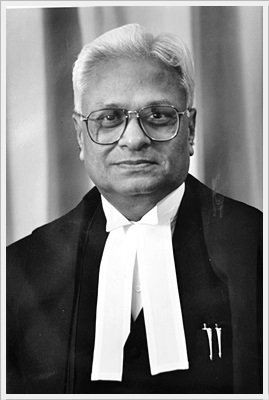
BRIJESH KUMAR, J.
Civil Appeal No.3484 of 1997 has been preferred by the
Food Corporation of India and others against the judgment and
decree passed by the Madhya Pradesh High Court only partly
allowing their appeal and modifying the decree of the Trial Court
to a limited extent to the effect that the respondent would be
entitled to damages to be calculated after deducting 6% of the
amount payable. The rest of the judgment and decree as passed
by the Trial Court has been upheld.
Whereas Civil Appeal No.3485 of 1997 has been preferred
by M/s.Babulal Agarwal (the plaintiff), against the same
judgment and order passed by the Madhya Pradesh High Court,
partly modifying the decree of the Trial Court permitting
deduction of 6% from the amount of damages as decreed by the
Trial Court. For the sake of convenience, the parties shall be
referred as plaintiff and defendant as in the original suit filed by
M/s.Babulal Agrawal.
The Food Corporation of India (for short 'FCI') invited
tenders for hiring plinths for storing foodgrains. The plaintiff
submitted his tender which was ultimately accepted vide letter
dated 11.6.1985. The rent was to be @40 paisa per sq.ft. The
acceptance of tender and the conditions of contract had again
been confirmed by the letter dated 19.8.1985 written by the
Regional Manager. An agreement dated 12.2.1986 was entered
into between the parties. The case of the plaintiff is that the
defendant had given out to hire the plinths for a period of three
years with an option to the defendant to extend by another year.
The construction of plinth etc. could not be constructed within
the time as agreed. However, ultimately it is undisputed that the
same were completed and handed over to the defendant on
24.1.1987. No formal lease deed was executed. The defendant on
26.9.1988 gave 15 days' notice for vacating the plinths and
vacated the same on 10.10.1988. The rent upto the said period
was paid. According to the plaintiff it amounted to breach of the
terms of the contract by the defendant, hence filed a suit for
damages for an amount of Rs.17 lacs and odd. The Trial Court
http://JUDIS.NIC.IN SUPREME COURT OF INDIA Page 2 of 9
decreed the suit for a total sum of Rs.17,32,709/- with an order
for refund of the security and interest thereon. The plaintiff was
also allowed interest on the decreetal amount @6% p.a. from the
date of suit namely, 4.10.1991 till the date of payment.
Before entering into the points raised before us by the
parties, it will be worthwhile to peruse the relevant conditions of
the contract dated 12.2.1986. The plinths were to be constructed
by the plaintiff over the land owned by him. The relevant
conditions of the agreement are as under :-
"1. The opposite party no.1 would be solely
responsible for obtaining necessary permission
from the land ceiling authority and sanction for
the plan of plinths and other facilities to be
constructed from the local bodies like
municipal authorities or any other competent
authority before proceeding with the
constructions.
2. The size and height of the plinths and other
facilities will be as per specifications laid down
in Appendix 'A'.
3. The party no.1 shall be responsible for
providing services like electricity, water
supply, inner and approach road, fencing at the
site as per instructions of the party no.2 to be
given from time to time and no extra charges
would be claimed for the provision thereof.
However, the charges for consumption of
electricity would be met by the corporation
(party no.2) during the period plinths alongwith
other facilities remain on lease with the party
no.2. The maintenance of the electric motor
utilized for the supply of water will be the
liability of the party no.1 on failure of water
facility through well or tube well the alternative
arrangement for supply of portable water shall
be made by the party no.1 at his court.
4. xxxx xxxx xxxx
5. The layout plan indicating the plinths proposed
to be constructed, roads, office block etc.
should be got approved by party no.2 before
commencement of the work.
6. The opposite party no.2 will have full right to
inspection the construction undertaken by the
party no.1 through his
agents/servants/contractors etc. The party no.1
shall extend full facilities to the party no.2 and
its officer to inspect the work while in progress
to check the specification.
7. xxxx xxxx xxxx
8. Upon completion of the construction of plinths
and other facilities referred to above in all
respects and after obtaining a completion
certificate from the party no.2 or any of its
officer nominated by party no.2 is this behalf,
party no.1, would hand over the plinths and
other facilities to the party no.2 under lease
agreement to be executed between the parties in
the prescribed proforma prescribed by the party
http://JUDIS.NIC.IN SUPREME COURT OF INDIA Page 3 of 9
no.2. The necessary stamp duty as per
requirement for execution of lease deed shall be
borne by the party no.1.
9. It is understood that the time is evence of this
agreement. In the event of any delay the
completion of the plinth and other facilities or
if there is a faulty workmenship or the structure
is found to be defective, the party no.2 would
not be bound to take the plinths on lease and
the earnest money deposited by the party no.1
shall be forfeited. The decision of the opposite
party no.2 would be final in this regard and
shall not be questioned by the party no.1. The
earnest money shall also be forfeited in case the
party no.1 alters, modified the terms of the
agreement, withdraws and the offer, charges,
etc.
The construction of the ownership and/or fails
to complete the construction of plinth and other
facilities within the time stipulated for
constructions.
10. to 11 xxx xxx xxx
12. The period of lease will be three years from the
date of taking possession of the lease property.
The party no.2 will be entitled to extend it by a
further period up to one year on the same rates,
terms and conditions applicable to the lease."
The case of the plaintiff was that the claim of the plaintiff
for damages is based on breach of conditions of the agreement dated
12.2.1986 since the defendant instead of occupying the plinth/platform
for a period of three years, vacated the same on 10.10.1988 after having
taken the possession only on 24.1.1987. Therefore, the defendant was
liable to damages at the same rate as the rent for the plinth. The case of
the defendant has been that no registered lease deed, as envisaged in
the agreement, was executed for a period of three years, hence it was
only a tenancy for month to month and under the provisions of Section
106 of the Transfer of Property Act it was legally open for the
defendant to terminate the tenancy on fifteen days' notice and vacate
the premises. On the pleadings of the parties the court framed issues.
We are concerned with only issue nos. 3 and 4 in respect of which
arguments have been advanced before us, which are reproduced
below:-
"3. Whether in the absence of the registration of the
alleged lease for three years the tenancy between the
parties was monthly and it was liable to termination
by notice?
4. Whether the defendants were bound to pay rent for
three years on the principle of 'Promissory
Estoppel'?"
On both issues noted above the Trial Court has recorded findings in
affirmative but in respect of issue no.3 it has been further held that
there was a breach of contract on the part of the defendant. The Trial
Court has made a detailed discussion while recording the findings as
indicated above and came to a conclusion that once the plaintiff had
performed his part of the contract and altered his position, namely,
having constructed the plinth according to specification of defendant,
on a condition given out by the defendant that on completion of the
construction they would hire the premises for a period of three years,
http://JUDIS.NIC.IN SUPREME COURT OF INDIA Page 4 of 9
the defendant could not later on back out from such a promise. It has
been noted, and rightly so, that in the tender notice as well as in the
correspondence it had been clearly given out time and again that the
defendant would utilize the plinths constructed by the plaintiff for a
period of three years. As a matter of fact, on completion of the
construction the defendant did occupy the plinth and had been paying
rent as agreed but terminated the tenancy by serving a notice of 15
days' as per the provisions of Section 106 of the Transfer of Property
Act and vacated the premises on 10.10.1988. In connection with this
point it may be worthwhile to notice that the defendant itself had
admittedly written a letter dated 16.10.1986 to the United Commercial
Bank mentioning therein that the lease was a period of three years and
the rent payable to the plaintiff would be directly remitted to the bank
as against the loan advanced to the plaintiff.
Learned counsel for the respondent has also taken us
through the correspondence showing that there was an arrangement for
deposit of the amount of rent by the defendant in the bank to adjust the
loan taken by the plaintiff from the bank for construction of the plinths.
The construction was also made in accordance with the design and
specifications as provided and prescribed by the FCI. Considering all
such facts as were clearly indicated and given out by the defendant for
occupying the premises initially for a period of three years and the
plaintiff having arranged for the money accordingly by taking loan
from the bank, the Trial Court, in our view, has rightly held, referring
to the earlier decisions of this Court that the defendant could not back
out from the promise held out and cannot escape when the liability for
damages for breach of the terms of the contract.
We may, however, point out that the learned counsel for the
defendant-appellant has laid much emphasis mainly on three points.
The first point is that there being no registered lease deed it was a
monthly tenancy and could validly be terminated by giving 15 days'
notice and since the tenancy was terminated accordingly, there was no
occasion to saddle the defendant appellant with liability of damages. In
absence of a registered lease deed, it is contended that it could not be
held that the property leased out to the defendant appellant was for a
period of three years. The other objection which has been raised is that
the agreement dated 12.2.1986 required registration under the
provisions of the Indian Registration Act. The unregistered agreement
would not be admissible in evidence, hence it could not be acted upon.
Yet another objection which has been raised is that the suit was filed
beyond the period of limitation. In support of the first contention a
reference has been made to Section 107 of the Transfer of Property Act,
according to which the parties had to execute a registered lease deed
but the same was never done. We find that the High Court has rightly
dealt with the question while holding that the plaintiff had not filed the
suit for enforcement of agreement of lease. It was a suit filed for
damages for the breach of contract. It was not a suit for specific
performance of the contract. A promise was definitely held out by the
defendant to the appellant, for occupying the premises for a period of
three years at a given rate of rent. The premises were in fact
constructed in accordance with the instructions and specifications of the
defendant. For raising the construction the plaintiff had raised loans
from the bank. Everything happened in accordance with the terms of
the contract except that the period of tenancy was interdicted before
three years of taking over of the possession by the defendant. It may be
observed that even a monthly lease may last for more than a year and
for any longer period. In our view, the Trial Court and the High Court
have rightly held that in absence of any lease deed or a registered lease
deed the nature of the lease would only be that of a monthly lease. But
it does not mean that it would deprive the plaintiff of damages for
breach of terms of an agreement in accordance of which he had
performed his part of the obligation by creating a liability against
himself by taking loan from bank later only to be told that it all will be
of no consequence as agreed in the agreement since no lease was
executed and registered. The plinths were constructed in accordance
http://JUDIS.NIC.IN SUPREME COURT OF INDIA Page 5 of 9
with the design and specification given by the defendant. It may be of
no use to any other person and for any other purpose. In this
background as what was held out by the defendant, assumes importance
and in case one who holds out a promise, backs out, will have to
compensate the party who acted bonafidely on the basis of the promise
made. As indicated earlier, even the tender notice, besides other
correspondence, all gave out that the defendant would occupy the
premises for a period of three years. Everything was acted upon
according to the agreement except the execution of lease deed, hence
there was termination of tenancy on 15 days' notice. The plaintiff is
not insisting that the defendant must retain possession for the remaining
period or that the tenancy was not terminable but termination of the
tenancy would not necessarily mean that the defendant would also not
be liable for compensating for the breach of promise held out in the
terms of the agreement which lead the plaintiff to undertake the
construction and invest money by raising loan. Therefore, in our view,
it would not be of much consequence as to whether a lease deed for a
lease of three years was executed and registered or not. The execution
of the agreement and its existence and its terms and conditions are not
disputed. Nor it has been disputed that it was held out by the defendant
that it would occupy the premises for a period of three years extendable
by one year at its option on the rate of rent as agreed between the
parties. In the case in hand, the plaintiff is not praying for relief of
specific performance. In this view of the matter, we find that the
defence put up by the defendant appellant is not legally tenable. The
Trial Court and the High Court have rightly relied upon the decisions of
this Court reported in AIR 1968 SC page 718 in the case of Union of
India & Ors. Vs. M/s.Anglo-Afghan Agencies etc., where it was held
that non-execution of the contract in terms of Article 299 of the
Constitution of India does not militate against the applicability of the
doctrine of promissory estoppel against the government. We also find
that a reference to some other decisions of this Court namely, AIR 1979
SC p.621, M/s.Motilal Padampat Sugar Mills Co.Ltd. Vs. State of
U.P.&Ors. and AIR 1987 SC p.2414, Delhi Cloth and General Mills
Vs. Union of India, has been rightly made for the proposition of
liability of a party on backing out of a promise held out, after making
the other party to alter his position.
On behalf of the appellant, a reference has also been made
to a decision of this Court reported in (2000) 6 SCC 394, Anthony Vs.
K.C.Ittoop & Sons & Ors. An unregistered lease deed intended to be
operative for a period of 5 years, it was held that being an unregistered
deed, hence it could not create lease right in view of provisions as
contained in Section 107 of the Transfer of Property Act and Sections
17(1) and 49 of the Registration Act, 1908. This decision, therefore,
would not help the appellant in the instant case since it is nobody's case
that right of tenancy was created by virtue of agreement dated
12.2.1986. The said agreement only provided for execution by a
registered sale deed. The agreement has never been treated as a lease
deed by any Court or the respondents. What has been found material in
this case is that right from the beginning with the publication of the
tender notice till the end, it was given out, including in the agreement,
that the appellant shall hire the premises for a period of three years.
This period of three years has been described as guarantee period by
the appellant itself during which lease was to continue. We have
already held earlier that agreement dated 12.2.1986 itself not being a
lease deed was not registerable. The case basically hinges on the
undisputed fact that a promise was held out by the appellant to the
respondent to hire the premises for three years in response whereof the
respondent had parted his possession, as held earlier.
It may also be worthwhile to point out that the Board of
Directors of FCI considered the question of premature termination of
the lease and in its meeting it realized that though, may be legal, it
would be unjust and unfair, hence, issued a circular dated 4.5.1989
saying that the matter was considered in its 194th meeting and it was
decided that wherever guarantee period of three years has not expired
http://JUDIS.NIC.IN SUPREME COURT OF INDIA Page 6 of 9
the hiring of plinths may be continued upto the date of expiry of three
years by reducing its liability at least to the extent of 5% in the amount
of rent, through negotiations with the owners of the plinths. The
defendant itself was well aware of promise of three years "guarantee
period", therefore, only wanted reduction in rent.
The next submission made on behalf of the respondent is
that the agreement dated 12.2.1986 which provided for execution and
registration of lease for a period of three years, was itself required to
be registered according to Section 2(7) of the Registration Act, 1908.
Sub-section (7) of Section 2 is quoted below :
"2. Definitions-. In this Act, unless there is anything
repugnant in the subject or context,-
xxx xxx xxx
(7) "lease" includes a counterpart, kabuliyat, an
undertaking to cultivate or occupy, and an agreement
to lease;"
It is submitted that since there was an agreement for lease it was
therefore, liable to be registered. In this connection two other
provisions, Section 17(1)(d) and Section 17(2)(v), which may be
relevant for the purposes of dealing with this point may also be
perused. Section 17(1)(d) reads as under :
"17. Documents of which registration is
compulsory.(1) The following documents shall be
registered, if the property to which they relate is
situate in a district in which, and if they have been
executed on or after the date on which, Act No.XVI
of 1864, or the Indian Registration Act, 1866, or the
Indian Registration Act, 1871, or the Indian
Registration Act,1877, or this Act came or comes
into force, namely,
xxx xxx xxx
(d)lease of immovable property from year to year, or
for any term exceeding one year, or reserving a
yearly rent;"
The other relevant provision is clause (v) of sub-section (2) of Section
17, which reads as under :
"17(2) Nothing in clause (b) and (c) of sub-section
(1) applies to
xxx xxx xxx
(v) "any document other than the documents
specified in sub-section (IA)" not itself creating,
declaring, assigning, limiting or extinguishing any
right, title or interest of the value of one hundred
rupees and upwards to or in immovable property, but
merely creating a right to obtain another document
which will, when executed, create, declare, assign,
limit or extinguish any such right, title or interest;
or\005."
The agreement dated 12.2.1986 would squarely be covered by clause
(v) of Sub-section (2) of Section 17 quoted above. Since it merely
creates a right to obtain another document which will when executed
would create such a right. It would be necessary to refer to the
conditions of the agreement at this juncture. Clause 8 of the agreement
quoted earlier is clear, in providing that upon completion of the plinths
etc. the premises would be handed over to the defendant under a lease
agreement to be executed between the parties in the prescribed
http://JUDIS.NIC.IN SUPREME COURT OF INDIA Page 7 of 9
proforma. Thus clause 8 only talks of execution of a lease deed
between the parties in a prescribed proforma under which the defendant
would be entitled to get possession of the premises on completion.
The necessary stamp duty was to be borne by the plaintiff. It is thus
clear that agreement dated 12.2.1986 itself is not a lease deed requiring
registration. It only creates a right of getting another document
executed creating rights and liabilities in respect of immovable
property. The Trial Court as well as the High Court, has, in this
connection placed reliance upon a decision reported in AIR 1959 SC
p.620, Trivenibai and Anr. Vs. Smt.Lilabai. Paragraph 15 of the
judgment reads as under :
"15. In construing this document it is necessary to
remember that it has been executed by laymen
without legal assistance, and so it must be liberally
construed without recourse to technical
considerations. The heading of the document, though
relevant, would not determine its character. It is true
that an agreement would operate as a present demise
although its terms may commence at a future date.
Similarly it may amount to a present demise even
though parties may contemplate to execute a more
formal document in future. In considering the effect
of the document we must enquire whether it contains
unqualified and unconditional words of present
demise and includes the essential terms of a lease.
Generally if rent is made payable under an agreement
from the date of its execution or other specified date,
it may be said to create a present demise. Another
relevant test is the intention to deliver possession. If
possession is given under an agreement and other
terms of tenancy have been set out, then the
agreement can be taken to be an agreement to lease.
As in the construction of other documents, so in the
construction of an agreement to lease, regard must be
had to all the relevant and material terms; and an
attempt must be made to reconcile the relevant terms
if possible and not to treat any of them as idle
surplusage."
It is thus clear that if the agreement is such which may amount to a
present demise even though the document may be contemplated to be
executed later on it may be a document or agreement creating the
rights. There must be demise of the property in praesenti. But an
agreement for securing another agreement or deed in future would not
be such an agreement or document which may require registration.
Clause 8 of the agreement did not create any right in praesenti nor
there was any immediate demise of the property. It was only an
executory agreement. The construction of the plinth it seems had yet to
start with other facilities and amenities. On completion, such a
certificate was to be obtained from the defendant. It was thereafter that
the possession was to be handed over under the lease agreement which
was to be executed between the parties. The construction was to be
strictly in accordance with the directions and specifications of the
defendant. Condition no.9 also contemplated that if the structure was
found defective or workmenship was faulty the defendant could refuse
to take possession of the premises and the earnest money was liable to
be forfeited. Hence it is evident that no possession, right or title had
passed on in praesenti at the time of execution of the agreement, and
there were many prior conditions attached thereto. Such an agreement,
in our view, has been rightly held to be only an executory agreement
and not an agreement creating rights in the immovable property, hence
not compulsorily required to be registered. It was a mere agreement
between the parties which was not registered but was admissible in
evidence.
The next contention has been raised that the suit filed by
http://JUDIS.NIC.IN SUPREME COURT OF INDIA Page 8 of 9
the plaintiff was barred by time. The tender was accepted by the
appellant on 11.6.1985. The premises were handed over to the
defendant on 24.1.1987. The defendant gave 15 days' notice to vacate
the premises on 10.10.1988 on which date they vacated the premises
paying the rent up to 10.10.1988. The suit was filed on 4.10.1991.
In connection with this objection regarding limitation,
learned counsel for the plaintiff has submitted that no such plea was
ever raised by the defendant nor any facts or reasons were indicated as
to in what manner the suit was barred by limitation. No issue was
framed on the question of limitation. That point was not raised even in
the High Court nor in this Court too. It is only in the list of
dates/synopsis it is vaguely stated that the suit was time barred.
Learned counsel for the defendant appellant, however, relying upon
Section 3 of the Limitation Act submits that it was the duty of the Court
to see as to whether the suit was within limitation or not. A suit filed
beyond limitation is liable to be dismissed even though limitation may
not be set up as a defence. The above position as provided under the
law cannot be disputed nor it has been disputed before us. But in all
fairness it is always desirable that if the defendant would like to raise
such an issue, he would better raise it in the pleadings so that the other
party may also note the basis and the facts by reason of which suit is
sought to be dismissed as barred by time. It is true that the Court may
have to check at the threshold as to whether the suit is within limitation
or not. There is always an office report on the limitation at the time of
filing of the suit. But in case the Court does not prima facie find it to be
beyond time at that stage, it would not be necessary to record any such
finding on the point much less a detailed one. In such a situation at
least at the appellate stage, if not earlier, it would be desired of the
defendant to raise such a plea regarding limitation. In the present case
except for making a passing reference in the list of dates/synopsis no
such ground or question has been raised or framed on the point of
limitation. It is quite often that question of limitation involves question
of facts as well which are supposed to be raised and indicated by the
defendant. The objecting party is not supposed to conveniently keep
quiet till the matter reaches the Apex Court and wake up in a non-
serious manner to argue that the Court failed in its duty in not
dismissing the suit as barred by time. The trial Court may not find the
suit to be barred by time and proceed with the case but in that event the
Court would not be required to record any such finding unless any plea
is raised by the defendant. In this connection, learned counsel for the
respondent has placed reliance upon a decision reported in (1964) 1
SCR p.495 at page 506, Ittavira Mathai Vs. Varkey Varkey & Anr.,
wherein it has been held that if it is a mixed question of fact and law, a
party would not be allowed to raise it later on, in case such an
objection was not raised at the earliest. We, however, find that the
period of limitation would be three years as the matter would be
covered by Article 55 of the Limitation Act as pointed out by the
learned counsel for the respondent. Article 55 reads as under :
"---------------------------------------------------------------------------
Description of suit Period of Time from which
Limitation period begins to run
---------------------------------------------------------------------------
55. For compensation for the When the contract is
breach of any contract, express broken or (where there
or implied not herein are successive
specially provided for three years breaches) when the
breach in respect of
which the suit is
instituted occurs or
(where the breach is
continuing) when it
ceases."
In the case in hand, as indicated above, the notice terminating the
contract is dated 26.9.1988 saying that "we are going to vacate your
http://JUDIS.NIC.IN SUPREME COURT OF INDIA Page 9 of 9
above plinths by October 10, 1988". The plaintiff replied to the notice
saying that the defendant could not vacate the premises before
23.1.1990. However, the defendant vacated the premises on
10.10.1988. This is the date when the contract was broken and cause of
action also accrued. The suit had been filed on 4.10.1991 i.e. within
three years of vacating the premises. In view of the position indicated
above, we do not find any merit in the argument raised on behalf of the
appellant that the suit of the plaintiff was barred by time. In the result,
we find no substance in the appeal preferred by the Food Corporation
of India.
We also find no good reason to reduce the amount of
damages to the extent of 6% merely because the Board of Directors had
decided that the premises hired for three years may be continued for the
same period but negotiations may be held for reducing the liability
which may be not less than 5%. The plaintiff appellant M/s.Babulal
had never agreed to any such suggestion. Once the measure of
damages has been accepted as the amount of monthly rent of the
plinths, unless there was some logical and cogent reason to reduce the
same, it could not be done. The order of modification of the decree
passed by the Trial Court was not called in question. In our view, the
decree has been modified without assigning any cogent reason for the
same. Hence, that part of the judgment passed by the High Court is
liable to be set aside.
In the result, Civil Appeal No.3484 of 1997 titled Food
Corporation of India & Ors.Vs. M/s.Babulal Agrawal is dismissed and
Civil Appeal No.3485 of 1997 titled M/s.Babulal Agrawal Vs. Food
Corporation of India & Ors. is allowed and the decree passed by the
Trial Court is restored. Parties to bear their own costs.

Legal Notes
Add a Note....