
As per case facts, appellants claimed ownership and possession of land, arguing it was ancestral. A civil court initially decreed in their favor, but the High Court allowed the appeal ...
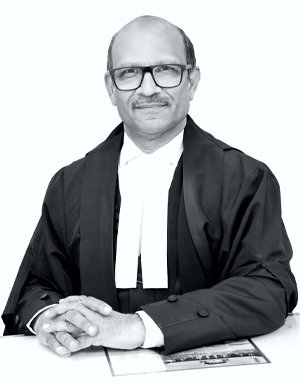

No Acts & Articles mentioned in this case
2026 INSC 211 CIVIL APPEAL NOS. 5168-5169 OF 2011 Page 1 of 22
REPORTABLE
IN THE SUPREME COURT OF INDIA
CIVIL APELLATE JURISDICTION
CIVIL APPEAL NOS. 5168-5169 OF 2011
GOBIND SINGH AND ORS. …APPELLANT(S)
VERSUS
UNION OF INDIA AND ORS. …RESPONDENT(S)
J U D G M E N T
VIKRAM NATH, J.
1. The present appeals, by special leave, are
directed against the judgment dated 12
th August,
2009, and the subsequent judgment rendered in
review on 15
th March, 2011, by the High Court of
Madhya Pradesh, Bench Gwalior,
1 in First Appeal No.
80 of 1996 and Review Petition No. 300 of 2009,
respectively whereby the appeal filed by the Union of
India was allowed and the review of the appellant was
dismissed. By the aforesaid orders, the judgment and
decree dated 25 March 1996 passed by the Court of
the Vth Additional District Judge, Gwalior
2, in Civil
1
Hereinafter, referred to as “High Court”.
2
Hereinafter, referred to as “Civil Court”.
CIVIL APPEAL NOS. 5168-5169 OF 2011 Page 2 of 22
Suit No. 5-A of 1990 was set aside and the suit was
dismissed.
2. The appellants
3 herein instituted in Civil Suit
No. 5-A of 1990, seeking a declaration of title and a
decree of permanent injunction against the
defendants
4. Respondent Nos. 1 to 4 were arrayed as
defendant Nos. 1 to 4, respectively, in the said suit.
FACTS OF THE CASE: -
3. The facts, insofar as they are necessary for the
disposal of the present appeals, are set out
hereinafter: -
3.1. The case of the appellant-plaintiffs is that the
land bearing Survey No. 2029, admeasuring 8 Bighas
and 10 Biswas, situated in Patwari Halqa No. 51,
opposite Baaj Cinema Hall, Murar, Pargana and
District Gwalior, is owned and possessed by them. It
is alleged that on 4
th December, 1989 officers of the
respondent-defendants entered upon the suit
property with the intent to remove the wire fencing
erected thereon, the two shops constructed by the
plaintiffs, as well as the standing crops on the said
land.
3
Hereinafter, referred to as “appellant-plaintiffs”.
4
Hereinafter, referred to as “respondent-defendants”.
CIVIL APPEAL NOS. 5168-5169 OF 2011 Page 3 of 22
3.2. In this backdrop, the appellant -plaintiffs
instituted a civil suit, being Civil Suit No. 55A of
1989
5, on 5
th December, 1989 before the Civil Court,
seeking a declaration of title and a decree of
permanent injunction restraining the defendants
from interfering with the suit property. The appellant-
plaintiffs asserted that the suit property constituted
their ancestral property and that their forefathers
had been in continuous ownership and possession
thereof for the preceding fifty years.
3.3. The Trial Court, vide judgment dated 26
th
March, 1996, decreed the suit, holding that the title,
ownership and possession of the suit property vested
in the appellant-plaintiffs, and that the respondent-
defendants had failed to establish any title thereto.
3.4. Aggrieved by the said decree, the respondent-
defendants preferred first appeal before the High
Court. During the pendency of the appeal, the
appellant-plaintiffs filed an application under Order
XLI Rule 27 of the Code of Civil Procedure, 1908
6,
seeking to place on record certified copies of the
General Land Register maintained by the
respondent-defendants. It was the case of the
5
Re-numbered later as “5-A of 1990”.
6
For short, “CPC”.
CIVIL APPEAL NOS. 5168-5169 OF 2011 Page 4 of 22
appellant-plaintiffs that the said documents would
demonstrate that the suit property stood recorded as
private land.
3.5. The High Court, vide judgment dated 12
th
August, 2009, allowed the appeal preferred by the
respondent-defendants, holding that the appellant-
plaintiffs had claimed perfection of title on the basis
of a decree passed in an earlier suit to which the
respondent-defendants were not parties.
3.6. Aggrieved thereby, the appellant -plaintiffs
instituted a review petition before the High Court
primarily on the ground that the application for
additional evidence had not been decided. The High
Court, however, by judgment dated 15
th March, 2011,
dismissed not only the review petition but also the
application for additional evidence and affirmed the
judgment rendered in the first appeal, while imposing
costs of Rs.2,000/-.
4. It is in these circumstances that the appellant-
plaintiffs have approached this Court.
SUBMISSIONS ON BEHALF OF THE PARTIES: -
5. Shri Anupam Lal Dass, learned Senior Counsel
appearing on behalf of the appellants, assailed the
CIVIL APPEAL NOS. 5168-5169 OF 2011 Page 5 of 22
judgments passed by the High Court and advanced
the following submissions: -
5.1. That the High Court acted contrary to law in
proceeding to decide the appeal on merits without
first adjudicating upon the application filed by the
appellant-plaintiffs under Order XLI Rule 27 of CPC
for leading additional evidence.
5.2. That the predecessors -in-interest of the
appellant-plaintiffs had instituted a civil suit against
the State seeking a declaration of title, which was
decreed by a court of competent jurisdiction, and that
the said judgment has since attained finality.
5.3. That the material on record clearly establishes
that the appellant-plaintiffs have remained in
continuous and uninterrupted possession of the suit
property since the time of their forefathers, and have,
therefore, perfected title thereto by way of adverse
possession.
5.4. On these premises, the appellant -plaintiffs
prayed that the present appeals be allowed and that
the impugned judgments of the High Court be set
aside.
6. Per contra, Shri V. Chitambresh, learned Senior
Counsel appearing for the respondents, strongly
CIVIL APPEAL NOS. 5168-5169 OF 2011 Page 6 of 22
opposed the submissions advanced on behalf of the
appellants and advanced the following contentions: -
6.1. That the land comprising Morar Cantonment,
within which the suit property is situated, vested in
the Union Government in the year 1953 upon
transfer of ownership from the State Government.
6.2. That the ex parte decree passed in the earlier
civil suit against the State of MP instituted by the
predecessors-in-interest of the appellant-plaintiffs
would not be binding on the Union , having been
rendered in the absence of the respondent -
defendants, who were neither impleaded nor afforded
an opportunity of being heard in the said suit.
6.3. The application for additional evidence was
misplaced and without any merit. It did not fall
within the four corners of the principles and
parameters laid down in the Order XLI Rule 27 CPC.
The same has been rightly rejected by the High Court
while deciding the review petition.
6.4. On these grounds, the respondent-defendants
vehemently urged that the present appeals be
dismissed and the impugned judgments of the High
Court be affirmed.
CIVIL APPEAL NOS. 5168-5169 OF 2011 Page 7 of 22
ANALYSIS AND DISCUSSION: -
7. We have heard the learned senior counsel
appearing for the parties and have carefully perused
the material placed on record.
8. The limited question that arises for
consideration is whether the High Court’s omission
to expressly adjudicate the application filed under
Order XLI Rule 27 of CPC while deciding the first
appeal has resulted in any manifest injustice or
miscarriage of justice so as to warrant interference by
this Court.
9. In order to properly appreciate the controversy
involved, it would be apposite to advert to the
reasoning adopted by the courts below. While
decreeing the suit instituted by the appellant -
plaintiffs, the Trial Court recorded the following
findings: -
i. That it was an undisputed fact that, in respect
of the suit property, a decree dated 9
th July,
1984, had already been passed by a competent
court in favour of the predecessors-in-interest
of the appellant-plaintiffs.
ii. That upon an appraisal of the material placed
on record, the appellant-plaintiffs were found to
CIVIL APPEAL NOS. 5168-5169 OF 2011 Page 8 of 22
be in possession and occupation of the suit
property in the capacity of owners thereof.
iii. That the respondent-defendants failed to place
on record any documentary evidence to
substantiate their claim of ownership or
possession over the suit property.
iv. That the objection raised by the respondent-
defendants regarding the alleged failure of the
plaintiffs to disclose the source of their title was
rejected, as the documentary evidence on record
sufficiently established that the plaintiffs held
ownership over the suit property and had been
in continuous possession and occupation
thereof for a considerable length of time thus
consequently, the plaintiffs’ ownership stood
proved.
10. When the said decree was assailed by the
respondent-defendants before the High Court by way
of an appeal, the High Court, while allowing the
appeal, recorded the following findings: -
i. That the earlier suit instituted by the
predecessors-in-interest of the plaintiffs against
the State of Madhya Pradesh was decreed ex
parte by the Civil Court, without the
respondent–Union of India having been
CIVIL APPEAL NOS. 5168-5169 OF 2011 Page 9 of 22
impleaded as a party to the said proceedings. It
was not binding on the Union of India.
ii. That from the pleadings and evidence adduced
in the present suit, it emerged that the plaintiffs’
claim over the suit property was founded on
adverse possession, predicated on their alleged
possession of the land since the time of their
forefathers. Their could not be any perfection of
rights by adverse possession against the
State/Union howsoever long may be the
possession.
iii. That the plaintiffs failed to discharge the burden
of proving ownership over the suit property,
having neither produced any documentary
evidence nor examined any witness to establish
the point of time at which their forefathers came
into possession of the land and on what basis.
iv. That the plaintiffs had sought to claim
perfection of title on the basis of adverse
possession in the earlier suit filed by their
predecessor and, by doing so, procured a decree
of declaration without impleading the
respondent-defendants. Consequently, the said
decree was held to be not binding on the
respondent-defendants, and the plaintiffs were
CIVIL APPEAL NOS. 5168-5169 OF 2011 Page 10 of 22
found not to have acquired ownership in the
eyes of law.
v. While deciding the review petition the
application for additional evidence was also
dismissed as being without any merit.
11. In our considered view, the High Court has
committed no error in rendering the impugned
judgments and, for the reasons that follow
hereinafter, we are not persuaded to interfere and
are, accordingly, inclined to dismiss the present
appeals.
11.1. It is true that the High Court, while delivering
the judgment dated 12
th August, 2009, did not advert
to the application filed by the appellant-plaintiffs
under Order XLI Rule 27 of CPC. However, when the
said judgment was assailed by way of a review
petition, the appellant -plaintiffs specifically
contended that the judgment could not be sustained
on account of the High Court’s failure to consider the
application seeking to adduce additional evidence.
The High Court, by its subsequent judgment dated
15
th March, 2009, dismissed the review petition and,
in the process, also rejected the application filed
under Order XLI Rule 27 of CPC as being without any
merit.
CIVIL APPEAL NOS. 5168-5169 OF 2011 Page 11 of 22
11.2. In order to properly appreciate the controversy
involved, it is necessary to first advert to the statutory
provision applicable to the case at hand. Order XLI
Rule 27 of CPC reads as follows: -
“27. Production of additional
evidence in Appellate Court.–
(1) The parties to an appeal shall not
be entitled to produce additional
evidence, whether oral or
documentary, in the Appellate Court.
But if –
(a) . . .
(aa) the party seeking to
produce additional evidence,
establishes that
notwithstanding the exercise of
due diligence, such evidence
was not within his knowledge or
could not, after the exercise of
due diligence, be produced by
him at the time when the
decree appealed against was
passed, or
(b) . . .
the Appellate Court may allow such
evidence or document to be
produced, or witness to be examined.
(2) Wherever additional
evidence is allowed to be produced by
an Appellate Court, the Court shall
record the reason for its admission.”
(emphasis supplied)
11.3. Rule 27, being couched in negative terms,
makes it abundantly clear that parties to an appeal
are not entitled to adduce additional evidence,
CIVIL APPEAL NOS. 5168-5169 OF 2011 Page 12 of 22
whether oral or documentary, save and except in the
circumstances expressly enumerated therein. The
provision contemplates only three eventualities in
which additional evidence may be permitted: first,
where the court which passed the decree has refused
to admit evidence which ought to have been
admitted; second, where the party seeking to adduce
such evidence establishes that, notwithstanding the
exercise of due diligence, the evidence was not within
its knowledge or could not have been produced at the
time when the decree under appeal was passed; and
third, where the appellate court itself requires any
document to be produced or any witness to be
examined in order to enable it to pronounce judgment
or for any other substantial cause.
11.4. Accordingly, it is only upon satisfaction of any
of the aforesaid three contingencies that an
application under Order XLI Rule 27 of CPC can be
entertained. Sub-rule (2) of the said provision further
mandates that where the appellate court forms an
opinion that additional evidence is required to be
admitted, it must record the reasons for such
admission. While elucidating the scope and object of
Order XLI Rule 27 of CPC, this Court, in Union of
CIVIL APPEAL NOS. 5168-5169 OF 2011 Page 13 of 22
India v. Ibrahim Uddin,
7 undertook an exhaustive
analysis of the provision. The relevant extract is
reproduced hereinafter: -
“36. The general principle is that the
appellate court should not travel
outside the record of the lower court
and cannot take any evidence in
appeal. However, as an exception,
Order 41 Rule 27 CPC enables the
appellate court to take additional
evidence in exce ptional
circumstances. The appellate court
may permit additional evidence only
and only if the conditions laid down
in this Rule are found to exist. The
parties are not entitled, as of right, to
the admission of such evidence.
Thus, the provision does not apply,
when on the basis of the evidence on
record, the appellate court can
pronounce a satisfactory judgment .
The matter is entirely within the
discretion of the court and is to be used
sparingly. Such a discretion is only a
judicial discretion circumscribed by the
limitation specified in the Rule itself.
. . .
38. Under Order 41 Rule 27 CPC, the
appellate court has the power to allow
a document to be produced and a
witness to be examined. But the
requirement of the said court must be
limited to those cases where it found
it necessary to obtain such evidence
for enabling it to pronounce
judgment. This provision does not
entitle the appellate court to let in
fresh evidence at the appellate stage
where even without such evidence it
7
(2012) 8 SCC 148
CIVIL APPEAL NOS. 5168-5169 OF 2011 Page 14 of 22
can pronounce judgment in a case. It
does not entitle the appellate court to
let in fresh evidence only for the
purpose of pronouncing judgment in
a particular way. In other words, it is
only for removing a lacuna in the
evidence that the appellate court is
empowered to admit additional
evidence.
. . .
41. The words “for any other
substantial cause” must be read with
the word “requires” in the beginning
of the sentence, so that it is only
where, for any other substantial
cause, the appellate court requires
additional evidence, that this Rule
will apply e.g. when evidence has
been taken by the lower court so
imperfectly that the appellate court
cannot pass a satisfactory judgment.”
(emphasis supplied)
Thus, a holistic reading of the aforesaid decision
makes it clear that the appellate court’s inquiry,
while considering an application for leading
additional evidence, is confined to examining whether
such evidence is necessary to remove a lacuna in the
case. More importantly, the appellate court may
permit additional evidence only upon being satisfied
that the conditions expressly stipulated under Order
XLI Rule 27 of CPC are fulfilled. The parties do not
possess any vested or automatic right to seek
admission of additional evidence at the appellate
stage. Consequently, the provision has no application
CIVIL APPEAL NOS. 5168-5169 OF 2011 Page 15 of 22
where the appellate court is in a position to render a
satisfactory and reasoned judgment on the basis of
the evidence already available on record.
11.5. In State of Karnataka v. K.C. Subramanya ,
8
the appellants therein had moved an application
before the appellate court under Order XLI Rule 27 of
CPC seeking leave to produce a map of the area to
establish that the disputed land constituted a public
road. This Court, while affirming the High Court’s
decision to reject the said application, held as follows:
-
“4. . . .
On perusal of this provision, it is
unambiguously clear that the party
can seek liberty to produce additional
evidence at the appellate stage, but
the same can be permitted only if the
evidence sought to be produced could
not be produced at the stage of trial
in spite of exercise of due diligence
and that the evidence could not be
produced as it was not within his
knowledge and hence was fit to be
produced by the appellant before the
appellate forum.
5. It is thus clear that there are
conditions precedent before allowing
a party to adduce additional evidence
at the stage of appeal, which
specifically incorporates conditions
to the effect that the party in spite of
due diligence could not produce the
evidence and the same cannot be
8
(2014) 13 SCC 468
CIVIL APPEAL NOS. 5168-5169 OF 2011 Page 16 of 22
allowed to be done at his leisure or
sweet will.”
(emphasis supplied)
This Court thus categorically held that unless
the requirements stipulated under Order XLI Rule 27
of CPC are strictly satisfied, a party cannot be
permitted to adduce additional evidence at the
appellate stage. Such permission cannot be granted
as a matter of course, nor can additional evidence be
introduced at the whim or convenience of a litigating
party.
11.6. Where the appellate court permits additional
evidence to be adduced, Order XLI Rule 27(2) of CPC
casts a mandatory obligation upon the court to
record the reasons for such admission. In Ibrahim
Uddin (supra), this Court elucidated the rationale
underlying the requirement of recording reasons in
the following terms: -
“42. Whenever the appellate court
admits additional evidence it should
record its reasons for doing so (sub-rule
(2)). It is a salutary provision which
operates as a check against a too easy
reception of evidence at a late stage of
litigation and the statement of reasons
may inspire confidence and disarm
objection. Another reason of this
requirement is that, where a further
appeal lies from the decision, the record
CIVIL APPEAL NOS. 5168-5169 OF 2011 Page 17 of 22
of reasons will be useful and necessary
for the court of further appeal to see, if
the discretion under this Rule has been
properly exercised by the court
below. The omission to record the
reasons must, therefore, be treated as a
serious defect. But this provision is only
directory and not mandatory, if the
reception of such evidence can be
justified under the Rule.”
11.7. The procedural framework under Order XLI of
CPC makes it abundantly clear that an appeal is
ordinarily to be decided on the evidence adduced
before the Trial Court. The Appellate Court is not
expected to embark upon a fresh fact-finding exercise
or permit production of additional evidence as a
matter of routine. Where the Appellate Court is
satisfied that the material already available on record
is sufficient to enable it to pronounce judgment, it is
well within its jurisdiction to confine its consideration
to the evidence forming part of the record of the
courts below.
11.8. In the present case, the High Court, upon an
examination of the evidence adduced by the parties,
proceeded to analyse the decree passed in the earlier
civil suit instituted by the predecessors-in-interest of
the appellant-plaintiffs. The High Court observed
that the said decree was not binding upon the
CIVIL APPEAL NOS. 5168-5169 OF 2011 Page 18 of 22
respondent-defendants, as they had not been
impleaded as parties to those proceedings.
Consequently, no legal sanctity could be attached to
any subsequent entries made in the revenue records
on the strength of the said decree, including the
mutation of the plaintiffs’ names therein.
11.9. Once the said finding recorded by the Trial
Court was set aside, whereby the entire claim of
ownership of the appellant-plaintiffs rested upon the
earlier decree and the consequent entries in the
revenue records, the onus squarely shifted upon the
appellant-plaintiffs to independently establish their
title to the suit property.
11.10. The appellant-plaintiffs were, from the
outset, fully aware that the respondent-defendants
had not been impleaded as parties in the earlier civil
suit instituted by their predecessors. Having founded
their claim upon a decree which was non-est insofar
as the respondent-defendants were concerned, it was
impermissible for the appellant-plaintiffs to seek to
introduce additional evidence at the appellate stage
to cure the inherent defects in their case. The present
suit being one for declaration o f title, it was
incumbent upon the appellant -plaintiffs, if they
indeed possessed a valid title, to adduce their best
CIVIL APPEAL NOS. 5168-5169 OF 2011 Page 19 of 22
and complete evidence at the stage of trial before the
court of first instance, where such evidence could
have been produced as a matter of right.
11.11. Further, even at the stage of the earlier
suit instituted by the predecessors-in-interest of the
appellant-plaintiffs, their consistent case was one of
lawful title to the suit property. No plea of adverse
possession was ever raised against the respondent-
defendants. The appellants wish to rely upon the
additional evidence, namely, the entries in the
General Land Register maintained by the
respondent-defendants to show that the suit property
is recorded as private land. Such an endeavour, at
the appellate stage and in the absence of
foundational pleadings, is wholly impermissible in
law. Mere recording of the land in suit as private land
in the GLR does not in any manner benefit the
appellants claim of ownership.
11.12. Once the appellant-plaintiffs asserted that
they derived valid title to the suit property through
their forefathers, the burden lay squarely upon them
to substantiate such claim by producing cogent title
deeds in support thereof. However, no such
documentary evidence was forthcoming.
CIVIL APPEAL NOS. 5168-5169 OF 2011 Page 20 of 22
11.13. On the other hand, the consistent stand of
the respondent-defendants from the inception has
been that the appellant -plaintiffs are rank
trespassers and encroachers upon the suit property.
The respondent-defendants have specifically denied
the assertion that the appellant-plaintiffs or their
predecessors had been in enjoyment of the suit
property for the preceding fifty years prior to the
institution of the suit.
11.14. Further, the respondent-defendants have
traced their title to the decision of the Union of India
dated 17
th July, 1953, pursuant to which the suit
land, along with other immovable properties, vested
in the respondent-defendants in terms of title,
ownership and possession. This assertion stands
fortified by the Gazette Notification dated 4
th
November, 1954, issued by the erstwhile State of
Madhya Bharat, which also recognises that the suit
land and other properties with title, ownership and
possession vested in the respondent-defendants.
11.15. The above discussion will also reflect that
even if the additional evidence in the form of GLR is
accepted, the same will have no impact on the
findings returned by the High Court. The application
CIVIL APPEAL NOS. 5168-5169 OF 2011 Page 21 of 22
for additional evidence was thus rightly rejected by
the High Court.
11.16. Before parting, we deem it appropriate to
record our disapproval of the unscrupulous litigants
such as appellant-plaintiffs and their predecessors
and the manner in which they have conducted
themselves. The material on record indicates that the
earlier suit instituted by the predecessors-in-interest
of the appellant-plaintiffs culminated in a decree
passed without impleading the respondent -
defendants, who were the lawful owners of the suit
property. The attempt to secure a decree behind the
back of the true owner is a circumstance that cannot
be lightly brushed aside. It is also not without
significance that appellant-plaintiff No. 1, Govind
Singh, was employed in the office of the
Commissioner at the relevant time. The proximity of
events, namely, the passing of an ex-parte decree
followed by the expeditious mutation of revenue
entries in favour of the appellant-plaintiffs, casts a
shadow over the bona fides of the proceedings.
11.17. In such a backdrop, when the appellant-
plaintiffs themselves asserted title on the basis of
long and continuous possession through their
predecessors, the subsequent attempt to introduce
CIVIL APPEAL NOS. 5168-5169 OF 2011 Page 22 of 22
additional evidence at the appellate stage assumes
little legal significance. Once the trial had concluded
and the decree was under challenge in appeal, the
appellants could not be permitted to fill the gaps in
their case by seeking to adduce further material to
fortify a claim that was fundamentally flawed.
12. For the foregoing reasons, we find no infirmity
in the judgments rendered by the High Court.
13. Accordingly, the judgments dated 12
th August,
2009, in First Appeal No. 80 of 1996 and 15
th March,
2011, in Review Petition No. 300 of 2009 passed by
the High Court of Madhya Pradesh at Gwalior are
hereby affirmed.
14. Consequently, the present appeals stand
dismissed.
15. Pending application(s), if any, shall also stand
disposed of.
………………………………………..J.
[VIKRAM NATH]
………………………………………..J.
[SANDEEP MEHTA]
NEW DELHI
MARCH 09, 2026

Legal Notes
Add a Note....