
As per case facts, disputes arose from a Deed of Assignment of Development Rights. An arbitrator was appointed, but after an interim order, no further proceedings took place for a ...
No Acts & Articles mentioned in this case
Neeta Sawant CARAPL NO. 430 of 2025
IN THE HIGH COURT OF JUDICATURE AT BOMBAY
ORDINARY ORIGINAL CIVIL JURISDICTION
COMMERCIAL ARBITRATION APPLICATION NO. 430 OF 2025
Nalin Vallabhbhai Patel and Another …..APPLICANTS
: VERSUS :
Atharva Realtors and Others ….RESPONDENTS
Mr. Rohaan Cama with Mr. Manish Gala, Mr. Aayush Yadav, Mr. Minil
Shah and Ms. Alpa Gala i/b Mr. Nilesh N. Gala for the Applicants.
Mr. V.M. Chavdawith Ms. M.V. Chavan and Ms. Reva Kulkarni for
Respondent Nos. 1 and 2.
Mr. Kapil Shah with Mr. Vatsal Parmar i/b M.K. Juris Associates for
Respondents Nos. 3 and 4.
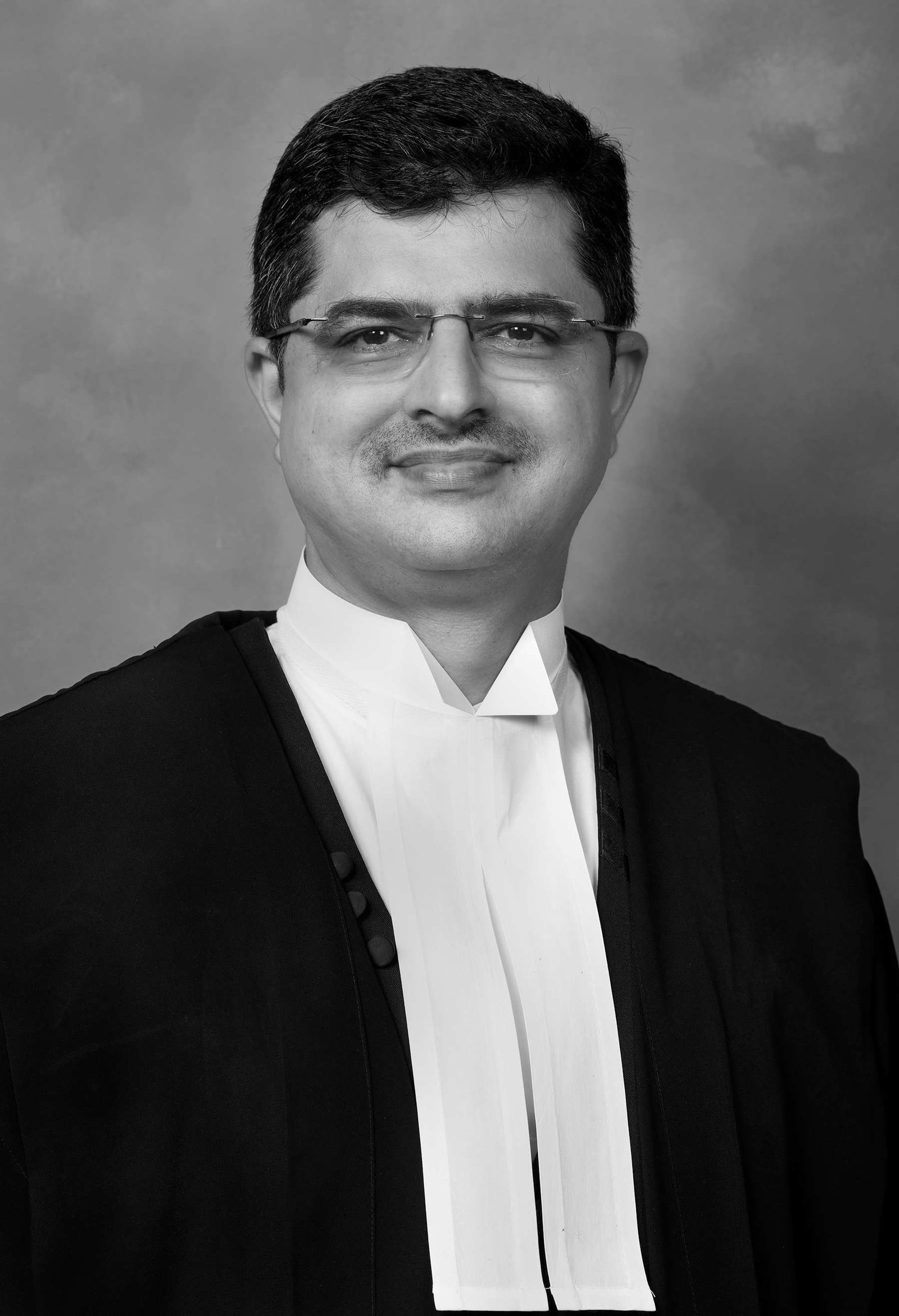
CORAM : SANDEEP V. MARNE, J.
JUDG. RESD. ON : 11 MARCH 2026.
JUDG. PRON. ON : 1 APRIL 2026.
JUDGMENT:
1) This Application, �led under Section 11 of the Arbitration
and Conciliation Act, 1996 (Arbitration Act) for appointment of an
arbitrator, raises an interesting issue as to whether an arbitrator can be
appointed when the Court has expressly refused to extend the mandate of
______________________________________________________________________________________________
PAGE NO. 1 OF 33
1 APRIL 2026
Neeta Sawant CARAPL NO. 430 of 2025
the earlier arbitrator by rejecting the Petition �led under Section 29A of
the Arbitration Act. The Court is thus tasked upon to decide the issue as
to whether refusal by the Court to extend the mandate under Section 29A
of Arbitration Act would bring to an end the very arbitral proceedings
making it impermissible to appoint another arbitrator to decide the same
dispute.
2) Disputes and differences between the parties have arisen out
of performance of Deed of Assignment of Development Rights dated 6
December 2010. Petitioners had �led Commercial Arbitration Petition No.
1310 of 2019 under Section 9 of the Arbitration Act in this Court seeking
interim measures. In that Petition, this Court referred the parties to
arbitration in view of arbitration agreement contained in clause 17 in the
Deed of Assignment of Development Rights. By order dated 14 November
2019, this Court appointed a sole Arbitrator for adjudication of disputes
and differences between the parties by converting Section 9 Petition into
application under Section 17 of the Arbitration Act. The Arbitrator so
appointed by order dated 14 November 2019 expressed inability to take
up the reference and accordingly by order dated 13 January 2020, this
Court substituted the Arbitrator. The learned sole Arbitrator passed order
under Section 17 of the Arbitration Act on 31 August 2020. Nothing
happened thereafter for a considerable period of time. Applicants
thereafter �led Commercial Arbitration Petition No.221 of 2024 under
Section 29A of the Arbitration Act seeking extension of mandate of the
arbitrator. By order dated 18 October 2024, this Court refused to extend
the mandate of the Arbitrator observing that the Applicants had
______________________________________________________________________________________________
PAGE NO. 2 OF 33
1 APRIL 2026
Neeta Sawant CARAPL NO. 430 of 2025
abandoned the arbitration proceedings. Special Leave to Appeal (C) No.
29786 of 2024 preferred by the Applicants came to be dismissed by the
Apex Court by order dated 14 February 2025.
3) Applicants have thereafter issued notice dated 10 July 2025
contending inter alia that the cause of action for arbitration continues and
accordingly made demand for appointment of arbitrator for adjudication
of the disputes. Respondent was called upon to either consent for the
suggested Arbitrator or to suggest name of other nominee arbitrator.
Since the Respondent did not consent for appointment of the arbitrator,
the present Application is �led under Section 11(6) of the Arbitration Act
for appointment of arbitrator.
4) Respondent has appeared in the Application and has opposed
the same inter alia submitting that appointment of arbitrator is now
impermissible in the light of termination of arbitration proceedings by
this Court vide order dated 18 October 2024, which is upheld by the Apex
Court.
5) Mr. Cama, the learned counsel appearing for the Petitioner
has submitted that order dated 18 October 2024 passed by this Court
merely refuses to extend the mandate of the arbitrator on account of lack
of suf�cient cause for explaining the delay in �ling application under
Section 29A of the Arbitration Act. He submits that the said order does
not come in the way of this Court appointing an arbitrator. That unlike
Order IX Rule 9 of the Code of Civil Procedure, 1908 (the Code) which
______________________________________________________________________________________________
PAGE NO. 3 OF 33
1 APRIL 2026
Neeta Sawant CARAPL NO. 430 of 2025
provides for speci�c bar for new suit in the event of earlier suit being
dismissed for non-prosecution, there is no such similar provision in
Section 29A or anywhere in the Arbitration Act. That Section 29A only
tests the aspect of suf�cient cause for delay in conduct of arbitration and
prosecution thereof. Therefore, order dated 18 October 2024 can be only
read to mean that the Court concluded that there was no suf�cient cause
for extending the mandate of the Arbitral Tribunal. That the same would
not tantamount to abandonment of arbitration clause or of arbitral
proceedings. He relies on judgment of this Court in Tata Motors
Passengers Vehicles Ltd. & Anr. Vs. Ghosh Brothers Automobiles &
Ors.
1
in support of his contention that there is a vast difference between
the concepts of termination of mandate of the arbitrator and termination
of the arbitral proceedings themselves. He relies on judgment of this
Court in Khorshed E. Nagarwalla vs. Daryus Soley Panthakey
2
in support
of his contention that only mandate of the arbitrator gets terminated
under Section 14 and not the arbitral proceedings. That when provisions
of Section 29A are read together with Section 32, the present case
contemplates termination of mandate of arbitrator and not of arbitral
proceedings.
6) Mr. Cama further submits that even if it is assumed arguendo
that there was any embargo against appointment of arbitrator qua the
same issue and same reliefs, there is a continuing entitlement of the
Applicant in the facts and circumstances of the present case. That there is
1 Commercial Arbitration Petition (L) No. 26333 of 2025 decided on 12 February 2026
2 2010 (4) Mh.L.J. 936
______________________________________________________________________________________________
PAGE NO. 4 OF 33
1 APRIL 2026
Neeta Sawant CARAPL NO. 430 of 2025
a continuous obligation on the part of the contesting Respondents to
deliver the �ats including the 8 �ats on 16
and 17 �oor. He invites my
attention to Af�davit in Reply in which Respondents have admitted the
obligation to provide the �ats to the Applicant. That since cause of action
is continuous, the arbitration agreement also continues and that
therefore, there is no embargo on this Court to appoint the arbitrator for
adjudication of such continuous disputes.
7) Mr. Cama further submits that the defence of Respondents
about abandonment of earlier arbitral proceedings is misplaced as the
said defence does not mean that there is abandonment or non-existence
of the arbitration clause. That existence of arbitration clause is not in
dispute and there is no question of same being abandoned. That there is
no valid termination of mandate of arbitral proceedings under Section 32
of the Arbitration Act. Without prejudice, he submits that the issue of
abandonment, waiver, res judicata, etc cannot be decided by Reference
Court under Section 11 of the Arbitration Act. He relies on judgment of
Apex Court in SBI general Insurance Company Limited vs. Krish
Spinning
3
, Motilal Oswal Financial Services Limited vs. Santosh
Cordeiro and Anr.
4
and Cox and Kings Limited vs. SAP India Private
Limited and Anr.
5
and of this Court Rajuram Sawaji Purohit vs. The
Shandar Interior Private Limited
6
.
3 (2024) 12 SCC 1
4 2026 SCC OnLine SC 6
5 (2025) 1 SCC 611
6 Commercial Arbitration Application (L) No. 25035 of 2024 decided on 10 October 2025
______________________________________________________________________________________________
PAGE NO. 5 OF 33
1 APRIL 2026
Neeta Sawant CARAPL NO. 430 of 2025
8) Mr. Cama further submits that the order passed by this Court
in Fedbank Financial Service Ltd. vs. Narendra H Shelar
7
has no
application to the present case as the same does not lay down any ratio
and turns squarely on facts of that case. Reference was sought in that case
in respect of the very same arbitration and the case did not involve issue
of continuous cause of action. He also submits that this Court in Fedbank
Financial (supra) did not consider the issue of interplay between Sections
29A and 32 of Arbitration Act. That the law is subsequently developed
which does not permit the Reference Court to decide the issue of
abandonment, waiver, res judicata, etc. He also relies on judgment of
Constitution Bench of Apex Court in Re : Interplay between arbitration
agreements under Arbitration and Conciliation Act, 1996 and Stamp
Act, 1899
8
. On above broad submissions, Mr. Cama would pray for making
reference of disputes to arbitrator.
9) The Petition is opposed by Mr. Chavda, the learned counsel
appearing for Respondent Nos. 1 and 2. He submits that since this Court
has refused to extend mandate of arbitration, Applicant is precluded from
seeking reference in respect of the same arbitration. That legislative
intent behind insertion of Section 29A is speedy resolution of arbitral
proceedings as held in Mohan Lal Fatehpuria vs. M/s. Bharat textiles
and Ors.
9
and Rohan Builders (India) Private Limited vs. Berger Paints
India Limited
10
.
7 2020 SCC OnLine Bom 5252
8 (2024) 6 SCC 1
9 SLP (C) No. 13759 of 2025 decided on 10 December 2025
10 (2025) 10 SCC 802
______________________________________________________________________________________________
PAGE NO. 6 OF 33
1 APRIL 2026
Neeta Sawant CARAPL NO. 430 of 2025
10) Mr. Chavda further submits that termination of mandate of
Arbitral Tribunal under Section 29A implies termination of arbitral
proceedings so far as the party at fault is concerned. That the expression
‘termination’ used in Section 29A of the Arbitration Act has been
interpreted by the Apex Court in Rohan Builders (supra) holding that
arbitral proceedings will get terminated in absence of extension of time
limit under Section 29A. That the effect of the judgment is that once the
Court, in its wisdom, does not extend the time limit for arbitral
proceedings, the same stands terminated at least so far as the party at
fault is concerned. That only a faultless party is entitled to initiate fresh
arbitral proceedings.
11) Mr. Chavda further submits that permitting a defaulting
party to maintain fresh arbitration would tantamount to review of the
order rejecting extension of time under Section 29A of the Arbitration
Act. That upon conjoint reading of provisions of the Arbitration Act, the
only plausible view that emerges is that while considering the Section 11
Application �led after rejection of Section 29A Application, the Court
needs to examine whether Section 29A Application was dismissed due to
the Applicant’s fault or for any other reason such as default on the part of
the Tribunal. That in the present case, the Section 29A application is
dismissed by holding the Applicant responsible and that therefore, there
is no question of making fresh reference by undertaking the exercise of
reversal of Section 29A order, which is already con�rmed by the Apex
Court. That provisions of Order IX Rule 9 of the Code would also apply
______________________________________________________________________________________________
PAGE NO. 7 OF 33
1 APRIL 2026
Neeta Sawant CARAPL NO. 430 of 2025
even if not expressly provided for in view of stringent timelines under
Section 29A of the Arbitration Act.
12) Mr. Chavda further submits that Section 29A is a self-
contained code and that provisions contained in Sections 14, 15 or 32 of
the Arbitration Act cannot be imported to interpret the same. That this
Court needs to decide the issue of permissibility to make reference and
the same cannot be left out to be decided by the Arbitral Tribunal. Lastly,
he submits that the present Application is otherwise barred by limitation.
He denies that there is any continuous cause of action. He would
accordingly pray for dismissal of the Application.
13) Mr. Shah, the learned counsel appearing for Respondent
Nos.3 and 4 also opposes the Application submitting that there is gross
abuse of process of law highlighting the negligent manner in which
previous arbitral proceedings were prosecuted by the Applicant. That
Respondent Nos.3 and 4 were never involved in the negotiation process.
He would therefore pray for dismissal of the Application.
14) Rival contentions urged on behalf of the parties now fall for
my consideration.
15) Applicant is desirous of having the disputes and differences
with the Respondents arising out of the Deed of Assignmen t of
Development Rights dated 6 December 2010 adjudicated throug h
Arbitration. There is no dispute to the position that clause 17 of the Deed
______________________________________________________________________________________________
PAGE NO. 8 OF 33
1 APRIL 2026
Neeta Sawant CARAPL NO. 430 of 2025
of Assignment and Development Rights dated 6 December 2010 contains
arbitration agreement. The Arbitral Tribunal for adjudication of the
disputes was earlier constituted by this Court vide order dated 14
November 2019 passed in Commercial Arbitration Petition No.1310 of
2019. The learned sole Arbitrator so appointed was substituted by this
Court by order dated 13 January 2020. The order further directed that the
time to complete the arbitration would commence from the date when the
substituted Arbitrator entered upon the reference to his arbitration.
16) It appears that the time limit for making Award under
Section 29A of the Arbitration Act commenced on 10 August 2020. The
Arbitral Tribunal passed order dated 31 August 2020 deciding the
application �led by the Applicant under Section 17 of the Arbitration Act.
It appears that after disposal of Section 17 Application, no further
proceedings in the arbitration took place for a considerable period of
time. The Applicant approached this Court seeking extension of mandate
of the Arbitral Tribunal under Section 29A of the Arbitration Act by �ling
Commercial Arbitration Petition No.221 of 2024 on 26 April 2024. This
Court has however dismissed the Petition by refusing to extend the
mandate of the Arbitrator by recording following �ndings:
10. After having heard Learned Counsel and perusing the judgments
upon which reliance was placed, I have no hesitation in holding that the
Petitioner has not made out any suf�cient cause as to why the mandate
of the Tribunal should be extended under Section 29A(5) of the
Arbitration Act. I say so because, viz.
A. Even accepting the Petitioners’ case that there were
settlement talks between the Parties, the record clearly bears out
______________________________________________________________________________________________
PAGE NO. 9 OF 33
1 APRIL 2026
Neeta Sawant CARAPL NO. 430 of 2025
that these settlement talks did not fructify into a settlement as is
clear from the Petitioners’ own email dated 20th April 2022. The
Petitioners did absolutely nothing post this to seek an extension
of time until the �ling of the present Petition which is over 2
years. There is also no explanation as to why the Petitioner had
waited for over two years from this date to �le the present
Petition.
B. Additionally, to accept the Petitioners’ contention that there
is no time prescribed for �ling a Petition under Section 29A,
would in my view be to turn Section 29A on its head. The very
provisions of Section 29A of the Arbitration Act lay down the
stringent timelines in which Arbitration proceedings have to be
conducted. Section 29A(5) itself makes it clear that the extension
of period referred to in sub-section(4) is to be granted only if the
Court is satis�ed that suf�cient cause is shown for extending the
mandate. This would therefore in my view include the conduct of
the Parties so as to demonstrate that the Parties were diligently
pursuing the arbitration proceedings. The judgment of the
Hon’ble Supreme Court in the case of Rohan Builders (supra)
itself makes it expressly clear that extension under Section
29A(5) was not to be granted mechanically on �ling of the
application. In my view, the Petitioners’ conduct alone would
disentitle the Petitioner to seek an extension of time. Even
accepting the Petitioners’ case that the mandate expired on 1st
March 2022 the present Petition has been �led on 26th April
2024, which delay in my view is adequate to show that the
Petitioner was not serious in pursuing the arbitration.
C. Equally, the judgments of the Hon’ble Supreme Court in the
case of Collector Land Acquisition, Anantnag & Anr. (supra) and
Hari Shankar Singhania & Ors. (supra) would not apply since the
said judgments were delivered considering the power of
condonation of delay under general of law of limitation and not
in the context of Section 29A. Additionally, it is crucial to note
that the judgment of the Hon’ble Supreme Court in the case of
Hari Shankar Singhania & Ors. was in the context of section 20 of
The Arbitration Act, 1940 and not Section 29A.
D. In my view, it is plainly clear that after the passing of the
Interim Order dated 31st August, 2018, the Petitioners have
abandoned the arbitration proceedings. Nothing prevented
the Petitioners from approaching this Court earlier and equally,
nothing prevented the Petitioners from keeping the Learned
Arbitrator, who is a Former Judge of this Court informed of the
______________________________________________________________________________________________
PAGE NO. 10 OF 33
1 APRIL 2026
Neeta Sawant CARAPL NO. 430 of 2025
settlement talks etc. That is the least that was expected from the
Petitioner, infact from both Parties. Once Parties had committed
themselves to the stringent timelines under the Arbitration Act,
the Parties were then bound to ensure that the settlement talks
etc. were also conducted and concluded within these timelines or
then applied for an extension of time at that stage itself and not
belatedly as has been done in the present case.
(emphasis and underlining supplied)
17) Thus, this Court refused to extend the mandate of Arbitral
Tribunal holding that the settlement talks had failed by 20 April 2022 and
nothing was done thereafter for over two years. This Court took into
consideration Applicant’s conduct for denying the extension of mandate.
Most importantly this Court recorded a �nding that after passing of
interim order dated 31 August 2018 (sic 2020) the Applicant had
‘abandoned the arbitration proceedings’. This Court held that nothing
prevented the Applicant from approaching the Court or at least from
informing the learned Arbitrator about settlement talks. This Court
further held that it was the duty of the parties to ensure that the
settlement talks were conducted and concluded within reasonable time.
18) The order passed by this Court on 18 October 2024 refusing
to extend mandate of Arbitral Tribunal was challenged by Applicant by
�ling Special Leave to Appeal (C) No.29786 of 2024 before the Hon’ble
Supreme Court, which has been dismissed by order dated 14 February
2025.
19) After being unsuccessful in getting the mandate of t he
Arbitral Tribunal extended under Section 29A of the Arbitration Act, the
Applicant issued notice dated 10 July 2025 nominating an Arbitrator for
______________________________________________________________________________________________
PAGE NO. 11 OF 33
1 APRIL 2026
Neeta Sawant CARAPL NO. 430 of 2025
resolution of disputes between the parties by referring to clause 17 of the
Deed of Assignment of Development Rights dated 6 December 2010. The
notice dated 10 July 2025 repeatedly asserts that there are continuous
obligations on the Respondents and that their acts constituted continuing
defaults. Another notice dated 18 July 2025 was addressed by the
Applicant once again nominating Arbitrator for resolution of the disputes.
This is how the present Application is �led seeking appointment of the
Arbitrator.
20) The issue that arises for consideration is whether an
Arbitrator can be appointed by this Court under Section 11(6) of the
Arbitration Act when this Court has already refused to extend mandate of
the earlier Arbitral Tribunal.
21) Section 29A of the Arbitration Act has been added to the
Arbitration Act by the 2015 Amendment for ensuring completion of
arbitral proceedings in a timely manner without undue delays. Section
29A of the Arbitration Act provides thus:
29A. Time limit for arbitral award.—
(1)The award in matters other than international co mmercial
arbitration shall be made by the arbitral tribunal within a period of
twelve months from the date of completion of pleadings under sub-
section (4) of section 23:
Provided that the award in the matter of internation al
commercial arbitration may be made as expeditiously as possible and
endeavor may be made to dispose of the matter within a period of twelve
months from the date of completion of pleadings under sub-section (4)
of section 23.
______________________________________________________________________________________________
PAGE NO. 12 OF 33
1 APRIL 2026
Neeta Sawant CARAPL NO. 430 of 2025
(2) If the award is made within a period of six months from the date the
arbitral tribunal enters upon the reference, the arbitral tribunal shall be
entitled to receive such amount of additional fees as the parties may
agree.
(3) The parties may, by consent, extend the period speci�ed in sub-
section (1) for making award for a further period not exceeding six
months.
(4) If the award is not made within the period speci�ed in sub-
section (1) or the extended period speci�ed under sub-section (3),
the mandate of the arbitrator(s) shall terminate unless the Court
has, either prior to or after the expiry of the period so speci�ed,
extended the period:
Provided that while extending the period under this sub-section,
if the Court �nds that the proceedings have been delayed for the reasons
attributable to the arbitral tribunal, then, it may order reduction of fees
of arbitrator(s) by not exceeding �ve per cent. for each month of such
delay.
Provided further that where an application under sub-section (5)
is pending, the mandate of the arbitrator shall continue till the
disposal of the said application:
Provided also that the arbitrator shall be given an opportunity of
being heard before the fees is reduced.
(5) The extension of period referred to in sub-section (4) may be on the
application of any of the parties and may be granted only for suf�cient
cause and on such terms and conditions as may be imposed by the Court.
(6) While extending the period referred to in sub-section (4), it shall be
open to the Court to substitute one or all of the arbitrators and if one or
all of the arbitrators are substituted, the arbitral proceedings shall
continue from the stage already reached and on the basis of the evidence
and material already on record, and the arbitrator(s) appointed under
this section shall be deemed to have received the said evidence and
material.
(7) In the event of arbitrator(s) being appointed under this section, the
arbitral tribunal thus reconstituted shall be deemed to be in
continuation of the previously appointed arbitral tribunal.
(8) It shall be open to the Court to impose actual or exemplary costs
upon any of the parties under this section.
______________________________________________________________________________________________
PAGE NO. 13 OF 33
1 APRIL 2026
Neeta Sawant CARAPL NO. 430 of 2025
(9) An application �led under sub-section (5) shall be disposed of by the
Court as expeditiously as possible and endeavour shall be made to
dispose of the matter within a period of sixty days from the date of
service of notice on the opposite party.
(emphasis and underlining supplied)
22) Thus, the Award in the domestic arbitration is required to be
made by the Arbitral Tribunal within a period of 12 months from the date
of completion of pleadings, which period can be extended by six months
with the consent of the parties. Under sub-section (4) of Section 29A of
the Act, if the Award is not made within the time speci�ed in sub-section
(1) or within the extended period agreed between the parties, the
mandate of arbitrator(s) terminates unless the Court extends the time.
Thus, what terminates under Section 29A (4) of the Arbitration Act is the
‘mandate of the arbitrator’. Second proviso to sub-section (4) provides
that when Application under sub-section (5) is pending, the mandate of
the Arbitrator shall continue till disposal of the Application. Thus, what is
contemplated under Section 29A(4) of the Arbitration Act is essentially
extension of and termination of ‘mandate of the arbitrator’ and not the
‘mandate of arbitration proceedings’. In similar manner, Sections 14 and
15 of the Arbitration Act also deal with termination of mandate of
arbitrator. Sections 14 and 15 of the Arbitration Act provide thus:
14. Failure or impossibility to act.—
(1) The mandate of an arbitrator shall terminate and he shall be
substituted by another arbitrator, if—
(a) he becomes de jure or de facto unable to perform his
functions or for other reasons fails to act without undue delay;
and
______________________________________________________________________________________________
PAGE NO. 14 OF 33
1 APRIL 2026
Neeta Sawant CARAPL NO. 430 of 2025
(b) he withdraws from his of�ce or the parties agree to the
termination of his mandate.
(2) If a controversy remains concerning any of the grounds referred to in
clause (a) of sub-section (1), a party may, unless otherwise agreed by the
parties, apply to the Court to decide on the termination of the mandate.
(3) If, under this section or sub-section (3) of section 13, an arbitrator
withdraws from his of�ce or a party agrees to the termination of the
mandate of an arbitrator, it shall not imply acceptance of the validity of
any ground referred to in this section or sub-section (3) of section 12.
15. Termination of mandate and substitution of arbitrator.—
(1) In addition to the circumstances referred to in section 13 or section
14,the mandate of an arbitrator shall terminate—
(a) where he withdraws from of�ce for any reason; or
(b) by or pursuant to agreement of the parties.
(2) Where the mandate of an arbitrator terminates, a substitute
arbitrator shall be appointed according to the rules that were applicable
to the appointment of the arbitrator being replaced.
(3) Unless otherwise agreed by the parties, where an arbitrator is
replaced under sub-section (2), any hearings previously held maybe
repeated at the discretion of the arbitral tribunal.
(4) Unless otherwise agreed by the parties, an order or ruling of the
arbitral tribunal made prior to the replacement of an arbitrator under
this section shall not be invalid solely because there has been a change
in the composition of the arbitral tribunal.
23) As contradistinct from termination of mandate of arbitrator
under Sections 14, 15 and 29A of the Arbitration Act, Section 32 provides
for termination of arbitral proceedings. Section 32 of the Arbitration Act
provides thus:
32. Termination of proceedings.—
(1) The arbitral proceedings shall be terminated by the �nal arbitral
award or by an order of the arbitral tribunal under sub-section (2).
(2) The arbitral tribunal shall issue an order for the termination of the
arbitral proceedings where—
(a) the claimant withdraws his claim, unless the respondent
objects to the order and the arbitral tribunal recognises a
legitimate interest on his part in obtaining a �nal settlement of
the dispute,
______________________________________________________________________________________________
PAGE NO. 15 OF 33
1 APRIL 2026
Neeta Sawant CARAPL NO. 430 of 2025
(b) the parties agree on the termination of the proceedings, or
(c) the arbitral tribunal �nds that the continuation of the
proceedings has for any other reason become unnecessary or
impossible.
(3) Subject to section 33 and sub-section (4) of section 34, the mandate
of the arbitral tribunal shall terminate with the termination of the
arbitral proceedings.
24) Thus, arbitral proceedings get terminated by �nal Award or
by withdrawal of claim by the Claimant or by termination of proceedings
with agreement of parties or when the Tribunal �nds that continuation of
proceedings has become unnecessary or impossible. Under sub-section (3)
of Section 32 of the Arbitration Act, the mandate of the Arbitral Tribunal
terminates with termination of arbitral proceedings. Thus, Sub-section (3)
of Section 32 of the Arbitration Act once again makes a distinction
between concepts of ‘termination of mandate of arbitrator’ and
‘termination of arbitral proceedings’. This Court had an occasion to
consider distinction between the concepts of termination of mandate of
arbitrator and termination of mandate of arbitral proceedings in Tata
Motors Passenger Vehicles Ltd. (supra) and has held that mere
termination of mandate of the Arbitral Tribunal does not result in
automatic termination of arbitral proceedings. This Court held in
paragraphs 21, 22, 23 and 24 as under:
21) However, there is difference between the concepts of
termination of mandate of arbitrator and termination of arbitral
proceedings. Mere termination of mandate of arbitrator does not
automatically result in termination of arbitral proceedings, and in
such an event the reference continues and merely a vacancy occurs in
the chair of the arbitrator, which can be �lled up under Section 15(2) of
the Arbitration Act. However, the distinct concept of termination of
______________________________________________________________________________________________
PAGE NO. 16 OF 33
1 APRIL 2026
Neeta Sawant CARAPL NO. 430 of 2025
arbitral proceedings is dealt with under Section 32 of the Arbitration Act
which provides thus:
xxx
22) The position that mere termination of mandate of the arbitrator
does not result in automatic termination of arbitral proceedings is well
settled and reference in this regard can be made to the judgment of the
Apex Court in Dani Wooltex Corporation (supra) in which the Apex
Court has held in Paras-12 to 14 as under:
12. The Arbitration Act has two provisions for
terminating an arbitrator's mandate. Sections 14 and
15 are the relevant sections. The arbitrator is
empowered to withdraw from his of�ce, which
terminates his mandate. However, the arbitral
proceedings continue by the arbitrator's substitution.
13. The order of termination passed by the learned
arbitrator, in this case, gives an impression that he was of
the view that unless parties move the Arbitral Tribunal
with a request to �x a meeting or a date for the hearing,
the Tribunal was under no obligation to �x a meeting or a
date for hearing. The appointment of the Arbitral
Tribunal is made with the object of adjudicating upon the
dispute covered by the arbitration clause in the
agreement between the parties. By agreement, the parties
can appoint an arbitrator or Arbitral Tribunal. Otherwise,
the Court can do so under Section 11 of the Arbitration
Act. An arbitrator does not do pro bono work. For him, it
is a professional assignment. A duty is vested in the
learned arbitrator or the Arbitral Tribunal to adjudicate
upon the dispute and to make an award. The object of the
Arbitration Act is to provide for an ef�cient dispute
resolution process. An arbitrator who has accepted his
appointment cannot say that he will not �x a meeting to
conduct arbitral proceedings or a hearing date unless the
parties request him to do so. It is the duty of the Arbitral
Tribunal to do so. If the claimant fails to �le his
statement of claim in accordance with Section 23, in view
of clause (a) of Section 25, the learned arbitrator is bound
to terminate the proceedings. If the respondent to the
proceedings fails to �le a statement of defence in
accordance with Section 23, in the light of clause (b) of
Section 25, the learned arbitrator is bound to proceed
further with the arbitral proceedings. Even if the
claimant, after �ling a statement of claim, fails to appear
______________________________________________________________________________________________
PAGE NO. 17 OF 33
1 APRIL 2026
Neeta Sawant CARAPL NO. 430 of 2025
at an oral hearing or fails to produce documentary
evidence, the learned arbitrator is expected to continue
the proceedings as provided in clause (c) of Section 25.
Thus, he can proceed to make an award in such a case.
14. On a conjoint reading of Sections 14 and 15, it is
apparent that an arbitrator always has the option to
withdraw for any reason. Therefore, he can withdraw
because of the parties' non-cooperation in the
proceedings. But in such a case, his mandate will be
terminated, not the arbitral proceedings.
23) Similarly, this Court in Kifayatullah Haji Gulam Rasool (supra)
has held in paras-11, 12, 16 and 17 as under:
11. Section 14 speci�es the grounds for terminating the mandate
of an arbitrator and method of doing so. The grounds for
terminating the mandate are : (i) the arbitrator becomes de
jure or de facto unable to perform his function or (ii) for some
other reasons fails to act without undue delay or (iii) the
arbitrator withdraws from his of�ce or (iv) the parties agree to
the termination of his authority as an arbitrator; whereas three
methods can be employed for terminating the mandate of the
arbitrator. They are (a) by withdrawal of the arbitrator from his
of�ce (b) by agreement of parties and (c) by decision by the
Court.
12. Section 15 provides for additional grounds for termination of
the mandate and for appointment of substitute arbitrator. The
additional grounds provided are (a) where he withdraws from
of�ce for any reason or (b) by or pursuant to the agreement of the
parties. Though sub-section (1) purports to state additional
grounds for termination of authority of an arbitrator but one of
the grounds mentioned therein is covered by the grounds set out
in clause (b) of sub-section (1) of section 14. On the authority of
the arbitrator being terminated, a substitute arbitrator in place of
arbitrator whose authority is terminated has to be appointed and
such appointment, as per sub-section (2) is required to be made
by following the same procedure as followed while appointing
the arbitrator who is being substituted.
16. On the above backdrop let us consider the legal provisions
providing for commencement and termination of the arbitration
proceedings.
______________________________________________________________________________________________
PAGE NO. 18 OF 33
1 APRIL 2026
Neeta Sawant CARAPL NO. 430 of 2025
(a) Section 21 of the Act provides for commencement of
the arbitral proceedings. This section provides that in the
absence of an agreement between the parties to the reference,
the arbitral dispute in respect of a particular dispute shall
commence on the date on which a request for that dispute to be
referred to the Arbitration is received by other party. If in the
arbitral agreement parties provide any other mode for
commencement of the arbitral proceedings, the arbitral
proceedings will commence in accordance therewith.
(b) Section 25 incorporates the course of action arbitral
Tribunal may adopt in the event of party committing any of the
three defaults mentioned in this section. The provision of section
25 is intended to enable the arbitral tribunal not to allow any
proceedings to drag on at the instance of one or the other party.
What is contemplated in this section is an order passed by
arbitral Tribunal terminating arbitral proceedings. No such order
has been passed by the arbitral tribunal in this case as such even
provision of section 25 is not available to the petitioners. The
said provision cannot be invoked before this Court. However, the
petitioners are at liberty to obtain appropriate orders in this
behalf from the arbitral Tribunal but not from this Court.
(c) Section 32 of the Act makes provision for termination
of the arbitral proceedings. Under this section it is provided, that
the arbitral proceedings shall automatically stand terminated
when �nal award is made. Hence, for automatic termination of
the arbitral proceedings, arbitral award has to be �nal. Reading of
section 32 unequivocally provides that only ‘�nal award’ shall
terminate the arbitral proceedings. The �nal award is one which
decides or completes decision of claims presented.
The arbitral proceedings can also be terminated by an
order of the arbitral Tribunal which order can only be passed
when claimant withdraws the claim or when the parties to the
reference agree on the termination of the proceeding, or the
arbitral Tribunal �nds that continuation of the arbitral
proceeding has become unnecessary or impossible. As per clause
(b) of sub-section (2) of section 32 the parties to the agreement
have also been given liberty to terminate arbitral proceedings but
such a request must be made to the arbitral tribunal by the
parties to the proceedings and it must be accepted by the arbitral
Tribunal by an order passed in that behalf. As per sub-section (3)
the mandate of the arbitral tribunal, can also be brought to an
end with termination of arbitral proceedings subject to section 33
and sub-section (4) of section 34 of the Act.
______________________________________________________________________________________________
PAGE NO. 19 OF 33
1 APRIL 2026
Neeta Sawant CARAPL NO. 430 of 2025
17. In the above premises, the Act makes speci�c provision for
commencement and termination of the arbitral proceedings. In
the instant case, none of the events as contemplated under
section 32 of the Act have taken place. No �nal award has been
passed. No joint request depicting agreement of parties have
been made to the arbitral tribunal to terminate proceedings. No
orders have been passed by the Arbitral Tribunal as contemplated
under sub-section (2) of section 32 of the Act. Therefore, it
cannot be said that the arbitral proceeding have come to an
end. I, therefore, hold that the arbitral proceedings have not
come to an end even though the mandate of the arbitrators
have come to an end.
24) Therefore, mere withdrawal by the learned Arbitrator from the
arbitral proceedings vide letter dated 18 March 2021 has not resulted in
termination of arbitral proceedings under Section 32 of the Arbitration
Act. The reference continued notwithstanding the withdrawal by the
learned Arbitrator.
(emphasis supplied)
25) The distinction between the concepts of termination of
mandate of arbitrator and termination of arbitral proceedings is also
highlighted in Division Bench judgment of this Court in Khorshed E.
Nagarwalla (supra) in which it is held in the context of provisions of
Section 14 and 15 of the Arbitration Act as under:
4. Both the provisions if read would show what is terminated is the
mandate of the arbitrator and not the provision for arbitration.
Section 11(2) thereafter provides that in the event of vacancy in the
arbitral tribunal and the parties not agreeing to appoint an arbitrator,
any aggrieved party can move under section 11(5) of the said Act
requesting the Chief Justice or his designate to �ll in the vacancy. Thus,
the Act itself contains provisions for reconstitution of the Tribunal even
in the case where the named arbitrator expires.
(emphasis supplied)
26) Thus, when the time limit speci�ed in Section 29A of the
Arbitration Act expires and the Court refuses to extend the same, the
______________________________________________________________________________________________
PAGE NO. 20 OF 33
1 APRIL 2026
Neeta Sawant CARAPL NO. 430 of 2025
mandate of the arbitrator terminates. Does this mean that the arbitral
proceedings still continue and can Court appoint a substitute arbitrator in
such circumstances? There appears to be no direct judgment on the issue
with elaborate discussion on distinction in the concepts of termination of
mandate of arbitrator under Section 29A of the Arbitration Act and
termination of arbitral proceedings under Section 32. However, in
Fedbank Financial Services Limited (supra), learned Single Judge of this
Court had an occasion to deal with similar situation. In case before this
Court, the sole Arbitrator had entered upon the reference and after �ling
of statement of claim and statement of defence, nothing had happened at
all. The Respondent therein therefore �led an application for closure of
the proceedings on the ground that the same were not concluded within
one year. The Applicant therein �led an Application under Section 29A of
the Arbitration Act, which was dismissed by this Court. Thereafter, the
Applicant therein �led Application under Section 11 of the Arbitration
Act for start of the process all over again by appointing the arbitrator. In
the light of the above factual position, this Court passed following order
in Fedbank Financial Services Ltd. (supra).
5. The Respondent then �led an application for closure of the
proceedings saying that they had not been concluded within one year.
On this the learned sole arbitrator made an application that since time
had not been extended, there being no application by the Petitioner
under Section 29-A of the Arbitration and Concilliation Act, the
arbitration proceeding was closed with the mandate terminated. Parties
were set at liberty to take appropriate steps in accordance with law. This
order passed by the learned sole arbitrator was on 18 th July 2019.
6. Ms. Bhogale cannot dispute the fact that the Petitioner was late in
�ling a Section 29-A Petition. It did �le that Petition, Arbitration
Petition No. 1271 of 2019. I dismissed it on 9 th January 2020.
______________________________________________________________________________________________
PAGE NO. 21 OF 33
1 APRIL 2026
Neeta Sawant CARAPL NO. 430 of 2025
7. The situation therefore is that an arbitration previously invoked with
a nomination agreed by the Respondent has now come to an end. The
Arbitral tribunal mandate has been terminated. There is no extension of
time.
8. What the Petitioner now seeks is to start the process all over again by
presenting this application under Section 11. This is a second go-around
for the same arbitration.
9. The opposition from the Respondents is that there must be some
limit. The emphasis in arbitration law is on a speedy and time-bound
disposal. If a Petitioner invoking arbitration is itself remiss in diligently
prosecuting the arbitration, the submission is that it surely cannot be
open to the Petitioner to come back to Court and constantly seek to
reopen the arbitration like this. If such constant circular actions are
permitted, then conceivably there would be no end to arbitration at all
and no �nality to the disputes. The arbitration law cannot possibly aid, it
is submitted, a party who is not vigilant in prosecuting its rights and
remedies.
10. I agree. There is no explanation for the delay.
The order of the arbitral tribunal, though short, does not in any way
assist the Petitioner.
11. I do not see how an arbitration clause can be constantly revived and
brought back to life again and again like this. If the Petitioner has any
rights under the contract in question it is at liberty to pursue those but
its arbitral remedy must surely be considered to be closed.
12. The application is dismissed.
27) Thus, in Fedbank Financial Services Ltd. (supra) this Court
refused to make reference by appointing arbitrator holding that the
arbitration clause could not be constantly revived and brought back into
life again and again. This Court agreed with submission of the
Respondent therein that arbitration law cannot aid a party who is not
vigilant in prosecuting its rights and remedies. However, this Court left
______________________________________________________________________________________________
PAGE NO. 22 OF 33
1 APRIL 2026
Neeta Sawant CARAPL NO. 430 of 2025
open the remedy other than arbitration for the Applicant in respect of
rights under the contract.
28) Perusal of the judgment in Fedbank Financial Services Ltd.
(supra) would indicate that the argument of difference between
termination of mandate of Arbitrator under Section 29A of the Arbitration
Act and termination of the arbitration proceedings under Section 32 of
the Arbitration Act was not raised before this Court. It therefore becomes
dif�cult to accept that Fedbank Financial Services Limited (supra) lays
down an abstract proposition of law that in no case, application for
appointment of Arbitrator can ever be made after refusal by the Court to
extend the mandate of the Arbitrator under Section 29A of the Arbitration
Act.
29) There can be myriad reasons why the Award is not made
within the time limit speci�ed in Section 29A of the Arbitration Act.
Sometimes parties may be responsible for the delay and sometimes even
the Arbitral Tribunal may be responsible for delay. In a case where
Arbitral Tribunal is responsible for the delay in concluding the arbitral
proceedings and in making the Award and if the Court refuses to extend
mandate of the Arbitrator under Section 29A (4) of the Arbitration Act,
can it be contended that the arbitral proceedings would also end? The
answer, to my mind, appears to be in the negative. No doubt under sub-
section (6) of Section 29A of the Arbitration Act, the Court has power to
substitute the Arbitrator and this power of substitution is to be
necessarily exercised keeping in mind the conduct of the Arbitrator. In a
______________________________________________________________________________________________
PAGE NO. 23 OF 33
1 APRIL 2026
Neeta Sawant CARAPL NO. 430 of 2025
given case where the appointed Arbitrator does not make progress in the
proceedings and parties are not at fault, the Court can substitute the
Arbitrator while extending the mandate under Section 29A. But there may
be a case that the Court does not substitute the Arbitrator but also does
not grant extension of mandate of the Arbitrator under Section 29A(4) of
the Arbitration Act. Whether parties can be made to suffer for the acts of
the Arbitrator in such a situation? The answer can obviously not be in the
af�rmative. This is also because mere termination of mandate of
Arbitrator under Section 29A (4) of the Arbitration Act does not
automatically result in termination of arbitration proceedings under
Section 32 of the Arbitration Act.
30) A converse however is true. With termination of mandate of
arbitration proceedings, the mandate of Arbitrator also comes to an end
under sub-section (3) of Section 32 of the Arbitration Act. The Arbitration
Act otherwise does not recognize the concept that termination of
mandate of Arbitrator under Sections 14, 15 or 29A of the Arbitration Act
brings to an end the very arbitration proceedings. In my view therefore, it
is dif�cult to accept an abstract principle that in every case where the
Court refuses to extend the mandate of Arbitrator, the arbitral
proceedings themselves would automatically come to an end and that the
Court would be precluded from making appointment of another Arbitrator
under Section 11(6) of the Arbitration Act.
31) Therefore, in my view, appointment of arbitrator after refusal
by Court to extend mandate of previous arbitrator under Section 29A
______________________________________________________________________________________________
PAGE NO. 24 OF 33
1 APRIL 2026
Neeta Sawant CARAPL NO. 430 of 2025
would depend on facts of each case and the question as to ‘who is at fault’
would provide the key for solving the problem. If parties are responsible
for delay and Court has refused to extend the mandate on account of
conduct of parties, the arbitral proceedings will have to be treated as
having been terminated. This is necessary because if the arbitral
proceedings are not treated to have been terminated, parties at fault
would get another bite at the cherry by seeking appointment of another
arbitrator. Finding recorded by Section 29A Court against them would
become redundant and they would be free to get another Arbitrator
appointed even though the Court has consciously refused to extend
mandate of the previous Arbitrator. If fresh arbitrator is appointed by
exercise of powers under Section 11(6) of the Arbitration Act after Section
29A Court refuses to extend the mandate of arbitrator by recording a
�nding that the Claimant had abandoned the arbitration, exercise of
power under Section 11(6) of the Arbitration Act would tantamount to
review of the order passed under Section 29A.
32) In the present case however, the Applicant is found to be
extremely negligent in prosecuting arbitral proceedings before the
previous Arbitrator. This Court has recorded a speci�c �nding that the
Applicant had abandoned ‘the arbitration proceedings’. The issue for
consideration is whether in such circumstances, the principle of expiry of
mandate of arbitrator not resulting in automatic expiry of mandate of
Arbitral Tribunal can be applied in the present case? The answer to this
question also appears, to my mind, to be in the negative. When this Court
did not extend the mandate of the previous arbitrator on account of
______________________________________________________________________________________________
PAGE NO. 25 OF 33
1 APRIL 2026
Neeta Sawant CARAPL NO. 430 of 2025
conduct of the Applicants and has held that the Applicants had
abandoned the arbitration proceedings, appointing another arbitrator at
the behest of the Applicants would be like rewarding them for their faults.
33) Considering the facts of the present case, if this Court, in
exercise of referral jurisdiction under Section 11(6) of the Arbitration Act
proceeds to appoint an arbitrator, it would virtually sit in appeal, if not
review, over the �ndings recorded while deciding the Petition under
Section 29A of the Arbitration Act. When the Court exercising powers
under Section 29A of the Arbitration Act has recorded an emphatic
�nding that ‘the Petitioners have abandoned the arbitration proceeding’, this
Court cannot reward them by providing an opportunity to arbitrate the
disputes. The doors of arbitration are closed for them by Section 29A
Court. What Applicant is seeking to do in the present case is an attempt
to overreach the �ndings recorded by Court while refusing to extend the
mandate under Section 29A of the Arbitration Act. Such an attempt
cannot be countenanced in law. As observed above, there may be cases
where the Court can refuse to extend mandate of Arbitrator for reasons
not attributable to the parties and in such circumstances, it is possible
that referral Court can exercise powers under Section 11(6) of the
Arbitration Act to appoint a substitute arbitrator by concluding that the
arbitration proceedings still continues. But that principle cannot be
applied in the present case.
34) Thus, on conjoint reading of provisions of Sections 11, 29A
and 32 of the Arbitration Act, the position that emerges is that
______________________________________________________________________________________________
PAGE NO. 26 OF 33
1 APRIL 2026
Neeta Sawant CARAPL NO. 430 of 2025
application for appointment of Arbitrator is not maintainable in a case
where the Court has refused to extend mandate of the arbitrator under
Section 29A of the Arbitration Act due to fault of the Applicant. It is only
in cases where refusal to extend mandate of the Arbitrator under Section
29A of the Arbitration Act is due to reasons other than fault of the
Applicant, the referral Court would be justi�ed in entertaining and
deciding the application for appointment of arbitrator under section 11
(6) of the Arbitration Act. I am forti�ed in my view, by judgment of the
Apex Court in Rohan Builders (supra). The issue before the Apex Court in
Rohan Builders (supra) was slightly different i.e. whether an application
for extension of time under Section 29A of the Arbitration Act can be �led
after expiry of the period for making the arbitral Award. The Apex Court
has held that such an application for extension of time under Section 29A
(4) and (5) of the Arbitration Act is maintainable even after expiry of
12/18 months. However while answering the issue, the Apex Court has
drawn distinction between a ‘faultless party’ and the ‘party at fault’. In
paragraph 17 of the judgment, the Apex Court has refused to give
restrictive or normal interpretation to the language used under Section
29A (4) of the Arbitration Act and has held that narrow interpretation
would present an additional challenge by relegating a ‘faultless party’ to a
fresh reference or appointment of an arbitrator under the Arbitration Act,
thereby impeding the arbitration rather than facilitating it. It is held by
the Apex Court in paragraphs 12, 13, 14, 15, 16 and 17 of the judgment as
under:
12. The word "terminate" in Section 29-A(4) has to be read in the context
of the said provision. 19 It should not be read as an isolated word with a
______________________________________________________________________________________________
PAGE NO. 27 OF 33
1 APRIL 2026
Neeta Sawant CARAPL NO. 430 of 2025
strict dictionary meaning, but rather in conjunction with the
surrounding words and expressions which warrant recognition and
consideration. This evinces the legislative intent. Secondly, the
legislative preference for the term "terminate" over "suspend" is
apparent, since the word "suspend" could cause incongruity and a legal
conundrum if no party �les an application for an extension of time. In
such a scenario, the arbitral proceedings would stand suspended ad
in�nitum. Therefore, the legislature by using the word "terminate"
intends to af�rm the principle of party autonomy. Resultantly, if neither
party moves an application for an extension of time for making the
award, the arbitration proceedings are terminated. Consequences follow.
Clearly, the use of the word "suspension" would have led to infeasible
rami�cations.
13. The word "terminate" in Section 29-A(4) makes the Arbitral Tribunal
functus of�cio, but not in absolute terms. The true purport of the word
"terminate" must be understood in light of the syntax of the provision.
The absence of a full stop after the word "terminate" is noteworthy. The
word "terminate" is followed by the connecting word "unless", which
quali�es the �rst part with the subsequent limb of the section i.e.
"unless the court has, either prior to or after the expiry of the period so
speci�ed, extended the period". The expression "prior to or after the
expiry of the period so speci�ed" has to be understood with reference to
the power of the court to grant an extension of time.
14. Accordingly, the termination of the arbitral mandate is conditional
upon the non-�ling of an extension application and cannot be treated as
termination stricto sensu. The word "terminate" in the contextual form
does not re�ect termination as if the proceedings have come to a legal
and �nal end, and cannot continue even on �ling of an application for
extension of time. Therefore, termination under Section 29-A(4) is not
set in stone or absolutistic in character.
15. An interpretive process must recognise the goal or purpose of the
legal text. Section 29-A intends to ensure the timely completion of
arbitral proceedings while allowing courts the �exibility to grant
extensions when warranted. Prescribing a limitation period, unless
clearly stated in words or necessary, should not be accepted. Bar by
limitation has penal and fatal consequences. This Court in North Eastern
Chemicals Industries (P) Ltd. v. Ashok Paper Mill (Assam) Ltd. 21
observed: (SCC p. 812, para 37)
"37. ... When no limitation stands prescribed it would be
inappropriate for a Court to supplant the legislature's wisdom by
______________________________________________________________________________________________
PAGE NO. 28 OF 33
1 APRIL 2026
Neeta Sawant CARAPL NO. 430 of 2025
its own and provide a limitation, more so in accordance with
what it believes to be the appropriate period."
16. Courts should be wary of prescribing a speci�c period of limitation in
cases where the legislature has refrained from doing so. If we give a
narrow and restrictive meaning to Section 29-A(4), we would be
indulging in judicial legislation by incorporating a negative stipulation
of a bar of limitation, which has a severe annulling effect. Such an
interpretation will add words to widen the scope of legislation and
amount to modi�cation or rewriting of the statute. If the legislature
intended such an outcome, it could have stated in the statute that "the
Court may extend the period only if the application is �led before the
expiry of the mandate of the arbitrator, not after". Indeed, there would
have been no need to use the phrase "after the expiry of the period" in
the statute. In other words, a rigid interpretation would amount to
legislating and prescribing a limitation period for �ling an application
under Section 29-A, when the section does not conspicuously so state.
Rather, the expression and intent of the provision are to the contrary.
17. In our opinion, a restrictive interpretation would lead to rigour,
impediments and complexities. A party would have to rush to the court
even when the period of arbitral mandate of twelve months has not
expired, notwithstanding the possibility of a consent-based extension of
six months under Section 29-A(3). Narrow interpretation presents an
additional challenge by relegating a faultless party to a fresh reference
or appointment of an arbitrator under the A&C Act 23, thereby
impeding arbitration rather than facilitating it.
(emphasis and underlining supplied)
35) Thus, in paragraph 17 of the judgment in Rohan Builders
(supra) it is held that narrow interpretation presents an additional
challenge by relegating a ‘faultless party’ to a fresh reference or
appointment of an arbitrator under the Arbitration Act. These �ndings
clearly suggest that if mandate of the arbitrator is not extended under
Section 29A of the Arbitration Act, the faultless party can seek a fresh
reference for appointment of an Arbitrator.
______________________________________________________________________________________________
PAGE NO. 29 OF 33
1 APRIL 2026
Neeta Sawant CARAPL NO. 430 of 2025
36) Thus, the key is to determine whether the party is at fault or
is faultless. If the party is found to be at fault, on account of whose
conduct, the Court has refused to extend mandate of an arbitrator under
Section 29A (4) of the Arbitration Act, the application for making fresh
reference or appointment of arbitrator must necessarily be rejected. On
the other hand, if the party applying under Section 11(6) is faultless, its
application for appointment of an arbitrator would not only be
maintainable but it would be the duty of the Court to appoint the
arbitrator for ensuring adjudication of disputes between the parties on
merits.
37) Mr. Cama has strenuously urged before me that this Court
needs to conduct limited enquiry into the aspect of existence of
arbitration agreement and leave the rest of the issues for being decided by
the Arbitral Tribunal. It is contended that the objection raised by the
Respondents essentially relating to waiver, acquiescence, res judicata etc.
can be considered and decided by the Arbitrator. Reliance is placed on
judgments of the Apex Court in State Bank of India General Insurance
Company Limited vs. Krish Spinning (supra), Motilal Oswal Financial
Services Limited (supra), Cox and Kings Ltd. (supra) and Re: Interplay
between arbitration agreements under Arbitration and Conciliation Act,
1996 and Stamp Act, 1899 (supra). I am unable to agree. The enquiry
before me is not whether the claims sought to be adjudicated by the
Applicant are barred by principles of waiver, acquiescence or res judicata.
The issue is about exercise of jurisdiction by the referral Court under
Section 11(6) of the Arbitration Act. Though there may exist arbitration
______________________________________________________________________________________________
PAGE NO. 30 OF 33
1 APRIL 2026
Neeta Sawant CARAPL NO. 430 of 2025
agreement between the parties, if the mandate of the arbitral proceedings
has been terminated, this Court cannot exercise referral jurisdiction
under Section 11(6) of the Arbitration Act and appoint an arbitrator where
the reference itself is not in existence. The present application is
premised on an assumption as if only the seat of the arbitrator is vacant
but the reference and the mandate of the arbitral proceedings continue.
This assumption itself is faulty. Neither the chair of the arbitrator is
vacant nor the reference is alive. The arbitration proceedings have come
to an end and therefore, no arbitrator can be appointed by this Court in
exercise of referral jurisdiction under Section 11(6) of the Arbitration Act.
Therefore, reliance by Mr. Cama on judgments of the Apex Court in SBI
General Insurance Company, Motilal Oswal, Cox and King and Re :
Interplay (supra) is inapposite. Similar is the position in respect of
judgment of this Court in Rajuram Sawaji Purohit (supra) in which the
Award was set aside under the Section 34 of the Arbitration Act and
thereafter application under Section 11 of the Arbitration Act was �led for
appointment of an arbitrator on lines of Section 43(4) of the Arbitration
Act. It was sought to be urged by the Respondent therein that the claim
was time barred as Section 34 order was pending challenge before Section
37 Court. It is in the light of those facts that this Court proceeded to
exercise referral jurisdiction by appointing the Arbitrator leaving open the
issue of limitation. The issue before this Court in Rajuram Sawaji
Purohit (supra) was altogether different and the said judgment has no
application to the facts of the present case.
______________________________________________________________________________________________
PAGE NO. 31 OF 33
1 APRIL 2026
Neeta Sawant CARAPL NO. 430 of 2025
38) In my view therefore, this Court needs to adjudicate the issue
as to whether arbitrator can be appointed or not, and the issue cannot be
left open to be decided by the arbitrator as once the Arbitral Tribunal is
constituted, it cannot decide whether reference made by the Court is valid
or not.
39) Mr. Cama has also sought to suggest that the Applicant has
invoked the arbitration afresh in respect of a continuous cause of action.
He has taken me through contents of notices dated 10 July 2025 and 18
July 2025 in support of his contention that there is a continuous cause of
action and that a fresh reference can be made by ignoring the previous
round of arbitration in respect of continuous defaults on the part of the
Respondent. I am afraid, this argument cannot be accepted. Both the
notices refer to previous invocation notice dated 21 December 2018 and
state that the same are issued ‘in view of the continuing breach’. Both the
notices thereafter refer to the interim order dated 31 August 2020,
handing over of possession of �ve �ats in pursuance of the interim Award
and failure to comply with further directions in the impugned Award by
handing over possession of balance �ats and depositing amounts received
against sale of two �ats in escrow account. Thus, both the notices dated
10 July 2025 and 18 July 2025 speci�cally refer to the previous round of
arbitration. It is therefore, dif�cult to accept the case of the Applicants
that the reference is sought in respect of a fresh cause of action. There is
nothing pleaded in the application to the effect that the Applicants are
not seeking adjudication of disputes which formed part of previous round
of arbitration or that they are seeking adjudication of only those disputes
______________________________________________________________________________________________
PAGE NO. 32 OF 33
1 APRIL 2026
Neeta Sawant CARAPL NO. 430 of 2025
in respect of which any fresh cause of action has arisen. In fact the
contention of ‘continuous cause of action’ is premised on an assumption
that the Applicants also want to arbitrate the disputes covered by
previous arbitration, in respect of which the cause continues. It is not the
case of the Applicants that arbitration is sought in respect of a ‘fresh
cause of action’ which has arisen after termination of previous arbitral
proceedings. The argument of alleged continuous cause of action is thus
raised only to seek an escape out of consequence of order passed by this
Court on 18 October 2024 and by the Apex Court on 14 February 2025.
40) In view of the discussion above, this Court is unable to make
a reference nor can appoint the Arbitrator since the arbitration
proceedings have come to an end in the present case.
41) Consequently, the Commercial Arbitration Application is
dismissed. There shall be no order as to costs.
[SANDEEP V. MARNE, J.]
______________________________________________________________________________________________
PAGE NO. 33 OF 33
1 APRIL 2026
NEETA
SHAILESH
SAWANT
Digitally signed by
NEETA SHAILESH
SAWANT
Date: 2026.04.01
20:17:38 +0530

 Login with google
Legal Notes
Add a Note....