
This Special Appeal has been filed under Chapter VIII Rule 5 of the Allahabad High Court Rules, 1952 to assail the judgment dated 12 March 2008 of a learned Judge of this ...
No Acts & Articles mentioned in this case
1
A.F.R.
Court No.39
Case :- SPECIAL APPEAL No. - 1958 of 2011
Appellant :- Hari Shankar Ojha And Another
Respondent :- District Inspector Of Schools, And Others
Counsel for Appellant :- B.P. Singh,Gaurav Kumar Chand,Neeraj
Singh,R.K.Ojha
Counsel for Respondent :- C.S.C.,A.P. Tiwari,Ashok Kumar
Singh,Chandan Sharma,V.K. Singh
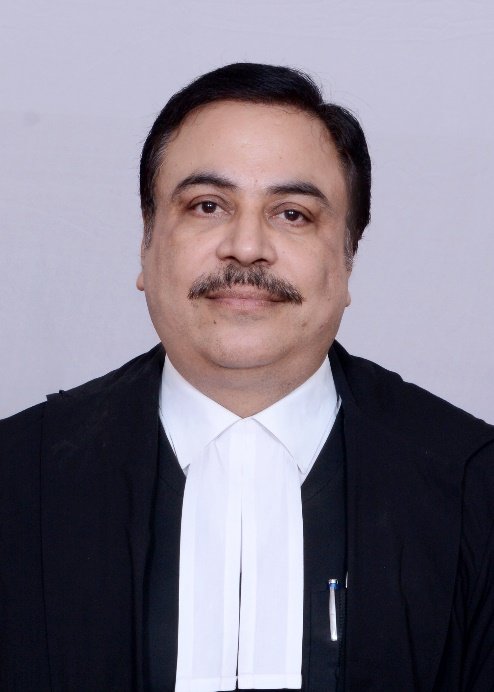
Hon'ble Dilip Gupta, J.
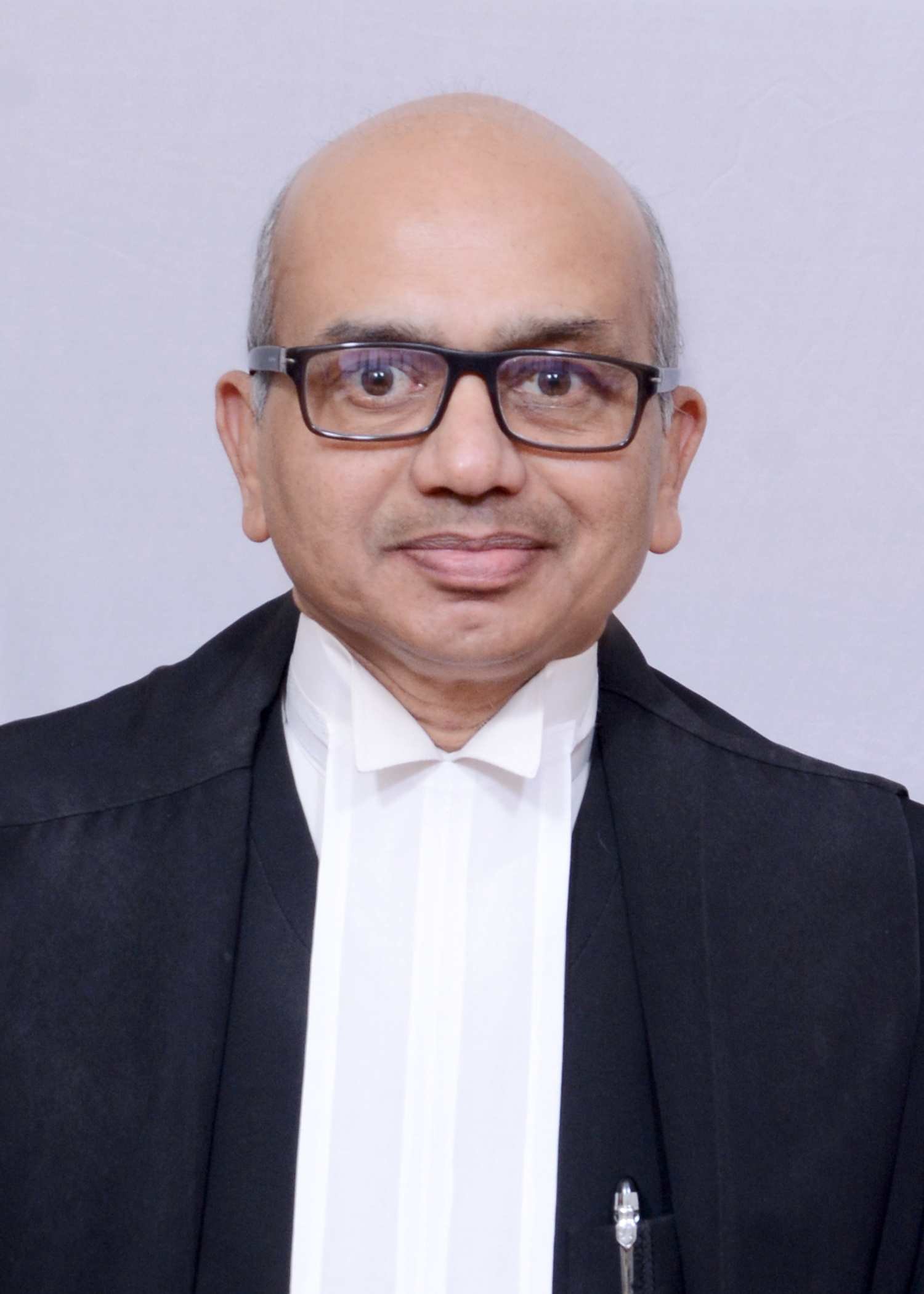
Hon'ble Mahesh Chandra Tripathi, J.
This Special Appeal has been filed under Chapter VIII Rule 5 of
the Allahabad High Court Rules, 1952 to assail the judgment dated 12
March 2008 of a learned Judge of this Court by which Writ Petition
No.11698 of 1990 that had been filed by the appellants for a direction
upon the District Inspector of Schools to make payment of salary due to
them since November 1988 as they had been validly appointed as ad hoc
teachers in the C.T. Grade in the National Inter College, Barhalganj,
District Gorakhpur
1
, was dismissed. The appellants have also sought the
quashing of the order dated 5 December 2008 by which the review
application filed by them was rejected by the learned Judge on the ground
that it had been filed by a counsel who had not argued the matter.
The facts as they emerge from a perusal of the records would
indicate that the writ petitioners claimed that two short-term vacancies
had arisen in the C.T. Grade in the College on 13 November 1988 and the
Committee of Management of the College on the same date resolved to
1the College
NeutralD”itationDNoTDRDMVbW(x{”(byMVJVRF'
2
grant ad hoc appointments to the two writ petitioners in the C.T. Grade
under the provisions of the Uttar Pradesh Secondary Education Services
Commission (Removal of Difficulties) (Second) Order, 1981
2
. The papers
were forwarded to the District Inspector of Schools for granting financial
approval to the aforesaid two ad hoc appointments but as no orders were
passed, a writ petition bearing No.11698 of 1990 was filed in which an
interim order was granted in 1995 and it is stated that on the basis of the
interim order passed by the Court, the two writ petitioners continued to
work and received their salary till the dismissal of the writ petition in
March 2008.
The learned Judge dismissed the writ petition for the reason that
the procedure contemplated in paragraph 2 of the Second Order had not
been followed and that the order dated 18 January 1989 passed by the
District Inspector of Schools refusing to grant financial approval to the
payment of salary to the two writ petitioners had not been assailed in the
writ petition.
Sri R.K. Ojha, learned Senior Counsel for the appellants has
submitted that the Committee of Management of the College at the
relevant point of time could make ad hoc appointments and as two short-
term vacancies had arisen and both the writ petitioners were not only
qualified and eligible but had also been appointed in accordance with the
procedure prescribed in the Second Order, the District Inspector of
Schools should have granted financial approval for payment of salary to
them. It is his submission that the learned Judge failed to appreciate this
2the Second Order
3
fact. Alternatively, learned Senior Counsel submitted that even if there
were some minor procedural irregularities in the making of these ad hoc
appointments of the two writ petitioners, the same should be overlooked
as they had continued to work for such a long period of time. In support
of this contention, learned Senior Counsel for the appellants has placed
reliance upon a decision of the Supreme Court in Roshni Devi & Ors.
Vs. State of Haryana & Ors.
3
and also the decisions of the Division
Benches of this Court in Ashika Prasad Shukla Vs. District Inspector
of Schools, Allahabad
4
and Rajindra Prasad Srivastava Vs. District
Inspector of Schools, Gorakhpur
5
.
Learned Standing Counsel appearing for the respondents has,
however, submitted that the ad hoc appointments of the two writ
petitioners were void ab-initio for the reason that the procedure as
contemplated in the Second Order had not been followed. It is also his
submission that mere working on the basis of an interim order would not
confer any right on the writ petitioners to claim salary.
Sri Chandan Sharma, learned learned counsel appearing for the
respondent-Committee of Management has also submitted that the writ
petitioners are not entitled to any relief as the procedure contemplated in
the Second Order had not been followed in making the ad hoc
appointments.
We have considered the submissions advanced by the learned
counsel for the parties.
3(1998) 8 SCC 59
4(1998) 3 UPLBEC 1722
51994 (3) ESC 117
4
What has been contended by learned Senior Counsel for the
appellant and what has also been observed by the learned Judge is that
two short-term vacancies had arisen in the C.T. Grade in the College on
13 November 1988.
Section 18 of the U.P. Secondary Education Services Commission
and Selection Board Act, 1982
6
at the relevant time dealt with ad hoc
appointments of teachers in the Institutions till the availability of a
selected candidate by the Commission.
Section 18 of the Act, as it stood prior to its substitution by UP Act
No. 24 of 1992, is reproduced below:
“18.- (1) Where the management has notified a
vacancy to the Commission in accordance with the
provisions of this Act, and
(a)the Commission has failed to recommend
the name of any suitable candidate for being
appointed as a teacher specified in the Schedule
within one year from the date of such
notification; or
(b)the post of such teacher has actually
remained vacant for more than two months,
then, the management may appoint, by direct
recruitment or promotion, a teacher on purely
ad hoc basis from amongst the persons
possessing qualifications prescribed under the
Intermediate Education Act, 1921 or the
regulations made thereunder.
(2) The provisions of sub-section (1) shall also apply
to the appointment of a teacher (other than a teacher
specified in the Schedule) on ad hoc basis with the
substitution of the expression 'Board' for the
expression “Commission”.
(3) Every appointment of an ad hoc teacher under sub-
section (1) or sub-section (2) shall cease to have effect
from the earliest of the following dates, namely-
6-the Act
5
(a)when the candidate recommended by the
Commission or the Board, as the case may be,
joins the post;
(b)when the period of one month referred to
in sub-section (4) of section 11 expires;
(c)thirtieth day of June following the date of
such ad hoc appointment.”
Since the Commission had not been established when the Act was
enforced, the Uttar Pradesh Secondary Education Services Commission
(Removal of Difficulties) Order, 1981
7
was issued by the State
Government under Section 33 of the Act on 31 July 1981. It provided that
the Management of an Institution could appoint by promotion or by direct
recruitment a teacher purely on ad hoc basis in accordance with the
provisions of the First Order in the case of a substantive vacancy caused
by death, retirement, promotion or otherwise. Soon thereafter, the Second
Order was issued on 11 September 1981. It provided for ad hoc
appointment against a short-term vacancy on the post of a teacher caused
by grant of leave or on account of suspension duly approved by the
District Inspector of Schools or otherwise.
Thus, the provisions of Section 18 of the Act, the First Order and
the Second Order independently empowered the Management of the
Institution to make ad hoc appointments of teachers in the Institution.
Section 18 of the Act, at the relevant time, did not provide the method
and manner of such appointments, while the First Order and the Second
Order provided a procedure for such ad hoc appointments of teachers.
A Full Bench of this Court in Radha Raizada & Ors. Vs.
Committee of Management, Vidyawati Darbari Girls Inter College &
7the First Order
6
Ors.
8
held that ad hoc appointments of teachers either under Section 18
of the Act or under the provisions of the First Order or the Second Order
have to be made in the manner provided therein. The Full Bench also
pointed out that the First Order dealt with ad hoc appointment either by
promotion or direct recruitment only against a substantive vacancy which
had been notified to the Commission and the Second Order dealt with
short-term vacancies which could arise on account of a teacher going on
leave or on account of suspension pending disciplinary proceedings. The
Full Bench also observed that by merely notifying the short-term vacancy
on the notice board did not give equal opportunity to all eligible
candidates and would, therefore, not satisfy the requirements of Article
16 of the Constitution. The Full Bench, therefore, held that the procedure
for notifying a short-term vacancy under the Second Order should be the
same as provided for under the First Order, namely that the Management
after intimating the vacancy to the District Inspector of Schools should
also advertise such short-term vacancy in at least two newspapers having
wide circulation in the State.
A short-term vacancy can, therefore, be filled up only in
accordance with the procedure contemplated under the provisions of the
Second Order and paragraph 2 of the Second Order, which deals with the
procedure, is reproduced below :-
"2. Procedure for filling up short-term vacancies.--
(1)A short term vacancy in the post of a teacher,
caused by grant of leave to him or on account of
his suspension duly approved by the District
Inspector of Schools or otherwise, shall be filled
81994 (3) UPLBEC 1551
7
by the Management of the institution, by
promotion of the permanent senior most teacher
of the institution, in the next lower grade. The
management shall immediately inform the
District Inspector of Schools of such promotion
alongwith the particulars of the teacher so
promoted.
(2) Where any vacancy, referred to in clause (1)
cannot be filled by promotion, due to non-
availability of a teacher in the next lower grade
in the institution, possessing the prescribed
minimum qualifications, it shall be filled by
direct recruitment in the manner laid down in
clause (3).
(3) (i) The Management shall intimate the vacancies to
the District Inspector of Schools and shall also
immediately notify the same on the notice board of the
institution, requiring the candidates to apply to the
Manager of the institution alongwith the particulars
given in Appendix 'B' to this Order. The selection
shall be made on the basis of quality point marks
specified in the Appendix to the Uttar Pradesh
Secondary Education Services Commission (Removal
of Difficulties) Order, 1981, issued with Notification
No. Ma-4993/ XV-7-1(79)-1981, dated July 31, 1982,
hereinafter to be referred to as the First Removal of
Difficulties Order, 1981. The compilation of quality
point marks shall be done under the personal
supervision of the Head of institution.
(ii) The names and particulars of the candidate
selected and also other candidates and the quality
point marks allotted to them shall be forwarded by the
Manager to the District Inspector of Schools for his
prior approval.
(iii) The District Inspector of Schools shall
communicate his decision within seven days of the
date of receipt of particulars by him failing which the
Inspector will be deemed to have given his approval.
(iv) On receipt of the approval of the District Inspector
of Schools or, as the case may be, on his failure to
communicate his decision within seven days of the
receipt of papers by him from the Manager, the
Management shall appoint the selected candidate and
an order of appointment shall be issued under the
signature of the Manager.
Explanation.--For the purpose of this paragraph--
(i) the expression 'senior-most teacher' means the
teacher having longest continuous service in the
8
institution in the Lecturer's grade or the Trained
Graduate (L.T.) grade, or Trained under-graduate
(C.T.) grade or J.T.C. or B.T.C. Grade, as the case
may be;
(ii) in relation to institution imparting instructions to
women, the expression 'District Inspector of Schools'
shall mean the 'Regional Inspectress of Girls Schools';
(iii) 'short term vacancy' means a vacancy which is not
substantive and is of a limited duration."
It needs to be noticed that according to the writ petitioners, a notice
had been put up on the notice board of the College on 13 November 1988
for filling up the two short-term vacancies on the post of C.T. Grade
Teachers in the College that arisen on 13 November 1988 and the
Selection Committee also met on 13 November 1988 to make its
recommendation. It has also been asserted by the writ petitioners that the
procedure as contemplated in paragraph 2 of the Second Order was
followed.
What is important is that the Second Order requires that
information of the vacancies should be given to the District Inspector of
Schools. There is nothing on the record which may substantiate that any
information was given by the Committee of Management of the College
to the District Inspector of Schools. What is also important to notice is
that the notice was put up on the notice board of the College on 13
November 1988 and on the same date the Committee of Management of
the College resolved to fill up these two vacancies by granting
appointments to the writ petitioner on ad hoc basis. The purpose of
putting up a notice on the notice board is not an empty formality. Due
notice has to be given so that all eligible candidates can respond to the
9
notice. Even if it is assumed that the notice was put up on the notice
board of the College on 13 November 1988 in the morning, then too we
fail to appreciate as to how the Committee of Management of the College
can consider granting ad hoc appointments on the same date. The
procedure, which has been followed, clearly contravenes the well
established principles laid down in Articles 14 and 16 of the Constitution
which guarantee equal opportunity to all persons. Thus, we are more than
satisfied that the most important requirement of sub-paragraph (3) of
paragraph 2 of the Second Order that vacancies should be intimated to the
District Inspector of Schools and that due notice should be put up on the
notice board, has not been complied with. This is an important and
integral part of the procedure contemplated in the Second Order and any
violation thereof would clearly render an ad hoc appointment made under
the Second order void ab initio.
We are conscious of the fact that a Full Bench of this Court in
Radha Raizada (supra) in regard to the Second Order held that putting
up a notice on the notice board does not satisfy the requirements of
Articles 14 and 16 of the Constitution and the procedure of causing an
advertisement in at least two newspapers having wide circulation in the
area as contemplated in the First Order should be followed but we are
also conscious of the fact that the two ad hoc appointments in the present
case were made in 1988 much before the decision was rendered by the
Full Bench in Radha Raizada (supra). It is for this reason that we have
examined the issue raised by learned Senior Counsel for the appellants
10
taking into considerations the provisions of the Second Order as they
stood.
What is also important to note is that sub-paragraph (3) of
paragraph 2 of the Second Order also requires the compilation of quality
point marks under the supervision of the Head of the College and the
forwarding of these quality point marks allotted to the candidates by the
Manager of the College to the District Inspector of Schools for his prior
approval. The writ petition is silent about this aspect.
The Full Bench of this Court in Radha Raizada (supra), though in
respect of an ad-hoc appointment made under the First Order, held that
any ad-hoc appointment made without following the procedure laid down
in the First Order would be void and would not confer any right on such
appointees.
The Supreme Court also had an occasion to examine the validity of
ad-hoc appointments which were not made in accordance with the
procedure provided for under paragraph 5 of the First Order in the case of
Prabhat Kumar Sharma and others Vs. State of U.P. and others
9
.
The Supreme Court held that any ad-hoc appointment not made in
accordance with paragraph 5 of the First Order would be illegal and void
and would not confer any right on the appointee.
In Shesh Mani Shukla vs. The District Inspector of Schools,
Deoria
10
, the Supreme Court reiterated what was earlier observed in
Prabhat Kumar Sharma (supra).
9- (1996) 10 SCC 62
10- JT 2009 (10) SC 309
11
It has, however, also been submitted by learned Senior Counsel for
the appellants that even if there were some minor irregularities in making
the ad hoc appointments, the same should not deprive the writ petitioners
in claiming salary as they had continued to work for a substantial period
of time from 1995 upto 2008, when the writ petition filed by them was
dismissed by the learned Judge.
A similar submission was made before the High Court in the writ
petition filed by Shesh Mani Shukla but it was not accepted. The decision
is reported in (2004) 3 UPLBEC 2560
11
. While rejecting the aforesaid
contention, the Court held as follows :-
“In my opinion, the petitioner is not entitled to a
relief from this Court merely on the ground that an
interim order had been passed in his favour under
which he continued to receive salary. The petitioner
has to give way to the candidate who had been
appointed in accordance with the procedure then
prescribed for making an ad-hoc appointment. In this
context it may be useful to reproduce a passage from
the judgment of the Supreme Court in the case of
State of Madhya Pradesh and another Vs. Dharam
Bir reported in JT 1998 (4) SC 363 wherein it has
been observed as follows:-
"The plea that the Court should have a
"human approach" and should not disturb a
person who has already been working on this
post for more than a decade also cannot be
accepted as the Courts are hardly swayed by
emotional appeals. In dispensing justice to the
litigating parties, the Courts not only go into the
merits of the respective cases, they also try to
balance the equities so as to do complete justice
between them. Thus the Courts always maintain
a human approach. In the instant case also, this
approach has not been departed from. We are
fully conscious that the respondent had worked
on the post in question for quite a long time but
it was only in ad-hoc capacity. We are equally
11-Shesh Mani Shukla vs. The District Inspector of Schools, Deoria
12
conscious that a selected candidate who also
possesses necessary educational qualification is
available. In this situation, if the respondent is
allowed to continue on this post merely on the
basis of his concept of "human approach", it
would be at the cost of a duly selected candidate
who would be deprived of employment for
which he has striven and had ultimately cleared
the selection. In fact, it is the "human approach"
which requires us to prefer the selected
candidate over a person who does not possess
even the requisite qualification."
The Supreme Court in the case of Kishorilal
Charmakar and another Vs. District Education
Officer and another reported in (1998) 9, SCC 395
examined the termination of persons who had been
appointed under a bona fide mistake by considering
them as Scheduled Tribes candidates and the mistake
had not occurred on their account. It was submitted on
their behalf that they had worked for 10 years as
teachers under the interim orders granted by the Court
in their favour and since they were not responsible for
the mistake they should be allowed to continue. The
Court rejected this contention holding that this alone
could not entitle them to retain the undeserved benefit
which had accrued to them. In yet another case the
Supreme Court in the matter of State of Rajasthan
Vs. Hitendra Kumar Bhatt (1997) 6 SCC 574
examined the effect of an interim order on the
dismissal of the petition. In the said case the
respondent was not called for an interview since he
did not possess the technical qualification. However,
pursuant to the interim order passed by the High Court
requiring the appellant to call him for interview he
was interviewed and his name was included in the list
of selected candidates. He was also appointed on a
provisional basis and was also subsequently
confirmed. The writ petition was ultimately dismissed
by the High Court holding that on the cut of date, he
did not possess the requisite qualification. It was
submitted by the respondent before the Supreme Court
that since he had been continued in service and had
also been confirmed, the Court should not disturb his
appointment and his case should be considered
sympathetically. The Supreme Court observed that the
appellants had taken the correct stand right from the
beginning and the respondent's application was not
considered and he was not called for interview. It was
13
only on account of the interim orders, which were
obtained by the respondent that he was given an
appointment and continued. He was aware that his
appointment was subject to the out come of the
petition. As such a sympathetic view could not be
taken.
In view of the aforesaid facts and in view of the
principles laid down by the Supreme Court in the
aforesaid cases I am unable to accept the argument put
forth by the learned counsel for the petitioner that
even if it is held that the appointment of the petitioner
was made in violation of the provisions of the First
Removal of Difficulties Order, 1981, the Court should
take a sympathetic view and allow the petition since
he had received salary on the basis of the interim order
which he has enjoyed for all these 11 years.”
The Special Appeal filed against the aforesaid decision was
dismissed by a Division Bench of the High Court.
These two judgments were challenged before the Supreme Court.
The Supreme Court did not accept the contention raised by the appellants
and the decision is reported in JT 2009 (10) SC 309
12
. The observations
are as follows :-
“Both the learned Single Judge as also the Division
Bench have found that the institution has not complied
with the provisions of the 1981 Act as amended as
also para 5 of the 1981 order. If the appointment of the
appellant was not valid, the question of granting any
approval thereto did not arise. Action, on the part of
the Committee of the Management to hold selection,
being not consistent with para 5 of the Order has
rightly been held to be wholly unsustainable. It is true
that the appellant has worked for a long time. His
appointment, however, being in contravention of the
statutory provision was illegal, and, thus, void ab-
initio. If his appointment has not been granted
approval by the statutory authority, no exception can
be taken only because the appellant had worked for a
long time. The same by itself, in our opinion, cannot
form the basis for obtaining a writ of or in the nature
of mandamus; as it is well known that for the said
12-Shesh Mani Shukla vs. The District Inspector of Schools, Deoria
14
purpose, the writ petitioner must establish a legal right
in himself and a correspondent legal duty in the State.
{See Food Corporation of India & ors. V. Ashish
Kumar Ganguly & ors. [2009 (8) Scale 218]}.
Sympathy or sentiments alone, it is well settled,
cannot form the basis for issuing a writ of or in the
nature of mandamus. { See State of M.P. & Ors. v.
Sanjay Kumar Pathak & Ors. [JT 2007 (12) SC
219: (2008) 1 SCC 456]}”
Learned counsel for the appellant has, however, relied upon the
decision of a Division Bench in Rajidra Prasad Srivastava (supra) in
which it has been held that since the appellant therein had worked for
about twenty years in view of the interim order passed by the Court, it
would be unfair to remove him on the ground that his initial appointment
is illegal.
This decision, is clearly contrary to the position of law explained
by the Supreme Court in Kishorilal Charmakar (supra) and Hitendra
Kumar Bhatt (supra) as also a decision of the Supreme Court in Shesh
Mani Shukla (supra) case.
The decision of the Supreme Court in Roshni Devi & Ors.,
(supra) which had been relied upon by learned counsel for the appellant
would also not help the appellant. In a subsequent decision of the
Supreme Court in State of Karnataka & Ors., Vs. Uma Devi (3) &
Ors.,
13
the Supreme Court clearly held that no benefit can accrue to a
person whose initial appointment was bad in law merely because that
person had continued to work for some period.
13(2006) 4 SCC 1
15
In this view of the matter, we see no justification to grant any relief
to the two writ petitioners only because they had continued to teach on
the basis of the interim order passed by the Court. We have found as a
fact that the writ petitioners were granted ad hoc appointments by the
Committee of Management of the College without following the
procedure contemplated under the Second Order. The two writ petitioners
are, therefore, not entitled to any relief. The judgments under Appeal, in
such circumstances, do not call for any interference.
The Special Appeal is, accordingly, dismissed.
Date:31.08.2015
SK
(Dilip Gupta, J.)
(Mahesh Chandra Tripathi, J.)

 Login with google
Legal Notes
Add a Note....