
As per case facts, the appellant Insurance Company challenged a Motor Accident Claims Tribunal award, arguing the deceased's income was assessed too high and thus the compensation was excessive. Conversely, ...
FAO-5491-2018 (O&M) -1-
IN THE HIGH COURT OF PUNJAB & HARYANA
AT CHANDIGARH
FAO-5491-2018 (O&M)
IFFCO TOKYO GENERAL INSURANCE CO. LTD.
......Appellant
vs.
KRISHNA DEVI AND ORS.
......Respondents
Reserved on:- 10.04.2026
Pronounced on:- 12.05.2026
Uploaded on:- 12.05.2026
Whether only the operative part of the judgment is pronounced? NO
Whether full judgment is pronounced? YES
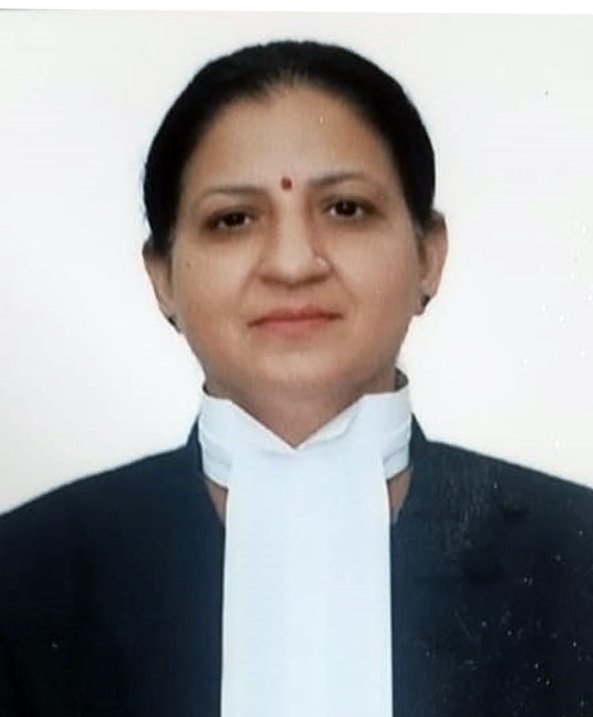
CORAM: HON'BLE MRS. JUSTICE SUDEEPTI SHARMA
Present: Mr. Hritik Sharma, Advocate
for Mr. Vishal Aggarwal, Advocate
for the appellant-Insurance Company.
Ms. Deepika, Advocate
for Mr. Sandeep Kumar Yadav, Advocate
for respondents No.1 to 4.
Respondents No.5 and 6 proceeded ex parte
vide order dated 04.09.2019.
****
SUDEEPTI SHARMA J.
1. The present appeal has been preferred against the award dated
06.03.2018 passed by the learned Motor Accident Claims Tribunal, Narnaul
(for short, 'the Tribunal’) in the claim petition filed under Section 166 of the
Motor Vehicles Act, 1988, wherein the appellant-Insurance company was
fastened with the liability to pay the compensation of Rs.11,35,768/- to the
FAO-5491-2018 (O&M) -2-
claimants along with interest @ 9 % per annum on the ground of quantum of
compensation to be on higher side.
2. As sole issue for determination in the present appeal is confined
to quantum of compensation awarded by the learned Tribunal, a detailed
narration of the facts of the case is not required to be reproduced here for the
sake of brevity.
SUBMISSIONS OF LEARNED COUNSEL FOR THE PARTIES
3. Learned counsel for the appellant-Insurance Company contends
that the learned Tribunal has taken income of deceased on higher side. He
further contends that income of Rs.11,000/- assessed by the learned Tribunal
is wholly without any basis because even as per the minimum wages notified
by Government of Haryana on 01.01.2016, the wages of an unskilled worker
were Rs.7,976/-, therefore, he prays that the present appeal be allowed and
amount of compensation be reduced.
4. Per contra, learned counsel for claimants/respondents No.1 to 4
contends that compensation awarded by the learned Tribunal is on the lower
sidehence warrants enhancement. He fairly concedes that no independent
appeal has been preferred by the claimants/respondents No.1 to 4 for seeking
such enhancement. Nonetheless, placing reliance on the judgment of this
Court passed in FAO-5934-2015 titled as ‘National Insurance Co. Ltd. Vs.
Laltesh and others’, decided on 31.01.2026, he contends that this Court, in
exercise of its appellate jurisdiction, possesses ample power to enhance the
quantum of compensation even in the absence of a cross-appeal or cross-
objections filed by the claimants. He therefore, prays that the compensation
be enhanced.
FAO-5491-2018 (O&M) -3-
5. I have heard learned counsel for the parties and perused the
whole record of this case with their able assistance.
SETTLED LAW ON COMPENSATION
6. Hon’ble Supreme Court in the case of Sarla Verma Vs. Delhi
Transport Corporation and Another [(2009) 6 Supreme Court Cases 121],
laid down the law on assessment of compensation and the relevant paras of
the same are as under:-
“30. Though in some cases the deduction to be made
towards personal and living expenses is calculated on the
basis of units indicated in Trilok Chandra, the general
practice is to apply standardised deductions. Having a
considered several subsequent decisions of this Court, we
are of the view that where the deceased was married, the
deduction towards personal and living expenses of the
deceased, should be one-third (1/3rd) where the number of
dependent family members is 2 to 3, one-fourth (1/4th)
where the number of dependent family members is 4 to 6,
and one-fifth (1/5th) where the number of dependent family
members exceeds six.
31. Where the deceased was a bachelor and the claimants
are the parents, the deduction follows a different principle.
In regard to bachelors, normally, 50% is deducted as
personal and living expenses, because it is assumed that a
bachelor would tend to spend more on himself. Even
otherwise, there is also the possibility of his getting
married in a short time, in which event the contribution to
the parent(s) and siblings is likely to be cut drastically.
Further, subject to evidence to the contrary, the father is
likely to have his own income and will not be considered
as a dependant and the mother alone will be considered as
a dependant. In the absence of evidence to the contrary,
FAO-5491-2018 (O&M) -4-
brothers and sisters will not be considered as dependants,
because they will either be independent and earning, or
married, or be dependent on the father.
32. Thus even if the deceased is survived by parents and
siblings, only d the mother would be considered to be a
dependant, and 50% would be treated as the personal and
living expenses of the bachelor and 50% as the
contribution to the family. However, where the family of
the bachelor is large and dependent on the income of the
deceased, as in a case where he has a widowed mother
and large number of younger non-earning sisters or
brothers, his personal and living expenses may be
restricted to one-third and contribution to the family will
be taken as two-third.
* * * * * *
42. We therefore hold that the multiplier to be used should
be as mentioned in Column (4) of the table above
(prepared by applying Susamma Thomas³, Trilok Chandra
and Charlie), which starts with an operative multiplier of
18 (for the age groups of 15 to 20 and 21 to 25 years),
reduced by one unit for every five years, that is M-17 for
26 to 30 years, M-16 for 31 to 35 years, M-15 for 36 to 40
years, M-14 for 41 to 45 years, and M-13 for 46 to 50
years, then reduced by two units for every five years, that
is, M-11 for 51 to 55 years, M-9 for 56 to 60 years, M-7
for 61 to 65 years and M-5 for 66 to 70 years.
7. Hon’ble Supreme Court in the case of National Insurance
Company Ltd. Vs. Pranay Sethi & Ors. [(2017) 16 SCC 680] has clarified the
law under Sections 166, 163-A and 168 of the Motor Vehicles Act, 1988, on
the following aspects:-
(A) Deduction of personal and living expenses to
determine multiplicand;
FAO-5491-2018 (O&M) -5-
(B) Selection of multiplier depending on age of
deceased;
(C) Age of deceased on basis for applying multiplier;
(D) Reasonable figures on conventional heads, namely,
loss of estate, loss of consortium and funeral expenses,
with escalation;
(E) Future prospects for all categories of persons and for
different ages: with permanent job; self-employed or fixed
salary.
The relevant portion of the judgment is reproduced as under:-
“52. As far as the conventional heads are concerned, we
find it difficult to agree with the view expressed in Rajesh².
It has granted Rs.25,000 towards funeral expenses, Rs
1,00,000 towards loss of consortium and Rs 1,00,000
towards loss of care and guidance for minor children. The
head relating to loss of care and minor children does not
exist. Though Rajesh refers to Santosh Devi, it does not
seem to follow the same. The conventional and traditional
heads, needless to say, cannot be determined on
percentage basis because that would not be an acceptable
criterion. Unlike determination of income, the said heads
have to be quantified. Any quantification must have a
reasonable foundation. There can be no dispute over the
fact that price index, fall in bank interest, escalation of
rates in many a field have to be noticed. The court cannot
FAO-5491-2018 (O&M) -6-
remain oblivious to the same. There has been a thumb rule
in this aspect. Otherwise, there will be extreme difficulty in
determination of the same and unless the thumb rule is
applied, there will be immense variation lacking any kind
of consistency as a consequence of which, the orders
passed by the tribunals and courts are likely to be
unguided. Therefore, we think it seemly to fix reasonable
sums. It seems to us that reasonable figures on
conventional heads, namely, loss of estate, loss of
consortium and funeral expenses should be Rs.15,000,
Rs.40,000 and Rs.15,000 respectively. The principle of
revisiting the said heads is an acceptable principle. But
the revisit should not be fact-centric or quantum-centric.
We think that it would be condign that the amount that we
have quantified should be enhanced on percentage basis in
every three years and the enhancement should be at the
rate of 10% in a span of three years. We are disposed to
hold so because that will bring in consistency in respect of
those heads.
* * * * *
59.3. While determining the income, an addition of 50%
of actual salary to the income of the deceased towards
future prospects, where the deceased had a permanent job
and was below the age of 40 years, should be made. The
addition should be 30%, if the age of the deceased was
FAO-5491-2018 (O&M) -7-
between 40 to 50 years. In case the deceased was between
the age of 50 to 60 years, the addition should be 15%.
Actual salary should be read as actual salary less tax.
59.4. In case the deceased was self-employed (or) on a
fixed salary, an addition of 40% of the established income
should be the warrant where the deceased was below the
age of 40 years. An addition of 25% where the deceased
was between the age of 40 to 50 years and 10% where the
deceased was between the age of 50 to 60 years should be
regarded as the necessary method of computation. The
established income means the income minus the tax
component.
59.5. For determination of the multiplicand, the deduction
for personal and living expenses, the tribunals and the
courts shall be guided by paras 30 to 32 of Sarla Verma⁴
which we have reproduced hereinbefore.
59.6. The selection of multiplier shall be as indicated in
the Table in Sarla Verma¹ read with para 42 of that
judgment.
59.7. The age of the deceased should be the basis for
applying the multiplier.
59.8. Reasonable figures on conventional heads, namely,
loss of estate, loss of consortium and funeral expenses
should be Rs 15,000, Rs 40,000 and Rs 15,000
FAO-5491-2018 (O&M) -8-
respectively. The aforesaid amounts should be enhanced at
the rate of 10% in every three years.”
8. Hon’ble Supreme Court in the case of Magma General
Insurance Company Limited Vs. Nanu Ram alias Chuhru Ram & Others
[2018(18) SCC 130] after considering Sarla Verma (supra) and Pranay
Sethi (Supra) has settled the law regarding consortium. Relevant paras of the
same are reproduced as under:-
“21. A Constitution Bench of this Court in Pranay Sethi²
dealt with the various heads under which compensation is
to be awarded in a death case. One of these heads is loss
of consortium. In legal parlance, "consortium" is a
compendious term which encompasses "spousal
consortium", "parental consortium", and "filial
consortium". The right to consortium would include the
company, care, help, comfort, guidance, solace and
affection of the deceased, which is a loss to his family.
With respect to a spouse, it would include sexual relations
with the deceased spouse.
21.1. Spousal consortium is generally defined as rights
pertaining to the relationship of a husband-wife which
allows compensation to the surviving spouse for loss of
"company, society, cooperation, affection, and aid of the
other in every conjugal relation".
21.2. Parental consortium is granted to the child upon the
premature death of a parent, for loss of "parental aid,
FAO-5491-2018 (O&M) -9-
protection, affection, society, discipline, guidance and
training".
21.3. Filial consortium is the right of the parents to
compensation in the case of an accidental death of a
child. An accident leading to the death of a child causes
great shock and agony to the parents and family of the
deceased. The greatest agony for a parent is to lose their
child during their lifetime. Children are valued for their
love, affection, companionship and their role in the family
unit.
22. Consortium is a special prism reflecting changing
norms about the status and worth of actual relationships.
Modern jurisdictions world-over have recognised that the
value of a child's consortium far exceeds the economic
value of the compensation awarded in the case of the
death of a child. Most jurisdictions therefore permit
parents to be awarded compensation under loss of
consortium on the death of a child. The amount awarded
to the parents is a compensation for loss of the love,
affection, care and companionship of the deceased child.
23. The Motor Vehicles Act is a beneficial legislation
aimed at providing relief to the victims or their families,
in cases of genuine claims. In case where a parent has
lost their minor child, or unmarried son or daughter, the
parents are entitled to be awarded loss of consortium
FAO-5491-2018 (O&M) -10-
under the head of filial consortium. Parental consortium
is awarded to children who lose their parents in motor
vehicle accidents under the Act. A few High Courts have
awarded compensation on this count. However, there was
no clarity with respect to the principles on which
compensation could be awarded on loss of filial
consortium.
24. The amount of compensation to be awarded as
consortium will be governed by the principles of awarding
compensation under "loss of consortium" as laid down in
Pranay Sethi². In the present case, we deem it appropriate
to award the father and the sister of the deceased, an
amount of Rs 40,000 each for loss of filial consortium.
9. A perusal of the award reveals that deceased was stated to be 55
years of age at the time of accident, which is duly proved from post-mortem
report Ex.P-31. Therefore, the learned Tribunal has rightly assessed his age as
55 years at the time of accident.
10. A perusal of the award reveals that the deceased was stated to be
doing agricultural, animal husbandry and dairy farming work, earning
Rs.20,000/- per month. So far as contention of learned counsel for appellant-
Insurance Company that income of the deceased is taken on higher side is
bereft of merit. It is a settled position of law, as laid down by the Hon’ble
Supreme Court in Chandra @ Chanda @ Chandraram v. Mukesh Kumar
Yadav & Ors., reported as (2022) 1 SCC 198, that in cases where there is no
documentary evidence of income, the minimum wages notification may be
FAO-5491-2018 (O&M) -11-
adopted as a guiding factor, but the same cannot be treated as an inflexible or
absolute standard. The Apex Court has further held that a reasonable amount
of guesswork, based on the facts and circumstances of each case, is
permissible and indeed necessary while assessing the income of the deceased.
11. In view of the aforesaid settled legal position, and keeping in
mind the nature of employment, age of the deceased, and the overall facts and
circumstances of the present case, in the opinion of this Court, the monthly
income is rightly assessed by the learned Tribunal.
12. A perusal of award further reveals that major and married
daughters of the deceased were not considered dependant upon the income of
the deceased, which is contrary to the judgment of Hon’ble Supreme Court
rendered in Sadhana Tomar & Others v. Ashok Kushwaha & Others, 2025
SCC OnLine 554, wherein, it has been held that the status of a legal
representative is not lost merely because the claimant is married or
independently earning, and such claimants are entitled to compensation being
legal heirs of the deceased. The relevant extract of the same is reproduced as
under:-
“13. This Court has clarified in the case of Meena Devi v.
Nunu Chand Mahto [(2023) 1 SCC 204], that the objective
of granting compensation under the Motor Vehicles Act,
1988, is to ensure that just and fair compensation is paid to
the aggrieved party. Another question which arose for our
consideration, as for the purpose of loss of dependency, the
deduction of annual income should be 1/3rd or 1/4th, as
there are five claimants. The Tribunal did not consider
appellant Nos.4 and 5, namely, the father and the younger
sister, respectively, of the deceased as dependents, stating
therein that the father was not dependent on the income of
FAO-5491-2018 (O&M) -12-
the deceased and since the father is alive, the younger
sister is also not dependent on the income of the deceased.
This Court in Gujarat SRTC v. Ramanbhai Prabhatbhai
[(1987) 3 SCC 234], observed that a legal representative is
one, who suffers on account of death of a person due to a
motor vehicle accident and need not necessarily be a wife,
husband, parent or child.
14. Recently in N. Jayasree v. Cholamandalam MS
General Insurance Company Ltd. [(2022) 14 SCC 712],
this Court observed that :
"16. In our view, the term"legal representative"
should be given a wider interpretation for the
purpose of Chapter XII of the MV Act and it should
not be confined only to mean the spouse, parents and
children of the deceased. As noticed above, the MV
Act is a benevolent legislation enacted for the object
of providing monetary relief to the victims or their
families. Therefore, the MV Act calls for a liberal
and wider interpretation to serve the real purpose
underlying the enactment and fulfil its legislative
intent. We are also of the view that in order to
maintain a claim petition, it is sufficient for the
claimant to establish his loss of dependency. Section
166 of the MV Act makes it clear that every legal
representative who suffers on account of the death of
a person in a motor vehicle accident should have a
remedy for realisation of compensation.”
13. In view of the above legal position, the major and married
daughter are also held entitled to the compensation.
14. A further perusal of the award reveals that the learned Tribunal
has erred in deducting 1/3rd instead of 1/4th towards personal expenditure.
FAO-5491-2018 (O&M) -13-
Furthermore, amount awarded under the head of loss of consortium is on the
lower side. Therefore, the award requires indulgence of this Court.
15. In view of the aforesaid discussion, the compensation is liable to
be recalculated as under:
Sr.
No.
Heads Compensation Awarded
1 Monthly Income Rs.11,000/-
2 Future Prospects @ 10% Rs.1,100/- (10% of 11000)
3 Deduction towards personal
expenditure 1/4
Rs.3,025/- (12,100 X 1/4)
4 Total Income Rs.9,075/- (12,100 – 3,025)
5 Multiplier 11
6 Annual Dependency Rs.11,97,900/- (9,075 X 12 X 11)
7 Loss of estate Rs.15,000/-
8 Funeral Expenses Rs.15,000/-
9 Loss of Consortium:
Parental: 3 X Rs.40,000/-
Spousal: 1 X Rs.40,000/-
Rs.1,60,000/-
10Total Compensation Rs.13,87,900/-
11Amount Awarded by the
Tribunal
Rs.11,35,768/-
12Enhanced amount Rs.2,52,132/-
(Rs. 13,87,900 - Rs.11,35,768)
16. The aforesaid re-computation gives rise to a further issue, i.e.
whether the award passed by the Tribunal can be enhanced in an appeal
preferred by the insurance company, when the claimant has not filed any
cross-objection or cross-appeal. It is pertinent to mention that this Court in
FAO-5934-2015 titled as ‘National Insurance Co. Ltd. Vs. Laltesh and
others’, decided on 31.01.2026 has already dealt with the similar issue and
held that the compensation can be enhanced in appeal filed by the Insurance
FAO-5491-2018 (O&M) -14-
Company even in the absence of cross-objections and cross-appeals filed by
the claimants. The relevant extract of the same is reproduced as under:-
“28. This question came up for consideration before three-
Judge Bench of the Hon’ble Supreme Court in Surekha &
Ors. v. Santosh & Ors., (2021) 16 SCC 467. The relevant
portion of the said order reads as follows:
1. Leave granted. This appeal takes exception
to the judgment and order dated 4-1-2019
[Shriram General Insurance Co. Ltd. v.
Surekha, 2019 SCC OnLine Bom 12] passed
by the High Court of Judicature at Bombay,
Bench at Aurangabad in First Appeal No.
2564 of 2016, whereby the High Court, even
though agreed with the stand of the
appellants that just compensation amount
ought to be Rs 49,85,376 (Rupees forty-nine
lakhs eighty-five thousand three hundred
seventy-six only), however, declined to grant
enhancement merely on the ground that the
appellants had failed to file cross-appeal.
2. By now, it is well-settled that in the matter
of insurance claim compensation in
reference to the motor accident, the court
should not take hypertechnical approach
and ensure that just compensation is
awarded to the affected person or the
claimants.
3. As a result, we modify the order passed by
the High Court to the effect that the
compensation amount payable to the
appellants is determined at Rs 49,85,376
(Rupees forty-nine lakhs eighty-five thousand
three hundred seventy-six only), with interest
thereon as awarded by the High Court.
4. The appeal is allowed in the above terms.
Pending applications, if any, stand disposed
of."
29. In view of the above, settled principles of law as
held by Apex Court this Court can award just and
reasonable compensation by enhancing the amount of
compensation, even in the absence of a cross-objection
or cross-appeal by the claimants.
30. This conclusion is further strengthened by
the settled principle that a Court adjudicating claims
under the Motor Vehicles Act is duty-bound to award
just and fair compensation to victims of road accidents,
unrestrained by strict rules of pleadings and evidence,
FAO-5491-2018 (O&M) -15-
as laid down by the Hon’ble Supreme Court in
Nagappa v. Gurudayal Singh & Ors (2003)2SCC 274.
31. Furthermore, this Court in FAO-5834-2016
titled as The Oriental Insurance Company Limited Vs.
Smt. Mathri Devi and others decided on 12.09.2025
has already dealt with similar issue and held as under:-
“This Court in FAO-195-2006, titled Mamata
and others v. Happy and others, decided on
29.05.2024, while examining the scope of the
appellate jurisdiction under Section 107 CPC
read with Order XLI Rule 33 CPC, has held as
follows:-
“11. RELEVANT PROVISONS UNDER THE CODE
OF CIVIL PROCEDURE, 1908
Section 107 :- Powers of Appellate Court.— (1) Subject to
such conditions and limitations as may be prescribed, an
Appellate Court shall have power—
(a) to determine a case finally;
(b) to remand a case;
(c) to frame issues and refer them for trial;
(d) to take additional evidence or to require such evidence
to be taken.
(2) Subject as aforesaid, the Appellate Court shall have
the same powers and shall perform as nearly as may be
the same duties as are conferred and imposed by this Code
on Courts of original jurisdiction in respect of suits
instituted therein.
Order XLI Rule 33 of the Code of Civil Procedure,
1908:-
33. Power of Court of Appeal.—The Appellate Court shall
have power to pass any decree and make any order which
ought to have been passed or made and to pass or make
such further or other decree or order as the case may
require, and this power may be exercised by the Court
notwithstanding that the appeal is as to part only of the
decree and may be exercised in favour of all or any of the
respondents or parties, although such respondents or
parties may not have filed any appeal or objection and
may, where there have been decrees in cross-suits or where
two or more decrees are passed in one suit be exercised in
respect of all or any of the decrees, although an appeal
may not have been filed against such decrees:
[Provided that the Appellate Court shall not make any
order under section 35A in pursuance of any objection on
which the Court from whose decree the appeal is preferred
has omitted or refused to make such order.]
12 to 18 XXX XXX XXX
19. As per Section 107 of Code of Civil
Procedure, 1908 which refers to the powers of the
Appellate Court, the Appellate Court shall have the
FAO-5491-2018 (O&M) -16-
same powers and shall perform as nearly as may be
the same duties as are conferred and imposed by the
Code on Courts of original jurisdiction in respect of
suits instituted therein, and the Motor Vehicle Act
1988 since being a beneficial legislation, the
evidence led by the parties cannot be ignored by the
Appellate Authority.
20 to 25 XXX XXX XXX
CONCLUSION
26. The Appellate Courts for the purpose of doing
complete justice between the parties and completely
adjudicating upon all the disputes, after
appreciating the whole evidence on record, have
power under Section 107 read with Order XLI Rule
33 of the Code of Civil Procedure, 1908 to pass any
decree and make any order which ought to have
been passed or made and to pass or make such
further decree or order as the case may require, and
this power may be exercised by the Court
notwithstanding that the appeal is as to part only of
the decree and may be exercised in favour of all or
any of the respondents or parties, although such
respondents or parties may not have filed any
appeal or objection.
27. Motor vehicle statute is a beneficial
legislation. Generally the victims/claimants/legal-
representatives are not aware of their right to
compensation and it is Advocates who decide under
which provision of the statute the claim petition is to
be filed. Before deciding the claim petitions, after
appreciating the evidence on record, it is the
bounden duty of the Court to apprise the parties of
their legal rights as to under which provision they
can get the maximum of benefit/compensation. The
Judges should apply their judicial mind after
appreciating the evidence on record, gravity of
offence, gravity of loss, conduct of parties and over
all facts and circumstances of each case and after
that decide the same. The Court should not go into
the technicalities that under which provision of
statute case is to be filed, specially in the motor
accident cases. If at any stage after appreciating the
evidence, since it is original jurisdiction of the
Court and the case is at initial stage, normally a
person of ordinary prudence can calculate the loss
of near and dear one’s/relationship, the Judge feels
that case of the claimant falls under a particular
section he should apprise the parties regarding the
same. The Courts should not apply straight jacket
formula in every case and are presumed actually to
FAO-5491-2018 (O&M) -17-
do the justice by applying their judicial mind to the
facts and circumstances of each and every case. The
beneficial intent of the legislation ought to be borne
in mind and procedural and technical formalities
cannot be invoked to defeat the purpose of the
legislation.
28. The Courts have to be very cautious and
careful while accepting the prayer of the
claimants/appellants to convert the claim petition
filed under Section I63-A to Section 166 of the
Motor Vehicles Act, 1988. Under Section 107 read
with Order XLI Rule 33 of CPC the general rule is
that an appeal is persistence of a suit and, therefore,
an Appellate Court can do, while the appeal is
pending, what the original Court could have done
while the suit was pending. Thus, as per Section 107
Order XLI Rule 33 of CPC, an Appellate Court is
empowered to re-appreciate the evidence. While
hearing the appeal it is very important for a judge to
apply his judicial mind. The Appellate Authority can
re-appreciate the evidence before it. The grant of
just and fair compensation is a statutory
responsibility of the Court.
29. Over all conclusion of the above is that the
Appellate Court has power to convert the petition
under Section 163-A to Section 166 of the Motor
Vehicles Act, 1988 to give justice to the claimants.”
13. It is manifest from the above discussion that
although respondents/claimants No.1 and 2 have not
preferred any appeal seeking enhancement of
compensation, and the present appeal has been instituted
solely by the appellant-Insurance Company challenging
the quantum of compensation, the settled principle of law
is that an appeal is a continuation of the original
proceedings. Consequently, the appellate court is vested
with ample jurisdiction to mould relief and to award just
and proper compensation, even in the absence of a cross-
appeal by the claimants.
14. In exercise of such appellate powers, this Court
cannot overlook the beneficial nature of the Motor Vehicles
Act, 1988, which has been consistently interpreted as a
piece of social welfare legislation intended to provide just
compensation to victims of motor accidents and their
dependents. The statutory duty of the Court is to ensure
that the claimants are not deprived of legitimate
entitlement merely due to procedural technicalities such as
the absence of a cross-appeal.
15. Accordingly, in the interest of justice, and to secure
the ends of a fair adjudication, this Court deems it
appropriate to award a further sum of ₹18,150/- under the
FAO-5491-2018 (O&M) -18-
head “Loss of Estate” in favour of respondents/claimants
No.1 and 2.
16.It is well settled by the Hon’ble Supreme Court in K.
Ramya v. National Insurance Co. Ltd., 2022 (4) RCR
(Civil) 435 that the Motor Accident Claims Tribunals are
vested with latitude to determine “just compensation” and
are not shackled by rigid arithmetical rules or strict
standards of evidence as in civil suits for damages.
Interference by the Appellate Court is warranted only
when the award of compensation is manifestly excessive,
arbitrary, or contrary to settled principles.”
17. So far as the interest part is concerned, as held by Hon’ble
Supreme Court in Dara Singh @ Dhara Banjara Vs. Shyam Singh Varma
2019 ACJ 3176 and R.Valli and Others VS. Tamil Nadu State Transport
Corporation (2022) 5 Supreme Court Cases 107, the respondents No.1 to 4-
claimants are granted the interest @ 9% per annum on the enhanced amount
from the date of filing of claim petition till the date of its realization.
18. The appellant-Insurance Company is directed to deposit the
enhanced amount of compensation along with interest with the Tribunal
within a period of two months from today. The Tribunal is further directed to
disburse the enhanced amount of compensation along with interest in the
account of the claimants/respondents No.1 to 4. The claimants/respondents
No.1 to 4 are directed to furnish their bank account details to the Tribunal.
19. Consequently, the present appeal, being devoid of merits, stands
dismissed.
20. Pending application(s), if any, also stand disposed of.
12.05.2026 (SUDEEPTI SHARMA)
Ayub/Sahil JUDGE
Whether speaking/non-speaking : Yes/No
Whether reportable : Yes
In a significant ruling by the High Court of Punjab & Haryana at Chandigarh, the case of IFFCO TOKYO GENERAL INSURANCE CO. LTD. vs. KRISHNA DEVI AND ORS. (FAO-5491-2018 (O&M)) offers crucial insights into how courts approach Motor Accident Claims Tribunal judgments and the principles guiding insurance claims compensation. This detailed judgment, reserved on April 10, 2026, and pronounced on May 12, 2026, is now available for analysis on CaseOn, highlighting key legal interpretations for practitioners and students alike.
This case, heard by the Hon'ble Mrs. Justice Sudeepati Sharma, addresses an appeal by the appellant-Insurance Company against an award from the Motor Accident Claims Tribunal, Narnaul, dated March 6, 2018. The insurance company contended that the compensation of Rs.11,35,768/- awarded was excessively high. Conversely, the claimants argued for an enhancement, despite not filing a cross-appeal.
The primary issue before the High Court was two-fold:
The Court relied on several landmark Supreme Court judgments to address the appeal:
This case established guidelines for deducting personal and living expenses from the deceased's income and provided a multiplier table based on age.
This Constitution Bench ruling clarified the assessment of future prospects (adding a percentage to income based on age and employment type), standardized amounts for conventional heads like loss of estate, funeral expenses, and loss of consortium (with periodic enhancements), and confirmed that the multiplier should be based on the deceased's age.
This judgment broadened the understanding of 'consortium' to include spousal, parental, and filial consortium, affirming that parents losing a child are entitled to filial consortium compensation.
Emphasized that where documentary evidence of income is absent, minimum wage notifications can serve as a guiding factor, but courts can use reasonable guesswork based on case specifics.
Reiterated that the status of a legal representative is not lost merely because a claimant is married or independently earning, and such individuals are entitled to compensation as legal heirs.
These judgments affirmed the appellate court's power to enhance compensation, even without a cross-appeal or cross-objection from the claimants, to ensure 'just compensation' and avoid a hyper-technical approach. The court's powers under Section 107 read with Order XLI Rule 33 of the Civil Procedure Code, 1908, were highlighted.
These cases provided guidance on the rate of interest to be awarded on enhanced compensation.
The High Court meticulously re-evaluated the compensation components:
The deceased's age of 55 years at the time of the accident was confirmed. The Tribunal's assessment of monthly income at Rs.11,000/- for agricultural, animal husbandry, and dairy farming work was upheld, aligning with the principle of reasonable guesswork where direct evidence is lacking (Chandra v. Chanda).
As per Pranay Sethi, for a self-employed individual aged between 50 and 60 years, an addition of 10% for future prospects was applied. This increased the effective monthly income for calculation to Rs.12,100/- (Rs.11,000 + 10% of Rs.11,000).
The Court, citing Sadhana Tomar, ruled that major and married daughters of the deceased are also considered legal representatives entitled to compensation. This expanded the number of dependents, which in turn mandated a 1/4th deduction for personal expenses from the deceased's income, rather than the 1/3rd initially applied by the Tribunal (as per Sarla Verma). Thus, the monthly dependency was calculated as Rs.9,075/- (Rs.12,100 - 1/4th of Rs.12,100).
For a deceased aged 55 years, the appropriate multiplier of 11 was applied, as per the Sarla Verma guidelines.
The annual dependency was calculated as Rs.9,075 x 12 months x 11 (multiplier) = Rs.11,97,900/-. Under conventional heads, the Court maintained Rs.15,000/- for loss of estate and Rs.15,000/- for funeral expenses (as per Pranay Sethi).
The High Court found the Tribunal's award for consortium to be low. Based on Magma General Insurance, it awarded Rs.40,000/- for spousal consortium (to the wife) and Rs.40,000/- each to the three parental claimants (daughters) for filial consortium, totaling Rs.1,60,000/-.
CaseOn.in's 2-minute audio briefs assist legal professionals in analyzing these specific rulings, making complex legal points easily digestible and quickly accessible.
The Court affirmed its power to enhance compensation even without a cross-appeal from the claimants, relying on the 'just compensation' principle articulated in numerous Supreme Court precedents.
The High Court dismissed the appeal filed by IFFCO TOKYO GENERAL INSURANCE CO. LTD. It directed the insurance company to deposit the enhanced compensation of Rs.2,52,132/- (bringing the total to Rs.13,87,900/-) along with 9% interest per annum from the date of filing the claim petition until realization. This enhanced amount is to be disbursed to the claimants (respondents No.1 to 4).
The provided court document details the High Court of Punjab & Haryana's judgment in an appeal concerning motor accident claims compensation. The appellant, IFFCO TOKYO GENERAL INSURANCE CO. LTD., challenged the MACT's award as being too high. However, the High Court, after reviewing various Supreme Court precedents (Sarla Verma, Pranay Sethi, Magma General Insurance, Chandra v. Chanda, Sadhana Tomar), re-calculated the compensation. It considered future prospects, adjusted the deduction for personal expenses by including married daughters as dependents, and enhanced the amount for loss of consortium. Crucially, the Court asserted its power to enhance compensation even without a cross-appeal from the claimants, citing the principle of 'just compensation'. Ultimately, the High Court dismissed the insurance company's appeal and increased the total compensation payable to the claimants, including interest at 9% per annum on the enhanced amount.
This judgment is invaluable for legal professionals and students for several reasons:
All information provided in this blog post is for informational purposes only and does not constitute legal advice. While we strive to provide accurate information, we make no representations or warranties of any kind, express or implied, about the completeness, accuracy, reliability, suitability, or availability with respect to the website or the information, products, services, or related graphics contained on the website for any purpose. Therefore, any reliance you place on such information is strictly at your own risk. For specific legal advice, please consult with a qualified legal professional.

 Login with google
Legal Notes
Add a Note....