
The case was originally filed in the Court of Sessions, Meerut, Uttar Pradesh, before being appealed to the High Court of Judicature at Allahabad and later reaching the Supreme Court ...
No Acts & Articles mentioned in this case
Page 1 REPORTABLE
IN THE SUPREME COURT OF INDIA
CIVIL APPELLATE JURISDICTION
CIVIL APPEAL NOs. 4215-4216 OF 2007
Inbasegaran and another ……Appellant(s)
versus
S. Natarajan (Dead) thr. Lrs. …..Respondent(s)
WITH
CIVIL APPEAL NOs.4217-4218 OF 2007
S. Natarajan (Dead) thr. Lrs. ……Appellant(s)
versus
Inbasegaran and another …..Respondent(s)
CIVIL APPEAL NOs.4219 OF 2007
S. Natarajan (Dead) thr. Lrs. ……Appellant(s)
versus
Inbasegaran …..Respondent(s)
JUDGMENT
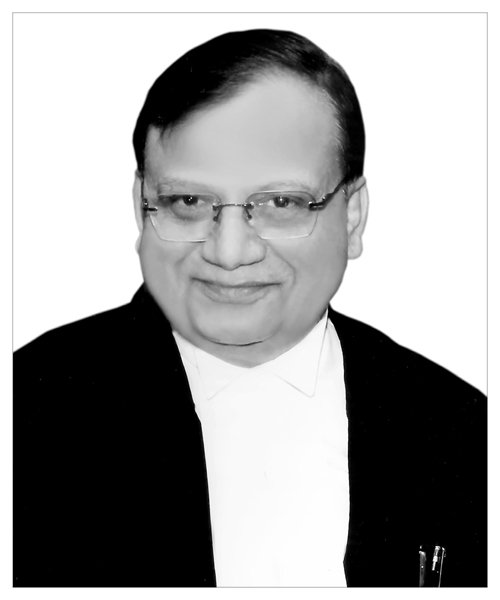
M.Y. EQBAL, J.
These appeals are directed against the common judgment
and order dated 30.4.2004 passed by the High Court of
1
Page 2 Judicature at Madras in A.S. Nos.665 and 666 of 2001,
whereby the appeals preferred by S. Natarajan were allowed.
This matter pertains to a property bearing S.No.159/10 and
11, Plot No.436, Tallakulam Village, Madurai City, measuring
6980 sq.ft., which was allotted to one S. Natarajan on lease-
cum-sale agreement by the Housing Board. S. Natarajan,
original defendant in O.S. Nos.445/85 & 252/86 and plaintiff
in O.S. No.3/86 alleged to have entered into a sale agreement
with respect to the suit property with one Inbasegaran.
Therefore, for the sake of convenience S. Natarajan and
Inbasegaran are hereinafter respectively referred to as
‘defendant’ and ‘plaintiff’.
2.The facts giving rise to the present appeals are that the
plaintiff filed a suit being O.S. No.252 of 1986 for specific
performance of the agreement for sale dated 19.1.1984 with
respect to aforesaid suit schedule property. According to him,
the said land was allotted to the defendant on lease-cum-sale
agreement on 4.7.1975 by the Tamil Nadu Housing Board (in
2
Page 3 short, ‘Housing Board’). Since the defendant had not
constructed building on the said site for the purpose of getting
sale deed as contemplated under the lease-cum-sale
agreement, the Board did not execute the sale deed in favour
of the defendant. Hence, he entered into a sale agreement on
19.1.1984 with the plaintiff. In the said agreement, he agreed
to sell the suit house site to the plaintiff for a total
consideration of Rs.3,84,220/- and received a sum of
Rs.1,00,000/- as advance in cash towards part of the sale
consideration. It is alleged that the defendant agreed that
after a sale deed executed in his favour from the Housing
Board he will execute and register the sale deed in favour of
the plaintiff or his family members after receiving the balance
sale consideration. Time for performance of the agreement
was tentatively fixed as four months and the same was
extended until the defendant got the sale deed executed from
the Housing Board. The parties agreed that the plaintiff shall
prepare a plan for construction of a building in the said
property and the defendant will sign the building plan and get
3
Page 4 the plan approved and the plaintiff thereafter shall construct
the building in the suit housing plot at his own expenses.
3.Pursuant to the sale agreement, the plaintiff took
possession of the suit property and completed the
construction. According to the plaintiff, the defendant had
been representing to the plaintiff that he has not yet got the
sale deed executed in his favour from the Housing Board but
attempted to forcibly take possession of the building
constructed on the suit property by the plaintiff. So the
plaintiff filed a suit being O.S. No.445/1985 on 11.9.1985 for
permanent injunction restraining the defendant herein from
taking forcible possession of the building constructed in the
suit property. Pending the aforesaid suit, few days after, the
plaintiff on 25.4.1986 filed aforesaid suit for specific
performance being O.S. No.252 of 1986.
4
Page 5 4.The defendant pleaded in his written statement that the
agreement dated 19.1.1984 is not a valid document and the
plaintiff cannot maintain the suit as he had relinquished his
right. It is also stated that the agreement was executed when
the defendant was not the owner of the site and any sale by
the defendant was prohibited as per the terms and conditions
of the lease-cum-sale agreement entered into with the Housing
Board and so the agreement in question is void, inoperative
and opposed to law. The defendant also denied the payment
of Rs.1,00,000/- in cash as advance as alleged by the plaintiff.
Even with respect to the averment in the plaint that the
plaintiff was permitted to put up construction in the suit site,
the same is denied. The defendant also denied that the
plaintiff put up construction at his own cost.
The defendant further denied that the plaintiff was given
possession of the suit property and claimed that he never
handed over possession of the property to the plaintiff at any
point of time. It is alleged that the plaintiff is not entitled to a
decree for specific performance because the agreement dated
5
Page 6 19.1.1984 no longer subsists. It is further alleged that the
subsequent suit being O.S. No.252/1986 for specific
performance is barred under Order 2, Rule 2 of the Code of
Civil Procedure because the plaintiff who instituted the earlier
suit O.S. No.445/1985, should have included the relief for
specific performance and, in any event, could not have filed
O.S. No.252/1986 without any leave of the Court.
5.The defendant also filed a suit being O.S. No.3/1986
seeking a decree for injunction restraining the purchaser
(defendants therein) from interfering with his possession and
enjoyment of the suit property. The trial court tried all the
three suits together and dismissed the suits filed by the
plaintiff and defendant for injunction in O.S. Nos.445/1985
and 3/1986 and decreed the suit in O.S. No.252/1986
preferred by the plaintiff for specific performance with the
direction to the defendant to execute and register the sale
document in favour of the plaintiff.
6
Page 7 6.Aggrieved by the judgment and decree of the trial court,
the defendant S. Natarajan preferred appeals before the High
Court being A.S. Nos.665 and 666 of 2001.
7.High Court held that the causes of action in both the
suits filed by the appellant are identical, arose from the same
transaction and that is why the trial court also had a common
trial and decided the case by a common judgment. The
plaintiff has not come forward with the suit in O.S. 252/1986
on the basis of the fact that the sale deed with respect to the
suit property was obtained only on 18.2.1985 by the
defendant from the Housing Board and the defendant failed to
execute the sale deed in favour of the plaintiff pursuant to
Ex.A1 agreement and so the prayer sought for in the said suit
could have been sought for even in the Original Suit
No.445/1985 as the pleading set out in the plaint in O.S.
252/1986 was available even on the date when O.S.
7
Page 8 No.445/1985 was filed. Since the plaintiff omitted to seek
such a relief and did not obtain the leave of the Court to file
the subsequent suit, it amounts to relinquishment of his
rights which is sought for in O.S. 252/1986 and he cannot
sustain the subsequent suit in O.S. 252/1986 for the relief
sought for in that suit in view of Order 2, Rule 2 of the Code.
8.The High Court formulated as many as following six
points for consideration to decide the appeals:
(1)Whether Ex.A1 is enforceable in law?
(2)Whether the suit in O.S. No.252/1986 is maintainable on
the basis of Ex.A1 in view of variations made in Exs.B7 and B9?
(3) Whether the respondent/plaintiff was ready and willing to
perform his part of the contact?
(4)Whether the suit in O.S. 252/1986 is maintainable in view
of Order 2, Rule 2 of the Code of Civil Procedure?
(5)Whether the relief for the specific performance of the
agreement suit in O.S. 252/1986 can be rejected on the ground
that the respondent/plaintiff has not come to court with clean
hands?
8
Page 9 9.However, instead of deciding all the points, the High
Court took up only Point no.4 and 5 and decided the appeal in
following three paragraphs:
“13. Further, in the present case, the parties and the court felt
that in view of common issue, the said suit was to be dealt with
and so the trial court in a common judgment dated 28.7.2000
disposed of the same. The trial court though framed the issue,
simply rejected that it is not barred by Order 2, Rule 2 of the Code
on assumption that there is a change of cause of action. So the
said findings of the trial court cannot be sustained in law. So we
can safely conclude that the suit in O.S. No. 252/1986 is barred
under Order 2, Rule 2 of the Code and so it has to be rejected.
14.Even with respect to Point No.5, it has to be held that the
respondent/plaintiff has come to court by filing O.S. 252/1986
with unclean hands. Though in the plaint filed in O.S. No.3/1986
which was filed on 5.9.1985, it is specifically stated that
conditional sale deed dated 18.2.1985 was executed in favour of
the appellant/defendant by the Tamil Nadu Housing Board. In
O.S. No.252/1986 which was filed on 5.4.1986, the
respondent/plaintiff has come forward with the false plea that the
appellant/defendant had been representing to the plaintiff that he
had not yet got the sale deed executed in his favour by the Tamil
Nadu Housing Board, which is contrary to the averment made in
the earlier suit. Learned counsel for the respondent/plaintiff also
tried to submit that the respondent has no knowledge about the
said document so as to enable him to file the suit for specific
performance of the Agreement on that basis. The said plea is
nothing but false in view of the specific averment made in the
plaint in O.S. No.3/1986. The said plea that the sale deed is yet
to be got by the appellant/defendant from the Tamil Nadu
Housing Board is a material fact to enforce the right and got the
sale deed by the respondent/plaintiff arose only after getting the
sale deed by the appellant/defendant from the Tamil Nadu
Housing Board as contemplated under Ex.A1. The
respondent/plaintiff suppressed the said material fact. Hence,
even on that ground the suit in O.S. 252/1986 has to be rejected
holding that the respondent/plaintiff is not entitled to equitable
relief of specific performance of the Agreement in view of the above
said fact.
9
Page 10 15. In view of the findings given above with respect to point Nos.4
and 5, we are; not inclined to deal with the other points.”
10.By impugned order dated 30.4.2004, the High Court
allowed the appeals preferred by the defendant based on Order
2 Rule 2 with a direction to the defendant to pay the cost of
construction (Rs.8,00,000/-) to the plaintiff and on such
deposit, the plaintiff would hand over the suit property with
building to the defendant and after handing over the same, he
can withdraw the aforesaid amount along with the money
already deposited, if any. Hence, present cross appeals by
both sides. The High Court further held that no other points
need to considered and decided.
11.Mr. K. Parasaran, learned senior counsel appearing for
the appellants-plaintiff, assailed the impugned judgment
passed by the High Court as being erroneous in law as also in
facts. Learned counsel firstly drew our attention to the
agreement to sell dated 19.1.1984 and submitted that the
10
Page 11 defendant-respondent put a condition in the said agreement
that the sale deed shall be executed by the defendant in favour
of the plaintiff only after getting transfer of the lease hold plot
in his favour by the Housing Board. However, pending
transfer of the property by the Housing Board in favour of the
defendant-respondent, the rowdy elements of the defendant
threatened the appellant-plaintiff to dispossess him from the
building constructed by the plaintiff. In order to restrain and
prevent the defendant, the appellant filed a suit for injunction
being O.S. No.445 of 1985 seeking the prohibitory order
restraining the respondent from dispossession of the plaintiff.
12.Simultaneously, before the trial court, the defendant-
respondent also filed a suit being O.S. No.3/1986 (13/1985)
making similar prayer for injunction against the appellant. In
the written statement of the said suit, for the first time the
defendant of the suit (appellant herein) disclosed in paragraph
4 that the sale deed was executed by the Housing Board in his
11
Page 12 favour and now the plaintiff of the suit (respondent herein) is
the absolute owner of the property. Having come to know
about the transfer of the property by the Housing Board in
favour of the plaintiff, legal notices were given by the appellant
to the respondent and a regular suit for specific performance
was filed.
13.Mr. Parasaran submitted that from bare reading of the
plaints in two suits, it would be apparently clear that cause of
action of each of the two suits by the plaintiff was quite
different and distinct and the same would not attract the
provisions of Order 2, Rule 2 CPC. Mr. Parasaran further
submitted that the trial court had categorically held that the
provisions of Order 2, Rule 2 shall have no application in the
facts and circumstances of the case. Mr. Parasaran then
drew our attention to the agreement dated 19.1.1984 and the
codicil sale agreement dated 31.4.1984 to show that the period
of sale agreement between the plaintiff-appellant and the
defendant-respondent was further extended in anticipation of
12
Page 13 the transfer of the property by the Housing Board in favour of
the defendant. Lastly, it was contended that the provision of
Order 2 Rule 2, CPC does not apply where the two suits are
filed on different cause of action and the counsel relied upon
the decision of this Court in the cases of Gurbux Singh vs.
Bhooralal, (1964) 7 SCR 831; Kewal Singh vs. Lajwanti,
(1980) 1 SCC 290 and in the case of Lakshmi alias
Bhagyalakshmi and another vs. E. Jayaram (dead) by Lr. ,
(2013) 9 SCC 311.
14.Mr. R. Balasubramanian, learned senior counsel
appearing for the respondent-defendant, firstly submitted that
if the allegations made in the plaint filed by the plaintiff-
appellant are read together it would be clear that the plaintiff
had knowledge about the sale deed executed by the Housing
Board in favour of the defendant. It was only because of that
the plaintiff in the plaint categorically stated that he reserves
his right to file a suit for specific performance. According to
13
Page 14 the learned counsel, the causes of action in both the suits filed
by the plaintiff are identical, and therefore, the subsequent
suit for specific performance is not maintainable being barred
under Order 2 Rule 2 CPC. Learned counsel put heavy
reliance on the decision of this Court in the case of Virgo
Industries (Eng.) (P) Ltd. vs. Venturetech Solutions (P) Ltd.,
(2013) 1 SCC 625.
15.We have heard learned counsel appearing for the parties,
perused the pleading and findings recorded by the trial court
as also by the first Appellate Court.
16.Admittedly, the first suit being O.S. No.445 of 1985 was
filed by the plaintiff-appellant for the grant of permanent
injunction restraining the defendant, his agents and servants
from interfering with the possession and enjoyment of the suit
property by the plaintiffs either by attempting to trespass into
it or in any other manner whatsoever. Besides other facts, it
14
Page 15 was pleaded that in pursuance of the sale agreement the
plaintiff took possession of the suit plot from the defendant
and began construction of Kalyana Mahal. It was alleged by
the plaintiff that the defendant with an ulterior malafide
motive and intention of extracting more money was
representing to the plaintiffs that he would execute the sale
deed after getting the sale deed from the Housing Board and
after completion of the construction of the building. With that
ulterior motive, the defendant tried to forcibly take possession
of the building constructed by the plaintiffs and threatened
the plaintiffs’ worker to remove them from the building. The
plaintiffs then gave complaint to the police and in response,
the police immediately rushed to the suit property and warned
the rowdies not to enter into the building. The plaintiffs,
therefore, pleaded that the defendant was again arranging to
gather unruly elements and to forcibly and unlawfully take
possession of the suit property from the plaintiffs. With that
apprehension, the suit was filed mainly on the cause of action
which arose when the defendant attempted to forcibly occupy
15
Page 16 the suit property by driving away plaintiffs’ workers and that
the defendant was arranging to forcibly and unlawfully take
possession of the suit property. The defendant, in his written
statement, denied each and every allegation and stated that
building was constructed by him and in fact the plaintiffs
attempted to forcibly take possession of the building.
17.In the subsequent suit filed by the plaintiff being O.S.
No.252 of 1986, a decree for specific performance of the
agreement was claimed on the ground inter alia that the
defendant in the earlier suit took a defence that the sale
agreement was allegedly given up or dropped by the plaintiff.
The cause of action, as pleaded by the plaintiff in the
subsequent suit, arose when defendant-respondent disclosed
the transfer made by Housing Board in his favour and finally
when the defendant was exhibiting an intention of not
performing his part of the sale agreement and in reply to the
lawyer’s notice the defendant made a false allegation and
denied to execute the sale deed as per the agreement.
16
Page 17 18.A perusal of the pleadings in the two suits and the cause
of action mentioned therein would show that the cause of
action and reliefs sought for are quite distinct and are not
same.
19.Indisputably, cause of action consists of a bundle of facts
which will be necessary for the plaintiff to prove in order to get
a relief from the Court. However, because the causes of action
for the two suits are different and distinct and the evidences to
support the relief in the two suits are also different then the
provisions of Order 2 Rule 2 CPC will not apply.
20. The provision has been well discussed by the Privy
Council in the case of Mohd. Khalil Khan & Ors. vs.
Mahbub Ali Mian & Ors., AIR (36) 1949 Privy Council 78,
held as under:-
“61 The principles laid down in the cases thus far discussed may
be thus summarised:-
17
Page 18 (1) The correct test in cases falling under Order 2, Rule 2, is
"whether the claim in the new suit is in fact founded upon a cause
of action distinct from that which was the foundation for the
former suit." Moonshee Buzloor Ruheem v. Shumsunnissa Begum
(1867-11) M.I.A. 551.
(2) The cause of action means every fact which will be necessary
for the plaintiff to prove if traversed in order to support his right to
the judgment. Read v. Brown (1889-22) Q.B.P. 128..
(3) If the evidence to support the two claims is different, then the
causes of action are also different. Brunsden v. Humphrey (1884-
14) Q.B.D. 141 .
(4) The causes of action in the two suits may be considered to be
the same if in substance they are identical. Brunsden v.
Humphrey (1884-14) Q.B.D. 141.
(5) The cause of action has no relation whatever to the defence
that may be set up by the defendant nor does it depend upon the
character of the relief prayed for by the plaintiff. It refers...to the
media upon which the plaintiff asks the Court to arrive at a
conclusion in his favour. Muss. Chand kour v. Partab Singh (15
I.A. 156 : Cal.98 P.C.). This observation was made by Lort Watson
in a case under Section 43 of the Act of 1882 (corresponding to
Order 2, Rule 2), where plaintiff made various claims in the same
suit.”
21.The Constitution Bench of this Court, considering the
scope and applicability of Order 2 Rule 2 of the CPC, in the
case of Gurbux Singh vs. Bhooralal, (supra) AIR 1964 SC
1810, held as under:
“6. In order that a plea of a Bar under Order 2 Rule 2(3) of the
Civil Procedure Code should succeed the defendant who raises the
plea must make out; (i) that the second suit was in respect of the
same cause of action as that on which the previous suit was
based; (2) that in respect of that cause of action the plaintiff was
entitled to more than one relief; (3) that being thus entitled to
more than one relief the plaintiff, without leave obtained from the
18
Page 19 Court omitted to sue for the relief for which the second suit had
been filed. From this analysis it would be seen that the defendant
would have to establish primarily and to start with, the precise
cause of action upon which the previous suit was filed, for unless
there is identity between the cause of action on which the earlier
suit was filed and that on which the claim in the latter suit is
based there would be no scope for the application of the bar. No
doubt, a relief which is sought in a plaint could ordinarily be
traceable to a particular cause of action but this might, by no
means, be the universal rule. As the plea is a technical bar it has
to be established satisfactorily and cannot be presumed merely on
basis of inferential reasoning. It is for this reason that we consider
that a plea of a bar under Order 2 Rule 2 of the Civil Procedure
Code can be established only if the defendant files in evidence the
pleadings in the previous suit and thereby proves to the Court the
identity of the cause of action in the two suits. It is common
ground that the pleadings in CS 28 of 1950 were not filed by the
appellant in the present suit as evidence in support of his plea
under Order 2 Rule 2 of the Civil Procedure Code. The learned
trial Judge, however, without these pleadings being on the record
inferred what the cause of action should have been from the
reference to the previous suit contained in the plaint as a matter
of deduction. At the stage of the appeal the learned District Judge
noticed this lacuna in the appellant's case and pointed out, in our
opinion, rightly that without the plaint in the previous suit being
on the record, a plea of a bar under Order 2 Rule 2 of the Civil
Procedure Code was not maintainable.
xxxxx
It was his submission that from this passage we should infer that
the parties had, by agreement, consented to make the pleadings in
the earlier suit part of the record in the present suit. We are
unable to agree with this interpretation of these observations. The
statement of the learned Judge. “The two courts have, however,
freely cited from the record of the earlier suit” is obviously
inaccurate as the learned District Judge specifically pointed out
that the pleadings in the earlier suit were not part of the record
and on that very ground had rejected the plea of the bar under
Order 2 Rule 2 of the Civil Procedure Code. Nor can we find any
basis for the suggestion that the learned Judge had admitted
these documents at the second appeal stage under Order 41 Rule
27 of the Civil Procedure Code by consent of parties. There is
nothing on the record to suggest such an agreement or such an
order, assuming that additional evidence could legitimately be
admitted in a second appeal under Order 41 Rule 27 of the Civil
Procedure Code. We can therefore proceed only on the basis that
19
Page 20 the pleadings in the earlier suit were not part of the record in the
present suit.”
22.In the case of of Kewal Singh vs. Lajwanti (supra),
while considering the applicability of Order 2 Rule 2 CPC, this
Court observed that:-
“5. So far as the first two contentions are concerned, we are of the
opinion that they do not merit any serious consideration.
Regarding the question of the applicability of Order 2 Rule 2 CPC
the argument of the learned Counsel for the appellant is based on
serious misconception of law. Order 2 Rule 2 CPC runs thus:
“2(1) Every suit shall include the whole of the claim
which the plaintiff is entitled to make in respect of
the cause of action but a plaintiff may relinquish any
portion of his claim in order to bring the suit within
the jurisdiction of any court.
(2) Where a plaintiff omits to sue in respect of, or
intentionally relinquishes, any portion of his claim,
he shall not afterwards sue in respect of the portion
so omitted or relinquished.”
A perusal of Order 2 Rule 2 would clearly reveal that this provision
applies to cases where a plaintiff omits to sue a portion of the
cause of action on which the suit is based either by relinquishing
the cause of action or by omitting a part of it. The provision has,
therefore, no application to cases where the plaintiff bases his suit
on separate and distinct causes of action and chooses to relinquish
one or the other of them. In such cases, it is always open to the
plaintiff to file a fresh suit on the basis of a distinct cause of action
which he may have relinquished.
6. In the case of Mohammad Khalil Khan v. Mahbub Ali Mian, AIR
1949 PC 78, the Privy Council observed as follows:
“That the right and its infringement, and not the
ground or origin of the right and its infringement,
constitute the cause of action, but the cause of action
for the Oudh suit (8 of 1928) so far as the Mahbub
20
Page 21 brothers are concerned was only a denial of title by
them as that suit was mainly against Abadi Begam for
possession of the Oudh property; whilst in the
present suit the cause of action was wrongful
possession by the Mahbub brothers of the
Shahjahanpur property, and that the two causes of
action were thus different.
7. Applying the aforesaid principles laid down by the Privy Council
we find that none of the conditions mentioned by the Privy Council
are applicable in this case. The plaintiff had first based her suit on
three distinct causes of action but later confined the suit only to
the first cause of action, namely, the one mentioned in Section 14-
A(1) of the Act and gave up the cause of action relating to Section
14(1)(e) and (f). Subsequently, by virtue of an amendment she
relinquished the first cause of action arising out of Section 14-A(1)
and sought to revive her cause of action based on Section 14(1)(e).
At the time when the plaintiff relinquished the cause of action
arising out of Section 14(1)(e) the defendant was not in the picture
at all. Therefore, it was not open to the defendant to raise any
objection to the amendment sought by the plaintiff. For these
reasons, we are satisfied that the second amendment application
was not barred by the principles of Order 2 Rule 2 CPC and the
contention of the learned counsel for the appellant must fail.”
23. In the case of Deva Ram vs. Ishwar Chand, (1995) 6
SCC 733, this Court, considering its various earlier decisions,
observed as under:-
“14. What the rule, therefore, requires is the unity of all claims
based on the same cause of action in one suit. It does not
contemplate unity of distinct and separate causes of action. If,
therefore, the subsequent suit is based on a different cause of
action, the rule will not operate as a bar. (See Arjun Lal Gupta v.
Mriganka Mohan Sur, (1974) 2 SCC 586; State of M.P. v. State of
Maharashtra, (1977) 2 SCC 288; Kewal Singh v. B. Lajwanti,
(1980) 1 SCC 290).
15. In Sidramappa v. Rajashetty, (1970) 1 SCC 186, it was laid
down that if the cause of action on the basis of which the previous
suit was brought, does not form the foundation of the subsequent
21
Page 22 suit and in the earlier suit the plaintiff could not have claimed the
relief which he sought in the subsequent suit, the latter namely,
the subsequent suit, will not be barred by the rule contained in
Order 2 Rule 2, CPC.”
24.In the case of Sidramappa vs. Rajashetty & Ors., AIR
(1970) SC 1059, this Court held:
“7. The High Court and the trial court proceeded on the erroneous
basis that the former suit was a suit for a declaration of the
plaintiff’s title to the lands mentioned in Schedule I of the plaint.
The requirement of Order II Rule 2, Code of Civil Procedure is that
every suit should include the whole of the claim which the plaintiff
is entitled to make in respect of a cause of action. “Cause of
action” means the “cause of action for which the suit was
brought”. It cannot be said that the cause of action on which the
present suit was brought is the same as that in the previous suit.
Cause of action is a cause of action which gives occasion for and
forms the foundation of the suit. If that cause of action enables a
person to ask for a larger and wider relief than that to which he
limits his claim, he cannot afterwards seek to recover the balance
by independent proceedings. — see Mohd. Hqfiz v. Mohd. Zakaria
AIR(1922) PC 23.”
8. As seen earlier the cause of action on the basis of which the
previous suit was brought does not form the foundation of the
present suit. The cause of action mentioned in the earlier suit,
assuming the same afforded a basis for a valid claim, did not
enable the plaintiff to ask for any relief other than those he prayed
for in that suit. In that suit he could not have claimed the relief
which he seeks in this suit. Hence the trial court and the High
Court were not right in holding that the plaintiff’s suit is barred by
Order II, Rule 2, Code of Civil Procedure.”
25.In the case State of M.P. v. State of Maharashtra &
Ors., (1977) 2 SCC 288, at page 295 this Court observed as
under: -
22
Page 23 “24. This Court in State of Bihar v. Abdul Majid, AIR 1954) SC 245,
stated that a government servant could ask for arrears of salary.
Counsel for Madhya Pradesh said that the decision of this Court
in Abdul Majid case declared what the existing law has been, and,
therefore, the plaintiff could not contend that it was not open to
him to ask for arrears of salary in the 1949 suit. It is in that
background that Madhya Pradesh contends that the plaintiff
not having asked for relief under Order 2 Rule 2 of the Code of
Civil Procedure would not be entitled to claim salary in the 1956
suit.
25. The contention of Madhya Pradesh cannot be accepted. The
plaintiff will be barred under Order 2 Rule 2 of the Code of Civil
Procedure only when he omits to sue for or relinquishes the claim
in a suit with knowledge that he has a right to sue for that relief. It
will not be correct to say that while the decision of the Judicial
Committee in Lall case
1
was holding the field the plaintiff could be
said to know that he was yet entitled to make a claim for arrears
of salary. On the contrary, it will be correct to say that he knew
that he was not entitled to make such a claim. If at the date of the
former suit the plaintiff is not aware of the right on which he
insists in the latter suit the plaintiff cannot be said to be
disentitled to the relief in the latter suit. The reason is that at the
date of the former suit the plaintiff is not aware of the right on
which he insists in the subsequent suit. A right which a litigant
does not know that he possesses or a right which is not in
existence at the time of the first suit can hardly be regarded as a
“portion of his claim” within the meaning of Order 2 Rule 2 of the
Code of Civil Procedure. See Amant Bibi v. Imdad Husain, (1885)
15 Ind App 106 at pg.112 (PC). The crux of the matter is presence
or lack of awareness of the right at the time of first suit.
27. The appellant Madhya Pradesh is, therefore, not right in
contending that the plaintiff is barred by provisions contained in
Order 2 Rule 2 of the Code of Civil Procedure from asking for
arrears of salary in the 1956 suit. The plaintiff could not have
asked for arrears of salary under the law as it then stood. The
plaintiff did not know of or possess any such right. The plaintiff,
therefore, cannot be said to have omitted to sue for any right.”
26.In the light of the principles discussed and the law laid
down by the Constitution Bench as also other decisions of this
23
Page 24 Court, we are of the firm view that if the two suits and the
relief claimed therein are based on the same cause of action
then only the subsequent suit will become barred under Order
2, Rule 2 of the CPC. However, when the precise cause of
action upon which the previous suit for injunction was filed
because of imminent threat from the side of the defendant of
dispossession from the suit property then the subsequent suit
for specific performance on the strength and on the basis of
the sale agreement cannot be held to be the same cause of
action. In the instant case, from the pleading of both the
parties in the suits, particularly the cause of action as alleged
by the plaintiff in the first suit for permanent injunction and
the cause of action alleged in the suit for specific performance,
it is clear that they are not the same and identical.
27.Besides the above, on reading of the plaint of the suit for
injunction filed by the plaintiff, there is nothing to show that
the plaintiff intentionally relinquished any portion of his claim
24
Page 25 for the reason that the suit was for only injunction because of
the threat from the side of the defendant to dispossess him
from the suit property. It was only after the defendant in his
suit for injunction disclosed the transfer of the suit property
by the Housing Board to the defendant and thereafter denial
by the defendant in response to the legal notice by the
plaintiff, the cause of action arose for filing the suit for specific
performance.
29.Mr. R. Balasubramanian, learned senior counsel
appearing for the respondents put reliance on the decision of
this Court in the case of Virgo Industries (Eng.) Private
Limited (supra). After going through the decision given in the
said case, we are of the view that the facts of that case
were different from the facts of the instant case. In the case
of Virgo Industries (supra) two sale agreements were executed
by the defendant in favour of the plaintiff in respect of
the two plots. In the suit filed by the plaintiff for injunction
it was pleaded that the defendant is attempting to frustrate
25
Page 26 the agreement on the pretext that restriction to transfer of
land may be issued by the Excise Department on account of
pending revenue demand. Further, the defendant was trying
to frustrate the agreement by alienating and transferring the
suit property to third parties. On these facts, the Court
observed :-
“5. While the matter was so situated the defendant in both the
suits i.e. the present petitioner, moved the Madras High Court by
filing two separate applications under Article 227 of the
Constitution to strike off the plaints in OSs Nos. 202 and 203 of
2007 on the ground that the provisions contained in Order 2 Rule
2 of the Civil Procedure Code, 1908 (for short “CPC”) is a bar to
the maintainability of both the suits. Before the High Court the
defendant had contended that the cause of action for both sets of
suits was the same, namely, the refusal or reluctance of the
defendant to execute the sale deeds in terms of the agreements
dated 27-7-2005. Therefore, at the time of filing of the first set of
suits i.e. CSs Nos. 831 and 833 of 2005, it was open for the
plaintiff to claim the relief of specific performance. The plaintiff did
not seek the said relief nor was leave granted by the Madras High
Court. In such circumstances, according to the defendant-
petitioner, the suits filed by the plaintiff for specific performance
i.e. OSs Nos. 202 and 203 were barred under the provisions of
Order 2 Rule 2(3) CPC.
xxxxxxxx
13. A reading of the plaints filed in CSs Nos. 831 and 833 of 2005
show clear averments to the effect that after execution of the
agreements of sale dated 27-7-2005 the plaintiff received a letter
dated 1-8-2005 from the defendant conveying the information that
the Central Excise Department was contemplating issuance of a
notice restraining alienation of the property. The advance amounts
paid by the plaintiff to the defendant by cheques were also
returned. According to the plaintiff it was surprised by the
aforesaid stand of the defendant who had earlier represented that
it had clear and marketable title to the property. In Para 5 of the
plaint, it is stated that the encumbrance certificate dated 22-8-
2005 made available to the plaintiff did not inspire confidence of
26
Page 27 the plaintiff as the same contained an entry dated 1-10-2004. The
plaintiff, therefore, seriously doubted the claim made by the
defendant regarding the proceedings initiated by the Central
Excise Department. In the aforesaid paragraph of the plaint it was
averred by the plaintiff that the defendant is “finding an excuse to
cancel the sale agreement and sell the property to some other third
party”. In the aforesaid paragraph of the plaint, it was further
stated that “in this background, the plaintiff submits that the
defendant is attempting to frustrate the agreement entered into
between the parties”.
14. The averments made by the plaintiff in CSs Nos. 831 and 833
of 2005, particularly the pleadings extracted above, leave no room
for doubt that on the dates when CSs Nos. 831 and 833 of 2005
were instituted, namely, 28-8-2005 and 9-9-2005, the plaintiff
itself had claimed that facts and events have occurred which
entitled it to contend that the defendant had no intention to
honour the agreements dated 27-7-2005. In the aforesaid
situation it was open for the plaintiff to incorporate the relief of
specific performance along with the relief of permanent injunction
that formed the subject-matter of the above two suits. The
foundation for the relief of permanent injunction claimed in the
two suits furnished a complete cause of action to the plaintiff in
CSs Nos. 831 and 833 to also sue for the relief of specific
performance. Yet, the said relief was omitted and no leave in this
regard was obtained or granted by the Court.”
29.In the instant case, as discussed above, suit for
injunction was filed since there was threat given from the side
of the defendant to dispossess him from the suit property. The
plaintiff did not allege that the defendant is threatening to
alienate or transfer the property to a third party in order to
frustrate the agreement.
27
Page 28 30.It is well settled that the ratio of any decision must be
understood in the background of the facts of that case. The
following words of Lord Denning in the matter of applying
precedence have been locus classicus.
“Each case depends on its own facts and a close similarity
between one case and another is not enough because even a single
significant detail may alter the entire aspect, in deciding such
cases, one should avoid the temptation to decide cases (as said by
Cardozo) by matching the colour of one case against the colour of
another. To decide therefore, on which side of the line a case falls,
the broad resemblance to another case is not at all decisive.”
31.In the case of Bharat Petroleum Corpn. Ltd. and
Another vs. N.R. Vairamani and another , (2004) 8 SCC 579
at page 584, this Court observed :-
“9. Courts should not place reliance on decisions without
discussing as to how the factual situation fits in with the fact
situation of the decision on which reliance is placed. Observations
of courts are neither to be read as Euclid’s theorems nor as
provisions of a statute and that too taken out of their context.
These observations must be read in the context in which they
appear to have been stated. Judgments of courts are not to be
construed as statutes. To interpret words, phrases and provisions
of a statute, it may become necessary for judges to embark into
lengthy discussions but the discussion is meant to explain and
not to define. Judges interpret statutes, they do not interpret
judgments. They interpret words of statutes; their words are not to
be interpreted as statutes. In London Graving Dock Co. Ltd. v.
Horton 1951 AC 737
(AC at p. 761) Lord MacDermott observed:
(All ER p. 14 C-D)
“The matter cannot, of course, be settled merely
by treating the ipsissima verba of Willes, J., as
though they were part of an Act of Parliament and
applying the rules of interpretation appropriate
28
Page 29 thereto. This is not to detract from the great weight
to be given to the language actually used by that
most distinguished judge,…”
32.Having regard to the facts and evidence of the instant
case, we are of the view that the issue decided in Virgo
Industries (supra) is not applicable in this case.
33.Further, taking into consideration all these facts, we are
of the considered opinion that the conclusion arrived at by the
High Court that the suit is barred under Order 2 Rule 2 CPC
cannot be sustained in law.
34.As noticed above, the High Court, although formulated
various points for consideration and decision, as quoted
hereinabove, but has not considered other points in its right
perspective. The High Court, being the final court of facts in a
first appeal, is required to decide all the points formulated by
it. In view of the same, the matter needs to be remanded back
to the High Court to consider and decide other points
formulated by it.
29
Page 30 35.For the aforesaid reason, Civil Appeal Nos.4215-4216 of
2007 are allowed in part and the decision arrived at by the
High Court against point no.4 holding that the suit was barred
under Order 2 Rule 2 of the CPC is set aside. The matter is
remanded back to the High Court to decide the appeals by
recording its finding on other points formulated by it.
Consequently, other connected appeals, filed by the defendant
against the plaintiff, stand disposed of with a direction to
maintain status quo with regard to possession of the suit
property till further orders of the High Court in this regard.
…………………………… .J.
[ M.Y. Eqbal ]
.…………………………….J
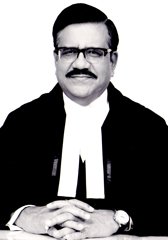
[Shiva Kirti Singh]
New Delhi
October 29, 2014
30

 Login with google
Legal Notes
Add a Note....