
As per case facts, an appellant bank filed a summary suit under Order 37 CPC against a respondent federation for recovery related to a Letter of Credit. The federation sought ...
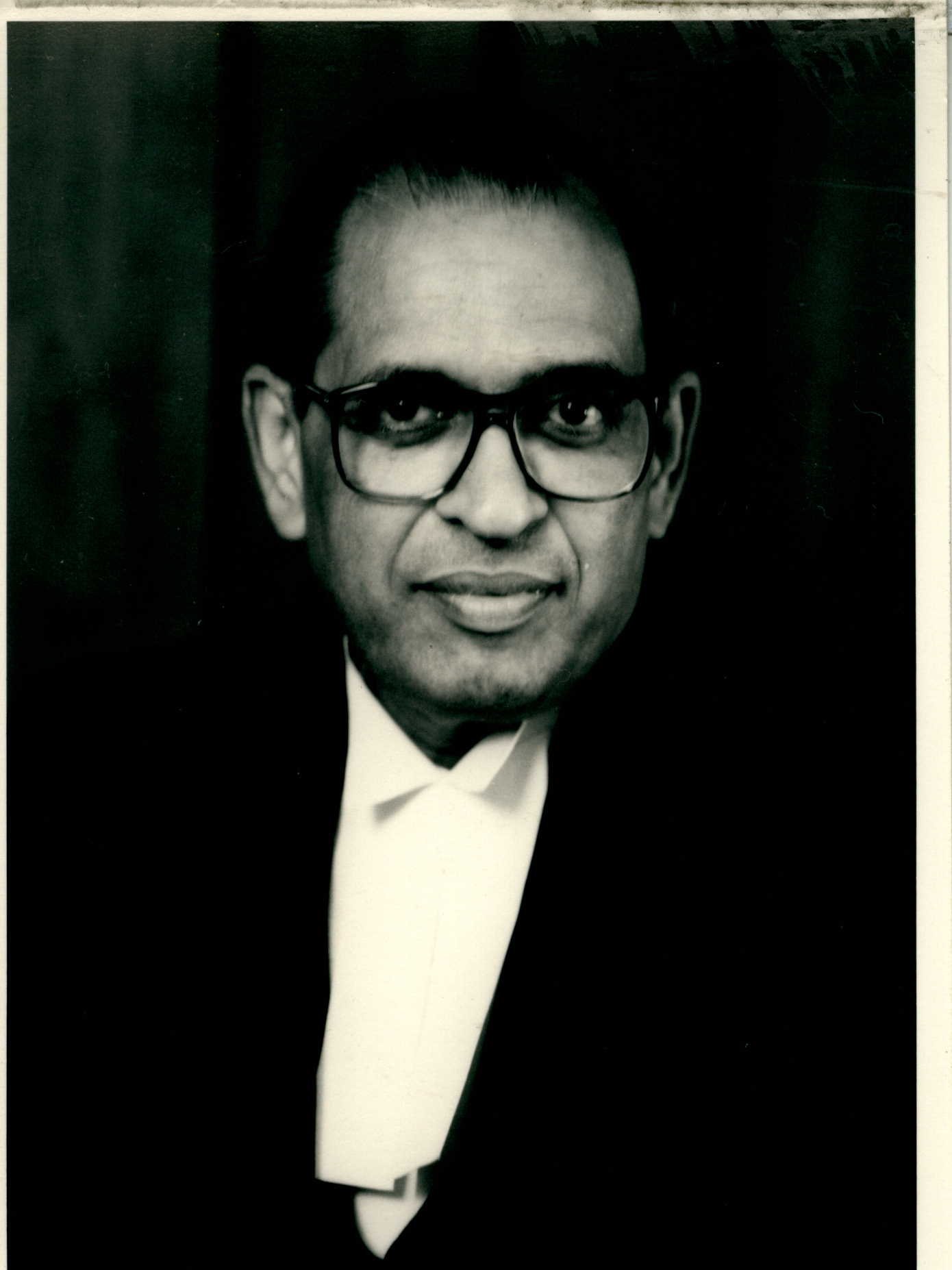

No Acts & Articles mentioned in this case
~
' .
INDIAN BANK
v.
MAHARASHTRA STATE CO-OPERATIVE
MARKETING FEDERATION LTD.
MAYS,1998
[S.C. AGRAWAL AND G.T. NANA VAT!, JJ.]
Code of Civil Procedure, 1908 :
A
B
S.10, Order XXXVJJ-Trial of Suit-Stay of-Summary suit file under C
Order 37-Dependent seeking stay of the suit on the ground that it has
already filed a regular suit
in respect of the dispute between the parties
Single Judge of the High Court declining to stay the summary suit holding
that concept
of trial in
s.10 applies only to a regular suit and not to a
summary suit-Division Bench
of the High Court, in appeal, held that s.
10 D
applies to summary suit also and the word 'trial' cannot be construed in a
narrow sense but would mean entire proceedings after defendant entered his
appearance-Held, provisions
of
s.10 and order 37 have to be interpreted
harmoniously-Words 'trial
of any suit' occurring in
s.10 will have to be
construed
in the context of provisions of order 37-1n the context of summary
suit wider interpretation
of the word 'trial' is not called for-Judgement of E
single Judge of High Court restored.
Word and Phrases:
Words 'trial of any suit' occurring in
s.10 CPC-Jnterpretation of
F
">-· A suit under order 37 of the Code of Civil Procedure, 1908 was filed
by the appellant-Bank against the
respondent-Federation, which had been
granted
Letter of Credit by it, for recovery of certain amount, which as
alleged by the Bank become recoverable under the said Letter
of Credit. The
Federation
appeared before the court to seek stay of the summary suit on
the
strength of
s.10 of the Code, contending that prior to the filling of the G
summary suit by the Bank, it had filed a suit against the Bank. The single
Judge of the High Court held that the concept of trial as contained in s.10,
CPC was applicable only to a regular/ordinary suit and not to a summary
suit filed under order 37 CPC and, therefore, further, proceedings under the
su111mary suit filed by the Bank were not required to be stayed. On appeal, H
187
188 SUPREME COURT REPORTS (1998] 3 S.C.R.
A the Division Bench held thats.IO CPC applied to the summary suit also as
in its view the word 'trial' ins.IO could not be construed in a narrow sense,
and would mean the entire proceedings after the defendent entered his
appearance.
It stayed the summary suit
till the disposal of the suit filed by
the Federation. Aggrieved, the Bank filed the present appeals.
B It was contendent for the appellant-Bank that the Single Judge of the
c
High Court rightly held that s.10 CPC would not apply to the summary suits,
otherwise the very object of making a separate provision for summary suits
would be frustrated ..
Allowing the appeals, this _Court
HELD :
1.1. Considering the objects of both the provisions i.e. Section
IO and order 37 of the Code of Civil Procedure,
1908, wider interpretation
of the word 'trial' is not called for. The word 'trial' in section IO, in the
context
of a summary suit, cannot be interpreted to mean the entire
D proceedings starting with institution of the suit by
loading a plaint.
1.2. The provisions contained in section 10 is a general provision
applicable to all categories of cases. The provisions contained in order 37
apply to certain classes of suits. One provides a bar against proceeding with
the trial of a suit, the other provides for granting of quick relief. Both these
E provisions have to be interpreted harmoniously so that the objects of both are
not frustrated. Accordingly, the words 'trial of any suit' occurring in s.10
will have to be construed in the context of the provisions of order 37 of the
Codt:. The stage of determination of the matter in issue will arise in a
summary suit only after the defendant obtains leave or the court grants him
F leave to defend the suit The trial would really begin thereafter. This clearly
appears to be the scheme of summary procedure as provided by Order 37
of the Code. Therefore, the court
or the judge
dealing with the summary suit
can proceed upto the stage of hearing the summons for judgement and
passing the judgement in favour
of the plaintiff if (a) the defendent has not
applied for leave to defend or if such application has been made and refused
G or if (b) the defendant who is permitted to defend fails to comply with the
conditions on which leave to defend is granted.
1.3. The word 'trial' in section 10 of the Code will have to be interpreted
and construed keeping in mind the object and natu~ of that provision and
the prohibition to 'proceed with the trial
of any suit in which the matter in
H issue is also
directly and substantially in issue in a previously instituted
INDIAN BANK. v. MAHA. STATECO-OPMKT. FED. LTD. [NANAVATI,J.] 189
suit'-The object of the prohibition is to prevent the courts of concurrent A
jurisdiction from simultaneously trying two parallel suits and also to avoid
inconsistent findings on the
matter in issue. The provision is in the nature
of a rule of procedure and does not affect the jurisdiction of the court to
entertain and deal with the later suit nor does it create any substantive right
in the matters. It is not a bar to the institution of a suit; nor is it a bar to B
the passing of interlocutory orders such as an order for consolidation of the
letter suit with the earlier one,
or appointment of a Receiver or an injunction
or attachment before judgment. The course of action which the court has to
follow according to section
10 is not to proceed with the 'trial'. Thus the
word
'trial' in section
10 is not used in its widest sense.
Harish Chandra v. Triloki Singh, AIR (1957) SC 444 -[1957) SCR
370, held inapplicable.
1.4. The judgment
of the Division of the High Court is set aside and
the
order passed by the Single Judge is restored.
CIVIL
APPELLATE JURISDICTION : Civil Appeal Nos. 2580-81
of 1998.
From the Judgment and Order dated 7.8.96 of the Bombay High Court
in A. No. 953-954 of 1994.
Sameer Parekh, Ms. Bina Madhavan and P.H. Parekh for the Appellant.
D.M. Nargolkar for the Respondents.
The Judgment
of the Court was delivered by
NAN AV ATI, J. Leave granted.
The question which arises for consideration in these appeals
is whether
the bar to proceed with the trial
of subsequently instituted suit, contained in
section I
0 of the Code of Civil Procedure, 1908(hereinafter referred to as the
'Code')
is applicable to summary suit filed under Order 37 of the Code.
The respondent Federation applied to the appellant Bank on 5.6.1989 to
open
an Irrevocable Letter of Credit for a sum of
Rs.3,78,90,000 in favour of
c
D
E
F
G
• ~ Mis. Shankar Rice Mills. Pursuant to that request the Bank opened an
Irrevocable Letter
of Credit on 6.6.1989. The agreed arrangement was that the
documents drawn under the said Letter
of Credit when tendered to the H
190 SUPREME COURT REPORTS [1998] 3 S.C.R.
A appellant Bank were to be forwarded to the Federation for their acceptance
and thereafter the Bank had to make payments to Mis. Shankar Rice Mills on
behalf of the Federation. On 6.2.1992 the Bank filed Summary Suit No. 500 of
1992 in the Bombay High Court under Order 37 of the Code against the
Federation for obtaining a decree for Rs.4,96,59,160 alleging thaf the said
amount has beome recoverable under the said Letter
of Credit. The Bank took
B out summons for judgment (No. 278 of 1992). The Federation appeared before
the
Court and took out Notice of Motion seeking stay of the summary suit
on the ground that it has already instituted a suit being Suit No. 400 of 1992
against the Bank for recovery
of Rs. 3,70,52,217.88 prior to the filing of the
summary suit.
c
A learned
Single Judge of the Bombay High Court, who heard the
summons for judgment and the Notice
of Motion, held that the concept of
trial as contained in
Section 10 of the Code is applicable only to a regular/
ordinary suit and not to a summary suit filed under Order 3 7 of the Code and,
therefore, further proceedings under Summary Suit No. 500 of 1992 were not
D required to be stayed. The learned Judge was also of the view that there was
no merit
in the defence raised by the Federation. He, therefore, granted leave
E
F
to the Federation to defend the suit conditionally upon the Federation
'-
depositing Rs. 4 crores in the Court. The summons for judgment was disposed
of accordingly and the Notice of Motion was dismissed.
Aggrieved by the order
of the learned
Single Judge in summons for
judgment the Federation filed Appeal No.953
of 1994 before the Division
Bench
of the High Court; and, against the order passed on Notice of Motion
it preferred Appeal
No.954of1994. The Division Bench was of the view that
the word 'trial'
in section 10 has not been used in a narrow sense and would
mean entire proceedings after the defendant enters his appearance, held that
section I 0
of the
Code applies to a summary suit also. It also held that the
summary suit filed by the Bank being a subsequently instituted suit filed by
the Bank being a subsequently instituted suit was required to be stayed.
It
allowed both the appeals, set aside the orders passed by the learned
Single
Judge and stayed the summary suit till the disposal of the prior suit filed by
G the Federation.
The submission
of the learned counsel for the appellant was that the
view taken by the learned
Single Judge was correct and Division Bench has
committed an error
of law in taking
a contrary view. It was his contention that
if section 10 is made applicable to summary suit also the very object of making
H a separate provision for summary suits will be frustrated. The learned counsel
INDIAN BANK. v. MAHA. STATE CO-OP MKT. FED.LTD. [NANAVATI, J.] 191
for the respondent, on the other hand, supported the view taken by the A
Division Bench.
Section 10 of the Code prohibits the court from proceeding with the trial
of any suit in which the matter in issue is also directly and substantially in
issue in a previously instituted suit provided other conditions mentioned in
the section are also satisfied. The word 'trial' is no doubt of a very wide B
import as pointed out by the High Court. In legal parlance it means a judicial
examination and determination
of the issue in civil or criminal court by a
competent Tribunal. According to Webster
Comprehensive Dictionary,
International Edition,
it means the examination, before a tribunal having
assigned jurisdiction,
of the facts or Jaw involved in an issue in order to
determine that issue. According to Stroud's Judicial Dictionary (5th Edition),
C
a 'trial' is the conclusion, by a competent tribunal, of question in issue in legal
proceedings, whether civil or criminal. Thus
in its widest sense it would
include all the proceedings right from the stage
of institution of a plaint in
a civil case to the stage of final determination by a judgment and decree of
the
Court. Whether the widest meaning should be given to the word 'trial' D
or that it should be construed narrowly must necessarily depend upon the
nature and object
of the provision and the context in which it used.
Therefore, the word
"trial" in section I 0 will have to be interpreted and
construed keeping
in mind the object and nature of that provision and the
prohibition to 'proceed with the trial
of any suit in which the matter in issue E
is also directly and substantially in issue in a previously instituted suit'. The
object
of the prohibition contained in section
10 is to prevent the courts of
concurrent jurisdiction from simultaneously trying two parallel suits and also
to avoid inconsistent findings on the matters
in issue. The provision is in the
nature
of a rule of procedure and does not affect the jurisdiction of the court
to entertain and deal with the later suit nor does it create any substantive
F
right in the matters.
It is not a bar to the institution of a suit. It has been
construed by the courts
as not a bar to the passing of interlocutory orders
such
as an order for consolidation of the later suit with the earlier suit, or
appointment of a Receiver or an injunction or attachment before judgment.
The course
of action which the court has to follow according to section IO
is not to proceed with the 'trial' of the suit but that does not mean that it G
cannot deal with the subsequent suit any more or for any other purpose. In
view of the object and nature of the provision and the fairly settled legal
position with respect to passing
of interlocutory orders it has to be stated
that the word 'trial' in Section
10 is not usP-d in its widest sense.
The provision contained
in section l
0 is a general provision applicable H
192 SUPREME COURT REPORTS (1998] 3 S.C.R.
A to all categories of cases. The provisions contained in Order 37 apply to
certain classes
of suits.
One provides a bar against proceeding with the trial
of a suit, the other provides for granting of quick relief. Both these provisions
have to be interpreted harmoniously so that the objects
of both are not
frustrated. This being the correct approach and as the question that has
arisen for consideration
in this appeal is whether the bar to proceed with the
B trial of subsequently instituted suit contained in section IO of the Code is
applicable to a summary suit filed under
Order 37 of the Code, the words 'trial
of any suit' will have to be construed in the context of the provisions of Order
37 of the Code. Rule 2 of Order 37 enables the plaintiff to institute a summary
suit
in certain cases.
On such a suit being filed the defendant is required to
be served with a copy
of the plaint and summons in the prescribed form.
C Within I
0 days of service the defendant has to enter an appearance. Within
the prescribed time the defendant has
to apply for leave to defend the suit
and leave to defend may be granted
to him unconditionally or upon such
terms as may appear to the Court or Judge to be just.
If the defendant has
not applied for leave to defend, or
if such an application has been made and
D refused, the plaintiff becomes entitled to judgment forthwith. If the conditions
on which leave was granted are not complied with by the defendant then also
the plaintiff becomes entitled
to judgment forthwith. Sub-rule (7) of
Order 37
provides that save as provided by that order the procedure in summary suits
shall be the same as the procedure
in suits instituted in the ordinary manner.
Thus in classes
of suits where adopting summary procedure for deciding
E them is permissible the defendant has to file an appearance within I
0 days
of the service of summons and apply for leave to defend the suit. If the
defendant does not enter his appearance
as required or fails to obtain leave
the allegations
in the plaint are deemed to be admitted and straightaway a
decree can be passed
in favour of the plaintiff. The stage of determination
of the matter in issue will arise in a summary suit only after the defendant
F obtains leave. The trial would really begin only after leave is granted to the
defendant. This clearly appears to be the scheme
of summary procedure as
provided by
Order 3 7 of the Code.
Considering the objects
of both the provisions, i.e.,
Section I 0 and
G Order 37 wider interpretation of the word 'trial' is not called for. We are of
the opinion that the word 'trial' in section I 0, in the context of a summary
suit, cannot be interpreted to mean the entire proceedings starting with
institution
of the suit by lodging a plaint. In a summary suit the 'trial' really
begins after the Court or the Judge grants leave to the defendant to contest
the suit. Therefore, the Court or the Judge dealing with the summary suit can
H proceed up to the stage of hearing the summons for judgment and passing
INDIAN BANK. v. MAHA. STATECO-OPMKT. FED. LTD. [NANA VAT! ,J.] 193
the judgment in favour of the plaintiff if (a) the defendant has not applied for A
... leave to defend or if such application has been made and refused or if (b) the
defendant who
is permitted to defend fails to comply with the conditions on
which leave to defend
is granted,
........
In our opinion, the Division Bench of the Bombay High Court was in
error in taking a different view. It had relied upon the decision of this Court B
in Harish Chandra v. Triloki Singh, AIR (1957) SC 444 = [1957] SCR 370. That
was a case arising under the Representation
of People's Act and, therefore,
it was not proper to apply the interpretation of word 'trial' in that case while
interpreting section
I
0 in the context of Order 3 7 of the Code.
We, therefore, allow these appeals, set aside the impugned judgment of
the Division Bench of the High Court and restore the order passed by the
learned Single Judge. In view of the facts and circumstances of the case, we
make no order as to costs.
R.P. Appeals allowed.
c
D
The landmark judgment of Indian Bank v. Maharashtra State Co-operative Marketing Federation Ltd. provides critical clarity on the interplay between a Stay of Suit under Section 10 CPC and the expedited procedure of a Summary Suit under Order 37. This pivotal Supreme Court ruling, now comprehensively detailed on CaseOn, settles the long-standing debate on when the 'trial' of a summary suit officially commences, thereby defining the limits of applying Section 10 to stay such proceedings.
The central legal question before the Supreme Court was whether the bar to proceed with the “trial of any suit” under Section 10 of the Code of Civil Procedure, 1908, applies to a summary suit filed under Order 37. Specifically, does this bar prevent the court from hearing the suit and passing a judgment even before the defendant has been granted leave to defend the case?
The Court's decision hinged on the harmonious interpretation of two key provisions of the Code of Civil Procedure, 1908:
The Supreme Court meticulously analyzed the distinct objectives of Section 10 and Order 37 to arrive at its conclusion. The Federation (respondent) had filed a regular suit against the Bank (appellant). Subsequently, the Bank filed a summary suit against the Federation on a related matter. The Federation argued that the Bank's summary suit should be stayed under Section 10.
The High Court was divided. A Single Judge held that the concept of a 'trial' in Section 10 applies only to regular suits, not summary suits. However, the Division Bench reversed this, holding that 'trial' should be interpreted broadly to mean the entire proceeding after the defendant enters an appearance, and thus stayed the summary suit.
The Supreme Court overturned the Division Bench's decision, reasoning as follows:
Legal professionals often grapple with interpreting procedural nuances like these. Platforms like CaseOn.in, with their 2-minute audio briefs, provide a quick and efficient way to grasp the core reasoning of complex rulings, making it easier to analyze the Supreme Court's stance in this specific judgment.
The Supreme Court concluded that the word 'trial' in Section 10 must be construed narrowly in the context of a summary suit. Therefore, a court is not barred from proceeding with a summary suit up to the stage of hearing the summons for judgment and passing a decree in the plaintiff's favor if the defendant has not applied for leave to defend, has had their application refused, or has failed to comply with the conditions of the leave granted. The appeal by Indian Bank was allowed, and the order of the Single Judge was restored.
In essence, the Supreme Court ruled that a previously instituted civil suit does not automatically bar a court from hearing a subsequent summary suit under Order 37. The procedural bar of Section 10 becomes applicable to a summary suit only after the defendant is granted leave to defend, as that is the point at which the actual trial begins. Until that stage, the court can continue with the proceedings as prescribed under Order 37.
Disclaimer: The information provided in this article is for informational purposes only and does not constitute legal advice. Please consult with a qualified legal professional for advice on your specific situation.

 Login with google
Legal Notes
Add a Note....