
As per the case facts, the appellants' conviction under various sections of the Indian Penal Code and Prevention of Corruption Act was confirmed by the High Court of Punjab and ...
No Acts & Articles mentioned in this case
REPORTABLE
IN THE SUPREME COURT OF INDIA
CRIMINAL APPELLATE JURISDICTION
CRIMINAL APPEAL NO. 634 of 2010
JARNAIL SINGH & ANR. APPELLANT(S)
VERSUS
STATE OF PUNJAB RESPONDENT(S)
WITH
CRIMINAL APPEAL NO. 633 OF 2010
BALKAR SINGH APPELLANT(S)
VERSUS
STATE OF PUNJAB & ORS. RESPONDENT(S)
J U D G M E N T
Vikram Nath, J.
1.These two appeals question the correctness
of the judgment and order dated 14.09.2009
passed by the High Court of Punjab and Haryana
at Chandigarh in Criminal Appeal No.205 (SB) of
1
2002 (Sohan Lal and others Vs. The State of
Punjab) whereby, the High Court confirmed the
conviction of the appellants namely, Jarnail
Singh, Salwant Singh and Balkar Singh under
Sections 409/109, 420/109, 467/109, 471/109,
474/109, 477A/109 and 120B of the Indian
Penal Code, 1860
1
and Sections 13(i)(d) and 7 of
the Prevention of Corruption Act, 1988
2
to
undergo three years rigorous imprisonment with
fine of Rs.1000/ and in default of fine to undergo
additional six months imprisonment, awarded by
the Special Judge, Faridkot vide judgment and
order dated 28th January, 2002.
FACTS:
2. Briefly stated the relevant facts could be
summarised as under:
1 In short “IPC”
2 In short “PC Act”
2
(i) One Malkiat Singh, a driver of the Punjab
Roadways Depot, Muktsar made a complaint
dated 04.05.1996 to the higher officers of the
Department alleging that General Manager of
the Punjab Roadways Depot, Muktsar in
connivance with conductor and others has
been selling and using tickets got printed on
his own and sold through his own persons,
who used to collect money for him and, as
such, has caused loss to the tune of crores of
rupees to the Depot.
(ii) On the basis of the said complaint, the
Deputy Commissioner addressed a letter to
the Senior Superintendent of Police, Muktsar
and on its basis, an FIR was registered by
Inspector, Dilbag Singh.
3
(iii) The Deputy Commissioner, Muktsar also
forwarded the complaint to the Secretary,
Transport Department, Chandigarh regarding
the alleged scandal. The Secretary in turn
required three Officers namely,
(a) Mr. Darshan Singh Sandhu, Deputy
Secretary, Forest and Wildlife,
Chandigarh, Muktsar (PW20),
(b)Mr. M.S. Sandhu, S.D.M., Zira (PW21)
and,
(c) Mr. Amarjit Singh Shahi, S.D.M., Bassi
Pathana (PW22);
to make a surprise checking and submit
their report.
(iv) These three officers made checking of the
conductors of the buses on the routes of
DelhiMuktsar and SirsaMuktsar on
4
11.05.1996. They took into possession old
tickets and tickets value of which was
increased by affixing stamps on the same, the
diaries and waybills of drivers, and the cash
in their possession in the ticket bag.
(v) The Enquiry Committee also recorded
statements. The statements of conductors of
some of the buses, which were given on
contract basis by the General Manager were
also recorded.
(vi) The Enquiry Committee also recorded the
statements of General Manager, Traffic
Manager and the Assistant Mechanical
Engineer.
(vii) The Committee was of the view that with
the connivance of the General Manager, a big
scandal was committed and the Government
5
was put to loss of lakhs of rupees by the
Inspectors of Muktsar Depot and also
Inspectors of other Depots and even the
Inspectors of the flying squad and the In
charge of the flying squad were also
conniving in the same.
(viii) On the basis of the detailed enquiry
report, a recommendation was made for
suspending the General Manager, Traffic
Manager, Assistant Mechanical Engineer,
concerned Inspectors and Conductors.
(ix) On the basis of legal opinion given that a
prima facie case was made out for registering
a case under Sections 409, 419, 420, 465,
468, 467, 471, 474, 477A and 120B of IPC,
an FIR was registered.
6
(x) Accordingly, after due investigation, a
police report under Section 173(2) the Code
of Criminal Procedure, 1973
3
was submitted
on the basis of which, cognizance was taken
and charges were framed against fifteen (15)
persons, viz. seven (7) Conductors, four (4)
Inspectors and four (4) Managers/Senior
officials. The prosecution examined as many
as twentythree (23) witnesses and also filed
documentary evidence.
3. All the incriminating circumstances and the
evidence led by the prosecution were put to the
accused at the stage of section 313 CrPC. The
accused denied all the allegations and pleaded
innocence.
3 In short “CrPC”
7
4. The Trial Court vide judgment dated
28.01.2002 acquitted two Managers/Senior
officials namely, Iqbal Singh and Amrik Singh and
two Inspectors namely, Gurucharan Singh and
Kharaiti Lal. Rest of the eleven(11) accused were
convicted by the Trial Court. Against the
judgment of the Trial Court four (4) appeals were
filed bearing Nos.179 (SB) of 2002, 205 (SB) of
2002, 228 (SB) of 2002 and 245 (SB) of 2002. The
High Court vide judgment and order dated
14.09.2009 acquitted the remaining
Managers/Senior Officials namely, Jagdip Singh
Galwatti and Amarjeet Singh Sandhu. It also
acquitted remaining two Inspectors namely,
Sohan Lal and Teja Singh. It further acquitted
three Conductors namely, Charanjeet Singh, Iqbal
Singh and Sham Lal. One of the conductors
8
namely, Jugraj Singh had died during the trial
and against him proceedings were abated. The
High Court thus confirmed the conviction of three
conductors namely, Jarnail Singh, Salwant Singh
and Balkar Singh, who are before this Court.
5. We have heard learned counsel for the parties
and perused the material on record.
6. The submissions advanced on behalf of the
appellants may be summarized as follows:
(i) The enquiry report jointly submitted by the
three officers who were examined as PW20, PW
21 and PW22 were not placed on record in
original, an objection was taken regarding its
admissibility as only a xerox copy was filed. The
Trial Court had taken it on record subject to the
objection by the defence that the same would be
9
admitted subject to proof and further evidence.
This order was passed by the Trial Court on 15th
February, 2001 on an application, filed by the
Public Prosecutor under Section 65(c) and the
Indian Evidence Act, 1872
4
, seeking permission to
give secondary evidence of the original document,
namely, the affidavit of Malkiat Singh and the
enquiry report given by the three officers. The
Trial Court by the above order allowed the
application for permission to lead secondary
evidence of the abovementioned documents
subject to proof of its existence and subsequent
loss of the said documents. Thereafter, no further
evidence was led by the State to prove the loss of
the existence of the original documents thereby
enabling the Trial Court to accept the said
explanation and permit them to lead secondary
4 In short “Evidence Act”
10
evidence. No further evidence was led by the
State.
(ii) The enquiry report at best could be said to be
a factfinding report and was not a piece of
evidence. It could have been the basis for
registering the FIR and nothing more than that.
Even the Trial Court, when the true copy of the
report was being exhibited, had recorded the
objections of the defence in the following terms in
the statement of Arjan Singh, PW18, who had
come to prove the said report in the following
terms: "Objected to as these documents will be
exhibited subject to proof of the existence of
documents in original and loss thereof."
(iii) The Investigating Officer, Baljeet Singh Buttar,
PW23 stated that he had received a photocopy of
the affidavit of Malkiat Singh marked with a letter
11
of Deputy Commissioner and enquiry report from
the Station House Officer, Dilbag Singh and that
he conducted the investigation. He further goes
on to say that he does not know whether the
original of the enquiry report, affidavit and other
documents were lost.
(iv) In support of the above submissions, the
appellants have relied upon the judgment in the
case of Ashok Dhulichand Vs. Madhavrao
Dube
5
.
(v) The alleged used tickets/fake tickets/tickets
bearing the nomination of higher value were taken
into custody by the Inspection Committee while
inspecting the three buses from the conductors
present on the vehicle. These seized tickets are
said to have been subsequently handed over to
5 (1975) 4 SCC 664 (Para 7 thereof)
12
the Investigating Officer or at the Police Station
Dilbagh. These seized tickets were never seen
either by the Inspecting Team or by the police at
any stage. There was no segregation of the tickets
seized by the Inspection Team from the
conductors of the three different buses. Even
before the Court, these tickets were produced in
an unsealed form and are said to have been
proved by PW8 and PW15. Both these witnesses
were neither the witnesses of recovery nor they
had personal knowledge of said recovery of
tickets. They only said that these are the same
tickets which they had seen at the police station.
(vi) There is no evidence of sale of such tickets of
higher denomination to any passenger as no
passenger was examined during the trial. The
case of the prosecution at best is that of
13
possession of such fake tickets and nothing
beyond that.
(vii) Lastly, it was submitted that the excess cash
alleged to have been found at the time of
inspection also has neither been proved, nor any
evidence was led with respect to the same, nor
were any such questions put to the accused at the
stage of Section 313 CrPC. Such evidence as such
could not be read against the accused. For the
above proposition, reliance has been placed upon
the following judgments:
(1) Jai Dev Vs. State of Punjab
6
,
(2) Sharad Birdichand Sarda Vs.
State of Maharashtra
7
,
(3) Sujit Biswas Vs. State of
Assam
8
,
6 AIR 1973 SC 612 (Para 21)
7 (1984) 4 SCC 116 (Para 143-145)
8 (2013) 12 SCC 406 (Para 20)
14
(4) Samsul Haque Vs. State of
Assam
9
(viii) Lastly, the counsel for the appellants
submitted that the prosecution failed to prove his
case not only beyond reasonable doubt but, in
fact, it completely failed to prove its case in the
absence of any legally, reliable, admissible and
unimpeachable evidence. In support of the above
submissions, he placed reliance upon the
following judgments:
(1) Sarwan Singh Vs. State of
Punjab
10
,
(2) Shivaji S. Bobade Vs. State of
Maharashtra
11
,
(3) Subhash Chand Vs. State of
Rajasthan
12
,
9 (2019) 18 SCC 161 (Paras 13, 22, 23)
10 AIR 1957 SC 637 (Para 12)
11 (1973) 2 SCC 793 (Para 19)
12 (2002) 1 SCC 702 (Para 24)
15
(4) Sujit Biswas Vs. State of
Assam
13
,
(5) Rajiv Singh Vs. State of Bihar
14
,
(6) State of U.P. Vs. Wasif Haider
15
.
7.On the other hand, learned counsel for the
State of Punjab has supported the judgment of
the High Court. It was submitted that conviction
of the appellants is based upon reliable, cogent
and convincing evidence led by the prosecution. It
is also submitted that PW8 and PW15 proved
the recovery of the tickets and further that PW
20, PW21 and PW22 proved the inspection and
the enquiry report and, as such, nothing further
remains to be established for conviction of the
appellants. It is also submitted that appellants
are assailing the judgment of the High Court on
13 (2013) 12 SCC 406 (Para 13)
14 (2015) 16 SCC 369 (Page 69)
15 (2019) 2 SCC 303 (Para 22).
16
purely technical grounds; the Court should
examine the substantive material on record,
which has been relied upon by the High Court to
uphold the conviction.
8.Having considered the submissions advanced
and the material on record, we now proceed to
analyse the evidence relevant for the conviction of
the appellants as also the submissions made.
9. PW8 is Charanjeet Singh, who at the
relevant time was posted as Station Supervisor,
Muktsar Depot. In his examinationinchief, he
has stated that he, along with Tarlochan Singh,
Chief Inspector, Punjab Roadways, Muktsar had
compared the tickets with the waybills and
dockets. He has sought to distinguish the tickets
of Jarnail Singh and Salwant Singh as also Balkar
17
Singh. He has also sought to identify those tickets
visavis, the respective buses being conducted by
the aforesaid three conductors. On his statement,
exhibits were marked of the tickets shown to him.
However, in the crossexamination, PW8 clearly
states that all the tickets and the waybills shown
to him in Court were actually shown to them in
the Police Station by the police. None of these
documents were sealed at that time. We did not
know at that time that which tickets are relating
to which bus or conductor. He was not present,
when the alleged tickets and waybills were taken
into possession by the police or anyone else from
the bus conductors. He cannot say whether these
waybills and these tickets were connected or
relevant with any bus mentioned in his report.
Lastly, in the crossexamination, he states that
18
numbers of the tickets issued to the conductors
by the Head Office were note supplied to them for
comparison and checking.
10. PW15 is Tarlochan Singh, Inspector Punjab
Roadways, Muktsar. He states in his
examinationinchief that on 04.08.1986, he along
with Charanjeet Singh, Station Supervisor (PW8)
were deputed to check the vouchers, waybills
and tickets pertaining to the three buses. After
checking the records, they have submitted their
report Ext. PW8/A, which bears his signatures.
He further repeats the same statement as given
by Charanjeet Singh (PW8) regarding the tickets
of the three buses, where Jarnail Singh, Salwant
Singh and Balkar Singh were deputed as
conductors. However, in the crossexamination,
he admits that all the waybills and tickets
19
referred to above, were shown to them in the
Police Station. None of these were sealed at that
time. He did not know which tickets or waybills
were relating to which bus as they were not
recovered in his presence. No numbers of the
tickets issued by the Office or Depot were
supplied to them for checking purposes.
11.PW8 and PW15 are the two witnesses relied
upon by the High Court to uphold the conviction
of the appellants. From the perusal of their
statement as noted above, we are afraid that the
High Court could have recorded conviction on its
basis for the following reasons:
Firstly, there is no evidence of the seized
tickets being sealed at any stage.
20
PW8 and PW15 have clearly stated that
they were not present at the time of
recovery of these tickets.
They have also clearly stated that these
tickets were not sealed, when they went
to the Police Station.
They have further stated that they do not
know whether these waybills and
tickets are connected or relevant to any
of the vehicles mentioned in their report.
They also stated that no numbers of the
tickets issued to the conductors by the
Head office, were supplied to them for
comparison in checking.
21
12.PW20, PW21 and PW22 are the members
of the Inspection Committee constituted by the
Deputy Commissioner. They had checked three
buses on 11.05.1996, which are said to be
manned by the present appellants as conductors.
Their statements are more or less similar, as
such, they are not being repeated but the
contents as stated in their examinationinchief
and in their cross examination are referred to
hereunder:
(i) In their examinationinchief, it is stated
that the Committee was constituted by the
Deputy Commissioner to check buses of the
Punjab Roadways, Muktsar Depot, as there
was a complaint regarding use of already sold
tickets (Khaddar tickets) by the conductors in
22
connivance with the officers of Muktsar
Depot of Punjab Roadways.
(ii) The Members of the Committee were
Darshan Singh Sandhu, M.S. Sandhu and
Mr. Amarjeet Singh Shahi.
(iii) They checked three buses and in one of
the buses they found a suspended conductor
was present in place of the regular
conductor.
(iv) Upon enquiry, the conductors informed
that they were carrying used tickets and that
they were doing this on the orders of higher
authorities.
(v) They took the tickets in their possession.
(vi) They further stated that they cannot
identify the accused from whom they had
taken which ticket.
23
(vii) They made further enquiry after
inspecting three buses and recorded the
statements of the General Manager and the
Traffic Manager and also the concerned
conductors and also inspected the relevant
records.
(viii) Upon enquiry, it was found that even
some buses of Punjab Roadways were plying
on roads without permit and without any
time schedule.
(ix) It is specifically stated in the
examinationinchief that they could not tell
the name of the conductor, number of the
buses and the number of the Khaddar tickets
recovered from the accused conductor and
which Khaddar tickets were recovered from
which accused.
24
(x) It is further stated that they had
mentioned the details in the enquiry report
Ext.PW20/A.
(xi) They admitted that Ext. PW20/A is a
photocopy. The original enquiry report was
submitted to the Deputy Commissioner,
Muktsar, who had forwarded the same to the
Secretary, Transport for immediate action
and suspension.
(xii) They also stated that their statements
were recorded by the police.
(xiii) Apparently, in view of the statements
given in the examinationinchief not much of
crossexamination was required, as such,
only formal questions were put during cross
examination, which we need not refer to here.
25
13.From the above statements of the Inspecting
Team, they failed to firstly prove the recovery of
the tickets to have been validly made. Secondly,
they also failed to prove the enquiry report as only
a photocopy was filed and objections to the same
was recorded in the statement itself, that the
same would be exhibited subject to proof of the
existence of the documents in original and loss
thereof. The prosecution did not make that effort
to prove the existence of the original and loss
thereof in order to take an order for leading
secondary evidence. Thus, no reliance could be
placed upon the enquiry report and even the High
Court has recorded that enquiry report was not a
piece of evidence. Once, the recovery of the tickets
is found to have not been made in accordance
with law, nor the seized tickets could be
26
connected to the three different buses and the
conductors manning the said buses (the
appellants), it would not be safe to rely upon the
unconfirmed tickets to connect them to the
appellants. Secondly, the enquiry report having
not been proved despite the State applying for
leading secondary evidence and not pursuing it
any further, there appears to be a complete
vacuum of substratum on the basis of which, the
entire case was set up by the prosecution.
14.In view of our finding that there is no
evidence to establish the charge against the
appellants, we need not burden this judgment by
referring to the case laws relied upon by the
appellants.
15.Accordingly, the Appeals are allowed.
27
16.The judgment of the High Court and the trial
court qua the present appellants are set aside.
17.The conviction of the appellants is set aside.
They stand acquitted of all the charges levelled
against them. They are already on bail. Their bail
bonds stand discharged.
…………..........................J.
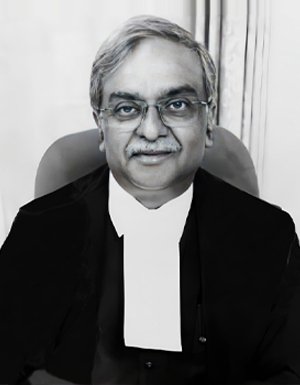
[AJAY RASTOGI]
………….........................J.
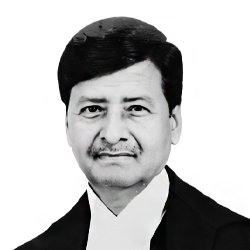
[VIKRAM NATH]
NEW DELHI
JULY 12, 2022
28

 Login with google
Legal Notes
Add a Note....